The Ultimate Guide to Managing Your Business with ZYNO Books
Read More →

×
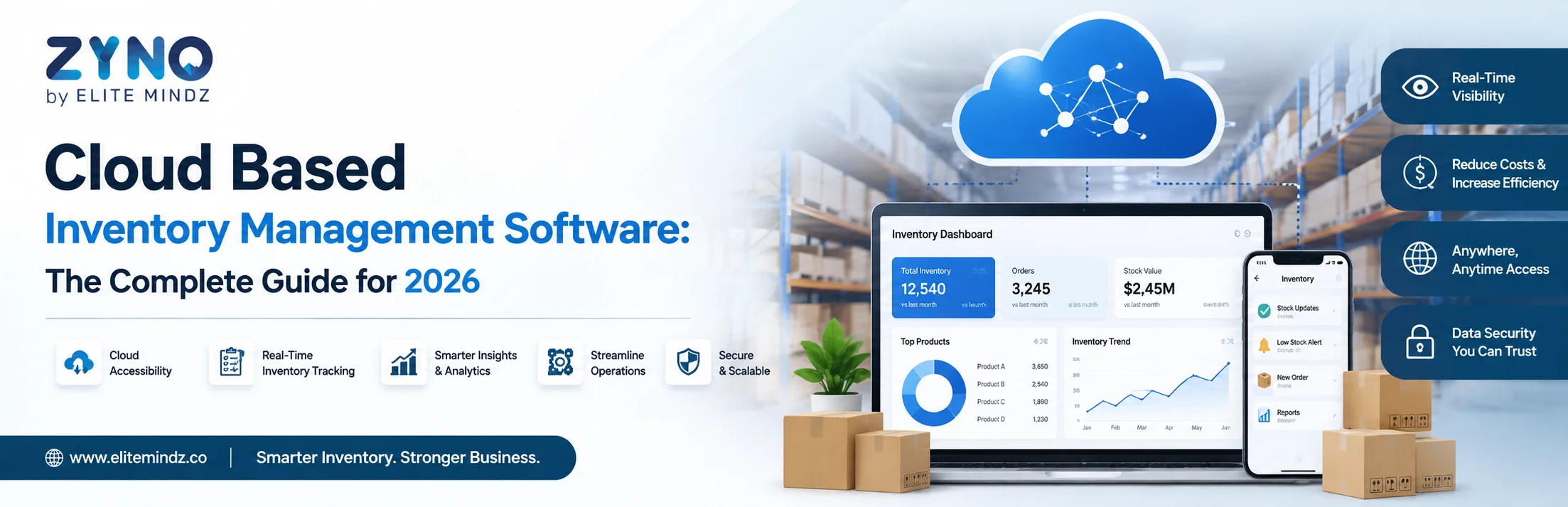
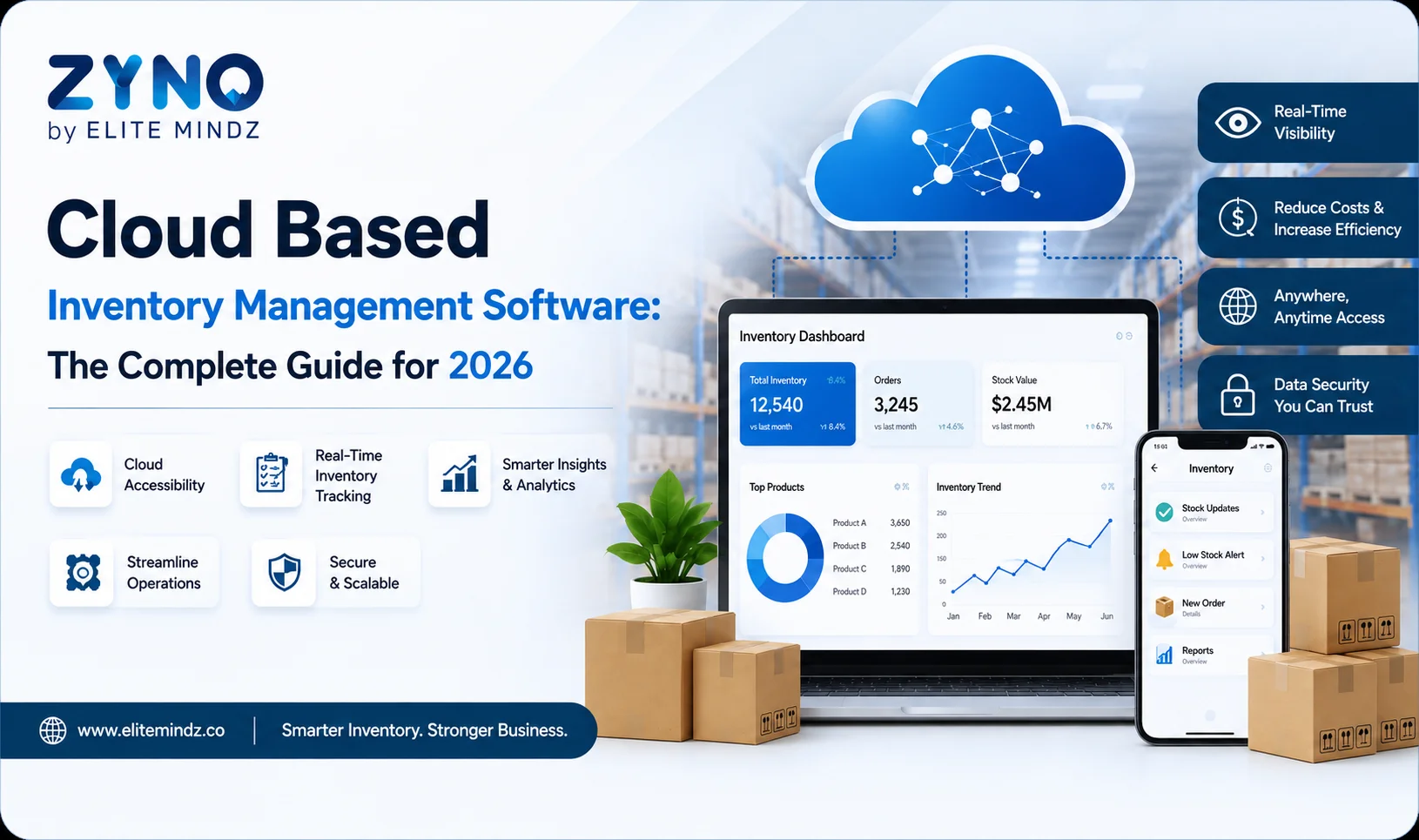
Discover how cloud based inventory management software helps businesses track stock, automate workflows, improve inventory accuracy, and access real-time data from anywhere. This complete guide for 2026 explores essential features, key benefits, implementation strategies, and best practices to help organizations reduce costs, prevent stockouts, optimize warehouse operations, and make smarter inventory decisions for sustainable business growth.
Businesses using ZYNO Books cut accounting time by 70% and stay 100% ZATCA-compliant — automatically.
Running out of stock costs a sale. Sitting on too much stock ties up cash. Most businesses lose money on both ends because they are still tracking inventory in spreadsheets or in software that does not talk to their billing and accounting tools.
A cloud based inventory management software fixes that gap. It gives you one live view of stock across warehouses, connects that stock to purchase orders and sales orders, and keeps your books accurate without anyone doing manual entry at the end of the month.
This guide covers what cloud based inventory management software actually does, how the stock flow works step by step, a comparison of the tools businesses use most in 2026, and where ZYNO Books inventory management software fits for teams that want everything, stock, billing, and accounting, running from one place.
Cloud based inventory management software is a system that tracks stock levels, locations, and movement over the internet instead of on a single desktop or a local server. Because it lives on the cloud, your team can check stock from a laptop at the office, a phone on the warehouse floor, or a browser at home, and everyone sees the same numbers at the same time.
The difference between this and an old-style stock register or a basic spreadsheet comes down to three things. First, updates happen automatically the moment a sale, purchase, or transfer is recorded. Second, the system connects to other business functions like billing, accounting, and purchase orders, so stock numbers and financial numbers never fall out of sync. Third, most cloud systems now include basic AI features, such as demand prediction or auto-generated reorder suggestions, that a paper log or an offline spreadsheet simply cannot offer.
For a small shop, this might mean knowing exactly how many units are left before a festival sale. For a distributor running multiple warehouses, it means knowing which location has stock before promising a delivery date. For a manufacturer, it means tracking raw material against work in progress without opening five different files.
Simplify Inventory Management with ZYNO Books
Manage inventory, purchases, warehouses, stock levels, barcode tracking, and real-time reports from one cloud-based platform. Improve stock accuracy, reduce manual work, and keep your business operations organized.
Request a Free Demo Explore ZYNO BooksThe mechanics are simpler than most people expect. Here is the short version before we get into the full step-by-step workflow below.
Here is what actually happens inside the system from the moment stock enters your business to the moment it leaves as a sale, shown as a flow so you can see where automation removes manual work.
Two things matter about this loop. First, nothing here needs a person to remember to check a spreadsheet. Second, the invoice step is where most standalone stock tools stop, while a connected system like purchase accounting software keeps the financial side moving in step with the physical stock.
Every business has a different scale, workflow, and inventory challenge. Some businesses need simple stock tracking, while others require multi-warehouse management, barcode scanning, batch and serial tracking, purchasing, accounting, and e-commerce integrations.
Here is an honest comparison of some of the top cloud-based inventory management software in 2026, including what each platform does well, where it may fall short, and which type of business it is best suited for.
ZYNO Books is a cloud-based business management and inventory management platform designed for businesses that want to manage inventory, purchasing, sales, billing, and accounting from a single system. Instead of maintaining separate applications for stock management and financial operations, businesses can manage core workflows through one centralized platform.
The platform supports barcode-based inventory management, purchase order automation, multi-warehouse operations, batch and serial number tracking, and accounting workflows. Its AI-powered capabilities also help users perform routine tasks through simple prompts, such as generating purchase orders or retrieving inventory-related reports.
Top Features:
Multi-warehouse inventory management: Track inventory across multiple warehouses, locations, and stock points from a centralized dashboard.
Barcode inventory management: Use barcode scanning to identify products quickly, reduce manual data entry, and improve stock accuracy.
Batch and serial number tracking: Track products by batch and serial number, making the system useful for businesses that require detailed product-level traceability.
Purchase order automation: Create and manage purchase orders while keeping purchasing and inventory information connected.
AI-powered inventory assistance: Use AI-based commands to retrieve information, generate reports, and perform selected inventory-related tasks without navigating through multiple screens.
Integrated accounting: Connect inventory transactions with accounting and financial workflows to reduce duplicate data entry.
Real-time stock visibility: Get a centralized view of stock availability, inventory movement, and purchasing requirements.
Pros:
All-in-one business management: Combines inventory, purchasing, sales, billing, and accounting instead of requiring multiple disconnected systems.
AI-enabled workflows: AI assistance can reduce repetitive manual work and make common inventory operations easier for non-technical users.
Scalable inventory management: Can support businesses as they move from basic stock tracking to multi-location and more structured inventory operations.
Better data synchronization: Inventory and financial data remain connected, reducing the need to maintain separate records.
Honest Limitation:
Advanced enterprise functionality: Businesses with extremely complex global supply-chain requirements may still need specialized enterprise ERP functionality.
Implementation and customization: Businesses with highly customized workflows may require additional configuration before the platform fully matches their processes.
AI dependency on workflow: AI features are most useful when the underlying inventory data and business processes are properly configured.
Other details:
Top Clients: SMEs, e-commerce businesses, wholesalers, retailers, distributors, and growing enterprises
Website: elitemindz.co
Company Type: Private
Location: India
Pricing: Contact for current pricing
Best Fit For: SMEs, e-commerce sellers, wholesalers, distributors, and businesses looking for integrated inventory + accounting
Key Strength: AI-powered inventory and business automation
Zoho Inventory is a cloud-based inventory management software designed for small businesses and growing companies. It provides an intuitive interface with automation, order management, warehouse features, and multi-channel inventory capabilities, making it suitable for businesses selling through multiple online and offline channels.
Top Features:
End-to-end order tracking: Stay updated on order status from purchase to delivery with complete order visibility.
Barcode scanning & batch tracking: Manage inventory accurately using barcode scanning and track products by batch numbers.
Multi-channel selling: Manage and sell products across multiple online and offline sales channels from one platform.
Inventory valuation: Monitor the real-time value of inventory and maintain accurate stock records.
Integration with the Zoho ecosystem: Connect inventory data with Zoho CRM, Zoho Books, and other business applications.
Automated reordering: Automatically replenish stock when inventory levels fall below predefined thresholds.
Pros:
Easy inventory management: Its relatively simple interface makes daily inventory and order management easier for smaller teams.
Reliable performance: Suitable for businesses looking for a straightforward cloud-based inventory platform.
Strong integrations: Works particularly well for businesses already using other Zoho applications.
Multi-channel support: Helps businesses maintain inventory visibility across different selling channels.
Honest Limitation:
Limited warehouse capabilities: It is more focused on inventory transactions and order management than highly complex warehouse management operations.
Limited reporting customization: Businesses with very specific reporting requirements may find customization restrictive.
Limited customization options: Certain modules and templates may not provide enough flexibility for specialized workflows.
Additional subscription costs: Using several Zoho products together can increase the overall software cost.
Other details:
Top Clients: Small businesses, startups, SMEs
Website: zoho.com
Company Type: Private
Location: Chennai, India
Pricing: Starts at ₹2,299/month for the standard plan
Best Fit For: SMEs, service-based businesses, wholesalers, and e-commerce sellers
Reviews & Ratings: G2 – ⭐⭐⭐⭐ 4.4/5 | Gartner – ⭐⭐⭐⭐ 4.3/5
inFlow Inventory is designed around inventory tracking, order management, barcode scanning, and multi-location operations. It is particularly useful for businesses that need a practical way to track products across warehouses, shelves, and different stock locations.
Top Features:
Barcode scanning: Quickly scan products to update stock records and reduce manual data entry.
Multi-location inventory: Track inventory across different warehouses, stores, and locations.
Purchase and sales order management: Manage purchasing and sales transactions while maintaining updated inventory records.
Stock transfers: Move products between locations while maintaining visibility of inventory movement.
Inventory reporting: Generate reports to understand stock levels, product movement, and purchasing requirements.
Pros:
Strong barcode functionality: Useful for businesses handling physical products on a daily basis.
Multi-location support: Makes it easier to track inventory distributed across several locations.
User-friendly interface: The platform focuses on practical inventory workflows rather than overwhelming users with unnecessary complexity.
Good inventory visibility: Helps teams understand what products are available and where they are located.
Honest Limitation:
Limited ERP depth: Businesses requiring comprehensive accounting, HR, manufacturing, or enterprise ERP functionality may need additional systems.
Customization limitations: Highly specialized workflows may require workarounds or integrations.
Learning curve for advanced features: Basic inventory management is straightforward, but advanced workflows can require additional training.
Other details:
Top Clients: Retailers, wholesalers, distributors, product-based SMEs
Website: inflowinventory.com
Best Fit For: Small and mid-sized inventory-heavy businesses
Key Strength: Barcode and multi-location inventory management
Katana is a cloud-based inventory and manufacturing management platform designed primarily for product-based businesses and small manufacturers. It connects inventory with production planning, helping businesses understand how raw materials are being consumed and how much finished stock is available.
Top Features:
Real-time inventory tracking: Monitor raw materials, work-in-progress, and finished products.
Production planning: Schedule manufacturing activities and track production requirements.
Material requirements planning: Understand which materials are required for upcoming production.
Shop-floor management: Improve visibility into production activities and manufacturing orders.
Purchase order management: Coordinate purchasing with production and inventory requirements.
Pros:
Manufacturing focused: Stronger fit for manufacturers than many general-purpose inventory systems.
Real-time production visibility: Helps businesses understand what is currently being manufactured and what materials are available.
Cloud-based access: Teams can access inventory and production information from different locations.
Good integration capabilities: Can connect with other business applications used by manufacturers.
Honest Limitation:
Manufacturing-oriented: Businesses that only need simple inventory management may find some functionality unnecessary.
Advanced requirements: Larger manufacturers with highly complex production environments may require a more comprehensive ERP.
Cost considerations: The overall subscription cost can increase as requirements and users grow.
Other details:
Top Clients: Manufacturers, product-based businesses, small factories
Website: katana.cloud
Best Fit For: Small and mid-sized manufacturers
Key Strength: Manufacturing + inventory management
Manage Your Inventory Smarter with ZYNO Books
Simplify stock management with real-time inventory tracking, purchase management, barcode scanning, warehouse control, and detailed reports. ZYNO Books helps businesses improve accuracy, reduce manual tasks, and manage inventory efficiently from anywhere.
Book a Free Demo Discover ZYNO BooksOdoo Inventory is part of the wider Odoo business application ecosystem. It uses a double-entry inventory system where stock movements are treated as transfers between locations rather than simply adding or subtracting quantities.
This approach provides businesses with detailed visibility into how inventory moves through warehouses and different operational locations.
Top Features:
Barcode scanning: Quickly capture product information and improve inventory accuracy.
Inventory control: Track stock levels and inventory movement to reduce discrepancies.
Forecasting and analytics: Analyze inventory trends and support better purchasing and replenishment decisions.
Inventory alerts: Receive notifications related to low stock, reorder points, and inventory activities.
Multi-warehouse management: Manage products across multiple warehouses and locations.
Pros:
Real-time inventory insights: Helps businesses track stock levels, movement, and replenishment requirements.
Easy-to-use interface: Provides a relatively organized interface for day-to-day inventory operations.
Strong integrations: Connects inventory with sales, accounting, purchasing, manufacturing, and other Odoo modules.
Flexible inventory management: Supports multiple warehouses, locations, product categories, and reorder rules.
Honest Limitation:
Limited correction options: Correcting mistakes after inventory transfers have been validated can be difficult.
Complex setup: Advanced configurations and integrations can take considerable implementation time.
Reporting limitations: Some advanced reporting requirements may require customization or manual analysis.
Customer support: Some users report that support could be improved for complex implementation issues.
Other details:
Top Clients: Local businesses, retailers, traders, SMEs, enterprises
Website: odoo.com
Pricing: Custom/module-based pricing
Best Fit For: SMEs to large corporations
Reviews & Ratings: Capterra – ⭐⭐⭐⭐ 4.2/5 | G2 – ⭐⭐⭐⭐ 4.4/5
NetSuite ERP is a cloud-based enterprise resource planning platform designed for businesses that need inventory management alongside financial management, procurement, order management, and broader supply-chain operations.
Top Features:
Global inventory management: Manage inventory across multiple subsidiaries, warehouses, and geographical locations.
Demand planning: Use historical and operational data to support purchasing and inventory planning.
Order management: Connect sales orders with fulfillment and inventory availability.
Supply-chain management: Coordinate purchasing, inventory, fulfillment, and other operational processes.
Financial integration: Connect inventory activities directly with financial and accounting processes.
Pros:
Enterprise scalability: Suitable for businesses operating at a large scale.
Comprehensive ERP: Combines inventory with finance, procurement, sales, and other business processes.
Strong reporting: Provides extensive business and operational reporting capabilities.
Multi-entity support: Useful for organizations operating across multiple subsidiaries or regions.
Honest Limitation:
Higher cost: NetSuite is generally more expensive than SMB-focused inventory platforms.
Complex implementation: Deployment often requires professional implementation and configuration.
Steep learning curve: The breadth of functionality can make the platform difficult for smaller teams.
Customization costs: Advanced customization and integrations can significantly increase the total cost of ownership.
Other details:
Top Clients: Mid-market companies, enterprises, multinational organizations
Website: netsuite.com
Best Fit For: Large businesses and enterprises
Key Strength: Enterprise ERP + inventory + financial management
SAP Business One is an ERP platform designed to help small and mid-sized businesses manage inventory, purchasing, sales, accounting, production, and other core business operations from one centralized system.
Top Features:
End-to-end inventory control: Manage stock movement from purchasing through sales and fulfillment.
Master data management: Maintain organized product, supplier, customer, and inventory information.
Personalized dashboard: View important business and inventory information from a centralized dashboard.
Automated purchasing and sales management: Connect purchasing, sales, and inventory updates.
Real-time stock tracking: Monitor stock levels and product availability as inventory changes.
Pros:
Centralized business management: Brings inventory, sales, accounting, purchasing, and production together.
Real-time visibility: Provides updated inventory and business information for decision-making.
Detailed reporting: Supports inventory, sales, financial, and operational reporting.
Strong integrations: Can connect with third-party applications and business systems.
Honest Limitation:
Steep learning curve: The system can feel complex for users accustomed to lightweight inventory applications.
Complex implementation: Configuration and deployment may require experienced consultants.
Higher implementation costs: Customization, integrations, and add-ons can increase the total investment.
Performance considerations: Large data volumes and heavily customized deployments may require additional infrastructure optimization.
Other details:
Top Clients: Manufacturers, distributors, wholesalers, mid-sized businesses
Website: sap.com
Pricing: Custom pricing
Best Fit For: Mid-sized businesses and enterprises
Reviews & Ratings: G2 – ⭐⭐⭐⭐ 4.3/5
Sortly is a visual inventory management platform designed for businesses and teams that want a simple way to track products, equipment, supplies, and assets. Its visual approach makes it particularly useful for teams that do not require a complex ERP.
Top Features:
Visual inventory tracking: Use images and organized folders to identify inventory quickly.
Barcode and QR code scanning: Scan items to update or retrieve inventory information.
Custom fields: Add relevant information to products and assets.
Inventory alerts: Receive notifications when inventory requires attention.
Mobile inventory management: Manage inventory from mobile devices while working away from a desktop.
Pros:
Simple interface: Easy for small teams to understand and adopt.
Visual organization: Product images can make inventory identification faster.
Mobile friendly: Useful for field teams and businesses managing inventory away from the office.
Quick implementation: Less complicated to set up compared with larger ERP platforms.
Honest Limitation:
Limited ERP functionality: It is not designed to replace a comprehensive accounting or ERP system.
Advanced warehouse needs: Complex warehouse operations may require a more specialized WMS.
Reporting depth: Businesses with advanced analytics requirements may need another platform.
Other details:
Top Clients: Small businesses, contractors, service teams, retailers
Website: sortly.com
Best Fit For: Small businesses and teams requiring simple inventory tracking
Key Strength: Visual and mobile inventory management
EasyEcom is an inventory and order management platform particularly popular among e-commerce businesses. It helps brands manage inventory and orders across multiple marketplaces and online sales channels.
Top Features:
Multi-channel inventory management: Synchronize stock across multiple e-commerce channels.
Order management: Consolidate orders from different marketplaces and sales channels.
Inventory reconciliation: Reduce discrepancies between marketplace orders and internal inventory.
Warehouse management: Manage stock movement and fulfillment operations.
Marketplace integrations: Connect with popular e-commerce marketplaces and platforms.
Pros:
Strong e-commerce focus: Built around the operational challenges of online sellers.
Multi-channel visibility: Helps businesses maintain consistent inventory across sales channels.
Marketplace integration: Reduces the need to manually update multiple marketplaces.
Useful for Indian sellers: Particularly relevant for brands selling through several Indian e-commerce channels.
Honest Limitation:
E-commerce focused: Businesses outside e-commerce may not need all of its functionality.
ERP requirements: Companies looking for deep accounting, HR, or broader ERP capabilities may require additional software.
Integration dependency: The overall experience can depend on the quality and capabilities of connected marketplaces and platforms.
Other details:
Top Clients: E-commerce brands, D2C companies, online retailers
Website: easyecom.io
Best Fit For: E-commerce sellers, D2C brands, marketplace sellers
Key Strength: Multi-channel e-commerce inventory and order management
Fishbowl Inventory is designed for businesses that require more advanced warehouse and manufacturing inventory capabilities while continuing to use an accounting platform such as QuickBooks.
Top Features:
Warehouse management: Organize inventory across warehouses and storage locations.
Barcode scanning: Improve stock accuracy and reduce manual inventory entry.
Manufacturing management: Track materials, production processes, and finished products.
Inventory tracking: Monitor product quantities and movements throughout the business.
Order management: Connect sales and purchasing workflows with inventory.
Pros:
Strong warehouse functionality: Suitable for businesses with more complex warehouse requirements.
Manufacturing support: Provides functionality for product-based manufacturers.
Accounting integration: Can work alongside existing accounting systems.
Detailed inventory tracking: Provides better inventory visibility than basic stock-tracking applications.
Honest Limitation:
Implementation complexity: Advanced warehouse and manufacturing functionality can require significant setup.
User learning curve: New users may need training before they can effectively use the complete platform.
Additional integrations: Businesses may need multiple systems for accounting, CRM, e-commerce, and other functions.
Other details:
Top Clients: Manufacturers, wholesalers, distributors, warehouse-based businesses
Website: fishbowlinventory.com
Best Fit For: Small and mid-sized manufacturers and distributors
Key Strength: Warehouse + manufacturing inventory management
There is no single inventory management system that is ideal for every business. Zoho Inventory can work well for smaller businesses looking for straightforward multi-channel inventory management, while Odoo and SAP Business One are better suited to organizations that need broader ERP capabilities.
For manufacturers, Katana and Fishbowl Inventory offer stronger production and warehouse-oriented workflows. EasyEcom is particularly relevant for Indian e-commerce and D2C brands managing inventory across multiple online channels.
For businesses looking for a more unified approach that combines inventory management, accounting, purchasing, sales, automation, and AI-assisted workflows, ZYNO Books is a strong option to consider.
The right choice ultimately depends on your business size, number of warehouses, sales channels, SKU volume, manufacturing requirements, accounting needs, integrations, and budget.
| Software | Best Use Case | Key Strength | Watch Out For |
|---|---|---|---|
| ZYNO Books | SMEs to large enterprises wanting one platform | Stock, billing, and accounting in a single system, plus AI-assisted actions | Newer to market than legacy players |
| Zoho Inventory | Small e-commerce | Multi-channel sync and shipping | Limited warehouse depth |
| inFlow Inventory | Barcode-heavy operations | Fast scanning, multi-location | Lighter on accounting integration |
| Katana | Small manufacturing | Production planning, WIP tracking | Narrow focus outside manufacturing |
| Odoo Inventory | SMEs needing an ecosystem | Clean move-based stock logic | Setup complexity |
| NetSuite ERP | Large enterprises | Full supply chain and finance suite | High cost, long implementation |
| SAP Business One | Large businesses | Centralized business management | Steep learning curve |
Most of the tools above solve one part of the problem. A business ends up running stock in one app, billing in another, and accounting in a third, then spends hours every month making the three agree with each other. ZYNO Books was built to remove that gap entirely.
Stock updates the moment a sale or purchase happens, and that same update flows straight into your books without anyone re-typing a number. Reorder points trigger purchase orders automatically, so nobody is manually watching a low-stock report. Multiple warehouses stay visible from one dashboard instead of five different logins. Batch and serial tracking is built in for businesses in regulated categories, such as pharma or food distribution, where expiry and traceability matter. And because ZYNO Books inventory management connects directly with purchase accounting and document management, paperwork like invoices, purchase receipts, and compliance documents stay attached to the right stock record instead of living in a separate folder somebody has to search for later.
For businesses running multiple projects or client-based work alongside stock, the platform also connects to project accounting software, so budgets and billing tied to specific jobs stay linked to the inventory consumed on them.
ZYNO Books also handles tax compliance automatically across markets including India, the UAE, Saudi Arabia, and Nigeria, applying the correct VAT or GST rules without someone manually checking which rate applies where.
Take Control of Your Inventory with ZYNO Books
Track stock, manage purchases, control warehouses, monitor inventory levels, and access real-time reports with ZYNO Books. Streamline operations, improve stock accuracy, and manage your business from one powerful cloud-based platform.
Request a Free Demo Explore ZYNO BooksA few features separate a tool that actually helps from one that just adds another login to your day.
It is a system that tracks stock levels, locations, and movement over the internet rather than on a single local computer, so every team member sees the same live stock numbers from any device.
Zoho Inventory offers a limited free plan for very small operations, but multi-channel selling, advanced automation, and higher order volumes require a paid tier, currently starting around ₹2,299 per month for the standard plan.
It depends on your scale. Small e-commerce sellers often start with Zoho Inventory, manufacturers lean toward Katana, and businesses that want stock, billing, and accounting in one connected system tend to move to ZYNO Books as they grow past basic tracking needs.
The most useful ones are demand forecasting based on past sales patterns, automatic reorder suggestions, and natural-language reporting, where a manager can type a request like "show me slow-moving stock this quarter" instead of building a filter manually.
Zoho Inventory works well for small businesses focused on multi-channel selling and basic order tracking, but companies that need deep warehouse management or heavier custom reporting often outgrow it.
An inventory management tool focuses on tracking stock levels and movement. A full ERP, like NetSuite or SAP Business One, ties inventory into finance, HR, and other departments across the entire business, which usually means a bigger setup and a bigger price tag.
Yes. Most cloud platforms, including ZYNO Books, offer tiered pricing built for small teams, and many start with a free trial so a business can test the fit before committing to a paid plan.
You set a minimum stock threshold for each item. Once stock falls to that level, the system automatically generates a purchase order, or in more automated setups, sends it directly to your supplier without anyone needing to check a report first.
Yes, most cloud based systems, including ZYNO Books, Odoo, and NetSuite, support multi-location tracking, letting you see stock at each site and move inventory between locations without losing visibility.
It is the ability to trace individual product batches or serial numbers through the supply chain. It matters most for pharmaceuticals, food and beverage, and electronics, where expiry dates or warranty terms need to be tracked per unit.
The better platforms do. ZYNO Books, for example, updates your books automatically the moment stock moves, which removes the manual reconciliation step that standalone inventory tools usually require.
Lighter tools like Zoho Inventory or Sortly can be running within a day or two. Full ERP systems like SAP Business One or NetSuite usually need weeks of configuration. ZYNO Books sits closer to the faster end, since one-step configuration covers most SME setups.
Yes. Systems built for specific regions, including ZYNO Books, apply the correct tax rules automatically based on where the business operates, covering frameworks such as GST in India, VAT under FTA in the UAE, ZATCA in Saudi Arabia, and FIRS in Nigeria.
For any business with a warehouse or shop floor, yes. Being able to check or update stock from a phone means staff on the ground do not need to walk back to a desktop to confirm a count.
Confirm it handles your current stock volume and locations, check that it connects to your billing and accounting setup, ask about data migration support, and run a free trial with real data before committing to a full switch.
Cloud based inventory management software has moved past simply counting stock. The tools worth using in 2026 connect purchasing, warehouse operations, sales, and accounting into one live system, and increasingly add AI features that remove manual reporting work altogether. Smaller sellers can get by with a focused tool like Zoho Inventory or inFlow, manufacturers lean toward Katana, and large enterprises justify the cost of NetSuite or SAP Business One. For businesses that want that same depth without stitching four tools together, ZYNO Books covers stock, billing, purchase management, and document tracking from a single platform, built for teams that plan to grow past where a basic stock tracker stops being enough.
The Ultimate Guide to Managing Your Business with ZYNO Books
Read More →
Why Is 206CR of Income Tax Act Important for Businesses in India?
Read More →The Best Accounting Software in Saudi Arabia
Read More →
Managing Multi-Country Taxes Made Easy with ZYNO Books Integrations
Read More →
Why TRN Validation is Essential for VAT Compliance in the UAE
Read More →
Best Accounts Payable Automation Software
Read More →Best Cloud Accounting Software in Kenya with M-Pesa Integration (2026) - eTIMS Compliant
Read More →Ultimate Cloud Accounting Software Guide That Saves Businesses 15+ Hours Weekly
Read More →ZATCA E-Invoicing Saudi Arabia - Complete Business Guide 2026
Read More →Cloud Accounting vs Desktop Accounting - Which Is Best for Your Business?
Read More →
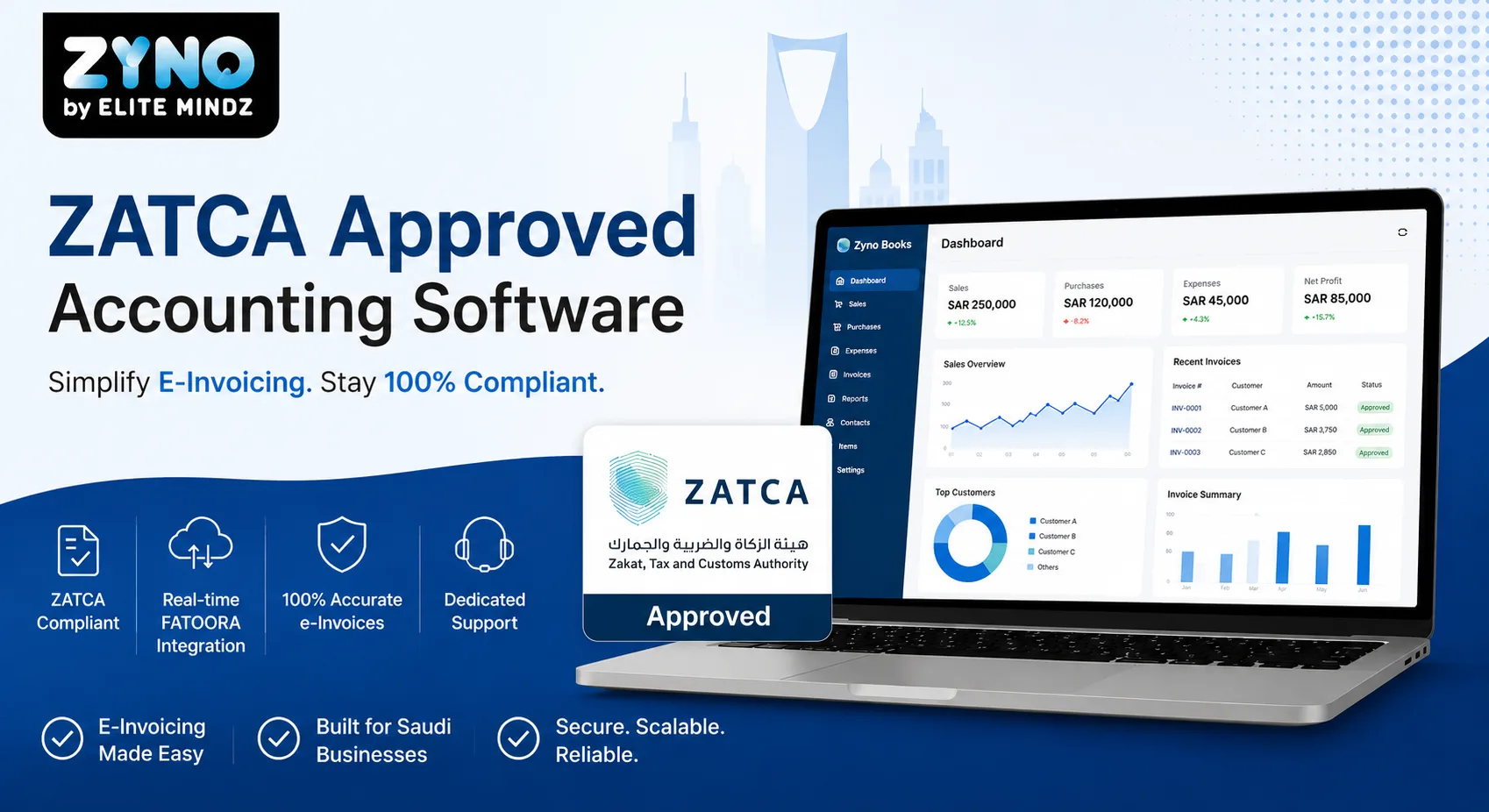
Zyno Books: Best ZATCA-Approved Accounting Software in Saudi Arabia
Read More →
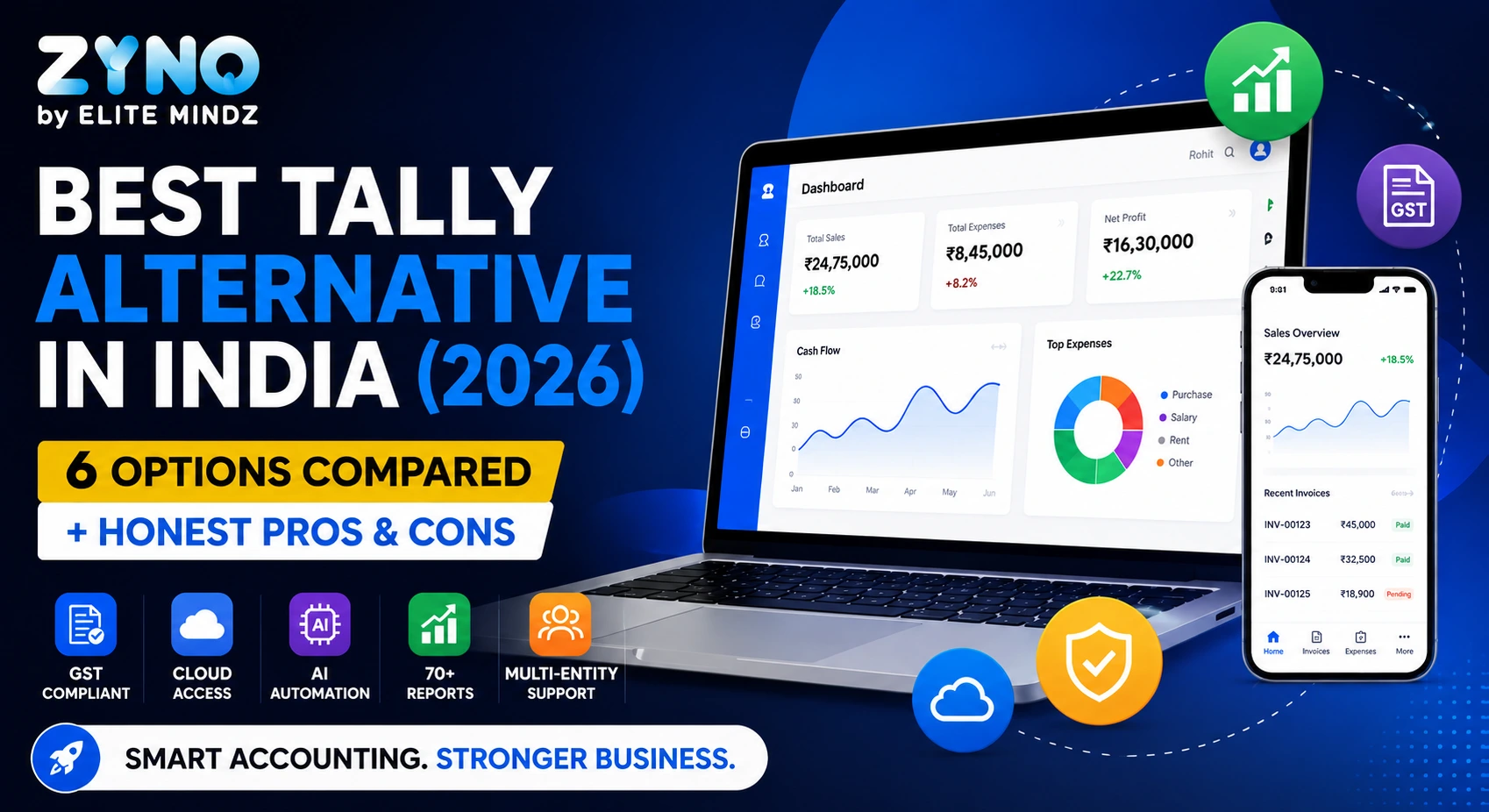
Best Tally Alternative in India (2026) — 6 Options Compared + Honest Pros & Cons
Read More →
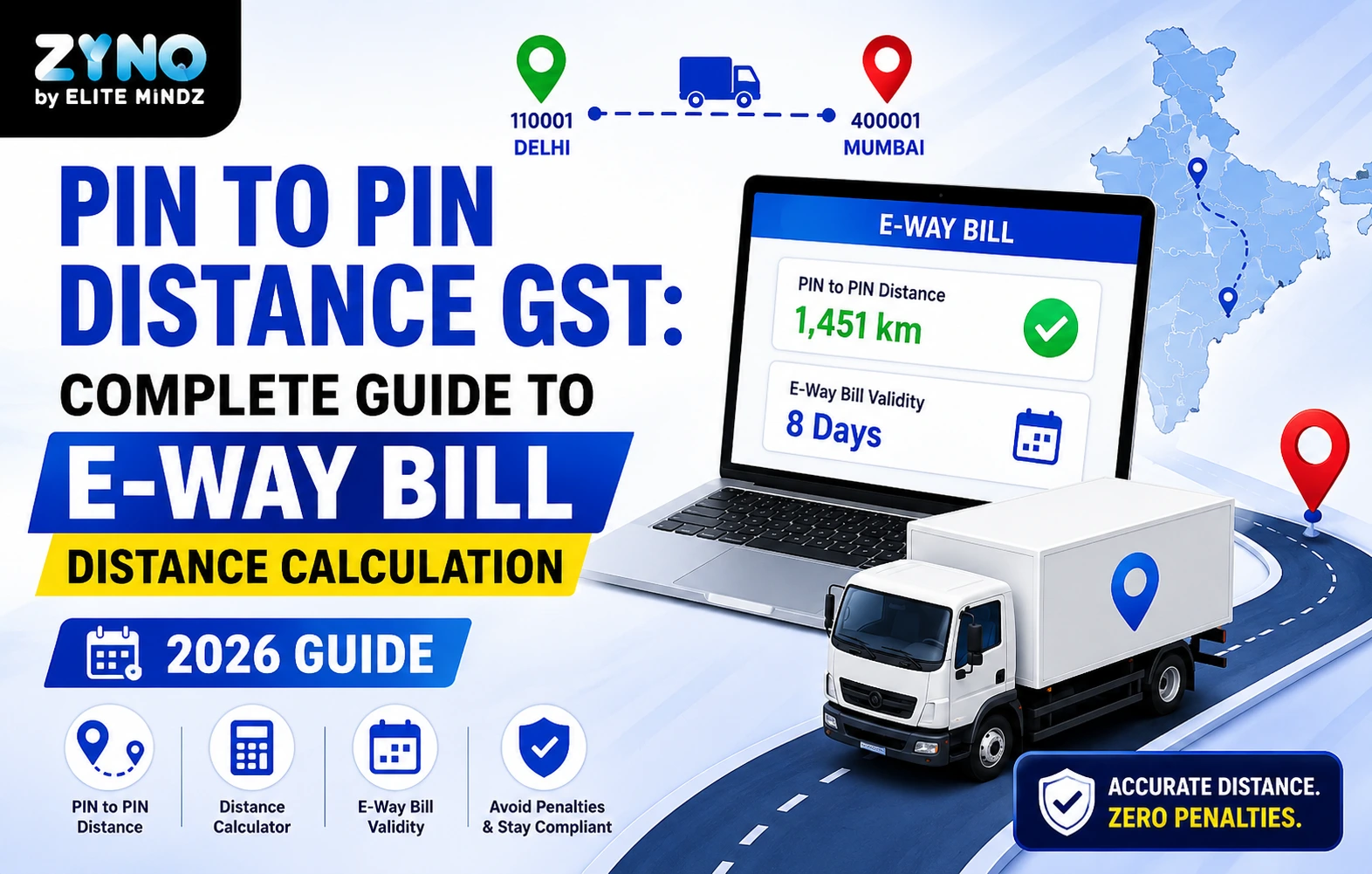
Pin to Pin Distance GST: Free E-Way Bill Calculator, Validity & Penalty Guide (2026)
Read More →
Best Small Business Accounting Software in 2026: Complete Guide
Read More →
ZYNO Books: Accounting Software Built Specially for Indian Businesses
Read More →
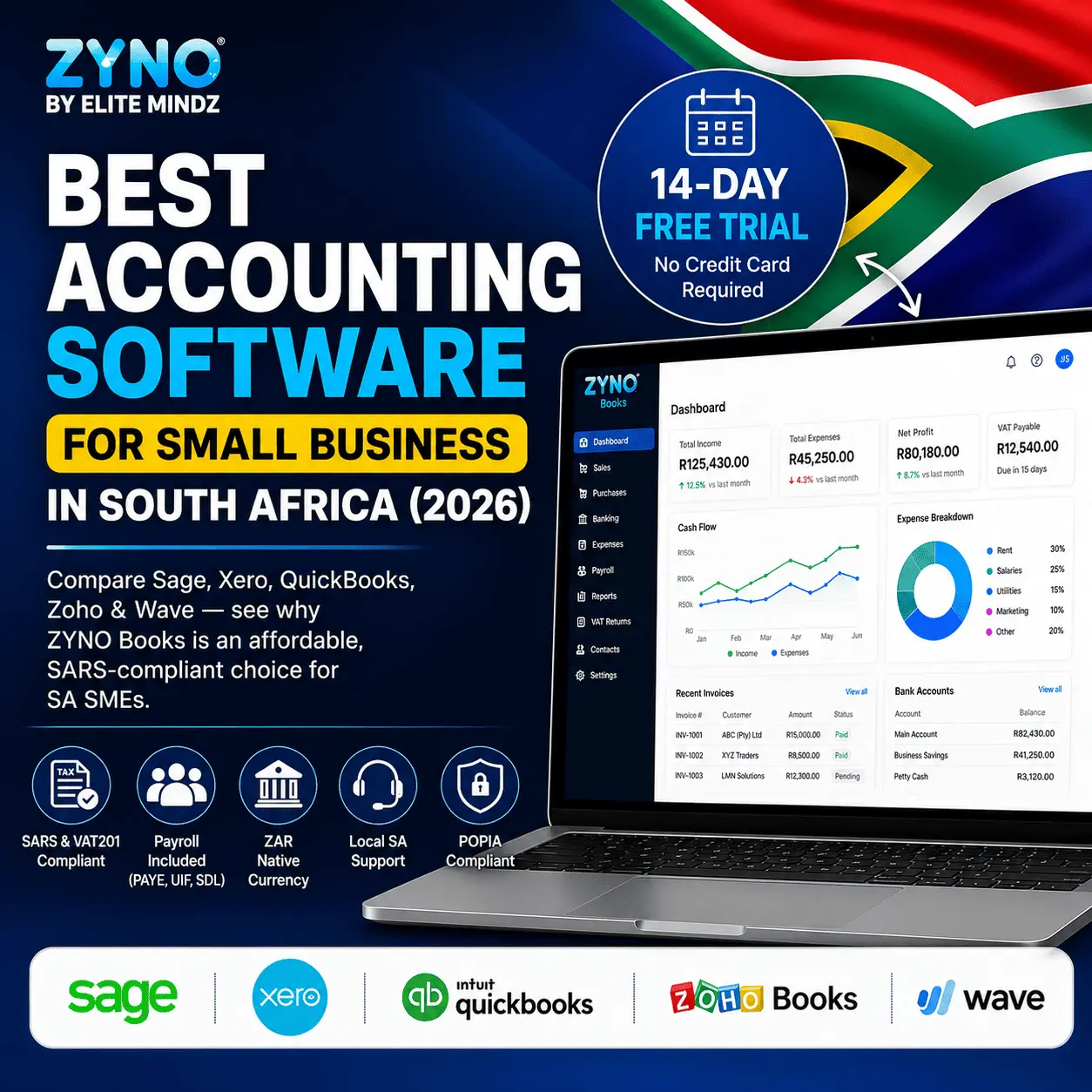
Best Accounting Software for Small Business in South Africa (2026)
Read More →
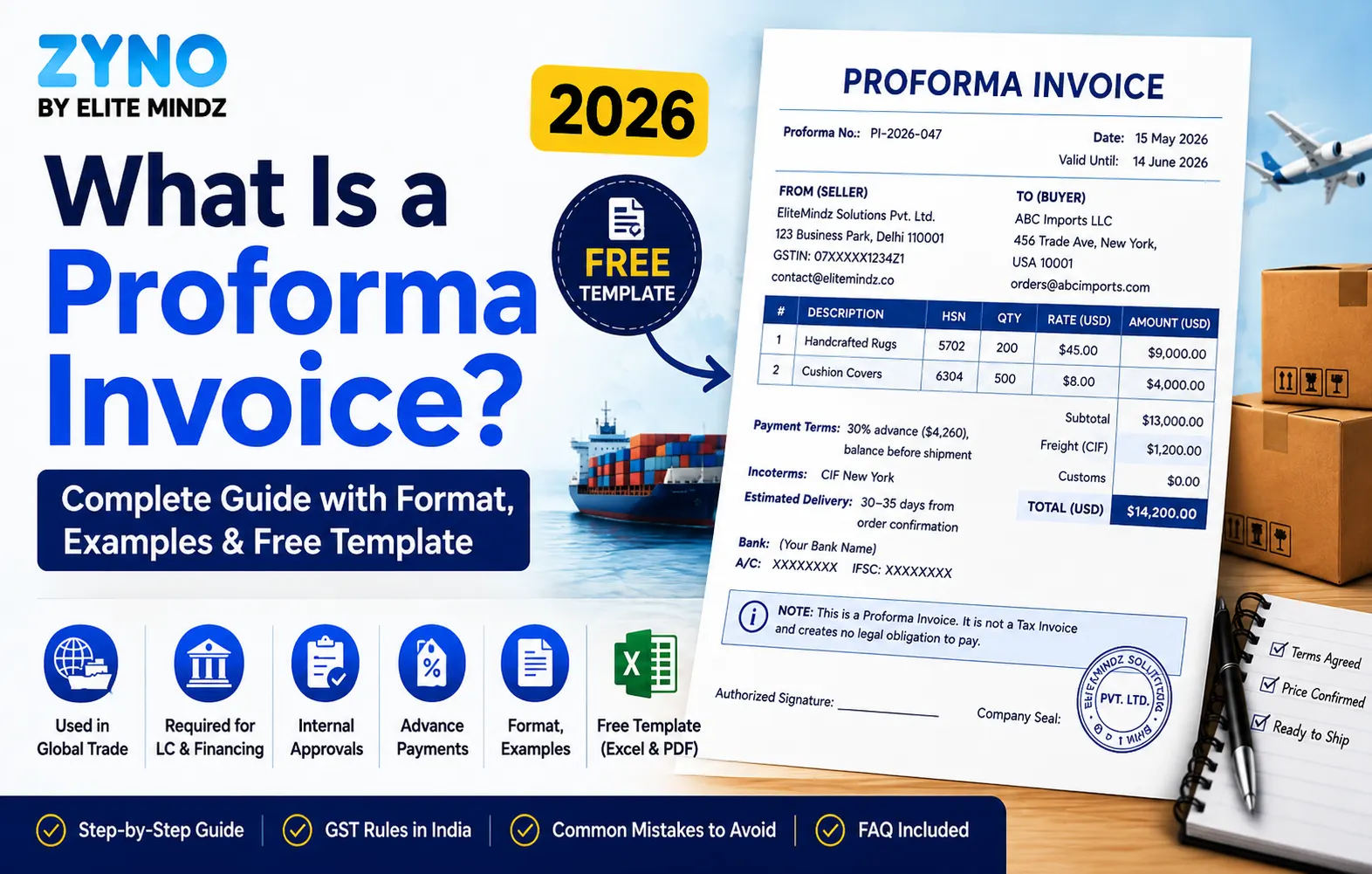
What Is a Proforma Invoice? Complete Guide with Format, Examples & Free Template (2026)
Read More →
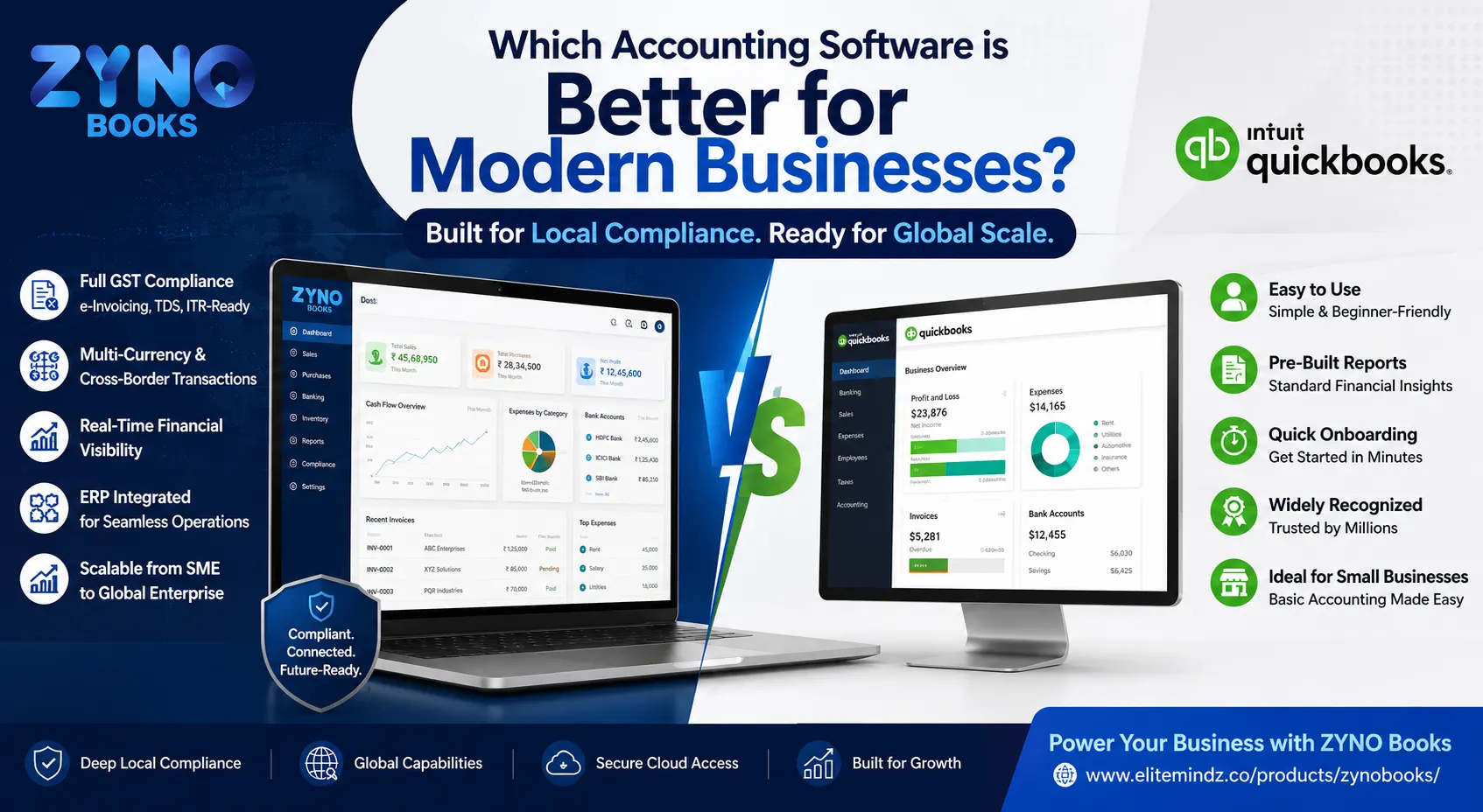
Which Accounting Software is Better for Modern Businesses?
Read More →
Bank Reconciliation Statement (BRS): Meaning, Full Form, Format & Examples
Read More →
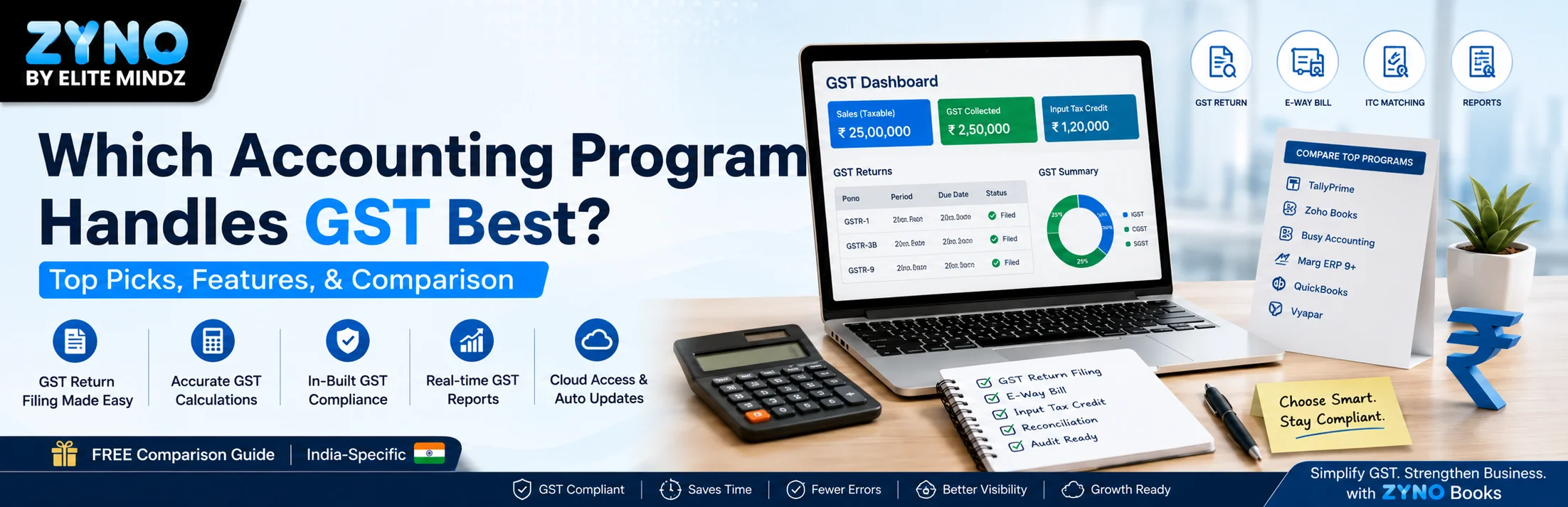
Which Accounting Program Handles GST Best?
Read More →
AI Accounting Software in India: The Next Generation
Read More →
Which Document Management Software Offers OCR and Workflow Automation?
Read More →
How to Manage ISO Documents and Compliance Records Digitally?
Read More →
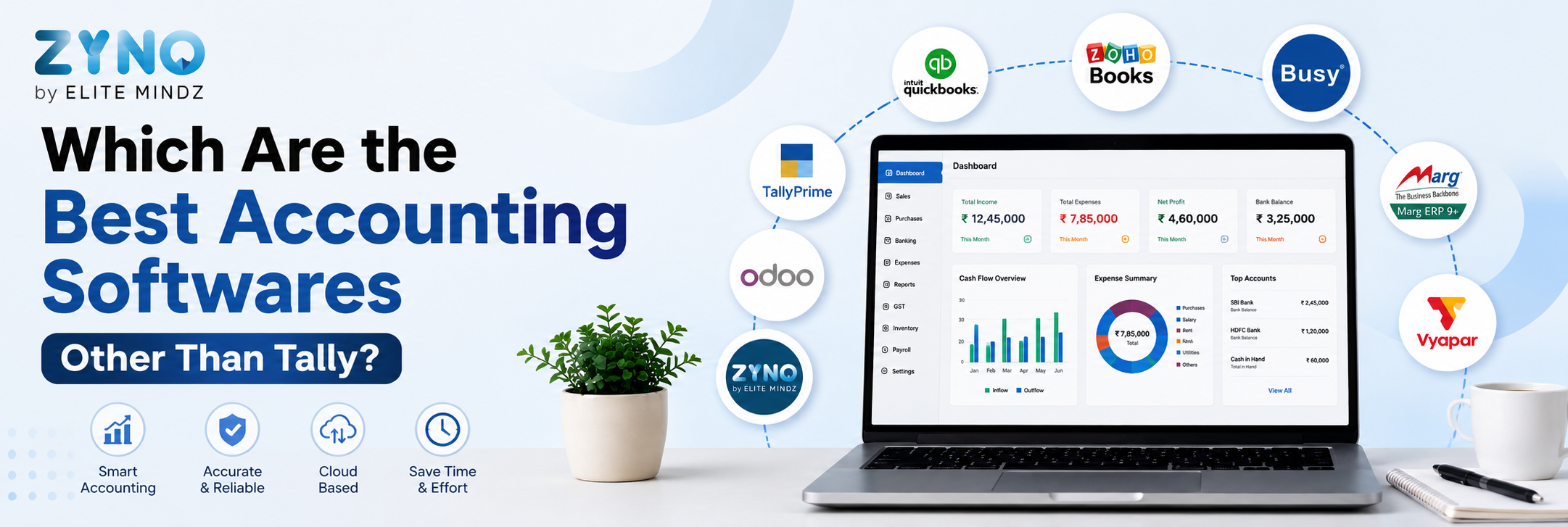
Which Are the Best Accounting Softwares Other Than Tally?
Read More →
ZYNO DMS vs SharePoint: A Detailed Comparison for Enterprise Document Control?
Read More →
How to Control Document Versions and Revisions Without Excel?
Read More →
How to Automate Document Approval Workflows Across Departments?
Read More →
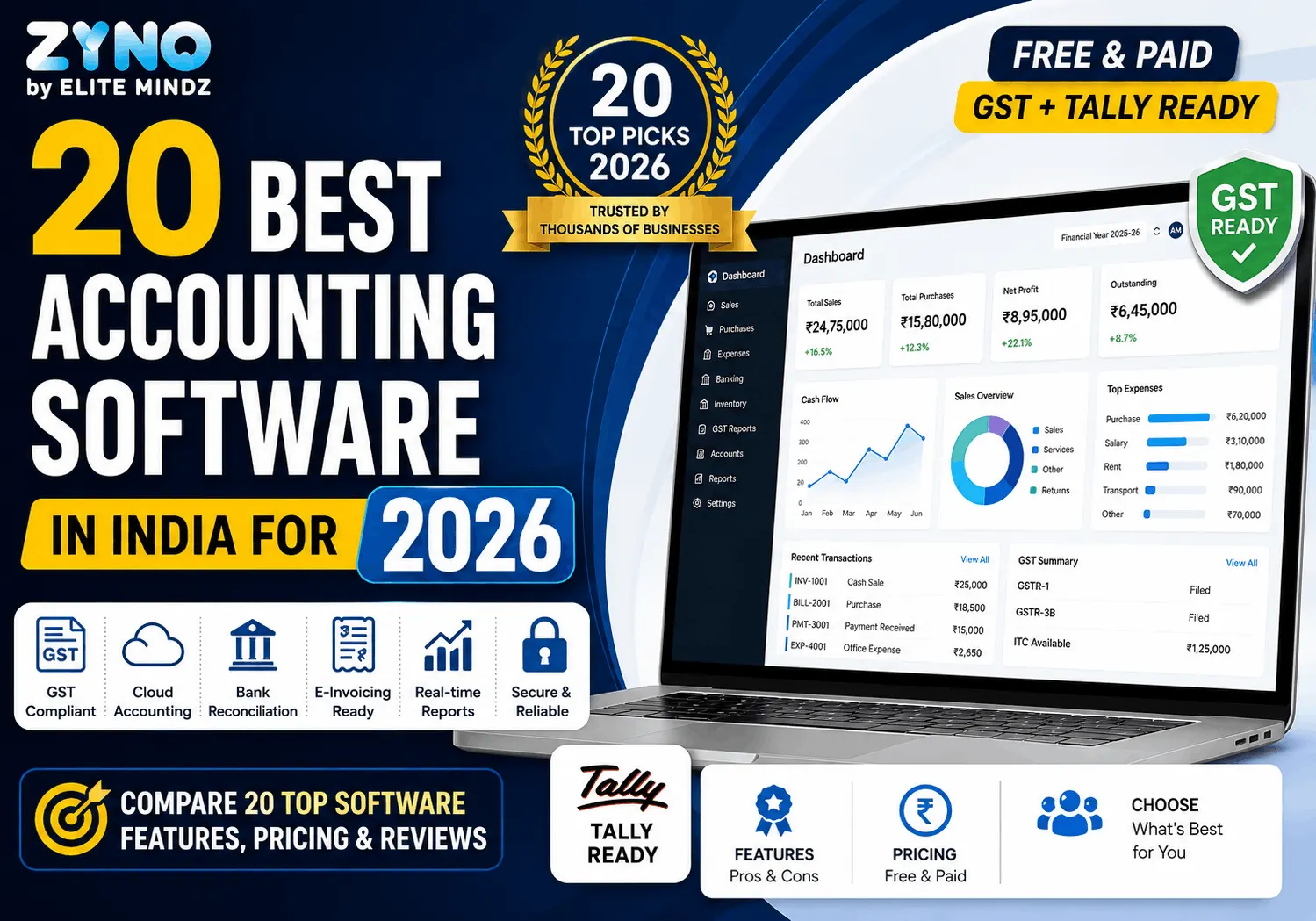
Which Is the Best Accounting Software in India? (2026 Guide)
Read More →
Best Accounting Software in Kenya (2026): Cloud-Based, VAT-Ready & Built for SMEs
Read More →
Cloud Accounting Software Comparison: Which One Is Right for Your Business?
Read More →
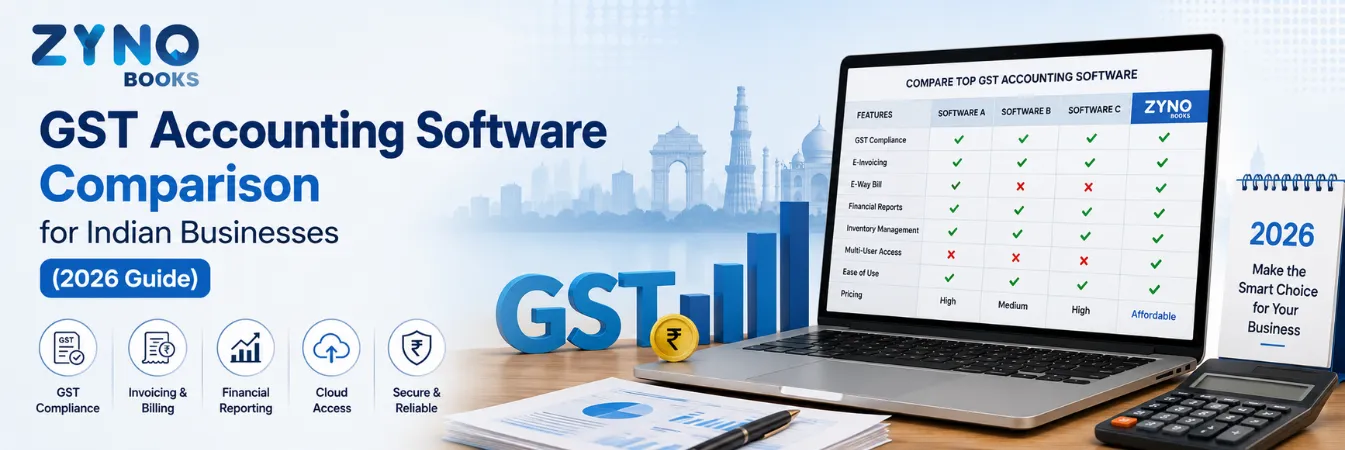
GST Accounting Software Comparison for Indian Businesses (2026 Guide)
Read More →
Zyno Books vs Vyapar: Which One Gives You More Value?
Read More →
OCR Invoice Processing: The Complete Guide for Finance Teams in 2026
Read More →
Accounting Software: The Complete Guide for Businesses in 2026
Read More →
Purchase Order Management: Meaning, Types, Format & Complete Guide (2026)
Read More →
Purchase Order vs Purchase Requisition vs Invoice: Complete Guide (2026)
Read More →
Types of Purchase Orders Explained: SPO, PPO, BPO & CPO (With Real Examples)
Read More →
Purchase Order Format: Complete Guide (GST & HSN Compliant) & Free Template
Read More →
ZynoBooks vs QuickBooks: Which AI Powered Accounting Software Is Right for Your Business in 2026
Read More →
3-Way Matching in Purchase Order Process: Complete Guide
Read More →
Purchase Order Management Software: Features to Look For (2026 Buyer's Guide)
Read More →
GST & HSN/SAC Compliance in Purchase Orders: An India-Specific Compliance Deep Dive
Read More →
Vendor Management & PO History: How to Evaluate Supplier Performance
Read More →
What Is Busy Software and Its Best Alternative in the Market?
Read More →
15 Fast Accounting Software That Can Make Your Life Easy
Read More →
GST Billing Software: Complete Guide to Features, Benefits, Pricing & Best Options
Read More →
Cloud Based Inventory Management Software: The Complete Guide for 2026
Read More →Partner with ZYNO by Elite Mindz to revolutionize how your business works. Fill out the form, and we’ll reach out with AI-powered solutions made just for you.
We use browser cookies to ensure you get the best experience on our website. Learn more
The form was submitted successfully!