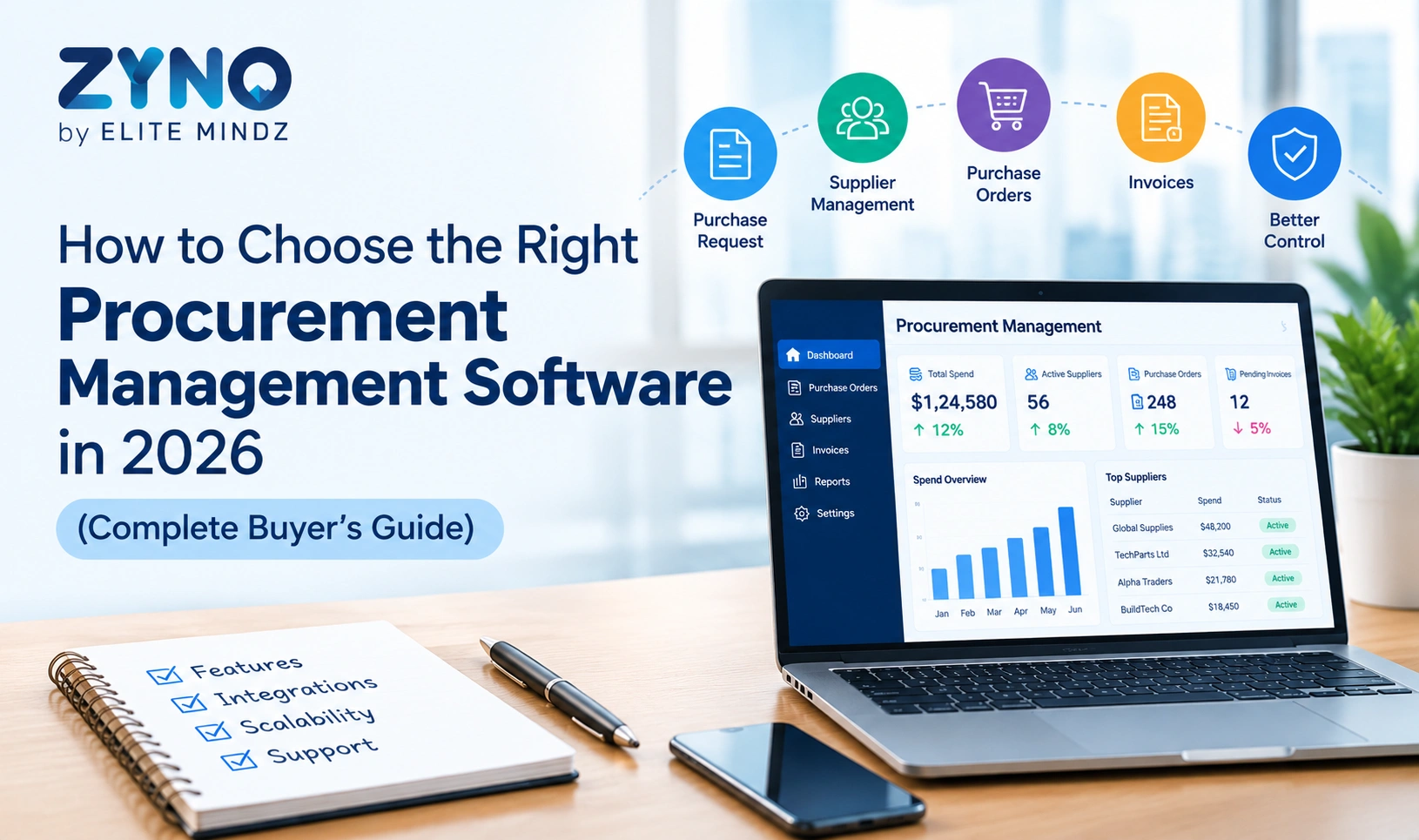
Your purchase team is chasing approvals on WhatsApp. Your accounts team is fixing vendor invoices on Excel. Sound familiar? You are not alone, but you are losing money everyday. The right procurement software can fix this quickly.
India's market has changed a lot. More companies now use procurement management software. Why? Because delayed payments hurt. Duplicate orders waste money. Missed GST credits cost you. Poor vendor tracking creates chaos. Good procurement software solves all of this.
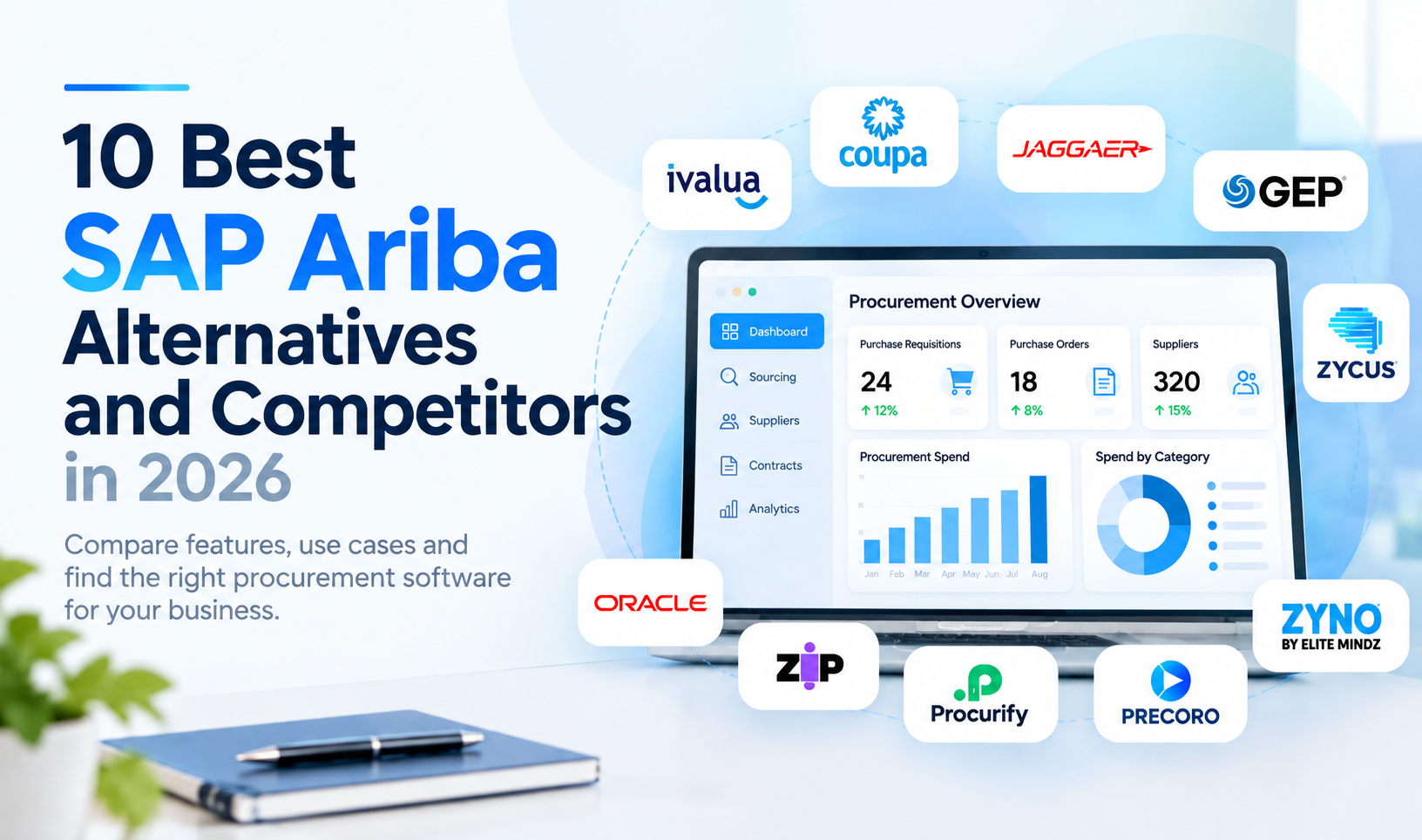
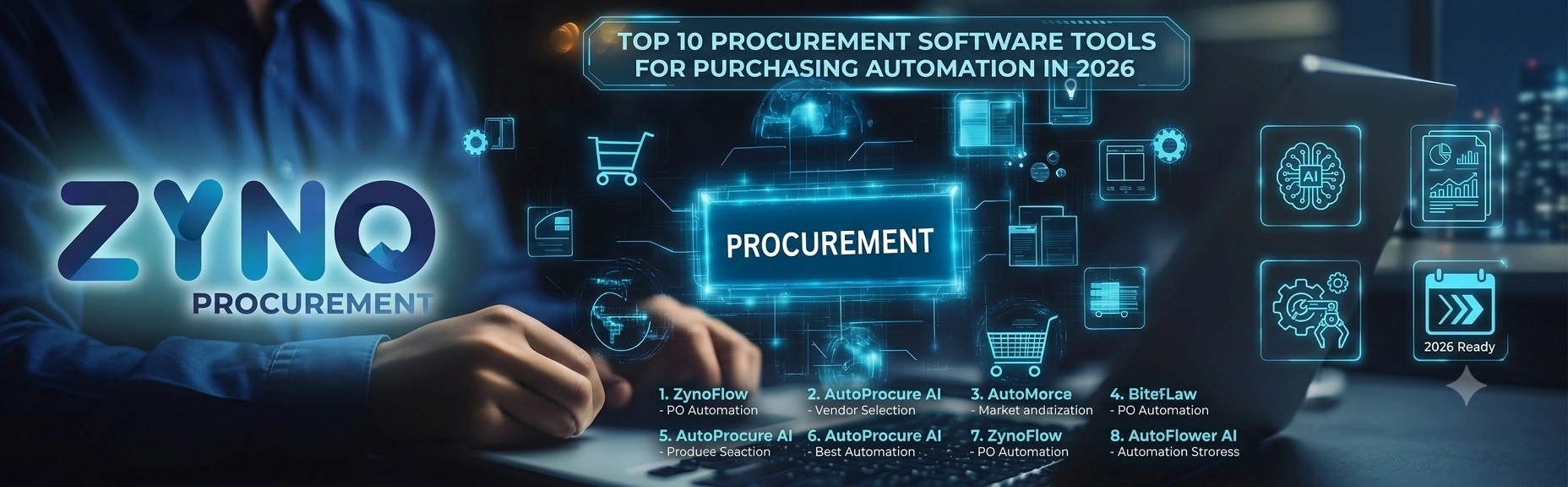
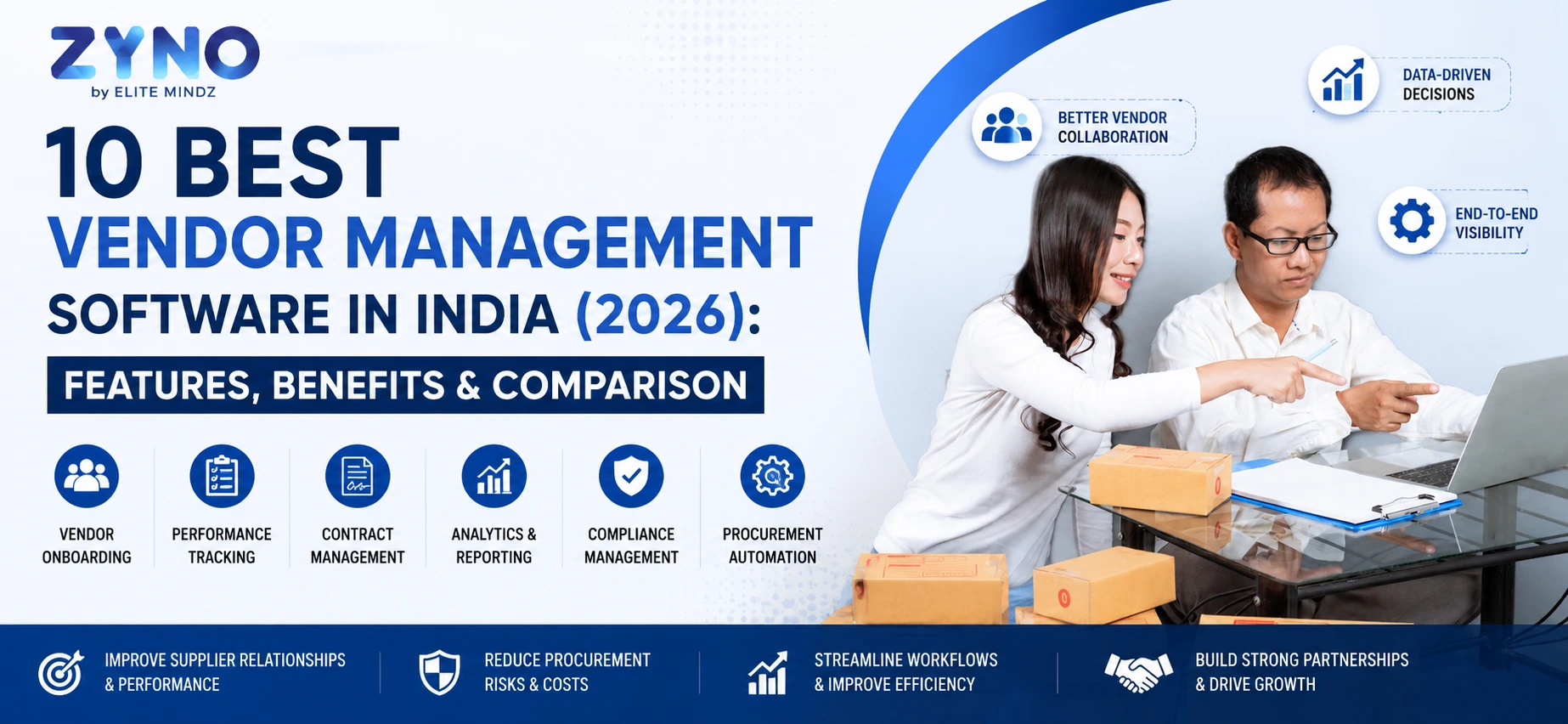
So, this guide covers the top procurement software companies in India for 2026. It shows what each platform does well. It also shows where each one falls short. Whether you need procure to pay software, e procurement software, or full procurement management software, this list will help you decide.
A few years ago, many Indian businesses treated procurement as a back-office job. It was important. But it was not urgent enough to invest in. That thinking has changed completely.
GST compliance is now strict. E-invoicing is mandatory. Vendor audit trails are required. Working capital is tight. All of these factors have pushed procurement management software from a nice-to-have to a must-have.
Research from IDC shows something important. The best procurement software can cut procurement costs by 15 to 20 percent in the first year. That is a big saving. Moreover, faster approvals and better invoice matching give teams more time for strategic work. That is a real competitive edge.
For Indian businesses, compliance alone justifies the investment. Procurement software in India that handles GST input credits, TDS on vendor payments, and e-invoicing natively saves hours every week. Additionally, it reduces costly errors during audits. So the question is not whether to invest. The question is which platform to choose.
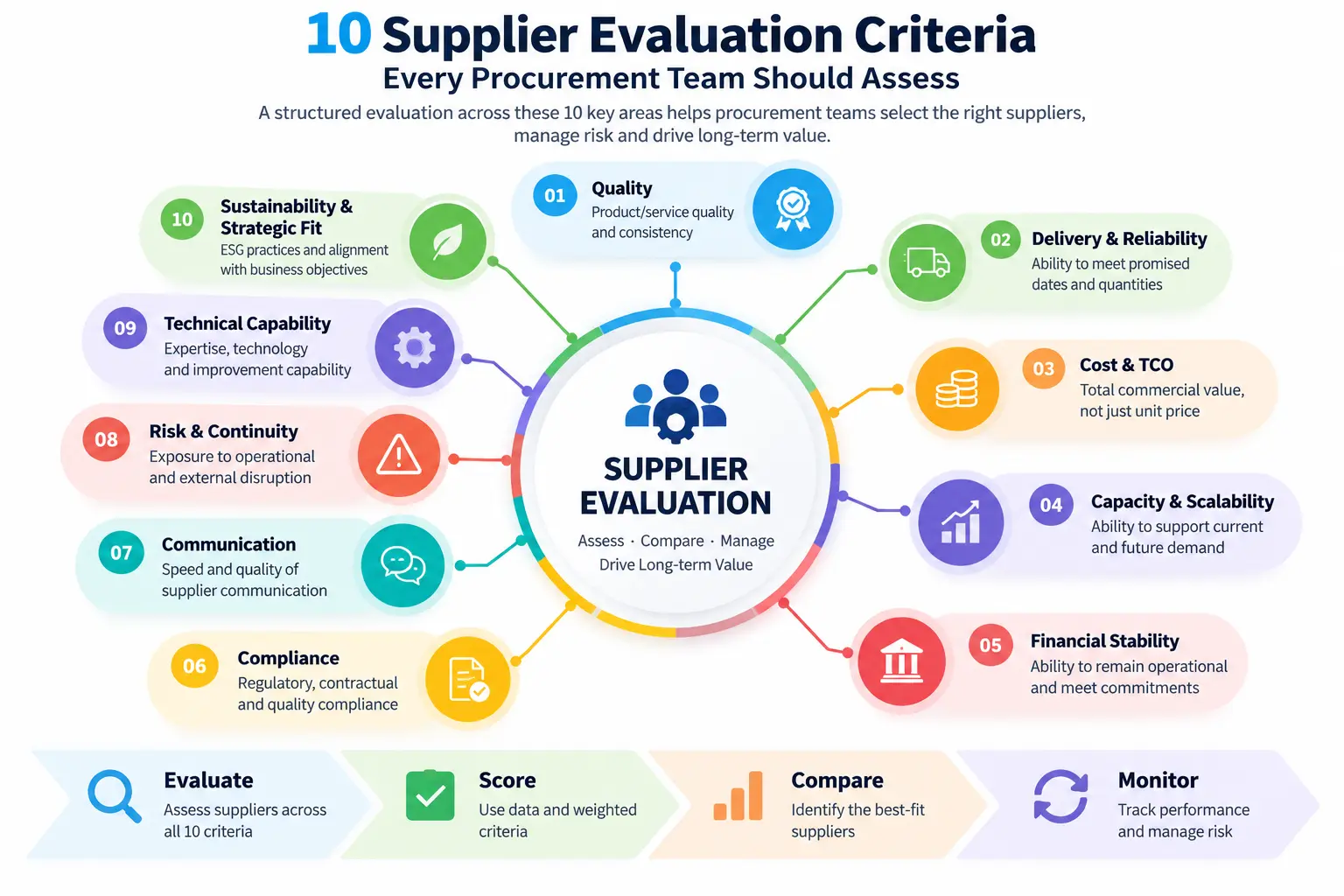
We looked at five things for each platform. These were feature depth, GST compliance, AI capability, value for money, and local support quality. The goal was simple. We wanted to give you an honest picture, not just marketing claims.

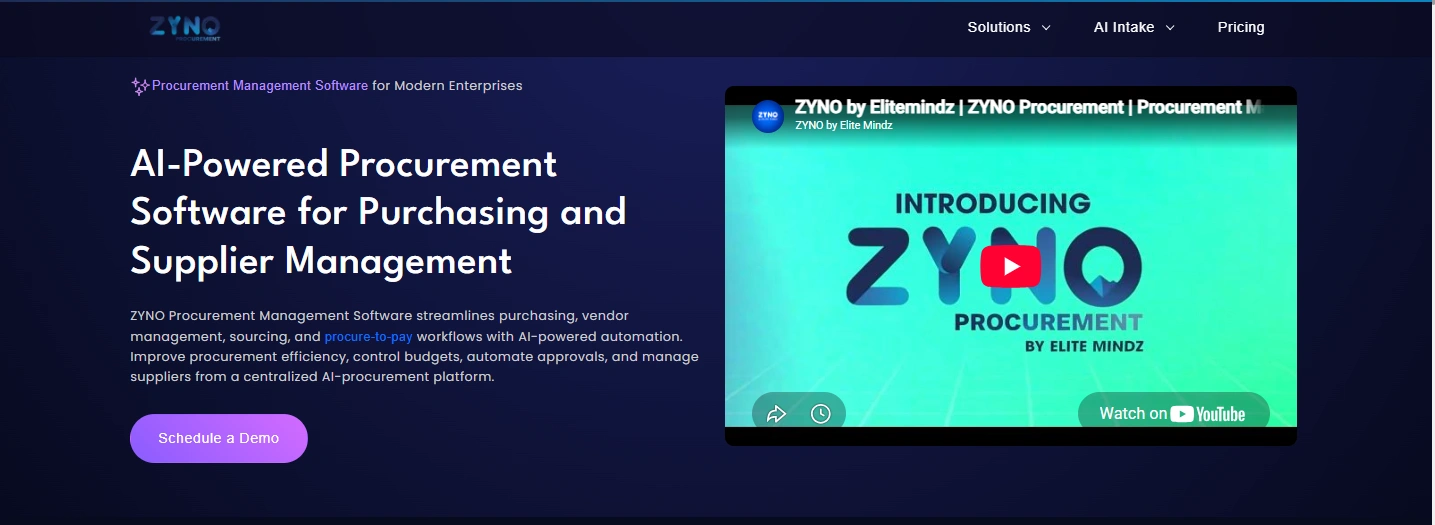
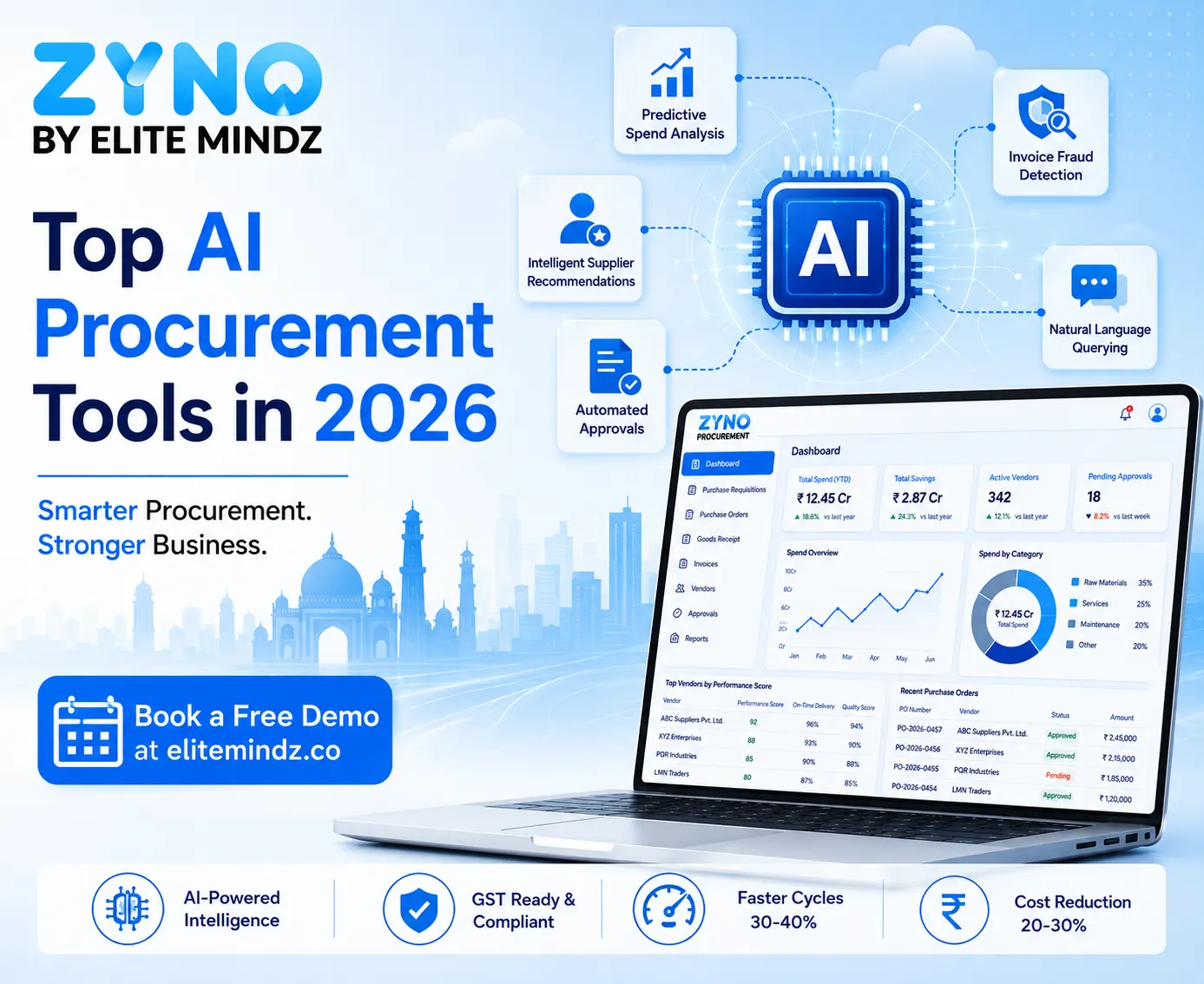
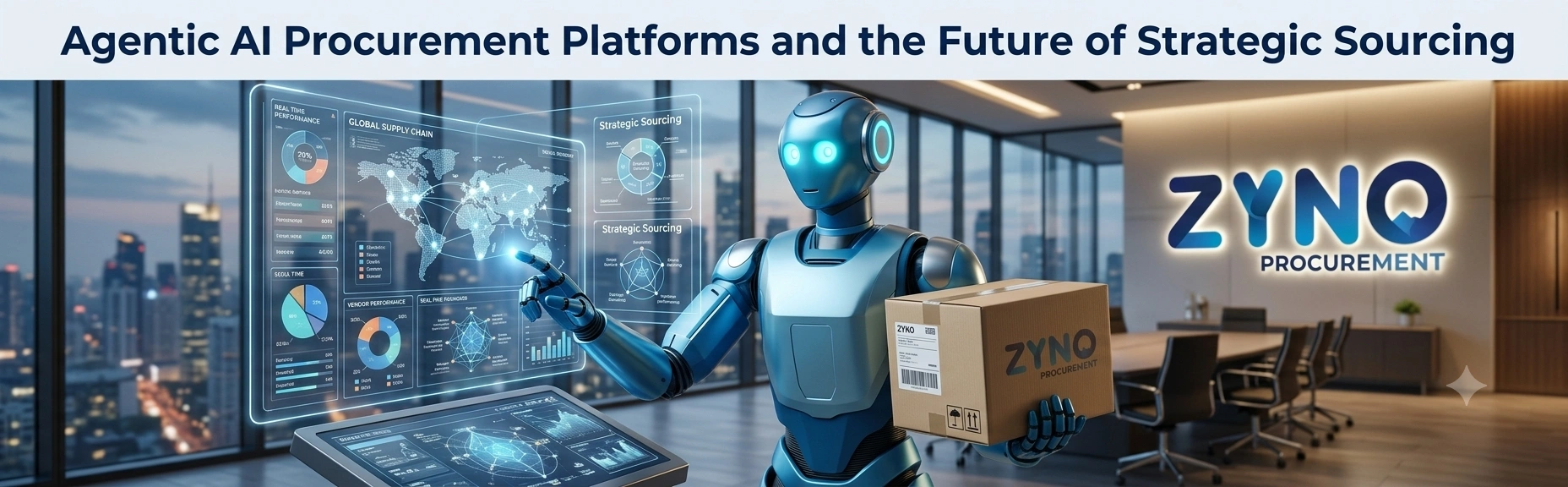
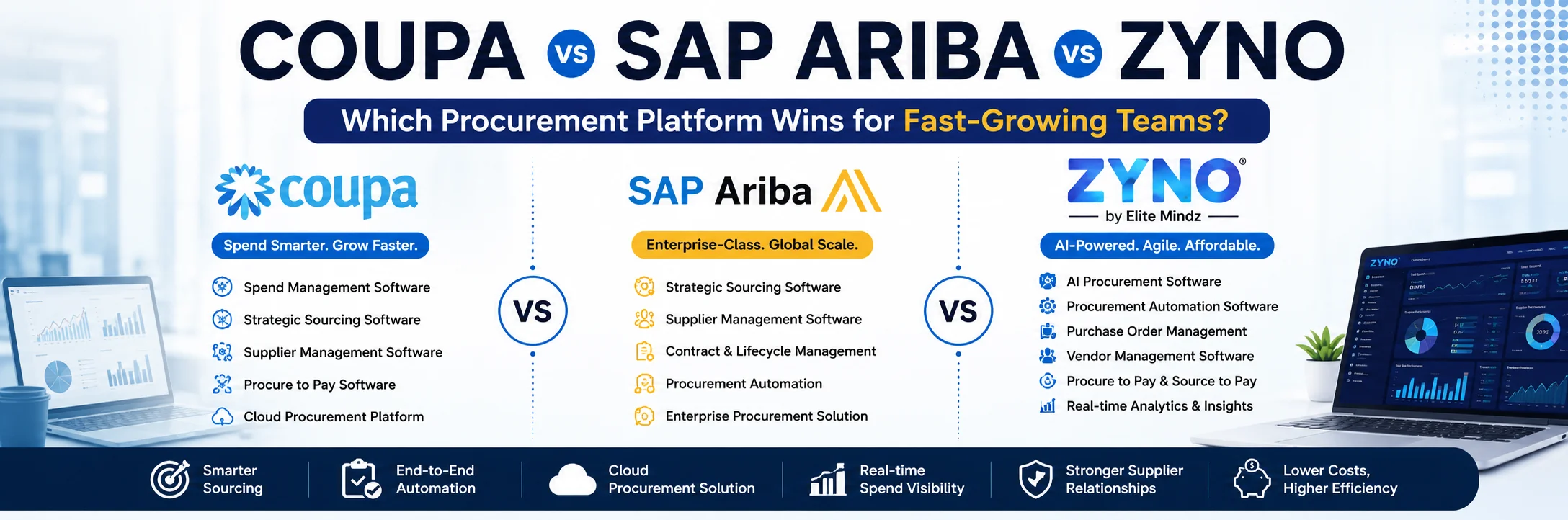
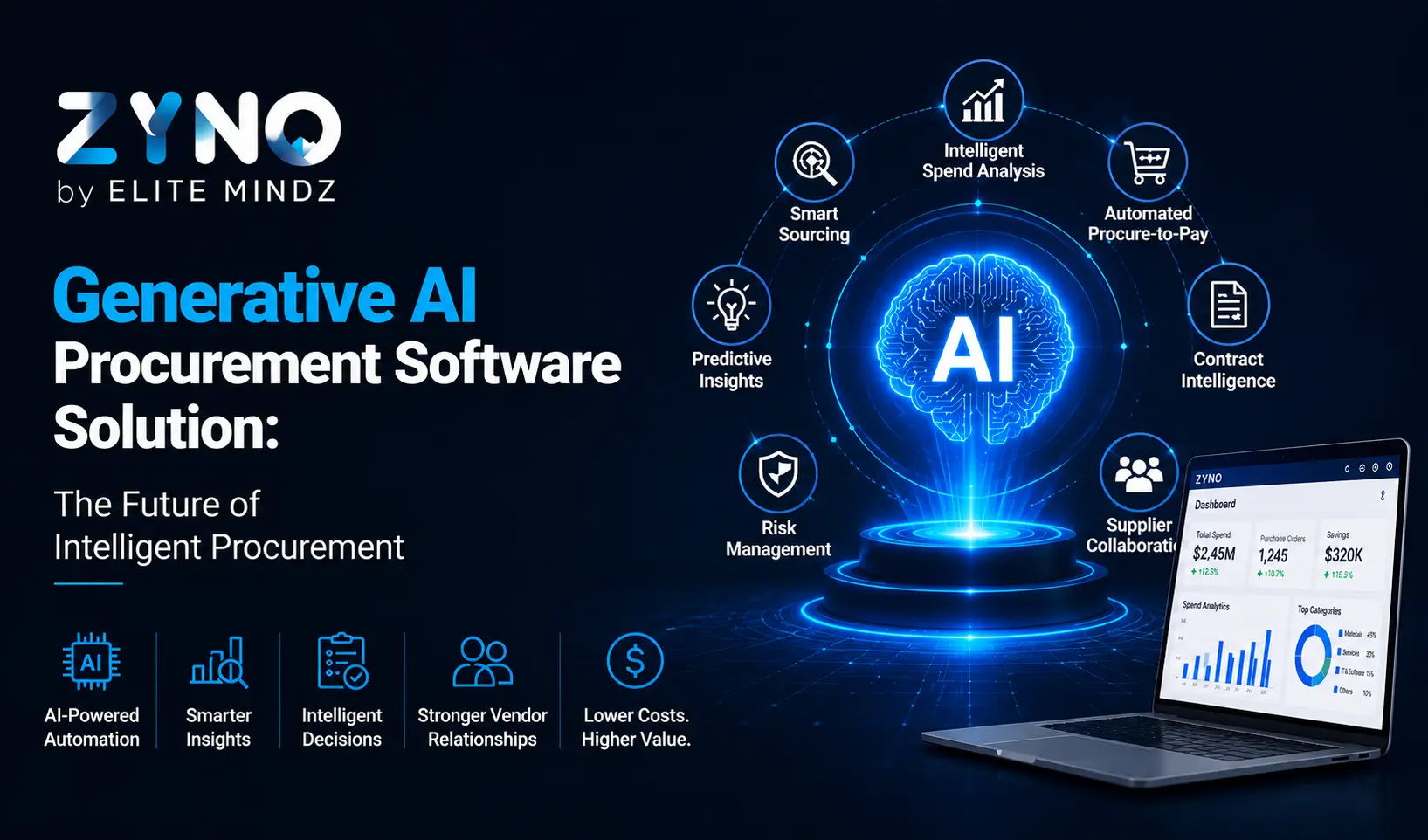
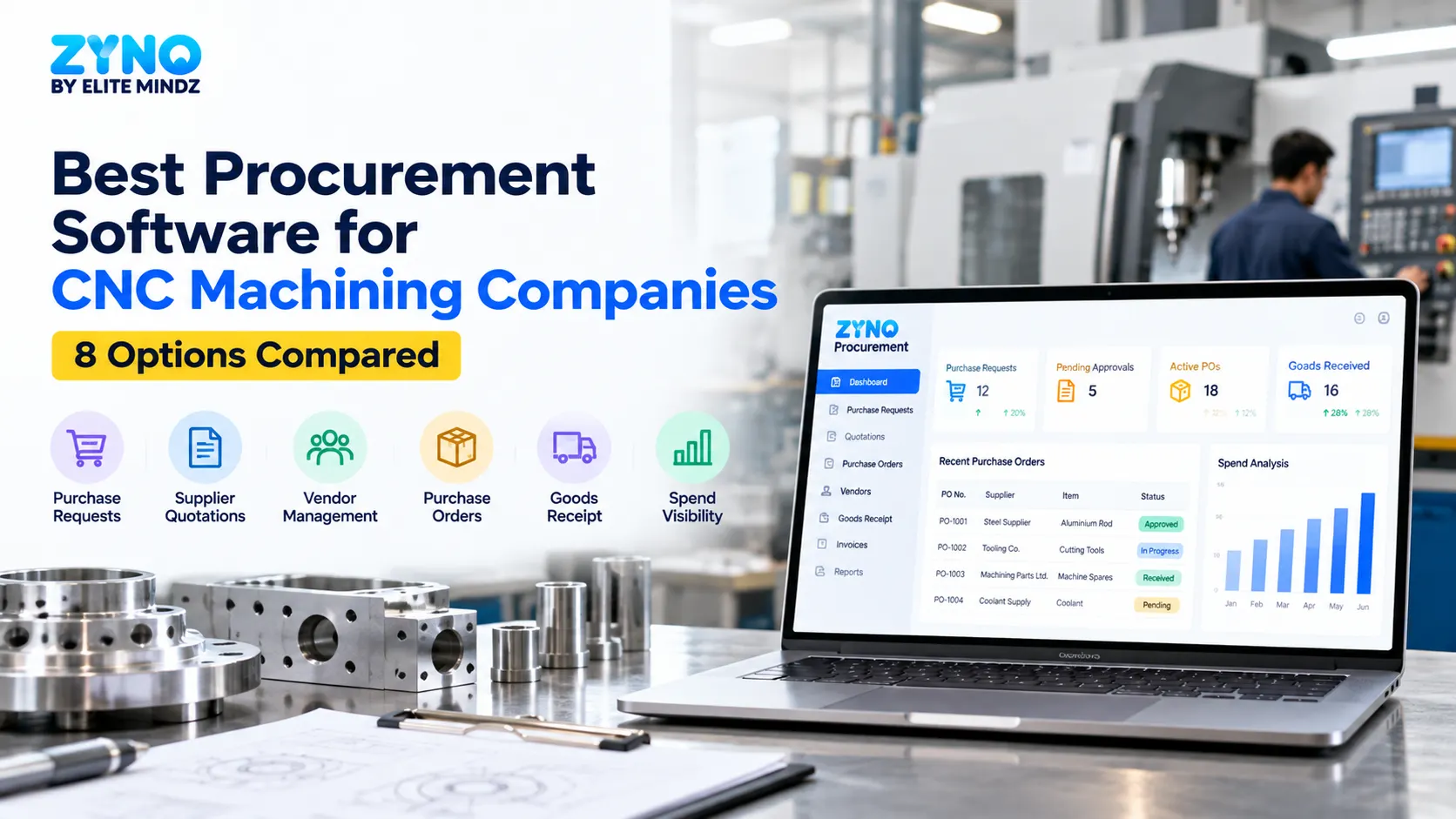
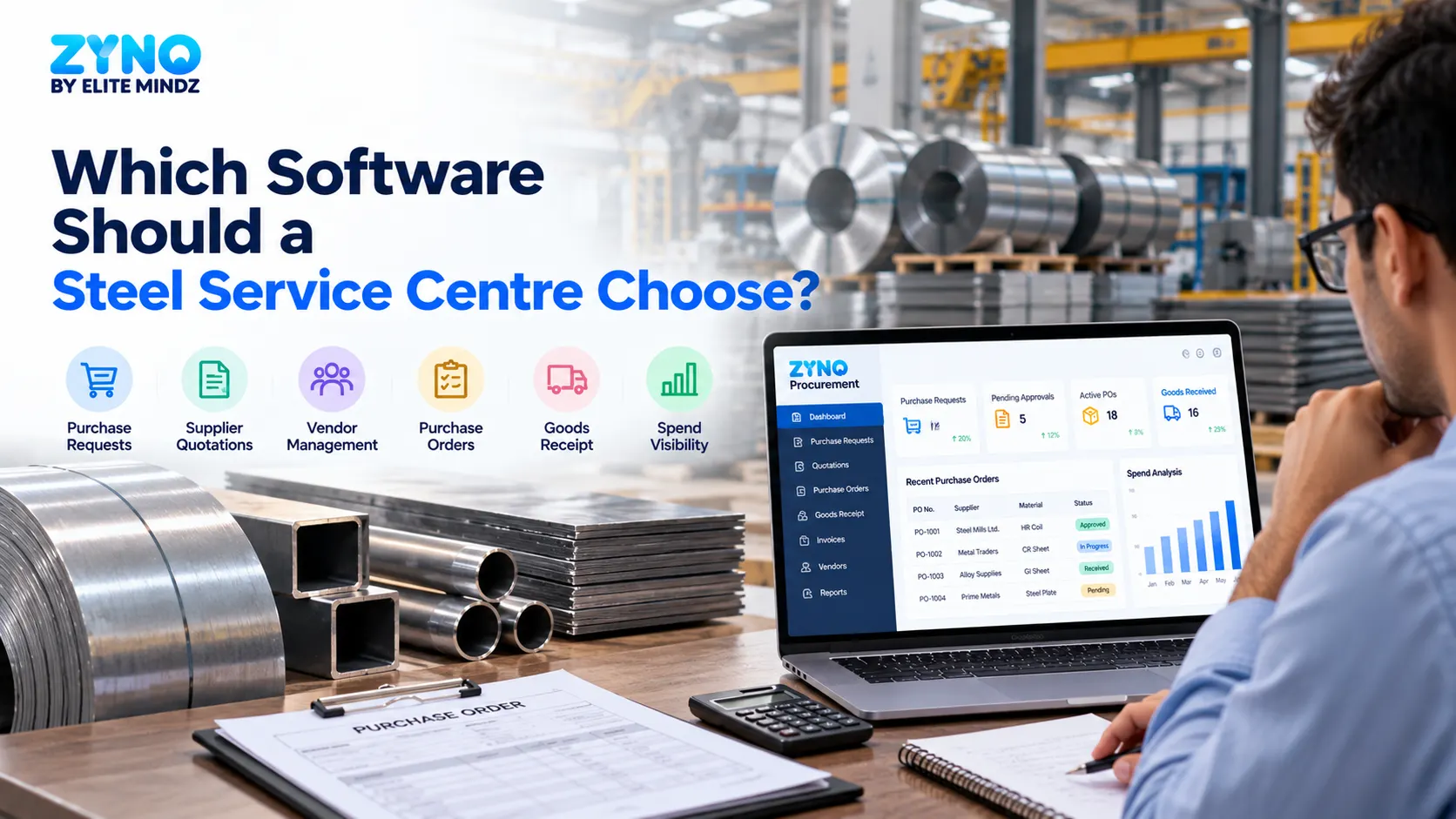
ZYNO Procurement by Elite Mindz is built for how Indian businesses actually work. It covers the full procurement cycle in one connected platform. The system combines five functions which include purchase requests, vendor quotes, goods receipt, invoice matching and payment processing. Nothing falls through the gaps.
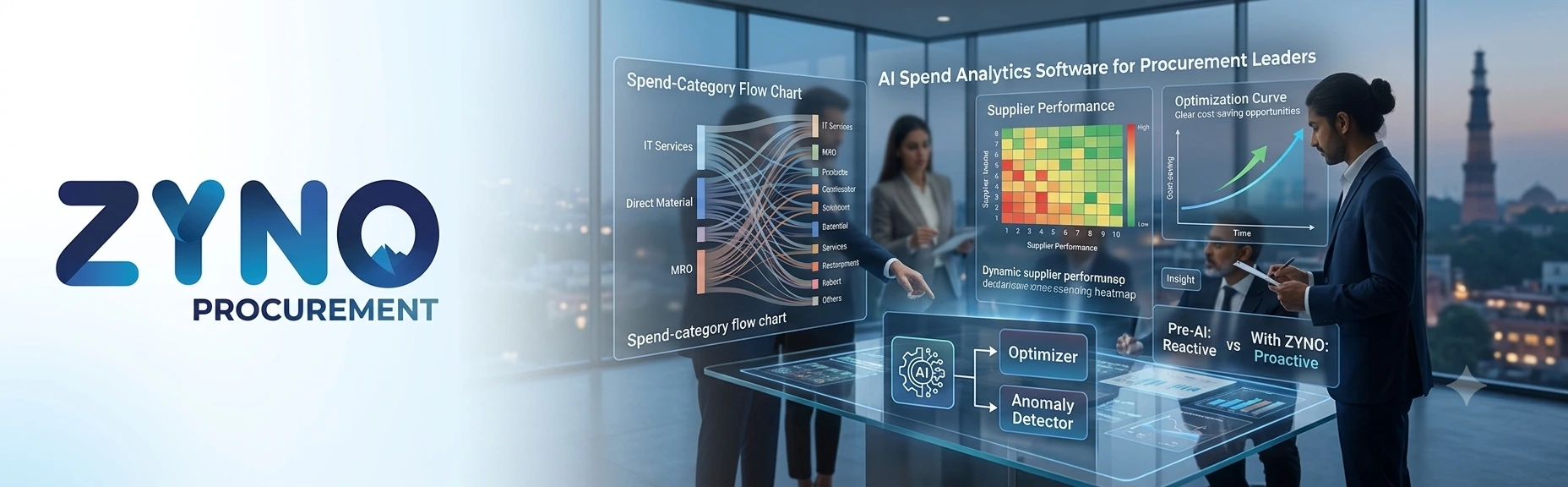
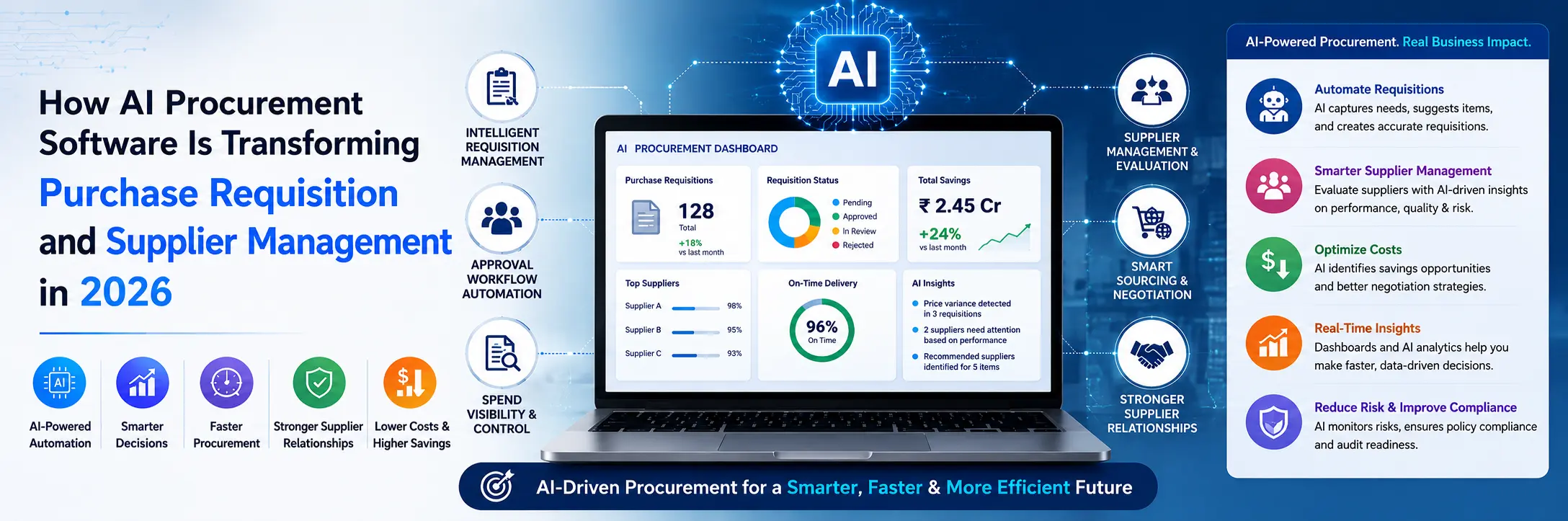
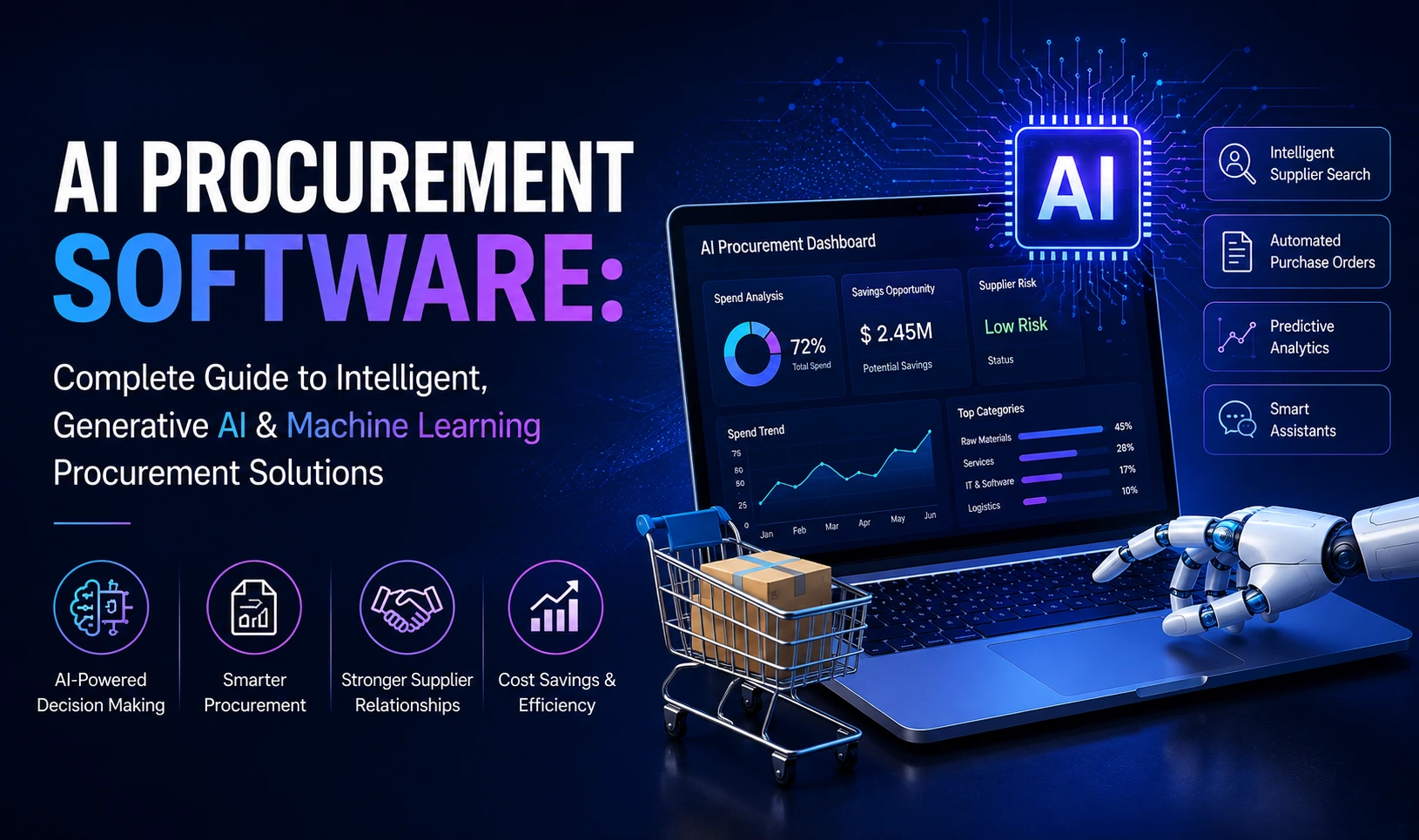
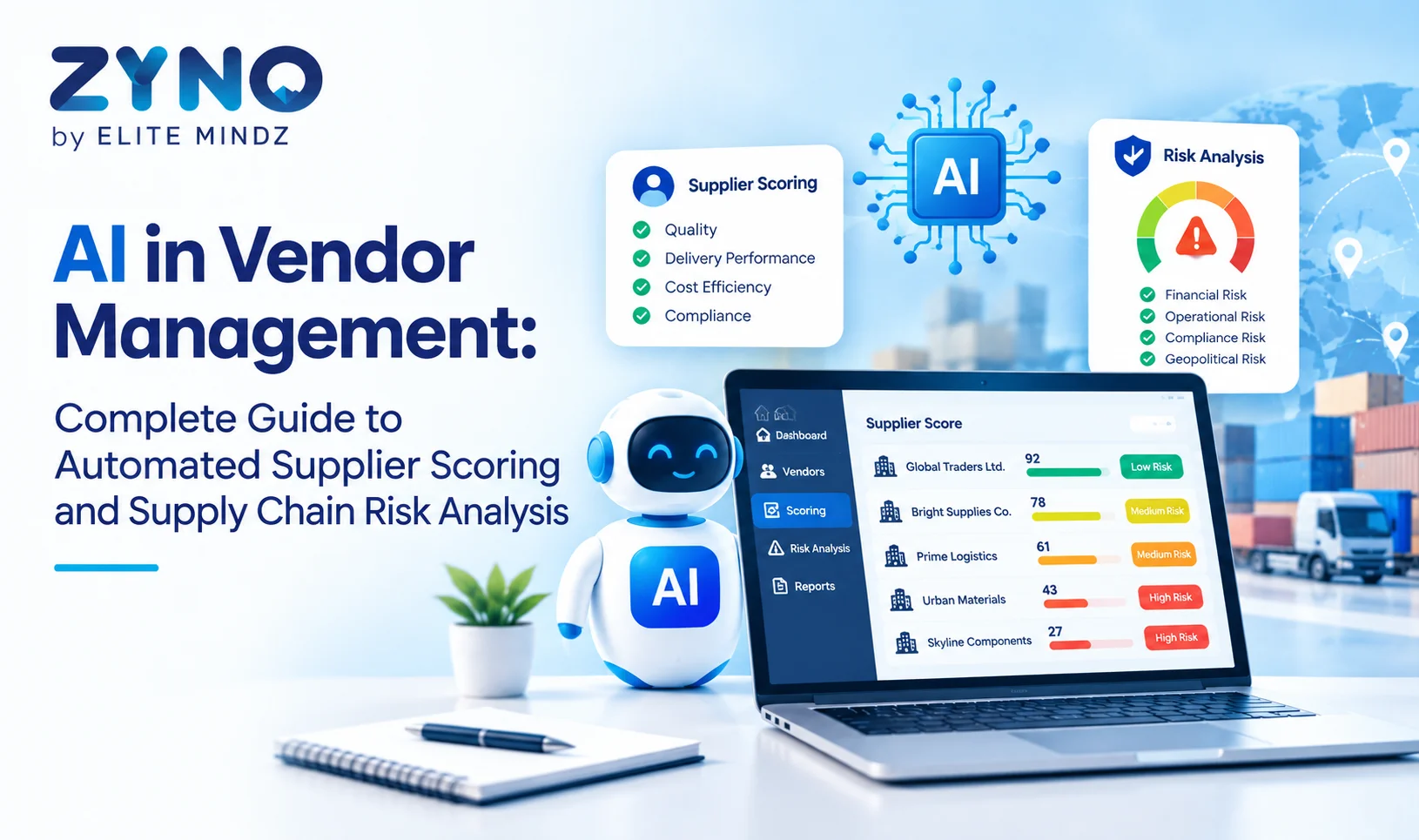
What separates ZYNO from other procurement software companies is its combination of real AI and deep local compliance. This is not AI as a label. It is AI that predicts vendor performance. It flags spend issues. It also optimises costs based on your purchase history.
Elite Mindz reports that businesses using ZYNO's AI procurement software solution reduce spend by up to 20 percent. This matches broader IDC findings on AI-driven procurement outcomes. So the results are real, not just promised.
ZYNO operates in all essential industries of India which include retail, manufacturing, IT, healthcare, education and public services. The company developed its operational systems to meet the specific requirements of Indian companies. The system functions as a complete solution because it includes GST, TDS and e-invoicing as fundamental elements of its design.
The system establishes smooth connections with Tally, SAP, QuickBooks and Elite Mindz's proprietary ERP system. The shared data between your procurement team and finance team ensures both departments work with consistent information. There are no sync issues or manual transfers.
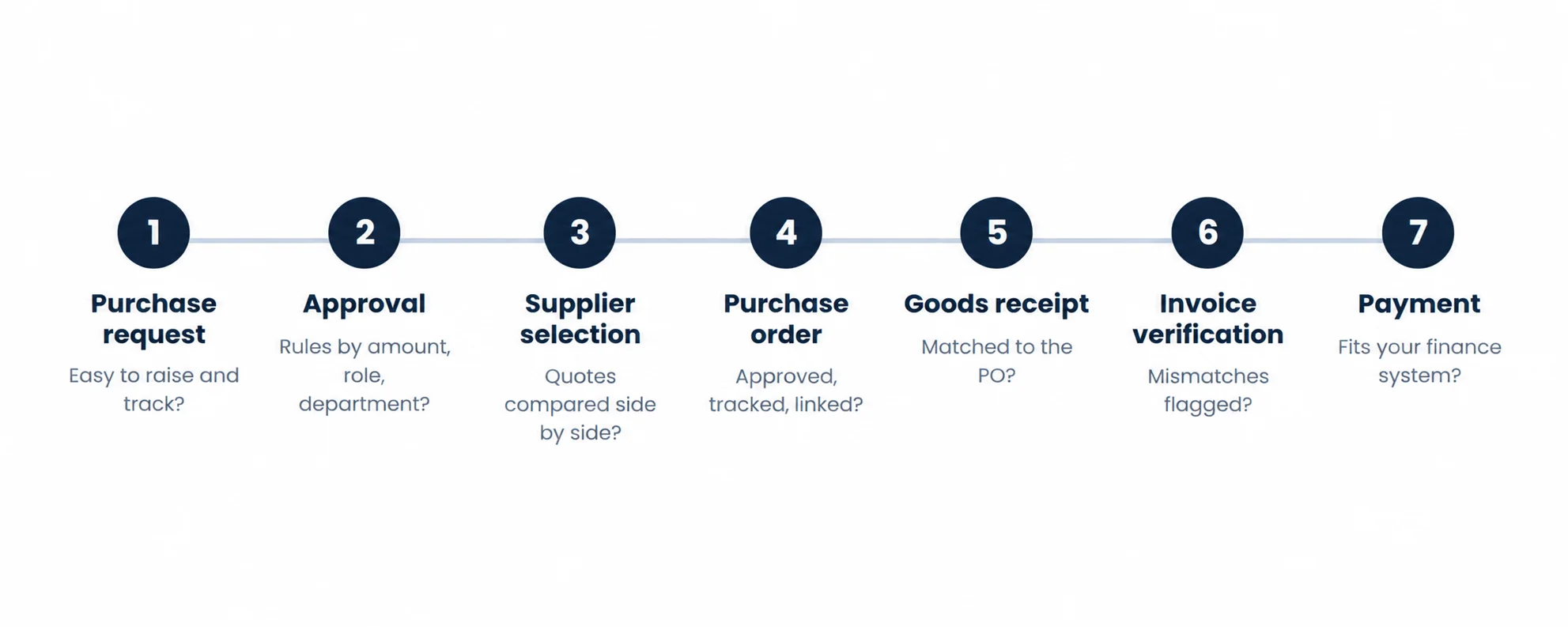
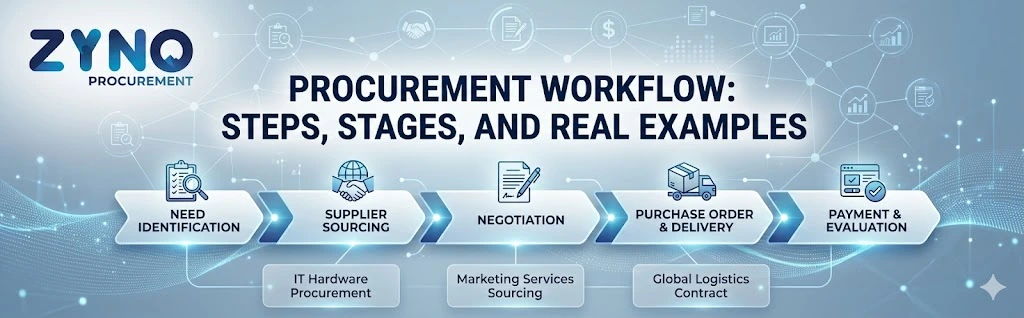
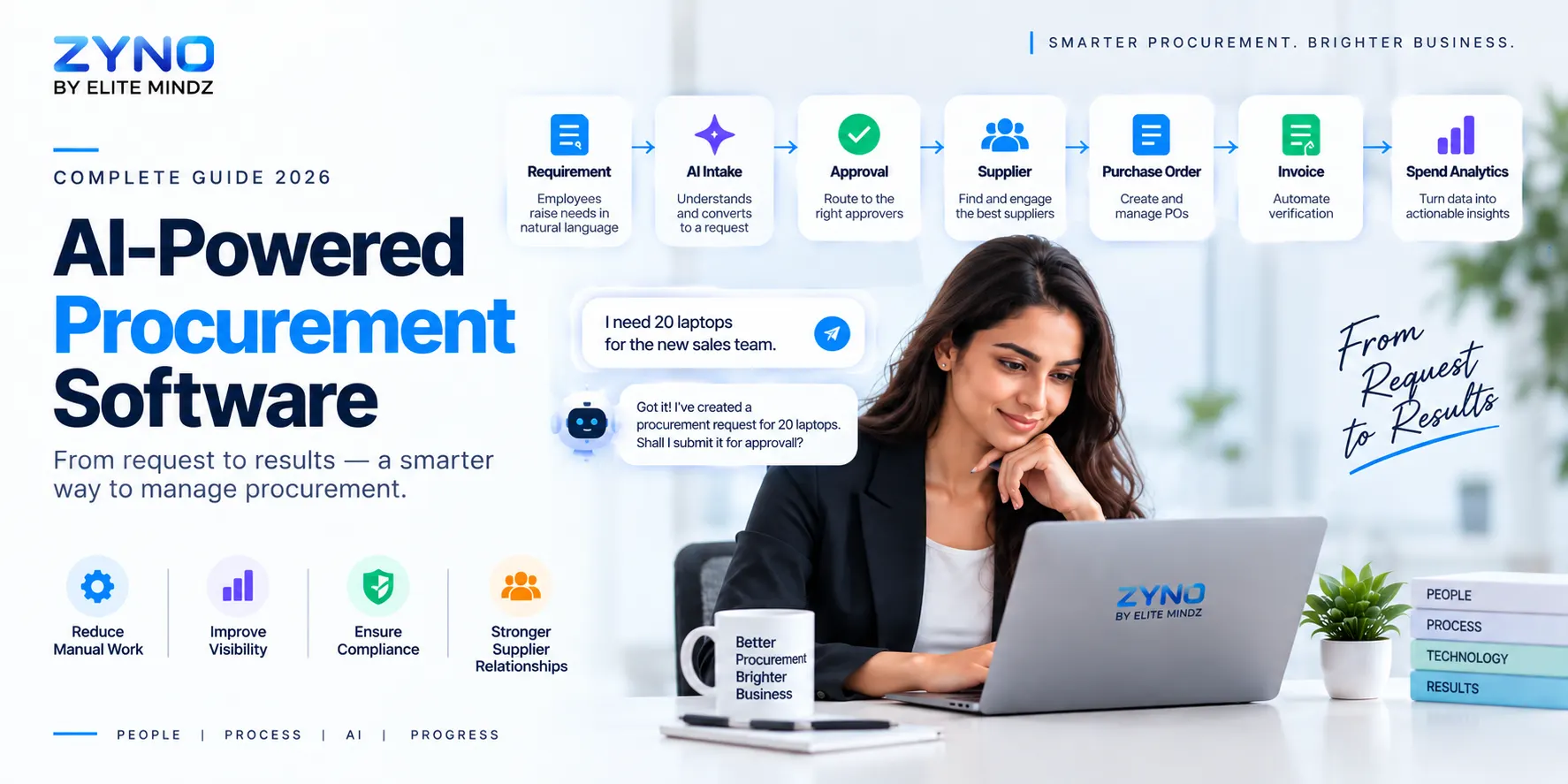
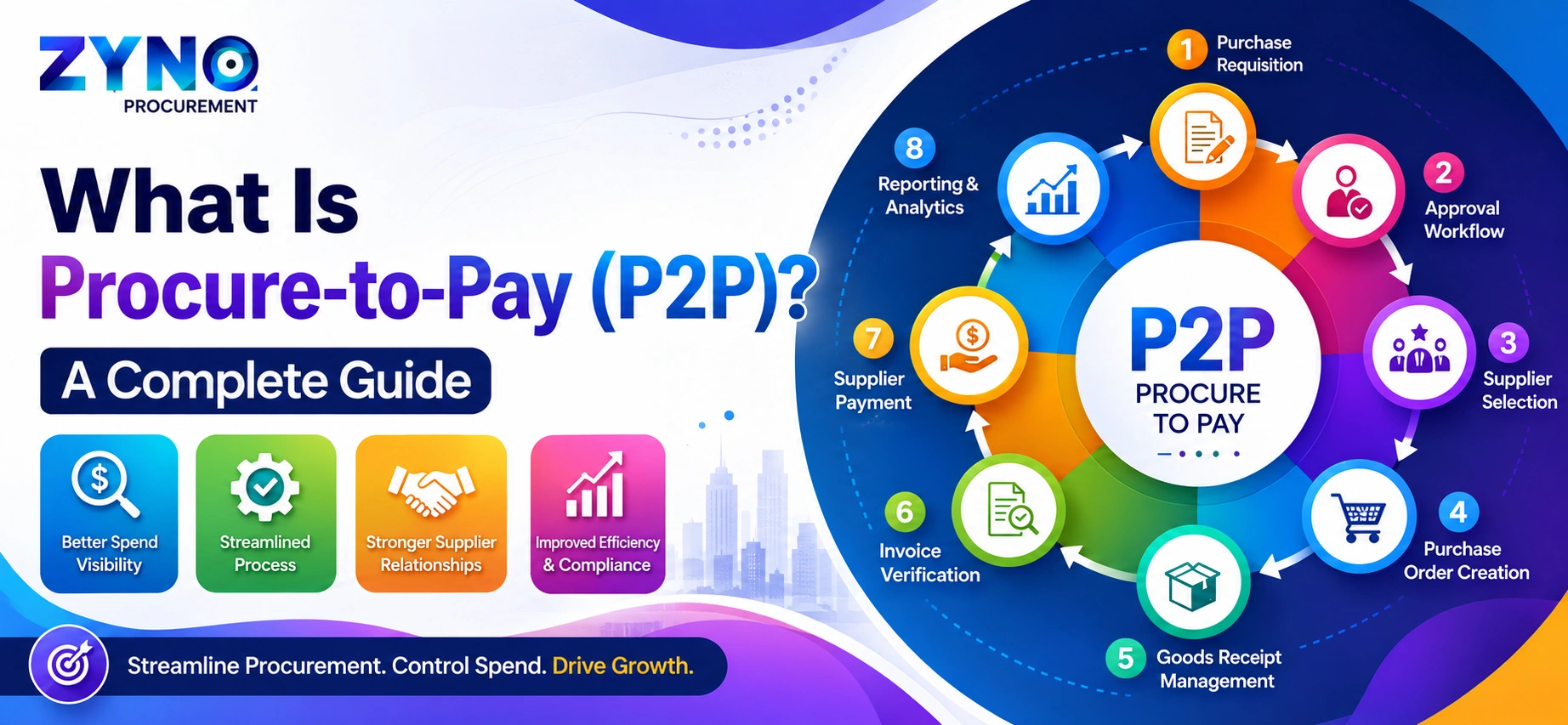
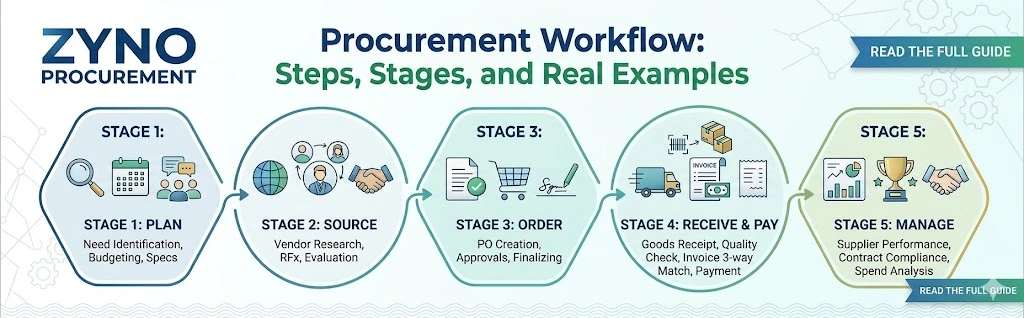
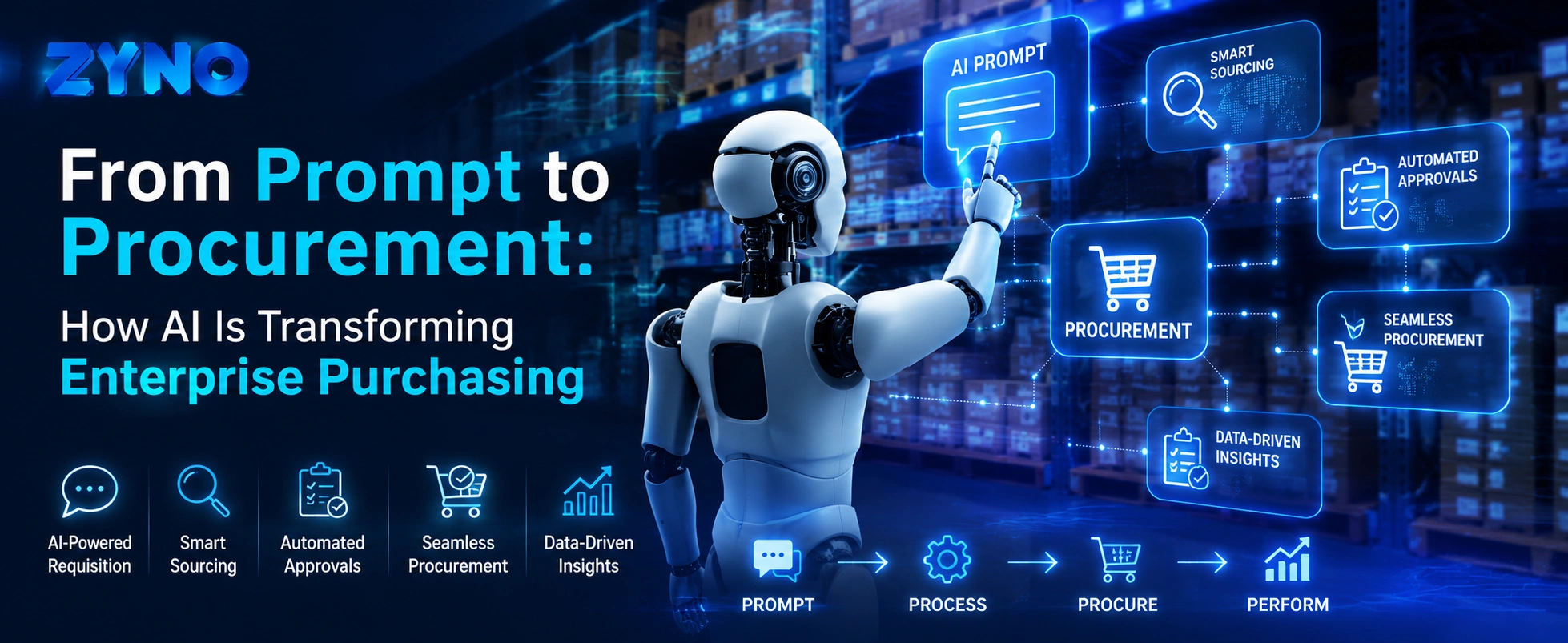
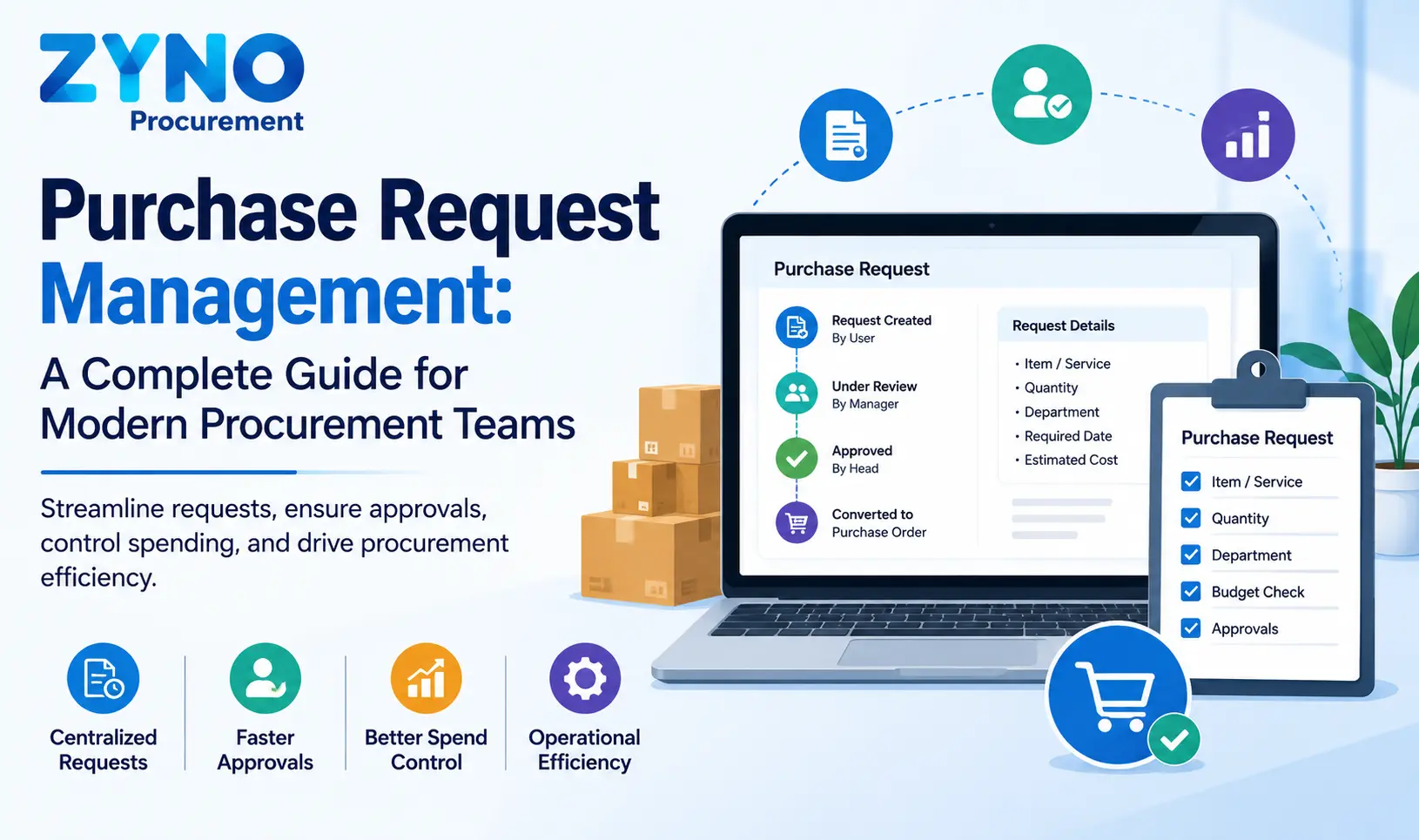
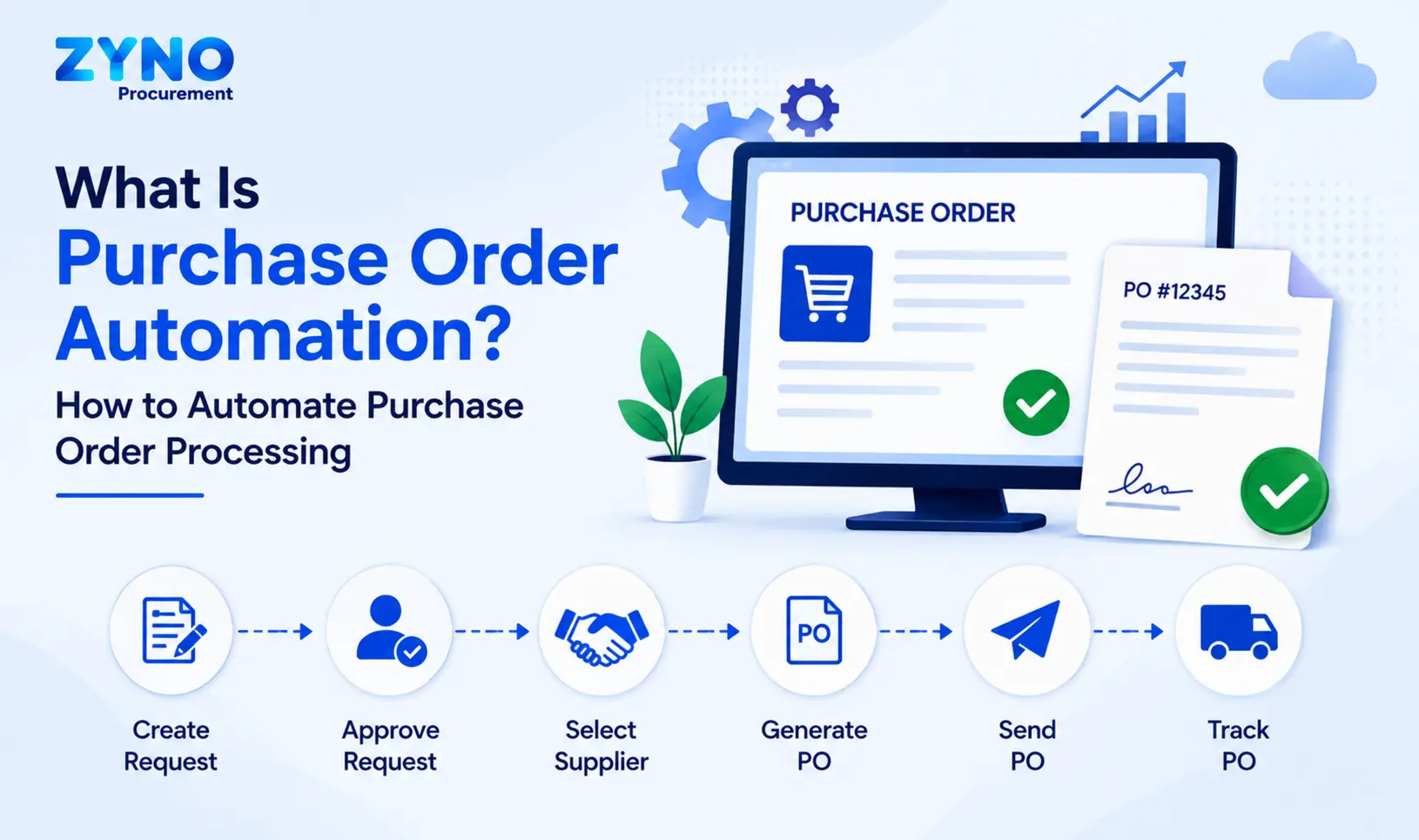
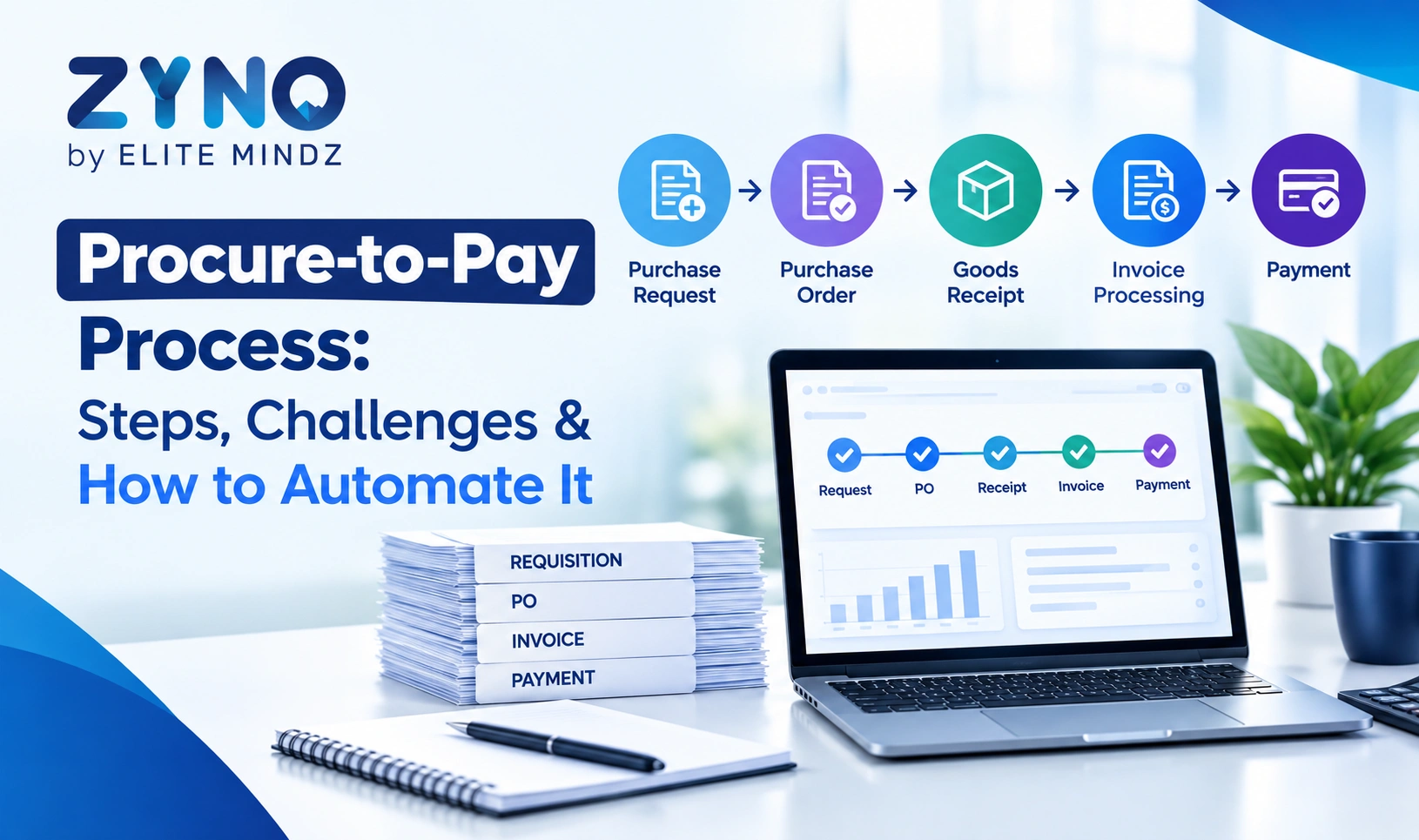
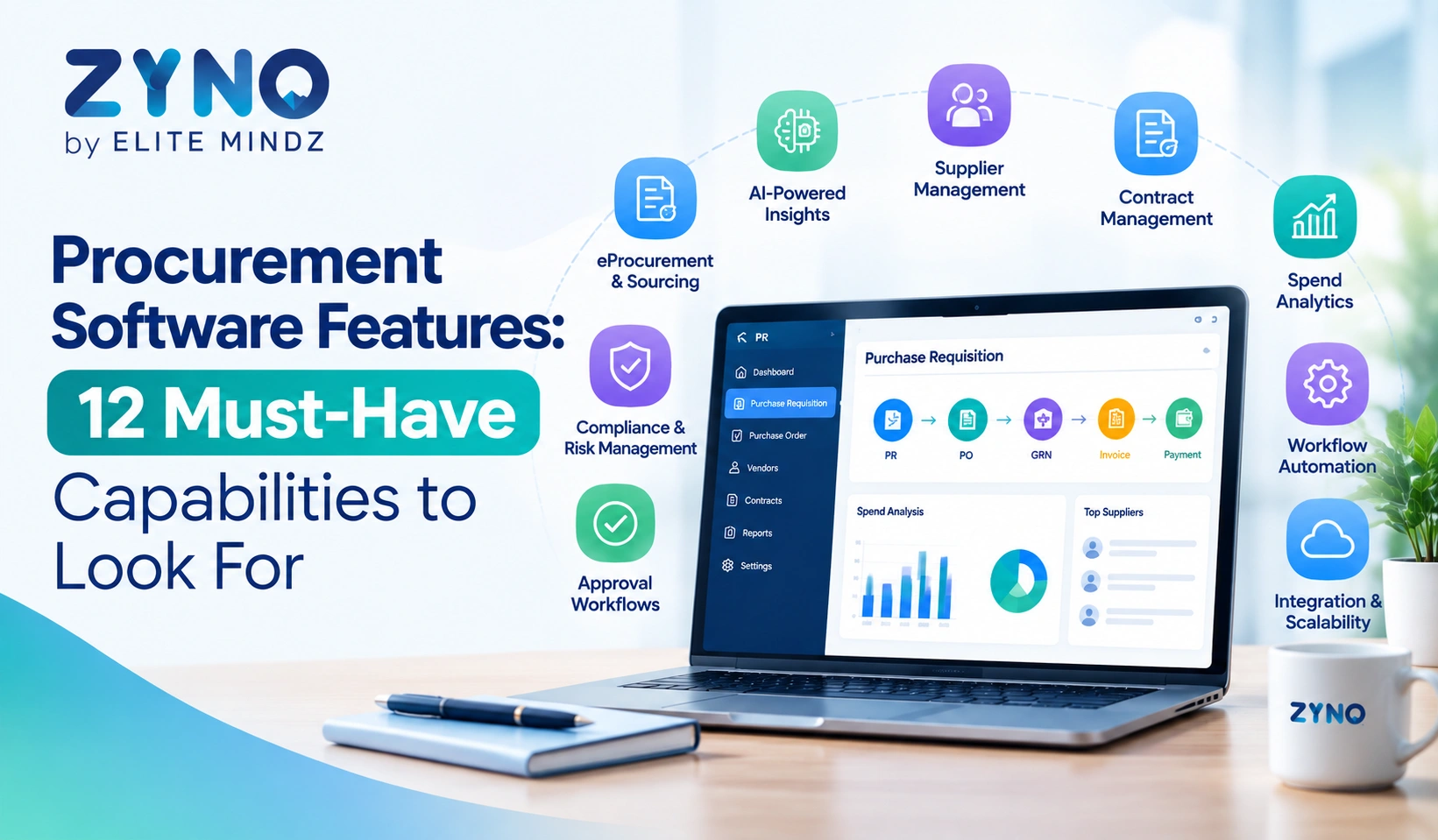
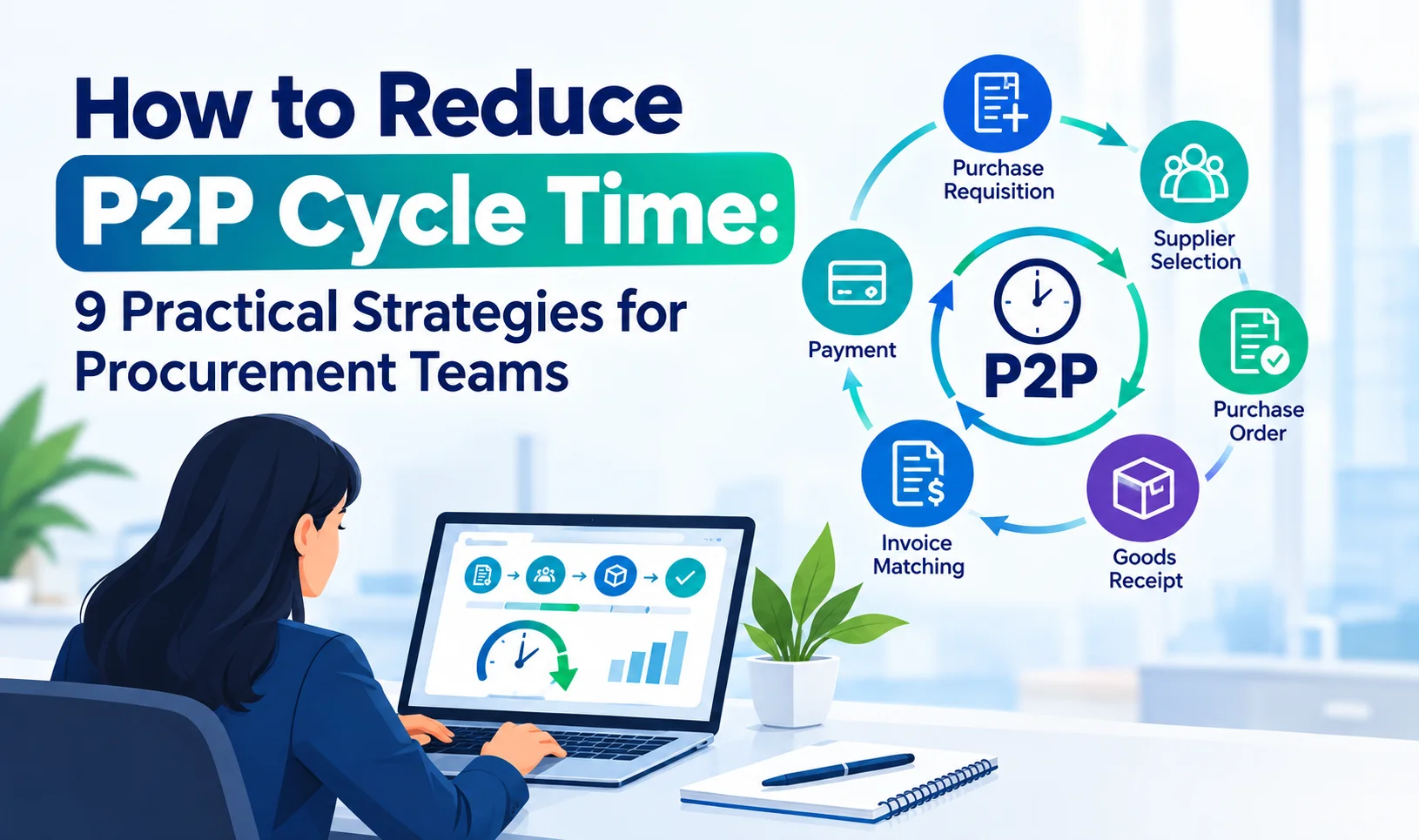
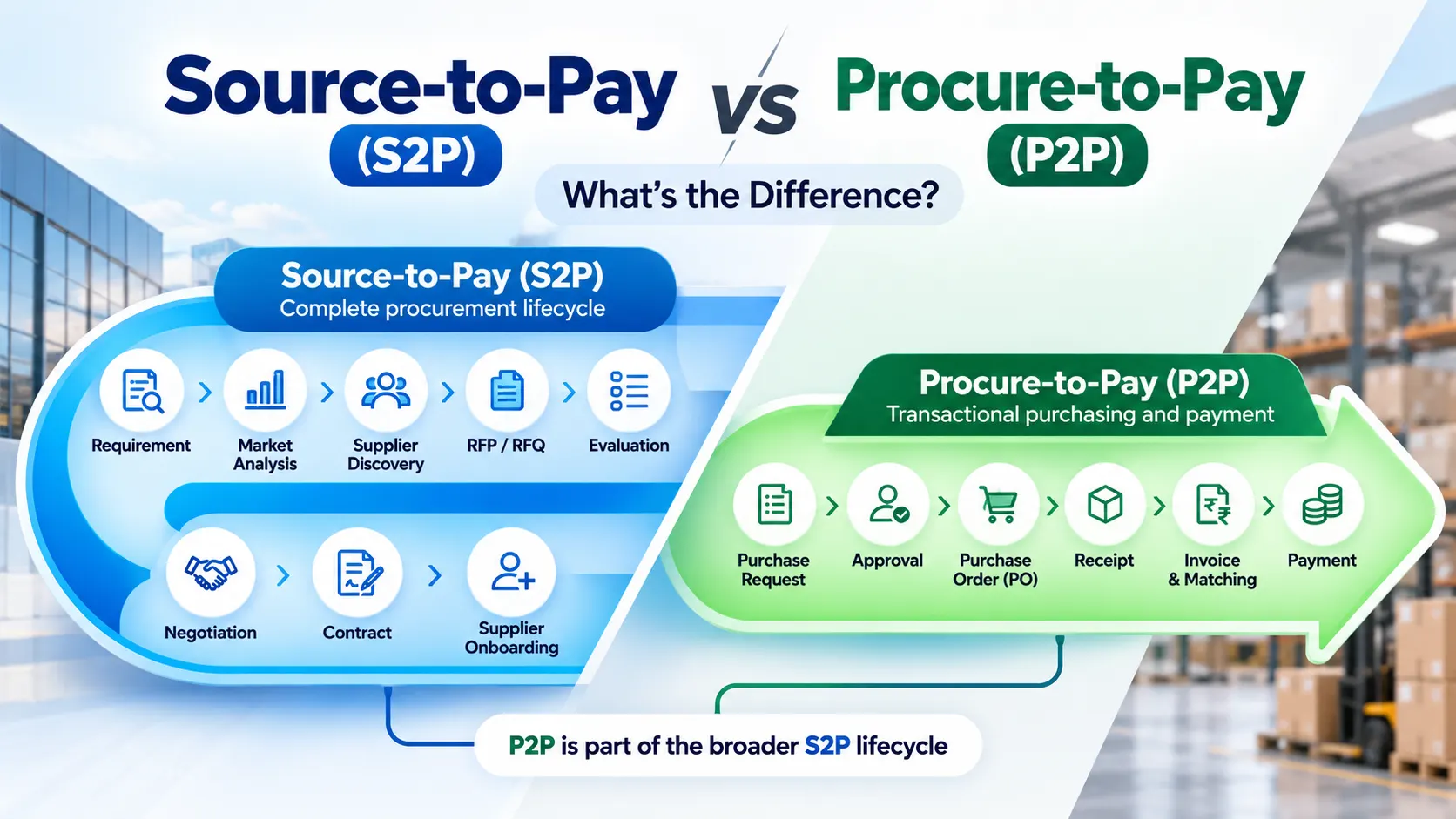
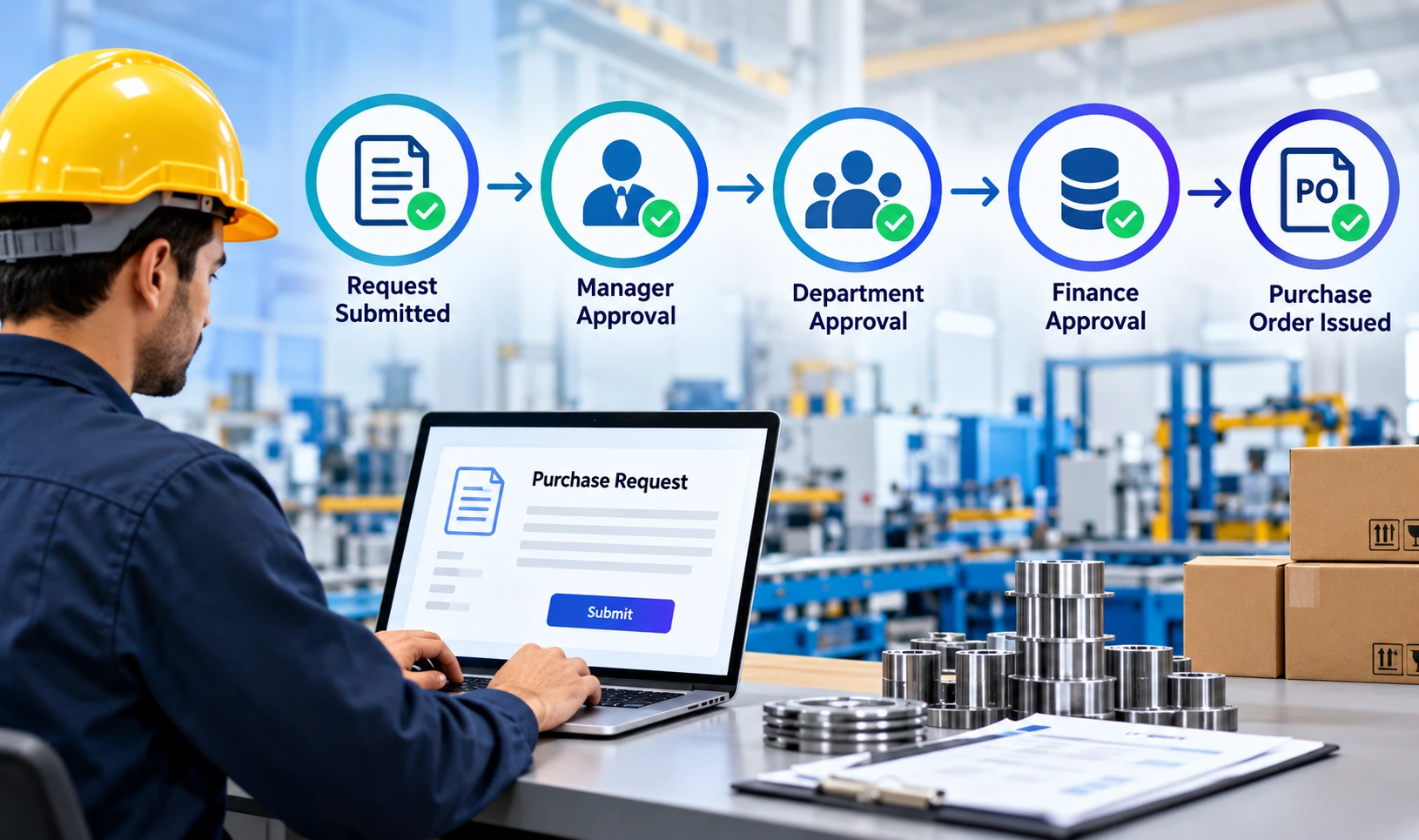
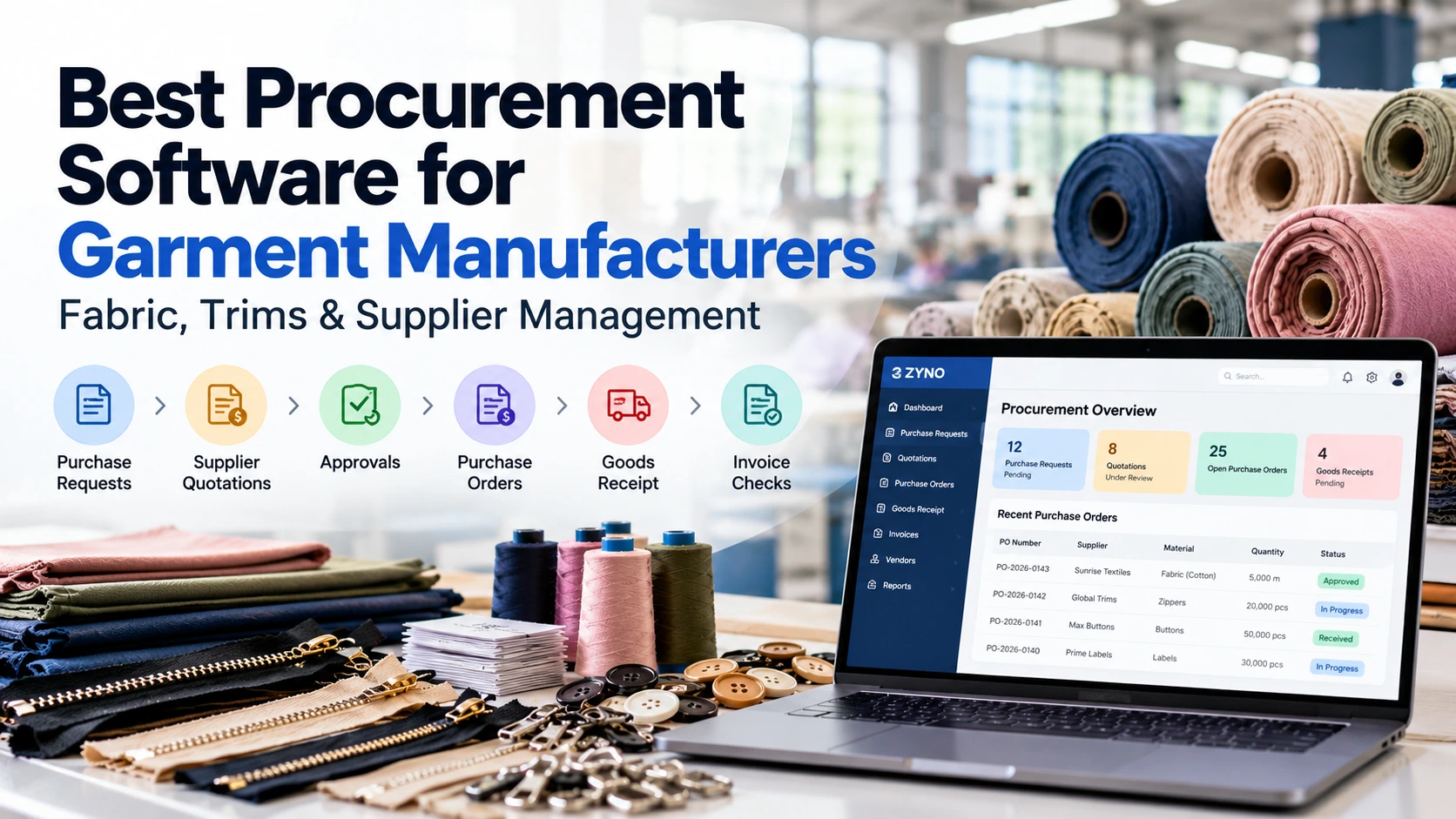
ZYNO covers every stage of the procure to pay software journey. First, a purchase request is raised and sent through approval chains. Then, RFQs go out to vendors from the system. Next, purchase orders are generated automatically after approval. After that, goods receipt notes match against POs. Finally, invoices are verified before payment triggers.
Throughout this process, the AI layer watches for patterns. It flags exceptions in real time. So your team catches problems early, before they become expensive.
The mobile-first dashboard is a big practical win. A purchase head travelling between sites can approve requests from their phone. They do not need a desktop. This alone speeds up approval cycles significantly. Consequently, vendors get responses faster and relationships improve.
Strengths
Full procure to pay software life cycle
In-built GST, TDS, and e-invoice compliance
Vendor prediction and spend anomaly detection using AI
Country-specific workflows for manufacturing, healthcare, education, and more
Integrates with Tally, SAP, QuickBooks, and Elite Mindz ERP
Configurable approval chains and role-based access
Mobile-first design for field approvals
No-code customisation for non-technical teams
24/7 India-based support with 15 years of experience
Limitations
Best For: Mid-to-large Indian businesses across manufacturing, healthcare, retail, and the public sector wanting the best AI-powered procurement software with strong local compliance.
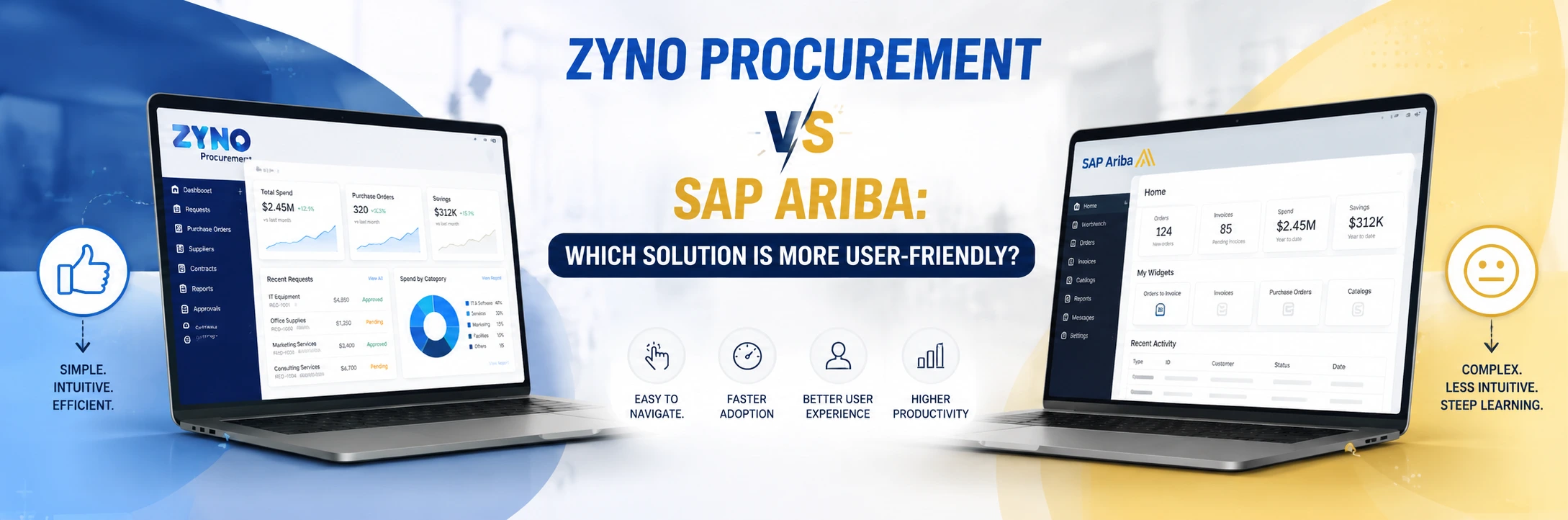
SAP Ariba is the most recognised name in enterprise procurement software solutions globally. Its India presence has grown steadily. Large manufacturers and exporters choose it because it handles global supplier networks well.
The AI layer uses SAP's Joule assistant. The system operates independently to manage its three functions of sourcing and contract management and supplier risk assessment. The SAP Ariba system does not suit all users. Implementation needs certified consultants. Costs are high. Therefore, it suits large enterprises, not most Indian SMEs.
Strengths
Deep sourcing, contract management, and supplier risk tools
Real-time analytics and compliance reporting
AI for spend forecasting and document summarisation
Limitations
Very high licensing and implementation costs
Needs certified SAP expertise to manage
Too complex for most Indian SMEs
Best For: Large enterprises with global operations and big IT budgets.
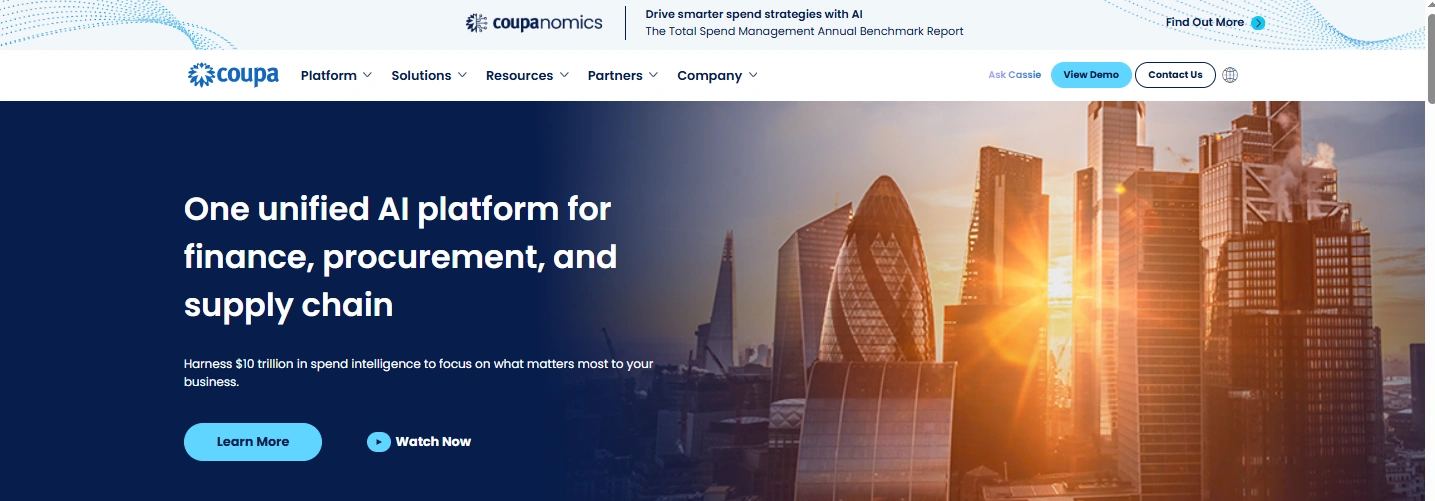
Coupa has built a strong name in intelligent spend management. Its 2025 Navi multi-agent AI uses a huge dataset of transaction data. This helps teams make better sourcing decisions before they spend. Furthermore, no-code AI agent setup means procurement managers build workflows without developers.
Coupa's pricing is at the premium end. Moreover, local support in India can be inconsistent. These two issues make it a harder choice for mid-sized Indian businesses, even though the technology is impressive.
Strengths
Real-time budget tracking and policy enforcement
Supplier diversity analytics and spend forecasting
No-code AI agent setup
Limitations
Premium pricing not suited to most mid-sized businesses
Local support quality varies across India
Best For: Data-driven enterprises that prioritise predictive analytics in their best procurement software.
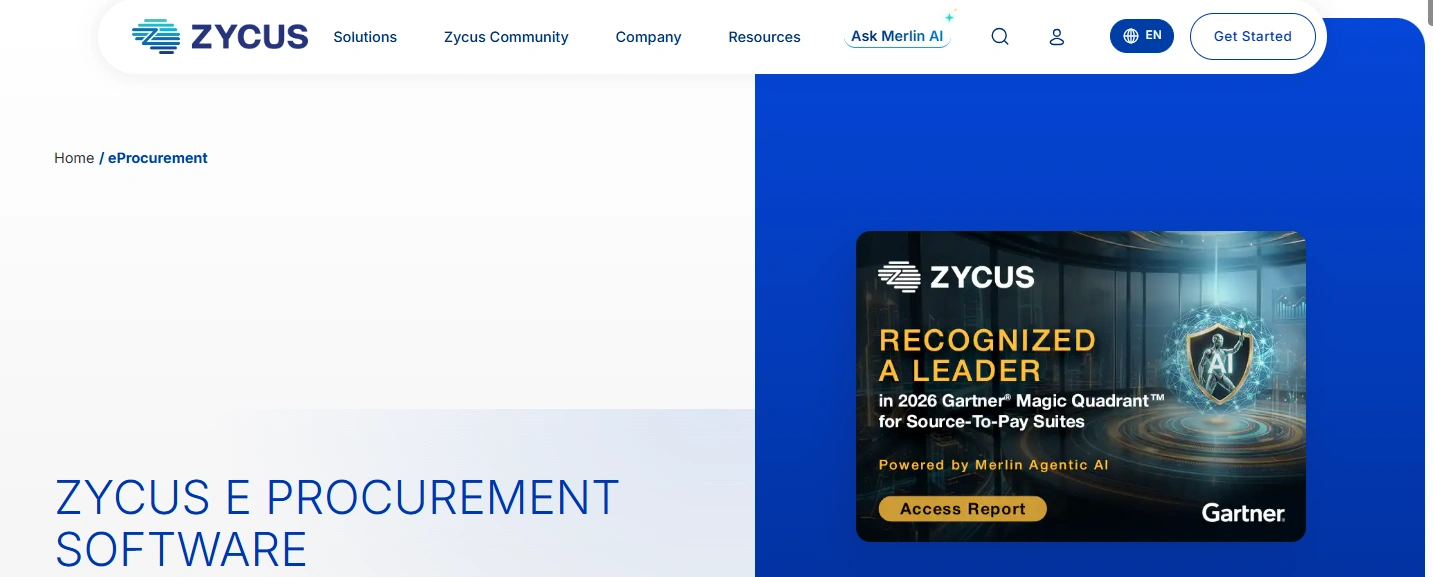
Zycus built a source-to-pay platform that operates at international standards. The IDC MarketScape assessment named its Merlin AI suite as a leading solution in 2025. The platform includes modules for sourcing and contract management and e-invoicing and supplier portals and spend analytics. The entire system operates through one unified platform.
The Microsoft Teams integration is a practical win. Approvals that previously needed a separate login now happen directly in Teams. Zycus reports this cuts approval times by up to 70 percent. That is a meaningful gain for any business where slow approvals are a daily problem.
Strengths
Full source-to-pay coverage including e-invoicing and supplier portals
AI-guided buying with deep spend analytics
Microsoft Teams integration for faster approvals
Indian company with strong local knowledge
Limitations
Steep learning curve due to many features
More than most smaller businesses need
Best For: Enterprises with complex, audit-heavy requirements looking for top procurement software from an Indian provider.
TCS iON is a cloud-based e procurement software solution backed by the Tata brand. For public sector organisations and regulated industries, that trust matters a lot. The platform includes pre-built templates for manufacturing and healthcare. It also integrates well with major ERP systems.
Customisation outside TCS can be slower than with more agile vendors. However, for organisations where compliance and institutional trust outweigh speed, TCS iON is a strong and dependable choice.
Strengths
Pre-built compliance templates for manufacturing and healthcare
Reliable ERP integrations and strong scalability
Tata brand trust for regulated and public sector businesses
Limitations
Best For: Public sector bodies and large regulated enterprises needing trusted e procurement software.
SourcePro is an Ahmedabad-based procurement software provider with a loyal following in smaller industrial cities. Its offline-online hybrid model solves a real problem. Connectivity is not always reliable in Tier-2 and Tier-3 towns. A system that only works with a strong internet is not practical there.
Vendor scoring and inventory automation are solid for the price. The interface is functional rather than modern. Analytics are basic. Nevertheless, for growing businesses in smaller markets, SourcePro offers good value for money.
Strengths
Offline-online hybrid model for areas with poor connectivity
ERP-linked modules with local partner support
Vendor scoring and inventory automation
Limitations
Dated user interface
Basic analytics compared to enterprise tools
Best For: Growing manufacturers and distributors in smaller Indian cities wanting affordable procurement softwares.
Procol has grown quickly as an AI procurement software solution for indirect spend. Its mobile interface is well designed and easy to use. The e-auction tool is useful for companies that run frequent competitive sourcing events. Additionally, the Havells case study shows real, credible ROI from an actual Indian business.
Procol is most comfortable in retail and FMCG sectors. Businesses in specialised manufacturing may find the features do not stretch far enough. However, for its target market, it delivers well and quickly.
Strengths
Clean mobile interface for e-auctions and multi-location sourcing
Fast deployment with quick time-to-value
Good vendor tracking tools
Limitations
Best suited to retail and FMCG sectors
May be too light for complex procurement needs
Best For: D2C brands and FMCG companies looking for fast, mobile-friendly procure to pay software.
Zoho combines Zoho Inventory and Zoho Creator to give small businesses a low-cost entry into structured procurement. The drag-and-drop PO builder is easy. Basic vendor tracking covers most small team needs. Furthermore, it integrates well with Zoho Books and Zoho CRM for businesses already in the Zoho ecosystem.
Zoho is not designed for complex compliance or deep spend analytics. However, for startups moving away from spreadsheets for the first time, it is a sensible and affordable starting point.
Strengths
Low cost - accessible for early-stage businesses
Drag-and-drop PO creation and basic vendor tracking
Good integration with the wider Zoho suite
Limitations
Manual approval processes
No deep compliance or audit trail features
Best For: Startups and small businesses needing simple, affordable procurement management software.
Ramco's P2P platform works best where procurement and finance are tightly linked. Aviation, logistics, and asset-heavy manufacturing are the clearest examples. Real-time tax and audit workflows are well built. Dynamic invoice matching cuts the manual effort that slows payment cycles. Consequently, finance teams spend less time chasing documents.
Implementation is the main challenge. Ramco is not a platform you set up quickly. You need to budget time and internal resources for the rollout. However, once live, the platform delivers real and lasting efficiency gains.
Strengths
Real-time tax and audit workflow management
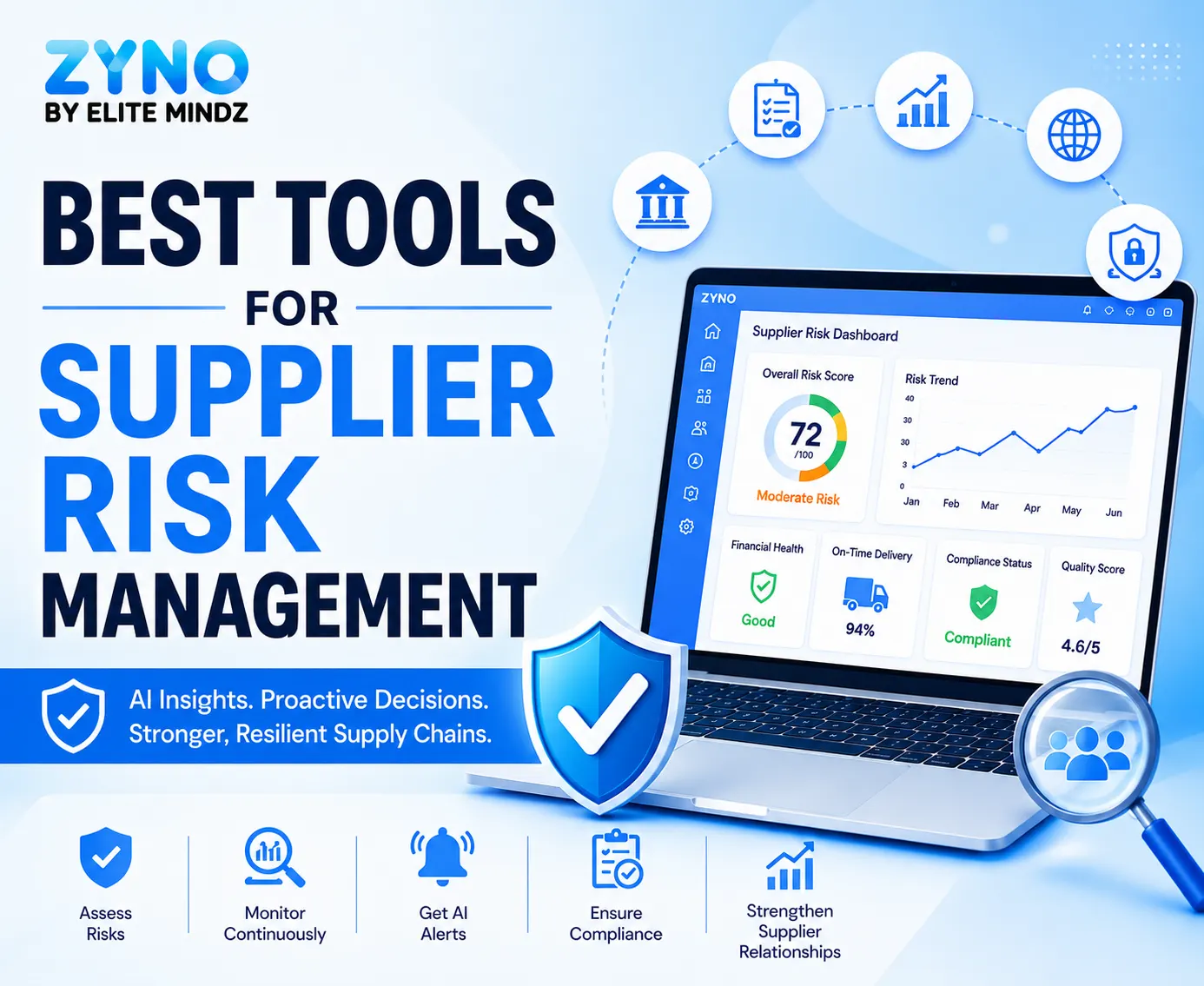
Dynamic invoice matching and supplier risk tools
Strong for finance-integrated procurement environments
Limitations
Best For: Logistics, aviation, and asset-heavy businesses needing finance-integrated top procurement software.
Kissflow is the no-code choice in the procurement software solutions market. Gartner's 2025 forecasts support this positioning strongly. Businesses can get a working procurement workflow live in days. ERP integrations are available. Moreover, the approval interface is simple and intuitive for non-technical users.
Kissflow is strong on workflow and approvals. However, it is lighter on sourcing analytics and strategic procurement depth. It works best for SMBs that need structure and control without heavy complexity.
Strengths
Live in days, very fast deployment
Intuitive no-code approval and workflow tools
ERP integration options available
Limitations
Best For: SMBs needing fast, flexible procurement software solutions without complex sourcing requirements.
Choosing procurement management software is a business decision first and a technology decision second. The wrong choice wastes time, money, and team energy. So work through these questions before you commit to anything.
Does the platform handle GST input credits natively? What about TDS on vendor payments? Does it support e-invoicing? These are not optional extras for Indian businesses. They are daily needs. Make sure they are core features, not workarounds.
A generic procurement software can be set up for most industries. But configuration takes time and money. A platform with ready-built workflows for your sector, manufacturing, healthcare, construction, or retail, gets you to live faster. Therefore, start your evaluation with industry fit. Feature lists come second.
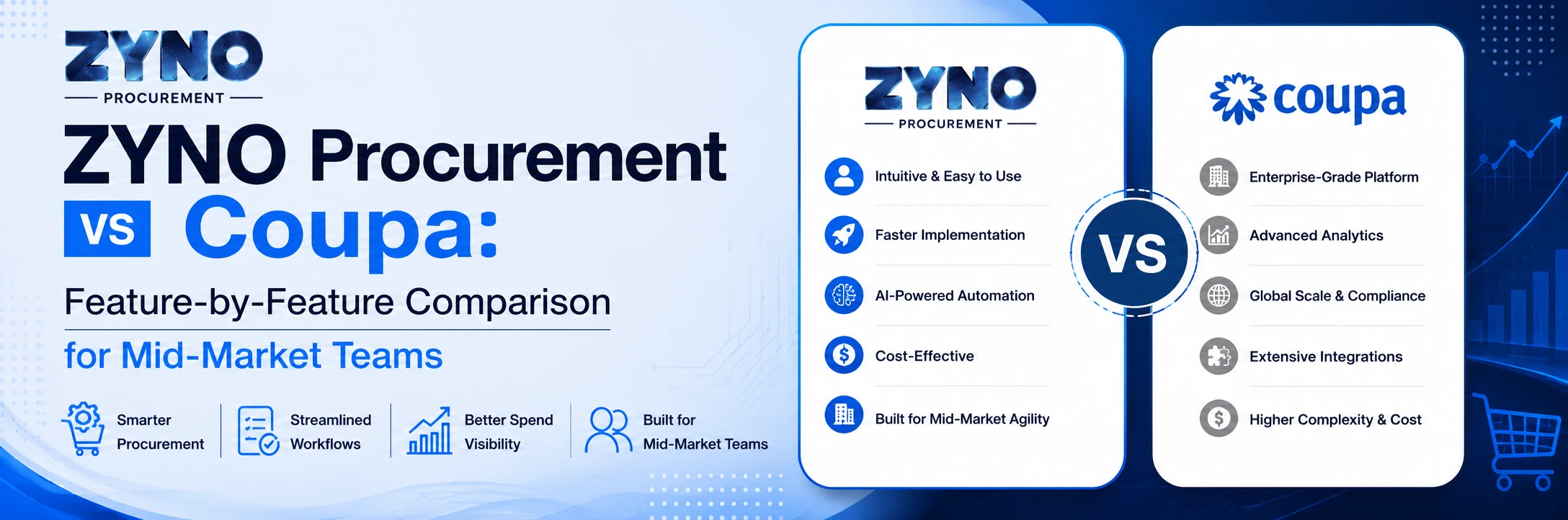
Licensing is the number vendors lead with. However, you need to add implementation, training, customisation, and annual maintenance. For most Indian SMEs, domestic procurement software companies like ZYNO Procurement deliver better value. The total cost is far lower than international enterprise platforms.
Send their support team a question before you sign. See how fast they respond. Check how useful the answer is. Support quality varies a lot across procurement software companies. You will need good support more than you expect, especially in the first few months after go-live.
The best procurement software for today must also work for your business in three years. Check that the platform scales without a full re-implementation. Make sure it handles more users, more locations, and higher transaction volumes as you grow.

Even the best procurement software can underdeliver if implementation is handled badly. These practices make a real difference to your outcome.
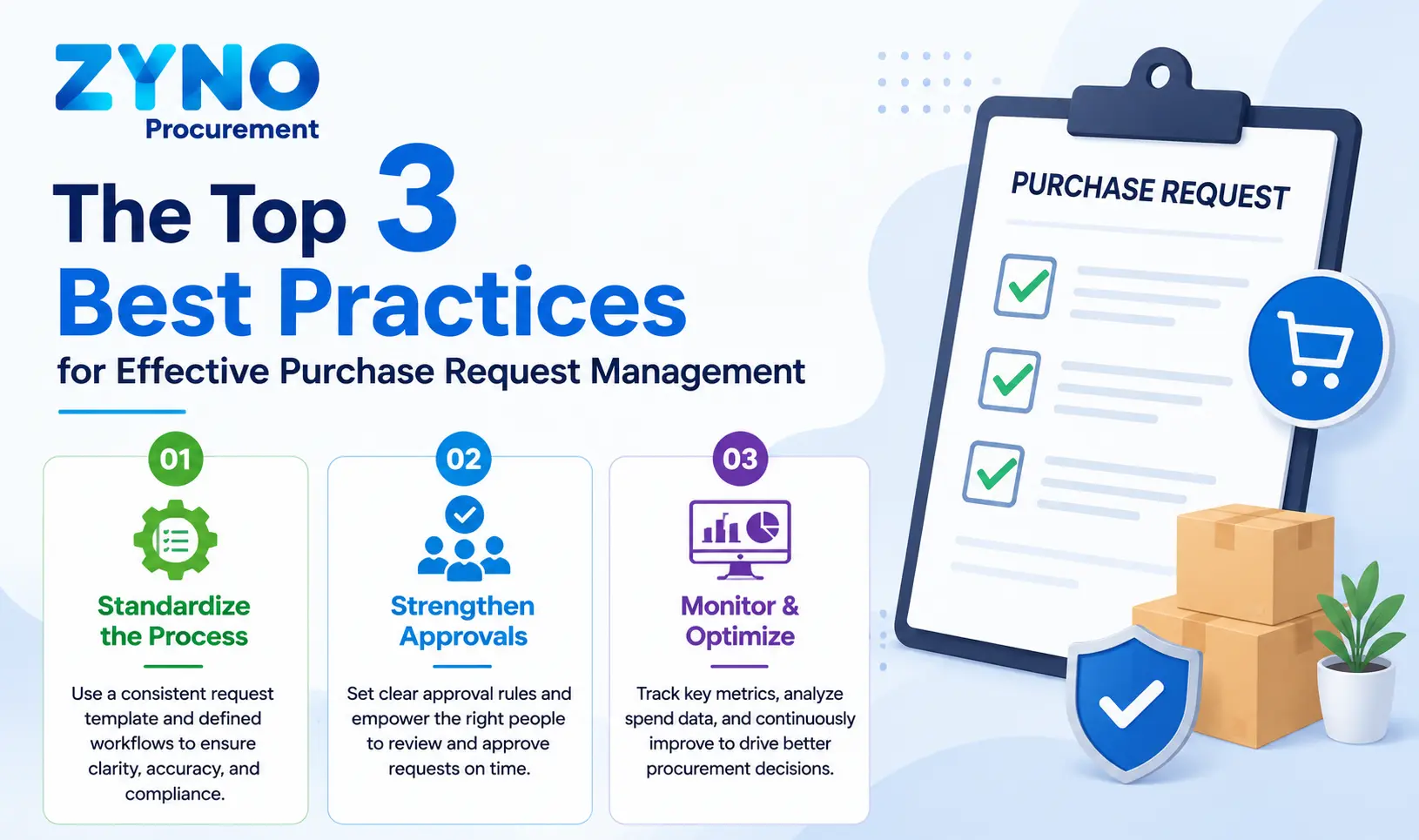
Before touching the software, write down how your procurement works today. Include approval levels, vendor onboarding steps, PO formats, and payment terms. This gives your implementation team a clear brief. It also prevents expensive rework later on. Consequently, your go-live date becomes much more predictable.
Messy vendor records in a new system create immediate problems. So deduplicate your vendor list before migration. Verify GST numbers. Confirm bank details. Clean data going in means clean data coming out. This step alone saves hours of post-go-live fixing.
Training run by IT for end users who were not involved in selection leads to low adoption. Instead, involve your purchase executives and accounts payable team directly. Make training role-specific. Additionally, plan refresher sessions two months after go-live. These make a big difference to long-term adoption rates.
Do not launch every module on day one. Instead, begin with the process that causes the most daily pain. For most businesses, this is purchase order creation and approval. Get that working well first. Then expand to other modules gradually. This phased approach reduces risk significantly.
Set baseline metrics before you launch. Track approval cycle time, invoice processing time, PO amendment rate, and duplicate payments. Then measure the same numbers three months later. This gives you real evidence of ROI. Furthermore, it shows clearly where the system still needs improvement.
Procurement is no longer just a support function. It is a direct driver of margin, compliance, and supplier relationships. The best procurement software gives you visibility and control over spending that was simply not possible before.
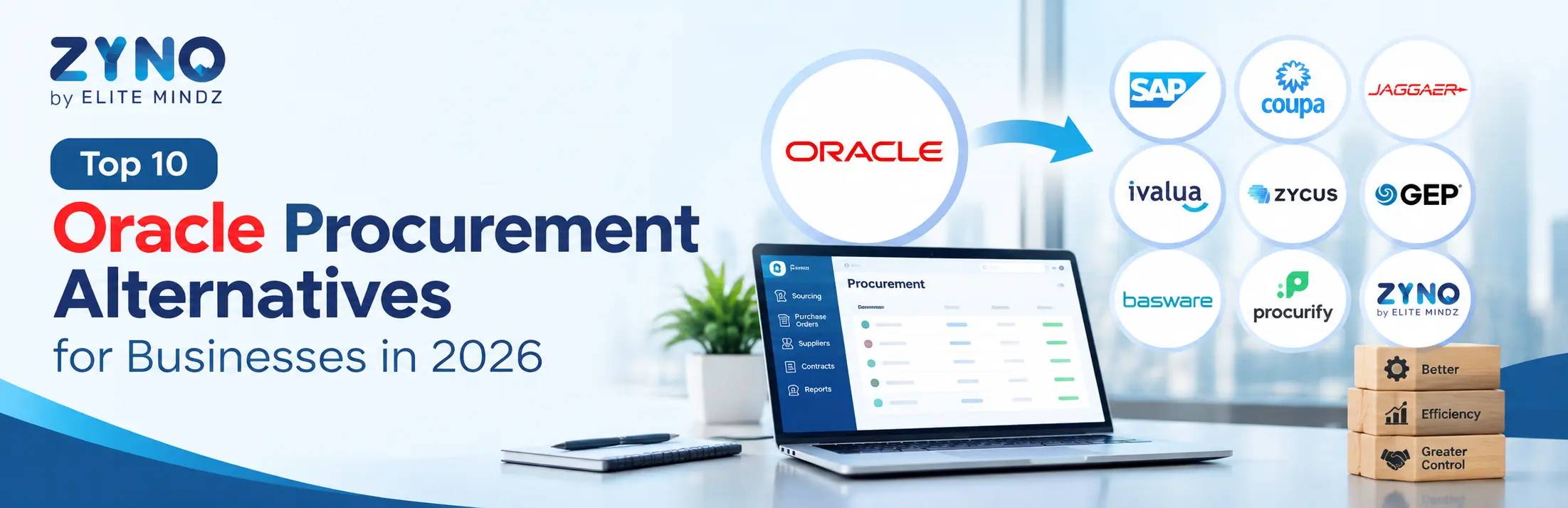
For Indian businesses in 2026, the choice comes down to two things. First, how much complexity do you need? Second, how important is local compliance support to you? Large global enterprises will find SAP Ariba and Oracle capable. Fast-growing startups may begin with Zoho or Kissflow and scale up later.
However, for the majority of Indian mid-market businesses, across manufacturing, healthcare, retail, logistics, and construction, ZYNO Procurement by Elite Mindz offers the strongest overall package. It brings together features, local compliance, AI capability, and genuine affordability in one platform.
It is not the biggest brand on this list. But it is the one built specifically for how Indian businesses buy, pay, and manage vendors. In 2026, that matters more than a global brand name.
What is procurement software and what does it do?
Procurement software manages the full purchasing cycle. It starts from raising a purchase request. It ends at paying the vendor invoice. Good procurement management software covers vendor management, approvals, purchase orders, goods receipt, invoice matching, and spend analytics, all in one connected system. Moreover, the best platforms handle GST, TDS, and e-invoicing natively for Indian businesses.
Is procurement software useful for MSMEs or only large companies?
It is genuinely useful for MSMEs. Smaller businesses often benefit the most. Manual processes are more painful at a smaller scale. Cloud-based procurement software like ZYNO Procurement is priced accessibly for mid-sized businesses. Furthermore, it delivers faster ROI because the starting point is more manual.
Can procurement software integrate with Tally or SAP?
Yes. Most serious procurement software solutions support integration with Tally, SAP, QuickBooks, and major ERP systems. ZYNO Procurement integrates with all of these natively. However, always verify compatibility with your specific software version before committing to any platform.
How long does procurement software implementation take?
Cloud-based procurement software in India like ZYNO Procurement typically goes live in two to eight weeks for mid-sized businesses. This depends on process complexity and data readiness. Enterprise platforms like SAP Ariba can take six months or longer. The biggest variable is always how prepared your internal team is before the project starts.
What does procurement software cost in India?
Pricing varies widely across procurement softwares. Basic cloud tools start around ₹50,000 per year. Full enterprise procurement software solutions from SAP or Oracle can reach ₹20 to 50 lakh once implementation and support are included. Indian platforms like ZYNO Procurement sit in the mid-range. They typically offer better value for businesses operating primarily in India.
What makes ZYNO the best AI-powered procurement software for Indian businesses?
ZYNO Procurement combines real AI capability with deep Indian compliance knowledge. Vendor performance prediction, spend anomaly detection, and automated cost optimisation are live features, not future promises. Additionally, it is built for Indian workflows, priced for Indian budgets, and supported by a team that understands local business realities. That combination is genuinely rare in a single platform.
Are you looking for a professional advisor for your business?
Complete the form and discuss implementation strategies with our IT expertise.
Get a Quote in Minutes