×
ZYNO Manufacturing ERP
+
Production Planning & Scheduling
Quotes & Sales Orders (Manufacturing CRM)
Product Configurator
Mobile App
AI-Powered Demand Forecasting
Field Service Management
Ticket Management Software
Training Management System
Document Management
Analytics & Reporting
Expense Management Software
Bill of Materials (BOM)
Finance & Cost Accounting
Statutory Compliance & Taxation
Subcontracting & Outside Processing
Project-Based Manufacturing
Quality Control & Compliance
Maintenance & Asset Management
Procurement & Supplier Management
Inventory & Warehouse Management
Vendor Management Software
Live Shop-Floor
ZYNO Procurement
+
ZYNO CRM
+
ZYNO HRMS
+
Integrated recruitment
Learning management
Mobile app
HR chatbot
Custom services
HR automation
Business chat and collaboration
Employee engagement
Integrated travel and expense
Integrated payroll software
Compensation management
Onboarding
Performance management
HR analytics
Digital Document management
HR help desk
Timesheets
Leave management
Shift management
Attendance management
Employee management
Integrations
ZYNO Assets
+
ZYNO EduVibe
+
ZYNO Upskill
+
ZYNO Rewards
+
ZYNO HIMS
+
ZYNO Expenz
+
ZYNO Legal
+
ZYNO Audit
+
ZYNO Retail
+
ZYNO Recruit
+
ZYNO Projects
+
ZYNO Books
+
ZYNO POS
+
Search Engine Optimization
+
Generative Engine Optimization (GEO)
Paid Media & Advertising
+
Amazon Marketing Services
+
Social Media Marketing
+
Content Marketing
+
Conversion Rate Optimization
+
Online Reputation Management (ORM)
+
Analytics, Strategy & Consulting
+
Brand Management
E Commerce Marketing
Ask anyone outside of operations what direct vs indirect procurement means and you'll probably get a blank stare. But talk to a supply chain manager who's watched a production line go idle because one shipment didn't arrive — and they'll tell you exactly how much it matters.
Procurement isn't just buying stuff. It's the system behind every material purchase, every service contract, every vendor relationship. Get it right and the business runs smoothly. Get it wrong and you're either short on materials to build your product, or quietly bleeding money on services nobody properly reviewed.
There are two distinct sides to it. Direct procurement — where you're sourcing inputs that go into your product. And indirect procurement — where you're buying everything that keeps the rest of the business operational. Both are critical. Both are tricky. And treating them the same way is one of the most common — and expensive — mistakes growing businesses make.
This blog breaks both down properly — what they are, how they differ, what good management looks like, and why having the right tools behind you changes everything.
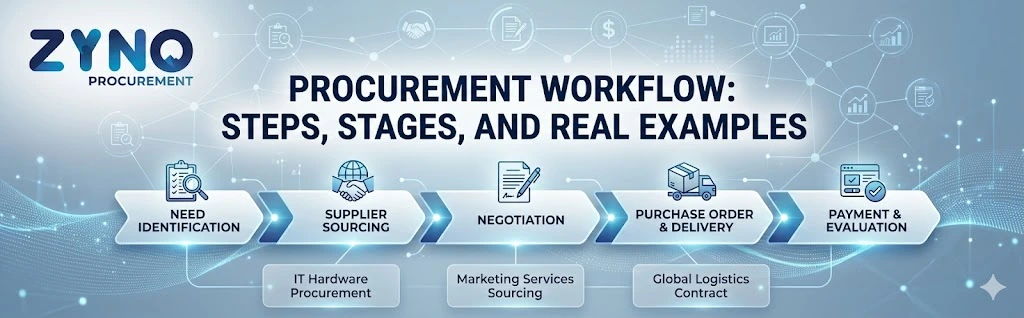
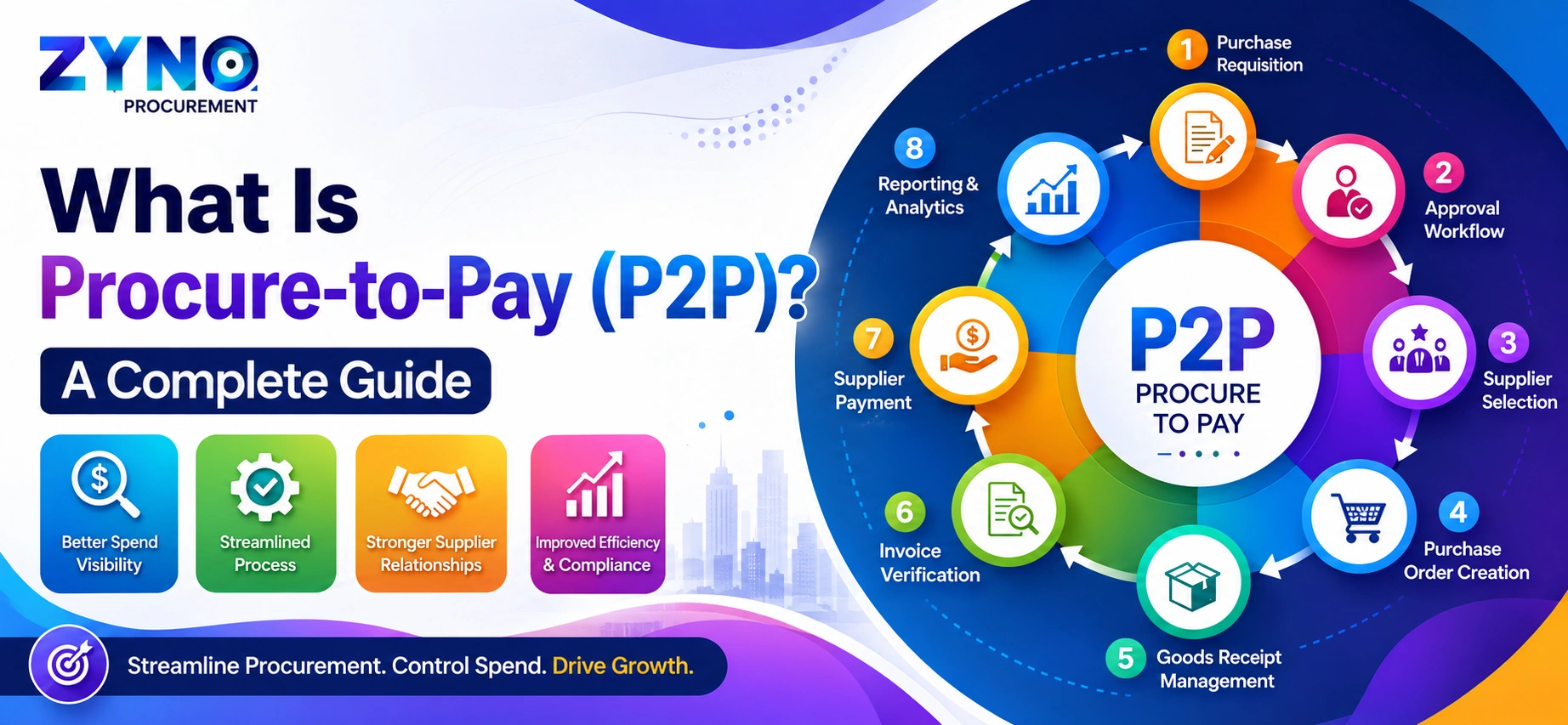
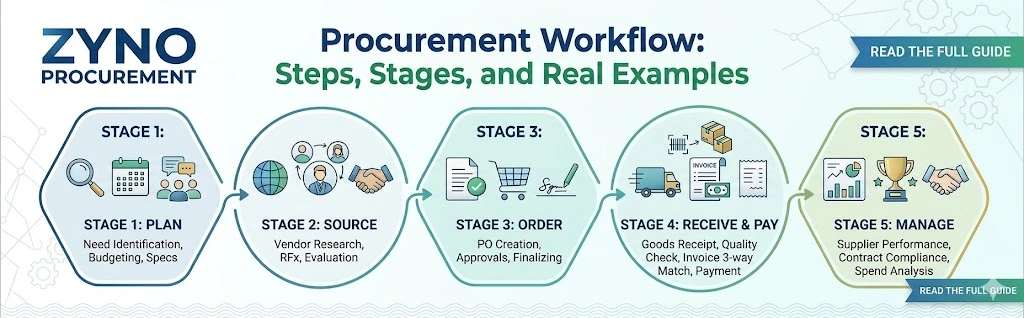
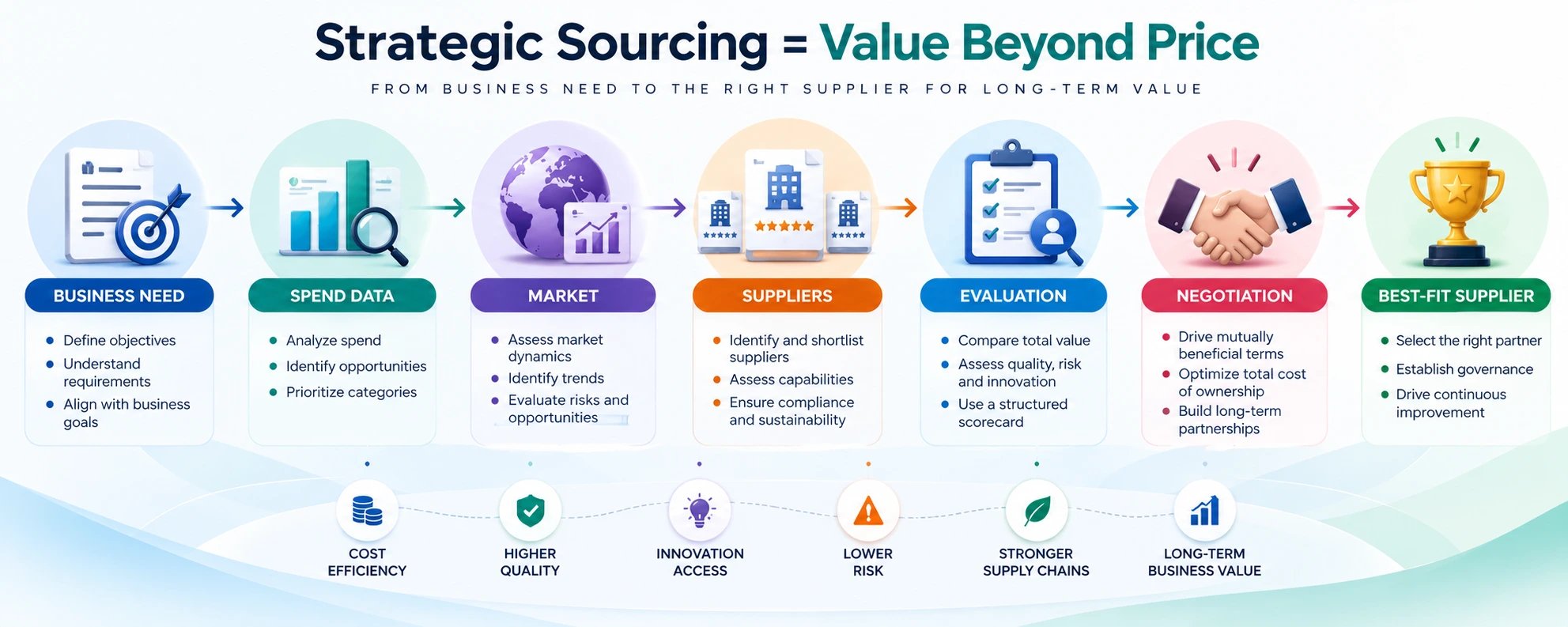
Procurement is the full process of getting goods and services into a business — from identifying a need all the way through to paying the bill. It's more structured than most people outside the function realise.
The typical cycle covers:
Identifying needs — figuring out what the business requires and when, based on demand, budgets, and operational plans
Selecting suppliers — evaluating vendors on cost, reliability, quality, and track record — not just who quotes the lowest price
Negotiating contracts — nailing down pricing, delivery terms, payment windows, and what happens when things don't go to plan
Raising purchase orders — creating a formal, traceable record of exactly what's been approved
Receiving and verifying — checking that what arrived matches what was ordered — in full, on time, to spec
Invoice matching and payment — making sure the bill lines up with the PO before anything gets released
Supplier performance reviews — tracking whether vendors are actually delivering on their commitments over time
Every organisation runs some version of this cycle. The question is whether it's happening in a coordinated way — or scattered across departments with no real structure behind it. And within all of this, every purchase lands in one of two categories: direct procurement or indirect procurement.
Direct procurement refers to the purchase of goods and services that go directly into what your business produces. These items either become part of the final product or are essential to making it. Without them, production stops — it's that direct a relationship.
A manufacturer relies on direct procurement for raw materials — steel, plastics, chemicals, sub-assemblies, packaging. A retailer uses it to source finished goods for resale or private-label products. A construction company procures cement, rebar, wiring, plumbing materials. In each case, whatever's being bought shows up — visibly — in the final output.
The most important thing to understand about direct procurement is how immediately it connects to revenue. If a critical material purchase falls through, production stalls. Orders get delayed. Customers notice. That's not a back-office problem — it's a business problem.
It follows demand closely — purchasing schedules are built around production forecasts and MRP systems, so timing matters as much as price
Supplier quality is non-negotiable — bad inputs lead to bad outputs — a 5% saving on a material that generates defects costs far more in the long run
Volume is high and relationships are long-term — direct procurement tends to involve repeat, large-volume orders and contracts that span years
It cuts across the whole operation — production, quality, logistics, and finance all have a stake in how direct procurement is managed
Effective material sourcing at this level isn't just about finding the cheapest option. It's about building a supply base that's reliable, quality-consistent, and resilient enough to handle disruption when it comes.
Indirect procurement covers everything you buy to keep the business running — things that support operations but don't end up in the product itself. Think of it as the cost of keeping the lights on. Software licences, office furniture, travel bookings, marketing agencies, legal retainers — none of these show up in what you sell, but without them, the business can't function.
Common Examples
IT hardware, software subscriptions, and cloud services
Facilities management — maintenance, cleaning, security
Travel, accommodation, and expense management
Marketing services — agencies, media buying, events
HR and recruitment — temp staffing, training platforms, background checks
Professional services — legal, finance, audit, consulting
Office consumables and stationery
Utilities
Indirect procurement is decentralised almost by default. Finance buys its own tools. Marketing books agencies. HR manages recruitment vendors. IT renews licences. None of these teams are coordinating their indirect purchasing — and that's precisely where the cost leakage begins.
Small amounts, high frequency — no single indirect purchase feels alarming. But scattered across departments over a year, the unmanaged spend adds up fast
Services are hard to track — unlike goods, you can't inspect a service delivery against a spec sheet — which makes quality and compliance harder to enforce
Maverick spending thrives here — when approval processes are unclear or slow, people find workarounds — a SaaS subscription on a corporate card, a freelancer hired outside the vendor list
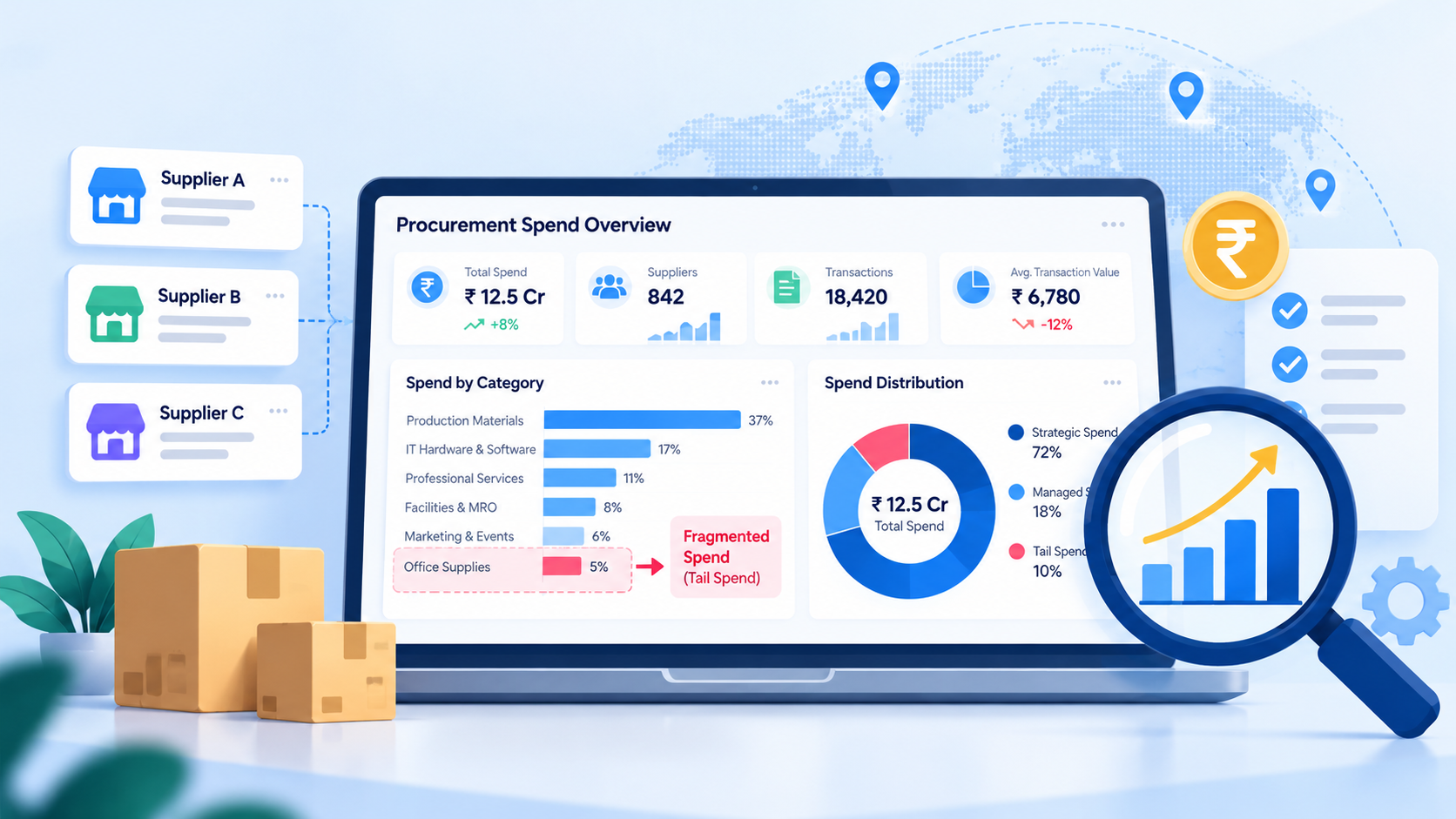
Visibility is the main problem — without proper systems, most finance teams struggle to pull a clear picture of indirect spend by vendor, category, or department. The data exists — it's just buried
The real cost of poor indirect sourcing isn't any one rogue purchase. It's the cumulative effect of dozens of small decisions made without a framework — duplicate vendors, expired contracts that auto-renewed, services still being paid for that nobody uses.

Direct procurement tends to be the first area companies try to professionalise — and the consequences of getting it wrong explain why.
A delayed shipment because a supplier missed a delivery window. A quality recall triggered by a substandard batch of raw materials. A margin squeeze because commodity prices moved and there was no hedging or contract protection in place. These aren't quiet problems — they show up in revenue, in customer relationships, and in leadership conversations.
The risks to stay on top of:
Production continuity — one missing component can idle an entire line — and the cost per hour of manufacturing downtime is rarely small
Input cost management — raw materials typically represent a significant share of COGS — small price swings have outsized margin effects
Supplier concentration risk — over-reliance on a single source for any critical material is a vulnerability most companies underestimate until something goes wrong
Traceability and compliance — customers and regulators increasingly want to know where materials came from — procurement needs to maintain clean records
Getting material sourcing and material purchase processes right is what separates companies that absorb supply chain shocks from those that get flattened by them.
Indirect procurement has historically been treated as the unglamorous side of the function — not tied to revenue, not strategic, just admin. That view is expensive.
Indirect purchasing can account for 20 to 40 percent of a company's total spend. In a 500-person organisation with real budgets across IT infrastructure, facilities, professional services, and marketing — that's a very large number. And in most companies, it's also the least managed category.
The problems are rarely dramatic. That's partly what makes them hard to catch.
A business unit signs a multi-year SaaS contract without checking what IT already licenses. A project team flies business class on a trip that didn't need to happen. Three departments use three different law firms because nobody coordinated. A vendor contract auto-renews for another two years because nobody tracked the date.
Individually, each is a small problem. Collectively, they represent serious budget leakage — and a complete absence of discipline in categories that touch every part of the business.
Duplicate vendors doing the same work at different prices for different teams
No consolidated spend data — which means weak negotiating leverage across the board
Policy violations going unchecked because there's no system to catch them
Finance teams spending hours reconciling spend that should have been tracked automatically
The separation between direct and indirect procurement used to mean two completely different systems, two separate teams, and a finance team always trying to bridge the gap. That model creates too many blind spots — fragmented data, poor cost control, and decisions made without the full picture.
Modern procurement management software has changed this. The best platforms today let companies manage both categories from a single system — with real visibility into what's being spent, where, and why.
What good technology enables:
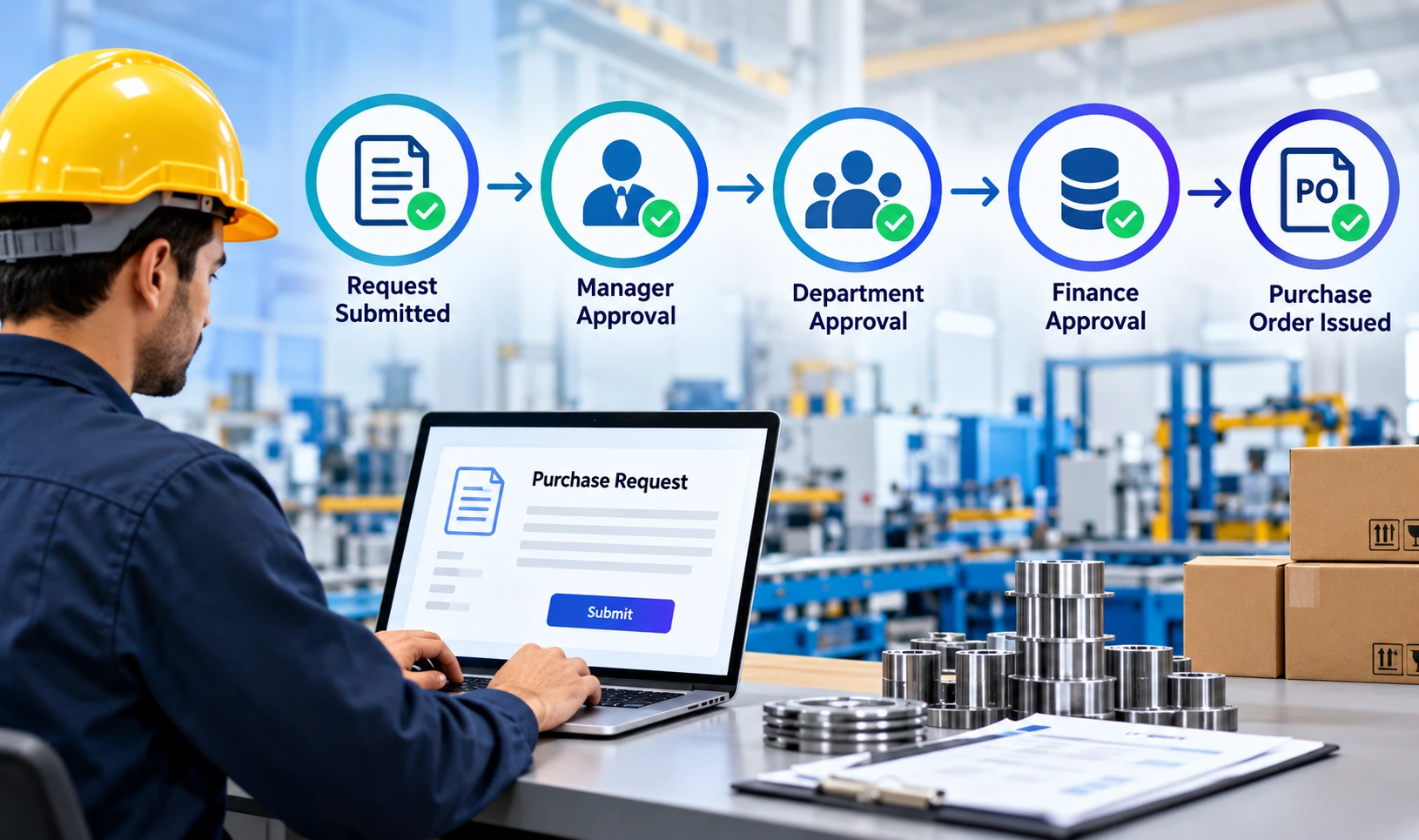
Automated approval workflows that enforce policy without slowing down routine purchases
Real-time dashboards showing direct and indirect procurement spend by category, department, and supplier
AI-assisted demand forecasting to support smarter material purchase planning
Supplier scorecards that flag performance issues before they become crises
Contract management that tracks renewals, obligations, and compliance — automatically
Consolidated vendor data to strengthen indirect sourcing negotiations
Businesses that use top procurement software to manage both direct and indirect spend from one place consistently report better cost control, faster approvals, and fewer surprises — in both categories.
Align purchasing with production planning early — procurement and production need to be working from the same forecast. When they're not, you get stockouts or excess inventory sitting idle — neither is cheap.
Robust material sourcing starts with knowing what you need before you need it urgently.
Stop treating supplier relationships as purely transactional — the vendors you depend on most should know it. Better communication, earlier planning involvement, and fair payment terms go a long way when capacity gets tight.
Bring data into your material purchase decisions — forecasting on gut instinct doesn't scale. Good procurement management software factors in demand signals, lead time variability, and market trends to build more reliable purchase plans.
Build redundancy into your supply base — for critical materials, a sole-source arrangement is a liability. A second qualified supplier — even used rarely — is cheap insurance against disruption.
Measure supplier performance consistently — on-time delivery rates, defect percentages, lead time adherence. If you're not tracking these formally, you're managing supplier relationships on hope.
Automate the routine parts of purchase-to-pay — approval chains, PO generation, invoice matching — none of these need manual steps. Automation saves time, reduces errors, and creates a clean audit trail.
Centralise the policy, even if the buying stays decentralised — you don't need procurement to approve every office supply order — but you do need clear rules about thresholds, preferred vendors, and what requires sign-off.
Reduce vendor sprawl through smarter indirect sourcing — more suppliers rarely means more value. Consolidating to preferred vendor lists gives you negotiating leverage and consistent service standards — things you lose when spend is scattered.
Make indirect purchasing approvals digital and fast — the reason people bypass procurement processes is usually speed. A digital workflow that routes approvals in minutes removes the excuse to go rogue.
Get visibility before you try to optimise — the first step in indirect spend management is often just understanding what's actually being spent, with whom, and by which teams. You can't fix what you can't see.
Set rate cards for your most common categories — travel, professional services, IT equipment — standardised pricing eliminates negotiation from every individual transaction and makes budgeting predictable.
Schedule contract reviews; don't leave them to chance — indirect contracts auto-renew constantly because nobody flagged them. A quarterly review calendar prevents expensive surprises and opens regular renegotiation windows.
The best procurement software in India and globally recognised top procurement software solutions are built specifically to handle this kind of complexity — giving procurement teams control across both direct and indirect categories without adding administrative burden.
The conversation around direct vs indirect procurement isn't purely academic. Both categories are actively costing you money right now. Direct procurement, if poorly managed, creates production risk and leaves supplier-negotiation value unrealised. Indirect procurement, if poorly managed, leaks budget through fragmented buying, missed contract terms, and spends nobody's properly reviewing.
Managing direct procurement and indirect procurement well requires visibility first, then process, then the right tools to enforce it at scale. Companies that get this right end up with a procurement function that doesn't just control costs — it actively contributes to how the business performs. That's the shift worth making. And the right procurement software makes it far more achievable than most teams expect.
ZYNO Procurement is built around exactly this challenge. It's a cloud-based platform — one of the leading procurement software in India options for businesses managing both direct and indirect procurement at scale. With automated workflows, real-time spend analytics, supplier performance tracking, and full contract lifecycle management in one place, it gives procurement teams the tools to manage material sourcing, indirect sourcing, and everything in between — with clarity and control.
Want to see how ZYNO works for your business? Get in touch — we'll walk you through it.
Are you looking for a professional advisor for your business?
Complete the form and discuss implementation strategies with our IT expertise.
Get a Quote in Minutes
Procurement Software Trends in 2025: What to Expect
Read More →
Why E-Procurement Outperforms Traditional ERP in Modern Procurement
Read More →Top Procurement Software Companies in India 2026
Read More →
Best Procurement Software Companies in Kuwait (2025)
Read More →
Best Procurement Software in Africa: A 2025 Guide
Read More →
Best Procurement Software in Nigeria 2025 | Top 5 Picks
Read More →
Best Procurement Software Providers in USA (2025): How AI is Transforming the Future
Read More →
10 Best Procurement Software Providers in Thailand for Streamlined Supply Chain Management
Read More →
Top 10 Cloud-Based Procurement Solutions in Portugal for Businesses in 2025
Read More →
Top 10 Procurement Software Providers in Switzerland 2025: Streamlining Sourcing and Supplier Management
Read More →
What Makes ZYNO Procurement Different from Other Oil & Gas Procurement Software
Read More →
The Digital Transformation of Logistics Procurement in the Middle East
Read More →A Step by Step Guide to Procurement Management Software for Modern Enterprises
Read More →Sourcing and Procurement: What’s the Difference and Why It Matters
Read More →Difference Between Procurement and Supply Chain Management
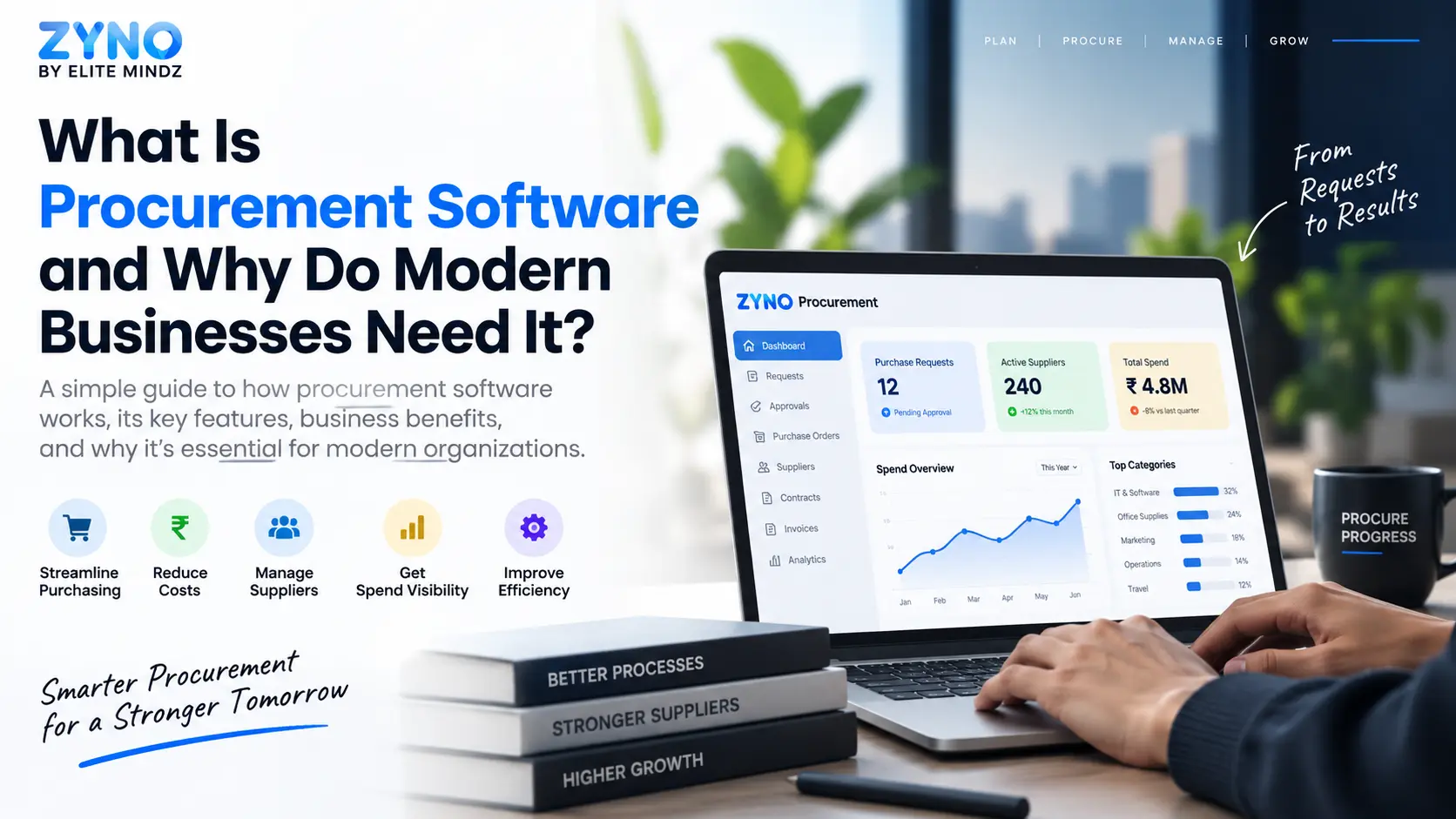
Read More →What Is Procurement Software and Why Modern Businesses Need It
Read More →Best Procurement Management Software to Automate ERP Process
Read More →
Direct vs Indirect Procurement: Understanding the Backbone of Modern Business Spending
Read More →We use browser cookies to ensure you get the best experience on our website. Learn more
The form was submitted successfully!
ZYNO Digital
Fueling Smarter Digital Growth
ZYNO Digital fuels smarter digital growth through data-driven marketing, creative storytelling, and performance strategies that boost visibility, engagement, and measurable business outcomes across global platforms.
ZYNO Tech
Engineering the Future of IT
ZYNO Tech delivers cutting-edge IT solutions — including web, mobile, and digital transformation services — helping businesses scale efficiently, innovate faster, and stay ahead in a connected world.
ZYNO AI
AI Built for Business Growth
ZYNO AI harnesses the power of artificial intelligence to automate processes, enhance decision-making, and deliver predictive insights — driving innovation, agility, and measurable business growth.
ZYNO by Elite Mindz
Your Partner in the AI-Powered Future
ZYNO by Elite Mindz offers AI-powered products and services that unify operations, boost productivity, and drive digital transformation — helping businesses scale smarter and innovate faster.
* In just 2 mins you'll get a response
* Your idea is 100% protected by our Non-Disclosure Agreement