×
Become a Partner call Contact Us
Whatsapp
02-04-2026
BySneha Singh

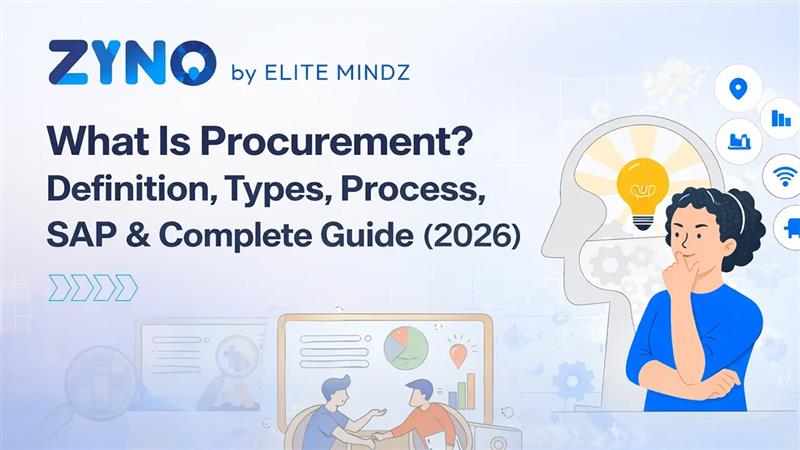
What Is Procurement? Everything You Need to Know (Types, Process & SAP)

Procurement is the method a company employs to obtain the necessary goods, services, or raw materials for functioning and expansion — yet it involves far more than just purchasing items. Essentially, procurement encompasses every step from recognizing a requirement through to settling the final bill, covering vendor selection, bargaining, agreement administration, and ongoing vendor relationships.

Should you have ever questioned the distinction between procurement and purchasing, or what the seven phases of the procurement workflow actually look like in real business operations, this guide explains everything, including SAP procurement capabilities, the 10 C's principles, purchase order classifications, and top procurement software options in India for 2026.


What Is Procurement in Simple Terms?

Consider procurement as the strategic foundation of how an enterprise allocates its funds. Simply put, it is a structured system for locating suitable suppliers, securing optimal terms, and ensuring that required items arrive on time and to the required standard.

Illustration: A manufacturing firm requires metal bars for making machine components. Procurement involves identifying reliable metal suppliers, negotiating rates, placing orders, checking incoming shipments, and processing payments. This is not haphazard; it is a deliberate, repeatable framework.

Concise Definition: Procurement = identifying needs + choosing vendors + bargaining + buying + receiving + paying.

The core variation between simple buying and procurement is this: buying is a solitary action. Procurement is a comprehensive business function supported by strategy, established procedures, and accountability.

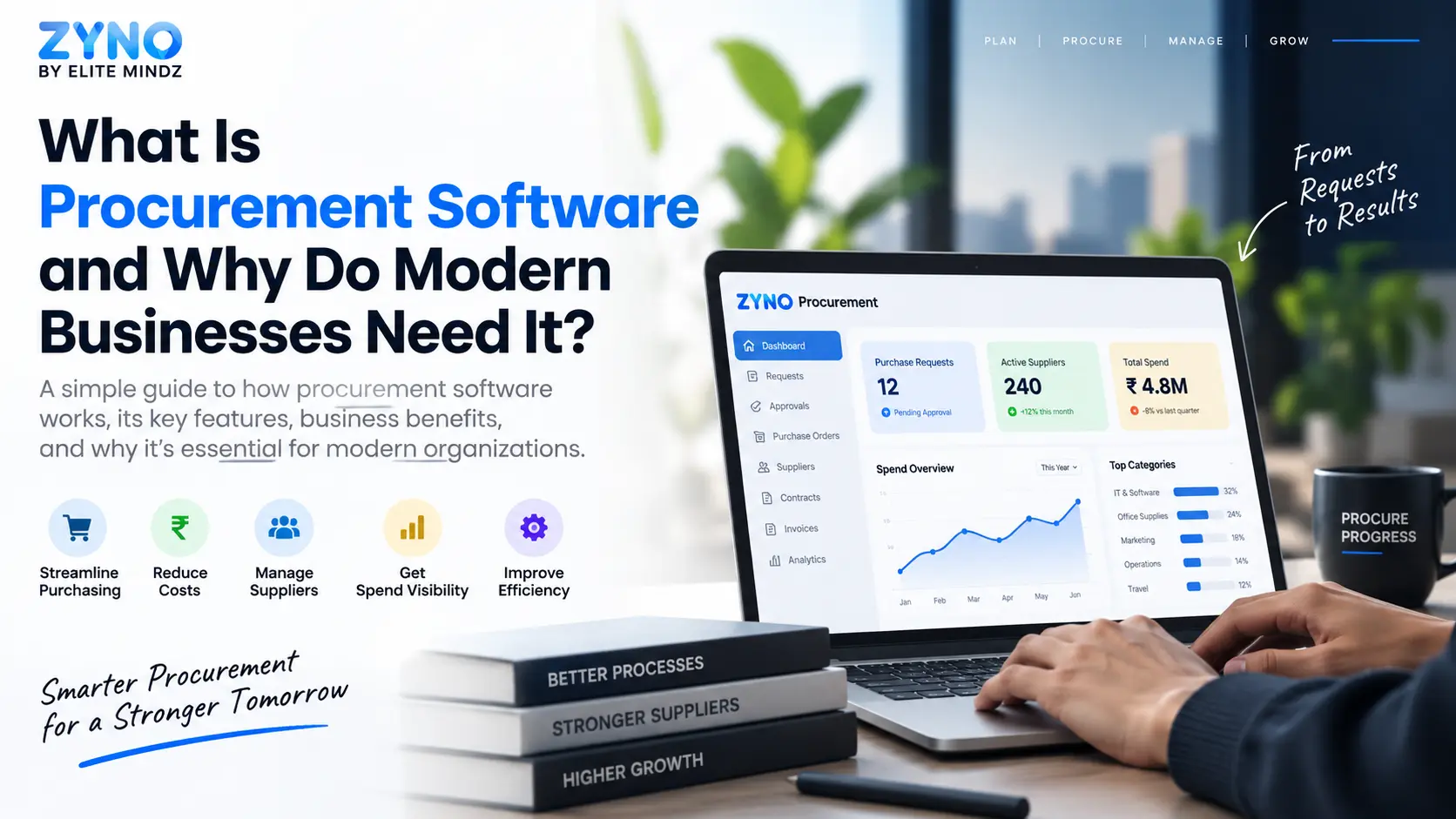
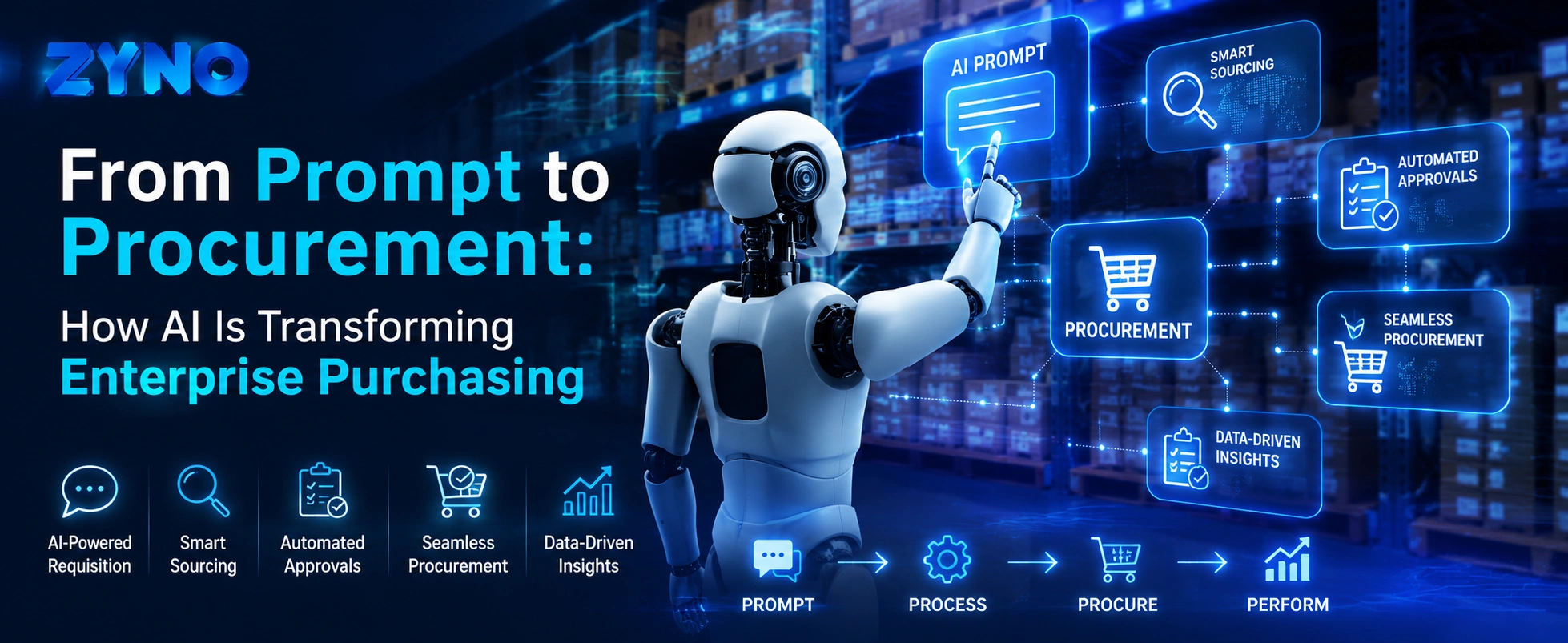
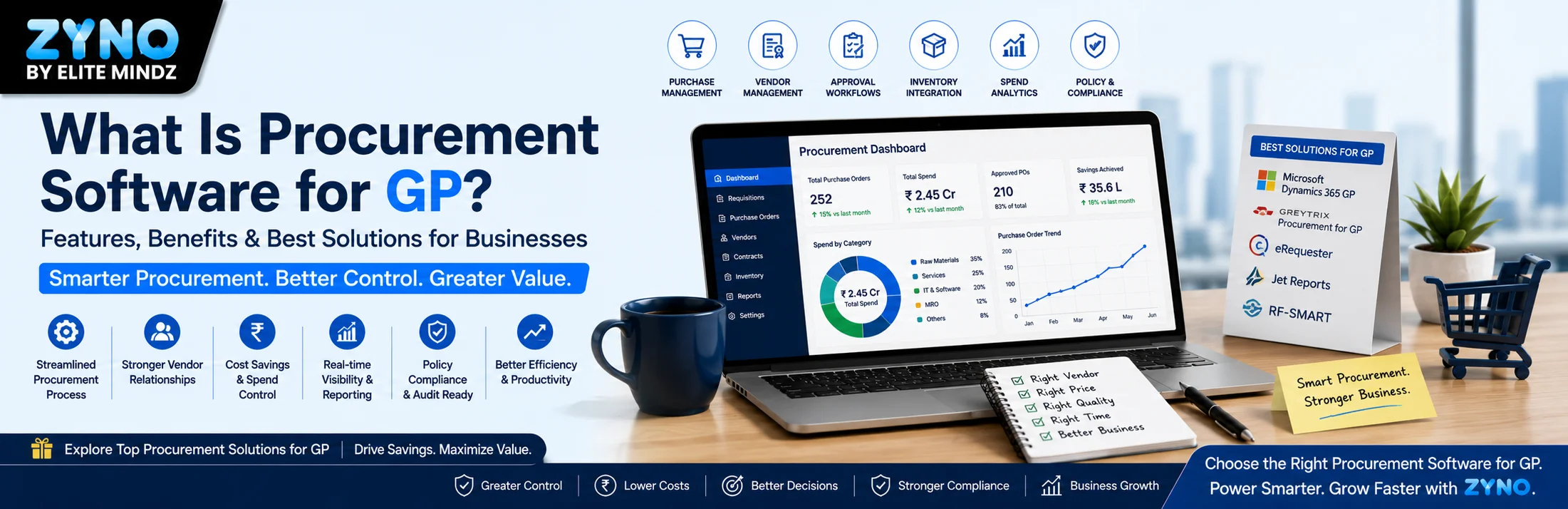
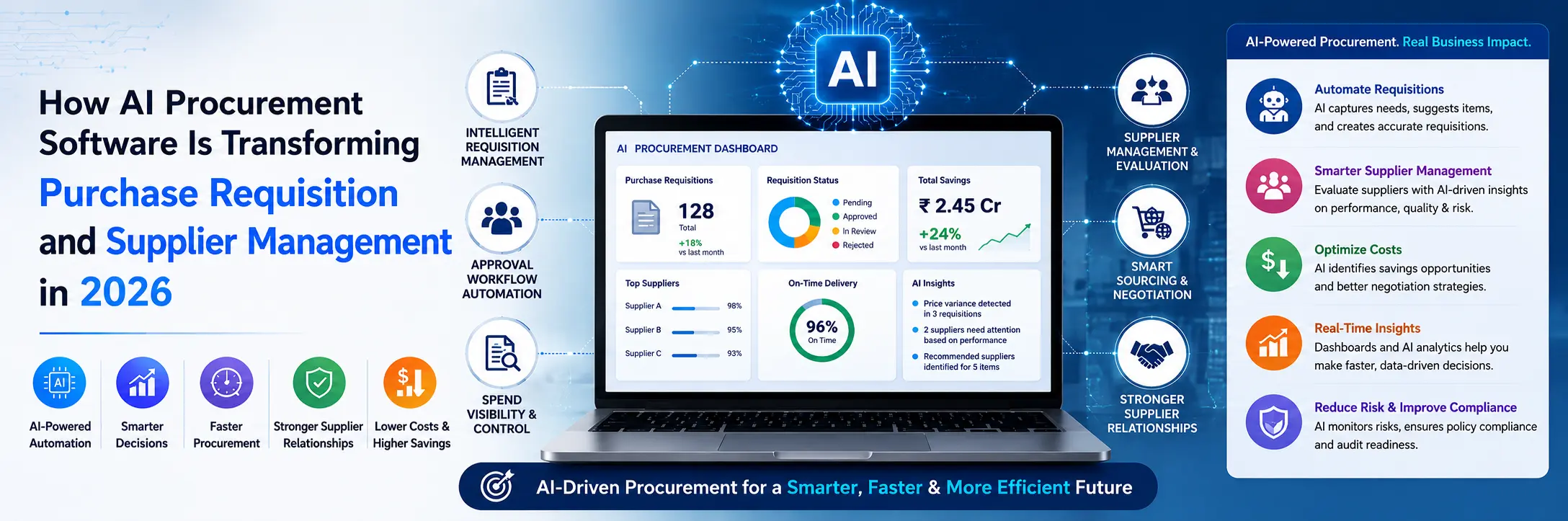
Procurement today is increasingly driven by digital tools like procurement software for modern businesses that automate sourcing, vendor management, and purchasing workflows.

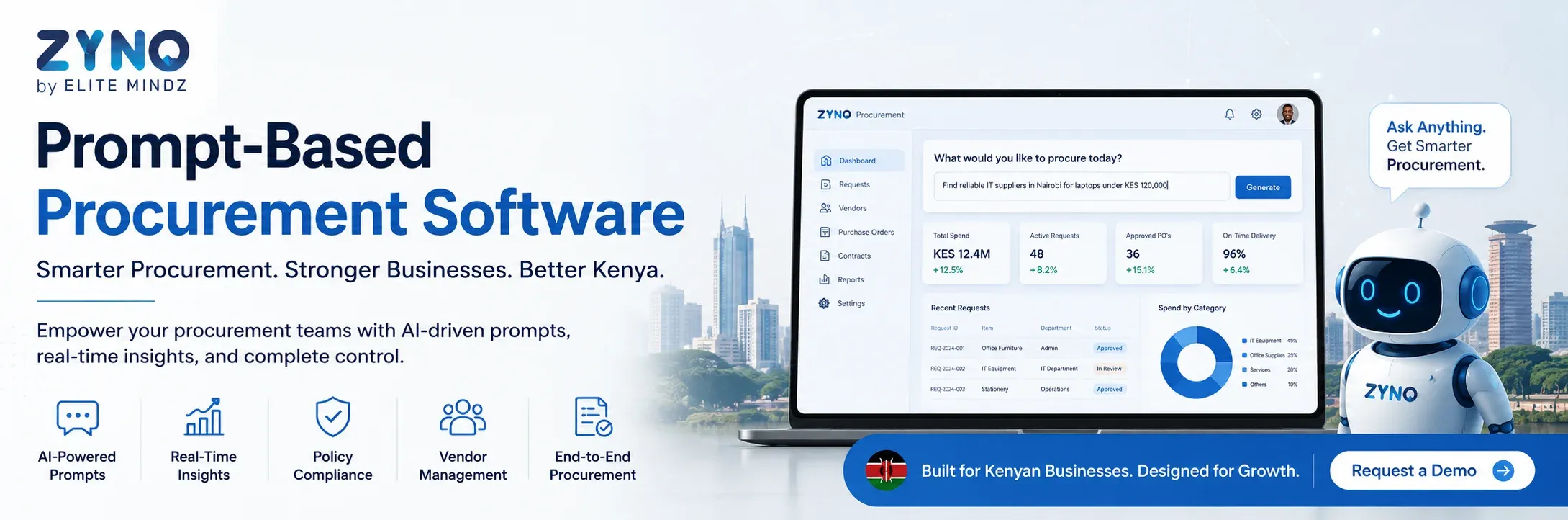
Looking to automate your procurement operations? procurement management software can help streamline purchasing, approvals, and vendor management in one unified platform.


What is Procurement? (In-Depth Definition)

Procurement is the comprehensive business operation for securing goods, works, or expertise from external providers, typically through a formal bidding or competitive selection process. It integrates strategic sourcing, oversight of external party relationships, contract negotiation, order execution, and payment processing.

In the corporate world, procurement is vital as it directly influences:

Expenditure control — Superior supplier agreements lower overall operational expenditure.

Supply chain dependability — Robust procurement ensures a steady flow of materials and support.

Risk mitigation — Having multiple suppliers and contracts helps guard against interruptions.

Adherence — Proper procurement validates regulatory and ethical sourcing benchmarks.

For major corporations, procurement expenditure can constitute 50–70% of total turnover, positioning it as one of the most impactful departments organization-wide.

Also Read: Businesses often rely on best procurement management software to manage direct and indirect procurement efficiently within ERP systems.


Procurement versus Purchasing: What is the Actual Difference?

This is among the most frequently asked queries in the discipline — and rightly so. Many people use these terms interchangeably, but they are essentially distinct.


Procurement

Purchasing

Strategic and long-term

Transactional and short-term

Covers entire acquisition lifecycle

Focuses only on placing and receiving orders

Includes supplier management

Focuses on vendor relations only at order level

Involves contract negotiation

Executes against existing contracts

Drives cost savings over time

Processes immediate financial transactions

Risk analysis and compliance

Order fulfilment tracking

Governed by policy and strategy

Governed by purchase orders (POs)


To summarize, purchasing is subsumed under procurement. Every purchase requires a purchasing action — but not every procurement task involves an immediate purchase.

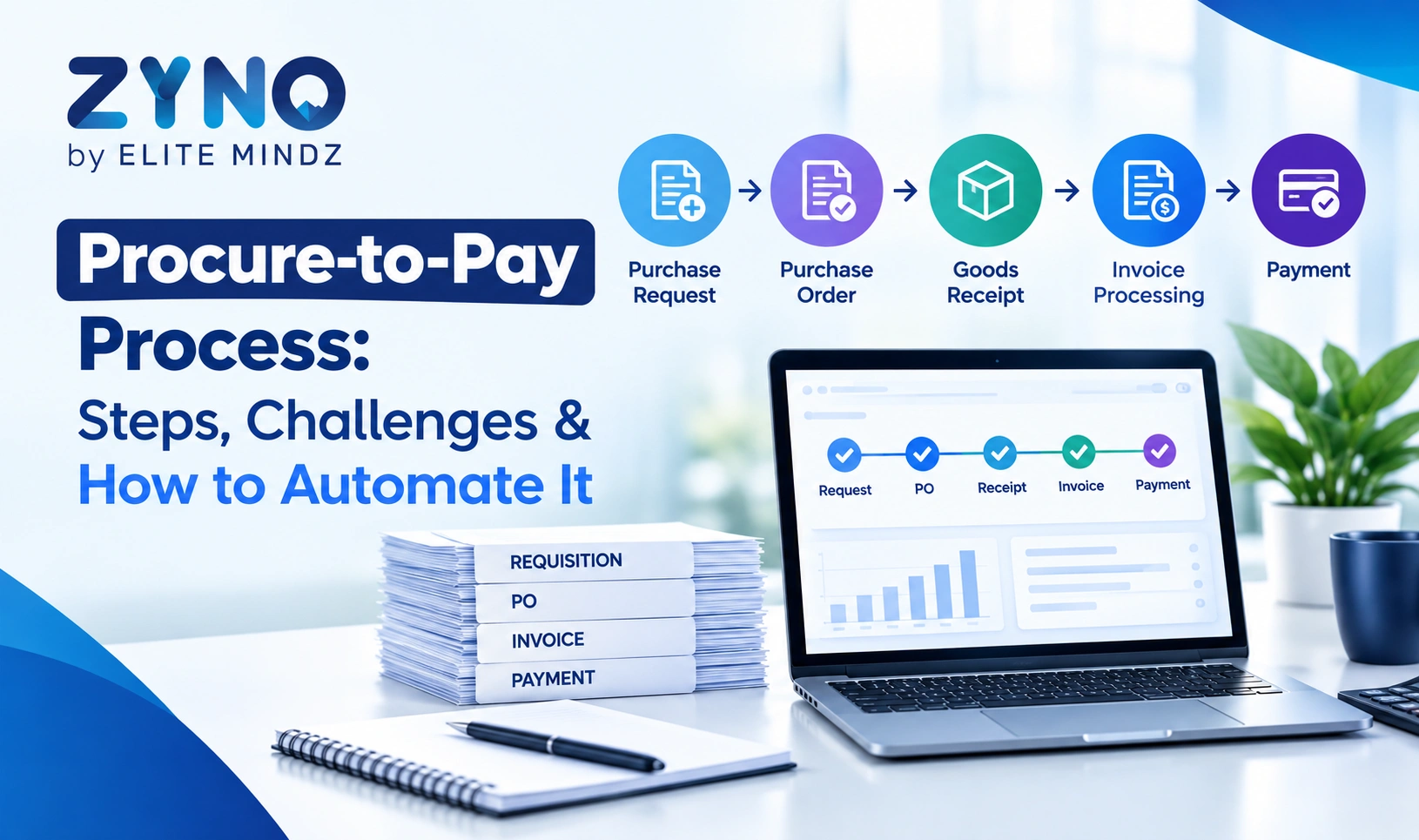
To streamline these stages, companies adopt procurement management software implementation strategies that automate the entire procure-to-pay cycle.


What Are the 4 Types of Procurement?

Understanding procurement styles helps organizations formulate the appropriate approach for each spending segment.

1. Direct Procurement

Direct procurement relates to sourcing the fundamental materials, elements, and inputs that directly feed into manufacturing a product or delivering a specific service.

Example: An automotive manufacturer sourcing steel, tires, and integrated circuits. If direct procurement falters, the assembly line halts.

Primary emphasis: outlay per unit, supplier dependability, quality benchmarks, and turnaround durations.

2. Indirect Procurement

Indirect procurement deals with products and functions that sustain business operations but do not become part of the final sold item.

Example: office supplies, IT software licenses, external marketing expertise, maintenance agreements, and travel arrangements.

Primary emphasis: spending oversight, adherence to internal rules, and consolidating suppliers to curb uncontrolled spending.

3. Goods Procurement

This specifically pertains to acquiring physical, tangible items — whether direct (raw materials) or indirect (company hardware, office furnishings).

Example: Obtaining digital tablets for a newly formed team, or buying packaging supplies for a distribution centre.

Primary emphasis: stipulated specifications, delivery schedules, warranty provisions, and total ownership cost.

4. Services Procurement

Services procurement covers non-physical results such as specialized advice, legal counsel, contracted temporary staff, maintenance contracts, or IT assistance.

Example: Engaging a distribution specialist, contracting with an advertising agency, or commissioning a repair firm for factory machinery.

Primary emphasis: formalized Service Level Agreements (SLAs), statement of work clarity, quality of output, and performance observation.


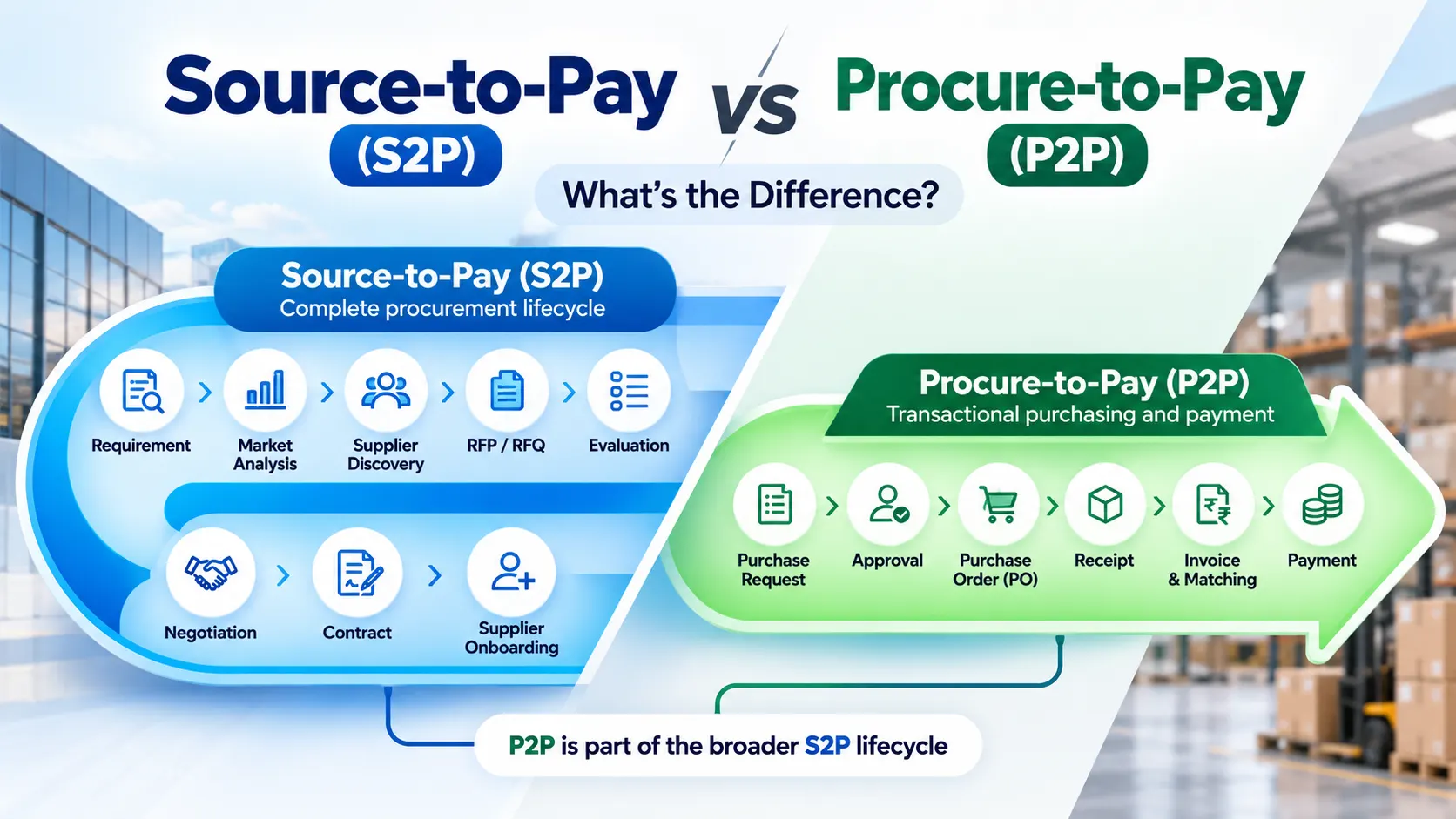
What Are the 7 Stages of the Procurement Process?


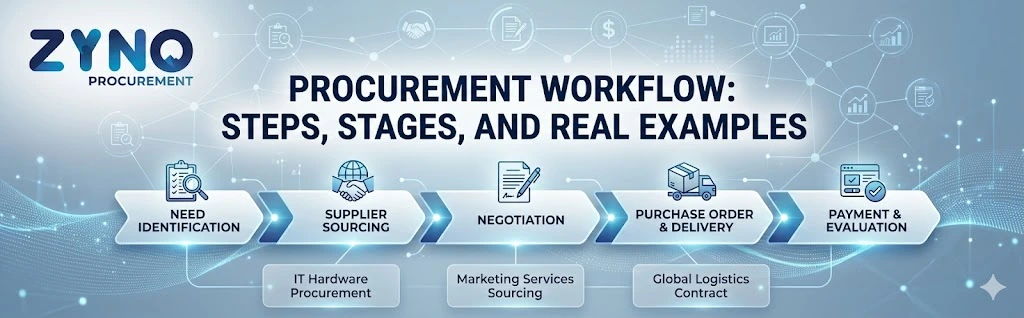
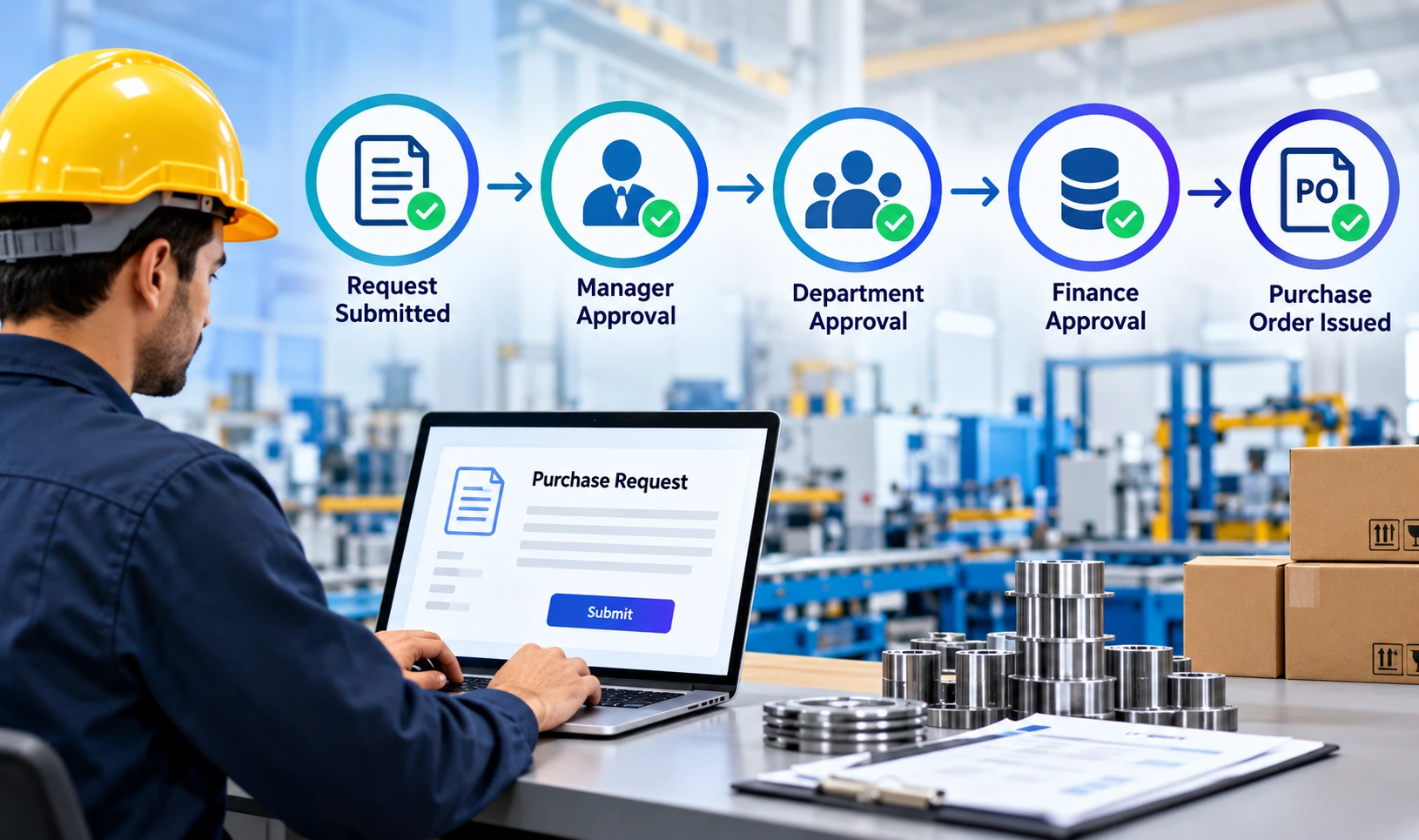
The procurement lifecycle follows a systematic sequence. Here are the seven key steps in the Procurement Workflow, moving from recognizing the need to dispatching the final payment.

  1. Requirement Recognition: The cycle begins when an internal department flags a necessity — perhaps raw inputs, professional help, or machinery. The need is formally logged and confirmed against available budget capital.
  2. Purchase Request (PR) A formal organizational paper — the Purchase Requisition — is initiated by the commissioning division. It lists specifics such as item definition, volume, estimated expense, and required speed. This kicks off the formal procurement sequence.
  3. Vendor Vetting The procurement staff seeks out prospective providers, evaluates them via RFQ (Request for Quotation) or RFP (Request for Proposal) channels, confirms their credentials, and shortlists the most suitable option based on cost, calibre, and trustworthiness.
  4. Bargaining Following the selection of a preferred provider, procurement enters negotiations regarding pricing, delivery specifications, repayment schedules, guarantees, and service terms. Significant cost savings are often achieved in this phase.
  5. Purchase Order (PO) After successful negotiation, a Purchase Order is dispatched — the official instruction authorizing the acquisition. The PO serves as a legally enforceable commitment to the supplier for the agreed-upon items or services at the established rate.
  6. Receipt & Audit Goods or services are delivered and then examined for conformity in quality, volume, and specified parameters. Any inconsistencies are flagged and resolved at this juncture prior to formal acceptance.
  7. Invoice & Settlement The supplier submits their invoice. The procurement or finance unit executes a three-part validation (PO + Goods Receipt + Invoice) to confirm accuracy, then remits payment according to the agreed timeline.


What are the Four Types of Purchase Orders (PO)?

A Purchase Order is a legally binding document dispatched from a buyer to a supplier. The four primary types of Purchase Orders are:

  1. Standard PO: The most typical form. Utilized for singular acquisitions of clearly defined items or functions with a set quantity, price, and delivery date.

Example: Ordering 500 units of wrapping material for a specific consignment.


  1. Planned PO Issued when the requirement is known, but the precise delivery timeline is adaptable. It outlines anticipated volumes and provisional delivery windows, which are confirmed later.

Example: A manufacturer planning material shipments for the upcoming quarter.


  1. Blanket PO is employed when repeated dealings with a supplier are expected over a period, but exact volumes are not yet known. It establishes an agreed price structure and a ceiling on total expenditure. Example: A business agreeing to source all IT equipment from one vendor throughout the year at pre-agreed figures.


  1. Contract PO: The broadest classification. Used to establish the governing terms and conditions with a vendor without committing to definite quantities or dates. Actual orders are then placed under this overarching framework.

Example: A legal assignment contract detailing rates and conditions for engagements over a twelve-month duration.


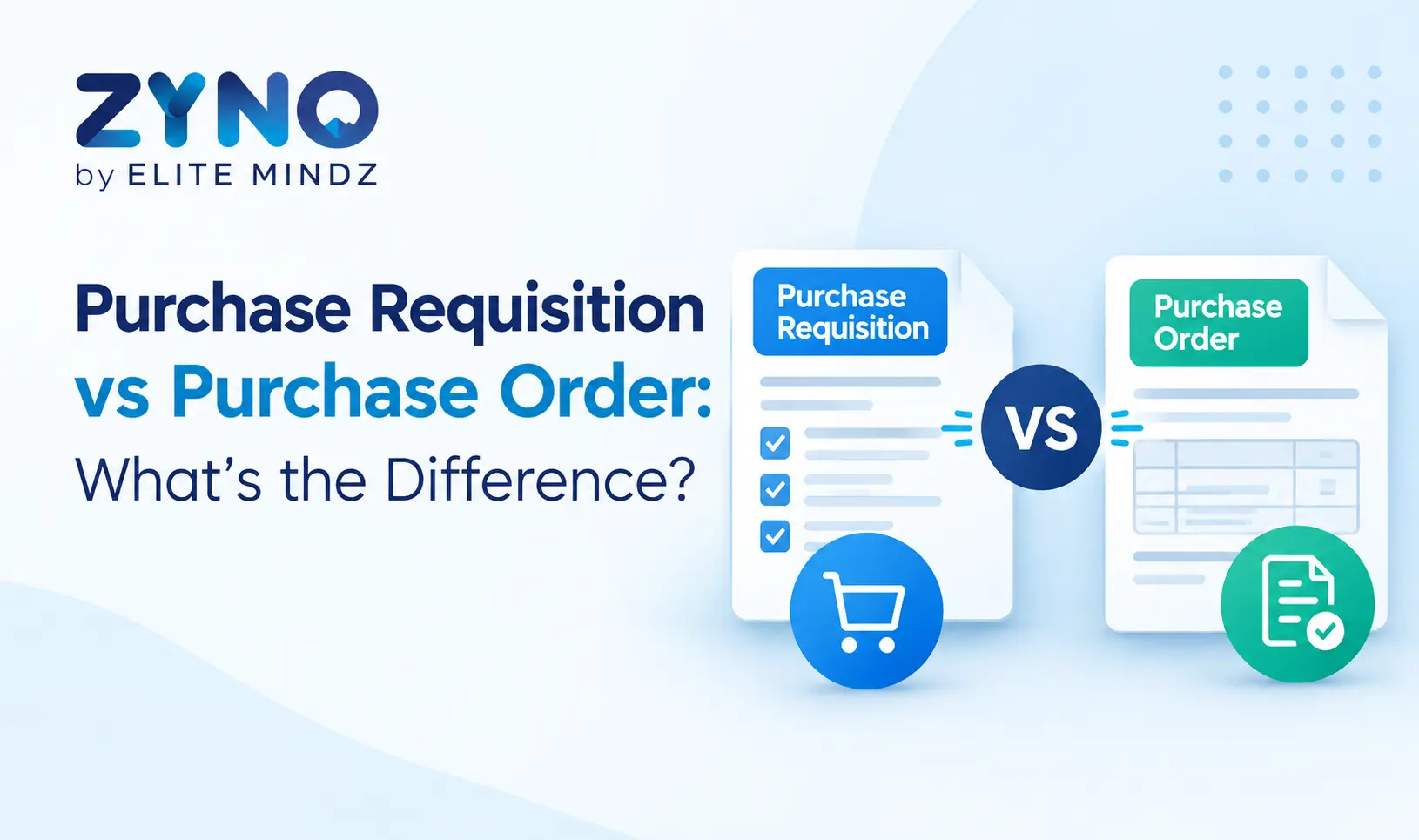
Which comes first: a pro forma invoice (PR) or a purchase order (PO)?

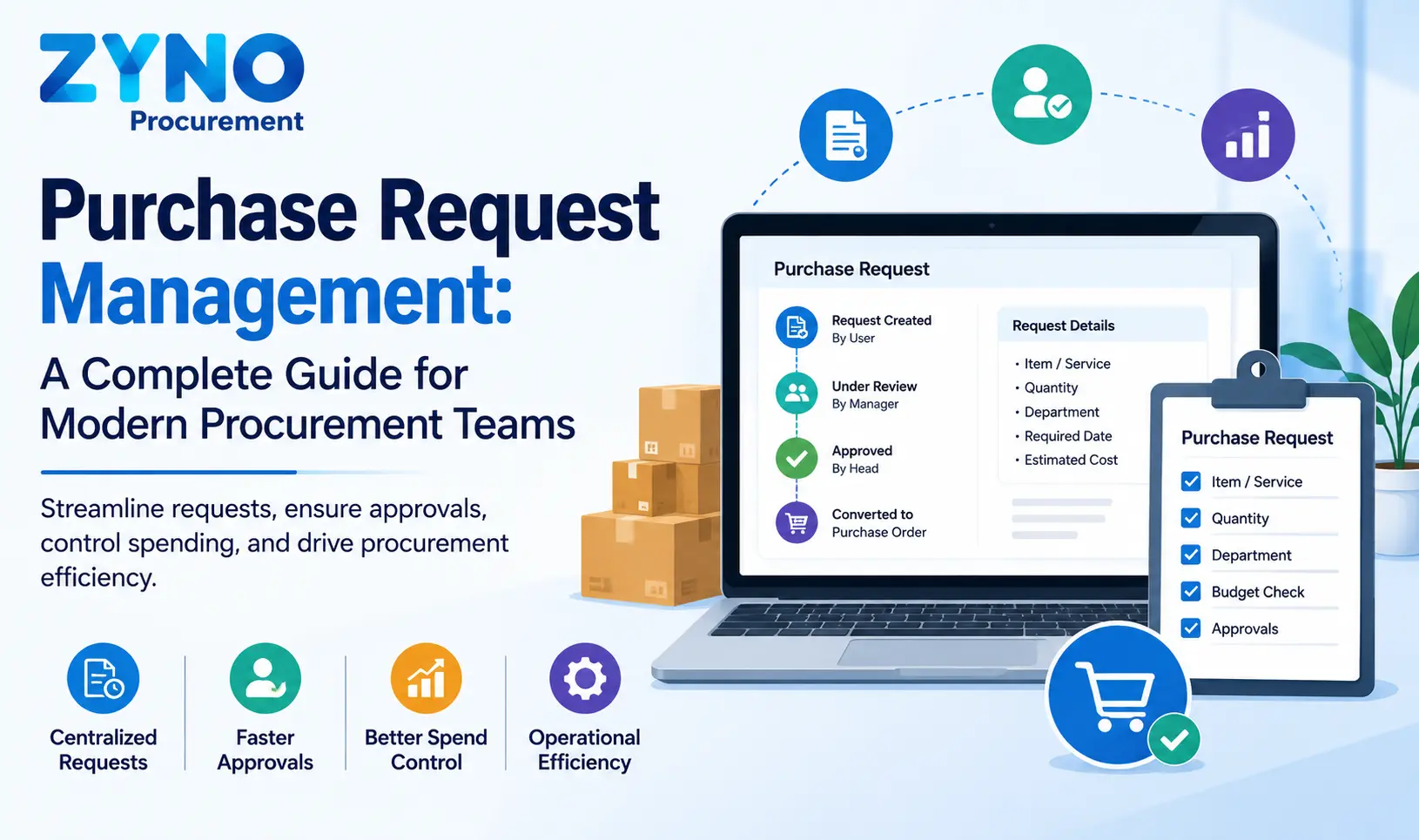
The PR (Purchase Requisition) always comes first in the sequence. A PO is released only after the PR has been evaluated and approved.

The straightforward flow is:

Department Recognizes Need

    ↓

Initiates Purchase Requisition (PR)

    ↓

Procurement Evaluates & Approves PR

    ↓

Supplier Identified / Price Offers Received

    ↓

Purchase Order (PO) Dispatched to Vendor

    ↓

Products/Services Received

    ↓

Invoice Verified & Payment Processed

The PR is an internal request. The PO is an external commitment. Issuing an external commitment to a supplier (via PO) is not permissible without internal authorization (the PR) — this represents a fundamental control within procurement practice.


What Are the 4 Roles of Procurement?

Procurement fulfills four essential operational capacities within any enterprise:

1. Cost Management

Procurement bears the duty of securing optimal value for every unit of currency expended. Through competitive soliciting, bargaining, and vendor base streamlining, procurement personnel achieve quantifiable cost reductions across the whole enterprise.

2. Vendor Management

Building and sustaining robust supplier partnerships is a primary procurement mandate. This encompasses onboarding new vendors, tracking ongoing performance, assessing associated risks, and fostering long-term alliances.

3. Risk Management

Procurement isolates and minimizes supply chain vulnerabilities — ranging from reliance on a single source and quality shortfalls to global instability and non-compliance with agreements. An effective procurement unit forestalls supply interruptions before they manifest.

4. Strategic Sourcing

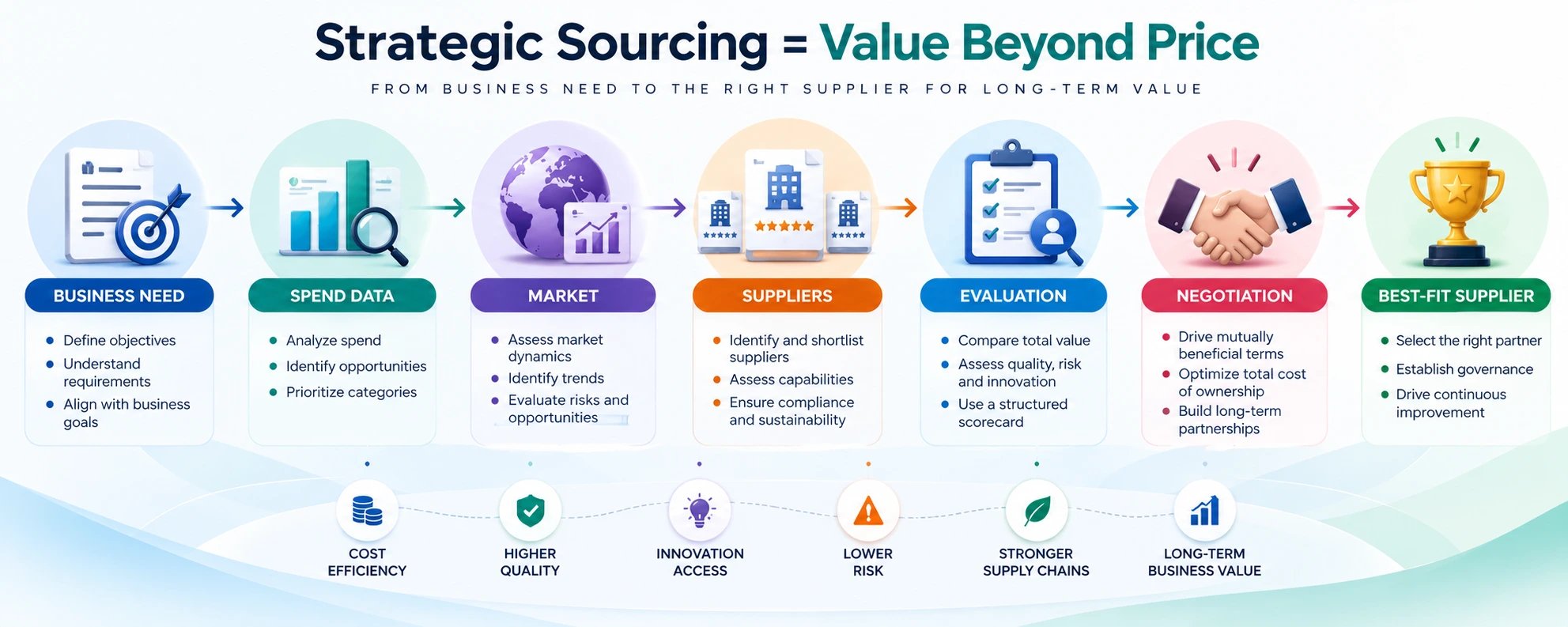
Instead of defaulting to reordering from existing suppliers, strategic sourcing examines the entire supply market landscape to determine the most advantageous long-term procurement approach. This includes deciding on insourcing versus outsourcing, managing product/service categories, and conducting market comparisons.


What is SAP in Procurement?

SAP (Systems, Applications, and Products) is the most widely adopted enterprise resource planning (ERP) software globally. Within procurement, SAP offers a unified digital platform to oversee the entire order-to-payment process.

Benefits of SAP in Procurement:

  • Automation — Reduces manual paperwork and accelerates approvals
  • Integration — Connects procurement with finance, inventory, and logistics in real time
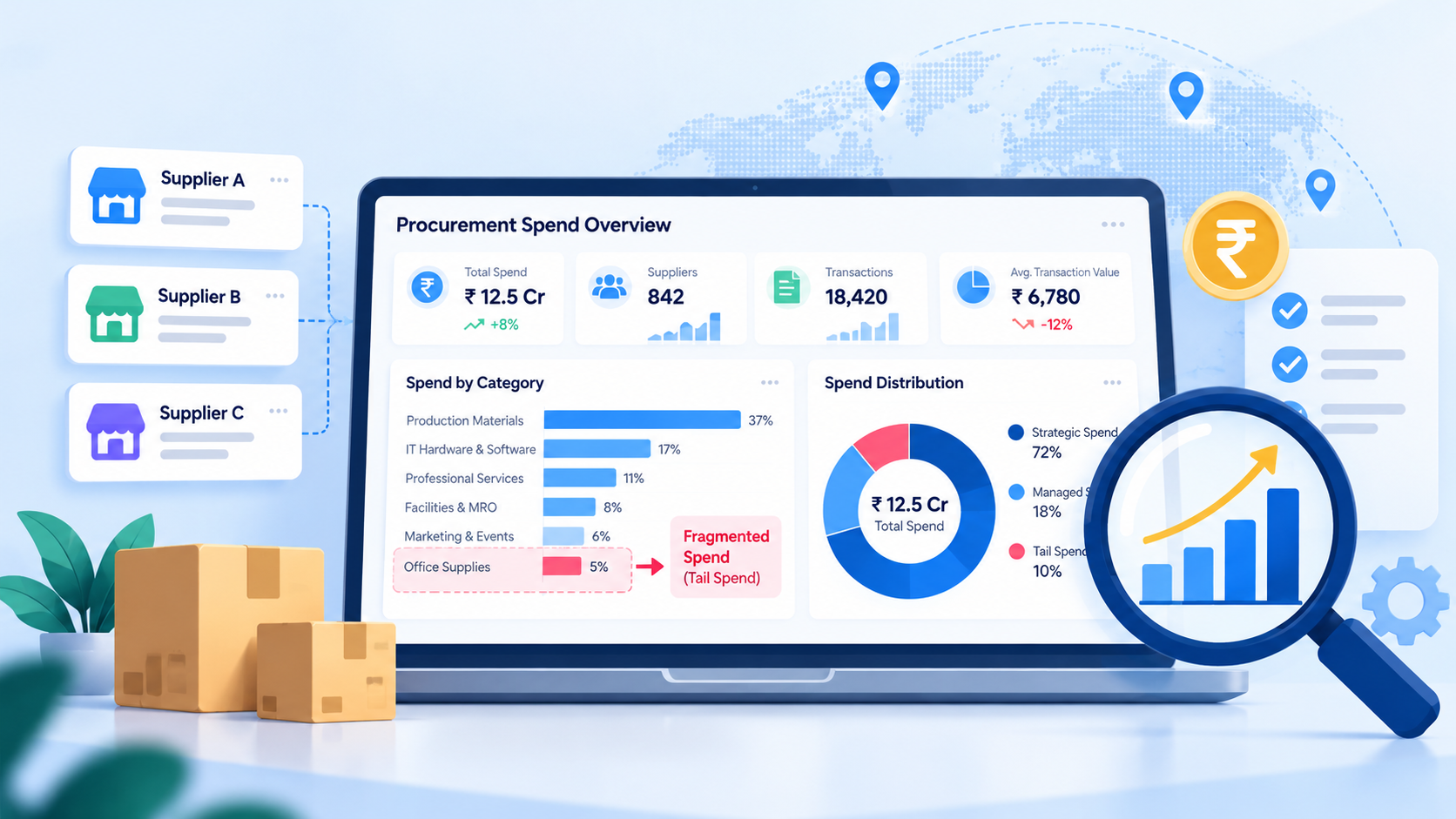
  • Visibility — Full spend analytics and supplier performance dashboards
  • Compliance — Enforces procurement policies and audit trails automatically
  • Scalability — Handles procurement operations for businesses of any size globally

For large enterprises, SAP procurement is a foundational investment that pays dividends in efficiency and cost control.

What Are 4 Varieties of SAP?

SAP provides several ERP systems customized for diverse company scales and requirements:

  1. SAP S/4HANA This is the most recent iteration of SAP's primary ERP system. It utilizes the HANA in-memory database for immediate analytics and operations. Intended for major corporations with intricate, worldwide activities. It can be deployed on-premises, in the cloud, or using a hybrid model.
  2. SAP ECC (ERP Central Component) This system preceded S/4HANA and remains in broad use globally. It encompasses essential modules such as MM, FI (Financial Accounting), SD (Sales and Distribution), and HR. Numerous entities are presently transitioning from ECC to S/4HANA.
  3. SAP Business One Created expressly for small to mid-sized businesses (SMEs). It delivers essential ERP capabilities across purchasing, stock management, sales, and financial functions within a simpler, more accessible deployment framework.
  4. SAP Business ByDesign: A cloud-native ERP offering for the mid-sized market. It bundles purchasing, project oversight, CRM, and financial management as a fully serviced Software as a Service (SaaS) package—avoiding the intricacies of S/4HANA.

Here are the four categories of purchase orders: Standard PO (for one-off, set-price buys), Planned PO (for recognized requirements with adaptable timing), Blanket PO (for repeated acquisitions at agreed-upon rates), and Contract PO (a foundational arrangement detailing terms without set volumes).


What Are the 10 C's of Procurement?

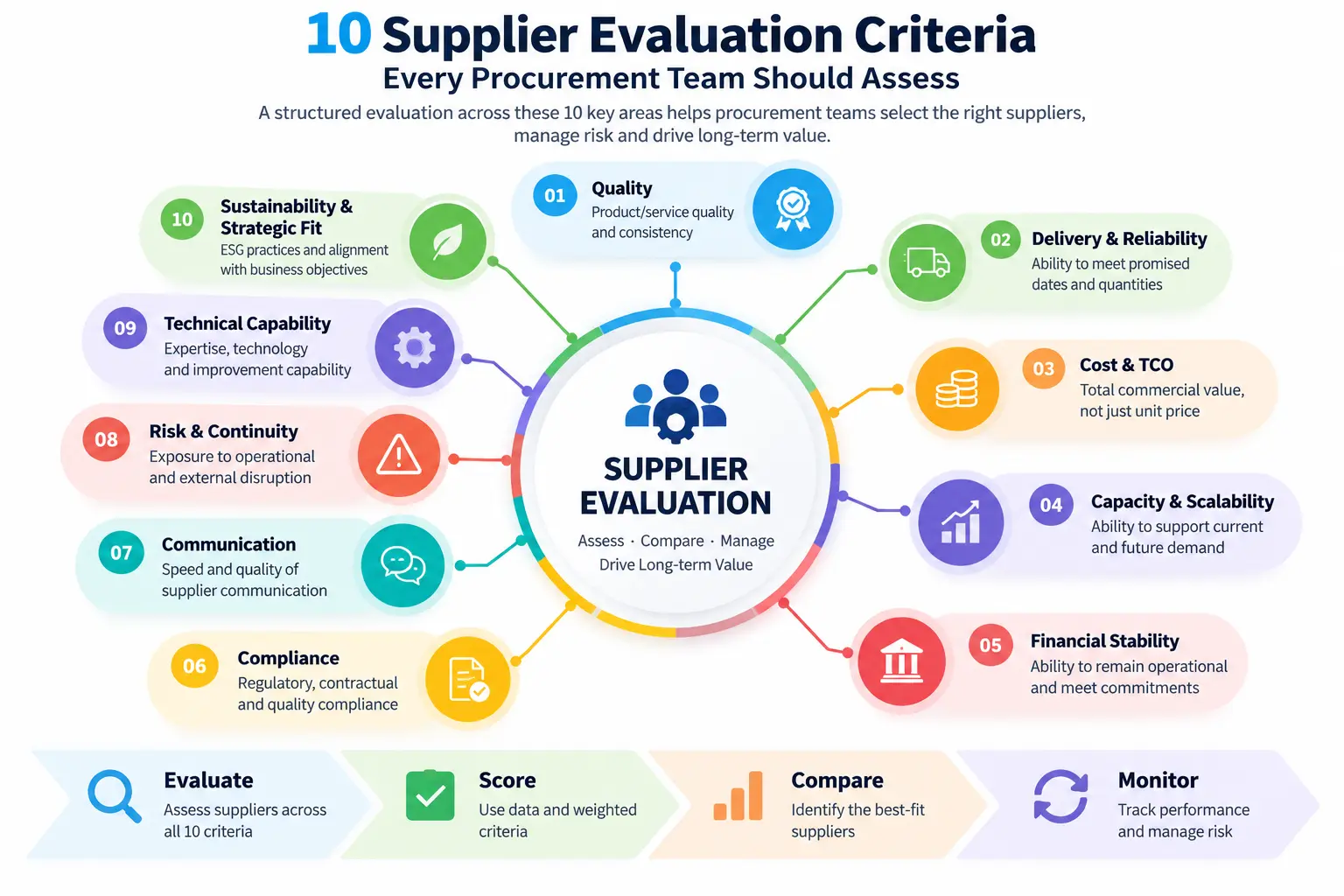
The ten essential Cs in procurement are: Competency, Capacity, Commitment, Control, Cash, Cost, Consistency, Culture, Cleanliness, and Communication — a structure for assessing and choosing vendors.

The 10 C's of Procurement is a widely referenced framework used for supplier evaluation and selection. Each "C" represents a critical factor to assess when choosing the right supplier.

  1. Competency Does the supplier have the technical skills, expertise, and capabilities to deliver what you need? Evaluate their track record, certifications, and team qualifications.
  2. Capacity Can the supplier handle your volume requirements — today and as you scale? Assess their production capacity, workforce, and ability to meet surge demand.
  3. Commitment: Is the supplier genuinely committed to serving your business? Look for evidence of reliability, responsiveness, and long-term partnership intent — not just willingness to close a deal.
  4. Control Does the supplier have robust internal quality and process controls? Ask about quality management systems, ISO certifications, and how they manage sub-tier suppliers.
  5. Cash Is the supplier financially stable? A supplier facing cash flow problems is a supply chain risk. Review their financial health, payment terms, and credit standing.
  6. Cost: What is the total cost of working with this supplier — including price, shipping, quality failure costs, and administrative overhead? The lowest price is rarely the lowest total cost.
  7. Consistency Can the supplier deliver the same quality every single time, at scale? Consistency is the difference between a reliable supplier and one that creates constant exceptions to manage.
  8. Culture Do the supplier's values, ethics, and working culture align with yours? Cultural mismatches lead to communication failures, ethical risks, and long-term friction.
  9. Clean Does the supplier operate ethically and sustainably? This covers environmental compliance, labour practices, anti-corruption standards, and ESG commitments — increasingly important for corporate risk and reputation.
  10. Communication How well does the supplier communicate? Assess their responsiveness, reporting frequency, escalation processes, and the quality of their account management. Poor communication multiplies every other problem.

Top 10 Procurement Software in India (2026)

Selecting the appropriate purchasing software can transform a hands-on, error-prone approach into an efficient, data-driven operation. Below are the leading options available across India for 2026.

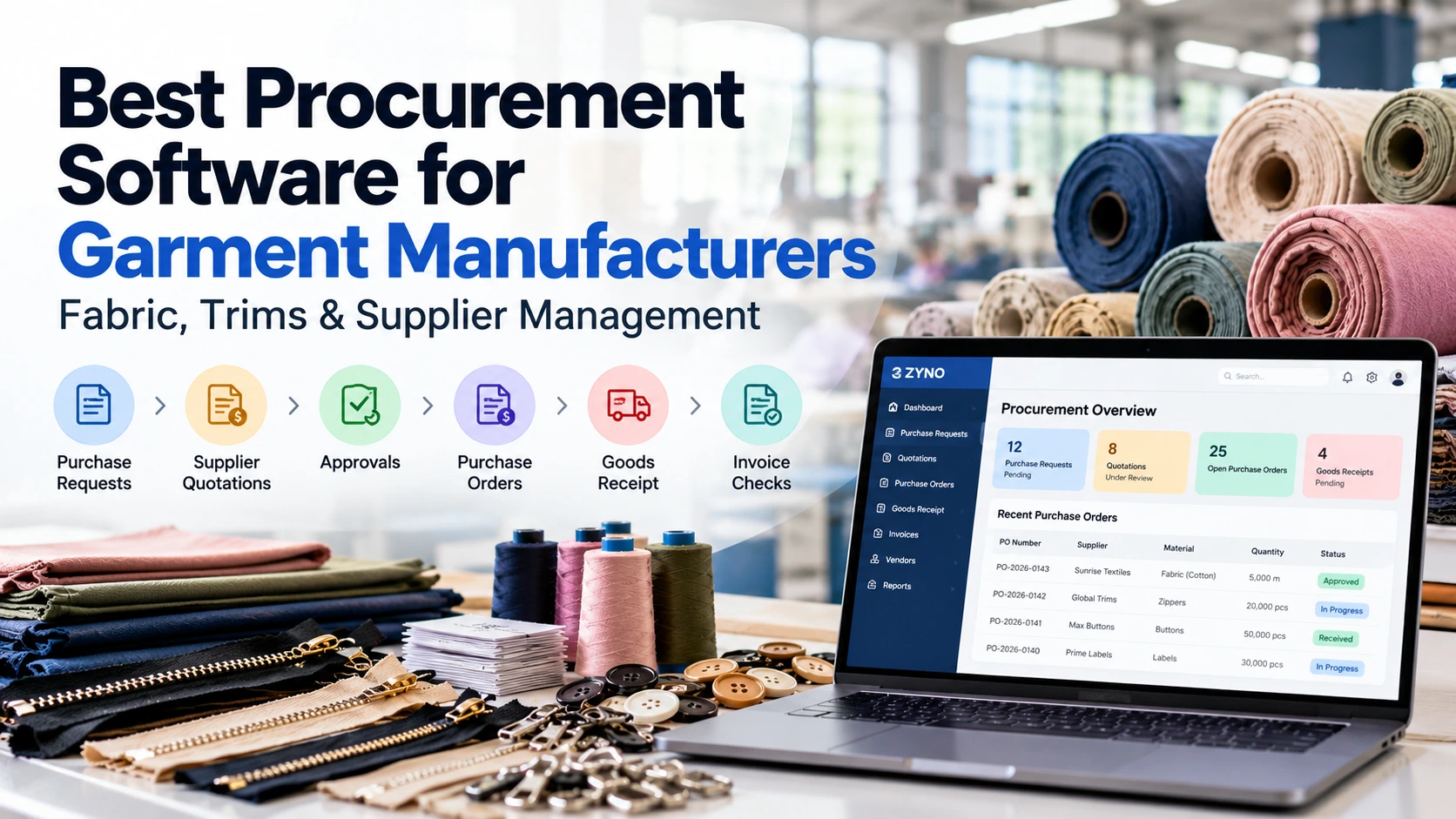
1. ZYNO Procurement (by Elite Mindz)

Ideal for: Indian firms of any scale aiming for AI-driven purchasing task automation

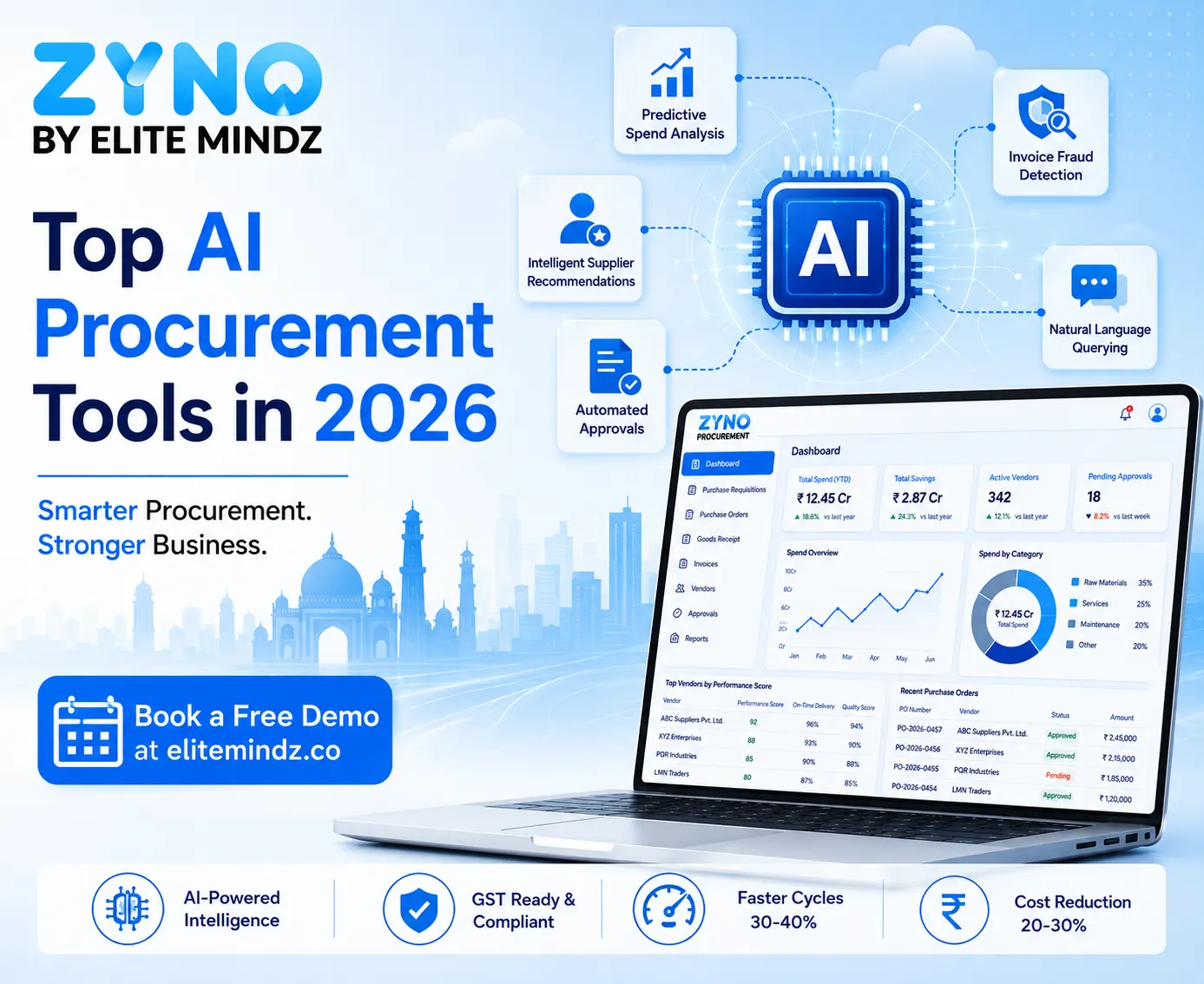
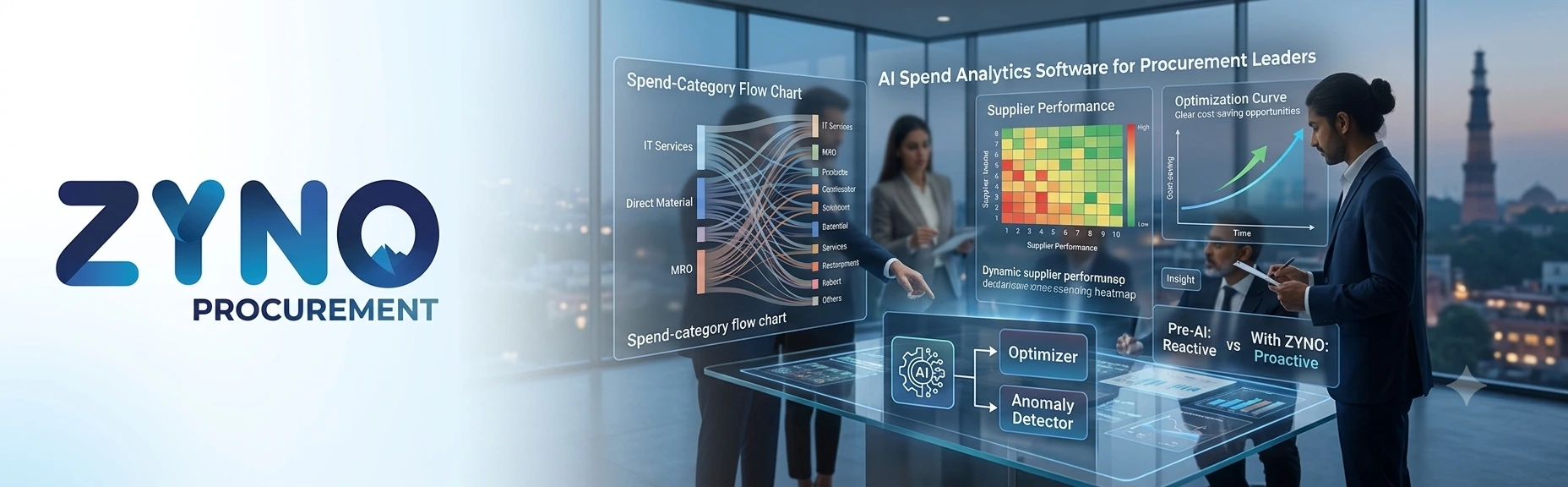
ZYNO Procurement by Elite Mindz is specifically created for the Indian landscape, offering comprehensive purchasing oversight with intelligent automation. It provides comprehensive expenditure insight, smart vendor oversight, and seamless integration with existing accounting and ERP platforms.

Key Capabilities:

  • AI-supported requisition and sign-off routines
  • Live spending metrics and budgetary oversight
  • Vendor onboarding, assessment, and performance monitoring
  • Automatic three-way bill reconciliation
  • GST-compliant documentation and reporting
  • Mobile-friendly layout for approvals anywhere

Simple purchase oversight. Smarter expenditure with ZYNO procurement administration tools.

If you want to digitize and optimize your procurement process, explore advanced procurement solutions designed for modern enterprises.


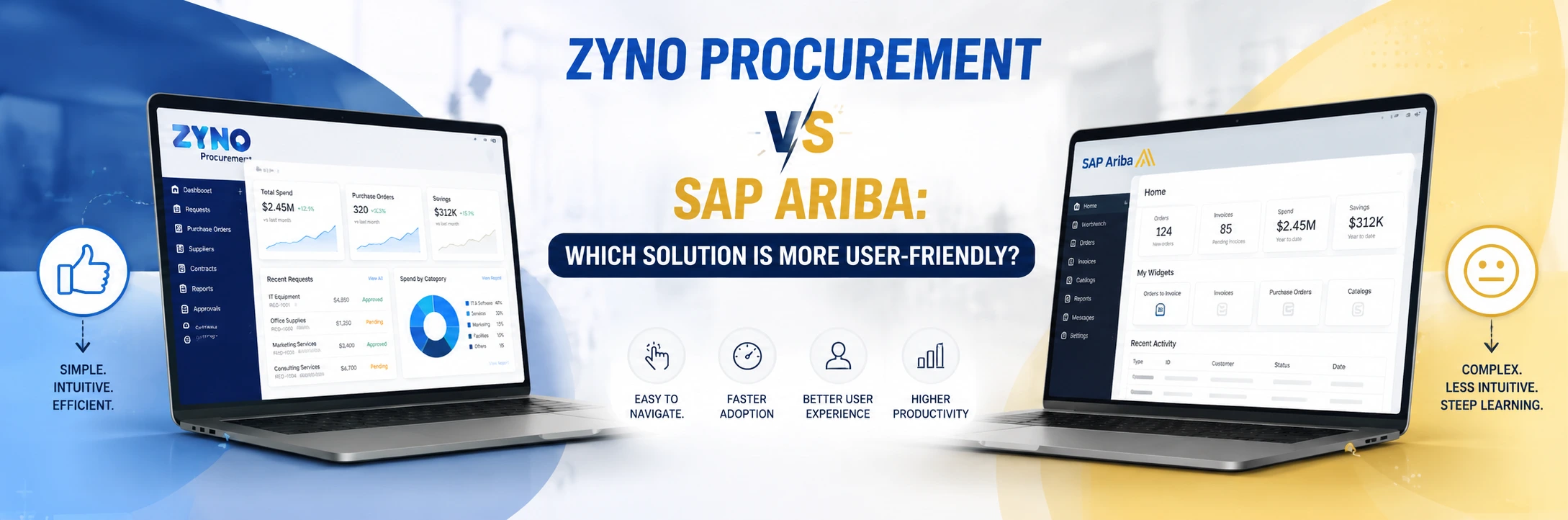
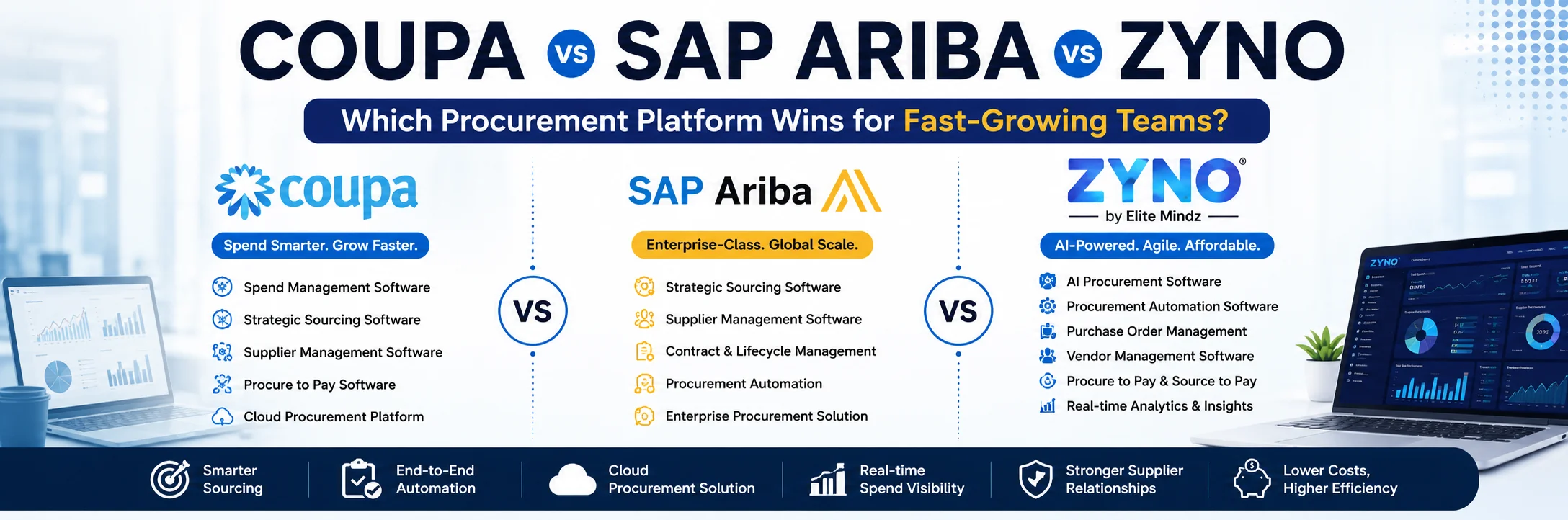
2. SAP Ariba

Best for: Large corporations managing complex worldwide purchasing activities

SAP Ariba stands as one of the premier purchasing platforms globally, encompassing sourcing, agreement oversight, and procure-to-pay functions within a unified cloud service. It integrates flawlessly with SAP ERP settings. Suited for organizations needing deep access to vendor networks and advanced sourcing features.


3. Oracle Procurement Cloud

Best for: Corporations operating within Oracle ERP frameworks

Oracle's cloud purchasing solution delivers sourcing, buying, and vendor management backed by robust AI-driven insights. Engineered for expansion, it offers powerful workflow automation and tight integration with Oracle Financials. Perfect for entities already integrated with the Oracle environment.


4. Coupa

Best for: Mid-to-large companies concentrating on spend oversight

Coupa offers a unified Business Spend Management (BSM) framework covering purchasing, billing, expense monitoring, and supply chain risk awareness. Recognized for high user engagement and delivering strong returns on investment.


5. Zoho Procurement

Best for: SMBs and new ventures seeking cost-effective, adaptable purchasing solutions

Zoho Procurement is part of the larger Zoho ecosystem, making it a natural fit for businesses that already use Zoho CRM or Books. It provides solid purchase order and supplier management tools at very competitive pricing — a great choice for Indian small and medium businesses.


6. GEP SMART

Best for: Enterprises desiring an integrated source-to-pay solution

GEP SMART is a cloud-native, AI-enhanced purchasing platform covering sourcing, contracts, buying, and accounts payable. Noted for its clean user interface, strong reporting, and capability to handle intricate global purchasing tasks.


7. Procurify

Best for: Expanding mid-sized organizations requiring expenditure visibility

Procurify aims to make purchasing accessible — straightforward PO handling, approval pathways, and instant budget tracking without the complexity of larger enterprise software. Excellent for teams moving past manual routines.


8. Kissflow Procurement

Best for: Teams wanting to build purchasing workflows without coding

Kissflow enables organizations to build tailored purchasing processes without specialized technical skills. Perfect for companies needing flexible, configurable systems without a major IT setup burden.


9. Fraxion

Best for: Businesses needing mobile purchasing management and spending control

Fraxion provides purchase request, PO, and budget oversight features with a strong mobile experience — ideal for operations that rely heavily on field staff and need to approve and monitor expenses remotely.


10. Basware

Best for: Major corporations prioritizing AP automation and digital invoicing

Basware specializes in accounts payable automation and electronic invoicing, alongside strong purchasing capabilities. Trusted by global firms for processing high volumes of invoices and highly regulated settings.


Benefits of Procurement Software

The right purchasing software does more than just digitize paperwork — it fundamentally alters how your company manages expenses.

Automation removes manual purchase requests, the need to chase approvals, and data entry errors. What once required days now takes mere minutes, automatically incorporating full audit trails.

Cost Management becomes immediate rather than looking backward. Purchasing software monitors every acquisition against sanctioned budgets, flags potential overspending proactively, and identifies savings opportunities through spend analysis.

Data Insight grants purchasing personnel and leadership complete transparency into expenditure patterns, specifying vendors and categories — paving the way for sharper choices and better negotiations.

Adherence is automatically enforced. Policy checks, sign-off limits, preferred vendor lists, and agreement terms are embedded in the platform — curbing off-policy buying and ensuring every transaction complies with regulations.

Modern ERP systems integrate procurement workflows through tools like ERP-based procurement automation software to improve visibility and control.


Best Practices for Procurement Management

Whether you're managing procurement for a 10-person startup or a 10,000-person enterprise, these best practices deliver consistent results:

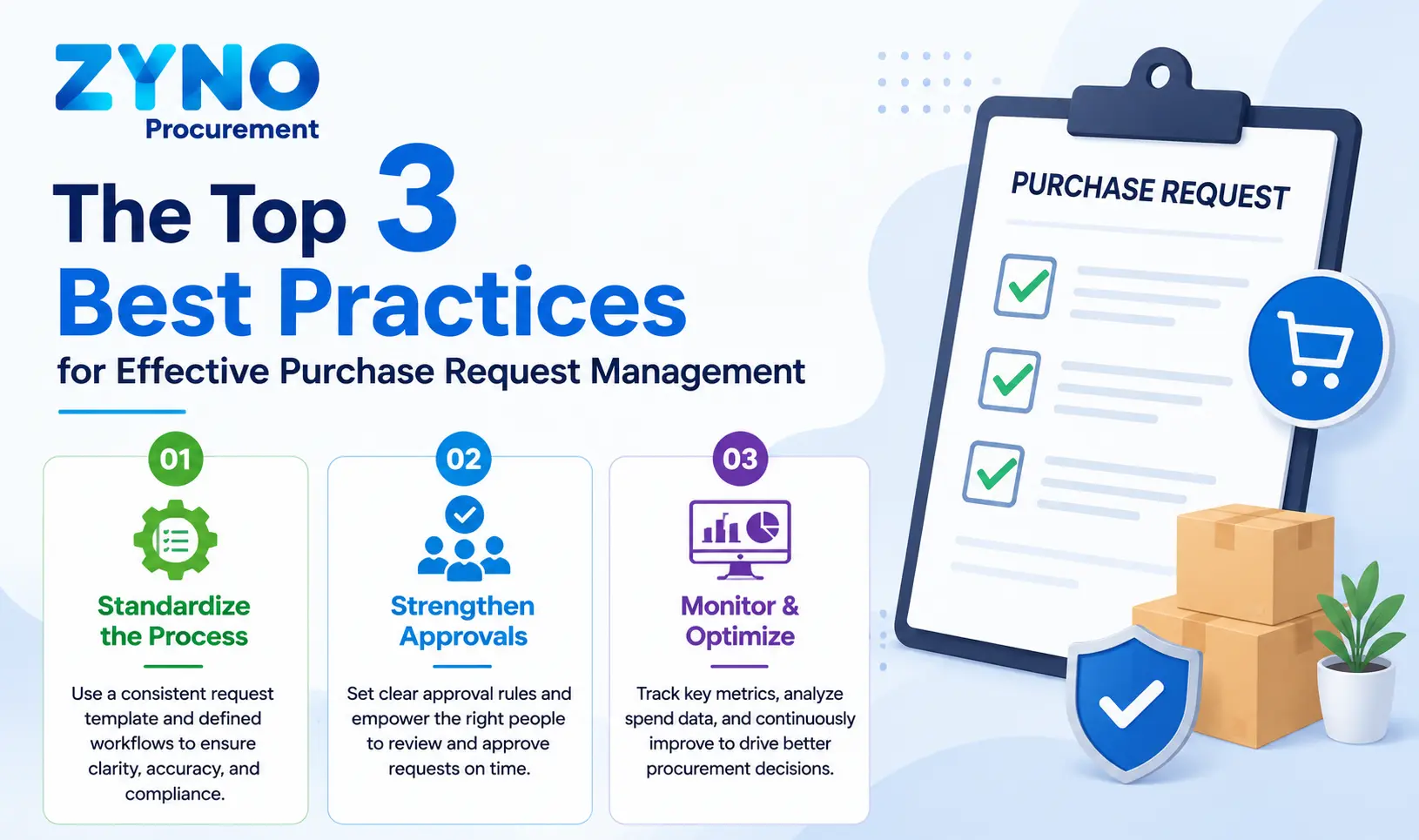
Centralized procurement Decentralized buying leads to duplicated supplier relationships, inconsistent pricing, and unmanaged risk. Centralizing procurement — even in a shared services model — drives better deals and clearer accountability.

Optimize Your Vendor Base. More suppliers do not mean more choice — it means more complexity. Rationalizing your supplier base to a strategic set of preferred vendors reduces administrative overhead and unlocks volume-based pricing advantages.

Automate Repetitive Processes Purchase requisitions, PO generation, invoice matching, and payment processing are prime candidates for automation. Every manual step is a potential delay and error point. Invest in procurement software that removes these friction points.

Make Data-Driven Decisions. Gut instinct is no longer acceptable in procurement. Use spend analytics to identify cost-reduction opportunities, track supplier performance against KPIs, and benchmark pricing against market rates.


The Forward Path for Procurement is Strategic and Tech-Driven

Procurement has evolved from a back-end purchasing task into a vital strategic function that drives competitive advantage. Firms viewing procurement as merely transactional miss out on substantial cost reductions, efficiency improvements, and risk mitigation.

The successful organizations of 2026 have achieved the following:

  • Fully digitalized their procurement workflows from start to finish
  • Cultivated robust, data-informed vendor partnerships
  • Automated routine tasks, directing personnel expertise toward strategy
  • Incorporated procurement analytics for immediate insights and choices

Regardless of whether you are beginning to formalize your sourcing procedures or aiming to modernize an older system, the trajectory is evident: procurement that is more intelligent, automated, and strategic yields quantifiable returns.

Prepared to master your sourcing operations? Enhance your procurement workflow with ZYNO Procurement Software now — specifically engineered for Indian enterprises, enhanced by AI, and designed to grant you full insight into spending from the outset.

FAQs About Procurement

What is procurement in simple terms?

Procurement is the organized process a business uses to identify needs, select suppliers, negotiate terms, place orders, and pay for the goods and services it requires to operate.

What are the 4 types of procurement?

The four main types are: Direct Procurement (inputs for production), Indirect Procurement (operational support), Goods Procurement (physical items), and Services Procurement (intangible services and expertise).

What are the 7 stages of procurement?

The 7 stages are: Need Identification → Purchase Requisition → Supplier Selection → Negotiation → Purchase Order → Delivery & Inspection → Invoice & Payment.

What is SAP in procurement?

SAP is an enterprise software platform widely used to digitally manage procurement processes. The SAP MM (Materials Management) module handles the complete procure-to-pay cycle, from requisition to payment.

What are the 4 types of purchase orders?

The four types are: Standard PO (one-time fixed purchase), Planned PO (known need, flexible schedule), Blanket PO (recurring purchases at pre-agreed prices), and Contract PO (framework agreement with terms but no fixed quantities).

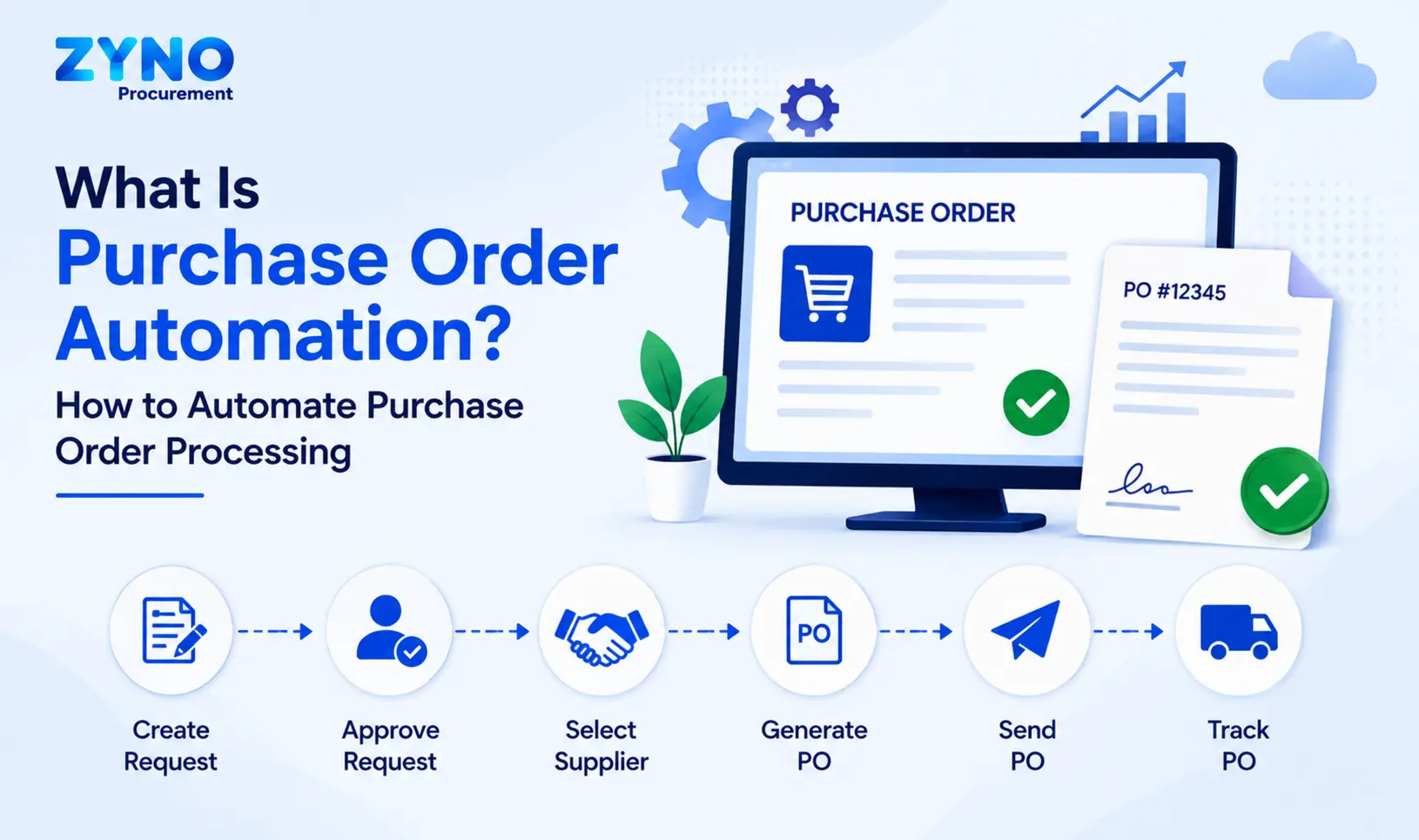
An efficient procurement system relies heavily on a well-structured purchase order management system to ensure accurate order tracking, supplier communication, and timely deliveries.

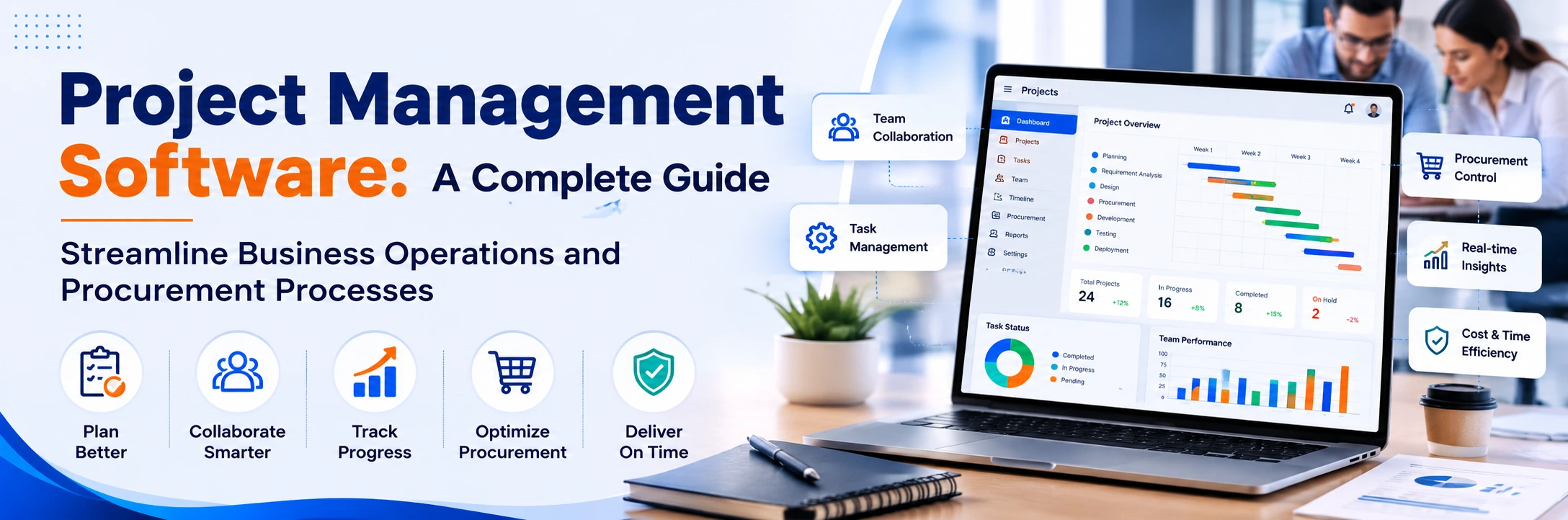
To streamline procurement workflows end-to-end, organizations often integrate business process management software that automates approvals, enhances collaboration, and ensures compliance across departments.

What are the 10 C's of procurement?

The 10 C are: Competency, Capacity, Commitment, Control, Cash, Cost, Consistency, Culture, Clean, and Communication - a framework for evaluating and selecting suppliers.

What comes first, PR or PO?

The Purchase Requisition (PR) always comes first. It is an internal approval document. The Purchase Order (PO) is only issued externally to the supplier after the PR has been reviewed and approved.

Are you looking for a professional advisor for your business?

Get in Touch with Our IT Consultants

Complete the form and discuss implementation strategies with our IT expertise.

Get a Quote in Minutes

next
next
next

Related Blogs

Procurement Software Trends in 2025: What to Expect

Procurement Software Trends in 2025: What to Expect

Read More →
Why E-Procurement Outperforms Traditional ERP in Modern Procurement

Why E-Procurement Outperforms Traditional ERP in Modern Procurement

Read More →
Top 10 Procurement Software Companies in India 2026

Top 10 Procurement Software Companies in India 2026

Read More →
Best Procurement Software Companies in Kuwait (2025)

Best Procurement Software Companies in Kuwait (2025)

Read More →
5 Best Procurement Software in Africa for Enterprises & SMEs (2026 Guide)

5 Best Procurement Software in Africa for Enterprises & SMEs (2026 Guide)

Read More →
Best Procurement Software in Nigeria 2025 | Top 5 Picks

Best Procurement Software in Nigeria 2025 | Top 5 Picks

Read More →
Best Procurement Software Providers in USA (2025): How AI is Transforming the Future

Best Procurement Software Providers in USA (2025): How AI is Transforming the Future

Read More →
10 Best Procurement Software Providers in Thailand for Streamlined Supply Chain Management

10 Best Procurement Software Providers in Thailand for Streamlined Supply Chain Management

Read More →
Top 10 Cloud-Based Procurement Solutions in Portugal for Businesses in 2025

Top 10 Cloud-Based Procurement Solutions in Portugal for Businesses in 2025

Read More →
Top 10 Procurement Software Providers in Switzerland 2025: Streamlining Sourcing and Supplier Management

Top 10 Procurement Software Providers in Switzerland 2025: Streamlining Sourcing and Supplier Management

Read More →
What Makes ZYNO Procurement Different from Other Oil & Gas Procurement Software

What Makes ZYNO Procurement Different from Other Oil & Gas Procurement Software

Read More →
The Digital Transformation of Logistics Procurement in the Middle East

The Digital Transformation of Logistics Procurement in the Middle East

Read More →
A Step by Step Guide to Procurement Management Software for Modern Enterprises

A Step by Step Guide to Procurement Management Software for Modern Enterprises

Read More →
Sourcing and Procurement: What is the Difference and Why It Matters

Sourcing and Procurement: What is the Difference and Why It Matters

Read More →
Difference Between Procurement and Supply Chain Management

Difference Between Procurement and Supply Chain Management

Read More →
What Is Procurement Software and Why Modern Businesses Need It

What Is Procurement Software and Why Modern Businesses Need It

Read More →
Best Procurement Management Software to Automate ERP Process

Best Procurement Management Software to Automate ERP Process

Read More →
Direct vs Indirect Procurement: Key Differences, Examples & Uses (2026)

Direct vs Indirect Procurement: Key Differences, Examples & Uses (2026)

Read More →
Smart procurement strategies for cost optimization & risk management

Smart procurement strategies for cost optimization & risk management

Read More →
What Is Procurement? Everything You Need to Know (Types, Process & SAP)

What Is Procurement? Everything You Need to Know (Types, Process & SAP)

Read More →