
 Contact Us

Retail Management Software Guide: Features, Benefits & Best Solutions (2026)
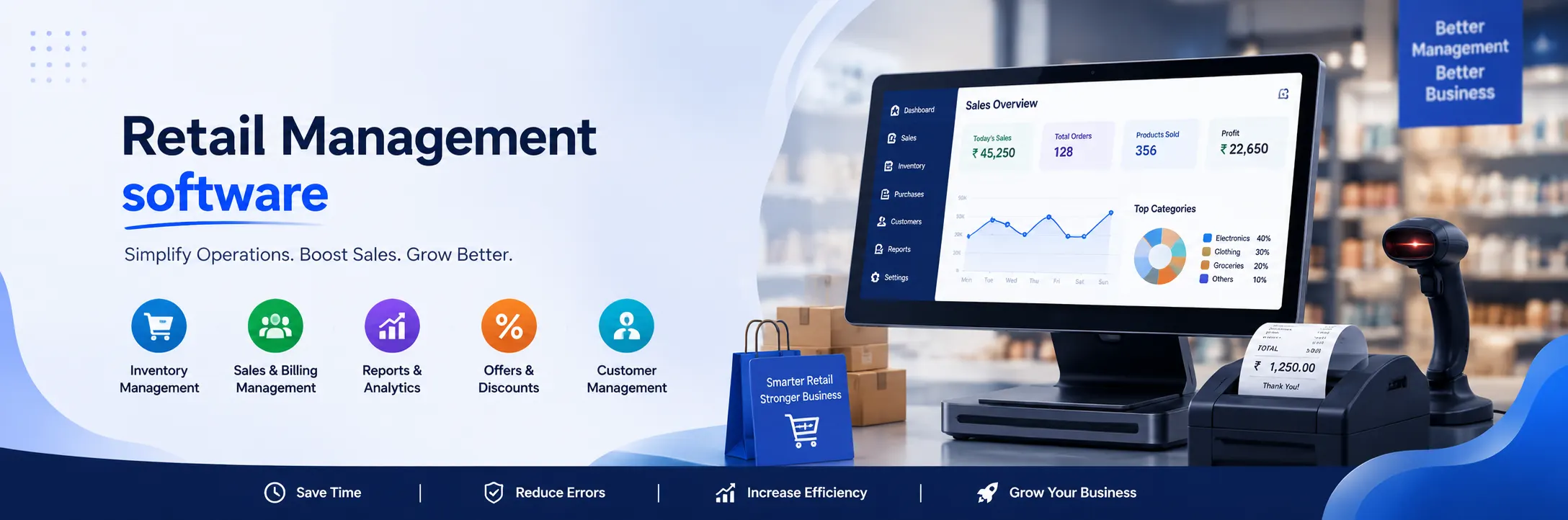
Retail Management Software is a digital solution that helps retailers manage inventory, billing, sales, customers, and multiple store locations from one platform. It automates daily operations, provides real-time insights, improves efficiency, reduces costs, and enhances the overall customer experience.

Share This Blog :


Stop Losing Money to VAT Penalties & Manual Errors
Businesses using ZYNO Books cut accounting time by 70% and stay 100% ZATCA-compliant — automatically.


Running a retail business today is tough. Customers expect fast checkouts, real-time stock availability, and seamless service across every channel. Meanwhile, you are expected to manage inventory, staff, billing, vendors, and taxes often without enough hours in the day. If you are still tracking stock on spreadsheets, handling purchases over WhatsApp, or reconciling sales manually at midnight, you are not just working harder. You are actively bleeding money on errors, stockouts, and slow customer service.
That is exactly why retail management software has moved from a back-office luxury to a front-line necessity. The right retail management system connects your sales floor, warehouse, and back office into one smooth workflow. At ZYNO Retail, we have watched countless store owners transform chaotic operations into profitable, scalable businesses simply by ditching manual processes for cloud-based, AI-powered retail software. This guide breaks down what that transformation actually looks like in 2026.
What is Retail Management Software?
Retail management software is the digital backbone of a modern store. It handles billing, inventory tracking, customer records, purchase orders, employee scheduling, and accounting all inside one connected platform.
Instead of running five separate apps that refuse to talk to each other, a retail management system unites everything. When a product sells at the counter, your stock levels update instantly. When inventory runs low, the system alerts you before a customer faces an "out of stock" disappointment. When tax season hits, your GST reports are already compiled and ready.
Traditional retail management relied on paper ledgers, standalone cash registers, and gut instinct. Digital retail business software replaces that guesswork with automation. It removes double data entry, slashes human error, and gives you live visibility into every transaction happening across your business.
Book a free demo of ZYNO Retail Management Software and discover how AI-powered inventory management, POS billing, CRM, multi-store management, and real-time analytics can streamline your retail operations and accelerate business growth.
How Does Retail Software Work?
Retail Management Software works by automating and connecting core retail operations such as inventory management, billing, sales, customer relationship management (CRM), purchasing, accounting, and reporting into a single platform. Every transaction updates inventory and financial records in real time, reducing manual work and errors. Whether deployed on-premise or in the cloud, it provides businesses with complete visibility into operations, helping retailers improve efficiency, reduce costs, streamline workflows, and make faster, data-driven decisions.
Key Features of Retail Management Software

1. Inventory Management
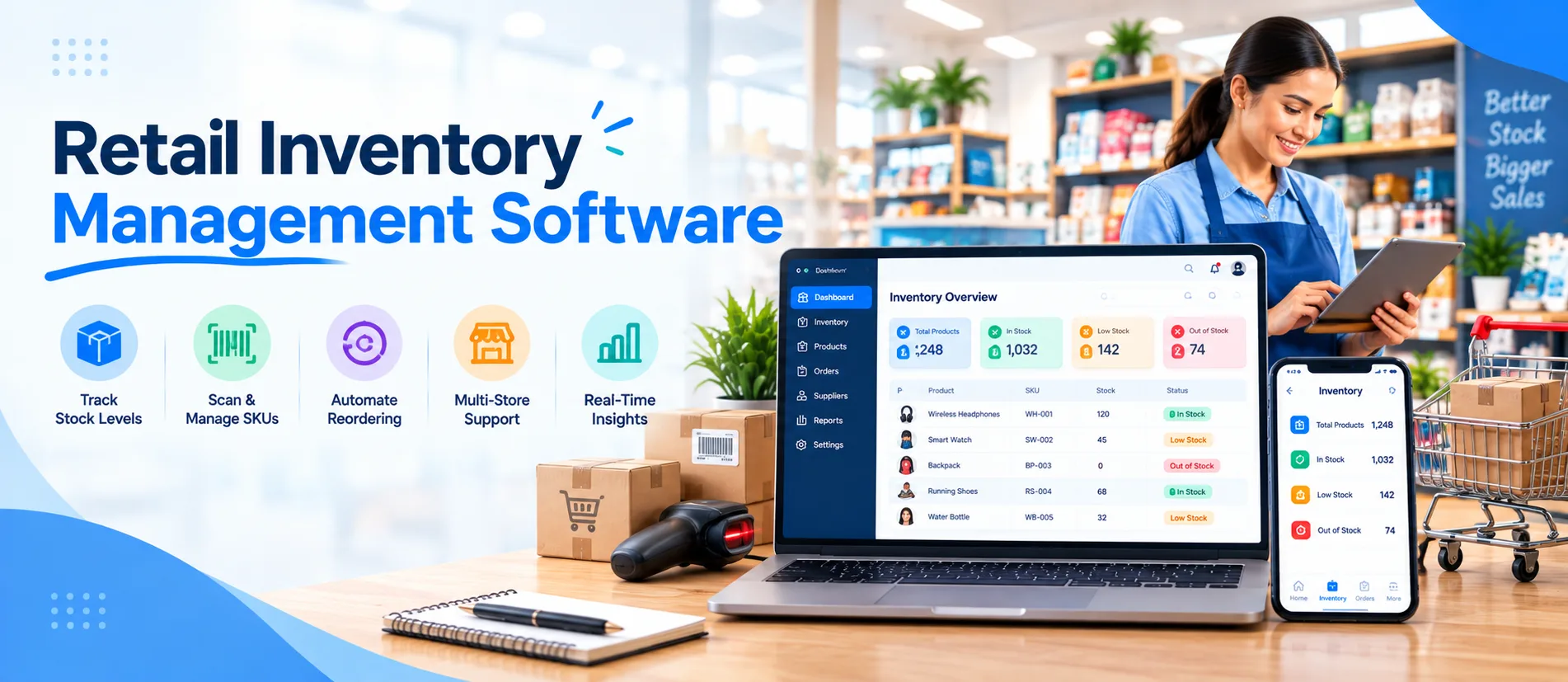
Retail Inventory Management Software helps businesses monitor stock levels in real time, preventing overstocking and stock shortages. It supports barcode scanning, low-stock alerts, batch tracking, and automated inventory updates, ensuring accurate stock records and smooth retail operations.
2. Point of Sale (POS)
Modern Retail POS Software enables fast and secure billing with barcode scanning, GST-compliant invoices, and multiple payment options like UPI, cards, and wallets. Every transaction automatically updates inventory and sales records, improving checkout speed and accuracy.
3. Sales Management
Sales management features provide real-time insights into daily sales, revenue, profit margins, and product performance. Interactive dashboards and automated reports help retailers analyze business performance, identify sales trends, and make informed decisions to increase profitability.
4. Customer Relationship Management (CRM)
A built-in CRM stores customer profiles, purchase history, and preferences in one place. Retailers can run loyalty programs, offer personalized discounts, and send targeted SMS or email campaigns to improve customer retention and encourage repeat purchases.
5. Purchase Management
Purchase management simplifies procurement by allowing retailers to create purchase orders, manage suppliers, and track product deliveries. It helps maintain optimal inventory levels, reduces purchasing errors, and improves vendor relationships through streamlined workflows.
6. Multi-Store Management
Retail Store Management Software enables businesses to manage multiple stores from a centralized dashboard. Retailers can monitor branch-wise sales, transfer inventory between locations, standardize pricing, and generate consolidated reports for better operational control.
7. Employee Management
Employee management tools help retailers track attendance, schedule shifts, manage leave requests, and evaluate staff performance. Role-based access ensures secure operations while improving workforce productivity and simplifying daily employee administration.
8. AI Analytics & Reports
AI Retail Management Software uses artificial intelligence to analyze sales data, forecast demand, identify buying trends, and recommend inventory replenishment. These predictive insights help retailers make smarter business decisions and improve overall operational efficiency.
9. Cloud-Based Access
Cloud Retail Management Software securely stores business data online, allowing users to access inventory, sales, and reports from any device, anywhere. Automatic backups, software updates, and enhanced security make cloud solutions reliable and scalable for growing retail businesses.
Experience AI-powered Retail Management Software that streamlines inventory, POS billing, CRM, multi-store management, and real-time analytics. Book your free demo today and see how ZYNO Retail can help grow your business.
Book a Free Demo →Top Benefits of Retail Management Software
- Better Inventory Control: Track inventory in real time, prevent stock shortages and overstocking, reduce inventory discrepancies, and ensure products are always available for customers.
- Faster Billing: Speed up checkout with barcode scanning, GST-compliant invoicing, and multiple payment options, creating a seamless shopping experience for customers.
- Improved Customer Satisfaction: Deliver faster service, personalized offers, loyalty programs, and accurate product availability to build customer trust and encourage repeat purchases.
- Smarter Business Decisions: Use real-time dashboards, sales reports, and AI-powered analytics to monitor performance, identify trends, and make informed business decisions.
- Time Savings: Automated workflows eliminate repetitive manual tasks such as billing, inventory updates, purchase management, and report generation, saving valuable time and allowing staff to focus on serving customers.
- Cost Savings: Reduce operational costs by minimizing manual errors, avoiding unnecessary inventory purchases, lowering paperwork, and optimizing stock levels for better resource utilization.
- Higher Employee Productivity: Simplify attendance tracking, shift scheduling, and daily operations, enabling employees to work more efficiently and improve overall productivity.
- Multi-Store Management: Manage inventory, pricing, sales, and stock transfers across multiple retail locations from a centralized dashboard for greater control and consistency.
- Increased Sales & Profitability: Improve inventory planning, optimize purchasing, and leverage business insights to boost revenue, maximize profits, and support long-term business growth.
Top Retail Management Software Examples
Here are some of the best Retail Management Software solutions that help businesses streamline inventory management, billing, customer relationships, and overall retail operations.
1. ZYNO Retail
Best For: Enterprises & Retail Chains
ZYNO Retail Management Software is an AI-powered solution designed to simplify retail operations for businesses of all sizes. It combines inventory management, POS billing, procurement, CRM, employee management, and multi-store management into a single cloud-based platform. With real-time analytics, GST-compliant billing, barcode scanning, and centralized reporting, ZYNO helps retailers improve operational efficiency, reduce manual work, and make smarter business decisions.
2. Shopify POS
Best For: Retail Stores & Omnichannel Businesses
Shopify POS is a cloud-based point-of-sale solution that connects in-store and online sales through a single platform. It enables retailers to manage inventory, process payments, track customer purchases, and fulfill online orders seamlessly. Shopify POS also integrates with the Shopify eCommerce platform, making it an excellent choice for businesses selling both online and offline.
3. Lightspeed Retail
Best For: Retail Chains
Lightspeed Retail is a comprehensive retail management platform built for growing retailers and multi-location businesses. It offers advanced inventory management, supplier management, purchase orders, customer management, and detailed sales reporting. Its cloud-based system helps retailers monitor performance across multiple stores while improving inventory accuracy and operational efficiency.
4. Oracle NetSuite
Best For: Large Enterprises
Oracle NetSuite is a powerful cloud ERP solution that includes retail management, inventory control, financial management, CRM, procurement, and supply chain management. It provides real-time visibility into business operations and helps large retailers automate workflows, improve financial reporting, and manage multiple stores through a centralized platform.
5. Odoo
Best For: Small & Medium Businesses (SMBs)
Odoo is an all-in-one business management platform that offers retail POS, inventory management, accounting, CRM, eCommerce, and purchasing modules. Its modular architecture allows retailers to implement only the features they need and expand the system as their business grows. Odoo is a flexible and cost-effective solution for small and medium-sized retail businesses.
Industries That Use Retail Management Software

Retail Management Software is designed to support businesses of all sizes, from small local shops to large retail chains. It helps streamline inventory management, billing, customer relationships, and day-to-day operations across various industries. Here are some of the major sectors that benefit from retail software:
1. Grocery Stores
Grocery stores use Retail Management Software to manage inventory, monitor expiry dates, automate billing, and ensure essential products are always in stock.
2. Supermarkets
Supermarkets rely on the software to handle thousands of products, manage multiple checkout counters, track promotions, and generate real-time sales reports.
3. Fashion & Apparel Stores
Fashion retailers use the software to manage different sizes, colors, styles, seasonal collections, inventory levels, and customer loyalty programs efficiently.
4. Electronics Stores
Electronics retailers track serial numbers, warranties, product availability, supplier information, and sales performance while simplifying billing and inventory management.
5. Pharmacies & Medical Stores
Pharmacies use Retail Management Software to manage medicine inventory, monitor expiry dates, process prescriptions, maintain compliance, and ensure accurate billing.
6. Furniture Showrooms
Furniture retailers manage product catalogs, custom orders, deliveries, inventory, and customer information while tracking high-value sales from a centralized platform.
7. Hardware Stores
Hardware businesses use the software to organize extensive inventories, monitor stock movement, manage suppliers, and streamline purchase and sales operations.
8. Cosmetic & Beauty Stores
Cosmetic retailers use retail software to track fast-moving products, manage promotional offers, customer memberships, loyalty programs, and inventory efficiently.
9. Department Stores
Department stores manage multiple product categories, departments, suppliers, inventory, billing counters, and branch operations through a single integrated Retail Management System.
10. Specialty Retail Chains
Businesses operating multiple outlets, such as sports stores, toy stores, bookstores, gift shops, and lifestyle retailers, use Retail Management Software to centralize operations, standardize pricing, and improve overall business performance across all locations.
How to Choose the Best Retail Management Software
Choosing the right Retail Management Software is essential for improving operational efficiency and supporting long-term business growth. Before making a decision, evaluate the software based on the following key factors:
- Cloud-Based Access: Choose cloud software that allows secure access to your business data anytime, anywhere, from any device.
- User-Friendly Interface: Ensure the platform is mobile-friendly and easy for employees to learn and use with minimal training.
- Inventory & POS Management: Look for advanced inventory tracking, barcode scanning, and integrated Retail POS Software for faster and error-free billing.
- CRM & Multi-Store Support: Select software with customer relationship management, loyalty programs, and centralized control for multiple store locations.
- AI Analytics & Reports: Opt for AI-powered dashboards that provide sales insights, demand forecasting, and performance reports for better decision-making.
- Security & Scalability: Ensure the software offers GST compliance, API integrations, bank-grade security, automatic backups, and the flexibility to scale as your retail business grows.
Why Choose ZYNO Retail Management Software?
- AI-Powered Platform: Automates inventory, billing, sales, and reporting to improve operational efficiency.
- Complete Retail Solution: Includes GST billing, POS, CRM, inventory, and multi-store management in one platform.
- Cloud-Based Access: Manage your business anytime, anywhere with real-time insights and a mobile app.
- Secure & Scalable: Enterprise-grade security, API integrations, and flexible infrastructure that grows with your business.
- 24/7 Expert Support: Get round-the-clock assistance and book a free demo to experience smarter retail management.
Conclusion
Manual retail management cannot keep pace with modern expectations. Whether you run a single shop or a growing chain, the right retail management software gives you the speed, accuracy, and insight needed to thrive in 2026. Cloud access keeps you connected, AI keeps you competitive, and an integrated platform keeps your customers coming back.
Do not let outdated processes cap your potential. Get in touch with ZYNO Retail today for a free demo and consultation and build a retail operation that finally works as hard as you do.
Frequently Asked Questions
1. What is Retail Management Software?
It is an integrated digital platform that combines POS, inventory, CRM, purchasing, and reporting so retailers can manage their entire operation from one place.
2. What are the benefits of Retail Management Software?
It saves time through automation, reduces costly errors, improves customer experience, lowers operational costs, and enables smarter, data-driven decisions.
3. What is the difference between Retail Management Software and POS Software?
A POS handles transactions. A full retail management system covers inventory, purchasing, CRM, advanced reporting, and multi-store operations.
4. Which is the best Retail Management Software for small businesses?
Square POS works for tiny budgets, while growing brands usually upgrade to comprehensive systems like Lightspeed or ZYNO Retail.
5. Can Retail Management Software manage multiple stores?
Yes. Cloud retail management software offers centralized dashboards to track inventory, sales, and staff across all branch locations.
6. Does Retail Management Software include inventory management?
Yes. Real-time stock tracking, low-stock alerts, and barcode scanning are core features of any quality retail inventory management software.
7. Is cloud-based Retail Management Software secure?
Leading providers use encryption, role-based access, and automatic cloud backups to protect your business data.
8. How much does Retail Management Software cost?
Pricing ranges from free basic options to custom enterprise plans for platforms like Oracle NetSuite or SAP.
9. Can Retail Management Software integrate with accounting software?
Yes. Most modern systems offer API integrations to connect seamlessly with popular accounting and ERP tools.
10. How do I choose the best Retail Management Software?
Match the platform to your biggest pain points, ensure it is cloud and mobile-ready, verify GST and barcode support, and confirm it can scale with your growth.
Related Blogs
Let’s Build the Future Together
Partner with ZYNO by Elite Mindz to revolutionize how your business works. Fill out the form, and we’ll reach out with AI-powered solutions made just for you.