
 Contact Us


ABDM Integration in Hospital Management System
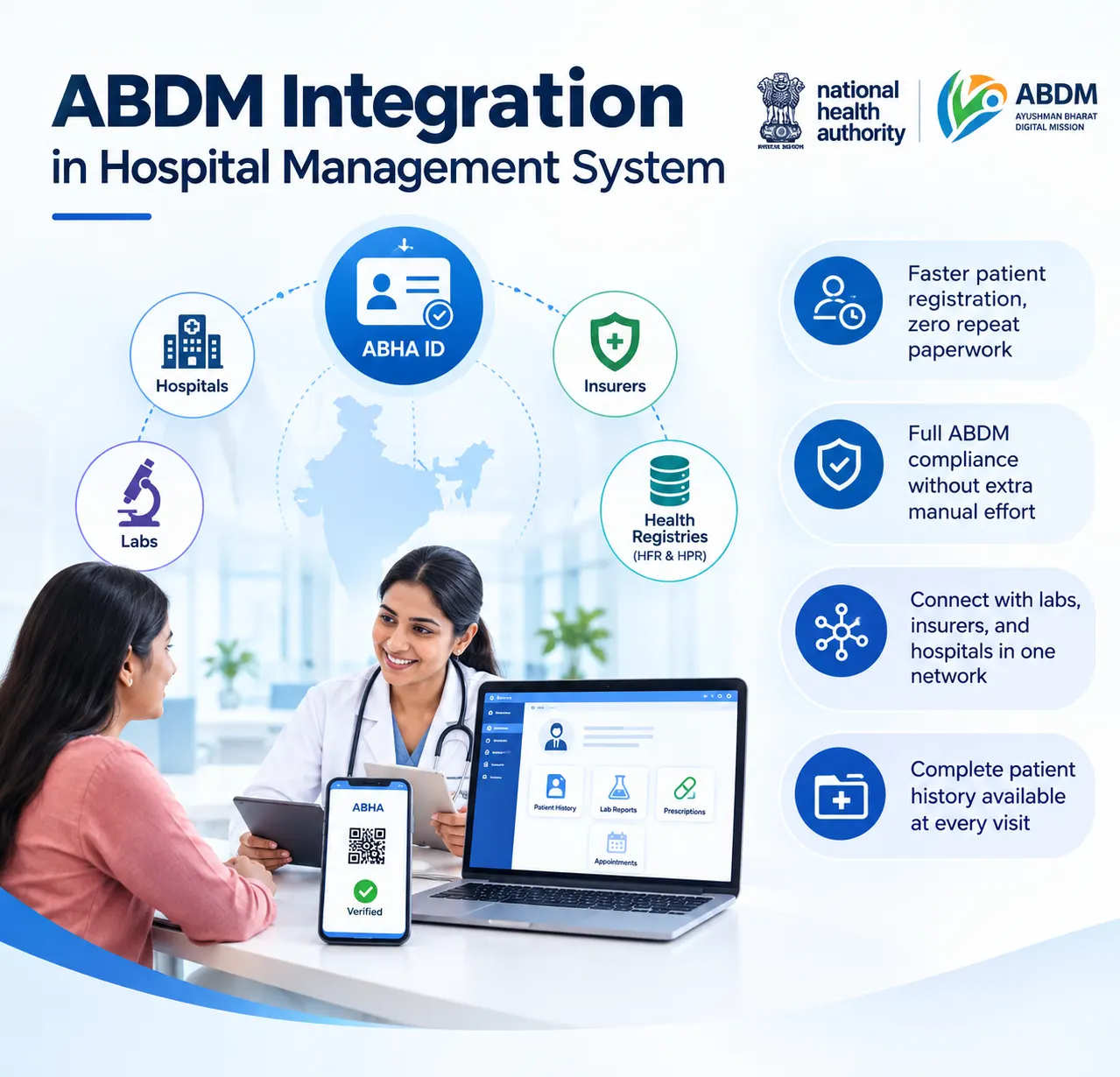
The Ayushman Bharat Digital Mission (ABDM) is India’s Digital Health Mission connecting patients, hospitals, labs and insurers. Using ABHA IDs, consent-based data sharing and health registries (HFR, HPR), ABDM enables paperless, portable and seamless healthcare across India’s digital health system.
-
 Faster patient registration, zero repeat paperwork
-
Full ABDM compliance without extra manual effort
-
Connect with labs, insurers, and hospitals in one network
-
Complete patient history available at every visit
ZYNO Digital
ZYNO Digital fuels smarter digital growth through data-driven marketing, creative storytelling, and performance strategies that boost visibility, engagement, and measurable business outcomes across global platforms.
ZYNO AI
ZYNO AI harnesses the power of artificial intelligence to automate processes, enhance decision-making, and deliver predictive insights — driving innovation, agility, and measurable business growth.

ZYNO Tech
ZYNO Tech delivers cutting-edge IT solutions — including web, mobile, and digital transformation services — helping businesses scale efficiently, innovate faster, and stay ahead in a connected world.
Book Free Consultation With Our Experts

A Glimpse of AI Solutions for Our Client Worldwide
0+
Years of Digital Experience
0%
Happy Clients
0+
Projects Delivered
0%
Client Retention
Key Objectives of the Ayushman Bharat Digital Mission: India’s Digital Health Mission
The Ayushman Bharat Digital Mission is India’s Digital Health Mission, launched to connect patients, hospitals, labs, pharmacies and insurers on one secure digital health system, so every citizen gets seamless, paperless and connected care.

Less paperwork
Digital records replace files, folders and repeat forms. Healthcare services and providers across ABDM India spend less time on paperwork and more time on patient care, with every record stored securely and retrieved in seconds.

Portable records
Patients carry their medical history wherever they go. Any ABDM facility can access earlier records with consent, so treatment continues smoothly across cities, hospitals and labs without repeating tests or restarting the paperwork.

Connected providers
Hospitals, clinics and labs exchange data on common standards through the ABDM portal. This builds one connected digital healthcare software ecosystem where every provider works from the same, reliable patient information.

Consent-first sharing
Patients decide who sees their health data, and for how long. Every transfer inside the Digital Health Mission needs approval, keeping personal medical information private, secure and fully in the patient’s control.

Wider access to care
Appointments, teleconsultations and emergency services come together in one digital health system. Patients find verified doctors and facilities faster, even in remote areas, and reach the right care much sooner.

Affordable healthcare
Digital records cut repeat tests, paperwork and avoidable admissions. Patients spend less out of pocket, cashless insurance becomes easier to use, and quality care within the Digital Health Mission reaches people of every income level.

Emergency-ready records
In an emergency, doctors can view a patient’s allergies, past treatments and reports with consent, without waiting for files. Patients can also find nearby verified hospitals quickly, so critical decisions are made faster and with better information.

Trusted, transparent records
Reports created by verified facilities and professionals are stored digitally and linked to the patient’s ABHA. This reduces fake or duplicate records, supports cleaner insurance claims and helps public health funds reach the places where they are needed.

Inclusive care for everyone
ABDM is open to every citizen, regardless of age, gender, caste, creed or location. One health ID and one connected system give urban and rural patients the same access to records, doctors and facilities
Why Hospitals Need an ABDM-Compliant Hospital Management System
An ABDM-compliant hospital management system helps hospitals create ABHA IDs, link patient records and share data with consent, enabling faster registration, fewer repeat tests and smoother claims within India’s Digital Health Mission.


ABDM INTEGRATION: MILESTONE BY MILESTONE
ZYNO HIMS simplifies ABDM integration through a structured, milestone-based approach, connecting patient identities, digital health records and consent-based data sharing for seamless healthcare delivery.

ABHA creation and verification
ZYNO HIMS creates or verifies ABHA IDs at the registration desk. Patient details fill in automatically, so your ABDM facility starts every visit with accurate data and your staff avoid retyping the same information.

Records linked to ABHA
Prescriptions, lab reports and discharge summaries are generated in FHIR format and linked to the patient’s ABHA. Your hospital management system then shares them whenever a patient or another provider requests access with consent.

Past records at your doctor’s desk
Doctors fetch a patient’s earlier records from other facilities with consent, and ZYNO HIMS shows them on the same screen. Clinicians get a complete view of the patient’s journey, backed by the digital health system.
Make Your Hospital ABDM-Ready. Without Disrupting a Single Workflow.
See how ZYNO’s ABDM-compliant Hospital Information Management System handles ABHA, records and consent in one live demo, and learn how quickly your hospital can join India’s digital health system with confidence.
Frequently Asked Questions
faq
ABDM integration connects your hospital management system to India’s national digital health system. You create ABHA IDs, link patient records and exchange data with consent, all inside your existing workflow, without separate tools or duplicate entry.
The Ayushman Bharat Digital Mission, also called the Digital Health Mission, is India’s national programme to build a connected digital health system. It uses ABHA IDs, registries and consent-based sharing to link patients, providers and insurers.
ABHA is a 14-digit health ID that links a patient’s records across hospitals, labs and insurers. Patients use it to register faster at any ABDM facility and share their history only when they approve.
The Health Facility Registry (HFR) lists verified hospitals, clinics, labs and pharmacies, while the Healthcare Professional Registry (HPR) verifies clinicians. Registering on both is the first step to an ABDM-compliant hospital information management system.
Patients scan a QR code at your ABDM facility and their ABHA details flow into your hospital management system, creating an OPD token. It replaces manual forms and shortens the wait at the registration desk.
Joining ABDM is voluntary for most private facilities, but adoption across ABDM India is growing fast and some government schemes expect it. Being ready also improves patient visibility and claims for healthcare services and providers.
Yes. Records stay with the facility that created them, and sharing needs patient consent that is time-bound and revocable. Every ABDM portal integration also passes sandbox testing and a security audit before going live.
The Digital Health Incentive Scheme rewards eligible facilities and digital healthcare software companies for linking records to ABHA. Terms change, so check the ABDM portal at abdm.gov.in for current eligibility and incentive details.
It depends on your facility’s readiness: HFR and HPR approvals, sandbox testing and the security audit. Our team guides each step and shares a realistic timeline for your ABDM facility during the demo.