
 Contact Us

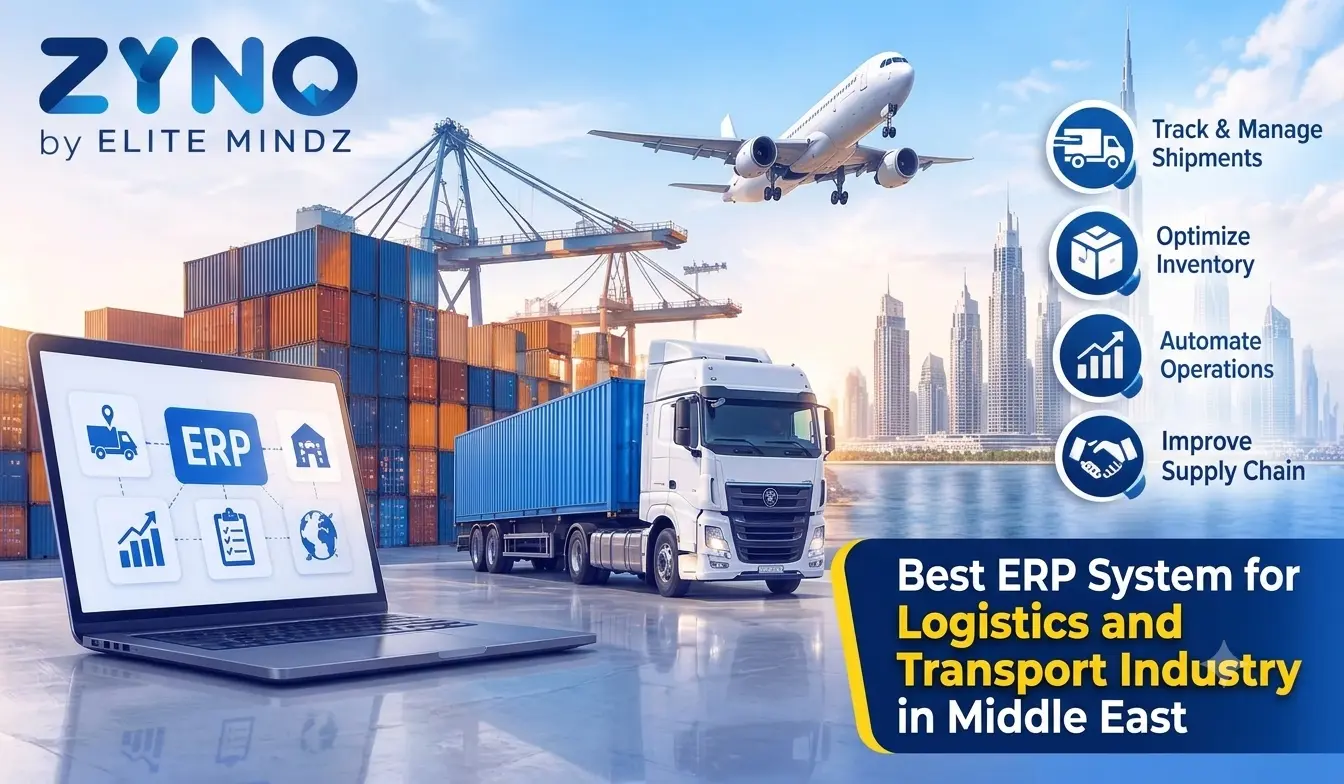
Best ERP System for Logistics and Transport Industry in Middle East
Discover the best ERP system for the logistics and transport industry in the Middle East. Explore features, benefits, fleet management, shipment tracking, warehouse automation and how ZYNO BY Elitemindz helps businesses streamline operations.

Share This Blog :


Stop Losing Money to VAT Penalties & Manual Errors
Businesses using ZYNO Books cut accounting time by 70% and stay 100% ZATCA-compliant — automatically.




The logistics and transport industry plays an important role in the Middle East economy. Countries such as the UAE, Saudi Arabia, Qatar, Oman and Kuwait depend on logistics companies to move goods, manage warehouses, transport products and support international trade. With growing business activities, companies need better ways to manage their daily operations.
Managing transport, fleet vehicles, drivers, shipments, warehouses, customer orders and payments separately can create many problems. It can lead to delays, incorrect records, higher operating costs and poor communication between departments. This is why many logistics businesses are adopting ERP systems to manage their operations from one platform.
A modern ERP system helps logistics companies connect their business activities, track shipments, manage inventory, control expenses and improve customer service. ZYNO BY Elitemindz offers business management and ERP solutions designed to help companies improve their operations through automation and connected business processes.
In this article, we will explore the best ERP system features for the logistics and transport industry, their benefits, important software modules and how businesses in the Middle East can select the right solution.
What Is an ERP System for the Logistics and Transport Industry?
An Enterprise Resource Planning (ERP) system is software that brings different business operations together in one central platform. It helps companies manage finance, inventory, procurement, human resources, orders and other business activities.
For logistics and transport companies, ERP software connects transportation, fleet management, warehouse operations, shipment tracking, billing and customer information.
For example, when a company receives a delivery order, the ERP system can help the team check product availability, assign a vehicle, plan transportation, prepare delivery documents and generate an invoice. Managers can also monitor the progress of the order and check its financial details.
ERP Software for Logistics Industry helps businesses reduce manual work, improve communication and manage daily operations more effectively.
Why Do Logistics Companies in the Middle East Need ERP Software?
The Middle East is an important location for international trade and transportation. The UAE has major logistics and shipping hubs, while Saudi Arabia is investing in transport infrastructure and logistics services under its National Transport and Logistics Strategy.
As logistics businesses grow, managing operations through spreadsheets and separate software becomes difficult. An integrated ERP system can help solve these challenges.
Here are some important reasons why logistics companies need ERP software.
1. Better Fleet Management
Fleet management is one of the most important activities for transport companies. Businesses need to manage vehicles, drivers, fuel expenses, maintenance schedules and delivery routes.
An ERP system helps managers maintain vehicle records, monitor fuel usage, schedule maintenance and track fleet-related expenses. It also helps reduce unnecessary vehicle downtime.
2. Real-Time Shipment Tracking
Customers want to know where their shipments are and when they will arrive. Delayed updates can affect customer satisfaction.
A logistics ERP system can connect with GPS and tracking platforms to provide shipment information. Managers can check delivery progress, identify delays and communicate updates to customers.
3. Improved Warehouse Management
Logistics companies often manage large warehouses with different products and storage locations. Manual inventory management can result in stock errors and misplaced goods.
Warehouse management features help businesses track incoming and outgoing products, manage stock levels, record warehouse movements and improve order processing.
4. Better Financial Management
Transport companies have several expenses, including fuel, driver salaries, vehicle maintenance, toll charges, shipping fees and warehouse costs.
ERP software connects operational information with accounting. This allows businesses to prepare invoices, track payments, monitor expenses and understand the financial performance of different operations.
5. Easy Business Reporting
Managers need accurate information to make business decisions. An ERP system provides reports about shipments, fleet performance, warehouse stock, operating expenses and revenue.
These reports help businesses identify problems and improve their operational planning.
Essential Features of the Best Logistics Software in UAE
Choosing the Best Logistics Software in UAE requires understanding the actual needs of the business. A small transport company may need basic fleet and billing features, while a large logistics provider may require warehouse, shipping, procurement and financial management modules.
Here are the important features to consider.
1. Transportation Management
Transportation management helps businesses plan and control the movement of goods. It supports order allocation, vehicle assignment, delivery scheduling and transportation cost management.
2. Fleet Management
Fleet management helps companies maintain vehicle information, fuel records, maintenance schedules, insurance details and driver assignments.
3. Warehouse Management
Warehouse management features help businesses monitor inventory, manage storage locations, record stock movements and process orders.
4. Shipment and Delivery Management
This feature helps companies manage shipment bookings, delivery schedules, dispatch operations and proof of delivery. It also supports better communication between drivers, warehouse teams and customers.
5. Financial and Accounting Management
An integrated financial module helps businesses manage invoices, customer payments, vendor payments, expenses, taxes and financial reports.
6. Procurement Management
Logistics companies regularly purchase fuel, spare parts, packaging materials, vehicle services and other supplies.
Procurement management helps businesses create purchase orders, compare supplier prices, approve requests and track purchases.
7. Driver and Employee Management
Transport companies need to manage drivers, employee records, attendance, salaries and work schedules. An ERP system can connect HR operations with transport activities.
8. Reporting and Business Analytics
Reporting tools provide information about delivery performance, vehicle utilization, shipment costs, inventory and revenue. These insights help managers make better decisions.
Important ERP Modules for Transport and Logistics Companies
A complete ERP for Logistics & Transport Industry in UAE should include different modules that work together.
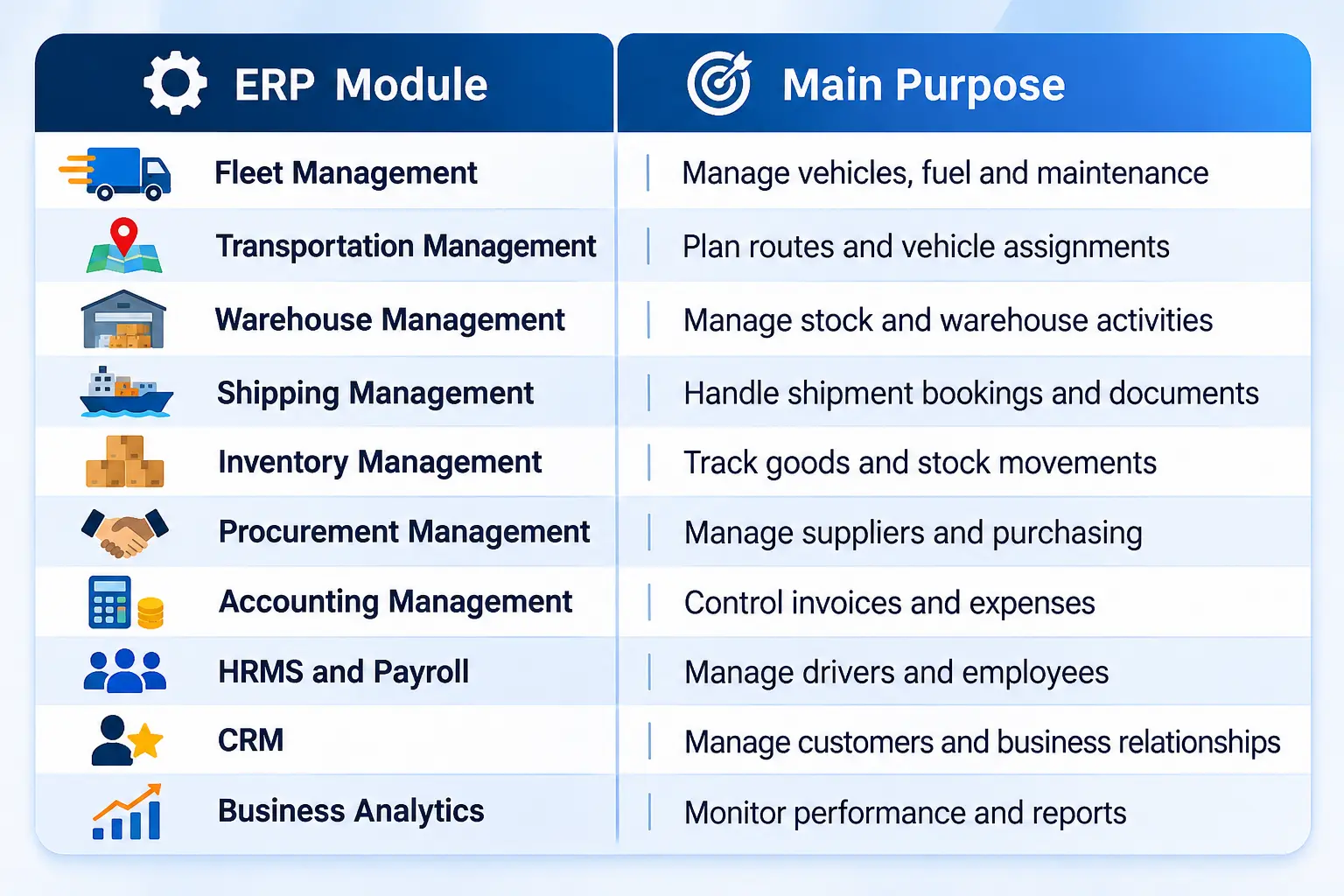
Businesses do not always need every module at the beginning. They should select the features that match their current operations and future business plans.
How ERP Software Supports Shipping and Freight Companies
Shipping and freight companies handle many activities, including shipment bookings, cargo documentation, freight charges, delivery coordination and customer communication.
Using separate systems for each activity can make operations complicated.
Shipping ERP for Logistics Companies helps bring important shipping and business processes together.
Some useful capabilities include:
- Shipment booking and order management.
- Freight cost calculation and tracking.
- Customer and supplier management.
- Shipping documentation management.
- Cargo and inventory tracking.
- Billing and payment management.
- Shipment status reporting.
- Coordination between warehouses and transport teams.
For international shipping businesses, ERP software should also support integration with relevant customs, port, shipping and trade systems. The exact integrations depend on the country, business model and available government or partner interfaces.
ERP for Transport, Logistics & Fleets in Saudi Arabia

Saudi Arabia is developing its transportation and logistics infrastructure as part of its National Transport and Logistics Strategy. The strategy aims to strengthen the Kingdom's position as a global logistics hub and improve connections between different transport modes.
This creates opportunities for transport operators, freight companies, warehouse providers and distribution businesses.
An ERP for Transport, Logistics & Fleets in Saudi Arabia should support important business requirements such as:
- Fleet and vehicle management.
- Driver scheduling and employee management.
- Fuel and maintenance expense tracking.
- Transportation and delivery planning.
- Warehouse and inventory management.
- Procurement and supplier management.
- Financial reporting and business analytics.
- Arabic and English language support.
Businesses should also check whether the software can support their applicable Saudi tax, invoicing and regulatory requirements.
For companies operating across Saudi Arabia and the UAE, multi-company and multi-currency capabilities can also be useful.
Streamline Logistics Operations with ZYNO ERP
Manage transportation, fleet operations, inventory, procurement, shipments, and financial activities with integrated ERP solutions from ZYNO BY Elitemindz. Improve operational visibility, reduce manual work, and simplify logistics management across your business.
Request a Free Demo Explore ZYNO SolutionsERP System Selection Challenges in UAE Ports
Selecting an ERP system for port and shipping operations is different from selecting software for a regular business. Ports handle complex activities involving cargo, shipping companies, transport operators, customs authorities, warehouses and other external stakeholders.
A 2025 research study published in the journal Logistics examined ERP selection challenges in UAE ports. It identified cybersecurity, external stakeholder engagement, process optimization and technical capabilities among the most important selection considerations.
Some common challenges include:
1. Integration with Existing Systems
Ports and logistics companies may already use different software for cargo handling, shipment tracking, accounting and warehouse management. The new ERP system must integrate with relevant existing platforms.
2. Data Security
Logistics companies handle sensitive information about customers, shipments, financial transactions and cargo movements. Strong access controls, data protection and backup facilities are important.
3. Stakeholder Coordination
Port operations involve several organizations. The ERP system should support effective information exchange with shipping lines, customs-related platforms, transport companies and logistics partners wherever integrations are available.
4. High Implementation Costs
ERP implementation may involve software licensing, customization, data migration, employee training and ongoing maintenance. Businesses should understand the total cost before making a decision.
5. Employee Training
Employees need to understand how to use the new system. Without proper training, companies may struggle to achieve the expected benefits.
6. Scalability and Technical Support
The selected ERP system should support business expansion, additional warehouses, new vehicles and increasing shipment volumes. Reliable technical support is also important.
Benefits of Implementing Logistics Management Software in the UAE
Implementing logistics management software in the UAE can improve different areas of business operations.
Some important benefits include:
Reduced Manual Work: Automation reduces repeated data entry and paperwork.
Better Delivery Planning: Companies can organize vehicles, drivers and delivery schedules more efficiently.
Improved Inventory Control: Warehouse teams can monitor stock levels and product movements.
Cost Management: Managers can monitor fuel expenses, maintenance costs, freight charges and other operating expenses.
Better Customer Service: Shipment updates and accurate delivery information help improve customer communication.
Centralized Business Information: Different departments can access connected business information through one system.
Improved Decision-Making: Reports and dashboards help managers understand business performance and identify areas for improvement.
How to Choose the Right ERP System for Logistics Companies
Selecting the right ERP system is an important business decision. Before purchasing software, logistics companies should evaluate their current operations and future requirements.
Consider the following points:
- Understand Your Business Requirements: Identify whether you need fleet management, shipping, warehouse, procurement or financial management.
- Check Industry-Specific Features: Make sure the ERP system supports the actual workflows of your logistics business.
- Evaluate Integration Options: Check whether it can connect with GPS, accounting, warehouse and shipping platforms.
- Consider Local Requirements: Review relevant tax, invoicing, customs and regulatory requirements in the country where you operate.
- Check Scalability: Choose software that can support more vehicles, employees, warehouses and business locations.
- Review Data Security: Evaluate user permissions, data protection, backup and disaster recovery facilities.
- Compare Total Costs: Consider implementation, customization, training, maintenance and support expenses.
- Request a Product Demo: Test the system using real business scenarios before making a final decision.
Why Consider ZYNO BY Elitemindz for Logistics ERP Solutions?
ZYNO BY Elitemindz provides business software and technology solutions that help companies improve their daily operations through digital transformation and automation.
For logistics and transport businesses, an integrated ERP approach can help connect important business activities, including finance, procurement, inventory, employee management and operational reporting.
ZYNO solutions can be considered by businesses looking to improve their business management processes and reduce the challenges of handling information across separate systems.
When evaluating ZYNO for logistics operations, businesses should discuss their specific requirements, including fleet management, shipment tracking, warehouse integration and transportation workflows, to confirm the available features and customization options.
Whether a business operates in the UAE, Saudi Arabia, Qatar or other Middle Eastern markets, selecting software that matches its operational needs is important for long-term growth.
Explore: ZYNO BY Elitemindz
Learn More:
Top 10 Import and Export Billing Software in the Middle East
Top 9 Logistics App Development Companies in Dubai, UAE
Top Warehouse Management ERP Software in the Middle East
Top 30 Mobile App Development Companies in GCC & Middle East (2026 Guide)
Manage Your Logistics Business Smarter with ZYNO ERP
Simplify transportation, fleet management, warehouse operations, procurement, shipment tracking, and financial processes with ERP solutions from ZYNO BY Elitemindz. Improve business visibility, reduce manual tasks, and manage your logistics operations more efficiently.
Request a Free Demo Explore ZYNO SolutionsConclusion
The logistics and transport industry in the Middle East is becoming more technology-driven. Businesses need reliable software to manage transportation, shipping, warehouses, fleet vehicles, employees and financial activities.
An integrated ERP system can help logistics companies reduce manual work, improve shipment visibility, control operating costs and manage their business operations more effectively.
When searching for the Best Logistics Software in UAE, businesses should compare features, integration options, scalability, security and implementation support.
A suitable ERP system is not just a tool for managing daily activities. It can become an important part of a company's long-term business growth strategy.
Frequently Asked Questions (FAQs)
1. What is the best ERP system for the logistics and transport industry in the Middle East?
The best ERP system depends on the company's size, operations and business requirements. Companies should look for transportation management, fleet management, warehouse management, shipping, accounting and reporting features in one integrated solution.
2. What is the best logistics software in UAE?
The Best Logistics Software in UAE should provide features such as shipment tracking, fleet management, warehouse operations, transportation planning, billing and financial reporting. Businesses should compare available solutions based on their requirements and budget.
3. Why do logistics companies need ERP software?
Logistics companies need ERP software to manage transportation, fleet vehicles, warehouses, shipments, procurement, accounting and employees. It helps reduce manual work and provides better visibility into business operations.
4. What features should ERP software for logistics industry include?
ERP Software for Logistics Industry should include transportation management, fleet management, shipment tracking, warehouse management, inventory control, procurement, accounting, CRM and business reporting.
5. Is ERP software suitable for small transport companies in UAE?
Yes. Small transport companies can use ERP software to manage vehicles, drivers, delivery schedules, expenses and invoices. They can begin with essential modules and expand the system as their business grows.
6. What is the difference between ERP and logistics management software?
Logistics management software mainly focuses on transportation, shipping, warehousing and delivery activities. ERP software connects these operations with other business functions such as finance, procurement, HR and customer management.
7. How does ERP help fleet management companies in Saudi Arabia?
ERP software helps fleet management companies maintain vehicle records, monitor maintenance expenses, manage drivers, track fuel usage and organize transportation activities. It can also connect fleet operations with accounting and procurement.
8. What should businesses consider when selecting ERP for logistics and transport in UAE?
Businesses should evaluate industry-specific features, integration capabilities, data security, scalability, implementation costs, local compliance requirements and technical support before selecting an ERP system.
9. Can shipping ERP software manage international freight operations?
Yes. Depending on its features and integrations, Shipping ERP for Logistics Companies can support shipment bookings, freight charges, cargo documentation, customer information, invoicing and shipment tracking across international operations.
10. How can ZYNO BY Elitemindz help logistics and transport businesses?
ZYNO BY Elitemindz offers business management and technology solutions that can help organizations connect business processes and improve operational efficiency. Logistics companies should discuss their specific requirements to identify suitable ERP modules, integrations and customization options.
Related Blogs





















Let’s Build the Future Together
Partner with ZYNO by Elite Mindz to revolutionize how your business works. Fill out the form, and we’ll reach out with AI-powered solutions made just for you.