
 Contact Us

Amazon Storefront Design Checklist for New Brand Launches
A rushed Storefront usually shows mismatched branding, broken mobile layout, or thin pages next to established competitors. Want your launch Storefront built right the first time? Explore Elite Mindz's Amazon Storefront design.

Share This Blog :


Stop Losing Money to VAT Penalties & Manual Errors
Businesses using ZYNO Books cut accounting time by 70% and stay 100% ZATCA-compliant — automatically.




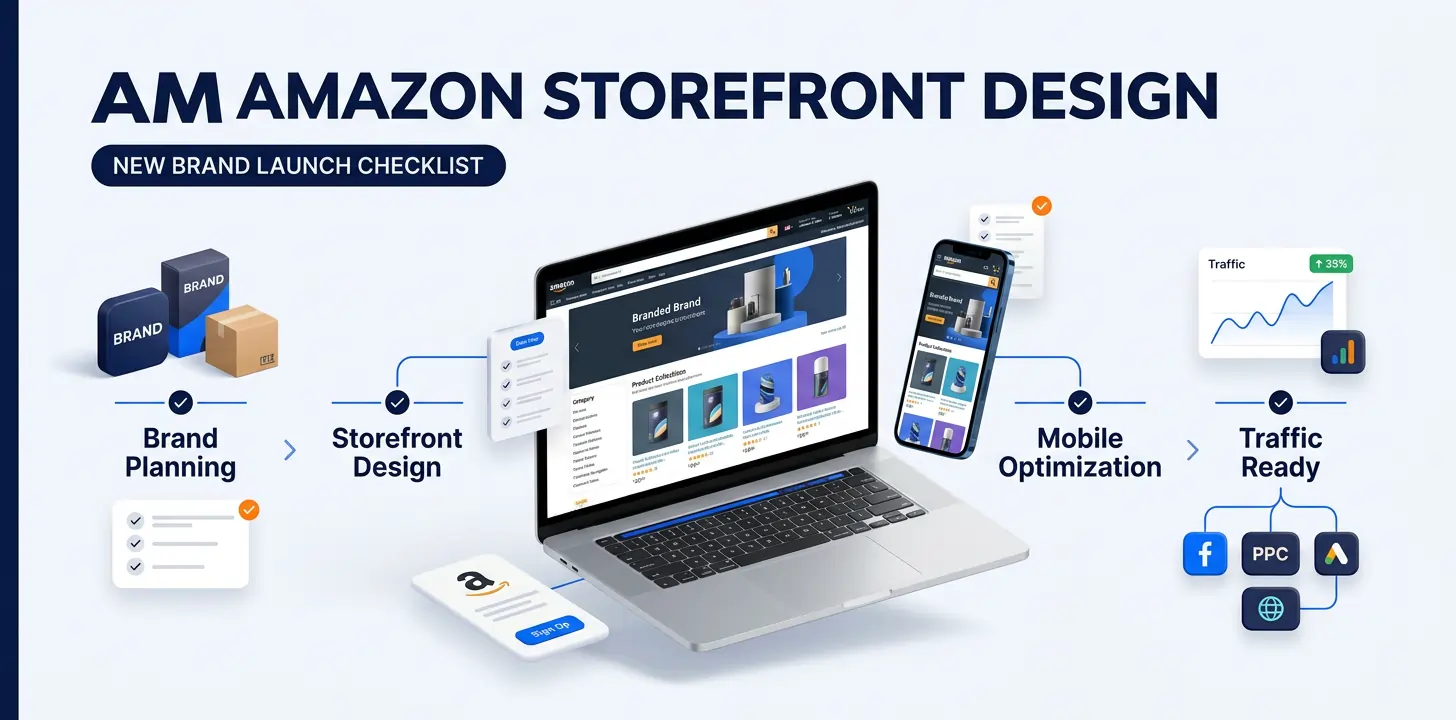
A launch-ready Amazon Storefront needs clear navigation, consistent branding across every page, mobile-optimized layouts, keyword-aligned copy, and a structure that can actually support the traffic sources you're planning to drive to it. Skipping any one of these tends to show up later as confused shoppers, wasted external traffic, or a Storefront that looks unfinished next to established competitors.
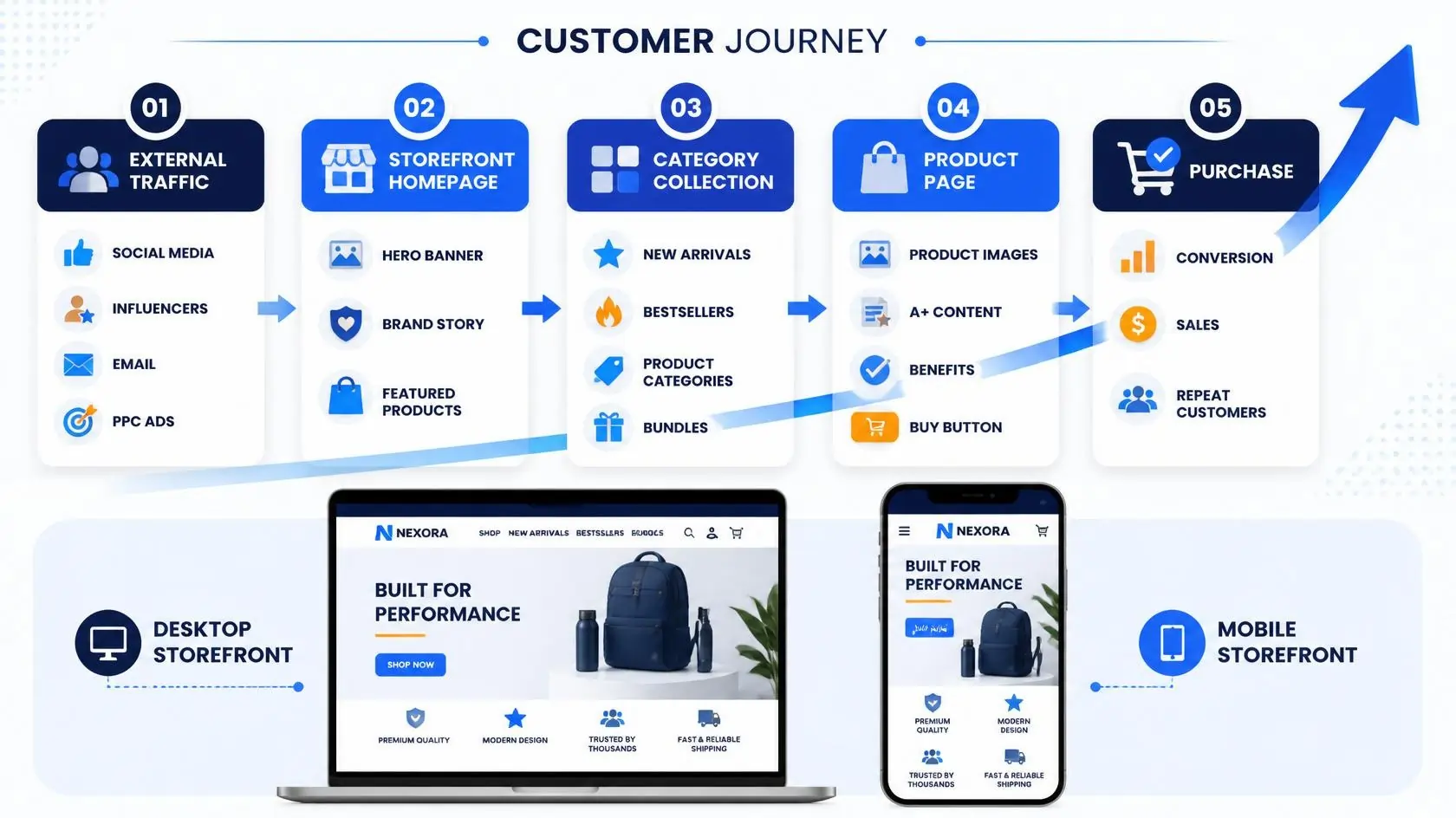
For a brand launching on Amazon for the first time, the Storefront often gets treated as an afterthought - something to build once the product listings are live and PPC campaigns are running. In practice, it deserves the same launch-day attention as the listings themselves, since it's frequently the first place a shopper lands after clicking an ad, a social post, or a brand name search, and first impressions on a new brand are hard to walk back once made.
This checklist walks through everything worth confirming before a new brand's Storefront goes live, organized the way a launch actually unfolds - from planning through structure, visuals, copy, mobile readiness and traffic-readiness. For the bigger picture of how Storefront design fits into a full Amazon marketing strategy, our Amazon Marketing Services guide covers where it sits alongside PPC, SEO and A+ Content.
What Is an Amazon Storefront and Why It Matters for New Brands
Why does a new brand need a Storefront at launch? A Amazon Storefront Design is a free, multi-page branded shopping destination on Amazon, and for a new brand it often serves as the first real impression a shopper gets of who's behind the product - more so than a single product listing can.
New brands don't yet have the review history or search ranking that established competitors have built up. A well-structured Storefront helps compensate for that by signaling legitimacy and giving shoppers a reason to trust a brand they've never heard of. It's also the natural landing destination for any external traffic - social, influencer, email - since it gives that traffic a cohesive experience instead of dropping visitors onto an isolated product page with no brand context.
Pre-Launch Storefront Planning Checklist
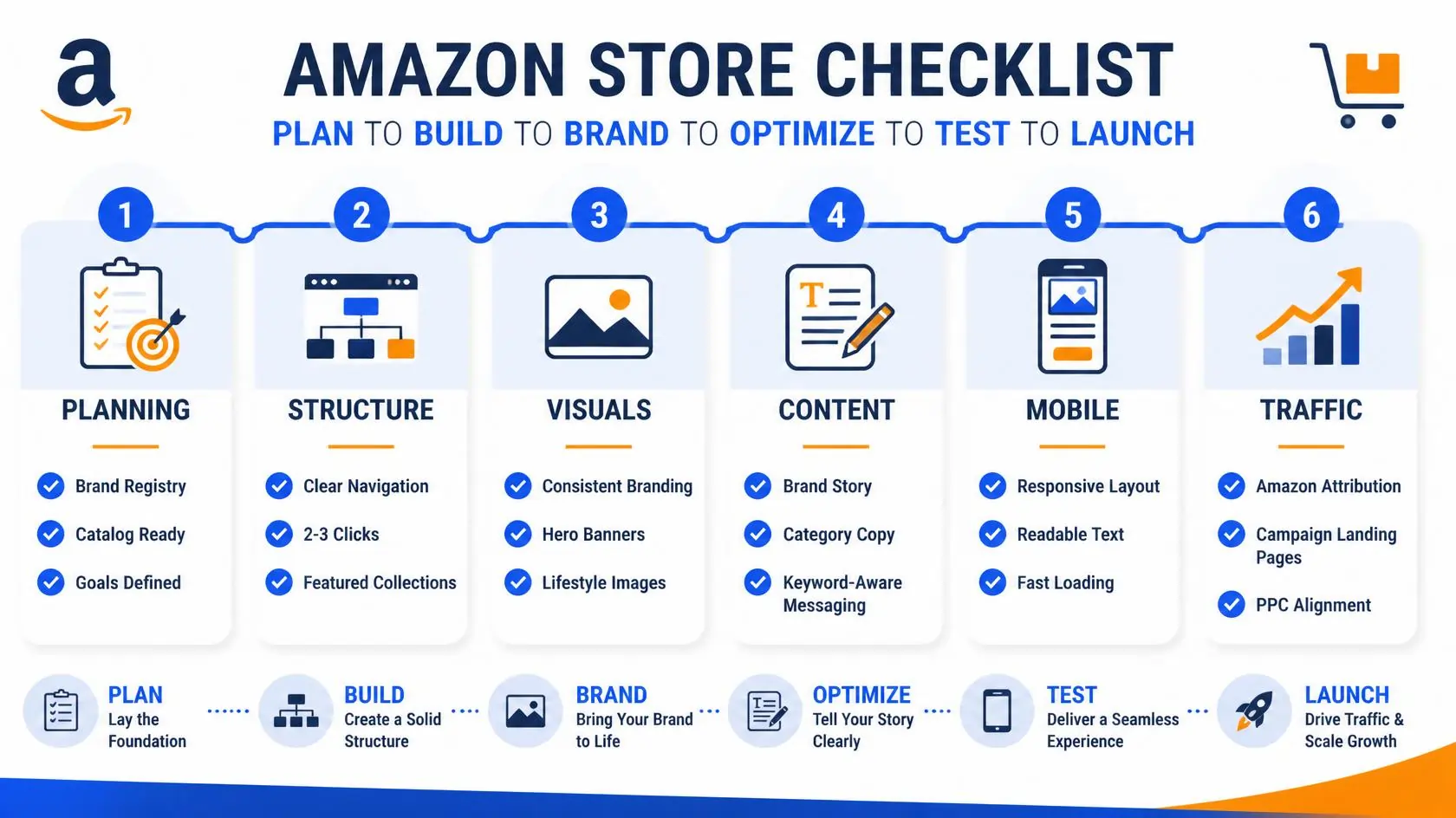
Before any design work begins, a few planning decisions should be locked in:
- Brand registry is active - Storefronts require Amazon Brand Registry enrollment, so this needs to be confirmed first.
- Product catalog and hierarchy are finalized - Know which products will be featured, and how they should be grouped (by category, use case, or collection).
- Storefront goals are defined - Is the primary goal driving external traffic conversion, supporting organic browsing, or both?
- Budget for design assets is set - Banners, lifestyle photography and video (if used) all need to be planned and budgeted before build starts.
- Timeline is realistic - A rushed Storefront built the week before launch often shows in inconsistent branding or missing content.
Skipping this planning stage is one of the most common reasons Storefronts feel disjointed even when individual pages look fine in isolation.
Ready to Build an Amazon Storefront That Converts?
Launching a new brand on Amazon? Our Amazon Storefront design experts can help you create a strategic, mobile-friendly, and conversion-focused Brand Store that makes your products easier to discover and shop.
Explore Amazon Storefront Design Talk to an Amazon ExpertStorefront Structure and Navigation Checklist
How should a new brand structure Storefront pages? Structure should mirror how shoppers actually think about the catalog, not how the brand internally organizes SKUs.
| Element | What to Check |
|---|---|
| Homepage | Clear hero banner, top sellers or flagship product featured prominently |
| Navigation Tabs | Logical categories by product type, use case, or collection |
| Page Depth | 2–3 clicks maximum to reach any product from the homepage |
| Featured Collections | Bestsellers, new arrivals, or bundles highlighted where relevant |
| Cross-Linking | Related products linked across pages to encourage browsing |
For a brand launching with a small initial catalog, a single well-organized page often outperforms an over-structured multi-page Storefront with thin content spread too widely. Structure should scale with catalog size, not exceed it.
Visual and Branding Checklist
- Consistent color palette and typography applied across every Storefront page, matching packaging and other brand touchpoints where possible
- High-quality hero banners sized correctly for both desktop and mobile display
- Lifestyle imagery showing products in real use, not just studio product shots
- Logo placement consistent and appropriately sized across pages
- Visual hierarchy guiding the eye toward key products or calls to action first
A Storefront that looks visually inconsistent with a brand's packaging, website or social presence undercuts the trust-building purpose it's meant to serve. Shoppers arriving from an Instagram ad, for example, should recognize the same brand identity when they land on the Storefront.
Content and Copy Checklist
What copy elements does a Storefront need? Beyond visuals, Storefront copy should include a clear brand introduction, concise product category descriptions, and messaging that reinforces what makes the brand distinct - without duplicating the detailed content already living in A+ Content on individual listings.
- Brand story section - Short, clear explanation of what the brand is and why it exists
- Category/collection descriptions - Brief, benefit-focused copy guiding shoppers through groupings
- Keyword-aware language - Copy that reflects how shoppers actually search, even though Storefronts don't directly drive organic ranking the way listing content can
- Consistent tone - Matching the voice used in A+ Content and off-Amazon brand materials
Storefront copy and A+ Content should complement rather than duplicate each other - the Storefront frames the brand and catalog broadly, while A+ Content that converts does the detailed, product-specific work on individual listings.
Mobile Optimization Checklist
Does Storefront design need separate mobile testing? Yes - a significant share of Amazon shopping happens on mobile, and Storefronts that look polished on desktop can appear cramped, slow, or poorly cropped on a phone screen if mobile isn't checked specifically.
- Banners and images render correctly at mobile dimensions, not just cropped versions of desktop assets
- Navigation remains usable with mobile-sized tap targets and menus
- Load time is reasonable - oversized image files slow mobile load speed disproportionately
- Text remains legible at mobile screen sizes without excessive zooming
Testing the actual mobile Storefront preview before launch, rather than assuming desktop design translates automatically, catches most of these issues before shoppers do.
Make Your Amazon Brand Launch Count
A well-planned Amazon Storefront can help new brands create a stronger first impression, organize their product catalog, and turn more shoppers into customers. Get expert support to build a Storefront designed around your brand and growth goals.
Build Your Amazon Storefront Get Started TodayStorefront + External Traffic Readiness Checklist
What should be confirmed before driving external traffic to a Storefront? If the launch plan includes social, influencer or email traffic, a few additional items matter:
- Trackable Storefront URLs (Amazon Attribution) set up to measure which external sources are driving traffic and sales
- Landing pages within the Storefront match campaign messaging - a social ad promoting one product should ideally link to a relevant Storefront page, not just the homepage
- PPC and Storefront messaging are aligned - since paid traffic and external traffic often overlap in timing during a launch, consistent messaging avoids a disjointed shopper experience
Coordinating Storefront readiness with paid campaign timing matters here, since a brand running Amazon PPC services alongside a launch benefits from having both the ad creative and the Storefront experience tell a consistent story rather than working against each other.
Common Storefront Launch Mistakes to Avoid
- Launching with placeholder or stock imagery. Generic visuals undercut the brand-building purpose of a Storefront and are usually obvious to shoppers.
- Over-building navigation for a small catalog. Too many tabs and pages for a handful of products creates unnecessary clicks and thin, sparse pages.
- Ignoring mobile rendering entirely. A Storefront that's never been checked on a phone often has layout issues invisible on desktop.
- Treating the Storefront as a one-time launch task. Storefronts left untouched after launch start feeling outdated as the catalog and brand evolve.
- Underestimating design and asset costs. Storefront quality depends heavily on banner and photography quality, which is often underbudgeted relative to its impact - our Amazon Marketing Services cost breakdown covers how this typically gets scoped and priced.
How ZYNO Digital Approaches New Brand Launches
Looking at how a specialized Amazon agency approaches a new brand launch is useful context for what a coordinated launch process looks like. ZYNO Digital structures its work around aligning PPC campaigns with the underlying listing and brand assets rather than treating advertising and content as separate workstreams, with an emphasis on getting foundational elements - optimized listings, coordinated content, and campaign structure - in place before scaling ad spend. Their positioning also highlights close, ongoing performance tracking from the earliest stages of a campaign, which reflects a broader principle worth applying to Storefront launches specifically: a new Storefront's early performance (bounce rate, time on page, click-through to product pages) is worth monitoring closely in the first few weeks, since early data often reveals navigation or content issues that aren't obvious during the design process itself.
Launch Your Amazon Brand with ZYNO Digital
From strategic Amazon Storefront design to performance-focused digital marketing, ZYNO Digital helps brands create stronger online experiences and build a foundation for long-term growth. Let our experts turn your Amazon presence into a more engaging and conversion-focused brand destination.
Explore ZYNO Digital Services Connect with Our ExpertsStorefront Launch Checklist Summary
| Category | Key Checklist Items |
|---|---|
| Planning | Brand Registry active, catalog finalized, goals defined, budget and timeline set |
| Structure | Logical navigation, shallow page depth, featured collections in place |
| Visuals | Consistent branding, mobile-sized banners, lifestyle imagery |
| Content | Brand story, category descriptions, keyword-aware copy |
| Mobile | Banners, navigation, load time and text checked on actual mobile preview |
| External Traffic | Attribution links set up, landing pages matched to campaigns |
Running through this table before launch day catches most of the gaps that otherwise surface only after a Storefront is already live and driving traffic.
Frequently Asked Questions About Amazon Storefront Launch Checklists
1. Do I need Brand Registry to create a Storefront?
Yes. Amazon Storefronts are only available to brand-registered sellers, so this needs to be confirmed and active before any Storefront design work begins.
2. How many pages should a new brand's Storefront have?
It depends on catalog size. A small initial catalog is often better served by one well-organized page than a multi-page structure with thin content spread too widely.
3. Should Storefront content match A+ Content exactly?
No - Storefront copy should frame the brand and catalog broadly, while A+ Content handles detailed, product-specific information on individual listings. They should complement, not duplicate, each other.
4. Is mobile optimization really necessary for Storefronts?
Yes. A large share of Amazon traffic is mobile, and Storefronts that aren't checked on mobile specifically often have layout or legibility issues that go unnoticed during desktop design review.
5. Can a Storefront be updated after launch?
Yes, and it should be. Storefronts left static after launch tend to feel outdated as the catalog, competitors and brand assets evolve over time.
6. Does a Storefront directly improve search ranking?
Not directly - its primary value is conversion and trust-building, particularly for traffic arriving from outside Amazon, rather than organic search visibility itself.
Final Thoughts: Launching a Storefront That Works From Day One
A Storefront built without a checklist tends to reveal its gaps after launch - mismatched branding, awkward mobile rendering, or thin pages that don't hold up next to established competitors. Working through planning, structure, visuals, copy, mobile readiness and traffic alignment before launch day avoids most of these issues entirely, and gives a new brand's first impression on Amazon the polish it needs to compete. None of these items are complicated in isolation; the value comes from checking all of them systematically before launch rather than discovering the gaps one at a time after traffic is already flowing.
If building a launch-ready Storefront alongside coordinated PPC and content feels like more than your team can take on before launch day, exploring dedicated Amazon Storefront design as part of a broader Amazon Marketing Services plan is a practical way to make sure nothing gets missed before your brand goes live.
Ready to Build a Stronger Amazon Brand Presence?
Your Amazon Storefront is more than a product showcase. It is an opportunity to tell your brand story, guide shoppers through your products, and create a stronger path to conversion. With ZYNO Digital, you get strategic Amazon Storefront design and digital marketing expertise to support your brand's next stage of growth.
Explore Amazon Storefront Design Start Your Amazon Growth Journey
Related Blogs














Let’s Build the Future Together
Partner with ZYNO by Elite Mindz to revolutionize how your business works. Fill out the form, and we’ll reach out with AI-powered solutions made just for you.