How HRMS Systems Streamline Payroll and HR Processes
Read More →

×
Compare the top 10 payroll software companies in India for 2026 by pricing, payroll features, statutory compliance, attendance integration, HRMS capabilities, scalability, and business size.
Businesses using ZYNO Books cut accounting time by 70% and stay 100% ZATCA-compliant — automatically.
If you are comparing payroll software in India, the right choice depends on your employee count, payroll complexity, statutory requirements, attendance integration, HRMS needs, integrations, and budget. This guide compares 10 payroll platforms across these factors to help startups, small businesses, SMEs, and enterprises shortlist the right solution.
There is no single payroll platform that is best for every business. For a broader HRMS + payroll requirement, ZYNO HRMS is an option to consider. greytHR and Zoho Payroll are relevant for businesses looking for established payroll capabilities with transparent pricing. RazorpayX Payroll is worth considering when salary payments and payroll are closely connected. Keka, factoHR, HROne and Pocket HRMS provide broader HR and payroll functionality, while Darwinbox and ADP India are better suited to organisations with more complex or enterprise-level requirements. The best choice ultimately depends on your headcount, payroll rules, compliance requirements, integrations, implementation needs, and total cost.
| Payroll Software | Best For | Key Strength | Starting Pricing |
|---|---|---|---|
| ZYNO HRMS | Businesses looking for integrated HR + payroll | Payroll, HRMS, attendance and employee workflows | Custom pricing |
| factoHR | Growing businesses | HR, attendance and payroll automation | Free up to 20 employees; paid plans from ₹4,999/month |
| greytHR | SMBs and payroll-focused HR teams | Payroll, leave and core HR | ₹2,495/month for 50 employees |
| Zoho Payroll | Small businesses and Zoho users | Affordable payroll and Zoho ecosystem integrations | Free up to 10 employees; paid plans from ₹1,000/month |
| QkrPayroll | Multi-state payroll requirements | India-focused statutory and state-level payroll | Custom pricing |
| ADP India | Mid-sized and large organisations | Enterprise payroll and managed services | Custom pricing |
| HROne | SMEs and growing organisations | HRMS, payroll and attendance | ₹4,950/month for 50 users |
| Darwinbox | Mid-sized and large enterprises | Enterprise HCM and payroll | Custom pricing |
| Pocket HRMS | Small and mid-sized businesses | Payroll, HRMS and employee self-service | ₹2,995/month for 50 employees, billed annually |
| Keka HR | Growing organisations | HRMS, payroll, attendance and performance | ₹9,999/month for up to 100 employees |
Automate salary processing, connect attendance and leave data, manage employee payroll workflows, simplify compliance processes, and give employees easy access to payroll information with one integrated HRMS platform.
Request a Free Demo Explore ZYNO HRMSPricing is based on publicly available vendor pricing checked in September 2026 where available. Taxes, additional employees, add-ons, implementation and customisation may apply. For example, greytHR currently lists Essential at ₹2,495/month for 50 employees, while Zoho Payroll has a free plan for up to 10 employees and paid plans beginning at ₹1,000/month billed annually. factoHR currently lists a free plan for up to 20 employees and its Core plan at ₹4,999/month for up to 50 employees. Pocket HRMS lists ₹2,995/month for 50 employees on its Standard plan when billed annually. RazorpayX Payroll, although not included in this 10-platform list, is another relevant option for smaller businesses, with its Prime plan starting at ₹2,499/month and its Elite plan listed at ₹5,499/month for 50 employees.
This list is intended as a practical shortlist rather than an objective ranking of every payroll product available in India. We considered factors that matter when selecting payroll software, including:
Pricing can change, and some vendors provide custom quotations based on employee count, modules, integrations and implementation requirements. Buyers should confirm the final commercial proposal directly with the vendor before purchasing.
Best for: Businesses looking for integrated HRMS, payroll, attendance and employee workflows.

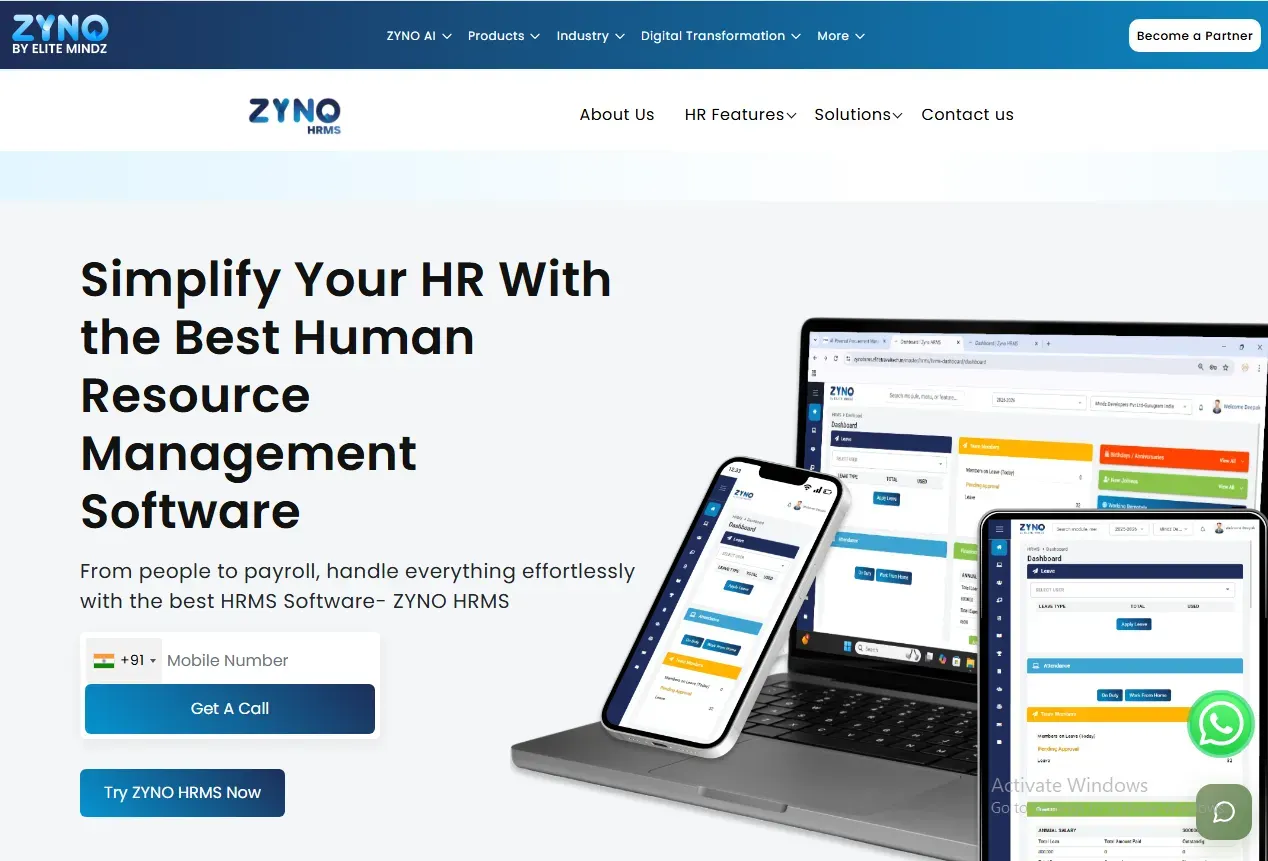
ZYNO HRMS is an integrated HRMS and payroll platform designed to bring payroll, attendance, leave, employee management and broader HR workflows together in one system. For organisations that want payroll to work as part of a broader HR environment rather than as a standalone salary-processing tool, this integrated approach can be useful.
Custom pricing based on business requirements. The final cost may depend on employee count, modules, integrations, configuration and implementation requirements.
Get ready-to-use payroll templates for salary processing, statutory calculations and compliance tracking—designed to simplify payroll management for Indian businesses.
Download Free Template PackBest for: Growing businesses that want HR, attendance and payroll in one platform.

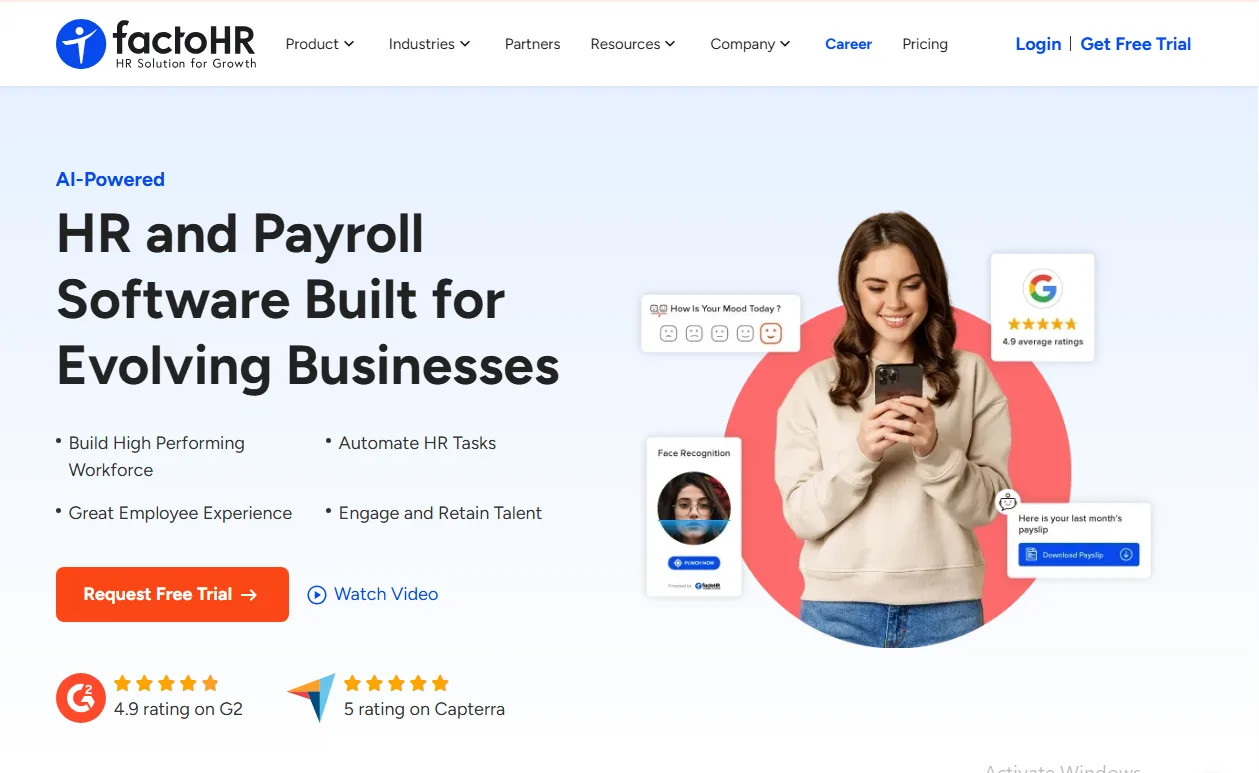
factoHR is a cloud-based HR and payroll platform covering payroll, attendance, leave, employee management and workforce operations. It is particularly relevant for businesses that want payroll connected to broader HR processes.
factoHR currently offers a free plan for up to 20 employees. Its Core plan starts at ₹4,999/month for up to 50 employees, with additional employees charged separately. Premium starts at ₹5,999/month and Ultimate at ₹6,999/month for up to 50 employees.
Best for: SMBs and HR teams looking for established payroll and core HR functionality.

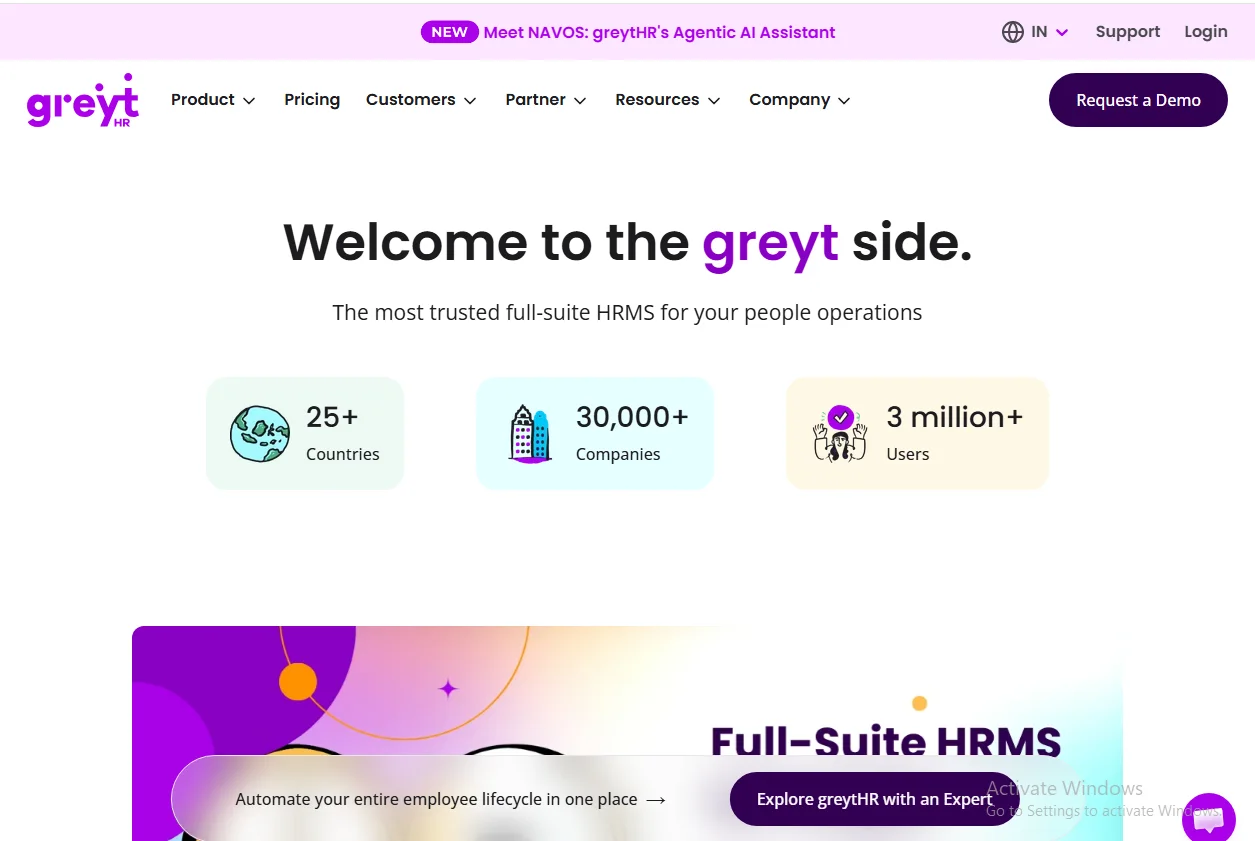
greytHR is an established HR and payroll platform with payroll processing, leave management, employee workflows and employee self-service capabilities. Its published pricing makes it relatively straightforward for smaller organisations to estimate their subscription cost.
greytHR's current India pricing lists:
The Essential plan focuses on payroll, leave and core HR, while Growth adds advanced attendance and shift-related functionality.
Best for: Small businesses and organisations already using the Zoho ecosystem.

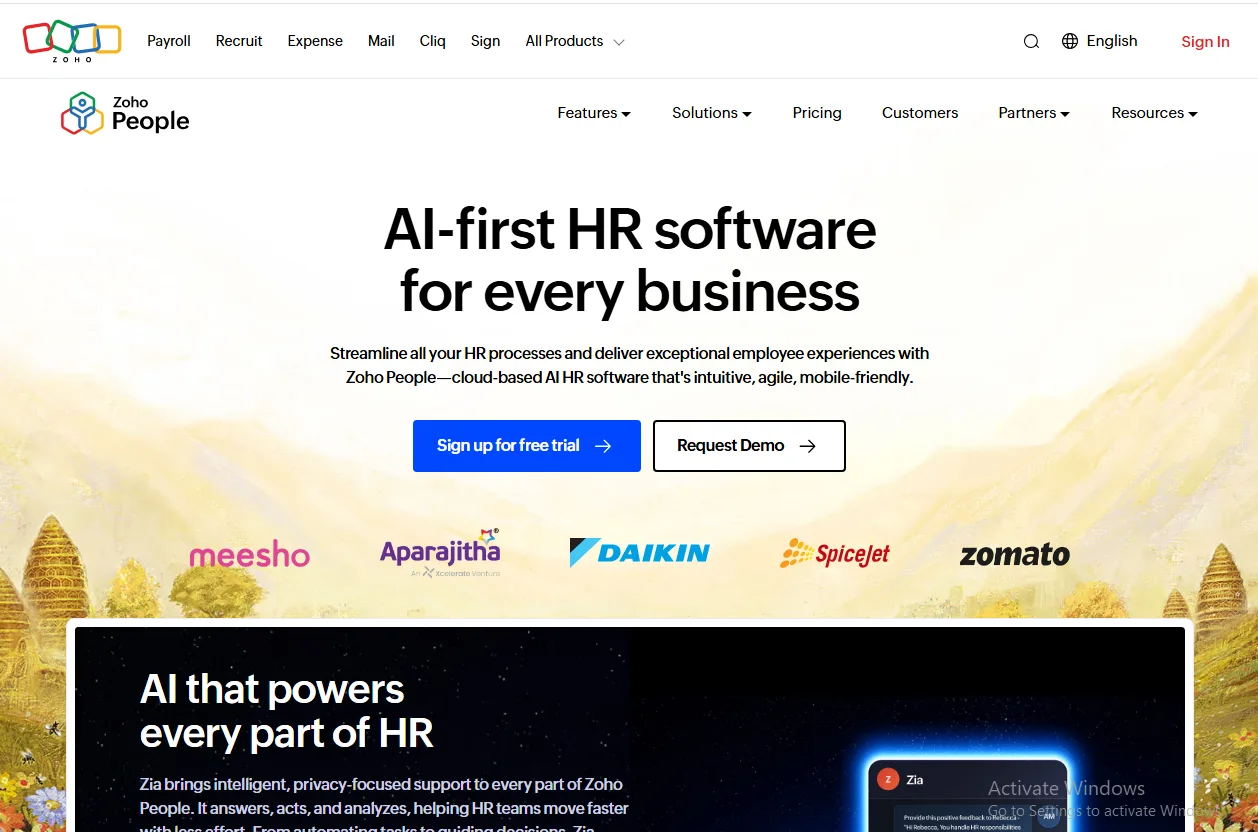
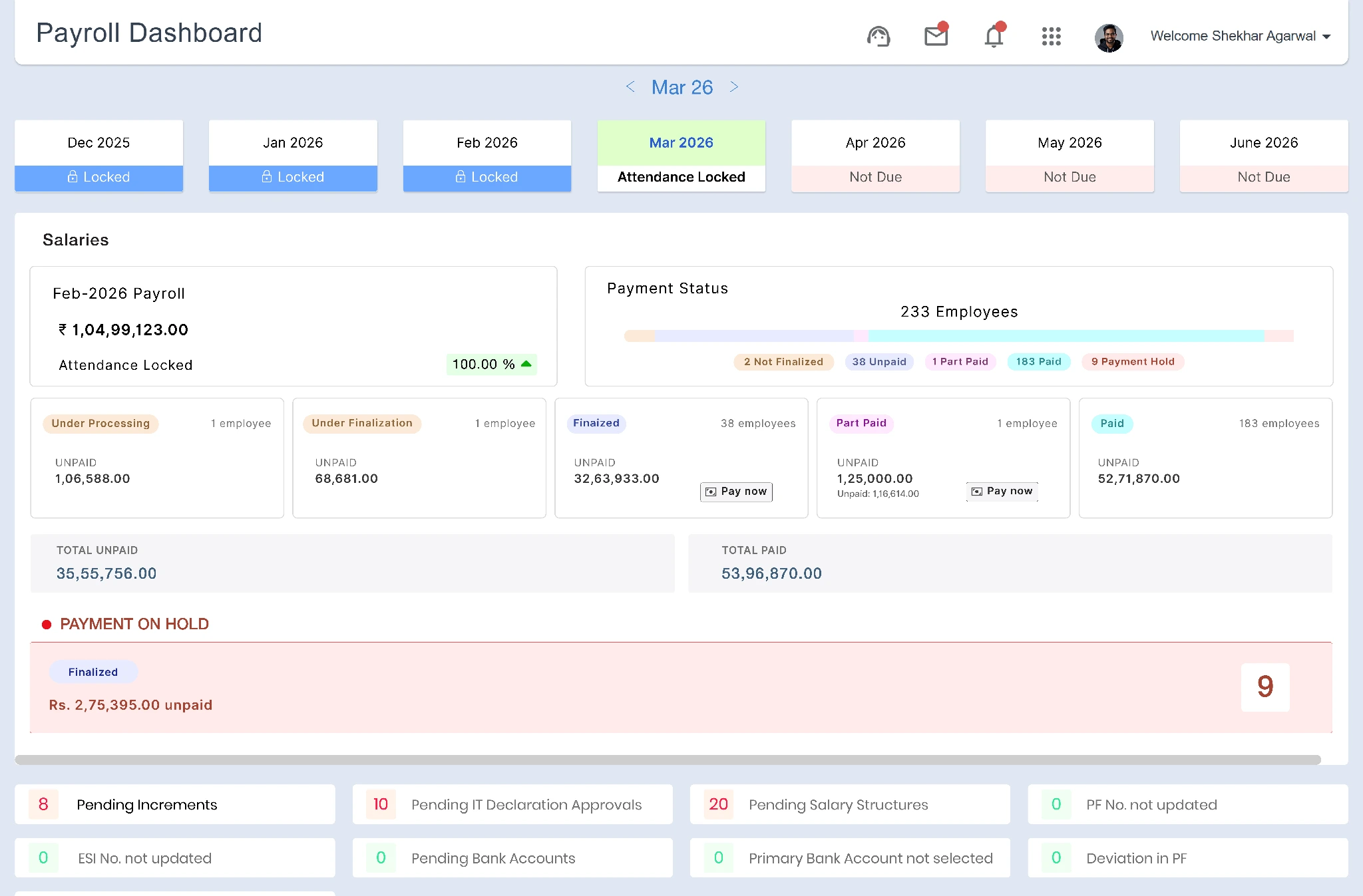
Zoho Payroll is designed for payroll processing and integrates with other Zoho applications such as Zoho Books, Zoho People and Zoho Expense. It is particularly attractive to smaller businesses because it offers a free entry plan and clearly published paid pricing.
Zoho Payroll currently offers:
Prices are exclusive of GST.
Best for: Organisations with multi-state payroll and India-specific statutory requirements.

QkrPayroll, part of the QkrHR suite, is positioned around payroll and compliance requirements in India. It can be relevant for organisations managing employees across multiple states where state-level Professional Tax and Labour Welfare Fund requirements need to be considered.
Custom pricing based on employee count and selected modules.
Best for: Mid-sized, large and multinational organisations with complex payroll requirements.

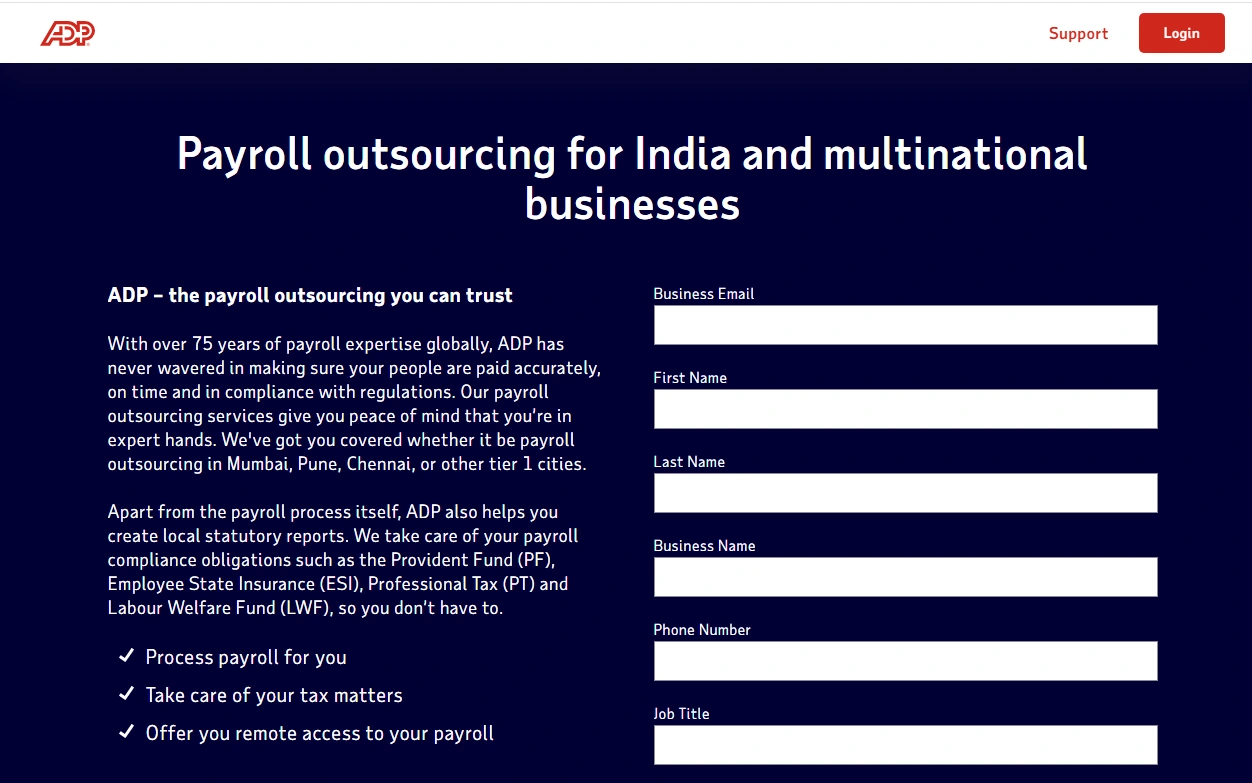
ADP India provides payroll technology and payroll services for organisations with different workforce sizes. Its offering covers payroll, employee self-service, compliance and integration with time, HR and ERP systems. ADP currently describes payroll offerings for organisations ranging from 1–199 employees through medium and large businesses with 200–1,000+ employees.
Custom pricing based on workforce size, services and business requirements.
Best for: SMEs and growing organisations looking for HRMS, payroll and attendance in one platform.

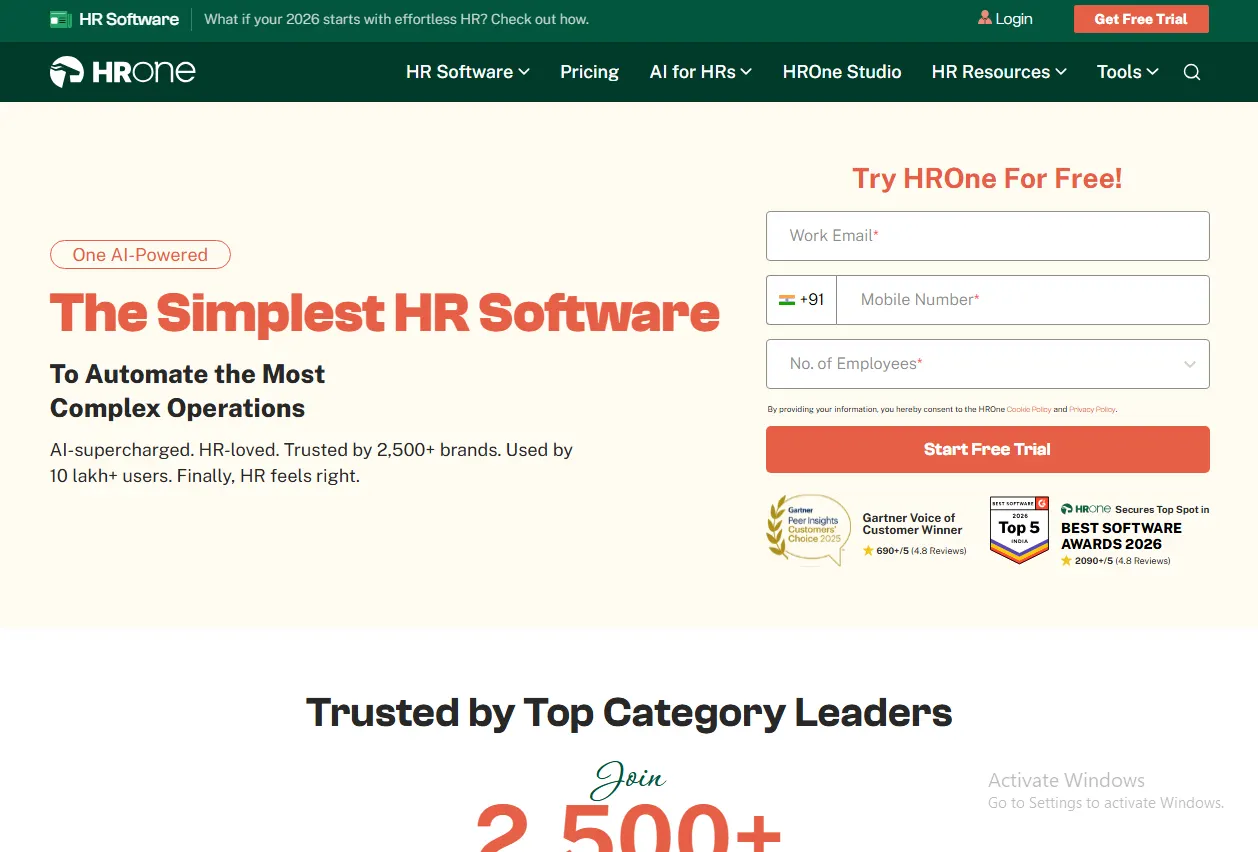
HROne is an HRMS and payroll platform designed for Indian businesses, with payroll, core HR, attendance, mobile and reporting capabilities.
HROne currently lists:
The Basic plan includes Core HR, Time Office, Payroll, mobile application, reports and dashboards.
Best for: Mid-sized and large enterprises looking for broader HCM capabilities.

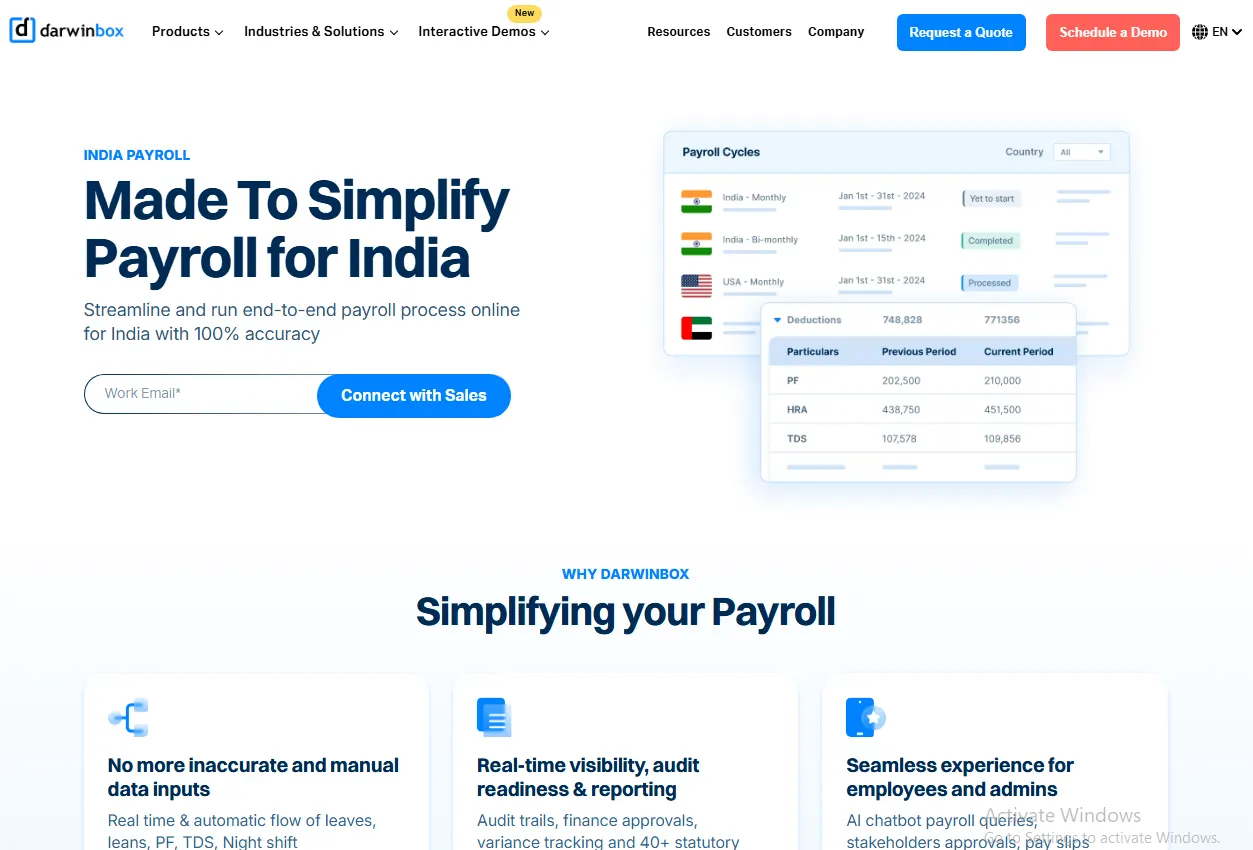
Darwinbox is an enterprise-focused HRMS platform that combines payroll with broader workforce and talent-management functionality. Its payroll capabilities cover areas such as attendance, leave, statutory deductions, variable pay, payroll processing, reporting and integrations.
Custom pricing based on employee count, modules, implementation and business requirements.
Best for: Small and mid-sized businesses looking for payroll and broader HRMS functionality.

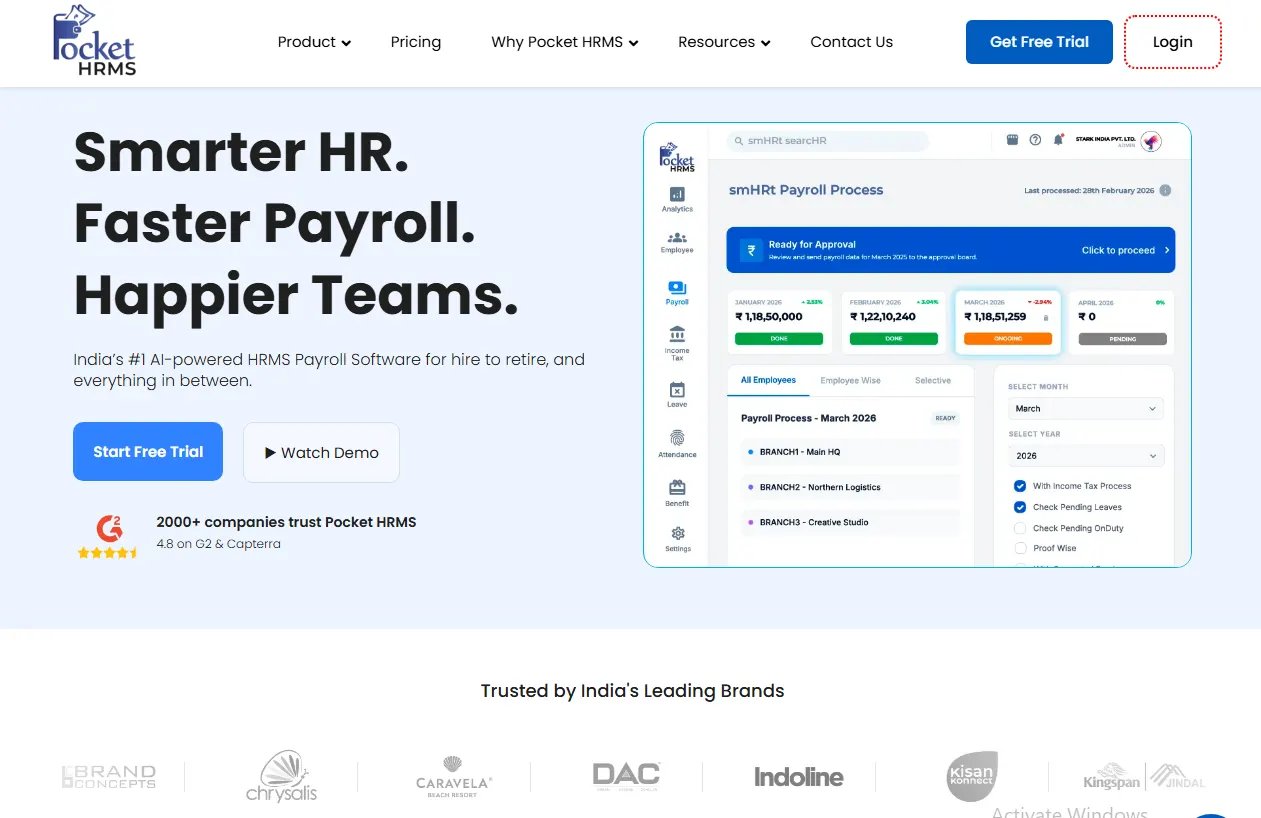
Pocket HRMS is a cloud-based HRMS and payroll platform covering payroll processing, attendance, leave, employee self-service and HR management.
Pocket HRMS currently lists:
A one-time implementation fee may also apply depending on the implementation requirements.
Best for: Growing organisations looking for an integrated HRMS, payroll and employee-management platform.

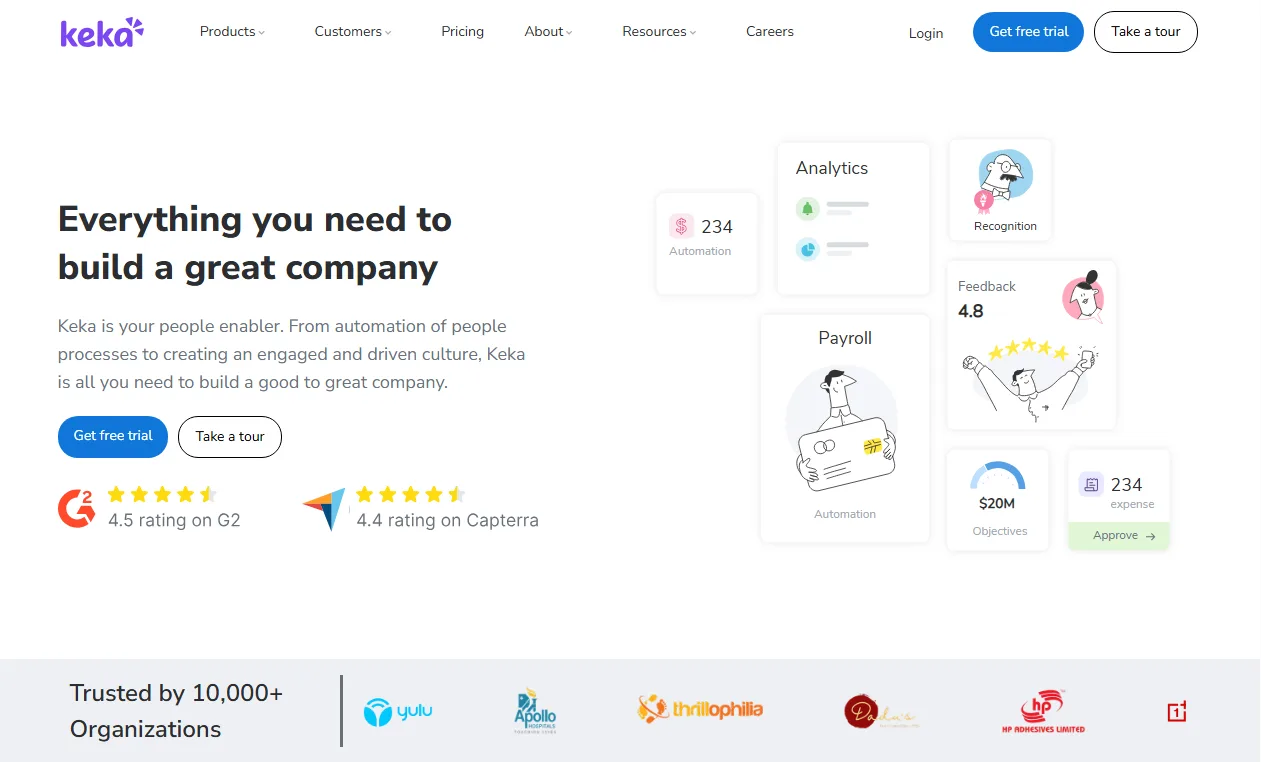
Keka HR combines payroll with HR, attendance, leave, employee self-service and performance-related functionality. It can be a fit for organisations that want to manage payroll as part of a wider HR platform rather than as a standalone payroll tool.
Keka's current India pricing page lists:
The plans differ in the level of HR automation, engagement and performance functionality included.
Read More About Payroll Software:Payroll Software
The right payroll system changes significantly depending on workforce size and payroll complexity.
Startups usually need simple payroll processing, statutory calculations, employee self-service and predictable pricing without paying for unnecessary enterprise functionality. Consider: Zoho Payroll, greytHR, factoHR and other platforms with transparent entry-level plans. For very small teams, Zoho Payroll's free plan for up to 10 employees can be particularly relevant.
Small businesses should prioritise:
Zoho Payroll, greytHR, factoHR and Pocket HRMS are worth comparing based on these requirements.
SMEs often need more than salary processing. Attendance, leave, employee workflows, reporting, reimbursements and HRMS integration become more important as the organisation grows. Options such as ZYNO HRMS, factoHR, greytHR, HROne, Pocket HRMS and Keka can be evaluated against these requirements.
Larger organisations generally need:
ADP India and Darwinbox are relevant options to evaluate, while platforms such as ZYNO HRMS, Keka and HROne may also fit depending on the organisation's specific requirements.
The most useful payroll software is not necessarily the one with the longest feature list. It is the one that handles the payroll scenarios your organisation actually encounters.

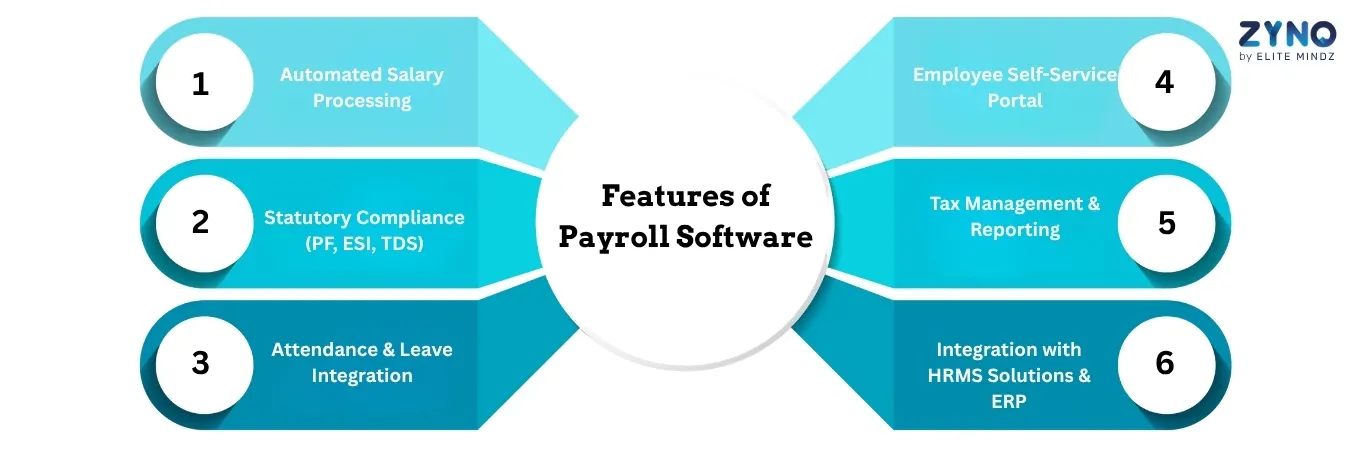
The platform should calculate employee salaries using configured salary structures, attendance, leave, deductions and variable components.
Check support for the statutory requirements relevant to your organisation, including PF, ESI, TDS, Professional Tax and Labour Welfare Fund. Do not assume that every vendor handles every state or compliance workflow in exactly the same way.
Attendance and leave data should flow into payroll without unnecessary manual data entry. This becomes particularly important for organisations with shifts, overtime, remote workers, multiple locations or variable attendance.
Employees should be able to access information such as payslips, tax documents, leave balances and other relevant payroll information without repeatedly depending on HR.
Look for salary tax calculations, TDS workflows, relevant tax reports and employee tax documentation.
A good payroll platform should handle more than fixed monthly salaries. Check support for:
These scenarios often create significant manual work when payroll is managed through spreadsheets.
Payroll should connect with the systems that already contain employee, attendance, accounting or financial data. Depending on your business, this could include:
Indian payroll can involve several statutory and state-specific requirements. Depending on the organisation, payroll teams may need to manage areas such as:
The important point is that "compliance supported" does not necessarily mean every compliance activity is fully automated. Before purchasing software, ask the vendor:
India's labour-code transition also makes payroll-system readiness important. ADP's 2026 guidance notes that practical implementation depends on central rules and state-level notifications, reinforcing the need for payroll teams to maintain clean data and flexible payroll structures.
Attendance and payroll should ideally work as connected processes. A typical workflow looks like: Attendance → Leave → Overtime/Shift Data → Payroll Calculation → Review → Approval → Payslip → Salary Payment → Reporting Without integration, HR teams may need to export attendance data, modify spreadsheets, check leave records and manually upload payroll inputs every month. When evaluating a system, check whether it supports:
The exact functionality varies by vendor and plan.
Payroll software focuses primarily on salary processing and related payroll activities. HRMS software covers a broader range of employee processes such as:
For a small organisation with straightforward payroll, standalone payroll software may be sufficient. For a growing organisation, an integrated HRMS + payroll platform can reduce data duplication because employee, attendance, leave and payroll information can operate within the same system.
Payroll software pricing varies considerably depending on the pricing model. Common models include:
The business pays a fixed subscription for a defined number of employees.
The vendor charges according to the number of employees or users.
A fixed base price covers a certain number of employees, with an additional fee for employees above that threshold.
Larger organisations may receive a quote based on:
Your total cost may also include:
For example, greytHR, Zoho Payroll, factoHR, HROne and Pocket HRMS publish different combinations of base fees and additional employee charges, so the cheapest-looking starting price may not be the cheapest option for your actual workforce and module requirements.
Switching payroll software is not simply a matter of creating user accounts. Before signing a contract, confirm how the vendor will handle:
Ask whether the implementation includes:
A payroll system should be tested with real payroll scenarios before the first production salary run.
| Factor | Cloud Payroll | On-Premise Payroll |
|---|---|---|
| Deployment | Vendor-hosted | Organisation-managed infrastructure |
| Accessibility | Accessible remotely through supported systems | Usually managed through internal infrastructure/network |
| Infrastructure | Vendor manages infrastructure | Organisation manages infrastructure |
| Updates | Usually delivered by vendor | Organisation/vendor manages updates depending on model |
| Scalability | Can generally scale without new internal hardware | Scaling may require additional infrastructure |
| Maintenance | Primarily vendor-managed | Greater internal IT responsibility |
| Data control | Depends on vendor architecture and agreement | Greater direct infrastructure control |
| Best suited for | Businesses wanting managed infrastructure and remote access | Organisations with specific infrastructure or governance requirements |
Cloud payroll is often practical for organisations that want vendor-managed infrastructure, remote accessibility and ongoing software updates. On-premise deployment may still be appropriate where an organisation has specific infrastructure, security, governance or data-control requirements.
| Payroll Challenge | How Software Can Help |
|---|---|
| Manual salary calculations | Automated payroll calculations |
| Attendance errors | Attendance and payroll integration |
| Leave data discrepancies | Direct leave integration |
| Compliance tracking | Configured statutory calculations and reports |
| Employee payroll queries | Employee self-service |
| Data duplication | Centralised employee records |
| Payroll exceptions | Configurable salary and payroll rules |
| Reporting | Automated payroll reports and dashboards |
| Multiple locations | Location/state-specific configuration |
| Payroll approvals | Workflow-based review and approval |
Automation does not eliminate the need for human review. Payroll teams still need to validate inputs, review exceptions and ensure the organisation's configuration reflects its actual policies and statutory requirements.
Payroll software is becoming more connected to the wider HR and finance technology stack. Key areas to watch include:
AI is increasingly being used for employee queries, workflow assistance, data analysis and identifying unusual payroll patterns.
Payroll teams are moving more processes from spreadsheets and manual data entry into configurable workflows.
Payroll increasingly connects with HRMS, ERP, accounting, banking and expense systems.
Employees increasingly expect to access payslips, tax information, leave and other HR information digitally.
Payroll data can also support workforce-cost analysis, budgeting and management reporting. The important consideration is not whether a platform uses the word "AI", but what the AI actually does and whether it provides a measurable benefit to your payroll or HR team.
Before making a purchase, evaluate these 10 areas.
Check how the vendor prices your current headcount and how costs change as your workforce grows.
Consider multiple salary structures, variable pay, bonuses, overtime, arrears, reimbursements, loans and full-and-final settlements.
Confirm the exact statutory calculations, reports and filing workflows you need.
If attendance directly affects salary, integration should be a priority.
Decide whether you need only payroll or a broader HRMS.
List the systems that payroll must connect with before speaking to vendors.
Ask about implementation timelines, migration, configuration, testing and training.
Compare the complete annual cost rather than just the advertised starting price.
Ask about authentication, access permissions, encryption, backups, monitoring, data governance and relevant certifications.
Clarify:
Use this checklist during vendor demos:
The best payroll software in India depends on what your organisation actually needs. For a small business, transparent pricing and essential payroll automation may matter most. For an SME, attendance, leave, payroll, employee self-service and HRMS integration become increasingly important. For a large or multi-location organisation, payroll complexity, integrations, compliance management, reporting, scalability and implementation support may outweigh the entry subscription price. Among the platforms compared here, ZYNO HRMS is worth considering for organisations looking for integrated HRMS and payroll workflows, while greytHR, Zoho Payroll, factoHR, HROne, Pocket HRMS and Keka provide different combinations of payroll and broader HR functionality. QkrPayroll may be relevant where multi-state compliance is a major consideration, while ADP India and Darwinbox are more relevant to complex enterprise environments. The right decision is therefore not simply about finding the cheapest payroll software or choosing the platform with the longest feature list. It is about finding the system that fits your employee count, payroll complexity, compliance requirements, technology stack, implementation capacity and budget.
Online payroll software is a digital system that automates employee salary processing and related payroll activities. Depending on the platform, it can calculate salaries and deductions, process attendance and leave inputs, generate payslips, support statutory compliance, manage reimbursements and reports, and connect with HR, accounting or ERP systems.
There is no single payroll software that is best for every business. The right choice depends on employee count, payroll complexity, compliance requirements, attendance integration, HRMS needs, integrations and budget. Platforms such as ZYNO HRMS, greytHR, Zoho Payroll, factoHR, HROne, Keka, Pocket HRMS, ADP India and Darwinbox can be shortlisted based on different business requirements.
Yes. Small businesses can use payroll software to automate salary calculations, payslips, tax-related payroll processes, attendance and employee records. The main consideration is choosing a platform whose pricing and feature set match the size of the organisation. Zoho Payroll, for example, currently offers a free plan for up to 10 employees.
Pricing varies by vendor and employee count. Current published examples include Zoho Payroll from ₹1,000/month for 25 employees on annual billing, greytHR from ₹2,495/month for 50 employees, HROne from ₹4,950/month for 50 users, factoHR from ₹4,999/month for 50 employees and Pocket HRMS from ₹2,995/month for 50 employees billed annually. Some platforms, including enterprise-focused solutions, use custom pricing. The final cost can also include GST, additional employees, modules, implementation, migration, integrations and support.
Many payroll platforms automate statutory calculations and provide reports or filing-related workflows for requirements such as PF, ESI, TDS and Professional Tax. However, the exact level of automation varies by vendor, plan, state and business configuration. Always confirm which calculations, reports and filing workflows are included before purchasing.
For a 50-member team, compare platforms based on pricing, payroll automation, compliance, attendance integration, employee self-service and the HR features you actually need. Zoho Payroll, greytHR, factoHR, HROne, Pocket HRMS and ZYNO HRMS can all be evaluated depending on the organisation's requirements. For example, Zoho Payroll's Professional plan currently includes 50 employees at ₹3,000/month when billed annually, while greytHR Essential covers 50 employees at ₹2,495/month. HROne Basic covers 50 users at ₹4,950/month.
At minimum, evaluate:
For more complex organisations, also evaluate multi-location support, multiple entities, APIs, audit trails, variable pay and implementation capabilities.
Yes. Many modern payroll platforms integrate with attendance, leave management, HRMS, biometric devices, accounting software and other business systems. The purpose is to reduce manual data entry and allow validated attendance, leave and employee information to flow into payroll. However, integration availability varies by vendor and plan, so confirm the exact systems and integration method before purchasing.
Cloud payroll can provide strong security controls, but security depends on the vendor's architecture and practices. Before choosing a provider, ask about:
Do not assume that every cloud payroll provider has the same security controls.
Implementation time depends on employee count, payroll complexity, integrations, data migration and customisation. A simple payroll setup can be relatively quick, while larger implementations involving multiple entities, complex salary structures, historical data, attendance systems or ERP integrations may require significantly more time. Ask the vendor for a written implementation plan covering migration, configuration, testing, training and go-live.
Bring payroll, attendance, leave and broader employee workflows together with ZYNO HRMS. Discuss your employee count, payroll requirements, compliance needs and integrations with the ZYNO team to see whether the platform fits your business.
Request a Free Demo Explore ZYNO HRMS
How HRMS Systems Streamline Payroll and HR Processes
Read More →
Top HRMS Software Providers in USA
Read More →
Best Service Providers for Cloud-Based HRMS in Singapore
Read More →
Top 10 HR Software Systems in Belgium for Employee Engagement
Read More →
ZYNO HRMS: Setting the Standard for HRMS Payroll Software Trends in 2026
Read More →
A New Era of HR Excellence Begins with ZYNO HRMS- Best HRMS Software
Read More →Revolutionize HR Management With Powerful SaaS HR Solutions
Read More →Why Businesses Are Switching to Cloud-Based Payroll Software
Read More →
Essential HR Tech Tools for Businesses in Kenya
Read More →
21 Must-Have HRMS Software Features in 2025 (Complete Checklist)
Read More →
Top People Analytics Trends in Uganda (2026): AI, HR Data & Workforce Insights
Read More →
12 Must Have HRMS Features for Every Business
Read More →Top 10 Payroll Software Companies in India 2026 Updated List
Read More →
Why Your Business Needs HR Management Software to Scale Faster
Read More →
Top 10 HR Software in India for Smart HR Automation
Read More →
Best HRMS Software in Kenya for Modern Businesses (2026 Guide)
Read More →
Buy Affordable HRMS Software in Middle East for Smart HR Management
Read More →
Buy HR Management Software in Ethiopia for Business Growth
Read More →
ZYNO HRMS vs Zoho People: Which HR Software Is Better for You?
Read More →
Top 10 Zoho People Alternatives Compared: Features, Pricing & Reviews
Read More →
Top Keka Alternatives: Choosing the Right HRMS for Your Business
Read More →
Which HR Software Do Most Small Businesses Use in India? Guide
Read More →
What is Cloud Based Payroll? A Complete Guide to Cloud Based Payroll Software
Read More →
How Does HR Software Streamline Payroll Processing?
Read More →
What is the Use of HR Management Software?
Read More →
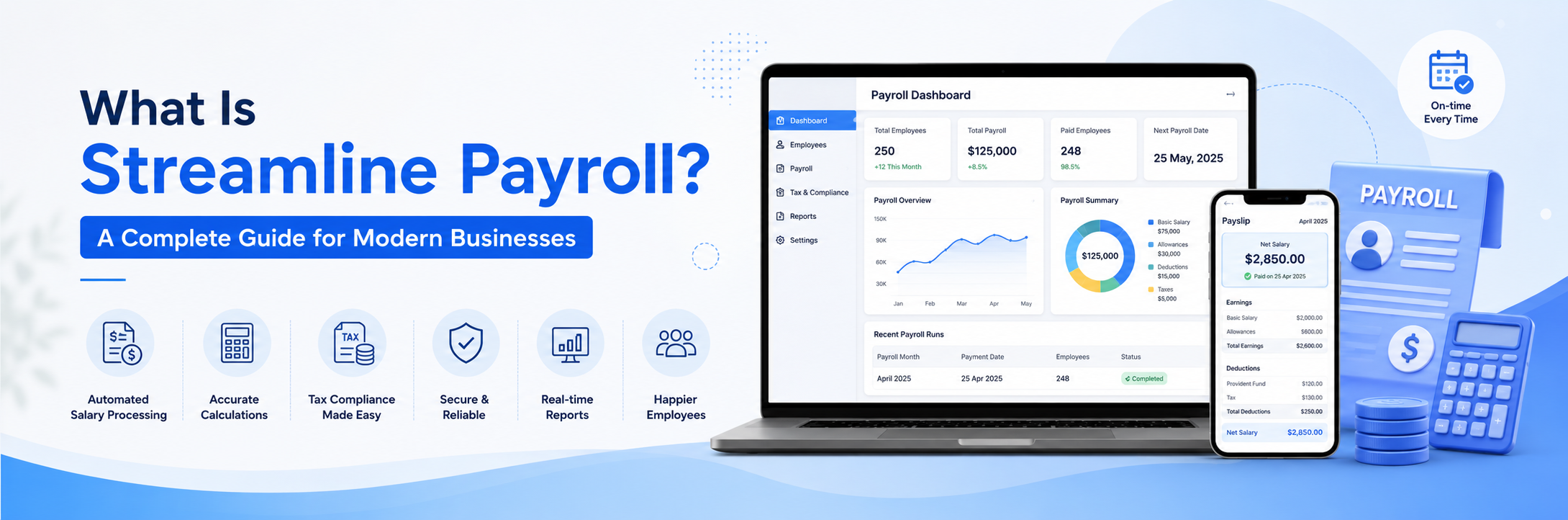
What Is Streamline Payroll? A Complete Guide for Modern Businesses
Read More →
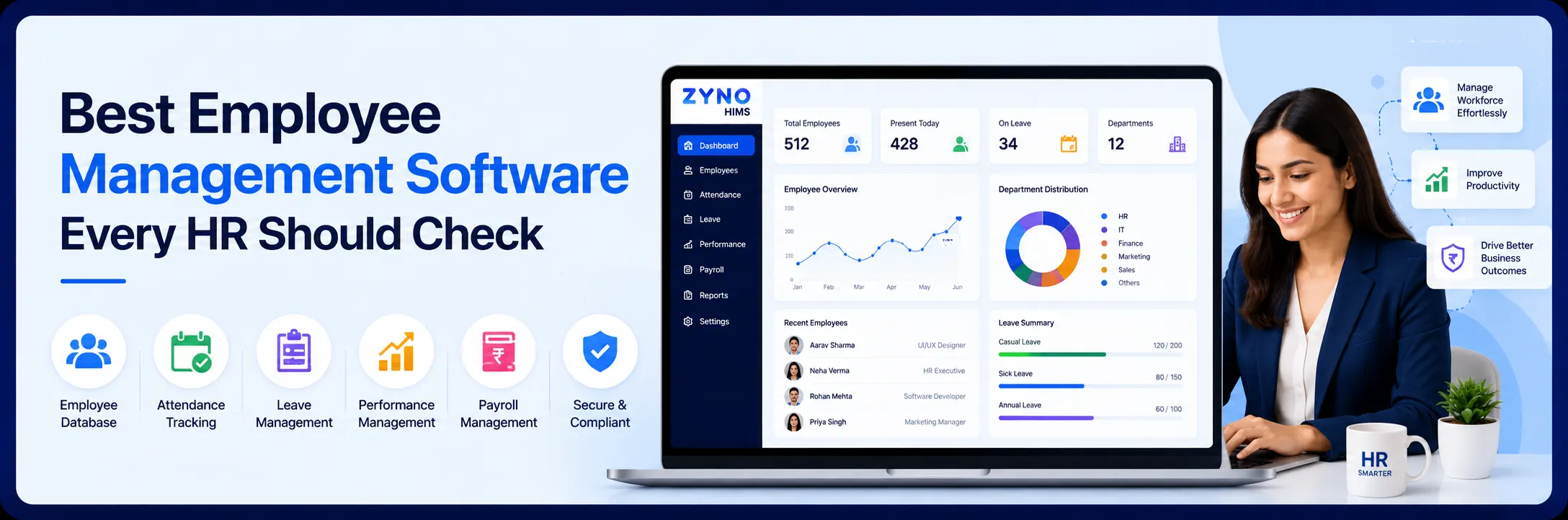
Best Employee Management Software Every HR Should Check
Read More →
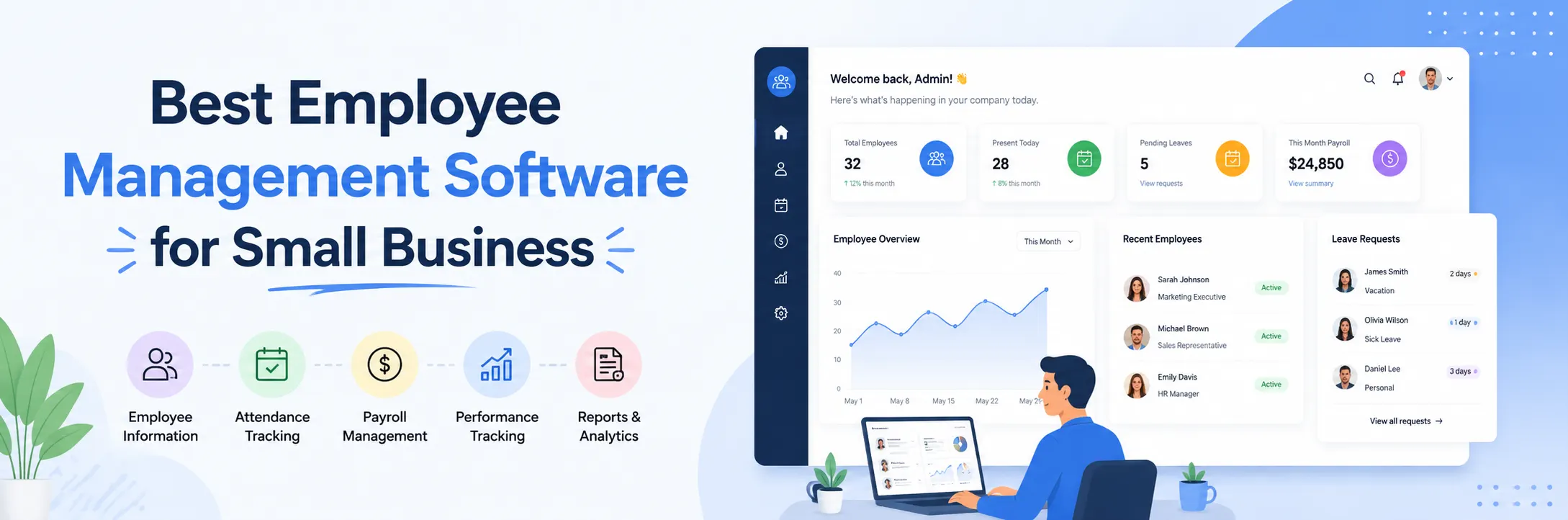
10 Best Employee Management Software for Small Business
Read More →
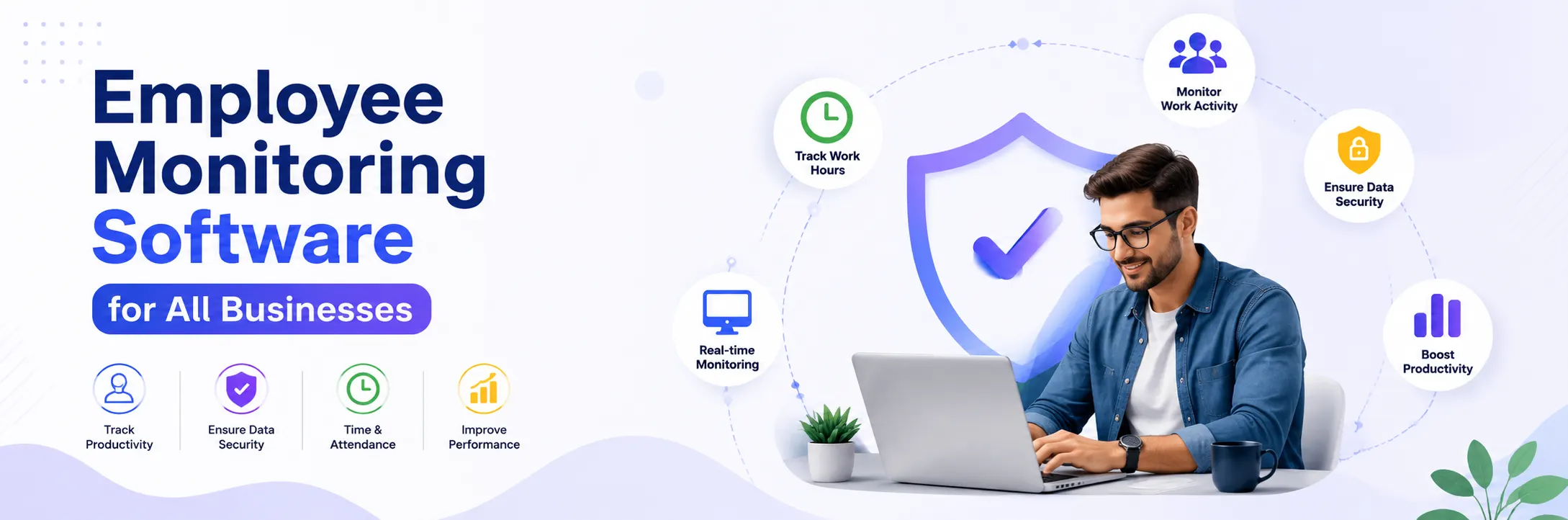
Employee Monitoring Software for All Businesses | Complete Guide
Read More →
Best Software for Payroll in India: A Full Comparison for 2026
Read More →
Why Payroll Management in India Is More Complex Than You Think
Read More →
How to Reduce Payroll Processing Time Using HRMS Software
Read More →
What HRMS Features Matter Most for Growing Companies?
Read More →
What Is HRMS and Why Does Your Growing Business Need One?
Read More →
GreytHR vs Keka vs ZYNO HRMS: Which HR Software Should You Choose?
Read More →
How to Manage Attendance, Leave and Payroll from a Single Platform
Read More →
ZYNO HRMS: The Smarter AI-Powered HR and Payroll Solution for Kenyan Businesses
Read More →
HROne vs ZYNO HRMS: Which HR Software is Best for Your Business in 2026?
Read More →
Gratuity Calculation in India: Formula, Eligibility, Calculator & Latest Rules (2026)
Read More →
BambooHR vs ZYNO HRMS: Features, Pricing, Pros & Cons Compared (2026)
Read More →
Best HRMS for UAE Payroll in 2026: Top AI-Powered HR & Payroll Software for UAE Businesses
Read More →
How to Choose the Best Payroll Software for Hospitals & Healthcare Organizations
Read More →
Best Payroll Management Software in Ethiopia: Features, Benefits & Compliance Guide
Read More →
Top 15 HR Software in Ethiopia (2026) | Features, Pros, Cons & Pricing
Read More →15 Best Employee Field Tracking Software in India in 2026
Read More →
10 Powerful Questions to Ask in Every HR Software Demo
Read More →Partner with ZYNO by Elite Mindz to revolutionize how your business works. Fill out the form, and we’ll reach out with AI-powered solutions made just for you.
We use browser cookies to ensure you get the best experience on our website. Learn more
The form was submitted successfully!