×
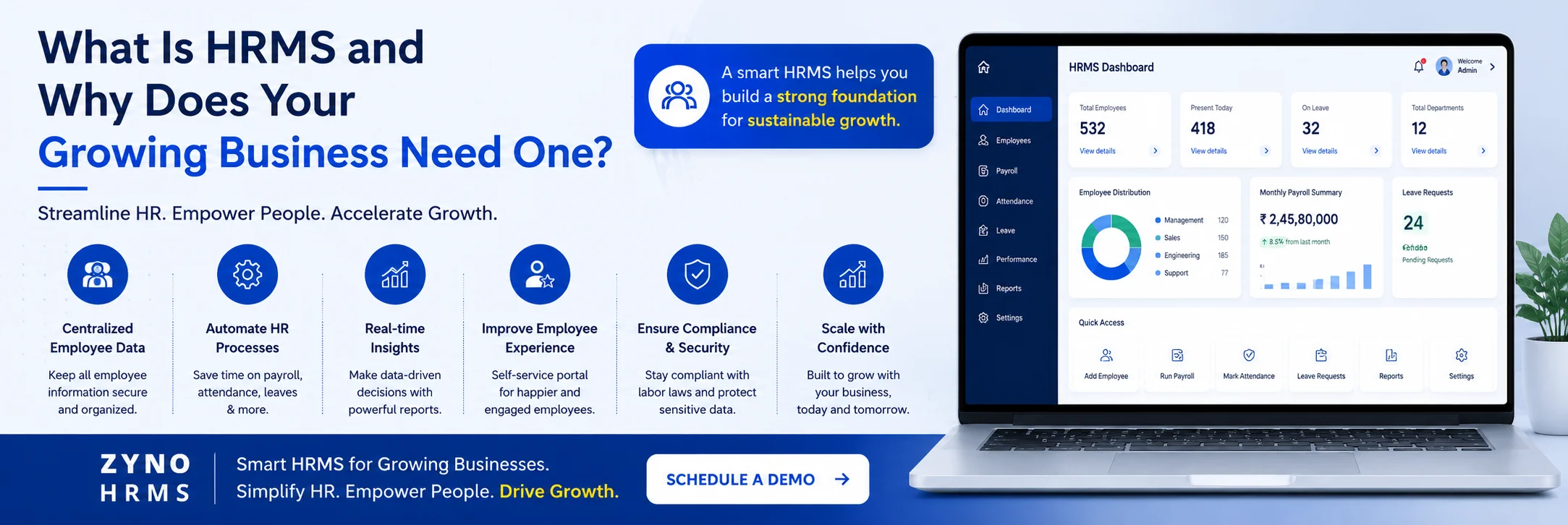
HRMS (Human Resource Management System) is an all-in-one software solution that helps businesses manage payroll, attendance, leave, employee records, recruitment, performance, and compliance from a single platform. For growing businesses, an HRMS automates repetitive HR tasks, reduces manual errors, improves productivity, and ensures compliance, making it easier to scale operations efficiently.
Businesses using ZYNO Books cut accounting time by 70% and stay 100% ZATCA-compliant — automatically.

If you have heard the term HRMS thrown around and wondered whether it actually applies to a business your size, this blog is for you. Not every growing business thinks of itself as ready for enterprise software. But the truth is, an HRMS is not just for large corporations. It is built for exactly the stage most growing Indian businesses find themselves in right now.
HRMS stands for Human Resource Management System. In simple terms, it is software that manages everything related to your employees, from the moment they are hired to the day they leave. Recruitment, onboarding, attendance, leave, payroll, performance, compliance, and more, all handled in one connected platform.
You may also come across the terms HRIS and HCM. They refer to similar concepts with slightly different scopes. For most growing businesses, the practical question is straightforward: does this platform handle the HR functions I need, with compliance requirements specific to India, at a cost that makes sense for my stage of growth?
Choose a complete HRMS software that combines payroll, attendance, AI-powered HR support, learning, and performance management in one integrated platform.
For most growing businesses, an HRMS replaces a combination of spreadsheets, standalone payroll software, physical attendance registers, and email based approval chains. Each of these works in isolation. None of them work well together. And the cost of manually connecting them every month is paid in HR team time, payroll errors, and compliance risk that quietly adds up in the background.
When attendance lives in one place, leave approvals in another, and payroll in a third, someone in your HR team is spending days every month just assembling data before a single salary can be processed. An HRMS eliminates that entirely.
Small businesses can manage HR informally. When you know everyone personally, processes can be loose and things still get done. But once you cross 50 employees, informal systems start breaking down. Once you cross 100, they break down consistently and expensively.
Growing businesses sit in a demanding position. You are past the stage where informal processes work but you may not yet have a large HR team to manage everything manually. You need your systems to carry the load that headcount and complexity are creating. An HRMS does exactly that.
The other factor specific to India is compliance. Indian payroll compliance involves PF, ESI, TDS under old and new tax regimes, professional tax across multiple states, LWF, gratuity, and Form 16 generation. Managing all of this manually or through disconnected tools is where most growing businesses accumulate risk without realising it. A good HRMS handles all of it automatically, with statutory rules that update when regulations change.
A corporate learning management system ensures employees receive structured training, certifications, and role-based learning throughout their careers.
Managing HR manually may work for small teams, but as businesses grow, it becomes time-consuming, error-prone, and difficult to scale. An HRMS software replaces spreadsheets and disconnected tools with an integrated platform that automates HR processes, improves payroll accuracy, ensures statutory compliance, and gives HR teams complete visibility into employee data from a single dashboard.
|
HR Function |
Manual Process |
With HRMS Software |
|
Employee Records |
Multiple spreadsheets and files |
Centralized employee database |
|
Payroll Processing |
Manual calculations with higher error risk |
Automated payroll with statutory compliance |
|
Attendance Management |
Registers or Excel sheets |
Real-time biometric and mobile tracking |
|
Leave Management |
Email approvals and paperwork |
Automated digital approval workflows |
|
Compliance Reporting |
Manual preparation |
Auto-generated compliance reports |
|
Performance Reviews |
Annual paperwork |
Continuous digital performance tracking |
|
Employee Onboarding |
Physical documentation |
Automated onboarding workflows |
|
HR Reporting |
Monthly manual reports |
Real-time HR dashboards |
The difference goes beyond efficiency.
A modern HRMS improves accuracy, compliance, employee experience, and overall workforce productivity.
Integrating performance management in HRMS helps managers conduct fair evaluations, monitor goals, and improve workforce productivity.
A modern HRMS software simplifies every stage of the employee lifecycle by automating payroll, attendance, leave management, compliance, and employee records. It reduces manual errors, saves valuable HR time, improves workforce productivity, and provides real-time insights that help businesses make smarter HR decisions. For growing companies, an HRMS creates a scalable foundation that supports long-term business growth.
Automating repetitive HR tasks allows HR professionals to spend more time on strategic initiatives such as talent acquisition, employee engagement, and workforce planning instead of manual administration.
Automated payroll processing, attendance tracking, and compliance calculations eliminate manual errors and ensure consistent results every payroll cycle.
Reducing manual work decreases operational expenses, minimizes payroll corrections, and allows businesses to scale without proportionally increasing HR headcount.
A modern HRMS with AI Chatbot empowers employees with 24/7 self-service support while reducing repetitive HR queries and administrative workload.
Employees gain instant access to payslips, attendance records, leave balances, tax documents, and reimbursement requests through Employee Self-Service (ESS) portals, resulting in faster HR services and higher satisfaction.
Interactive dashboards help business leaders monitor workforce performance, payroll expenses, employee attendance, and HR metrics without waiting for manual reports.
Digital onboarding workflows reduce paperwork, accelerate document collection, and help new employees become productive much sooner.
Before selecting an HRMS, explore the best HRMS features for growing companies to ensure the platform can support your business as it scales.
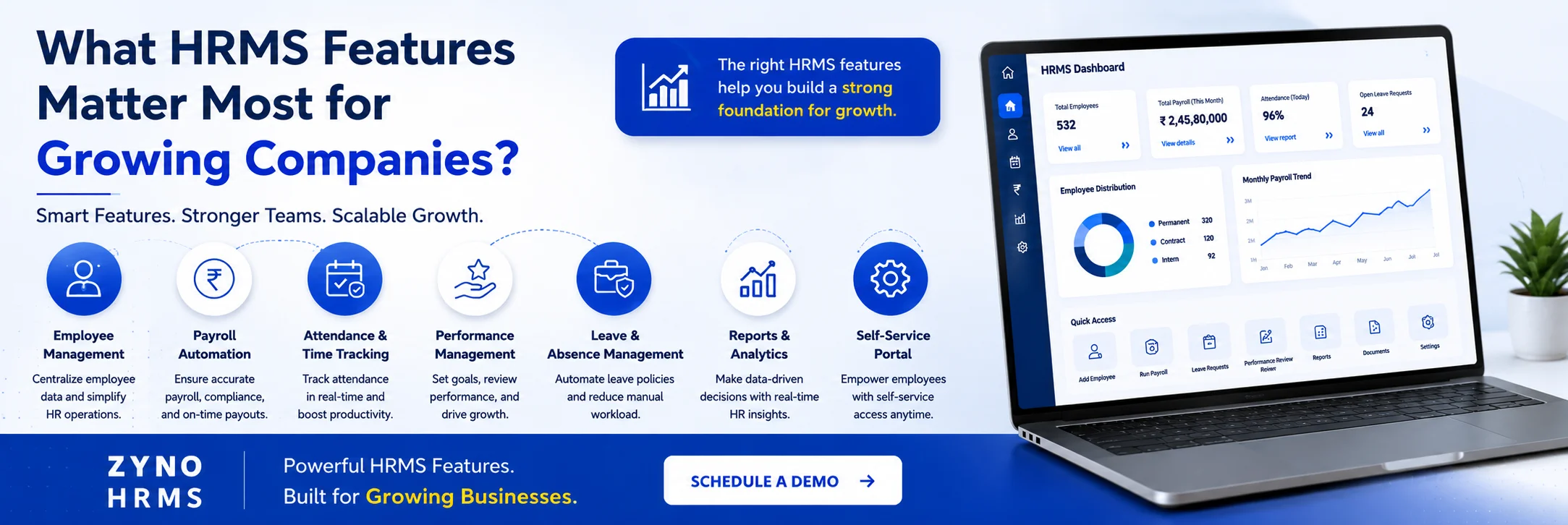
Not every HRMS feature carries equal weight for a growing business. These are the ones that make the most immediate difference.
Centralised employee database. A single record for every employee covering personal details, employment history, documents, salary structure, and reporting relationships. When this data lives in one place, everything else, payroll, compliance, reporting, runs more accurately.
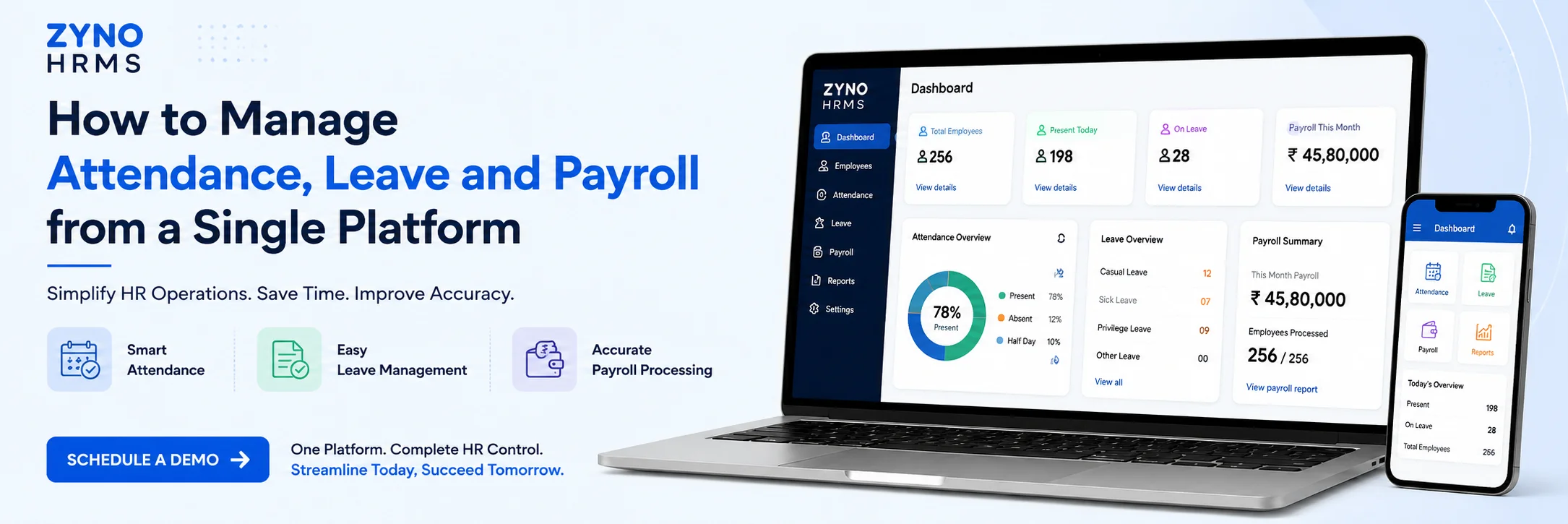
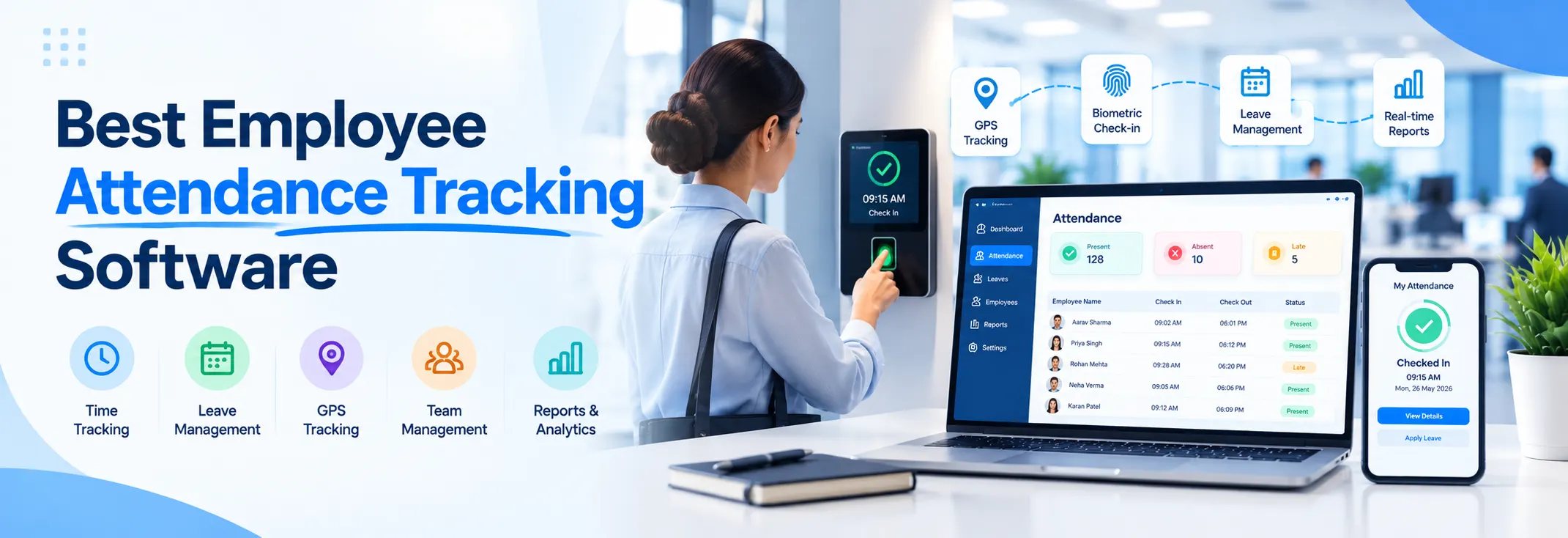
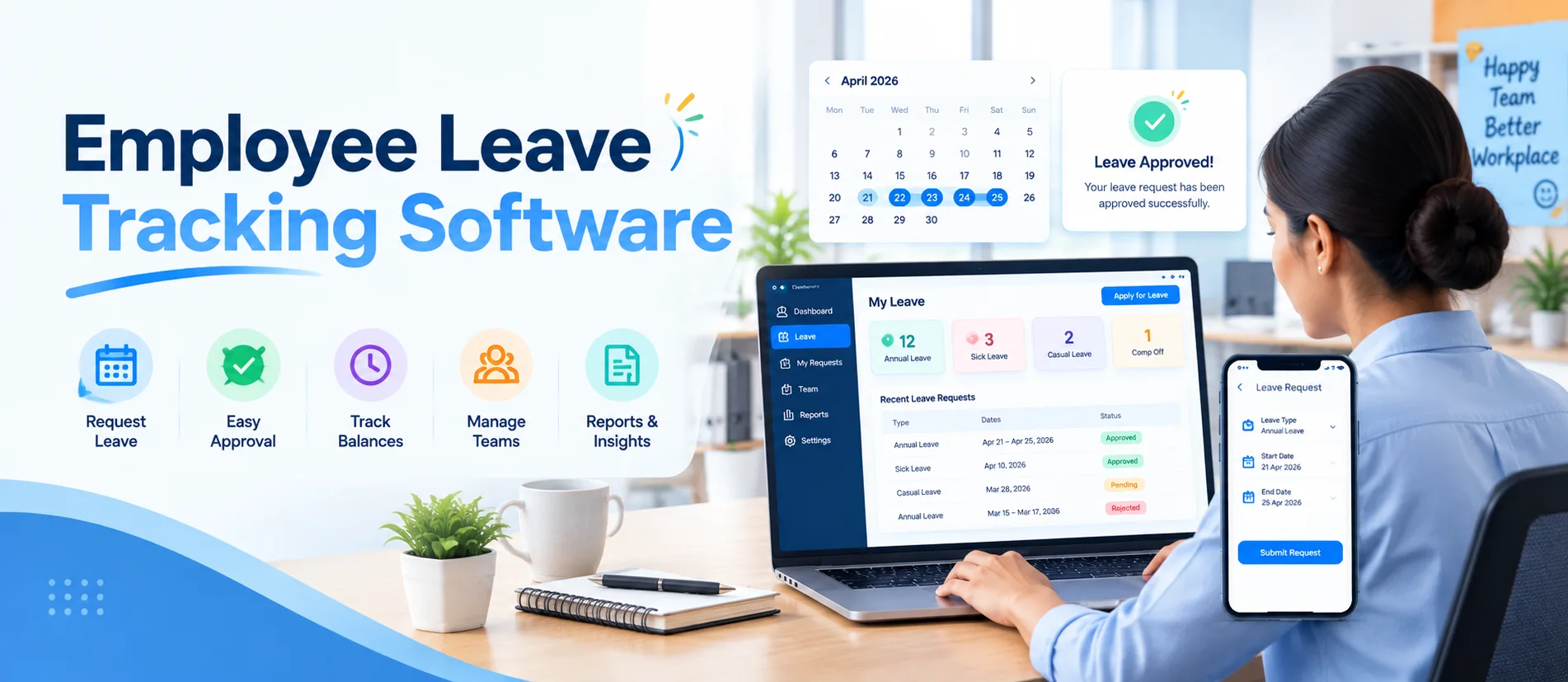
Attendance and leave management. Attendance syncs automatically from biometric devices, mobile apps, or web portals. Leave requests flow through configured approval chains and update attendance records automatically. No manual reconciliation before payroll. No mismatches between what was approved and what was recorded.
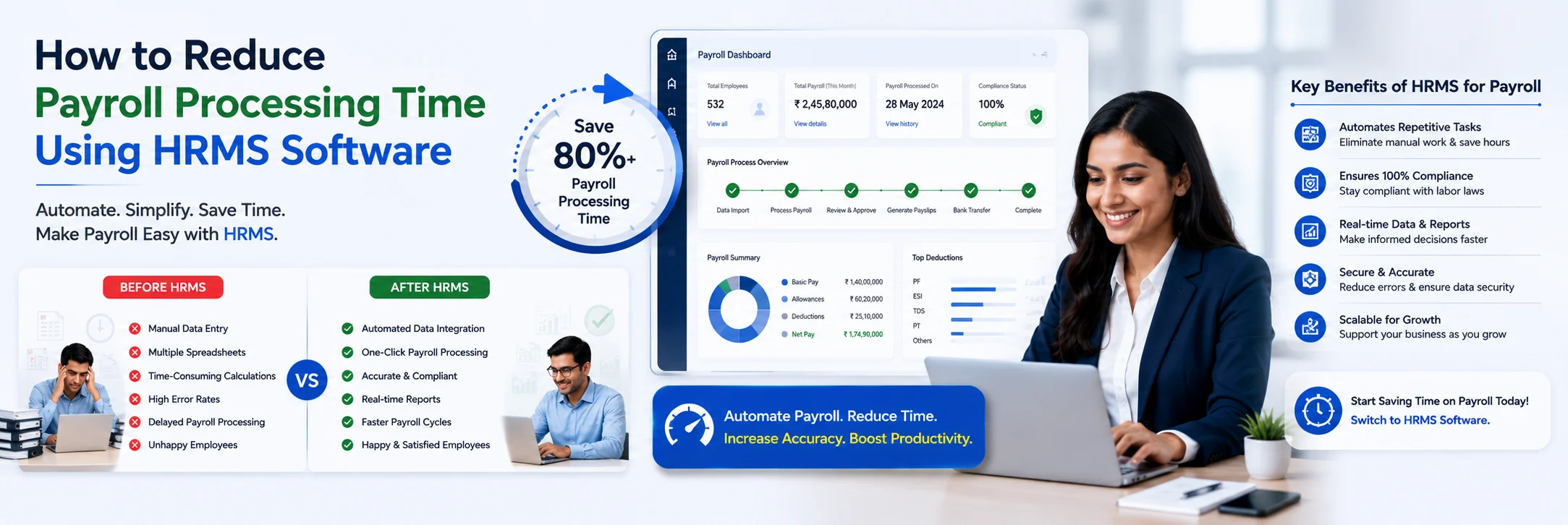
Discover how to reduce payroll processing time using HRMS by automating salary calculations, attendance tracking, and statutory compliance.
Payroll with built-in Indian compliance. This is where an HRMS pays for itself most visibly. Salary calculations run on live attendance and leave data. PF, ESI, TDS, and professional tax are calculated automatically. Payslips generate in bulk and reach employees through a self-service portal. What used to take your HR team three to five days takes a few hours.
Recruitment and onboarding. Job requisitions, candidate tracking, interview scheduling, offer letters, and onboarding checklists all managed within the system. New hires get a consistent, professional experience. HR gets a structured process that does not rely on memory or email threads.
Performance management. Goal setting, mid-year check-ins, and annual appraisals handled within the platform. Ratings are recorded and stored. Managers have visibility into team performance. HR has the data needed to make fair decisions on increments and promotions.
Employee self-service. Employees can view their own attendance, check leave balances, download payslips, access Form 16, and submit investment declarations without contacting HR. This one feature alone reduces the volume of routine HR queries significantly every month.
With several HRMS platforms available in the Indian market, here is what actually separates a good fit from a poor one for a growing business.
Indian compliance built in natively, not through third-party plugins. The difference matters because native compliance updates automatically when regulations change. Add-on compliance depends on a third party staying current, and someone on your team is still responsible for monitoring gaps.
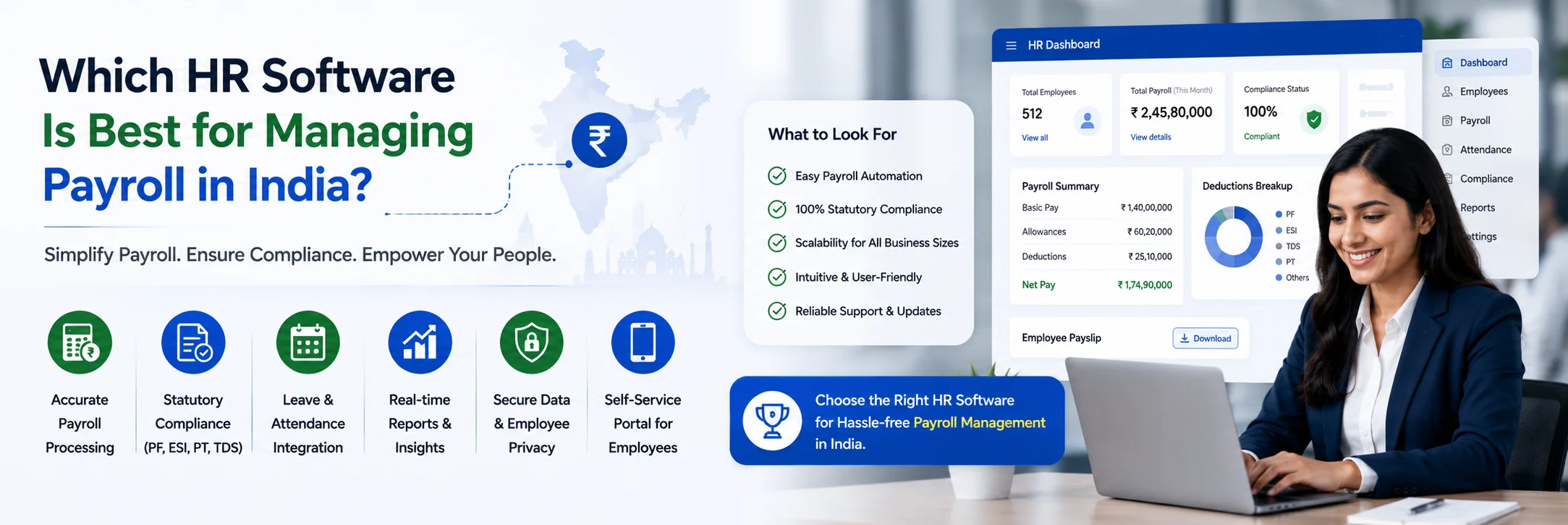
Looking for the right solution? Compare the best HR software for payroll in India to find a platform that matches your business requirements.
Cloud-based deployment. For growing businesses, especially those with multiple locations, a cloud HRMS means no on-premise infrastructure, no IT overhead, and access from anywhere. It also means automatic updates without expensive upgrade projects.
Modular structure. You should be able to activate the functions you need now and add more as your business grows. Paying for a full enterprise suite when you need five modules is not a good use of budget.
Integration with your finance or ERP system. Payroll is one of the largest cost items on any P&L. When your HRMS connects directly with your accounting system, salary data flows into your books automatically. When it does not, someone reconciles manually every month and that is where errors accumulate.
Fast implementation. SME-focused HRMS platforms typically go live in two to six weeks. If a vendor is quoting six months for implementation, the product was not built for a business your size.
The most common pattern is this: a business waits until HR is genuinely broken before investing in an HRMS. Payroll errors have caused employee disputes. A compliance gap has surfaced during an audit. The HR team is burnt out from monthly reconciliation. By that point, the cost of not having the system is already visible and significant.
The better move is to make the shift before the system breaks. When your team is between 50 and 150 employees and complexity is growing but has not yet become a crisis, that is the right time to put a proper HRMS in place. You get the efficiency gains before you need them, and you build a foundation that scales cleanly as your headcount grows.
|
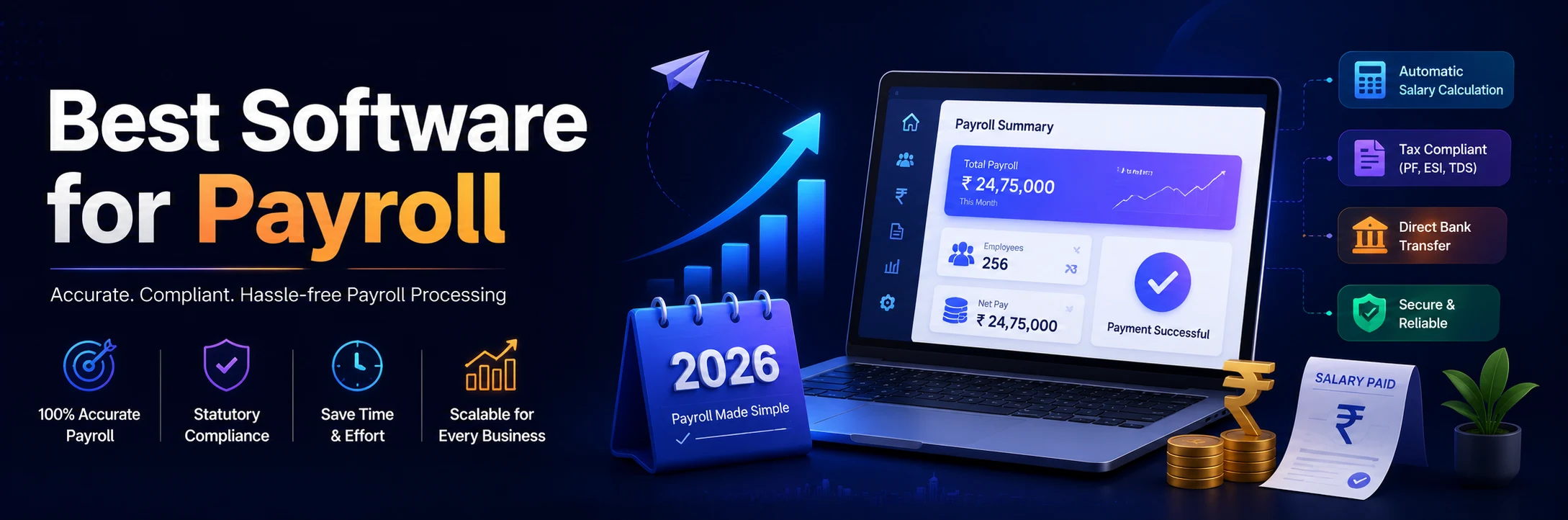
Choosing the best software for payroll can help businesses eliminate manual errors, improve compliance, and process salaries much faster. |
An HRMS is not about adding technology for its own sake. It is about giving your HR team the tools to manage a growing workforce accurately, compliantly, and without spending half their time on manual administration.
For growing Indian businesses dealing with multi-state compliance, increasing headcount, and the pressure to move faster, the right HRMS is not a luxury. It is the foundation your people operations need to scale without breaking.
HRMS (Human Resource Management System) is a software solution that helps businesses manage employee information, payroll, attendance, leave, recruitment, performance, and compliance from a single platform. It automates routine HR tasks, reduces manual work, and improves operational efficiency while ensuring accurate employee data management.
As businesses grow, managing HR operations manually becomes increasingly difficult. An HRMS streamlines payroll, attendance, employee records, and compliance, helping HR teams save time, reduce errors, and scale operations efficiently without increasing administrative workload.
A modern HRMS software typically includes payroll management, attendance tracking, leave management, recruitment, employee self-service, performance management, compliance automation, reporting, and HR analytics. These features help businesses simplify HR operations and improve employee productivity.
An HRMS with payroll automates salary calculations, tax deductions, PF, ESI, Professional Tax, and payslip generation. It integrates attendance and leave data with payroll, reducing manual calculations, minimizing errors, and ensuring timely salary processing.
Yes. Cloud-based HRMS software is ideal for startups and SMEs because it automates repetitive HR tasks without requiring a large HR team. It also scales as your business grows, making it a cost-effective long-term investment.
Absolutely. Most HRMS software in India supports statutory compliance by automating PF, ESI, TDS, Professional Tax, Labour Welfare Fund (LWF), gratuity calculations, and Form 16 generation. This helps businesses remain compliant with changing government regulations.
Payroll software focuses mainly on salary processing and tax calculations, whereas an HRMS manages the complete employee lifecycle, including recruitment, attendance, leave, performance, payroll, compliance, and employee records through one integrated platform.
An HRMS provides employees with self-service portals where they can apply for leave, download payslips, check attendance, update personal information, and access important HR documents. This reduces dependency on HR teams and improves employee satisfaction.
Look for an HRMS that offers payroll automation, attendance management, leave tracking, employee self-service, Indian statutory compliance, reporting, mobile accessibility, cloud deployment, and seamless integration with your existing business systems.
The ideal time to implement HRMS software is before manual HR processes become unmanageable. Businesses with around 20–50 employees can benefit significantly from early adoption, as it establishes scalable HR processes, reduces administrative work, and supports future growth efficiently
Sneha Singh
Content writer
Sneha Singh is a B2B tech content strategist with 4+ years of experience. She specializes in SEO-driven SaaS content, whitepapers, and platform-native social media campaigns that simplify complex technology and drive business growth.
How HRMS Systems Streamline Payroll and HR Processes
Read More →

Top HRMS Software Providers in USA
Read More →
Best Service Providers for Cloud-Based HRMS in Singapore
Read More →
Top 10 HR Software Systems in Belgium for Employee Engagement
Read More →
ZYNO HRMS: Setting the Standard for HRMS Payroll Software Trends in 2026
Read More →
A New Era of HR Excellence Begins with ZYNO HRMS- Best HRMS Software
Read More →Revolutionize HR Management With Powerful SaaS HR Solutions
Read More →Why Businesses Are Switching to Cloud-Based Payroll Software
Read More →
Essential HR Tech Tools for Businesses in Kenya
Read More →
21 Must-Have HRMS Software Features in 2025 (Complete Checklist)
Read More →
Top People Analytics Trends in Uganda (2026): AI, HR Data & Workforce Insights
Read More →
12 Must Have HRMS Features for Every Business
Read More →Top 10 Payroll Software Companies in India 2026 Updated List
Read More →
Why Your Business Needs HR Management Software to Scale Faster
Read More →
Top 10 HR Software in India for Smart HR Automation
Read More →
Best HRMS Software in Kenya for Modern Businesses (2026 Guide)
Read More →
Buy Affordable HRMS Software in Middle East for Smart HR Management
Read More →
Buy HR Management Software in Ethiopia for Business Growth
Read More →
ZYNO HRMS vs Zoho People: Which HR Software Is Better for You?
Read More →
Top 10 Zoho People Alternatives Compared: Features, Pricing & Reviews
Read More →
Top Keka Alternatives: Choosing the Right HRMS for Your Business
Read More →
Which HR Software Do Most Small Businesses Use in India? Guide
Read More →
What is Cloud Based Payroll? A Complete Guide to Cloud Based Payroll Software
Read More →
How Does HR Software Streamline Payroll Processing?
Read More →
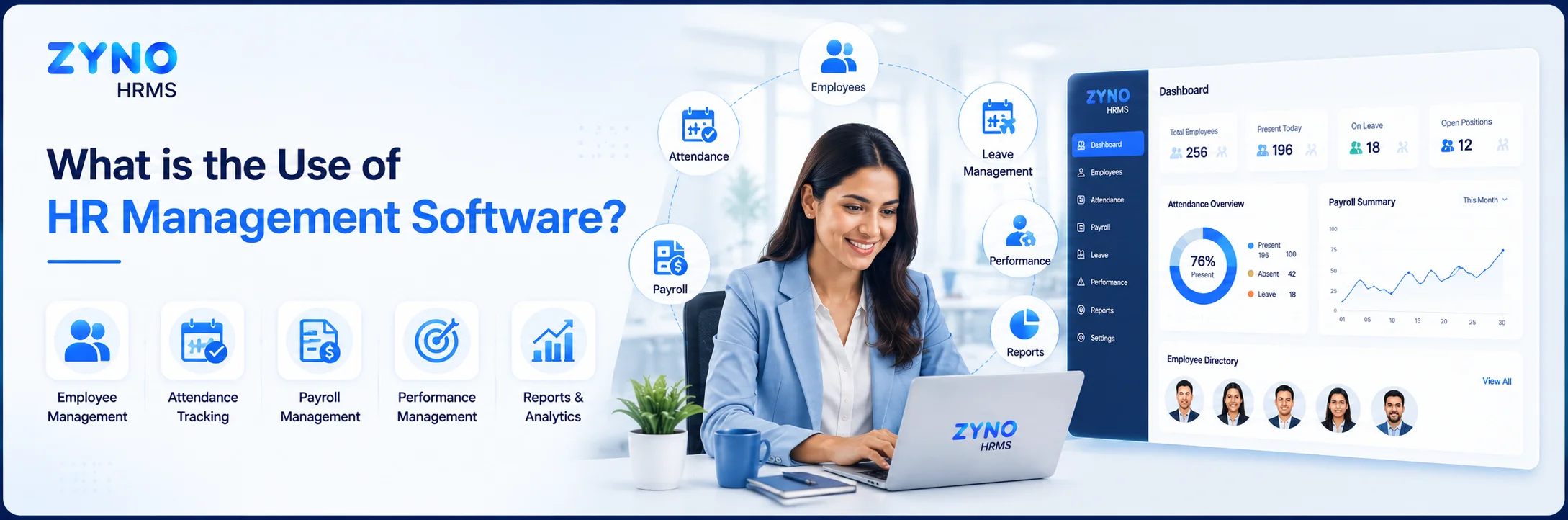
What is the Use of HR Management Software?
Read More →
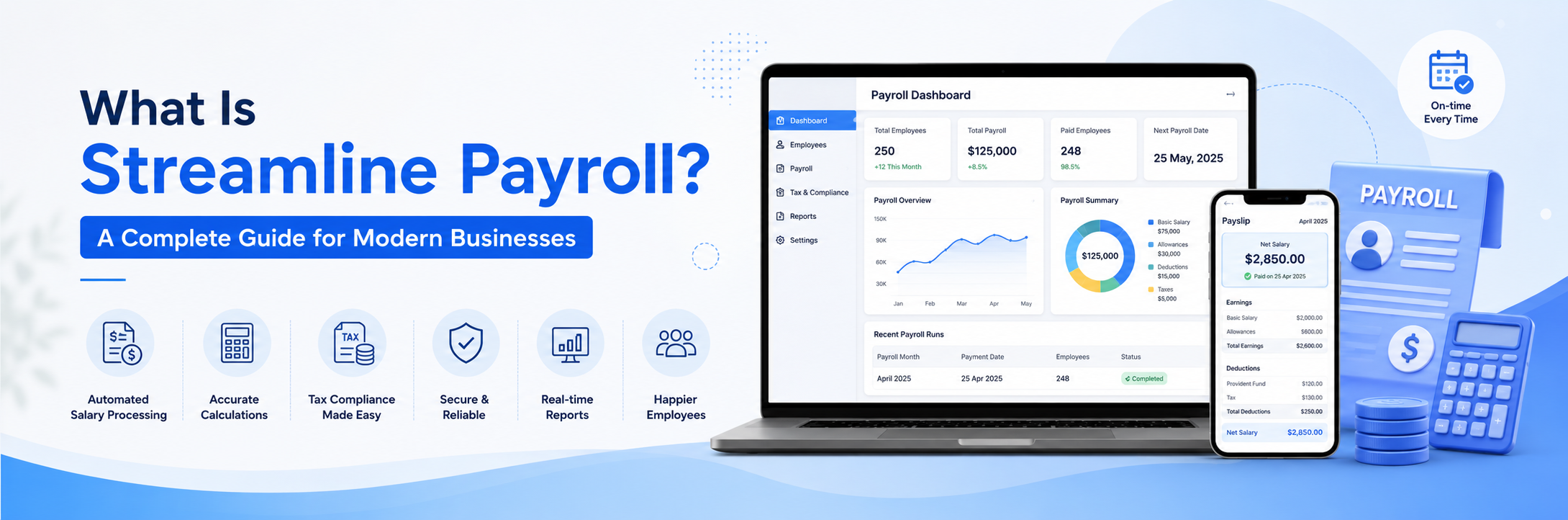
What Is Streamline Payroll? A Complete Guide for Modern Businesses
Read More →
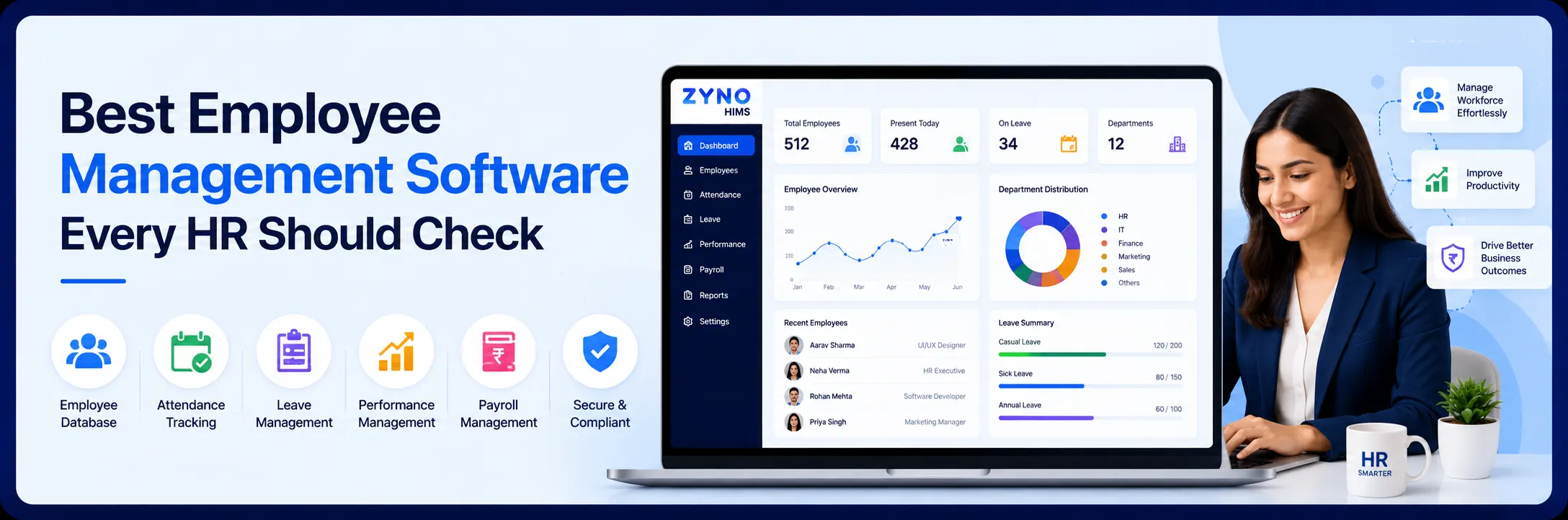
Best Employee Management Software Every HR Should Check
Read More →
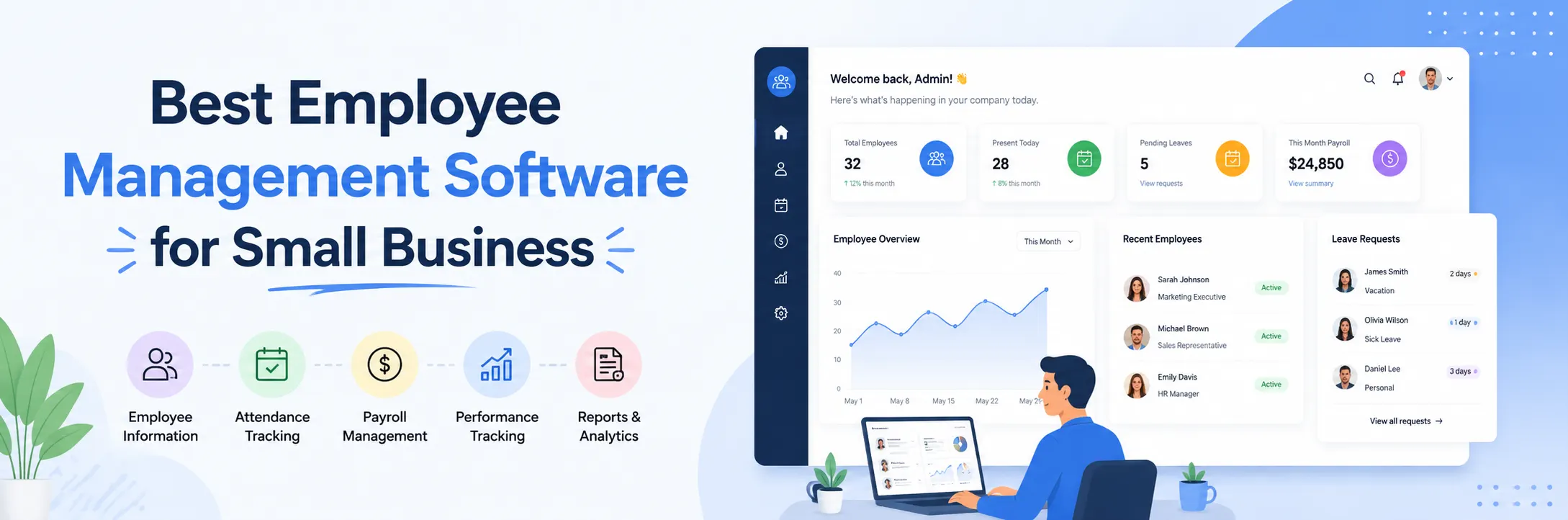
10 Best Employee Management Software for Small Business
Read More →
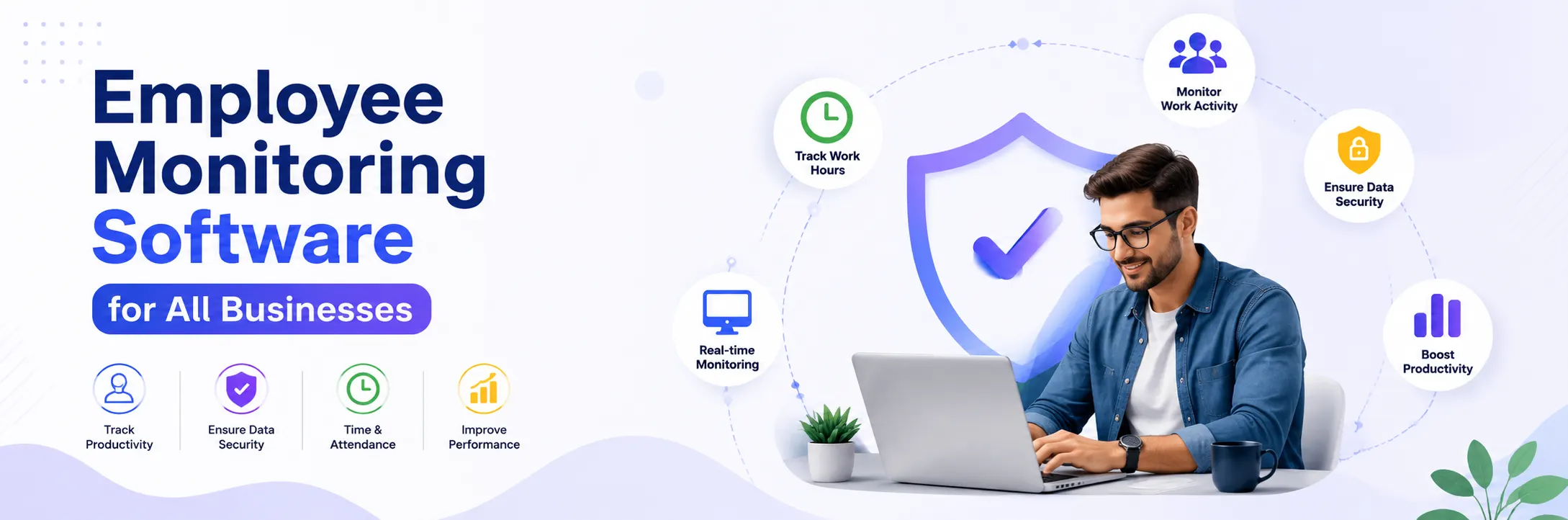
Employee Monitoring Software for All Businesses | Complete Guide
Read More →
Best Software for Payroll in India: A Full Comparison for 2026
Read More →
Why Payroll Management in India Is More Complex Than You Think
Read More →
How to Reduce Payroll Processing Time Using HRMS Software
Read More →
What HRMS Features Matter Most for Growing Companies?
Read More →
What Is HRMS and Why Does Your Growing Business Need One?
Read More →Partner with ZYNO by Elite Mindz to revolutionize how your business works. Fill out the form, and we’ll reach out with AI-powered solutions made just for you.
We use browser cookies to ensure you get the best experience on our website. Learn more
The form was submitted successfully!
ZYNO Digital
Fueling Smarter Digital Growth
ZYNO Digital fuels smarter digital growth through data-driven marketing, creative storytelling, and performance strategies that boost visibility, engagement, and measurable business outcomes across global platforms.
ZYNO Tech
Engineering the Future of IT
ZYNO Tech delivers cutting-edge IT solutions — including web, mobile, and digital transformation services — helping businesses scale efficiently, innovate faster, and stay ahead in a connected world.
ZYNO AI
AI Built for Business Growth
ZYNO AI harnesses the power of artificial intelligence to automate processes, enhance decision-making, and deliver predictive insights — driving innovation, agility, and measurable business growth.
ZYNO by Elite Mindz
Your Partner in the AI-Powered Future
ZYNO by Elite Mindz offers AI-powered products and services that unify operations, boost productivity, and drive digital transformation — helping businesses scale smarter and innovate faster.
* In just 2 mins you'll get a response
* Your idea is 100% protected by our Non-Disclosure Agreement