Top 10 School Management Software in India
Read More →

×
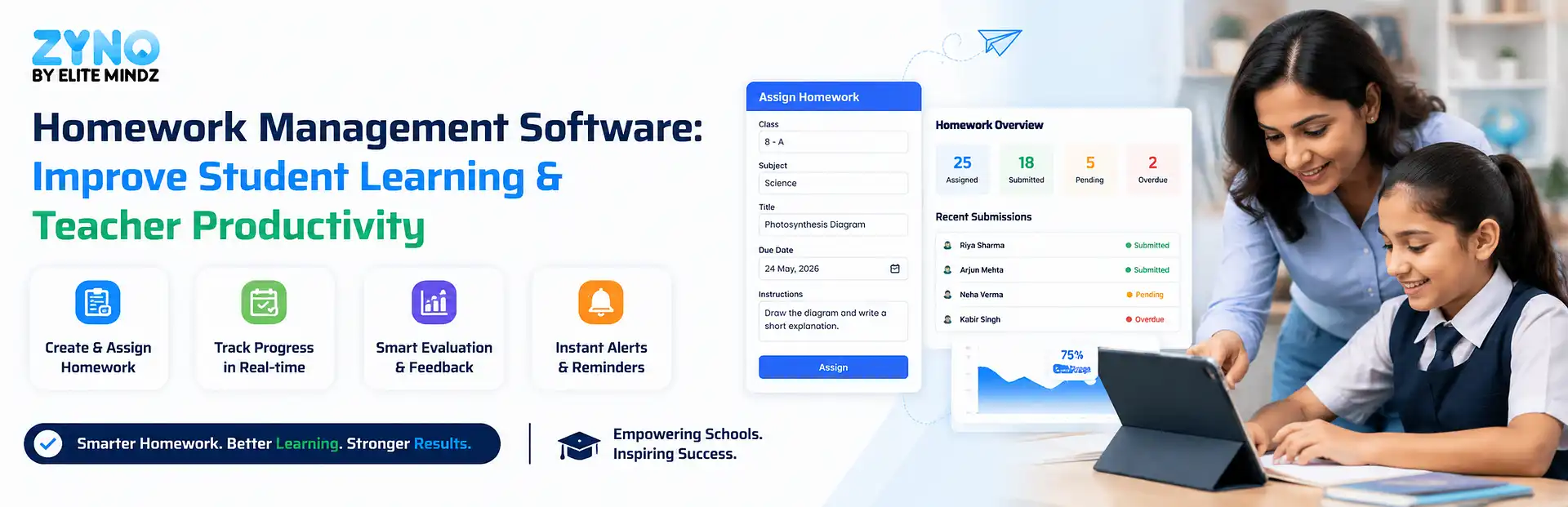
Piles of notebooks, missed deadlines, and parents asking "what's the homework?" every other day — sound familiar? Homework management software fixes that: assignments created once, tracked automatically, and visible to parents without a single follow-up message. Teachers get their evenings back, and students get a clear list instead of a guessing game. See how ZYNO EduVibe manages homework and assignments → Get a Free Demo.
Businesses using ZYNO Books cut accounting time by 70% and stay 100% ZATCA-compliant — automatically.
Homework management software replaces the paper diary, the class WhatsApp group, and whatever a teacher remembers, with one digital place where homework gets assigned, submitted, tracked, and graded. Done well, it saves teachers real grading and admin time, gives students a clear list instead of a guessing game, and gives parents visibility without them having to ask their kid what's due. And because homework research consistently shows that how much homework gets assigned matters more than whether it exists at all, a good homework app is just as useful for helping a school avoid piling on too much as it is for tracking what's already been given.
Key takeaways:
Homework management software is a digital system that lets teachers assign, students submit, and parents track homework from one connected platform - replacing paper diaries, notebooks, and scattered messaging apps.
Picture the old system: a paper homework diary that gets left at school half the time, a WhatsApp group where someone asks "what's the homework?" every other day, and a teacher trying to remember which of five sections she assigned the geometry worksheet to. Homework management software is the digital replacement for all of that - usually a module inside a school's broader management software, where a teacher creates and assigns homework once, students access and submit it from a phone or laptop, and parents get notified automatically instead of relying on a child to relay the message correctly.
Assignments, attachments, deadlines, submission status, and feedback all live in one place. Nobody's flipping between three different tools to figure out what's actually due tomorrow.
Homework management software improves teacher productivity by removing repetitive manual work: assignments are created once and reused across classes, submissions are tracked automatically instead of checked by hand, and parent questions about deadlines mostly stop arriving.
This is where the time savings show up first, and honestly it's less about any single flashy feature and more about how much repetitive manual work simply disappears.
Take assigning homework itself. A teacher running five sections of the same subject used to either write the same instructions out five separate times or copy them by hand into five different registers. With a digital homework diary, the assignment gets created once and pushed to every relevant class or section, and it can be reused across dates without retyping a word.
Grading gets less physically exhausting too. Submissions arrive digitally - text, photos of handwritten work, PDFs, sometimes even short videos - and a teacher can see at a glance who's submitted, who's still pending, and who's overdue, instead of manually cross-checking a paper register against a stack of notebooks piled on a desk.
Feedback also reaches students faster. Instead of a notebook sitting in a bag for a week before it comes back marked, a teacher can leave comments or grades the moment she's actually reviewed the work, so the student gets useful feedback while the material is still fresh, not after they've already moved on to the next chapter.
And then there's the part that rarely makes it onto a feature list but eats a surprising amount of a teacher's day: fielding "what was the homework?" messages. When parents can check assignment tracking through a portal directly, that entire category of interruption mostly just stops happening.
Homework has a positive relationship with academic achievement, but that relationship is much stronger for secondary students than elementary students, and research shows that assigning too much homework can stop helping - or even hurt - regardless of grade level.
Worth pausing here, because a homework management tool is only as good as the homework it's managing, and the research on this is more specific than "more homework equals better grades."
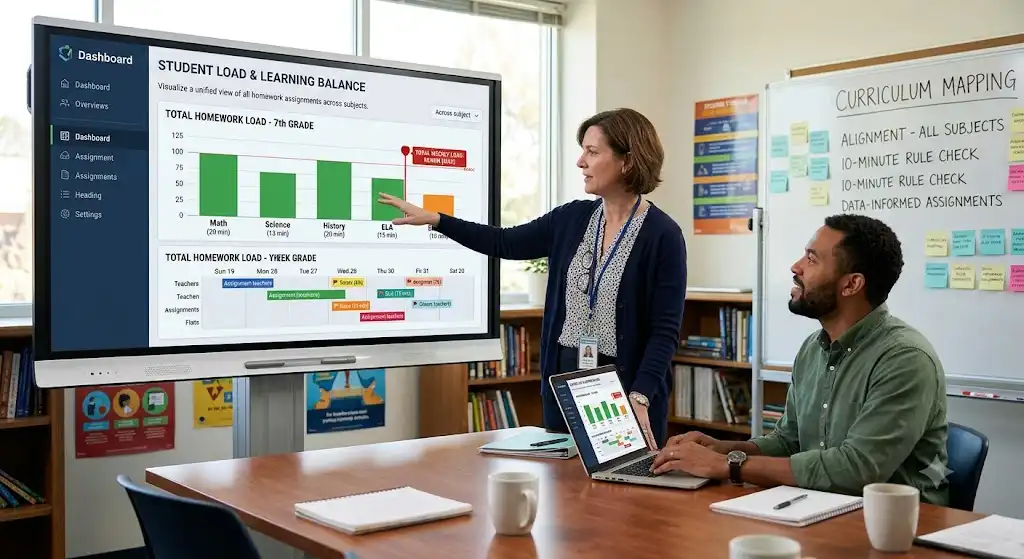
The most cited body of work here comes from Harris Cooper's research synthesis at Duke University, which reviewed decades of studies on homework and achievement. The findings are genuinely nuanced. Homework does show a positive relationship with achievement, but that relationship is considerably stronger for secondary students than for children in elementary school, and - this is the part that matters for how a school actually uses homework software - piling on more homework past a certain point stops helping, and can start working against a student even at the high school level. Cooper's research is also where the widely cited "10-minute rule" comes from: the idea that homework load should scale roughly ten minutes per grade level rather than climbing without any ceiling at all (Duke University).
The 10-minute rule, explained: A commonly cited guideline from Harris Cooper's Duke University research suggests daily homework should total roughly 10 minutes per grade level - 10 minutes in Grade 1, 20 in Grade 2, and so on - rather than increasing without any defined limit.
That has a direct bearing on how a school should think about evaluating homework software. A tool that just makes it faster and easier to assign more homework isn't obviously improving anything - it's making an unexamined habit more efficient, not a better one. What actually matters is whether the software helps a school see total homework load across subjects, not just track one teacher's individual assignments in isolation from what four other teachers assigned that same student that same week.
Homework software supports India's Holistic Progress Card model by keeping a dated, ongoing record of project-based student work - the exact kind of evidence NCERT's PARAKH-designed assessment framework under NEP 2020 requires.
This is a connection most homework software guides skip entirely, and it's genuinely useful for schools operating inside India's current curriculum reforms.
Under the National Education Policy 2020, Indian schools are moving toward Holistic Progress Cards - a 360-degree, competency-based assessment model developed by PARAKH, the national assessment body under NCERT, built on project work, portfolios, and ongoing evidence of a student's learning rather than periodic exam scores alone (PARAKH, NCERT). Homework, when it includes project-based or inquiry-based tasks rather than only repetitive drill worksheets, is exactly the kind of ongoing evidence this model is built around.
A homework app that keeps a running, dated record of what a student actually submitted over a term - not just a final grade at the end of it - makes it considerably easier for a teacher to pull together that evidence when it's time to compile a holistic progress report, rather than trying to reconstruct a whole term's worth of project work from memory the week before report cards go out.
| Task | Paper Diary / WhatsApp | Homework Management Software |
|---|---|---|
| Assigning work across sections | Rewritten or copied by hand for each class | Created once, reused across classes and dates |
| Tracking submissions | Physically checking notebooks | Real-time status: submitted, pending, overdue |
| Feedback turnaround | Days, tied to when the notebook comes back | Same-day, as soon as it's reviewed |
| Parent visibility | Depends on the child remembering to mention it | Automatic notifications, checkable anytime |
| Workload evidence for report cards | Reconstructed from memory | Dated, ongoing submission history |
| Handling missing/late work | Manual follow-up, easy to lose track of | Flagged automatically, no manual cross-checking |
ZYNO EduVibe's Homework & Assignment Management module is built as part of a connected school ERP rather than a standalone homework app, and that changes what it can actually do with the data it collects. Teachers assign homework once across classes and sections, students submit through the mobile app as text, images, or documents, and parents get automatic notifications the moment work is posted or a deadline is approaching - no separate WhatsApp group required, no relying on a nine-year-old to pass along the message correctly.
Because it sits inside the same ERP as the rest of the school's academic records, submission history connects directly to examination and result management, giving teachers a running, dated record of a student's work that's genuinely usable for competency-based and project-linked assessment, not just a pile of completed-or-not checkmarks. And because it shares the same communication layer as parent-teacher communication, a homework update and a report-card conversation happen through the same channel a parent already checks, instead of two disconnected apps competing for their attention.
See how ZYNO EduVibe manages homework and assignments →
A digital system, usually part of a school app, where teachers assign homework, students submit it online, and parents get automatic notifications - replacing paper diaries and scattered messaging with one connected platform.
It removes repetitive manual work: reusing assignments across classes instead of rewriting them, seeing submission and assignment tracking status at a glance instead of checking notebooks by hand, and cutting down the volume of "what's the homework" messages from parents.
Not indefinitely. Research from Duke University found homework has a positive relationship with achievement, but that relationship is much stronger in secondary school than in elementary grades, and assigning too much homework can stop helping - or even hurt - regardless of grade level.
Yes, when it keeps a running record of project-based and portfolio-style submissions over time, since that kind of ongoing evidence is exactly what NCERT's PARAKH-designed Holistic Progress Card framework is built to draw on.
It should be. Homework submissions often include photos or documents involving a child's work, so the platform needs real access controls and secure storage, not just a basic login screen.
This varies a lot by platform, and it's worth checking directly - a system that only performs well on fast, stable connections can quietly disadvantage students who don't have one.
Yes, in a properly connected system. Parents get automatic notifications when homework is assigned and can check status directly through a parent portal or app, rather than depending on their child to remember and relay it accurately.
No. Even a single classroom benefits from replacing a paper diary and a messaging app with one place to track assignments, submissions, and deadlines - the time saved doesn't require scale to matter.
It's usually priced per student or bundled into a broader school management software subscription rather than sold as a standalone product, so the real question for most schools is whether it's already included in their existing ERP plan.
Learn more -
Top 10 School Management Software in India
Read More →What Is School ERP Software? The Complete Guide for Modern Schools
Read More →
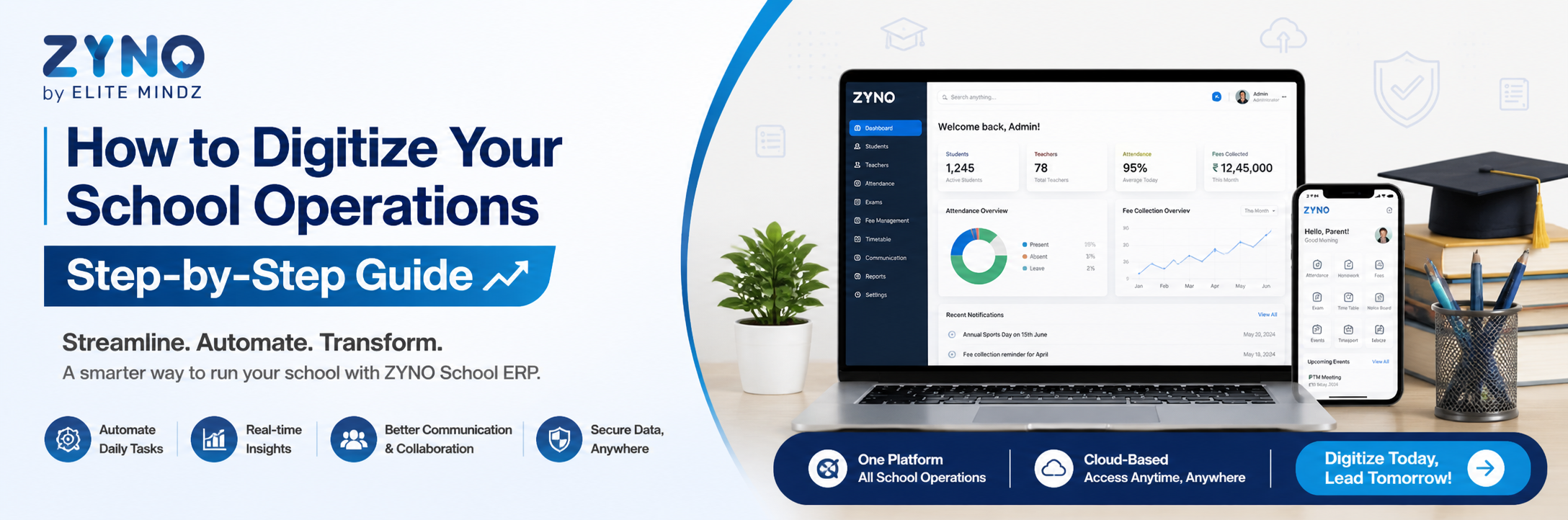
How to Digitize Your School Operations Step-by-Step Guide
Read More →
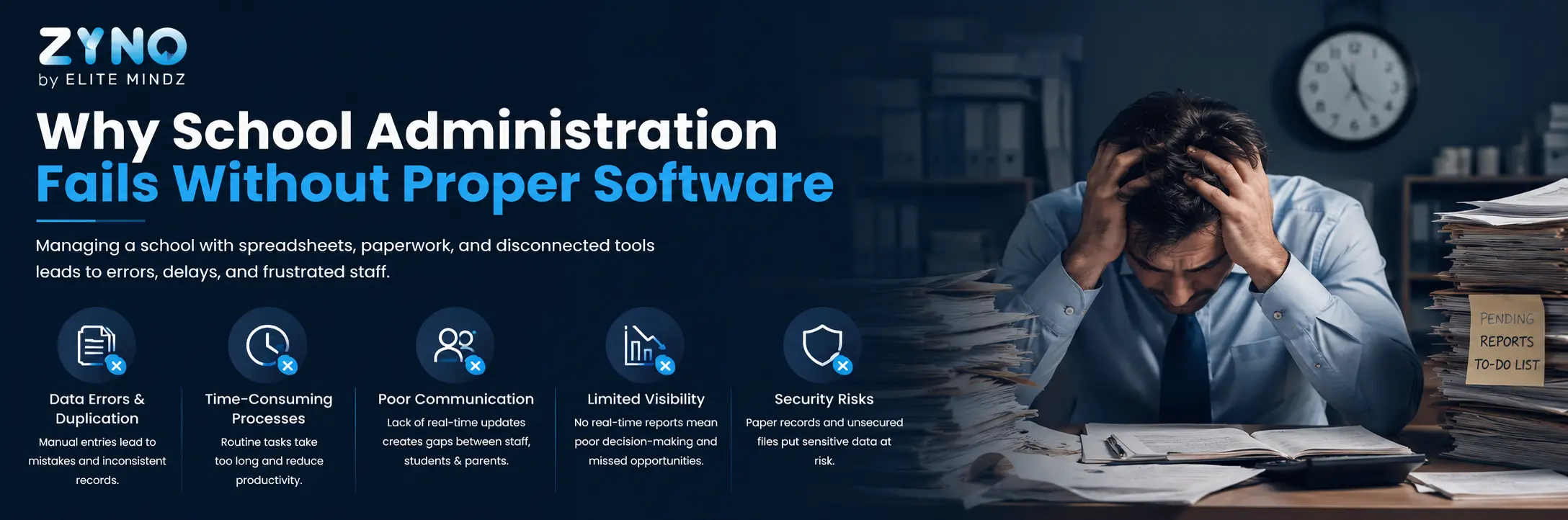
Why School Administration Fails Without Proper Software
Read More →
Admission Management Software: A Complete Guide
Read More →
School ERP for Attendance, Fees, and Examination Management
Read More →
Can School ERP Software Reduce Manual Work in Schools?
Read More →
How Does School ERP Software Help Teachers, Students, and Parents?
Read More →
Japan's GIGA School Program and the Rise of Digital School Management
Read More →
Cloud-Based School Administration: The Backend Behind Japan's Digital Classrooms
Read More →
Ultimate Guide to School ERP Systems in 2026
Read More →
15 Benefits of School ERP Software for Modern Schools
Read More →
Best School Management Software in Abu Dhabi: Top Solutions for Schools in 2026
Read More →
Best School Management Software in Ethiopia: Top Solutions for Schools in 2026
Read More →
School Management System Prices in Kenya: Cost, Features & Pricing Guide 2026
Read More →
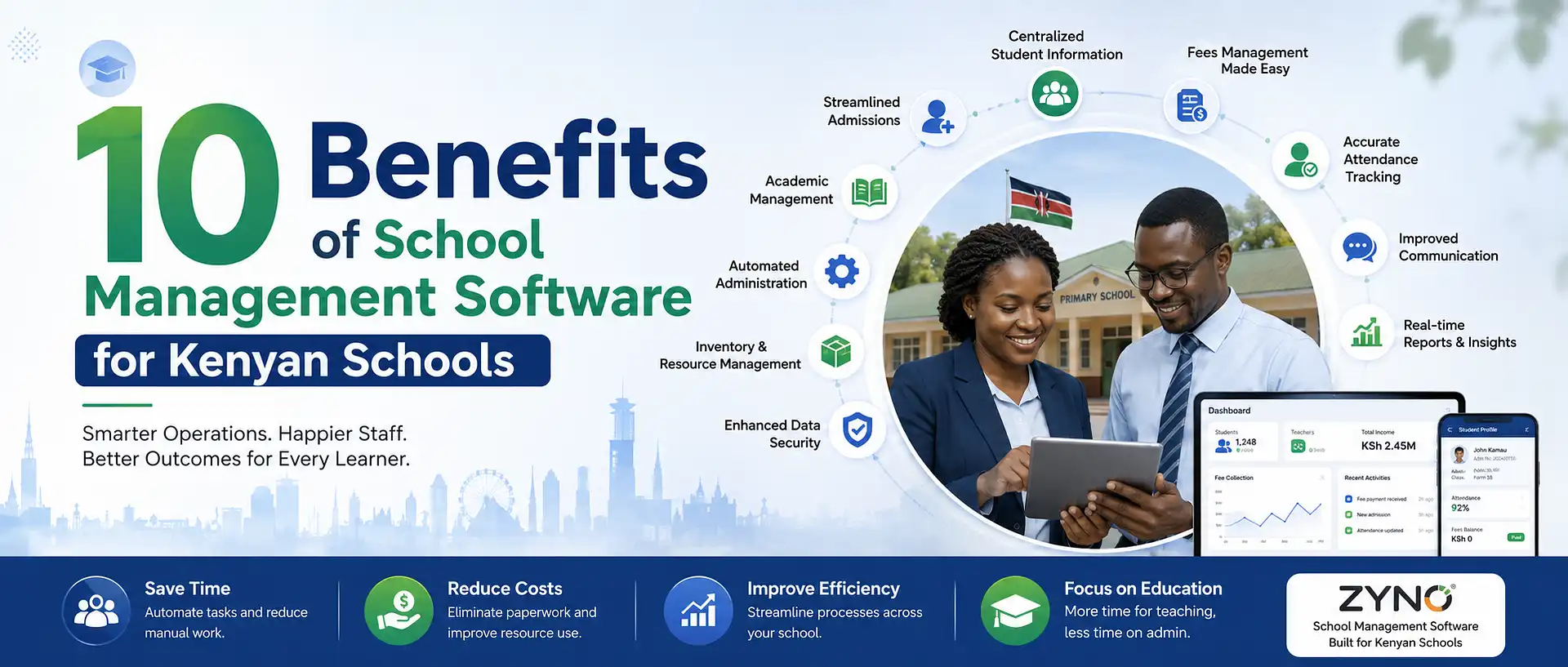
10 Benefits of School Management Software for Kenyan Schools
Read More →
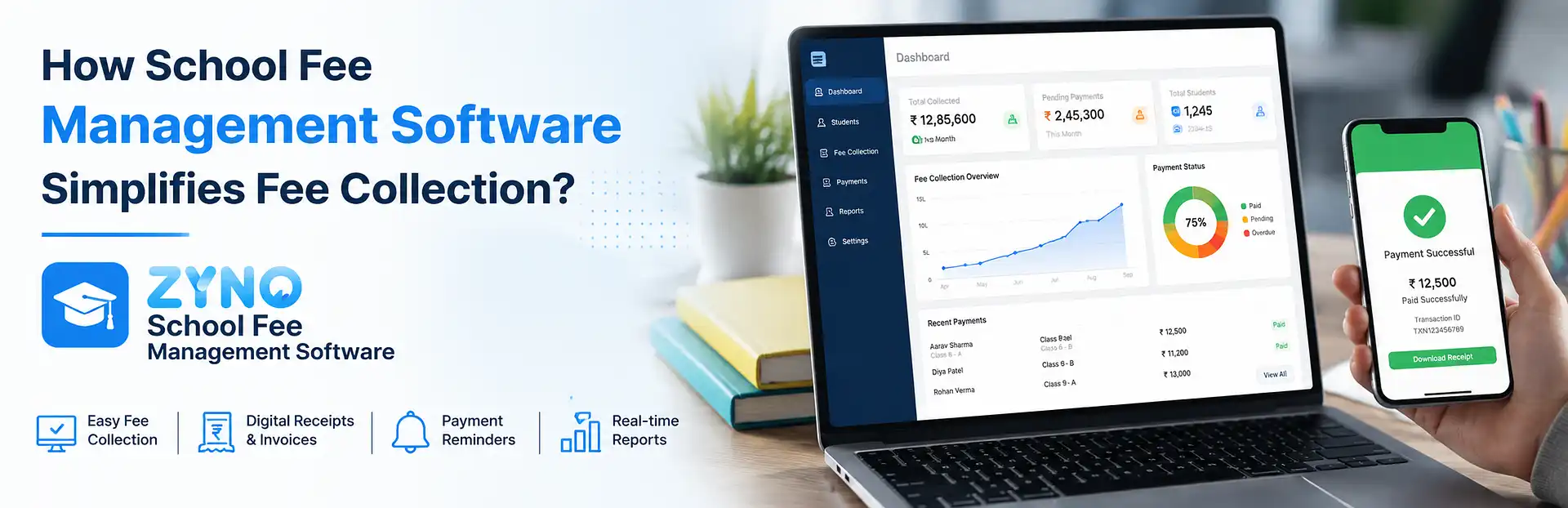
How School Fee Management Software Simplifies Fee Collection?
Read More →
Top 10 Student Information Systems (SIS): Features, Pros, Cons & Comparison
Read More →
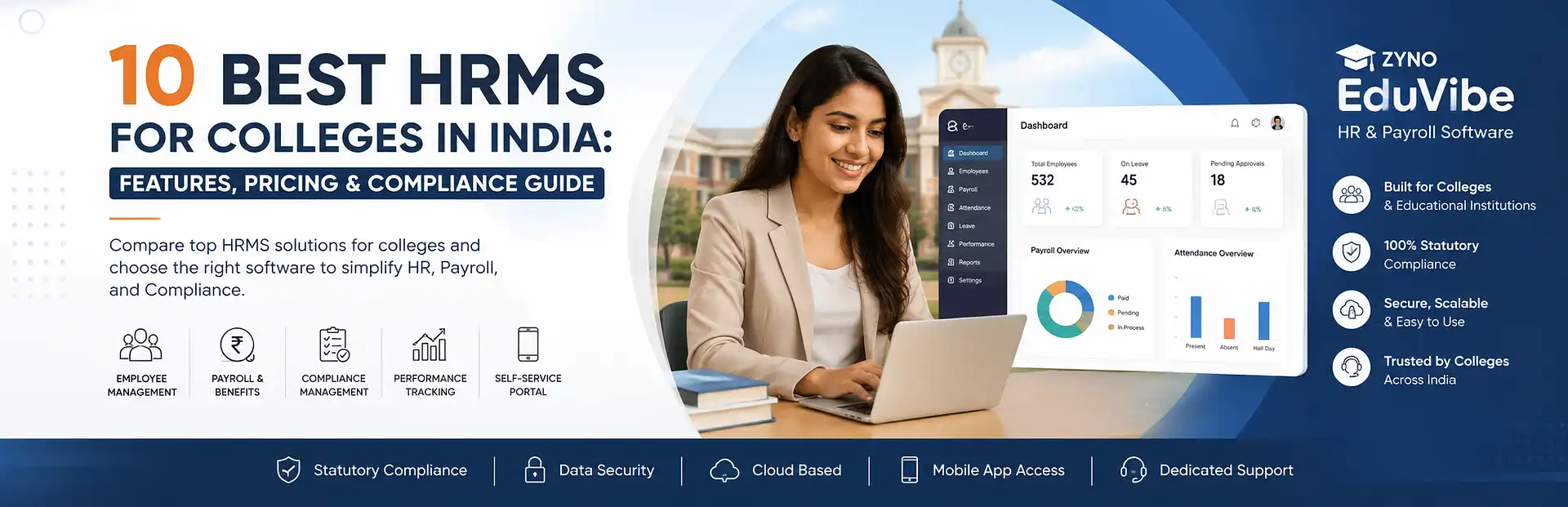
10 Best HRMS for Colleges in India: Features, Pricing & Compliance Guide
Read More →
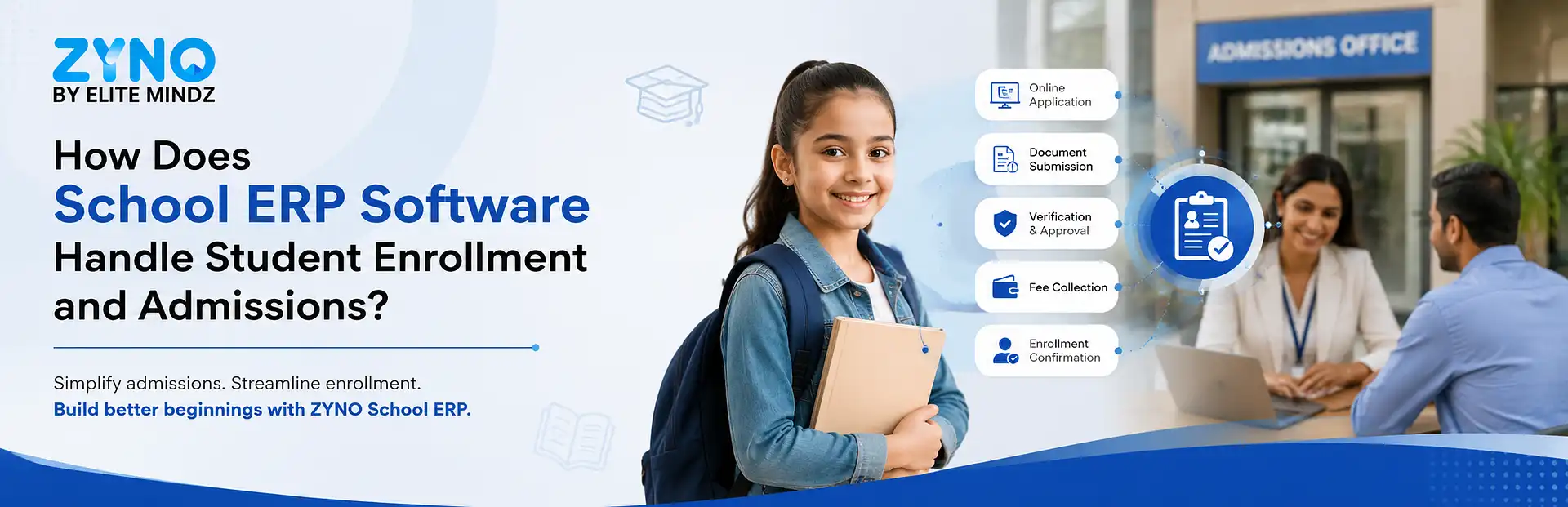
How Does School ERP Software Handle Student Enrollment and Admissions?
Read More →
Homework Management Software: Improve Student Learning & Teacher Productivity
Read More →Partner with ZYNO by Elite Mindz to revolutionize how your business works. Fill out the form, and we’ll reach out with AI-powered solutions made just for you.
We use browser cookies to ensure you get the best experience on our website. Learn more
The form was submitted successfully!