Top 10 School Management Software in India
Read More →

×
Ever wondered what a school management system actually costs in Kenya? Prices vary widely — from flat monthly plans to per-student pricing — based on your school's size and needs. See how ZYNO EduVibe fits your budget — request a demo today.
Businesses using ZYNO Books cut accounting time by 70% and stay 100% ZATCA-compliant — automatically.
A finance manager at a private school in Nairobi recently described her term-end routine: reconciling fee payments from three different M-Pesa paybills, cross-checking attendance registers kept on paper, and manually compiling exam results from individual teachers' spreadsheets before the report cards could go out. None of it was wrong, exactly — it was just slow, and every term the same bottlenecks came back.
That's the pattern pushing more Kenyan schools toward a centralized school management system instead of a mix of spreadsheets, paper registers, and separate mobile money records. And the first question almost every school asks is the practical one: what does it actually cost?
There's no single number that applies to every school. School management system prices in Kenya depend on how many students you have, how many campuses you're running, which modules you need, and what level of support and customization you want. This guide breaks down the real pricing models, what's usually included, what tends to cost extra, and how to compare vendors without guessing.
Kenya's basic education sector is large enough that pricing conversations rarely fit a single template. According to the Ministry of Education's 2023 statistics, the country had 93,988 registered schools across pre-primary, primary, and secondary levels, including 15,205 private institutions. The Ministry also runs its own centralized platform, the National Education Management Information System (NEMIS), for national school and learner data — separate from the commercial school management systems this guide covers, which schools use for their own day-to-day administration, fees, and communication.
Now more about - Which is the Best school management software in Kenya
There isn't a fixed market price for school management software in Kenya - cost depends on your school's specific setup, and any single number quoted without context should be treated with caution. What's more useful is understanding the variables that actually drive the price up or down.
Pricing typically depends on:
Because these variables shift so much between schools, the most reliable approach is to request a quote based on your actual student count and required modules rather than relying on a generic advertised price.
That said, publicly listed pricing from Kenyan vendors gives a useful reference range rather than leaving you guessing entirely. Local providers commonly publish figures anywhere from around KES 30,000 a year for small primary or academy setups up to KES 400,000 or more annually for larger schools with a fuller module set, often with a one-time setup or onboarding fee in the KES 5,000–20,000 range. Some platforms bill per term instead of per year, which fits Kenya's three-term academic calendar more naturally than a flat annual cycle. International platforms operating in Kenya tend to price per student, frequently in the $1–$5 per student per month range. A smaller number of local providers use a flat monthly fee regardless of enrollment, and at least one offers a free tier for very small schools — generally under about 100 students — with paid plans starting from roughly KES 2,500 a month once a school grows past that.
These are figures vendors have published, not a fixed market rate, and they change. Treat them as a starting reference for budgeting conversations, not a quote — always confirm current, itemized pricing directly with any vendor you're evaluating, including ZYNO EduVibe.
Know the 15 benefits of using School ERP Software
Vendors typically price school ERP software using one of a few common models. Understanding how each works makes it easier to compare quotes on equal terms.
Schools pay a recurring monthly fee, which usually scales with student count or module selection. This model keeps upfront costs low and is easier to budget month to month.
Paying annually instead of monthly sometimes comes with a discount, since it reduces billing overhead for the vendor. It also means committing to a longer contract, so it's worth confirming what happens if your enrollment changes mid-year.
Cost scales directly with enrollment, which works well for schools expecting steady growth. It's worth asking whether the rate changes at certain enrollment thresholds.
Instead of counting individual students, some vendors price by campus or branch. This can be more predictable for larger, stable schools but less efficient for small or rapidly growing campuses.
Some schools - particularly larger groups - commission a more customized build with specific workflows, integrations, or reporting formats. This usually means a higher upfront cost but software tailored closely to how the school actually operates.
Because most Kenyan schools run on a three-term academic calendar, some vendors bill per term rather than monthly or annually. This can align more naturally with fee collection cycles, though it's worth checking whether the per-term rate works out cheaper or more expensive than an annual plan over a full year.
| Pricing Model | How It Works | Best For | Main Consideration |
|---|---|---|---|
| Monthly Subscription | Recurring monthly fee, often scaled by students or modules | Schools wanting flexibility and low upfront cost | Costs can add up over a long contract period |
| Annual Subscription | One payment covering a full year, sometimes discounted | Schools with predictable enrollment | Less flexibility if enrollment or needs change |
| Per-Student Pricing | Cost scales with number of enrolled students | Growing schools | Ask about pricing tiers at higher enrollment |
| Per-Campus Pricing | Flat fee per campus or branch | Larger, multi-campus groups | May be less efficient for small campuses |
| Per-Term Billing | Charged per academic term rather than monthly or annually | Schools that prefer billing to match Kenya's 3-term calendar | Compare the total cost across 3 terms against an annual plan |
| Custom School ERP | Tailored build with specific workflows and integrations | Large schools or groups with complex needs | Higher upfront cost, longer implementation |
Feature sets vary significantly between vendors, so it's worth checking exactly what's bundled into a quoted price versus what's billed as an add-on. Commonly included modules are:
Some vendors bundle most of these into a base package; others treat several as optional add-ons. Given how central mobile money is to fee collection in Kenya, it's worth specifically confirming whether M-Pesa (or another mobile payment provider) is natively supported or requires a separate integration fee. Similarly, if your school has moved to the CBC framework, confirm the system's grading and report templates are actually built for it rather than adapted from an 8-4-4 layout. Always ask for a module-by-module breakdown rather than assuming a quote covers everything on this list.

Beyond the core subscription or license fee, several costs commonly get added separately, and missing them during budgeting is one of the most common mistakes schools make.
| Cost Factor | Why It Matters |
|---|---|
| Setup and implementation | Initial configuration of your school's structure, grades, and settings |
| Data migration | Moving existing student, staff, and fee records into the new system |
| Training | Getting administrators and teachers comfortable with the platform |
| Customization | Building workflows specific to your school's processes |
| Integrations | Connecting to existing finance, payment, or communication tools |
| SMS/communication charges | Some platforms bill parent SMS notifications separately |
| Additional users | Extra staff accounts beyond what's included in the base plan |
| Premium support | Faster response times or a dedicated account contact |
| Mobile app | Full mobile functionality is sometimes a paid add-on |
| Additional campuses | Expanding to a new branch may increase the total cost |
Ask vendors to itemize these costs in the quote rather than accepting a single bundled number, so you know exactly what you're paying for and what might come up later.
Kenya's education sector includes a wide range of institution sizes, from single-campus primary schools to multi-branch private school groups, and pricing considerations shift accordingly.
| School Size | Typical Requirements | Pricing Considerations |
|---|---|---|
| Small School | Basic administration - attendance, fees, student records | Lower student count usually keeps per-student pricing manageable; check for a reasonable minimum fee |
| Medium School | Multiple modules - admissions, exams, communication | More modules mean more line items to compare across vendors |
| Large School | Advanced ERP with HR, transport, inventory, and reporting | Total cost of ownership matters more than the base subscription price |
| Multi-Campus Group | Centralized management across branches | Per-campus vs. per-student pricing can produce very different totals - model both |
Exact pricing isn't included here because it varies too much by vendor and configuration to state reliably — schools should request a quote based on their specific size and requirements.
It's tempting to choose based on the lowest advertised monthly price, but that number rarely reflects the total cost of running the system for a full academic year.
Low-cost or basic systems typically cover core functions like attendance and fee tracking but may lack HR, transport, or advanced reporting. They can work well for very small schools with simple needs, but often require a costly migration later if the school outgrows them.
Mid-range platforms usually offer a broader module set and better support, at a proportionally higher price. This tier fits most growing private schools that need more than basic record-keeping but aren't running complex multi-campus operations.
Full school ERP platforms bundle academic, financial, and administrative modules into one system, often with stronger reporting, integrations, and scalability. The upfront cost is higher, but schools avoid the expense of stitching together multiple separate tools.
Rather than comparing subscription prices alone, it's worth calculating:
cost per student + implementation + support + scalability + features
A cheaper system that requires manual workarounds for fees or attendance can end up costing more in staff time than a slightly pricier platform that handles those tasks automatically.
A few providers offer a genuinely free tier, usually capped at a low student count - around 100 students in some published plans - with paid tiers kicking in once a school grows past that threshold. Free tiers can work for a very small nursery or startup academy, but check what's actually included; features like SMS notifications, transport management, or advanced reporting are commonly reserved for paid plans even when the core system is free.
Kenya's market includes both locally based providers - often headquartered in Nairobi and built specifically around Kenyan curricula, M-Pesa payments, and local support - and international school management platforms that also operate in the region. Local vendors typically offer more direct support and faster response times for Kenya-specific issues, while international platforms may bring more mature reporting or integration ecosystems built for a global market. Neither is automatically the better choice; it depends on whether your school values local responsiveness or a more established global product.
For schools evaluating a school ERP software that brings core operations into one platform, ZYNO EduVibe is worth including in your comparison. It's built to centralize the day-to-day tasks that otherwise sit across spreadsheets, paper registers, and separate communication tools.
In practice, that means student information management stays consistent across admissions, academics, and finance instead of being re-entered in multiple places - whether the school is a single campus in Nairobi or a group with branches spanning Mombasa, Kisumu, and Nakuru. Admission tracking can follow an enquiry through to enrollment without losing detail along the way, and fee management can move from manual reconciliation to a system that tracks payment status directly - schools should confirm with the ZYNO team whether M-Pesa or other mobile money integration is available for their specific plan.
Academic operations - attendance, timetabling, homework, and examination and result management - sit alongside parent-teacher communication tools, so updates on grades or attendance don't depend on a separate messaging app. HR, payroll, transport, and inventory modules extend the same centralization to administrative operations, and a mobile app gives parents, teachers, and administrators access without being tied to a desktop.
ZYNO EduVibe isn't positioned as the cheapest option on the market, and schools should confirm current pricing and module availability directly with the ZYNO team based on their specific size and requirements. Its value case is centralized management, scalability as a school grows, and reduced manual administrative work rather than a low headline price.
Request a ZYNO EduVibe demo to explore the right setup for your school.
Pricing varies based on student count, number of campuses, modules required, and implementation needs. There's no single fixed market price - schools should request a quote based on their specific size and requirements rather than relying on a generic advertised figure.
There's no verified, consistent average price across the Kenyan market, since costs depend heavily on school size, modules, and vendor. Rather than relying on an average, request itemized quotes from a few vendors based on your actual needs.
Cost is relative to what the system replaces - manual administration, disconnected tools, and staff time spent on repetitive tasks. Whether it's "expensive" depends on comparing total cost of ownership against the efficiency gained, not just the subscription price.
Common modules include student information management, admissions, attendance, fee management, examinations, timetabling, parent communication, HR and payroll, transport, and inventory. Exact inclusions vary by vendor, so confirm what's bundled versus billed separately.
Many vendors do price per student or per student band, though per-campus and flat monthly subscription models are also common. Ask each vendor which model they use and whether pricing changes at different enrollment levels.
Beyond the core subscription, schools should budget for implementation, data migration, training, customization, and sometimes SMS or communication charges. Ask for an itemized quote so these costs are clear before signing.
There's no single system that's independently verified as the most affordable, since pricing depends on your school's size and required modules. Compare itemized quotes from a few vendors and calculate total cost of ownership rather than the advertised price alone.
Cloud-based systems typically require lower upfront investment and are quicker to deploy than custom-built alternatives, since they run on the vendor's infrastructure. Schools should still confirm data security practices and internet reliability requirements before choosing.
Yes. Fee management and student information management are core modules in most school management systems, covering payment tracking, fee structures, and centralized student records in one place.
Request itemized quotes based on your actual student count and required modules, and calculate total cost including implementation, training, and support - not just the subscription fee. Comparing a few vendors side by side makes hidden costs easier to spot.
Some providers offer a free tier, typically capped at a low student count (around 100 students in some published plans), with paid tiers for larger schools. Check what's included on the free plan, since features like SMS notifications or advanced reporting are often reserved for paid tiers.
Many Kenyan vendors do support M-Pesa or other mobile money integration for fee collection, but this varies by platform and isn't universal. Confirm directly with any vendor, including ZYNO EduVibe, whether mobile money integration is included or billed separately.
Support varies by vendor - some platforms are built specifically for Competency-Based Curriculum (CBC) reporting, while others are adapted from older 8-4-4 formats or require configuration. If your school has moved to CBC, confirm the grading and report card templates are genuinely built for it before purchasing.
Must Read:
1) Database Management for Perfectly Organized Student Records
2) Student Information Management: No Mess. Just Smart Schools
3) Fee Management, Simplified to Perfection
4) Database Management for Perfectly Organized Student Records
Top 10 School Management Software in India
Read More →What Is School ERP Software? The Complete Guide for Modern Schools
Read More →
How to Digitize Your School Operations Step-by-Step Guide
Read More →
Why School Administration Fails Without Proper Software
Read More →
Admission Management Software: A Complete Guide
Read More →
School ERP for Attendance, Fees, and Examination Management
Read More →
Can School ERP Software Reduce Manual Work in Schools?
Read More →
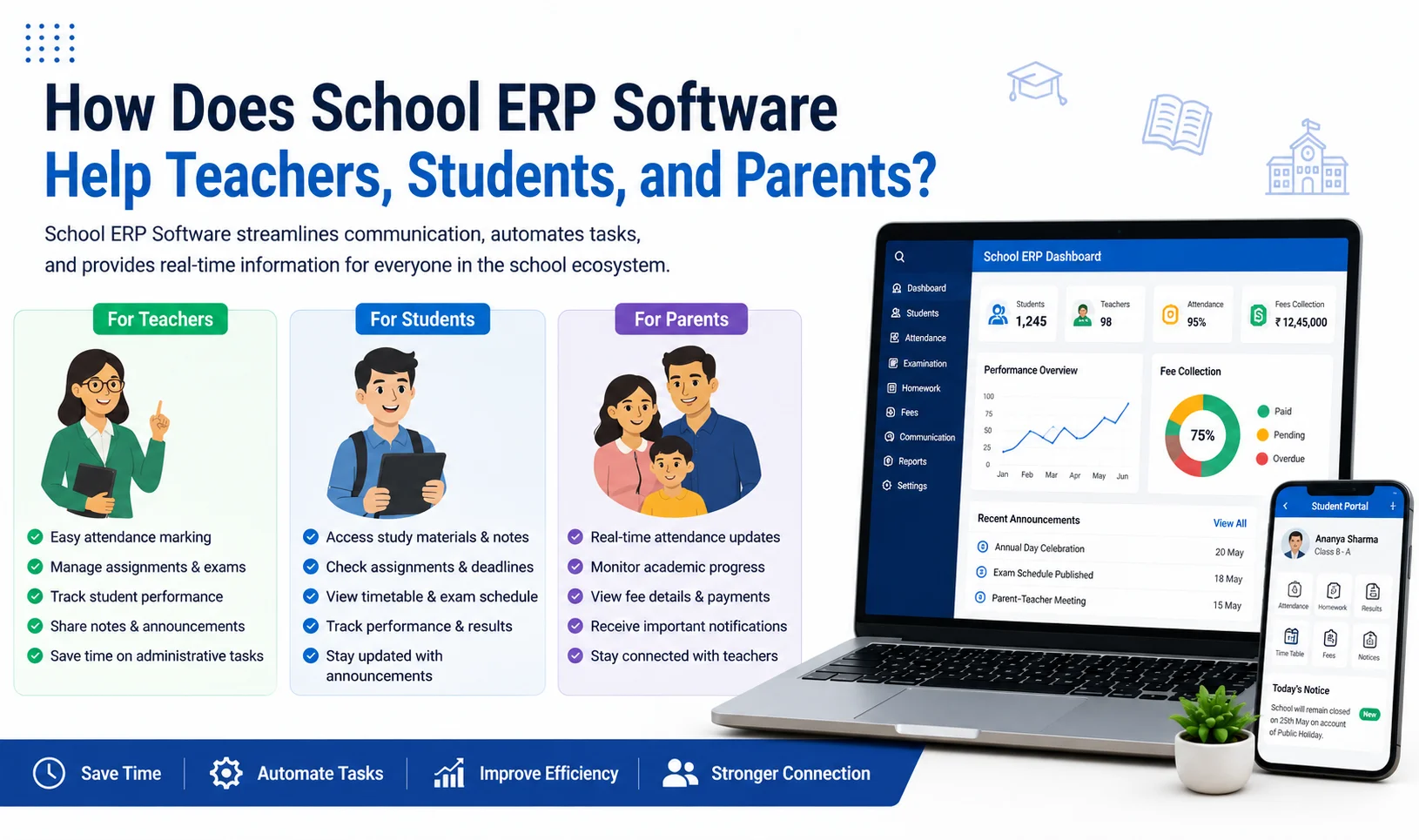
How Does School ERP Software Help Teachers, Students, and Parents?
Read More →
Japan's GIGA School Program and the Rise of Digital School Management
Read More →
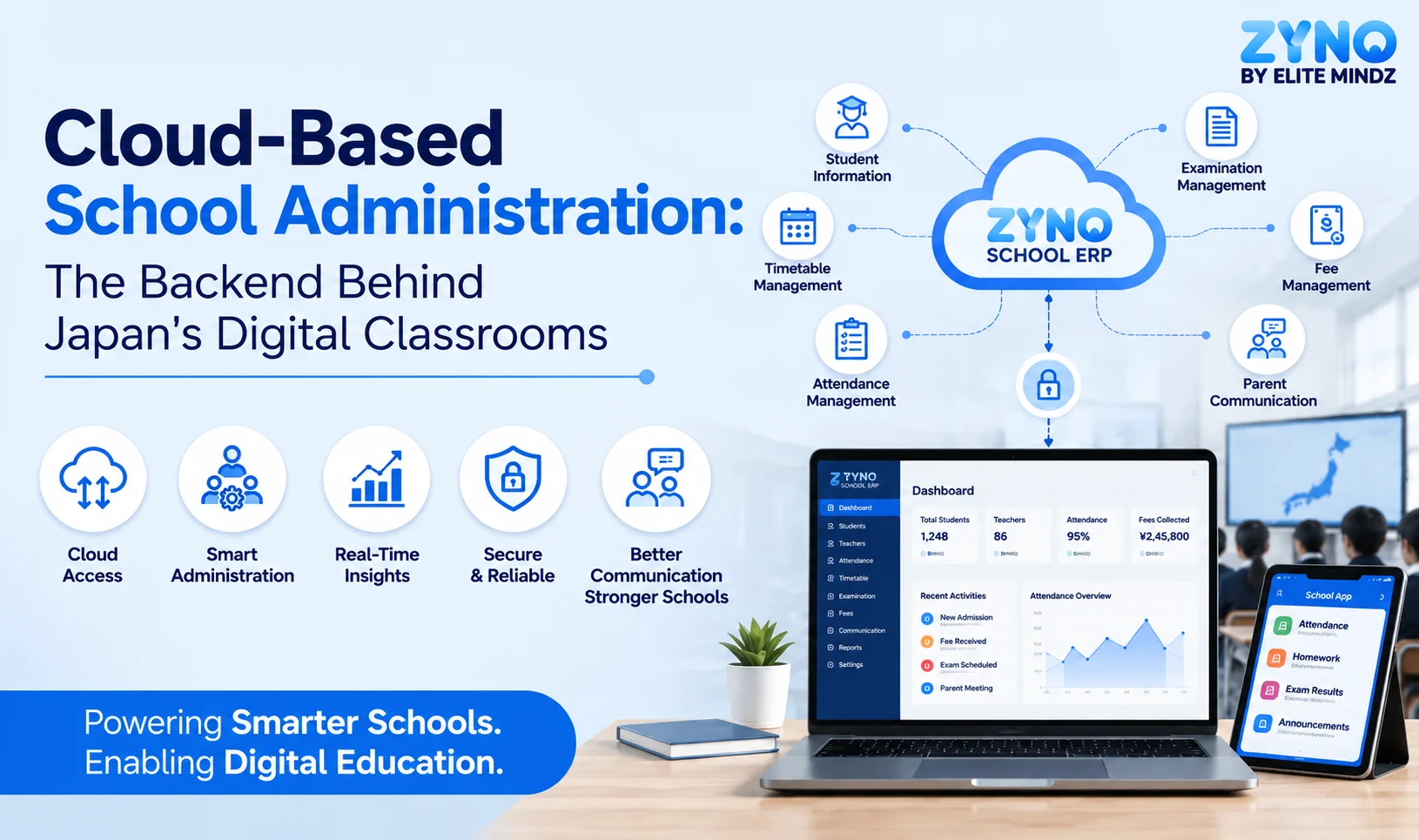
Cloud-Based School Administration: The Backend Behind Japan's Digital Classrooms
Read More →
Ultimate Guide to School ERP Systems in 2026
Read More →
15 Benefits of School ERP Software for Modern Schools
Read More →
Best School Management Software in Abu Dhabi: Top Solutions for Schools in 2026
Read More →
Best School Management Software in Ethiopia: Top Solutions for Schools in 2026
Read More →
School Management System Prices in Kenya: Cost, Features & Pricing Guide 2026
Read More →Partner with ZYNO by Elite Mindz to revolutionize how your business works. Fill out the form, and we’ll reach out with AI-powered solutions made just for you.
We use browser cookies to ensure you get the best experience on our website. Learn more
The form was submitted successfully!