Top 10 School Management Software in India
Read More →

×
Manual student record-keeping means duplicate entries, lost files, and data that's never quite in sync across departments. A connected student information system fixes that — one profile per student, auto-synced across fees, attendance, and exams. See how ZYNO EduVibe's Student Information Management module works → Get a Free Demo
Businesses using ZYNO Books cut accounting time by 70% and stay 100% ZATCA-compliant — automatically.
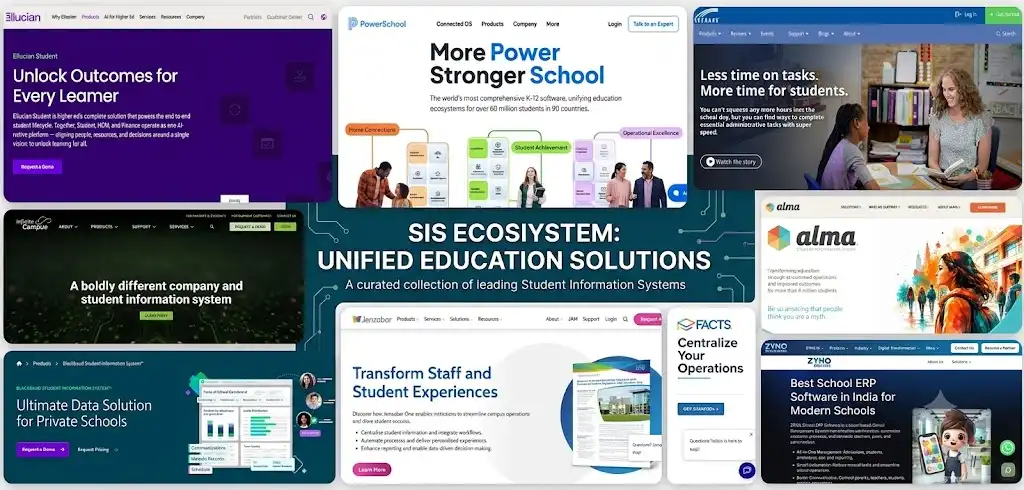
A Student Information System (SIS) centralizes student records - admissions, attendance, grades, transcripts, and communication - in one platform instead of scattered registers and spreadsheets. Global leaders like PowerSchool, Ellucian Banner, Skyward, and Infinite Campus dominate US K-12 and higher-ed markets, while schools in India, the Middle East, and Africa increasingly need SIS platforms built for multi-board compliance, DPDP data protection, WhatsApp-based parent communication, and full school ERP software integration - which is where platforms like ZYNO EduVibe fit in. The right choice depends on your institution's size, board/regulatory requirements, budget, and whether you need a standalone SIS or one module inside a connected school ERP.
A student information system is the digital backbone of a school or university - a centralized platform that manages student data across the entire academic lifecycle, from admissions and enrollment through grades, attendance, compliance reporting, and eventually alumni records.
Modern SIS platforms do more than store records. They cut manual errors, speed up communication between administrators, teachers, and parents, and give leadership real, current data to make decisions with - instead of last month's spreadsheet snapshot.
Best for: K-12 schools, colleges, universities, coaching institutes, and multi-branch education groups that need accurate records, compliance reporting, and operational efficiency.
Not ideal for: Very small tutoring setups or solo educators who only need lightweight scheduling — a full SIS may be more than they need.
Before comparing vendors, buyers should weigh:
PowerSchool has been a default choice for large US public school districts for years, largely because it was built to handle state-mandated reporting at scale - something smaller, newer platforms often bolt on later rather than design around from day one.
Key features: Student records, attendance, grading, transcripts; state/district compliance reporting; parent and student portals; advanced analytics; LMS integrations; scheduling.
Where it holds up: Districts running tens of thousands of students report fewer performance issues at scale than with smaller vendors, and its analytics layer goes deeper than most competitors in this list - useful for districts under pressure to show data-backed outcomes to school boards.
Where it struggles: A district-grade tool brings district-grade overhead. A 200-student private school implementing PowerSchool often ends up paying for configuration depth it will never use, and per-district licensing rarely scales down gracefully for small institutions.
Security & compliance: SSO, role-based access, encryption, FERPA-aligned controls.
Ellucian Banner isn't really competing with the K-12 tools on this list - it's a different category, built for the financial and academic complexity that only shows up once an institution has multiple faculties, financial aid programs, and degree audit rules to track.
Key features: Student lifecycle management; admissions and enrollment; financial aid and billing; degree audit and curriculum tracking; advanced compliance reporting.
Where it holds up: Few platforms tie financial aid, billing, and academic records together as tightly - a real advantage for universities where a single student's record touches five different departments.
Where it struggles: Implementation teams commonly describe a multi-month runway before staff are comfortable with it independently, and Banner is genuinely overbuilt for anything smaller than a mid-sized college.
Security & compliance: SSO, encryption, audit logs, SOC-aligned practices.
Skyward's reputation among K-12 administrators tends to center on one thing: staff actually enjoy using it, which matters more than feature depth when front-office turnover is high and training time is limited.
Key features: Attendance and gradebook management; scheduling; family/student portals; compliance reporting; custom district workflows.
Where it holds up: New front-office hires are typically productive within days rather than weeks, and parent adoption of the family portal tends to be higher than with more enterprise-feeling platforms.
Where it struggles: Districts with unusual reporting requirements or non-standard grading models often hit walls that require vendor support to work around, and its analytics remain fairly basic compared to PowerSchool or Synergy.
Infinite Campus was built cloud-first rather than migrated to the cloud later, and it shows in how current the data feels - attendance and grade updates reflect in parent and staff views almost immediately rather than after a nightly sync.
Key features: Real-time attendance and grading; parent/staff messaging; state reporting; mobile access; API-based integrations.
Where it holds up: The messaging tools are genuinely built for two-way parent communication, not just one-way announcements, which is a meaningful difference for schools trying to reduce missed-fee or missed-deadline complaints.
Where it struggles: Anything outside its standard report templates requires real technical effort to build, and because pricing is negotiated per district, two similarly-sized schools can end up on very different cost structures.
Blackbaud grew out of nonprofit and fundraising software, and that heritage still shapes the product - it's noticeably stronger at tuition billing and donor/development tracking than most SIS platforms built purely for academics.
Key features: Enrollment and profiles; academic records and transcripts; billing and tuition management; parent communication; reporting.
Where it holds up: Private schools juggling tuition plans, financial aid, and annual giving campaigns get more out of this than a typical district SIS, since those workflows are native rather than add-ons.
Where it struggles: Public districts get little value from the fundraising-oriented tooling they're still partly paying for, and deep customization for non-standard academic structures is limited.
Jenzabar occupies a specific niche: colleges too small for Banner's complexity but too operationally involved for a lightweight K-12 tool.
Key features: Student lifecycle management; admissions and retention tracking; academic planning; LMS/ERP integrations.
Where it holds up: Retention tracking is a genuine differentiator - Jenzabar surfaces at-risk students earlier than platforms that treat retention as an afterthought report rather than a core workflow.
Where it struggles: Several admin-facing screens still look like they haven't been redesigned in a decade, and getting real analytics out of the system often means paying for separate reporting add-ons.
FACTS built its reputation with faith-based private schools specifically, and the product still reflects those schools' priorities - simple tuition billing, straightforward attendance, and not much else to configure.
Key features: Attendance and grading; tuition and billing integration; parent/student portals; mobile access.
Where it holds up: A small school's office staff can be fully trained in a single afternoon, which is rare among the platforms on this list.
Where it struggles: There's little room to grow into - a school that doubles in size or adds multiple campuses will likely outgrow FACTS faster than it outgrows most alternatives here.
Alma is one of the newer entrants on this list, and it's built accordingly - a cleaner interface, faster setup, and none of the legacy-module baggage that older platforms carry.
Key features: Student profiles and transcripts; attendance and grading; parent-teacher communication; custom reporting; API integrations.
Where it holds up: Schools that have tried and abandoned a clunkier SIS often cite the interface as the reason they stuck with Alma - it doesn't require a manual to navigate.
Where it struggles: Being newer cuts both ways: enterprise-scale reporting and compliance tooling for international or highly regulated markets simply hasn't been built out as deeply as with 20-year-old platforms.
Fedena's pitch is straightforward - modular pricing means a school pays for the modules it actually uses, which has made it a common choice for budget-conscious schools in India and other price-sensitive markets.
Key features: Student records and attendance; exams and grading; fee and finance modules; multi-campus support; customizable modules.
Where it holds up: For schools that want to start small and add modules over time rather than commit to a full platform upfront, this is one of the more forgiving options to grow into.
Where it struggles: Because deployments vary so much module-by-module, the interface can feel inconsistent between one school's setup and another's, and getting advanced reports working properly usually needs configuration help rather than working out of the box.
Unlike the standalone SIS tools above, ZYNO EduVibe's Student Information Management module sits inside a complete school ERP software - admissions, attendance, fees, examinations, timetable, transport, HR, and communication all run on one connected platform, not a patchwork of separate logins.
Key features: AI-powered auto data capture and validation during admission; duplicate-record detection; centralized student profiles (academic, medical, contact) accessible from any device; secure cloud or on-premise storage; multi-grade and multi-branch support from a single dashboard; auto-sync across fee, attendance, and examination modules; smart search and full audit trails.
Where it holds up: The auto-sync is the real differentiator - mark a student's fee as paid in the Fee Management module and it reflects instantly in their profile here, without a manual export/import between two systems, which is exactly the disconnection that standalone SIS platforms don't solve on their own.
Where it struggles: It's a newer entrant than the decades-old US SIS brands above, so schools evaluating it purely on longevity or existing case-study volume will find more history with PowerSchool or Skyward. It also delivers the most value when a school adopts more than just the SIS module - a school using it only for student records and nothing else won't see the full ERP advantage. Security & compliance: Role-based access, data encryption, audit-ready record keeping, and deployment options built around India's Digital Personal Data Protection Act (DPDP Act, 2023) requirements for consent and children's data.
See how ZYNO EduVibe's Student Information Management module works →
| Tool | Best For | Deployment | Standout Feature |
|---|---|---|---|
| PowerSchool | Large US K-12 districts | Web, Cloud | Advanced analytics |
| Ellucian Banner | Universities | Cloud/On-prem | Deep higher-ed integration |
| Skyward | K-12 schools | Web | User-friendly design |
| Infinite Campus | K-12 districts | Cloud | Real-time data |
| Blackbaud SIS | Private schools | Cloud | Finance integration |
| Jenzabar | Mid-sized colleges | Web, Cloud | Flexible deployment |
| FACTS SIS | Small private schools | Cloud | Simplicity |
| Alma SIS | Modern K-12 schools | Cloud | Clean UI |
| Fedena | Global schools, budget-conscious | Web, Cloud | Custom modules |
| Synergy | Large districts | Web, Cloud | Unified data model |
| ZYNO EduVibe | India/Middle East/Africa schools wanting full ERP | Cloud or On-prem | AI-powered SIS inside a connected school ERP |
This is a question most SIS comparison guides skip, and it matters more than the feature checklists.
A standalone SIS manages student records — admissions, attendance, grades. A school ERP software manages the entire institution: fees, HR and payroll, transport, inventory, timetabling, and communication, with the SIS as one connected module among many.
If your school already runs separate tools for fees, attendance, and communication, a standalone SIS just adds a fourth login and a fourth place for data to go out of sync. A school ERP with a strong student information management module - like ZYNO EduVibe - keeps admissions, fees, attendance, and exam records updating each other automatically, because they live on the same platform.
Most global SIS comparisons stop at FERPA (US) and GDPR (EU). For schools operating in India, there's a third framework that now matters directly: the Digital Personal Data Protection Act, 2023 (DPDP Act).
A few things schools should know:
When shortlisting an SIS or school ERP for an Indian institution, ask the vendor directly how they handle consent capture, data storage location, and breach notification - not just whether they're "secure."
| Criteria | Weight | Evaluation Focus |
|---|---|---|
| Core features | 25% | Student lifecycle, reporting, academics |
| Ease of use | 15% | UI, onboarding, daily workflows |
| Integrations & ecosystem | 15% | Fee, LMS, transport, HR, identity systems |
| Security & compliance | 10% | Access control, encryption, audits, DPDP/FERPA/GDPR alignment |
| Performance & reliability | 10% | Uptime, scalability |
| Support & community | 10% | Documentation, responsiveness |
| Price / value | 15% | ROI, licensing flexibility |
Pricing varies enormously by vendor, deployment model, and student count, but as a rough guide for planning purposes:
| Tier | Typical Fit | Pricing Model |
|---|---|---|
| Budget / lightweight | Small private schools, single branch | Per-student/month or flat annual fee, often modest for schools under ~500 students |
| Mid-market | Multi-section K-12 schools, small colleges | Per-student or per-module pricing, scales with feature depth |
| Enterprise | Large districts, universities, multi-branch groups | Custom licensing, often bundled with implementation and support contracts |
The real cost isn't always the license - it's implementation, data migration from old systems, training, and ongoing support. Always ask vendors for total cost of ownership over 2–3 years, not just the sticker price.
To centralize and manage student data - records, attendance, grades, and communication - across academic and administrative functions in one platform.
No. An SIS manages student records and school operations; an LMS focuses on learning content and course delivery. Many schools use both together.
Not quite. An SIS is usually one module - student records and academics - while a school ERP software covers the full institution: fees, HR, transport, inventory, and communication, with the SIS built in as a connected module.
Anywhere from a few weeks for a small school to several months for a large district or multi-branch group, depending on data volume and integration needs.
Most modern SIS platforms are cloud-based, though several - including ZYNO EduVibe - also support on-premise or hybrid deployment for schools with stricter IT policies.
It should be, when the vendor implements encryption, role-based access, and compliance with applicable law - FERPA in the US, GDPR in the EU, or the DPDP Act in India.
Yes. India's DPDP Act, 2023 requires verifiable parental consent for processing data belonging to anyone under 18, and applies to digitized paper records as well as born-digital data.
Most enterprise and ERP-integrated SIS platforms offer this. It's one of the biggest time-savers, since fee status and academic records stay in sync automatically.
Customization varies - enterprise and ERP-based tools generally offer more flexibility than lightweight, single-purpose systems.
If a school manages more than basic attendance and grading - multiple sections, fee tracking, parent communication - an SIS saves real time and reduces errors, even at smaller scale.
There's no single "best" SIS for every institution - the right platform depends on your school's size, board or regulatory requirements, budget, and whether you want a standalone tool or a fully connected school ERP software. Established platforms like PowerSchool, Ellucian Banner, and Skyward remain strong choices for large US districts and universities. For schools in India, the Middle East, and Africa that want student records, fees, attendance, and communication running on one connected system - with data handling built around local compliance requirements like the DPDP Act - a full ERP approach like ZYNO EduVibe is worth a closer look.
Explore ZYNO EduVibe's Student Information Management module →
Must Read:
1) Database Management for Perfectly Organized Student Records
2) Student Information Management: No Mess. Just Smart Schools
3) Fee Management, Simplified to Perfection
Top 10 School Management Software in India
Read More →What Is School ERP Software? The Complete Guide for Modern Schools
Read More →
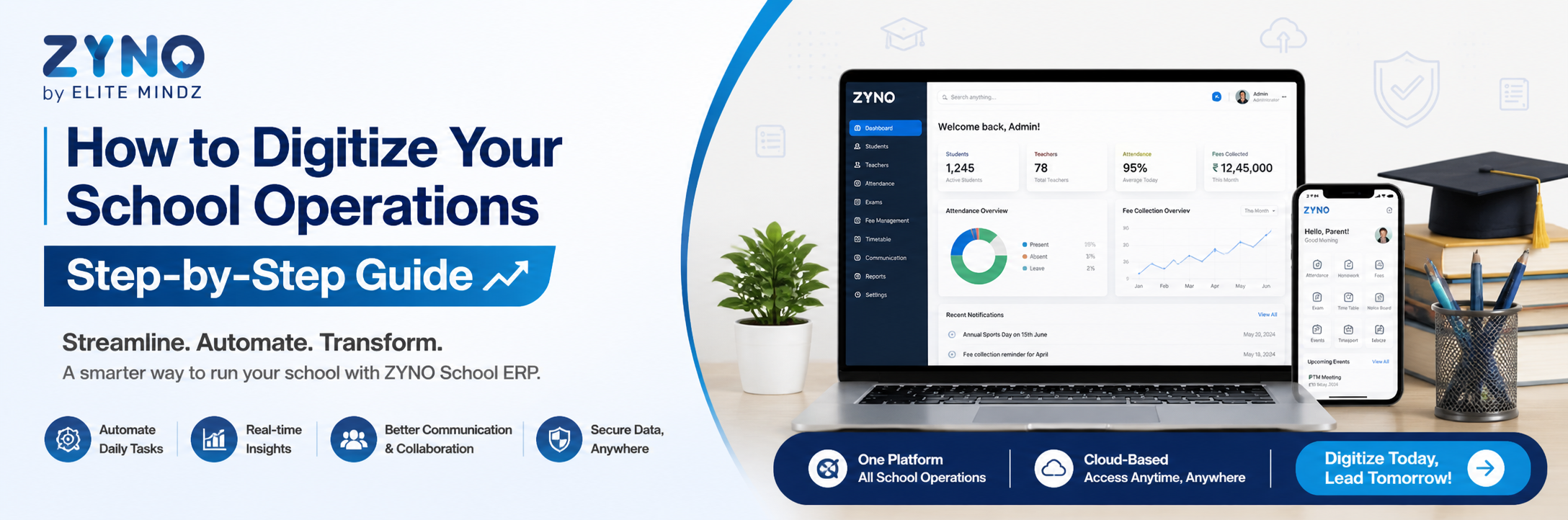
How to Digitize Your School Operations Step-by-Step Guide
Read More →
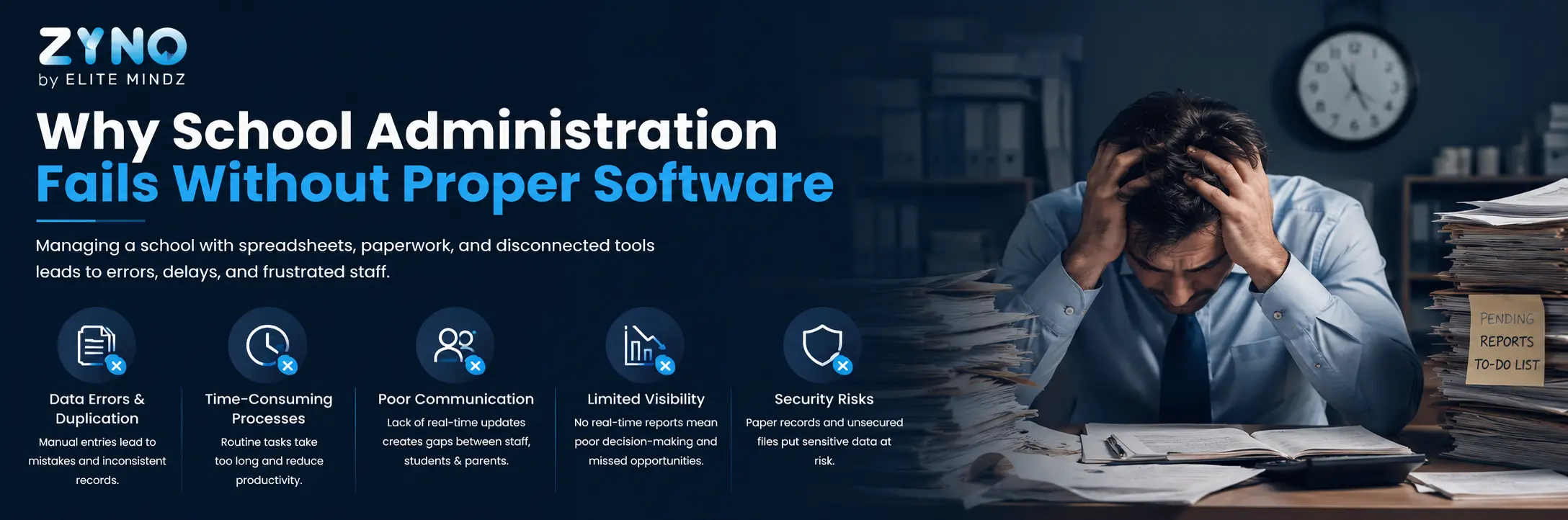
Why School Administration Fails Without Proper Software
Read More →
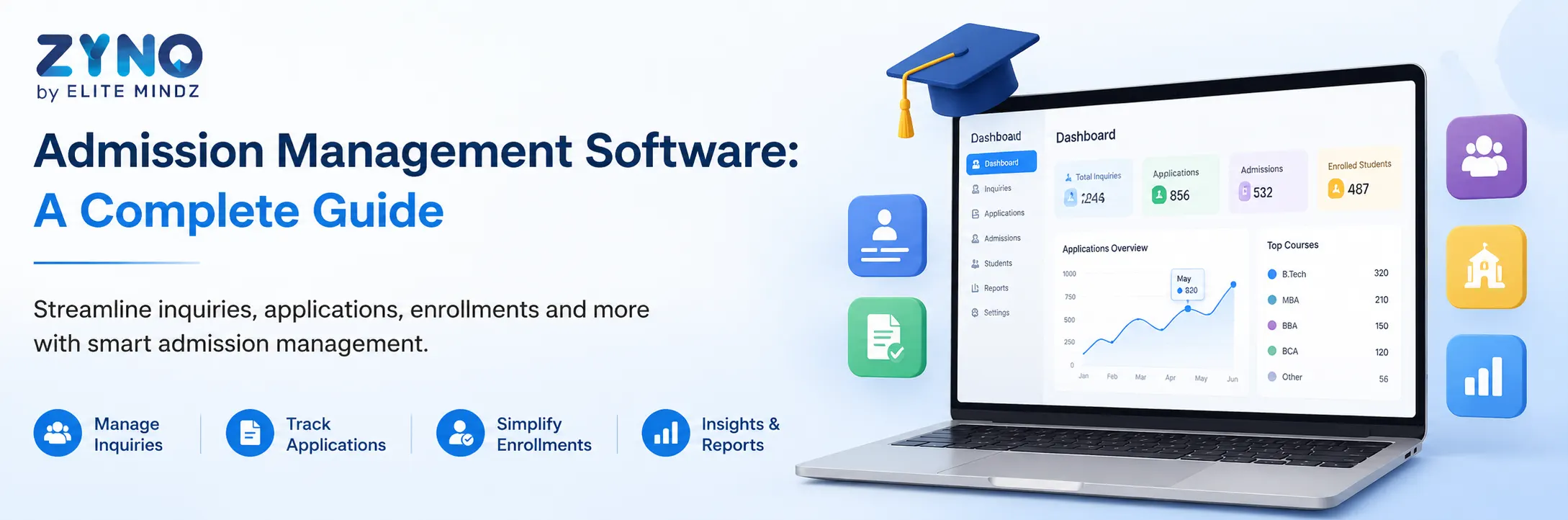
Admission Management Software: A Complete Guide
Read More →
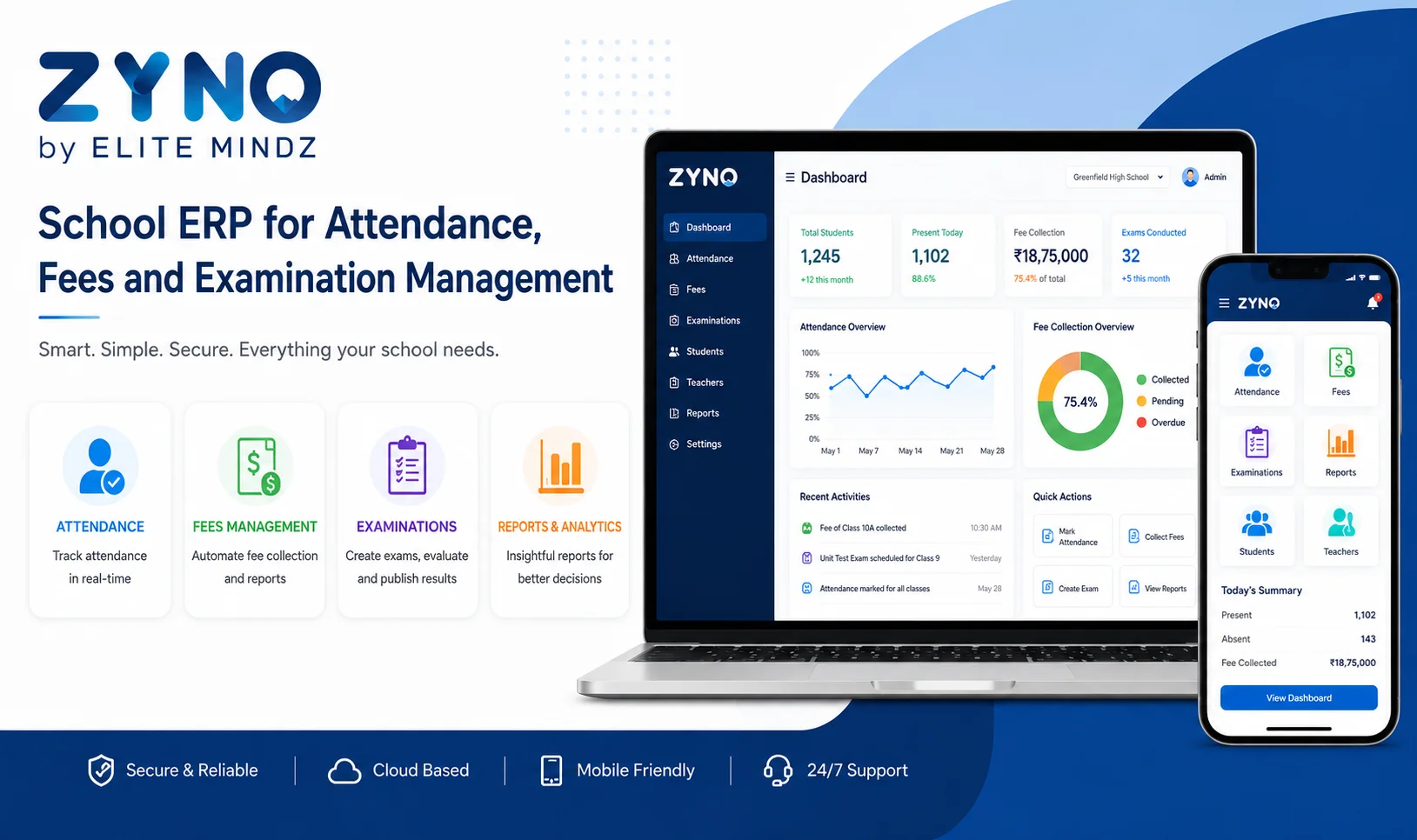
School ERP for Attendance, Fees, and Examination Management
Read More →
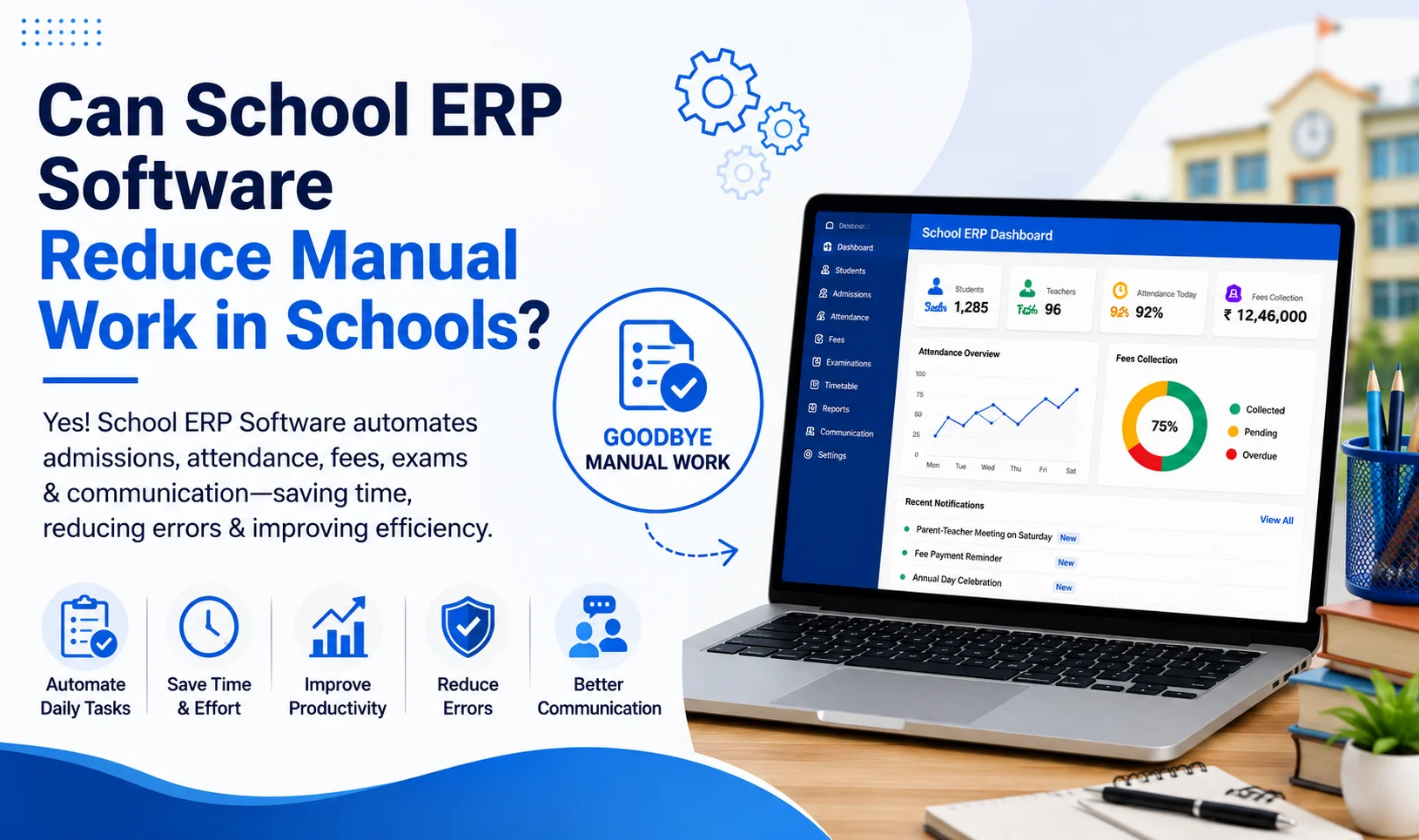
Can School ERP Software Reduce Manual Work in Schools?
Read More →
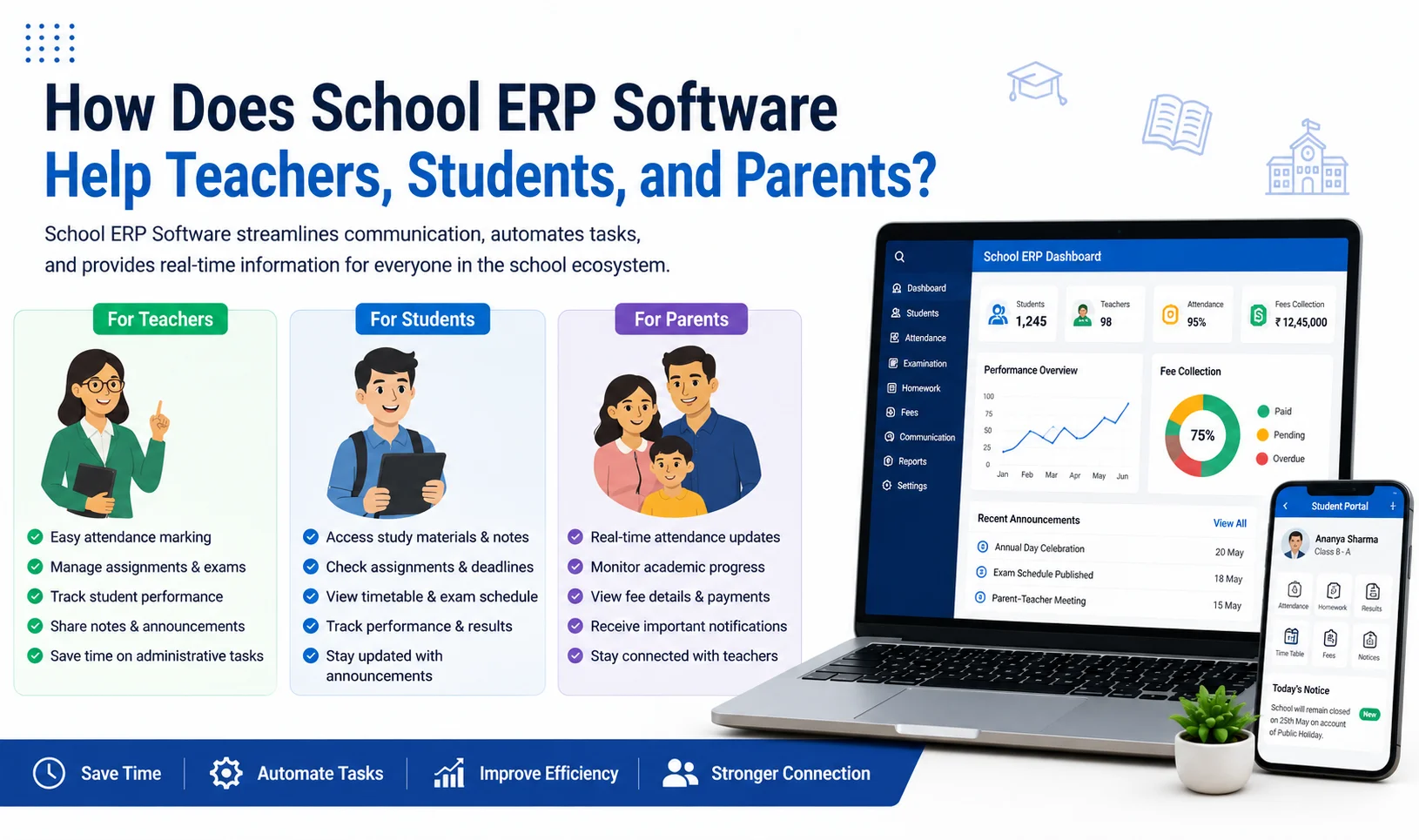
How Does School ERP Software Help Teachers, Students, and Parents?
Read More →
Japan's GIGA School Program and the Rise of Digital School Management
Read More →
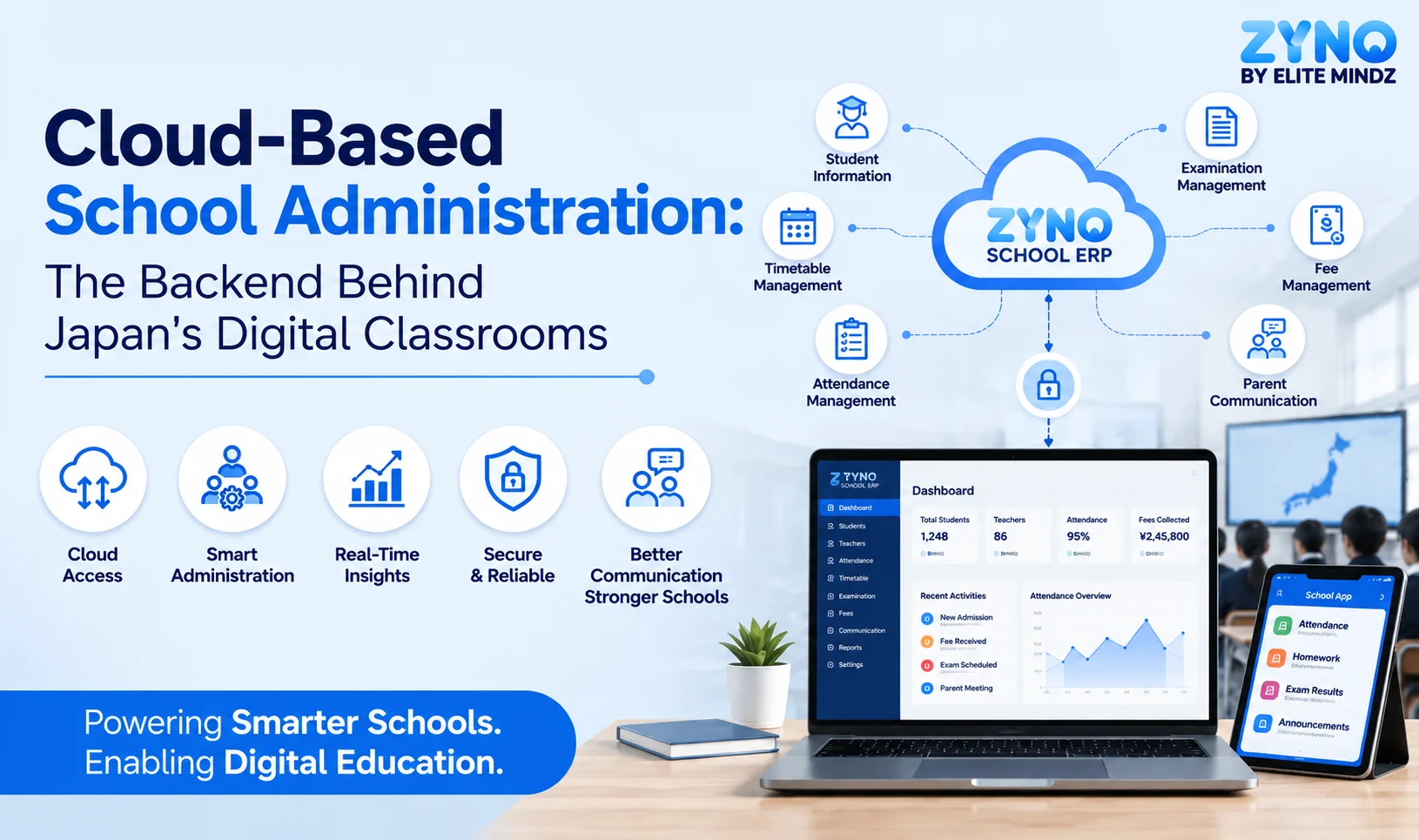
Cloud-Based School Administration: The Backend Behind Japan's Digital Classrooms
Read More →
Ultimate Guide to School ERP Systems in 2026
Read More →
15 Benefits of School ERP Software for Modern Schools
Read More →
Best School Management Software in Abu Dhabi: Top Solutions for Schools in 2026
Read More →
Best School Management Software in Ethiopia: Top Solutions for Schools in 2026
Read More →
School Management System Prices in Kenya: Cost, Features & Pricing Guide 2026
Read More →
10 Benefits of School Management Software for Kenyan Schools
Read More →
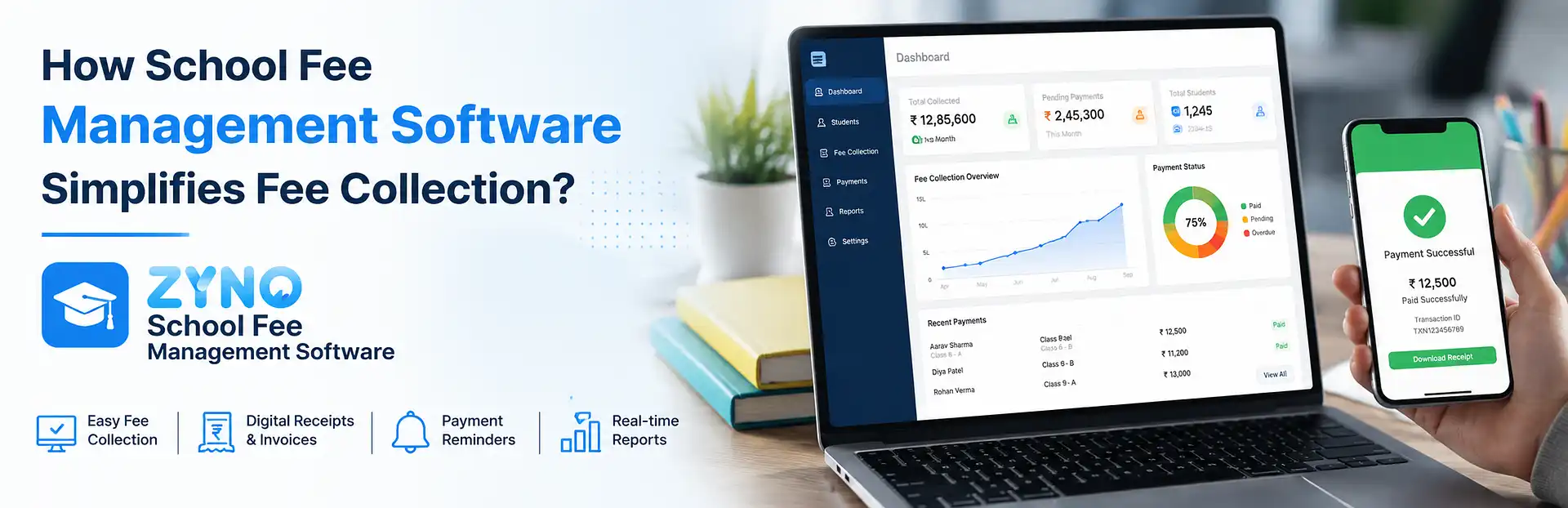
How School Fee Management Software Simplifies Fee Collection?
Read More →
Top 10 Student Information Systems (SIS): Features, Pros, Cons & Comparison
Read More →Partner with ZYNO by Elite Mindz to revolutionize how your business works. Fill out the form, and we’ll reach out with AI-powered solutions made just for you.
We use browser cookies to ensure you get the best experience on our website. Learn more
The form was submitted successfully!