Top 10 School Management Software in India
Read More →

×
Discover how School ERP Software helps modern schools automate admissions, fees, attendance, exams, and parent communication while improving efficiency and student outcomes. Explore how ZYNO EduVibe School ERP can transform your school operations ->Book a Free Demo today.
Businesses using ZYNO Books cut accounting time by 70% and stay 100% ZATCA-compliant — automatically.
Every school leader eventually hits the same wall. Admission season turns into a paper avalanche. Fee follow-ups eat entire afternoons. Attendance registers, timetable clashes, and exam mark-sheets pile up faster than any single administrative team can manage. This is exactly the operational strain that School ERP Software was built to solve, and it's why more CBSE, ICSE, and international K-12 schools are moving away from spreadsheets and register books toward a single, connected digital system. In this guide, we walk through 15 practical, experience-backed benefits of adopting a modern school ERP system, along with real-world scenarios, case studies, and a framework for choosing the right platform for your institution.
This isn't a theoretical listicle. It's written the way an implementation consultant would explain it to a principal sitting across the table, worried about whether digitizing operations is actually worth the disruption.
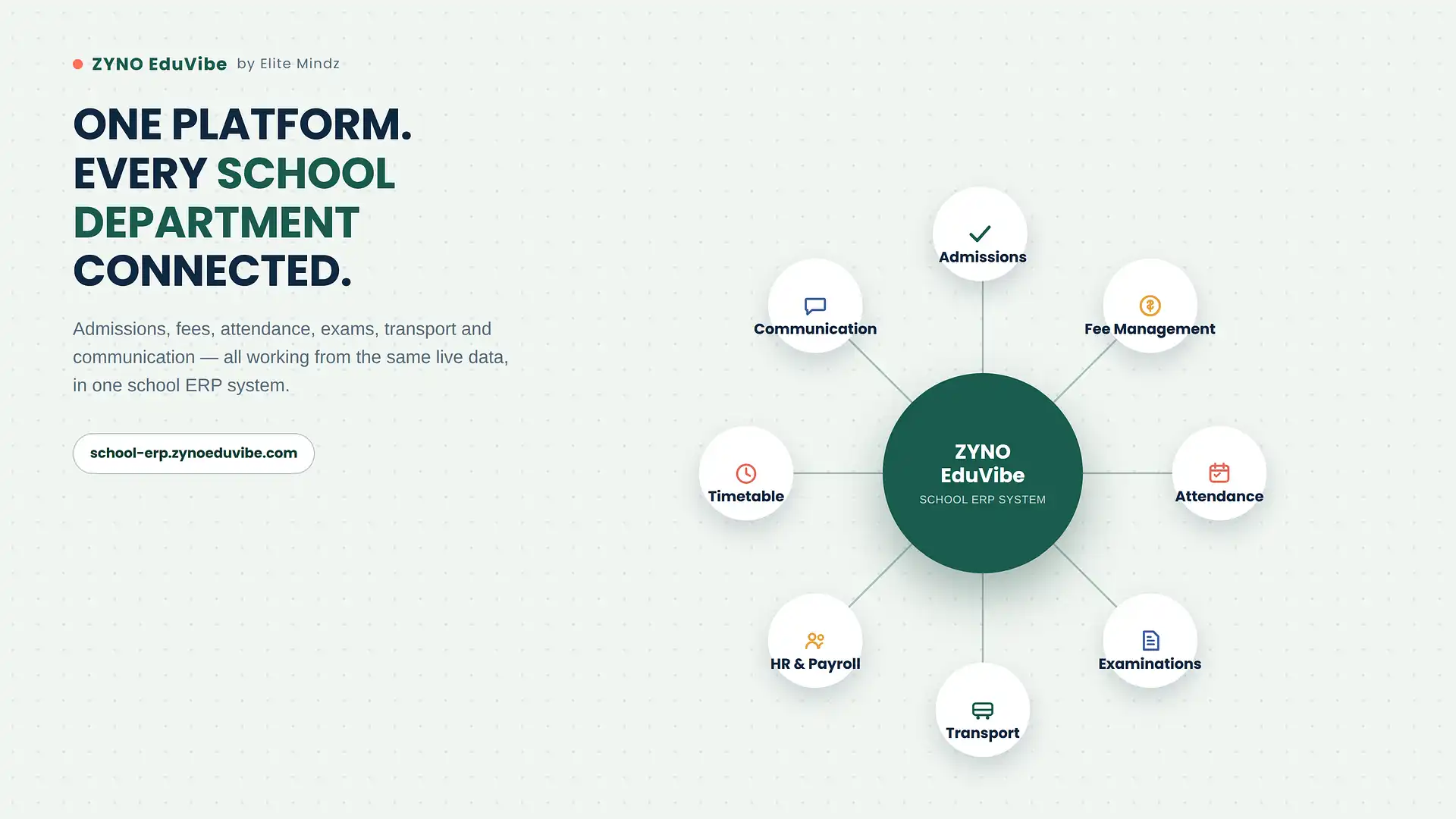
School ERP Software is a unified digital platform that connects admissions, fee collection, attendance, examinations, timetables, transport, HR, and parent communication into one system, replacing scattered registers, spreadsheets, and disconnected apps with a single source of truth for the entire institution.
At its core, a School ERP System (also called a School Management Software or School Information System) works like the operating system of a school. Every department -admissions, accounts, academics, transport, HR -feeds data into and pulls data from the same platform. Instead of a teacher maintaining attendance on paper, the accounts team tracking fees in Excel, and the front office managing admissions on a register, everything sits inside one connected database.
Who should use it? In practice, three groups benefit most directly:
A modern ERP ecosystem, such as School ERP platforms like ZYNO EduVibe, typically bundles modules for student information management, fee management, admission and enrollment, examination and result management, and more -all accessible from a single dashboard, on desktop or through a mobile app.
Modern schools need School ERP Software because education has become more data-driven, hybrid, and parent-facing than ever before, and manual systems simply cannot keep pace with NEP 2020's digital push, rising compliance requirements, and parents who expect real-time updates on their child's progress.
Three structural shifts are driving this need.
First, the National Education Policy 2020 has pushed digital infrastructure to the center of school governance. NEP 2020 emphasizes technology-enabled learning, data-backed decision-making, and reduced administrative burden on teachers so they can focus on pedagogy rather than paperwork. Schools that still rely on manual registers find it structurally harder to align with these expectations.
Second, parent expectations have changed permanently. A parent who can track a food delivery order in real time finds it frustrating to wait three days for a fee receipt or a written note about their child's attendance. Education technology research consistently points to parent communication and transparency as one of the top factors influencing school reputation and retention, particularly in private and international school segments.
Third, hybrid and blended learning models -accelerated over the last several years -require schools to manage both physical and digital touchpoints simultaneously. Homework, assessments, timetables, and communication now need to work seamlessly whether a student is in the classroom or attending remotely. Automation and AI-powered dashboards are no longer optional extras; they're becoming baseline expectations for schools that want to remain competitive in admissions.
This is the backdrop against which the following 15 benefits should be read -not as abstract software features, but as direct responses to problems schools are already living with.
Problem. Admission season is often the most chaotic period of a school's year. Physical forms, document verification, waitlist tracking, and seat allocation are all handled manually, often by a small front-office team juggling hundreds of inquiries at once.
Traditional process. Parents fill out paper forms, submit photocopies of documents, and staff manually cross-check eligibility criteria, age requirements, and document completeness -a process prone to lost files and duplicate entries.
Real scenario. Consider a private school with roughly 900 students that historically ran admissions through paper forms and a shared spreadsheet. Document verification, registration, and parent follow-up calls consumed weeks of staff time each admission cycle, and errors in manual data entry occasionally led to incomplete student files.
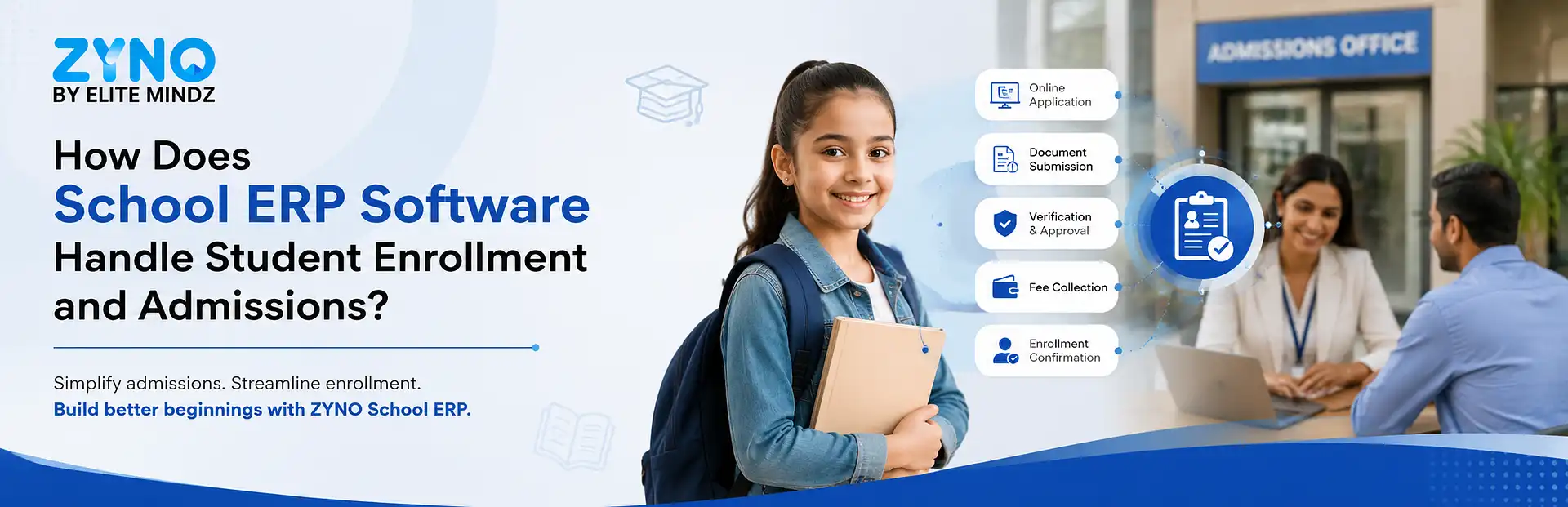
How School ERP solves it. With admission and enrollment management built into the ERP, parents apply online, upload documents digitally, and the system automatically checks completeness and flags missing information. Staff review applications from a single dashboard instead of a paper stack.
Business outcome. Admission cycles that once took weeks of manual cross-checking become measurably faster, with fewer data entry errors and a clearer audit trail for every applicant.
Key takeaway: Digitizing admissions doesn't just save time -it reduces the risk of losing prospective students to a slow, frustrating enrollment experience.
Problem. Fee collection is one of the most time-intensive and error-prone administrative functions in any school, especially when it involves multiple installment plans, sibling discounts, and late-fee calculations.
Traditional process. Accounts staff manually track who has paid, send reminders by phone or in person, and reconcile cash and cheque payments against a register -a process that scales poorly as student numbers grow.
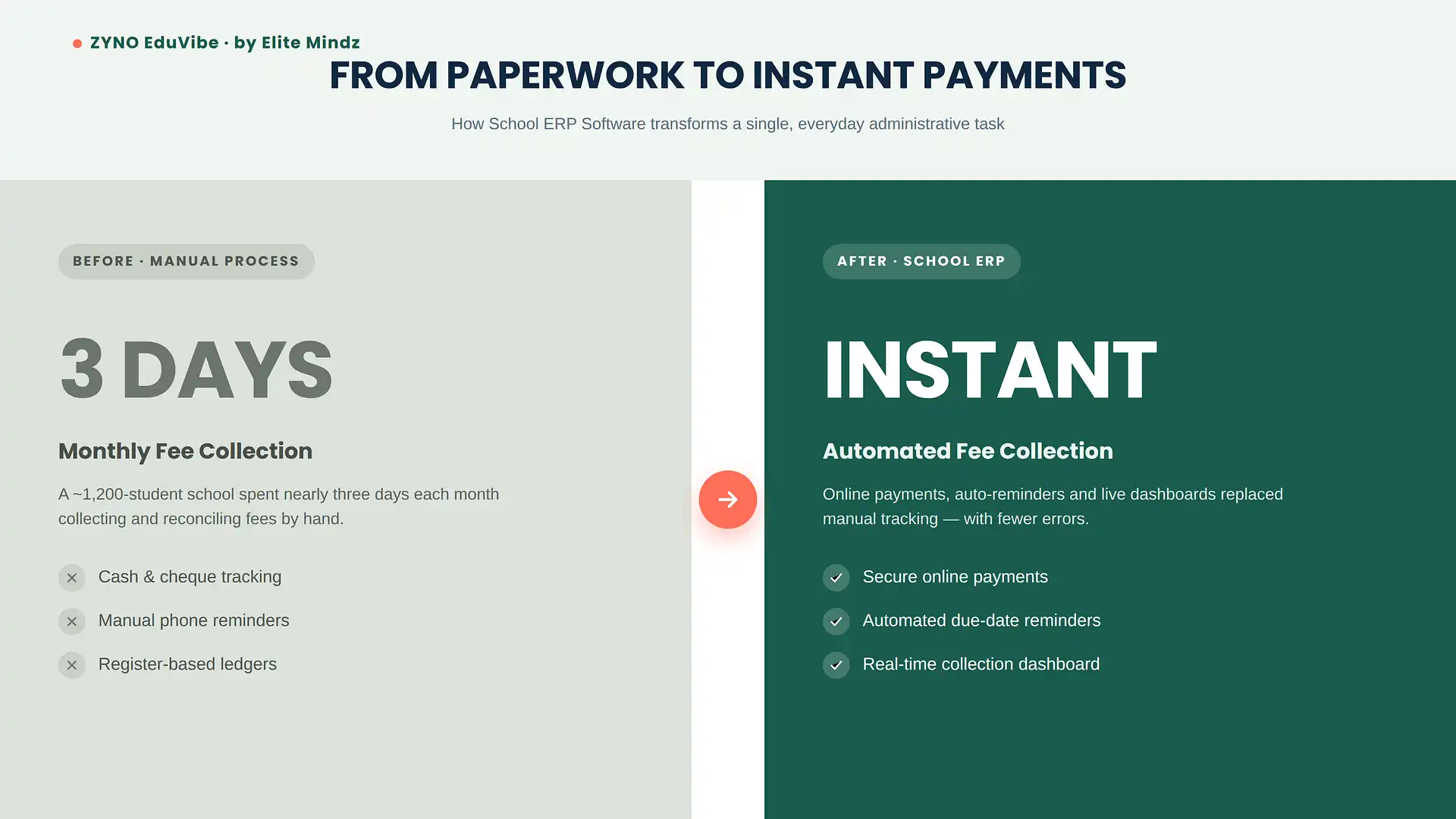
Real scenario. A CBSE school with nearly 1,200 students previously spent almost three days each month collecting and reconciling fees manually. After digitizing fee collection through School ERP Software, online payments and automated reminders reduced administrative work dramatically while improving payment tracking accuracy.
How School ERP solves it. Fee management modules allow parents to pay online, receive automated receipts, and get reminders before due dates -while the accounts team gets real-time dashboards showing pending dues, defaulters, and collection trends by class or section.
Business outcome. Faster collection cycles, fewer manual reconciliation errors, and significantly reduced time spent chasing payments.
Key takeaway: Automated fee management doesn't just reduce workload -it directly improves cash flow predictability for the institution.
Problem. Student data -academic history, medical information, contact details, disciplinary records -is often scattered across different registers, spreadsheets, and departmental files, making it hard to get a complete picture of any single student.
Traditional process. A class teacher maintains one file, the accounts office maintains another, and the transport department keeps a separate list -with no single system connecting them.
Real scenario. An academic coordinator at a mid-sized school once needed a student's complete academic and attendance history for a parent meeting and had to manually collect information from three different departments, delaying the meeting by nearly a week.
How School ERP solves it. A centralized database management system consolidates academic, financial, medical, and behavioral records into one profile per student, accessible instantly by authorized staff.
Business outcome. Faster access to complete student information, better-informed parent meetings, and stronger continuity when students change classes or teachers.
Key takeaway: A unified student database transforms scattered records into a strategic asset for academic planning and parent engagement.
Problem. Parents often feel disconnected from day-to-day school life, learning about issues -low attendance, missed homework, falling grades -only during term-end report cards, by which point the problem has already compounded.
Traditional process. Communication relies on printed circulars, occasional phone calls, or handwritten notes carried home by students, many of which never reach parents.
Real scenario. At one K-12 school, teachers found that important circulars about exam schedules frequently didn't reach parents on time because they depended on students remembering to hand over a printed note.
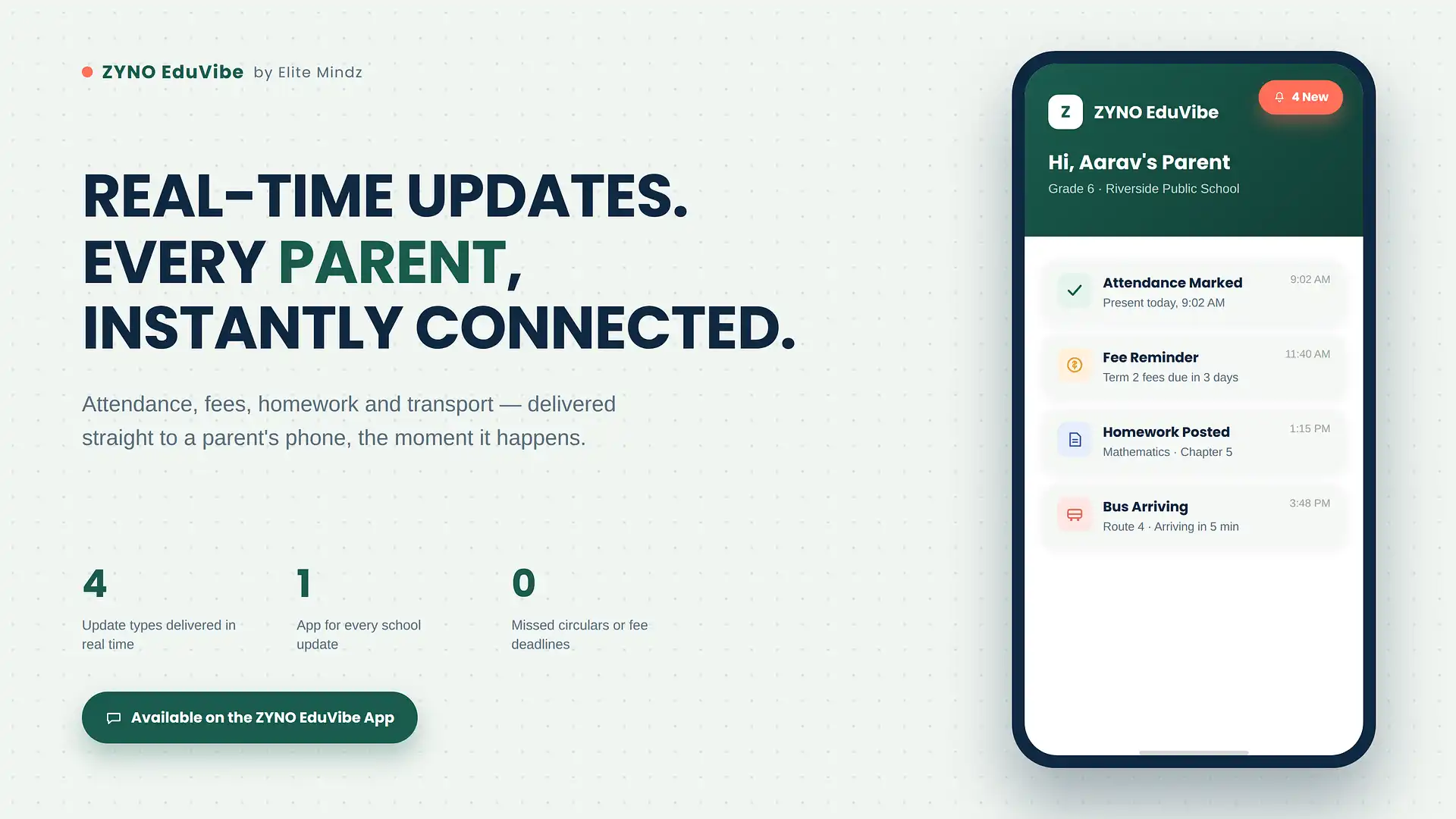
How School ERP solves it. Parent-teacher communication tools push real-time notifications for attendance, homework, fee dues, and exam schedules directly to a parent's phone, with two-way messaging for direct queries.
Business outcome. Parents stay informed in real time rather than retroactively, and schools see fewer missed deadlines and more productive parent-teacher interactions.
Key takeaway: Transparent, real-time communication builds trust -a factor that increasingly influences parent satisfaction and retention.
Problem. Identifying which students are struggling -and why -is difficult when performance data lives in scattered mark registers rather than a system that can spot trends over time.
Traditional process. Teachers manually maintain marks in registers, and identifying a downward trend usually requires manually comparing multiple term results side by side.
Real scenario. An academic coordinator managing several sections found it nearly impossible to spot which students were consistently declining across subjects until the end-of-year report compilation -far too late to intervene meaningfully.
How School ERP solves it. Integrated performance tracking within the examination and result management module aggregates test scores, assignment grades, and attendance into trend dashboards, flagging students whose performance is dropping.
Business outcome. Earlier identification of at-risk students, allowing teachers and counselors to intervene before performance issues become entrenched.
Key takeaway: Data visibility turns performance tracking from a retrospective report into a proactive intervention tool.
Problem. Manual attendance-taking consumes valuable classroom time every single day, and compiling attendance reports for the month is a tedious, error-prone task.
Traditional process. Teachers call out names or pass around a register, then administrative staff manually tally attendance percentages at the end of each month.
Real scenario. A K-12 school using spreadsheets for attendance found that teachers spent nearly 20 minutes daily updating records by hand, time that could otherwise go toward instruction. With biometric or RFID attendance integrated into the School ERP, parents began receiving instant attendance notifications, and administrators could generate attendance reports in seconds rather than days.
How School ERP solves it. Automated attendance capture -through biometric devices, RFID cards, or app-based check-ins -instantly updates records and triggers parent alerts for absences.
Business outcome. Reclaimed classroom time, near-instant attendance reporting, and improved accountability for both students and staff.
Key takeaway: Automating a daily, repetitive task like attendance yields compounding time savings across an entire academic year.
Problem. Exam scheduling, mark entry, and report card generation are traditionally manual, high-pressure processes with a high margin for clerical error, particularly around board exam periods.
Traditional process. Teachers submit marks on paper, an administrator manually calculates grades and ranks, and report cards are typed or handwritten -a process that can take days to finalize for a single grade level.
Real scenario. A school administrator overseeing final exams for multiple sections described spending nearly a full week manually cross-checking mark sheets before report cards could be printed, with several corrections needed after initial errors were spotted by teachers.
How School ERP solves it. Examination and result management tools allow teachers to enter marks digitally, auto-calculate grades and ranks based on configured rules, and generate report cards instantly.
Business outcome. Faster, more accurate report card generation with a clear audit trail for every grade entered.
Key takeaway: Digitizing examination workflows reduces both the time burden and the reputational risk of grading errors.
Problem. Creating a school timetable that accounts for teacher availability, room capacity, and subject requirements is a complex scheduling puzzle, and any last-minute change -a teacher's absence, a room conflict -can cascade into hours of manual rework.
Traditional process. Timetables are built manually on spreadsheets or whiteboards, with conflicts often discovered only once the schedule is already in use.
Real scenario. An academic coordinator at a growing school described how a single teacher's medical leave used to require manually reshuffling nearly a dozen class periods by hand, a process that took most of a school day.
How School ERP solves it. Timetable management modules can flag scheduling conflicts automatically and let administrators adjust and republish updated schedules within minutes, with instant notifications sent to affected teachers and students.
Business outcome. Fewer scheduling conflicts, faster recovery from last-minute disruptions, and less administrative time spent on manual rescheduling.
Key takeaway: Automated conflict detection turns timetable management from a reactive scramble into a controlled, predictable process.
Problem. Tracking homework assignment, submission, and grading across multiple classes and subjects is difficult to manage consistently on paper, and parents often have little visibility into what's actually been assigned.
Traditional process. Homework is written on the board or dictated verbally, submissions are tracked in a teacher's notebook, and parents rely on their child to accurately report what's due.
Real scenario. A parent-teacher survey conducted informally by one school found that a significant share of parents were unaware of homework deadlines until the night before submission, largely because information wasn't reaching them consistently.
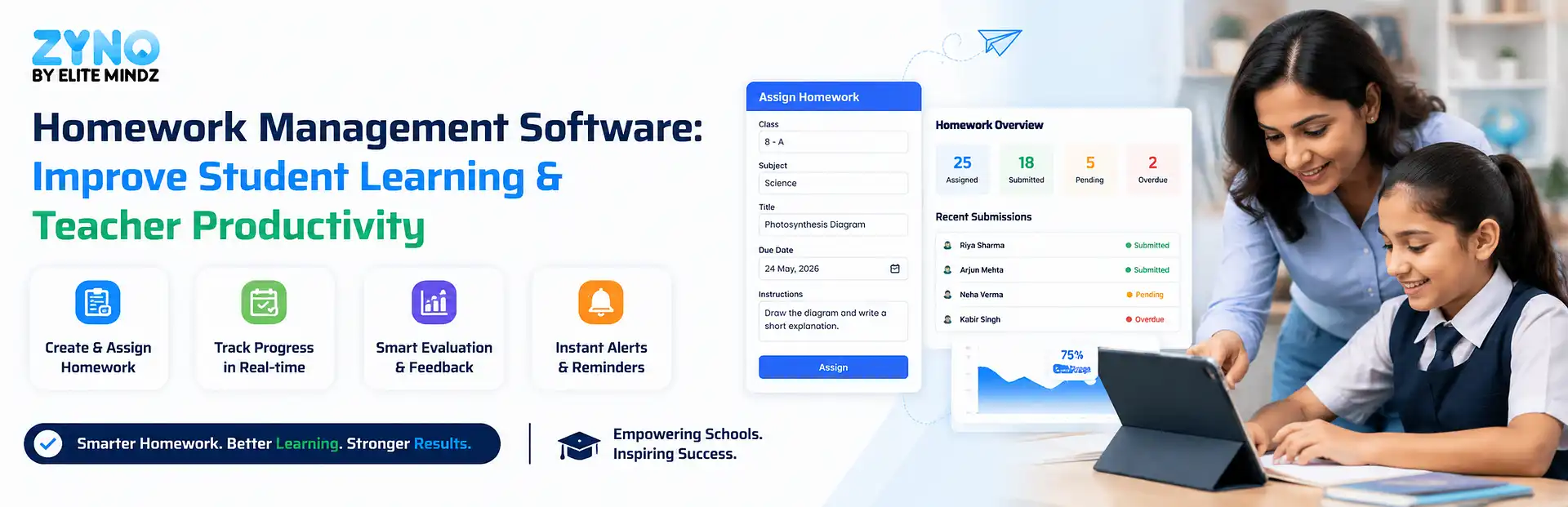
How School ERP solves it. Homework and assignment management tools let teachers post assignments digitally, complete with due dates and attachments, visible instantly to both students and parents through the app.
Business outcome. Improved homework completion rates and reduced parent complaints about lack of visibility into academic expectations.
Key takeaway: Digital homework tracking closes the communication gap between what teachers assign and what parents actually know about.
Problem. Coordinating bus routes, driver schedules, and student pickup/drop points manually makes it difficult to respond to route changes, and parents often have no visibility into where the school bus actually is.
Traditional process. Routes are planned on paper maps, and parent inquiries about bus delays are handled through phone calls to a transport coordinator who may not have real-time information either.
Real scenario. A school with a growing transport fleet found that parent calls asking "where is the bus?" were consuming significant time for transport staff every single afternoon.
How School ERP solves it. Transport management modules with GPS integration let parents track buses in real time via the mobile app, while administrators optimize routes and monitor driver compliance from a central dashboard.
Business outcome. Fewer parent inquiry calls, improved student safety through real-time tracking, and more efficient route planning.
Key takeaway: Real-time transport visibility directly addresses one of the most common parent anxiety points -the safety of the daily commute.
Problem. Managing staff attendance, leave, payroll, and compliance manually is time-consuming and prone to calculation errors, particularly in larger schools with dozens or hundreds of employees.
Traditional process. HR staff manually track attendance registers, calculate salaries with deductions in spreadsheets, and process leave requests through paper forms routed for physical signatures.
Real scenario. A school's HR administrator described monthly payroll processing as a multi-day task involving manually cross-referencing attendance records, leave balances, and salary structures for the entire teaching and non-teaching staff.
How School ERP solves it. HR and payroll management modules automate salary calculation based on attendance and leave data, generate payslips automatically, and digitize leave approval workflows.
Business outcome. Significantly reduced payroll processing time and fewer calculation disputes with staff.
Key takeaway: Automating HR processes doesn't just save the administration's time -it improves staff trust in payroll accuracy.
Problem. Sensitive student and staff data -medical records, financial information, personal identification -stored in physical files or unsecured spreadsheets is vulnerable to loss, damage, or unauthorized access.
Traditional process. Paper files are stored in cabinets with no access control, and digital records, when they exist, are often unencrypted spreadsheets shared over email.
Real scenario. A school undergoing an internal audit found it difficult to demonstrate who had accessed sensitive student records over the previous year, since paper files had no access log at all.
How School ERP solves it. Cloud-based ERP platforms provide role-based access control, encrypted data storage, and audit logs that record exactly who accessed or modified any record and when.
Business outcome. Stronger regulatory compliance posture and significantly reduced risk of data loss or unauthorized access.
Key takeaway: Data security isn't just an IT concern for schools anymore -it's a trust and compliance issue that directly affects institutional reputation.
Problem. Parents, teachers, and administrators increasingly expect to access school information from their phones, not just from a desktop computer in an office.
Traditional process. Information is only accessible in person or through a desktop-based system, which is inconvenient for parents managing busy schedules or staff working outside office hours.
Real scenario. A working parent at one school described being unable to check her child's attendance or fee status during business hours simply because the only access point was a desktop portal available at the school office.
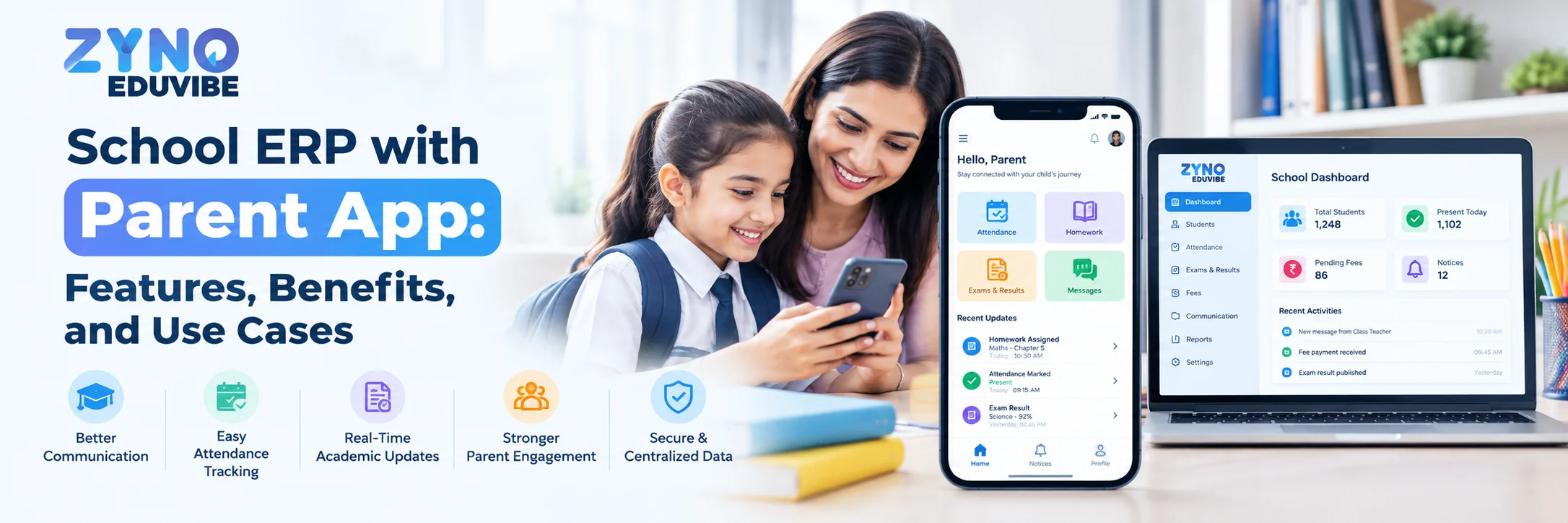
How School ERP solves it. A dedicated mobile app gives parents, teachers, and administrators access to attendance, homework, fees, and communication tools directly from their smartphones, anytime.
Business outcome. Higher parent engagement and satisfaction, since information is accessible on their own schedule rather than tied to office hours.
Key takeaway: Mobile accessibility has shifted from a "nice-to-have" feature to a baseline expectation for school-parent interaction.
Problem. School leadership often makes decisions -about staffing, fee structures, or academic interventions -based on outdated or incomplete information because generating a comprehensive report used to take days.
Traditional process. Compiling a school-wide report on attendance trends, fee collection, or academic performance meant manually pulling data from multiple registers and spreadsheets.
Real scenario. A school director preparing for a trust board meeting once had to request reports from four separate departments a full week in advance, and even then, the figures from different departments sometimes didn't reconcile.
How School ERP solves it. Centralized dashboards generate real-time reports on attendance, fees, academics, and transport with a few clicks, pulling directly from the live database rather than manually compiled files.
Business outcome. Faster, more confident decision-making at the leadership level, with consistent figures across departments.
Key takeaway: Real-time reporting turns school leadership from reactive administrators into proactive strategic planners.
Problem. Traditional systems can tell school leaders what already happened -attendance last month, fees collected last quarter -but offer little help in predicting what's likely to happen next.
Traditional process. Decisions about which students need academic intervention, or which fee defaulters need proactive outreach, are made reactively, often after the problem has already escalated.
Real scenario. A school administrator noted that by the time chronic absenteeism was flagged through manual monthly reports, the affected students had often already fallen significantly behind academically.
How School ERP solves it. AI-ready school ERP platforms can apply predictive analytics to flag early signs of declining attendance or academic performance, and AI-assisted dashboards can highlight anomalies -like an unusual spike in absences -before they become entrenched problems.
Business outcome. Earlier intervention, better resource allocation, and a shift from reactive to predictive school administration.
Key takeaway: AI-powered features don't replace educators' judgment -they give school leaders an earlier warning system so human intervention happens sooner.
The following case studies reflect composite, realistic scenarios based on common implementation patterns observed across schools adopting ERP systems. Names and identifying details have been generalized for privacy.
Situation. A mid-sized CBSE school with around 1,000 students relied entirely on manual processes for admissions, fee collection, and attendance, with a small administrative team stretched thin during peak periods like admission season and exam time.
Challenge. Staff were spending the majority of their working hours on repetitive administrative tasks -chasing fee payments, manually compiling attendance, and cross-checking admission documents -leaving little time for higher-value work like parent engagement or academic planning support.
Solution. The school implemented a school ERP system covering admissions, fee management, attendance, and parent communication, digitizing workflows that had previously been entirely manual.
Result. Administrative staff reported a substantial reduction in time spent on repetitive tasks -an estimated 60% reduction in manual administrative workload -freeing up capacity for more strategic responsibilities.
Lessons learned. The biggest gains came not from any single feature, but from connecting previously siloed processes (admissions, fees, attendance) into one system, eliminating the duplicate data entry that had been consuming staff time.
Situation. A private K-12 institution faced consistent parent complaints about lack of visibility into their children's academic progress and daily activities, contributing to declining satisfaction scores in annual parent surveys.
Challenge. Communication relied heavily on printed circulars and occasional phone calls, meaning parents often learned about issues -low attendance, missed assignments -well after the fact.
Solution. The school deployed the parent-teacher communication and mobile app modules of a school ERP system, enabling real-time push notifications for attendance, homework, and fee reminders.
Result. Parent satisfaction scores in subsequent surveys showed marked improvement, with parents specifically citing improved communication as a key factor, and the school saw a reduction in missed fee deadlines and homework completion issues.
Lessons learned. Real-time, proactive communication -rather than reactive, after-the-fact updates -was the single biggest driver of improved parent trust.
Situation. An international school group operating across multiple campuses struggled to maintain consistent reporting standards, with each campus using different spreadsheets and processes for attendance, fees, and academics.
Challenge. Leadership found it nearly impossible to get a consolidated, accurate view of performance across all campuses, since data formats and reporting timelines varied by location.
Solution. The group implemented a centralized, cloud-based school ERP system across all campuses, standardizing data collection and reporting through a single database management framework.
Result. Leadership gained the ability to generate consolidated, real-time reports across all campuses for the first time, dramatically improving the speed and confidence of group-level decision-making.
Lessons learned. Standardization across campuses -not just digitization at each individual campus -was the critical factor that unlocked group-level visibility.
AI-powered School ERP Software transforms schools by using predictive analytics and automated dashboards to flag at-risk students earlier, forecast attendance and fee-collection trends, and reduce the manual effort administrators spend compiling reports -shifting schools from reactive administration to proactive, data-informed decision-making.
Several AI-ready capabilities are becoming standard in modern platforms like ZYNO EduVibe:
It's worth being precise here: AI in school ERP systems today is primarily about pattern recognition and early-warning signals, not autonomous decision-making. The goal of an AI-ready platform is to surface the right information to the right person at the right time -a teacher, a counselor, an administrator -so that human judgment can act sooner. Education technology research broadly supports this framing, with predictive analytics in education consistently identified as most valuable when paired with, not substituted for, educator intervention.
Schools choose ZYNO EduVibe School ERP System by Elite Mindz because it combines a cloud-based, scalable architecture with role-based security, AI-ready analytics, and a centralized dashboard that brings admissions, fees, academics, transport, and communication into one connected platform, accessible from both desktop and mobile.
Key reasons schools evaluate ZYNO EduVibe favorably during implementation decisions include:
|
Capability |
ZYNO EduVibe School ERP |
Typical Legacy/On-Premise ERP |
|
Deployment |
Cloud-based, remote access |
Often server-based, location-locked |
|
Mobile access |
Dedicated mobile app |
Limited or no mobile support |
|
Scalability |
Designed for multi-campus growth |
Often requires costly re-implementation |
|
AI-readiness |
Built for predictive analytics and smart dashboards |
Rarely supports AI-driven insights |
|
Security |
Role-based access, encrypted cloud storage |
Varies; often weaker access controls |
|
Customization |
Configurable by curriculum and workflow |
Often rigid, one-size-fits-all |
|
Implementation speed |
Streamlined onboarding process |
Often lengthy, IT-heavy rollout |
Compared to traditional, manual school management, School ERP Software centralizes data, automates repetitive tasks, and provides real-time visibility across departments -replacing disconnected registers and spreadsheets with a single, secure, cloud-based system accessible from anywhere.
|
Function |
Traditional School Management |
School ERP Software |
|
Admissions |
Paper forms, manual verification |
Online applications, automated document checks |
|
Fee collection |
Manual reminders, cash/cheque tracking |
Online payments, automated reminders |
|
Attendance |
Register-based, manually compiled |
Biometric/app-based, instant reports |
|
Communication |
Printed circulars, phone calls |
Real-time app notifications, two-way messaging |
|
Examinations |
Manual mark entry, handwritten report cards |
Digital entry, auto-calculated grades |
|
Reporting |
Days to compile across departments |
Real-time dashboards |
|
Data security |
Physical files, no access log |
Role-based access, encrypted audit trails |
|
Transport tracking |
Phone-based inquiries |
Real-time GPS tracking |
Choosing the best School ERP Software requires evaluating security, scalability, customization, support quality, mobile access, AI-readiness, and total implementation cost -not just the list of features advertised, but how well the platform fits your school's specific curriculum, size, and growth plans.
Use this checklist when evaluating vendors:
|
Phase |
Typical Duration |
Key Activities |
|
Requirement mapping |
1–2 weeks |
Curriculum needs, module selection, workflow review |
|
Data migration |
1–3 weeks |
Importing existing student, staff, and fee records |
|
Configuration |
1–2 weeks |
Setting up roles, permissions, and department workflows |
|
Staff training |
1–2 weeks |
Onboarding administrators, teachers, and accounts staff |
|
Go-live and support |
Ongoing |
Monitoring adoption, resolving issues, iterative refinement |
|
Area |
Manual Process Pain Point |
Typical Improvement After ERP Adoption |
|
Admissions |
Weeks of manual document checks |
Faster processing, fewer data errors |
|
Fee collection |
Days of manual reconciliation monthly |
Reduced collection cycle, better cash flow visibility |
|
Attendance |
Daily manual tallying |
Instant reporting, reduced classroom time lost |
|
Reporting |
Days to compile cross-department reports |
Real-time dashboards |
|
Communication |
Missed circulars, delayed updates |
Instant, trackable parent notifications |
Note: Specific ROI figures vary by school size, existing processes, and implementation quality. The improvements above reflect commonly reported directional outcomes rather than guaranteed statistics.
The future of School ERP Software is defined by deeper AI integration, predictive analytics, voice-enabled interfaces, and fully digital campuses, where administrative systems don't just record what happened but actively help school leaders anticipate and respond to emerging needs.
A few directions are becoming clear across education technology research and vendor roadmaps:
Schools that adopt AI-ready platforms today, like ZYNO EduVibe, are better positioned to adopt these capabilities incrementally, rather than facing a disruptive system overhaul when AI features become standard expectations across the sector.
School ERP Software has moved from a "nice-to-have" convenience to a genuine operational necessity for modern schools. Across admissions, fee collection, attendance, examinations, communication, and HR, the pattern is consistent: manual processes consume disproportionate staff time, introduce avoidable errors, and leave school leadership working with outdated information. A well-implemented school ERP system doesn't just digitize these processes -it fundamentally changes how quickly a school can respond to problems, communicate with parents, and make informed decisions.
The schools that benefit most aren't necessarily the ones with the most complex systems, but the ones that choose a platform matched to their actual workflows, curriculum, and growth plans -and that commit to proper implementation and staff training rather than treating digitization as a one-time software purchase.
If your school is still relying on registers, spreadsheets, and disconnected tools to manage admissions, fees, attendance, and communication, it may be worth exploring how a platform like ZYNO EduVibe School ERP System by Elite Mindz can bring these processes together -reducing administrative load while giving your leadership team the real-time visibility modern school management increasingly requires.
For further reading on related topics, explore a complete guide to School ERP software, how ERP handles attendance, fees, and examinations, and whether School ERP software can actually reduce manual work in schools.
A School Management App often focuses on a single function -attendance or communication, for example -while School ERP Software is a comprehensive platform connecting admissions, fees, academics, transport, HR, and communication into one system. The ERP approach eliminates data silos, since information entered in one module (like a student's admission record) automatically flows into related modules (like fee structure and class assignment). A standalone app typically can't offer this cross-departmental visibility, which is why most schools eventually outgrow single-purpose tools as they scale.
Implementation timelines vary based on school size, data volume, and customization needs, but a typical rollout spans roughly 4 to 8 weeks, covering requirement mapping, data migration, configuration, and staff training. Schools with straightforward, single-campus operations often move faster, while multi-campus institutions or those migrating large historical datasets may need additional time. Working with a vendor that offers structured onboarding and dedicated implementation support significantly reduces delays and disruption during the transition.
School ERP Software is increasingly designed to scale, meaning small and mid-sized schools can adopt the same core modules -admissions, fees, attendance, communication -without needing enterprise-level infrastructure. In fact, smaller administrative teams often see proportionally larger relief, since automation replaces tasks that previously consumed a disproportionate share of limited staff time. Many platforms, including ZYNO EduVibe, offer modular structures so smaller schools can start with essential features and expand as they grow.
Reputable School ERP platforms use cloud-based infrastructure with encryption, role-based access control, and audit logging, meaning only authorized staff can view specific categories of data, and every access is recorded. This is generally more secure than physical files or unencrypted spreadsheets, which have no access controls at all. When evaluating a vendor, schools should specifically ask about data encryption standards, backup frequency, and compliance with relevant data protection regulations.
Most modern School ERP platforms support integrations with common tools such as payment gateways, SMS/email services, and sometimes third-party learning management systems, reducing the need to abandon existing infrastructure entirely. The extent of integration capability varies by vendor, so schools should confirm specific integration needs -such as a preferred payment gateway -during the evaluation process rather than assuming compatibility. This is an important checklist item when comparing platforms.
The most common challenge isn't the software itself but staff adoption -teachers and administrative staff accustomed to manual processes need structured training and time to build confidence in the new system. Schools that treat implementation as purely a technical rollout, without investing in change management and training, often see slower adoption and underutilized features. Choosing a vendor that provides hands-on onboarding support significantly improves the likelihood of smooth, sustained adoption across departments.
No -AI features in school ERP systems are designed to support, not replace, human decision-making, primarily by flagging patterns (like declining attendance or performance) earlier than manual review would catch them. The actual intervention -a conversation with a struggling student, a counseling session, a parent meeting -still requires human judgment and relationship-building that software cannot replicate. AI's role is best understood as an early-warning and efficiency layer, freeing up educators' time and attention for the work that genuinely requires their expertise.
Interested in seeing how a connected school ERP system could work for your institution? You can explore the full School ERP feature set, including admission management, inventory and asset management, and event calendar management, or read more in the ultimate guide to School ERP software and our admission management software guide.
Top 10 School Management Software in India
Read More →What Is School ERP Software? The Complete Guide for Modern Schools
Read More →
How to Digitize Your School Operations Step-by-Step Guide
Read More →
Why School Administration Fails Without Proper Software
Read More →
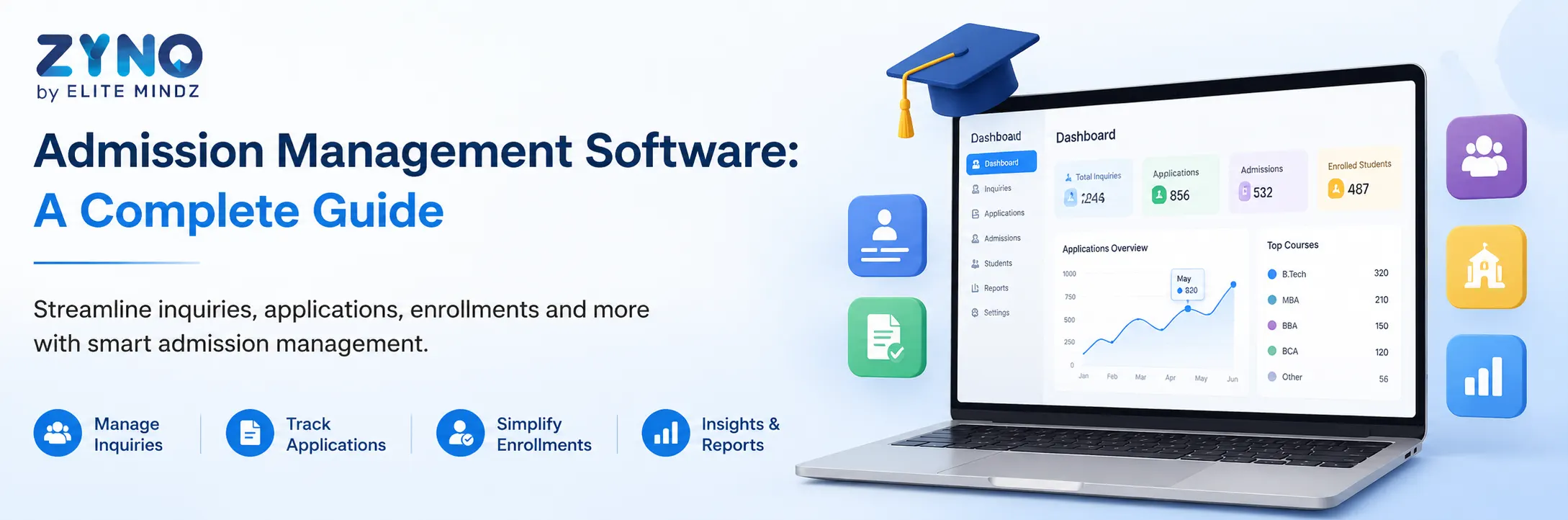
Admission Management Software: A Complete Guide
Read More →
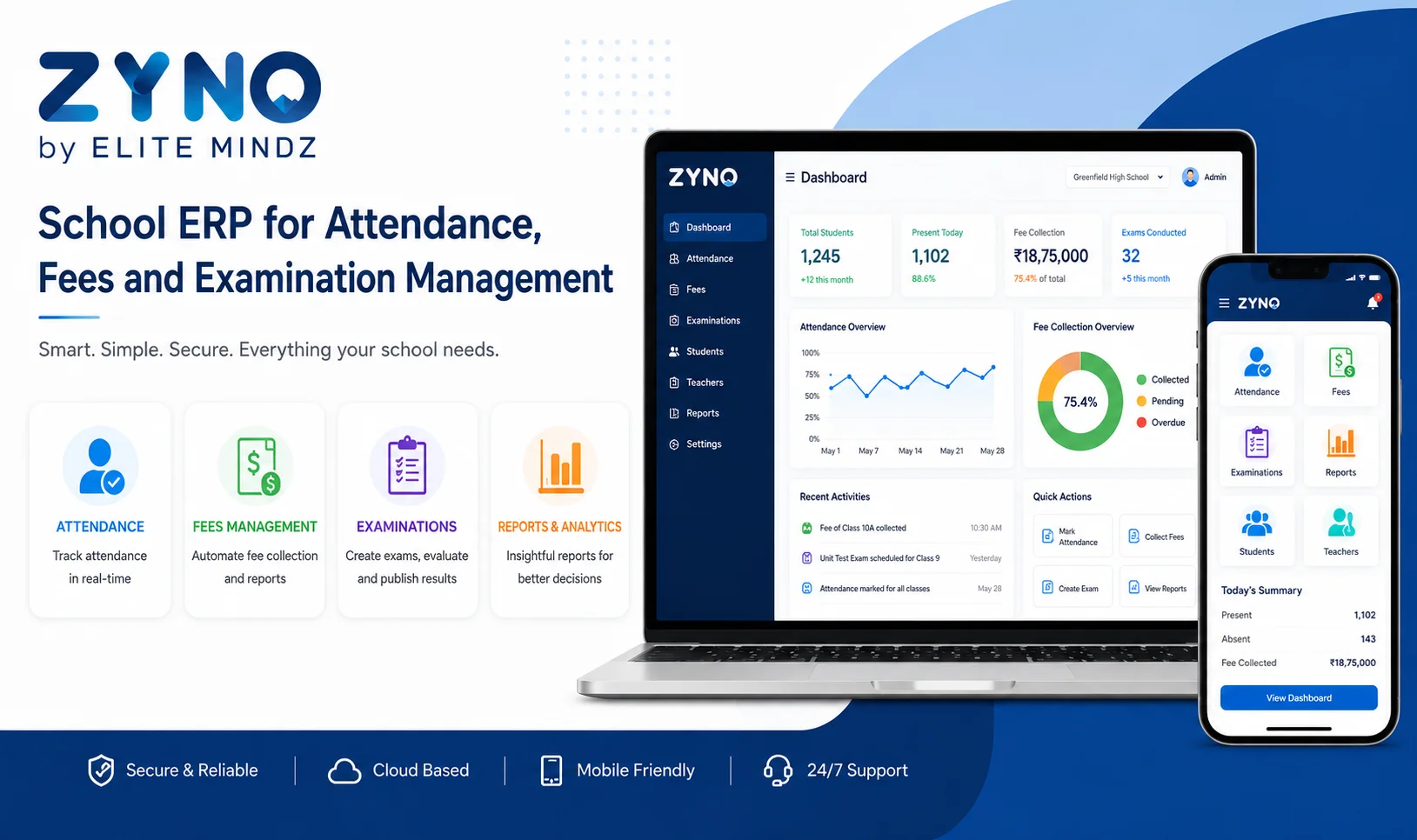
School ERP for Attendance, Fees, and Examination Management
Read More →
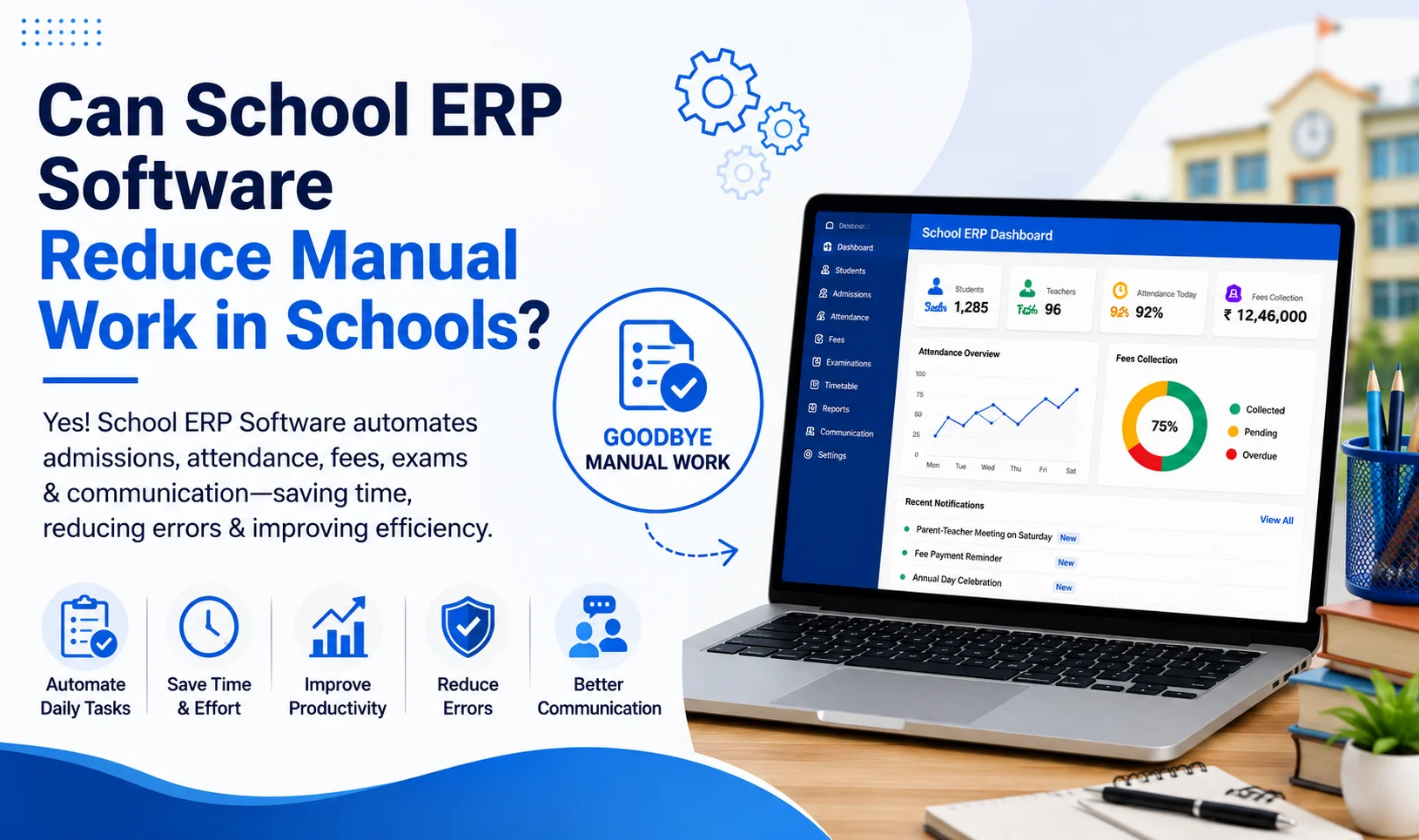
Can School ERP Software Reduce Manual Work in Schools?
Read More →
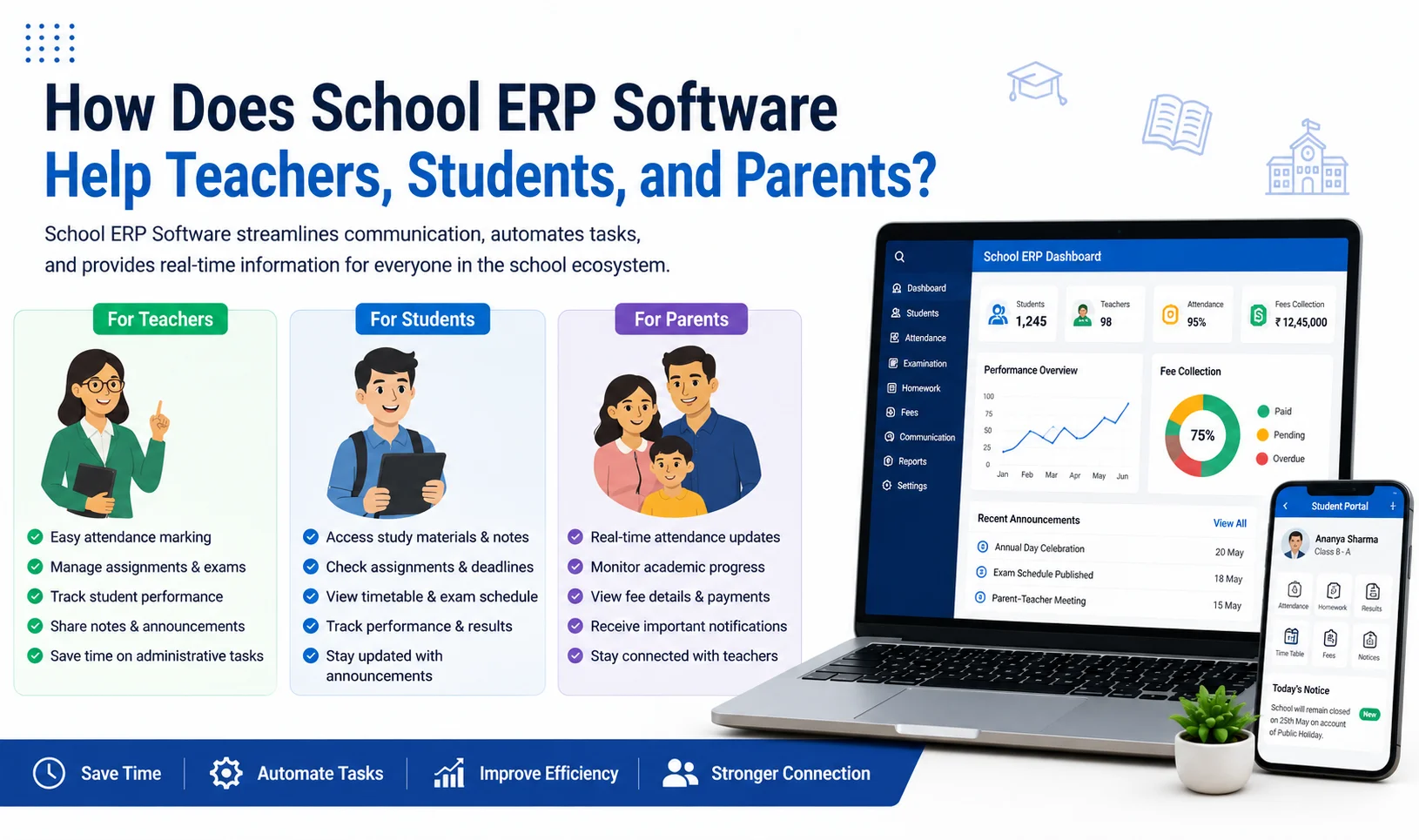
How Does School ERP Software Help Teachers, Students, and Parents?
Read More →
Japan's GIGA School Program and the Rise of Digital School Management
Read More →
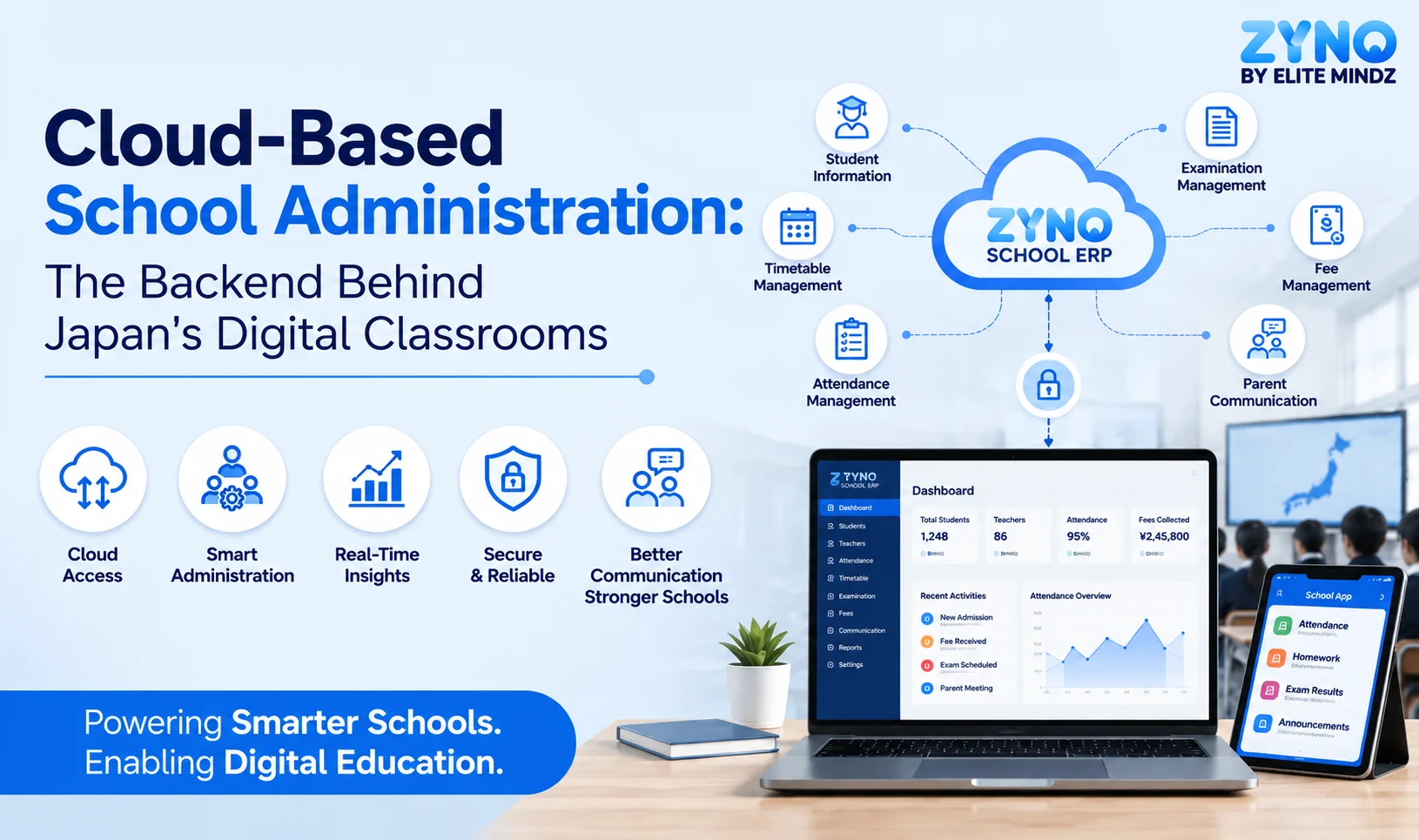
Cloud-Based School Administration: The Backend Behind Japan's Digital Classrooms
Read More →
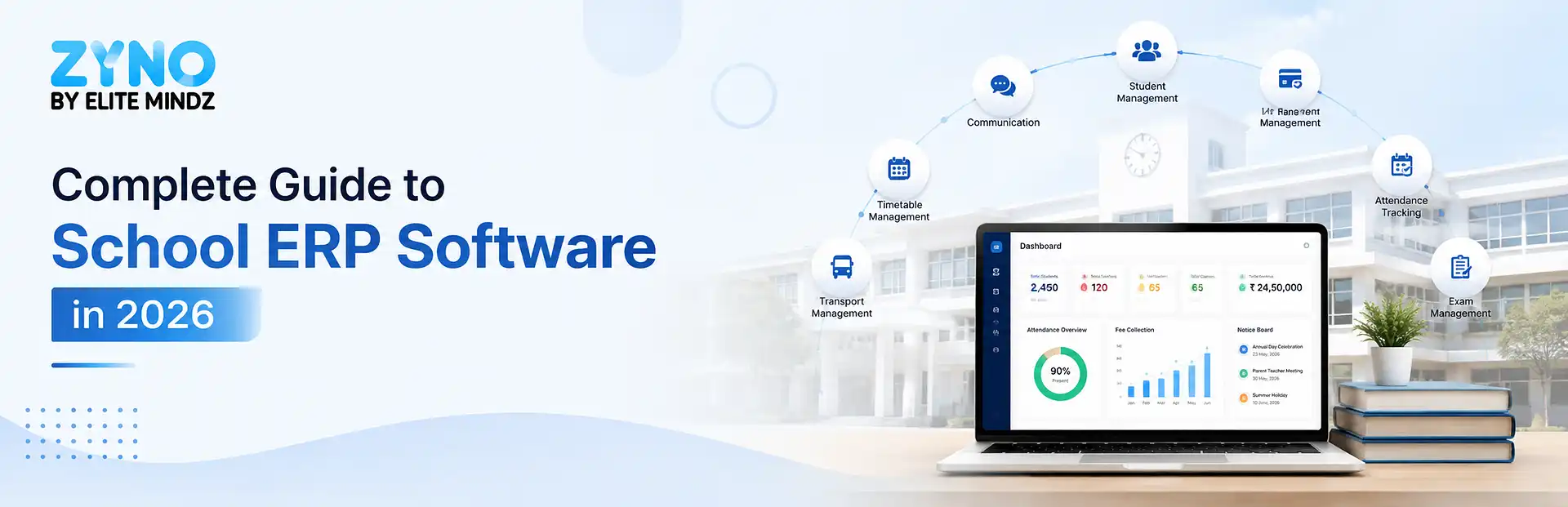
Ultimate Guide to School ERP Systems in 2026
Read More →
15 Benefits of School ERP Software for Modern Schools
Read More →Partner with ZYNO by Elite Mindz to revolutionize how your business works. Fill out the form, and we’ll reach out with AI-powered solutions made just for you.
We use browser cookies to ensure you get the best experience on our website. Learn more
The form was submitted successfully!