Top 10 School Management Software in India
Read More →

×
Still chasing M-Pesa reconciliations, paper attendance registers, and scattered parent updates? School management software connects fees, attendance, and communication into one system — so staff spend less time searching and more time managing the school. See how ZYNO EduVibe fits your school — request a demo today.
Businesses using ZYNO Books cut accounting time by 70% and stay 100% ZATCA-compliant — automatically.
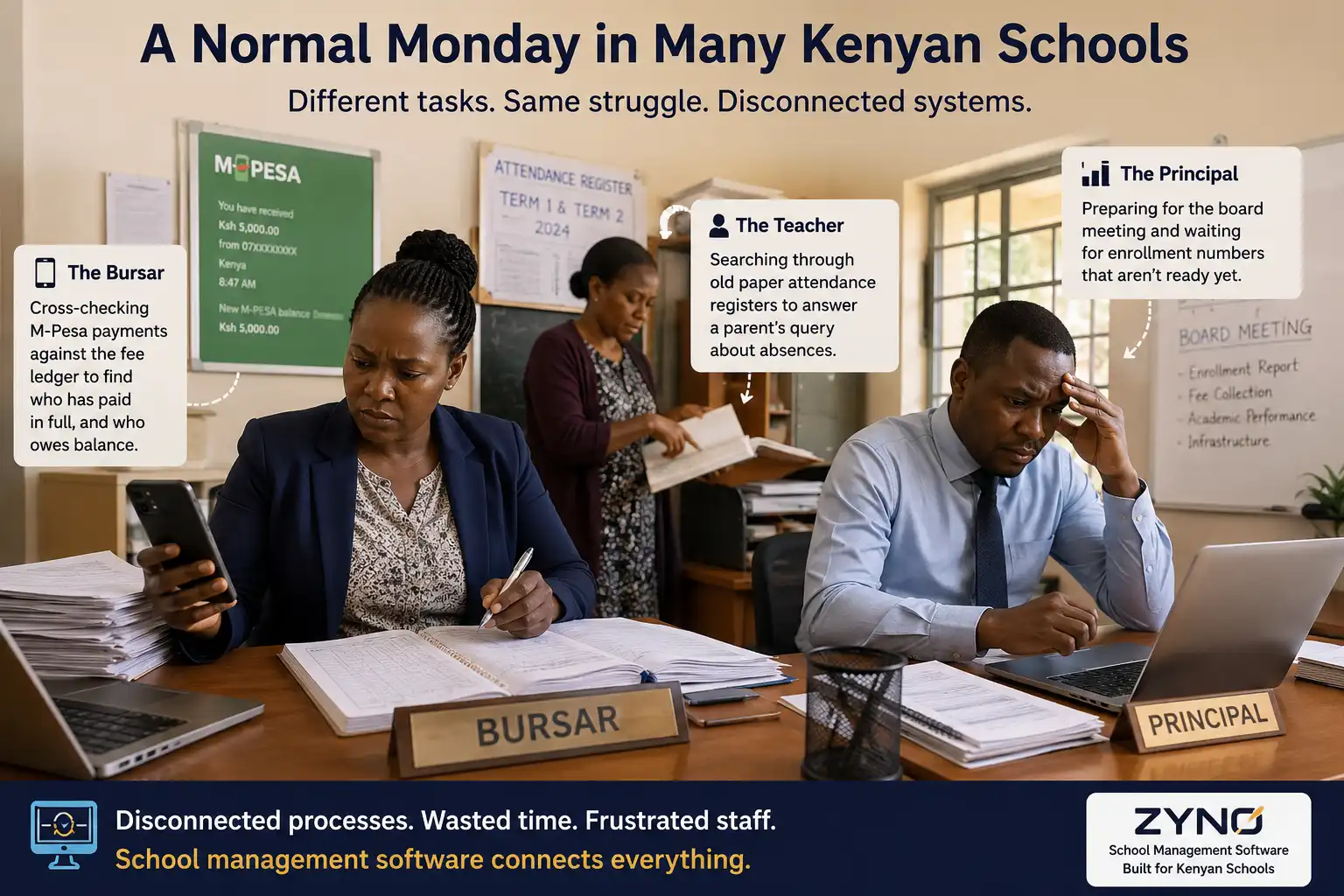
A bursar in Nairobi starts her Monday cross-checking a stack of M-Pesa payment messages against a fee ledger, trying to work out which parents have actually cleared term fees and which have only paid part of it. Down the corridor, a class teacher is digging through a paper attendance register from two terms ago because a parent has asked why their child was marked absent. Meanwhile, the principal is preparing a report for an afternoon board meeting and needs enrollment numbers that nobody has fully compiled yet. None of these tasks is unusual. Together, they're a normal Monday in a lot of Kenyan schools.
The real benefit of school management software isn't simply "going digital" for its own sake. It's connecting these everyday processes - admissions, fees, attendance, academics, communication - so staff spend less time chasing information from three different places and more time actually managing the school.
This article looks at ten specific benefits school management software Kenya institutions are adopting, what problem each one actually solves, who inside the school feels the difference, and what to realistically expect before choosing a system.
School management software helps Kenyan schools by centralizing student records, reducing repetitive administrative work, improving fee tracking and visibility, strengthening parent communication, and speeding up academic reporting. The result for most schools is less time spent searching for information and reconciling records manually, and more consistent, transparent operations for administrators, teachers, and parents alike.
Problem: Student records in many Kenyan schools live across admission forms, exercise books, Excel sheets, and individual teachers' notes. When a record is needed, someone has to remember where it was last updated.
How software helps: A school management system keeps one record per student - personal details, academic history, attendance, and fee status - accessible to the staff who need it, without re-entering the same information in multiple places.
Real-world example: A teacher in Kisumu needing a transferring student's previous term's marks would otherwise have to track down whoever kept that file. With centralized records, the information is one search away.
Result: Fewer duplicate records, less time spent locating information, and more consistent data across departments. Student information management is usually the foundation every other module builds on.
Problem: Repetitive manual tasks - re-typing the same data, searching for old records, preparing reports from scratch each term - eat into hours that could go toward actual school management.
How software helps: Automating attendance compilation, report generation, and routine data entry removes much of the repetitive work, though it doesn't eliminate the need for staff to review and act on what the system produces.
Real-world example: An administrator in Nakuru who previously spent a full afternoon compiling a term's attendance summary by hand can generate the same report in minutes, freeing that time for follow-up with parents of frequently absent students.
Result: Less time on repetitive tasks, not necessarily less total work - the time saved usually shifts toward tasks that need human judgment, like following up on issues the reports surface.
Problem: Reconciling fee payments manually - especially when they arrive through multiple channels - is one of the most persistent sources of administrative strain for Kenyan schools.
How software helps: A fee management module tracks fee structures, records payments, flags outstanding balances, and generates receipts, giving both the school and parents a clear, current view of payment status.
Real-world example: A bursar checking payments at the start of term no longer has to manually match each transaction message against a student's ledger line by line; the system reflects what's been recorded as paid and what's still outstanding.
Some Kenyan schools use platforms that support M-Pesa or other mobile money integration for fee collection specifically, though this varies by vendor and shouldn't be assumed as a default feature. Confirm this directly with any provider you're evaluating rather than assuming it's included. Fee management done well gives school owners clearer financial visibility without depending on end-of-term manual reconciliation.
Result: Faster reconciliation, clearer visibility into outstanding balances, and fewer disputes over what's actually been paid.
Problem: Many schools already communicate with parents - through SMS, WhatsApp groups, phone calls, and notice boards - but that communication is often scattered and inconsistent, not organized.
How software helps: A dedicated communication feature centralizes updates on attendance, fees, academic performance, assignments, and announcements, so parents check one place instead of piecing information together from different channels.
Real-world example: A parent in Mombasa waiting to know whether school fees have cleared, or whether their child was marked present that day, gets a direct answer instead of having to call the school office and wait for someone to check manually.
Result: The difference isn't that communication becomes possible - most schools already communicate somehow. It's that communication becomes organized and consistent rather than dependent on someone remembering to send an update. Parent-teacher communication tools work best when they replace scattered channels rather than adding another one on top.
Problem: Paper attendance registers are slow to compile into reports and easy to lose or damage, and spotting a pattern - like a student who's frequently absent on a specific day - is difficult without digging through weeks of records.
How software helps: Digital attendance capture keeps a running, searchable history, and can flag absentee patterns automatically rather than requiring someone to notice them manually. Where supported, it can also trigger a parent notification when a student is marked absent.
Real-world example: A teacher in Eldoret marking attendance on a tablet instead of paper saves a few minutes each day - small on its own, but compounding across a full term and across every class in the school.
Result: More reliable historical records and earlier visibility into attendance patterns that might otherwise go unnoticed until a report card conversation.
Problem: Manually entering marks, calculating grades, and compiling report cards is time-consuming and prone to transcription errors, especially close to the end of term when everyone is under pressure.
How software helps: Digitizing marks entry, automating grade calculation, and generating report cards directly from stored records cuts down the manual compilation work and reduces the chance of a transposed number changing a student's grade.
It's worth being clear about what this does and doesn't do: software can meaningfully speed up how quickly results get processed and reduce administrative errors, but it doesn't improve teaching quality or student performance on its own. Those depend on classroom instruction, not the reporting tool.
Result: Faster turnaround on report cards and more reliable academic records, without any implied promise about grades improving.
Problem: A principal or school owner making decisions about staffing, fee structure, or enrollment often has to request data from multiple people before a meeting, which slows down decisions that depend on current information.
How software helps: Dashboards and reports pull enrollment, attendance, fee collection, and academic data into one view, so leadership can check current numbers directly instead of waiting for someone to compile them.
Real-world example: A school owner in Nairobi preparing for a board meeting can pull up current fee collection rates and enrollment trends directly, rather than requesting the numbers from three different staff members and waiting for each to respond.
Result: Decisions grounded in current data rather than whatever numbers happened to be compiled most recently - though the software only provides the visibility; the decision-making judgment still rests with school leadership.
Problem: When records exist on paper or in personal spreadsheets, it's hard to verify who changed what, when a payment was actually recorded, or whether a report reflects the most current information.
How software helps: Digital records with user permissions and activity logs - where supported by the platform - create a clearer trail of who entered or changed information, which matters both for internal accountability and for parents who want confidence that fee and attendance records are accurate.
Result: Fewer disputes over "what was actually recorded," and a system that's easier to audit than a mix of paper files and personal notebooks.
Problem: As a school group adds campuses, keeping records consistent across branches using separate spreadsheets or disconnected local systems becomes progressively harder to manage.
How software helps: Where a platform genuinely supports multi-campus operations, it can centralize reporting across branches while allowing role-based access so each campus manages its own day-to-day data within a shared structure. Not every system supports this well, so it's worth testing specifically with a multi-campus scenario during a demo rather than assuming it will work.
Real-world example: A school group expanding from a single Nairobi campus to a second location in Nakuru needs consistent student records and fee reporting across both, rather than two separate systems that don't talk to each other.
Result: Standardized processes across campuses instead of each branch developing its own disconnected workaround.
The first nine benefits are really about one underlying shift: connecting students, teachers, parents, administrators, and finance so information doesn't have to be manually passed between them. A bursar's fee record, a teacher's attendance entry, and a parent's notification can draw from the same underlying data instead of three separate, disconnected processes.
That said, it's worth being honest about the limits. Software organizes and speeds up information flow - it doesn't replace the judgment of a good administrator, the relationship between a teacher and a parent, or the leadership decisions a principal has to make. The goal isn't to remove people from the process; it's to stop good people from spending their time on tasks a system can handle, so they have more time for the parts of the job that actually need a human.
| Benefit | School Problem | How Software Helps | Who Benefits |
|---|---|---|---|
| Student information | Records scattered across paper, spreadsheets, and personal notes | Single, centralized, searchable student record | Teachers, administrators, academic coordinators |
| Fee management | Manual reconciliation of payments from multiple channels | Automated tracking of payments, balances, and receipts | Bursars, finance staff, school owners, parents |
| Communication | Updates scattered across calls, SMS, and WhatsApp | Centralized, consistent updates on fees, attendance, and academics | Parents, teachers, administrators |
| Attendance | Paper registers, slow to compile and easy to lose | Digital capture with searchable history and pattern flags | Teachers, class coordinators, parents |
| Academic reporting | Manual marks entry and report card compilation | Automated grade calculation and report generation | Teachers, academic coordinators, principals |
Kenya's education and communication landscape has a few specific features that make centralized school software more relevant here than a generic "why go digital" argument would suggest.
Mobile-based communication and payments are already deeply embedded in daily life. In the January–March 2025 reporting quarter, Kenya's mobile money subscriptions grew 7.2% to reach 45.36 million, with over 42 million smartphone connections recorded in the same period, according to the Communications Authority of Kenya. That level of mobile adoption means parents are generally reachable through mobile channels already - the practical question for schools is whether those channels are organized or scattered.
The government's own approach to education data is also shifting toward centralization. In January 2026, Kenya's Ministry of Education launched the Kenya Education Management Information System (KEMIS), replacing the older NEMIS platform, to track learners nationally from early childhood education through university with a single digital identifier per learner. The stated goal is more accurate, real-time data on enrollment and capitation, addressing long-standing gaps in the previous system. For individual schools, this national shift toward centralized, verifiable digital records adds a practical incentive of its own: schools whose internal records are already organized and accurate will find it far easier to align with national reporting expectations than schools still reconciling paper registers at year-end.
Kenya's private school sector is also genuinely competitive, particularly in urban centers like Nairobi and Mombasa, where parents increasingly compare schools not just on academics but on how responsive and organized the administration feels. None of this means software is mandatory or that every school needs the same set of features - a small rural primary school and a multi-campus private group in Nairobi have different operational pressures. But the underlying direction, both in government policy and parent expectations, is toward more organized, verifiable digital records rather than away from it.
For more details on how Kenya's national education data systems work, the Ministry of Education's public communication on KEMIS is a useful reference point.
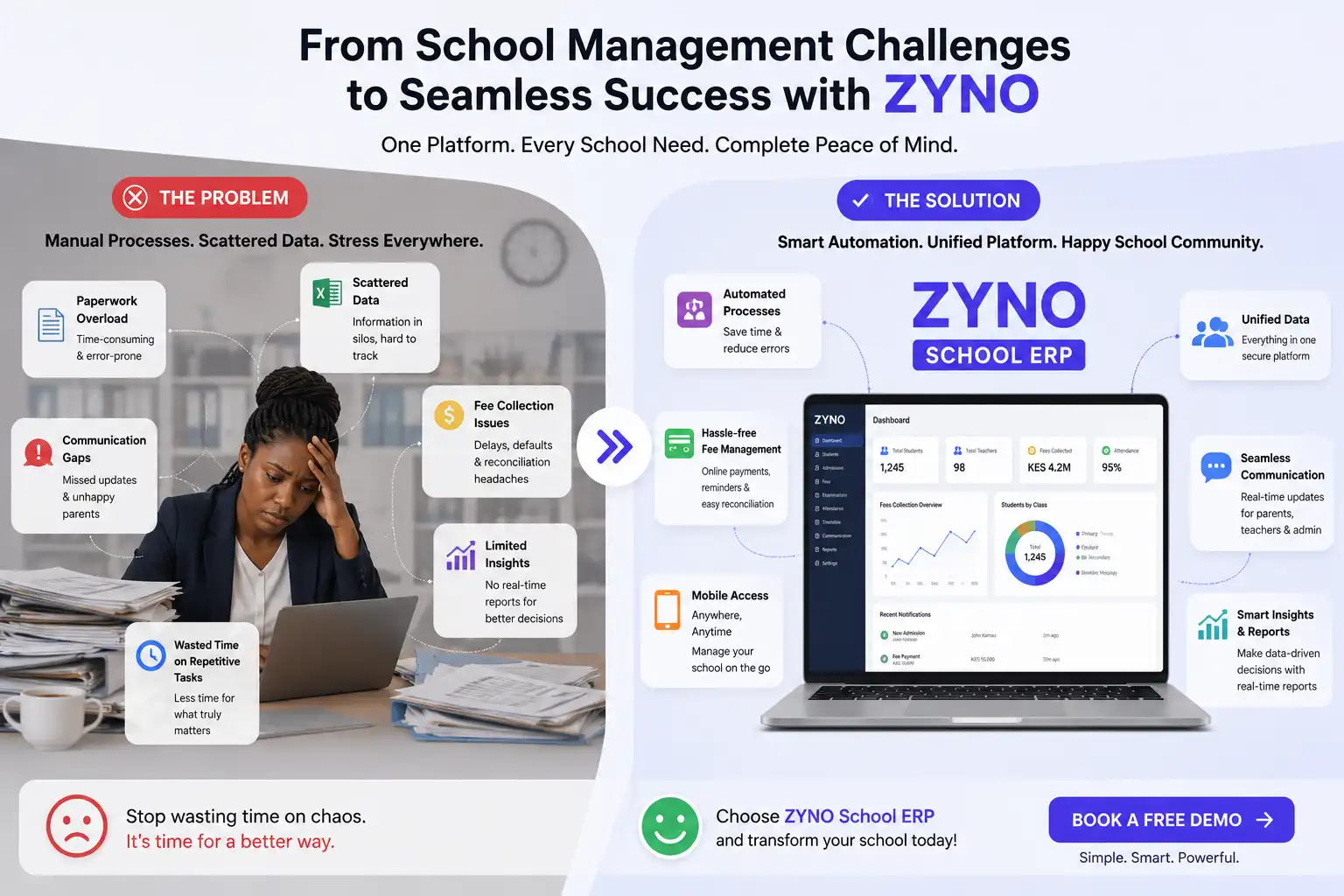
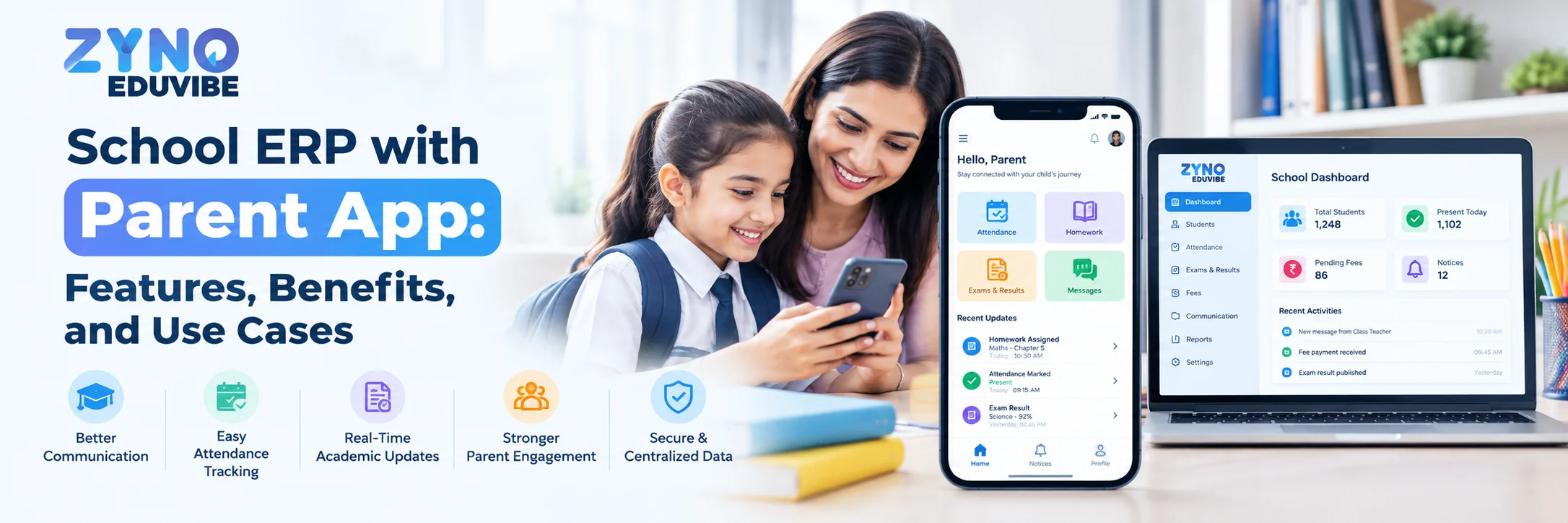
For schools evaluating a school ERP built around these kinds of centralized workflows, ZYNO EduVibe is one platform worth including in that comparison. It brings together student information, admissions, fees, examinations, communication, and administrative modules into a single system rather than requiring schools to piece together several separate tools.
In practice, that covers student information management, admission and enrollment tracking, fee management, examination and result management, homework and assignments, parent-teacher communication, timetable management, HR and payroll, transport management, and inventory and asset tracking. Schools should confirm current module availability and specific integrations - including any mobile money support - directly with the ZYNO team, since features can vary by plan and region.
Beyond the core modules, day-to-day access matters just as much as what the system can technically do. A mobile app means administrators, teachers, and parents aren't tied to a desktop computer to check records or send updates, which matters in a market where most day-to-day communication already happens on a phone. ZYNO EduVibe isn't positioned here as the only option or an independently proven "best" platform - it's one system built around the same centralization principle this article has been discussing throughout, and worth evaluating alongside other providers based on your school's specific requirements.
Request a ZYNO EduVibe demo to see how it fits your school's actual workflow.
Key benefits include centralized student records, reduced repetitive administrative work, better fee tracking, improved parent communication, faster academic reporting, and clearer visibility for school leaders making operational decisions.
It connects processes that are often handled separately - admissions, attendance, fees, exams, and communication - into one system. This reduces manual data entry and cross-checking, giving staff more time for tasks that need direct attention.
Know more about cost - School Management System Prices in Kenya
Yes, most platforms include fee management features covering fee structures, payment tracking, and outstanding balances. Some support mobile money integration for fee collection, though this varies by vendor and should be confirmed directly.
Yes. Centralizing updates on attendance, fees, and academic performance into one channel makes communication more consistent than relying on scattered calls, SMS, and messaging groups, though schools still need to use the tools actively for this benefit to show up.
Yes, student information management is typically a core module, keeping personal details, academic history, and documentation in one searchable record accessible to authorized staff across departments.
Yes, private schools are among the most common adopters, particularly as parent expectations around responsiveness and administrative organization grow in competitive urban markets like Nairobi and Mombasa.
Costs vary based on student count, modules required, and vendor, with pricing models ranging from per-student and per-campus to flat monthly or annual subscriptions. Schools should request an itemized quote rather than relying on a general price.
Confirm which modules are genuinely included, whether it supports Kenya-specific needs like mobile money integration, how it handles multi-campus setups if relevant, what implementation and training involve, and what ongoing support looks like.
Must Read:
1) Database Management for Perfectly Organized Student Records
2) Student Information Management: No Mess. Just Smart Schools
3) Fee Management, Simplified to Perfection
4) Database Management for Perfectly Organized Student Records
Top 10 School Management Software in India
Read More →What Is School ERP Software? The Complete Guide for Modern Schools
Read More →
How to Digitize Your School Operations Step-by-Step Guide
Read More →
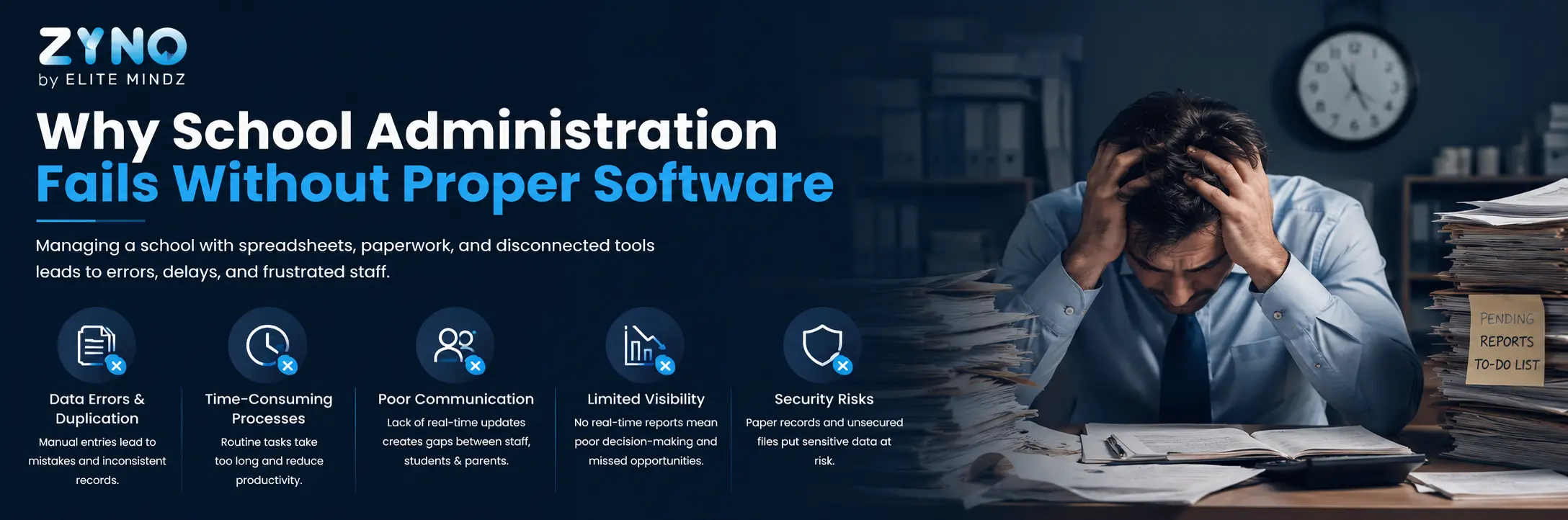
Why School Administration Fails Without Proper Software
Read More →
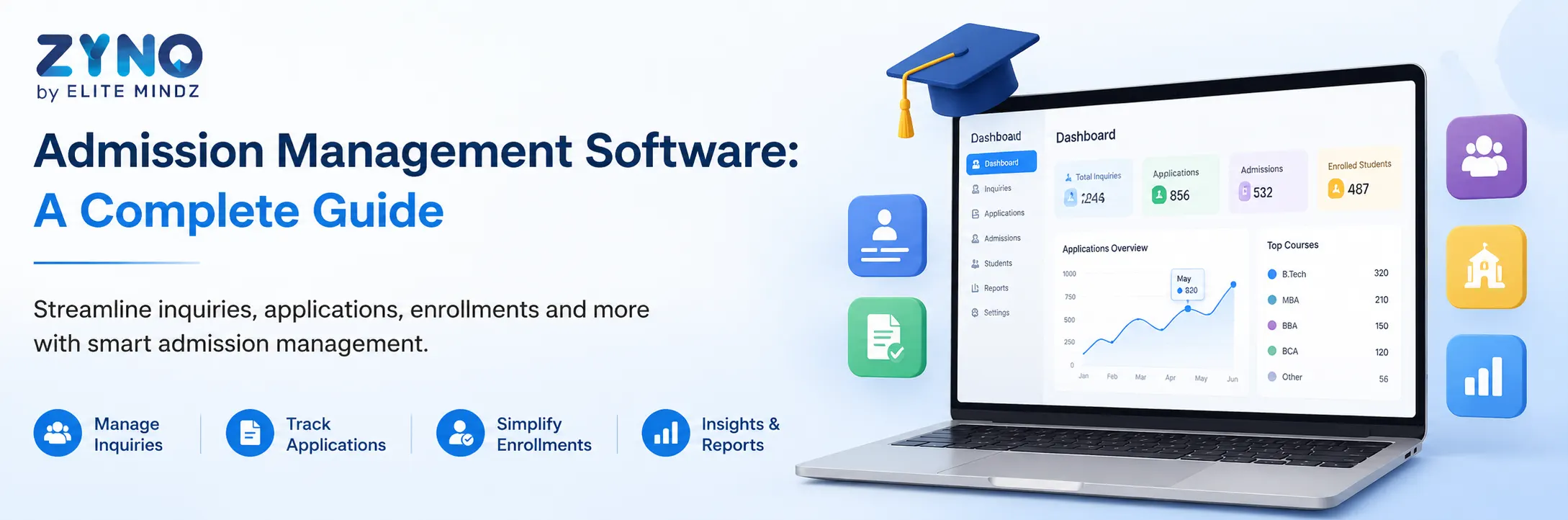
Admission Management Software: A Complete Guide
Read More →
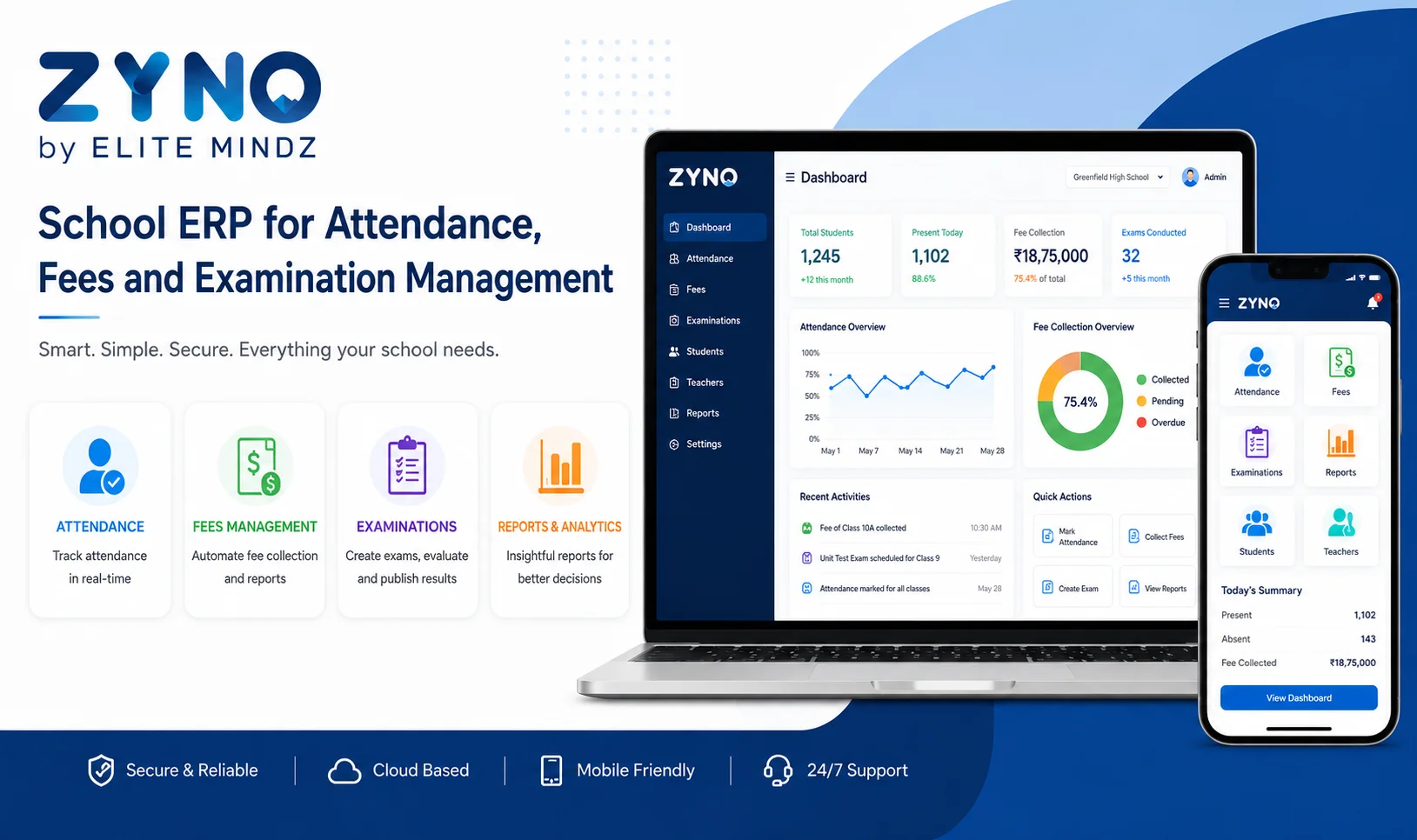
School ERP for Attendance, Fees, and Examination Management
Read More →
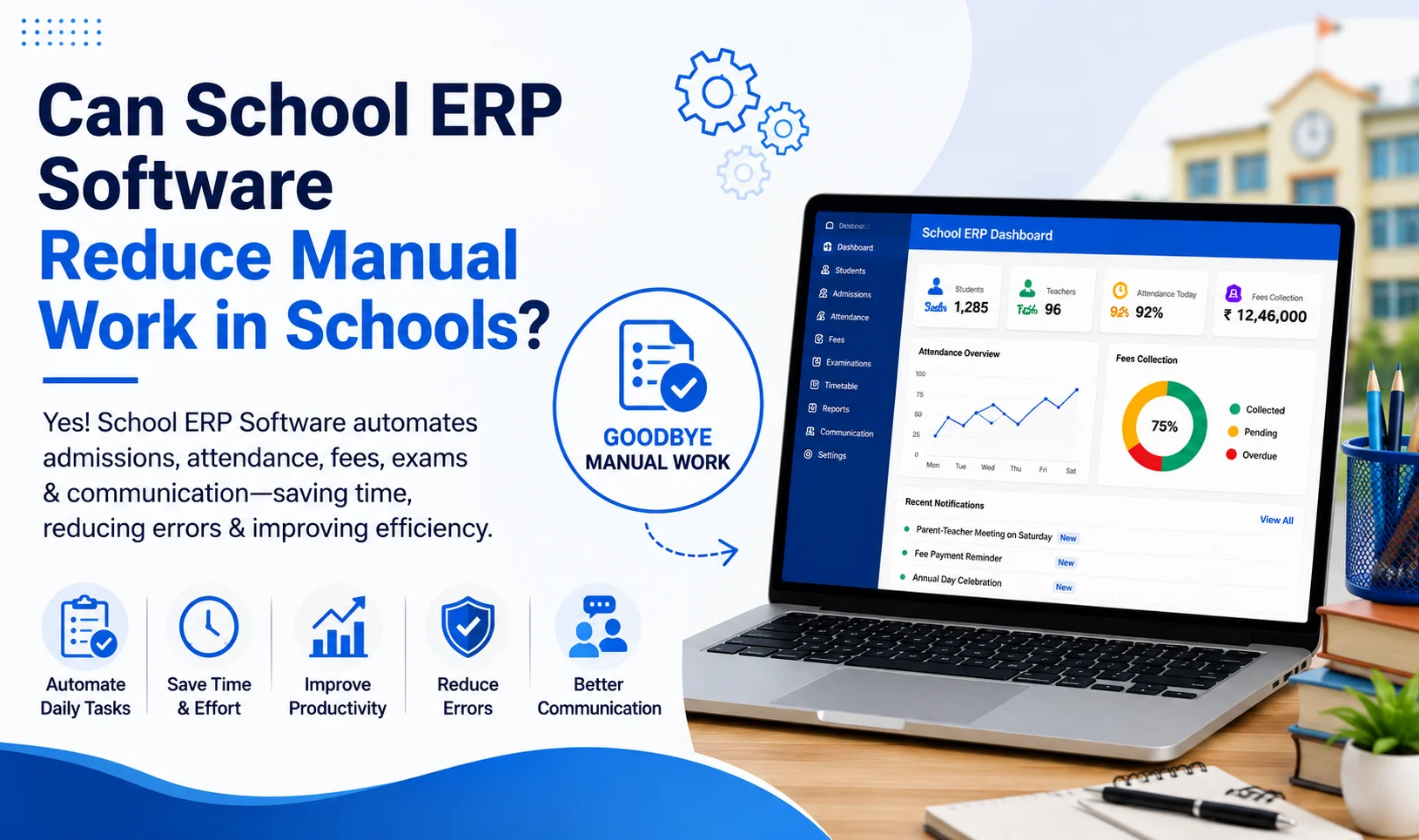
Can School ERP Software Reduce Manual Work in Schools?
Read More →
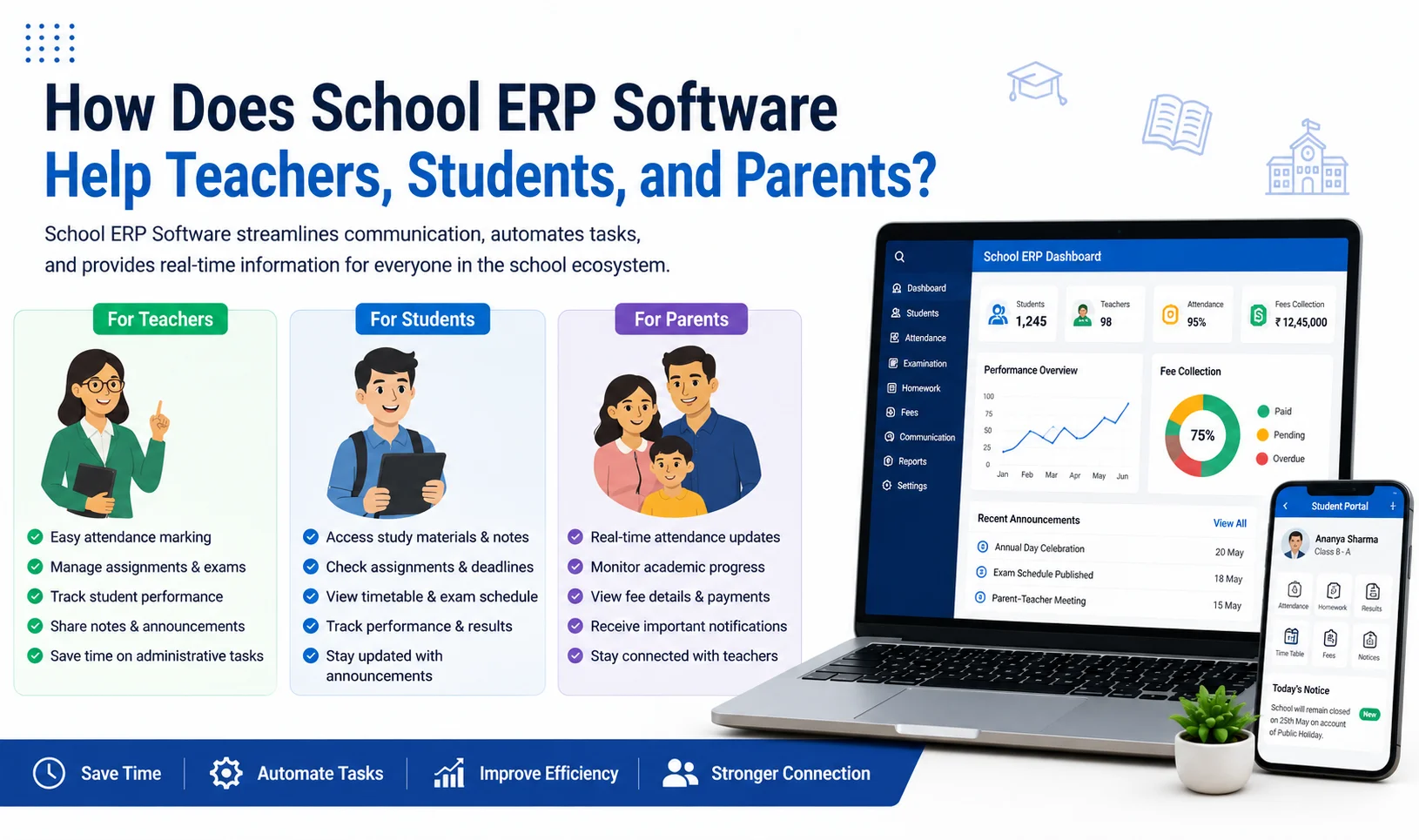
How Does School ERP Software Help Teachers, Students, and Parents?
Read More →
Japan's GIGA School Program and the Rise of Digital School Management
Read More →
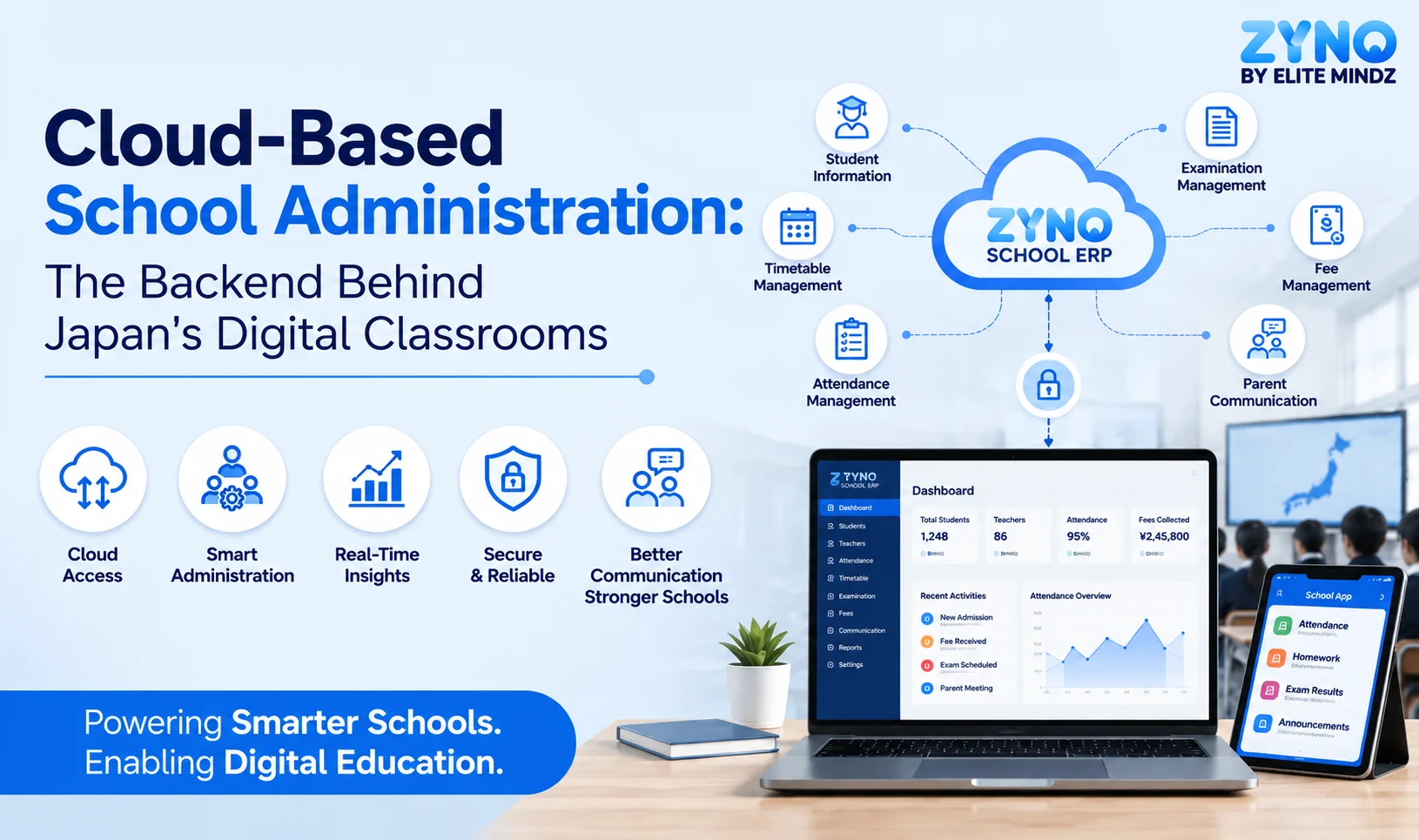
Cloud-Based School Administration: The Backend Behind Japan's Digital Classrooms
Read More →
Ultimate Guide to School ERP Systems in 2026
Read More →
15 Benefits of School ERP Software for Modern Schools
Read More →
Best School Management Software in Abu Dhabi: Top Solutions for Schools in 2026
Read More →
Best School Management Software in Ethiopia: Top Solutions for Schools in 2026
Read More →
School Management System Prices in Kenya: Cost, Features & Pricing Guide 2026
Read More →
10 Benefits of School Management Software for Kenyan Schools
Read More →Partner with ZYNO by Elite Mindz to revolutionize how your business works. Fill out the form, and we’ll reach out with AI-powered solutions made just for you.
We use browser cookies to ensure you get the best experience on our website. Learn more
The form was submitted successfully!