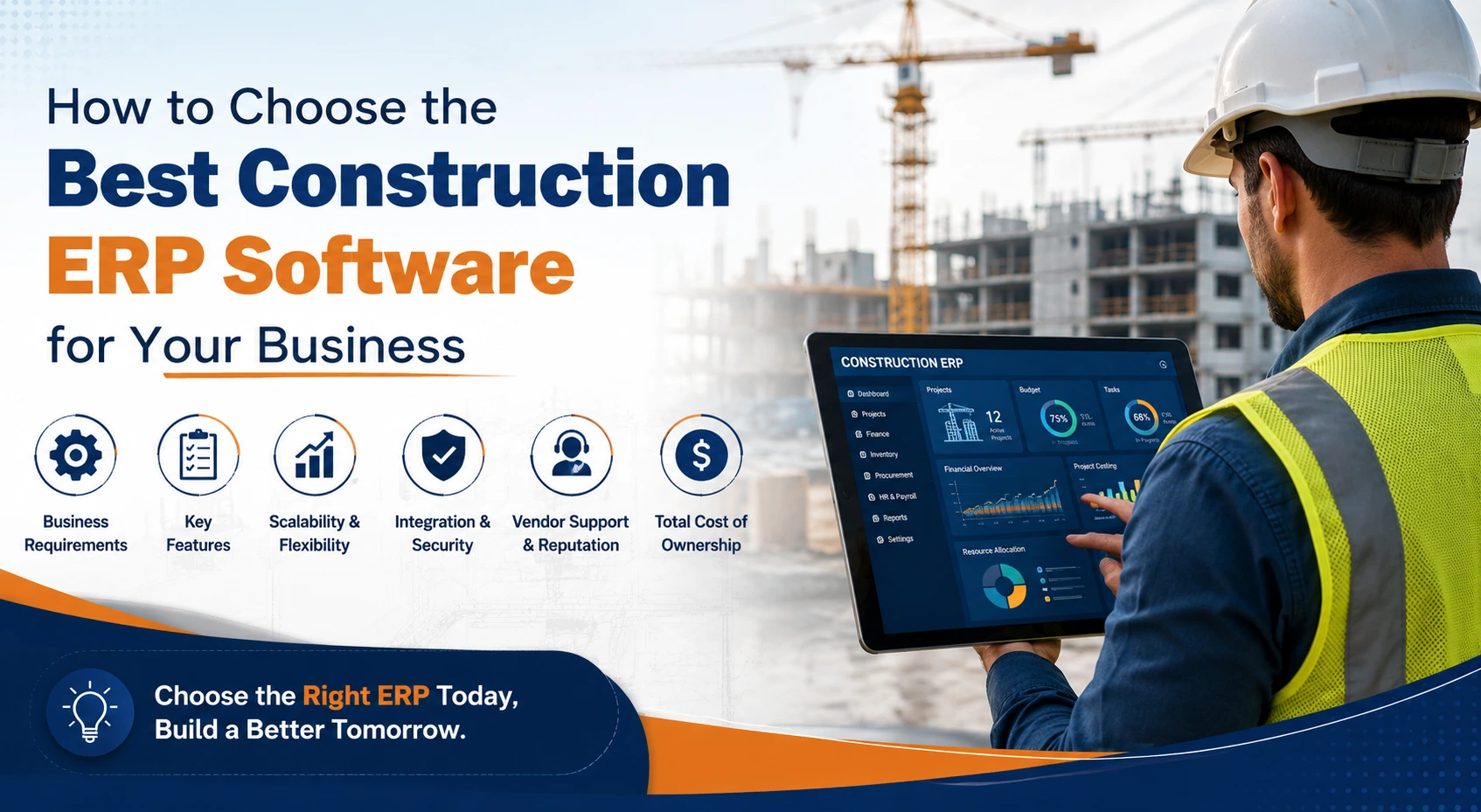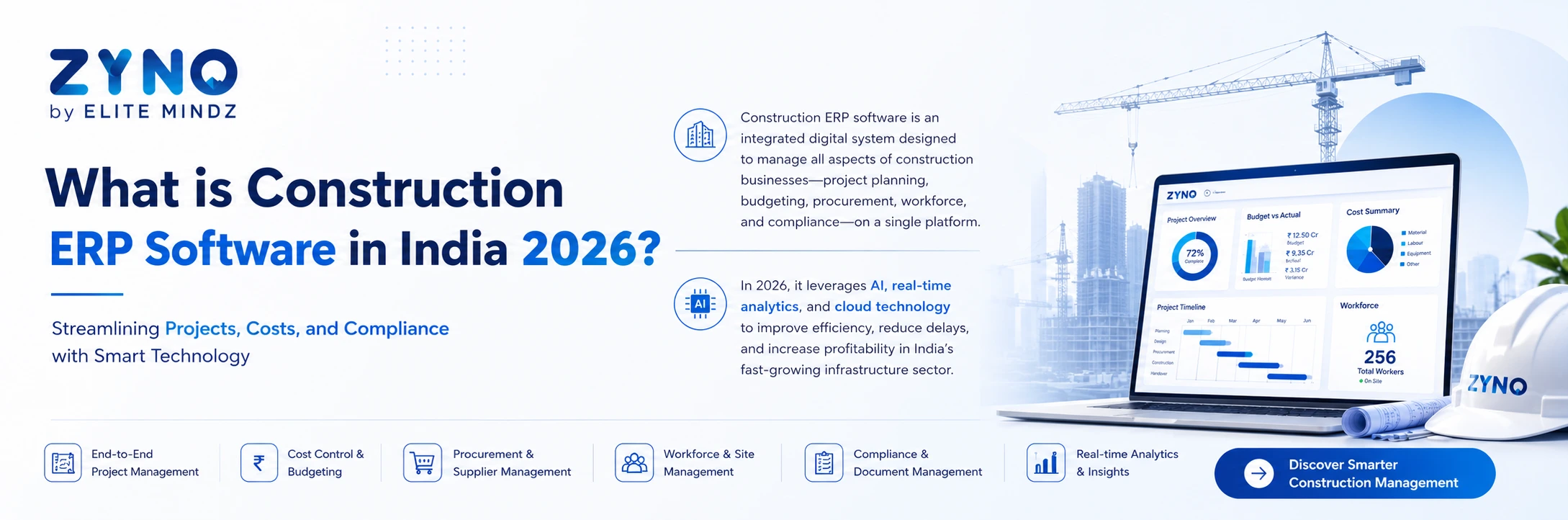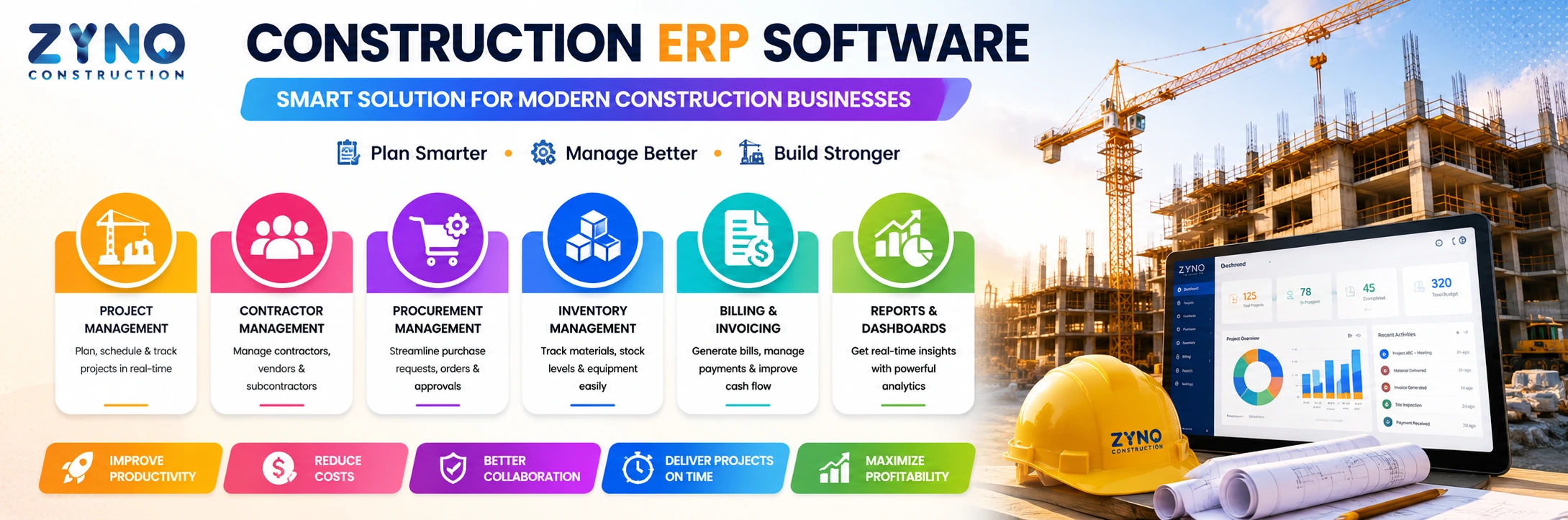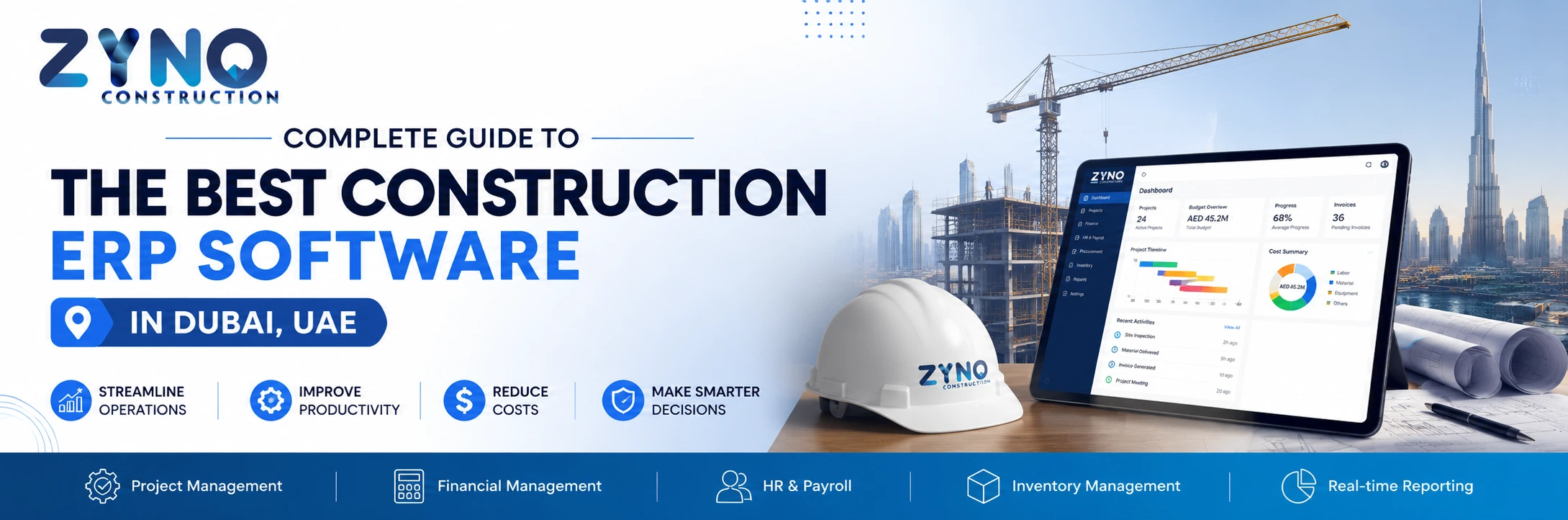
How to Choose the Best Construction ERP Software for Your Business
Stop Losing Money to VAT Penalties & Manual Errors
Businesses using ZYNO Books cut accounting time by 70% and stay 100% ZATCA-compliant — automatically.

The construction industry is becoming increasingly competitive, requiring businesses to manage projects, budgets, procurement, resources, subcontractors, and finances more efficiently than ever before. Traditional methods such as spreadsheets and disconnected software systems often lead to project delays, cost overruns, communication gaps, and reduced profitability.
This is why many construction companies are investing in Construction ERP Software to streamline operations and gain better control over projects. However, selecting the right ERP solution can be challenging because every construction business has unique requirements.
The right construction ERP system can improve project visibility, optimize resources, automate workflows, and support long-term growth. This guide explains the key factors organizations should consider when choosing the best construction management software for their business.
Why Choosing the Right Construction ERP Software Matters
An ERP system is not just another software application; it serves as the central platform for managing construction operations. From project planning and procurement to billing and reporting, every critical business function becomes connected through a single system.
Choosing the right ERP solution helps organizations:
- Improve project execution
- Increase operational efficiency
- Reduce project costs
- Enhance collaboration
- Improve financial control
- Strengthen decision-making
- Increase overall profitability
On the other hand, selecting the wrong software can result in implementation challenges, low user adoption, and limited business benefits.
1. Understand Your Business Requirements
Before evaluating any ERP software, construction companies should first identify their operational challenges and business goals. Every organization has different processes, project types, and management requirements.
Ask yourself:
- What challenges are affecting project performance?
- Which processes are still managed manually?
- What level of project visibility is needed?
- Which departments require automation?
- What reports are necessary for management decisions?
A clear understanding of business requirements helps organizations select software that aligns with their workflows and long-term objectives. It also prevents investing in unnecessary features while ensuring essential capabilities are available.
2. Look for Industry-Specific Functionality
Not all ERP solutions are designed for the construction sector. Generic ERP systems may support accounting and inventory management but often lack construction-specific capabilities.
A robust ERP for construction industry should provide functionality for:
- Project planning
- Resource allocation
- Procurement management
- Material management
- Labour management
- Equipment tracking
- Vendor management
- Billing and invoicing
Industry-specific functionality ensures that the software supports real-world construction processes rather than forcing businesses to adapt their operations around generic tools.
3. Evaluate Project Management Capabilities
Project management is one of the most important components of any construction ERP solution. Since projects involve multiple stakeholders, resources, and timelines, project management functionality should be comprehensive and easy to use.
The software should enable users to:
- Create project schedules
- Define milestones
- Track project progress
- Monitor project costs
- Manage project resources
- Identify delays and risks
Effective project management tools improve coordination and ensure projects remain on schedule and within budget.
Streamline project planning, budgeting, procurement, contract management, workforce tracking, equipment utilization, and site operations with ZYNO Construction by Elite Mindz. Designed specifically for construction businesses, our powerful Construction ERP Software helps you improve project visibility, control costs, enhance productivity, and deliver projects on time with complete operational transparency.
4. Assess Procurement and Vendor Management Features
Procurement is a critical aspect of construction operations because project success depends on the timely availability of materials and services.
A strong procurement module should support:
- Purchase requisitions
- Purchase orders
- Vendor onboarding
- Supplier evaluation
- Approval workflows
- Procurement tracking
Efficient procurement management helps organizations reduce delays, improve supplier relationships, and gain better control over project spending.
5. Check Inventory and Material Management Capabilities
Construction projects consume large quantities of materials across multiple locations. Without proper tracking, businesses often experience inventory shortages, excess stock, or material wastage.
An effective inventory management system should provide:
- Real-time stock visibility
- Warehouse management
- Material issue tracking
- Stock forecasting
- Reorder management
Accurate inventory management improves project continuity and helps control material-related costs.
6. Review Financial Management Functions
Financial management plays a major role in construction project success. Organizations must monitor budgets, expenses, invoices, and cash flow continuously to maintain profitability.
The ERP software should support:
- Budget planning
- Cost tracking
- Accounts payable
- Accounts receivable
- Cash flow monitoring
- Financial reporting
Real-time financial visibility helps businesses identify cost overruns early and make informed financial decisions.
7. Ensure Workforce and Labour Management Support
Labour costs account for a significant portion of construction expenses. Effective workforce management is essential for maintaining productivity and controlling costs.
Look for features such as:
- Employee records
- Attendance management
- Workforce allocation
- Payroll processing
- Productivity tracking
- Labour cost analysis
A centralized workforce management system enables organizations to utilize labour resources more effectively while reducing administrative effort.
8. Evaluate Equipment and Asset Management Features
Construction equipment represents a major investment for most companies. Poor equipment management can result in downtime, maintenance issues, and increased project costs.
The ERP system should help organizations:
- Track equipment usage
- Schedule maintenance
- Monitor asset performance
- Manage repair history
- Analyze equipment costs
Proper asset management increases equipment utilization and extends asset life while reducing operational disruptions.
9. Consider Scalability for Future Growth
Construction businesses evolve over time. As organizations take on larger projects, expand into new locations, or increase workforce size, their software requirements also grow.
A scalable ERP solution should be capable of:
- Supporting additional users
- Managing more projects
- Handling increased transaction volumes
- Expanding across multiple locations
Choosing a scalable platform ensures long-term value and eliminates the need for costly software replacements in the future.
10. Check Mobile Accessibility
Modern construction teams frequently work across multiple project sites. Mobile accessibility enables employees to access information and update project data from anywhere.
Mobile-enabled ERP software helps users:
- Approve requests
- Update project progress
- Access project documents
- Track site activities
- Generate reports
This improves communication between office and field teams while accelerating decision-making.
11. Analyze Reporting and Analytics Capabilities
Construction companies generate large volumes of operational and financial data. Without proper reporting tools, valuable insights can be missed.
A good ERP system should provide:
- Real-time dashboards
- Project performance reports
- Cost analysis reports
- Procurement insights
- Labour productivity metrics
- Financial analytics
Comprehensive reporting helps management make informed decisions and identify opportunities for improvement.
12. Verify Integration Capabilities
Most construction organizations use multiple software applications for accounting, HR, CRM, and project management.
Your ERP solution should integrate seamlessly with:
- Accounting software
- Payroll systems
- HR applications
- CRM platforms
- Third-party business tools
Integration reduces duplicate data entry, improves accuracy, and creates a unified business environment.
13. Evaluate User Experience and Ease of Use
Even the most advanced ERP software will fail if employees find it difficult to use. User adoption is critical to implementation success.
The system should offer:
- Simple navigation
- User-friendly dashboards
- Easy access to information
- Minimal training requirements
- Intuitive workflows
A user-friendly interface improves productivity and encourages employees to use the system effectively.
14. Assess Vendor Support and Implementation Services
ERP implementation is a long-term investment that requires ongoing support from the software provider.
Businesses should evaluate:
- Implementation expertise
- Training services
- Technical support
- Product updates
- Customer success programs
Reliable vendor support ensures smooth deployment and helps organizations maximize the return on their ERP investment.
Common Mistakes to Avoid When Selecting Construction ERP Software
Many construction companies make mistakes during the software selection process.
Avoid the following:
Choosing Software Based Only on Price
Low-cost solutions may lack essential features and create long-term limitations.
Ignoring Future Requirements
Always consider future business growth when evaluating software.
Overlooking User Experience
Complex systems often result in low employee adoption.
Failing to Involve Key Stakeholders
Include project managers, procurement teams, finance departments, and operational leaders during evaluation.
Neglecting Vendor Support
Strong support services are essential for successful implementation and ongoing system performance.
Choose ZYNO Construction by Elite Mindz to manage project planning, budgeting, procurement, contracts, resource allocation, billing, and site operations from a single platform. Gain real-time visibility into every project, reduce delays, control costs, and improve productivity with a Construction ERP solution built specifically for contractors, builders, and infrastructure companies.
Why More Construction Companies Are Investing in ERP Software
Construction companies are embracing digital transformation to remain competitive and improve project outcomes.
A modern construction software solution helps organizations:
- Improve project visibility
- Streamline operations
- Reduce manual processes
- Increase collaboration
- Improve profitability
- Enhance customer satisfaction
As projects become more complex, ERP software is becoming a necessity rather than an option.
Why Choose ZYNO Construction?
ZYNO Construction by Elite Mindz is a comprehensive construction ERP software designed specifically for contractors, builders, infrastructure companies, and real estate developers.
The platform helps organizations manage:
- Project planning and execution
- Procurement and purchasing
- Inventory and materials
- Workforce and labour
- Equipment and assets
- Finance and accounting
- Vendor and client billing
- Reporting and analytics
With industry-specific functionality, real-time visibility, and workflow automation, ZYNO Construction helps businesses improve efficiency, control costs, and deliver projects successfully.
Conclusion
Choosing the best construction ERP software is one of the most important decisions a construction company can make. The right solution can streamline operations, improve project management, optimize resources, and enhance profitability.
By carefully evaluating business requirements, industry-specific functionality, financial capabilities, scalability, reporting, and vendor support, organizations can select an ERP system that supports both current needs and future growth.
Investing in the right construction ERP system not only improves operational efficiency but also provides the foundation for sustainable business success in an increasingly competitive construction industry.
Frequently Asked Questions (FAQs)
1. What is Construction ERP Software?
Construction ERP Software is a comprehensive business management solution designed specifically for construction companies. It integrates project management, procurement, inventory, finance, workforce management, billing, and reporting into a single platform. By centralizing data and automating workflows, construction ERP software helps businesses improve project visibility, reduce operational inefficiencies, control costs, and ensure projects are completed on time and within budget.
2. Why do construction companies need ERP software?
Construction companies manage multiple projects, vendors, subcontractors, materials, and financial transactions simultaneously. Without a centralized system, organizations often face delays, budget overruns, and communication challenges. ERP software streamlines operations by connecting all departments through a single platform, improving collaboration, automating processes, and providing real-time insights that help businesses make better decisions and improve overall project performance.
3. What are the key features of Construction ERP Software?
Key features typically include project management, procurement management, inventory control, financial management, workforce management, equipment tracking, vendor management, billing, reporting, and analytics. Advanced construction ERP solutions also offer mobile access, workflow automation, document management, and real-time dashboards. These features help construction businesses manage projects efficiently while improving productivity, cost control, and resource utilization.
4. How does Construction ERP Software improve project management?
Construction ERP software provides real-time visibility into project schedules, budgets, resources, and progress. Project managers can track milestones, allocate resources, monitor costs, and identify potential delays before they impact project completion. Centralized project information improves communication between teams and stakeholders, enabling faster decision-making and better project execution while ensuring projects stay on schedule and within budget.
5. Can Construction ERP Software help reduce project costs?
Yes, construction ERP software helps reduce project costs by improving budget tracking, procurement management, inventory control, and resource utilization. The software provides real-time insights into project expenses, helping businesses identify cost overruns and inefficiencies early. Automated workflows also reduce manual errors and administrative costs, resulting in better financial control and increased project profitability.
6. How does Construction ERP Software support procurement management?
Construction ERP software automates procurement processes such as purchase requisitions, purchase orders, supplier management, approvals, and invoice tracking. It improves vendor collaboration and ensures timely procurement of materials and services. By providing complete visibility into procurement activities, businesses can reduce delays, negotiate better supplier contracts, and maintain better control over project spending.
7. Is Construction ERP Software suitable for small and mid-sized construction companies?
Yes, modern construction ERP solutions are designed to support businesses of all sizes. Small and mid-sized construction companies can use ERP software to streamline operations, improve project visibility, automate manual tasks, and enhance financial management. Many ERP platforms are scalable, allowing businesses to add users, projects, and features as they grow without changing systems.
8. What should businesses consider when choosing Construction ERP Software?
Businesses should evaluate industry-specific functionality, project management capabilities, financial management features, scalability, mobile accessibility, reporting tools, integration capabilities, and vendor support. It is important to choose a solution that aligns with current business requirements while also supporting future growth. A user-friendly interface and reliable implementation support are also critical factors in ensuring successful ERP adoption.
9. Can Construction ERP Software integrate with other business systems?
Yes, most modern construction ERP systems can integrate with accounting software, HRMS platforms, CRM systems, payroll applications, and third-party business tools. Integration ensures seamless data flow across departments, reduces duplicate data entry, improves accuracy, and creates a unified operational environment. This enables organizations to improve productivity and make better business decisions based on accurate, real-time information.
10. Why should construction companies choose ZYNO Construction?
ZYNO Construction is a specialized construction ERP software solution designed to address the unique challenges of the construction industry. It offers end-to-end project management, procurement automation, inventory tracking, workforce management, financial control, billing, and analytics within a single platform. By providing real-time visibility and workflow automation, ZYNO Construction helps businesses improve project efficiency, reduce costs, enhance collaboration, and achieve greater profitability across all construction operations.
Table of Contents
Related Blogs
What is Construction ERP Software in India 2026?
Read More →
Construction ERP Software – Features, Benefits & Complete Guide
Read More →
Complete Guide to the Best Construction ERP Software in Dubai, UAE
Read More →
What is Construction ERP Software?
Read More →
AI-Powered Construction ERP Software: Complete Guide to Features, Benefits, and Business Growth
Read More →
How to Choose the Best Construction ERP Software for Your Business
Read More →
Which Construction Software Helps Interior and Fit-Out Contractors Control Vendor Exposure, Invoices, and Cash Flow with Integrated ERP Connections?
Read More →
Construction Inventory Management Software: The Smart Way to Reduce Costs and Prevent Stockouts
Read More →
Best AI Construction ERP Software Comparison: Which Solution Is Right in 2026?
Read More →
Labor Management System: Features, Benefits & Complete Guide for 2026
Read More →
What is Maintenance Management Software? Types, Features & Benefits
Read More →
Construction Project Management Software for Real Estate Companies in Kenya: Complete Guide
Read More →Tender Management Software: Top Tools and How to Choose in 2026
Read More →
Top 5 Inventory Management Software for Enterprises in India
Read More →
Top 10 Best Equipment Management Software for 2026
Read More →
Construction ERP Software Pricing: What Does It Really Cost in India?
Read More →
Construction ERP vs Excel: Why Contractors Are Moving to Integrated Systems
Read More →
Top 10 Civil Engineering & Construction Companies in India (2026 List)
Read More →
Top 5 IT Equipment Management Platforms for Remote Teams
Read More →
10 Biggest Problems Every Construction Company Faces (and How to Solve Them)
Read More →
10 Best Procore Alternatives for Indian Contractors in 2026
Read More →8 Tally Alternatives for Construction Companies (Better Project Costing)
Read More →
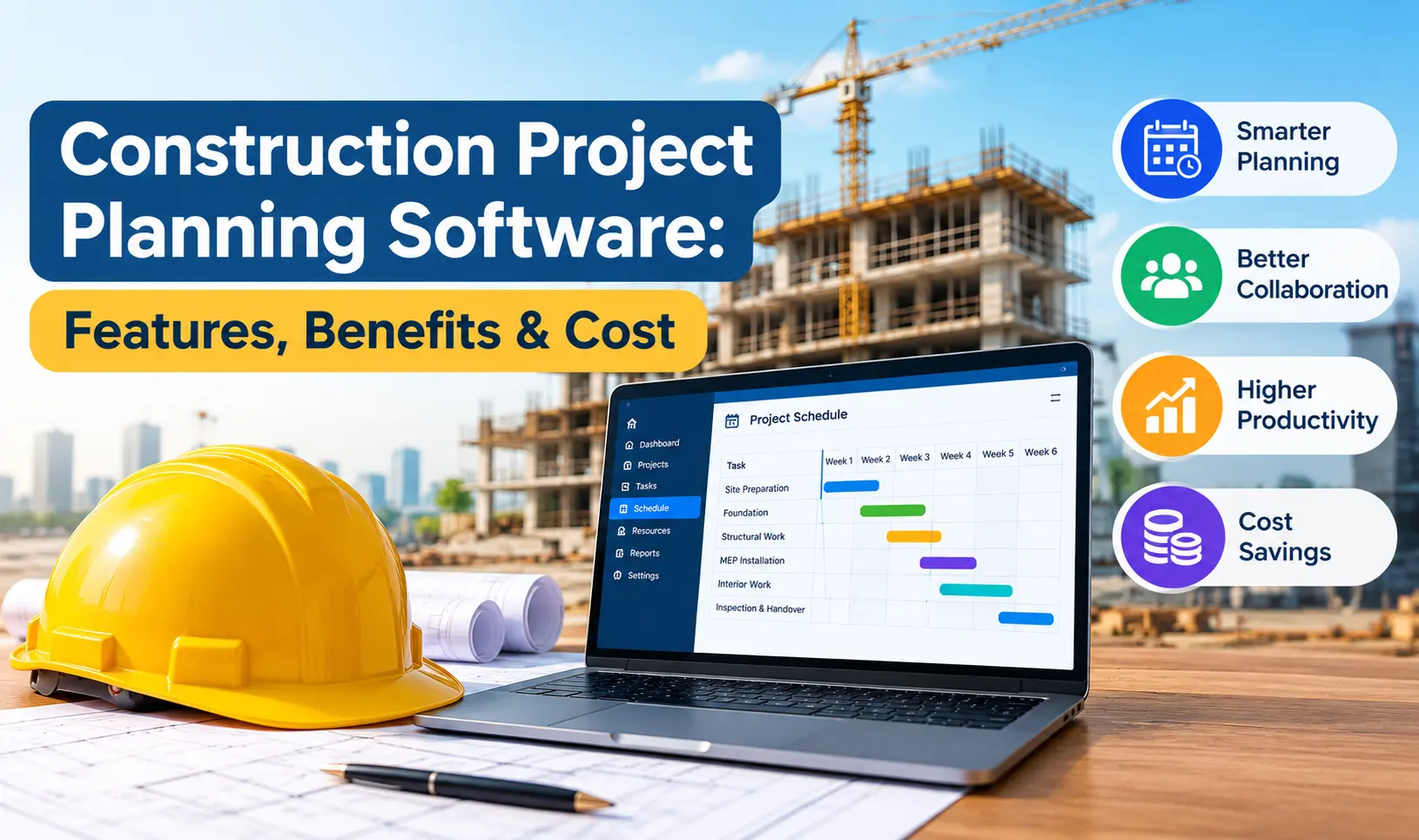
Construction Project Planning Software: Features, Benefits & Cost
Read More →
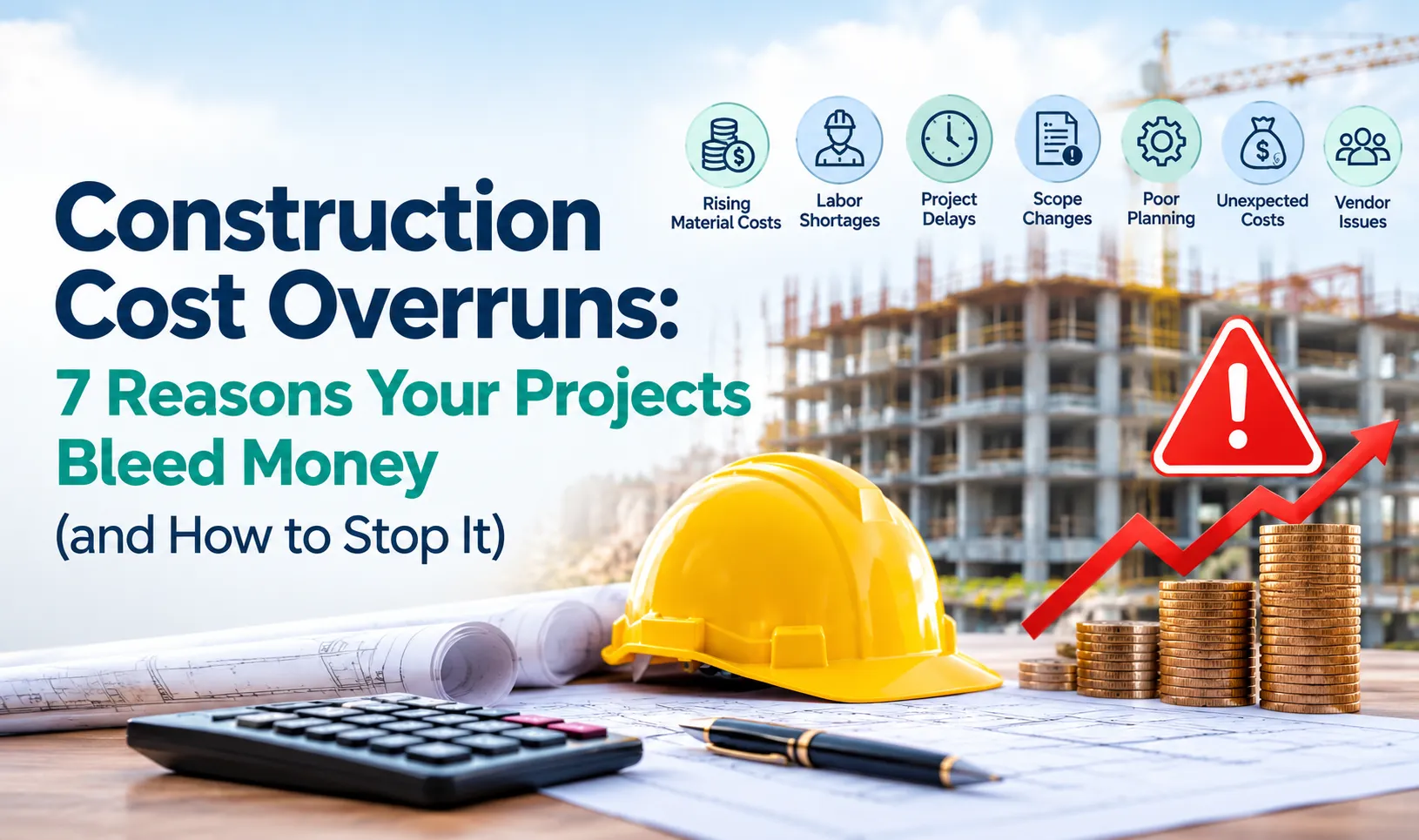
Construction Cost Overruns: 7 Reasons Your Projects Bleed Money (and How to Stop It)
Read More →
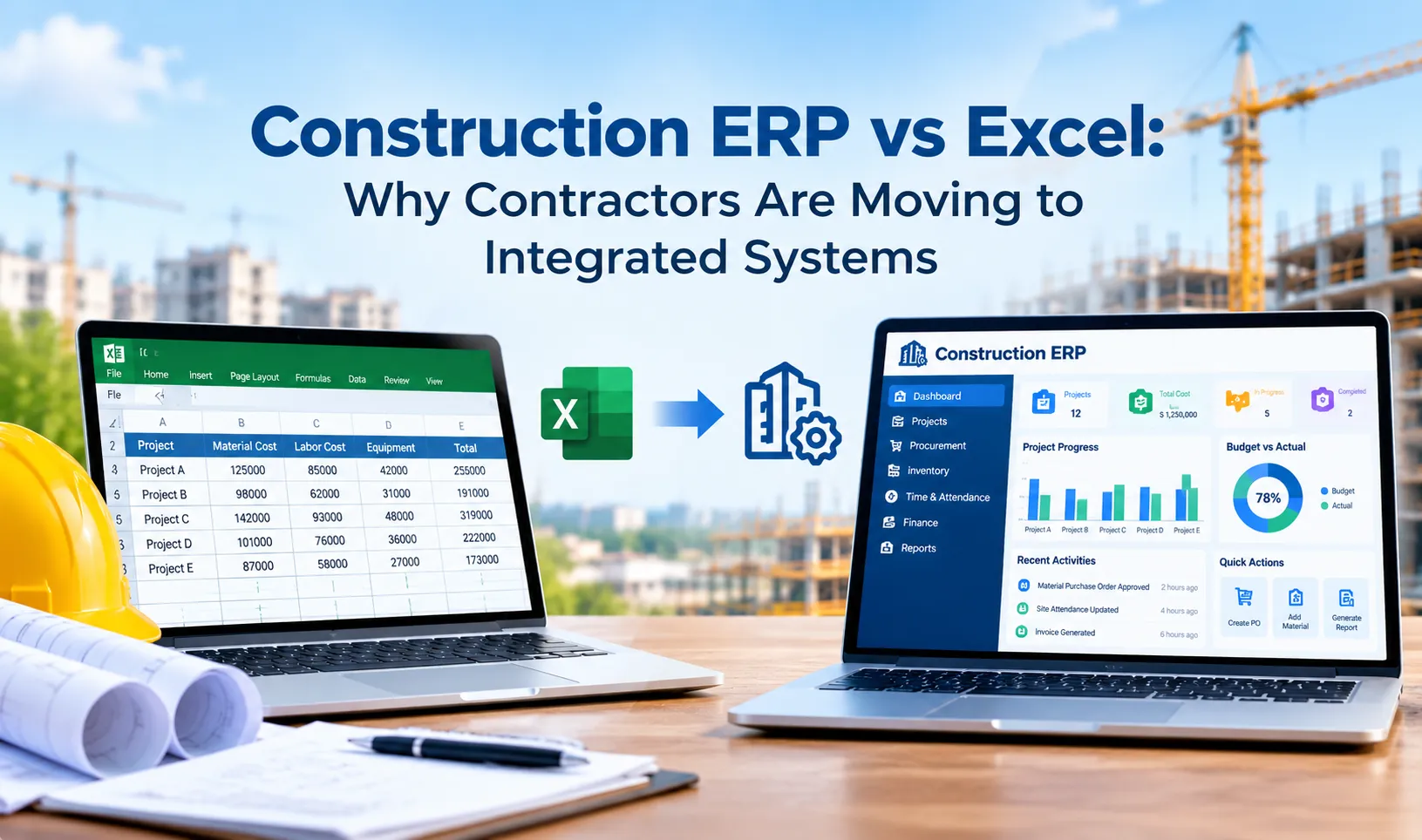
Construction ERP vs Excel: Why Contractors Are Moving to Integrated Systems
Read More →
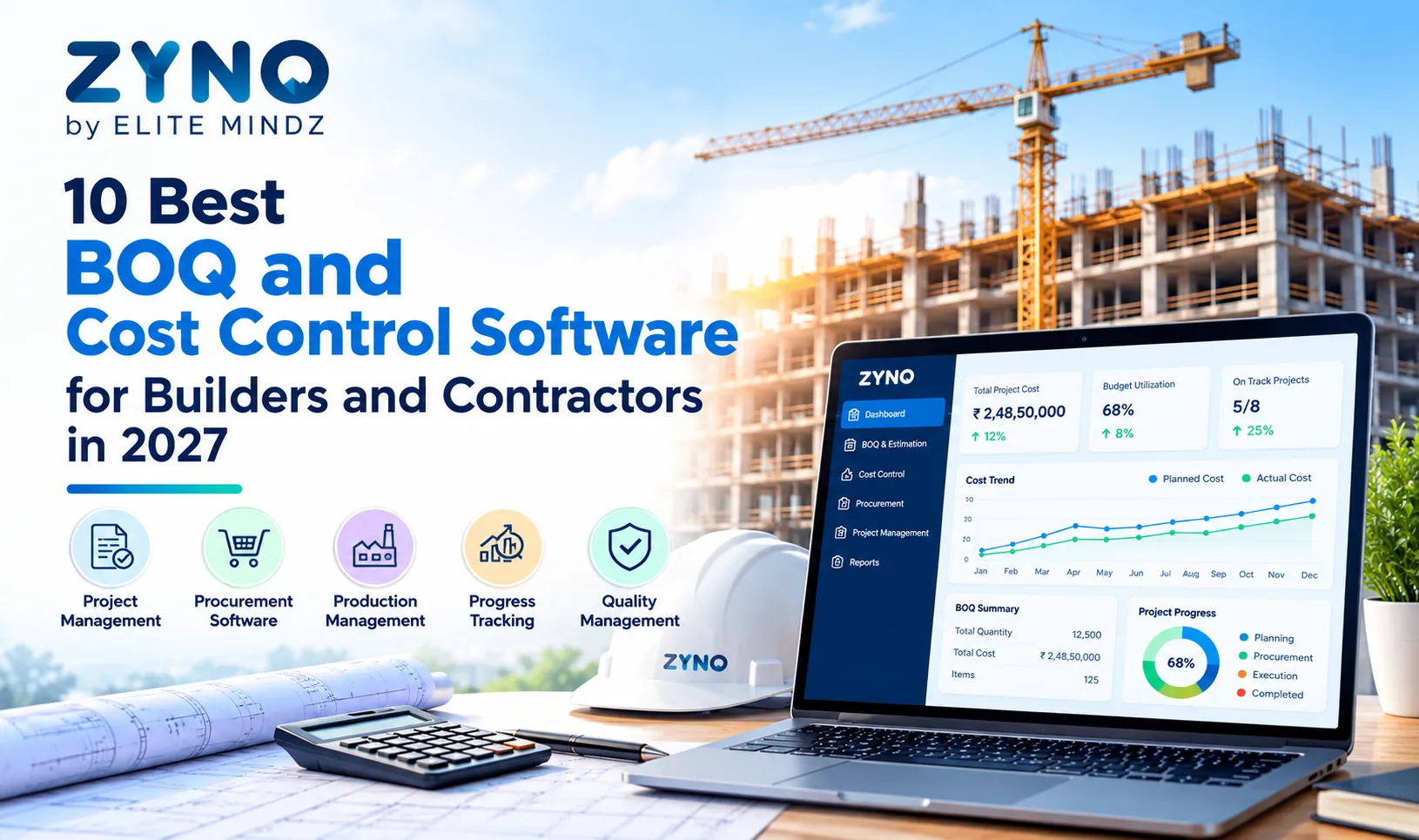
10 Best BOQ and Cost Control Software for Builders and Contractors in 2027
Read More →Let’s Build the Future Together
Partner with ZYNO by Elite Mindz to revolutionize how your business works. Fill out the form, and we’ll reach out with AI-powered solutions made just for you.

We use browser cookies to ensure you get the best experience on our website. Learn more
Thank you
The form was submitted successfully!