What is Construction ERP Software in India 2026?
Read More →

×
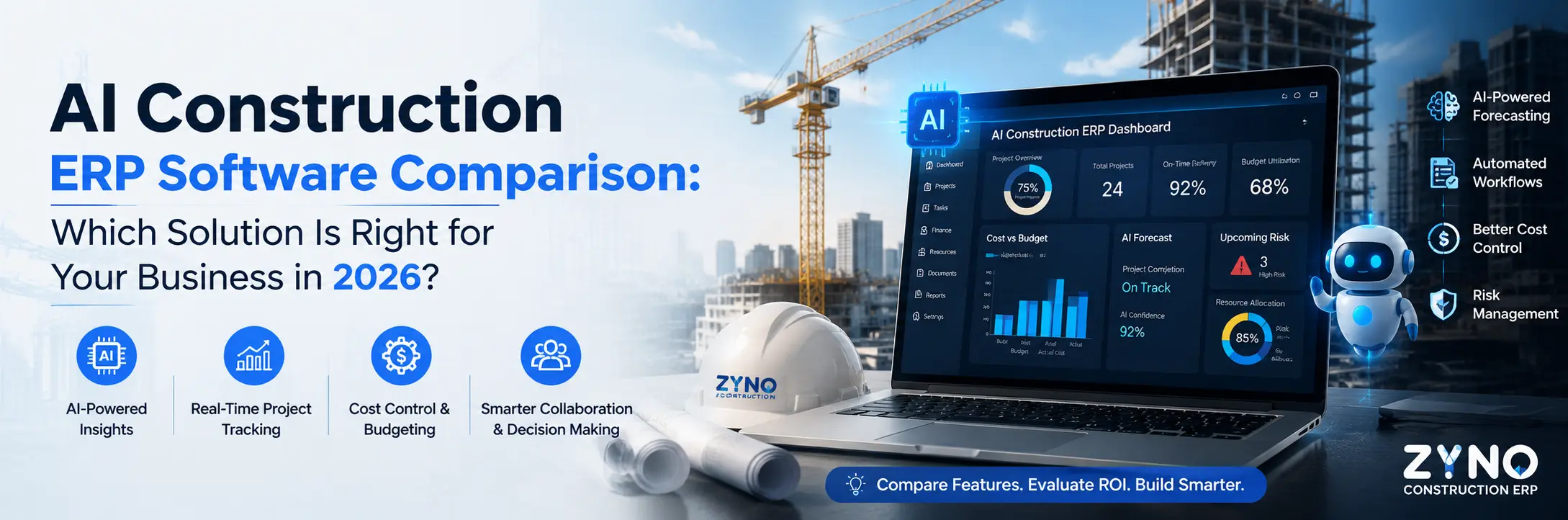
Compare the top Construction ERP software in 2026. Explore features, pricing, and benefits to choose the best construction management software for your business.
Businesses using ZYNO Books cut accounting time by 70% and stay 100% ZATCA-compliant — automatically.

Construction companies today manage far more than bricks, materials, workers, and project timelines. A modern construction business must coordinate multiple projects, subcontractors, suppliers, purchase orders, budgets, site teams, inventory, invoices, payroll, and compliance requirements, often across different locations.
When these processes are managed using spreadsheets, disconnected software, emails, and manual reports, businesses quickly lose visibility into their projects. A delay at the site may not be reflected in financial reports. A purchase order may not be linked to the correct project. Material wastage may go unnoticed. Management may only discover that a project is losing money after the budget has already been exceeded.
This is where construction ERP software becomes important.
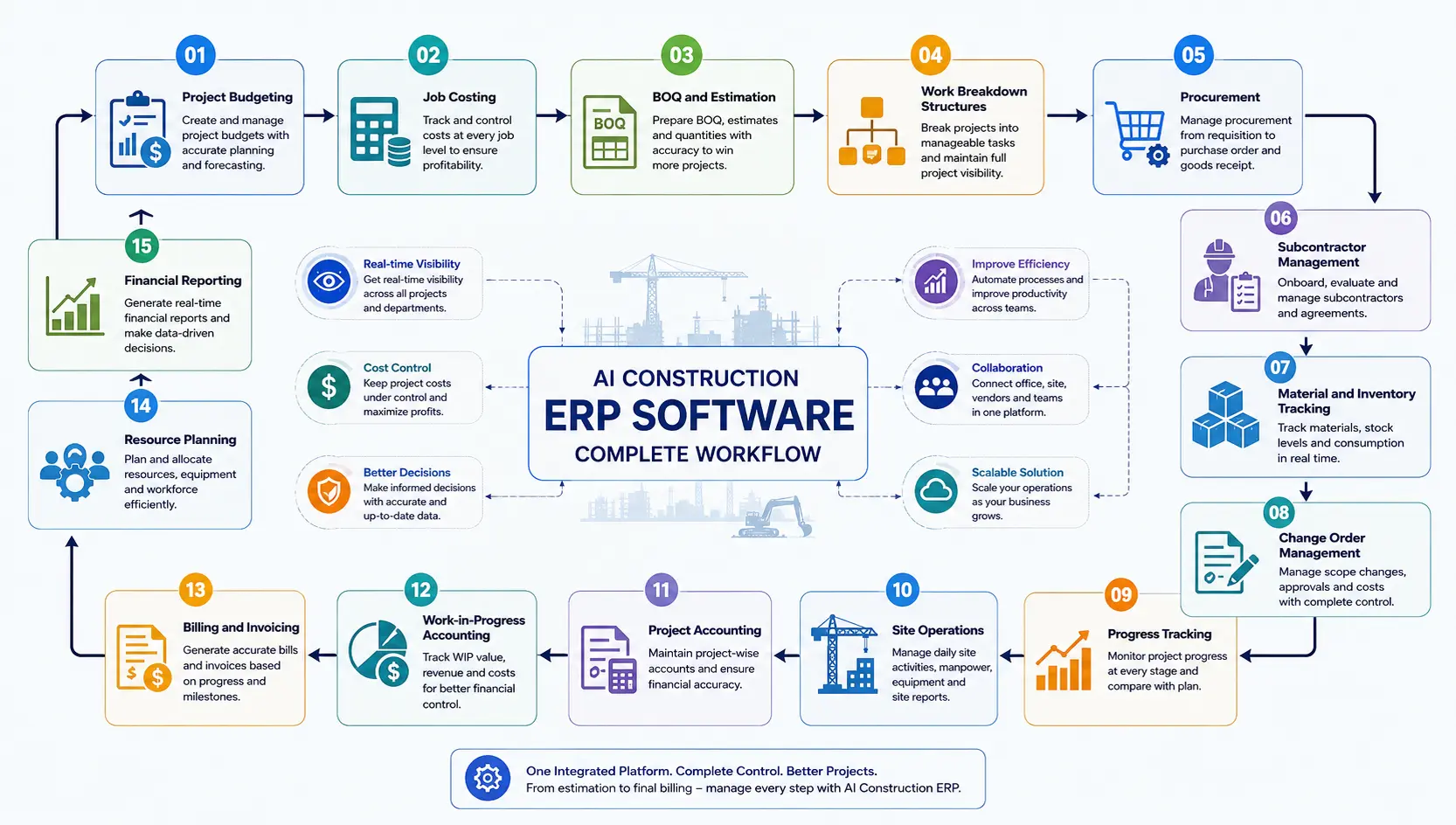
A construction ERP system brings financial management, project planning, procurement, inventory, workforce management, job costing, billing, and reporting together in one connected platform.
However, choosing the right solution is not easy. The market includes traditional construction accounting platforms, project management tools, enterprise ERP systems, and modern cloud-based construction management solutions.
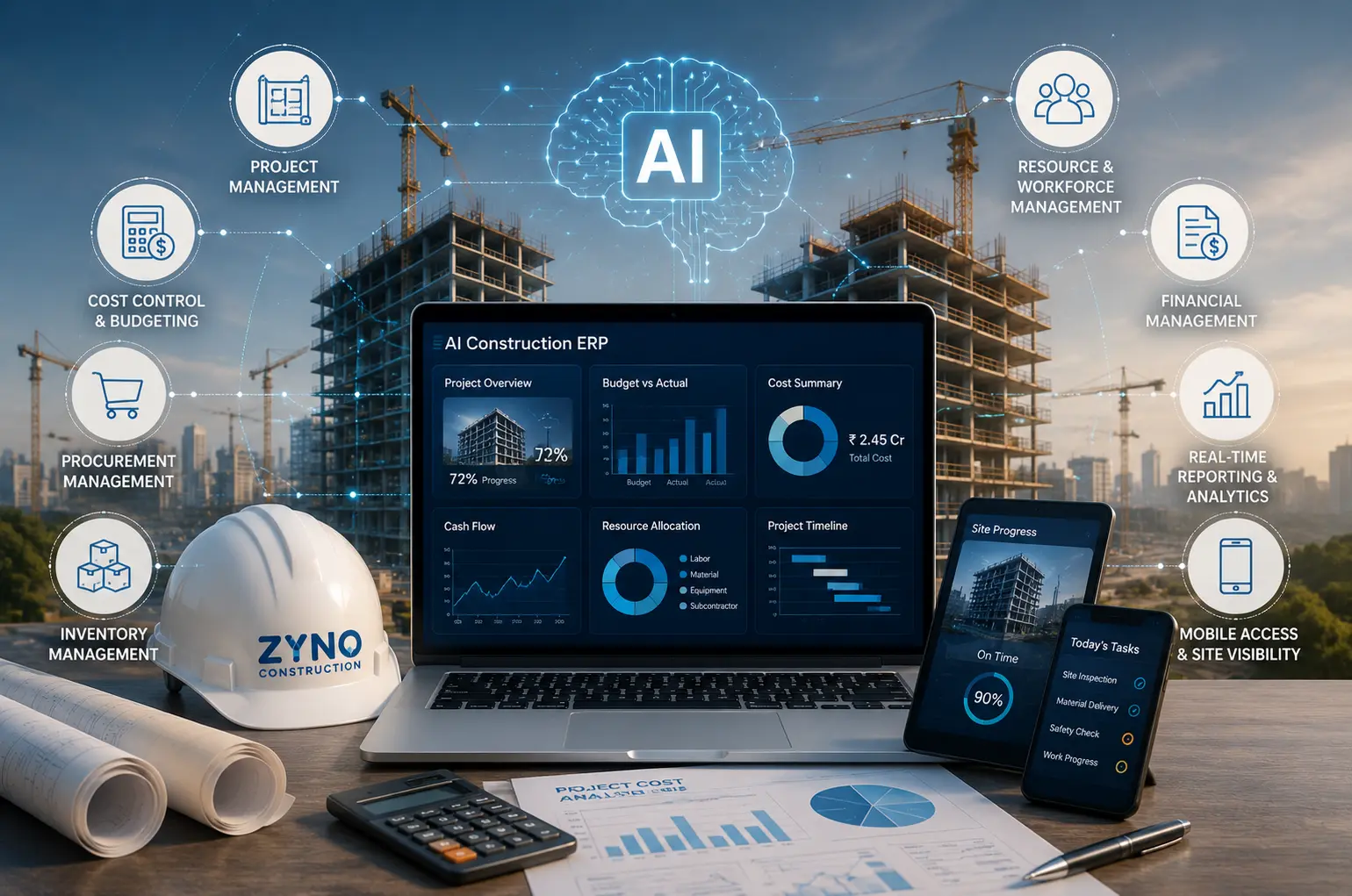
Modern construction ERP software is increasingly combining Artificial Intelligence, machine learning, predictive analytics, and intelligent automation to help construction companies improve cost control and project visibility.
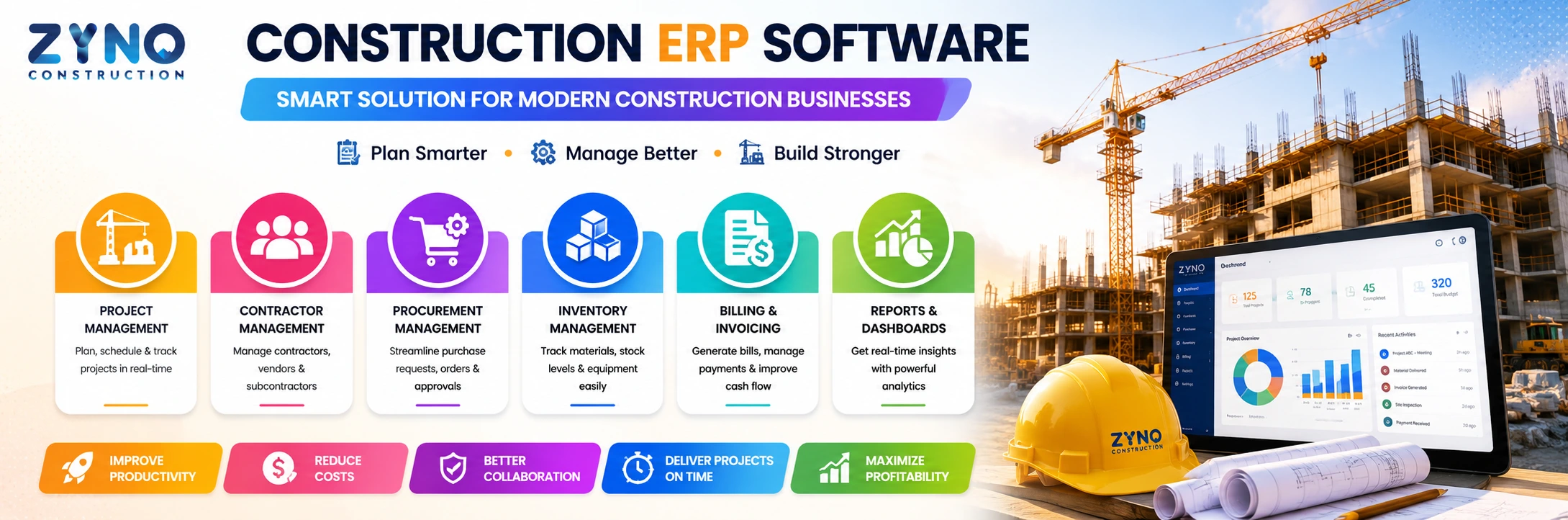
Simplify project planning, contractor management, procurement, budgeting, inventory, billing, and site operations with ZYNO Construction ERP. Improve project visibility, reduce delays, and accelerate project delivery with AI-powered automation built for modern construction businesses.
In this guide, we compare the top construction ERP software in 2026, their key features, pricing approaches, strengths, limitations, and the type of construction company they are best suited for.

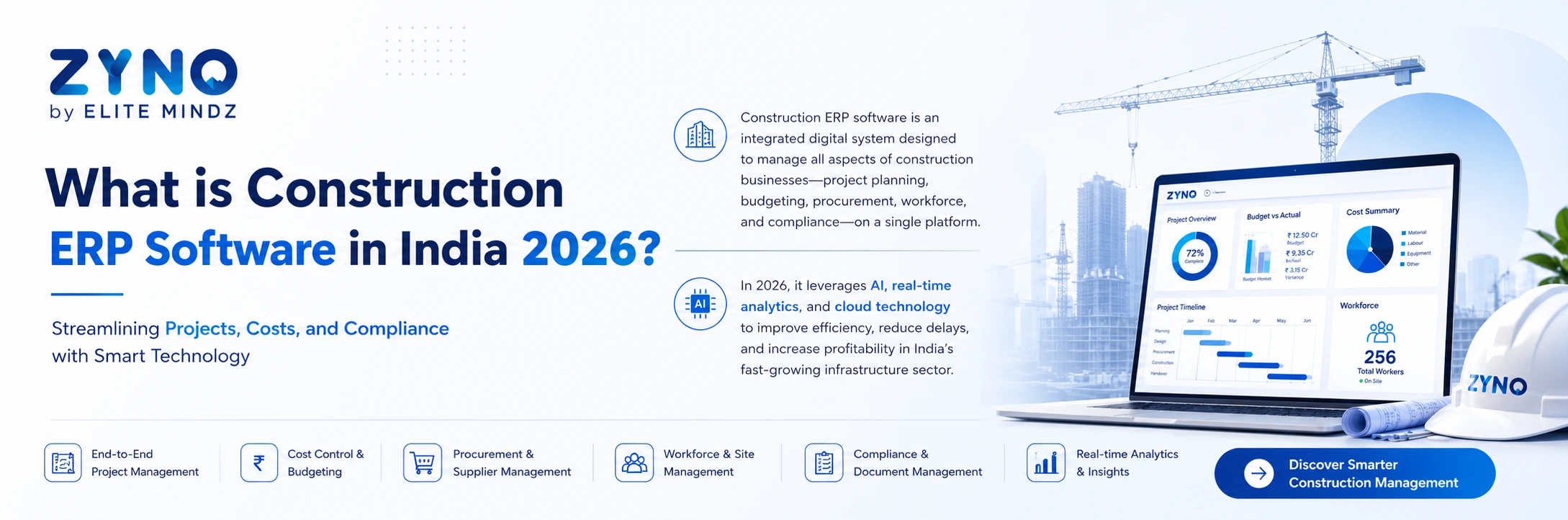
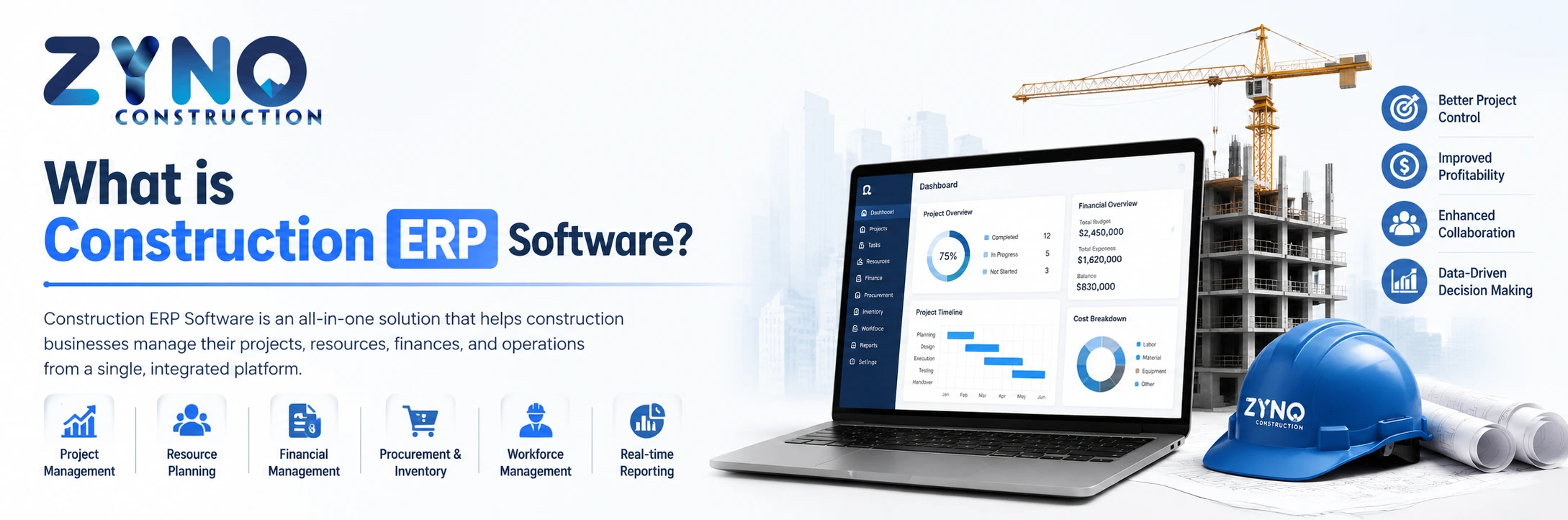
Construction ERP software is an integrated business management system designed specifically for construction companies, contractors, builders, developers, infrastructure companies, and engineering firms.
Modern construction ERP platforms are also becoming more intelligent through AI-powered construction analytics, predictive forecasting, and automated decision support. These capabilities help businesses analyze project data and identify potential risks before they affect project performance.
Unlike a general ERP system, construction ERP software is designed around construction-specific workflows such as:
The goal is to connect the site, project office, procurement department, finance team, and management within one system.
A construction ERP should help answer important questions such as:
Modern construction ERP systems provide this visibility through centralized dashboards and real-time data.
Best for: Construction companies, contractors, builders, and project-based businesses looking for a flexible and integrated construction ERP solution.
ZYNO Construction is designed to help construction businesses manage project operations, budgeting, resources, procurement, and financial visibility from a centralized platform.
It can be a strong option for businesses that need a construction ERP system tailored to their operational processes instead of forcing every department to work through disconnected tools.
One of the major advantages of an integrated platform is the ability to connect project operations with financial information.
For example, project managers can track project progress while management can monitor budgets, expenses, procurement status, and overall profitability.
Construction companies often have different workflows depending on their size, project type, location, and operating model. A residential construction company may have different requirements from an infrastructure contractor or commercial builder.
A flexible construction ERP can help organizations:
For businesses looking for a scalable and customizable construction ERP software solution, ZYNO Construction can be a strong choice.
Best for:
General contractors, owners, specialty contractors, and large project teams focused on construction project management and collaboration.
Procore is one of the most recognized construction technology platforms globally. It focuses heavily on project management, field collaboration, document management, RFIs, submittals, quality, safety, and construction workflows.
The platform is particularly useful when multiple stakeholders need to collaborate on construction projects.
Procore uses a customized pricing model. Its pricing depends on factors such as the products selected and the annual construction volume of the organization. The company offers customized quotes rather than a simple public per-user pricing structure.
Procore is best suited for larger contractors, construction owners, and organizations managing complex projects with many stakeholders.
Autodesk Forma represents Autodesk's broader connected solution for planning, design, construction, and operational workflows. Autodesk Construction Cloud has been incorporated into the Forma portfolio, with several construction product names and offerings updated as part of this transition.
Autodesk's pricing varies by product and solution package. Some products provide flexible pricing options while others require a customized quote.
Autodesk Forma is particularly suitable for construction businesses heavily dependent on BIM, CAD, model coordination, and design collaboration.
Replace manual processes with AI-powered ZYNO Construction ERP. Manage projects, contractors, procurement, inventory, finance, and site execution from one intelligent platform to improve productivity and deliver projects on time.
Best for: Mid-sized construction companies that want cloud ERP with construction-specific financial and operational capabilities.
Acumatica Construction Edition combines core ERP functionality with construction-specific tools such as job costing, project management, financial management, and field operations.
It is often considered a strong choice for mid-market construction companies looking for a cloud-first ERP system.
A key differentiator is its approach to user access and cloud ERP scalability.
Acumatica is a strong option for mid-sized contractors and construction companies that need more than a project management tool.
Best for: Large construction companies, general contractors, and businesses requiring advanced project controls and construction accounting.
Trimble Viewpoint includes solutions such as Vista and Spectrum, which are used for construction accounting, project management, workforce management, and operational workflows.
Trimble Viewpoint is suitable for larger contractors and established construction organizations that require advanced financial and operational control.
Sage offers construction-focused solutions that support project accounting and construction finance workflows.
Sage is suitable for construction companies that want strong financial management and job costing capabilities.
Best for: Large construction companies seeking an enterprise-level construction ERP.
CMiC is built around the concept of connecting project management and financial management within one construction-focused platform.
CMiC is best suited for large contractors, developers, and organizations managing multiple complex projects.
Best for: Construction businesses already using the Microsoft ecosystem.
Microsoft Dynamics 365 can support construction operations through project management, finance, supply chain management, reporting, and industry-specific extensions.
Microsoft Dynamics 365 is a good option for construction companies that already use Microsoft products and require an enterprise-level business platform.
Best for: Growing construction companies with multi-entity financial and operational requirements.
Oracle NetSuite is a cloud ERP platform that can support construction and project-based businesses through financial management, procurement, project accounting, reporting, and business consolidation.
NetSuite is suitable for growing construction companies with multiple entities, complex financial processes, or international operations.
|
Software |
Best For |
Project Management |
Job Costing |
Procurement |
Financial Management |
Pricing |
|
ZYNO Construction |
Growing construction businesses |
Strong |
Strong |
Strong |
Strong |
Custom quote |
|
Procore |
Large project teams |
Excellent |
Good |
Good |
Integration-focused |
Custom quote |
|
Autodesk Forma |
BIM and design-led projects |
Strong |
Good |
Good |
Depends on solution |
Custom quote |
|
Acumatica |
Mid-market contractors |
Strong |
Excellent |
Strong |
Excellent |
Custom quote |
|
Trimble Viewpoint |
Large contractors |
Strong |
Excellent |
Strong |
Excellent |
Custom quote |
|
Sage Construction |
Accounting-focused firms |
Good |
Excellent |
Good |
Excellent |
Custom quote |
|
CMiC |
Enterprise construction companies |
Excellent |
Excellent |
Strong |
Excellent |
Custom quote |
|
Microsoft Dynamics 365 |
Microsoft ecosystem users |
Strong |
Strong |
Excellent |
Excellent |
Custom quote |
|
Oracle NetSuite |
Multi-entity companies |
Good |
Strong |
Strong |
Excellent |
Custom quot |
A construction ERP should provide centralized visibility into project schedules, tasks, milestones, budgets, resources, and progress.
Project managers should be able to monitor:
Job costing is one of the most important features of construction ERP software.
The system should help track:
The key objective is to compare the original budget with actual project spending.
Without accurate job costing, a construction company may complete projects successfully while still losing money.
Construction projects often experience cost overruns because of:
A construction ERP should provide real-time budget tracking and alerts when costs exceed predefined thresholds.
Procurement is a major part of construction operations.
A good ERP system should support:
Centralized procurement helps reduce unauthorized purchases and improves purchasing visibility.
Construction companies often manage materials across multiple warehouses and project sites.
An ERP should help track:
This helps reduce material shortages and unnecessary purchases.
Subcontractors are an important part of most construction projects.
The ERP should help manage:
This provides better control over external project resources.
Construction teams do not always work from an office.
Site engineers, supervisors, project managers, and field teams need access to important information from mobile devices.
Mobile access can help teams:
Mobile functionality is increasingly important for construction ERP software in 2026.
A modern construction ERP should provide dashboards for:
Real-time dashboards allow management to make decisions based on current data rather than outdated spreadsheets.
Simplify project planning, contractor management, procurement, inventory, budgeting, billing, equipment tracking, and site operations with ZYNO Construction ERP. Gain real-time project visibility, improve collaboration, reduce project delays, and deliver every project on time with an intelligent AI-powered construction management platform.
There is no single fixed price for construction ERP software.
Pricing depends on:
Most construction ERP vendors use one of the following pricing models.
The company pays based on the number of users.
This model can be suitable for smaller organizations but can become expensive as the workforce grows.
Companies pay for the modules they need, such as:
Some construction platforms calculate pricing based on project volume or annual construction volume. Procore, for example, states that pricing depends on the products selected and the organization's Annual Construction Volume.
Large organizations often receive customized pricing based on:
For this reason, businesses should compare the total cost of ownership, not just the monthly subscription price.
Total cost may include:
Before selecting a construction ERP, companies should evaluate the following factors.
First, identify how your company currently manages:
The best ERP should improve your existing workflows rather than create unnecessary complexity.
Create a list of essential features.
For example:
This makes vendor comparison easier.
Your ERP should support future growth.
Ask:
Choosing a system that cannot scale can create another expensive migration in the future.
Construction companies often use other tools for:
The ERP should integrate with existing systems where required.
Field employees should not be forced to depend on office teams for every update.
Mobile access improves real-time communication between construction sites and management.
A highly advanced ERP may take longer to implement.
Ask vendors:
Implementation quality has a direct impact on ERP adoption.
These two types of software are often confused.
Usually focuses on:

Usually connects:
A project management tool may help you complete a project.
An ERP system helps you manage the broader business behind multiple construction projects.
For growing contractors and construction companies, an integrated ERP platform can provide greater visibility than using several disconnected tools.
The answer depends on your business requirements.
ZYNO Construction is a strong option for construction companies looking for integrated project, budget, procurement, resource, and operational management.
Procore is suitable for organizations that prioritize construction project collaboration and field workflows.
Autodesk Forma is a strong choice for companies heavily dependent on Autodesk design and construction workflows.
Acumatica Construction Edition is well suited for mid-sized contractors looking for cloud ERP capabilities.
CMiC and Trimble Viewpoint are suitable for large construction organizations requiring advanced construction-specific functionality.
Sage Construction solutions are suitable for businesses that prioritize accounting, job costing, and financial reporting.
Construction companies in 2026 need more than basic accounting software or project management tools. As projects become more complex, organizations need real-time visibility across budgets, procurement, resources, inventory, vendors, and project execution.
The best construction ERP software is not necessarily the platform with the most features. It is the one that matches your company's:
Large enterprises may need a comprehensive platform such as CMiC, Trimble Viewpoint, or Microsoft Dynamics 365. Project-focused organizations may prefer Procore or Autodesk Forma. Mid-sized construction businesses may benefit from Acumatica or a flexible platform such as ZYNO Construction.
For most growing construction companies, the ideal ERP should be easy to adopt, scalable, customizable, mobile-friendly, and capable of connecting project operations with financial control.
Before making a final decision, compare the platforms based on real business workflows rather than feature lists alone. Request demos, evaluate implementation requirements, understand the total cost of ownership, and test whether the software can provide clear visibility into the projects that drive your profitability.
The right construction ERP software can become the operational backbone of your business, helping you control costs, improve project visibility, reduce manual work, and make faster, data-driven decisions.
What is the best construction ERP software in 2026?
The best construction ERP depends on the company's size and requirements. ZYNO Construction, Procore, Acumatica, Trimble Viewpoint, CMiC, Sage Construction, Microsoft Dynamics 365, and Autodesk Forma are among the major options businesses may consider.
How much does construction ERP software cost?
Construction ERP pricing varies depending on users, modules, projects, implementation, customization, and integrations. Most enterprise construction ERP providers offer customized pricing rather than a fixed public price.
What features should construction ERP software have?
Important features include project management, job costing, budgeting, procurement, inventory, vendor management, subcontractor management, financial management, reporting, mobile access, and workflow automation.
Is construction ERP software suitable for small businesses?
Yes. Small and mid-sized construction companies can benefit from ERP software if they choose a scalable solution that matches their budget and operational complexity.
What is the difference between construction ERP and construction management software?
Construction management software generally focuses on project execution and collaboration. Construction ERP software connects project management with finance, procurement, inventory, job costing, resources, and business operations.
Why do construction companies need ERP software?
Construction companies use ERP software to centralize data, improve project cost control, automate workflows, manage procurement, monitor project profitability, and improve visibility across multiple projects.
Is cloud-based construction ERP better than on-premise software?
Cloud-based construction ERP generally offers easier remote access, automatic updates, scalability, and lower infrastructure requirements. However, the best option depends on the company's security, compliance, IT, and operational requirements.
Sneha Singh
Senior Content Marketing Specialist | 8+ Years of Experience
Sneha Singh is a B2B tech content strategist with 4+ years of experience. She specializes in SEO-driven SaaS content, whitepapers, and platform-native social media campaigns that simplify complex technology and drive business growth. Sneha's core exp
What is Construction ERP Software in India 2026?
Read More →
Construction ERP Software – Features, Benefits & Complete Guide
Read More →
Complete Guide to the Best Construction ERP Software in Dubai, UAE
Read More →
What is Construction ERP Software?
Read More →
AI-Powered Construction ERP Software: Complete Guide to Features, Benefits, and Business Growth
Read More →
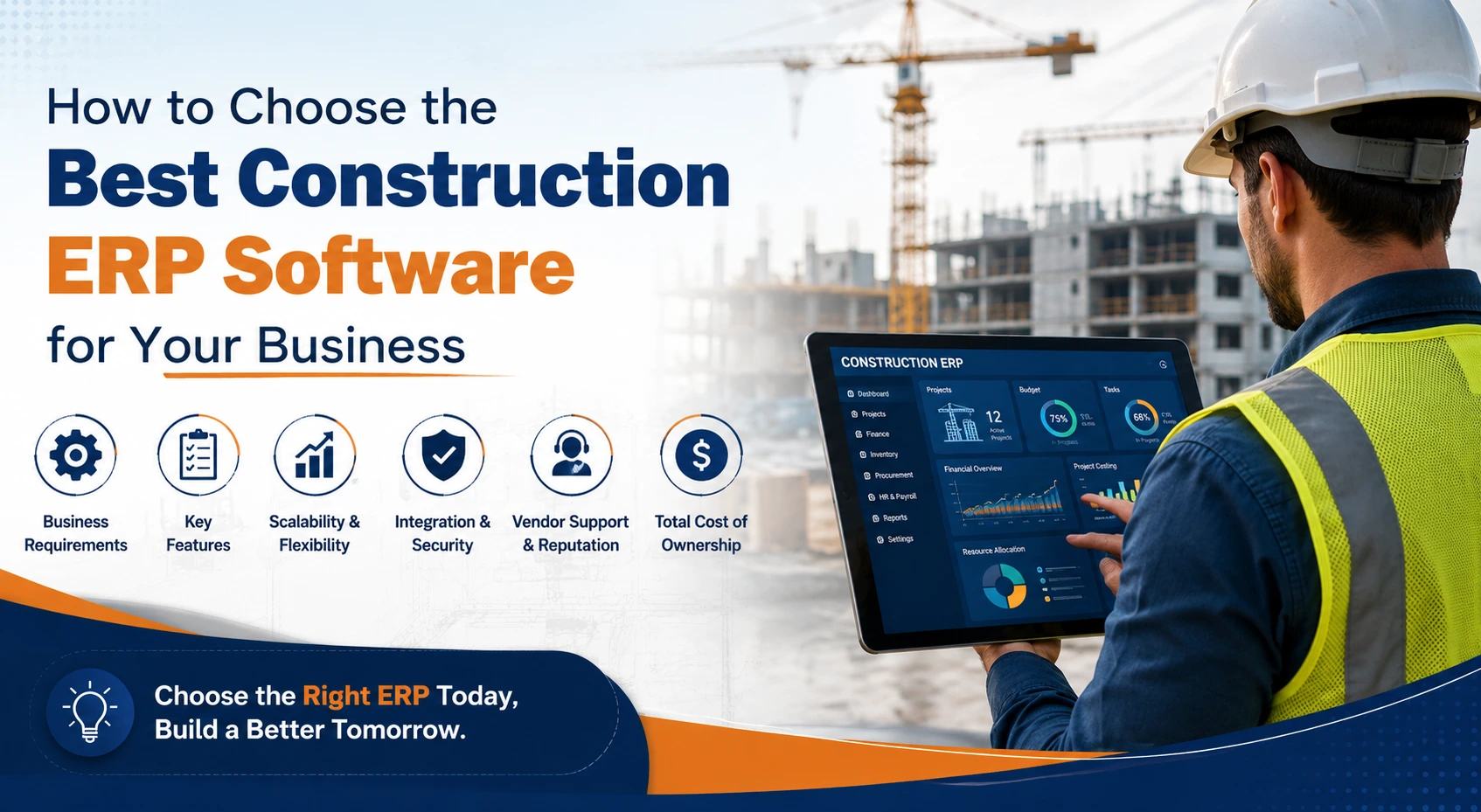
How to Choose the Best Construction ERP Software for Your Business
Read More →
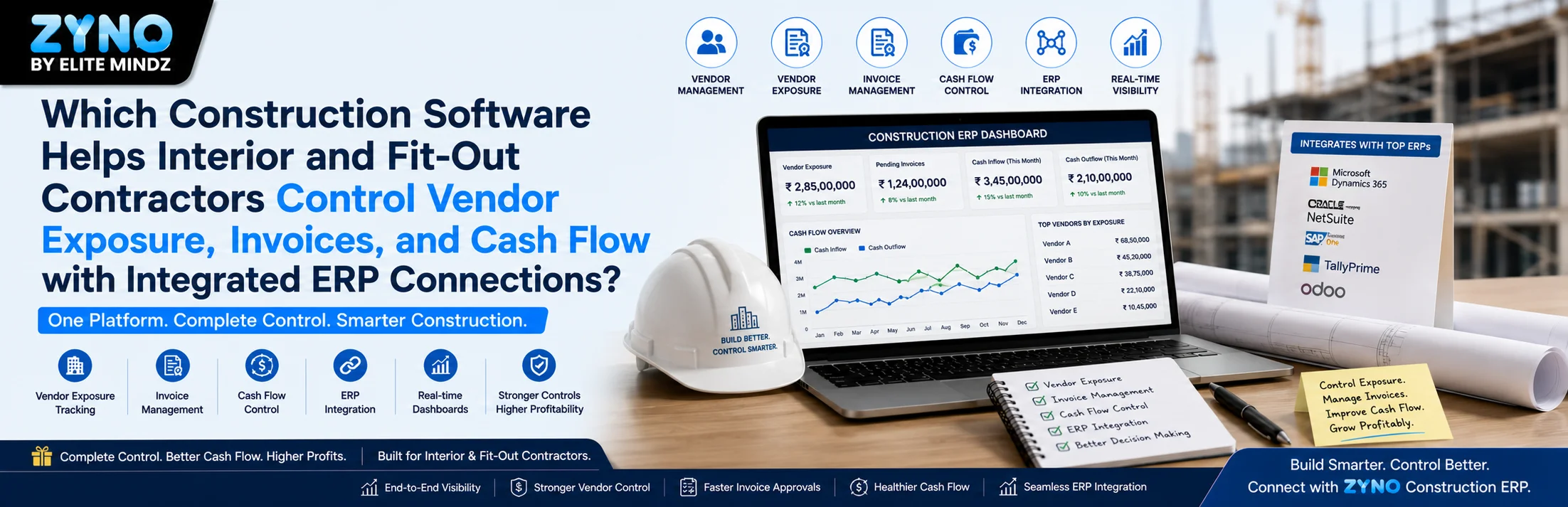
Which Construction Software Helps Interior and Fit-Out Contractors Control Vendor Exposure, Invoices, and Cash Flow with Integrated ERP Connections?
Read More →
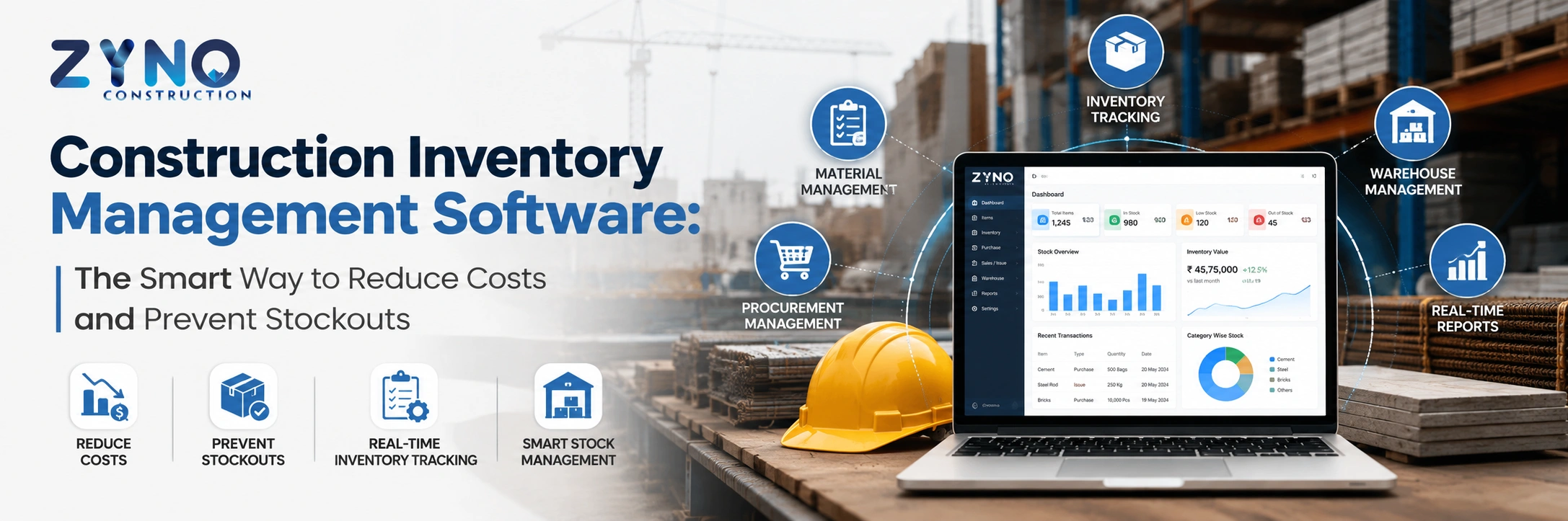
Construction Inventory Management Software: The Smart Way to Reduce Costs and Prevent Stockouts
Read More →
Best AI Construction ERP Software Comparison: Which Solution Is Right in 2026?
Read More →Partner with ZYNO by Elite Mindz to revolutionize how your business works. Fill out the form, and we’ll reach out with AI-powered solutions made just for you.
We use browser cookies to ensure you get the best experience on our website. Learn more
The form was submitted successfully!
ZYNO Digital
Fueling Smarter Digital Growth
ZYNO Digital fuels smarter digital growth through data-driven marketing, creative storytelling, and performance strategies that boost visibility, engagement, and measurable business outcomes across global platforms.
ZYNO Tech
Engineering the Future of IT
ZYNO Tech delivers cutting-edge IT solutions — including web, mobile, and digital transformation services — helping businesses scale efficiently, innovate faster, and stay ahead in a connected world.
ZYNO AI
AI Built for Business Growth
ZYNO AI harnesses the power of artificial intelligence to automate processes, enhance decision-making, and deliver predictive insights — driving innovation, agility, and measurable business growth.
ZYNO by Elite Mindz
Your Partner in the AI-Powered Future
ZYNO by Elite Mindz offers AI-powered products and services that unify operations, boost productivity, and drive digital transformation — helping businesses scale smarter and innovate faster.
* In just 2 mins you'll get a response
* Your idea is 100% protected by our Non-Disclosure Agreement