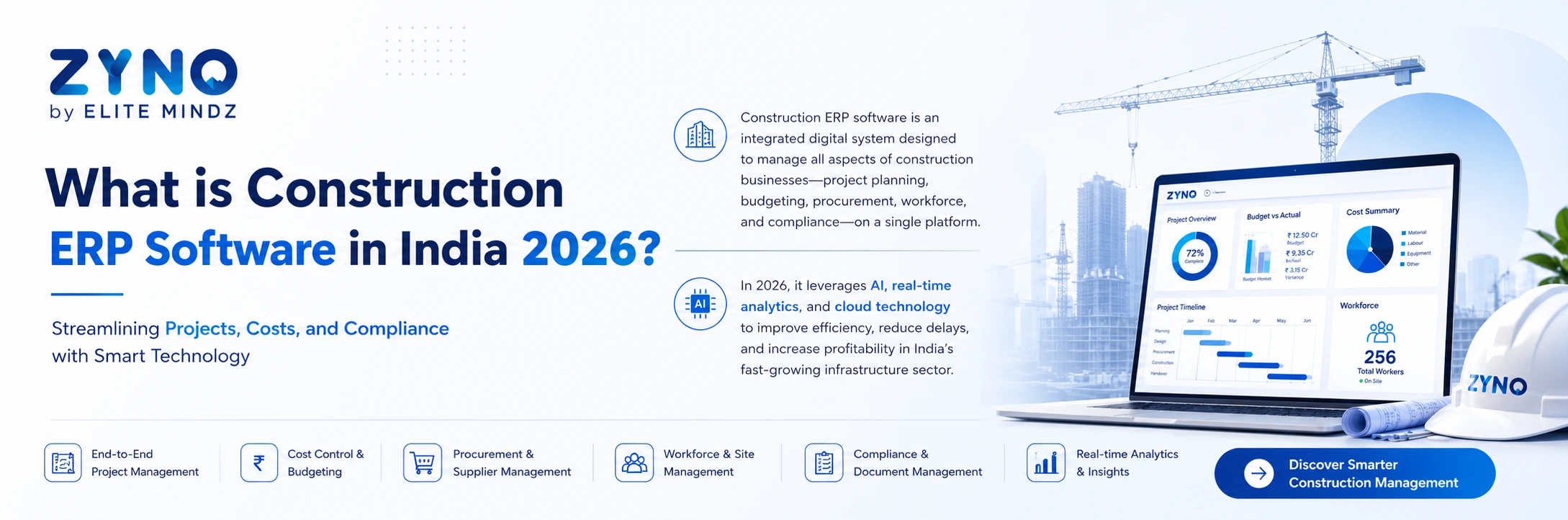
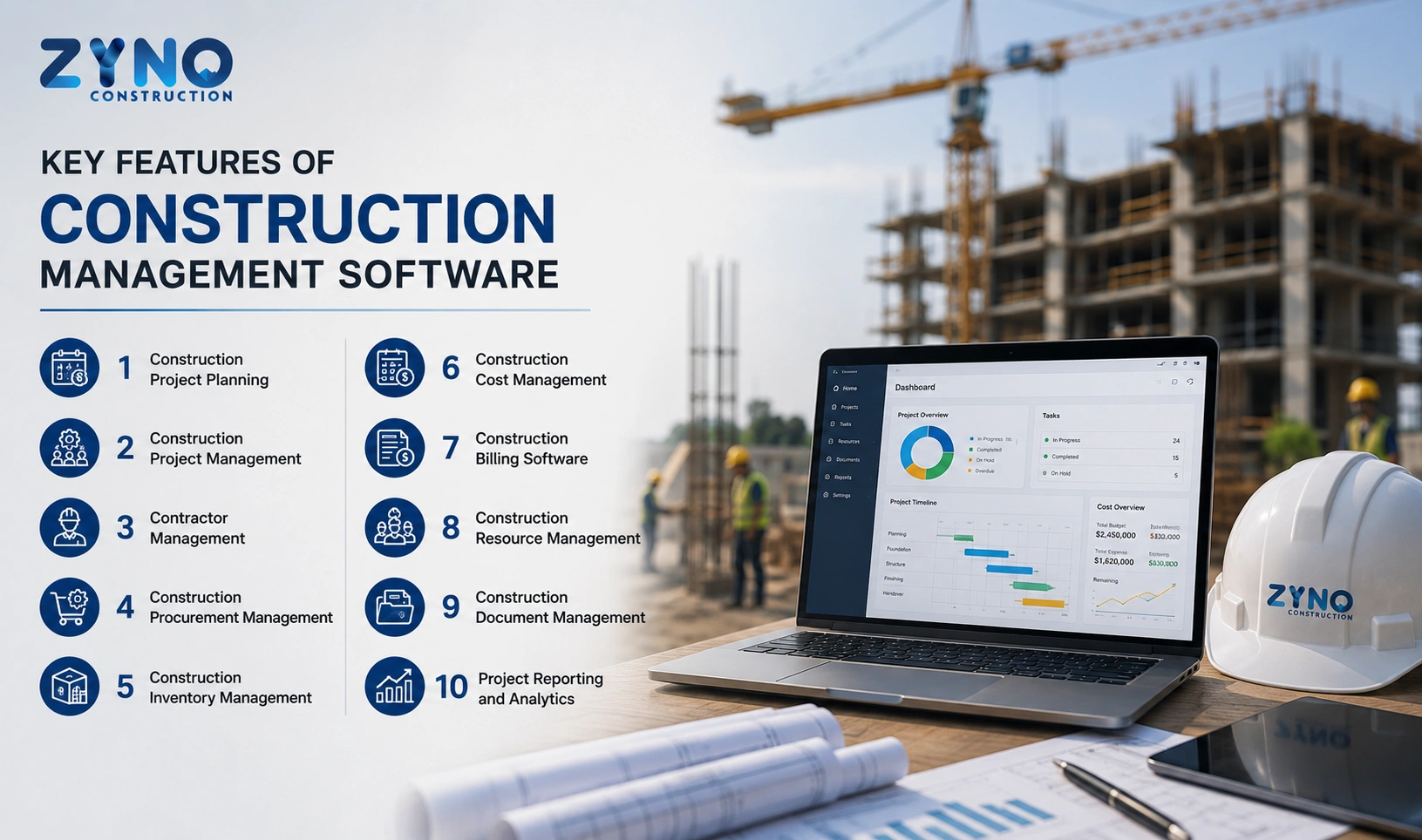
What is Construction ERP Software in India 2026?
Read More →

×
The top IT equipment management platforms for remote teams help businesses track laptops, devices, software, and assets across distributed workforces. Leading options include ZYNO Assets, Deel IT, Rippling, Jamf, and JumpCloud. Key features to compare include asset tracking, device lifecycle management, remote monitoring, software management, security controls, inventory visibility, and automated employee onboarding and offboarding.
Businesses using ZYNO Books cut accounting time by 70% and stay 100% ZATCA-compliant — automatically.
When employees work from different cities and countries, keeping track of company laptops, monitors and phones turns into a serious operational job. Every device has to be ordered, shipped, set up, monitored, collected and finally retired, and each of those steps involves different people and systems. IT Equipment Management Platforms pull that entire process into one place and link it with the HR, ITSM and finance tools a business already relies on. This guide compares five platforms on what they offer, how far their coverage reaches and what their customers report, then shows which kind of team each one serves best.
How These Platforms Were Selected
Each platform was assessed using publicly available sources such as user reviews, case studies, product pages and software directory listings. Only vendors with a demonstrated history of serving enterprise customers made it onto the final list.
→ Read the full research process
Picking the wrong tool causes more than minor frustration. Its effects spread into procurement, compliance and budgeting, and fixing the damage can take months.
Maintaining an accurate, up-to-date inventory across scattered or remote sites is hard without software designed for the job. Spreadsheets fall apart as soon as a team works across more than a couple of time zones.
How remote hiring is changing global teams:
https://elitemindz.co/blog/how-remote-hiring-changed-the-global-developer-landscape
Following each asset from purchase to retirement makes things more complicated still. When lifecycle visibility is missing, ghost assets build up, software license compliance drops and audits drag on far longer than they should.
A well-chosen platform raises asset utilization, shortens mean time to asset resolution (MTAR) and keeps inventory accuracy at the level auditors and leadership expect.
Manage Remote IT Assets with ZYNO
Track devices, assets, assignments, and equipment across remote teams with ZYNO Assets.
Get a Free Demo View ZYNO AssetsNote: All details below come from review sites and each company's official website.
| Company | Founded | Headquarters |
|---|---|---|
| Workwize | 2020 | Amsterdam, Netherlands |
| Device42 | 2010 | West Haven, Connecticut |
| Asset Tiger | 2013 | Brooklyn, New York |
| Virima | 2007 | Cumming, GA |
| First Base | 2019 | Aberdeen, Scotland and New York |
https://elitemindz.co/blog/best-equipment-management-software

Workwize Services
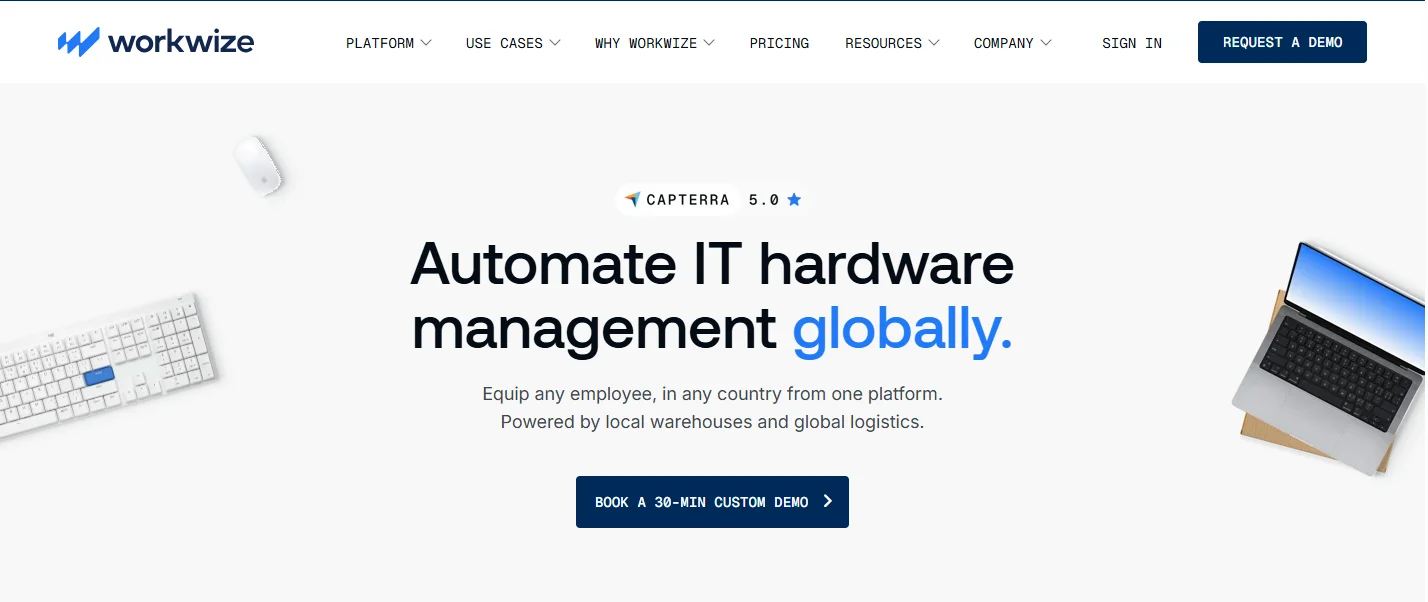
Workwize manages every stage of the hardware lifecycle from one platform, including purchasing, deployment, real-time inventory tracking, device collection and disposal. These processes are automated across 120 countries and supported by local warehouses.
The platform links with more than 80 HRIS, MDM and identity tools, which removes the need to coordinate between systems by hand. Designed with distributed teams in mind, it reports a device recovery rate of up to 98% when employees leave.
Companies using Workwize reportedly save more than 80,000 hours of IT time each year and cut hardware costs by as much as 30%, a meaningful saving for any mid-market or enterprise budget.
Workwize tackles the fragmentation that causes IT teams the most trouble: too many vendors, workflows that don't connect and no clear view of the process from purchase to disposal.
Because the platform is event-driven, it reacts to HR triggers on its own, so onboarding and offboarding device workflows start automatically instead of waiting for someone to launch them.
Reviewers regularly credit Workwize with reducing the manual work involved in device logistics, especially for HR and IT teams spread across many countries.
The HRIS integrations and automated offboarding workflows are the features users mention most when describing how their daily operations have changed. Lifecycle automation of this kind across 120 countries is uncommon and difficult for competitors to match.

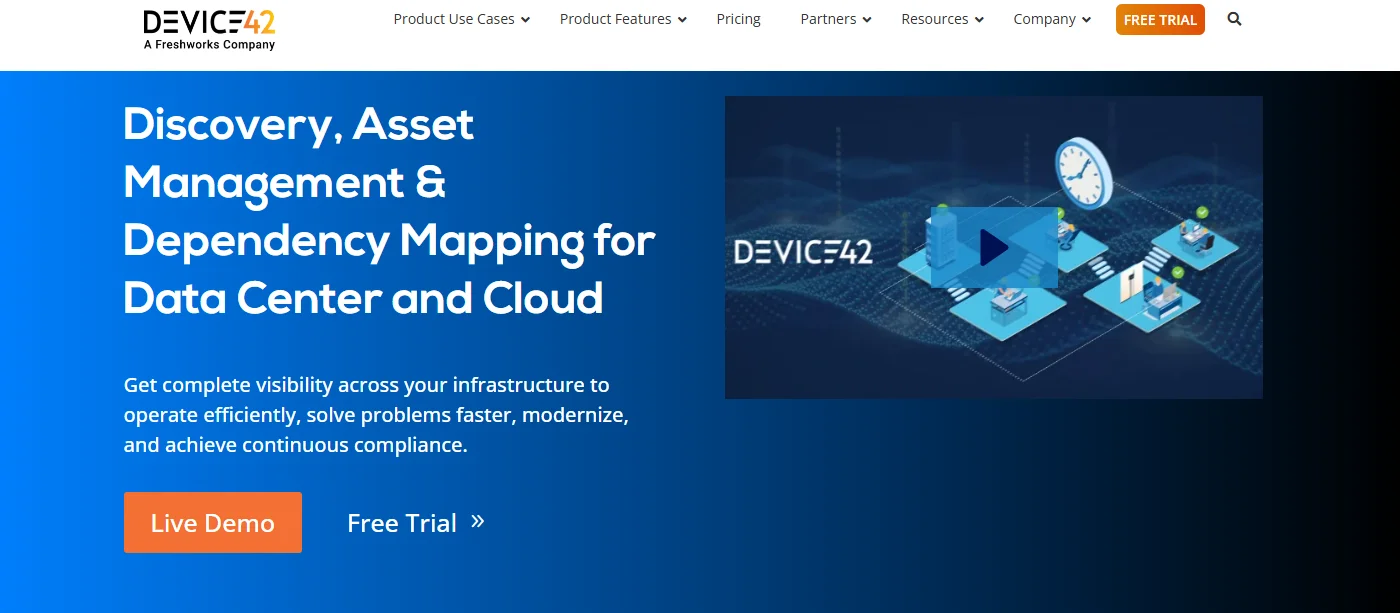
Device42 offers agentless discovery that reaches legacy systems, physical hardware and cloud containers, giving visibility into hybrid environments that many discovery tools struggle with. Its feature set spans IT Asset Management, DCIM, ITSM and Application Dependency Mapping.
The platform is used by organizations in more than 70 countries and lets teams query CMDB data using natural language. Device42 reports an average 4.8x return on investment and outage resolution that is 10 times faster, numbers that carry weight with IT operations leaders who have dealt with complicated incidents.
Device42 closes the visibility gaps that appear in hybrid infrastructure. Companies running older on-premise systems alongside modern cloud services often have holes in their asset records. Because no agents need to be installed, the platform avoids the rollout delays that usually hold up discovery projects in complex environments.
Being named a Best CMDB Tools winner and being adopted by institutions such as Imperial College London shows the platform can be trusted in large environments.
Freshworks acquired Device42 for $230M in May 2024, giving it significant backing for future development, which enterprise users often see as reassurance when committing to a platform long term.

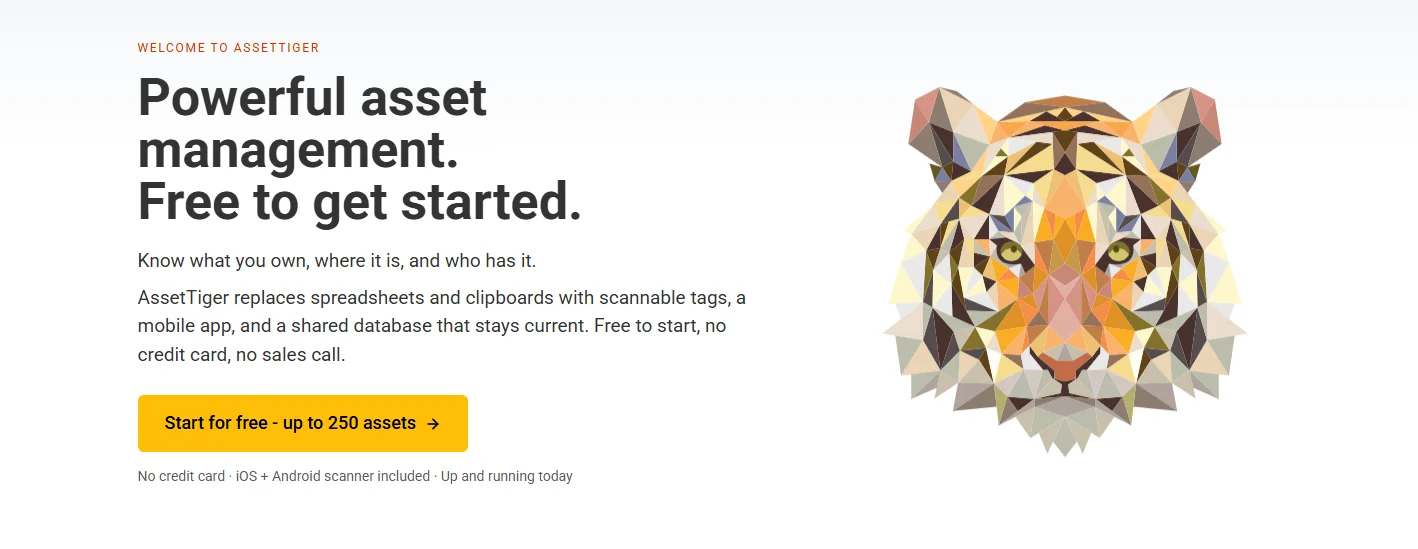
AssetTiger is an asset management platform that handles barcode and QR code scanning, custody records, maintenance tracking and inventory management. It was created by SmartSign, the company behind MyAssetTag.com, and is used by more than 100,000 organizations worldwide.
The platform includes over 80 ready-made reports covering areas such as depreciation, audit reconciliation and contract expiry dates. Pricing is based on the number of assets and every plan includes unlimited users, which can significantly reduce total cost of ownership compared with per-seat tools (it isn't the cheapest per asset, but large teams often pay less overall).
AssetTiger avoids the drawbacks of per-seat licensing by charging for assets instead of users, so large IT and operations teams can give everyone access without extra cost.
SmartSign's 25 years of experience in physical asset identification means the platform understands how physical labels and digital records should work together in practice.
With a 4.6 rating from 271 reviews on Capterra, AssetTiger shows steady satisfaction among users in education, government, healthcare and enterprise. Customers like having physical asset tagging and digital tracking in one workflow. Recognition as a GetApp Category Leader and a GoodFirms Best Asset Tracking pick adds further outside validation.

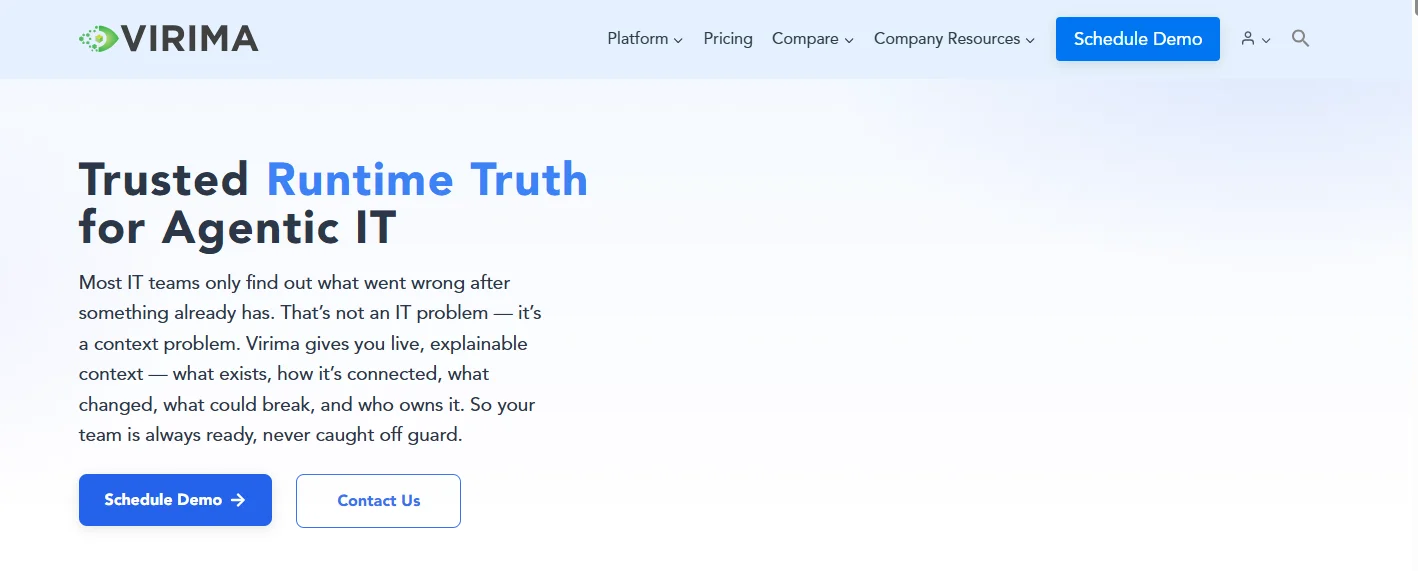
Virima brings automated IT discovery, CMDB creation and upkeep, IT asset management and IT operations management together in one platform. Its proprietary Visual Impact Display, known as ViVID, builds service dependency maps, and the company says the first map can be ready in less than 60 minutes.
Virima integrates with ServiceNow, Jira, AWS and Azure, and its subscription pricing doesn't increase as more devices are discovered. For enterprises with complex infrastructure, that pricing approach makes a real difference.
Virima goes straight at the problem of inaccurate CMDBs, offering real-time discovery, no duplicate records and reliable attribute data across every asset entry. Its subscription model grows with the organization and doesn't penalize teams for finding more assets.
Reviewers single out the ServiceNow integration as a strength, and users in healthcare and banking describe Virima's discovery features as a clear improvement over the tools they used before.
CMDB accuracy is the area where technical teams place the most confidence in the platform. Its SOC 2 Type 2 and ISO/IEC 27001:2022 certifications also make it easier for regulated industries to approve.

Firstbase handles the complete hardware lifecycle in more than 150 countries, covering IT purchasing, user provisioning, inventory management, mobile device management and asset recovery through a single platform.
Pre-stocked equipment and zero-touch deployment help distributed teams get new hires set up much faster. Large companies such as Spotify, Cloudflare and UiPath use the platform, and its device retrieval rate of over 97% points to a well-run recovery operation (a figure that is tougher to achieve than many vendors let on).
Firstbase fills the logistics gap that opens up when businesses expand remote hiring into many countries without one system for purchasing and retrieving equipment. Its acquisition by AppDirect brings additional scale and suggests the approach has been proven with enterprise buyers.
Users point to Firstbase's dependable device recovery at high volumes and its wide international reach. Enterprise clients tend to stay because the platform performs well at scale, which is where many alternatives begin to struggle. Having names like Spotify and Cloudflare among its customers adds to its credibility.
Research began by collecting a wide range of platforms from several sources, including software directories, independent review sites, vendor websites and published case studies.
The aim was to start with a broad longlist before filtering, giving lesser-known but capable platforms the same opportunity to appear as well-known brands. At this stage, information was gathered on service scope, geographic reach, customer types and any published performance results linked to real deployments.
Once the initial list was complete, any platform lacking verifiable customer evidence was removed. Review patterns were compared across several sites to check for consistency.
One enthusiastic review counted for less than steady feedback from a range of customer types and company sizes. Platforms with thin or unverifiable review histories were excluded, no matter how impressive their marketing looked.
Every shortlisted platform's claims were compared with real customer feedback. Figures published on vendor websites, such as retrieval rates, outage resolution times and return on investment, were checked against case studies and testimonials to see whether they reflected actual results or best-case scenarios.
Claims that couldn't be backed up by third-party sources were weighed cautiously during scoring.
Wider credibility signals were also taken into account, including analyst report mentions, recognized awards and coverage in industry publications. Acquisitions and major investments were noted, as these often indicate outside confidence in a platform's market position. Vendor certifications and third-party integrations also counted toward this part of the evaluation.
Finally, each platform was reviewed for evidence specific to IT equipment management. This covered features for asset discovery, lifecycle tracking and hardware provisioning, as well as verified reviews from IT managers, procurement specialists and operations teams. Enterprise case studies, especially those involving remote or distributed workforces, played a major role in the final choices.
Simplify Remote IT Asset Management
Track, manage, and monitor IT equipment across remote teams with ZYNO Assets.
Get a Free Demo Explore ZYNO AssetsNo two teams have identical needs, so finding a platform that fits your circumstances matters more than simply picking the top-rated name. Begin with how your team actually works, then measure each option against that.
Industry Experience: Check whether the vendor has customers in your sector. Platforms that already serve regulated fields such as healthcare or finance will understand the asset control rules those industries require.
Features and Services: Identify where your lifecycle has gaps before comparing tools. If getting devices back from departing employees is your biggest issue, focus on vendors with proven retrieval rates. If discovery is the weak point, look for agentless or automated discovery.
Pricing Model: Per-seat and per-asset pricing scale very differently. Calculate costs based on your real headcount and number of assets before signing anything.
Measuring Results: Ask vendors which metrics their customers monitor. Inventory accuracy percentage, audit cycle time and mean time to asset resolution are the figures that truly show operational health.
Compliance Standards: Enterprise-ready platforms should, at a minimum, align with ISO 19770, ITIL, SOX and GDPR requirements. Make sure certifications are up to date rather than just mentioned on a sales page.
Supporting a remote workforce means every device needs to be accounted for, whether it sits in a home office or a warehouse on another continent. The five platforms covered here take different routes to that goal. Some focus on shipping and recovering hardware worldwide, while others specialize in infrastructure discovery, CMDB accuracy or physical asset tagging.
The right choice depends on where your current process breaks down. Teams that sort out device visibility early will find audits simpler, spending easier to control and compliance far less of a headache as they grow.
What is Construction ERP Software in India 2026?
Read More →
Construction ERP Software – Features, Benefits & Complete Guide
Read More →
Complete Guide to the Best Construction ERP Software in Dubai, UAE
Read More →
What is Construction ERP Software?
Read More →
AI-Powered Construction ERP Software: Complete Guide to Features, Benefits, and Business Growth
Read More →
How to Choose the Best Construction ERP Software for Your Business
Read More →
Which Construction Software Helps Interior and Fit-Out Contractors Control Vendor Exposure, Invoices, and Cash Flow with Integrated ERP Connections?
Read More →
Construction Inventory Management Software: The Smart Way to Reduce Costs and Prevent Stockouts
Read More →
Best AI Construction ERP Software Comparison: Which Solution Is Right in 2026?
Read More →
Labor Management System: Features, Benefits & Complete Guide for 2026
Read More →
What is Maintenance Management Software? Types, Features & Benefits
Read More →
Construction Project Management Software for Real Estate Companies in Kenya: Complete Guide
Read More →Tender Management Software: Top Tools and How to Choose in 2026
Read More →
Top 5 Inventory Management Software for Enterprises in India
Read More →
Top 10 Best Equipment Management Software for 2026
Read More →
Construction ERP Software Pricing: What Does It Really Cost in India?
Read More →
Construction ERP vs Excel: Why Contractors Are Moving to Integrated Systems
Read More →
Top 10 Civil Engineering & Construction Companies in India (2026 List)
Read More →
Top 5 IT Equipment Management Platforms for Remote Teams
Read More →
10 Biggest Problems Every Construction Company Faces (and How to Solve Them)
Read More →
10 Best Procore Alternatives for Indian Contractors in 2026
Read More →8 Tally Alternatives for Construction Companies (Better Project Costing)
Read More →Partner with ZYNO by Elite Mindz to revolutionize how your business works. Fill out the form, and we’ll reach out with AI-powered solutions made just for you.
We use browser cookies to ensure you get the best experience on our website. Learn more
The form was submitted successfully!