A mid-sized manufacturer in Germany lost three big contracts in early 2026. Their products were good. Their pricing was fair. But their ERP system was not. It could not give real-time inventory updates. The sales team promised delivery dates they simply could not keep. Clients left. Contracts were cancelled. And the business took months to recover.
This is not a rare story. This is what is happening right now to companies across industries and regions.
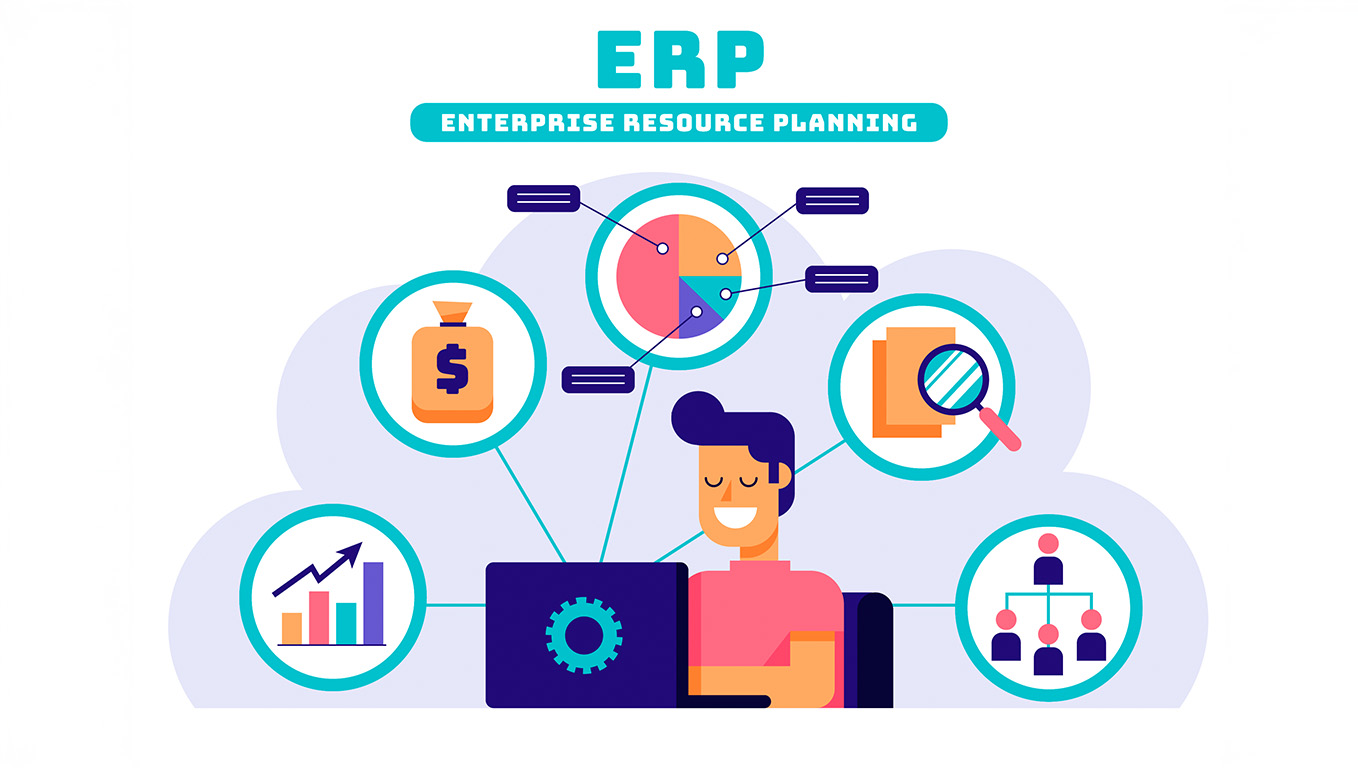
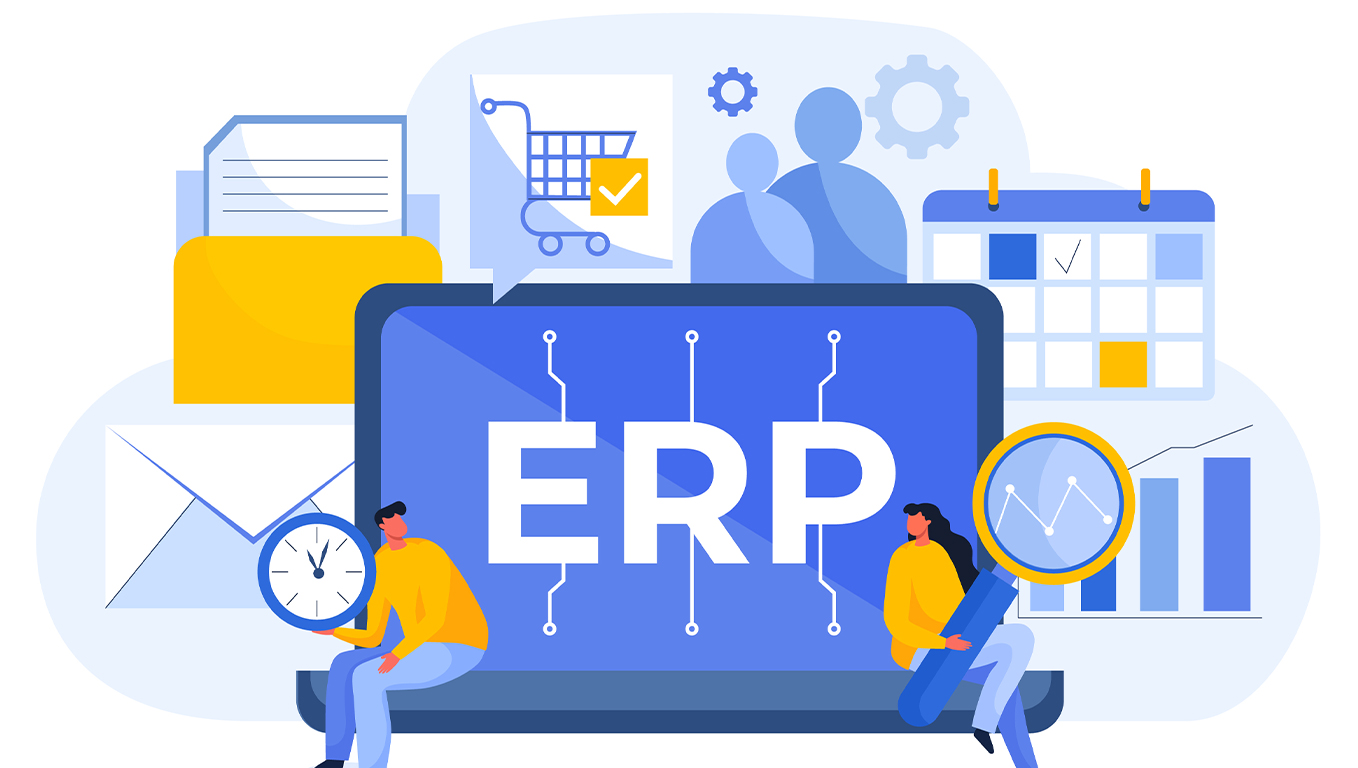
Enterprise Resource Planning — or ERP — has been around for decades. Most people know it as the system that connects finance, HR, supply chain, and operations in one place. But the ERP system software of 2015 looks nothing like what is available in 2026.
Today, businesses face more pressure than ever before. Supply chains break without warning. Customer expectations keep rising. Regulations keep changing. And AI is rewriting how decisions get made — fast. In this environment, your enterprise resource planning software is either helping you compete or quietly holding you back.
This blog walks through how ERP system trends are reshaping the industry in 2026. We cover the biggest shifts, explain what they mean in plain terms, and give you a clear action plan. Whether you are exploring ERP software for small businesses or running a large enterprise, this guide is written for you.
In 2026, ERP will no longer be a back-office system. It is the intelligence layer that drives how businesses operate and grow.
The global ERP software market is on track to cross $78 billion in 2026. That is a number that tells you a lot about how seriously businesses are taking this technology right now.
Cloud ERP systems now make up over 70% of all new implementations. Five years ago, most companies were still running on-premise systems. That has changed quickly — and it is not slowing down.
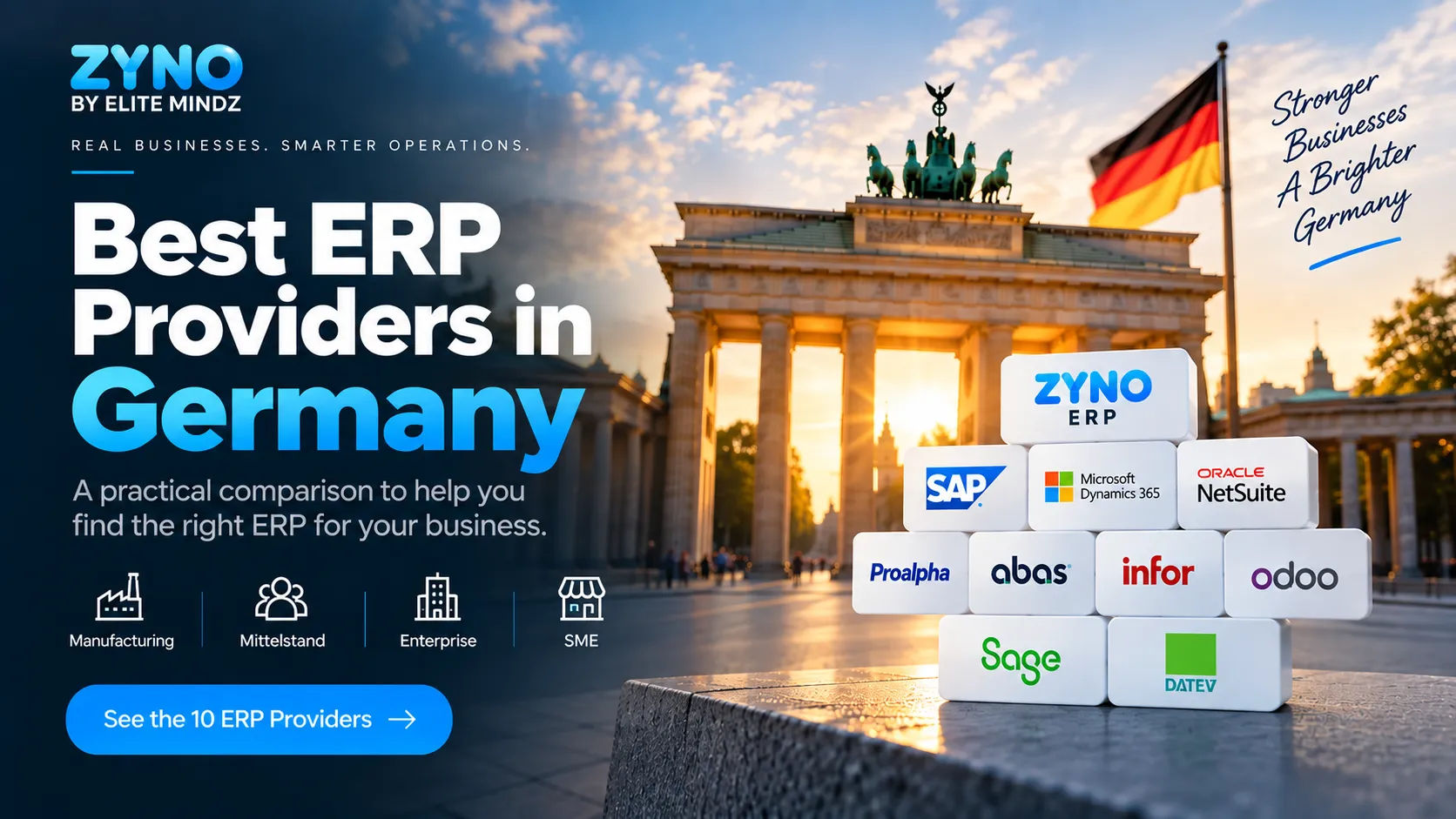
The major players in the space include SAP, Oracle NetSuite, Microsoft Dynamics 365, Workday, and Sage. All of them have poured significant resources into AI features, cloud infrastructure, and industry-specific tools over the past two years.
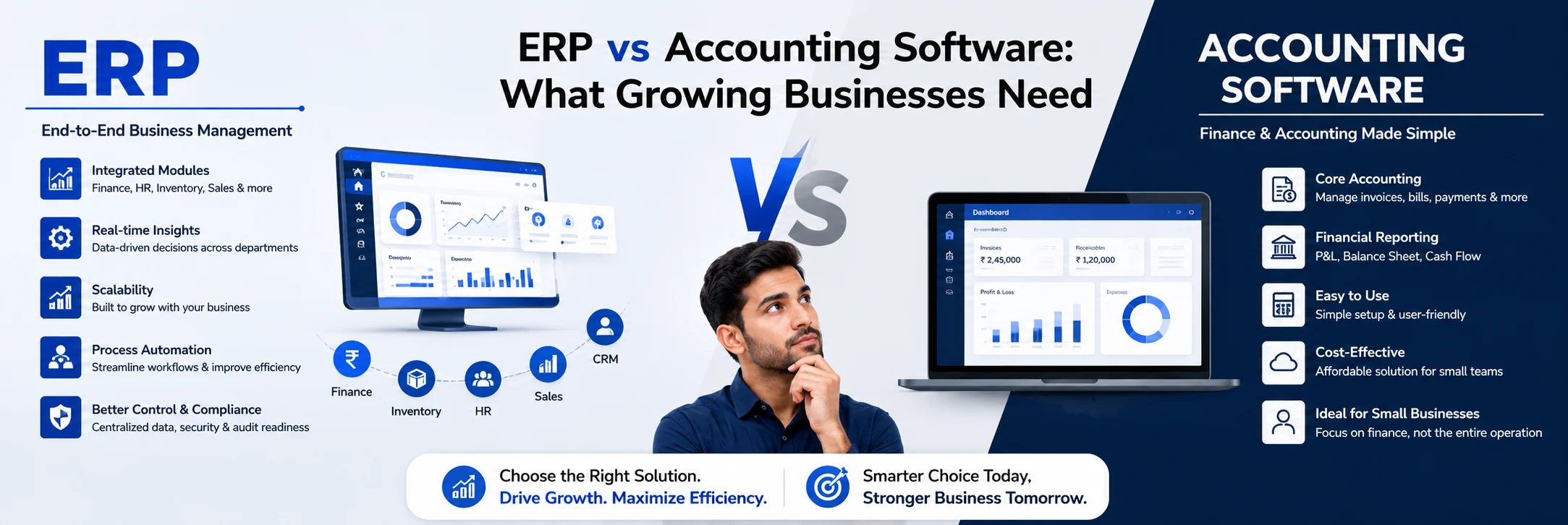
Here is what is really interesting. Mid-market companies — including those seeking ERP software for small businesses — are now adopting ERP solutions at higher rates than ever before. The old idea that ERP is only for big enterprises is fading. Modern cloud ERP solutions have made it far more affordable and much easier to set up.
The message is simple. Adoption of ERP system software is accelerating. Companies that delay modernisation are falling behind — and the gap is growing each quarter.
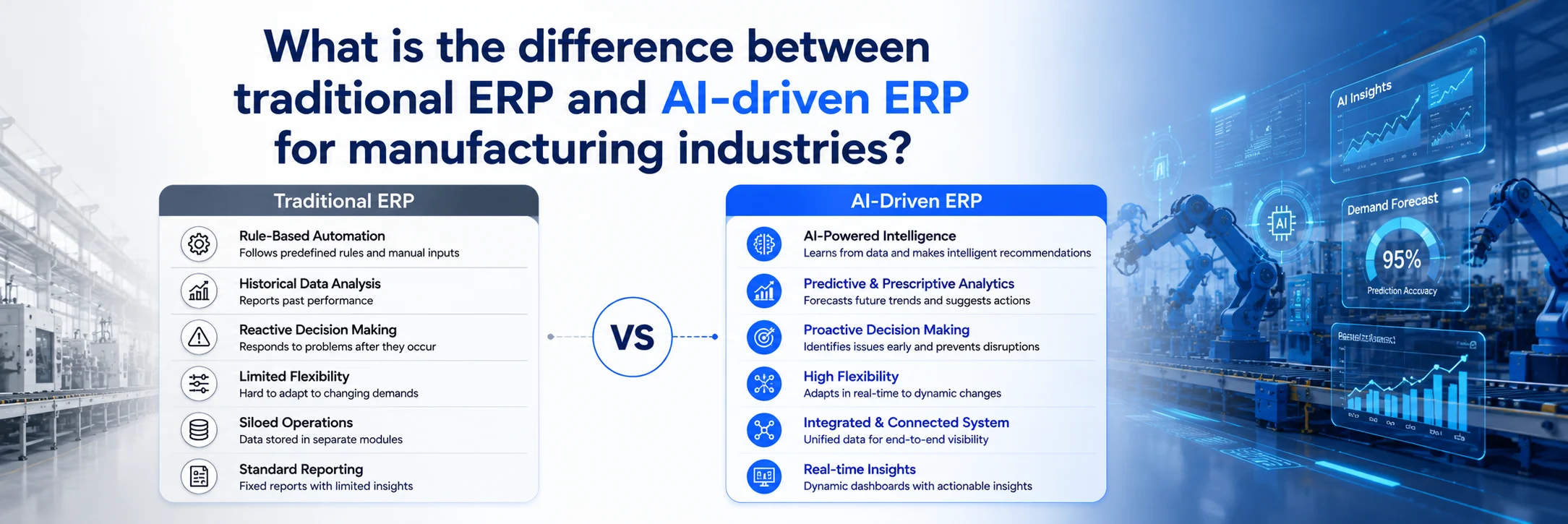
For a long time, ERP was a system of record. It stored data. It processed transactions. It generated reports after the fact — usually days or weeks after the event had already passed.
That era is over.
In 2026, enterprise resource planning software has become a system of intelligence. It does not just track what happened. It tells you what is happening right now. And it helps you predict what is likely to happen next.
Three forces are driving this shift. First, AI integration has become standard in modern ERP systems. Second, real-time data processing means there are no more data lags. Third, the demand for faster decisions has put pressure on vendors to deliver more than just reports.
C-suite leaders are now going to their ERP system for strategic insight — not just operational numbers. Finance wants live cash flow projections. Operations wants predictive maintenance alerts. Supply chain wants automatic risk signals. HR wants workforce analytics that go beyond headcount.
Modern ERP solutions deliver all of this. The system has moved from being a tool the IT team manages to a platform the board depends on.
ERP in 2026 is less about data entry and far more about decision intelligence. That shift is changing everything.
This is the biggest of all current ERP trends. It deserves your full attention.
Last year, everyone was excited about AI copilots inside ERP systems. These tools let you ask questions and get answers. They made it easier to find data. But here is the thing — they still required a human to take action.
In 2026, we have moved past that. The new development is agentic AI. This is AI that does not just assist. It acts.
Here is a simple example. Your ERP system spots that a supplier is likely to miss a delivery. Instead of flagging it for someone to review, the agentic AI automatically switches the order to a backup supplier, alerts the warehouse, and updates the customer's expected delivery date. No humans needed.
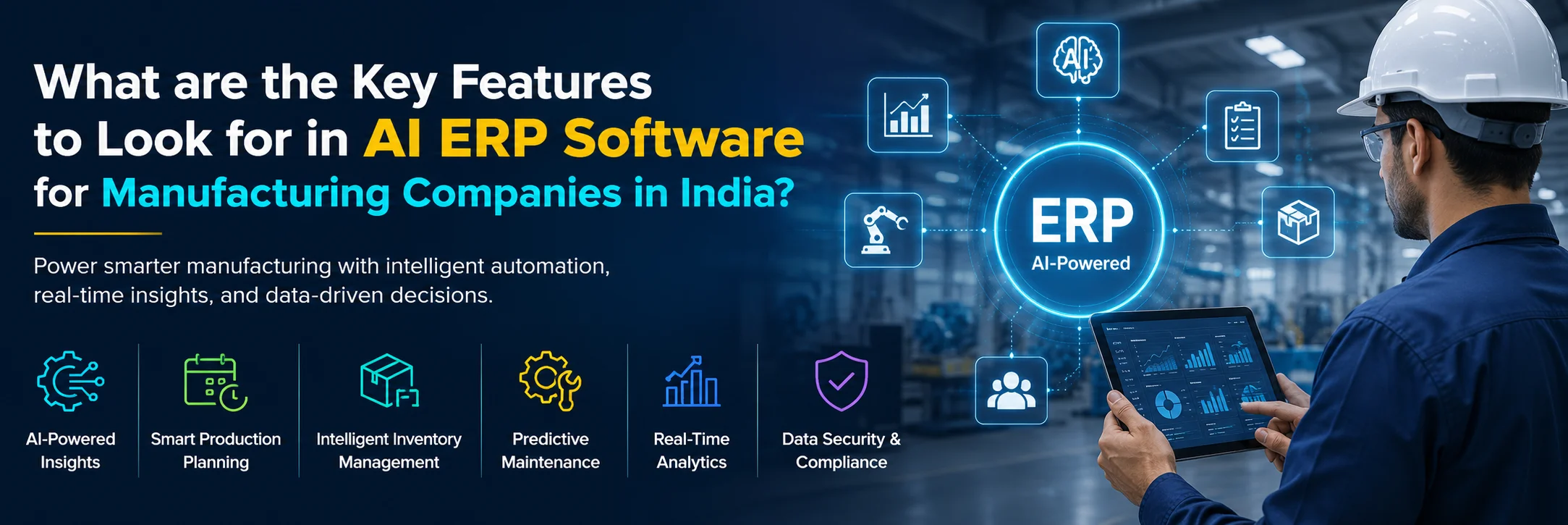
That kind of automation is now live inside platforms like SAP S/4HANA and Oracle Fusion Cloud. It applies to demand forecasting, invoice processing, expense approvals, and stock replenishment. These are among the clearest benefits of ERP systems in 2026.
AI can reroute orders, restock inventory, and notify teams — automatically.
Anomaly detection catches fraud and errors early — before they escalate.
Humans stay in control of high-stakes decisions. AI handles the rest.
Old-style ERP system software was built as one large block. You bought the whole platform. Customising it was expensive. Upgrading it was painful. And if one part broke, everything else felt the impact.
Composable ERP solutions solve this.
The idea is simple. Instead of one giant system, you build your ERP from modular components. You pick what you need. You integrate the best tools for each function. And you can upgrade one module without touching the rest.
Recent research shows that 76% of IT decision-makers are now aware of composable ERP. And 84% plan to invest in it soon. This is not a trend for the future. It is happening right now.
Vendors like SAP, Microsoft, and NetSuite have all moved towards more open, API-first architectures to support this. For growing businesses — including those looking at ERP software for small businesses — composable ERP is a game-changer. You start small and scale up as you need.
The push to move ERP systems to the cloud has been building for years. But 2026 is the year it becomes urgent for many companies.
SAP has announced it will end mainstream support for several on-premise ERP versions by 2027. Thousands of businesses are now scrambling to migrate to cloud ERP systems before the window closes.
The advantages of ERP system deployments in the cloud are clear. They cut IT infrastructure costs. Updates happen automatically. They scale as your business grows. And they let your team access everything from anywhere.
That said, not every business is ready to go fully cloud. Some industries have strict data residency rules or compliance requirements. For those companies, hybrid cloud ERP solutions — a mix of cloud and on-premise — are a smart middle ground.
Cloud ERP reduces IT costs and removes the burden of manual upgrades.
Automatic updates keep your platform current with no disruption.
Hybrid models give compliance-heavy industries the flexibility they need.
Data has always been central to enterprise resource planning software. But for years, most ERP reporting was backward-looking. You ran a report at month-end and saw what had already happened.
In 2026, real-time analytics is the new norm. Modern ERP system software processes data the moment it enters the system. Finance can see live profit and loss. Operations can monitor output as it happens. Sales can track revenue in real time.
Then there are digital twins — and they are genuinely exciting.
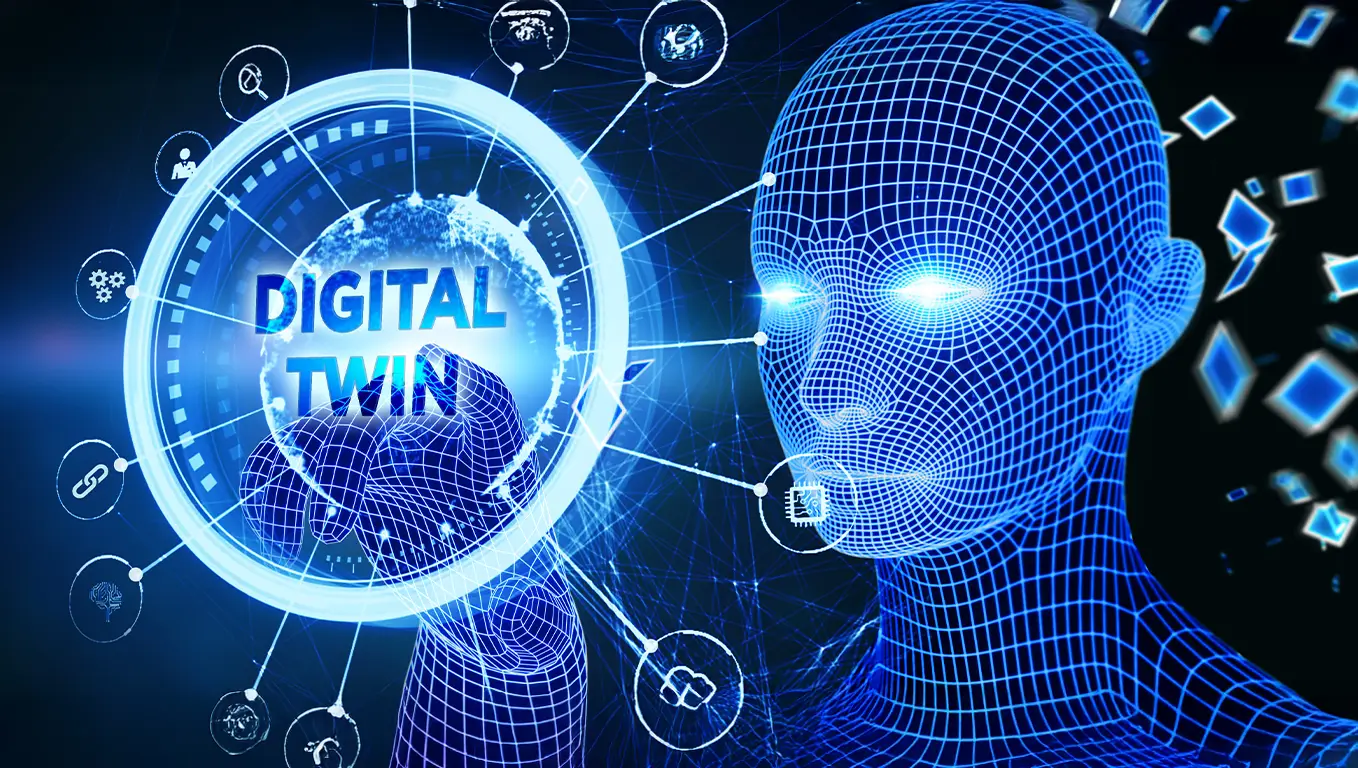
A digital twin is a virtual copy of a physical asset, process, or entire system. When connected to your ERP system, it lets you run simulations before making any real-world changes.
Say you are a manufacturer. You want to test a new shift schedule before you roll it out. With a digital twin integrated into your manufacturing ERP, you can simulate the change, see the projected impact on output and costs, and make an informed decision — all without disrupting actual production.

Supply chains have never been more fragile or more complex. Modern ERP systems in 2026 give you end-to-end supply chain visibility. Every supplier, every shipment, every stock location is tracked in one place.
When a delay is detected, the ERP software can automatically reallocate resources, adjust production schedules, or send updated delivery timelines to customers. When a supplier shows signs of risk, the system triggers alternative sourcing — before the problem becomes a crisis.
IoT integration plays a big role here. This is one of the most significant benefits of using ERP systems in supply chain management — creating a connected, real-time picture of your entire operation from raw material all the way to the end customer.
Businesses that have implemented these capabilities report fewer stockouts, fewer delays, and lower emergency procurement costs.
ESG — Environmental, Social, and Governance — used to be a reporting exercise. In 2026, that has completely changed.
Investors want ESG data. Regulators require it. And enterprise customers are making purchasing decisions based on it. Your ERP system is now the primary tool for collecting and reporting this information.
Leading ERP software platforms track carbon emissions, water usage, waste generation, and energy consumption right alongside traditional financial metrics. Some analysts call this the Green Ledger — sustainability data treated with the same seriousness as financial data.
ERP now tracks carbon, water, and waste as standard business KPIs.
Automated ESG reporting saves time and reduces the risk of errors.
Strong ESG data opens doors to better financing and stronger partnerships.
Generic ERP is slowly giving way to purpose-built platforms designed for specific industries. This is one of the most significant ERP industry trends of the current cycle.
A pharmaceutical company has very different needs from a food and beverage business. A logistics firm runs nothing like a professional services company. Generic ERP software can cover the basics. But industry-specific ERP solutions handle the nuances — and that is where the real value lies.
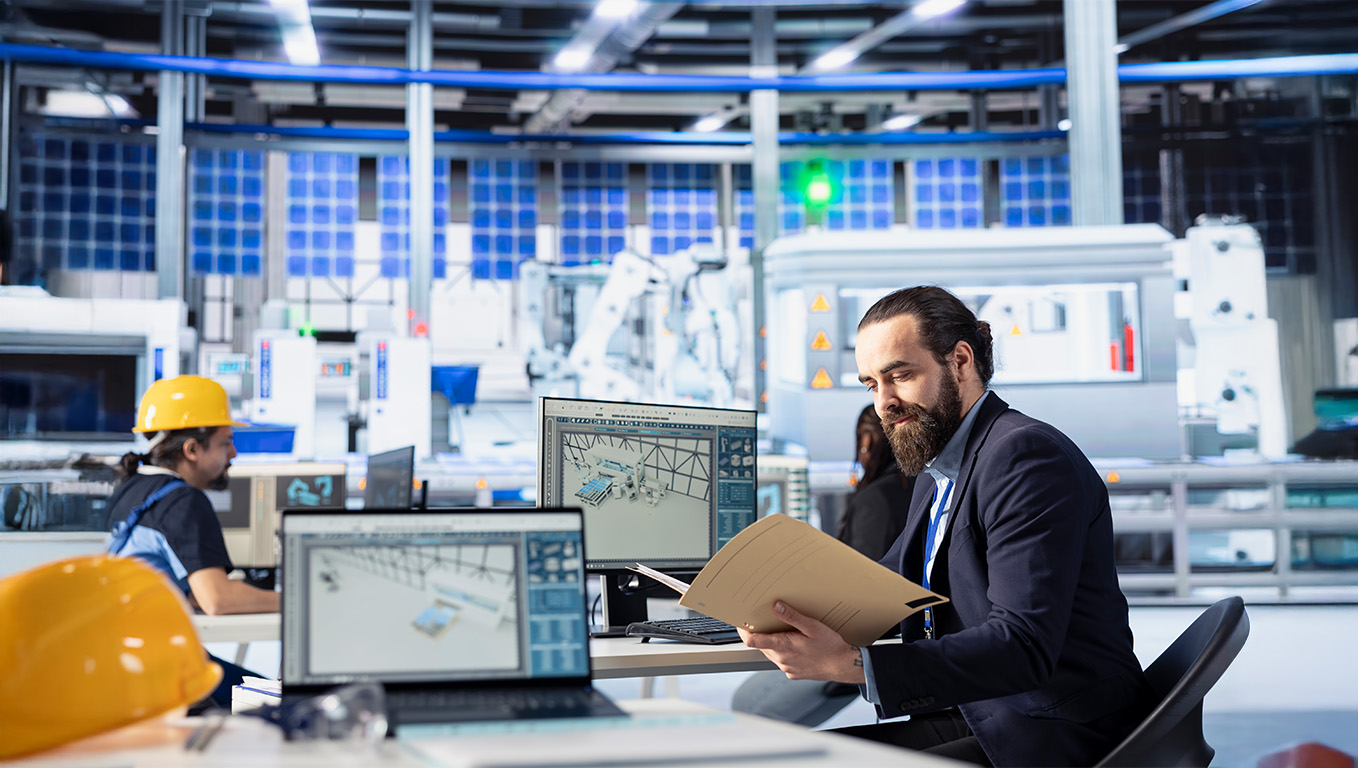
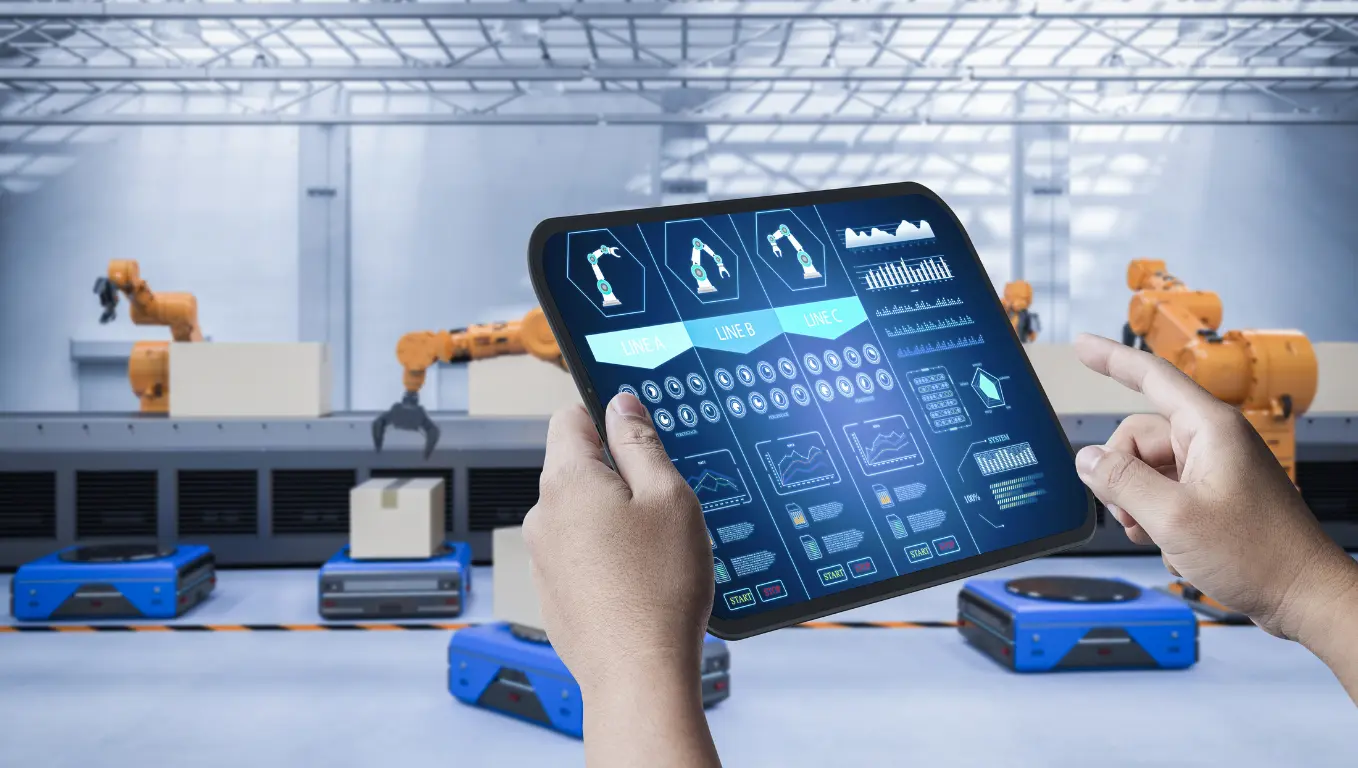
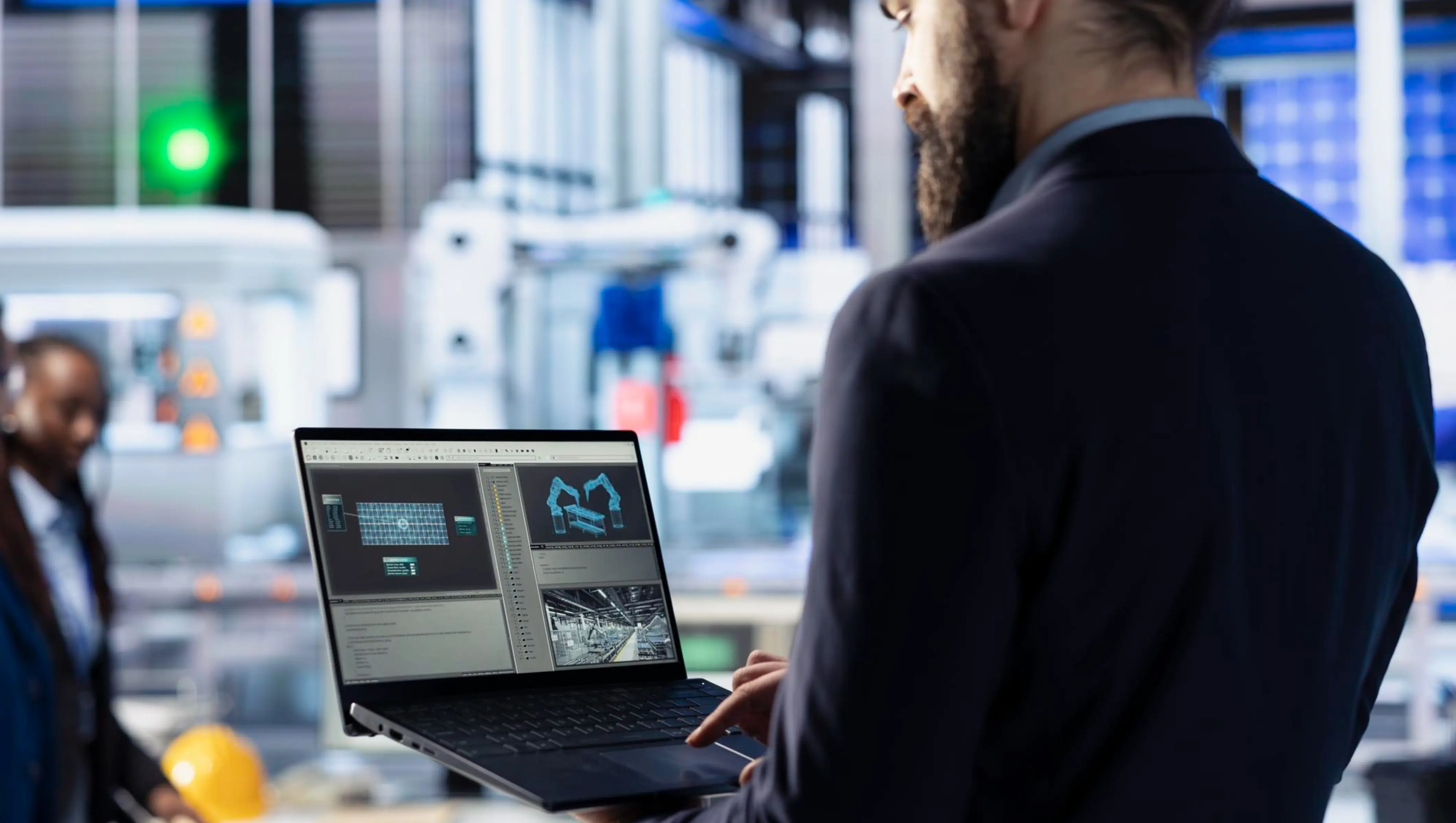
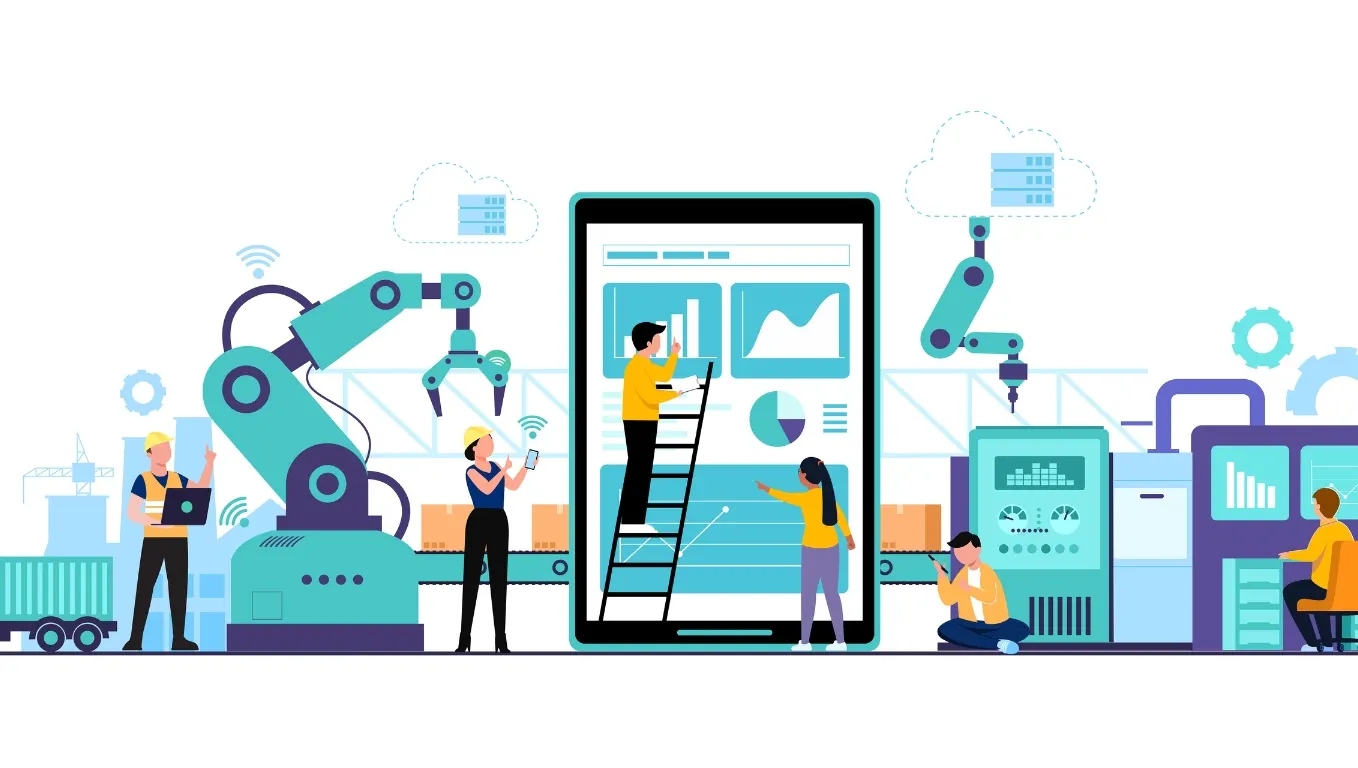
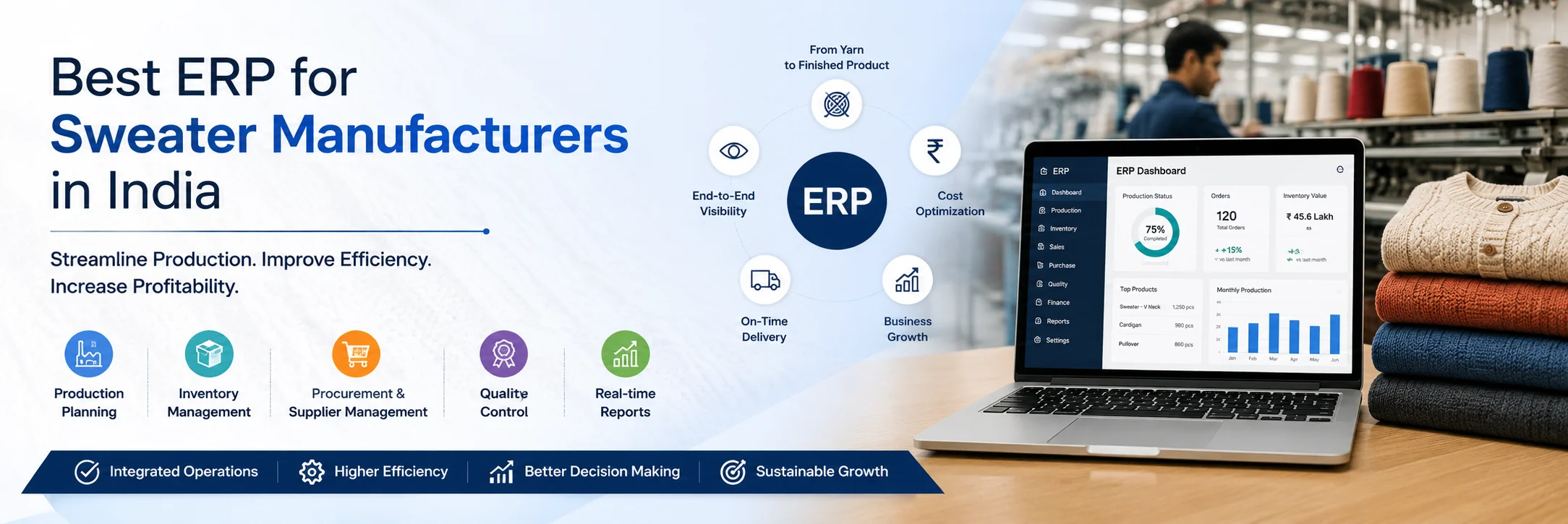
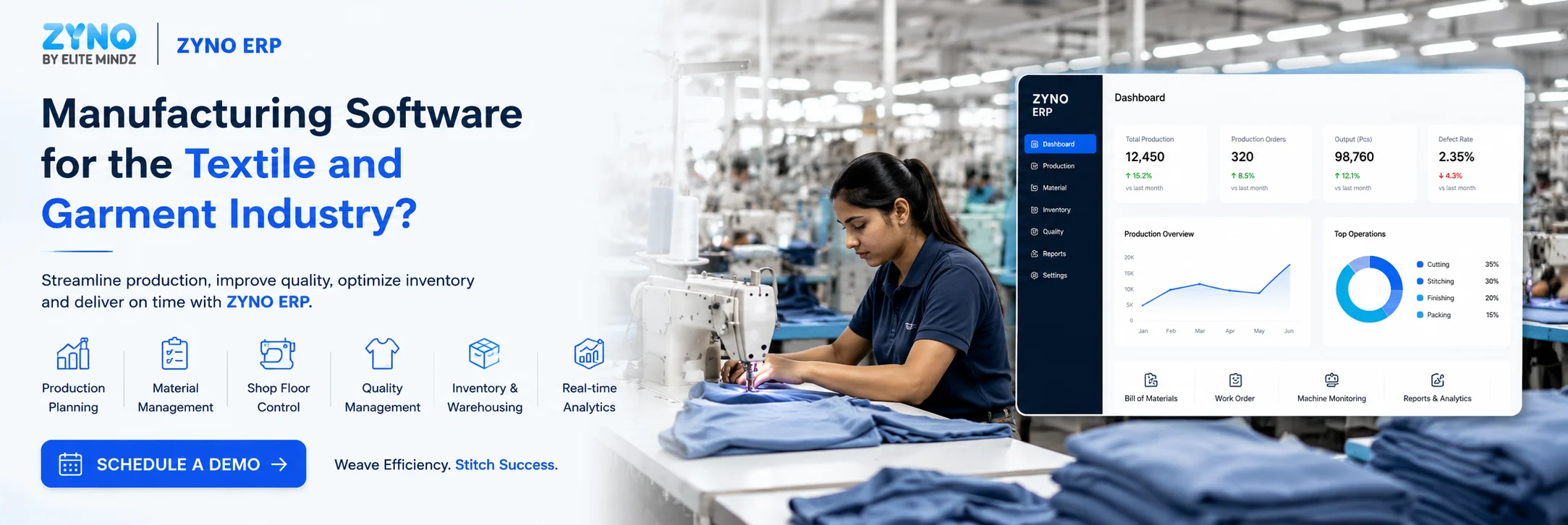
Nowhere is this clearer than in manufacturing. ERP for manufacturing industry use cases demand specialised tools for production planning, shop-floor control, quality management, and regulatory compliance. ERP software for manufacturing industry deployments come pre-built with these workflows, making implementation faster and adoption easier.
Key sectors seeing strong vertical ERP growth include manufacturing, healthcare, construction, retail, and professional services. If you operate in any of these sectors, evaluating manufacturing ERP or other vertical solutions is well worth your time.
Here is an honest truth about old ERP systems. Most employees hated using them. The interfaces were cluttered. Navigation was confusing. Training took weeks. And even then, people made mistakes.
In 2026, that is changing fast. ERP vendors have taken design cues from consumer apps. Modern interfaces are clean, role-based, and intuitive. Mobile ERP system software is now a standard feature. Sales reps can close deals from their phones. Warehouse staff update inventory from a tablet on the floor. Field technicians log service records from a job site.
One of the clearest benefits of ERP systems with modern UX is data quality. When ERP is easy to use, people actually use it. When people use it, data quality improves. Better data leads to better decisions.
Hyperautomation is the practice of automating as many business processes as possible. It combines AI, machine learning, and Robotic Process Automation — or RPA — into a coordinated system. In 2026, ERP solutions are at the centre of most hyperautomation strategies.
When you connect your ERP system data with RPA tools like UiPath or Automation Anywhere, entire end-to-end processes can run without human input. The monthly financial close. Procurement. Invoice matching. All of it can flow automatically based on rules set inside your enterprise resource planning software.
The ROI on this is real. Businesses investing in hyperautomation are cutting operational costs, reducing errors, and freeing their teams to focus on work that actually requires human thinking.
As ERP systems become more connected and more intelligent, they also become bigger targets. Security is no longer an afterthought — it is a core requirement of any modern ERP system software.
Modern cloud ERP systems in 2026 include robust security as standard. Role-based access controls limit who can see what. Multi-factor authentication adds a layer of protection. Encryption covers data at rest and in transit. Detailed audit trails record every transaction.
Data governance is equally critical. With AI making more decisions inside your ERP software, the quality of your data matters more than ever. Bad data leads to bad AI decisions — and bad AI decisions at scale can be very expensive to fix.
Role-based access controls reduce your exposure in the event of a breach.
Audit trails support compliance investigations and internal reviews.
Clean, well-governed data is the foundation every AI recommendation rests on.
There is a term gaining real traction in the industry right now: ERP 5.0 system.
It is not a product you can buy. It is a vision — the next generation of what enterprise resource planning can be.
The ERP 5.0 system is defined by the convergence of several things: AI, IoT, real-time analytics, sustainability tracking, hyperautomation, and human-centred design. All of these working together, in one intelligent, connected platform.
In an ERP 5.0 system, the software learns from your business. It adapts when your market changes. It makes recommendations, takes actions, and gets better over time. It aligns with broader goals — like sustainability and responsible AI — so it is not just built for profit, but for purpose.
In 2026, we are living the early chapters of this story. The ERP trends covered in this blog are the building blocks of the ERP of the future. The businesses investing in these capabilities today are the ones that will set the standard for their industries tomorrow.
ERP 5.0 is where intelligence, sustainability, and automation come together — not as separate features, but as one coherent platform.
Reading about ERP system trends is useful. Acting on them is what matters. Here is a practical roadmap.
Step 1: Assess Your Current ERP Maturity
Start by getting honest about where you are today. How old is your current ERP system? What does it do well? Where does it consistently fall short? Map out your biggest pain points — whether that is slow reporting, poor inventory visibility, or manual compliance work.
Step 2: Identify Your Priority Areas
You do not need to modernise everything at once. Focus on the areas that will deliver the fastest and most meaningful business impact. For most companies, this means supply chain visibility, financial reporting, or customer-facing operations.
Step 3: Build a Phased Modernisation Roadmap
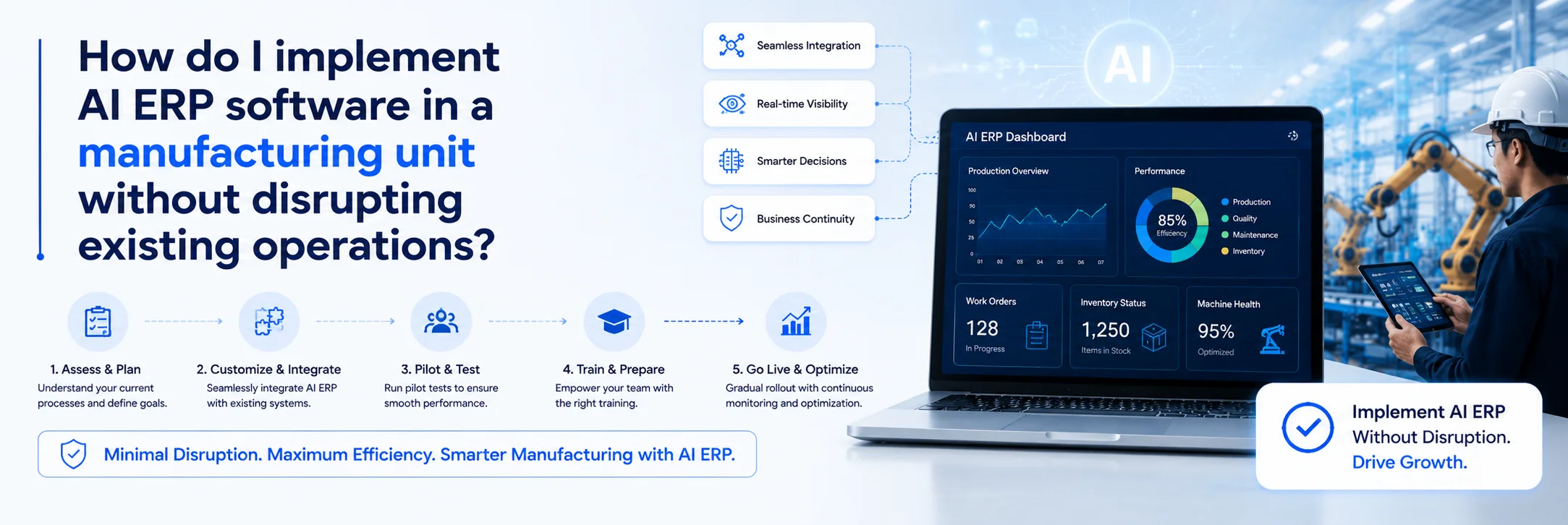
Plan your ERP software upgrade in stages. Start with the foundations — clean data, cloud ERP systems migration, and core module updates. Then layer in AI, automation, and advanced analytics as your confidence builds.
Step 4: Ask the Right Questions Before Buying
When evaluating ERP solutions and vendors, go well beyond the demo. Ask about total cost of ownership, real implementation timelines, post-go-live support, AI roadmaps, and industry-specific capabilities — particularly if you need ERP software for manufacturing industry or other specialist sectors.
Step 5: Invest in Change Management
Technology is only half the story. The other half is people. Make sure your teams are trained, supported, and included throughout the ERP journey. Poor change management is one of the top reasons ERP projects fail — even when the technology is solid.
Enterprise resource planning software is no longer just an operational necessity. In 2026, it is the intelligence layer that separates businesses that compete well from those that struggle to keep up.
The ERP trends covered in this blog — agentic AI, composable architecture, cloud migration, real-time analytics, supply chain automation, ESG tracking, vertical ERP solutions, mobile UX, hyperautomation, and security — are not future possibilities. They are things businesses are doing right now.
The question is not whether you should modernise your ERP system. You should. The question is how quickly you move, and how well you execute.
Companies that act thoughtfully today will build an advantage that compounds over time. Those that wait will find the gap increasingly hard to close.
The ERP of the future is not a single moment. It is a journey. And the journey starts with a clear picture of where you are today — and an honest plan for where you need to go.
ZYNO by Elite Mindz is a next-generation ERP system and business intelligence platform built for the demands of modern enterprises. We work with businesses across manufacturing, retail, logistics, healthcare, and professional services — helping them gain full visibility into their operations, in real time, from anywhere.
Our platform brings together AI-driven analytics, composable architecture, and deep industry expertise to deliver ERP software that is intelligent, scalable, and genuinely easy to use. Whether you are migrating from a legacy system or exploring ERP software for small businesses for the first time, ZYNO is built to grow alongside your business.
We offer purpose-built manufacturing ERP capabilities, cutting-edge cloud ERP solutions, and a full suite of ERP solutions designed to match your industry. At Elite Mindz, a software company in Delhi, we believe enterprise resource planning software should be a strategic asset — not a burden.
Ready to evolve your ERP? Let's talk. Book a free consultation with the ZYNO team today.
Q1: What is ERP 5.0, and how is it different from earlier versions?
The ERP 5.0 system is the next generation of enterprise resource planning. It brings together AI, IoT, sustainability tracking, real-time analytics, and hyperautomation in one platform. Unlike earlier versions — which focused on recording transactions and generating reports — it is built to learn, adapt, and act. It represents the ERP of the future: aligning business performance with broader goals like responsible AI use and environmental sustainability.
Q2: Is cloud ERP better than on-premise for all businesses?
For most businesses, yes. Cloud ERP systems are cheaper to maintain, scale easily, and get updated automatically. But some industries — like defence, government, or parts of healthcare — have strict data rules that may still require on-premise or hybrid setups. The right answer depends on your compliance environment and your IT strategy.
Q3: How long does a modern ERP implementation take?
A small or mid-sized company using cloud ERP solutions can often go live in three to six months. Larger enterprises with complex integrations may need 12 to 24 months. Industry-specific ERP software for manufacturing industry and other vertical solutions tend to be faster because they come pre-configured for your sector.
Q4: How does AI improve ERP performance in practical terms?
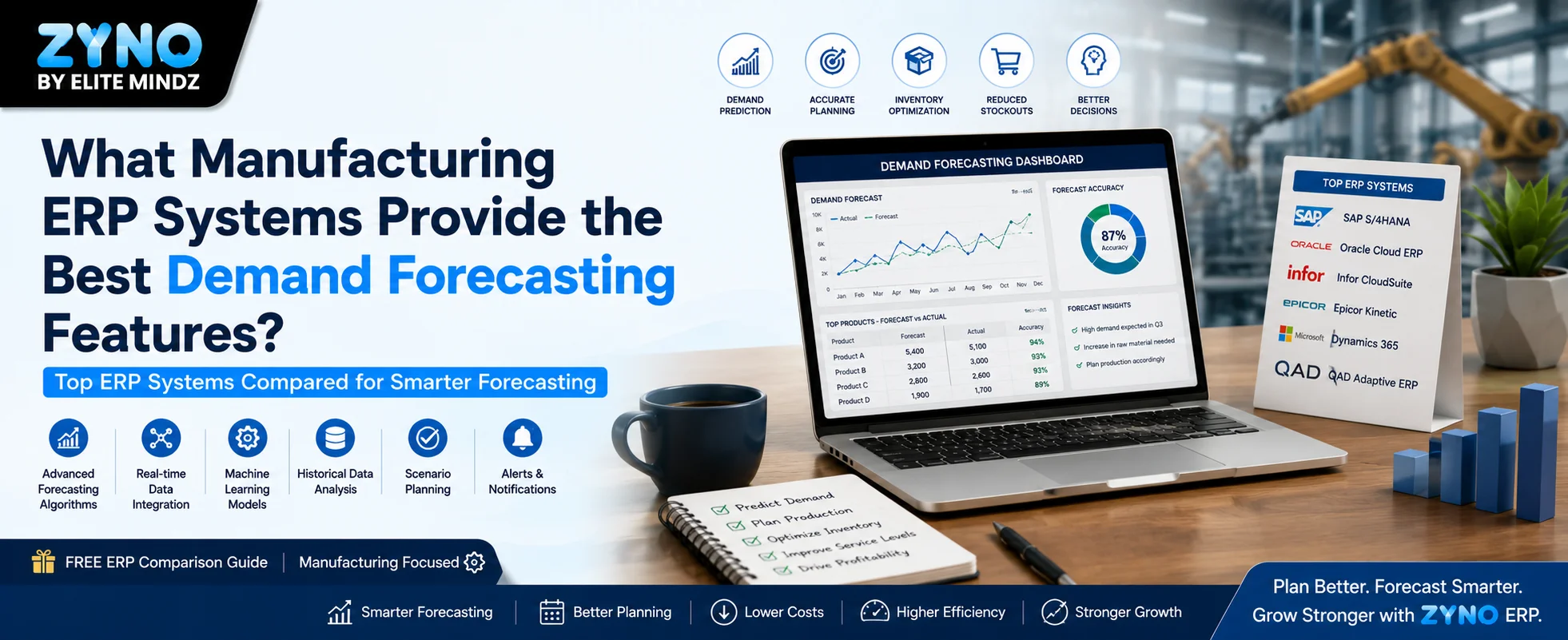
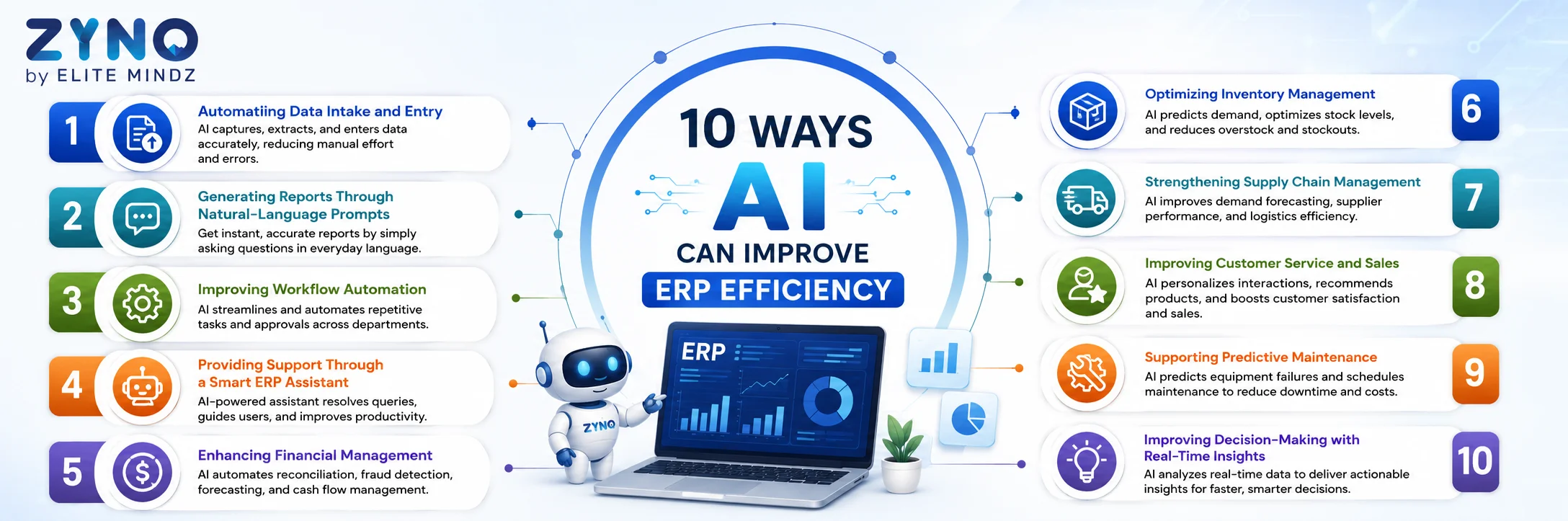
AI improves ERP systems in several concrete ways. It automates repetitive tasks like invoice matching and purchase order approvals. It improves demand forecasting. It detects anomalies and potential fraud. And through agentic AI, it can now take autonomous actions — like rerouting a supply chain or flagging a compliance issue — without waiting for human input. These are among the most powerful benefits of using ERP systems in 2026.
Q5: What is composable ERP, and who should consider it?
Composable ERP software means building your ERP from best-of-breed modules rather than buying one large, all-in-one system. You choose what fits your business. You can upgrade or swap individual parts without rebuilding everything. It is ideal for fast-growing companies that need flexibility — and is increasingly popular as an ERP solution for businesses that want to avoid vendor lock-in.
Q6: How does ERP support ESG and sustainability reporting?
Modern ERP system software now tracks environmental metrics — like carbon emissions, energy use, and waste — alongside financial data. This removes the need for manual data collection, reduces reporting errors, and makes your sustainability data as reliable as your financial statements. It is one of the most compelling advantages of ERP systems for enterprises facing regulatory scrutiny.
Q7: What are the biggest risks of a failed ERP implementation?
The biggest risks are budget overruns, data migration problems, poor user adoption, and disruption during go-live. Most ERP software failures are not caused by the technology itself. They come from inadequate planning, weak change management, or choosing the wrong vendor. A phased approach with strong leadership support significantly reduces these risks.
Q8: How do small and mid-sized businesses benefit from modern ERP?
Modern cloud ERP solutions have made enterprise-grade technology accessible to smaller businesses. ERP software for small businesses can now provide the same AI-driven insights, automated workflows, and real-time reporting that large enterprises use — at a fraction of the traditional cost. The benefits of ERP systems for SMBs competing in demanding markets are substantial.
Are you looking for a professional advisor for your business?
Complete the form and discuss implementation strategies with our IT expertise.
Get a Quote in Minutes