×
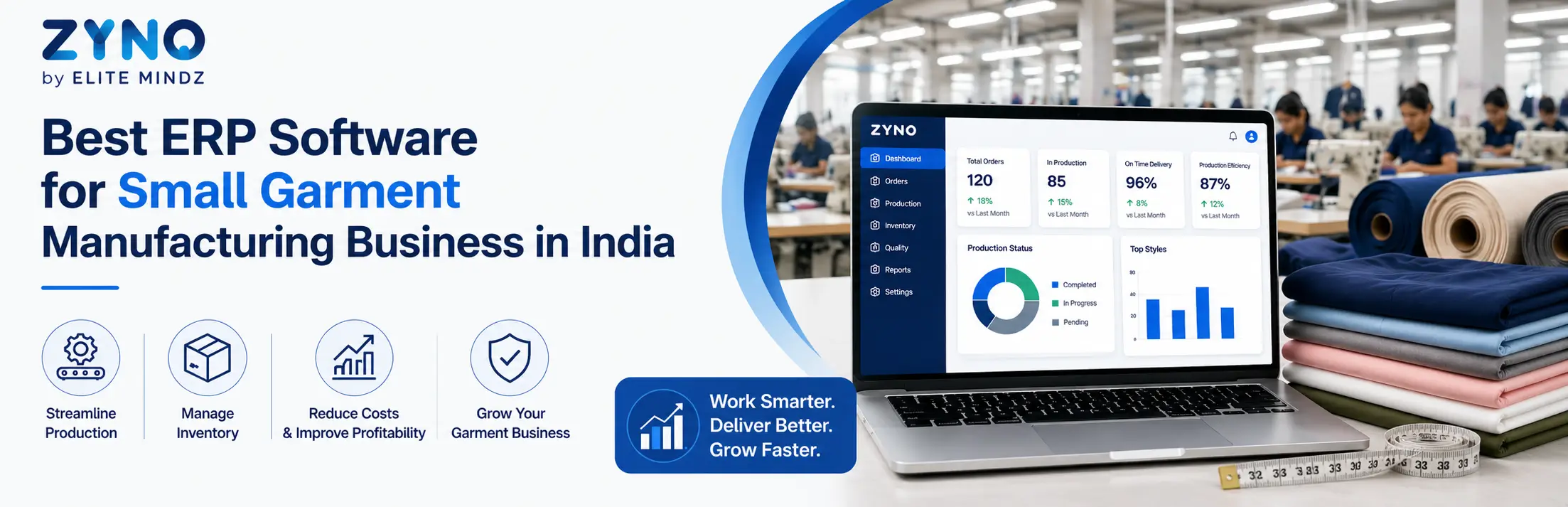
Looking for the best ERP for your small garment factory in India? Choose a solution that simplifies production, inventory, GST billing, and job work—helping you reduce errors, save costs, and deliver orders on time.
Running a small garment manufacturing business in India is no small feat. You're juggling raw fabric procurement, production schedules, tailoring teams, quality checks, GST billing, and buyer deliveries — all at once, often on spreadsheets or manual registers. If any one piece slips, your entire order cycle collapses.
This is exactly why the conversation around ERP software for the garment industry has exploded in India over the last few years. And it's not just happening at the large export house level anymore — small and mid-sized garment factories in Tiruppur, Surat, Ludhiana, Noida, and Mumbai are actively searching for affordable, cloud-based ERP solutions built for their exact needs.
In this guide, we break down what makes a garment production ERP genuinely useful for small businesses, how the top competitors in India stack up, and why ZYNO Manufacturing ERP is steadily becoming the go-to choice for small garment manufacturers who want a system that actually works for them — not the other way around.
India’s garment market is booming, but competition, rising input costs, and stricter buyer expectations are squeezing margins. Most small factories still rely on Excel and manual processes, creating delays and errors. Without ERP, they risk losing orders to faster, tech-enabled competitors. A garment-specific ERP brings real-time visibility, cost control, and compliance — now essential, not optional.
Before we compare ERP systems, it's worth understanding the specific pain points that small Indian garment manufacturers face day-to-day:
1. Raw Material Chaos Fabric comes from multiple vendors in different colours, widths, and lots. Without a proper system, over-purchasing and under-purchasing happen in the same week. A good ERP for apparel manufacturing tracks inventory by lot, colour, and width, and auto-triggers reorder alerts.
2. Production Bottlenecks You Can't See When you're producing 500 pieces across 4 stitching lines, knowing which line is behind schedule — in real time — is priceless. Most small factories find out about delays when the delivery truck shows up early.
3. Style and Size Complexity Garment manufacturing isn't like making one product. One order can have 12 styles, each in 5 sizes, in 3 colourways. That's 180 SKUs for a single buyer. Managing this manually is a recipe for picking errors and production mismatches.
4. GST and Compliance Headaches Indian garment manufacturers deal with GST at multiple rates, e-way bills, e-invoicing for buyers above threshold, and export documentation if they ship internationally. Manual billing for all of this is slow and error-prone.
5. Cash Flow Blind Spots Without integration between production, sales, and accounts, it's impossible to know your actual profit per order until well after delivery. A proper garment production ERP India gives you cost visibility at every stage.
Fabric shortages, missed deadlines, GST errors, and profits you can only calculate after delivery — these aren't just your problems. They're what happens when a garment factory runs without the right system. ZYNO fixes all of it, out of the box.
The Indian market has several ERP players competing for the garment sector. Here's an honest look at where each stands — especially for small businesses.
Best for: Large garment exporters with global operations
Weakness for small businesses: SAP implementation can cost between $150,000 and $500,000 for small businesses, and typically requires 6–24 months of planning, customization, and integration before going live. For a small garment unit in Tiruppur or Surat, this is simply out of reach — both financially and in terms of implementation complexity.
SAP is powerful. But it's built for enterprises, not for a 30-machine garment factory that needs to go live in weeks, not years.
Best for: Growing mid-sized garment manufacturers willing to invest in customization
Strength: Odoo's modular framework offers apps for inventory, MRP, CRM, accounting, and more. It's fully adaptable for industry-specific needs such as fabric rolls, size/colour matrix, and Bill of Materials.
However, Odoo's strength is also its challenge. Out of the box, it's a generic platform — not a garment ERP. Making it work for a garment factory requires significant customisation, which means hiring an Odoo implementation partner, adding cost and time. For a small business that needs something running quickly, this can be frustrating.
Best for: Mid-to-large apparel retailers and manufacturers with big budgets
Strength: LOGIC ERP has strong apparel-specific modules, including style-size-colour matrix, omnichannel retail integration, and GST compliance. It's trusted by brands like Killer Jeans, Sweet Dreams, and Trylo Industries.
Weakness for small businesses: LOGIC ERP is feature-rich to the point of being overwhelming for a small garment unit. Pricing and implementation timelines tend to skew toward larger organisations, and small factories often find the system more complex than their operations require.
Best for: Startups and very small units with technical resources
Strength: Open-source and free to use, with modules covering manufacturing, inventory, and accounting.
Weakness: ERPNext requires technical expertise for textile-specific modules. Without an in-house IT team or a reliable vendor who knows garment workflows, the implementation often stalls. Support can also be inconsistent.
These are India-specific ERP solutions targeting SMEs in the garment and textile sector. They offer more affordable pricing and faster implementation than SAP or Odoo, and some have garment-specific features. However, many of them are still evolving in terms of cloud reliability, mobile access, and long-term scalability. Support quality varies significantly by vendor.
There’s a clear gap between the expensive, complex enterprise ERP systems (SAP, Oracle, LOGIC) and the cheaper but under-featured alternatives. Small garment manufacturers in India need something that sits right in the middle. Read more: Is ERP worth it for small businesses? That’s precisely where ZYNO Manufacturing ERP comes in.
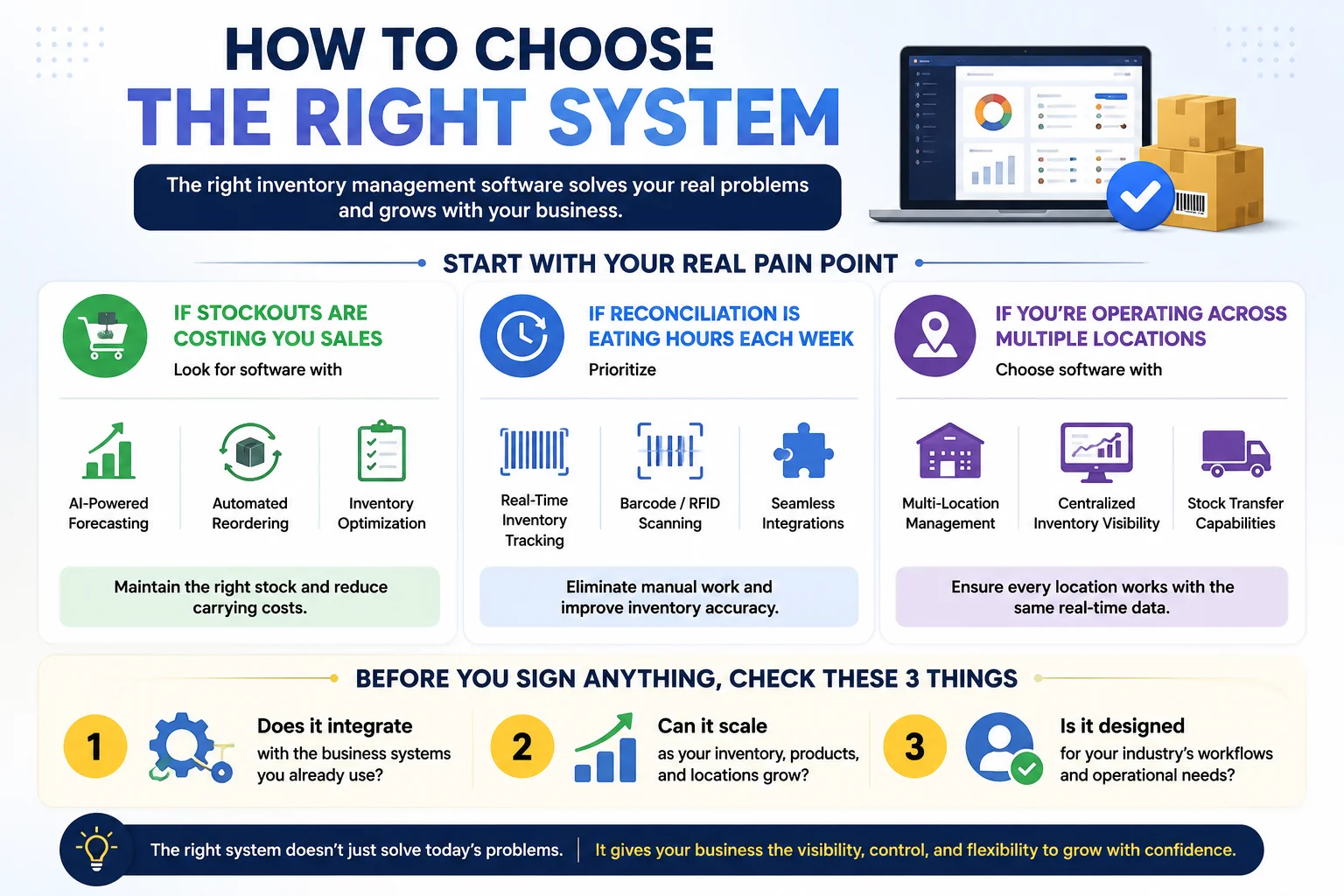
Choosing an ERP is one of the most important decisions a garment manufacturer will make. Before you sign any contract or attend a demo, run every vendor through this checklist:
Generic ERP platforms (SAP, Oracle, even basic Odoo) require heavy customisation to handle garment-specific workflows like style-size-colour matrices, fabric lot tracking, and cut order planning. Ask the vendor directly: "How many garment factories are currently using your system?" If they can't give you references, be cautious.
One buyer order in garment manufacturing can easily mean 100–200 SKUs (styles × sizes × colours). Test this during the demo — enter a real order from your business and see how the system manages it. If it's clunky or requires workarounds, it will cause daily frustration on your production floor.
The subscription price is just one part. Ask about: implementation fees, data migration charges, training costs, customisation charges, and annual maintenance. An ERP that looks cheap upfront can become expensive quickly if every change requires a paid developer.
Get this in writing. Enterprise ERP vendors often quote optimistic timelines that extend significantly in practice. For a small garment factory, an implementation that drags beyond 60–90 days creates serious disruption to operations. Ask for a structured onboarding plan with clear milestones.
Many ERP vendors are attentive during the sales process and disappear after implementation. Ask: "Who is my point of contact after go-live? What is your average response time for support tickets? Do you have garment industry specialists on your support team?"
In 2026, there is no good reason for a small garment factory to invest in on-premise ERP infrastructure. Cloud-based systems mean no server costs, automatic updates, and access from anywhere — which matters when you're on the factory floor or visiting a buyer.
That's precisely where ZYNO Manufacturing ERP comes in.
ZYNO Manufacturing ERP is purpose-built for the needs of small and growing garment manufacturers in India. It's not a generic ERP that's been "adapted" for garments. Every module, every workflow, every report in ZYNO has been designed with the realities of Indian garment production in mind — from the cutting table to the shipping dock.
Whether you're running a 10-machine unit in Ludhiana producing school uniforms, a 50-machine factory in Tiruppur exporting knitwear, or a boutique garment unit in Delhi supplying fashion brands — ZYNO Manufacturing ERP scales to your size and grows with your business.
Cloud-Based, Accessible Anywhere
ZYNO is a fully cloud-based ERP for garment manufacturing. There’s no expensive server to buy, no IT team needed for maintenance. You access your factory data — production status, inventory levels, buyer orders, pending deliveries — from your phone, tablet, or laptop, from anywhere.
This matters because garment factory owners in India aren't sitting in offices all day. They're on the factory floor, visiting suppliers, travelling to meet buyers. Your ERP should travel with you.
Fast Implementation — Weeks, Not Months
One of the biggest fears small business owners have about ERP is implementation time and disruption. ZYNO is designed to go live quickly, with guided onboarding and pre-configured templates for garment workflows. Your team doesn't need to be tech-savvy to start using it.
Style-Size-Colour Matrix — Built In
This is non-negotiable for any ERP for apparel and garment industry. ZYNO handles complex product matrices natively — multiple styles, sizes, colours, and fabric variants — without requiring custom development. One order, many SKUs, complete tracking.
End-to-End Production Visibility
From the moment a buyer order is confirmed, ZYNO tracks every production stage: fabric issue, cutting, bundling, stitching, finishing, quality check, and dispatch. Factory owners and managers get real-time dashboards showing line-wise efficiency, pending orders, and delivery timelines.
Fabric and Trim Inventory Management
ZYNO's inventory module is built for garment complexity — tracking fabric by roll, lot, colour, and width; managing accessories like zippers, buttons, and labels; and alerting procurement when stock falls below reorder levels. No more over-buying fabric or discovering shortages mid-production.
GST-Compliant Billing and Accounts
ZYNO comes with integrated accounting that handles GST billing, e-invoicing, purchase orders, vendor payments, and customer collections — all compliant with Indian tax regulations. This is not an afterthought; it's core to how the system works.
Quality Control at Every Stage
In garment manufacturing, rejections are expensive. ZYNO includes built-in quality check workflows at fabric inspection, in-line stitching checks, and final audit stages. Rejection data is tracked and reported, helping you identify recurring issues and reduce wastage.
HR and Payroll for Factory Workers
Managing daily wage workers, calculating overtime, tracking attendance, and running monthly payroll is a headache for small garment factories. ZYNO's HR module handles all of this in a straightforward, India-specific way — including PF, ESIC, and statutory compliance.
Costing and Profitability Per Order
Every garment manufacturer's nightmare is discovering an order was unprofitable after delivery. ZYNO gives you real-time cost tracking per order — fabric consumption, labour cost, overhead allocation, packing, and logistics — so you always know your margin before the order ships.
Vendor and Subcontractor Management
Garment manufacturing often involves job work — sending bundles to external embroidery units, printing vendors, or finishing contractors. ZYNO tracks material sent out, work received, quality of returned goods, and payment to job workers — all in one place.
| Feature | ZYNO Manufacturing ERP | SAP Business One | Odoo | LOGIC ERP | ERPNext |
|---|---|---|---|---|---|
| Built for Garment Industry | Yes | Generic | Generic | Partial | Generic |
| Affordable for Small Units | Yes | Very Expensive | Moderate | Expensive | Free (but needs IT) |
| Cloud-Based | Yes | Hybrid | Yes | Yes | Yes |
| Fast Implementation | Weeks | 6–24 months | Months | Months | Variable |
| GST & India Compliance | Built-in | Add-on | Add-on | Built-in | Partial |
| Style-Size-Colour Matrix | Native | Custom needed | Custom needed | Yes | Custom needed |
| Mobile Access | Yes | Partial | Yes | Yes | Yes |
| Dedicated Garment Support | Yes | No | No | Enterprise focus | Community only |
ZYNO Manufacturing ERP is built specifically for small and growing garment factories in India — from fabric procurement to buyer dispatch, every workflow in one platform. See exactly how it works for your factory in a free 30-minute demo.
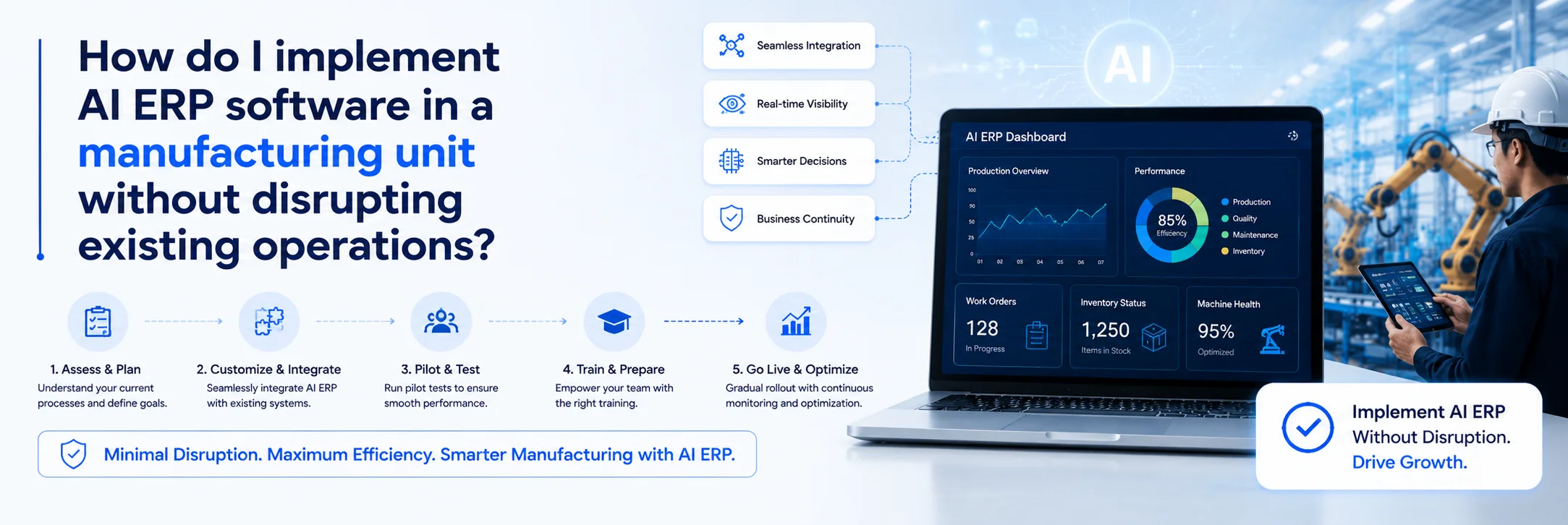
ERP implementation with ZYNO is structured and fast. Weeks 1–2 focus on workflow mapping and setup, weeks 2–3 on data migration, and weeks 3–4 on role-based training. By week 4, you go live with real production tracking, backed by dedicated support. Most small garment units are fully operational within 30 days with minimal disruption.
Even the right ERP can fail if implementation is handled poorly. These are the most common mistakes small garment manufacturers make when going live with a new system:
Many factories insist on importing years of old inventory records, pending orders, and vendor histories before going live. This delays implementation by weeks and often introduces errors. Best practice: migrate only active data — current inventory balances, open orders, active vendor records — and archive the rest.
Factory owners often select and implement ERP without involving floor supervisors, store managers, or accounts staff. When the system goes live, these users are unfamiliar with it and resistant to change. Include your key users in the demo process and training from day one.
Running both the old Excel/manual system and the new ERP simultaneously "just to be safe" sounds logical but creates chaos. Staff end up updating two systems, data gets out of sync, and nobody fully commits to the new platform. Set a firm cutover date and stick to it.
Out-of-the-box ERP settings rarely match your specific workflows. Before going live, ensure that your product categories, fabric types, production stages, GST tax codes, and chart of accounts are properly configured. This upfront effort saves enormous time later.
A two-hour demo is not training. Plan for role-specific training sessions: store staff need inventory training, production supervisors need job card and scheduling training, accounts staff need billing and payment training. Budget at least one full week for structured training before go-live.
Every successful ERP implementation has one person inside the business who owns it — someone who understands both the business processes and the system, troubleshoots issues, and drives adoption. Without this internal champion, implementation struggles even with the best vendor support.
Capture buyer orders with style, size, colour, and quantity details. Auto-generate production orders and allocate fabric from inventory. Track order status from confirmation to dispatch.
Plan daily production targets across multiple lines. Assign operators, track output, and identify bottlenecks in real time. Generate daily production reports automatically.
Track fabric rolls with lot, colour, width, and shrinkage data. Manage accessories and trims with batch-wise tracking. Get automatic alerts for low stock and pending purchase orders.
Record inspection results at fabric receiving, in-process stitching, and final audit stages. Track defect types, rejection rates, and rework quantities by style and production line.
Issue material to sub-contractors, track quantity sent vs. received, monitor turnaround time, and process job work bills — all without losing visibility of your material.
Generate GST-compliant invoices, manage purchase bills, track payments and receipts, reconcile vendor accounts, and produce profit-and-loss statements — all from within ZYNO.
Mark daily attendance, calculate wages for piece-rate and daily-rate workers, process monthly payroll with statutory deductions, and generate payslips.
Access dashboards showing order fulfilment rate, production efficiency, fabric utilisation, rejection percentage, outstanding payments, and profitability by buyer — all updated in real time.
ZYNO Manufacturing ERP is ideal for:
If you're in Tiruppur, Surat, Ludhiana, Noida, Bangalore, Kolkata, or any garment manufacturing hub in India — ZYNO is designed for your context.
Before committing to any ERP system for your garment factory, get clear answers to these questions. A vendor who is confident in their product will answer all of these without hesitation.
Ask for references you can speak to directly — ideally factories of similar size and type to yours.
Specifically ask about: style-size-colour matrix, fabric lot tracking, cut order planning, job work management, and buyer-wise reporting.
Get this in writing, broken down line by line. Any vendor who can't give you this clearly is a red flag.
Ask for a written implementation plan. Vague answers like "4–6 weeks depending on your requirements" without a structured plan suggest the vendor doesn't have a repeatable process.
You should always be able to export your complete data in a standard format (CSV, Excel). If a vendor is vague about this, your data could be held hostage.
For Indian businesses, data should ideally be hosted on servers in India. Ask about uptime guarantees and data backup frequency.
Ask about response times, support channels (phone, email, chat), and whether you'll have a dedicated account manager or just a helpdesk ticket system.
A genuine demo using your styles, your fabric types, and your order structure will reveal far more than a polished presentation using sample data.
Many garment factories use Tally for final accounts. If you want to continue using Tally alongside the ERP, confirm integration is available and ask how it works in practice.
An ERP is a long-term investment. You want a vendor who is actively developing the product, not one that has been on the same version for three years.
Q: Is ERP software too complex for a small garment unit?
Not anymore. Systems like ZYNO are specifically designed for small manufacturers, with simple interfaces and industry-specific workflows that your team can learn in days, not weeks.
Q: How much does garment factory management software cost in India?
This varies widely. Enterprise solutions like SAP can cost tens of lakhs. Open-source options like ERPNext are free but require technical resources. ZYNO Manufacturing ERP is priced to be affordable for small garment businesses in India, with transparent subscription pricing and no hidden implementation costs. [Contact the ZYNO team for a customised quote based on your factory size.]
Q: Can ZYNO handle both domestic and export orders?
Yes. ZYNO supports domestic GST billing as well as export documentation, making it suitable for garment factories supplying both local buyers and international clients.
Q: What if my team isn't tech-savvy?
ZYNO is built for practical use on the factory floor. The interface is clean, role-based, and available in English and Hindi. Most users are comfortable navigating the system within the first week.
Q: Does ZYNO integrate with Tally?
Yes, ZYNO supports integration with Tally for businesses that prefer to continue using Tally for their final accounting while using ZYNO for production, inventory, and operations management.
The Indian garment industry is at an inflection point. Digital transformation is no longer a luxury — it’s the minimum requirement to stay competitive. For the vast majority of small garment manufacturing businesses in India, ZYNO Manufacturing ERP offers the best combination of industry focus, affordability, ease of use, and genuine support. You don’t need the most expensive ERP. You need the right ERP.
For large garment exporters with deep pockets and IT teams, SAP or a customised Odoo implementation might make sense. For mid-sized businesses, LOGIC ERP offers strong apparel-specific features. For very small or technically inclined startups, ERPNext is worth exploring.
But for the vast majority of small garment manufacturing businesses in India — those running 10 to 200 machines, juggling multiple buyer orders, managing fabric shortages, and trying to keep quality high on tight margins — ZYNO Manufacturing ERP offers the best combination of industry focus, affordability, ease of use, and genuine support.
You don't need the most expensive ERP. You need the right ERP.
And ZYNO is built to be exactly that.
If you're a small garment manufacturer in India looking for a cloud-based ERP that understands your business, we'd love to show you what ZYNO Manufacturing ERP can do for your factory.
Book a Free Demo Today — see how ZYNO handles your specific workflows, from fabric procurement to buyer dispatch.
Talk to our garment ERP experts and get a customised implementation plan for your factory.
ZYNO Manufacturing ERP — Purpose-Built for Indian Garment Manufacturers.
Tags: affordable erp for garment business, best erp for apparel manufacturing, best erp for small garment manufacturing, cloud based erp for garment manufacturing, erp for apparel and garment industry, erp for clothing industry, erp for fashion industry, erp for small textile business, erp implementation in garment sector, erp software for clothing manufacturers, erp software for garment industry, erp software for indian garment companies, erp solutions for textile industry india, garment factory management software india, garment production erp india, indian erp software for textiles, textile erp software india, textile industry erp solutions, top erp systems for garment manufacturers, top erp systems for small manufacturers
Not anymore. Modern ERP systems designed for small manufacturers come with pre-configured garment workflows, simple role-based interfaces, and guided onboarding. Most factory floor users can navigate the system comfortably within the first week of training. Complexity is a concern with enterprise systems like SAP — not with ERP platforms built specifically for small garment factories.
It depends on the system you choose. Enterprise solutions like SAP Business One can cost ₹50 lakh or more in Year 1. Mid-range options like Odoo with implementation can range from ₹8–20 lakh. Open-source ERPNext is free but requires ₹1–3 lakh for setup, hosting, and customisation. ERP systems built for Indian SMEs like ZYNO are priced specifically to be accessible for factories with 10–200 machines. Always ask for a complete Year 1 cost — licence plus implementation plus support.
The transition from Tally to a full ERP is simpler than most factory owners expect. The key steps are: (1) export your current ledgers, vendor/customer masters, and opening stock balances from Tally; (2) have your ERP vendor migrate this data into the new system; (3) run both systems in parallel for one billing cycle to verify accuracy; (4) cut over to the ERP for all operations. Many garment manufacturers also choose to continue using Tally for final statutory accounts while using the ERP for production, inventory, and operations — most modern ERPs support this hybrid approach via integration.
Garment manufacturing hubs like Tiruppur, Surat, Ludhiana, and Noida have seen significant ERP adoption over the last 3–4 years. Larger export houses in Tiruppur tend to use SAP or customised Odoo implementations. Mid-sized knitwear factories increasingly use India-specific ERP platforms designed for garment manufacturing. In Surat's textile and garment sector, a mix of VasyERP, ERPNext, and cloud-based garment ERP solutions are in use. The shift toward cloud-based, affordable ERP is most visible among factories with 20–100 machines that have outgrown Excel but don't need (or can't afford) enterprise software.
Yes — any ERP worth considering for an Indian garment factory should handle both. For domestic orders, this means GST-compliant invoicing (CGST/SGST or IGST depending on buyer location), e-invoicing for buyers above the threshold, and e-way bill generation. For export orders, the system should handle zero-rated GST invoices, LUT (Letter of Undertaking) documentation, and buyer-wise reporting in foreign currency if needed.
This is one of the most common concerns and also one of the most overestimated. ERP systems designed for factory use are role-specific — your store manager only sees inventory screens, your production supervisor only sees job cards and schedules, your accounts person only sees billing. Nobody needs to understand the entire system. With structured training and a clean interface, most factory floor staff are comfortable within 5–7 working days.
This is where garment ERPs differ most from generic ERP platforms. A proper garment ERP natively supports multi-dimensional product matrices — meaning one style can have 5 sizes × 3 colours = 15 SKUs, all tracked individually through production, inventory, and dispatch. Fabric consumption, cutting plans, and production targets are automatically calculated per size and colour. Generic ERP platforms like base Odoo or ERPNext require significant custom development to achieve this; garment-specific ERPs have it built in.
Without ERP, production planning in most small factories is a combination of experience, WhatsApp messages, and manually updated Excel sheets. With an ERP: buyer orders are converted directly into production orders; fabric availability is checked before production is scheduled; daily targets are set line-wise; actual output is recorded against targets; and delays are visible in real time — not when the delivery is already late. This shift from reactive to proactive production management is one of the most immediate benefits garment manufacturers report after ERP implementation.
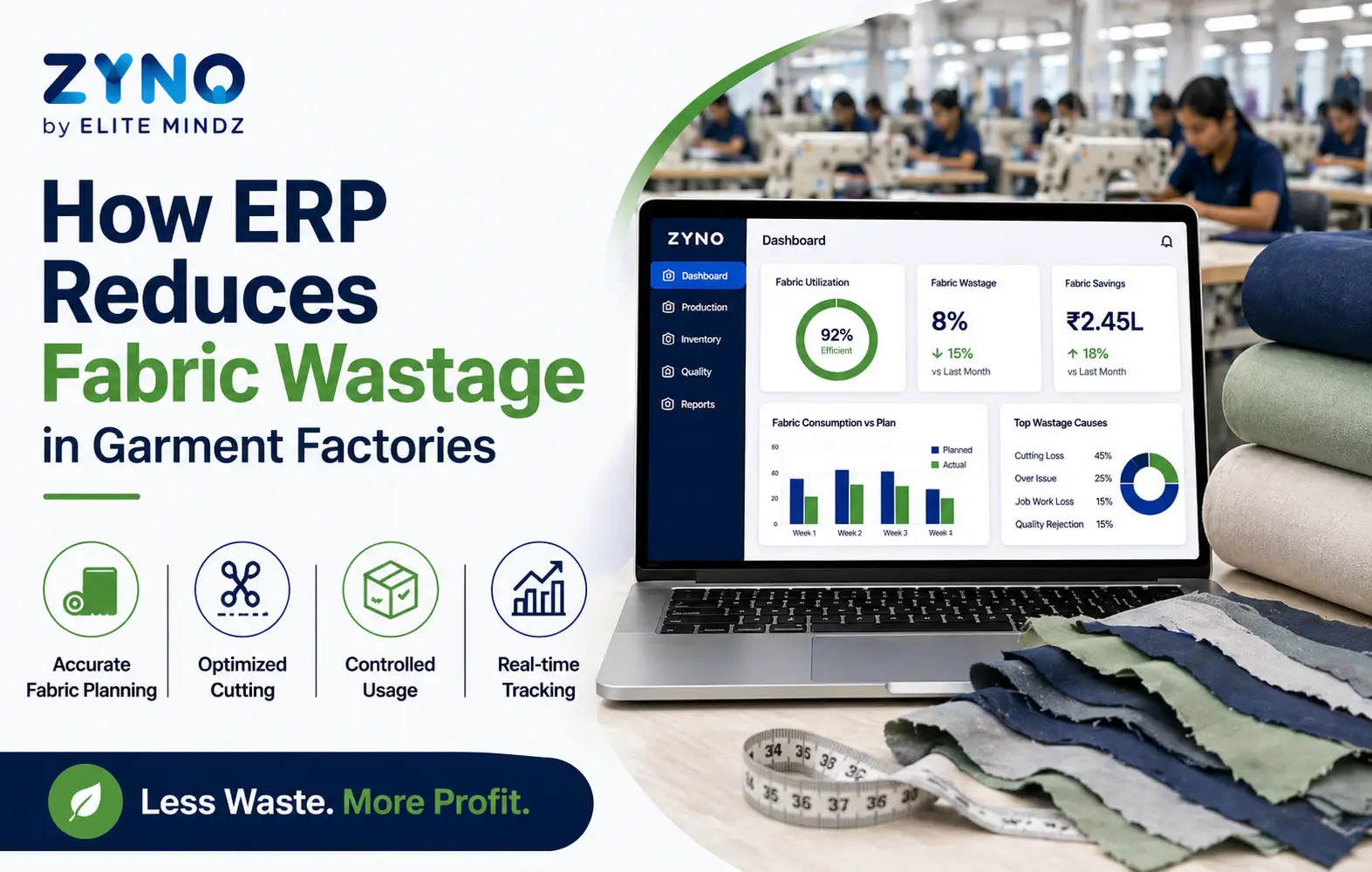
Yes ERP can track fabric wastage and rejection — and this is one of the highest-ROI features for garment manufacturers. A garment ERP tracks: fabric issued to cutting vs. actual consumption (giving you your fabric utilisation rate); rejection quantities at each production stage; rework quantities and associated labour cost; and defect types by style, production line, and operator. Over time, this data identifies patterns — specific styles with high rejection rates, specific lines with recurring quality issues — that are invisible without a system.
Most small garment manufacturers report seeing tangible operational improvements within the first 60–90 days of go-live — specifically in fabric utilisation (less over-buying and wastage), order fulfilment accuracy (fewer picking and dispatch errors), and billing time (faster invoice generation). Full financial ROI — where the cost savings and efficiency gains exceed the ERP investment — typically becomes measurable within 12–18 months, though this varies significantly by factory size and how well the system is adopted.
Sneha Singh
Content Writer
Sneha Singh is a B2B tech content strategist with 4+ years of experience. She specializes in SEO-driven SaaS content, whitepapers, and platform-native social media campaigns that simplify complex technology and drive business growth. Sneha's core exp
What is ERP? A Beginner's Guide to Enterprise Resource Planning
Read More →

Cloud ERP vs. On-Premise vs. Hybrid: Best ERP Model for 2025
Read More →How To Customize ERP Software Without Breaking The Bank?
Read More →
The Future of Manufacturing ERP in 2026 & Beyond
Read More →Best ERP Software in India: 2026 Edition
Read More →
AI in Manufacturing ERP: The Future of Smart Factories
Read More →
How ERP Transforms Inventory Management and Reduces Costs
Read More →
Top Features to Look for in Inventory Management Software in 2025
Read More →
Top 5 Ways Asset Management Software Can Save Your Business Money
Read More →
Why Smart Businesses Are Switching to Vendor Management Systems in 2025?
Read More →
Why Manufacturing Companies Need ERP Software
Read More →
Cloud ERP vs. Traditional ERP: Which is Right for You?
Read More →
ERP for Small Business: Is It Worth the Investment?
Read More →
How to Calculate ERP ROI and Why It's Worth the Investment
Read More →
Top 10 ERP Software Companies in India 2026 Updated List (Complete Guide)
Read More →
ERP Implementation Mistakes to Avoid in 2025
Read More →
Cloud ERP vs Edge Computing: What's Right for Modern Manufacturing?
Read More →
The Future of ERP Software and the Role of Generative AI
Read More →
Digital Twin Technology & ERP: Real-Time Insights for Smarter Manufacturing
Read More →
Scalable ERP Solutions Designed for Modern Enterprises
Read More →
ERP and IoT Integration: Smart Factory Vision
Read More →Best ERP Software for Manufacturing Businesses in India
Read More →Top 10 Best Manufacturing ERP Software in India (2026)
Read More →
Best ERP Software for Manufacturing Industries in Ethiopia (2026)
Read More →
Best School ERP Software Providers in UAE (2025 Edition)
Read More →
Best School ERP Software for 2025: Guide for Educational Institutions
Read More →
Top 10 ERP Software Solutions for Nigerian Manufacturers (2025 Edition)
Read More →
Best ERP Systems for Scalable Retail and POS Integration
Read More →
Top 10 Cloud-Based Manufacturing ERP Solutions in Africa (2025 Edition)
Read More →
Top 10 Cloud-Based Manufacturing ERP in UAE
Read More →
Top 10 Cloud-Based Manufacturing ERP Software in Nigeria (2026 Edition)
Read More →
Top 10 School ERP Software Companies in Kenya (2025)
Read More →
Best School ERP Software Providers in Nigeria (2025)
Read More →
Top Cloud-Based Manufacturing ERP in Zimbabwe (2025)
Read More →
Best ERP Software in U.K
Read More →
Top 10 ERP Software Developers in the U.K. (2025)
Read More →
Best ERP Software Providers in France (2025)
Read More →
Best ERP Software Companies in Germany : A Comprehensive Guide
Read More →
Top 10 ERP Software Development Companies in Qatar
Read More →
10 Best ERP Providers in Germany - 2026 Updated List
Read More →
Best ERP Software Firms in Saudi Arabia (2025)
Read More →
Best ERP Service Providers in Indonesia for SMEs and Large Enterprises
Read More →
Top 10 Cloud-Based Manufacturing ERP Systems in Egypt for Modern Factories
Read More →
Top ERP Solutions in the USA 2025: Streamline Your Business with ZYNO ERP
Read More →
Top ERP Solutions in Qatar for Businesses of All Sizes
Read More →Top Manufacturing ERP Software in India 2026 ZYNO Manufacturing ERP
Read More →How Manufacturing Companies Reduce Production Delays Using ERP Automation
Read More →Why Legal Firms Need ERP to Manage Cases, Billing & Compliance
Read More →What Is ERP And How Does It Work
Read More →
How ERP Systems Are Evolving in 2026: What Businesses Need to Know
Read More →
Best ERP Software in India: 2025 Edition
Read More →
Top 10 ERP Software Companies in Delhi NCR
Read More →
How Manufacturing ERP Software Improves Demand Forecasting
Read More →
Top 10 Best School Management Software in India
Read More →Manufacturing & Wholesale ERP in Qatar: Complete Industry Guide 2026
Read More →Cloud ERP Software in Qatar: Why Businesses Are Moving in 2026
Read More →Is ERP a Procurement Software? Key Differences, Benefits & What to Choose
Read More →What Is Production Planning and Control? Definition, Objectives & Functions
Read More →
Garment Inventory Management Software: Complete Guide 2026
Read More →
How ERP Reduces Fabric Wastage in Garment Factories
Read More →
Why the Garment Industry Needs a Specialized ERP
Read More →
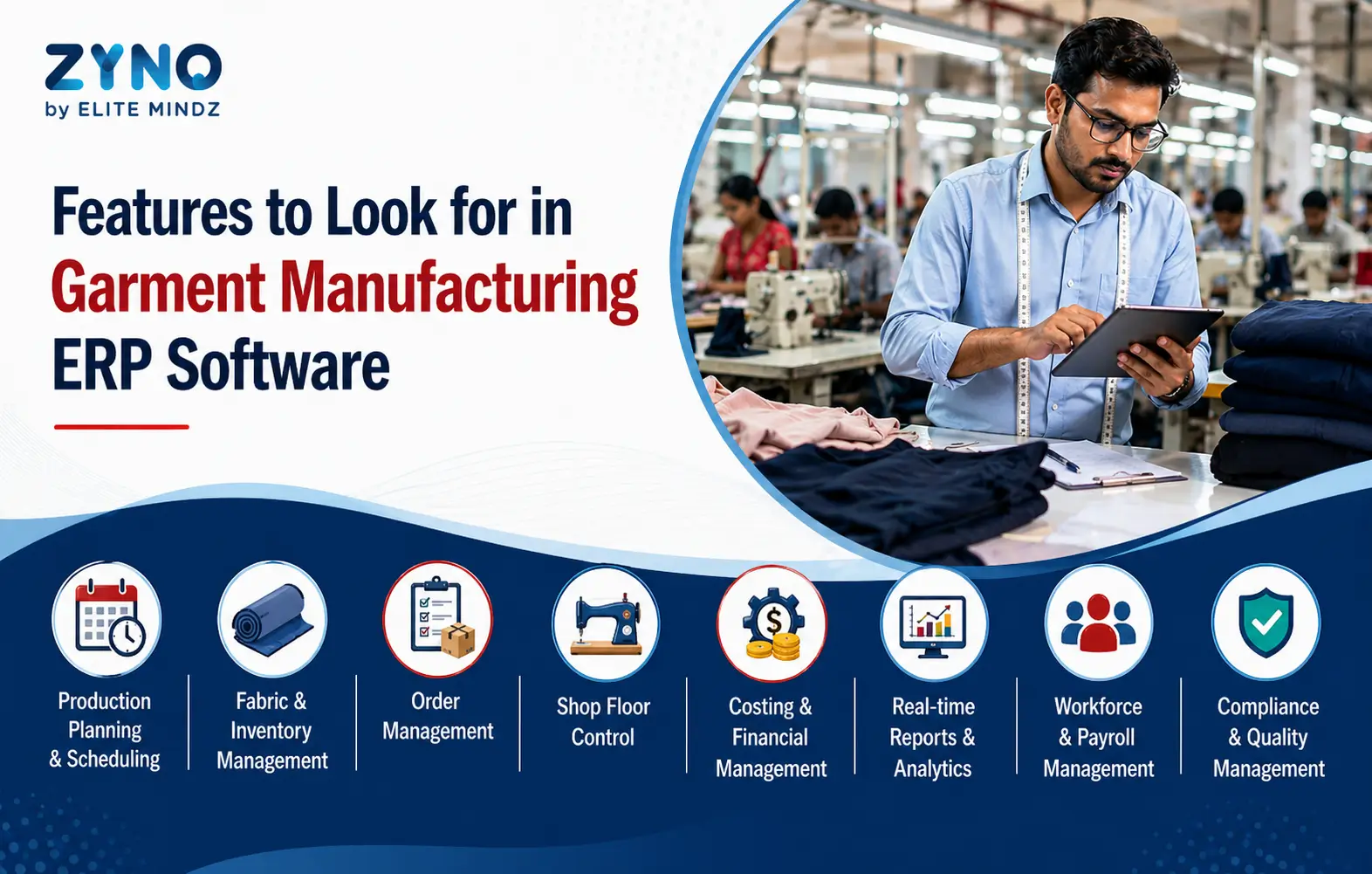
Features to Look for in Garment Manufacturing ERP Software
Read More →
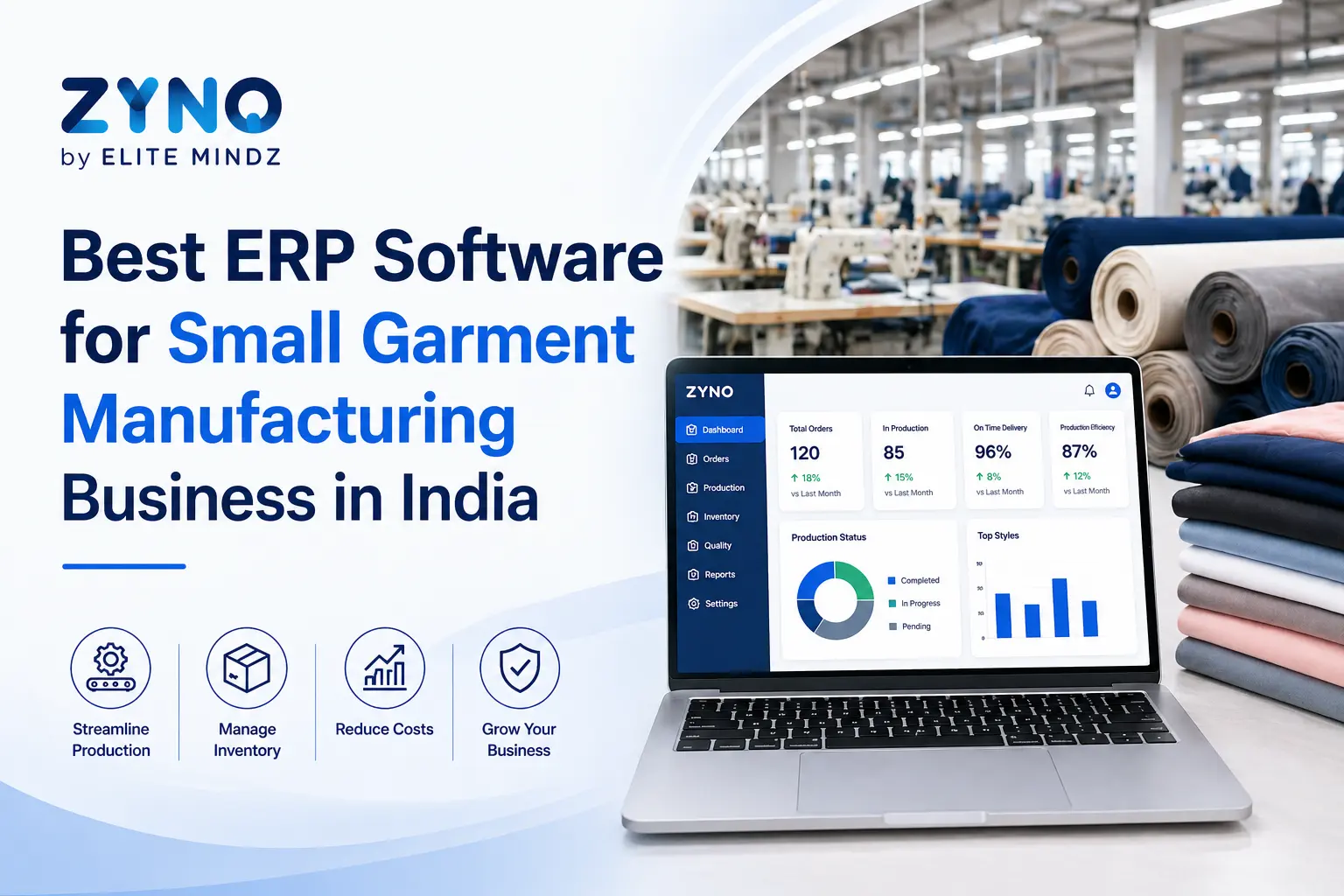
Best ERP Software for Small Garment Manufacturing Business in India
Read More →
The Real Problems Holding Back Small Garment Manufacturers in India
Read More →Garment Manufacturing ERP Software in India: Best Options, Features & Complete Guide 2026
Read More →
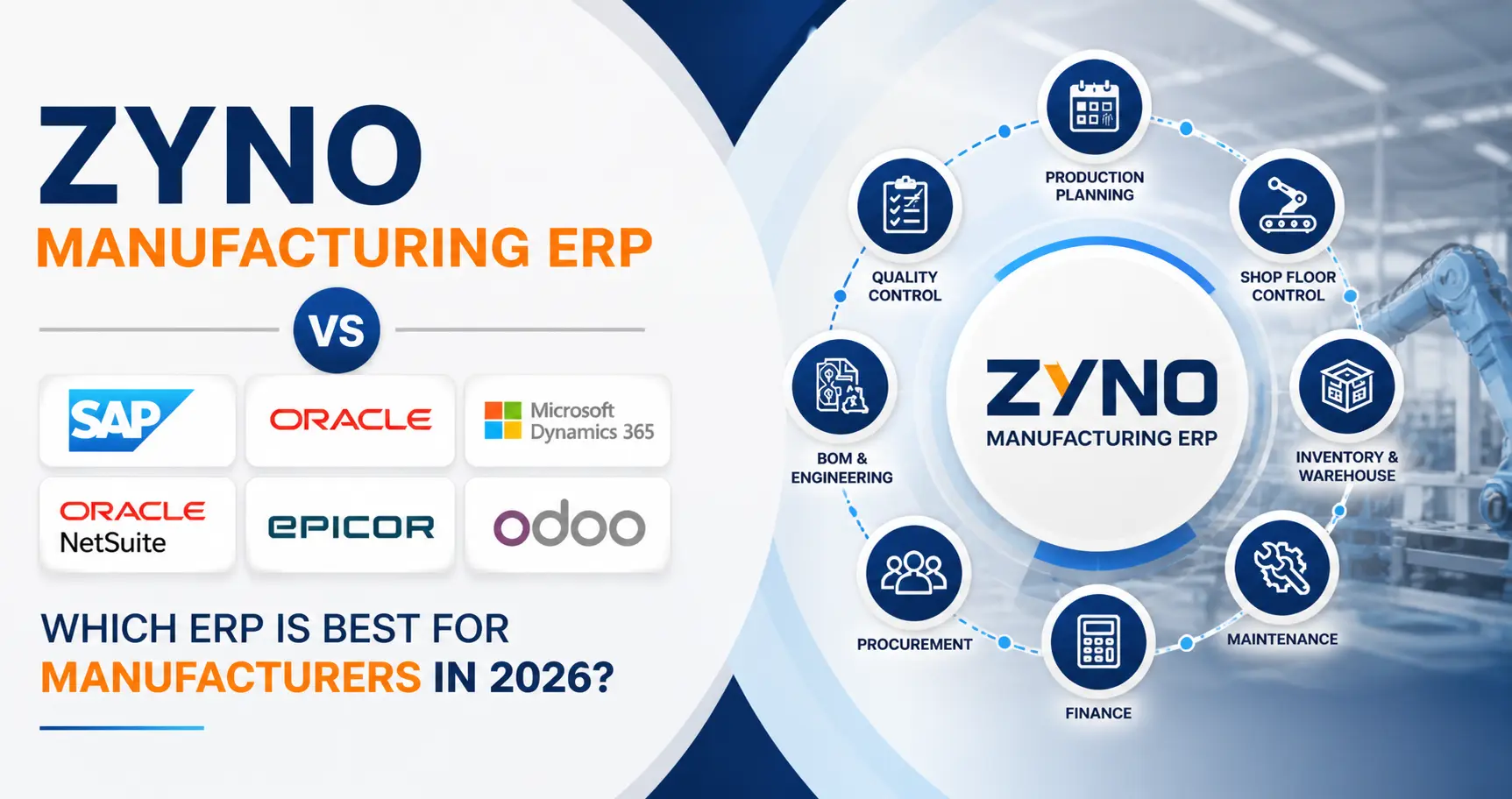
Which ERP is Best for Manufacturers in 2026?
Read More →
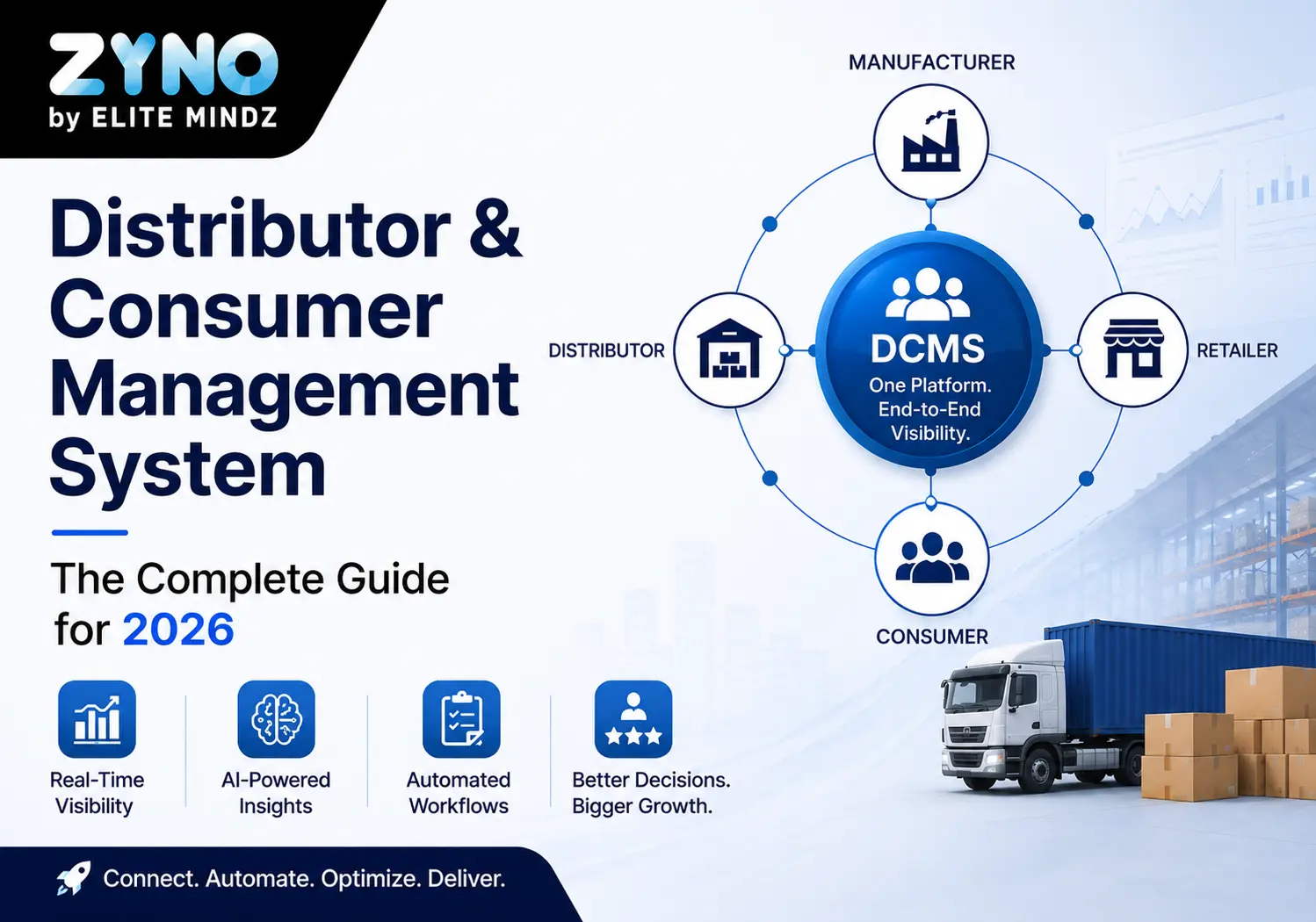
Distributor & Consumer Management System: The Complete Guide for 2026
Read More →
Best Pharma ERP Software in India 2026 – Features, Compliance & Buying Guide
Read More →Partner with ZYNO by Elite Mindz to revolutionize how your business works. Fill out the form, and we’ll reach out with AI-powered solutions made just for you.
We use browser cookies to ensure you get the best experience on our website. Learn more
The form was submitted successfully!
ZYNO Digital
Fueling Smarter Digital Growth
ZYNO Digital fuels smarter digital growth through data-driven marketing, creative storytelling, and performance strategies that boost visibility, engagement, and measurable business outcomes across global platforms.
ZYNO Tech
Engineering the Future of IT
ZYNO Tech delivers cutting-edge IT solutions — including web, mobile, and digital transformation services — helping businesses scale efficiently, innovate faster, and stay ahead in a connected world.
ZYNO AI
AI Built for Business Growth
ZYNO AI harnesses the power of artificial intelligence to automate processes, enhance decision-making, and deliver predictive insights — driving innovation, agility, and measurable business growth.
ZYNO by Elite Mindz
Your Partner in the AI-Powered Future
ZYNO by Elite Mindz offers AI-powered products and services that unify operations, boost productivity, and drive digital transformation — helping businesses scale smarter and innovate faster.
* In just 2 mins you'll get a response
* Your idea is 100% protected by our Non-Disclosure Agreement