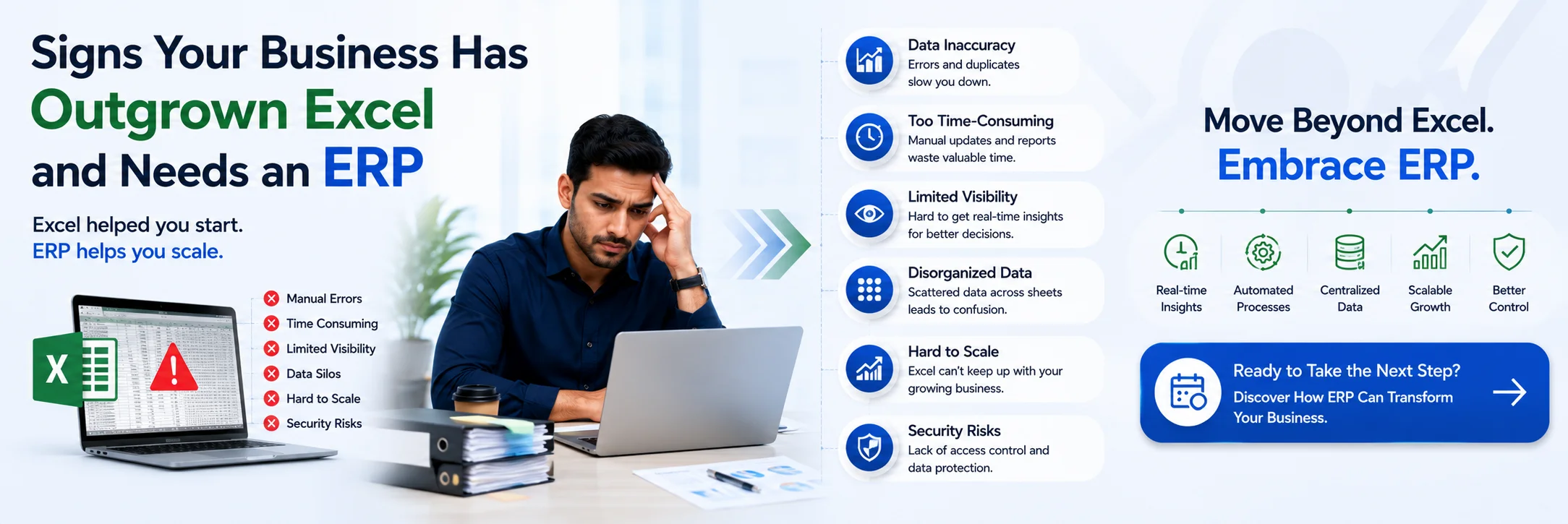
Indian businesses are changing fast. From garment factories in Surat to hospital chains in Bengaluru, everyone is moving away from spreadsheets. The reason is simple, disconnected tools cost more money than any ERP software ever would.
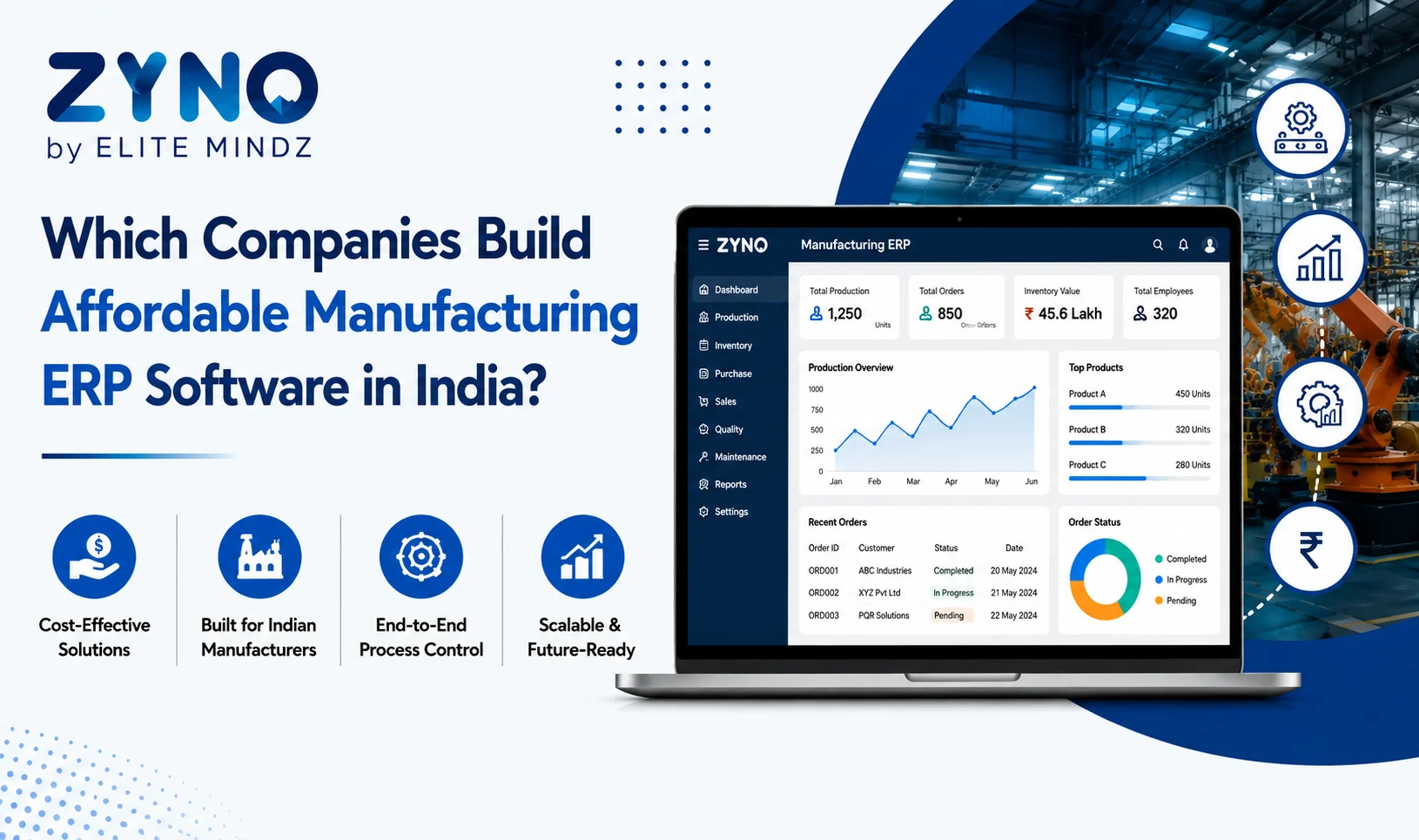
The good news? The ERP market in India has grown up. SAP and Oracle no longer have the field to themselves. Homegrown ERP software companies like ZYNO ERP by Elite Mindz now deliver enterprise-grade features at a fraction of the cost. Moreover, they are built around Indian business realities, GST, TDS, and e-invoicing included.
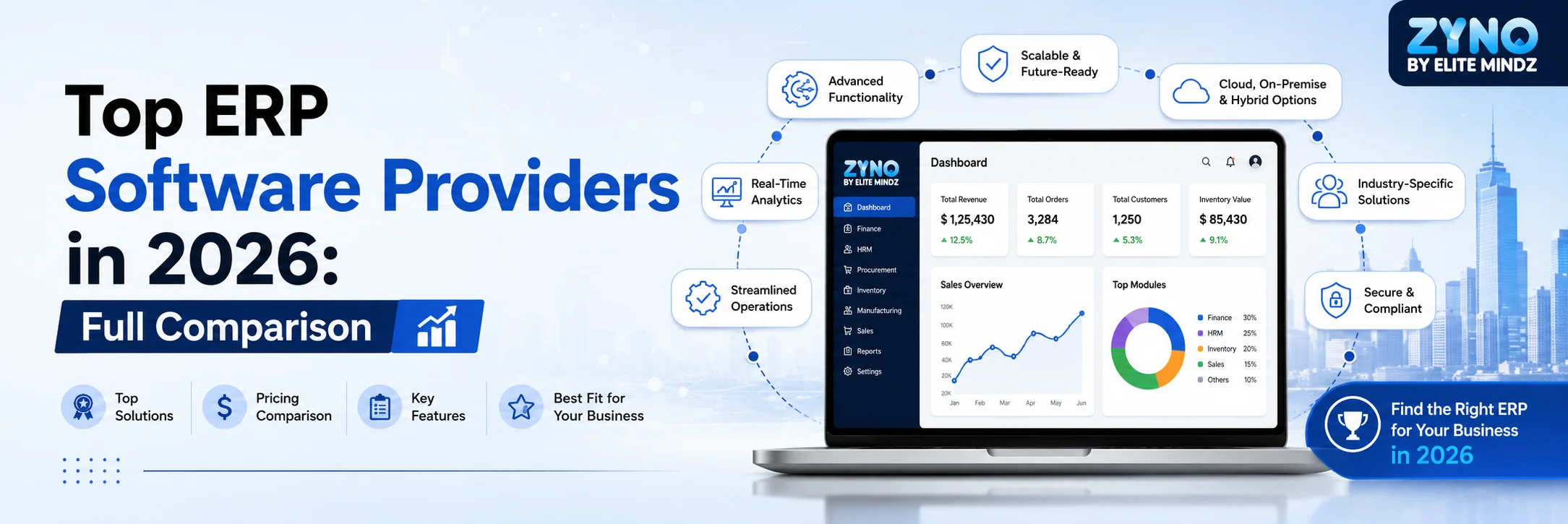
This guide covers the best ERP software options in India for 2026. The report presents a comprehensive analysis of manufacturing ERP software as well as garment manufacturing ERP software, hospital ERP software, school ERP software, logistics ERP software, construction ERP software, poultry ERP software and jewellery ERP software. The training will enable you to select the optimal solution for your organization.
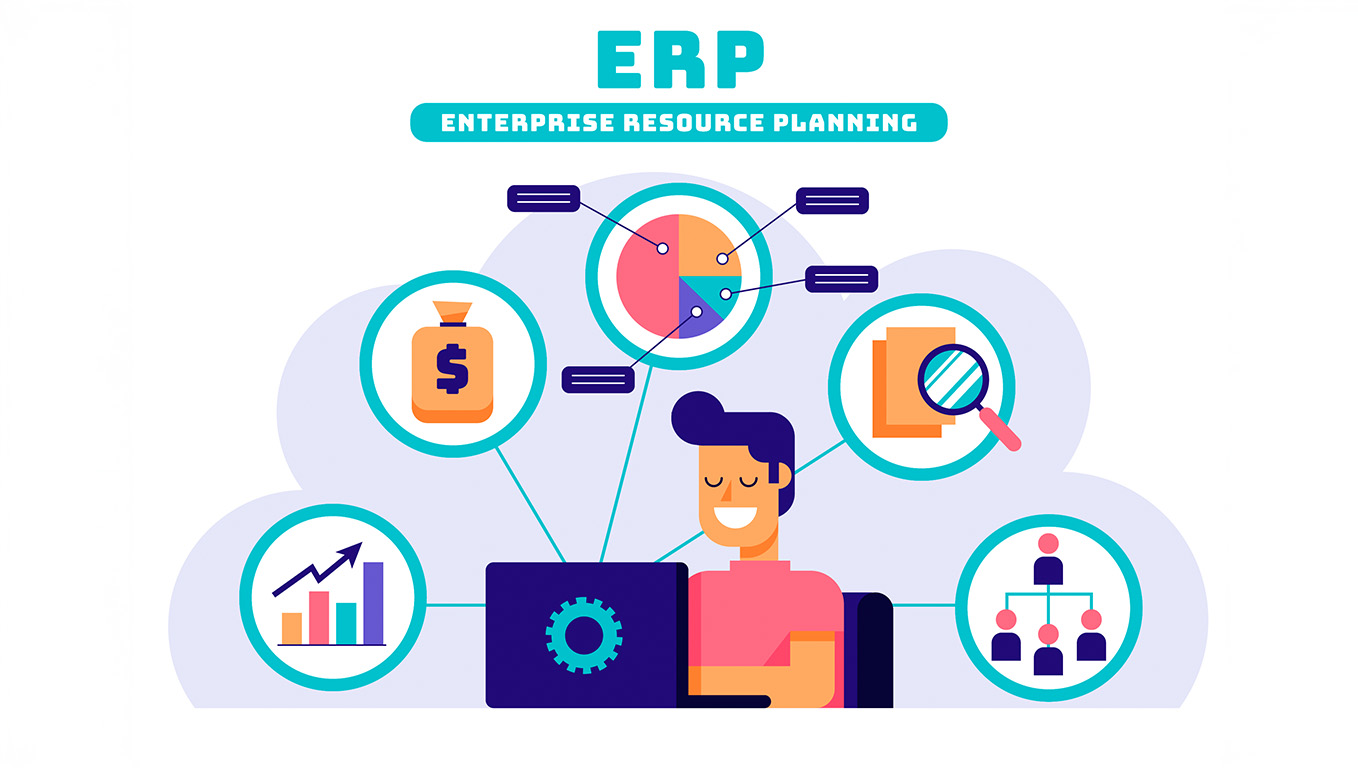
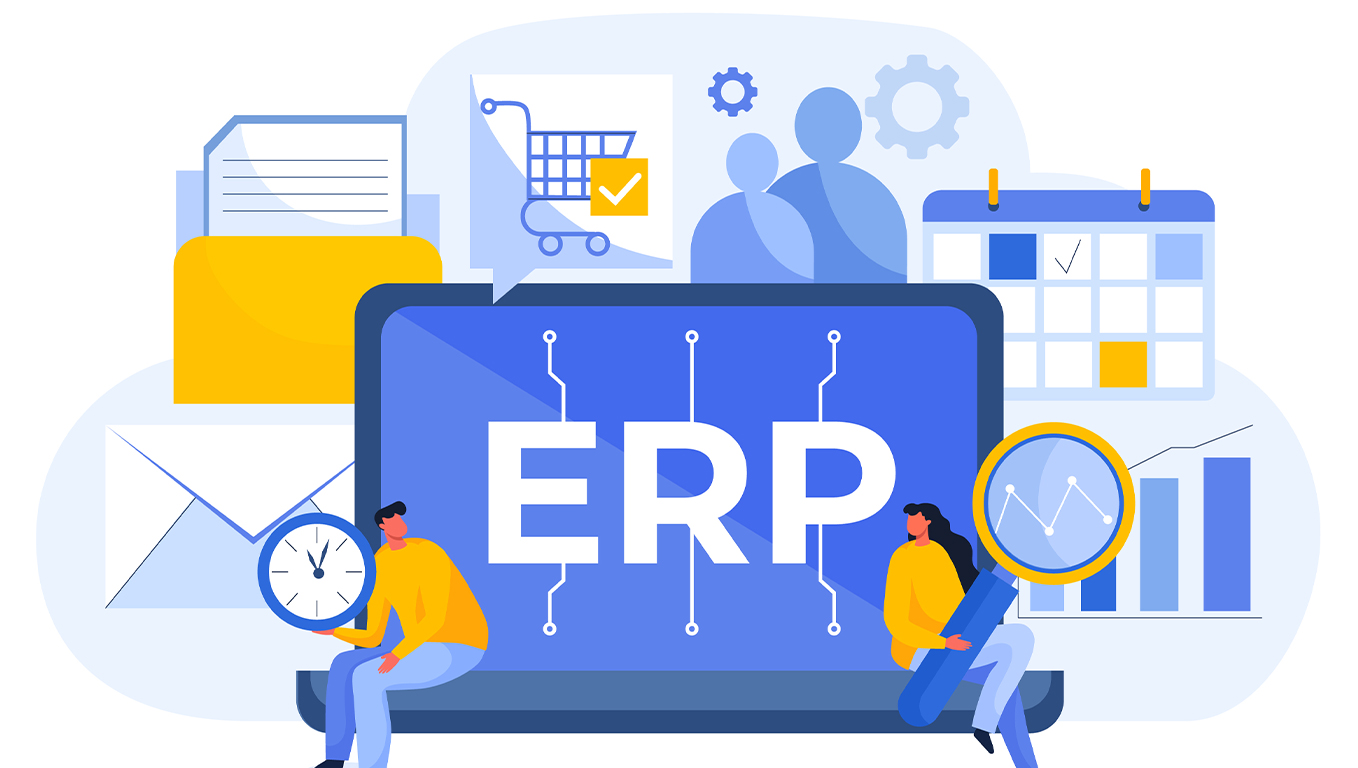
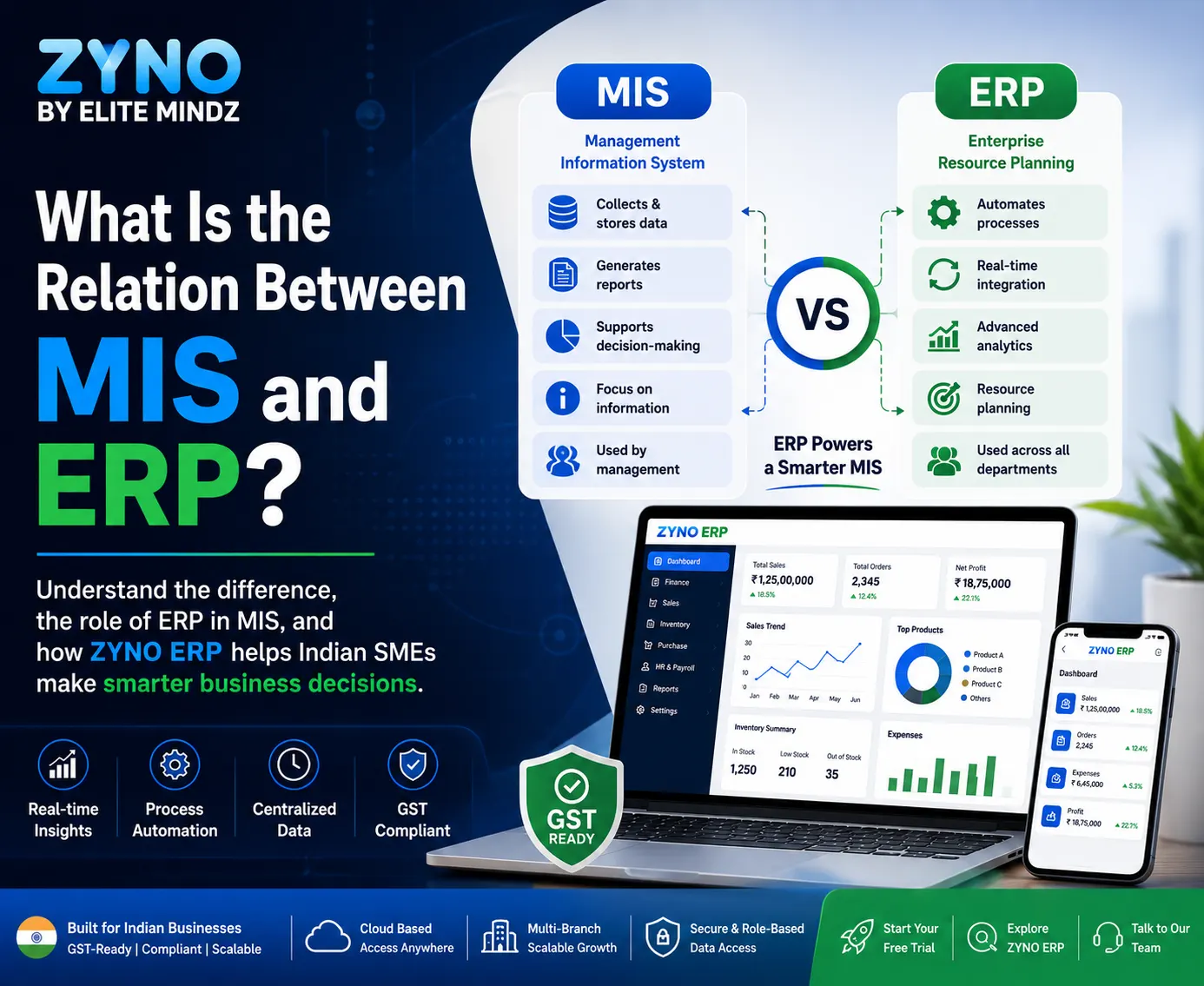
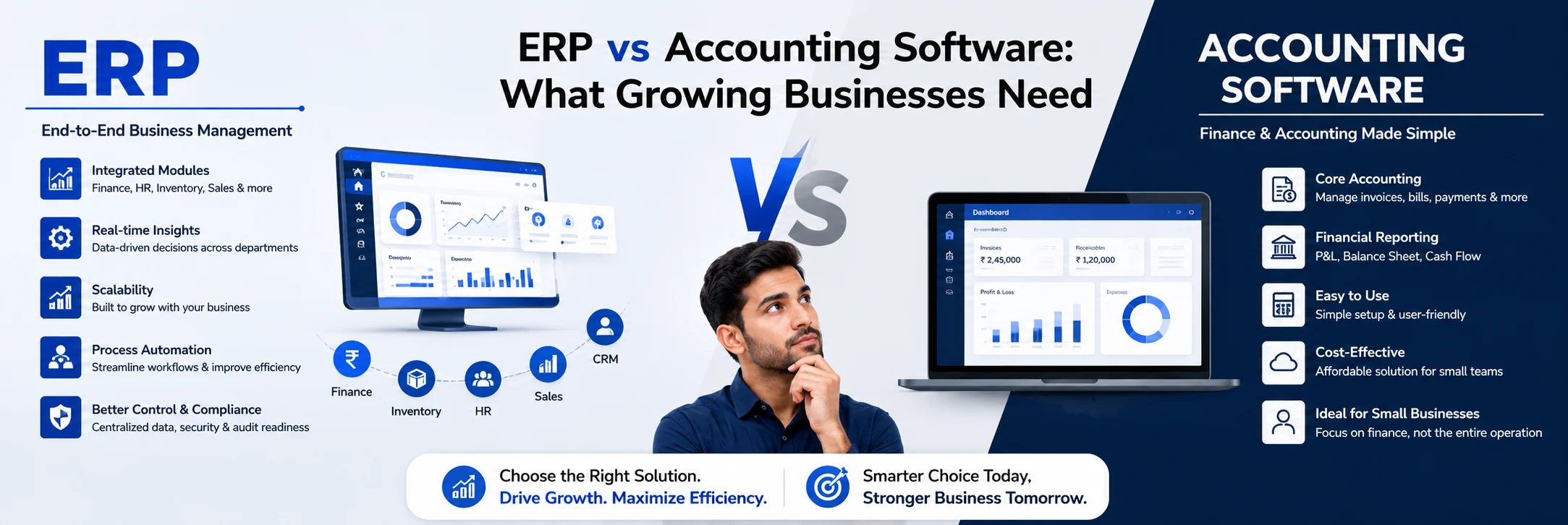
The ERP software known as ERP functions as Enterprise Resource Planning software. In simple terms, it combines all essential business operations into a single system. The system enables real-time communication between Finance, HR, inventory, procurement, production, and sales departments because it integrates their functions. People need to consider the practical implications of the situation. For a manufacturer, production floor data flows directly into finance reports. For a hospital, patient billing connects with pharmacy stock and staff rosters. For a school, fee collection links with admissions and attendance. That is what good ERP software does, it removes the gaps between departments. As a result, decision-makers always have one clear picture of what is happening across the business.
India's business environment has undergone significant changes. The requirements for GST compliance and e-invoicing and TDS regulations and the shift to digital business operations have created new challenges for businesses. The businesses which operate through manual processes face increasing difficulties each year as they struggle to meet both regulatory requirements and customer demands.
Efficiency is the other big driver. When your warehouse team uses one system, your accounts team uses another, and your production managers work off spreadsheets, errors are bound to happen. ERP software solves this by giving everyone, from the shop floor to the boardroom, access to the same live data.
ERP software companies in India have made their systems financially accessible to small and medium enterprises. ZYNO ERP, for instance, offers modular pricing that lets smaller businesses start with what they need and scale up over time. The previous belief that only large companies could use ERP systems has become outdated by the year 2026.
Cloud ERP Has Become the Standard
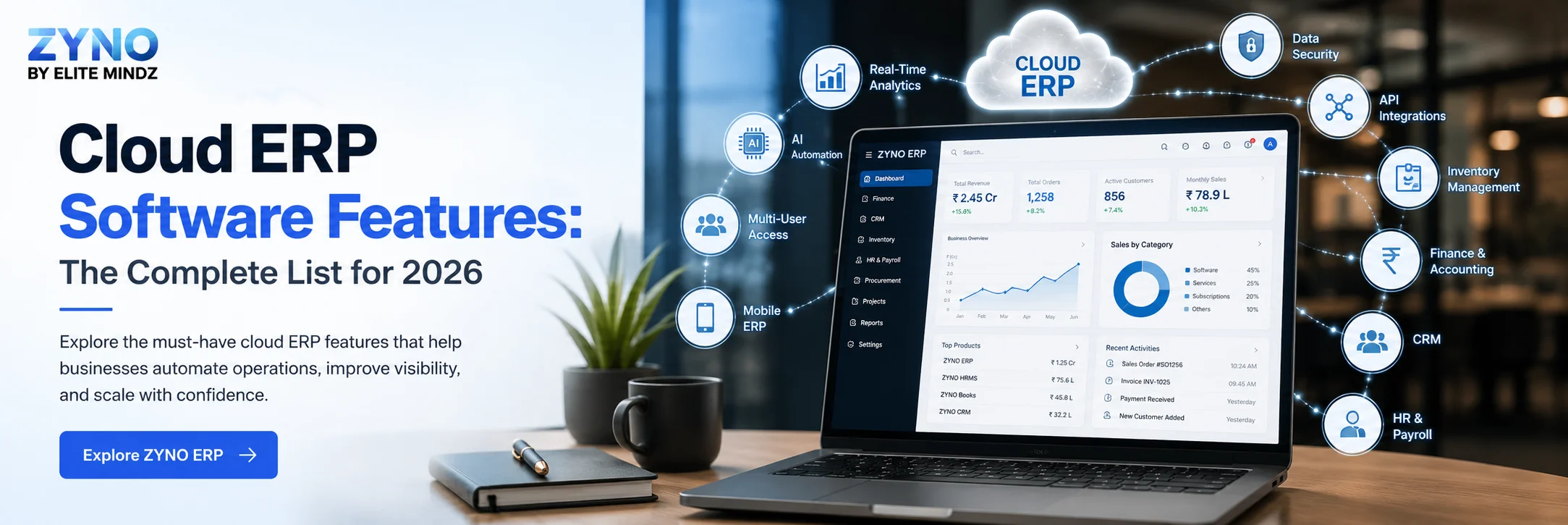
Cloud-based ERP software is no longer a bold choice, it is the default. Businesses across manufacturing, logistics, and healthcare have made the move because cloud ERP is easier to maintain, scales quickly, and removes the cost of managing physical servers. Even companies that were cautious about cloud two years ago have now completed the shift.
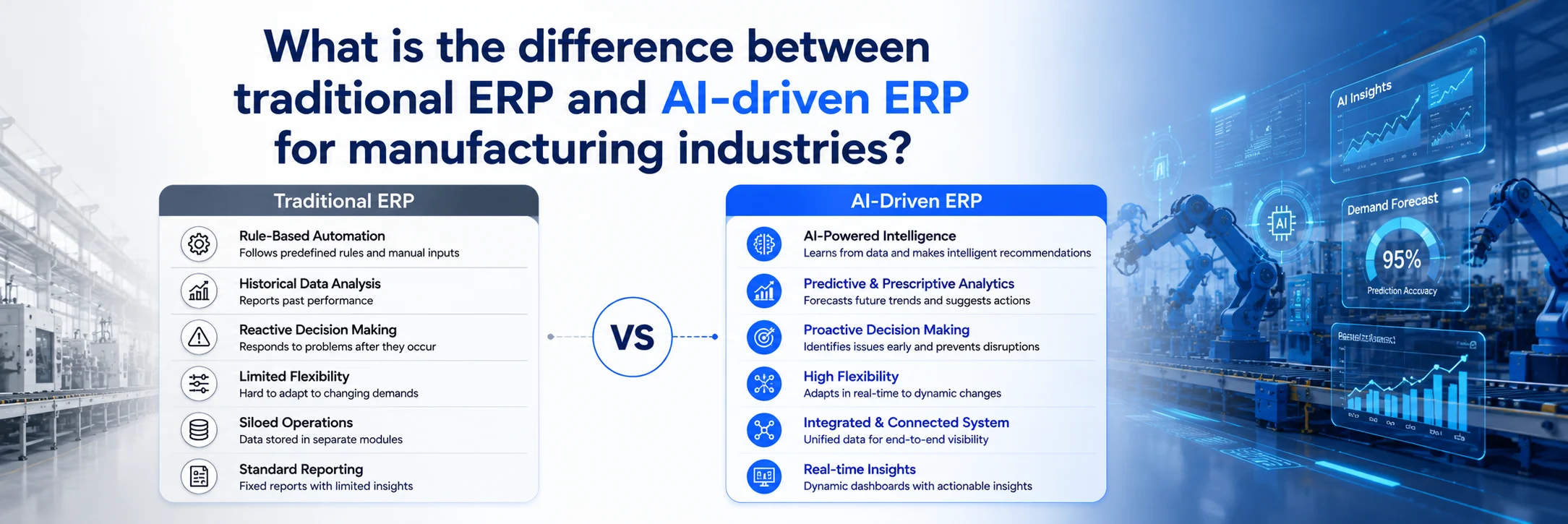
AI Is Inside ERP Systems - Not Just Around Them
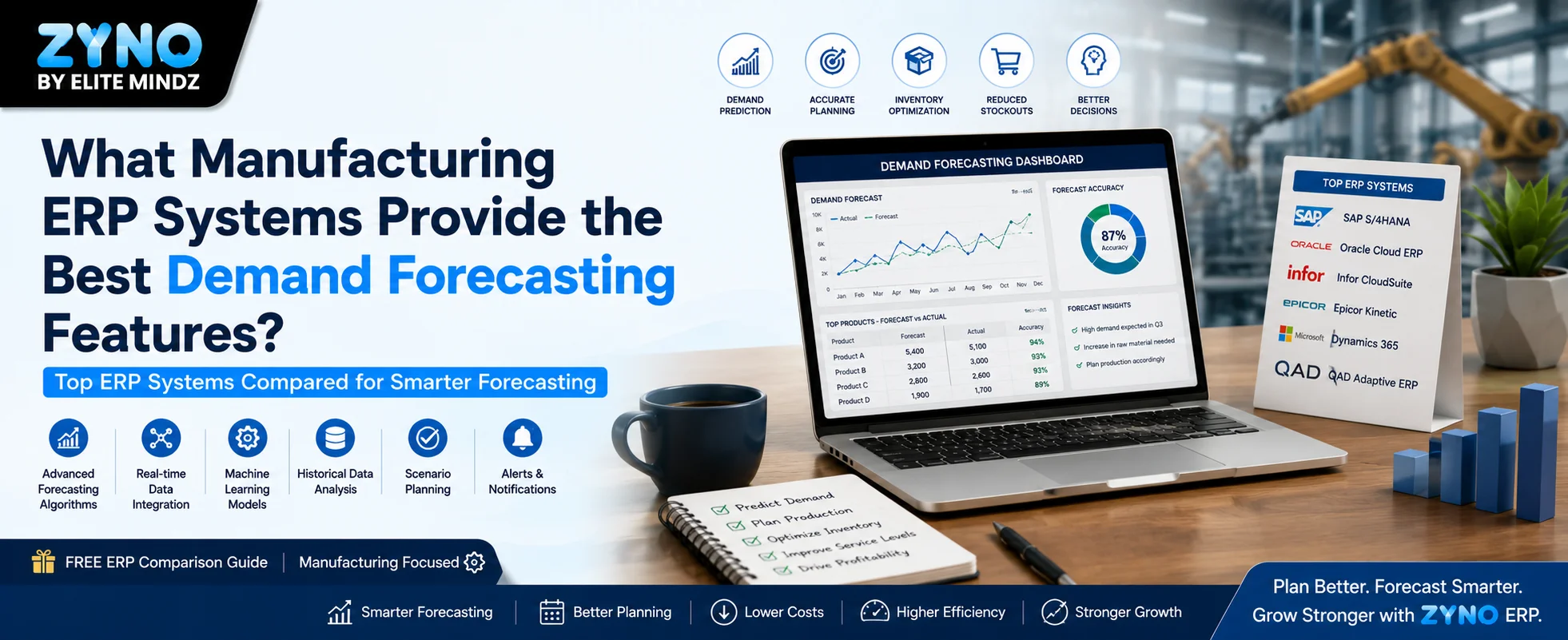
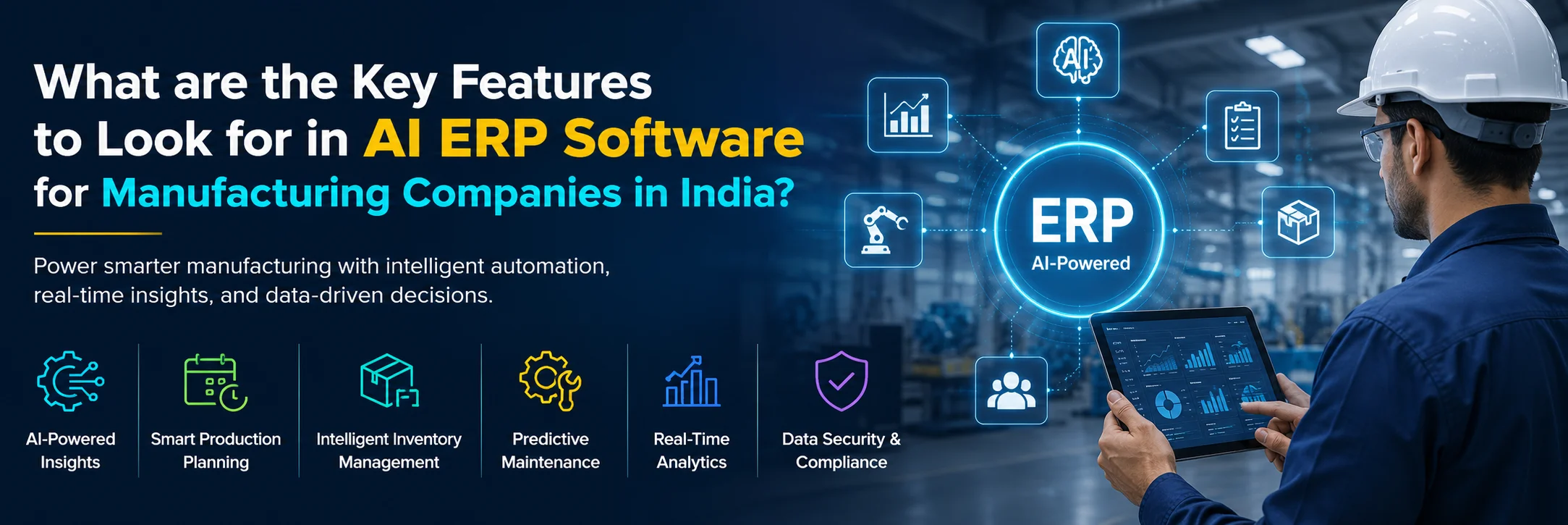
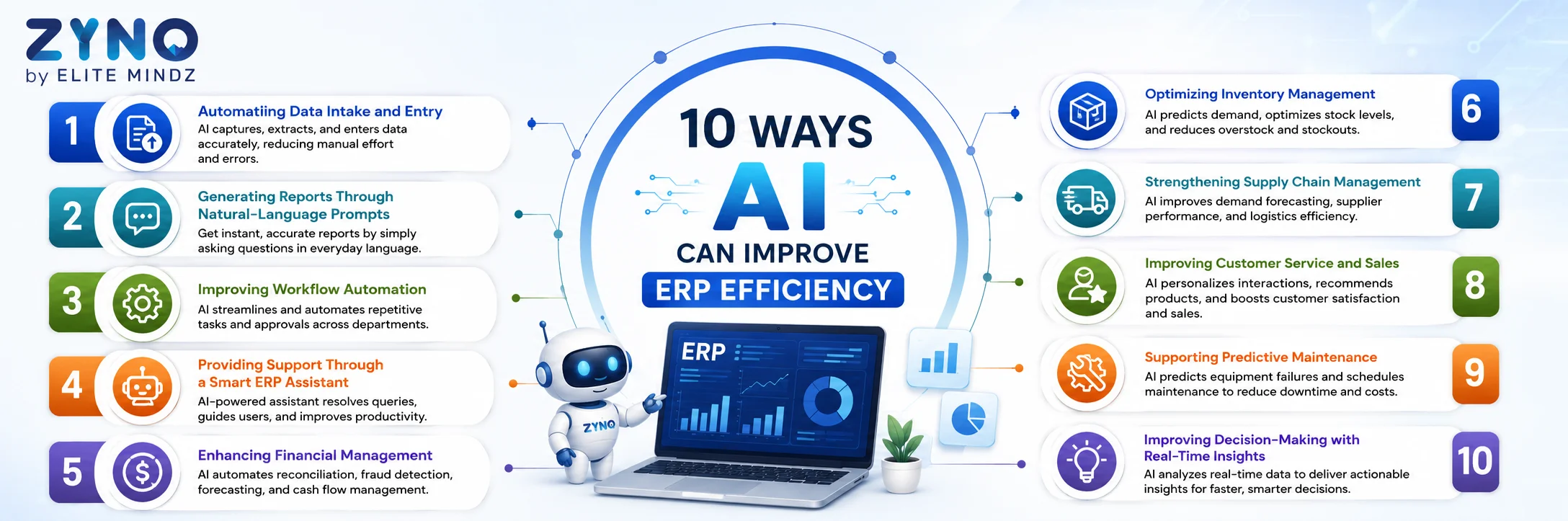
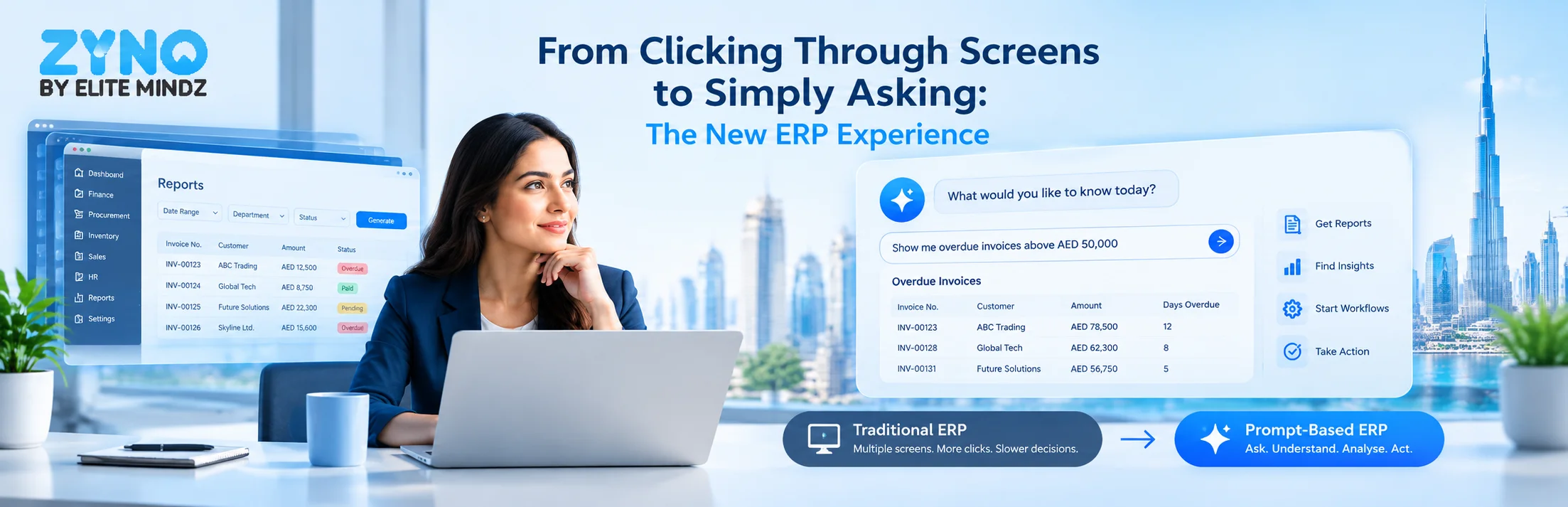
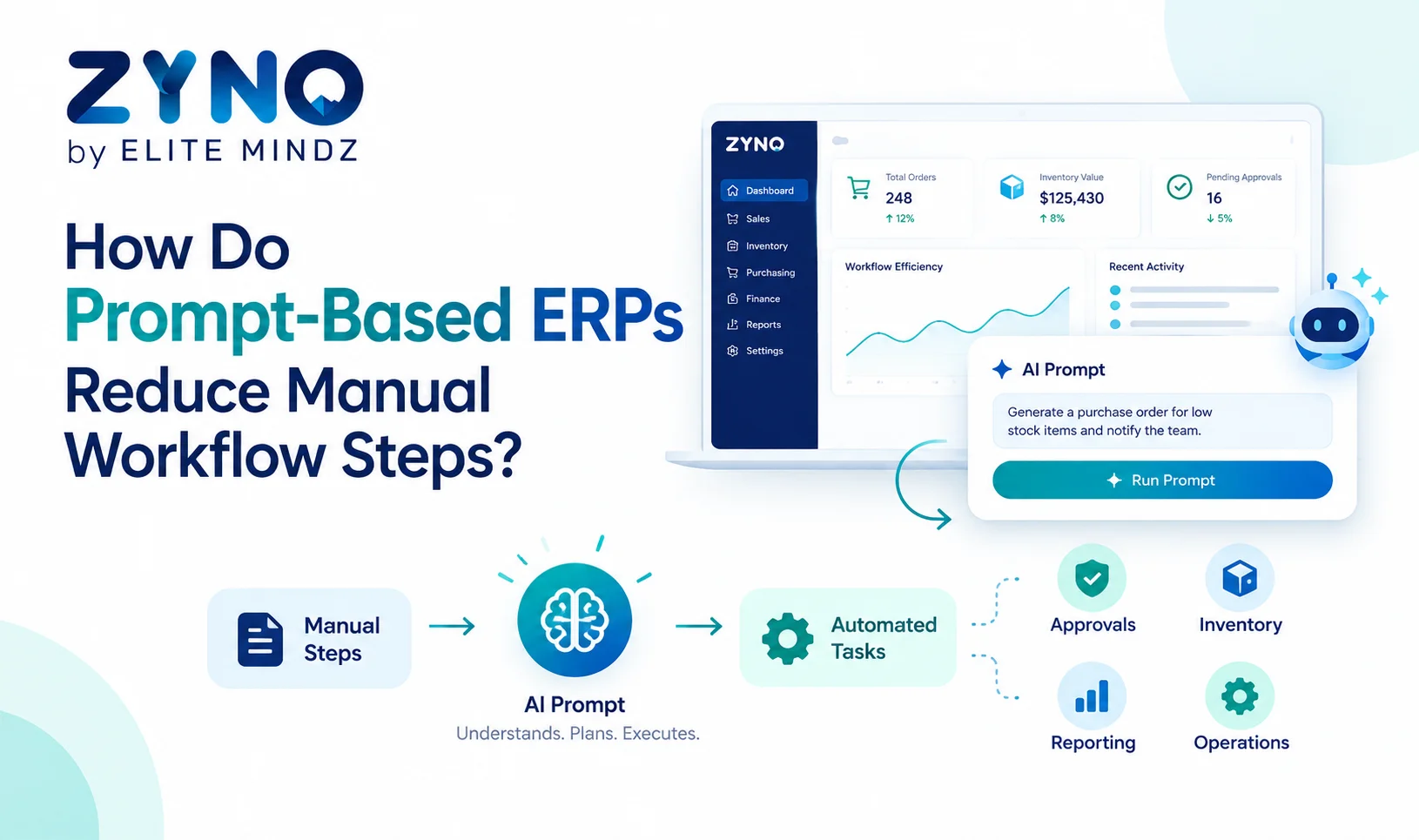
ERP manufacturing software and other sector tools are now using AI for real, practical tasks. Demand forecasting, spotting anomalies in financial data, and generating purchase orders automatically based on stock levels, these are live features, not future promises. ZYNO ERP has built AI-assisted modules that help users make faster, better decisions without needing a data team.
Mobile Access Is Expected, Not Optional
A construction site supervisor needs to approve a material request from the field. The hospital administrator requires bed occupancy information during his ward rounds. The 2026 ERP software demonstrates equivalent performance on mobile devices as it does on desktop computers. Organizations need mobile-friendly ERP systems because their employees will not use the software effectively without mobile accessibility.
Custom ERP Software Is Outperforming Generic Solutions
The need for personalized ERP software solutions has increased dramatically. The operational needs of a clothing manufacturer differ from those of a chicken production facility. A jewellery retailer requires separate billing systems which differ from the needs of a logistics company. The development of custom ERP software which meets your industry's specific requirements results in quicker returns on investment and higher user acceptance from your staff.
GST Compliance Remains Non-Negotiable
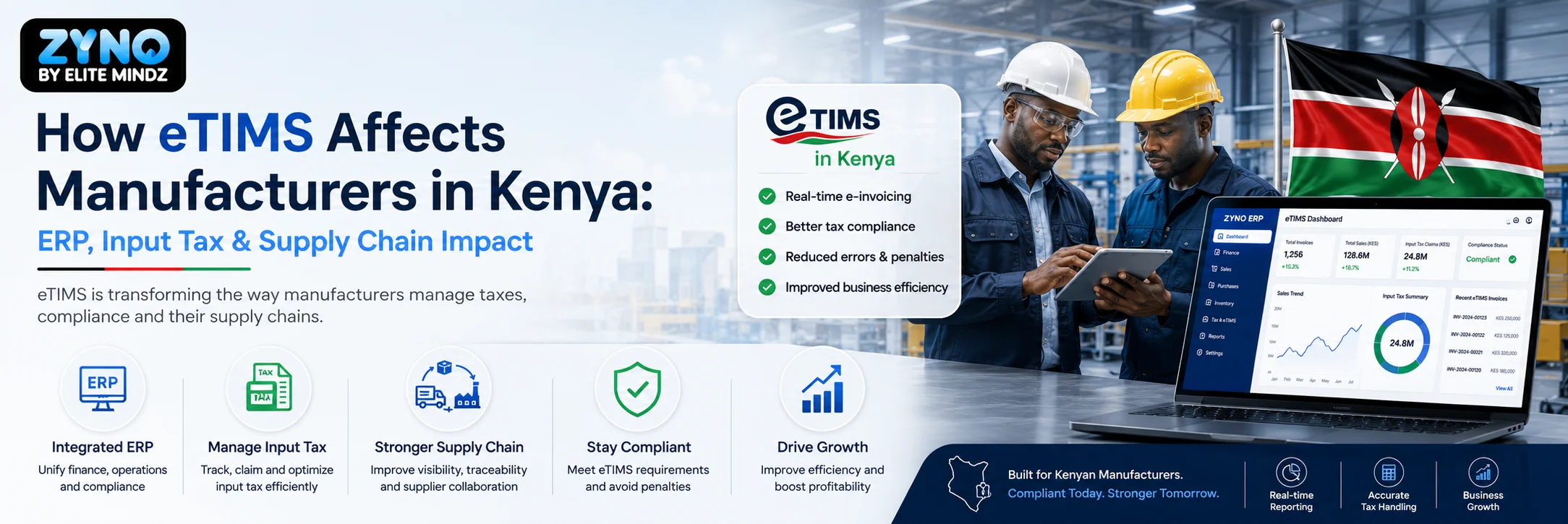
The ERP software needed by Indian companies involves the automation of GST, TDS, e-invoicing, and state-level rules without manual tweaks. This is an area where domestic ERP software companies like ZYNO ERP genuinely outperform international alternatives. Global platforms were built for different tax environments, so Indian compliance often feels like an afterthought in those systems.

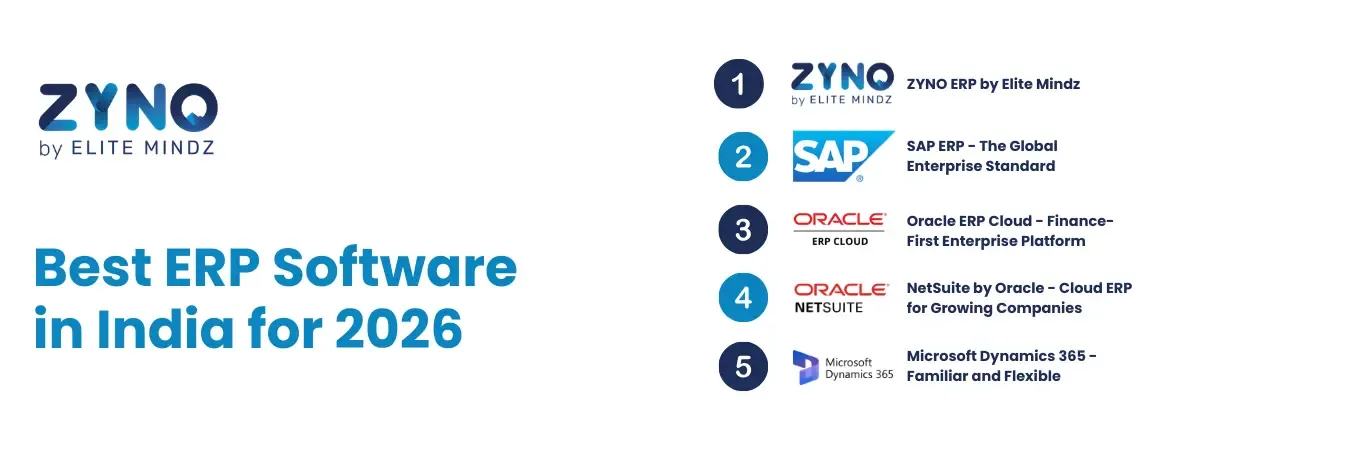
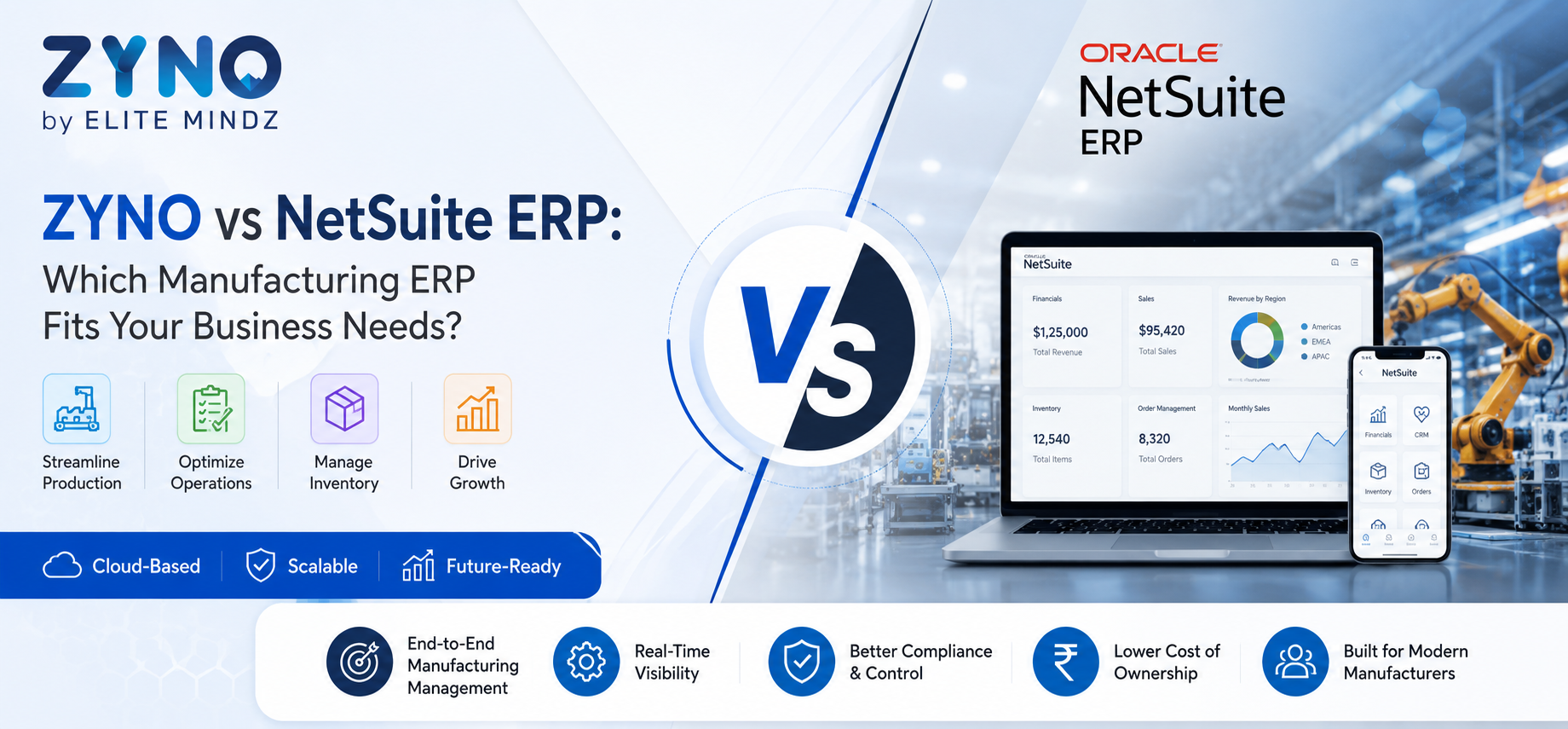
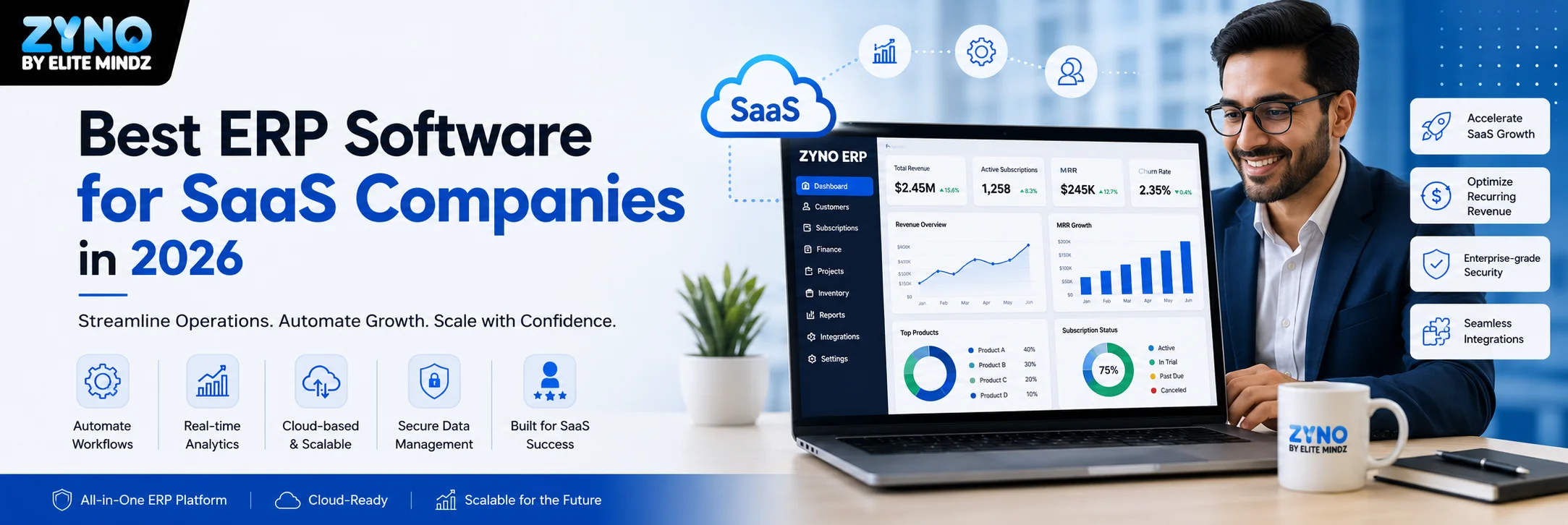
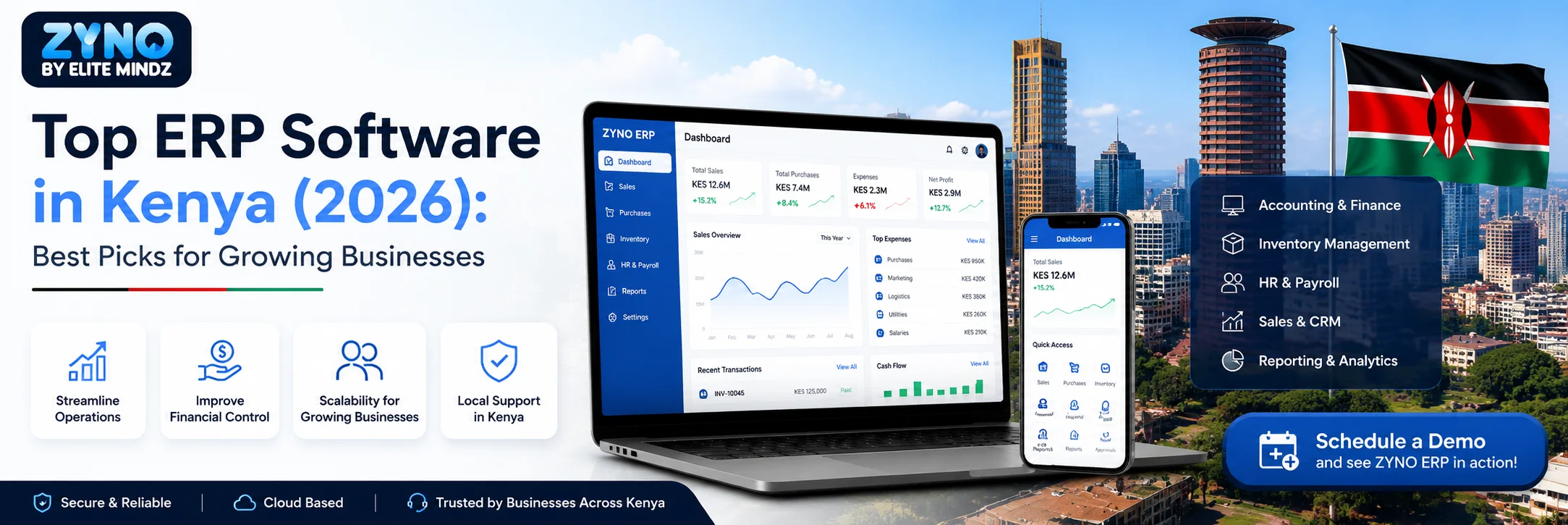
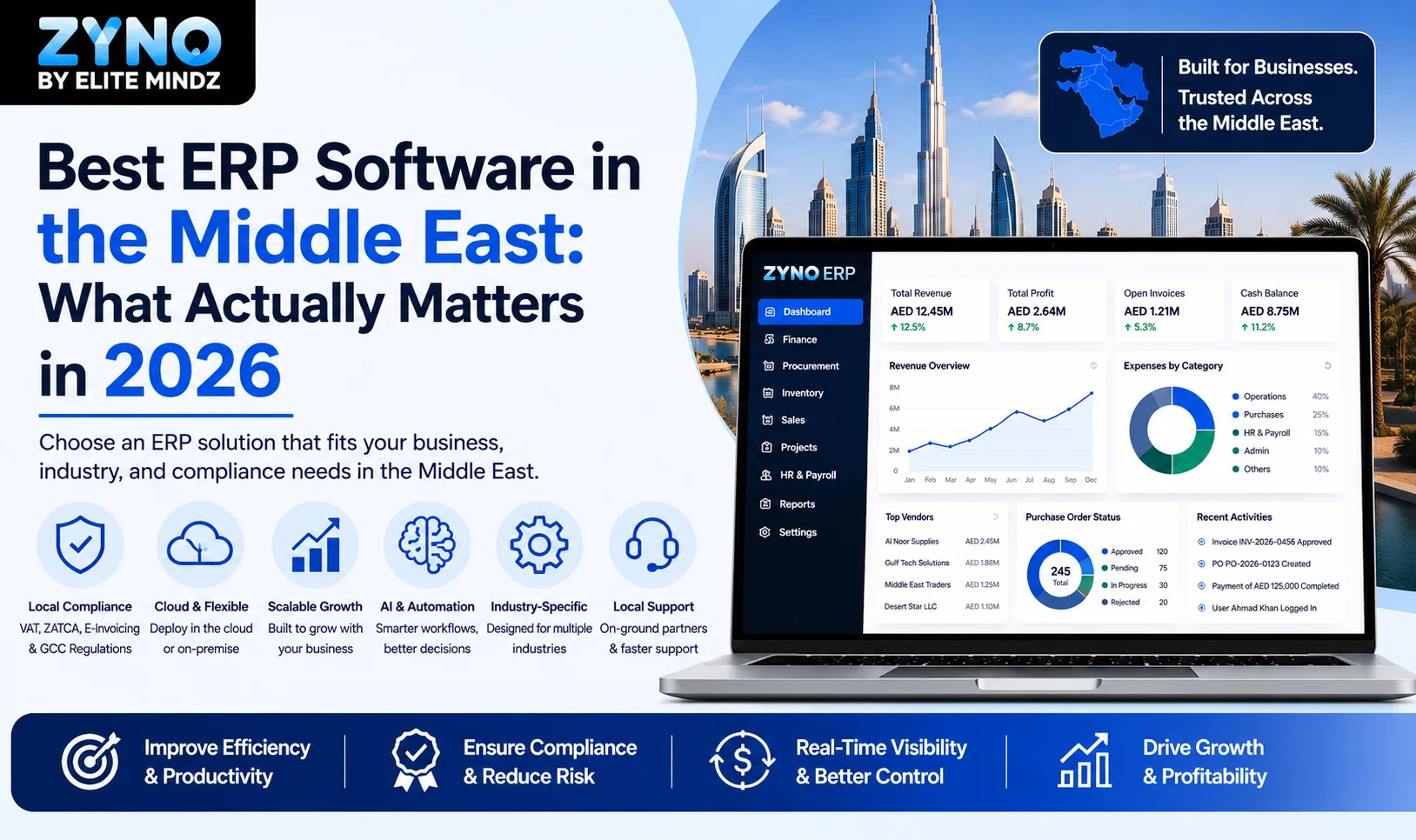
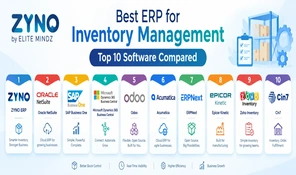
If you want ERP software designed specifically for Indian businesses, ZYNO ERP by Elite Mindz is the strongest local option available in 2026. It covers the full range, manufacturing ERP software, production ERP software, hospital ERP software, school ERP software, logistics ERP software, and more, all inside one connected platform.
What makes ZYNO different is not just the feature list. It is the fact that the entire system was designed around how Indian businesses actually work. GST compliance is built in from the ground up, not added later as a patch. The workflows follow Indian accounting logic. And when something goes wrong, support comes from a team that understands your business context.
Key Features of ZYNO ERP
Finance, HRMS, CRM, Inventory, SCM, and Production modules in one system
Full GST, TDS, and e-invoicing compliance built in
Industry modules for garments, manufacturing, logistics, hospitals, schools, construction, poultry, and jewellery
Cloud-based with complete mobile access
Custom ERP software development available for unique needs
API-ready for third-party integrations
Role-based dashboards with real-time reporting
24/7 support from an India-based team
Pros
Designed for Indian compliance from day one
Faster to implement than SAP or Oracle
Affordable for SMEs and mid-market businesses alike
Strong industry-specific customisation
Local support team with real knowledge of Indian business
Cons
Less internationally recognised than SAP or Oracle
Highly specialised workflows may need additional configuration
Best for: SMEs, mid-market companies, and larger enterprises across manufacturing, healthcare, education, retail, logistics, and construction.
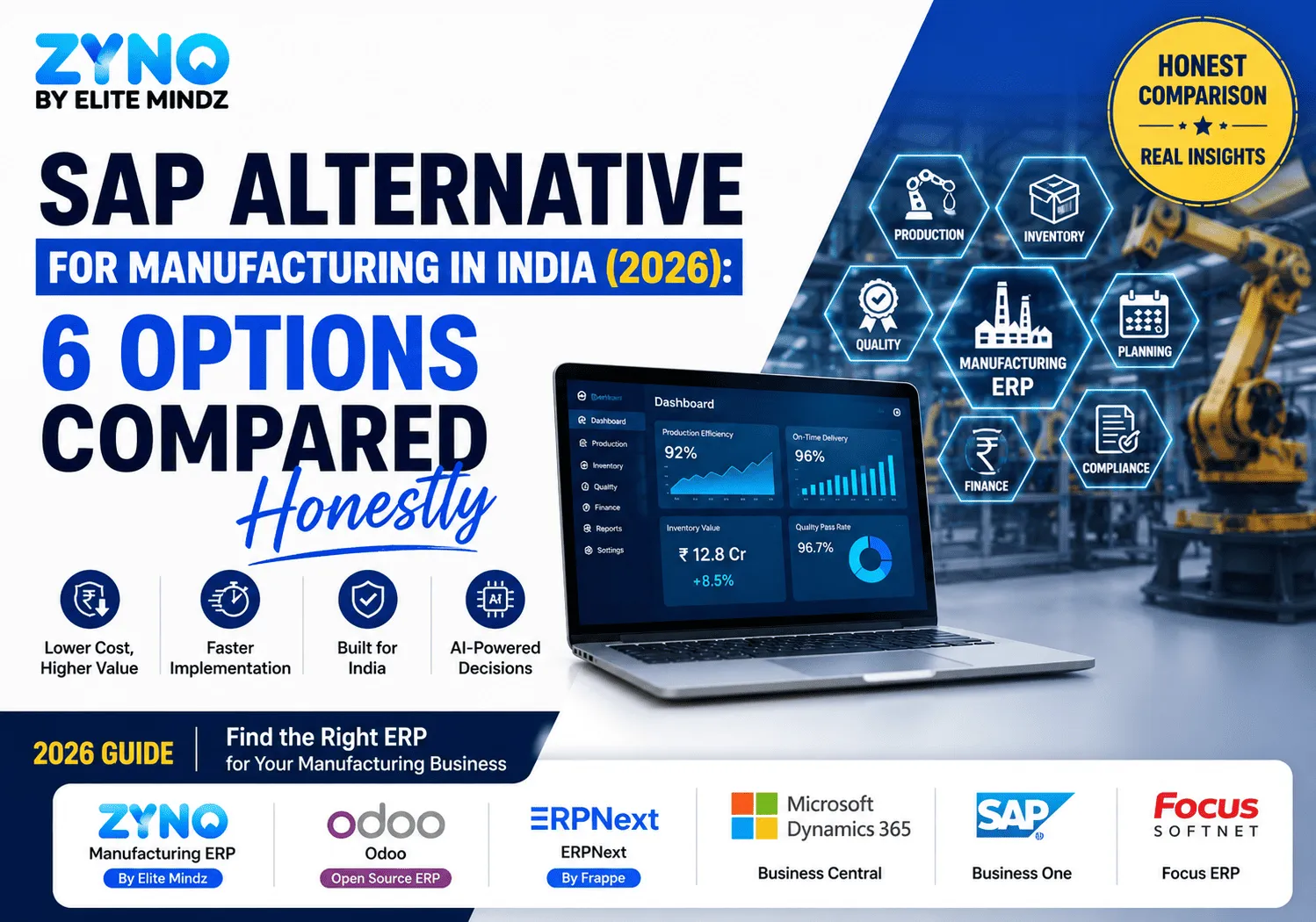
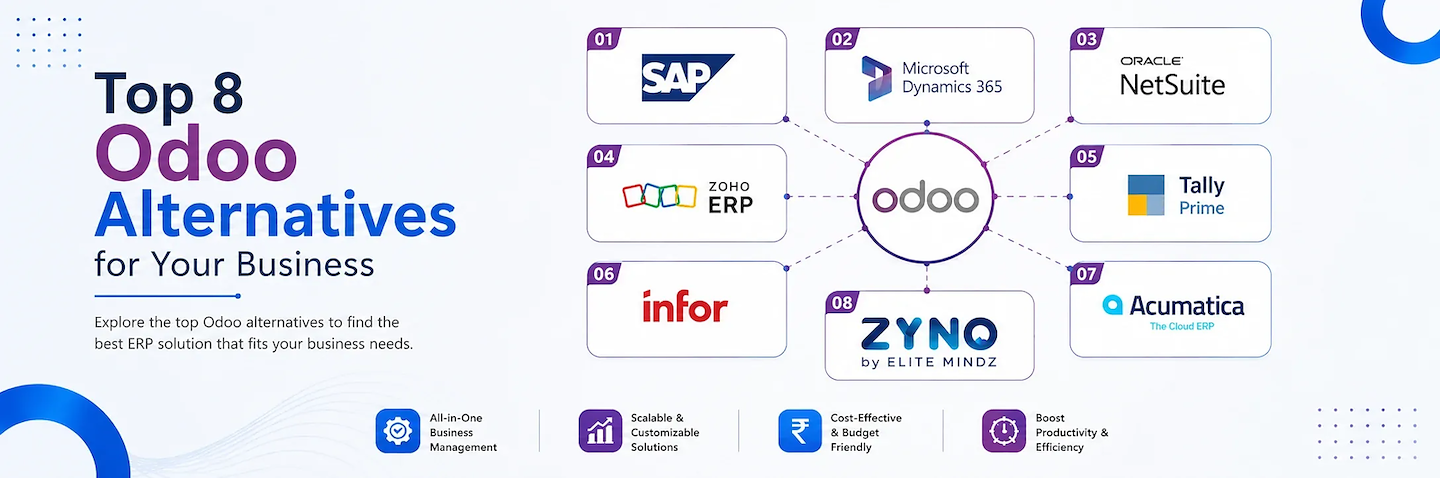
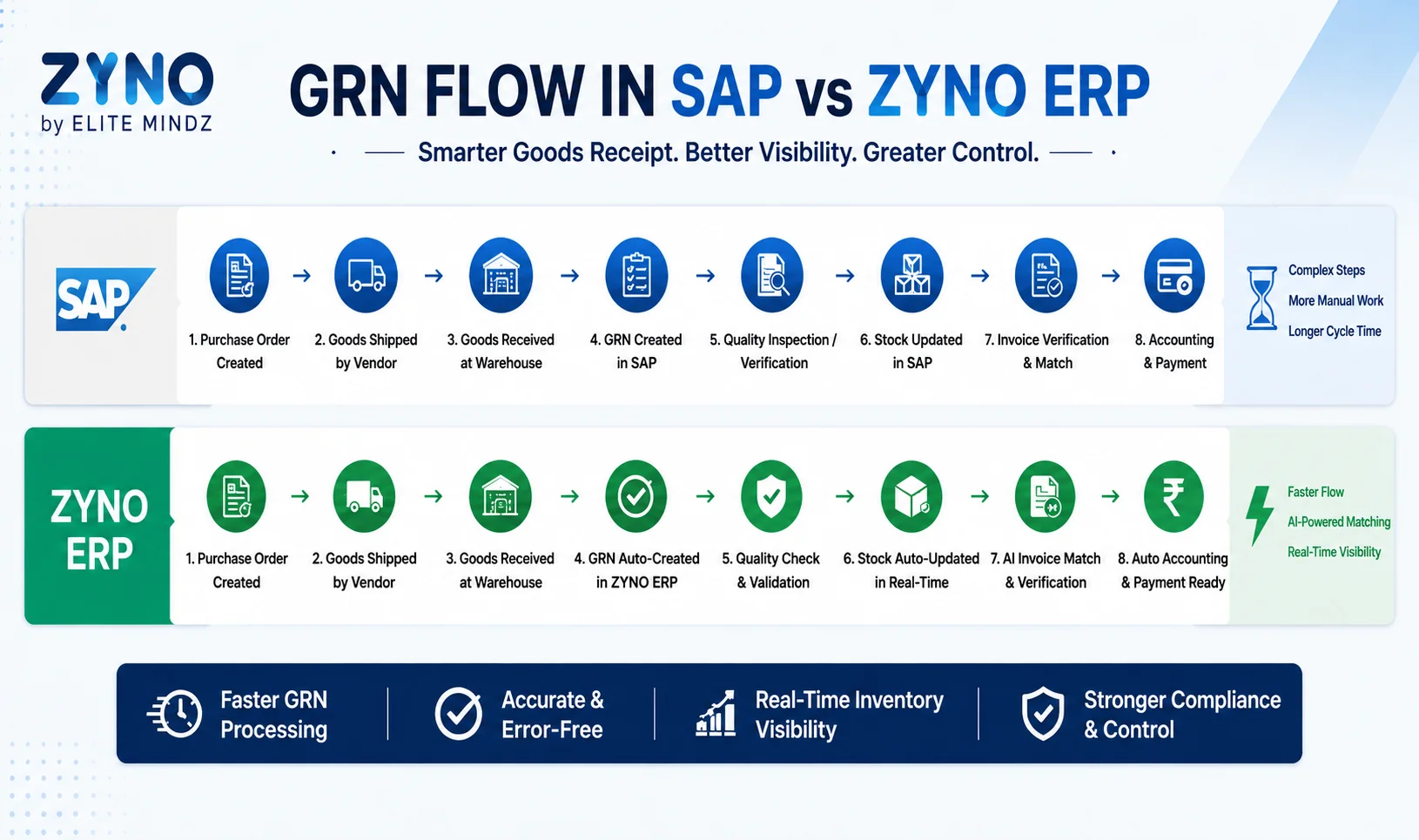
SAP software shows worldwide recognition as the leading ERP software for businesses which includes its extensive presence throughout India. Manufacturing companies, FMCG businesses and financial institutions select SAP because of its extensive features, partner capabilities and its capability to manage complex operations across multiple business units.
The usage of SAP software entails high expenses and complicated processes. Companies need more than 12 months to complete their SAP implementation projects. Users face difficulties because they must overcome a difficult learning process. For most Indian SMEs, SAP is simply more than they need.
Pros
Highly scalable for very large businesses
Deep industry functionality across many sectors
Large global partner and consulting ecosystem
Cons
Very high licensing and implementation costs
Long deployment times - often 12 to 18 months
Steep learning curve for everyday users
Too complex and costly for most SMEs
Best for: Large enterprises with multi-site, multi-country operations and large IT budgets.
Oracle ERP Cloud provides organizations with advanced financial management functions and comprehensive analytics solutions. The system benefits businesses that need to handle complex revenue recognition and process multiple currencies and meet international compliance requirements.
That said, Oracle's Indian tax localisation in the standard cloud version is limited. Implementation and subsequent management are other costs, as it needs excellent technical support to be feasible.
Pros
Excellent financial management modules
Strong real-time reporting and business intelligence
Solid security and compliance architecture
Cons
Expensive - often out of reach for mid-sized businesses
Limited Indian GST localisation in the cloud version
Needs experienced technical teams to manage
Best for: Large multinationals with complex financial and compliance needs.
The SAP implementation process takes longer than both NetSuite and Oracle because of its complete cloud-based system. The system provides advanced customer relationship management tools together with complete inventory management and financial accounting features. However, its GST localisation falls short of what Indian businesses typically need. As a result, many companies find themselves doing manual workarounds during tax filing periods.
Pros
Well suited for fast-growing businesses and startups
Clean, easy-to-use cloud interface
Faster to deploy than SAP or Oracle
Cons
Limited GST and Indian tax localisation
Costs rise quickly as user numbers grow
Fully dependent on internet connectivity
Best for: Technology-driven startups and scaling businesses with simpler Indian tax requirements.
For businesses already using Office 365, Teams, and Power BI, Dynamics 365 becomes their most suitable ERP solution. The familiar Microsoft tools provide users with an easier learning experience through their integrated system. The system offers ERP and CRM modules which provide coverage to multiple business sectors. The system requires advanced administrative skills to operate because it has a complicated licensing system.
Pros
Deep integration with Microsoft tools
Flexible deployment - cloud or on-premise
Good partner network across India
Cons
Licensing can be confusing and expensive with add-ons
Requires experienced administrators
Total cost can climb significantly over time
Best for: Businesses already embedded in the Microsoft ecosystem.
Choosing ERP software that understands your industry is one of the most important decisions you will make during this process. Generic ERP can be configured to fit most industries, but customised ERP software built around your sector's workflows saves months of implementation time and significantly improves user adoption. Here is what ZYNO ERP offers across the key sectors:
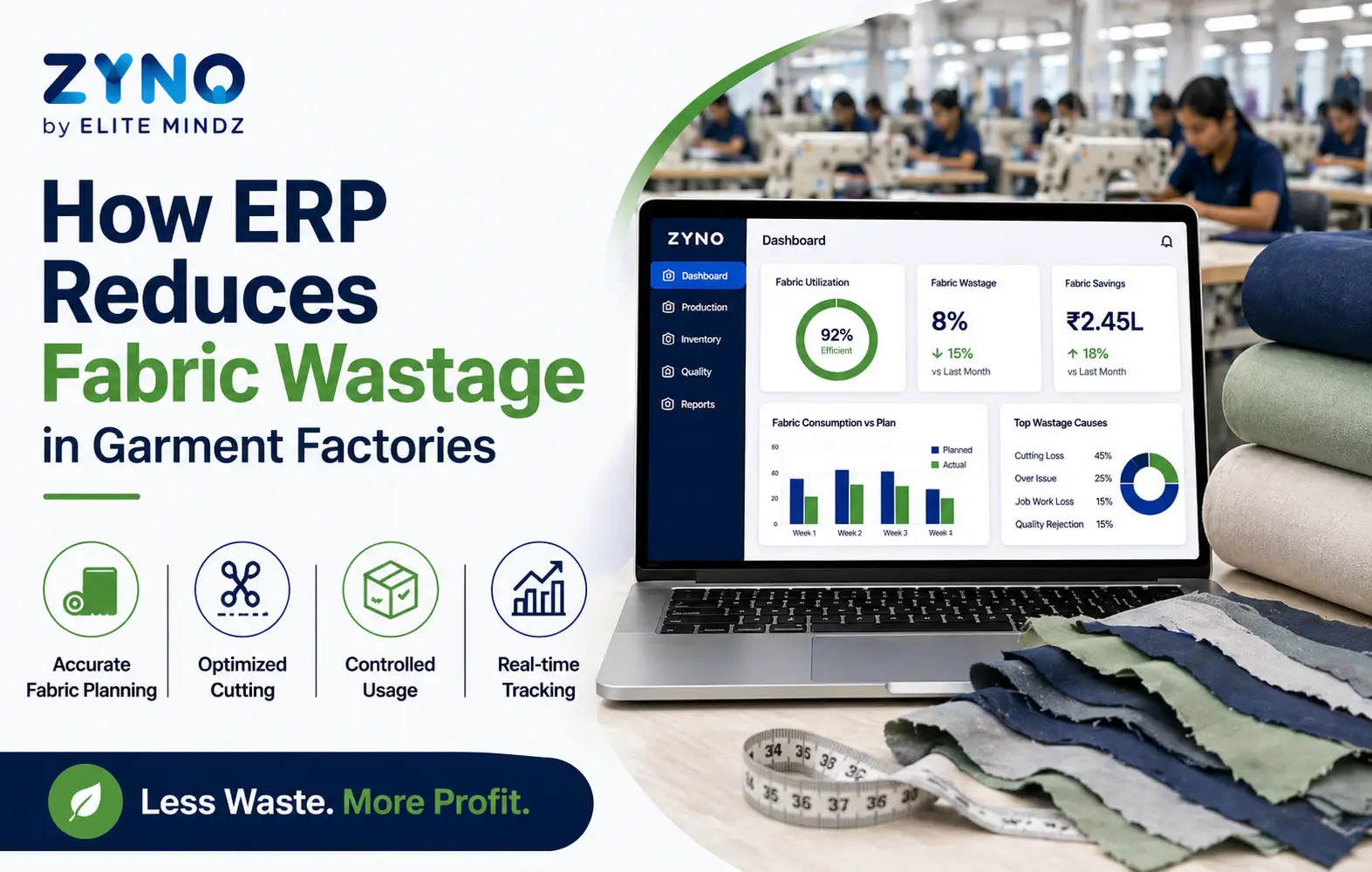
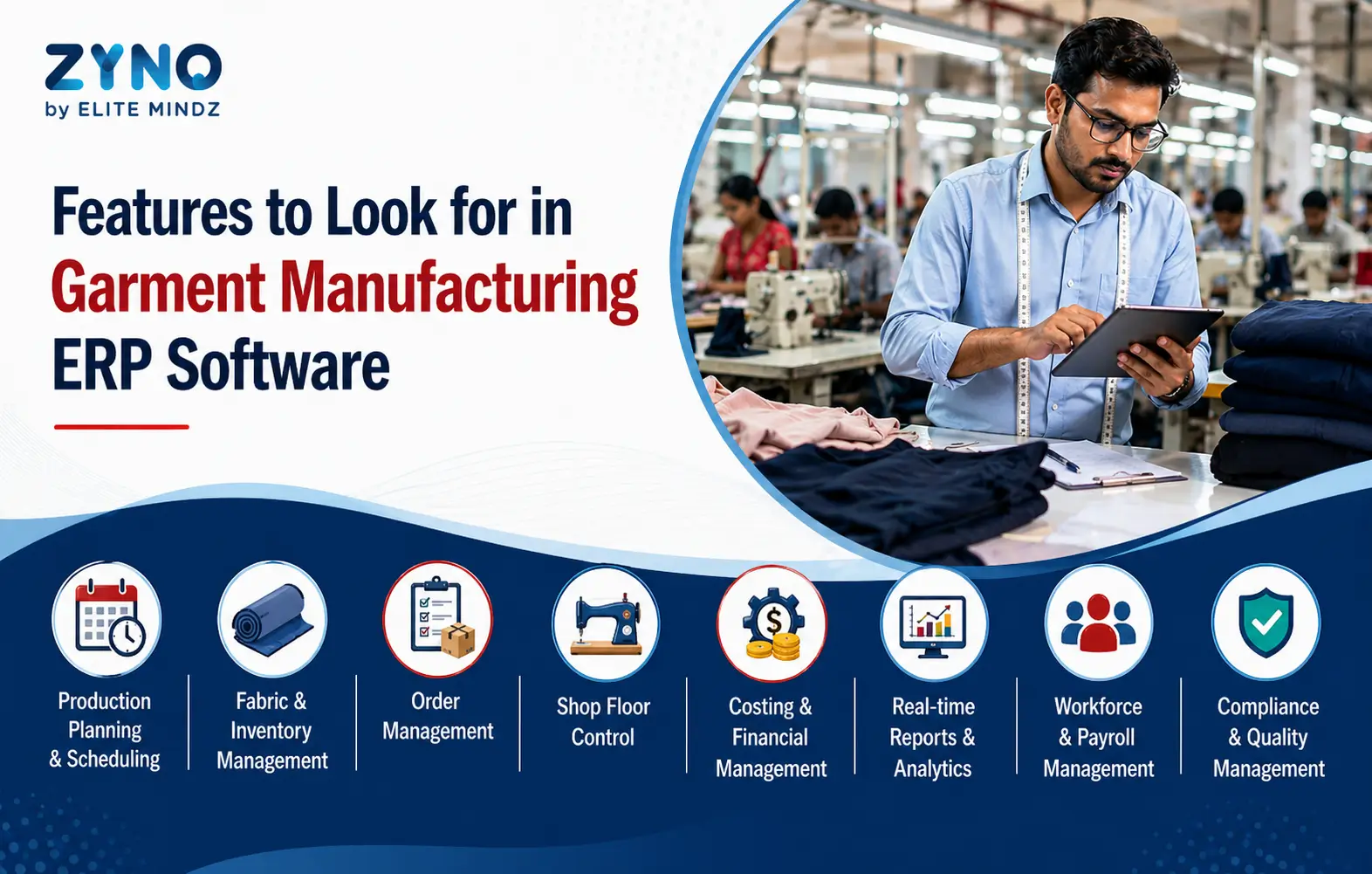
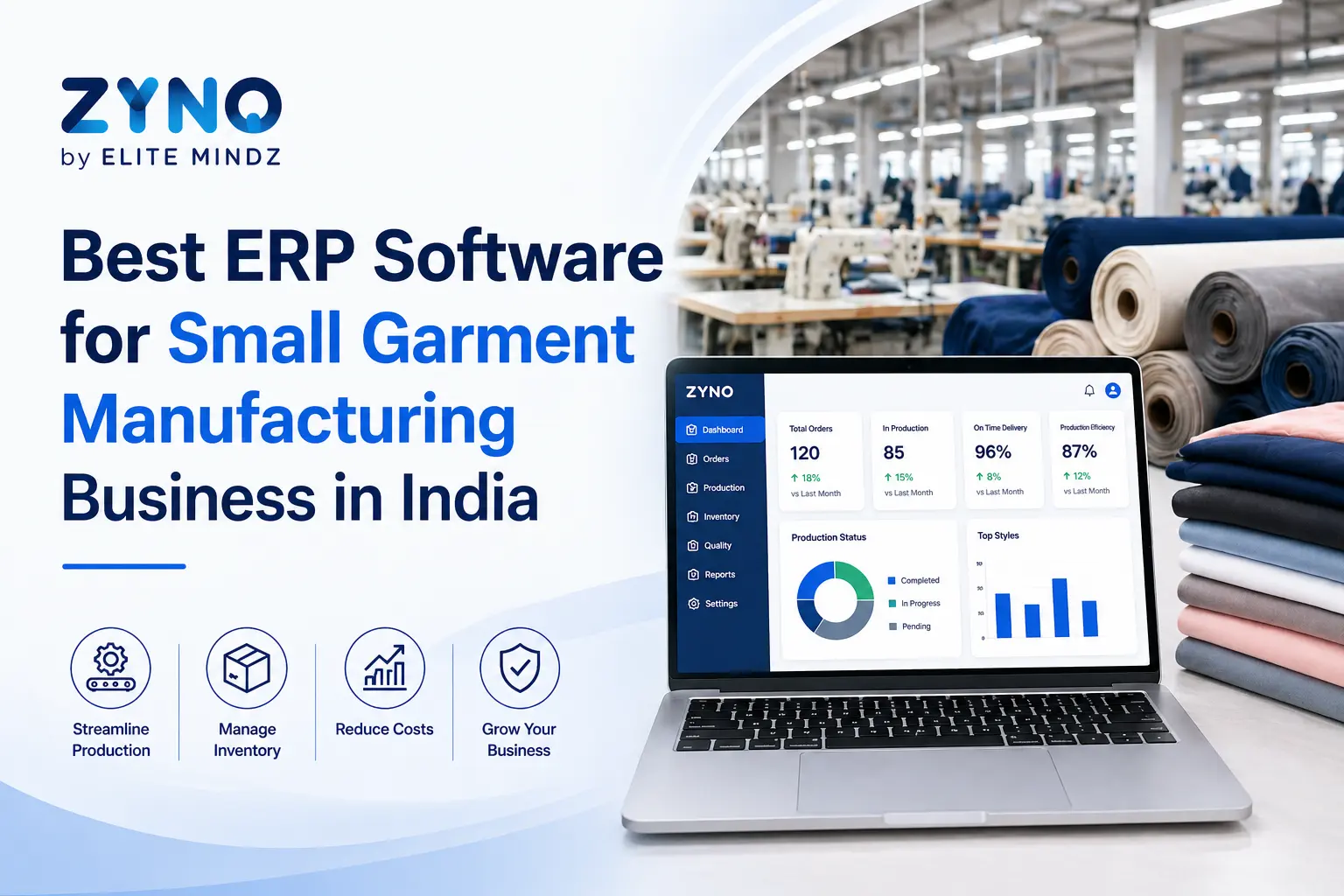
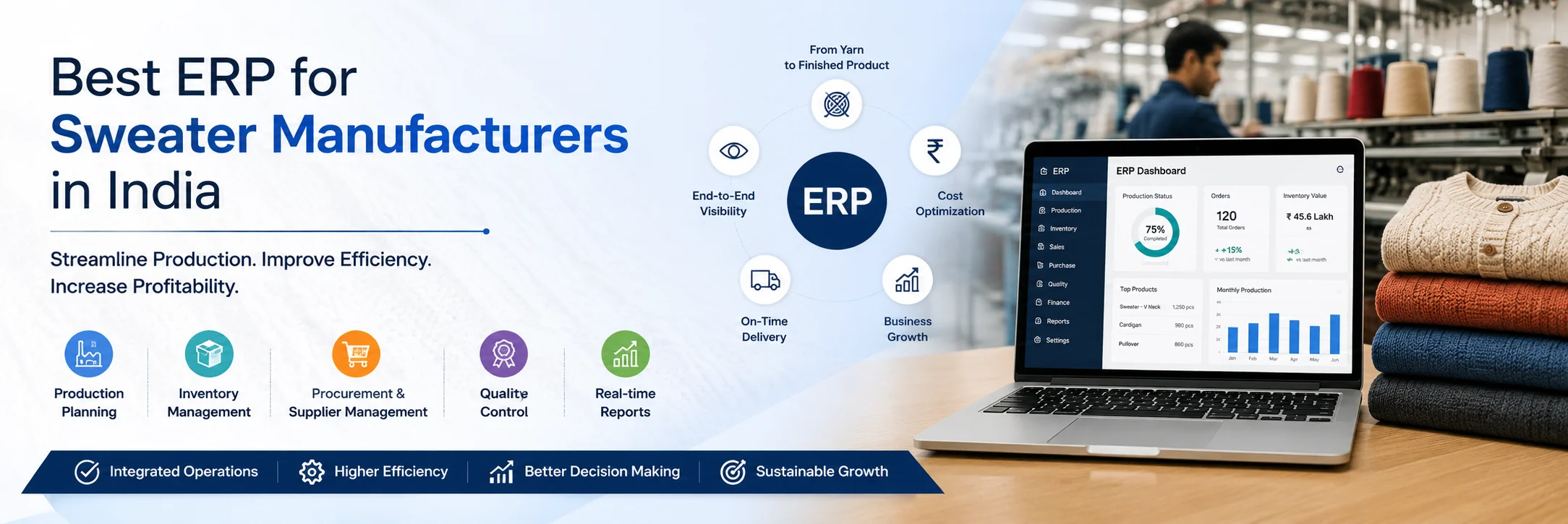
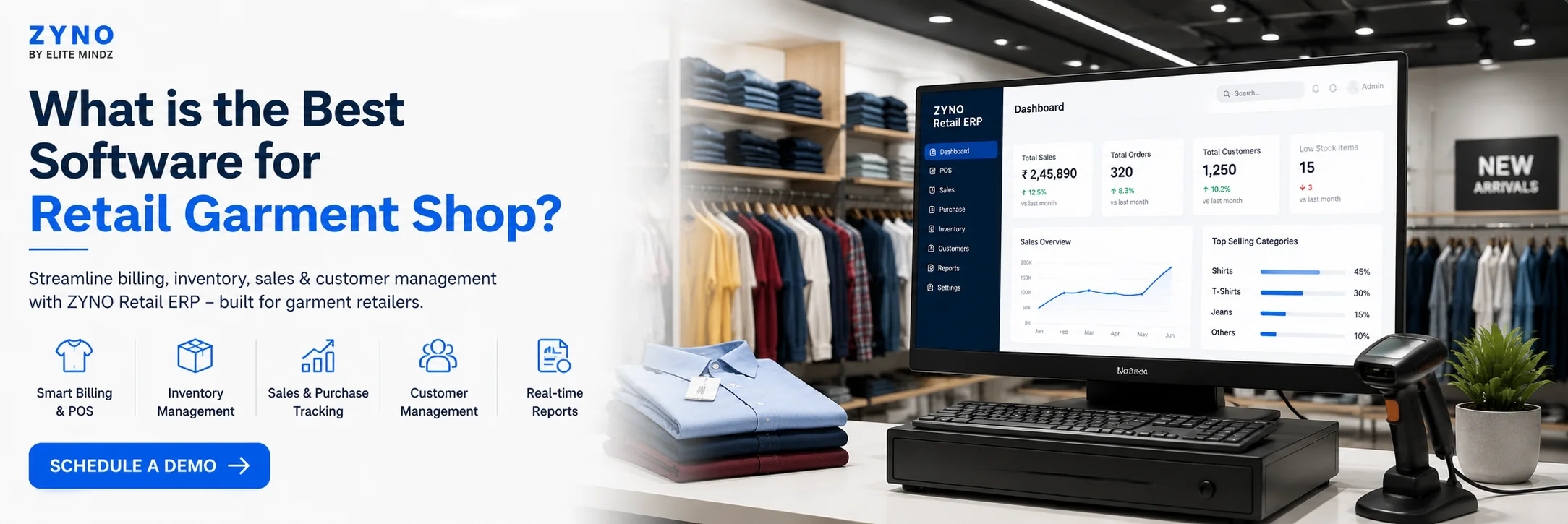
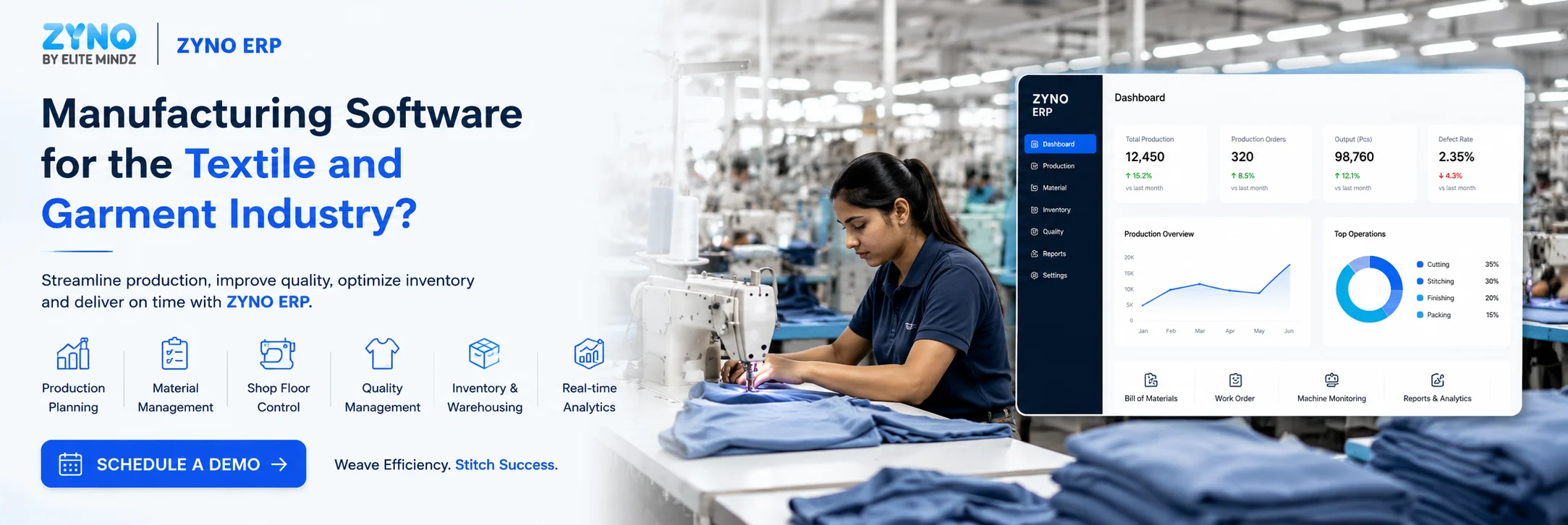
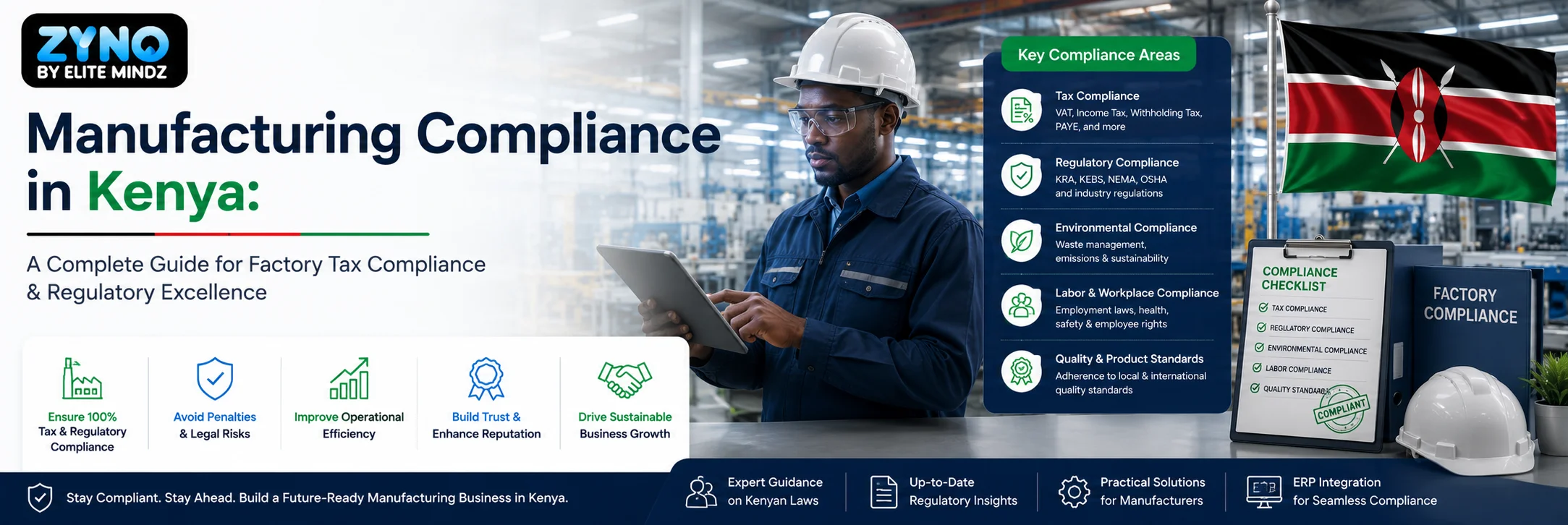
The garment industry has needs that most generic systems cannot handle out of the box. Style masters, cut-to-order planning, fabric consumption tracking, and job work management all require specific workflows. ZYNO's garment manufacturing ERP software handles these natively, including cut-plan optimisation, embroidery job work, export documentation, and GST on textile transactions. Because of this, garment businesses go live faster and spend less time on workarounds.
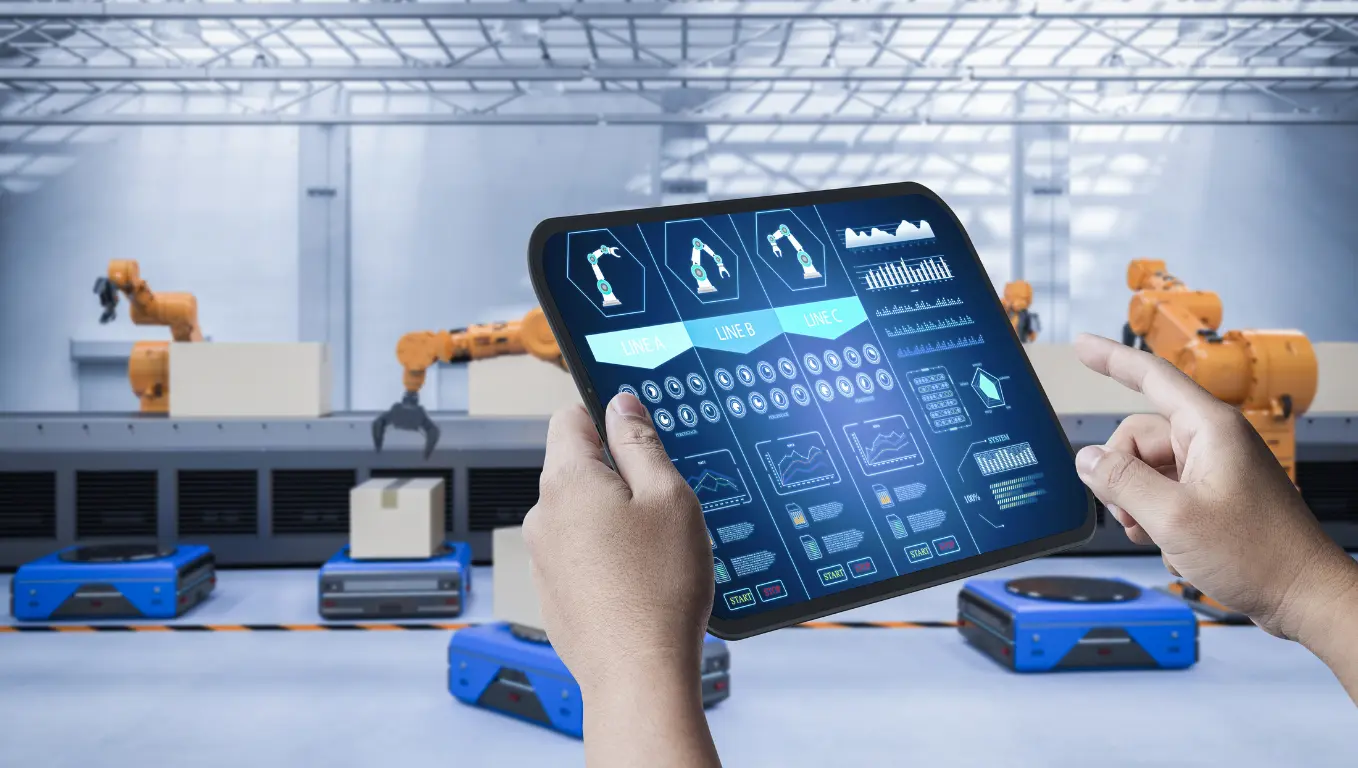
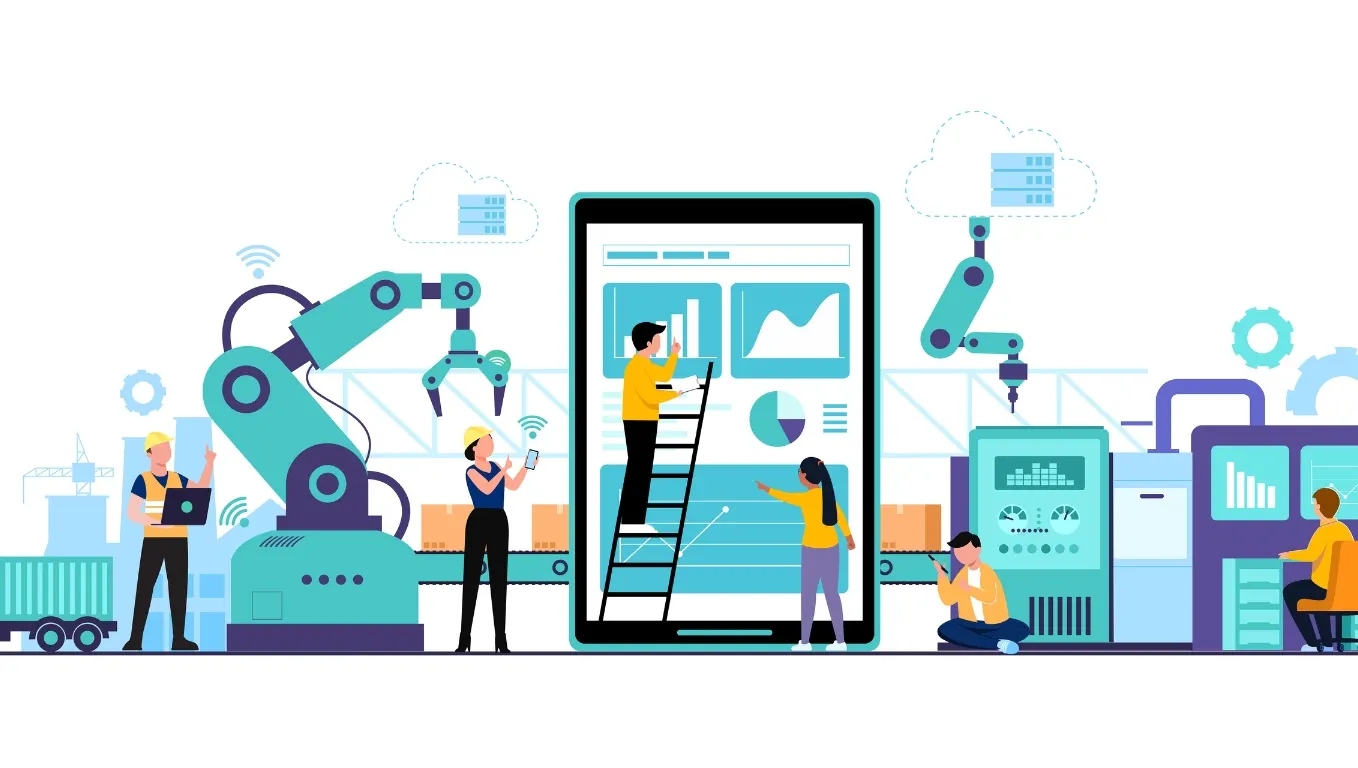
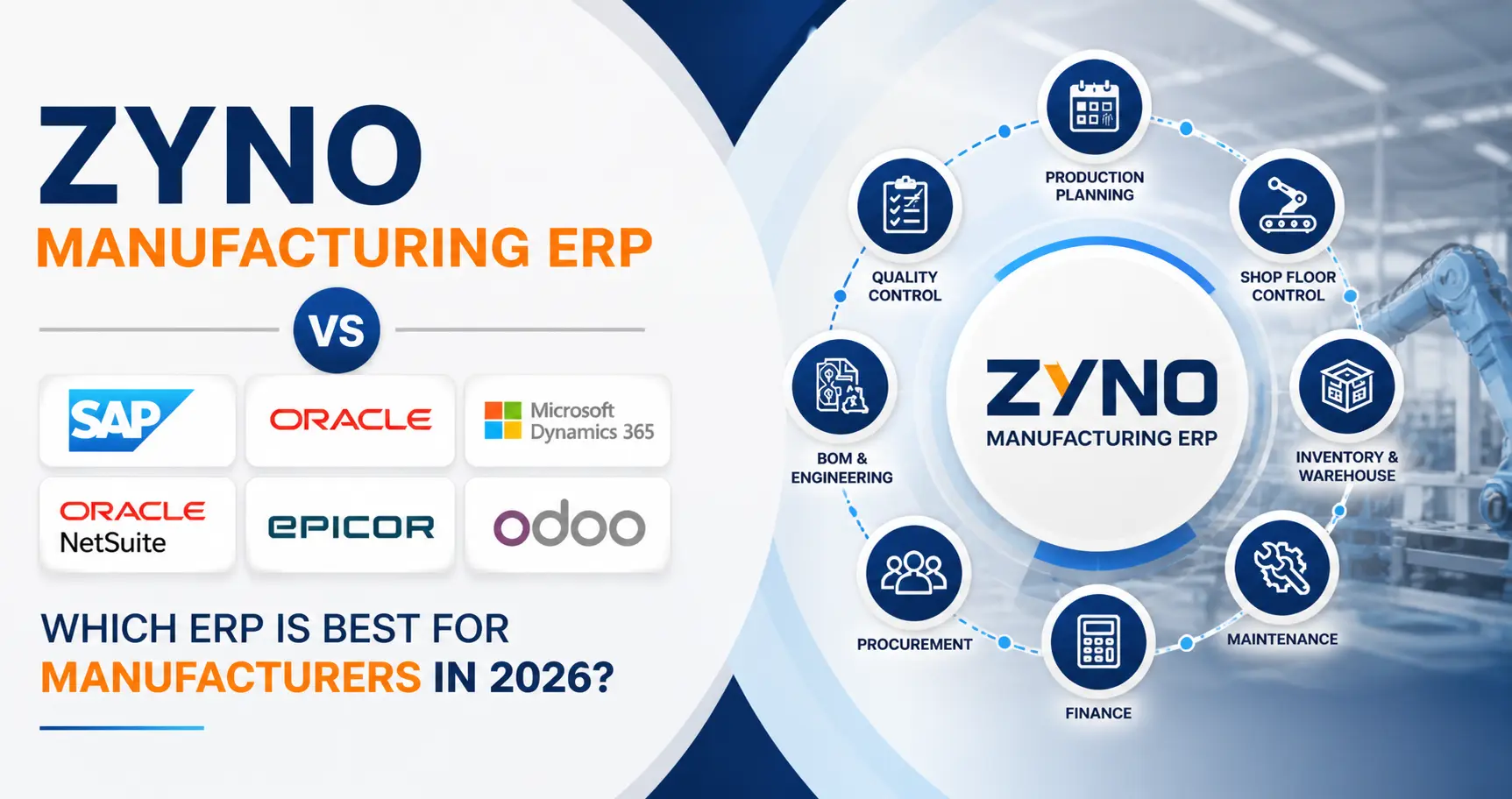
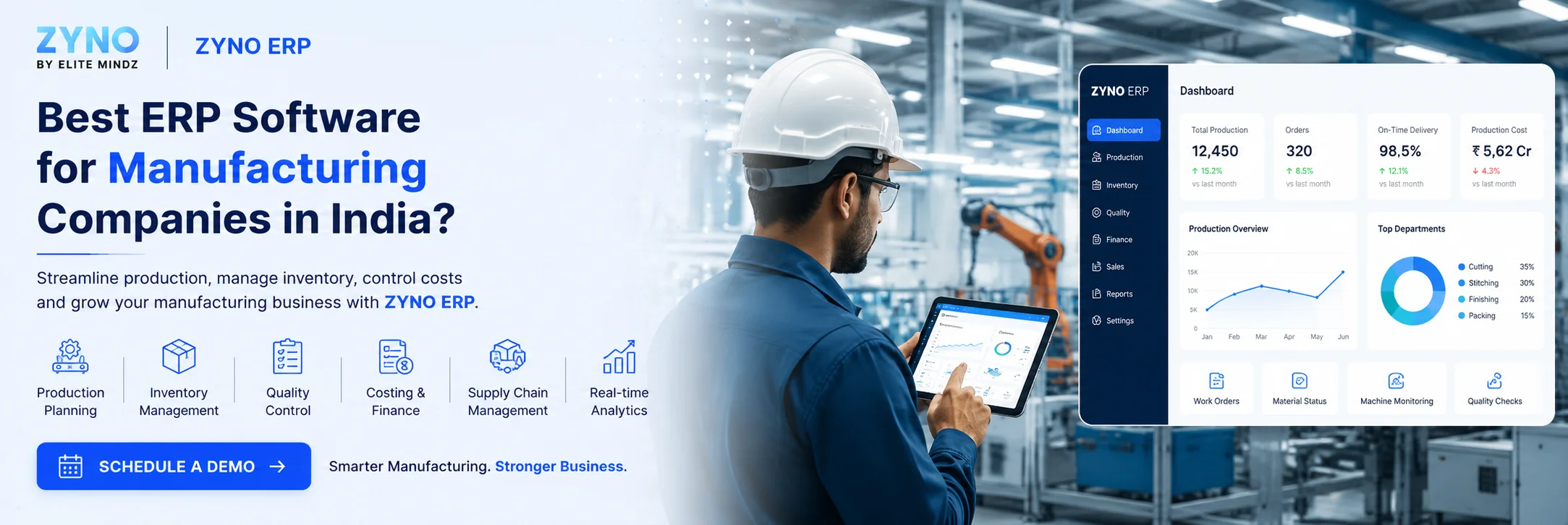
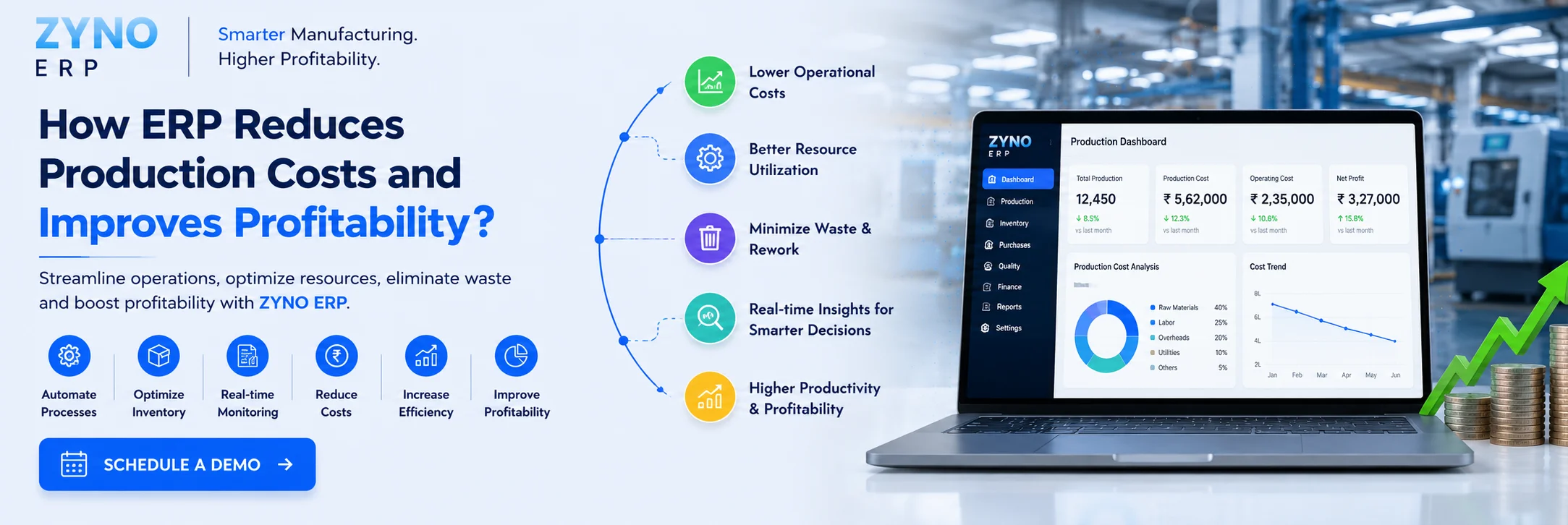
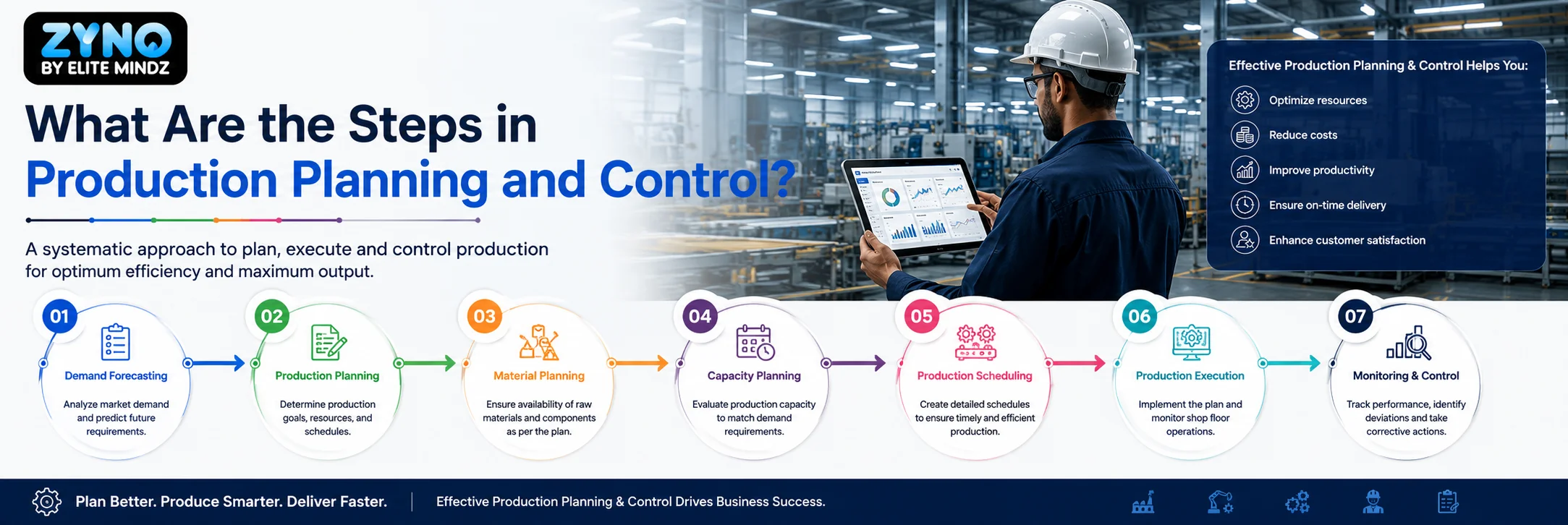
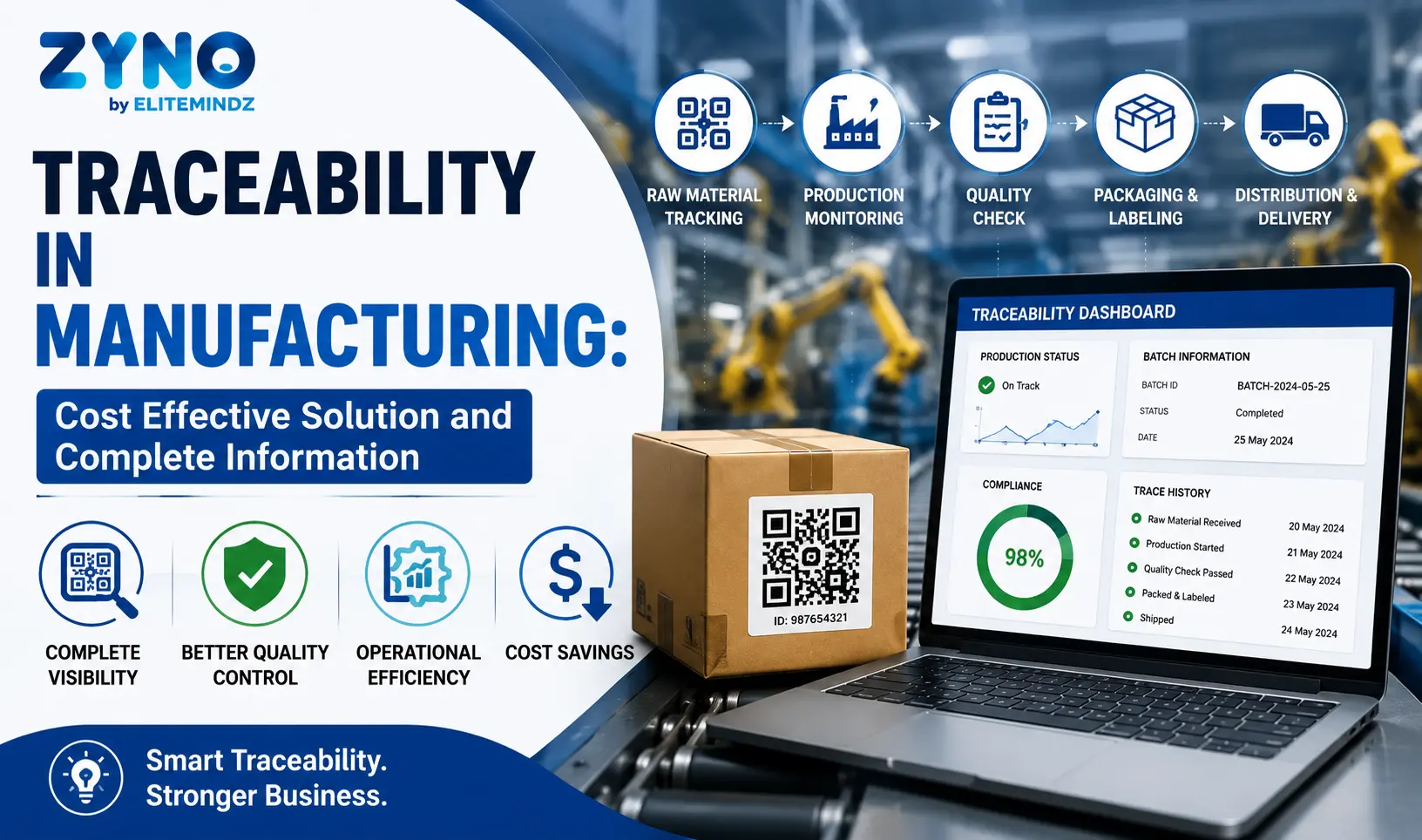
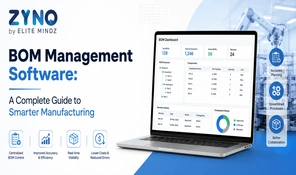
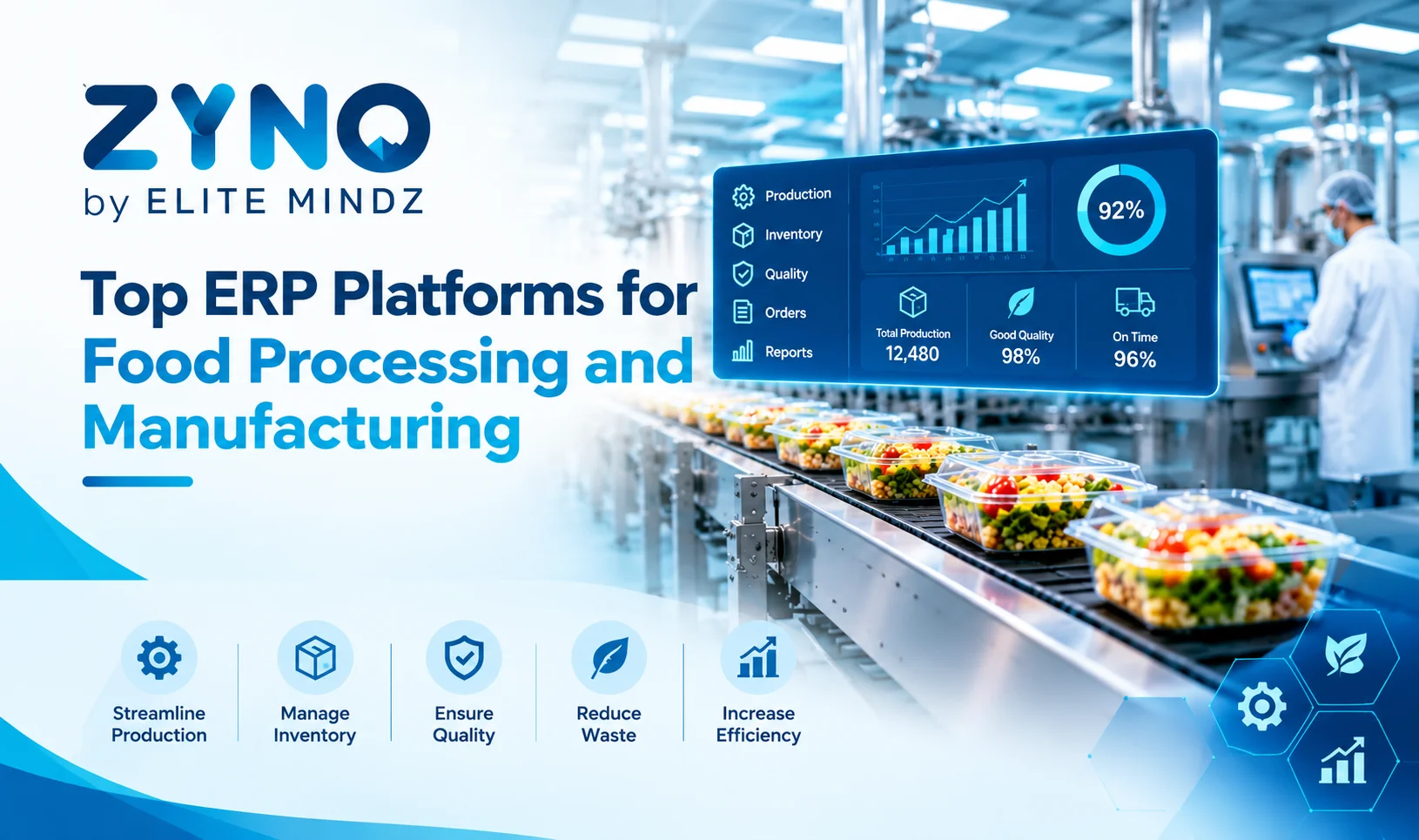
Good production ERP software goes far beyond tracking stock levels. ZYNO's manufacturing ERP software covers Bills of Materials, production planning, shop floor control, quality management, batch tracking, and machine efficiency reporting. All of this feeds directly into finance and inventory in real time. Whether you are in FMCG, pharma, auto components, or heavy engineering, the platform adapts to your production model without requiring extensive custom development.
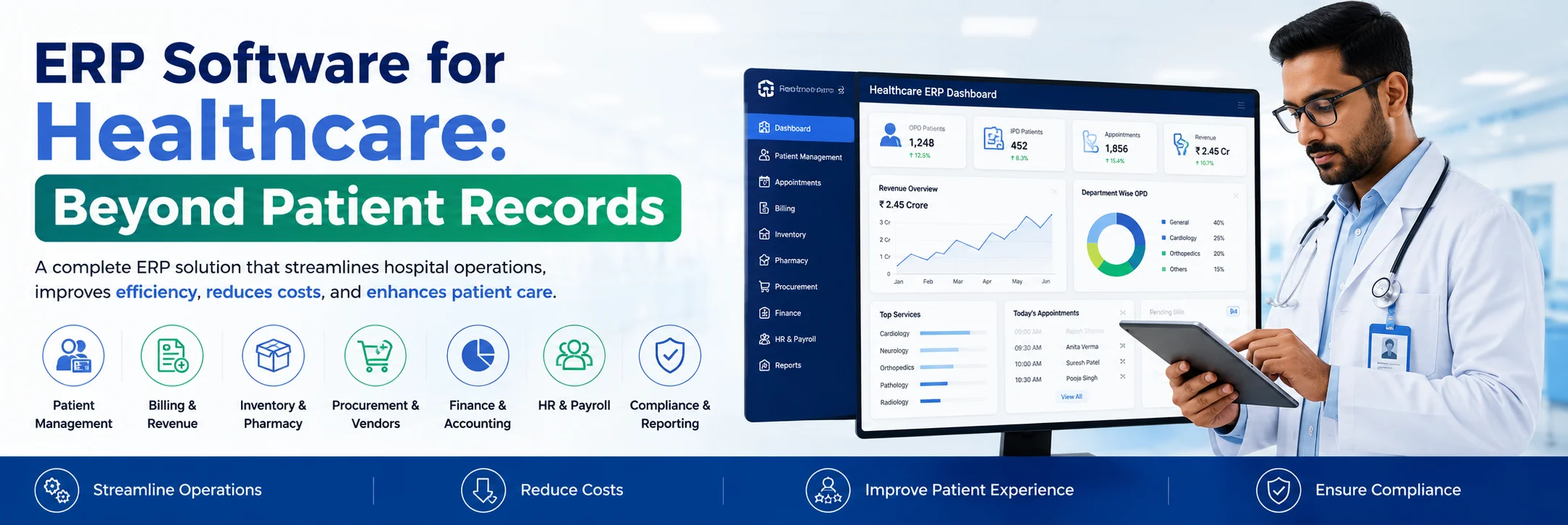
ZYNO HIMS - The healthcare industry ranks as the most challenging ERP system because its errors result in actual negative outcomes. ZYNO's hospital ERP software (HIMS) unites OPD and IPD management with pharmacy inventory, lab information, patient billing, insurance claims and staff scheduling into a single solution. The system includes compliance functions that meet NABH standards while protecting patient information through secure handling methods.
ZYNO Eduvibe - Educational institutions need school ERP software (Eduvibe) that works for everyone, administrators, teachers, students, and parents. ZYNO's educational module includes tools for managing student admissions along with fee collection processes and attendance tracking systems and timetable organization and examination planning and result evaluation and parent communication functions. The school management system operates as a unified platform which enables users to access all functions through any device.
Construction companies control project expenses and subcontractor payments while handling material procurement across multiple sites and processing payments according to project milestones. ZYNO's construction ERP software handles project-based accounting, BOQ management, labour tracking, equipment usage, and invoicing, giving project managers and finance teams a shared, live view of every project's financial health.
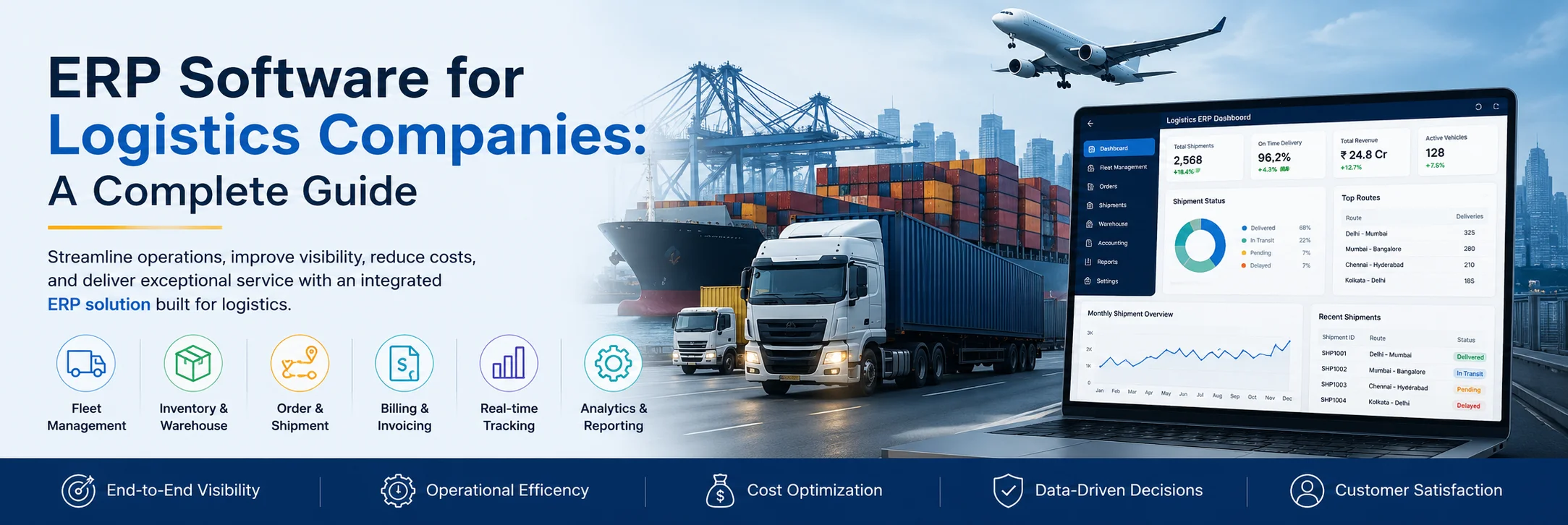
In logistics, visibility is everything. ZYNO's logistics ERP software controls all aspects of fleet management by handling operations, trip scheduling, freight billing processes, vendor payment procedures, fuel consumption monitoring, and compliance document management. The system provides dispatch teams and management with continuous updates about the precise locations of vehicles and shipments through its real-time GPS tracking system.
The poultry industry runs on tight cycles and specific data. Flock management, feed conversion tracking, mortality recording, batch costing, and hatchery management all need dedicated workflows. ZYNO's poultry ERP software is built around these requirements. The system provides necessary information which enables farm managers and owners to control their flocks while maintaining profit margins.
Jewellery businesses deal with precious metal accounting, making charges, karigar management, hallmarking, and retail billing that tracks stone and metal weights separately. ZYNO's jewellery ERP software handles all of this, including live metal rate integration, job work tracking, and GST on jewellery. Consequently, it is one of the most complete industry-specific ERP solutions available for this sector in India today.
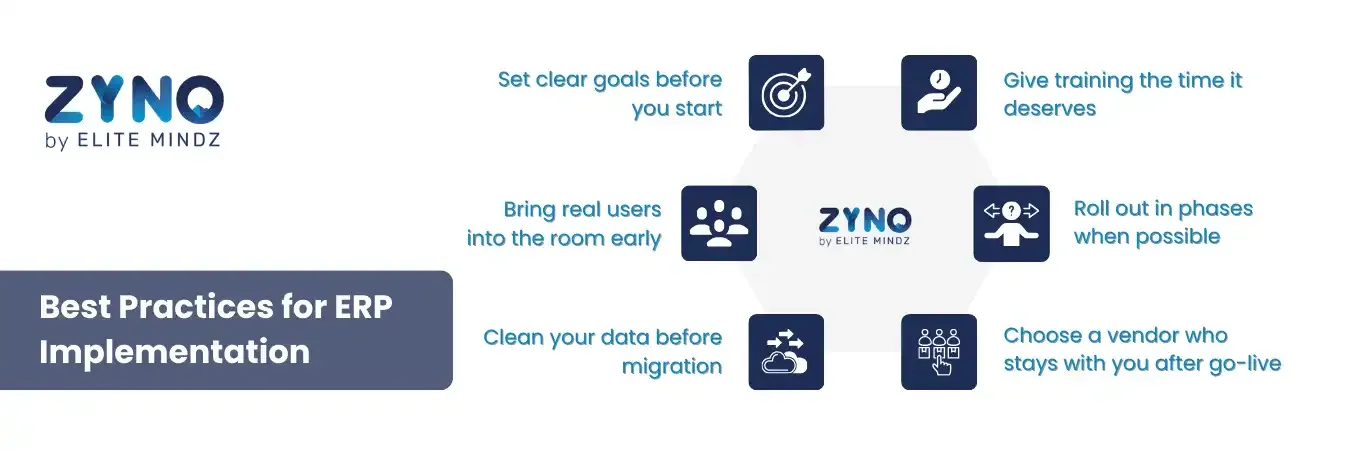
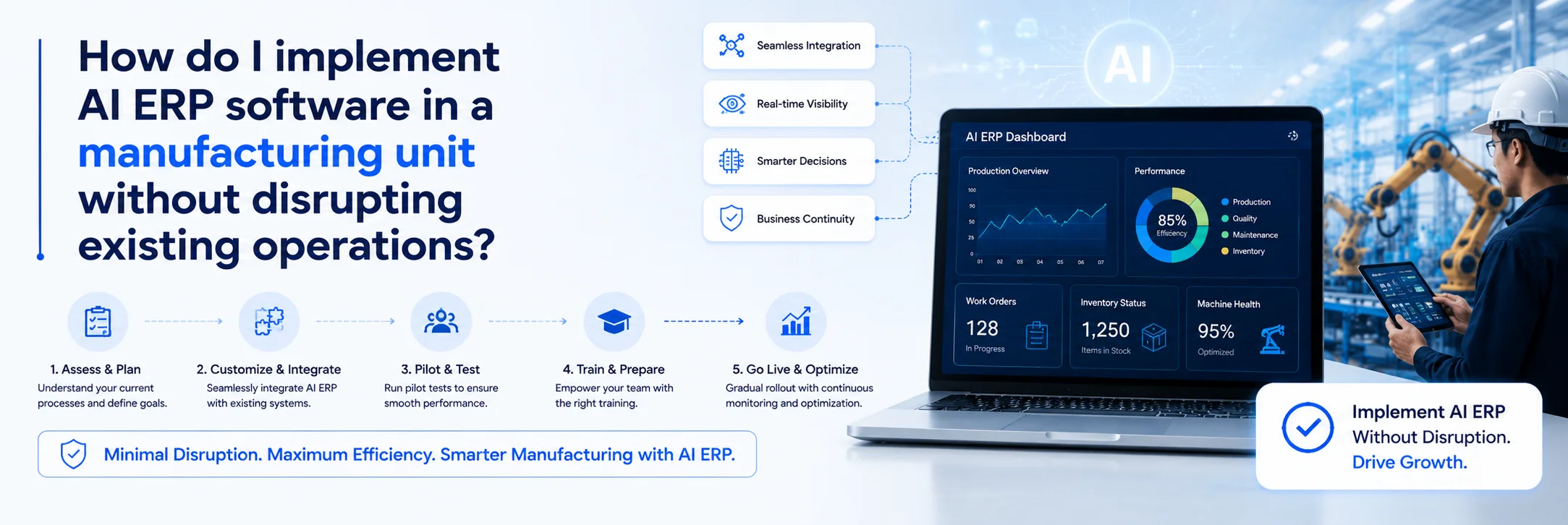
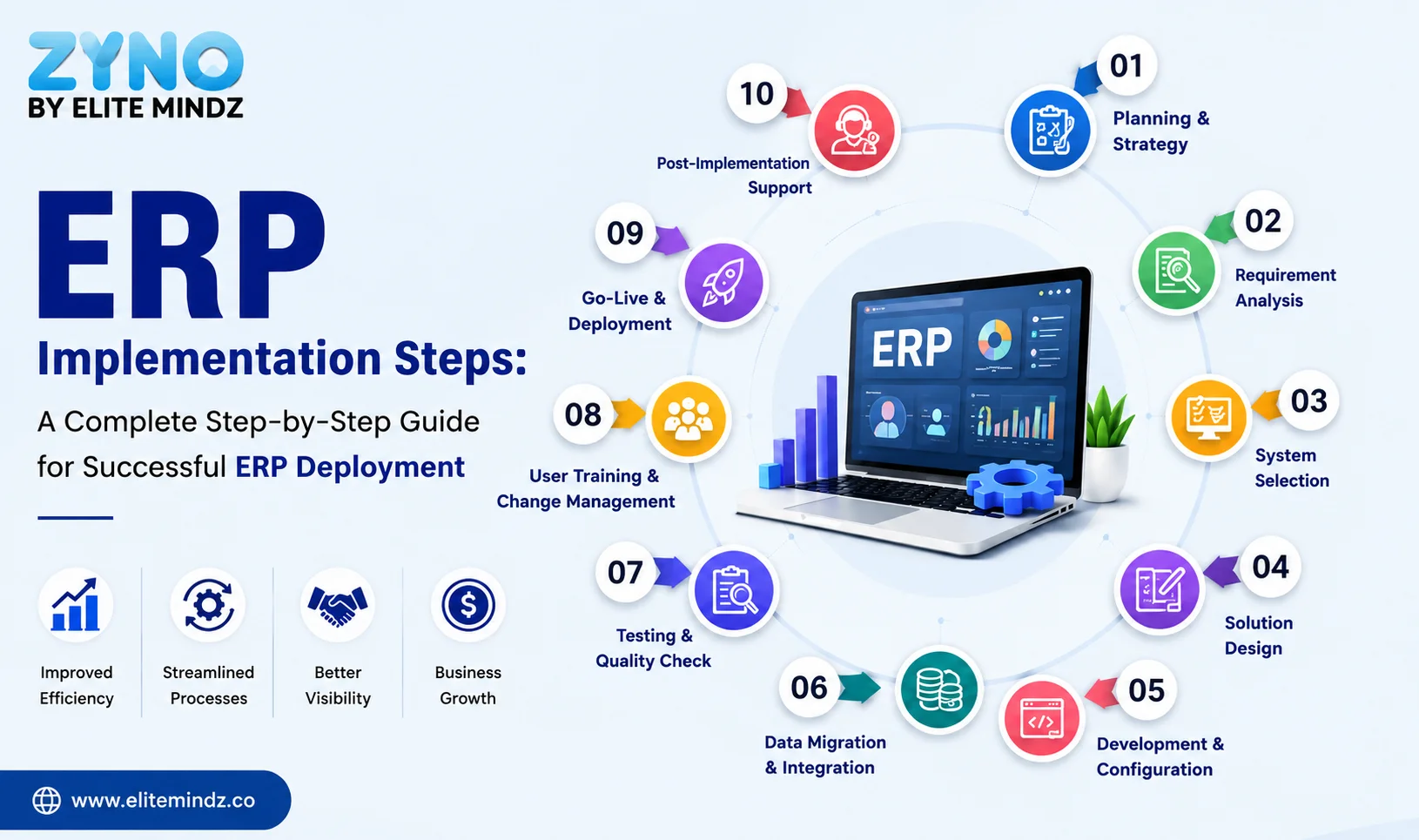
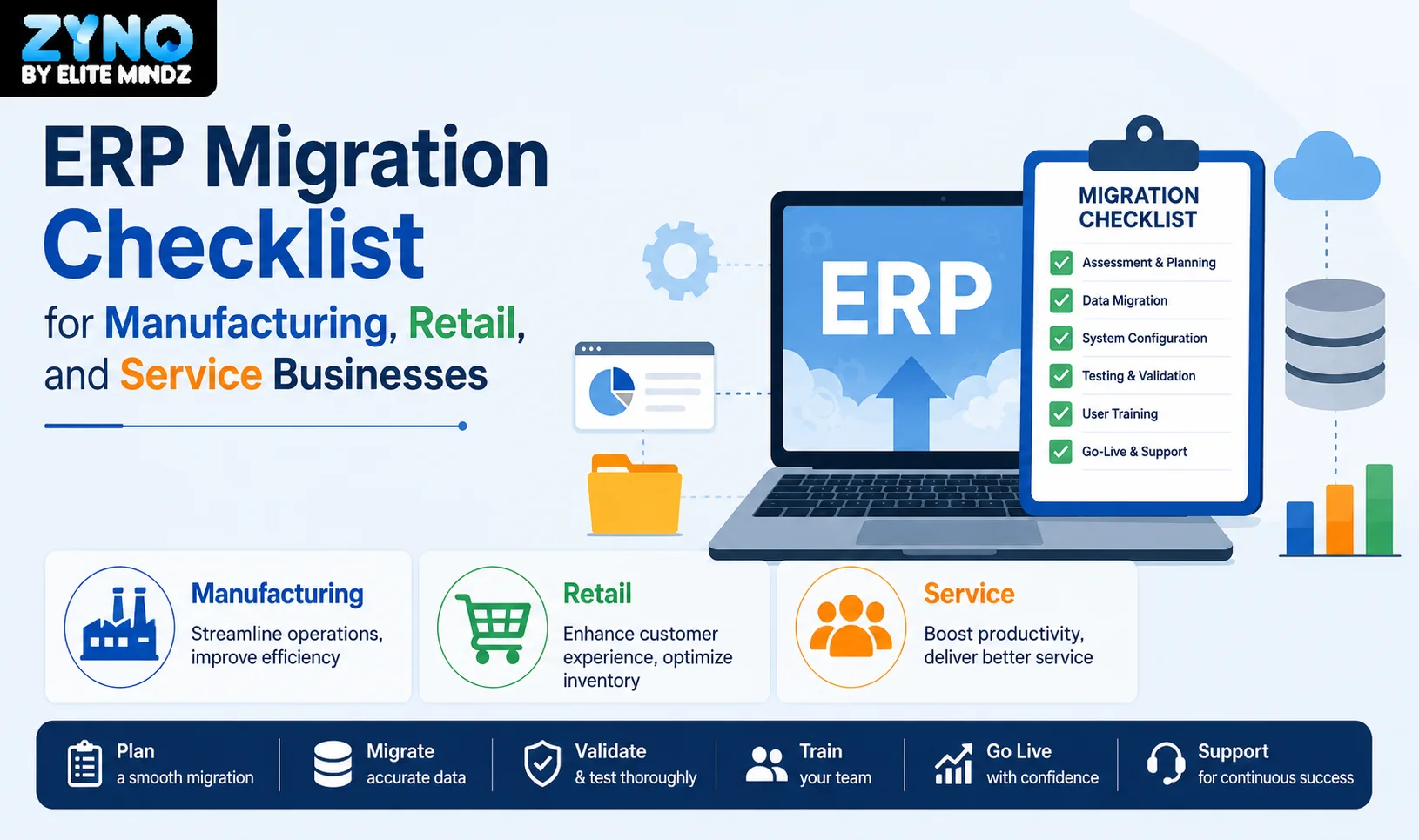
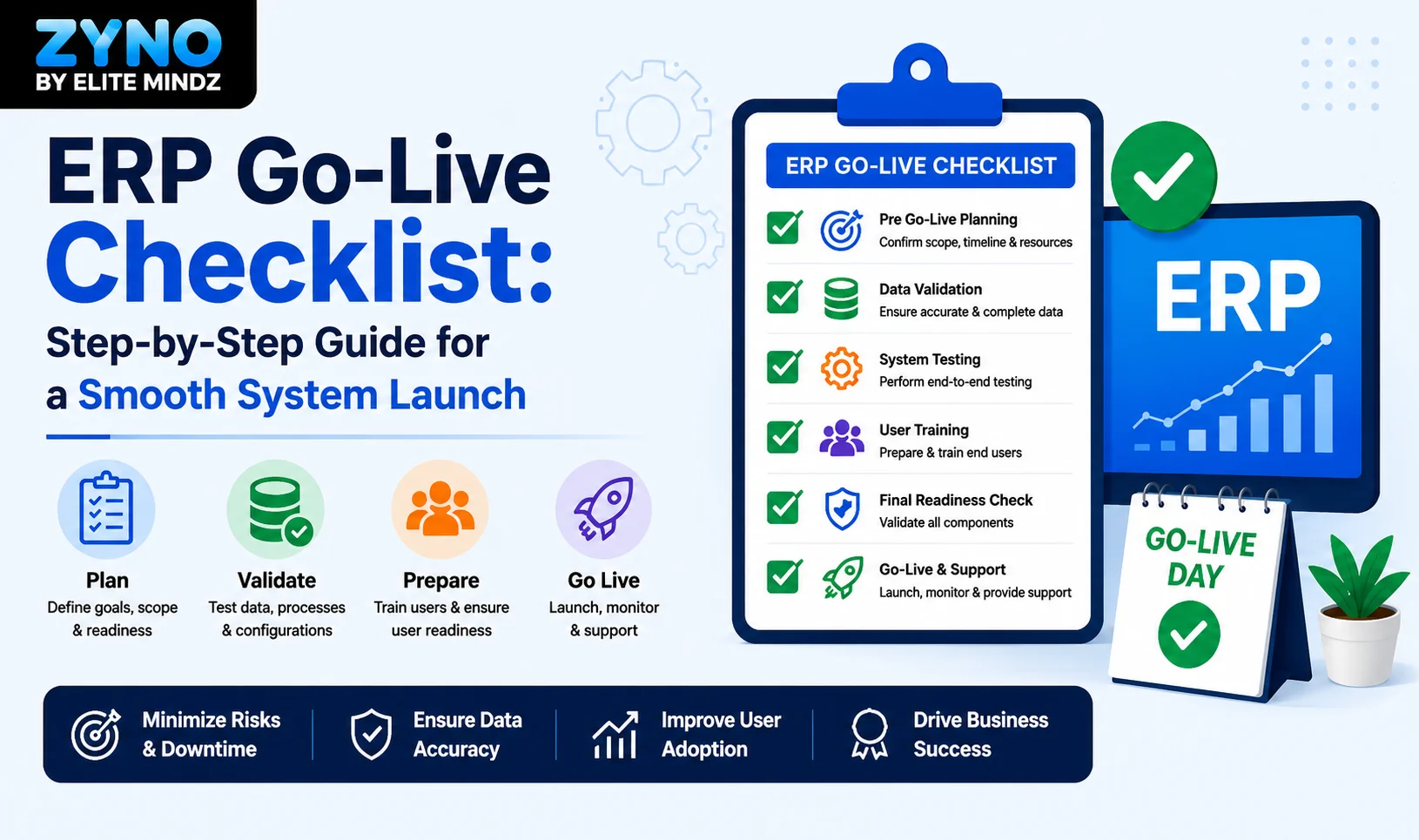
Picking the right ERP software is only half the job. Implementation is where many projects run into trouble, not because the software is poor, but because the process is not managed well. The following practices make a real difference:

Set clear goals before you start.
Write down exactly what you want ERP to fix. If your main problem is inventory accuracy, say so clearly. If GST filing is taking too long, make that explicit. Vague goals produce vague results.
Bring real users into the room early.
Your accounts team, warehouse staff, and HR managers will use this system every day. Their input shapes the workflows, and their support drives adoption after go-live. Without them involved from the beginning, implementation becomes much harder.
Clean your data before migration.
Dirty data moved into a new ERP creates chaos quickly. Sort out your customer records, vendor lists, item codes, and opening balances before migration day, not after.
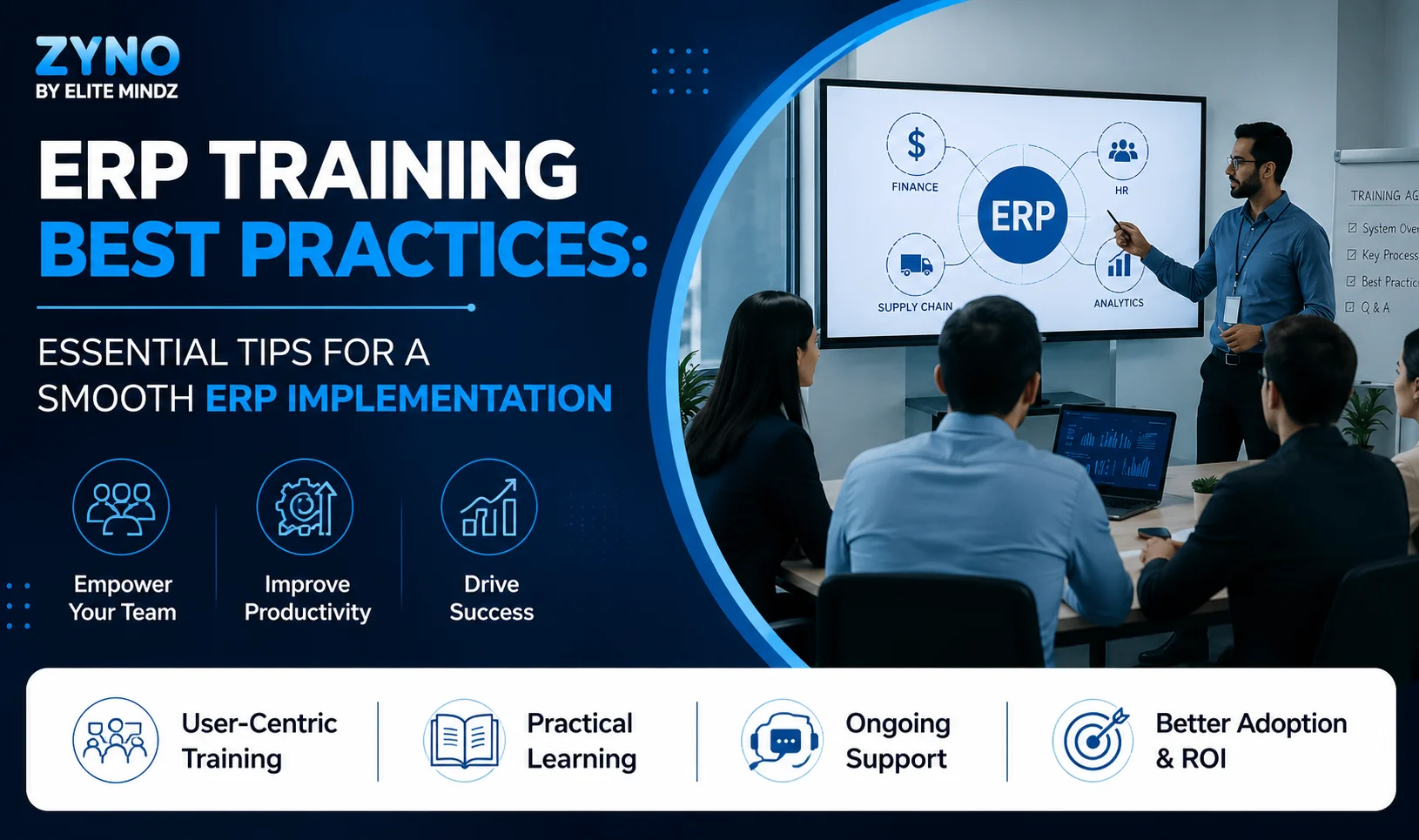
Give training the time it deserves.
A rushed training programme sends users back to their old habits within weeks. Budget proper time for training sessions and plan follow-up support after go-live.
Roll out in phases when possible.
Trying to launch every module on the same day is high-risk. ZYNO ERP's modular structure makes phased rollouts straightforward, which reduces pressure on your team and catches issues early.
Choose a vendor who stays with you after go-live.
Post-implementation support is where the real relationship with your ERP provider begins. Make sure they have responsive support, clear escalation paths, and a track record of helping customers through issues that come up after launch.
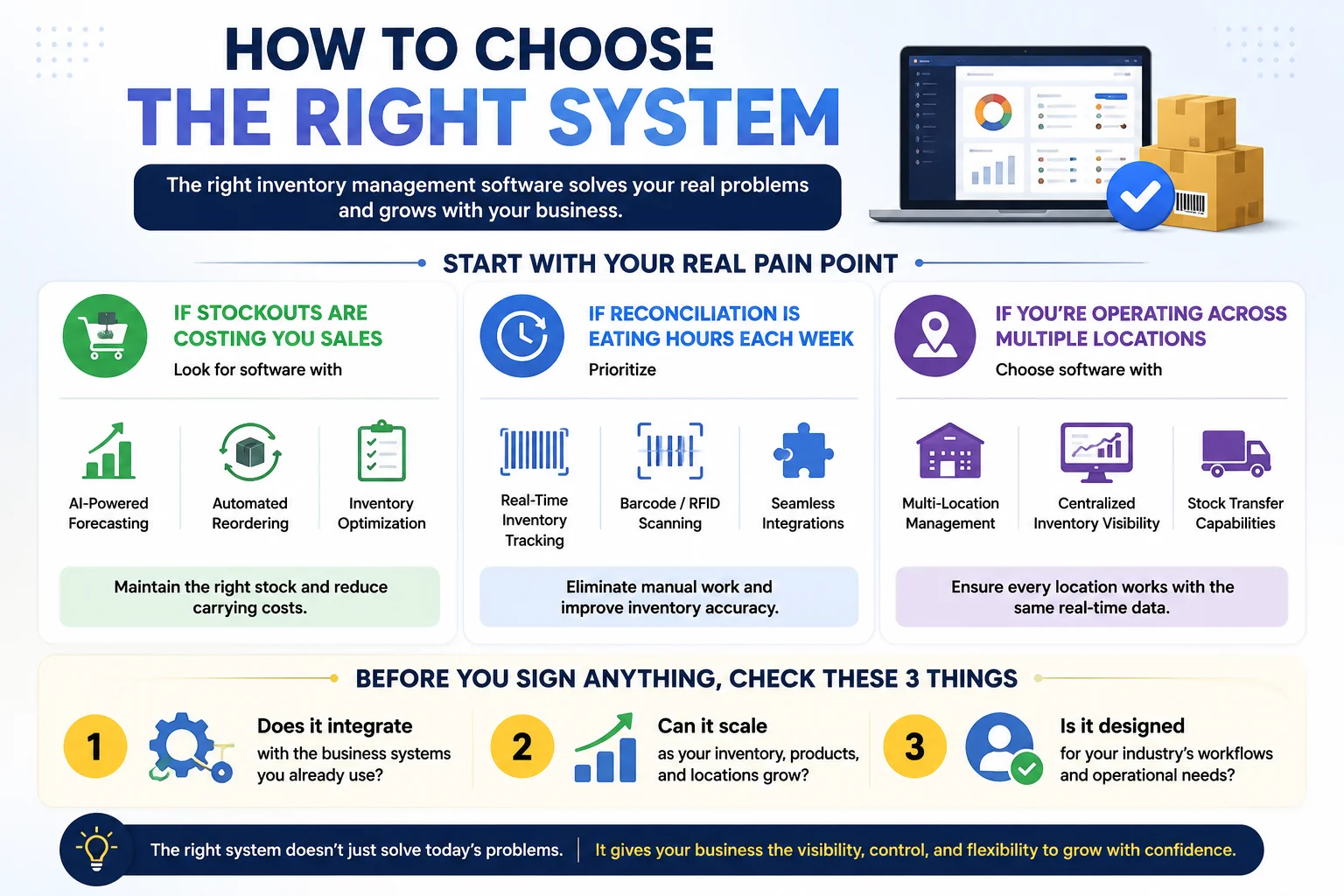
With so many ERP software companies available, choosing the right one can feel overwhelming. However, a structured approach makes the decision much clearer:
Start with your industry needs.
If you run a garment factory, a poultry farm, a hospital, or a construction company, look for customized ERP software built for your sector first. You will spend less time and money reaching a working system than you would adapting a generic ERP.
Be realistic about total cost.
Beyond licensing, total ERP costs add up, while SAP and Oracle are powerful, ZYNO ERP offers similar functionality at a much lower overall cost for Indian SMEs.
Verify Indian compliance features upfront.
GST, TDS, e-invoicing, and state-level tax rules must be standard features, not paid add-ons. This is non-negotiable for any business operating in India.
Test support quality, not just the demo.
Ask shortlisted vendors for references from businesses similar to yours. Call those customers and ask about response times, how problems get resolved, and how the vendor handles updates when tax rules change.
Think about where your business will be in five years.
The ERP software you pick today needs to grow with you. Confirm that the platform scales without requiring a full re-implementation as your headcount, locations, and revenue increase.
Whether you need manufacturing ERP software, garment manufacturing ERP software, hospital ERP software, school ERP software, construction ERP software, logistics ERP software, or fully custom ERP software, ZYNO ERP by Elite Mindz has a module built specifically for your industry. Get in touch with the team and request a no-obligation demo tailored to your business.
Request a Free Demo Today - Contact ZYNO ERP
Q1: What is the best ERP software in India for 2026?
For Indian SMEs and mid-market businesses, ZYNO ERP by Elite Mindz is the strongest choice because of its local compliance depth, industry-specific modules, and competitive pricing. For large enterprises with global operations, SAP and Oracle remain capable platforms, but at considerably higher cost and deployment time.
Q2: Is ERP software suitable for small businesses in India?
Yes, absolutely. Cloud-based ERP software like ZYNO ERP is modular and scalable, so small businesses start with only what they need and expand as they grow. Small manufacturers, clinics, retailers, and schools across India are already using ERP systems and seeing tangible results from the early months of use.
Q3: What makes ZYNO ERP different from SAP or Oracle?
ZYNO ERP was purpose-built for the Indian market. GST compliance, TDS handling, e-invoicing, and Indian accounting practices are core features, not additions. It is also far more affordable, deploys much faster, and comes with a support team that genuinely understands the Indian business environment. SAP and Oracle make sense for very large global enterprises, but for most Indian businesses, ZYNO ERP delivers stronger value.
Q4: Does ZYNO ERP offer customized ERP software for specific industries?
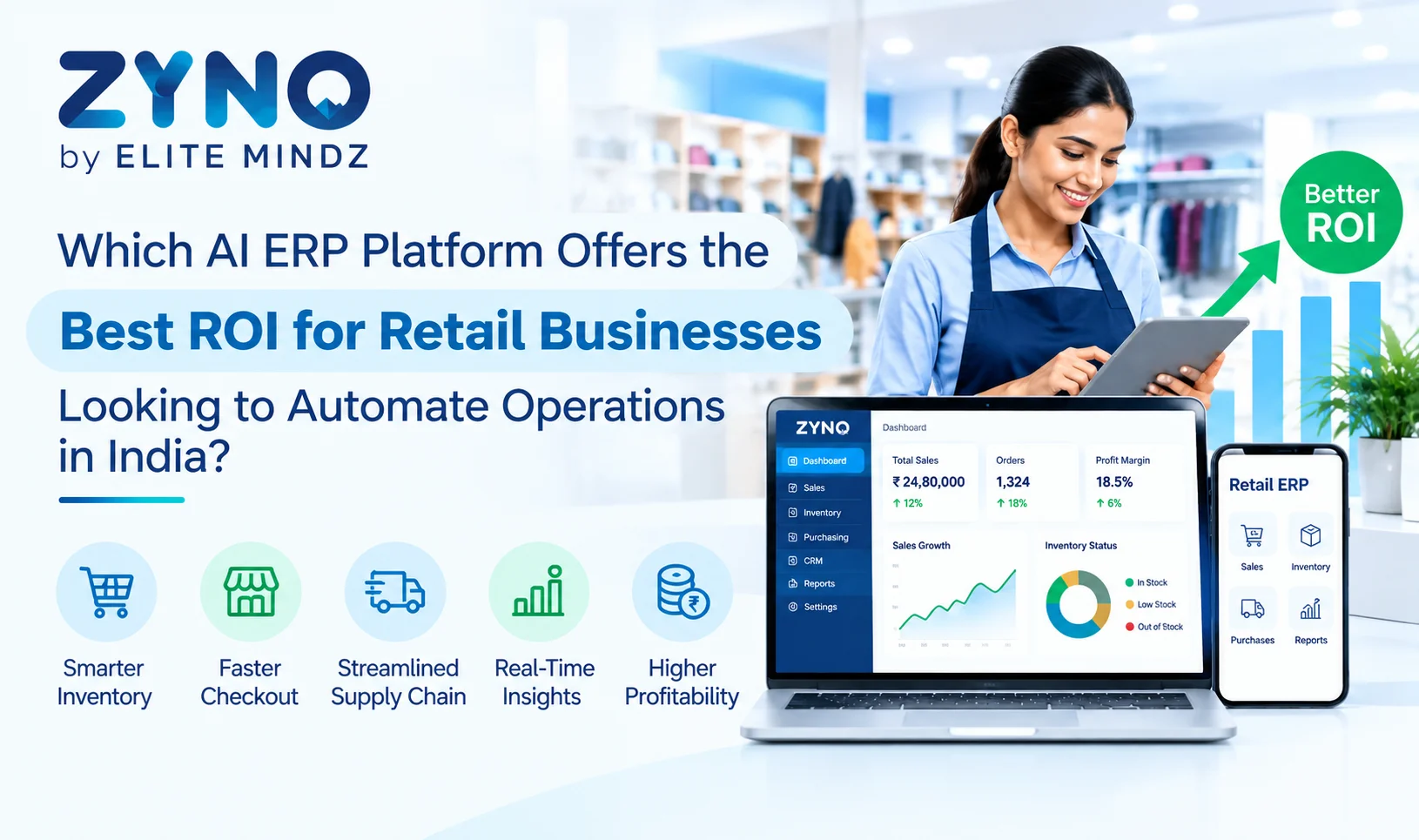
Yes. ZYNO ERP offers dedicated modules for garment manufacturing, production and general manufacturing, hospitals, schools, construction, logistics, poultry, jewellery, and retail. Where standard modules do not fully match your requirements, the team builds custom ERP software to cover your specific workflows precisely.
Q5: How long does ERP implementation typically take?
Timeline depends on business size and complexity. A small to mid-sized business using ZYNO ERP can typically go live within 4 to 12 weeks. SAP and Oracle implementations for large enterprises often take 6 to 18 months. Phased rollouts help reduce risk regardless of which ERP software you choose.
Q6: Which ERP software companies in India offer strong GST compliance?
Several ERP software companies offer GST features, but the depth varies significantly. ZYNO ERP by Elite Mindz is purpose-built for Indian tax law, making it one of the most complete GST-ready options on the market. SAP also covers GST compliance, but it typically requires additional localisation work at extra cost.
Q7: Can ERP manufacturing software handle both discrete and process manufacturing?
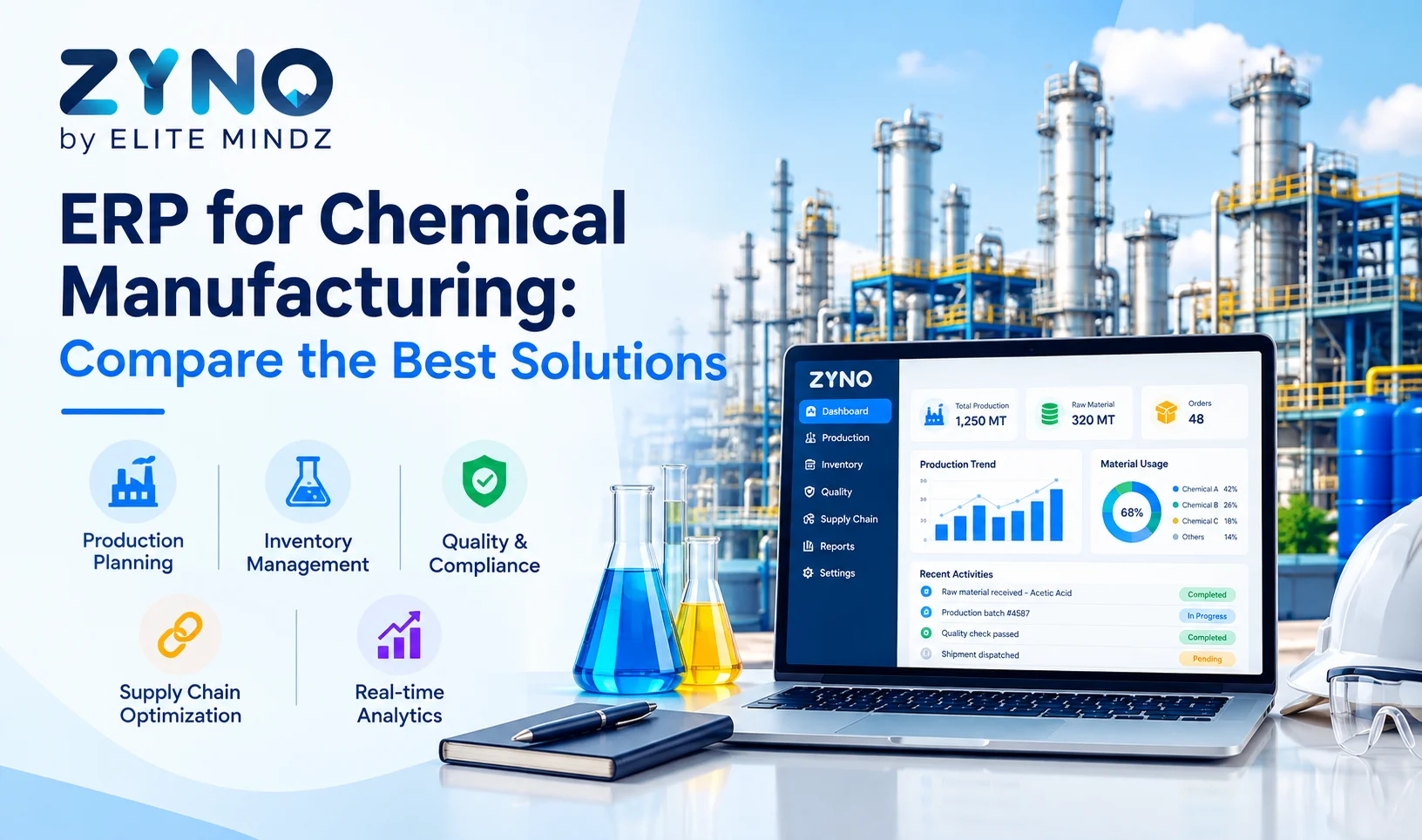
Yes. ZYNO ERP's ERP manufacturing software supports both discrete manufacturing, such as garments or auto components, and process manufacturing, such as food, pharma, or chemicals. Production planning, BOM management, and batch tracking all adapt to your specific manufacturing model without requiring separate systems.
Are you looking for a professional advisor for your business?
Complete the form and discuss implementation strategies with our IT expertise.
Get a Quote in Minutes