Top CRM Trends in 2025: What to Expect
Read More →

×
Discover the 10 AI CRM use cases for 2026 that are transforming sales, marketing, and customer service. Explore practical benefits, real-world examples, and applications of AI-powered CRM for smarter customer insights, lead scoring, sales forecasting, automation, and better customer experiences.
Businesses using ZYNO Books cut accounting time by 70% and stay 100% ZATCA-compliant — automatically.
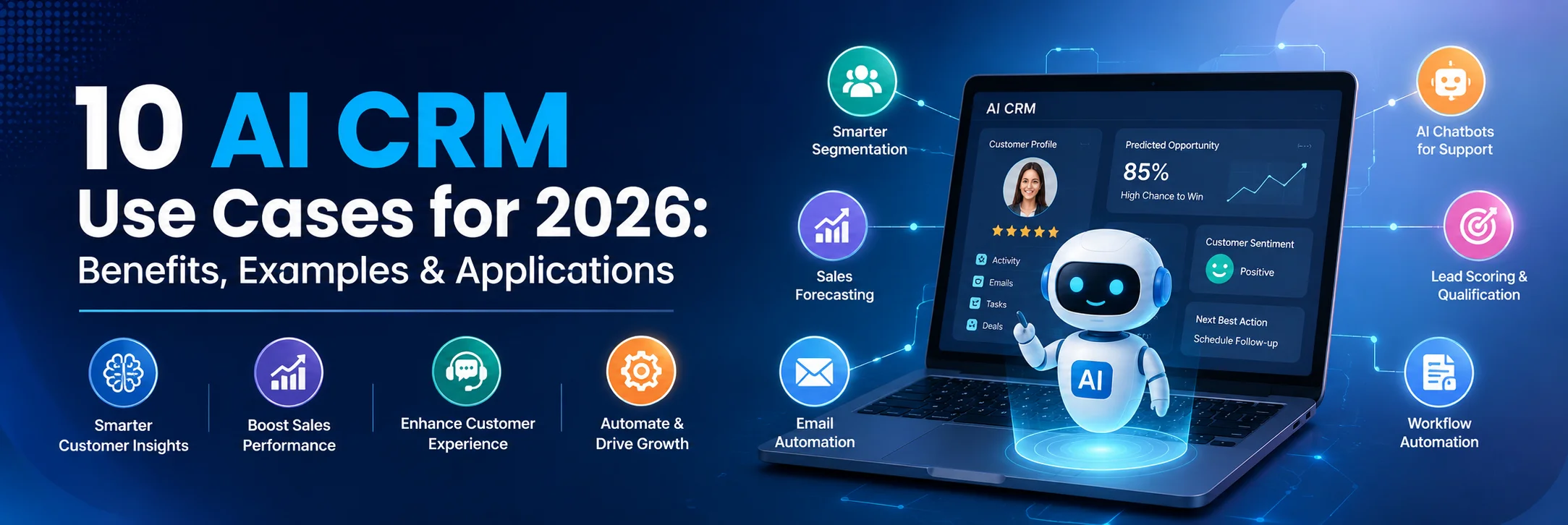
AI CRM use cases are changing how businesses manage customers, sales pipelines, marketing campaigns, and support operations in 2026.
Traditional CRM systems were primarily designed to store customer information, track interactions, and give sales teams a central place to manage opportunities. An AI-powered CRM goes further. It can analyse customer data, identify patterns, predict behaviour, automate repetitive work, personalise engagement, and increasingly take action through AI agents.
The biggest shift is that CRM is moving from a passive system of record to a more proactive system that can recommend next steps and, in some cases, execute actions automatically.
Research and current industry discussions increasingly distinguish between AI that assists employees, such as drafting emails or summarising calls, and agentic AI in CRM, which can update records, prioritise accounts, and execute workflows with limited human intervention. Gartner predicts that up to 40% of enterprise applications will include integrated task-specific AI agents by the end of 2026, up from less than 5% just a year earlier — a signal of how quickly this shift is happening.
So, what are the most practical AI CRM use cases businesses should know about in 2026?
Let's explore the 10 most important applications.
An AI CRM is a customer relationship management system that uses artificial intelligence, machine learning, natural language processing, predictive analytics, or AI agents to improve customer-facing and sales processes.
In simple terms:
Traditional CRM = stores and organises customer information.
AI CRM = stores customer information + analyses it + recommends actions + automates selected tasks.
An AI CRM software platform can analyse information from customer profiles, emails, calls, meetings, purchases, support interactions, website activity, and sales opportunities.
This enables businesses to answer questions such as:
The goal is not simply to add AI to CRM. The goal is to turn customer data into useful decisions and automated actions.
Here are 10 practical AI CRM use cases that can help businesses improve productivity, customer engagement, and revenue growth.
One of the most practical AI CRM use cases is automatically capturing customer contacts and sales activities.
Sales representatives often communicate with prospects through email, calendars, meetings, calls, and other channels. Manually entering every contact and interaction into a CRM is time-consuming, which can result in incomplete or outdated records.
An AI-powered CRM can automatically identify relevant contacts and activities from connected business systems and associate them with the correct account or opportunity.
For example, AI can help identify:
This creates a more complete customer profile without requiring sales representatives to enter every detail manually.
Use AI-powered CRM to automate sales follow-ups, improve lead scoring, predict opportunities, personalize customer interactions, and give your sales team smarter insights in real time.
Request a Free Demo Explore AI-Powered CRMEvery other AI capability depends on the quality of the data underneath it.
If contacts, activities, and opportunity information are incomplete, AI predictions can also become unreliable. The supplied research specifically highlights data completeness as a foundation for effective CRM AI. Platforms such as ZYNO CRM's Sales Force Automation module are built around this principle, automating lead capture and activity tracking so the data feeding every other AI feature stays accurate.
Another rapidly developing application is the use of AI for sales development and outreach.
An AI sales CRM can help sales teams identify prospects, research accounts, prioritise contacts, personalise messaging, and automate parts of the outreach process.
Instead of sending the same message to hundreds of prospects, AI can use available customer and account information to create more relevant communication.
For example, an AI sales agent can potentially:
The important distinction is that AI is increasingly moving from simply drafting an email to participating in a broader sales workflow.
The supplied source notes that agentic SDR activity is becoming a significant area of AI adoption, while also cautioning that autonomous outreach still does not consistently outperform top human salespeople.
Businesses can also use AI in CRM to identify opportunities for expanding their sales pipeline.
AI can analyse account and contact information to identify gaps, such as high-value accounts where the business has limited engagement with relevant stakeholders.
For example, an AI CRM solution can identify:
Instead of relying only on purchased contact lists, sales teams can use their existing customer and account data to identify potential opportunities.
Pipeline growth is not only about generating more leads.
It is also about finding the right contacts, accounts, and buying signals within the data a business already has.
AI-powered CRM systems can make account-based marketing more precise by helping marketing teams understand which accounts and stakeholders deserve attention.
Traditional ABM often relies heavily on firmographic information such as company size, industry, location, or revenue.
AI can add another layer by analysing actual engagement.
For example, an AI CRM software platform can help identify:
This allows marketing teams to create more targeted campaigns based on real engagement rather than broad assumptions.
The source highlights first-party engagement and buying-group intelligence as important components of AI-supported ABM. ZYNO's Sales Enablement suite folds ABM tooling directly into the CRM so marketing and sales work from the same account intelligence.
Predictive analytics in CRM is one of the most valuable applications of artificial intelligence.
An AI CRM can analyse historical and real-time customer information to identify patterns associated with churn, purchase intent, engagement, or expansion.
For example, AI may identify that a customer is becoming less engaged because of:
The CRM can then flag the customer as potentially at risk.
This allows customer success teams to intervene before the customer actually leaves.
Customer activity decreases → AI identifies risk → CRM creates alert → CSM receives recommendation → CSM contacts customer → retention action begins
This changes customer success from reactive support to proactive relationship management.
Predictive analytics and churn prediction are specifically identified in the source as important AI CRM applications, and are core to how ZYNO CRM's Customer Success tools help teams flag at-risk accounts early.
AI sentiment analysis allows businesses to understand how customers feel about their interactions, products, services, or brand.
AI can analyse customer language across:
The system can identify signals such as positive, negative, neutral, frustrated, satisfied, or potentially concerning communication.
For example, if a normally engaged customer suddenly starts using negative language across multiple conversations, an AI-powered CRM can flag the account for attention.
Sentiment can become another signal within the larger customer health picture.
Rather than relying on sentiment alone, businesses can combine it with usage, engagement, purchase history, and support data to create a more complete view of customer risk.
The source similarly notes that sentiment works best when combined with broader engagement and behavioural signals — the same logic behind how ZYNO CRM's AI module surfaces early warning signs of a deal or account going cold.
AI lead scoring is one of the most widely applicable AI use cases in CRM.
Traditional lead scoring often uses predefined rules.
For example:
AI can make this process more dynamic by analysing historical behaviour and identifying patterns associated with conversion.
An AI CRM software platform can help sales teams determine which leads are more likely to become customers.
Instead of treating every lead equally, representatives can prioritise leads based on factors such as:
This can help sales teams spend more time on high-potential opportunities.
The source emphasises that AI scoring is only as reliable as the activity and behavioural data available to the model, which is why lead and opportunity scoring inside ZYNO CRM's Sales Force Automation is tied directly to real-time pipeline data rather than static rules.
Customers increasingly expect relevant communication.
But personalising every email, recommendation, campaign, and support interaction manually is difficult when a business manages thousands of customers.
This is where AI personalization becomes useful.
An AI CRM can analyse customer information such as:
The system can then help create personalised messages, product recommendations, offers, and customer experiences.
For example:
Instead of sending:
"We haven't heard from you recently. Would you like to learn more?"
AI can help generate communication based on a specific recent customer behaviour, making the message more relevant.
The source highlights the importance of using current customer behaviour rather than stale information for effective personalization. This is where ZYNO CRM's Omnichannel engagement tools help, since every channel — email, chat, social, and calls — feeds the same customer profile.
Sales forecasting is another important AI CRM use case.
Sales leaders need accurate answers to questions such as:
An AI CRM software platform can analyse historical sales information, opportunity data, pipeline stages, activity levels, and other signals to support forecasting.
AI can also help identify unusual changes in sales performance.
For example:
Pipeline decreases → AI identifies change → Manager receives alert → Sales team investigates → Corrective action begins
However, forecasting should not be treated as a magic prediction.
If CRM data is incomplete or inaccurate, the resulting forecast may look precise while still being wrong. The source identifies forecasting as particularly dependent on complete pipeline information.
The final major use case is AI-powered customer support.
Traditional customer service chatbots generally answer simple questions.
Modern AI CRM solutions can go further by connecting customer history, CRM records, support systems, product information, and workflow automation.
An AI customer service agent may be able to:
This is where agentic AI CRM becomes particularly interesting.
Instead of simply telling a customer what to do, an AI agent can potentially perform actions on the customer's behalf.
The source describes this as a shift from simple chatbot functionality toward AI agents capable of coordinating across systems, while also noting that full automation remains dependent on the type and complexity of support requests.
The impact of AI-powered CRM software is not limited to sales.
Different departments can use AI capabilities in different ways.
Sales teams can use AI for:
AI can help sales representatives focus on opportunities that deserve immediate attention rather than spending equal time across every lead.
Marketing teams can use AI in CRM for:
AI can help marketing teams move from broad segmentation toward more dynamic customer targeting.
Customer success teams can use AI for:
The objective is to identify customer needs earlier and take action before problems become serious — the focus of ZYNO CRM's dedicated Customer Success tools.
Revenue operations teams can use AI to create better visibility across sales, marketing, and customer success.
Important applications include:
The supplied source emphasises that unified contact, activity, meeting, and opportunity data gives RevOps teams stronger visibility into pipeline health and account engagement.
The right AI CRM software can deliver benefits across multiple areas of customer and sales operations.
AI can automate repetitive CRM activities such as data entry, activity capture, reporting, and task creation.
AI can help sales teams identify leads and opportunities that deserve greater attention.
Automated workflows and recommendations can reduce delays between sales activities.
AI can use customer information to support more relevant communication and recommendations.
Predictive analytics can help sales leaders make more informed revenue and pipeline decisions.
Churn prediction and customer health analysis can help businesses identify potential risks earlier.
When AI handles repetitive analysis and administration, employees can spend more time on strategic and customer-facing work.
AI automation allows businesses to manage larger customer and sales volumes without increasing manual work at the same rate.
These terms are increasingly appearing in the CRM market, but they do not necessarily mean the same thing.
An AI CRM adds artificial intelligence capabilities to CRM processes.
Examples include lead scoring, forecasting, sentiment analysis, summarization, and personalization.
An AI-native CRM is designed around AI capabilities rather than simply adding AI features to an existing traditional CRM architecture.
An agentic CRM uses AI agents that can execute actions and workflows with limited human intervention.
For example:
Traditional CRM: Stores a lead.
AI CRM: Scores the lead.
AI-native CRM: Builds intelligence around the lead as a core part of the system.
Agentic CRM: Can potentially research, prioritise, contact, update the record, and trigger the next workflow automatically.
This distinction is becoming more important in 2026 as CRM vendors increasingly position AI agents as active participants in business workflows.
There is one issue businesses should not overlook when implementing AI-powered CRM software: data quality.
AI cannot magically turn bad data into reliable intelligence.
If a CRM contains:
then AI models may produce inaccurate recommendations.
This creates a simple rule:
Better CRM data → Better AI insights → Better decisions → Better automation
The supplied source makes data quality a central theme across virtually all 10 use cases, particularly lead scoring, forecasting, personalization, churn prediction, and account intelligence.
Before implementing advanced AI CRM use cases, businesses should therefore review their CRM data quality, integration coverage, activity capture, and governance processes.
Businesses should not attempt to automate every CRM process immediately.
A practical implementation approach is:
Start with repetitive processes that consume significant employee time.
Review contact completeness, duplicate records, activity history, opportunity data, and data freshness.
Choose AI capabilities based on actual business problems rather than adopting AI simply because it is trending.
Begin with practical applications such as:
Once the system has reliable data and workflows, automate appropriate processes.
For higher-risk processes, maintain human oversight until the AI agent demonstrates consistent accuracy.
Track metrics such as:
The future of AI CRM is moving from intelligent assistance toward intelligent execution.
Instead of simply asking:
"What does my CRM know?"
businesses will increasingly ask:
"What can my CRM do with what it knows?"
That shift is driving the development of AI-native CRM, agentic CRM, AI sales agents, automated customer service agents, predictive analytics, and intelligent workflow automation.
The most successful businesses will likely be those that combine three elements:
High-quality data + useful AI + well-designed workflows
AI alone is not enough.
A sophisticated AI model working with incomplete customer data can still produce poor results. Conversely, clean customer data combined with practical AI automation can create significant operational improvements.
AI CRM use cases are practical applications of artificial intelligence within customer relationship management systems. Common examples include lead scoring, sales forecasting, churn prediction, sentiment analysis, customer personalization, automated data capture, sales outreach, and AI-powered customer support.
An AI CRM is a CRM platform that uses artificial intelligence to analyse customer data, automate tasks, predict behaviour, personalize interactions, and support sales, marketing, and customer service decisions.
Traditional CRM primarily stores and manages customer information. An AI-powered CRM can analyse that information, identify patterns, make predictions, recommend actions, and automate selected workflows.
The most important applications include AI lead scoring, predictive analytics, sales forecasting, churn prediction, sentiment analysis, personalization, automated data capture, AI sales outreach, account-based marketing, and agentic customer support.
AI-powered CRM software is customer relationship management software enhanced with artificial intelligence. It can use AI for automation, predictive analytics, customer insights, sales assistance, personalization, and workflow execution.
An AI CRM can help sales teams prioritise leads, identify sales opportunities, automate repetitive tasks, analyse pipeline risks, forecast revenue, personalise outreach, and recommend next-best actions.
Yes. AI CRM software can analyse customer behaviour, engagement, usage, communication, support interactions, and other signals to identify customers at risk of churn.
An AI-native CRM is a CRM platform designed around artificial intelligence as a core part of its architecture and workflows rather than treating AI as an add-on feature.
Agentic AI in CRM refers to AI agents that can perform actions and execute multi-step workflows rather than simply provide recommendations. Examples may include updating CRM records, prioritising accounts, initiating workflows, or handling defined customer service processes.
Yes. High-quality CRM data is essential for reliable AI output. Missing, outdated, duplicated, or inaccurate customer and activity information can reduce the accuracy of AI predictions and recommendations.
The best AI CRM software depends on business requirements, including team size, sales process, integrations, AI capabilities, customisation, security, budget, and scalability. Current 2026 comparisons commonly evaluate AI CRMs on factors such as automation, lead scoring, forecasting, integrations, usability, and real-world sales impact. (TechnologyAdvice)
No. AI CRM can support sales, marketing, customer success, revenue operations, and customer service. Different departments can use the same customer data for different AI-powered workflows.
The most valuable AI CRM use cases are not about adding artificial intelligence to a CRM simply for the sake of innovation.
They are about solving real business problems.
From AI lead scoring and predictive sales forecasting to customer churn prediction, sentiment analysis, personalization, AI sales automation, and agentic customer support, AI is changing how businesses use CRM systems.
The biggest opportunity in 2026 is the transition from a CRM that simply records what happened to a CRM that helps determine what should happen next and, increasingly, can take that action itself.
However, successful AI adoption starts with a strong foundation.
Clean data + relevant AI capabilities + automated workflows + human oversight = a more intelligent CRM operation.
Businesses that build this foundation can use AI-powered CRM software not only to save time, but also to improve sales productivity, customer engagement, forecasting, retention, and overall revenue performance. To see these AI CRM use cases in action, explore ZYNO CRM or get in touch with our team for a personalised walkthrough.
Read More: Learn how to automate sales follow-ups and keep every sales opportunity moving without manual reminders.
Read More: Explore sales force automation software and understand how automation improves sales productivity and pipeline management.
Read More: Not sure what a CRM does? Read our guide on CRM and customer relationship management to understand its core features and benefits.
Read More: Discover how AI is transforming CRM in 2026 and learn how artificial intelligence is changing customer management.
Read More: Explore the benefits and applications of an AI-based CRM for modern businesses.
Read More: Check out the top CRM software for the banking industry and compare solutions designed for financial services.
Read More: Compare the best CRM for small and large businesses in India based on business needs and scalability.
Top CRM Trends in 2025: What to Expect
Read More →
How to Choose the Best CRM Software in 2025
Read More →
Top CRM Software Solutions for Indian Businesses in 2025
Read More →
Best CRM Software for Small Businesses in Nigeria (2025)
Read More →
Best CRM Software for B2B Sales Teams in India (2025)
Read More →
Top CRM Providers in the UK (2025): A Deep Dive for Buyers
Read More →
Top 10 CRM Solutions for Growing Business in U.K (2025)
Read More →
Best CRM Software Providers in Germany (2026 Update)
Read More →
Best CRM Providers in Qatar (2025): Why ZYNO CRM Leads the Pack
Read More →
Best CRM Software Providers in Saudi Arabia (2025 Guide)
Read More →
Top US CRM Software Providers to Watch in 2025: Innovation Meets Scalability
Read More →
Top 10 CRM Providers in Japan Offering AI-Powered Solutions for Businesses
Read More →
Top CRM Solutions in the USA 2025: Boost Customer Engagement and Drive Sales Growth
Read More →
Best CRM Software Providers in Italy to Transform Customer Engagement (2025)
Read More →
Best CRM Software for European Countries (2025) A Complete Guide with ZYNO CRM
Read More →
Best CRM Tool for Smarter Lead Management and Sales Automation
Read More →
Best CRM Software in Dubai, UAE 2026 ZYNO CRM
Read More →Best CRM Software in India- ZYNO CRM
Read More →CRM Software Development Services to Boost Sales and Productivity
Read More →
Benefits of CRM Software for Small Business: The Complete 2026 Guide
Read More →Best CRM Software in India for Small and Large Businesses
Read More →
ZYNO CRM vs Salesforce: Features, Pricing & Performance Compared
Read More →
CRM Implementation Guide for Startups and SMEs
Read More →
Best CRM Templates for 2026
Read More →
Best CRM Software for Healthcare Industry in 2026
Read More →
Best Zoho Alternative CRM Software for Small Businesses in 2026
Read More →
Top 10 Affordable HubSpot Alternative CRM Software in 2026
Read More →
Top 10 CRM Software for the Banking Industry in 2026
Read More →
Best and Easy Customer Relationship Management Software in Kenya
Read More →
CRM Strategy for Lead Management, Customer Retention & Growth
Read More →
Zoho CRM vs ZYNO CRM: A Detailed Comparison of CRM Software
Read More →
Complete Guide to Sales Pipeline Management: Strategies, Stages, and Tools
Read More →
How CRM Software Increases Lead Conversion Rates
Read More →
CRM and Customer Service: A Powerful Combination
Read More →
Signs It's Time to Upgrade Your ERP or CRM System
Read More →
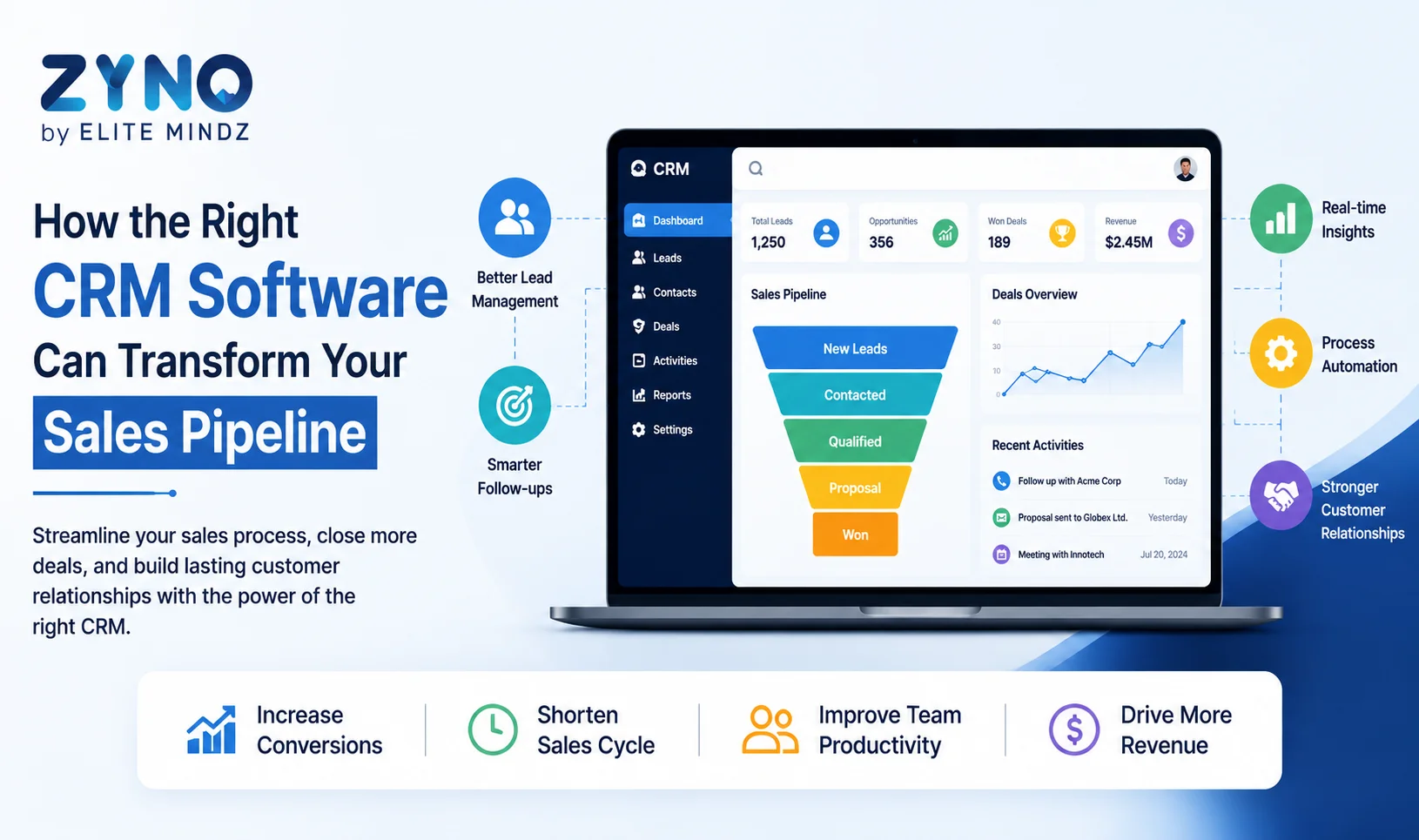
How the Right CRM Software Can Transform Your Sales Pipeline
Read More →
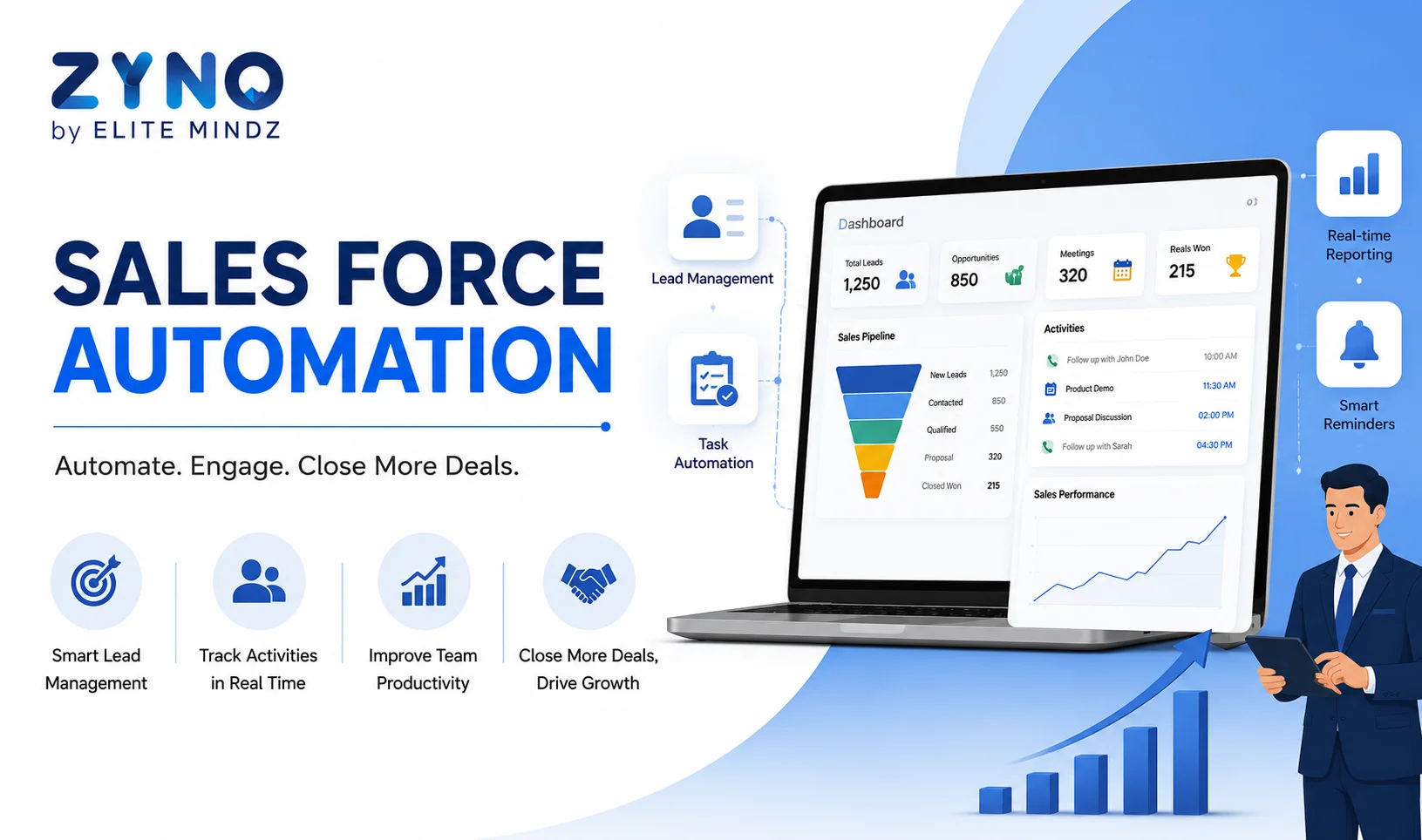
Sales Force Automation: Save Time, Close More Deals
Read More →
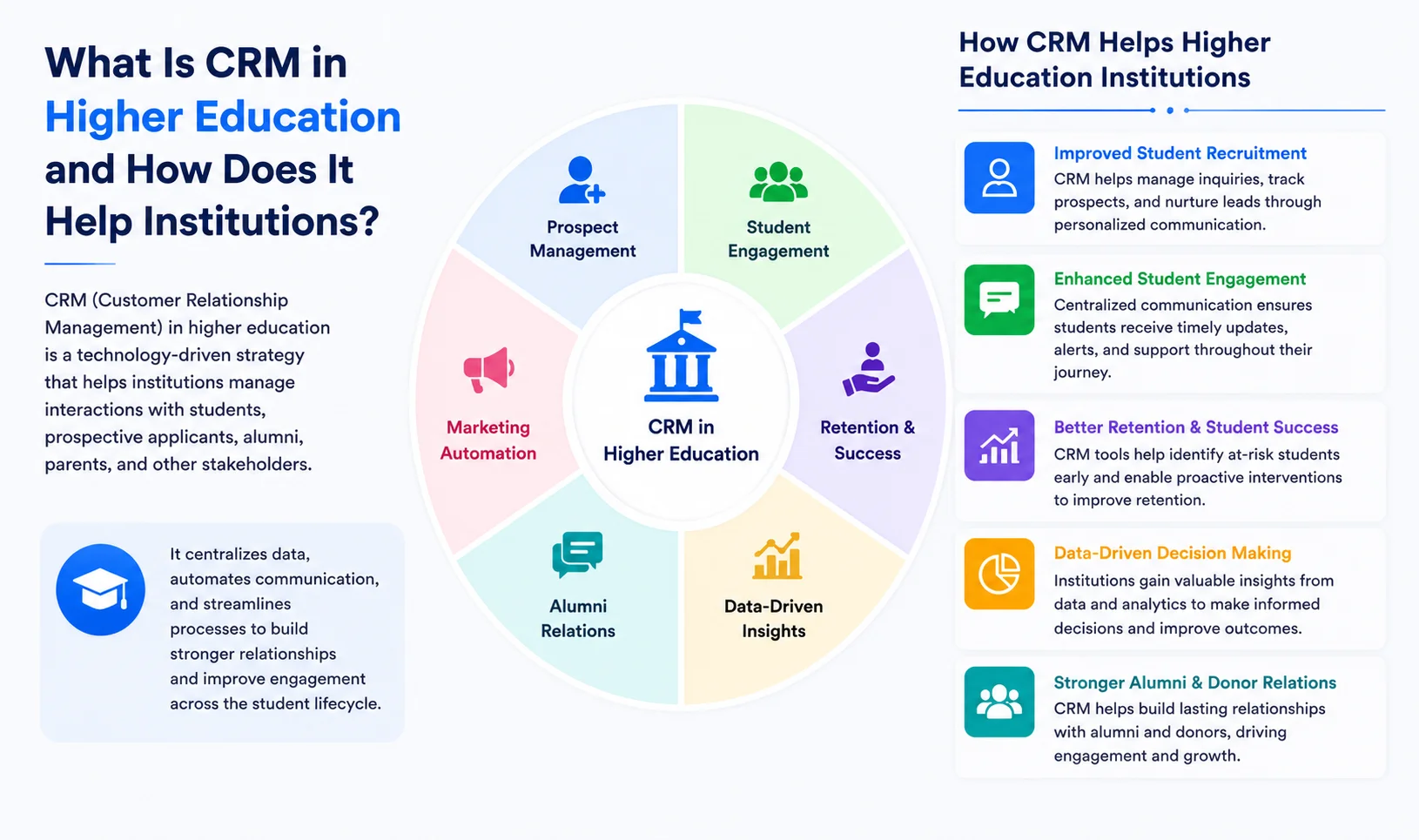
What Is CRM in Higher Education and How Does It Help Institutions?
Read More →
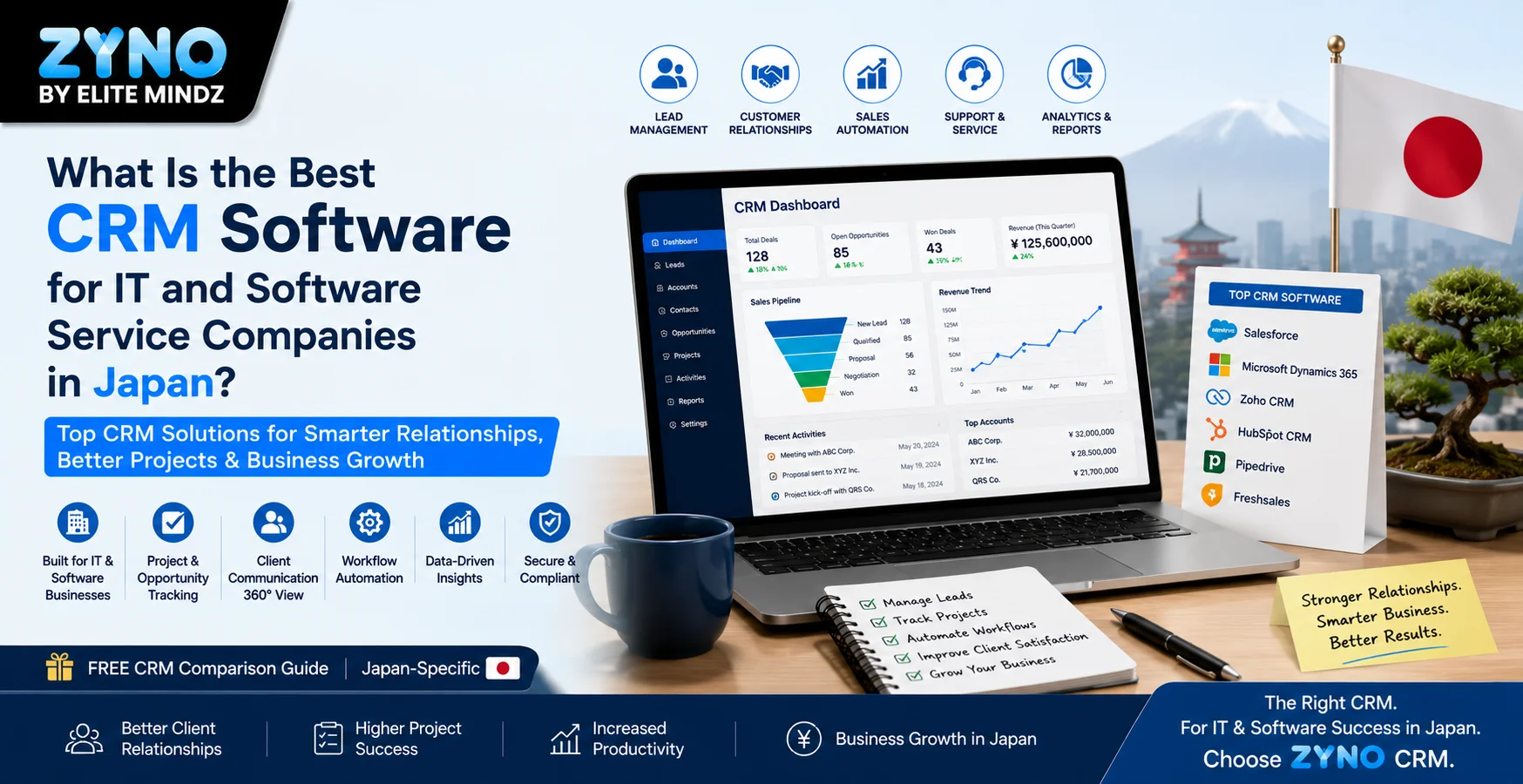
What Is the Best CRM Software for IT and Software Service Companies in Japan?
Read More →
AI-Based CRM in Kenya: Smarter Sales, Better Customer Engagement for All Businesses
Read More →
AI CRM Software in 2026: 8 Key Trends & Benefits Every Business Should Know (Updated)
Read More →
Omnichannel CRM Software India: The Complete Guide to Unified Customer Engagement (2026)
Read More →
What Is CRM (Customer Relationship Management)?
Read More →
What is Omnichannel CRM? Meaning, Benefits, and Use Cases
Read More →
What Is Sales Force Automation Software, and Why Do You Need It?
Read More →
How to Automate Sales Follow-Ups? A Complete Guide to Sales Automation
Read More →
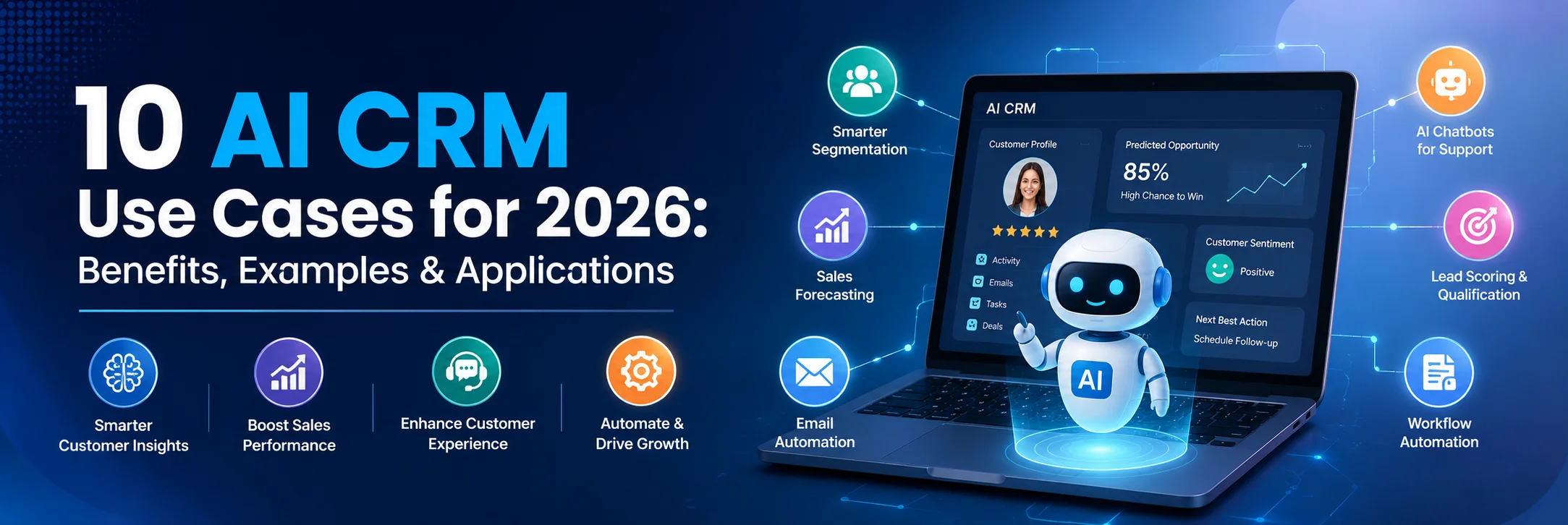
10 AI CRM Use Cases for 2026: Benefits, Examples & Applications
Read More →Partner with ZYNO by Elite Mindz to revolutionize how your business works. Fill out the form, and we’ll reach out with AI-powered solutions made just for you.
We use browser cookies to ensure you get the best experience on our website. Learn more
The form was submitted successfully!