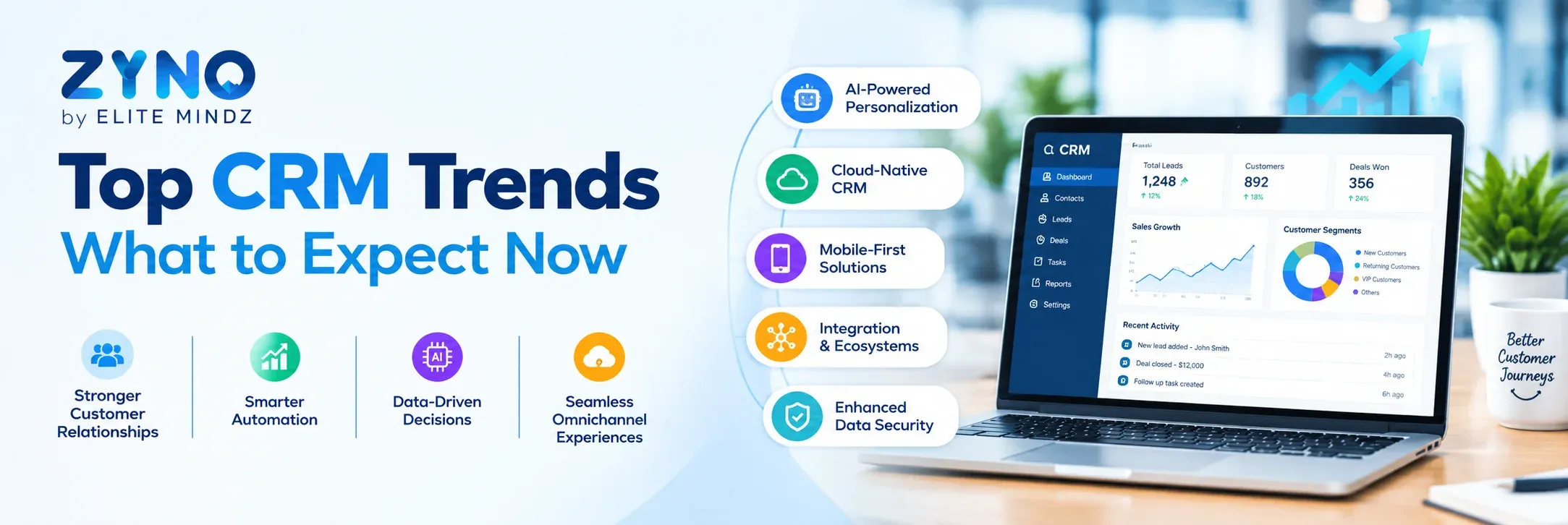
Top CRM Trends in 2025: What to Expect
Read More →

×
To analyze and fix CRM data gaps, audit records for missing, duplicate, outdated, and inconsistent data, then prioritize issues, standardize fields, validate records, enrich information, remove duplicates, assign data ownership, and continuously monitor CRM data quality for reliable business decisions.
Businesses using ZYNO Books cut accounting time by 70% and stay 100% ZATCA-compliant — automatically.
To analyze and fix CRM data gaps, businesses should identify missing and inaccurate records, audit data quality, remove duplicates, standardize fields, validate information, enrich incomplete records, and establish ongoing data governance. A structured approach helps keep CRM data accurate, complete, and reliable.
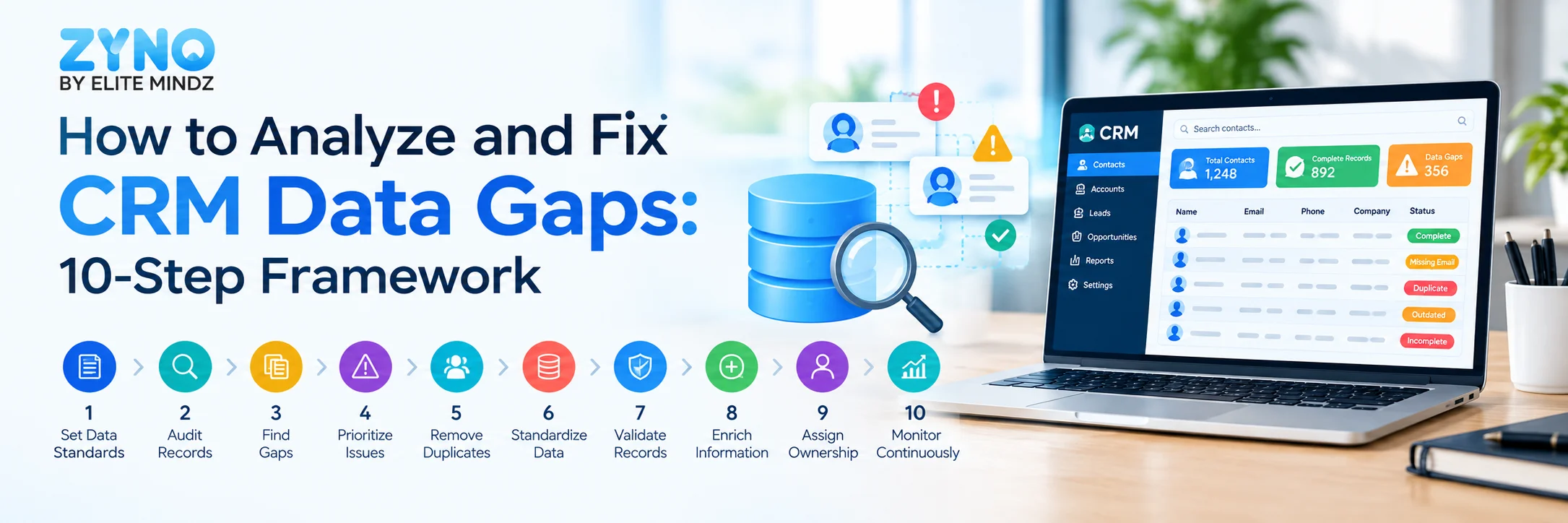
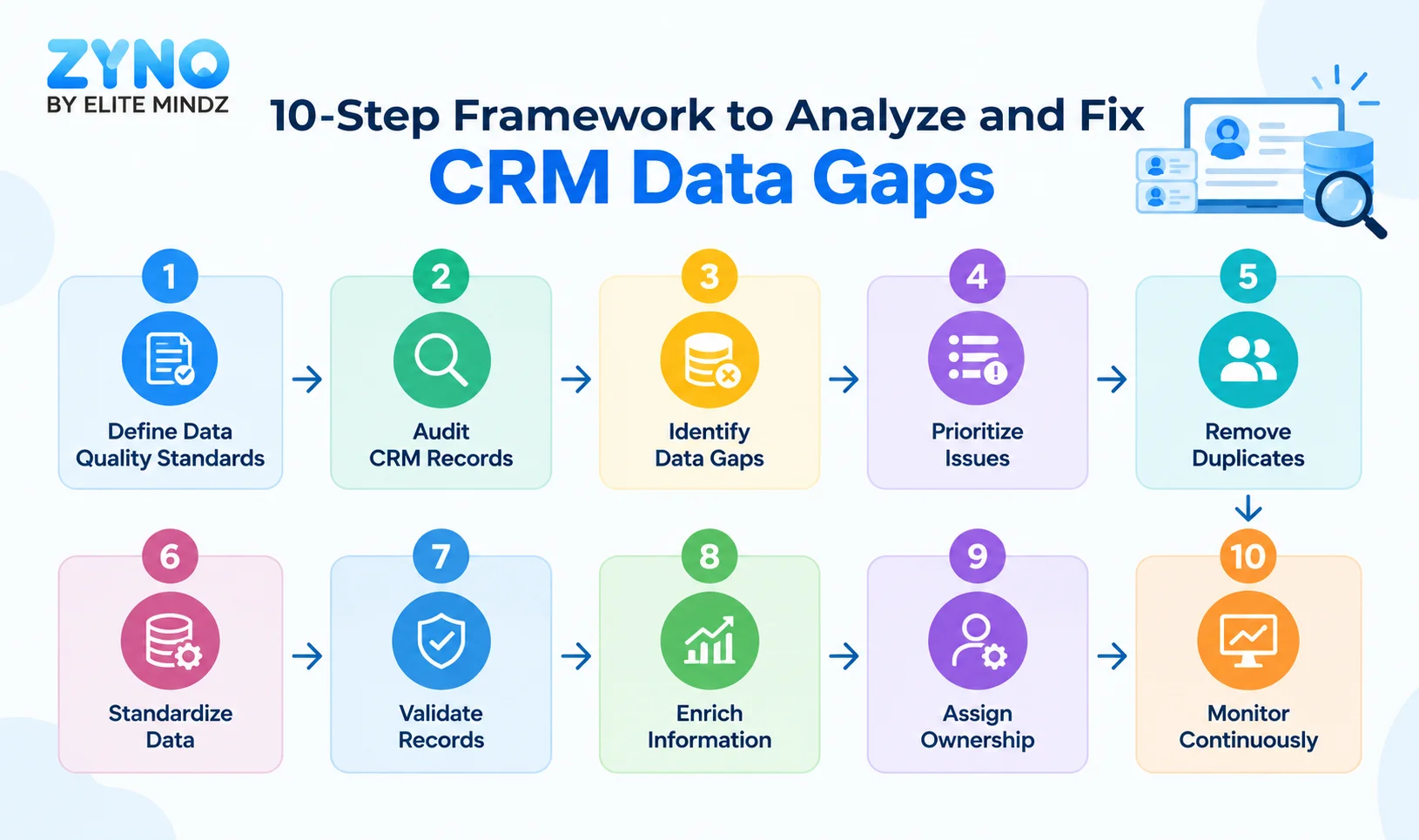
The 10-step framework covers the complete process: define data quality standards, audit CRM records, identify data gaps, prioritize issues, remove duplicates, standardize data, validate records, enrich missing information, establish ownership, and continuously monitor data quality. These steps help sales and marketing teams build a more reliable CRM database.
Poor CRM data quality can affect lead follow-ups, segmentation, reporting, forecasting, customer engagement, and sales decisions. Instead of treating data cleanup as a one-time task, businesses should use a repeatable process that continuously identifies and fixes data gaps before they impact revenue.
CRM data gaps are missing, incomplete, inaccurate, outdated, duplicated, or inconsistent information stored in a CRM database.
Common examples include:
A CRM database can contain thousands of records and still have poor CRM Data Quality.
The important question is not how much data you have, but whether it is complete, accurate, consistent, current, and useful for business decisions.
The framework combines four important areas:
Audit → Clean → Enrich → Govern
These four stages can be broken into 10 practical steps.

Do not begin by trying to review every record in your CRM.
Start with the records that have the greatest impact on revenue.
For example, review:
Sampling your highest-value records can quickly reveal whether important fields are missing or inconsistent.
For example, review 20 to 30 active opportunities and calculate how many have missing:
This gives you an initial picture of your CRM Data Quality without spending weeks auditing every record.
Once the sample is selected, calculate the percentage of records with missing information.
| CRM Field | Records Reviewed | Missing | Missing Rate |
|---|---|---|---|
| 30 | 3 | 10% | |
| Phone | 30 | 5 | 16.7% |
| Industry | 30 | 8 | 26.7% |
| Lead Source | 30 | 6 | 20% |
| Deal Value | 30 | 2 | 6.7% |
This simple exercise helps identify which CRM data gaps deserve immediate attention.
You can also create a CRM data quality score using dimensions such as completeness, accuracy, freshness, consistency, uniqueness, and validity.
The goal is to replace assumptions with measurable data.
Missing data is only one part of the problem.
You should also look for information that exists but can no longer be trusted.
Examples include:
For example:
United States
USA
US
may represent the same country but can produce inconsistent reporting if the CRM treats them as different values.
A proper CRM data audit should therefore evaluate both missing data and unreliable data.
Identify data gaps, manage customer records, automate workflows, and maintain accurate CRM data with a smarter solution built for modern businesses.
Stage 2: Deduplicate and Standardize CRM Records
Duplicate records are one of the most common CRM data quality issues.
The same customer might appear multiple times because different employees entered the information separately.
For example:
ABC Technologies
ABC Technology Pvt Ltd
ABC Technologies Private Limited
could all represent the same organization.
Duplicate records can create:
Start by defining matching rules using fields such as:
Then identify likely duplicates and merge them carefully while preserving important activity history.
Importantly, deduplication should not end with a one-time cleanup. Matching rules should also prevent new duplicates from entering the system.
After removing duplicates, standardize the remaining information.
Create consistent rules for:
Use standardized dropdowns and controlled values wherever possible.
For example, instead of allowing employees to manually enter different variations of an industry, provide a predefined list.
This improves data consistency, reporting accuracy, segmentation, and sales analysis.
Standardization also reduces the possibility of creating new duplicates later.
Once inaccurate and duplicate data has been addressed, focus on missing information.
Depending on your business model, useful enrichment fields may include:
For example, if your sales team needs company size to prioritize accounts, incomplete company-size fields create a significant CRM data gap.
Enrichment can help fill these gaps using trusted data sources.
However, enrichment should be controlled carefully.
An enrichment tool should not blindly create new records or overwrite verified information. Matching rules and field-level controls should determine whether information should be added, updated, or reviewed.
Manual data entry is one of the easiest ways for CRM data errors to occur.
Salespeople may forget to:
CRM automation can reduce this dependency on manual updates.
For example, workflows can automatically:
This is where modern CRM software becomes commercially valuable.
Instead of asking sales representatives to remember every administrative task, businesses can automate repetitive processes and keep customer information more consistent.
ZYNO CRM can help businesses centralize customer information, automate sales workflows, track activities, and improve visibility into sales operations.
Cleaning existing records does not solve the problem if bad information continues entering the database.
Create CRM data validation rules at the point of data entry.
For example:
Conditional required fields are especially useful because not every CRM field needs to be mandatory at every stage.
The objective is simple:
Prevent bad data from entering the CRM instead of constantly cleaning it later.
Someone should be responsible for maintaining CRM data integrity.
Depending on your organization, ownership can be assigned by:
Create clear responsibilities for important CRM objects and fields.
| Area | Owner | Review Frequency |
|---|---|---|
| Leads | Sales Operations | Weekly |
| Contacts | Sales Team | Weekly |
| Accounts | Account Managers | Monthly |
| Opportunities | Sales Managers | Weekly |
| Customer Data | CRM Admin | Monthly |
| Data Quality | RevOps/CRM Owner | Monthly |
Also maintain a simple data dictionary explaining what each important field means and which values are acceptable.
Without governance, even a clean CRM can gradually become unreliable again.
CRM Data Quality should be measured regularly rather than treated as a once-a-year cleanup project.
Track metrics such as:
Create recurring reviews so your team can identify problems early.
A practical cadence might include:
Weekly: Review critical sales records
Monthly: Check duplicates, missing fields, and data accuracy
Quarterly: Conduct a broader CRM data quality audit
This turns CRM data management into an ongoing operational process.
CRM Data Quality directly affects sales analytics and performance management.
If opportunity values are missing, revenue forecasts become less reliable.
If sales stages are inconsistent, pipeline reports become difficult to interpret.
If lead sources are incomplete, marketing attribution becomes weaker.
If customer information is outdated, sales representatives may struggle to personalize outreach.
Reliable CRM data analysis gives managers a stronger foundation for:
2. Pipeline analysis
5. Revenue reporting
7. Sales coaching
8. Territory management
This is why CRM data accuracy should be treated as part of the sales performance strategy.
Keep customer records accurate, reduce data gaps, automate sales processes, and manage your CRM more efficiently with a powerful CRM solution.
A successful CRM cleanup should produce more than a cleaner database.
It should change the way your organization manages information.
Do not make every field mandatory. Focus on information that directly affects sales, reporting, routing, or customer management.
Use workflows and automation to reduce manual CRM administration.
Use dropdowns, predefined values, validation rules, and naming conventions.
Prioritize active opportunities, important accounts, and recent leads.
Track completeness, duplicates, accuracy, freshness, and validity.
Make specific teams or individuals accountable for maintaining CRM Data Quality.
Data quality improves when maintenance becomes part of normal sales operations rather than an emergency cleanup exercise.
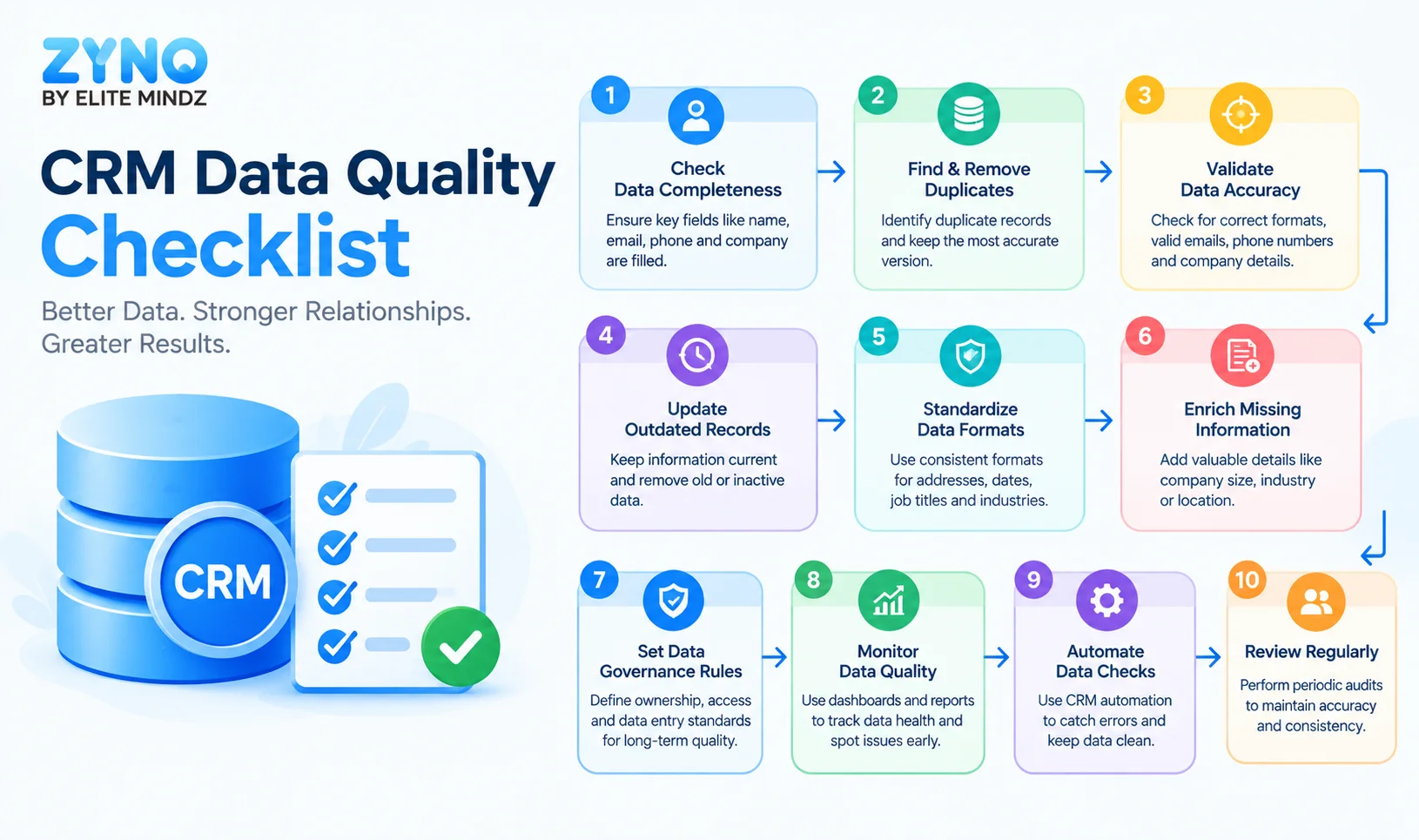
Before considering your CRM database healthy, check the following:

Yes, but CRM software should not be viewed as a magic solution for poor data.
The platform needs to support the processes that keep information accurate.
Important capabilities include:
ZYNO CRM brings customer relationship management together with analytics, automated workflows, sales performance tracking, reporting, and centralized customer information.
For businesses dealing with fragmented customer information, manual processes, inconsistent reporting, or limited sales visibility, these capabilities can help turn CRM data into a more useful operational asset.
Haan, bilkul. Last section ko aapke example jaisa FAQ + commercial conclusion banana better rahega. Main 10 FAQs rakhunga, aur answers mein CRM Data Quality, CRM data analysis, CRM data management, CRM data cleansing, CRM data validation jaise keywords naturally use karunga.
CRM data analysis is the process of reviewing customer, lead, contact, opportunity, and sales information to identify patterns, errors, missing values, duplicates, and performance gaps.
It typically involves checking data completeness, accuracy, consistency, freshness, and validity. Businesses can then use these insights to improve CRM data quality, sales reporting, forecasting, customer segmentation, and decision-making.
Start by auditing your highest-value records and identifying incomplete, outdated, duplicate, and inaccurate information.
Then use a structured CRM data cleansing process to remove duplicates, standardize formats, validate important fields, update outdated records, and enrich missing customer information.
The cleanup should be followed by validation rules and regular monitoring so that the same data problems do not return.
Begin by separating records into categories such as complete, incomplete, outdated, duplicate, and invalid.
Prioritize records that have the greatest impact on sales and customer relationships. Fix critical contact and opportunity information first, then standardize fields and enrich missing data.
Automation, validation rules, and regular CRM data quality checks can help maintain cleaner information after the initial cleanup.
Effective CRM data management requires clear data-entry standards, ownership, validation rules, regular audits, and ongoing monitoring.
Businesses should define which fields are required, how information should be entered, who owns specific CRM data, and how often records should be reviewed.
Using CRM automation can further reduce manual data entry and help keep customer and sales information consistent.
Common CRM data quality issues include:
Regular CRM audits can identify these problems before they affect sales reporting and customer engagement.
To improve CRM data accuracy, establish standardized data-entry rules and use validation controls for important fields.
You should also regularly identify duplicate records, update outdated information, review incomplete profiles, and monitor data-quality metrics.
Automated workflows can reduce manual errors by handling repetitive updates, lead assignments, reminders, and other CRM activities.
The ideal frequency depends on your data volume and sales activity.
A practical approach is to review important opportunities and leads weekly, conduct a broader CRM data quality audit monthly, and perform a more comprehensive database review quarterly.
Businesses with high-volume lead generation or frequent data changes may benefit from more frequent automated monitoring.
Yes. CRM automation can reduce many of the manual processes that create data gaps.
For example, automated workflows can assign leads, trigger follow-up reminders, update sales stages, flag incomplete records, and notify team members when important information is missing.
Automation works best when combined with clear validation rules and data governance.
Poor CRM data quality can lead to inaccurate forecasts, unreliable pipeline reports, missed follow-ups, poor lead prioritization, and incomplete sales-performance analysis.
When CRM information is accurate and complete, sales managers can make better decisions using reliable pipeline data, customer information, analytics, and performance reports.
Better data therefore supports both operational efficiency and sales growth.
Yes. Modern CRM software can provide centralized customer information, automated workflows, validation rules, analytics, reporting, dashboards, and sales-performance monitoring.
For businesses managing large customer databases or growing sales teams, these capabilities can reduce manual data-entry work and create more consistent CRM processes.
ZYNO CRM combines customer relationship management with CRM analytics, automation, sales performance tracking, reporting, and centralized customer information. This can help businesses move beyond simply storing customer records and use CRM data to support better sales decisions.
CRM data gaps are more than a database problem. Missing, duplicated, outdated, or inconsistent information can affect sales productivity, forecasting, reporting, customer engagement, and revenue decisions.
A structured approach makes the problem easier to manage.
Start by auditing your highest-value records. Measure missing fields, identify outdated information, remove duplicates, standardize records, and enrich important customer profiles.
Then introduce CRM data validation, automate repetitive data capture, establish clear ownership, and continuously monitor CRM Data Quality.
Read More:
CRM Strategy: Boost Lead Management, Retention & Business Growth
How CRM Software Increases Lead Conversion Rates
Best CRM Tool for Smarter Lead Management and Sales Automation
Top CRM Trends in 2025: What to Expect
Read More →
How to Choose the Best CRM Software in 2025
Read More →
Top CRM Software Solutions for Indian Businesses in 2025
Read More →
Best CRM Software for Small Businesses in Nigeria (2025)
Read More →
Best CRM Software for B2B Sales Teams in India (2025)
Read More →
Top CRM Providers in the UK (2025): A Deep Dive for Buyers
Read More →
Top 10 CRM Solutions for Growing Business in U.K (2025)
Read More →
Best CRM Software Providers in Germany (2026 Update)
Read More →
Best CRM Providers in Qatar (2025): Why ZYNO CRM Leads the Pack
Read More →
Best CRM Software Providers in Saudi Arabia (2025 Guide)
Read More →
Top US CRM Software Providers to Watch in 2025: Innovation Meets Scalability
Read More →
Top 10 CRM Providers in Japan Offering AI-Powered Solutions for Businesses
Read More →
Top CRM Solutions in the USA 2025: Boost Customer Engagement and Drive Sales Growth
Read More →
Best CRM Software Providers in Italy to Transform Customer Engagement (2025)
Read More →
Best CRM Software for European Countries (2025) A Complete Guide with ZYNO CRM
Read More →
Best CRM Tool for Smarter Lead Management and Sales Automation
Read More →
Best CRM Software in Dubai, UAE 2026 ZYNO CRM
Read More →Best CRM Software in India- ZYNO CRM
Read More →CRM Software Development Services to Boost Sales and Productivity
Read More →
Benefits of CRM Software for Small Business: The Complete 2026 Guide
Read More →Best CRM Software in India for Small and Large Businesses
Read More →
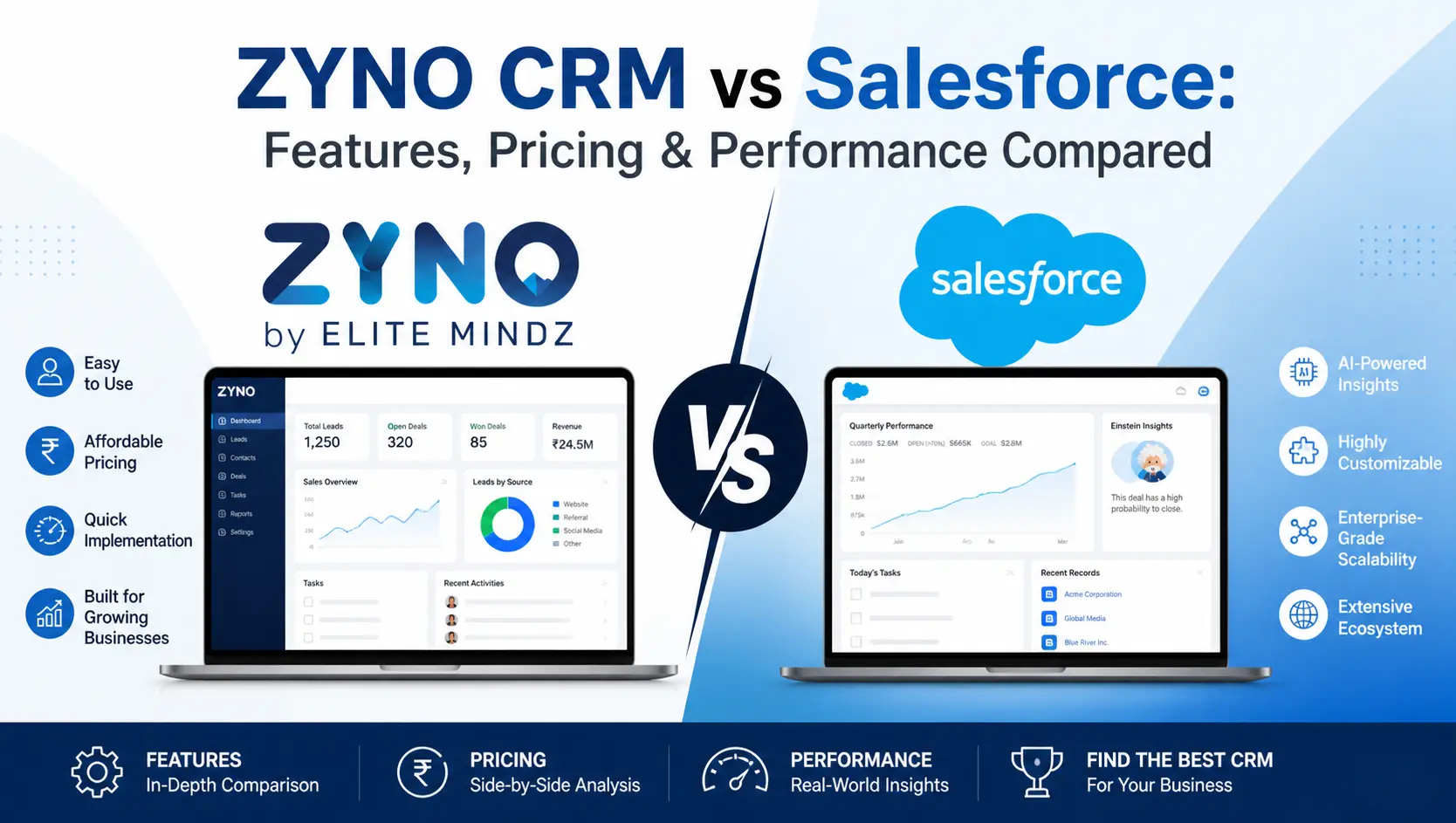
ZYNO CRM vs Salesforce: Features, Pricing & Performance Compared
Read More →
CRM Implementation Guide for Startups and SMEs
Read More →
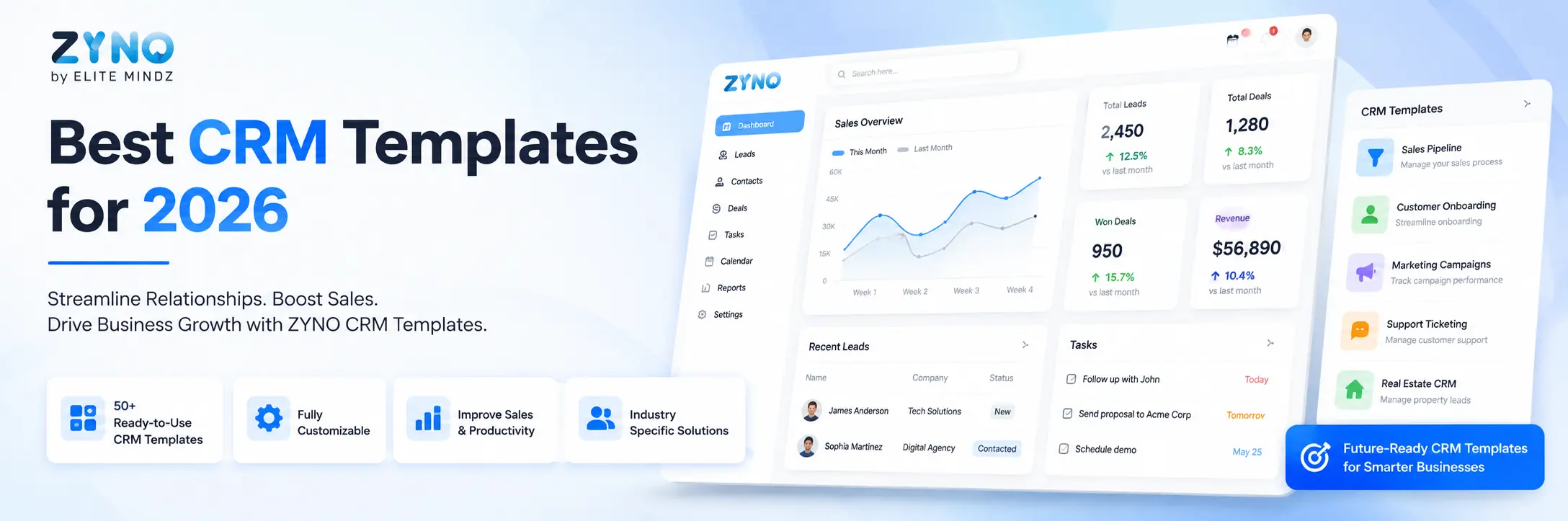
Best CRM Templates for 2026
Read More →
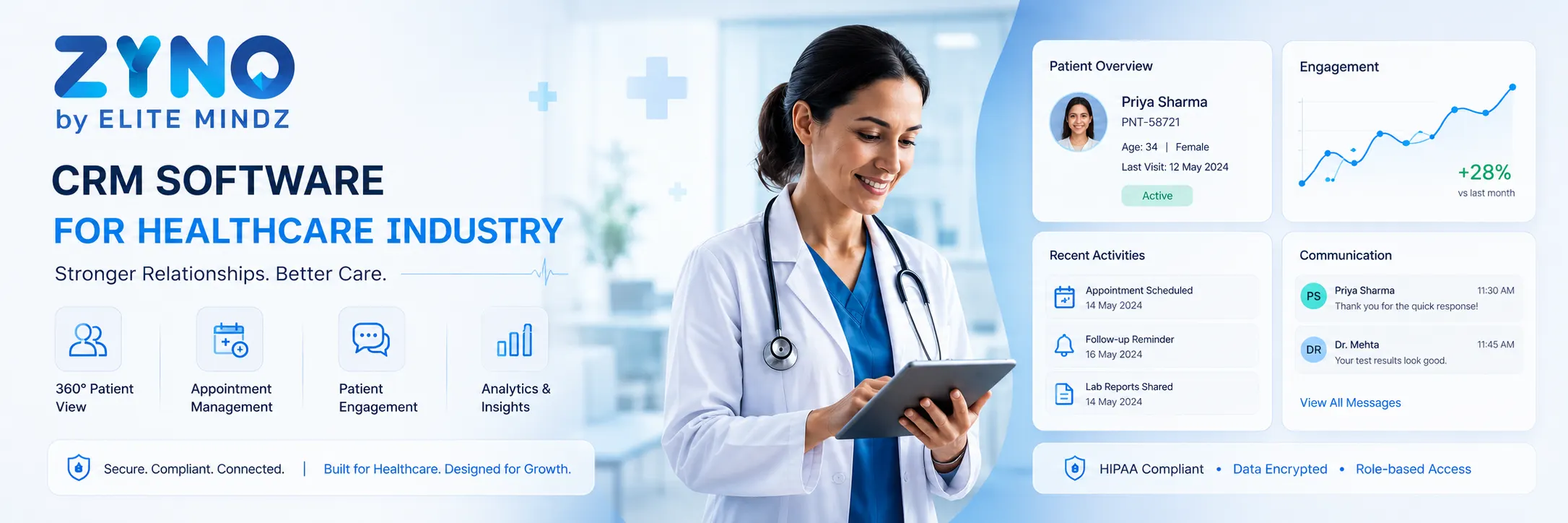
Best CRM Software for Healthcare Industry in 2026
Read More →
Best Zoho Alternative CRM Software for Small Businesses in 2026
Read More →
Top 10 Affordable HubSpot Alternative CRM Software in 2026
Read More →
Top 11 CRM Software for the Banking Industry in 2026
Read More →
Best and Easy Customer Relationship Management Software in Kenya
Read More →
CRM Strategy for Lead Management, Customer Retention & Growth
Read More →
Zoho CRM vs ZYNO CRM: A Detailed Comparison of CRM Software
Read More →
Complete Guide to Sales Pipeline Management: Strategies, Stages, and Tools
Read More →
How CRM Software Increases Lead Conversion Rates
Read More →
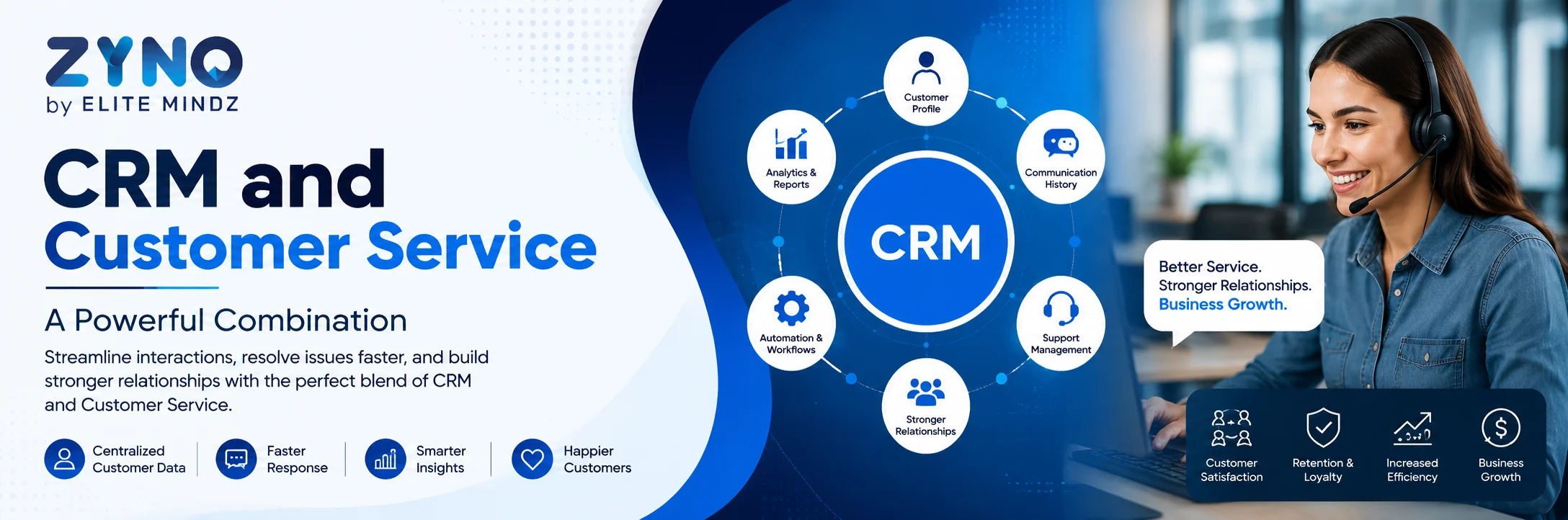
CRM and Customer Service: A Powerful Combination
Read More →
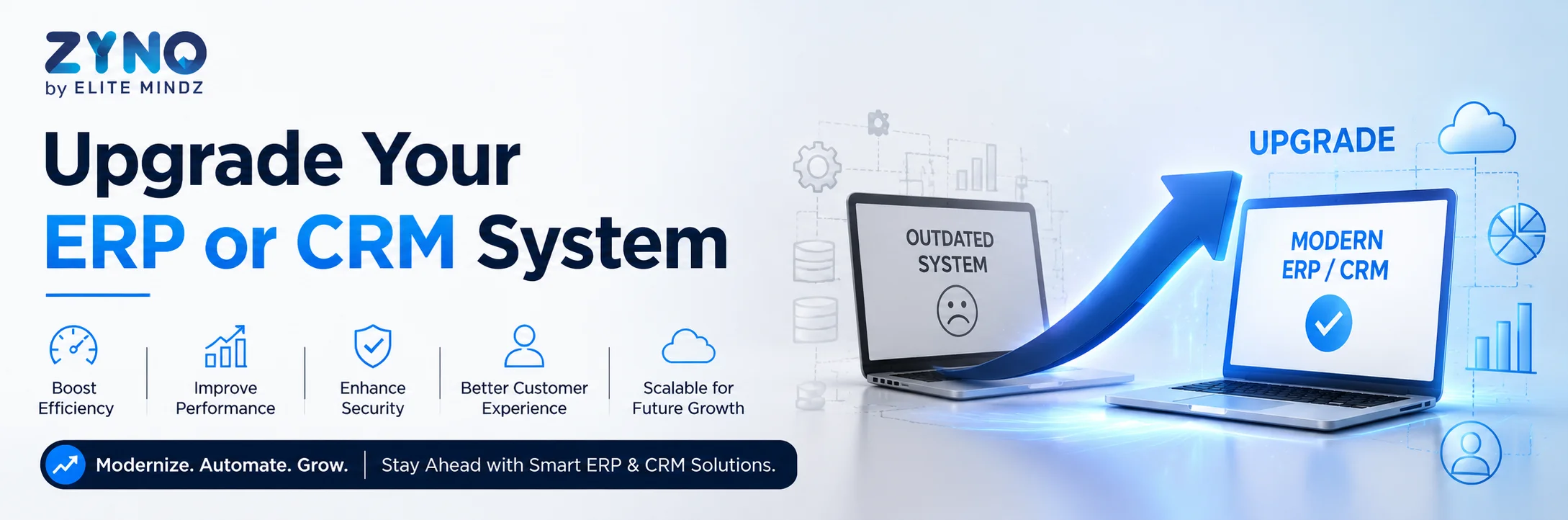
Signs It's Time to Upgrade Your ERP or CRM System
Read More →
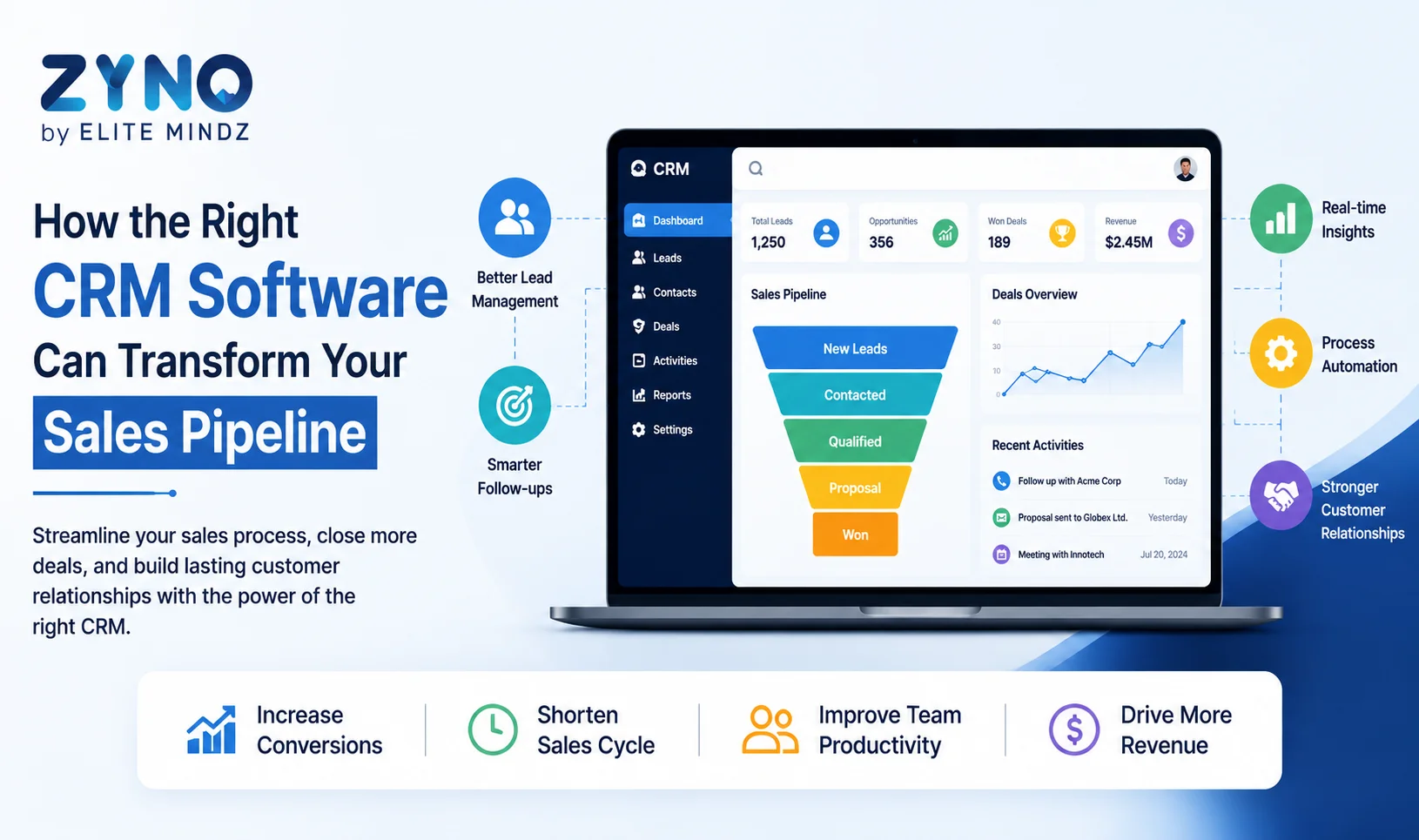
How the Right CRM Software Can Transform Your Sales Pipeline
Read More →
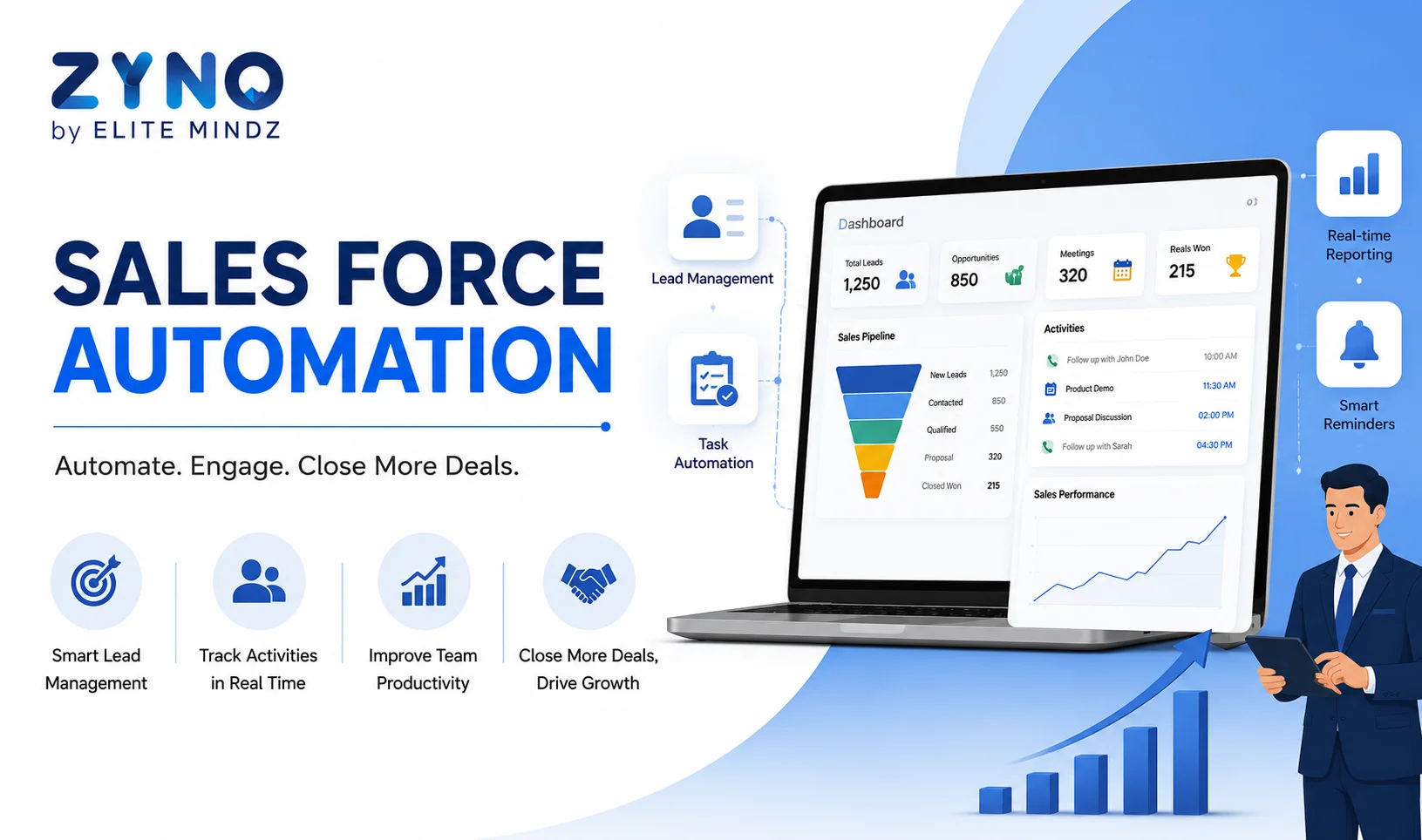
Sales Force Automation: Save Time, Close More Deals
Read More →
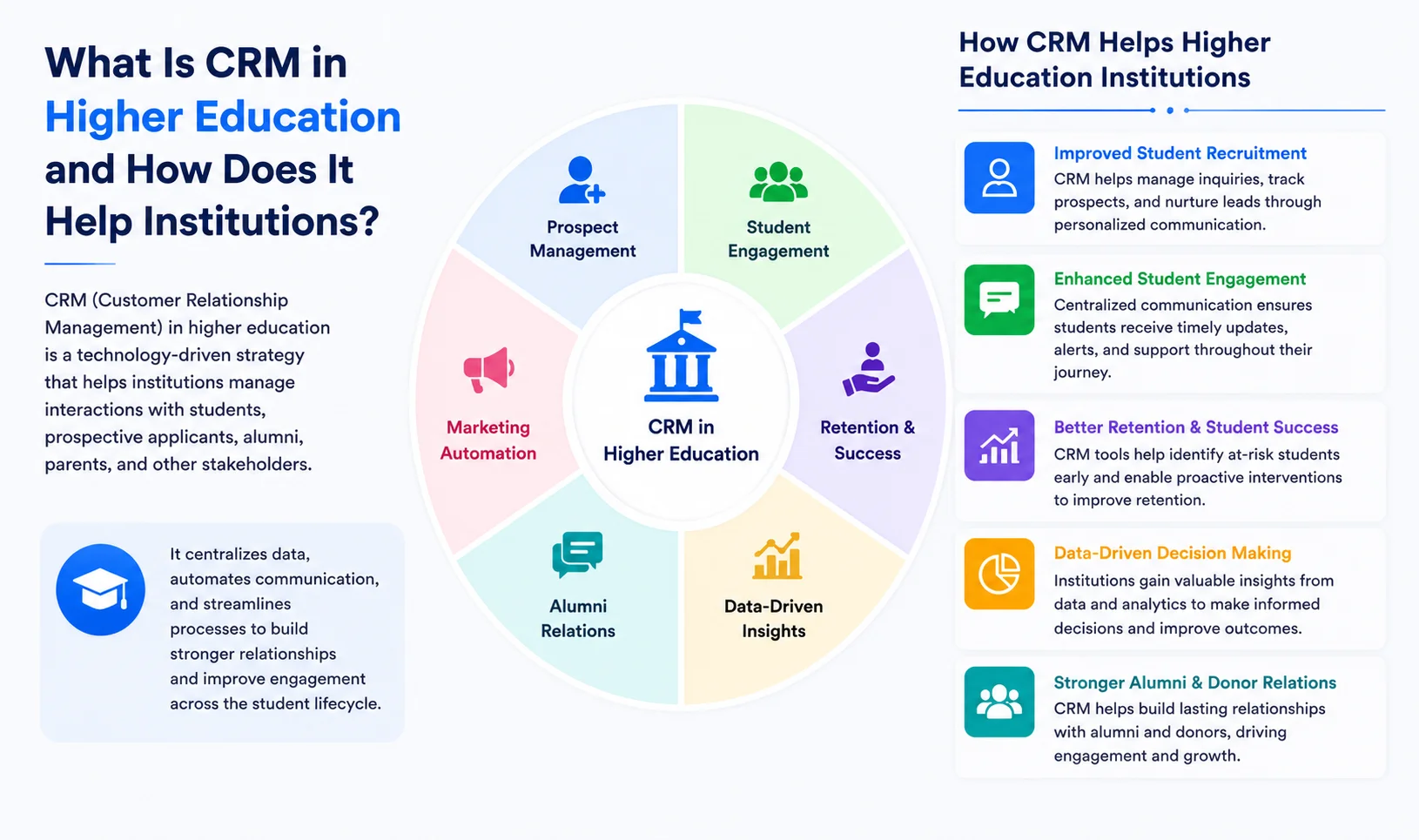
What Is CRM in Higher Education and How Does It Help Institutions?
Read More →
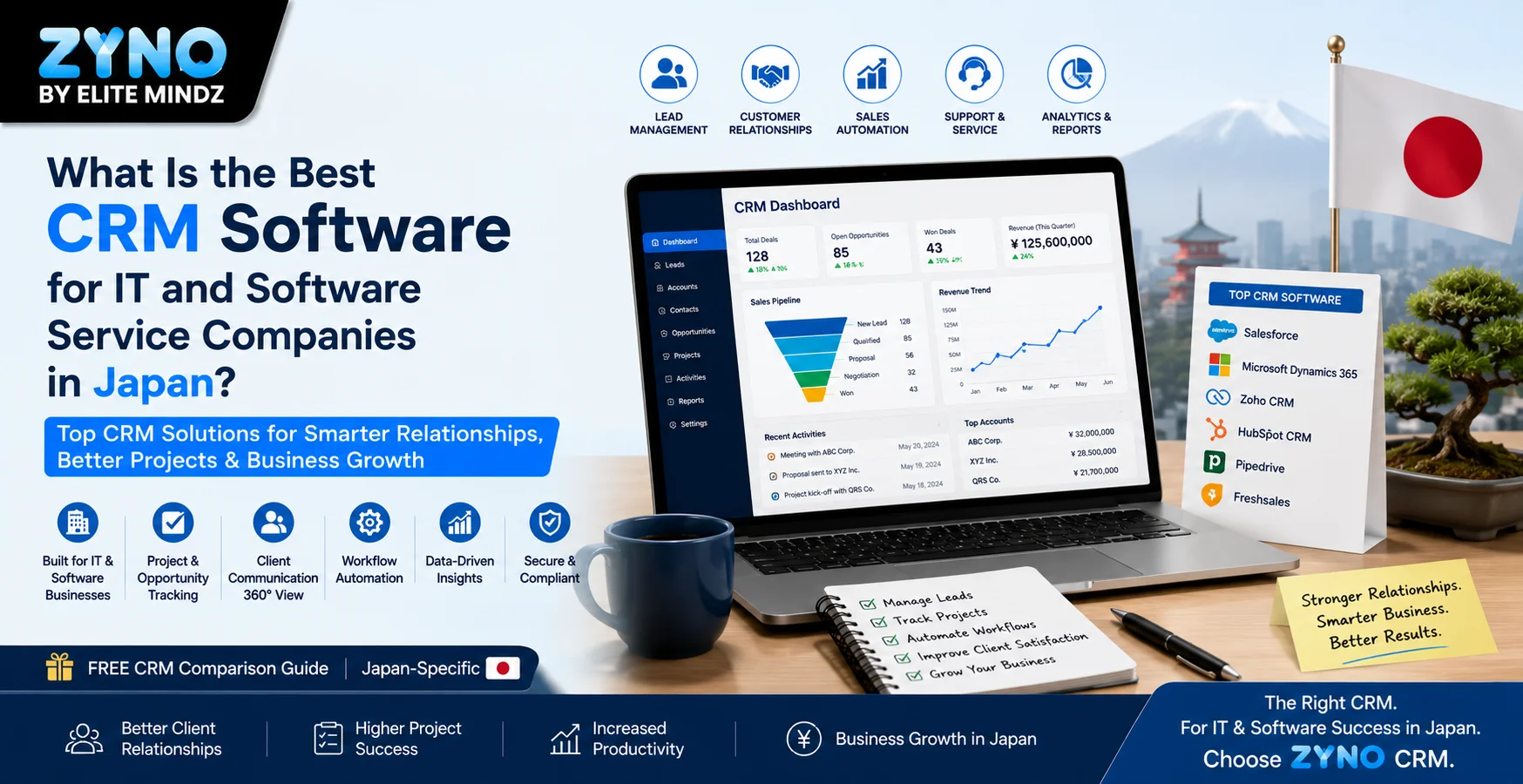
What Is the Best CRM Software for IT and Software Service Companies in Japan?
Read More →
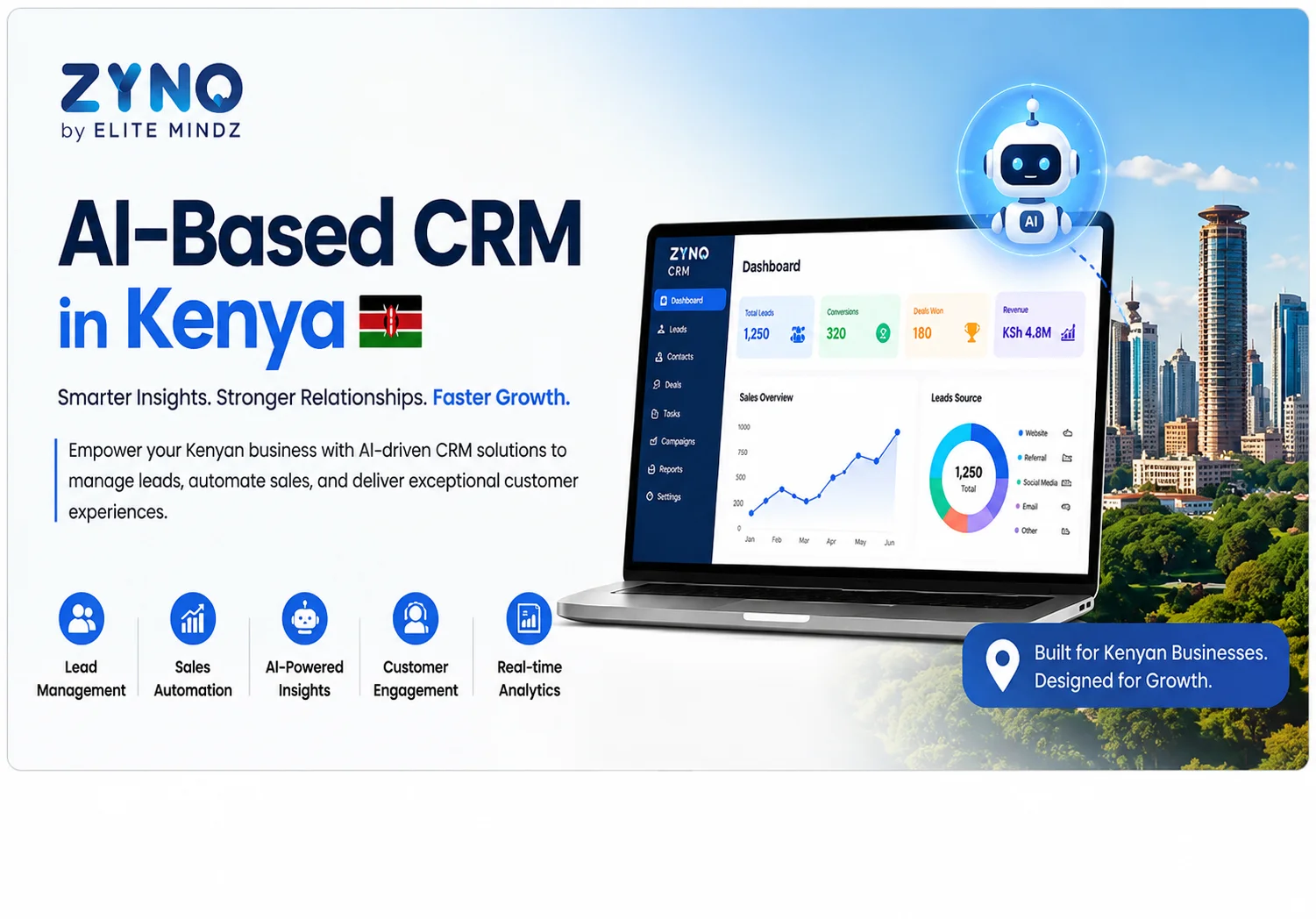
AI-Based CRM in Kenya: Smarter Sales, Better Customer Engagement for All Businesses
Read More →
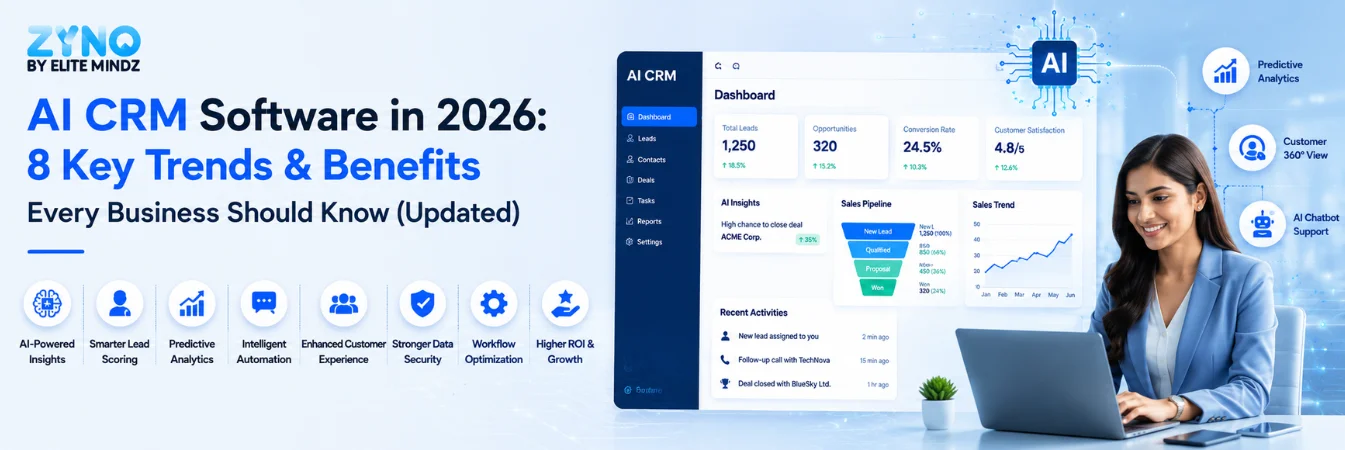
AI CRM Software in 2026: 8 Key Trends & Benefits Every Business Should Know (Updated)
Read More →
Omnichannel CRM Software India: The Complete Guide to Unified Customer Engagement (2026)
Read More →
What Is CRM (Customer Relationship Management)?
Read More →
What is Omnichannel CRM? Meaning, Benefits, and Use Cases
Read More →
What Is Sales Force Automation Software, and Why Do You Need It?
Read More →
How to Automate Sales Follow-Ups? A Complete Guide to Sales Automation
Read More →
10 AI CRM Use Cases for 2026: Benefits, Examples & Applications
Read More →
Best CRM Software in Kenya for Small Businesses in 2026
Read More →
20 Best CRM Software in Japan (2026): Features, Pricing & Comparison
Read More →
Top 20 Sales Enablement Tools: The Ultimate Guide for Sales Teams
Read More →
Customer Journey Orchestration: The Definitive Guide to Personalized Customer Experiences
Read More →
Best Mobile CRM Apps 2026: Top 10 Compared, Ranked, and Priced
Read More →
CRM Migration: A Step-by-Step Guide to a Smooth Transition [With Best Practices]
Read More →
Best CRM for Lead Management in 2026: Compare Lead Tracking & Automation
Read More →
How to Analyze and Fix CRM Data Gaps: 10-Step Framework
Read More →Partner with ZYNO by Elite Mindz to revolutionize how your business works. Fill out the form, and we’ll reach out with AI-powered solutions made just for you.
We use browser cookies to ensure you get the best experience on our website. Learn more
The form was submitted successfully!