The Ultimate Guide to Managing Your Business with ZYNO Books
Read More →

×
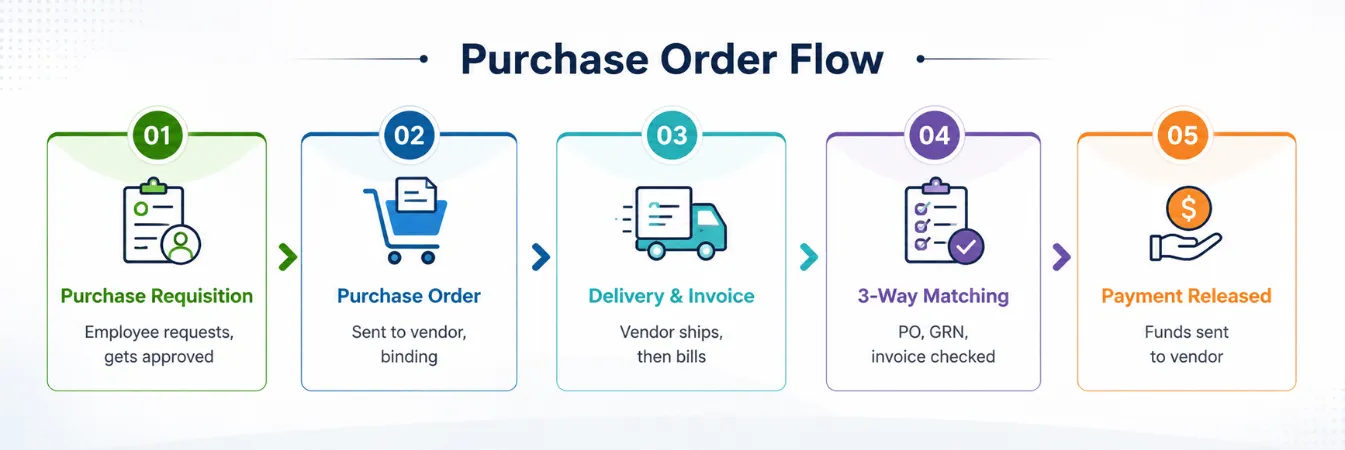
A purchase requisition is an internal request asking approval to buy something. A purchase order is the external document sent to a vendor to place that order, becoming binding once accepted. An invoice is issued by the vendor after delivery, requesting payment for what was ordered.
Businesses using ZYNO Books cut accounting time by 70% and stay 100% ZATCA-compliant — automatically.
A purchase requisition, a purchase order, and an invoice look similar on paper all three list items, quantities, and amounts. But they sit at three completely different stages of the buying cycle, get created by three different people, and carry three different levels of legal weight. Mixing them up is one of the most common and costly mistakes procurement and finance teams make.
If you've ever wondered why your finance team insists on a PO number before approving payment, or why an employee's request to "buy 10 laptops" isn't the same as a legally binding order, this guide breaks down exactly where each document fits, how they connect, and what happens when businesses skip one of them.
In short: a requisition asks permission, a purchase order places the order, and an invoice asks for payment. One flow into the next a requisition doesn't go to a vendor, and a vendor never sees your internal approval trail, only the PO that comes out of it.
A purchase requisition is the starting point of any structured buying process. It's raised internally by an employee, a department head, or a project manager whenever the business needs to buy something it doesn't already have budget clearance for on a recurring basis.
Think of it as a formal version of asking your manager, "Can I buy this?" Before any vendor is contacted, before any price is finalized, the requisition exists purely to get internal sign-off.
The requester creates it; a supervisor, department head, or budget owner approves it. Many Indian SMEs skip this step entirely for low-value purchases of office snacks, stationery but for anything crossing a spend threshold, a requisition is what stops one employee from single-handedly committing company money without oversight.
Without a requisition stage, purchasing becomes a WhatsApp message and a hope that the invoice matches what was actually needed. A requisition creates the first checkpoint: it forces someone to justify the spend before a vendor is even contacted, which is the cheapest point in the entire cycle to catch an unnecessary or duplicate purchase.
Once a requisition is approved, the purchasing or procurement team converts it into a purchase order (PO) , the document that actually goes out to the vendor. This is where the internal request becomes an external commitment.
A PO specifies exactly what's being bought, at what price, in what quantity, and by when it needs to arrive. Once the vendor accepts it by signature, written confirmation, or simply by fulfilling the order it becomes a legally binding contract that both sides are expected to honor.
A purchase order is the control point of the entire cycle. It's what finance teams reference during audits, what procurement teams track for outstanding commitments, and what accounts payable matches against the invoice before releasing payment. No PO usually means no accountability trail which is exactly where duplicate payments and disputed orders come from.
An invoice is issued by the vendor, not the buyer, and it comes after the goods or services have been delivered. Its only job is to request payment. Unlike a PO, an invoice by itself isn't a contract, it's a one-sided bill referencing the agreement that was already made through the PO.
The invoice is where the transaction gets settled financially and it's also where mismatches surface. If the invoice quantity, price, or GST doesn't match the PO and the actual goods received, that's a red flag finance teams are trained to catch before releasing payment.
| Factor | Purchase Requisition | Purchase Order | Invoice |
|---|---|---|---|
| Raised by | Employee/Department | Buyer's purchasing team | Vendor |
| Sent to | Internal approver | External vendor | Buyer |
| Purpose | Request permission to buy | Confirm and place the order | Request payment |
| Timing | Before vendor contact | Before delivery | After delivery |
| Legally binding? | No | Yes, once vendor accepts | No (it's a payment demand, not a contract) |
| Visible to vendors? | No, internal only | Yes | Yes |
| Triggers payment? | No | No | Yes |
| Contains GST/HSN details? | Rarely | Yes (mandatory for GST compliance) | Yes |

These three documents aren't independent; they're sequential checkpoints in the same process, and each one exists to validate the one before it.
Skip the requisition, and you lose internal oversight before money gets committed. Skip the PO, and you lose the legal and pricing safeguard before goods are even ordered. Skip matching the invoice against both, and you're paying on trust alone.
Not every purchase needs the full three-document chain, forcing it everywhere just adds friction. Here's how most well-run finance teams draw the line:
Skip the formal chain when:
Use a requisition + PO, but relax on formality when:
Enforce the full requisition → PO → invoice → 3-way match chain when:
The real question isn't "should we always use all three" it's "how much risk does this specific purchase carry, and does the paperwork match that risk." A ₹500 stationery order and a ₹5 lakh raw material order shouldn't go through the identical process.
Generic global guides on this topic rarely mention what actually trips up Indian SMEs: GST compliance.
When a purchase order is raised without HSN/SAC codes, or when the requisition-to-PO-to-invoice trail is broken, it doesn't just create an internal accounting headache it directly complicates GSTR reconciliation and can hold up input tax credit (ITC) claims. Under Section 194Q, TDS applicability on purchases above the threshold also needs to be tracked consistently from the PO stage through to the invoice, not bolted on at the end.
This is where most manual, spreadsheet-based systems fall apart: a requisition raised in one email thread, a PO drafted in Word, and an invoice that arrives with mismatched GST fields. None of these gaps show up until it's time to file returns and by then, they're expensive to fix.
Businesses that treat these three documents as interchangeable or skip stages entirely tend to run into the same problems repeatedly:
Manually juggling requisition approvals in one tool, purchase orders in another, and invoice matching in a spreadsheet is exactly how gaps creep in. ZYNO Expenz, Elite Mindz's AI-powered expense and purchase management platform built for Indian SMEs, keeps requisitions, GST-ready purchase orders, and invoice matching inside a single connected workflow with configurable approval thresholds so low-value requests move fast while larger purchases get the scrutiny they need.
Instead of chasing down which requisition led to which PO led to which invoice, teams get a live trail from the first request through to final payment, with automatic 3-way matching against goods receipt notes.
Q1. What is the difference between a purchase requisition and a purchase order?
A purchase requisition is an internal request for approval to buy something; it never goes to a vendor. A purchase order is the external document sent to the vendor once that request is approved, and it becomes legally binding once accepted.
Q2. What is the difference between a purchase order and an invoice?
A purchase order is issued by the buyer before delivery to place an order. An invoice is issued by the vendor after delivery to request payment. A PO authorizes a purchase; an invoice bills for it.
Q3. Which document comes first requisition, PO, or invoice?
The purchase requisition always comes first, followed by the purchase order once approved, and finally the invoice once the vendor delivers the goods or service.
Q4. Is a purchase requisition legally binding?
No. A requisition is purely an internal approval document. It creates no obligation to any vendor. Only the purchase order, once accepted by the vendor, becomes legally binding.
Q5. Can a business skip the purchase requisition step?
Yes, for low-value or routine purchases many businesses skip formal requisitions and go straight to a PO or even a direct invoice. For higher-value or first-time vendor purchases, skipping this step removes an important internal control.
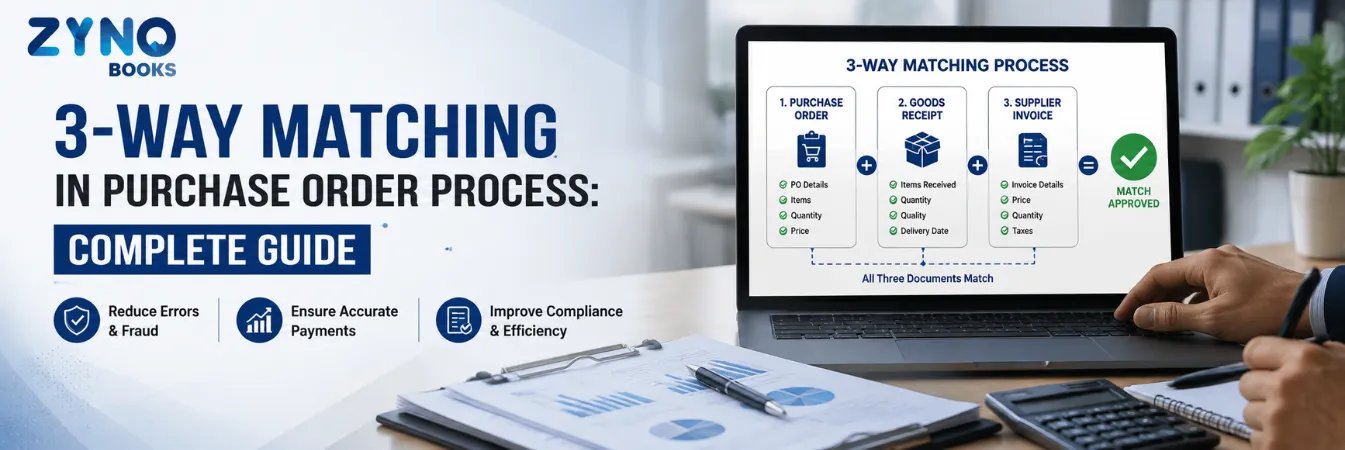
Q6. What is 3-way matching?
3-way matching is the process of checking the purchase order, the goods receipt note (GRN), and the vendor's invoice against each other before releasing payment ensuring what was ordered, received, and billed all align.
Q7. Why is the PO number important on an invoice?
The PO number is what allows the buyer's finance team to trace the invoice back to the original approved order, making 3-way matching and GST reconciliation possible. An invoice without a PO reference takes significantly longer to verify and process.
Q8. Do small businesses in India need all three documents?
Even small businesses benefit once they're dealing with multiple vendors or recurring purchases. Beyond internal control, having a proper requisition-to-PO-to-invoice trail with correct HSN/SAC codes keeps GST input tax credit claims clean and audit-ready something informal WhatsApp or verbal orders simply can't provide.
A purchase requisition, a purchase order, and an invoice aren't three versions of the same document they're three distinct checkpoints, each catching a different kind of risk. The requisition stops unauthorized spend before it starts. The PO locks in pricing and terms before goods move. The invoice, matched properly against both, is what confirms you're paying for exactly what was ordered and received.
For Indian businesses, getting this chain right also means building GST, HSN/SAC, and TDS compliance into the process from the requisition stage onward not fixing it at reconciliation time. Whether you're running a handful of purchases a month or managing hundreds across departments, the fix is the same: standardized documents, clear thresholds for when each one is required, and a system like ZYNO Expenz that connects all three instead of tracking them separately
The Ultimate Guide to Managing Your Business with ZYNO Books
Read More →
Why Is 206CR of Income Tax Act Important for Businesses in India?
Read More →The Best Accounting Software in Saudi Arabia
Read More →
Managing Multi-Country Taxes Made Easy with ZYNO Books Integrations
Read More →
Why TRN Validation is Essential for VAT Compliance in the UAE
Read More →
Best Accounts Payable Automation Software
Read More →Best Cloud Accounting Software in Kenya with M-Pesa Integration (2026) - eTIMS Compliant
Read More →Ultimate Cloud Accounting Software Guide That Saves Businesses 15+ Hours Weekly
Read More →ZATCA E-Invoicing Saudi Arabia - Complete Business Guide 2026
Read More →Cloud Accounting vs Desktop Accounting - Which Is Best for Your Business?
Read More →
Zyno Books: Best ZATCA-Approved Accounting Software in Saudi Arabia
Read More →
Best Tally Alternative in India (2026) — 6 Options Compared + Honest Pros & Cons
Read More →
Pin to Pin Distance GST: Free E-Way Bill Calculator, Validity & Penalty Guide (2026)
Read More →
Best Small Business Accounting Software in 2026: Complete Guide
Read More →
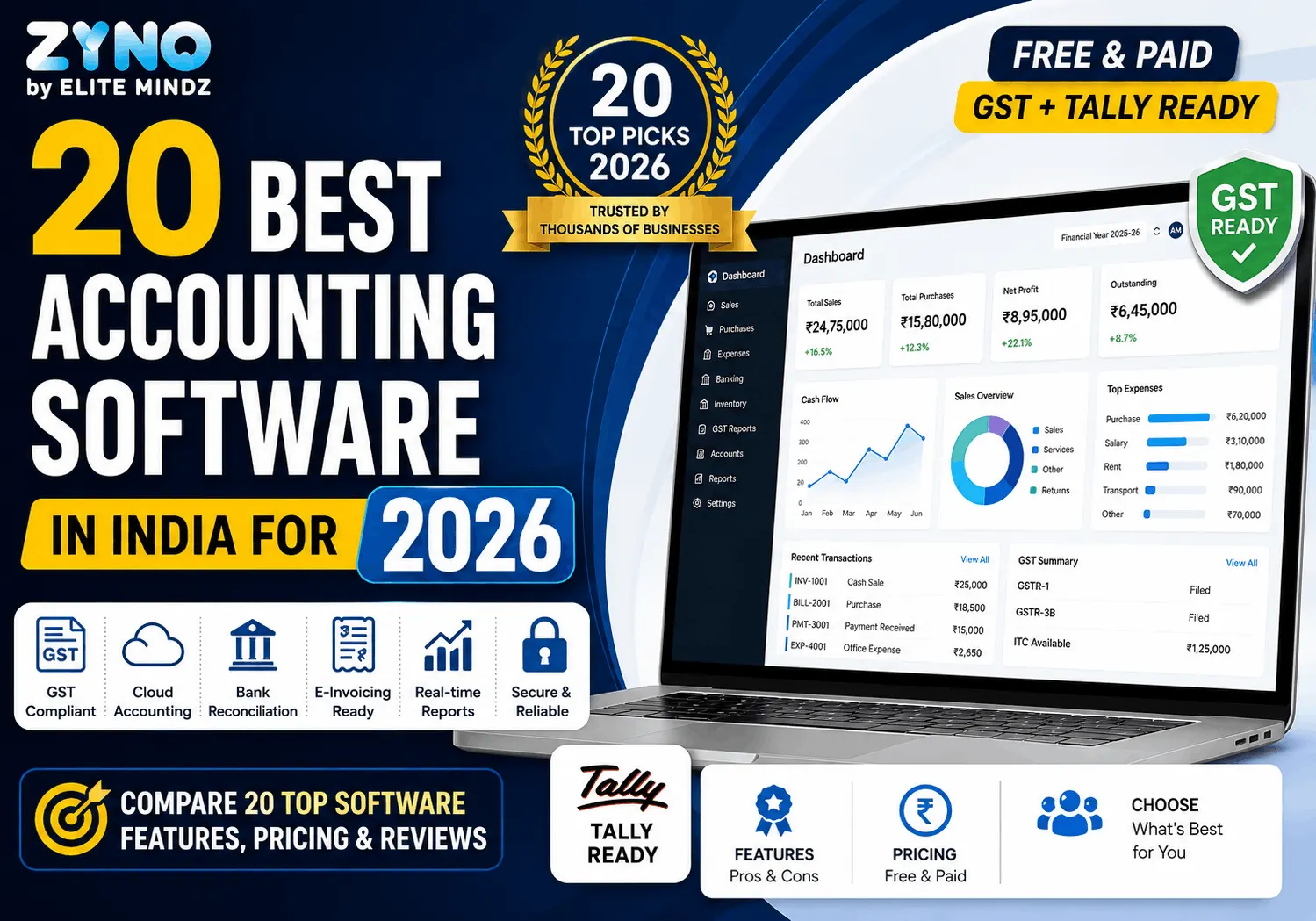
20 Best Accounting Software in India for 2026 - Free & Paid (GST + Tally Ready)
Read More →
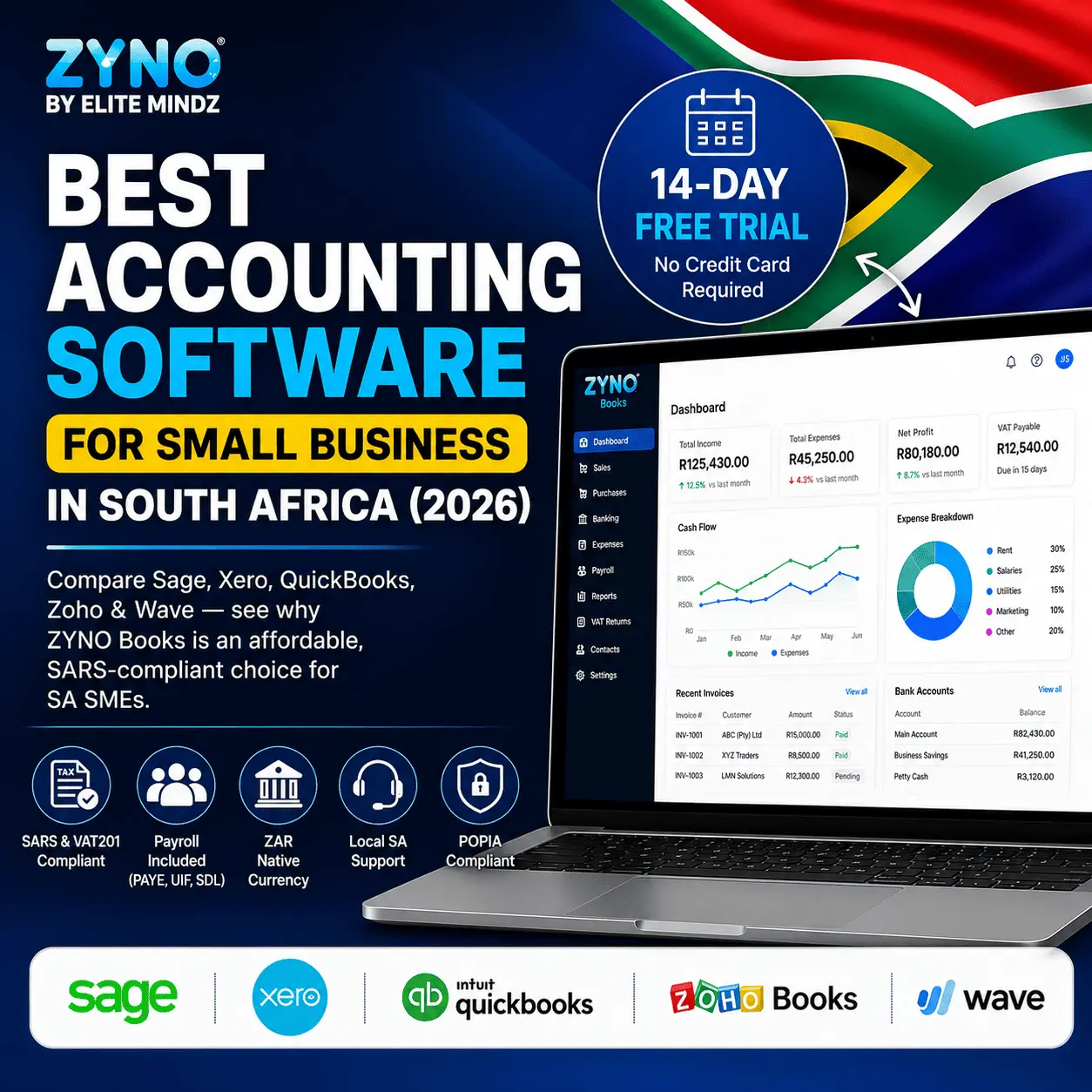
Best Accounting Software for Small Business in South Africa (2026)
Read More →
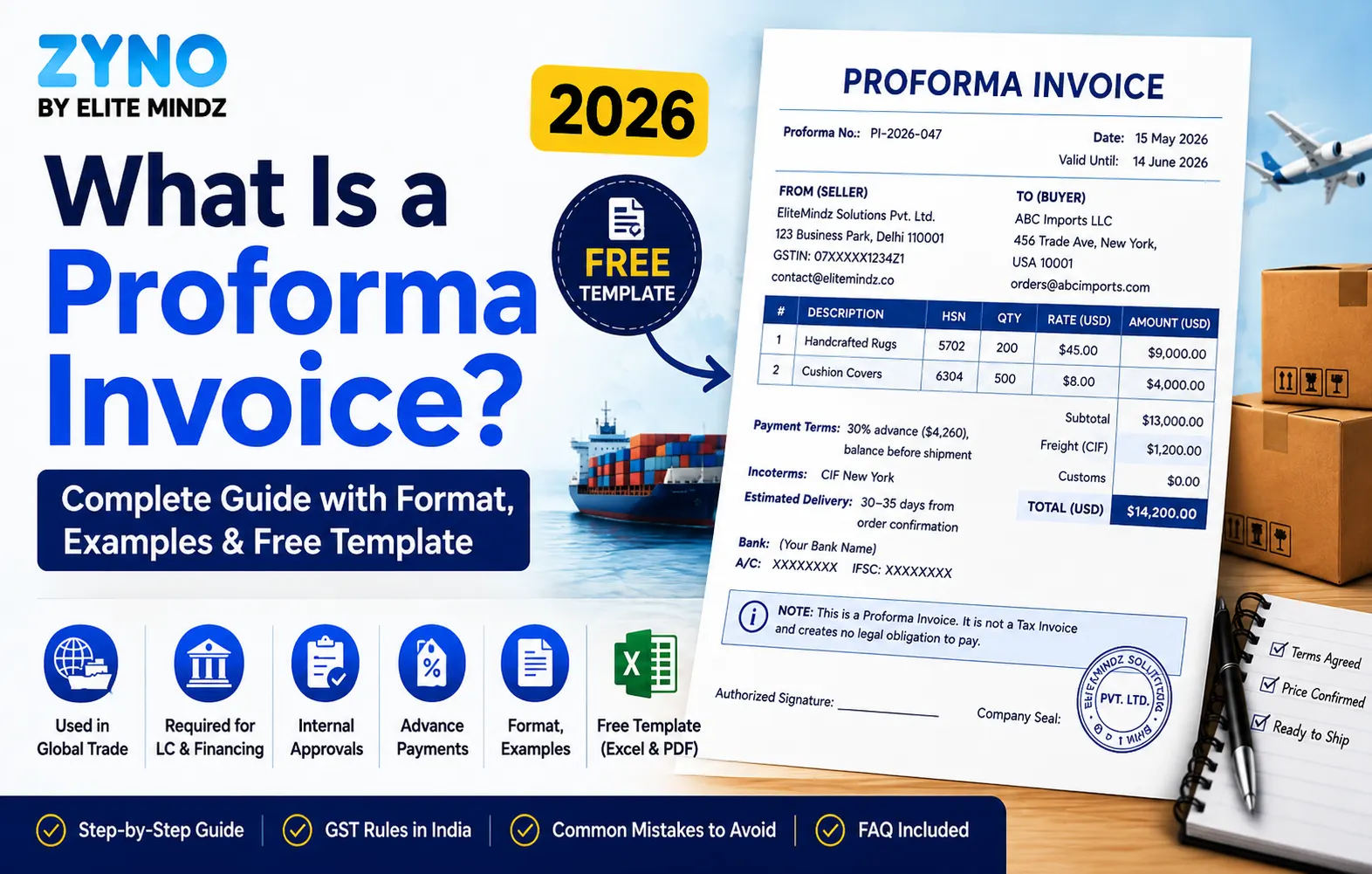
What Is a Proforma Invoice? Complete Guide with Format, Examples & Free Template (2026)
Read More →
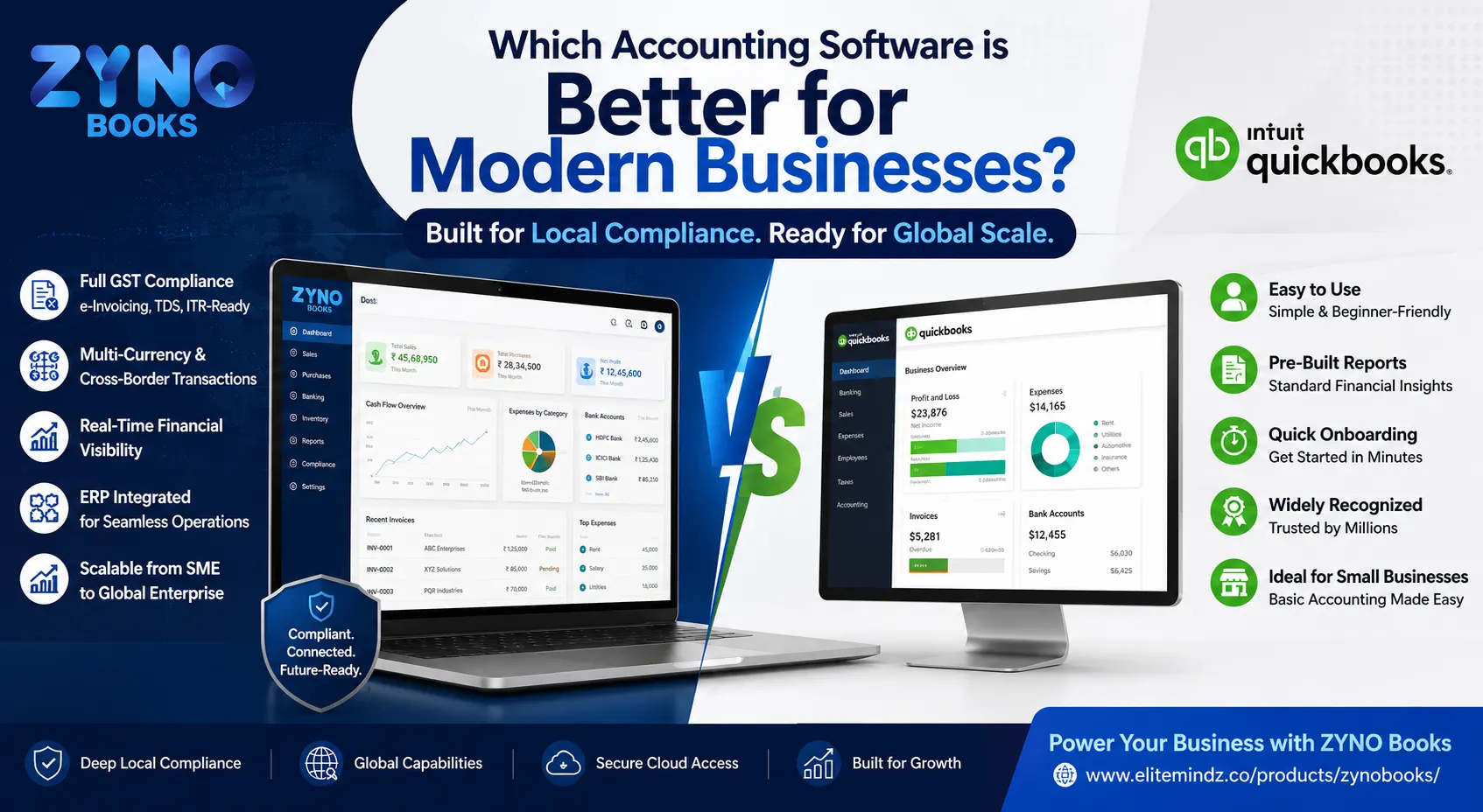
Which Accounting Software is Better for Modern Businesses?
Read More →
Bank Reconciliation Statement (BRS): Meaning, Full Form, Format & Examples
Read More →
Which Accounting Program Handles GST Best?
Read More →
AI Accounting Software in India: The Next Generation
Read More →
Which Document Management Software Offers OCR and Workflow Automation?
Read More →
How to Manage ISO Documents and Compliance Records Digitally?
Read More →
Which Are the Best Accounting Softwares Other Than Tally?
Read More →
ZYNO DMS vs SharePoint: A Detailed Comparison for Enterprise Document Control?
Read More →
How to Control Document Versions and Revisions Without Excel?
Read More →
How to Automate Document Approval Workflows Across Departments?
Read More →
Which Is the Best Accounting Software in India? (2026 Guide)
Read More →
Best Accounting Software in Kenya (2026): Cloud-Based, VAT-Ready & Built for SMEs
Read More →
Cloud Accounting Software Comparison: Which One Is Right for Your Business?
Read More →
GST Accounting Software Comparison for Indian Businesses (2026 Guide)
Read More →
Zyno Books vs Vyapar: Which One Gives You More Value?
Read More →
OCR Invoice Processing: The Complete Guide for Finance Teams in 2026
Read More →
Accounting Software: The Complete Guide for Businesses in 2026
Read More →
Purchase Order Management: Meaning, Types, Format & Complete Guide (2026)
Read More →
Purchase Order vs Purchase Requisition vs Invoice: Complete Guide (2026)
Read More →
Types of Purchase Orders Explained: SPO, PPO, BPO & CPO (With Real Examples)
Read More →Partner with ZYNO by Elite Mindz to revolutionize how your business works. Fill out the form, and we’ll reach out with AI-powered solutions made just for you.
Download your exclusive guide
We use browser cookies to ensure you get the best experience on our website. Learn more
The form was submitted successfully!
From our first line of code to ZYNO's AI-powered ERP suite — 17 years of helping businesses run smarter. Celebrating with our clients and partners on 1st August.
Book a free ZYNO consultation this anniversary week and get a special 17th-year offer on your first project.
Anniversary discount on your first ZYNO engagement, valid till 7th August.
Your anniversary offer request has been received.
Our team will connect with you within one business day.
ZYNO Digital
Fueling Smarter Digital Growth
ZYNO Digital fuels smarter digital growth through data-driven marketing, creative storytelling, and performance strategies that boost visibility, engagement, and measurable business outcomes across global platforms.
ZYNO Tech
Engineering the Future of IT
ZYNO Tech delivers cutting-edge IT solutions — including web, mobile, and digital transformation services — helping businesses scale efficiently, innovate faster, and stay ahead in a connected world.
ZYNO AI
AI Built for Business Growth
ZYNO AI harnesses the power of artificial intelligence to automate processes, enhance decision-making, and deliver predictive insights — driving innovation, agility, and measurable business growth.
ZYNO by Elite Mindz
Your Partner in the AI-Powered Future
ZYNO by Elite Mindz offers AI-powered products and services that unify operations, boost productivity, and drive digital transformation — helping businesses scale smarter and innovate faster.
* In just 2 mins you'll get a response
* Your idea is 100% protected by our Non-Disclosure Agreement