The Ultimate Guide to Managing Your Business with ZYNO Books
Read More →vendor-management-po-history-supplier-performance

×
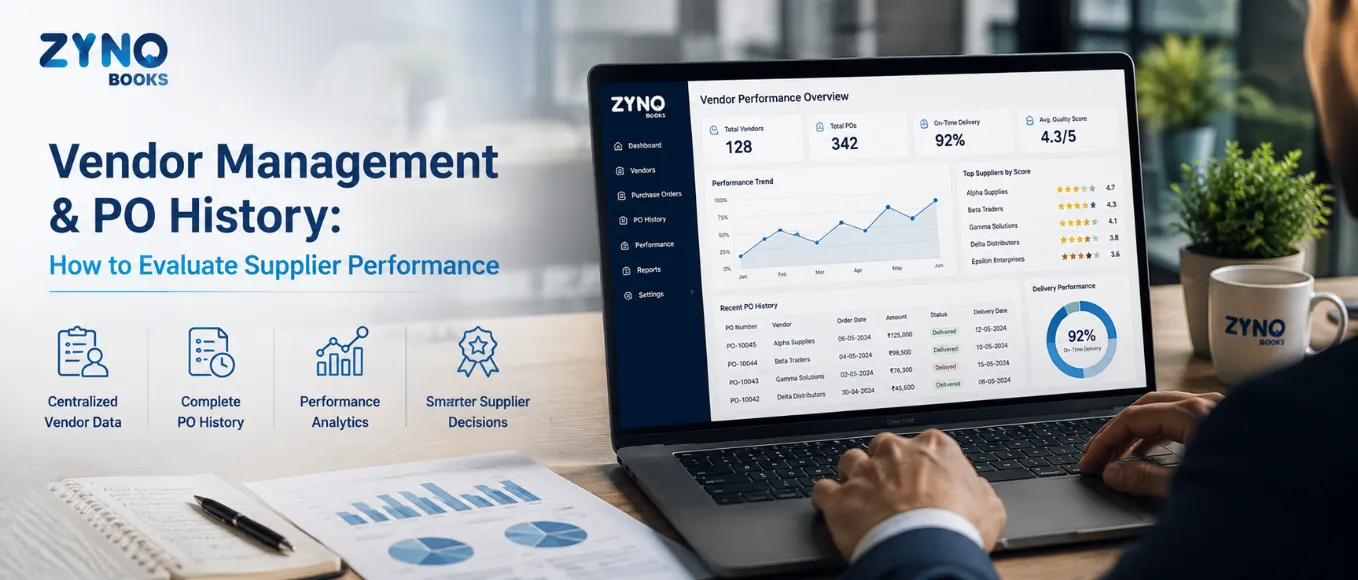
Vendor Management and PO History help businesses evaluate supplier performance by tracking purchase orders, delivery timelines, pricing consistency, product quality, and compliance. By analyzing historical procurement data, organizations can identify reliable suppliers, improve vendor relationships, reduce procurement risks, negotiate better contracts, and make data-driven purchasing decisions.
Businesses using ZYNO Books cut accounting time by 70% and stay 100% ZATCA-compliant — automatically.
Most procurement teams already sit on the exact data they need to evaluate supplier performance they just never look at it the right way. Every purchase order you've ever issued, every delivery date you've logged, every invoice you've matched is part of your PO history, and PO history is one of the most reliable, underused inputs for vendor management.
Instead of relying on gut feeling or the occasional supplier scorecard exercise, this guide shows you how to turn ordinary purchase order records into a repeatable system for evaluating, comparing, and improving supplier performance.
Vendor management is the ongoing process of selecting, onboarding, monitoring, and maintaining relationships with the suppliers your business depends on. It covers the full lifecycle of a vendor relationship from the first RFP to contract renewal or offboarding, and it exists to answer one simple question on repeat: is this vendor still delivering the value we agreed on?
Good vendor management isn't a one-time audit. It's a continuous loop of setting expectations, tracking results, and acting on what the data tells you. And that's exactly where purchase order history comes in; it's the paper trail that shows you whether expectations are actually being met, order after order.
Purchase order (PO) history is the complete record of every PO issued to a supplier, including quantities ordered, prices agreed, promised delivery dates, actual delivery dates, order accuracy, and how each order reconciled against the invoice and goods receipt.
Where a supplier scorecard is usually a snapshot (how did they do this quarter?), PO history is a timeline. It shows patterns that a single review can't:
In other words, PO history turns vendor management from a subjective, relationship-based conversation into an evidence-based one.
Most companies evaluate vendors using one of three methods: informal feedback from the team that deals with them, periodic audits, or annual scorecards. Each has a blind spot.
PO history solves all three problems because it's:
This is why PO history should sit at the center of any serious vendor management process, not as an afterthought during contract renewal.
To evaluate supplier performance properly, you need to extract the right metrics from your PO records. Here are the ones that matter most:
| Metric | What It Measures | Why It Matters |
|---|---|---|
| On-Time Delivery Rate | % of POs delivered by the promised date | Directly impacts production schedules and customer commitments |
| Order Accuracy / Fill Rate | % of orders delivered complete and correct | Reduces rework, returns, and downstream delays |
| Price Consistency | Variance between quoted price and invoiced price over time | Flags silent cost creep or contract non-compliance |
| Lead Time Trend | Average time from PO issue to delivery, tracked over multiple orders | Shows whether a supplier is speeding up, slowing down, or stable |
| Rejection/Return Rate | % of received goods rejected due to quality or specification issues | Early warning sign for quality degradation |
| Invoice Discrepancy Rate | % of invoices that don't match the PO or goods receipt (3-way match failures) | Indicates administrative reliability and reduces payment disputes |
| PO Cycle Time | Time from requisition to PO approval and dispatch | Reflects how efficiently your own process and the supplier's responsiveness is working |
| Order Frequency & Volume Trend | Change in order size/frequency over time | Helps you spot dependency risk or capacity strain |
Pulling even four or five of these consistently on-time delivery, order accuracy, price consistency, and rejection rate gives you a far more reliable performance picture than any single feedback session ever could.
Before you can analyze anything, your PO records need to live in one place. If purchase orders are scattered across email threads, spreadsheets, and disconnected systems, comparisons become guesswork. Whether it's an ERP, a procurement module, or even a well-structured spreadsheet, the goal is a single source of truth where every PO past and present is searchable by vendor.
Decide how far back you'll look. A single quarter can be misleading for seasonal businesses; a full 12 months usually gives a fairer read on a supplier's true performance. For newer vendors, use whatever history exists, but flag the sample size as limited until you have enough orders to draw firm conclusions.
Using the table above, calculate on-time delivery rate, order accuracy, price consistency, and rejection rate for each supplier over your chosen window. This is where most of the "real" insight appears: a vendor who looks fine on a recent order might show a clear downward trend once you look at six months of data.
It's tempting to just rank suppliers against each other, but that can normalize mediocrity if your entire vendor base is underperforming. Set absolute benchmarks (for example, 95% on-time delivery, less than 2% rejection rate) based on what your business actually needs, and measure every vendor against that bar, not just against each other.
Not every vendor needs the same scrutiny. Segment suppliers into tiers: strategic/critical, preferred, and transactional, and apply deeper PO-history analysis to the vendors whose failure would hurt you most. A transactional office-supplies vendor doesn't need the same rigor as a single-source component supplier.
Data without action is just a report nobody reads. Feed your findings into:
You don't need expensive software to start. A basic scorecard built from PO history might look like this:
| Vendor | On-Time Delivery | Order Accuracy | Price Consistency | Rejection Rate | Overall Score |
|---|---|---|---|---|---|
| Vendor A | 97% | 98% | Stable | 1.2% | A |
| Vendor B | 84% | 91% | +6% increase | 3.5% | C |
| Vendor C | 92% | 95% | Stable | 2.1% | B |
Weight each metric based on what matters most to your business (delivery reliability might matter more than price stability for a just-in-time manufacturer, for example), and recalculate the scorecard every quarter using fresh PO data. Over time, this becomes your most objective record of who your best and worst vendors really are.
You don't need a single "perfect" system, but the right combination of tools makes this process sustainable:
The specific tool matters less than the discipline of actually using the PO data you already generate every day.
Q1. What is PO history in vendor management?
PO history is the complete transactional record of every purchase order issued to a supplier, including order dates, quantities, prices, promised vs. actual delivery, and invoice matching results. It's used in vendor management to evaluate supplier performance objectively over time.
Q2. How often should you evaluate supplier performance using PO history?
Quarterly reviews work well for most businesses, with a deeper annual review at contract renewal time. Critical or high-risk suppliers may warrant monthly checks on key metrics like on-time delivery and rejection rate.
Q3. What's the difference between vendor management and PO management?
Vendor management is the broader, relationship-focused discipline covering selection, onboarding, performance, risk, and offboarding. PO management is the transactional layer creating, tracking, and closing individual purchase orders. PO history is the bridge between the two: transactional data used to inform relationship-level decisions.
Q4. What KPIs best predict future supplier problems?
Trending metrics matter more than single data points. A gradually increasing lead time, a rising rejection rate, or slowly creeping prices are stronger early-warning signals than one bad delivery in isolation.
Q5. Can small businesses use PO history for vendor evaluation without expensive software?
Yes. A well-structured spreadsheet that logs promised vs. actual delivery dates, quantities, prices, and quality notes per PO is enough to start calculating the core metrics. The process matters more than the tool at the early stages.
Q6. How many past orders do you need before evaluating a vendor fairly?
There's no universal number, but most procurement teams consider 8–10 orders (or a full quarter, whichever comes first) a reasonable minimum sample before drawing firm conclusions about a trend.
Vendor management doesn't need to rely on guesswork, occasional feedback, or a rushed scorecard exercise once a year. Your purchase order history already contains the evidence you need: delivery reliability, pricing behavior, quality trends, and responsiveness order after order. The businesses that consistently get the best supplier performance aren't the ones with the fanciest software; they're the ones that actually look at the PO data they already have, turn it into a repeatable evaluation process, and use it to have honest, numbers-backed conversations with their vendors.
Start small: centralize your PO records, calculate four or five core metrics per vendor, and review them every quarter. That single habit will do more for your supplier relationships than any annual audit ever could
The Ultimate Guide to Managing Your Business with ZYNO Books
Read More →
Why Is 206CR of Income Tax Act Important for Businesses in India?
Read More →The Best Accounting Software in Saudi Arabia
Read More →
Managing Multi-Country Taxes Made Easy with ZYNO Books Integrations
Read More →
Why TRN Validation is Essential for VAT Compliance in the UAE
Read More →
Best Accounts Payable Automation Software
Read More →Best Cloud Accounting Software in Kenya with M-Pesa Integration (2026) - eTIMS Compliant
Read More →Ultimate Cloud Accounting Software Guide That Saves Businesses 15+ Hours Weekly
Read More →ZATCA E-Invoicing Saudi Arabia - Complete Business Guide 2026
Read More →Cloud Accounting vs Desktop Accounting - Which Is Best for Your Business?
Read More →
Zyno Books: Best ZATCA-Approved Accounting Software in Saudi Arabia
Read More →
Best Tally Alternative in India (2026) — 6 Options Compared + Honest Pros & Cons
Read More →
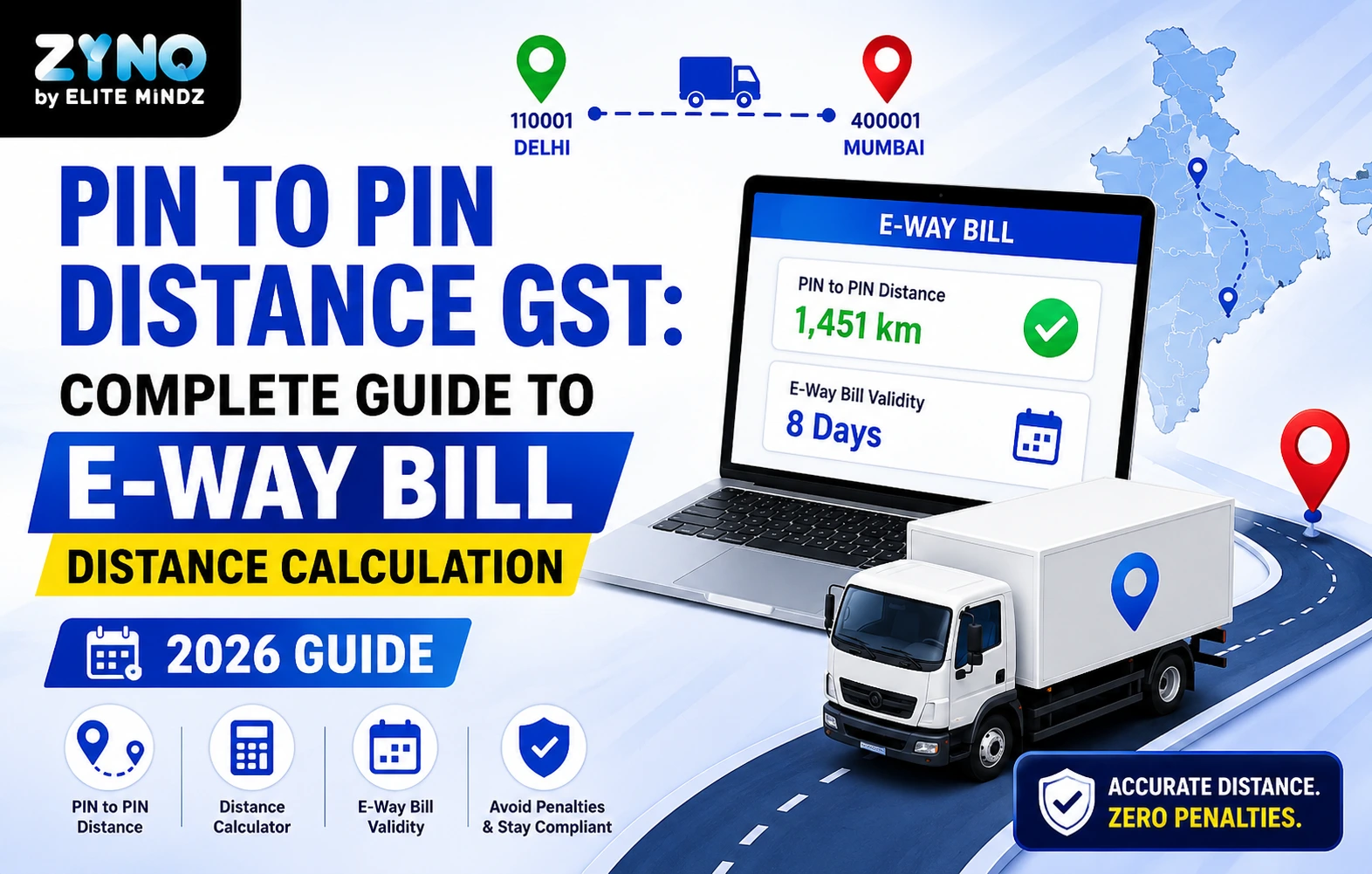
Pin to Pin Distance GST: Free E-Way Bill Calculator, Validity & Penalty Guide (2026)
Read More →
Best Small Business Accounting Software in 2026: Complete Guide
Read More →
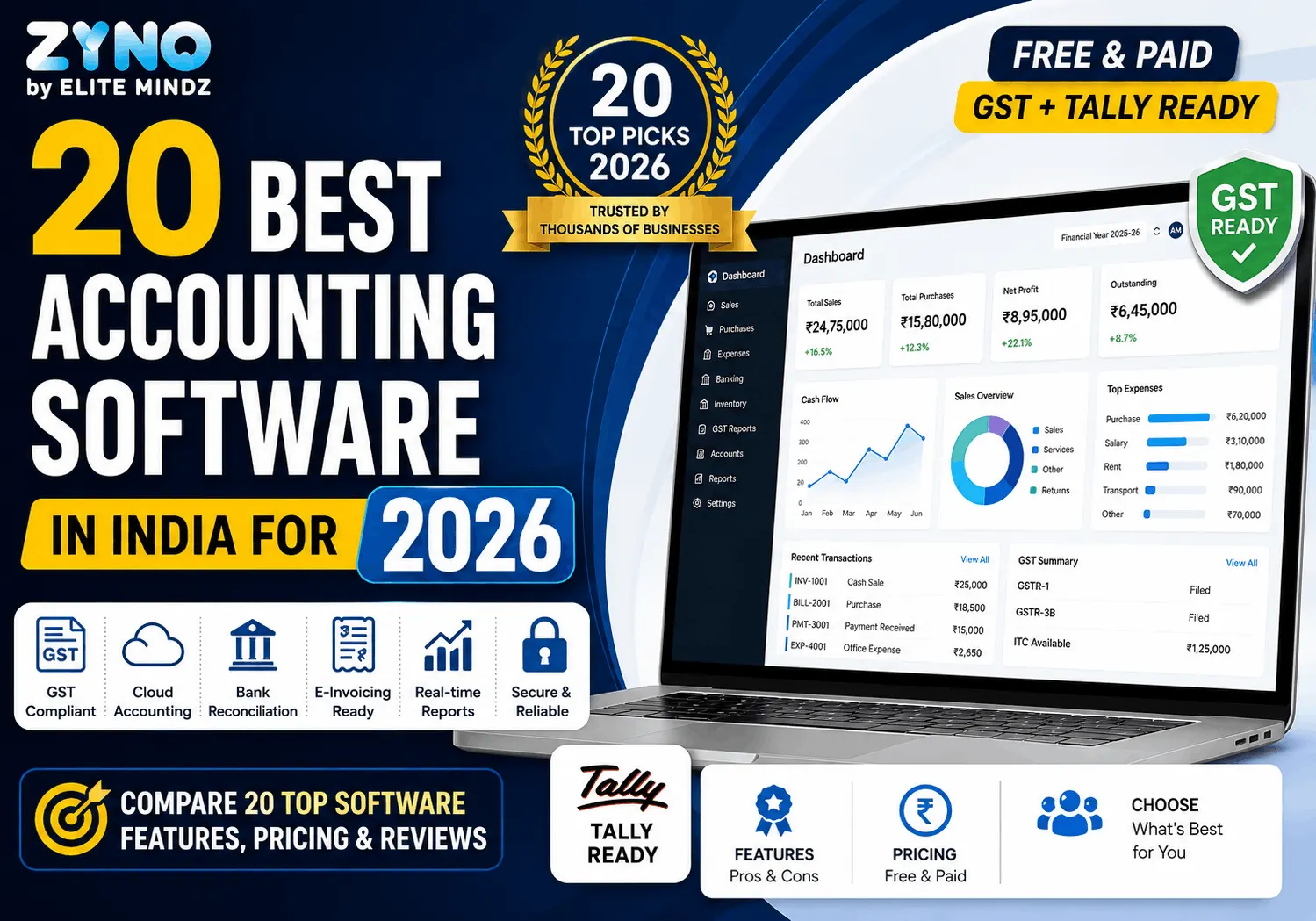
20 Best Accounting Software in India for 2026 - Free & Paid (GST + Tally Ready)
Read More →
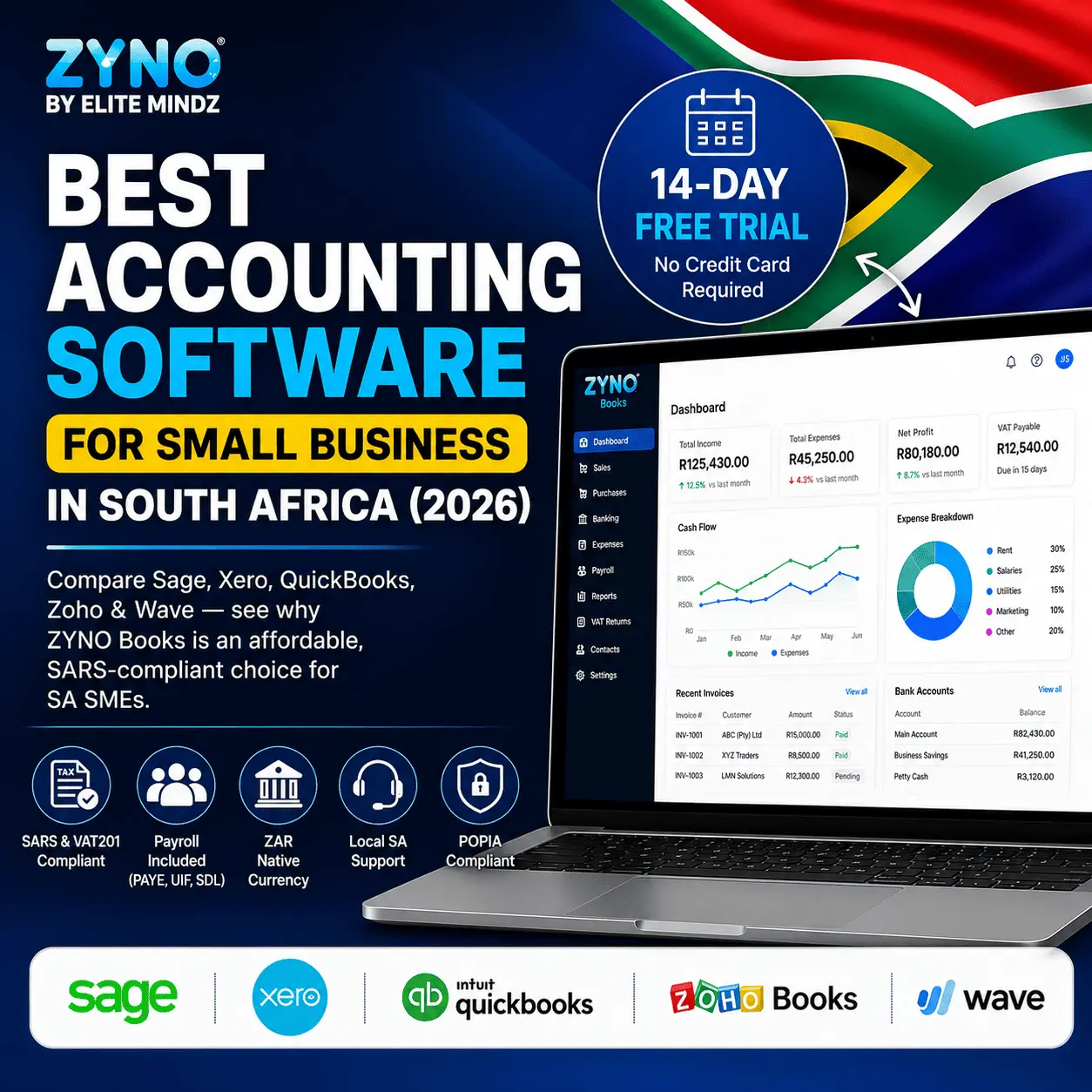
Best Accounting Software for Small Business in South Africa (2026)
Read More →
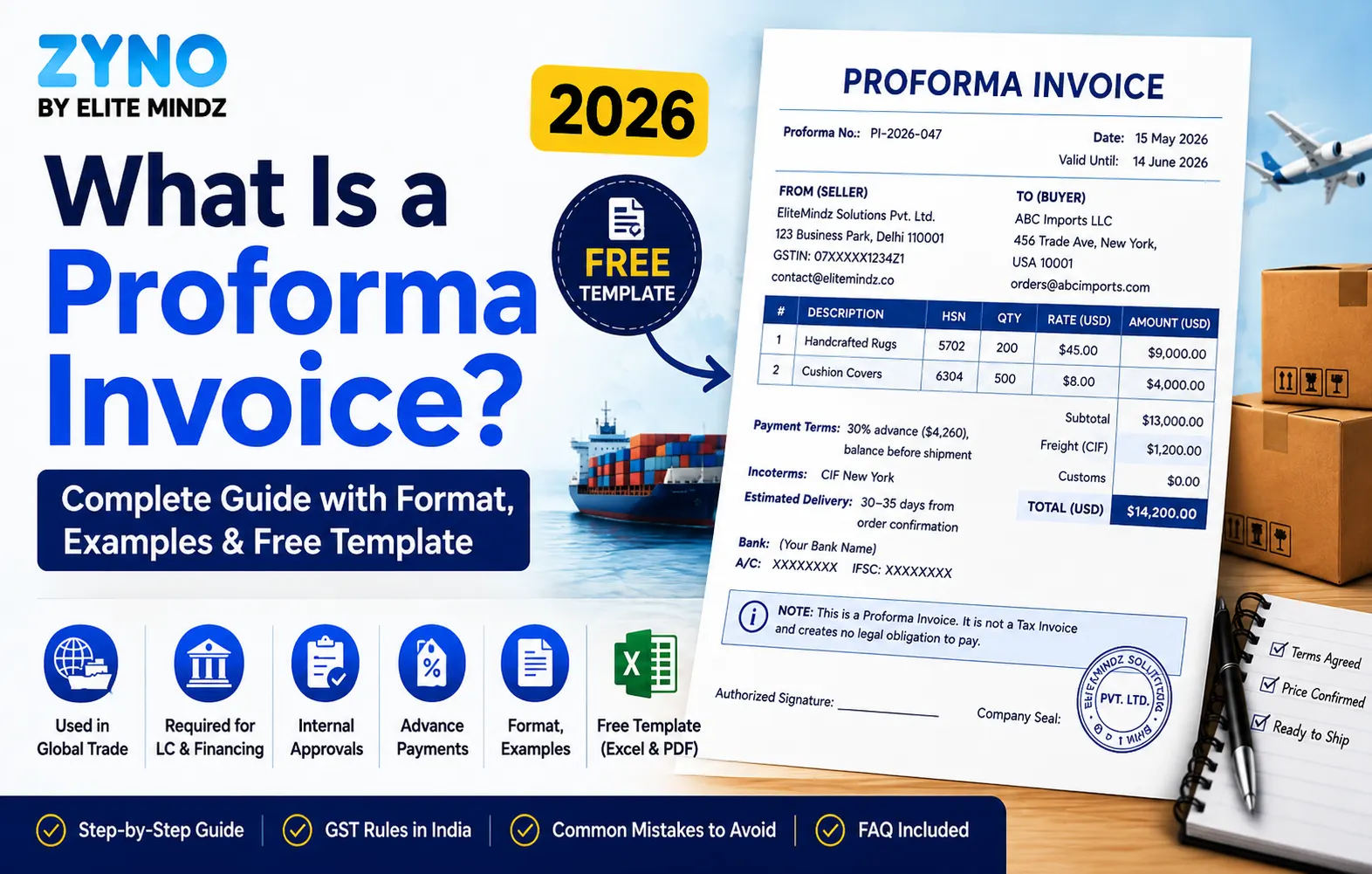
What Is a Proforma Invoice? Complete Guide with Format, Examples & Free Template (2026)
Read More →
Which Accounting Software is Better for Modern Businesses?
Read More →
Bank Reconciliation Statement (BRS): Meaning, Full Form, Format & Examples
Read More →
Which Accounting Program Handles GST Best?
Read More →
AI Accounting Software in India: The Next Generation
Read More →
Which Document Management Software Offers OCR and Workflow Automation?
Read More →
How to Manage ISO Documents and Compliance Records Digitally?
Read More →
Which Are the Best Accounting Softwares Other Than Tally?
Read More →
ZYNO DMS vs SharePoint: A Detailed Comparison for Enterprise Document Control?
Read More →
How to Control Document Versions and Revisions Without Excel?
Read More →
How to Automate Document Approval Workflows Across Departments?
Read More →
Which Is the Best Accounting Software in India? (2026 Guide)
Read More →
Best Accounting Software in Kenya (2026): Cloud-Based, VAT-Ready & Built for SMEs
Read More →
Cloud Accounting Software Comparison: Which One Is Right for Your Business?
Read More →
GST Accounting Software Comparison for Indian Businesses (2026 Guide)
Read More →
Zyno Books vs Vyapar: Which One Gives You More Value?
Read More →
OCR Invoice Processing: The Complete Guide for Finance Teams in 2026
Read More →
Accounting Software: The Complete Guide for Businesses in 2026
Read More →
Purchase Order Management: Meaning, Types, Format & Complete Guide (2026)
Read More →
Purchase Order vs Purchase Requisition vs Invoice: Complete Guide (2026)
Read More →
Types of Purchase Orders Explained: SPO, PPO, BPO & CPO (With Real Examples)
Read More →
Purchase Order Format: Complete Guide (GST & HSN Compliant) & Free Template
Read More →
ZynoBooks vs QuickBooks: Which AI Powered Accounting Software Is Right for Your Business in 2026
Read More →
3-Way Matching in Purchase Order Process: Complete Guide
Read More →
Purchase Order Management Software: Features to Look For (2026 Buyer's Guide)
Read More →
GST & HSN/SAC Compliance in Purchase Orders: An India-Specific Compliance Deep Dive
Read More →
Vendor Management & PO History: How to Evaluate Supplier Performance
Read More →Partner with ZYNO by Elite Mindz to revolutionize how your business works. Fill out the form, and we’ll reach out with AI-powered solutions made just for you.
Download your exclusive guide
We use browser cookies to ensure you get the best experience on our website. Learn more
The form was submitted successfully!
From our first line of code to ZYNO's AI-powered ERP suite — 17 years of helping businesses run smarter. Celebrating with our clients and partners on 1st August.
Book a free ZYNO consultation this anniversary week and get a special 17th-year offer on your first project.
Anniversary discount on your first ZYNO engagement, valid till 7th August.
Your anniversary offer request has been received.
Our team will connect with you within one business day.
ZYNO Digital
Fueling Smarter Digital Growth
ZYNO Digital fuels smarter digital growth through data-driven marketing, creative storytelling, and performance strategies that boost visibility, engagement, and measurable business outcomes across global platforms.
ZYNO Tech
Engineering the Future of IT
ZYNO Tech delivers cutting-edge IT solutions — including web, mobile, and digital transformation services — helping businesses scale efficiently, innovate faster, and stay ahead in a connected world.
ZYNO AI
AI Built for Business Growth
ZYNO AI harnesses the power of artificial intelligence to automate processes, enhance decision-making, and deliver predictive insights — driving innovation, agility, and measurable business growth.
ZYNO by Elite Mindz
Your Partner in the AI-Powered Future
ZYNO by Elite Mindz offers AI-powered products and services that unify operations, boost productivity, and drive digital transformation — helping businesses scale smarter and innovate faster.
* In just 2 mins you'll get a response
* Your idea is 100% protected by our Non-Disclosure Agreement