The Ultimate Guide to Managing Your Business with ZYNO Books
Read More →gst-hsn-sac-compliance-purchase-orders-india

×
Compliance in purchase orders is the practice of ensuring every PO carries accurate, legally required tax and registration details GSTIN, HSN/SAC code, applicable GST rate, and place of supply before the goods or services are supplied.
Businesses using ZYNO Books cut accounting time by 70% and stay 100% ZATCA-compliant — automatically.
Compliance in purchase orders isn't just a Western procurement concept borrowed and translated for Indian businesses in India; it carries a very specific, legally enforceable weight. A purchase order that misses a GSTIN, carries the wrong HSN code, or references a tax slab that no longer exists doesn't just cause an internal accounting headache. It can block your vendor's Input Tax Credit (ITC), trigger a GSTR-1 mismatch, and invite scrutiny during a GST audit. For Indian procurement and finance teams, GST and HSN/SAC compliance in purchase orders sits at the exact point where operational efficiency meets statutory risk.
This guide breaks down what actually needs to happen inside a PO to keep it GST-compliant in 2026 the mandatory fields, the HSN/SAC digit rules by turnover, how e-invoicing changes the picture, and where most Indian businesses quietly go wrong.
A purchase order in India is more than a commercial document confirming quantity, price, and delivery terms. It is the first point in the procure-to-pay cycle where tax classification gets locked in. Whatever HSN/SAC code, GST rate, and GSTIN appear on the PO typically flow through to the goods receipt, the supplier's tax invoice, and eventually the e-invoice registered with the Invoice Registration Portal (IRP).
If the PO gets this wrong at the source, the error doesn't stay contained it propagates through three-way matching (PO–GRN–invoice), into GSTR-2B reconciliation, and into the buyer's Input Tax Credit claim. That's the core reason GST compliance in purchase orders deserves dedicated attention rather than being treated as a downstream accounts payable problem.
In practice, GST compliance in purchase orders covers four layers:
HSN (Harmonized System of Nomenclature) codes classify goods; SAC (Services Accounting Code) codes classify services and always begin with "99." Both are mandatory fields on a GST tax invoice under Rule 46 of the CGST Rules and by extension, they need to be correct on the purchase order that precedes it.
The digit requirement is tied to a supplier's Aggregate Annual Turnover (AATO), not to the buyer's turnover:
| Aggregate Annual Turnover | Minimum HSN/SAC Digits Required |
|---|---|
| Up to ₹5 crore | 4 digits (mandatory on B2B invoices) |
| Above ₹5 crore | 6 digits (mandatory on all invoices, B2B and B2C) |
| Exports / Imports | 8 digits (customs declarations and shipping bills) |
| Composition scheme dealers | 4 digits, regardless of turnover (including in GSTR-4) |
Two important nuances procurement teams frequently miss:
For composite or bundled purchases say, a single PO line covering hardware plus an installation service classification should follow the "essential character" rule under the General Rules of Interpretation (GRI): the component that gives the overall supply its essential nature determines the applicable chapter and rate. Ambiguous cases can, and often do, end up before the Authority for Advance Ruling (AAR).
The GST Council's rate rationalisation, effective 22 September 2025, is the most significant structural change to the tax since GST launched in 2017. The old four-tier structure (5%, 12%, 18%, 28%) has been compressed into essentially two standard slabs 5% and 18% with a new 40% rate reserved for luxury and "sin" goods. Compensation cess was scrapped for most categories on the same date.
For purchase order compliance, this is not a background policy footnote it's an operational trigger. Any organization still running PO templates, item masters, or ERP tax codes built around the pre-September-2025 slab structure is at active risk of issuing POs with an obsolete rate. A PO that still shows 12% or 28% GST on a line item that has moved to 5% or 18% will either overstate or understate the payable tax, distort budget approvals, and create a mismatch the moment the supplier raises an e-invoice at the correct current rate.
Practical takeaway: treat GST 2.0 as a mandatory master-data refresh event. Every HSN/SAC-to-rate mapping in your procurement or ERP system needs to be re-validated against the current slab structure, not assumed to still hold.
While GST law technically governs the invoice, not the PO, best-practice compliance treats the PO as a pre-validation checkpoint. A well-structured, audit-ready PO in India should carry:
Missing even one of these most commonly the HSN digit length or an outdated GST rate is what turns a routine PO into a downstream ITC dispute.
E-invoicing adds a layer of real-time government validation on top of whatever the PO originally specified. As of the current rules, e-invoicing (IRN and QR code generation via the IRP) is mandatory for GST-registered businesses whose aggregate turnover exceeded ₹5 crore in any financial year since 2017-18, and that obligation doesn't reverse even if turnover later dips below the threshold. Businesses with AATO above ₹10 crore must report the invoice to the IRP within 30 days of the invoice date, or it is treated as not having been issued for GST purposes.
This has a direct implication for PO compliance: since e-invoice data auto-populates into GSTR-1, any inconsistency between what the PO specified (HSN, rate, GSTIN) and what the supplier's e-invoice actually registers will surface almost immediately during reconciliation not months later at audit time. A PO built on outdated master data effectively guarantees a mismatch the moment the e-invoice is generated.
Banks, insurers, NBFCs, goods transport agencies, passenger transport operators, and SEZ units are currently exempted from e-invoicing, but this exemption list should be checked against current notifications for each transaction rather than assumed to be permanent the government has progressively lowered the threshold multiple times since e-invoicing was first introduced for large corporates in 2020.
Most GST-related compliance failures in the PO stage aren't the result of fraud or negligence they're structural, and they repeat across organizations of every size:
A durable compliance approach treats the PO stage as a control point, not an afterthought. Four pillars make this workable in practice:
Organizations that manage GST compliance in purchase orders well typically monitor:
Must Read:
Q1. Is HSN code mandatory on a purchase order, or only on the tax invoice?
Legally, the mandatory requirement under Rule 46 applies to the tax invoice. In practice, embedding the correct HSN/SAC code at the PO stage is the only reliable way to ensure the invoice that follows is compliant, since most ERP and procurement systems carry the PO's classification forward automatically.
Q2. What happens if a purchase order uses a pre-GST 2.0 tax rate?
The PO will misstate the payable tax amount relative to what the supplier's e-invoice will actually register at the current rate. This creates budget and approval discrepancies internally, and can cause a mismatch during GSTR-2B reconciliation once the actual invoice is filed.
Q3. Does the HSN digit requirement depend on the buyer's turnover or the supplier's?
It depends on the supplier's aggregate annual turnover, since the supplier is the one issuing the tax invoice and reporting HSN in their GSTR-1.
Q4. Is e-invoicing linked to purchase order compliance?
Indirectly, yes. E-invoicing validates the supplier's invoice in real time and auto-populates that data into GSTR-1. If the PO's HSN, rate, or GSTIN data is inconsistent with what gets registered on the IRP, the mismatch surfaces quickly during reconciliation rather than being caught at audit.
Q5. Can a wrong HSN code really block Input Tax Credit?
Yes. An incorrect HSN code typically means an incorrect GST rate is applied, and rate mismatches between what's invoiced and what GSTR-2B reflects are a common, well-documented reason ITC claims get held up or rejected.
GST and HSN/SAC compliance in purchase orders isn't a one-time setup task it's a continuously maintained discipline, particularly given how frequently India's indirect tax structure changes (GST 2.0 being the latest and largest example). Getting the PO stage right validated GSTINs, correctly sized HSN/SAC codes, current tax rates, and a traceable reference through to the e-invoice is the single most effective control point for preventing ITC disputes, audit flags, and payment delays further down the procure-to-pay chain
The Ultimate Guide to Managing Your Business with ZYNO Books
Read More →
Why Is 206CR of Income Tax Act Important for Businesses in India?
Read More →The Best Accounting Software in Saudi Arabia
Read More →
Managing Multi-Country Taxes Made Easy with ZYNO Books Integrations
Read More →
Why TRN Validation is Essential for VAT Compliance in the UAE
Read More →
Best Accounts Payable Automation Software
Read More →Best Cloud Accounting Software in Kenya with M-Pesa Integration (2026) - eTIMS Compliant
Read More →Ultimate Cloud Accounting Software Guide That Saves Businesses 15+ Hours Weekly
Read More →ZATCA E-Invoicing Saudi Arabia - Complete Business Guide 2026
Read More →Cloud Accounting vs Desktop Accounting - Which Is Best for Your Business?
Read More →
Zyno Books: Best ZATCA-Approved Accounting Software in Saudi Arabia
Read More →
Best Tally Alternative in India (2026) — 6 Options Compared + Honest Pros & Cons
Read More →
Pin to Pin Distance GST: Free E-Way Bill Calculator, Validity & Penalty Guide (2026)
Read More →
Best Small Business Accounting Software in 2026: Complete Guide
Read More →
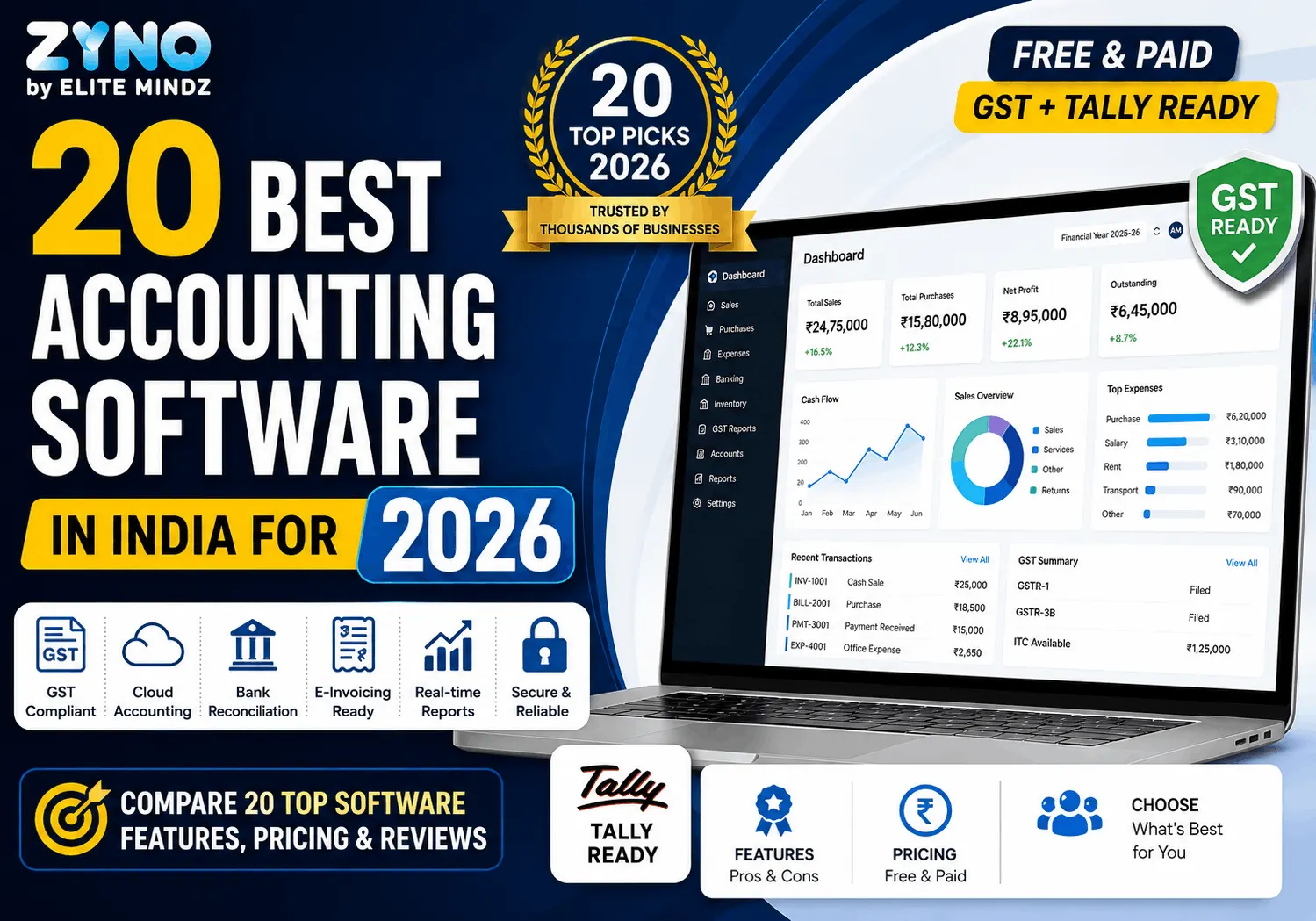
20 Best Accounting Software in India for 2026 - Free & Paid (GST + Tally Ready)
Read More →
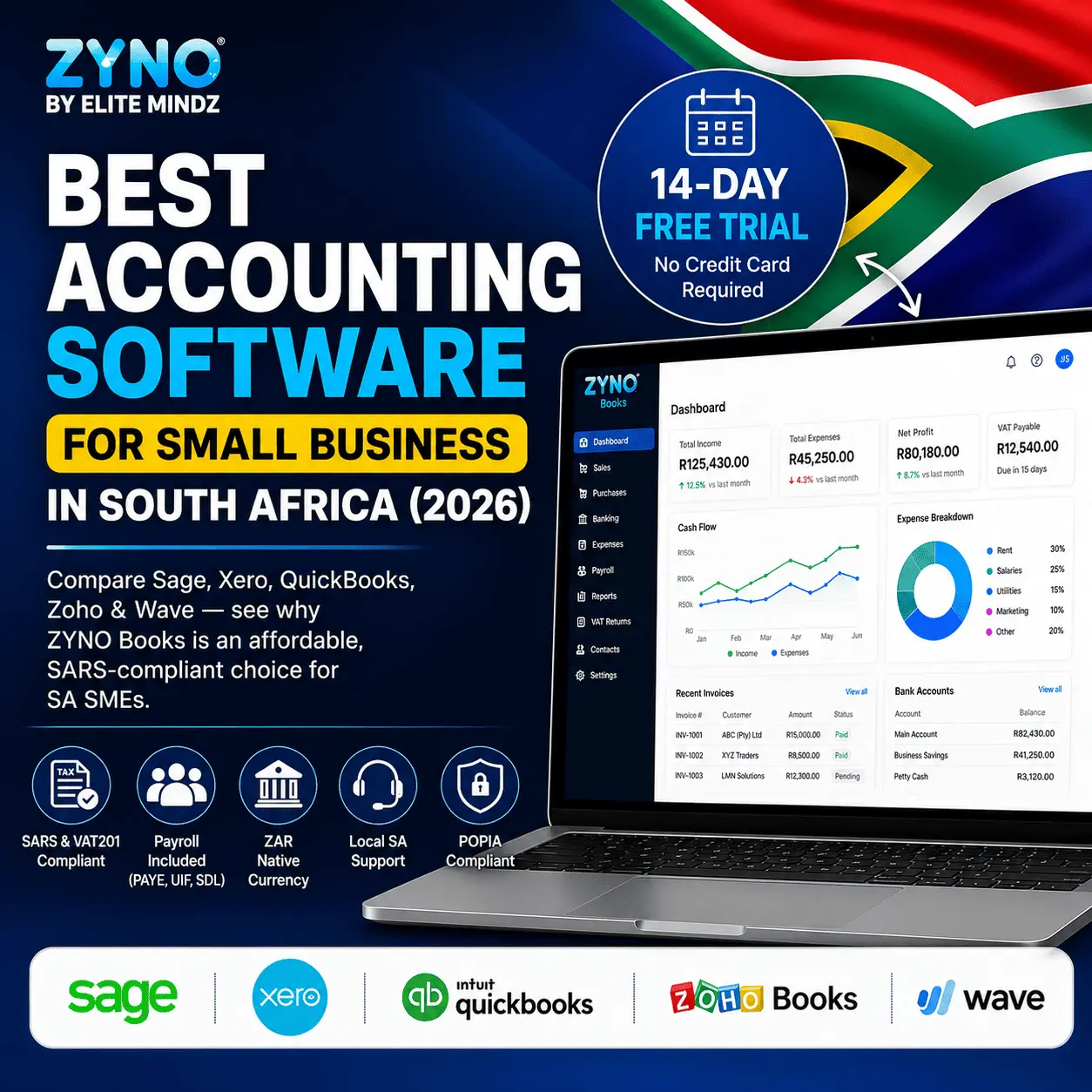
Best Accounting Software for Small Business in South Africa (2026)
Read More →
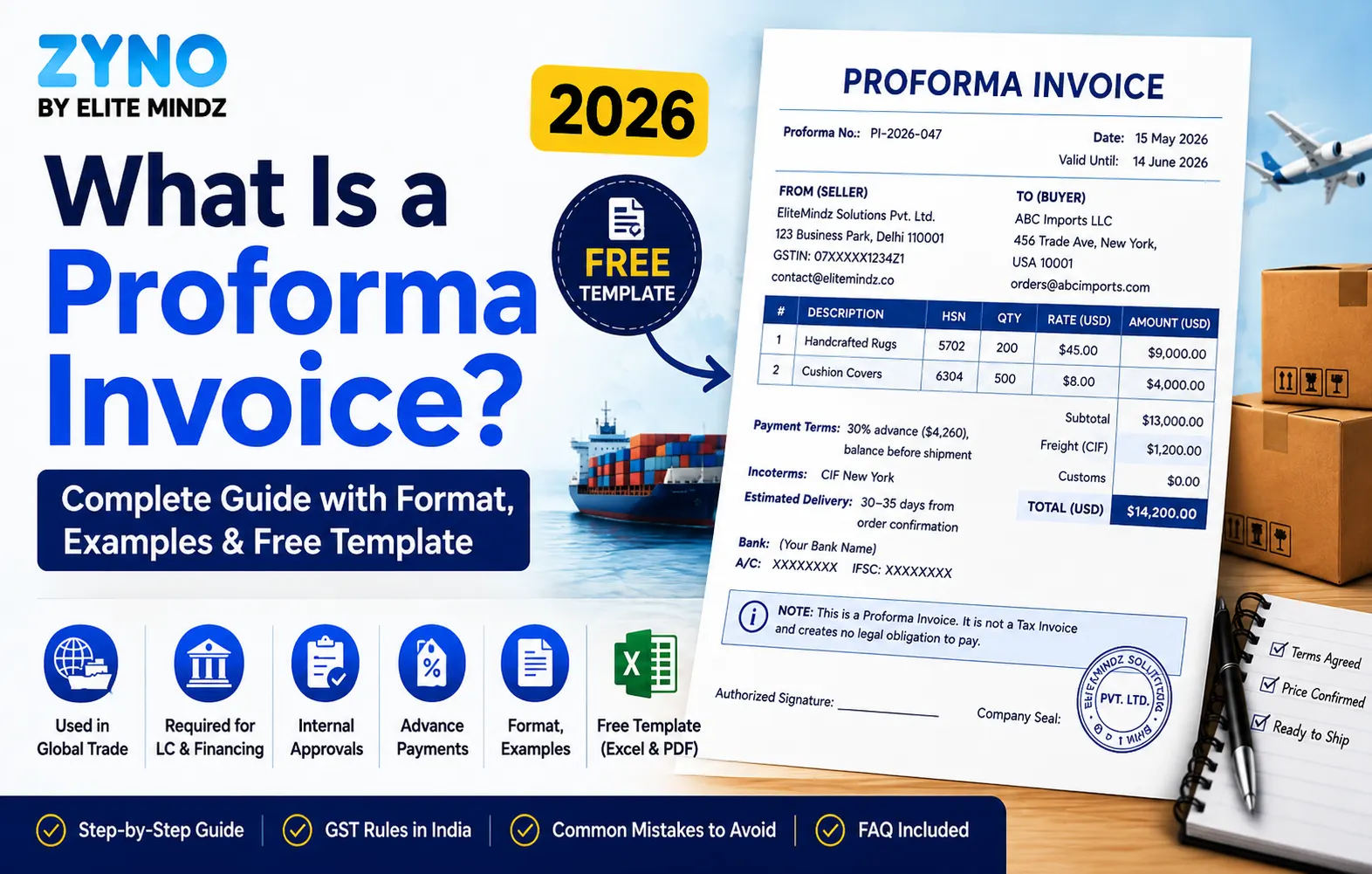
What Is a Proforma Invoice? Complete Guide with Format, Examples & Free Template (2026)
Read More →
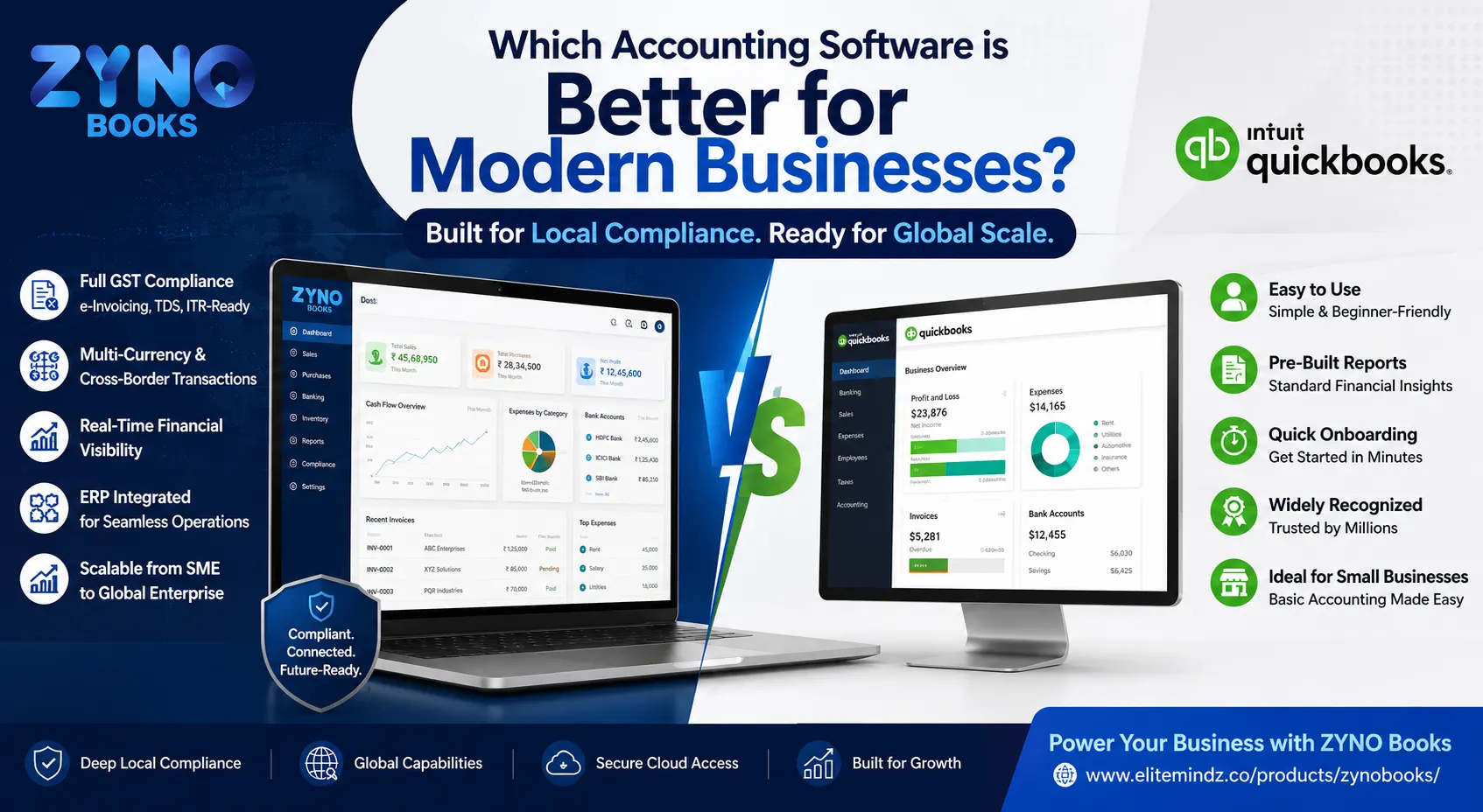
Which Accounting Software is Better for Modern Businesses?
Read More →
Bank Reconciliation Statement (BRS): Meaning, Full Form, Format & Examples
Read More →
Which Accounting Program Handles GST Best?
Read More →
AI Accounting Software in India: The Next Generation
Read More →
Which Document Management Software Offers OCR and Workflow Automation?
Read More →
How to Manage ISO Documents and Compliance Records Digitally?
Read More →
Which Are the Best Accounting Softwares Other Than Tally?
Read More →
ZYNO DMS vs SharePoint: A Detailed Comparison for Enterprise Document Control?
Read More →
How to Control Document Versions and Revisions Without Excel?
Read More →
How to Automate Document Approval Workflows Across Departments?
Read More →
Which Is the Best Accounting Software in India? (2026 Guide)
Read More →
Best Accounting Software in Kenya (2026): Cloud-Based, VAT-Ready & Built for SMEs
Read More →
Cloud Accounting Software Comparison: Which One Is Right for Your Business?
Read More →
GST Accounting Software Comparison for Indian Businesses (2026 Guide)
Read More →
Zyno Books vs Vyapar: Which One Gives You More Value?
Read More →
OCR Invoice Processing: The Complete Guide for Finance Teams in 2026
Read More →
Accounting Software: The Complete Guide for Businesses in 2026
Read More →
Purchase Order Management: Meaning, Types, Format & Complete Guide (2026)
Read More →
Purchase Order vs Purchase Requisition vs Invoice: Complete Guide (2026)
Read More →
Types of Purchase Orders Explained: SPO, PPO, BPO & CPO (With Real Examples)
Read More →
Purchase Order Format: Complete Guide (GST & HSN Compliant) & Free Template
Read More →
ZynoBooks vs QuickBooks: Which AI Powered Accounting Software Is Right for Your Business in 2026
Read More →
3-Way Matching in Purchase Order Process: Complete Guide
Read More →
Purchase Order Management Software: Features to Look For (2026 Buyer's Guide)
Read More →
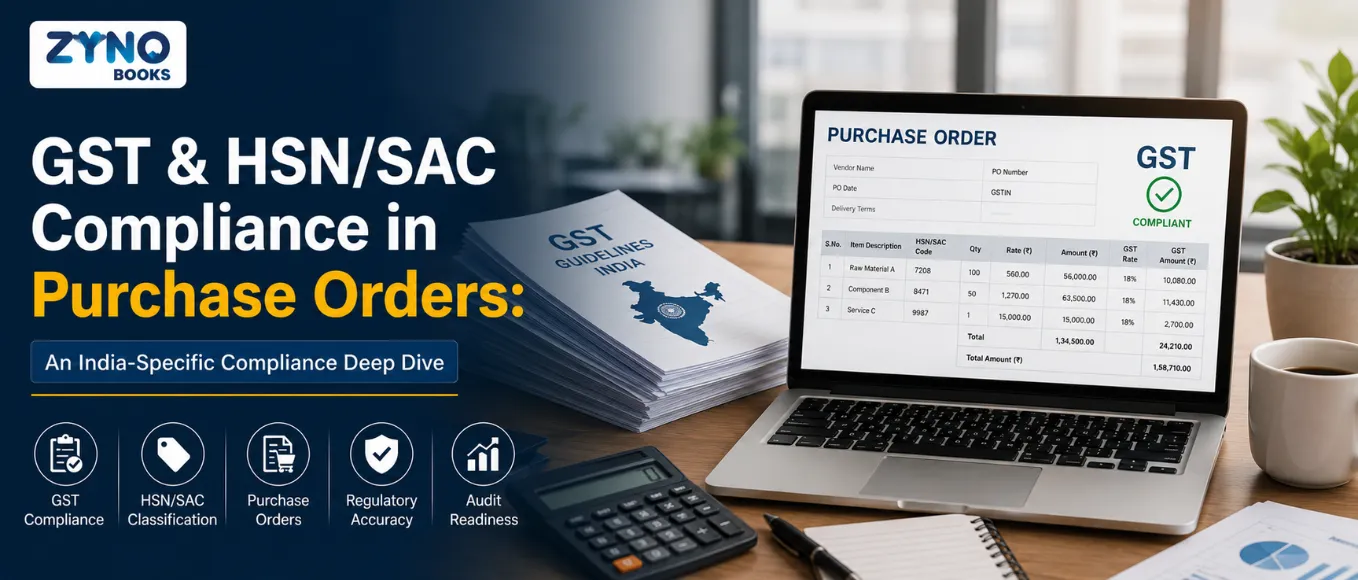
GST & HSN/SAC Compliance in Purchase Orders: An India-Specific Compliance Deep Dive
Read More →
Vendor Management & PO History: How to Evaluate Supplier Performance
Read More →Partner with ZYNO by Elite Mindz to revolutionize how your business works. Fill out the form, and we’ll reach out with AI-powered solutions made just for you.
Download your exclusive guide
We use browser cookies to ensure you get the best experience on our website. Learn more
The form was submitted successfully!
From our first line of code to ZYNO's AI-powered ERP suite — 17 years of helping businesses run smarter. Celebrating with our clients and partners on 1st August.
Book a free ZYNO consultation this anniversary week and get a special 17th-year offer on your first project.
Anniversary discount on your first ZYNO engagement, valid till 7th August.
Your anniversary offer request has been received.
Our team will connect with you within one business day.
ZYNO Digital
Fueling Smarter Digital Growth
ZYNO Digital fuels smarter digital growth through data-driven marketing, creative storytelling, and performance strategies that boost visibility, engagement, and measurable business outcomes across global platforms.
ZYNO Tech
Engineering the Future of IT
ZYNO Tech delivers cutting-edge IT solutions — including web, mobile, and digital transformation services — helping businesses scale efficiently, innovate faster, and stay ahead in a connected world.
ZYNO AI
AI Built for Business Growth
ZYNO AI harnesses the power of artificial intelligence to automate processes, enhance decision-making, and deliver predictive insights — driving innovation, agility, and measurable business growth.
ZYNO by Elite Mindz
Your Partner in the AI-Powered Future
ZYNO by Elite Mindz offers AI-powered products and services that unify operations, boost productivity, and drive digital transformation — helping businesses scale smarter and innovate faster.
* In just 2 mins you'll get a response
* Your idea is 100% protected by our Non-Disclosure Agreement