Smart IT Powering U.S. Fintech Success
Read More →

×
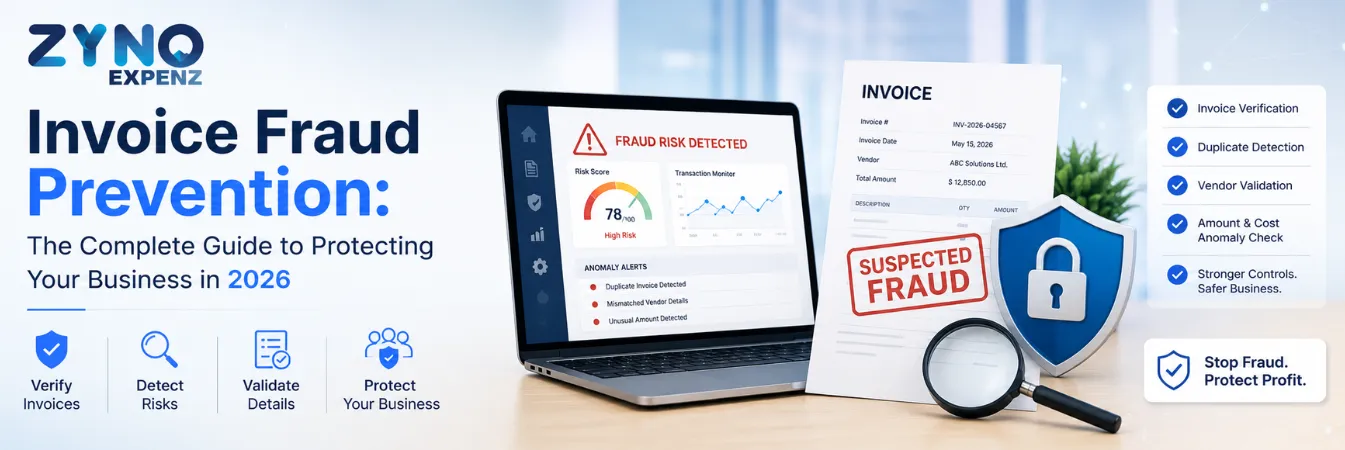
Invoice fraud is a scam where fraudsters trick a business into paying a fake, altered, or duplicate invoice — often by impersonating a trusted vendor or executive. It exploits routine AP processes so a fraudulent payment slips through unnoticed, redirecting funds meant for a real supplier straight into the scammer's account.
Businesses using ZYNO Books cut accounting time by 70% and stay 100% ZATCA-compliant — automatically.
Every year, businesses lose huge sums of money to invoice fraud. This threat hides in plain sight. It looks like a routine document. Yet it can drain a company's bank account in minutes.
According to the FBI's Internet Crime Complaint Center (IC3), Business Email Compromise scams, a major driver of invoice fraud cause billions of dollars in losses each year. Small businesses and large enterprises are both at risk. In fact, fraudsters often prefer smaller companies. Why? Because smaller teams usually have fewer checks in place.
This is exactly why invoice fraud prevention has become a top priority for finance and accounts payable (AP) teams. In this guide, we explain what invoice fraud is, how it happens, and how you can stop it. We also share two comparison tables to help you evaluate your current defenses. Let's dive in.
Invoice fraud happens when a scammer tricks a business into paying a fake, altered, or duplicate invoice. It exploits trust. It also exploits routine. Most AP teams process hundreds of invoices every month. As a result, one fraudulent invoice can easily slip through.
Invoice fraud can take many forms. For example, a fraudster might invent a fake vendor. Or, they might alter a real invoice and swap out the bank details. Sometimes, they impersonate your CFO and request an urgent wire transfer. In every case, the goal stays the same: steal money by exploiting your payment process.
The damage goes beyond the stolen funds, too. Businesses that fall victim often face broken vendor trust, reputational harm, and costly internal investigations. For small businesses, a single scam can threaten survival.
Invoice fraud is not new. However, it is evolving fast. Two trends make this threat more dangerous in 2026.
First, fraudsters now use AI to craft near-perfect fake invoices. They can even clone voices and fake video calls to impersonate executives. As a result, even trained employees struggle to spot the difference.
Second, remote work has scattered finance teams across locations. Consequently, more invoices flow through more inboxes. This means more chances for a fraudulent invoice to sneak through unnoticed.
Because of these shifts, manual checks alone are no longer enough. A strong invoice fraud prevention strategy must combine trained people, smart processes, and modern technology.
Understanding how fraud happens is the first step toward stopping it. Below are the most common types businesses face today.
Fake or phantom vendor invoices. Fraudsters invent a vendor that does not exist. They then bill you for goods or services never delivered.
Altered invoice details. A real invoice gets intercepted. The scammer swaps the bank account number, but everything else looks normal.
Business Email Compromise (BEC). Scammers impersonate an executive or trusted vendor through a spoofed email. They usually create urgency to rush the payment.
Duplicate invoicing. The same invoice gets submitted twice, often with a slightly changed number or date.
Overpayment scams. A fraudster sends an inflated invoice, waits for payment, then asks for a "refund" of the overpaid amount.
Phishing and account takeover. Criminals hack a vendor's real email or create a nearly identical fake domain to send fraudulent payment requests.
Insider fraud. Sometimes, the threat comes from within. An employee with AP access might approve fake invoices or collude with outside fraudsters.
This table breaks down each fraud type by how it works, its typical target, and its difficulty to detect.
| Fraud Type | How It Works | Common Target | Detection Difficulty |
|---|---|---|---|
| Fake/Phantom Vendor | Invents a vendor that doesn't exist | Companies with many small suppliers | Medium |
| Altered Invoice | Changes bank details on a real invoice | High-volume AP departments | High |
| Business Email Compromise | Impersonates an executive via email | Finance and AP staff | High |
| Duplicate Invoicing | Resubmits the same invoice twice | Manual, non-automated systems | Low |
| Overpayment Scam | Requests a refund on an inflated invoice | Businesses with loose refund policies | Medium |
| Phishing/Account Takeover | Hacks or spoofs a vendor's email account | Vendors with weak email security | High |
| Insider Fraud | Employee abuses internal system access | Companies with poor duty separation | High |
As the table shows, altered invoices and Business Email Compromise are the hardest to catch. This is because they closely mimic real, trusted communication.
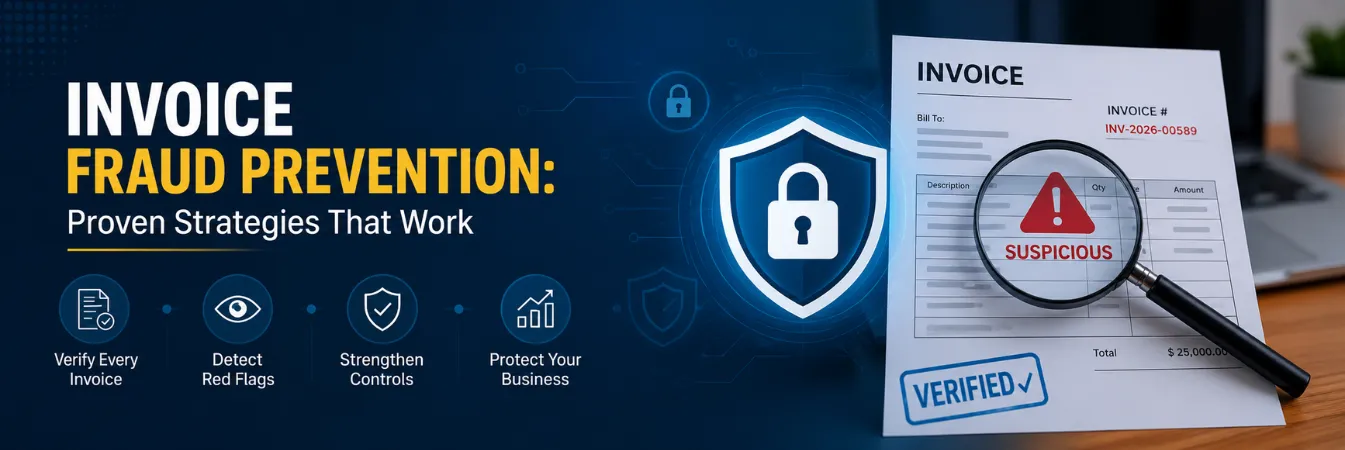
Spotting these warning signs early is one of the most effective invoice fraud prevention tactics. Best of all, it costs nothing to implement.
If two or more of these signs appear together, pause the payment. Flag the invoice for manual review first.

This section covers the practical steps your organization can take right now. A strong invoice fraud prevention strategy layers people, process, and technology together. That way, no single weak point can bring down your defenses.
1. Separate duties in your AP process. No single employee should both approve and pay an invoice. Splitting these tasks across two people makes fraud much harder to slip through.
2. Verify vendor changes independently. If a vendor claims their bank details changed, don't trust the email alone. Instead, call them using a number from your own records, not the one in the message.
3. Match invoices to purchase orders. Every invoice should match its purchase order and delivery note before payment. Any mismatch should trigger an automatic hold.
4. Use a secure vendor portal. Route invoices through a centralized portal instead of email. This creates a clear audit trail and reduces the risk of spoofing.
5. Train your team regularly. Your AP staff is your last line of defense. Regular training, including simulated phishing tests, helps them catch red flags before approval.
6. Turn on multi-factor authentication (MFA). Require MFA for anyone accessing your AP system or vendor portal. This single step greatly reduces account takeover risk.
7. Keep a clean vendor master file. Audit your vendor list regularly for duplicates or inactive accounts. Log every change to payment details with a timestamp.
8. Set clear approval thresholds. Define dollar amounts that require extra sign-off. Anything above the threshold should always get a second review.
9. Run internal audits often. Even simple quarterly audits can catch patterns that day-to-day processing misses.
10. Limit public vendor information. Fraudsters research your supply chain using public data like testimonials and press releases. Therefore, share only what's necessary.
Many businesses still rely on manual checks. However, automation offers stronger, faster protection. The table below compares both approaches.
| Factor | Manual Prevention | Automated (AI-Powered) Prevention |
|---|---|---|
| Speed of detection | Slow; depends on staff review time | Instant; flags anomalies in real time |
| Accuracy at scale | Drops as invoice volume grows | Stays consistent regardless of volume |
| Duplicate detection | Easy to miss with altered numbers | Catches near-identical duplicates automatically |
| Cost over time | Lower upfront, higher labor cost | Higher upfront, lower long-term cost |
| Risk scoring | Not available | Assigns risk levels to vendors and invoices |
| Human oversight | Fully manual | Combines AI flags with human review |
| Best suited for | Very small businesses, low invoice volume | Growing and high-volume businesses |
As shown above, automation does not replace human judgment. Instead, it supports your team by handling the repetitive, high-volume work. Your staff can then focus on the invoices that truly need a closer look.
Manual review simply cannot keep up with today's fraud volume. This is where AI-powered AP automation changes the game.
Modern platforms can flag unusual vendor behavior the moment it happens. They can also perform automated matching between purchase orders and invoices, at a scale no human team could manage. In addition, these systems assign risk scores to vendors based on past transaction history. This helps your team prioritize which invoices need urgent attention.
Furthermore, machine learning models improve over time. The more data they process, the sharper their fraud detection becomes. Still, automation works best when paired with trained human reviewers who understand the context a system might miss.
Even strong prevention systems can miss something. If you suspect you've paid a fraudulent invoice, act fast.
Let's look at a simple example. Imagine a mid-sized company that works with a printing vendor every month. One day, the AP team receives an email. It looks like it's from the vendor's usual contact. The email says the vendor switched banks. It asks the team to update the payment details right away.
The email looks convincing. It uses the vendor's logo. It even references a real past invoice number. Under time pressure, the AP clerk updates the bank details. The next payment, worth thousands of dollars, goes straight to the fraudster's account.
Weeks later, the real vendor calls asking why their invoice hasn't been paid. That's when the fraud comes to light. By then, the money is gone.
This example shows why invoice fraud prevention cannot rely on one person's judgment alone. A simple phone call to a known contact, using a number from company records, would have stopped this scam before it started. This is exactly why verification steps matter so much.
Every business is different. Still, a basic checklist helps turn these strategies into daily habits. Consider building yours around these questions:
If you answered "no" to any of these, that's a good place to start strengthening your invoice fraud prevention plan. Even small changes, like adding a second approver, can close major gaps quickly.
For deeper guidance on strengthening your finance operations, explore these related resources on our site:
Invoice fraud is a scam where fraudsters send fake, altered, or duplicate invoices to trick businesses into making unauthorized payments. To prevent it, businesses should verify vendor details, use multi-level approval workflows, perform three-way invoice matching, and adopt AI-powered invoice verification tools like ZYNO Expenz to detect suspicious invoices before payment.
Some common red flags include unexpected bank account changes, duplicate invoice numbers, urgent payment requests, spelling mistakes, unfamiliar vendors, mismatched purchase order details, and unusually high invoice amounts. ZYNO Expenz helps identify these anomalies automatically, reducing the risk of payment fraud.
Yes. AI-powered invoice processing can detect duplicate invoices, flag unusual payment patterns, verify vendor information, and identify suspicious invoice modifications in real time. ZYNO Expenz uses intelligent automation to help finance teams catch potential fraud before payments are approved.
Small businesses should verify every new vendor, confirm bank account changes through a trusted contact, require dual approval for high-value payments, and regularly audit their accounts payable process. Using an automated expense and invoice management solution like ZYNO Expenz adds an extra layer of protection against invoice fraud.
ZYNO Expenz simplifies invoice verification with automated approval workflows, AI-powered anomaly detection, secure document management, and complete audit trails. These features help finance teams reduce manual errors, improve compliance, and prevent fake or duplicate invoice payments while streamlining accounts payable operations.
Business Email Compromise and altered invoices are the most common. Both involve a fraudster impersonating a trusted vendor or executive.
Yes. Small businesses can reduce risk by separating duties, verifying vendor changes by phone, and training staff to spot red flags.
No system can eliminate fraud completely. However, AI greatly reduces risk by catching patterns faster and more consistently than manual review alone.
Do not process the payment. Instead, verify the vendor using contact details from your own records, not the invoice itself.
Invoice fraud prevention is not a one-time fix. It is an ongoing habit. Fraudsters keep refining their tactics, so your defenses must keep improving too.
By separating duties, verifying vendors independently, matching invoices to purchase orders, and adding AI-powered detection, you can cut your fraud risk dramatically. The safest businesses are not the ones who assume they'll never be targeted. They are the ones who build invoice fraud prevention into their daily process, so a fake invoice never gets past the first checkpoint
Smart IT Powering U.S. Fintech Success
Read More →
From Booking to Reimbursement: AI-Driven Travel and Expense Management
Read More →
A New Era Begins: ZYNO Expenz Brings Smarter Corporate Travel to the Middle East
Read More →
5 Hidden Pharmacy Cost Leakages ZYNO Expenz Can Eliminate
Read More →
Top AI-Powered Expense Management Systems Transforming GCC Businesses
Read More →
Technology Expense Management in 2026: A Complete Guide to Trends and Optimization
Read More →
Step by Step Guide to Build Expense Management Software
Read More →
Best Expense Management Software in the Middle East 2026
Read More →
How AI and Machine Learning Are Transforming Expense Management Software in 2026
Read More →
Top Financial Reporting Software for Accurate Business Insights
Read More →Travel Expense Management: Complete Guide for Businesses & Teams
Read More →
How Does AI Automate Expense Auditing?
Read More →Manual vs Automated Expense Management: Why Automation is the Future
Read More →Corporate Travel Booking Software: The Smart Way to Manage Business Travel
Read More →
ZYNO Expenz vs Expensify: Which One Actually Saves Your Business Money in 2026?
Read More →
Best Expense Management Software a Complete Guide in 2026
Read More →
Expense Management vs Spend Management: What's the Real Difference?
Read More →
Best Financial Reporting Software in 2026: Top Tools CFOs Actually Use
Read More →
What Is Spend Management? Definition, Process, Strategies & Best Practices
Read More →
Business Expense Tracker: The Complete Guide to Managing Corporate Expenses in 2026
Read More →
Invoice vs Receipt: What's the Real Difference
Read More →
Best OCR Receipt Scanner Apps in 2026
Read More →
Corporate Tax UAE: Complete Guide for Businesses in 2026
Read More →
EXPENSE TRACKING A Complete Guide for Small Businesses to Growing Companies
Read More →
What Is Per Diem? Complete Guide for India & US Businesses 2026
Read More →
Expense Management: The Complete Guide (2026)
Read More →
What Is Petty Cash? Definition, Management, and Best Practices
Read More →
E-Invoice Software in India
Read More →
Expense Management for Small Businesses in India: The Complete 2026 Guide
Read More →
What Is an Expense Report? Definition, Process & Free Template for Indian Businesses
Read More →
Expense Policy: A Complete Guide for Indian Businesses
Read More →
What Is Petty Cash? Meaning, Management, Accounting, Examples & Best Practices
Read More →
Which Platform Offers Receipt Scanning and Optical Character Recognition?
Read More →
Technology Expense Management: A Simple Guide for Businesses
Read More →
How to Auto-Categorize Business Spending with Virtual Cards
Read More →
ZYNO Expenz vs Zoho Expense: Which One Should You Choose?
Read More →
ZYNO Expenz vs SAP Concur: Pros, Cons & Pricing (2026 Comparison)
Read More →
Invoice Fraud Prevention: The Complete Guide to Protecting Your Business in 2026
Read More →
AI in Accounts Payable Automation: The Complete Guide for Finance Teams
Read More →Partner with ZYNO by Elite Mindz to revolutionize how your business works. Fill out the form, and we’ll reach out with AI-powered solutions made just for you.
We use browser cookies to ensure you get the best experience on our website. Learn more
The form was submitted successfully!
ZYNO Digital
Fueling Smarter Digital Growth
ZYNO Digital fuels smarter digital growth through data-driven marketing, creative storytelling, and performance strategies that boost visibility, engagement, and measurable business outcomes across global platforms.
ZYNO Tech
Engineering the Future of IT
ZYNO Tech delivers cutting-edge IT solutions — including web, mobile, and digital transformation services — helping businesses scale efficiently, innovate faster, and stay ahead in a connected world.
ZYNO AI
AI Built for Business Growth
ZYNO AI harnesses the power of artificial intelligence to automate processes, enhance decision-making, and deliver predictive insights — driving innovation, agility, and measurable business growth.
ZYNO by Elite Mindz
Your Partner in the AI-Powered Future
ZYNO by Elite Mindz offers AI-powered products and services that unify operations, boost productivity, and drive digital transformation — helping businesses scale smarter and innovate faster.
* In just 2 mins you'll get a response
* Your idea is 100% protected by our Non-Disclosure Agreement