×
Most companies have a spending problem. Not because they spend too much — but because they don't know where their money is going.
Invoices get processed late. Employees buy from unapproved vendors. Contracts expire without anyone noticing. By the time finance teams catch it, the damage is done.
That's exactly what spend management is designed to fix.
Whether you run a small procurement team or you're a CFO at a large enterprise, this guide covers everything you need: what spend management means, how the process works, best practices that deliver real savings, and what to look for in spend management software.
Take control of every business expense with smarter spend management. Improve visibility, reduce costs, and optimize procurement efficiency.
Spend management is the process of tracking, controlling, and optimizing everything a company spends money on. This includes supplier contracts, direct materials, indirect purchasing, software subscriptions, and employee expenses.
But here's the thing — the term is used in two very different ways.
Some procurement teams use it in a narrow, tactical sense. To them, Spend Management means getting purchases under control. It means making sure employees buy from approved suppliers, follow company policies, and don't go rogue with unapproved purchases.
Others use the term more broadly. In this context, spend management covers the full source-to-pay cycle. It includes data collection, spend analysis, supplier management, contract compliance, and continuous cost optimization.
The simple version: Spend management is knowing exactly where your money goes — and making sure every rupee or dollar is being spent the right way, with the right supplier, at the right price.
You'll hear this phrase a lot in procurement circles. Spend under management is the percentage of a company's total spending that procurement actively controls.
To count as spend under management, purchases must meet three conditions:
No organization achieves 100% spend under management. That's not realistic. But the goal is to get as close as possible — and to constantly reduce the exceptions.
Research is clear on this. Teams with high levels of managed spend are better positioned to negotiate volume discounts, reduce supplier risk, and bring strategic value to the business.
Spend under contract is a specific subset of spend under management. It refers to purchasing that happens under a formal, negotiated agreement with a supplier.
It's a tighter definition. Spend can be "under management" even if it's just routed through a preferred vendor list. But spend under contract means there's an actual signed agreement that governs the price, terms, and service levels.
Tracking spend under contract is critical. It tells you whether employees are actually using the contracts procurement worked hard to negotiate — or bypassing them entirely.
These two terms get mixed up all the time. Here's a simple breakdown.
| Category | Spend Management | Expense Management |
|---|---|---|
| What it covers | Company-wide procurement and supplier spend | Individual employee costs and reimbursements |
| When control happens | Before the purchase (proactive) | After the purchase (reactive) |
| Common examples | Supplier contracts, IT purchases, raw materials | Travel, hotel stays, meals, office supplies |
| Who owns it | Procurement and Finance | Finance and HR |
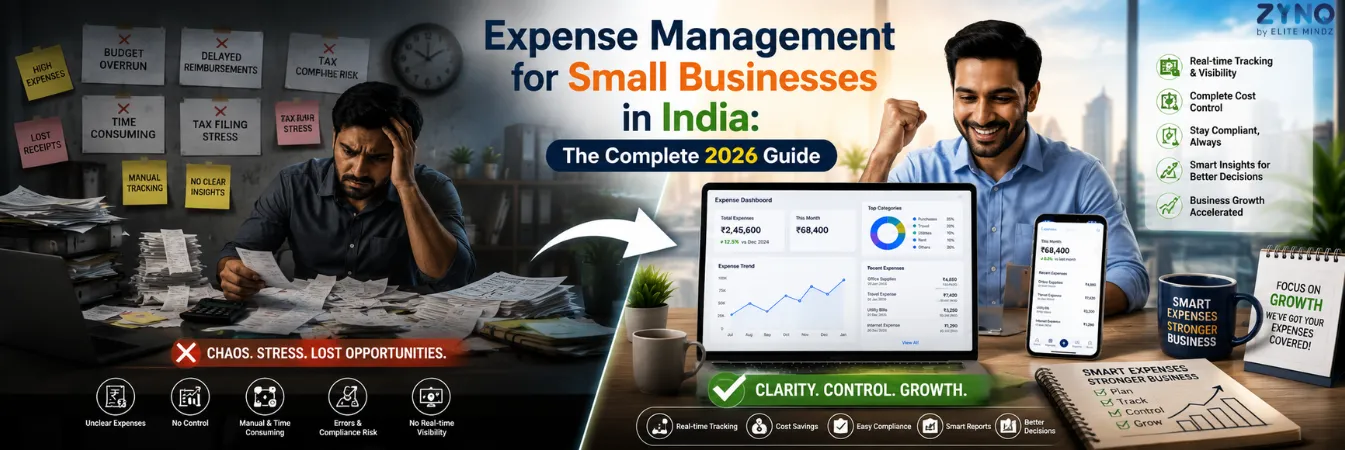
The core difference is timing and scope. Spend management is strategic. It happens before money is spent. Expense management is reactive. The employee already paid — now they want to be reimbursed.
Best practice? Keep both visible in one place. Manage them as separate processes, but report on them together. That's how you get full financial visibility.
Getting spend under management isn't just a procurement checkbox. It drives real, measurable business outcomes.
When purchases go through approved channels and negotiated contracts, you stop overpaying. You capture volume discounts. You avoid emergency buying at inflated last-minute prices. The savings add up fast.
Without a proper spend management system, your data is scattered. AP has one view. Business units have another. IT has no idea what SaaS tools the marketing team subscribed to last month.
A centralized system fixes this. Finance leaders get a single, real-time view of spend — by supplier, category, department, and geography.
Here's the bigger picture. When tactical spend control is in place, procurement teams stop firefighting. They get to focus on what actually moves the needle: strategic sourcing, supplier innovation, sustainability programs, and cost reduction initiatives.
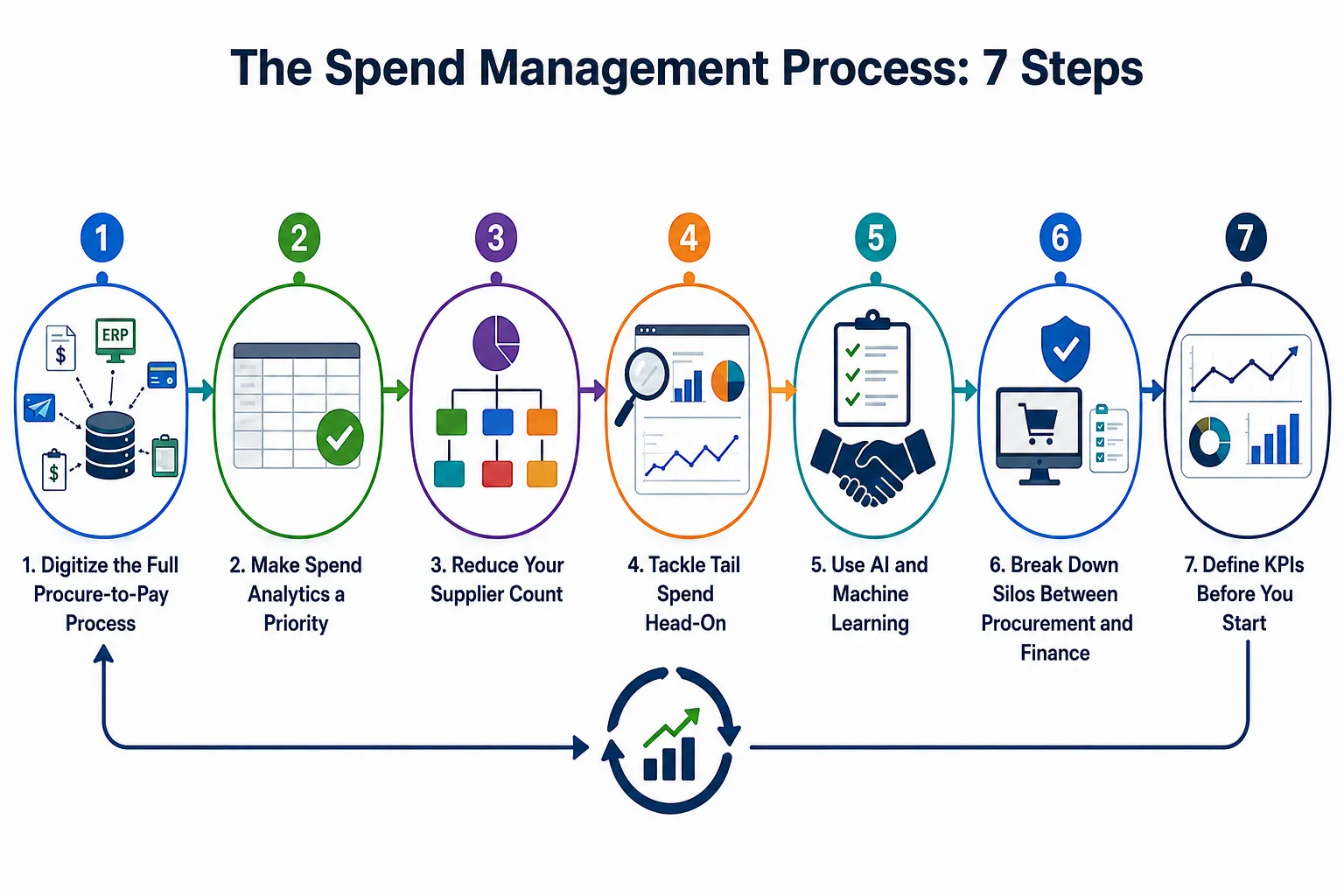
A strong spend management process is not complicated. But it has to be followed consistently. Here are the seven steps.

These are the habits that separate organizations with world-class procurement from everyone else.
Business Spend Management (BSM) is the enterprise version of spend management. It's bigger in scope and more integrated in approach.
Choosing the right spend management tool is a big decision. Here's what actually matters when you're evaluating options.
Numbers tell the real story. Here are the ones that matter most.
Even well-intentioned teams get this wrong. Here are the most common mistakes — and how to avoid them.
Spend management is not just a cost-cutting exercise. It's how organizations build financial control, reduce risk, and create a procurement function that drives real business value.
The path is clear. Start with visibility — know where your money is going. Build control — make sure it's going through the right channels. Then focus on continuous improvement — use data, analytics, and AI to optimize every rupee.
It doesn't matter if you're just beginning your spend management journey or evaluating enterprise BSM platforms. The principles are the same.
Bring spend under management. Eliminate waste. Strengthen supplier relationships. Turn procurement into a strategic advantage.
Take control of every business expense with smarter spend management. Improve visibility, reduce costs, and optimize procurement efficiency.
Frequently Ask Question’s
Q1. What's actually the difference between spend management and expense management? Isn't it all just about money?
A: The difference is timing. Spend management happens before the purchase — it decides where to buy, which suppliers are approved, and what price was negotiated. Expense management happens after the purchase — the employee already paid out of pocket and now wants reimbursement. Both matter, but treating them as the same thing is a costly mistake. One is proactive, the other is reactive.
Q2. Our finance team already tracks everything — why do we need a separate spend management system?
A: Finance teams process invoices, but spend management starts before that. By the time an invoice reaches finance, the money is already gone — to the wrong supplier, at the wrong price, without proper approval. A spend management system controls purchases before they happen. It complements the finance team's work, it doesn't replace it.
Q3. What's the very first step to improve our spend under management percentage?
A: The first step is pulling all your spend data into one place — ERP, AP systems, corporate cards, all sources. You can't improve what you can't see. Run a spend analysis first, build strategy second. No tool will work without visibility.
Q4. Is spend management only for large enterprises, or do small companies need it too?
A: Small companies need it even more — because they don't have the budget to absorb waste. A large enterprise might survive $500K in maverick spend. A small business cannot. Start simple — an approved vendor list, a basic approval workflow, and simple spend tracking. You don't need expensive software on day one.
Q5. Why is tail spend so hard to manage? These are small purchases — do they really matter?
A: That's exactly the problem — because they seem small, nobody pays attention. But tail spend makes up 80% of all purchase transactions. That means 80% of approvals, 80% of vendor onboardings, 80% of invoice processing — all for items that represent only 20% of total spend value. It's the misuse of time and resources that makes tail spend expensive, not just the price.
Q6. What does AI actually do in spend management? Is it just a buzzword?
A: No — there are real, practical use cases. AI automatically categorizes spend data (which takes weeks manually), catches duplicate payments, flags contract anomalies, and predicts which categories are likely to see price increases. A simple example: AI can automatically recognize that "IBM Corp." and "IBM India Pvt Ltd" are the same supplier — something that takes significant manual effort to catch and fix.
Q7. What should we have figured out before buying spend management software?
A: Three things: first, where your current spend data lives and how clean it is; second, which departments or categories are the most uncontrolled; third, what your current approval process looks like. Software scales a process — if the process is broken, the software just makes the broken process run faster. Strategy first, tool second.
Q8. Why does tracking spend under contract matter? The contract is already signed — isn't that job done?
A: Signing the contract is only half the job. The real question is — are employees actually using it? In 30–40% of cases, employees bypass the approved contract and purchase elsewhere — usually at a higher price. Tracking spend under contract tells you whether your negotiation efforts are actually delivering savings or not.
Q9. Doesn't reducing your supplier count feel risky? What if one supplier fails?
A: It's a valid concern — but the answer is supplier consolidation combined with risk diversification. Instead of 15 random vendors in one category, you work with 2–3 properly vetted, contracted suppliers. These relationships come with stronger SLAs, better pricing, and faster response during disruptions. The key is qualifying suppliers rigorously for risk — that's a separate but essential part of supplier management.
Q10. How long does it actually take to see results from spend management?
A: In the first 90 days, you gain visibility — you finally know where the money is going. Between 3–6 months, quick wins start appearing — cleaning up duplicate suppliers, renegotiating top contracts. At 12–18 months, you see systematic savings of 5–15% across managed spend categories. But this is a continuous discipline, not a one-time project. Teams that treat it as "set and forget" typically see their program collapse within six months.
Sneha Singh
Content Writer
Sneha Singh is a B2B tech content strategist with 4+ years of experience. She specializes in SEO-driven SaaS content, whitepapers, and platform-native social media campaigns that simplify complex technology and drive business growth. Sneha's core exp
Smart IT Powering U.S. Fintech Success
Read More →

From Booking to Reimbursement: AI-Driven Travel and Expense Management
Read More →
A New Era Begins: ZYNO Expenz Brings Smarter Corporate Travel to the Middle East
Read More →
5 Hidden Pharmacy Cost Leakages ZYNO Expenz Can Eliminate
Read More →
Top AI-Powered Expense Management Systems Transforming GCC Businesses
Read More →
Technology Expense Management in 2026: A Complete Guide to Trends and Optimization
Read More →
Step by Step Guide to Build Expense Management Software
Read More →
Best Expense Management Software in the Middle East 2026
Read More →
How AI and Machine Learning Are Transforming Expense Management Software in 2026
Read More →
Top Financial Reporting Software for Accurate Business Insights
Read More →Travel Expense Management: Complete Guide for Businesses & Teams
Read More →
How Does AI Automate Expense Auditing?
Read More →Manual vs Automated Expense Management: Why Automation is the Future
Read More →Corporate Travel Booking Software: The Smart Way to Manage Business Travel
Read More →
ZYNO Expenz vs Expensify: Which One Actually Saves Your Business Money in 2026?
Read More →
Best Expense Management Software a Complete Guide in 2026
Read More →
Expense Management vs Spend Management: What's the Real Difference?
Read More →
Best Financial Reporting Software in 2026: Top Tools CFOs Actually Use
Read More →
What Is Spend Management? Definition, Process, Strategies & Best Practices
Read More →
Business Expense Tracker: The Complete Guide to Managing Corporate Expenses in 2026
Read More →
Invoice vs Receipt: What's the Real Difference
Read More →Partner with ZYNO by Elite Mindz to revolutionize how your business works. Fill out the form, and we’ll reach out with AI-powered solutions made just for you.
We use browser cookies to ensure you get the best experience on our website. Learn more
The form was submitted successfully!
ZYNO Digital
Fueling Smarter Digital Growth
ZYNO Digital fuels smarter digital growth through data-driven marketing, creative storytelling, and performance strategies that boost visibility, engagement, and measurable business outcomes across global platforms.
ZYNO Tech
Engineering the Future of IT
ZYNO Tech delivers cutting-edge IT solutions — including web, mobile, and digital transformation services — helping businesses scale efficiently, innovate faster, and stay ahead in a connected world.
ZYNO AI
AI Built for Business Growth
ZYNO AI harnesses the power of artificial intelligence to automate processes, enhance decision-making, and deliver predictive insights — driving innovation, agility, and measurable business growth.
ZYNO by Elite Mindz
Your Partner in the AI-Powered Future
ZYNO by Elite Mindz offers AI-powered products and services that unify operations, boost productivity, and drive digital transformation — helping businesses scale smarter and innovate faster.
* In just 2 mins you'll get a response
* Your idea is 100% protected by our Non-Disclosure Agreement