×
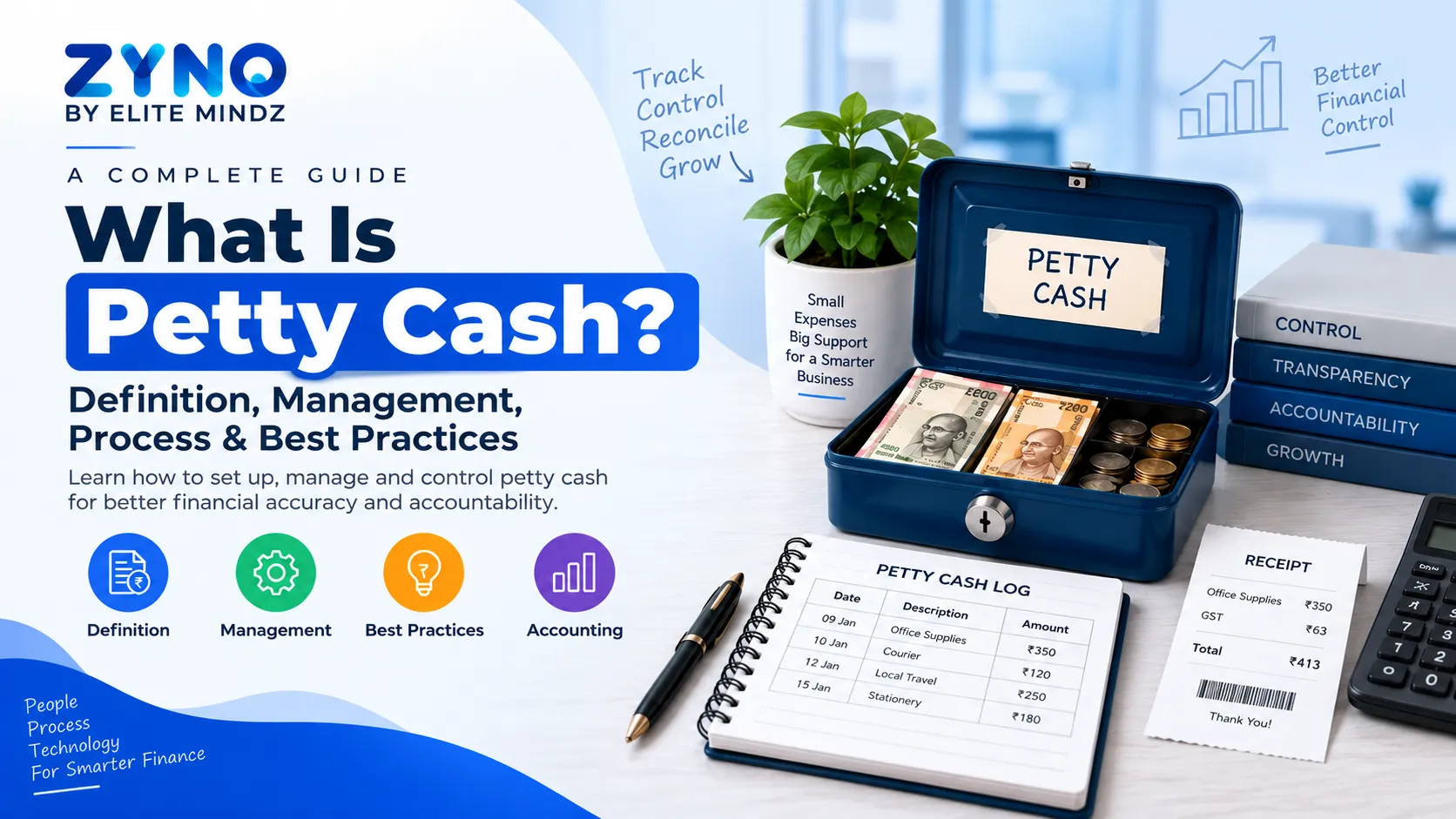
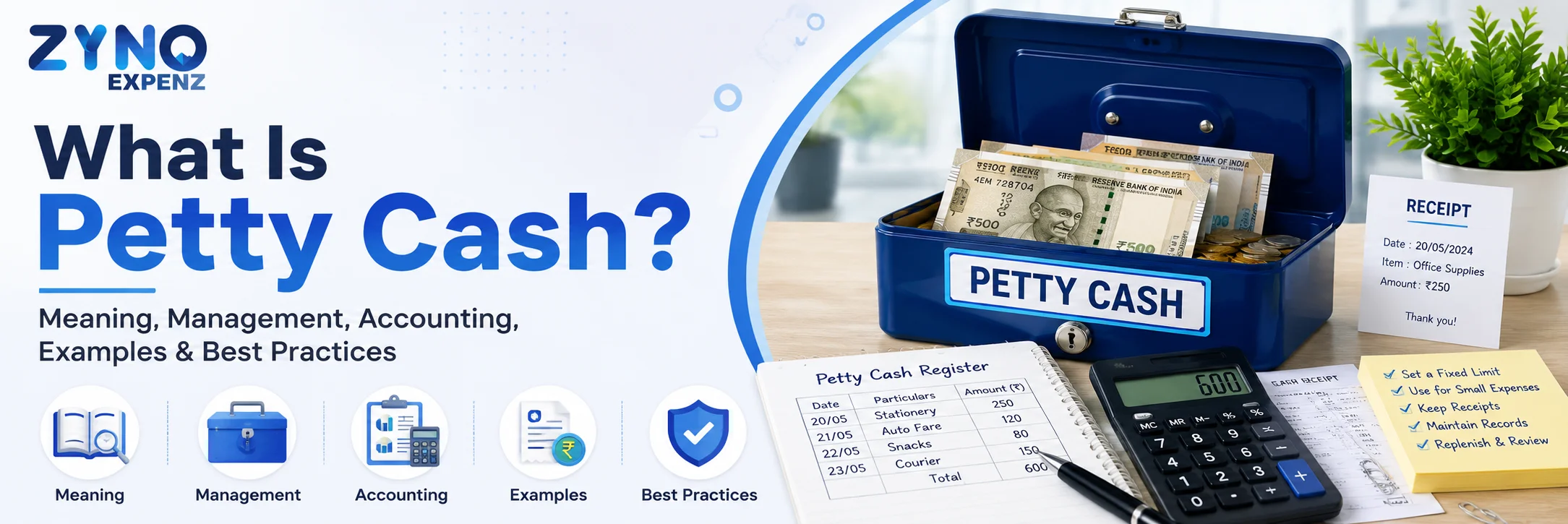
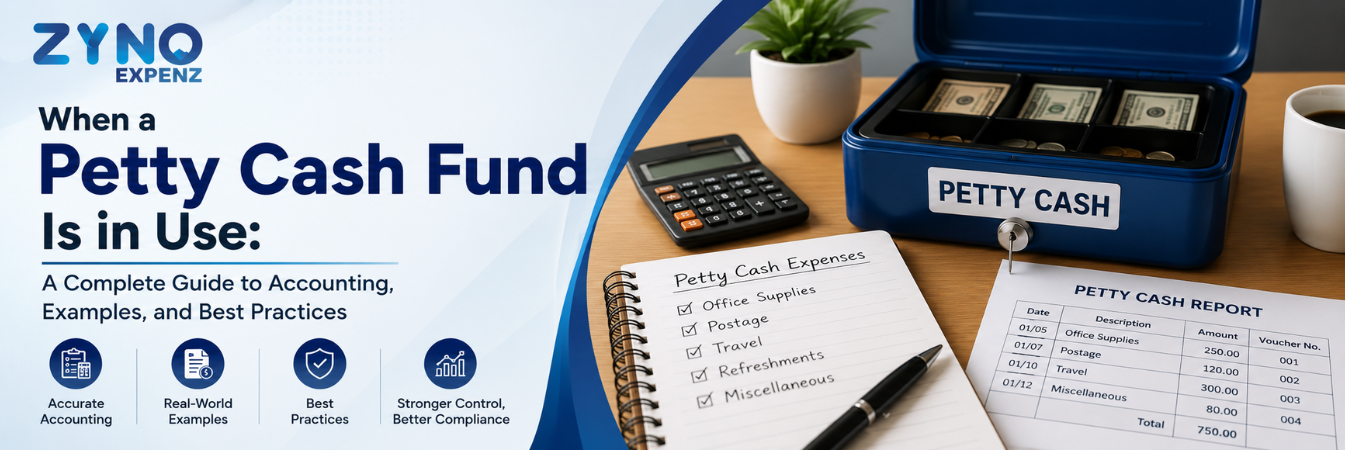
Petty cash is a small fund businesses use for everyday expenses like office supplies, travel, refreshments, and minor purchases. Proper management ensures accurate tracking, accountability, and financial control.
Most finance textbooks will tell you petty cash is simple. And honestly, in theory, it is. But the moment you actually try to track it across a busy office missing receipts, unrecorded cab fares, a cashier who "forgot" to log Tuesday's stationery run things get messy fast.
So let's talk about what petty cash actually is, how it works in real accounting, and more importantly, how to manage it so it never becomes a headache whether you're running a business in New York, Chicago, Delhi, or Mumbai.
Petty cash is a small reserve of physical money that a business keeps on hand to pay for minor, day-to-day expenses things that cost very little but still need to get paid immediately. A ream of printer paper, a courier fee, coffee for a client meeting, a parking meter.
The word "petty" comes from the French petit, meaning small. That's the whole idea. Petty cash is not for rent, salaries, or vendor invoices. It exists so employees don't have to wait for a bank transfer or raise a formal purchase order just to buy $10 worth of pens or ₹150 worth in India.
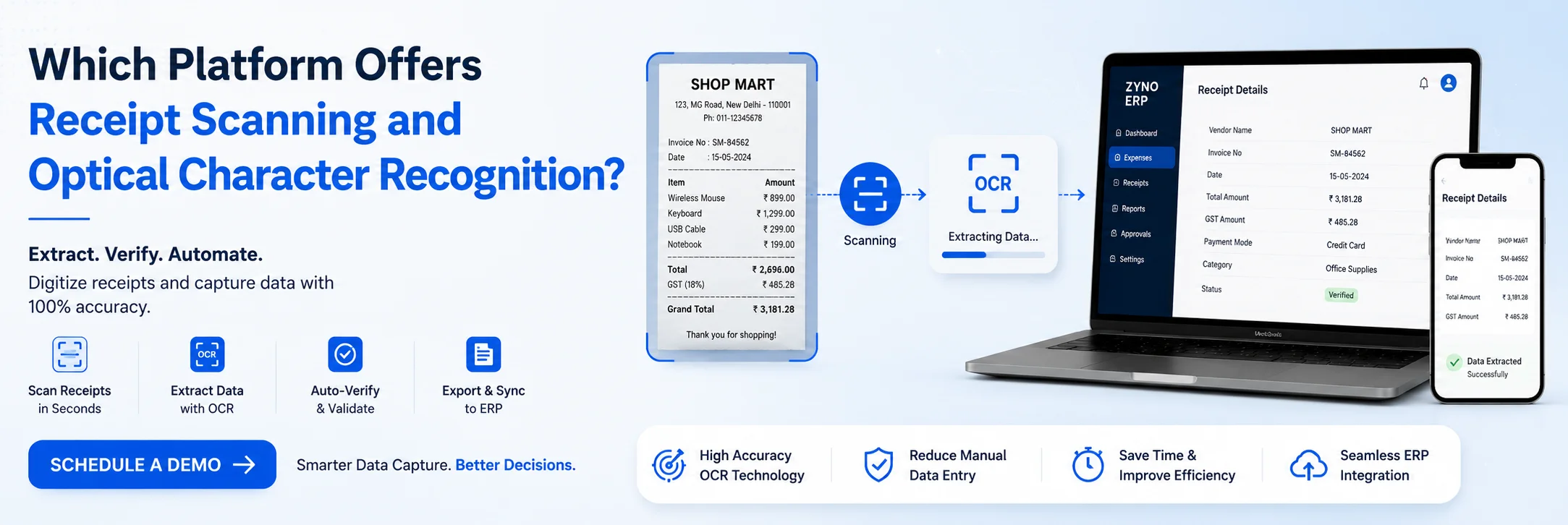
Take control of your petty cash and business expenses. Discover how automated expense management can save time and reduce errors.
How much do businesses typically keep in petty cash?
One important thing just because the amounts are small doesn't mean petty cash goes unaccounted. Every dollar (or rupee) needs a receipt, a log entry, and eventually a reconciliation. We'll get into all of that.
In accounting, petty cash is treated as a current asset. It shows up on the balance sheet under "Cash and Cash Equivalents" the same category as your bank balance.
Why current asset? Because it's immediately available. There's no conversion needed, no waiting period. You open the drawer and the money is right there.
In final accounts, the closing balance of petty cash on any given date appears on the asset side of the balance sheet. Meanwhile, all the individual petty expenses paid out during the year — stationery, travel, postage get posted to their respective expense accounts and eventually flow into the Income Statement (Profit & Loss account).
So while petty cash itself is an asset, the spending from it is an expense. That distinction matters when you're preparing financial statements.
Here's a simple scenario. It's 10 AM. Your office printer runs out of paper and there's a client presentation at 1 PM. You need two reams of copy paper that's about $15.
Do you raise a purchase order, wait for procurement approval, verify vendor details, and log an invoice for $15? Or do you open the petty cash box, take out the money, buy the paper, and file the receipt?
That's exactly why petty cash exists. Here are the core reasons:
Convenience for small purchases Not everything has a vendor invoice. Local delivery tips, quick stationery runs, parking fees these don't always come with formal receipts. Petty cash handles them cleanly.
Less load on accounts payable If every $5 coffee expense had to go through the banking system, your finance team would spend half their day processing micro-transactions. Petty cash keeps those off the AP queue entirely.
Operational continuity In retail stores, restaurants, and field teams especially, there are always sudden minor needs. Petty cash lets staff act without waiting for management approval on every small thing.
Better employee experience No one likes paying out-of-pocket and waiting two weeks for reimbursement on a $12 expense. A petty cash fund handles it on the spot.
Here are the most common real-world petty cash examples you'll see in a typical office:
United States:
India:
These are all petty expenses individually small, but if you never track them, they add up fast. A fund of $300 (or ₹10,000) can quietly drain $80–$100 (or ₹3,000–₹4,000) a month if nobody's watching.
Below is a practical petty cash expenses list you can use as a baseline when defining your own policy:
| Category | What It Covers |
|---|---|
| Office Supplies | Pens, paper, files, printer ink, envelopes, staples |
| Food & Beverages | Coffee/tea for office, refreshments for meetings |
| Transportation | Local taxi, rideshare, parking charges |
| Postage & Courier | Stamps, domestic courier, small parcel delivery |
| Maintenance | Minor repairs, cleaning supplies, light bulbs |
| Miscellaneous | Small gifts, first-aid items, newspapers |
What does NOT qualify as petty cash: Airfare, hotel accommodation, large equipment purchases, vendor payments these go through regular accounts payable, not petty cash.
Your list may look different depending on your industry. A logistics company might include more transport expenses; a creative agency might add print costs. The key is to define this clearly in your petty cash policy upfront.
Not every petty cash setup works the same way. There are a few different types, and knowing which one fits your business matters.
The basic version. A fixed amount sits in a lockbox, gets used for routine small expenses, and gets topped up when it runs low. Common in small offices with straightforward needs.
This is the gold standard and what most businesses should use. A specific "imprest amount" is set — say $200 or ₹10,000 and every time the fund is replenished, it's brought back to exactly that amount. More on this in the next section.
A separate, smaller reserve kept for genuine emergencies only. Access is restricted usually needs a manager's sign-off even for small amounts. Used sparingly and documented thoroughly.
Department heads or team leads manage their own smaller funds independently. Works well in large organizations where centralizing every petty expense becomes impractical. But it needs tight oversight across each unit.

The imprest system is the most widely used method of managing petty cash and for good reason. Under this system, the petty cash fund is fixed at a set amount called the imprest balance. Expenses get paid from this fund over a period (usually a week or a month). At the end of the period, the custodian submits all receipts, and the accounts team replenishes the fund by exactly the amount that was spent.
So the fund always resets to the same starting balance. That's what makes it reliable and auditable.
Practical example (US):
Say your imprest balance is $300.
Over the month, your petty cashier pays out:
At month end, the remaining cash is $199.50. The custodian submits $100.50 worth of receipts. The accounts team transfers $100.50 back. Fund is back to $300. Clean, simple, easy to audit.
Practical example (India):
Say your imprest balance is ₹10,000. Over the month: Office supplies ₹850, Cab fare ₹320, Courier ₹480, Refreshments ₹650 Total spent ₹2,300. Fund is topped back up to ₹10,000.
The biggest advantage of the imprest system: at any point in time, cash remaining + receipts on hand = imprest amount. If those two numbers don't match, something's off and you catch it immediately, not at year-end audit.
A petty cash book is a subsidiary book of accounts maintained specifically to record all transactions made through the petty cash fund both money received into the fund and money paid out of it.
It's separate from the main cash book. While the main cash book handles all major bank and cash transactions, the petty cash book captures the small, frequent day-to-day payments that would otherwise clutter the primary accounts.
There are two common formats:
Simple Petty Cash Book Two columns: receipts on the left, payments on the right. Works for very small businesses with low transaction volume.
Analytical Petty Cash Book The more practical version. Payments side is divided into multiple columns, one for each common expense category. This makes it much easier to post totals directly to the general ledger at month end without sorting through every individual entry.
Receipts Side:
| Date | Particulars | Voucher No. | Amount ($) |
|---|---|---|---|
| Jun 1, 2026 | Opening Balance / Cash Received | — | 300.00 |
Payments Side:
| Date | Particulars | Voucher No. | Office Supplies | Travel | Postage | Misc. | Total ($) |
|---|---|---|---|---|---|---|---|
| Jun 2 | Copy Paper | 001 | 12.50 | — | — | — | 12.50 |
| Jun 3 | Uber Fare | 002 | — | 18.00 | — | — | 18.00 |
| Jun 4 | FedEx | 003 | — | — | 9.75 | — | 9.75 |
| Jun 5 | Meeting Coffee | 004 | — | — | — | 22.00 | 22.00 |
| Total | 12.50 | 18.00 | 9.75 | 22.00 | 62.25 | ||
Here's what an analytical petty cash book looks like:
At month end, you post $12.50 to Office Supplies, $18.00 to Travel, $9.75 to Postage, and $22.00 to Miscellaneous directly into the general ledger.
The petty cash book is maintained by the petty cashier a designated person formally appointed as the petty cash custodian.
This is usually someone from the finance or administrative team. In smaller businesses, it might be the accounts executive, office manager, or even the owner. The key is that it's one person with clear accountability not a shared responsibility where everyone has access.
The petty cashier's day-to-day duties include:
One important distinction the petty cashier manages the fund, but should not be the same person who approves replenishments or audits the book. That separation of duties is a basic internal control.
Many students and junior accountants get confused about where petty cash shows up in final accounts. Here's a clear breakdown.
In the Trial Balance: The petty cash account appears on the debit side, showing the closing balance of the fund.
In the Balance Sheet: Petty cash is shown as a current asset, under "Cash and Cash Equivalents." Even if the amount is small $85 or ₹3,200 it must be disclosed accurately.
| Current Assets | USD | INR |
|---|---|---|
| Cash at Bank | $14,500 | ₹1,45,000 |
| Petty Cash in Hand | $320 | ₹3,200 |
| Accounts Receivable | $7,850 | ₹78,500 |
In the Income Statement / P&L Account: The petty cash fund itself doesn't appear here. But all the expenses paid from petty cash stationery, travel, postage, maintenance do. They're posted to their respective expense accounts and eventually flow into the P&L.
Let's go through the standard journal entries for petty cash setting it up, recording expenses, and replenishing the fund.
When you first create the fund by withdrawing from the bank:
| Account | Debit | Credit |
|---|---|---|
| Petty Cash A/c | $300 / ₹10,000 | — |
| Bank A/c | — | $300 / ₹10,000 |
Narration: Petty cash fund established by withdrawal from bank account
When an employee uses petty cash to buy office supplies worth $12.50 / ₹350:
Journal Entry 3: Replenishing the Fund (Imprest System)
Under the imprest system, at replenishment time, you record all expenses together and credit the bank. Say total expenses were $62.25 (Office Supplies $12.50, Travel $18.00, Postage $9.75, Misc $22.00):
| Account | Debit | Credit |
|---|---|---|
| Office Supplies Expense A/c | $12.50 / ₹350 | — |
| Travel Expense A/c | $18.00 / ₹504 | — |
| Postage Expense A/c | $9.75 / ₹273 | — |
| Miscellaneous Expense A/c | $22.00 / ₹616 | — |
| Bank A/c | — | $62.25 / ₹1743 |
Narration: Petty cash fund replenished to imprest amount of $300 / ₹10,000
After this entry, the Petty Cash account still shows $300 / ₹10,000 expenses recorded and cash restored in one combined step.
Petty cash management is the process of controlling, tracking, and reconciling a petty cash fund so that every transaction is authorized, documented, and accurately reflected in the books.
It sounds straightforward. But here's a sobering number petty cash fraud accounts for 14.5% of all business fraud cases. Most of it isn't dramatic theft. It's gradual: small inflated expenses, receipts created after the fact, or funds used for personal purchases. That's exactly why management systems matter.
A proper petty cash management system does three things:
Setting this up properly the first time saves a lot of pain later. Here's a practical step-by-step process:
Pick one person and give them clear ownership. This person handles all disbursements, collects receipts, maintains the log, and requests replenishment. Don't split this across multiple people it creates confusion and gaps in accountability.
Look at your last 2–3 months of minor expenses. What's the average monthly spend on small items? Set your imprest amount to cover about 3–4 weeks comfortably.
Before you put cash in the box, write down the rules. A single page covering these points is enough:
A locked cash box in a restricted drawer or cabinet. Only the custodian and one designated backup ideally the Finance Manager or CFO should have a key. This sounds obvious, but many offices skip it.
Use an analytical petty cash book with columns for your most common expense categories. If your team is comfortable with spreadsheets, a shared template works well for daily logging. Whatever you use, make it easy to update in real-time not at the end of the week from memory.
No receipt, no reimbursement. No exceptions. Even for $2 or ₹30. This rule needs to be communicated clearly and enforced consistently. A petty cash voucher (a simple form with date, amount, purpose, and signature) should accompany every disbursement.
At the end of each month, or whenever the fund drops to about 20–25% of the imprest amount, the custodian should:
These aren't suggestions. They're the baseline rules that keep a petty cash fund from turning into a loose, untracked pile of cash:
Even with good systems in place, petty cash can create problems. Here are the most common ones:
Employees lose receipts, forget to collect them, or submit informal notes instead of proper bills. Without solid documentation, reconciliation falls apart and you can't verify whether money was actually spent on what's claimed.
Amounts entered wrong, duplicate entries, transactions recorded in the wrong expense column common when petty cash is logged manually at end-of-day rather than in real-time.
Physical cash in a drawer is always a theft risk. If keys aren't properly restricted, or if the cash box sits in a common area, the risk increases significantly. Many petty cash frauds start not with malicious intent but with easy access.
For busy offices, logging every $5 and $8 transaction daily feels tedious. Entries get deferred, receipts pile up, and by the time someone sits down to reconcile, matching a stack of crumpled receipts to a backlogged log is genuinely painful.
Without regular audits and a firm policy, some employees start treating petty cash informally covering personal expenses, rounding up amounts, or borrowing small amounts "temporarily." Over months, this adds up.
If the fund runs dry and the replenishment request sits in someone's email for a week, operations get disrupted. Custodians start paying out of personal funds, or people go without what they need.
Manual petty cash books give you data only when you physically open the book. There's no real-time visibility for managers, no automated alerts when the balance drops low, and no easy way to run expense reports by category.
| Advantages | Disadvantages |
|---|---|
| Handles urgent minor expenses immediately without formal processes | Vulnerable to theft, especially without physical security controls |
| Reduces the load on accounts payable for small, routine transactions | Cash sitting idle earns no interest |
| Gives employees the ability to make quick, necessary purchases | Manual records are prone to errors and missed entries |
| Keeps operations moving without workflow interruptions | Low oversight environment can invite gradual misuse |
| Simple concept, easy to implement even in small organizations | Regular reconciliation takes time and attention to get right |
| Helps track small expenditure patterns when properly maintained | No real-time visibility unless digital tools are used |
People mix these two terms up all the time. They're related, but not the same thing.
Cash on hand refers to all physical cash a business has available bank cash withdrawals, undeposited sales revenue, any currency sitting in safes or tills. It's a broad term.
Petty cash is a specific, designated portion of that cash set aside strictly for small business expenses, managed by a custodian, and tracked in its own book.
| Parameter | Petty Cash | Cash on Hand |
|---|---|---|
| Scope | Subset — only for minor operational expenses | Broader — all physical cash the company holds |
| Purpose | Small day-to-day purchases only | Can cover a wide range of payments |
| Reporting | Shown as "Petty Cash" under current assets | Part of overall "Cash and Cash Equivalents" |
| Access | Restricted to custodian | May include cashiers, tellers, store staff |
| Transaction Value | Capped — per-transaction limit in place | No fixed cap |
Put simply: petty cash is always part of cash on hand, but cash on hand is much more than just petty cash.
While the concept of petty cash is universal, how it's managed in practice differs across markets.
| Factor | United States | India |
|---|---|---|
| Typical Fund Size | $100–$500 | ₹5,000–₹20,000 |
| Per-Transaction Limit | $25–$75 (typical) | ₹200–₹1,000 (typical) |
| Currency | USD ($) | INR (₹) |
| Tax Compliance | IRS rules require documentation; Form 1099 may apply for certain payments | GST considerations apply; payments over ₹10,000 in cash may have income tax implications under Section 40A(3) |
| Replenishment Method | Check, ACH transfer, or petty cash reimbursement form | Cash withdrawal from bank or imprest cheque |
| Common Expenses | Coffee runs, parking, small office supplies, rideshare | Auto/cab fares, chai-coffee, stationery, courier charges |
| Software Usage | QuickBooks, Expensify, Zoho Expense widely used | ZynoExpenz, Tally, Zoho, Khatabook popular in SME segment |
Key compliance note for India: Under Section 40A(3) of the Income Tax Act, any business payment exceeding ₹10,000 in cash in a single day to a single person is disallowed as a business expense. This makes it important that petty cash per-transaction limits are set well below this threshold.
Must read : Expense Management: The Complete Guide (2026)
Petty cash is a small amount of money kept in the office to pay for minor, day-to-day business expenses without needing to raise formal payment requests or transfer money from the bank each time.
In accounting, petty cash is a current asset a small, liquid fund shown on the balance sheet under "Cash and Cash Equivalents." It's used to pay for minor expenses, which are then recorded as the appropriate expense accounts in the general ledger.
Petty cash is a current asset account. It appears on the debit side of the trial balance and under current assets on the balance sheet.
Petty cash itself is a current asset. However, the individual expenses paid from petty cash (stationery, travel, etc.) are recorded as expenses in the income statement. The fund itself stays on the balance sheet; the spending flows through to P&L.
In the US, $100–$300 is adequate for most small offices. In India, ₹5,000–₹10,000 covers typical needs. The right amount is roughly 3–4 weeks' worth of your average minor expense spend enough to operate without constant top-ups, but not so much that a loss is significant.
Most Indian businesses keep petty cash funds between ₹5,000 and ₹20,000, with per-transaction limits between ₹200 and ₹1,000. Also note: under Section 40A(3) of the Income Tax Act, cash payments above ₹10,000 per person per day may be disallowed as a deduction.
Under the imprest system, the petty cash fund is maintained at a fixed predetermined balance. After each accounting period, the custodian presents all receipts, and the fund is restored to exactly the original amount. At any point, cash remaining plus receipts on hand should always equal the imprest amount.
The petty cashier a designated custodian from the finance or admin team maintains the petty cash book. This person handles disbursements, collects receipts, records transactions, and oversees reconciliation.
Petty cash expenses (also called petty expenses) are minor business expenditures paid from the petty cash fund things like office supplies, local travel, postage, refreshments, and small maintenance costs.
When the fund is established, Petty Cash is debited and Bank is credited. When expenses are paid, the relevant expense accounts are debited and Petty Cash is credited. Under the imprest system, expense entries are recorded at replenishment time rather than individually.
Petty cash is the fund the actual money set aside for small expenses. Petty expenses are the individual expenditures made from that fund. One is the container; the other is what flows out of it.
Cash on hand includes all physical currency a business holds. Petty cash is a specific, designated portion of that cash, set aside exclusively for minor expenses and managed under a controlled system with a custodian. All petty cash is cash on hand, but not all cash on hand is petty cash.
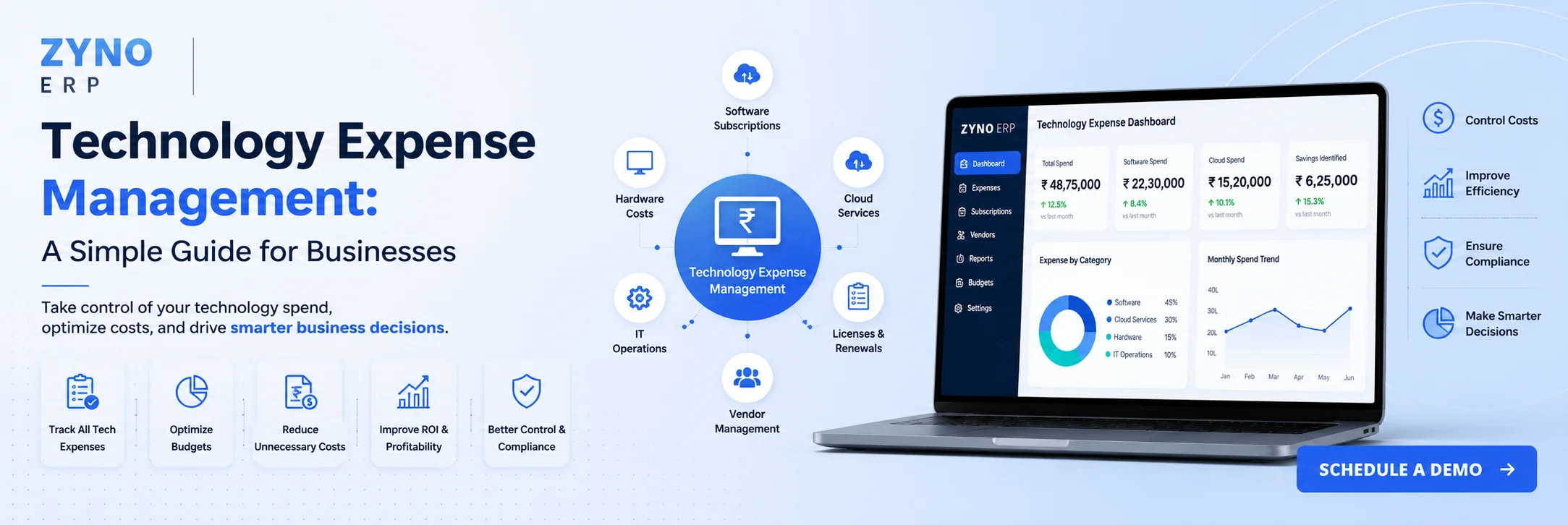
Take control of your petty cash and business expenses. Discover how automated expense management can save time and reduce errors.
Petty cash is one of those things that gets ignored until it becomes a problem. A missing $40 here, an unreconciled receipt pile there, and suddenly your audit has a gap nobody can explain.
The good news is that it genuinely isn't complicated to manage well. One custodian, a clear policy, a simple petty cash book, and a monthly reconciliation habit that's really all it takes. The imprest system gives you a natural checkpoint every time you replenish. Locked storage and receipt mandates close off most fraud risk.
As your business grows, transitioning to a digital expense management tool gives you significantly better control than a physical cash box real-time tracking, automated reconciliation, and full audit trails with zero manual entry. ZynoExpenz is built exactly for this helping businesses manage petty cash and all business expenses digitally, whether you're a US-based company or an Indian SME scaling operations.
Priya Mehta
CPA & Financial Controls Advisor
CPA & Financial Controls Advisor | Expert in audits, compliance, risk management, controls & reporting.
Smart IT Powering U.S. Fintech Success
Read More →

From Booking to Reimbursement: AI-Driven Travel and Expense Management
Read More →
A New Era Begins: ZYNO Expenz Brings Smarter Corporate Travel to the Middle East
Read More →
5 Hidden Pharmacy Cost Leakages ZYNO Expenz Can Eliminate
Read More →
Top AI-Powered Expense Management Systems Transforming GCC Businesses
Read More →
Technology Expense Management in 2026: A Complete Guide to Trends and Optimization
Read More →
Step by Step Guide to Build Expense Management Software
Read More →
Best Expense Management Software in the Middle East 2026
Read More →
How AI and Machine Learning Are Transforming Expense Management Software in 2026
Read More →
Top Financial Reporting Software for Accurate Business Insights
Read More →Travel Expense Management: Complete Guide for Businesses & Teams
Read More →
How Does AI Automate Expense Auditing?
Read More →Manual vs Automated Expense Management: Why Automation is the Future
Read More →Corporate Travel Booking Software: The Smart Way to Manage Business Travel
Read More →
ZYNO Expenz vs Expensify: Which One Actually Saves Your Business Money in 2026?
Read More →
Best Expense Management Software a Complete Guide in 2026
Read More →
Expense Management vs Spend Management: What's the Real Difference?
Read More →
Best Financial Reporting Software in 2026: Top Tools CFOs Actually Use
Read More →
What Is Spend Management? Definition, Process, Strategies & Best Practices
Read More →
Business Expense Tracker: The Complete Guide to Managing Corporate Expenses in 2026
Read More →
Invoice vs Receipt: What's the Real Difference
Read More →
Best OCR Receipt Scanner Apps in 2026
Read More →
Corporate Tax UAE: Complete Guide for Businesses in 2026
Read More →
EXPENSE TRACKING A Complete Guide for Small Businesses to Growing Companies
Read More →
What Is Per Diem? Complete Guide for India & US Businesses 2026
Read More →
Expense Management: The Complete Guide (2026)
Read More →
What Is Petty Cash? Definition, Management, and Best Practices
Read More →Partner with ZYNO by Elite Mindz to revolutionize how your business works. Fill out the form, and we’ll reach out with AI-powered solutions made just for you.
We use browser cookies to ensure you get the best experience on our website. Learn more
The form was submitted successfully!
ZYNO Digital
Fueling Smarter Digital Growth
ZYNO Digital fuels smarter digital growth through data-driven marketing, creative storytelling, and performance strategies that boost visibility, engagement, and measurable business outcomes across global platforms.
ZYNO Tech
Engineering the Future of IT
ZYNO Tech delivers cutting-edge IT solutions — including web, mobile, and digital transformation services — helping businesses scale efficiently, innovate faster, and stay ahead in a connected world.
ZYNO AI
AI Built for Business Growth
ZYNO AI harnesses the power of artificial intelligence to automate processes, enhance decision-making, and deliver predictive insights — driving innovation, agility, and measurable business growth.
ZYNO by Elite Mindz
Your Partner in the AI-Powered Future
ZYNO by Elite Mindz offers AI-powered products and services that unify operations, boost productivity, and drive digital transformation — helping businesses scale smarter and innovate faster.
* In just 2 mins you'll get a response
* Your idea is 100% protected by our Non-Disclosure Agreement