Smart IT Powering U.S. Fintech Success
Read More →

×
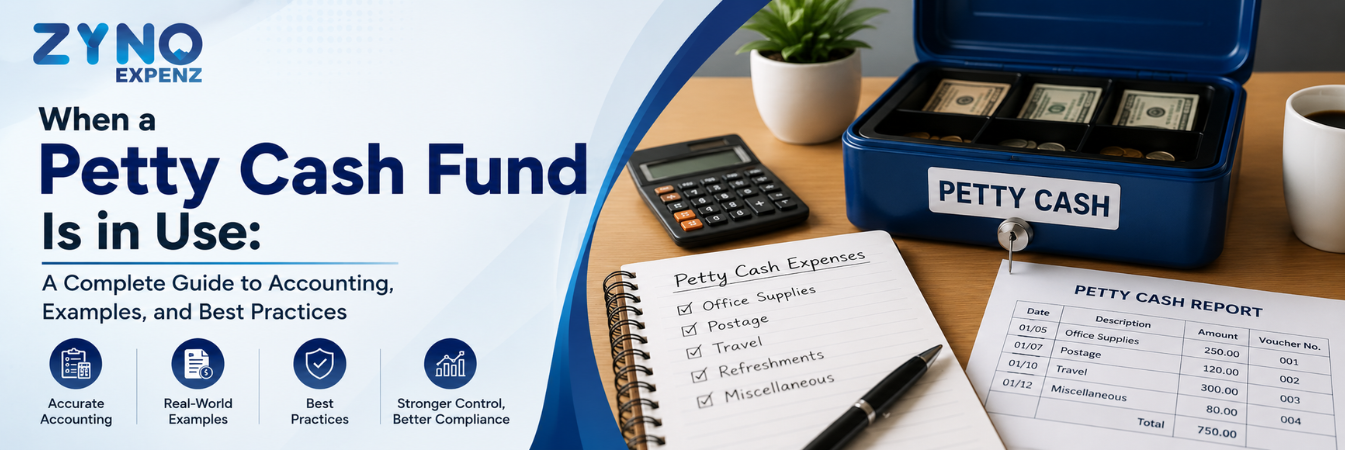
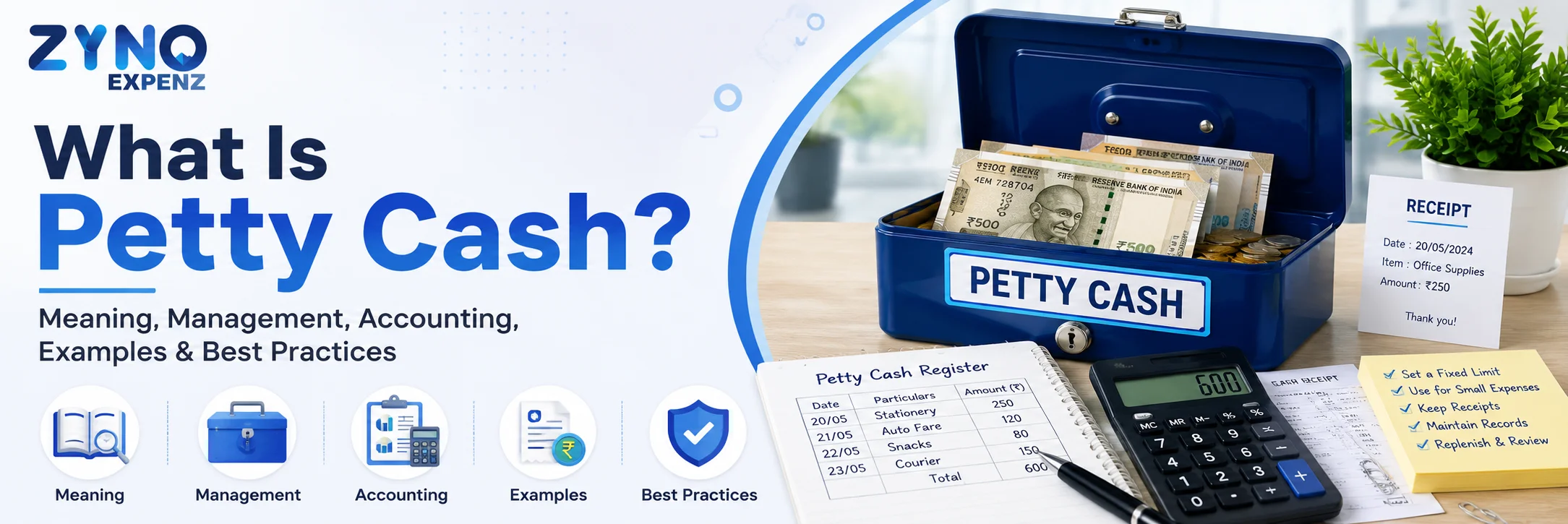
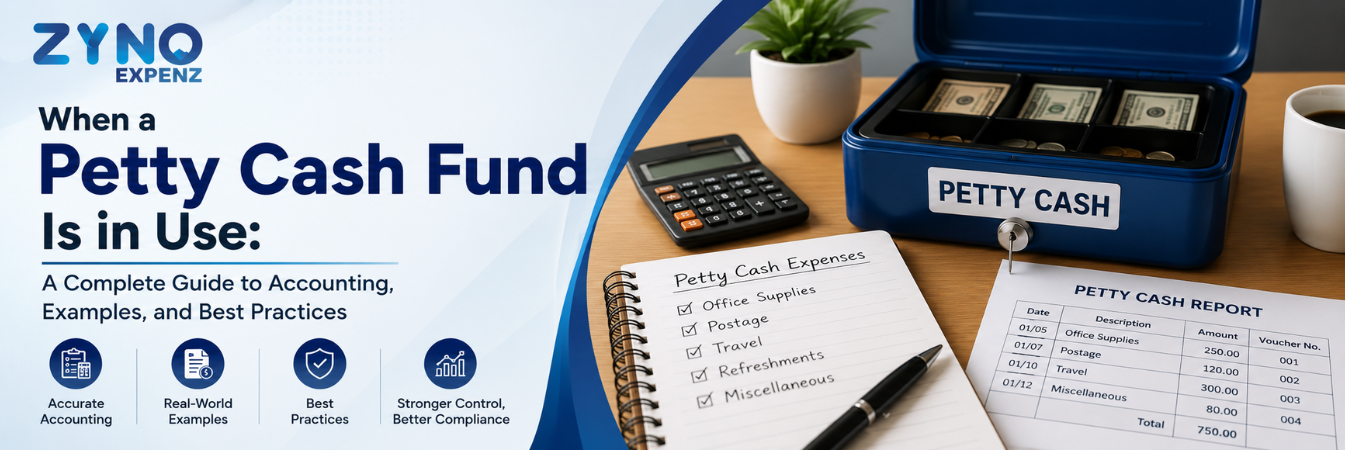
A petty cash fund is in use whenever a business needs to cover small, immediate expenses such as office supplies, local transportation, postage, or minor repairs that are too low-value to justify a check, wire transfer, or credit card payment. It typically covers transactions under $50 and is managed through the imprest system, where the fund is replenished back to a fixed amount after each use.
Businesses using ZYNO Books cut accounting time by 70% and stay 100% ZATCA-compliant — automatically.
Every business, no matter how small or how large, runs into the same recurring problem: someone needs $8 for parking, $15 for postage, or $20 to buy coffee for a client meeting and none of these amounts justify a formal purchase order, a wire transfer, or a reimbursement request that takes a week to process. This is exactly where a petty cash fund earns its place in a company's financial operations.
Understanding when a petty cash fund is in use and just as importantly, when it should not be used is essential for accurate bookkeeping, internal control, and audit readiness. In this guide, we'll walk through what a petty cash fund actually is, the specific situations where it makes sense, how to record every transaction correctly, and the best practices that keep the fund from becoming a liability instead of a convenience.
A petty cash fund is a small amount of physical cash that a business keeps on hand to cover minor, day-to-day operational expenses. It's listed as a current asset on the balance sheet and is typically managed under what accountants call the imprest system, a method where the fund is replenished back to a fixed amount every time it's used, so the total (cash on hand + receipts) always equals the original balance.
Most small businesses keep anywhere from $50 to $500 in their petty cash fund, while larger companies with multiple departments may maintain separate funds of $200–$1,000 per team. The exact amount depends on how frequently small cash expenses come up and how much cash the business is comfortable exposing to loss or theft.
Unlike routine expenses paid through accounts payable or corporate cards, petty cash transactions are manual; someone withdraws cash, spends it, and turns in a receipt. That manual nature is precisely why proper accounting and documentation matter so much.
A petty cash fund should only cover expenses that are small, immediate, and don't warrant a formal payment process. Here are the situations where it's genuinely the right tool:
When the office suddenly runs out of printer paper, pens, or tape, petty cash lets someone grab what's needed without waiting on a procurement cycle.
Taxi fares, parking fees, or public transit costs incurred by an employee running a quick business errand are classic petty cash use cases.
Stamps for a small mailing, or a same-day courier fee for an urgent document, typically come out of petty cash rather than a formal vendor invoice.
Coffee, snacks, or lunch for a small internal meeting or an unexpected client visit are commonly paid from the fund.
A jammed printer, a broken doorknob, or a quick plumbing fix that costs under $50 is often paid for directly from petty cash rather than going through a vendor purchase order.
Tips for delivery personnel or service providers are another frequent, low-value use case.
In retail or hospitality settings, petty cash is sometimes used simply to make change for a cash register.
In every one of these examples, the common thread is the same: the expense is small, unplanned, and needs to be resolved immediately, not after a multi-day approval workflow.
Just as important as knowing when to use petty cash is knowing its limits. Petty cash should never be used for:
Using petty cash outside these boundaries is one of the fastest ways to trigger audit flags and create reconciliation headaches down the line.
Most businesses manage petty cash through the imprest system because it keeps the fund's accounting simple and self-checking. Here's how it functions:
This system means you don't need a journal entry for every $8 taxi ride you only need one when the fund is topped up, which drastically reduces bookkeeping overhead while still keeping records accurate.
Setting up a petty cash fund properly from day one avoids most of the common problems businesses run into later.
Accurate journal entries are what separate a well-run petty cash fund from a bookkeeping nightmare. There are three types of entries you'll need to make.
When you first establish a $300 petty cash fund:
| Account | Debit | Credit |
|---|---|---|
| Petty Cash | $300 | - |
| Cash/Bank | - | $300 |
This simply moves money from your main cash account into the petty cash account it doesn't record any expense yet, because no expense has occurred.
Say your custodian has collected the following receipts, totaling $180:
When replenishing:
This entry restores the fund to its full $300 while correctly categorizing every dollar spent into the right expense accounts for your financial statements.
Sometimes the physical cash on hand doesn't quite match the recorded balance maybe a receipt got lost, or there's a small counting error. This is recorded using a Cash Over/Short account:
| Account | Debit | Credit |
|---|---|---|
| Office Supplies | $60 | - |
| Postage Expense | $45 | |
| Transportation Expense | $35 | - |
| Meals & Entertainment | $40 | - |
| Cash/Bank | - | $180 |
Small, occasional discrepancies are normal. A pattern of recurring shortages, however, is a signal that your controls need tightening.
A petty cash log is the backbone of accurate petty cash accounting. Every withdrawal should be recorded with:
Keeping this log current ideally updated at the moment cash is handed out, not days later is what makes weekly or monthly reconciliation fast instead of painful.
Reconciliation is the process of confirming that your books match your physical cash. Here's the standard workflow:
For funds with frequent daily use, reconcile weekly. For low-activity funds, monthly reconciliation is usually sufficient but never let more than a month pass without checking the fund.
Even a well-designed petty cash system runs into predictable friction points:
To keep a petty cash fund working for your accounting rather than against it:
As digital payments have become the norm, many businesses are re-evaluating whether physical petty cash still makes sense at all. Alternatives include:
These tools solve the core weakness of petty cash the lack of real-time visibility while still giving employees a fast way to cover small, unplanned expenses.
Q1. How much cash should a petty cash fund hold?
Most small businesses keep between $50 and $500, based on how frequently small expenses occur. Reassess the amount every few months.
Q2. Who should be responsible for petty cash?
A single designated custodian, ideally someone separate from whoever performs reconciliation, to maintain proper internal controls.
Q3. Is petty cash an asset or an expense?
Petty cash itself is a current asset on the balance sheet. It only becomes an expense once it's spent and categorized during replenishment.
Q4. How often should petty cash be reconciled?
Weekly for high-transaction funds, monthly for low-activity ones but never less frequently than monthly.
Q5. What happens if the petty cash count doesn't match the books?
Recount the cash, re-verify receipts, and record any unresolved difference in a Cash Over/Short account while investigating the cause.
Q6. Can petty cash be used for employee reimbursements?
Yes, but only for small, incidental amounts an employee has already paid out of pocket for example, reimbursing $12 for parking. Larger reimbursements should go through a formal expense report process instead.
Q7. Does petty cash need to be reported for tax purposes?
Yes. Petty cash purchases that qualify as legitimate business expenses are generally tax-deductible, but only if they're properly documented with dated receipts. Keeping incomplete records means losing the ability to claim those deductions later.
Q8.What's the difference between petty cash and a cash register?
A cash register handles regular, often high-volume customer transactions as part of daily sales. Petty cash is a much smaller, separate reserve meant only for internal operational expenses the two should never be mixed or reconciled together.
The single biggest predictor of whether a petty cash fund stays healthy over time isn't the amount of money in it it's the strength of the internal controls around it. Segregating who hands out cash from who reconciles it, requiring signed vouchers, and running the occasional surprise count aren't bureaucratic overkill; they're what protects both the business and the custodian from being blamed for discrepancies that clear documentation would have prevented in the first place. A small fund with strong controls will almost always cause fewer problems than a large fund with none.
A petty cash fund remains one of the simplest tools for handling small, unplanned business expenses but only when it's used within clear boundaries and backed by consistent documentation. Knowing exactly when a petty cash fund is in use, recording every transaction with proper journal entries, and reconciling on a regular schedule are what keep this small pool of cash from becoming a big accounting problem. Whether you stick with a traditional fund or move toward digital alternatives, the underlying principle stays the same: even small money deserves careful tracking.
Smart IT Powering U.S. Fintech Success
Read More →
From Booking to Reimbursement: AI-Driven Travel and Expense Management
Read More →
A New Era Begins: ZYNO Expenz Brings Smarter Corporate Travel to the Middle East
Read More →
5 Hidden Pharmacy Cost Leakages ZYNO Expenz Can Eliminate
Read More →
Top AI-Powered Expense Management Systems Transforming GCC Businesses
Read More →
Technology Expense Management in 2026: A Complete Guide to Trends and Optimization
Read More →
Step by Step Guide to Build Expense Management Software
Read More →
Best Expense Management Software in the Middle East 2026
Read More →
How AI and Machine Learning Are Transforming Expense Management Software in 2026
Read More →
Top Financial Reporting Software for Accurate Business Insights
Read More →Travel Expense Management: Complete Guide for Businesses & Teams
Read More →
How Does AI Automate Expense Auditing?
Read More →Manual vs Automated Expense Management: Why Automation is the Future
Read More →Corporate Travel Booking Software: The Smart Way to Manage Business Travel
Read More →
ZYNO Expenz vs Expensify: Which One Actually Saves Your Business Money in 2026?
Read More →
Best Expense Management Software a Complete Guide in 2026
Read More →
Expense Management vs Spend Management: What's the Real Difference?
Read More →
Best Financial Reporting Software in 2026: Top Tools CFOs Actually Use
Read More →
What Is Spend Management? Definition, Process, Strategies & Best Practices
Read More →
Business Expense Tracker: The Complete Guide to Managing Corporate Expenses in 2026
Read More →
Invoice vs Receipt: What's the Real Difference
Read More →
Best OCR Receipt Scanner Apps in 2026
Read More →
Corporate Tax UAE: Complete Guide for Businesses in 2026
Read More →
EXPENSE TRACKING A Complete Guide for Small Businesses to Growing Companies
Read More →
What Is Per Diem? Complete Guide for India & US Businesses 2026
Read More →
Expense Management: The Complete Guide (2026)
Read More →
What Is Petty Cash? Definition, Management, and Best Practices
Read More →
E-Invoice Software in India
Read More →
Expense Management for Small Businesses in India: The Complete 2026 Guide
Read More →
What Is an Expense Report? Definition, Process & Free Template for Indian Businesses
Read More →
Expense Policy: A Complete Guide for Indian Businesses
Read More →
What Is Petty Cash? Meaning, Management, Accounting, Examples & Best Practices
Read More →
Which Platform Offers Receipt Scanning and Optical Character Recognition?
Read More →
Technology Expense Management: A Simple Guide for Businesses
Read More →
How to Auto-Categorize Business Spending with Virtual Cards
Read More →
ZYNO Expenz vs Zoho Expense: Which One Should You Choose?
Read More →
ZYNO Expenz vs SAP Concur: Pros, Cons & Pricing (2026 Comparison)
Read More →
Invoice Fraud Prevention: The Complete Guide to Protecting Your Business in 2026
Read More →
AI in Accounts Payable Automation: The Complete Guide for Finance Teams
Read More →
When a Petty Cash Fund Is in Use: A Complete Guide to Accounting, Examples, and Best Practices
Read More →Partner with ZYNO by Elite Mindz to revolutionize how your business works. Fill out the form, and we’ll reach out with AI-powered solutions made just for you.
We use browser cookies to ensure you get the best experience on our website. Learn more
The form was submitted successfully!
ZYNO Digital
Fueling Smarter Digital Growth
ZYNO Digital fuels smarter digital growth through data-driven marketing, creative storytelling, and performance strategies that boost visibility, engagement, and measurable business outcomes across global platforms.
ZYNO Tech
Engineering the Future of IT
ZYNO Tech delivers cutting-edge IT solutions — including web, mobile, and digital transformation services — helping businesses scale efficiently, innovate faster, and stay ahead in a connected world.
ZYNO AI
AI Built for Business Growth
ZYNO AI harnesses the power of artificial intelligence to automate processes, enhance decision-making, and deliver predictive insights — driving innovation, agility, and measurable business growth.
ZYNO by Elite Mindz
Your Partner in the AI-Powered Future
ZYNO by Elite Mindz offers AI-powered products and services that unify operations, boost productivity, and drive digital transformation — helping businesses scale smarter and innovate faster.
* In just 2 mins you'll get a response
* Your idea is 100% protected by our Non-Disclosure Agreement