Smart IT Powering U.S. Fintech Success
Read More →

×
Working capital is the foundation of a business's financial health. Learn how to calculate it, understand key ratios, explore real-world examples, and discover practical strategies to keep cash flowing smoothly.
Businesses using ZYNO Books cut accounting time by 70% and stay 100% ZATCA-compliant — automatically.
Every successful business, whether it's a startup, SME, or multinational enterprise, depends on healthy cash flow to operate efficiently. Paying suppliers, purchasing inventory, managing payroll, and covering daily operating expenses all require sufficient funds. This is where working capital becomes one of the most important financial metrics.
Understanding what is working capital helps businesses evaluate their short-term financial health, improve liquidity, and ensure they have enough resources to meet daily operational needs. Whether you're a business owner, finance professional, or entrepreneur, knowing the working capital meaning, working capital formula, and effective management strategies can significantly improve your financial decision-making.
According to various business failure statistics, poor cash flow management is one of the major challenges that can impact business sustainability. business failure statistics: This is where working capital becomes one of the most important financial metrics.
This guide explains everything you need to know about working capital, including its definition, formula, examples, importance, sources, and practical ways to manage it effectively.
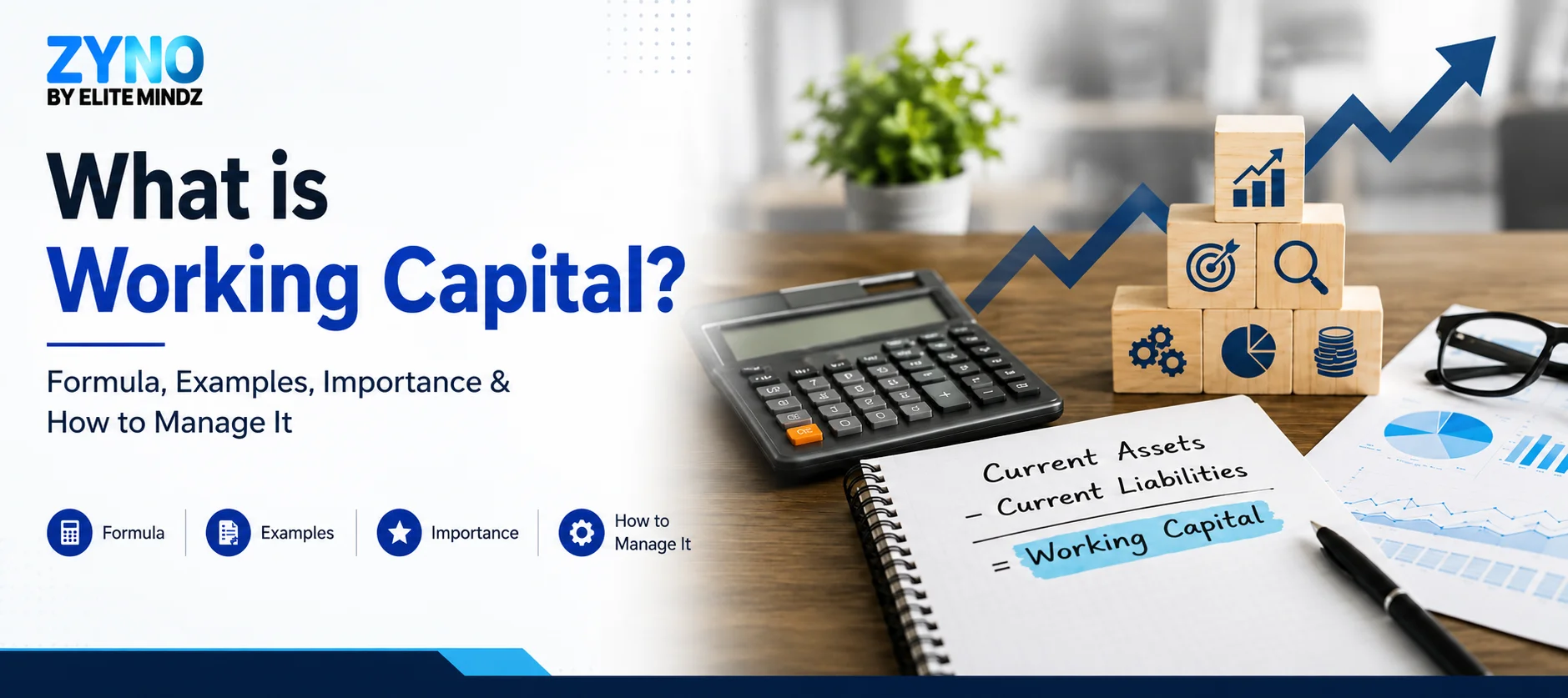
Working capital refers to the difference between a company's current assets and current liabilities. It represents the funds available to manage day-to-day business operations and short-term financial obligations.
In simple terms, working capital measures a company's ability to pay its short-term debts using its short-term assets. Businesses with positive working capital generally have sufficient liquidity to operate smoothly, while negative working capital may indicate cash flow challenges.
The working capital definition is:
Working Capital = Current Assets − Current Liabilities
Current assets include:
Current liabilities include:
Read More: Improve your financial decision-making with financial reporting software that provides real-time insights into cash flow, profitability, budgets, and business performance.
If someone asks, "What do you mean by working capital?", the answer is straightforward:
Working capital is the amount of money a business has available after paying its short-term liabilities. It ensures that a company can continue operating without facing cash shortages.
Positive working capital indicates strong financial health, while insufficient working capital may affect production, supplier payments, and overall business growth.
The most commonly used working capital formula is:
Working Capital = Current Assets − Current Liabilities
Suppose a business has:
Working Capital:
$800,000 − $500,000 = $300,000
This means the company has $300,000 available to manage daily operations after covering its short-term obligations.
Read More: Learn how expense reporting software helps businesses automate expense tracking, improve reporting accuracy, and gain better control over operational spending.
Net Working Capital (NWC) is another term used to describe the difference between current assets and current liabilities. It provides a clear picture of a company's short-term liquidity.
A positive net working capital indicates financial stability, whereas negative net working capital may suggest liquidity issues that require immediate attention.
Maintaining healthy working capital is essential for business sustainability and growth.
Without sufficient working capital, even profitable businesses can face financial difficulties.
Read More: Explore how automated expense management solutions help finance teams streamline approvals, control spending, and improve operational efficiency
Businesses can obtain working capital from various internal and external sources.
Read More: Discover how AI-powered expense management software helps organizations reduce unnecessary costs, optimize spending, and improve financial efficiency.
Selecting the right source depends on business size, cash flow requirements, and growth plans.
What is working capital in financial management?
In financial management, working capital refers to managing current assets and current liabilities efficiently to maintain liquidity while maximizing profitability.
Financial managers continuously monitor:
Effective working capital management ensures businesses maintain the right balance between liquidity and operational efficiency.
Working capital management is the process of planning, monitoring, and controlling a company's short-term assets and liabilities to ensure sufficient cash flow for daily operations.
The primary objectives include:
Good working capital management helps businesses avoid unnecessary borrowing while improving financial performance.
Read More: Track and analyze business spending effectively with expense tracking software to maintain better control over cash outflows and working capital.
Compute working capital, current ratio, quick ratio, cash ratio and cash conversion cycle from your balance sheet — built for Indian SMEs.
If you're wondering how to calculate working capital, follow these simple steps:
Calculate your total current assets.
Calculate your total current liabilities.
Subtract current liabilities from current assets.
Working Capital = Current Assets − Current Liabilities
Businesses should calculate working capital regularly to monitor financial performance and identify potential cash flow issues before they become serious.
Effective working capital management improves business stability and profitability.
Encourage faster customer payments through early payment discounts and efficient invoicing.
Avoid overstocking while maintaining sufficient inventory to meet customer demand.
Negotiate better payment terms with suppliers without affecting business relationships.
Track cash inflows and outflows regularly to prevent liquidity shortages.
Modern ERP and accounting software provide real-time visibility into cash flow, receivables, inventory, and payables, making working capital management more efficient.
Avoiding these mistakes helps maintain healthy liquidity and supports long-term business growth.
Understanding working capital is essential for maintaining financial stability and supporting sustainable business growth. By learning what working capital is, applying the working capital formula, understanding working capital meaning, and implementing effective working capital management strategies, businesses can improve cash flow, strengthen liquidity, and make better financial decisions.
Whether you're running a startup or managing an established enterprise, monitoring and optimizing your working capital regularly will help ensure smoother operations, stronger financial health, and long-term business success.
Read More: Understand how smart spend management solutions help businesses optimize expenses and improve overall cash flow management.
Working capital is the difference between a company's current assets and current liabilities. It measures a business's ability to meet short-term financial obligations and manage daily operations.
Working capital refers to the funds available for running day-to-day business activities after covering short-term liabilities. It is an important indicator of a company's financial health and liquidity.
Use this formula:
Working Capital = Current Assets − Current Liabilities
If the result is positive, the business generally has sufficient short-term liquidity.
Net working capital (NWC) is the difference between current assets and current liabilities. It helps evaluate a company's short-term financial position and operational efficiency.
Working capital management is the process of managing cash, inventory, receivables, and payables to ensure smooth business operations while maintaining optimal liquidity and profitability.
Common sources include retained earnings, business profits, bank loans, trade credit, invoice financing, equity funding, and working capital loans.
Working capital helps businesses pay suppliers, employees, and operational expenses on time. It also supports business continuity, improves cash flow, and enables future growth.
A working capital loan provides short-term financing to help new businesses cover operating expenses such as payroll, rent, inventory purchases, and utility bills before generating consistent revenue.
Yes. Negative working capital occurs when current liabilities exceed current assets. While some industries operate efficiently with negative working capital, it can also indicate potential liquidity challenges if not managed properly.
In financial management, working capital refers to the strategic management of current assets and current liabilities to maintain liquidity, improve operational efficiency, and maximize profitability.
Read More: Learn how to effectively control small business cash transactions with this petty cash fund management guide and improve expense tracking, transparency, and financial control.
Read More: Discover how AI accounts payable automation helps businesses automate invoice processing, reduce manual errors, speed up approvals, and optimize payment workflows.
Read More: Protect your business finances with effective invoice fraud prevention strategies to identify duplicate invoices, unauthorized payments, and suspicious transactions.
Read More: Compare modern expense management solutions with this detailed ZYNO Expenz vs SAP Concur 2026 comparison to understand features, automation capabilities, reporting, and pricing differences.
Read More: Explore the differences between leading expense platforms through this ZYNO Expenz vs Zoho Expense comparison and find the right expense management solution for your business needs.
Smart IT Powering U.S. Fintech Success
Read More →
From Booking to Reimbursement: AI-Driven Travel and Expense Management
Read More →
A New Era Begins: ZYNO Expenz Brings Smarter Corporate Travel to the Middle East
Read More →
5 Hidden Pharmacy Cost Leakages ZYNO Expenz Can Eliminate
Read More →
Top AI-Powered Expense Management Systems Transforming GCC Businesses
Read More →
Technology Expense Management in 2026: A Complete Guide to Trends and Optimization
Read More →
Step by Step Guide to Build Expense Management Software
Read More →
Best Expense Management Software in the Middle East 2026
Read More →
How AI and Machine Learning Are Transforming Expense Management Software in 2026
Read More →
Top Financial Reporting Software for Accurate Business Insights
Read More →Travel Expense Management: Complete Guide for Businesses & Teams
Read More →
How Does AI Automate Expense Auditing?
Read More →Manual vs Automated Expense Management: Why Automation is the Future
Read More →Corporate Travel Booking Software: The Smart Way to Manage Business Travel
Read More →
ZYNO Expenz vs Expensify: Which One Actually Saves Your Business Money in 2026?
Read More →
Best Expense Management Software a Complete Guide in 2026
Read More →
Expense Management vs Spend Management: What's the Real Difference?
Read More →
Best Financial Reporting Software in 2026: Top Tools CFOs Actually Use
Read More →
What Is Spend Management? Definition, Process, Strategies & Best Practices
Read More →
Business Expense Tracker: The Complete Guide to Managing Corporate Expenses in 2026
Read More →
Invoice vs Receipt: What's the Real Difference
Read More →
Best OCR Receipt Scanner Apps in 2026
Read More →
Corporate Tax UAE: Complete Guide for Businesses in 2026
Read More →
EXPENSE TRACKING A Complete Guide for Small Businesses to Growing Companies
Read More →
What Is Per Diem? Complete Guide for India & US Businesses 2026
Read More →
Expense Management: The Complete Guide (2026)
Read More →
What Is Petty Cash? Definition, Management, and Best Practices
Read More →
E-Invoice Software in India
Read More →
Expense Management for Small Businesses in India: The Complete 2026 Guide
Read More →
What Is an Expense Report? Definition, Process & Free Template for Indian Businesses
Read More →
Expense Policy: A Complete Guide for Indian Businesses
Read More →
What Is Petty Cash? Meaning, Management, Accounting, Examples & Best Practices
Read More →
Which Platform Offers Receipt Scanning and Optical Character Recognition?
Read More →
Technology Expense Management: A Simple Guide for Businesses
Read More →
How to Auto-Categorize Business Spending with Virtual Cards
Read More →
ZYNO Expenz vs Zoho Expense: Which One Should You Choose?
Read More →
ZYNO Expenz vs SAP Concur: Pros, Cons & Pricing (2026 Comparison)
Read More →
Invoice Fraud Prevention: The Complete Guide to Protecting Your Business in 2026
Read More →
AI in Accounts Payable Automation: The Complete Guide for Finance Teams
Read More →
When a Petty Cash Fund Is in Use: A Complete Guide to Accounting, Examples, and Best Practices
Read More →
What is Working Capital? Formula, Examples, Importance & How to Manage It
Read More →Partner with ZYNO by Elite Mindz to revolutionize how your business works. Fill out the form, and we’ll reach out with AI-powered solutions made just for you.
We use browser cookies to ensure you get the best experience on our website. Learn more
The form was submitted successfully!
ZYNO Digital
Fueling Smarter Digital Growth
ZYNO Digital fuels smarter digital growth through data-driven marketing, creative storytelling, and performance strategies that boost visibility, engagement, and measurable business outcomes across global platforms.
ZYNO Tech
Engineering the Future of IT
ZYNO Tech delivers cutting-edge IT solutions — including web, mobile, and digital transformation services — helping businesses scale efficiently, innovate faster, and stay ahead in a connected world.
ZYNO AI
AI Built for Business Growth
ZYNO AI harnesses the power of artificial intelligence to automate processes, enhance decision-making, and deliver predictive insights — driving innovation, agility, and measurable business growth.
ZYNO by Elite Mindz
Your Partner in the AI-Powered Future
ZYNO by Elite Mindz offers AI-powered products and services that unify operations, boost productivity, and drive digital transformation — helping businesses scale smarter and innovate faster.
* In just 2 mins you'll get a response
* Your idea is 100% protected by our Non-Disclosure Agreement