



The Ultimate Guide to Managing Your Business with ZYNO Books
Read More →

×
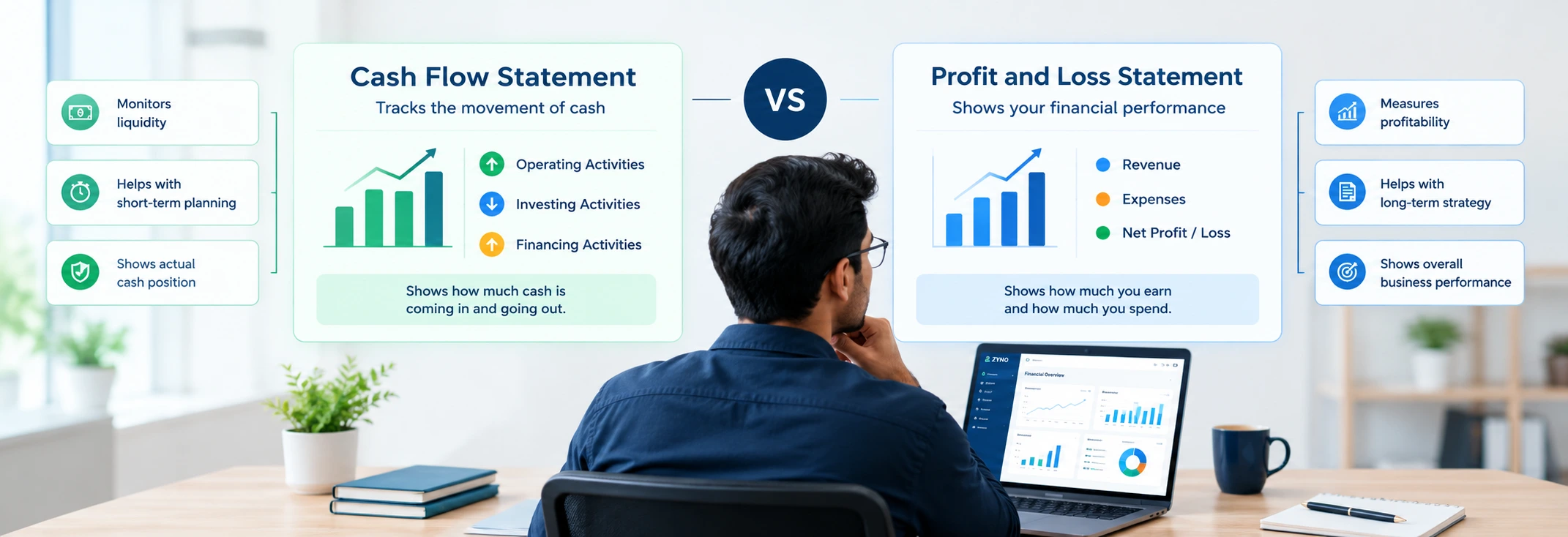
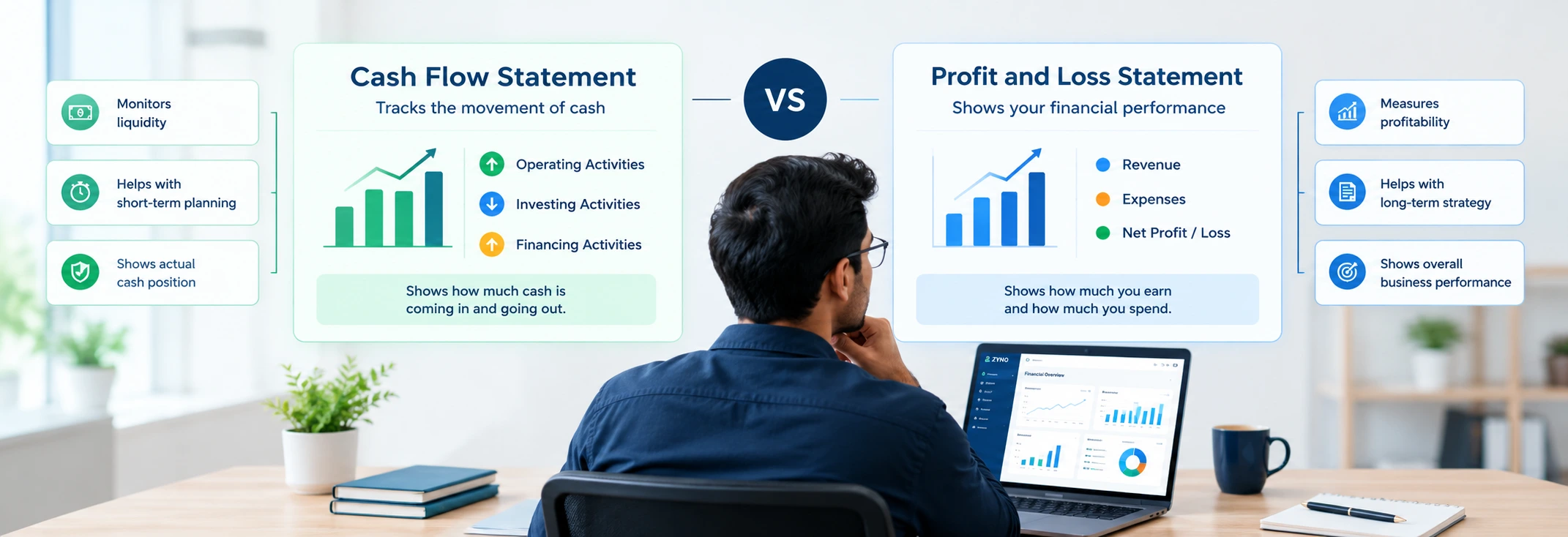
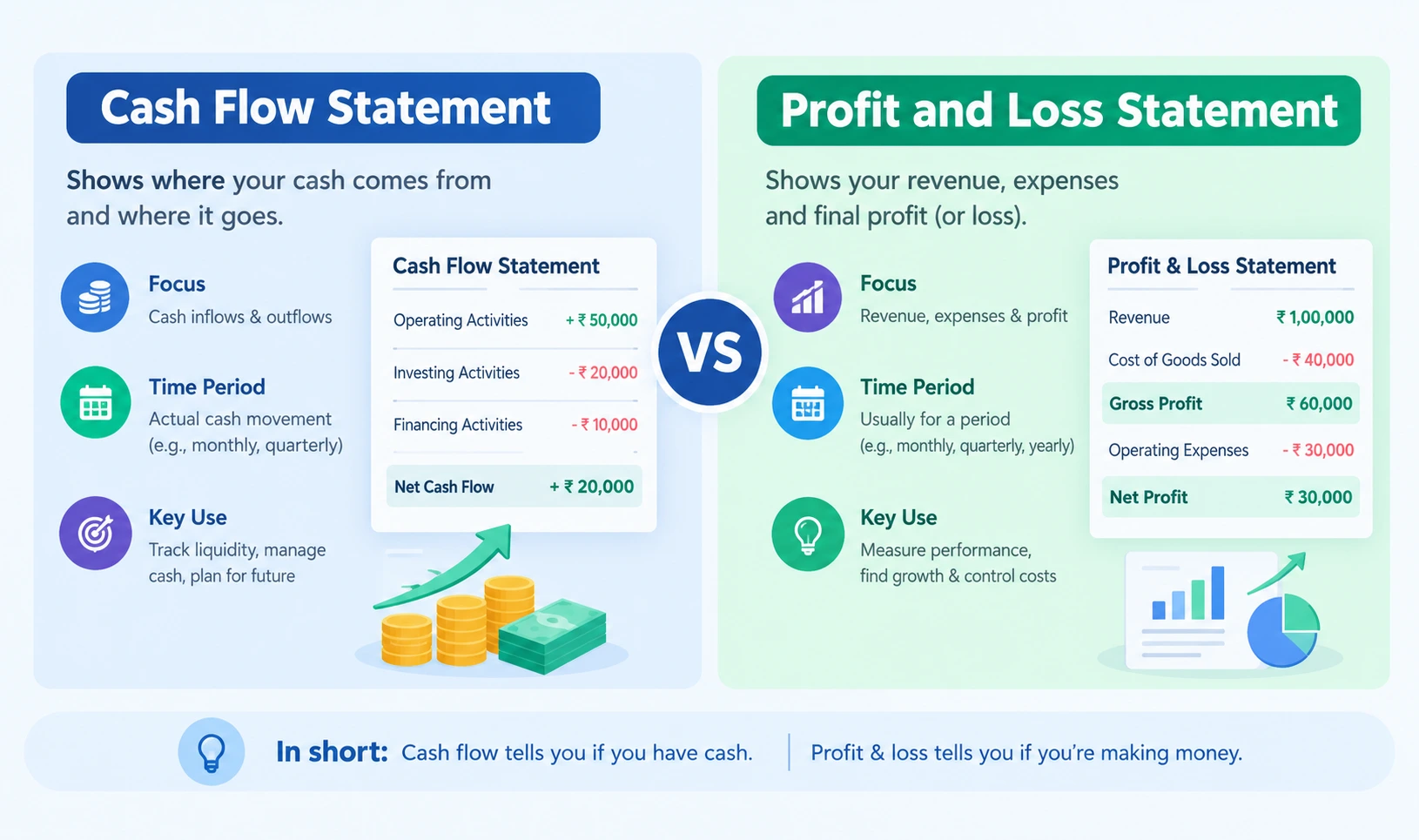
A cash flow statement vs profit and loss statement comparison highlights two aspects of business finances. A cash flow statement tracks actual cash inflows and outflows, while a profit and loss statement shows revenue, expenses, and profit or loss over a period.
Businesses using ZYNO Books cut accounting time by 70% and stay 100% ZATCA-compliant — automatically.
The cash flow statement vs profit and loss statement difference is timing. A profit and loss statement (P&L) uses accrual accounting and shows whether you are profitable, recording revenue and expenses when they are earned or incurred. A cash flow statement tracks real money entering and leaving your bank account, showing whether you can pay bills today.
A business can look profitable on paper and still run out of cash. This guide explains both reports, the key differences, real company examples, and how to read them alongside the balance sheet.
The primary difference between a cash flow statement and a profit and loss statement is what each report measures. The P&L measures financial performance using accrual accounting, while the cash flow statement explains how cash enters and leaves the business. For the formal standard behind cash flow reporting, see IAS 7: Statement of Cash Flows.
| Comparison Factor | Profit and Loss Statement | Cash Flow Statement |
|---|---|---|
| Main Purpose | Measures profitability by showing revenue, expenses, and net profit or loss. | Measures cash movement and liquidity by tracking cash inflows and outflows. |
| Accounting Basis | Usually follows accrual accounting. | Tracks actual cash receipts and payments, with adjustments when prepared using the indirect method. |
| Income | Records revenue when it is earned under accrual accounting. | Records cash inflows when cash is received. |
| Expenses | Records expenses when they are incurred under accrual accounting. | Records cash outflows when payments are made, classified by activity. |
| Depreciation | Included as an expense when applicable. | Added back to net profit under the indirect method because it is a non-cash expense. |
| Main Sections | Revenue, expenses, and net profit or loss. | Operating, investing, and financing activities. |
| Key Question | Is the business profitable? | Does the business have sufficient cash to meet its financial obligations? |
In simple terms: the P&L tells you whether your business earned a profit; the cash flow statement tells you how its cash position changed. For more on the three cash flow categories, read this ACCA guide to cash flow statements.

Consider an Indian trading business that sells products worth ₹100,000 during October. Customers pay ₹80,000 before the month ends, while ₹20,000 remains outstanding. The business incurs ₹60,000 in expenses, all paid during October.
| Particulars | Amount |
|---|---|
| Sales Revenue | ₹1,00,000 |
| Less: Business Expenses | ₹60,000 |
| Net Profit | ₹40,000 |
The company earns a net profit of ₹40,000 because the full sale is recorded as revenue and the expenses are deducted.
Assume the business begins October with ₹10,000 in cash and has no other cash transactions during the month.
| Particulars | Amount |
|---|---|
| Opening Cash Balance | ₹10,000 |
| Cash Received from Customers | ₹80,000 |
| Cash Paid for Expenses | −₹60,000 |
| Net Increase in Cash | ₹20,000 |
| Closing Cash Balance | ₹30,000 |
The business reports ₹40,000 in profit, but its cash increases by only ₹20,000 during the month. The difference arises because ₹20,000 in sales revenue has not yet been collected.
Business takeaway: profit is not the same as cash in the bank. The business must monitor outstanding invoices and payment dates to ensure it can meet upcoming obligations. Analysts at Value Research explain how rising credit sales can lift profit while cash stays dry.
Note: This is an illustrative example. It excludes GST, taxes, depreciation, inventory adjustments, loan transactions, and other items to keep the comparison simple
A standard profit and loss statement format generally follows the calculation below:
| Particulars | Amount (₹) |
|---|---|
| Sales Revenue | 5,00,000 |
| Less: Cost of Goods Sold | 2,50,000 |
| Gross Profit | 2,50,000 |
| Less: Salaries and Rent | 1,00,000 |
| Less: Marketing and Administration | 50,000 |
| Operating Profit | 1,00,000 |
| Less: Interest and Other Expenses | 20,000 |
| Profit Before Tax | 80,000 |
| Less: Illustrative Income Tax Expense | 20,000 |
| Net Profit | 60,000 |
The figures above are illustrative. The actual format depends on the business and its applicable accounting and reporting requirements.
A P&L statement helps business owners assess profit margins, expense trends, revenue growth, and overall profitability. However, it does not show whether customers have paid their invoices or whether sufficient cash is available to cover immediate payments.
A cash flow statement format divides cash movements into three categories: operating, investing, and financing activities.
| Particulars | Amount |
|---|---|
| Operating Activities | |
| Cash Received from Customers | ₹4,00,000 |
| Cash Paid to Suppliers and Employees | −₹2,50,000 |
| Other Operating Cash Payments | −₹50,000 |
| Net Cash from Operating Activities | ₹1,00,000 |
| Investing Activities | |
| Purchase of Equipment | −₹40,000 |
| Net Cash Used in Investing Activities | −₹40,000 |
| Financing Activities | |
| Loan Proceeds Received | ₹50,000 |
| Loan Principal Repaid | −₹10,000 |
| Net Cash from Financing Activities | ₹40,000 |
| Net Increase in Cash | ₹1,00,000 |
This example shows a net cash increase of ₹1,00,000. The cash flow statement also reveals where the increase came from: business operations, asset purchases, or financing.
Unlike a P&L statement, a cash flow statement includes cash movements such as equipment purchases and loan proceeds, which do not necessarily represent revenue or expenses in the P&L. Together with the balance sheet, these reports form your complete set of financial statements.
A profitable business can experience negative cash flow when money is tied up in unpaid invoices, inventory, or other working capital requirements. It may also spend cash on equipment, repay loans, or distribute dividends.
For example, a company may record ₹200,000 in monthly profit while customers delay payments worth ₹300,000. If salaries, supplier bills, and rent must be paid immediately, the company may face a cash shortage despite being profitable.
Business owners should therefore review both reports, along with their balance sheet, accounts receivable, and upcoming payment obligations. Automated bank reconciliation also helps you match payments to invoices and see your real cash position faster.
Preparing financial reports manually can make it harder to identify unpaid invoices, changing expenses, and cash shortages. Accounting software can organize sales, purchases, expenses, payment records, and financial reports in one place.
ZYNO Books helps businesses manage accounting, invoicing, expenses, and financial reporting. Its reporting tools can help teams review business performance without relying entirely on disconnected spreadsheets.
For related workflows, explore ZYNO Books’ invoicing and payment-tracking features. Still comparing options? Read our guides to the best small business accounting software, the best accounting software in India, and cloud accounting software.
Keep your accounting records organized, monitor invoices and payments, and gain clearer visibility into business finances with ZYNO Books.
A P&L statement measures revenue, expenses, and profit over a period. A cash flow statement records cash received and paid, helping businesses understand liquidity and their ability to meet financial commitments.
Yes. Delayed customer payments, rising inventory, equipment purchases, loan repayments, or other cash outflows can create negative cash flow even when the P&L reports a profit.
No. Revenue is income earned from selling goods or services. Cash flow reflects money actually received and paid. A business may record revenue before collecting the related payment.
Both are important. Review the cash flow statement to understand immediate liquidity and the P&L to assess profitability. For a complete financial picture, review the balance sheet and outstanding receivables as well.
Many accounting platforms can generate these reports from recorded transactions. Accurate results depend on complete bookkeeping, correct transaction classifications, and appropriate accounting settings.
The Ultimate Guide to Managing Your Business with ZYNO Books
Read More →
Why Is 206CR of Income Tax Act Important for Businesses in India?
Read More →The Best Accounting Software in Saudi Arabia
Read More →
Managing Multi-Country Taxes Made Easy with ZYNO Books Integrations
Read More →
Why TRN Validation is Essential for VAT Compliance in the UAE
Read More →
Best Accounts Payable Automation Software
Read More →Best Cloud Accounting Software in Kenya with M-Pesa Integration (2026) - eTIMS Compliant
Read More →Ultimate Cloud Accounting Software Guide That Saves Businesses 15+ Hours Weekly
Read More →ZATCA E-Invoicing Saudi Arabia - Complete Business Guide 2026
Read More →Cloud Accounting vs Desktop Accounting - Which Is Best for Your Business?
Read More →
Zyno Books: Best ZATCA-Approved Accounting Software in Saudi Arabia
Read More →
Best Tally Alternative in India (2026): 10 Options Compared + Honest Pros and Cons
Read More →
Pin to Pin Distance GST: Free E-Way Bill Calculator, Validity & Penalty Guide (2026)
Read More →
Best Small Business Accounting Software in 2026: Complete Guide
Read More →
ZYNO Books: Accounting Software Built Specially for Indian Businesses
Read More →
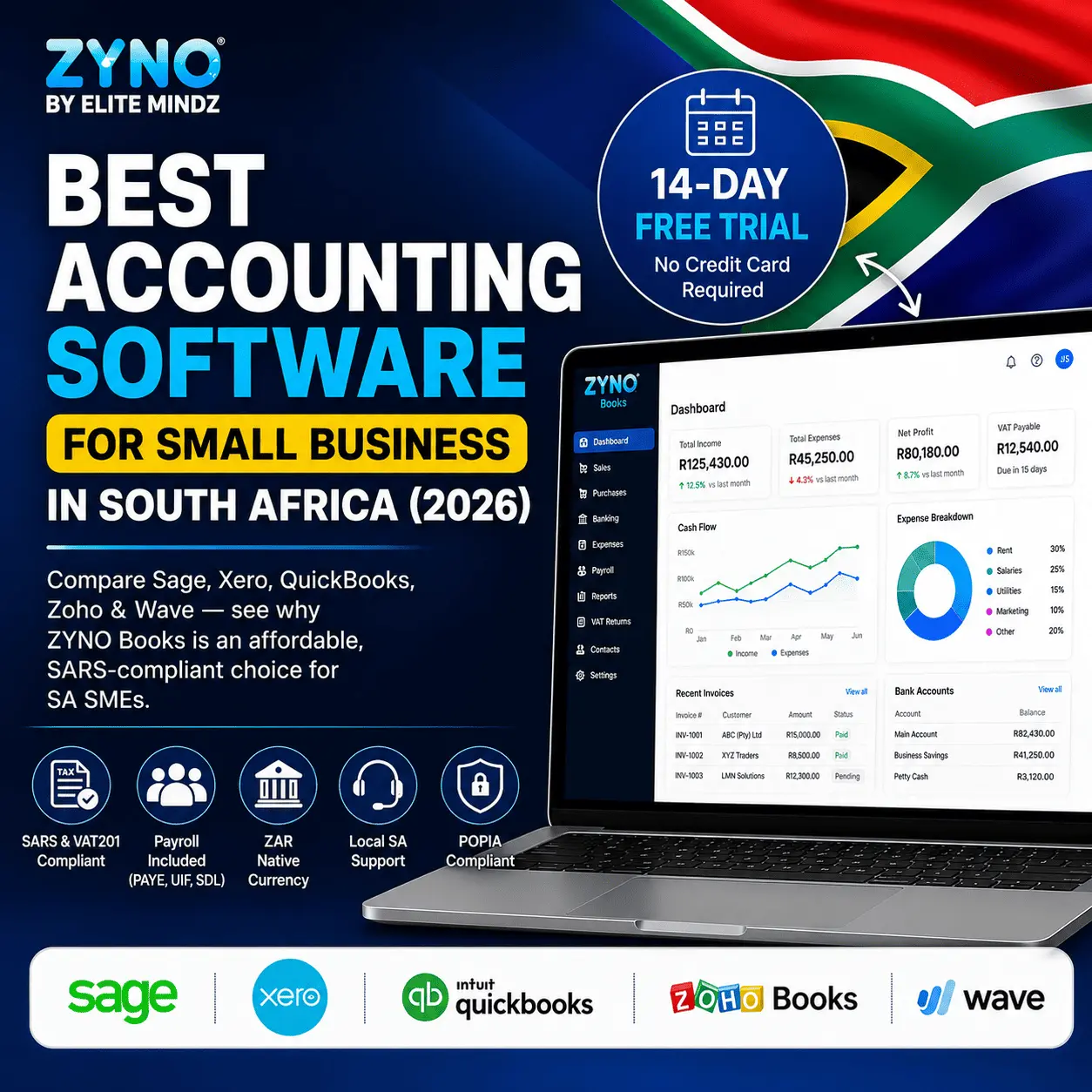
Best Accounting Software for Small Business in South Africa (2026)
Read More →
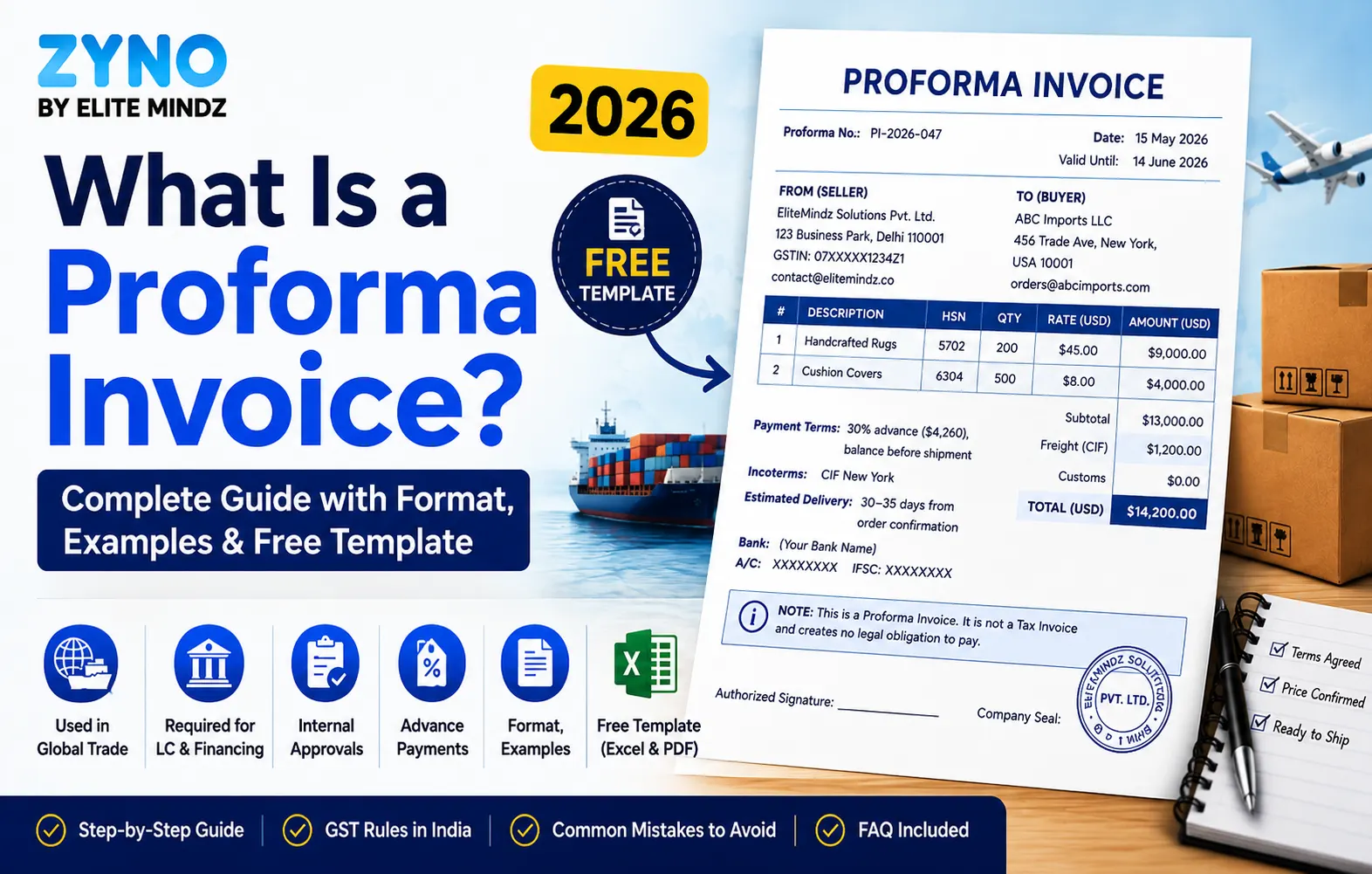
What Is a Proforma Invoice? Complete Guide with Format, Examples & Free Template (2026)
Read More →
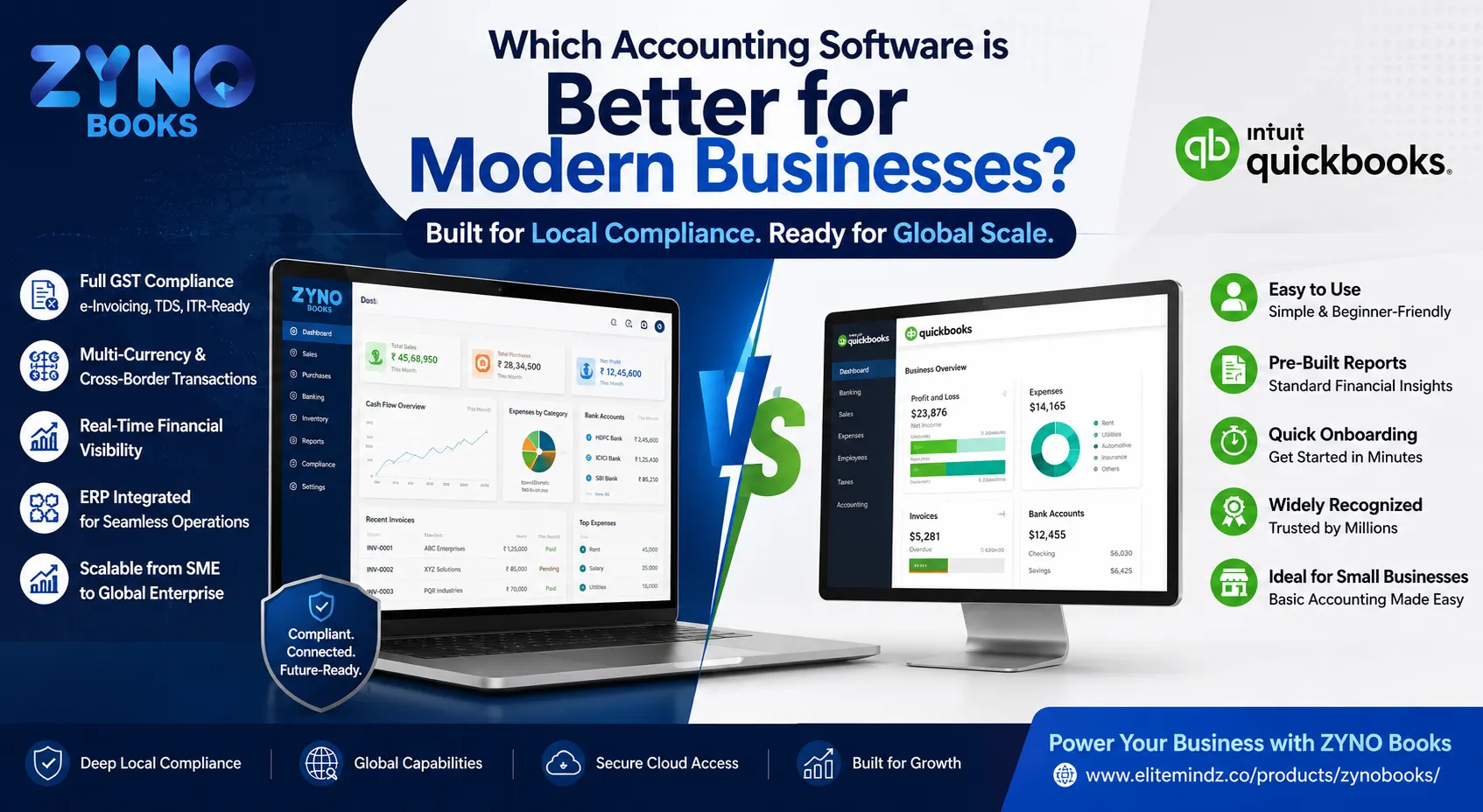
Which Accounting Software is Better for Modern Businesses?
Read More →
Bank Reconciliation Statement (BRS): Meaning, Full Form, Format & Examples
Read More →
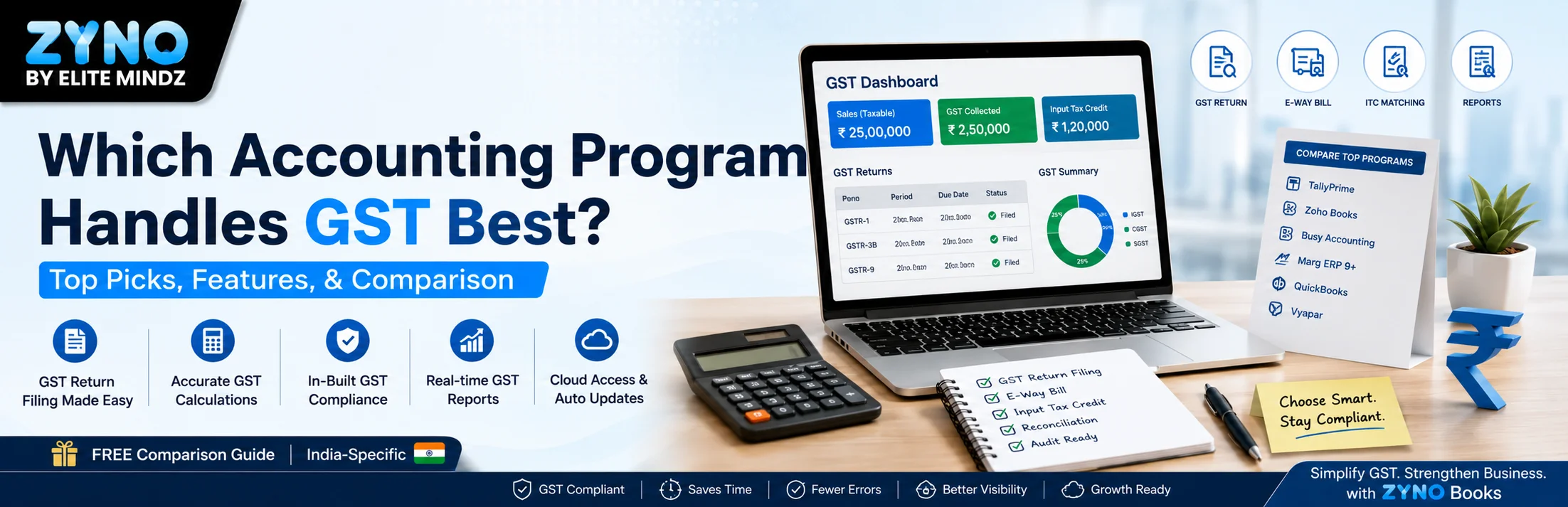
Which Accounting Program Handles GST Best?
Read More →
AI Accounting Software in India: The Next Generation
Read More →
Which Document Management Software Offers OCR and Workflow Automation?
Read More →
How to Manage ISO Documents and Compliance Records Digitally?
Read More →
Which Are the Best Accounting Softwares Other Than Tally?
Read More →
ZYNO DMS vs SharePoint: A Detailed Comparison for Enterprise Document Control?
Read More →
How to Control Document Versions and Revisions Without Excel?
Read More →
How to Automate Document Approval Workflows Across Departments?
Read More →
Which Is the Best Accounting Software in India? (2026 Guide)
Read More →
Best Accounting Software in Kenya (2026): Cloud-Based, VAT-Ready & Built for SMEs
Read More →
Cloud Accounting Software Comparison: Which One Is Right for Your Business?
Read More →
GST Accounting Software Comparison for Indian Businesses (2026 Guide)
Read More →
Zyno Books vs Vyapar: Which One Gives You More Value?
Read More →
OCR Invoice Processing: The Complete Guide for Finance Teams in 2026
Read More →
Accounting Software: The Complete Guide for Businesses in 2026
Read More →
Purchase Order Management: Meaning, Types, Format & Complete Guide (2026)
Read More →
Purchase Order vs Purchase Requisition vs Invoice: Complete Guide (2026)
Read More →
Types of Purchase Orders Explained: SPO, PPO, BPO & CPO (With Real Examples)
Read More →
Purchase Order Format: Complete Guide (GST & HSN Compliant) & Free Template
Read More →
ZynoBooks vs QuickBooks: Which AI Powered Accounting Software Is Right for Your Business in 2026
Read More →
3-Way Matching in Purchase Order Process: Complete Guide
Read More →
Purchase Order Management Software: Features to Look For (2026 Buyer's Guide)
Read More →
GST & HSN/SAC Compliance in Purchase Orders: An India-Specific Compliance Deep Dive
Read More →
Vendor Management & PO History: How to Evaluate Supplier Performance
Read More →
What Is Busy Software and Its Best Alternative in the Market?
Read More →
15 Fast Accounting Software That Can Make Your Life Easy
Read More →
GST Billing Software: Complete Guide to Features, Benefits, Pricing & Best Options
Read More →
Cloud Based Inventory Management Software: The Complete Guide for 2026
Read More →
Top 11 Best Accounting Automation Software (2026) — Compared
Read More →
How to Choose the Best GST Billing Software for Your Business
Read More →
GSTR-2B Explained: Meaning, ITC Rules, and How to Use It (2026 Guide)
Read More →
Best Project Accounting Software in 2026: Features, Pricing, and Comparison
Read More →
ZYNO Books vs TallyPrime: Is It Time to Move from Desktop to Cloud Accounting?
Read More →
Top 10 Cloud Based Document Management Systems in 2026
Read More →
BRS Format in Excel: Free Template, Example, and Step-by-Step Guide
Read More →
Cash Flow vs Profit and Loss Statement: Examples and Key Differences
Read More →Partner with ZYNO by Elite Mindz to revolutionize how your business works. Fill out the form, and we’ll reach out with AI-powered solutions made just for you.
We use browser cookies to ensure you get the best experience on our website. Learn more
The form was submitted successfully!