



The Ultimate Guide to Managing Your Business with ZYNO Books
Read More →

×
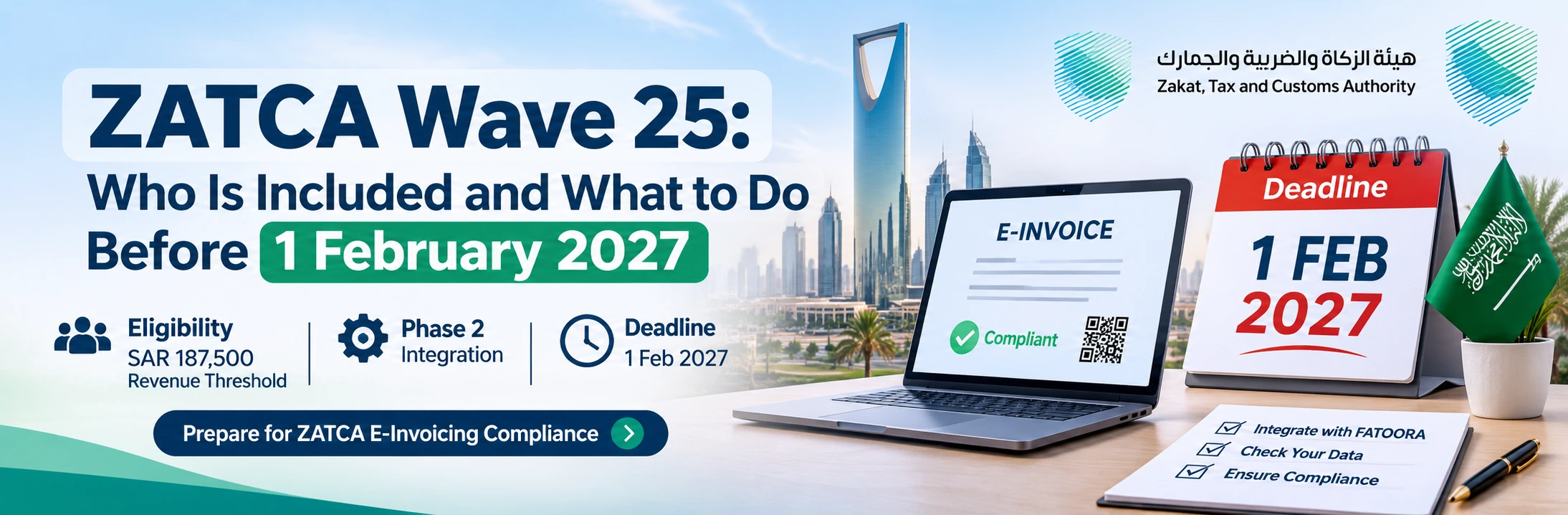
ZATCA Wave 25 includes all Saudi taxpayers whose VAT-subject revenue exceeded SAR 187,500 in any one of the years 2022, 2023, 2024, or 2025. ZATCA will notify them directly. Selected businesses must integrate their e-invoicing solutions with the FATOORA platform by no later than 1 February 2027.
Businesses using ZYNO Books cut accounting time by 70% and stay 100% ZATCA-compliant — automatically.
Saudi Arabia is expanding its electronic invoicing requirements through ZATCA Wave 25, announced by the Zakat, Tax and Customs Authority (ZATCA) on 24 July 2026.
The latest wave covers taxpayers whose VAT-subject revenue exceeded SAR 187,500 in any one of the years 2022, 2023, 2024, or 2025. It also introduces a lower revenue threshold and includes 2025 in the assessment period.
Businesses meeting the criteria must integrate their e-invoicing software or ERP systems with ZATCA's FATOORA Platform by 1 February 2027.
To prepare, businesses should review their VAT records, check official notifications, audit invoice data, and ensure their systems meet the applicable Phase 2 E-Invoicing requirements.
ZATCA Wave 25 is the twenty-fifth group of taxpayers selected for the Integration Phase (Phase 2) of Saudi Arabia’s E-Invoicing Programme. If you want the background on earlier waves, read our guide to the ZATCA e-invoicing Wave 23 and 24 deadlines.
Under this wave, businesses with VAT-subject revenue exceeding SAR 187,500 in 2022, 2023, 2024, or 2025 meet the announced selection criteria.
ZATCA will directly notify targeted taxpayers and require them to connect their existing e-invoicing solutions fx the national FATOORA platform by 1 February 2027, as stated in ZATCA’s official Wave 25 announcement.
The main objective of this integration is to connect business invoicing systems with ZATCA, improve the accuracy of electronic tax invoices, and support automated invoice validation, clearance, and reporting.
Unlike basic digital invoice generation, Phase 2 E-Invoicing introduces additional technical requirements. These include prescribed electronic invoice formats, additional mandatory invoice fields, system integration, and compliance with ZATCA’s technical specifications.
For businesses already using accounting or ERP software, the next step is to determine whether their existing system supports the required integration capabilities.
The most important eligibility factor for ZATCA Wave 25 is the annual VAT-subject revenue threshold of SAR 187,500.
According to ZATCA's announcement, the criteria cover taxpayers whose VAT-subject revenue exceeded this amount during at least one of the following four years:
This means businesses do not need to exceed the threshold in all four years. Crossing the specified revenue threshold in even one qualifying year meets the published revenue criterion.
Businesses should review their annual VAT-subject turnover and compare it against the SAR 187,500 threshold.
For example, if a company generated SAR 210,000 in VAT-subject revenue in 2023 but generated less in 2024 and 2025, it still meets the published revenue criterion.
It is important to distinguish VAT-subject revenue from total business receipts, net profit, or cash collected. Companies should use their relevant VAT records and consult their tax advisers when classifying transactions. Accounting tools with built-in VAT software make this review much easier.
The assessment period includes four years: 2022, 2023, 2024, and 2025.
This is particularly important for businesses that experienced revenue growth in 2025 or exceeded the threshold during an earlier financial year.
For instance, a business that generated SAR 150,000 in 2022, SAR 170,000 in 2023, SAR 180,000 in 2024, and SAR 200,000 in 2025 meets the published revenue criterion because its VAT-subject revenue exceeded SAR 187,500 in 2025.
Meeting the revenue criterion is an important eligibility indicator, but businesses should also monitor their official ZATCA communications.
The authority will notify the targeted taxpayers directly about their inclusion in Wave 25 and the requirement to integrate their invoicing solutions with FATOORA.
Companies should regularly check their registered contact information, taxpayer accounts, and official communications to avoid missing important integration instructions.
Businesses should understand the main regulatory information before starting their integration preparation.
|
Compliance Criteria |
ZATCA Wave 25 Details |
|
Announcement date |
24 July 2026 |
|
Revenue threshold |
Above SAR 187,500 |
|
Qualifying years |
2022, 2023, 2024, or 2025 |
|
Implementation phase |
Phase 2 Integration |
|
Integration platform |
FATOORA |
|
Responsible authority |
ZATCA |
|
Integration date |
1 February 2027 |
|
Notification method |
Direct notification from ZATCA |
The revenue threshold has decreased from SAR 375,000 under Wave 24 to SAR 187,500 under Wave 25. This 50% reduction brings a broader group of smaller businesses within the latest announced selection criteria. You can see how the earlier waves worked in our Wave 23 and Wave 24 deadline guide.
The inclusion of 2025 revenue also makes it important for companies to review their latest financial and VAT records rather than relying exclusively on previous years.
Businesses included in ZATCA Wave 25 should begin preparing their invoicing infrastructure well before the integration date. A structured implementation approach can help reduce technical problems, incorrect invoice submissions, and operational interruptions.
Here are six important steps businesses should follow.
The first major requirement is to ensure that the existing e-invoicing software, ERP system, or custom invoicing application can integrate with ZATCA's FATOORA Platform.
Businesses using platforms such as Odoo, TallyPrime, or custom-built ERP solutions should evaluate whether their current configuration supports the applicable ZATCA integration specifications.
The integration process involves preparing the system to communicate with FATOORA through the required APIs and completing the relevant onboarding and authentication procedures.
Businesses should check whether their software supports:
Choosing compatible e-invoicing software can help businesses manage these requirements without relying on disconnected manual processes. Our guide to ZATCA-approved accounting software in Saudi Arabia explains what to look for, and you can compare more options in our list of the best accounting software in Saudi Arabia.
Accurate business information is essential for successful ZATCA Phase 2 Integration.
Before connecting their invoicing systems, businesses should review their existing customer, supplier, product, and tax information.
Important information to verify includes:
Incorrect VAT numbers, missing invoice fields, and inconsistent tax calculations can create validation issues during integration and invoice processing. Learn more about why VAT number validation is essential for tax compliance.
Businesses should therefore conduct a complete data audit before starting the final onboarding and testing process.
A Phase 2-compatible invoicing system must support the applicable electronic invoice formats, cryptographic controls, and reporting workflows, as set out in ZATCA’s E-Invoicing laws and regulations.
Businesses should configure their systems to generate compliant XML invoices and implement the applicable cryptographic signing and stamping requirements.
Two important workflows must be understood:
Standard Tax Invoices (B2B and applicable B2G transactions):
Standard tax invoices are subject to the invoice clearance process. The invoice must be transmitted to ZATCA through the integrated system and cleared before being shared with the buyer.
Simplified Tax Invoices (B2C transactions):
Simplified tax invoices follow the invoice reporting process. They are generated with the required cryptographic controls and must be reported to ZATCA through FATOORA within 24 hours of issuance.
Businesses should also configure the applicable QR code, invoice data fields, security controls, and other technical requirements according to their transaction type.
Completing a technical connection does not automatically mean that a business is fully ready for ZATCA compliance.
Businesses should test their systems to identify invoice generation, authentication, formatting, and reporting problems before production use.
The testing process should cover:
Testing helps businesses identify configuration issues before they affect actual invoicing operations.
Employees responsible for billing, taxation, and financial reporting must understand the changes introduced by Phase 2 E-Invoicing.
Businesses should provide practical training on generating electronic invoices, managing VAT calculations, handling rejected invoices, and following the correct clearance and reporting processes.
Finance teams should also understand how to identify missing information, correct invoice-related errors, and maintain proper electronic records.
A trained accounting team can help businesses maintain more accurate invoicing operations and reduce avoidable compliance issues.
Businesses should regularly monitor official communications from ZATCA and follow the integration instructions applicable to their selected wave.
The authority's notification provides important information about the integration process and applicable requirements.
Companies should coordinate with their accounting software providers, ERP implementation teams, and tax advisers to complete onboarding, testing, and system configuration within the required timeline.
The objective should be to complete all necessary integration activities before 1 February 2027, rather than waiting until the final days.
The latest ZATCA Wave 25 announcement is particularly important for small and medium-sized enterprises (SMEs).
The reduction in the revenue threshold from SAR 375,000 to SAR 187,500 expands the group of taxpayers covered by the announced integration criteria.
Smaller businesses that previously focused only on basic electronic invoice generation may now need to evaluate their accounting and invoicing infrastructure for Phase 2 integration.
This transition can create several operational challenges:
Outdated Accounting Systems: Older billing applications may not support the required API connectivity, XML formats, or cryptographic controls.
Manual Invoice Processing: Businesses relying on spreadsheets and disconnected tools may face additional work when preparing their systems for integration. Tools such as accounts payable automation software can reduce this manual effort.
Incorrect VAT Information: Incomplete customer details and incorrect tax configurations can lead to invoice validation issues.
Limited Technical Resources: Smaller companies may not have dedicated IT teams to manage ERP upgrades and integration testing.
Employee Training Requirements: Finance and accounting employees may need additional training to understand the updated invoicing workflows.
Investing in compatible electronic invoicing software and preparing early can help businesses address these challenges more effectively.
The right e-invoicing software can simplify invoice generation, improve VAT data accuracy, and support the technical processes required under ZATCA Phase 2.
Instead of depending on manual invoice preparation and disconnected financial systems, businesses can use integrated technology to manage their invoicing operations.
Important capabilities to evaluate include:
For companies preparing for the upcoming deadline, selecting the right technology can help establish a more reliable and efficient invoicing process.
Explore Elite Mindz E-Invoicing Solutions to learn how digital invoicing technology can support automated invoice management and business compliance workflows.
Businesses can use this checklist to monitor their readiness before the 1 February 2027 deadline.
The announcement of ZATCA Wave 25 marks another important development in Saudi Arabia's digital tax transformation. With the revenue threshold reduced to SAR 187,500 and the inclusion of 2025 in the assessment period, more businesses need to review their eligibility and prepare for Phase 2 E-Invoicing Integration.
Companies should not wait until the final deadline to evaluate their existing invoicing systems. Reviewing historical VAT records, checking official ZATCA notifications, auditing invoice data, and testing FATOORA integration can help businesses prepare for the transition.
The most important step is to ensure that the existing E-Invoicing Solution supports the applicable technical requirements and that the business completes the required integration no later than 1 February 2027.
If your organisation is preparing for the upcoming requirements, explore Elite Mindz E-Invoicing Solutions to understand how digital invoicing technology can improve invoice management, streamline financial workflows, and support your ZATCA e-invoicing compliance journey.
ZATCA e-invoicing, also known as FATOORA, is Saudi Arabia’s electronic invoicing system that requires VAT-subject taxpayers to generate and store structured electronic invoices through compliant software. Phase 2 also requires integration with ZATCA’s platform.
2. Who is included in ZATCA Wave 25?
Businesses whose VAT-subject revenue exceeded SAR 187,500 in any one of the years 2022, 2023, 2024, or 2025 fall within the Wave 25 revenue criteria. ZATCA directly notifies targeted taxpayers.
3. What is the deadline for ZATCA Wave 25 e-invoicing integration?
The ZATCA Wave 25 integration deadline is 1 February 2027. Targeted businesses must connect their e-invoicing solutions with the FATOORA Platform by this date.
4. What is the e-invoicing revenue limit for FY 2026–27 in Saudi Arabia?
For ZATCA Wave 25, the specified threshold is VAT-subject revenue exceeding SAR 187,500 in any one of the calendar years 2022, 2023, 2024, or 2025. This is not a separate FY 2026–27 turnover threshold.
5. What is the best e-invoicing software for Saudi Arabia?
The best e-invoicing software for Saudi Arabia should support ZATCA FATOORA integration, XML invoice generation, VAT calculations, cryptographic controls, invoice clearance, and reporting. Businesses should evaluate software based on their transaction requirements and integration capabilities. Our guides to ZATCA-approved accounting software and the best accounting software in Saudi Arabia can help you compare options.
6. Is ZATCA e-invoicing mandatory for small businesses?
Yes. Small businesses can fall under the ZATCA e-invoicing requirements. For Wave 25, businesses exceeding the SAR 187,500 VAT-subject revenue threshold in any qualifying year fall within the announced criteria, subject to ZATCA selection and notification.
7. What is the difference between ZATCA Phase 1 and Phase 2?
Phase 1 requires businesses to generate and store compliant electronic invoices. Phase 2 additionally requires selected taxpayers to integrate their invoicing systems with ZATCA's FATOORA Platform and follow the applicable invoice clearance and reporting processes.
8. What documents and data are required for ZATCA e-invoicing integration?
Businesses should prepare their VAT registration details, customer information, product and service data, invoice records, VAT configurations, and credit and debit note information. Accurate data helps prevent invoice validation and integration issues.
9. What happens if a business does not complete ZATCA Wave 25 integration on time?
Businesses selected for Wave 25 must comply with the applicable Phase 2 requirements by the announced deadline. Non-compliance may result in regulatory consequences under Saudi e-invoicing rules, including applicable penalties.
10. How can businesses prepare for ZATCA Wave 25 before February 2027?
Businesses should review VAT-subject revenue, check ZATCA notifications, audit invoice data, select compatible e-invoicing software, complete FATOORA integration testing, and train finance teams before 1 February 2027
The Ultimate Guide to Managing Your Business with ZYNO Books
Read More →
Why Is 206CR of Income Tax Act Important for Businesses in India?
Read More →The Best Accounting Software in Saudi Arabia
Read More →
Managing Multi-Country Taxes Made Easy with ZYNO Books Integrations
Read More →
Why TRN Validation is Essential for VAT Compliance in the UAE
Read More →
Best Accounts Payable Automation Software
Read More →Best Cloud Accounting Software in Kenya with M-Pesa Integration (2026) - eTIMS Compliant
Read More →Ultimate Cloud Accounting Software Guide That Saves Businesses 15+ Hours Weekly
Read More →ZATCA E-Invoicing Saudi Arabia - Complete Business Guide 2026
Read More →Cloud Accounting vs Desktop Accounting - Which Is Best for Your Business?
Read More →
Zyno Books: Best ZATCA-Approved Accounting Software in Saudi Arabia
Read More →
Best Tally Alternative in India (2026): 10 Options Compared + Honest Pros and Cons
Read More →
New: Free PIN to PIN Distance Calculator for GST E-Way Bill
Read More →
Best Small Business Accounting Software in 2026: Complete Guide
Read More →
ZYNO Books: Accounting Software Built Specially for Indian Businesses
Read More →
Best Accounting Software for Small Business in South Africa (2026)
Read More →
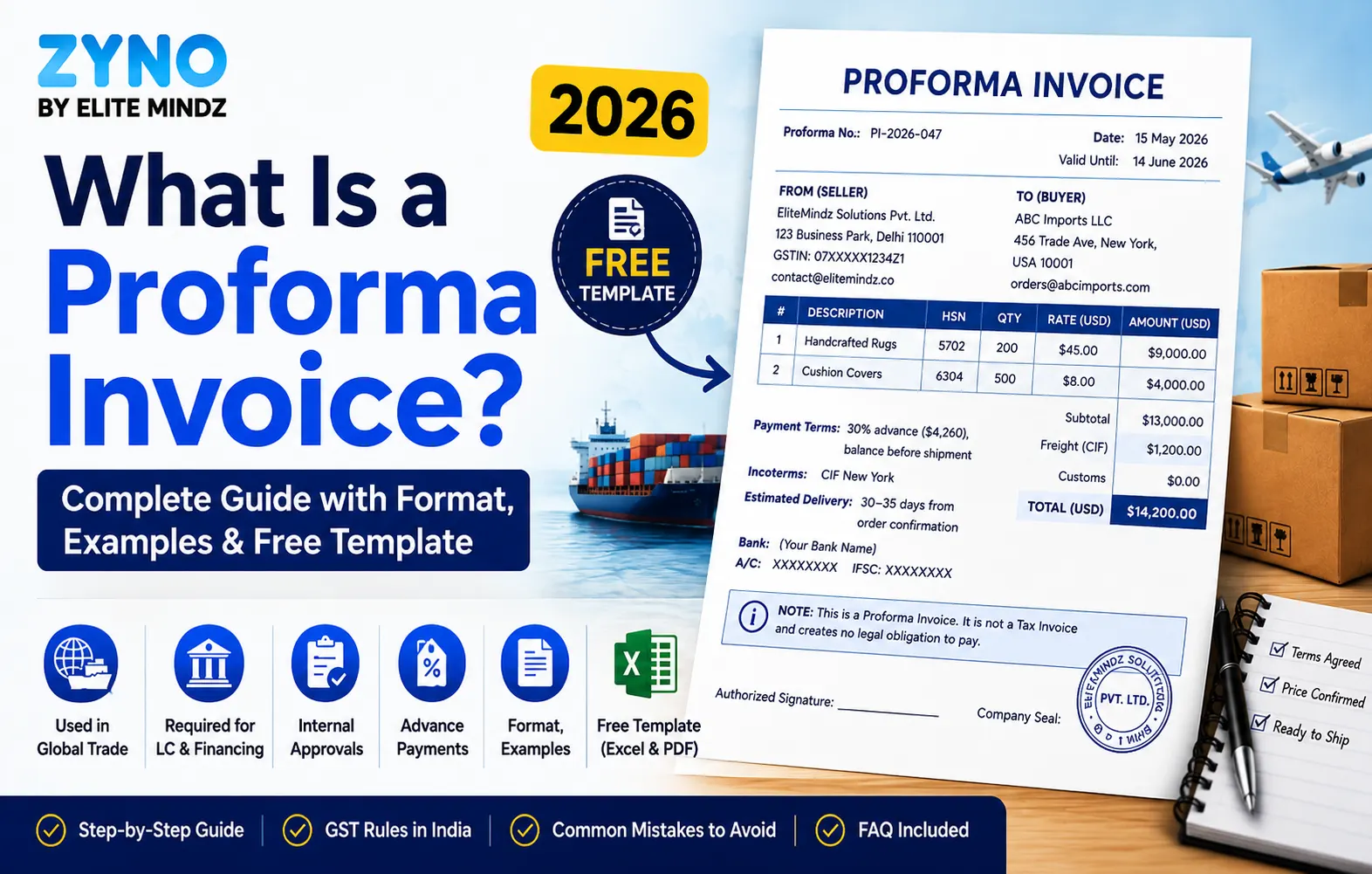
What Is a Proforma Invoice? Complete Guide with Format, Examples & Free Template (2026)
Read More →
Which Accounting Software is Better for Modern Businesses?
Read More →
Bank Reconciliation Statement (BRS): Meaning, Full Form, Format & Examples
Read More →
Which Accounting Program Handles GST Best?
Read More →
AI Accounting Software in India: The Next Generation
Read More →
Which Document Management Software Offers OCR and Workflow Automation?
Read More →
How to Manage ISO Documents and Compliance Records Digitally?
Read More →
Which Are the Best Accounting Softwares Other Than Tally?
Read More →
ZYNO DMS vs SharePoint: A Detailed Comparison for Enterprise Document Control?
Read More →
How to Control Document Versions and Revisions Without Excel?
Read More →
How to Automate Document Approval Workflows Across Departments?
Read More →
Which Is the Best Accounting Software in India? (2026 Guide)
Read More →
Best Accounting Software in Kenya (2026): Cloud-Based, VAT-Ready & Built for SMEs
Read More →
Cloud Accounting Software Comparison: Which One Is Right for Your Business?
Read More →
GST Accounting Software Comparison for Indian Businesses (2026 Guide)
Read More →
Zyno Books vs Vyapar: Which One Gives You More Value?
Read More →
OCR Invoice Processing: The Complete Guide for Finance Teams in 2026
Read More →
Accounting Software: The Complete Guide for Businesses in 2026
Read More →
Purchase Order Management: Meaning, Types, Format & Complete Guide (2026)
Read More →
Purchase Order vs Purchase Requisition vs Invoice: Complete Guide (2026)
Read More →
Types of Purchase Orders Explained: SPO, PPO, BPO & CPO (With Real Examples)
Read More →
Purchase Order Format: Complete Guide (GST & HSN Compliant) & Free Template
Read More →
ZynoBooks vs QuickBooks: Which AI Powered Accounting Software Is Right for Your Business in 2026
Read More →
3-Way Matching in Purchase Order Process: Complete Guide
Read More →
Purchase Order Management Software: Features to Look For (2026 Buyer's Guide)
Read More →
GST & HSN/SAC Compliance in Purchase Orders: An India-Specific Compliance Deep Dive
Read More →
Vendor Management & PO History: How to Evaluate Supplier Performance
Read More →
What Is Busy Software and Its Best Alternative in the Market?
Read More →
15 Fast Accounting Software That Can Make Your Life Easy
Read More →
GST Billing Software: Complete Guide to Features, Benefits, Pricing & Best Options
Read More →
Cloud Based Inventory Management Software: The Complete Guide for 2026
Read More →
Top 11 Best Accounting Automation Software (2026) — Compared
Read More →
How to Choose the Best GST Billing Software for Your Business
Read More →
GSTR-2B Explained: Meaning, ITC Rules, and How to Use It (2026 Guide)
Read More →
Best Project Accounting Software in 2026: Features, Pricing, and Comparison
Read More →
ZYNO Books vs TallyPrime: Is It Time to Move from Desktop to Cloud Accounting?
Read More →
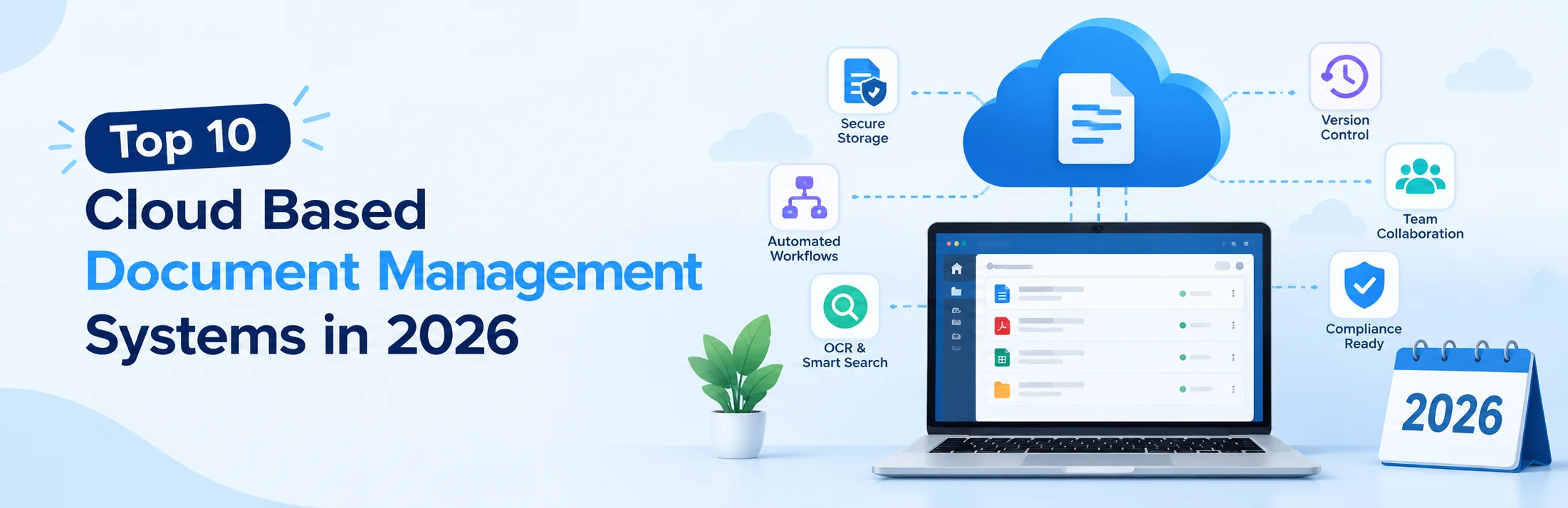
Top 10 Cloud Based Document Management Systems in 2026
Read More →
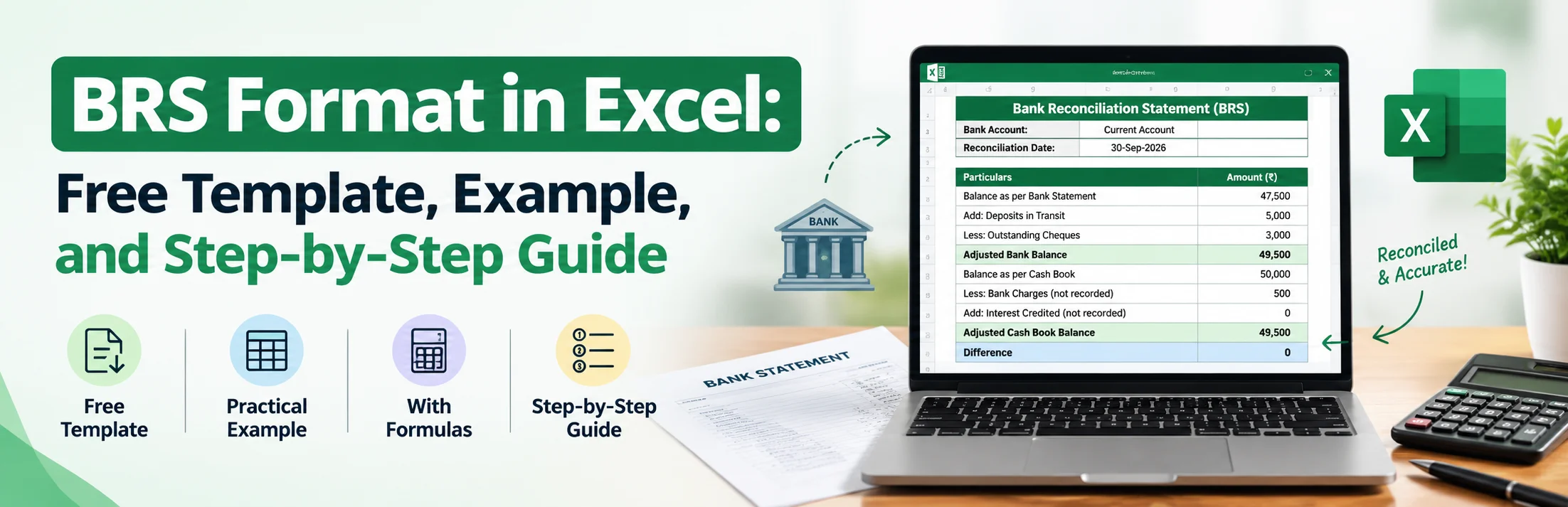
BRS Format in Excel: Free Template, Example, and Step-by-Step Guide
Read More →
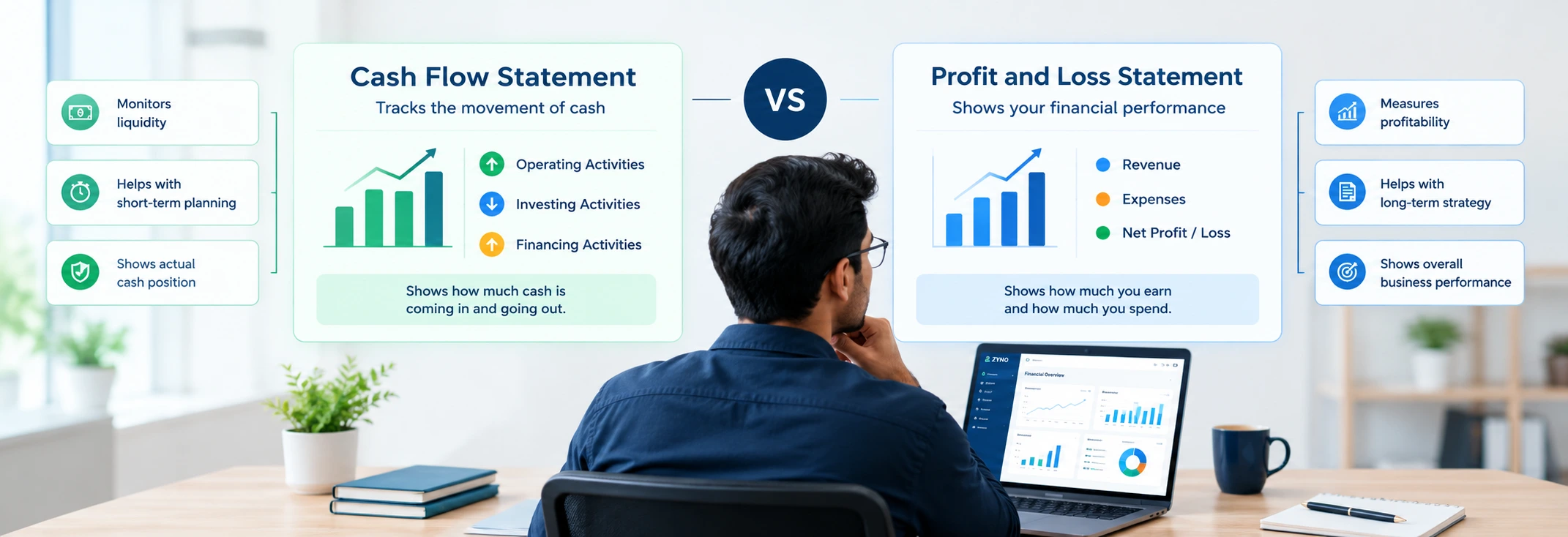
Cash Flow vs Profit and Loss Statement: Examples and Key Differences
Read More →
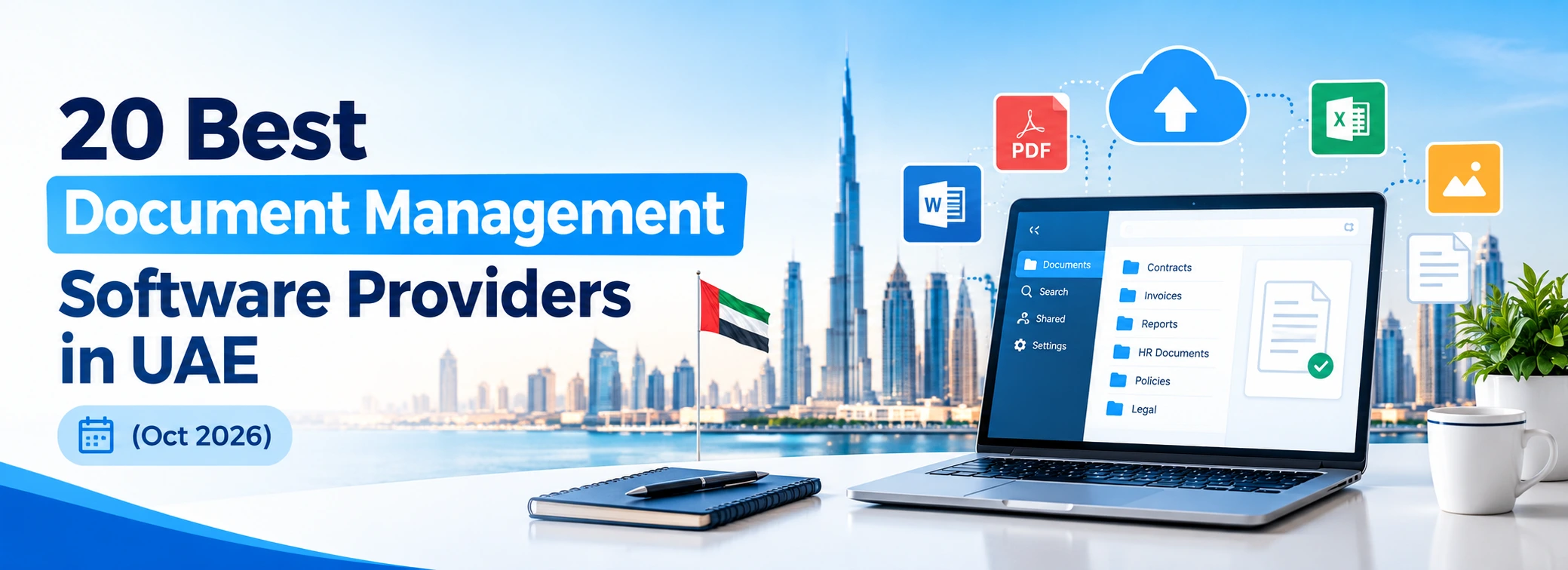
20 Best Document Management Software Providers in UAE (Oct 2026)
Read More →
GSTR-2B vs Purchase Register: Key Differences and ITC Reconciliation Guide
Read More →
ZATCA Wave 25: Who Is Included and What to Do Before 1 February 2027
Read More →Partner with ZYNO by Elite Mindz to revolutionize how your business works. Fill out the form, and we’ll reach out with AI-powered solutions made just for you.
We use browser cookies to ensure you get the best experience on our website. Learn more
The form was submitted successfully!