What Is a Point of Sale System and How Does It Work?
Read More →

×
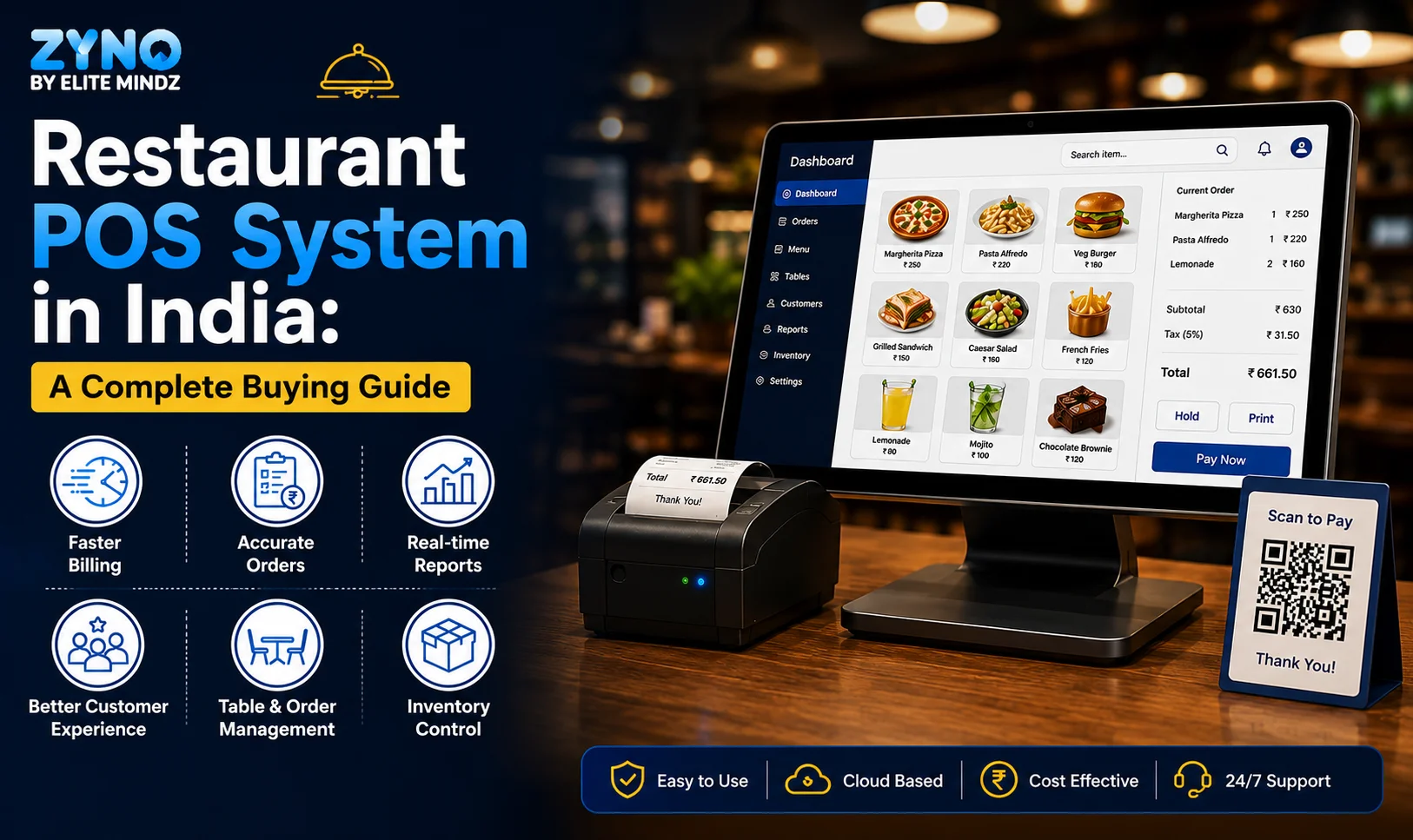
Choosing the right restaurant POS in India helps streamline billing, inventory, online orders, payments, taxes, and customer management. This buying guide explains essential features, pricing, integrations, support, and scalability to help restaurant owners select reliable software for efficient daily operations.
Businesses using ZYNO Books cut accounting time by 70% and stay 100% ZATCA-compliant — automatically.

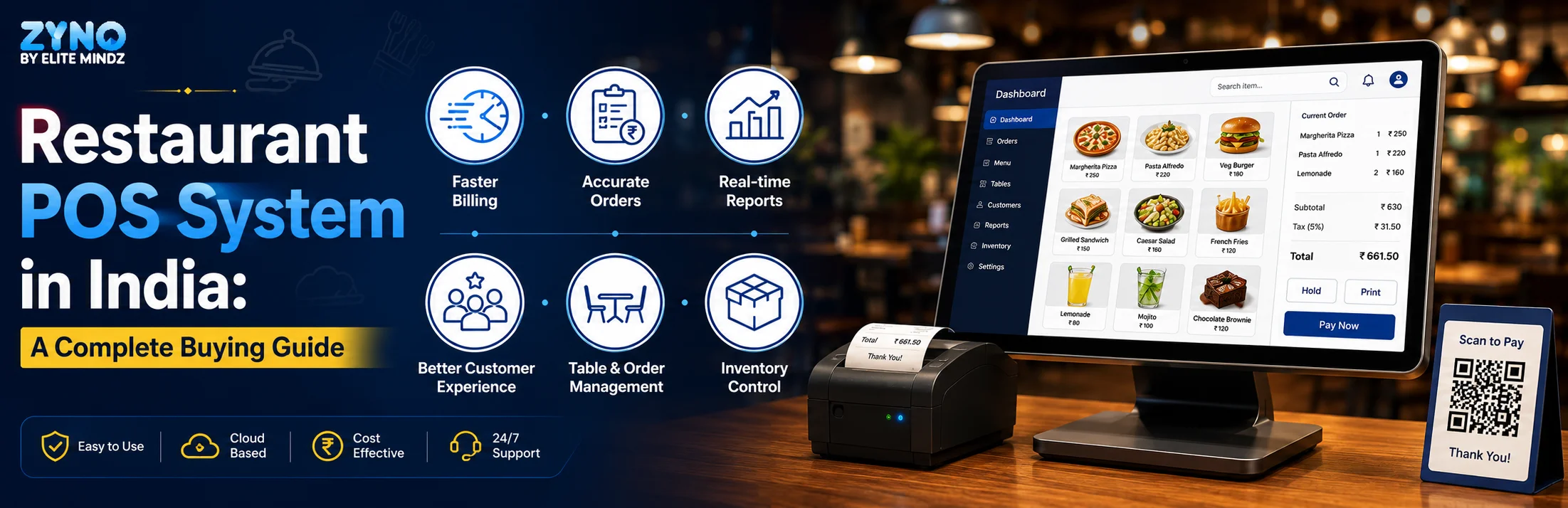
Running a restaurant today involves much more than taking orders and printing bills. Owners must manage tables, online orders, inventory, payments, taxes, staff, and customer data—often at the same time. A reliable restaurant POS in India connects these activities, helping restaurants serve guests faster and operate with greater control.
However, not every POS system fits every food business. A cloud kitchen may need strong delivery integrations, while a fine-dining restaurant may prioritise table management and kitchen coordination. This guide explains the features, costs, and questions that matter when choosing the best restaurant POS software.
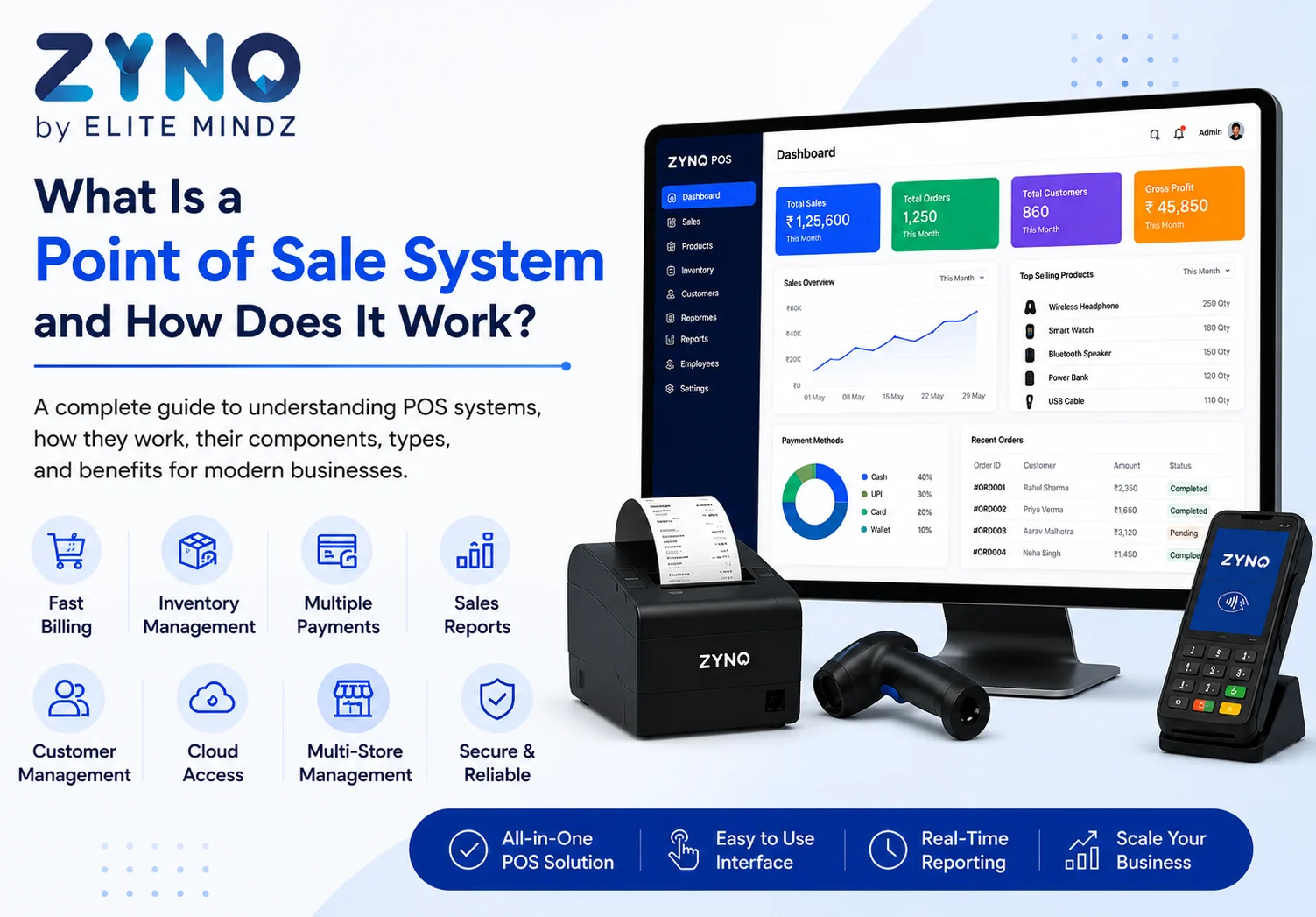
A restaurant point-of-sale system is the software and hardware used to accept orders, create bills, process payments, send instructions to the kitchen, and record sales. Modern restaurant billing software can also track ingredients, manage recipes, monitor staff performance, run loyalty programmes, and provide real-time reports.
Most newer systems are cloud-based. A cloud restaurant POS stores information online, allowing owners to view sales, menu performance, and outlet activity remotely. Some solutions also offer offline billing so operations can continue during temporary internet interruptions.
ZYNO POS by Elite Mindz is built for restaurants, cafés, cloud kitchens, and food chains in India. Manage billing, table orders, KOTs, inventory, payments, and sales reports from one easy-to-use POS platform.
Indian restaurants handle dine-in, takeaway, delivery, QR ordering, cash, cards, and UPI transactions. UPI is an instant payment system developed by NPCI for real-time inter-bank payments, making digital-payment support and reconciliation important POS requirements.
A good POS reduces manual work and helps prevent incorrect bills, missed kitchen tickets, stock leakage, duplicate data entry, and slow end-of-day reconciliation. It also gives owners a clearer view of revenue, discounts, taxes, cancellations, wastage, and food costs.
Restaurants must also manage compliance. FSSAI states that food business operators in India must obtain the applicable licence or registration. A POS does not replace legal compliance, but it can help standardise invoices and organise operational records.

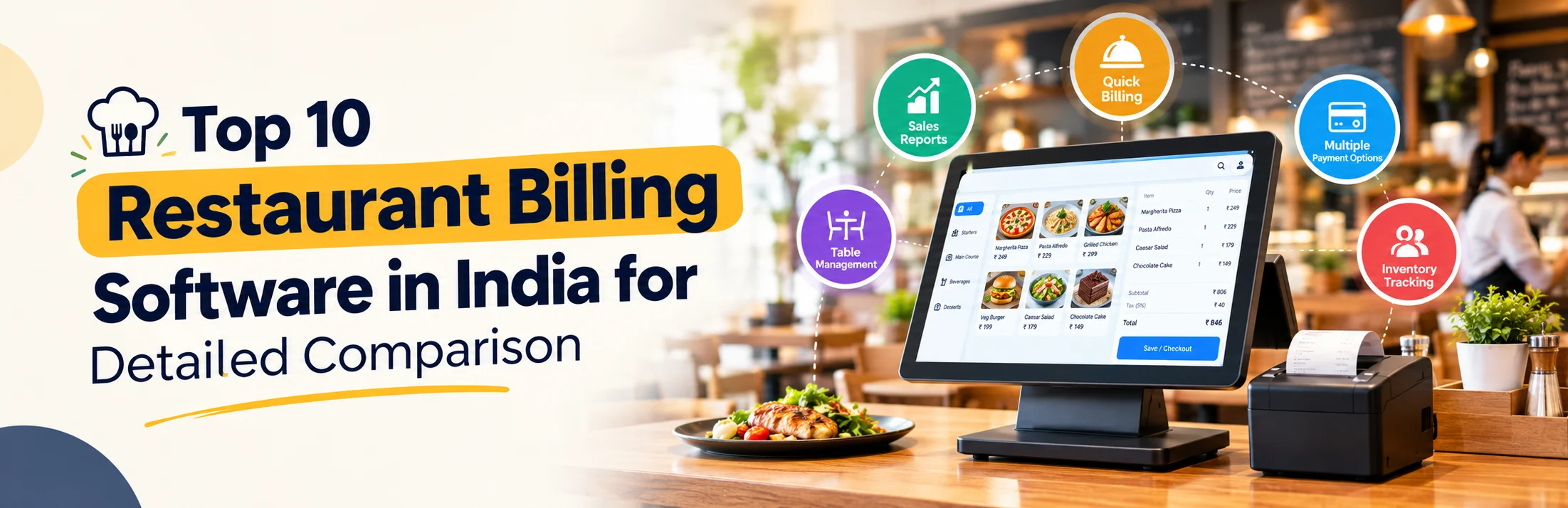
The billing screen should be easy to learn and quick to use during peak hours. Look for item search, category shortcuts, modifiers, combo meals, split bills, multiple payment modes, discounts, service charges, and bill reprinting. The system should support GST-ready invoices and configurable tax settings.
The POS should send orders directly to the kitchen through kitchen order tickets or a kitchen display system. Orders should be routed by the preparation area—for example, beverages to the bar and food to the kitchen. Status updates such as “new,” “preparing,” and “ready” can reduce confusion and improve service speed.
For dine-in restaurants, the POS should show available, occupied, reserved, and billing tables in real time. Useful capabilities include moving orders between tables, merging tables, assigning servers, tracking guest count, and recording reservations or waiting lists.
Restaurant inventory software should track ingredients, not only finished menu items. When a dish is sold, ingredients should be deducted according to its recipe. Look for purchase records, vendor management, stock transfers, minimum-stock alerts, wastage tracking, and variance reports.
Recipe-level tracking helps identify losses caused by portion differences, spoilage, and unrecorded consumption.
Your POS should centralise orders from your website, direct-ordering page, delivery platforms, and other digital channels where possible. Automatic order acceptance and menu synchronisation reduce manual entry and the need to operate multiple devices.
India’s digital-commerce ecosystem also includes ONDC, an open network connecting buyers and sellers across participating applications. Restaurants exploring wider digital distribution should ask vendors whether ONDC connectivity is available directly or through a partner.
Choose restaurant billing software that supports cash, cards, UPI, wallets, vouchers, credit accounts, and mixed payments. It should also compare billed sales with collections and separately track refunds, discounts, platform commissions, and delivery charges.
The best restaurant POS software should answer practical questions: Which dishes sell the most? What are the busiest hours? How many orders are cancelled? Which outlet performs best? What is the average order value?
Look for sales, tax, payment, item, category, staff, discount, cancellation, inventory, and food-cost reports. Reports should be exportable and accessible only to authorised users.
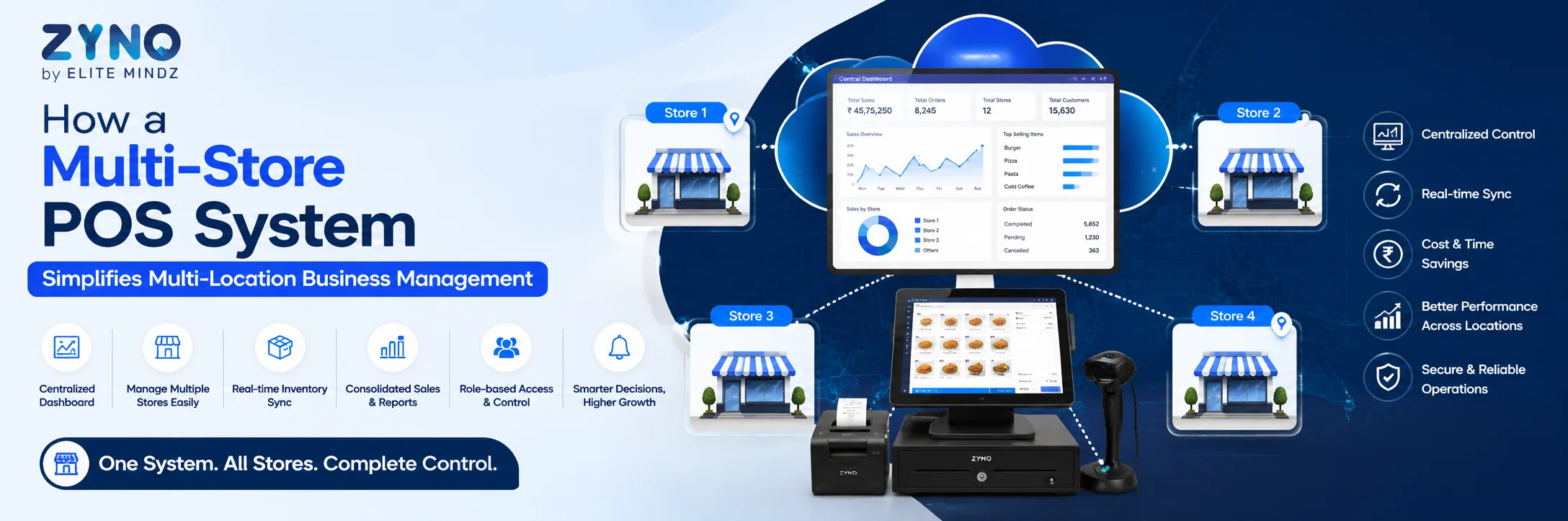
Restaurant chains need central control. A multi-outlet restaurant POS should support common menu management, outlet-specific pricing, central recipes, stock transfers, consolidated reports, role-based access, and outlet comparisons. Confirm that new locations can be added easily.
Customer profiles can help restaurants encourage repeat visits. Useful features include loyalty points, membership tiers, coupons, feedback, birthday offers, and segmented campaigns. Review the vendor’s consent, access-control, and data-protection practices before collecting customer information.
Ask how the vendor backs up data, controls user permissions, records activity logs, and handles outages. Confirm support hours, response times, onboarding, staff training, hardware replacement procedures, and available support languages.

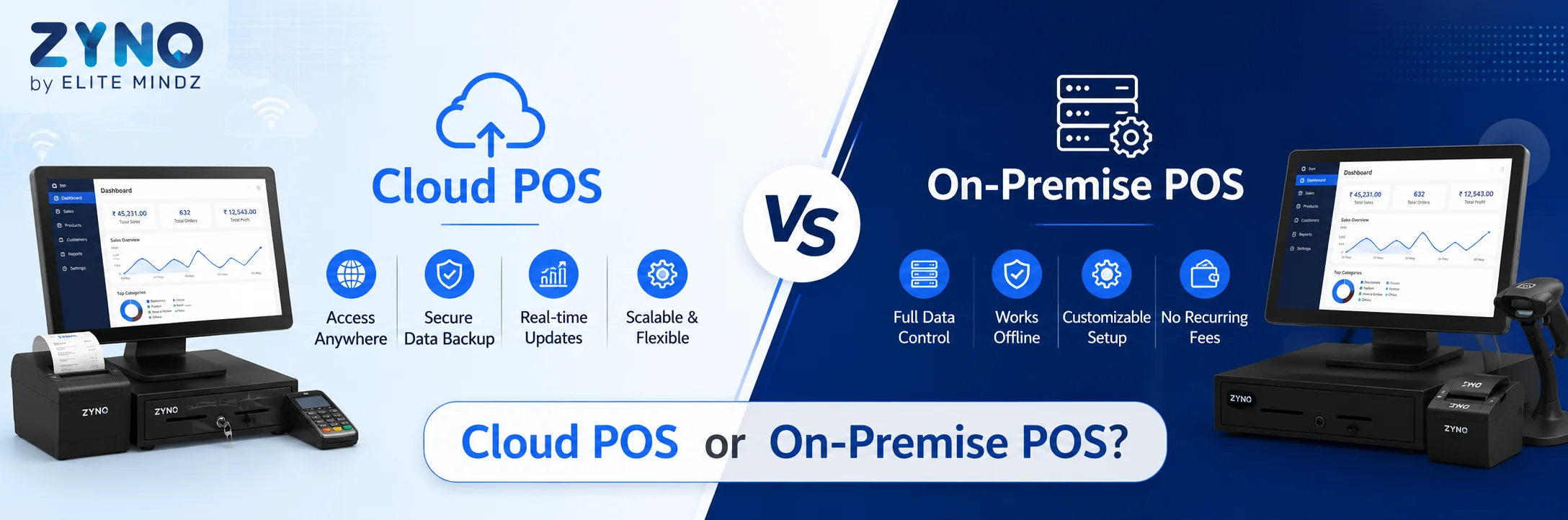
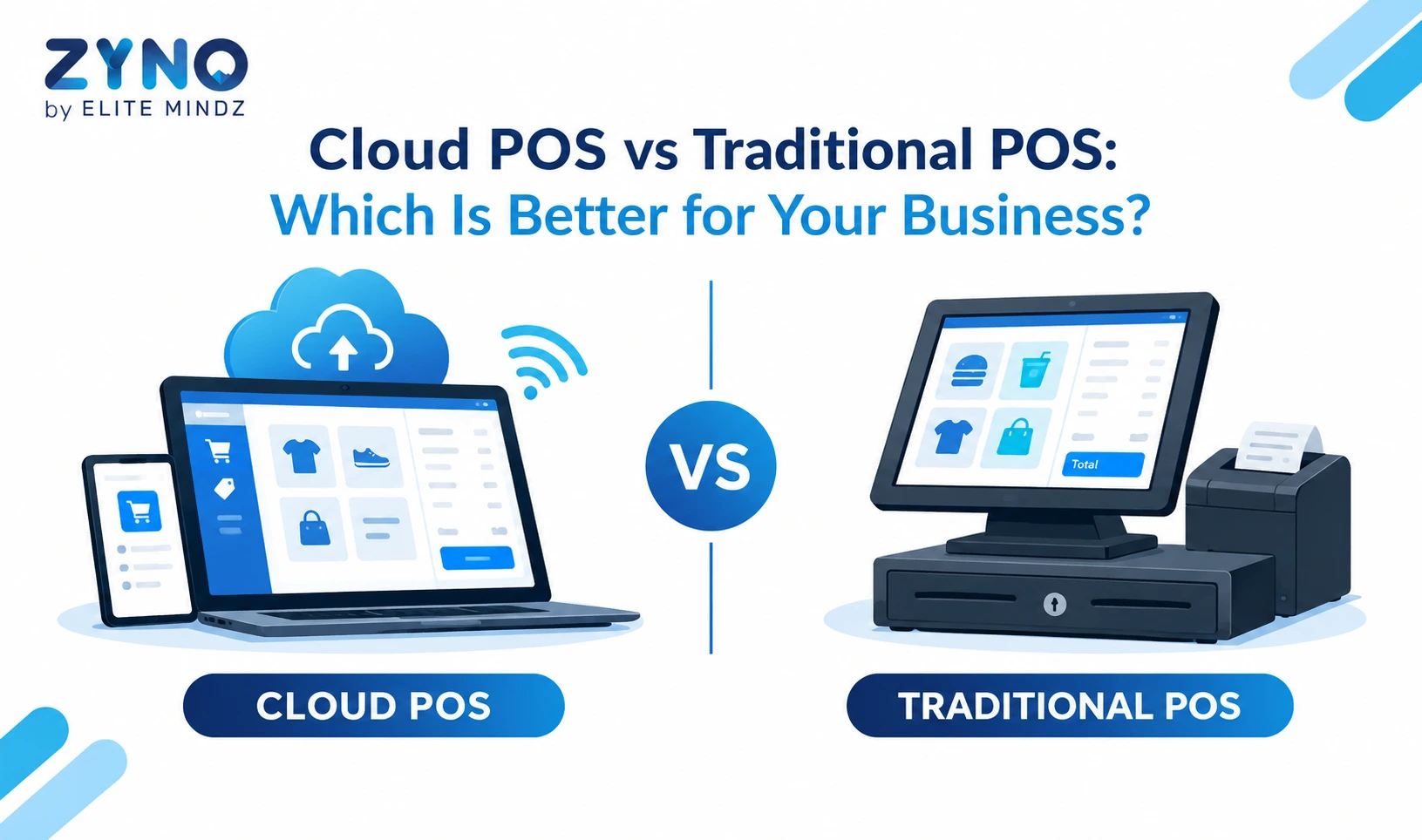
A cloud restaurant POS is generally easier to update, scale, and access remotely. It is well suited to growing restaurants, cloud kitchens, and multi-outlet brands. An on-premise system offers local control but may require more maintenance and manual backups.
For many restaurants, a Cloud POS Software with a dependable offline mode provides a practical balance.
The total cost depends on outlet count, billing terminals, features, integrations, support, and hardware. Vendors may charge a monthly or annual subscription, a one-time licence fee, installation charges, or fees for add-on modules.
When comparing quotations, include terminals, printers, kitchen displays, cash drawers, training, data migration, integration fees, support plans, and taxes. A low starting price may become expensive after essential modules are added.
Choose based on total value, not only price. Consider time saved, billing errors reduced, stock control improved, and better management decisions.
Request a live demonstration using your actual menu and workflow. Ask whether the software supports offline billing, GST configuration, UPI reconciliation, recipe-level inventory, delivery integrations, customer loyalty, multi-outlet controls, and data exports.
Also clarify contract duration, cancellation terms, data ownership, backup frequency, training, customisation limits, update policy, support escalation, and charges for adding users or outlets. If GST e-invoicing applies to your business, verify that the vendor supports the required process and confirm the setup with your accountant; the official GST e-invoice portal provides guidance and FAQs.
Do not choose a POS only because it is inexpensive or popular. Test it during a realistic rush-hour scenario. Do not ignore inventory depth, reporting, support quality, staff usability, or hidden integration costs.
A feature-rich platform creates value only when it matches your daily workflow and your team can use it confidently.
From quick billing and table management to KOT generation, inventory tracking, and digital payments, ZYNO POS by Elite Mindz gives restaurants everything they need to streamline operations, serve customers faster, and boost profitability.
Before signing, confirm that the POS is fast, easy to learn, GST configurable, compatible with Indian payment methods, reliable during internet issues, and capable of supporting future growth. Check integrations, inventory, reporting, security, support, hardware compatibility, and total ownership cost.
The right restaurant POS in India should do more than print bills. It should become the operating centre of your restaurant—connecting customers, staff, kitchen, inventory, payments, and management information. Choose a system that solves today’s problems while giving your business room to grow.
1. What is a restaurant POS system?
A restaurant POS system is software that helps restaurants manage billing, orders, payments, tables, inventory, kitchen operations, staff, and sales reports. Modern systems can also integrate with online ordering platforms and customer loyalty programmes.
2. Which is the best restaurant POS software in India?
The best restaurant POS software depends on the type and size of your business. A small café may need simple billing and inventory features, while a restaurant chain may require multi-outlet management, centralized reporting, recipe control, and advanced integrations.
3. How much does a restaurant POS cost in India?
Restaurant POS pricing in India varies according to the number of outlets, billing terminals, features, hardware, integrations, and support plans. Vendors may offer monthly subscriptions, annual plans, or one-time licence options. Always compare the total cost, including installation, training, hardware, and add-on modules.
4. Can restaurant POS software generate GST bills?
Yes, most modern restaurant billing software supports GST-ready invoices and configurable tax settings. Restaurant owners should ensure that the POS can apply the correct tax rates, generate detailed invoices, and provide tax reports for accounting purposes.
5. Can a restaurant POS work without the internet?
Some cloud restaurant POS systems provide an offline billing mode. This allows staff to continue creating orders and bills during temporary internet interruptions. The data is usually synchronised with the cloud once the internet connection is restored.
6. Does a restaurant POS support UPI and card payments?
Most restaurant POS systems in India support multiple payment methods, including cash, debit cards, credit cards, UPI, digital wallets, vouchers, and split payments. Some systems also provide payment reconciliation reports.
7. Can restaurant POS software manage inventory?
Yes, restaurant inventory software can track ingredients, purchase orders, vendors, stock transfers, wastage, and low-stock levels. Advanced systems can automatically deduct ingredients from inventory whenever a menu item is sold.
8. Is POS software useful for cloud kitchens?
Yes, cloud kitchen POS software can manage orders from multiple delivery channels, coordinate kitchen preparation, update menus, track inventory, and provide sales reports. It can also help reduce errors caused by manually entering orders from different platforms.
9. Can one POS manage multiple restaurant outlets?
A multi-outlet restaurant POS can manage several locations from a central dashboard. Owners can compare outlet performance, update menus, control pricing, monitor inventory, manage stock transfers, and access consolidated reports.
10. How does a restaurant POS improve customer service?
A POS system improves customer service by reducing billing errors, speeding up order processing, sending orders directly to the kitchen, supporting multiple payment options, and storing customer preferences. Faster service and accurate orders can improve the overall dining experience.
What Is a Point of Sale System and How Does It Work?
Read More →
Top 10 Point of Sale Software in India
Read More →
POS Systems Explained: A Beginner’s Guide
Read More →
Restaurant POS in India: A Complete Buying Guide
Read More →
How a Multi-Store POS System Simplifies Multi-Location Business Management
Read More →Partner with ZYNO by Elite Mindz to revolutionize how your business works. Fill out the form, and we’ll reach out with AI-powered solutions made just for you.
We use browser cookies to ensure you get the best experience on our website. Learn more
The form was submitted successfully!
ZYNO Digital
Fueling Smarter Digital Growth
ZYNO Digital fuels smarter digital growth through data-driven marketing, creative storytelling, and performance strategies that boost visibility, engagement, and measurable business outcomes across global platforms.
ZYNO Tech
Engineering the Future of IT
ZYNO Tech delivers cutting-edge IT solutions — including web, mobile, and digital transformation services — helping businesses scale efficiently, innovate faster, and stay ahead in a connected world.
ZYNO AI
AI Built for Business Growth
ZYNO AI harnesses the power of artificial intelligence to automate processes, enhance decision-making, and deliver predictive insights — driving innovation, agility, and measurable business growth.
ZYNO by Elite Mindz
Your Partner in the AI-Powered Future
ZYNO by Elite Mindz offers AI-powered products and services that unify operations, boost productivity, and drive digital transformation — helping businesses scale smarter and innovate faster.
* In just 2 mins you'll get a response
* Your idea is 100% protected by our Non-Disclosure Agreement