AI Enablement in the Age of Generative AI: ZYNO by Elite Mindz Leading the Charge
Read More →
×
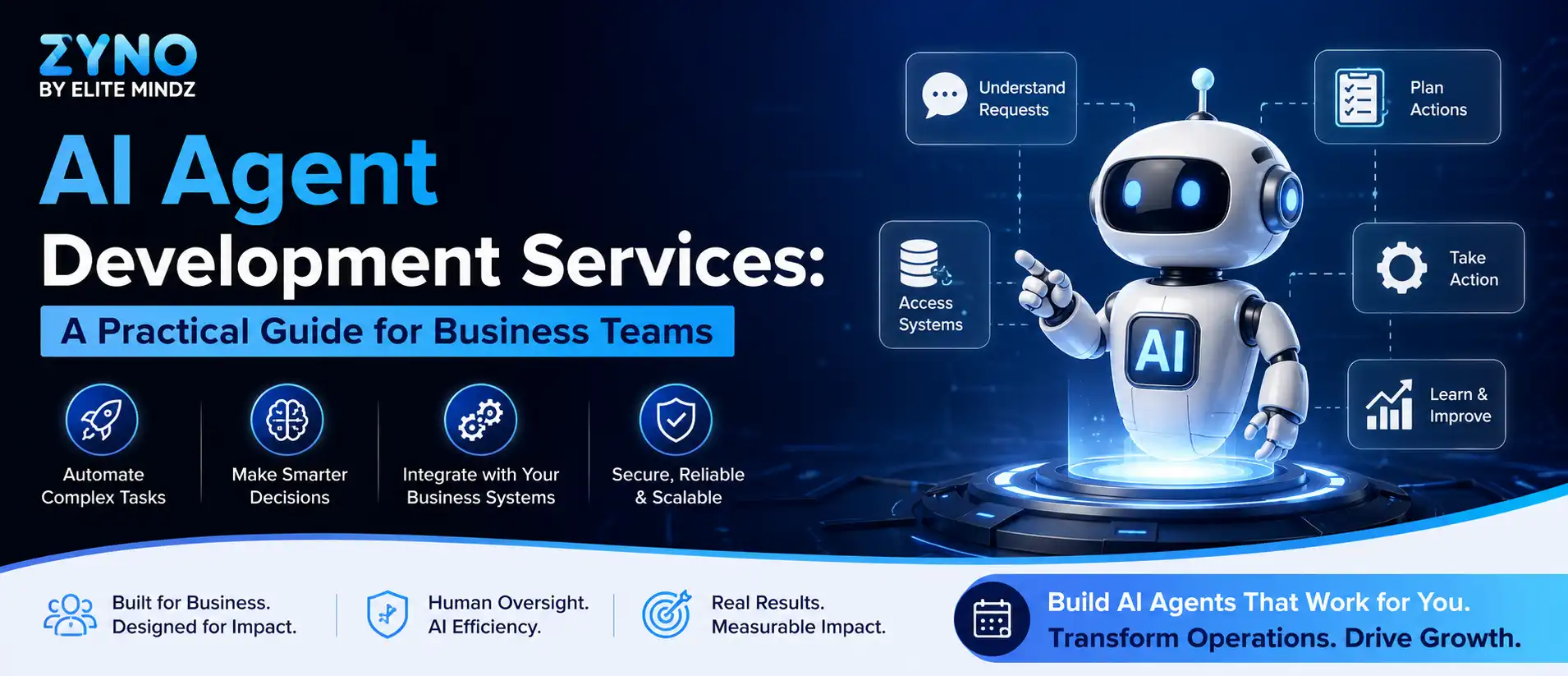
Discover how AI agent development services help businesses automate workflows, make decisions, and take real actions without constant human intervention. From enterprise AI agents to multi-agent systems, learn which solution fits your business needs. See how ZYNO Tech builds secure, scalable AI agents with integrations, guardrails, and human oversight. Ready to automate your business? Explore ZYNO Tech’s AI Agent Development Services and get started today.
Businesses using ZYNO Books cut accounting time by 70% and stay 100% ZATCA-compliant — automatically.
Most companies exploring AI right now are not looking for another chatbot. They want something that can actually take an action, check an inventory system, draft a reply, escalate a case, without a person clicking through five screens first. That is what AI agent development services are built for.
This guide walks through what AI agent development actually involves, how a typical build goes from idea to production, the types of agents businesses deploy most often, and what to check before you hire an ai agent development company to build one for you.
AI agent development services cover the design, build, testing, and deployment of software agents that can reason through a task and take action on their own, instead of just answering a question. A support chatbot tells a customer their order status. An AI agent checks the order system, issues a refund if the policy allows it, and updates the customer record, without a human approving each step.
The work sits at the intersection of a few disciplines. There is the model layer, usually a large language model handling reasoning and language. There is the tool layer, the APIs and systems the agent is allowed to call, such as a CRM, a billing system, or an internal database. And there is the orchestration layer, the logic that decides what the agent does next based on what it just found out. A good ai agent developer treats all three as one system, not three separate projects bolted together.
This is also where the term agentic ai development services comes from. Agentic simply means the system can plan a sequence of steps and adjust that plan based on new information, rather than following one fixed script.
Ready to Build an AI Agent That Actually Works?
Automate complex workflows, connect your business systems, and empower your teams with secure, scalable AI agents built for real business needs.
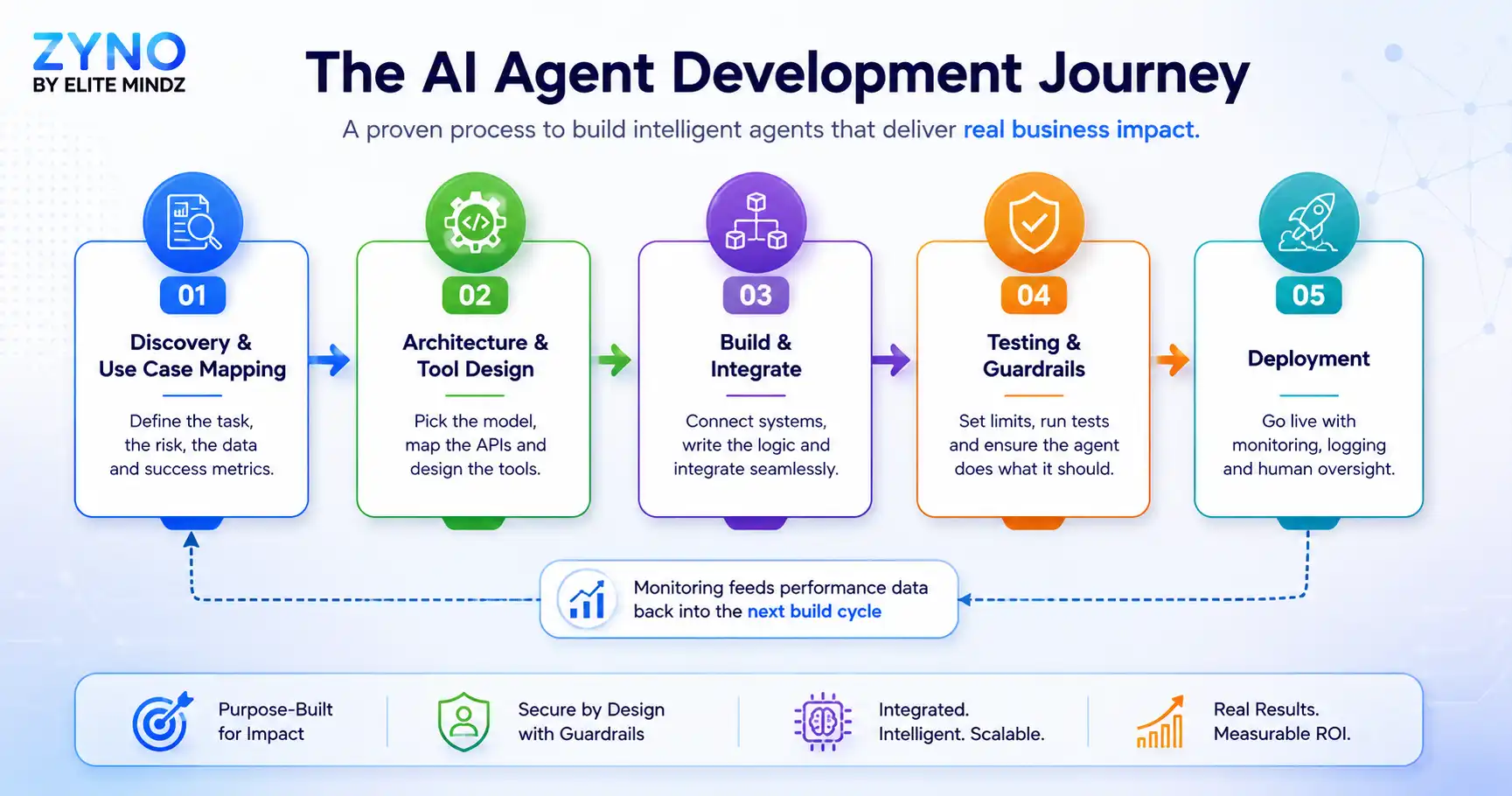
Explore AI Agent Development Talk to Our AI ExpertsA reliable build follows a fairly consistent path, whether the agent is answering internal HR questions or processing insurance claims. Skipping any of these steps is usually where projects run into trouble later.
Notice that testing and guardrails sit before deployment, not after. This is the step most rushed builds skip, and it is usually the reason a business ends up with an agent that takes an action nobody wanted it to take.
Not every business needs the same kind of agent. Here are the five categories that cover most of what companies are asking for right now.
These act as digital employees inside HR, finance, sales, or customer service. They handle repetitive requests, such as answering a leave balance question or processing a routine invoice, and stay available around the clock instead of only during office hours.
Built for teams that spend hours searching through documents, policies, or case files. Instead of a person manually searching a shared drive, the agent pulls the relevant sections and summarizes them on request.
These handle multi-step operational processes end to end. Think of onboarding a new vendor, where a form, an approval, and a system update all need to happen in sequence without someone chasing each step manually.
For tasks too complex for one agent to handle alone, multiple agents each take a piece of the job and pass information between each other. A claims-processing setup, for example, might use one agent to verify documents and another to check policy rules before a decision gets made.
For businesses that want the benefit of an agent without building or maintaining one in-house, this model delivers a pre-built, managed agent on a subscription basis, with updates and support handled by the provider.
| Agent Type | Best For | Core Capability |
|---|---|---|
| Enterprise AI Agents | HR, finance, sales, support teams | Handles repetitive requests, available continuously |
| Knowledge & Research Agents | Legal, compliance, research teams | Searches and summarizes large document sets |
| Workflow Automation Agents | Operations and back-office teams | Runs multi-step processes without manual handoffs |
| Multi-Agent Systems | Cross-department or high-complexity tasks | Multiple agents collaborate on parts of one task |
| AI Agent-as-a-Service | Teams without in-house AI capacity | Managed, pre-built agent delivered as a subscription |
Building an agent that works in a demo is not the hard part. Keeping it accurate, safe, and useful once it is handling real customer data or real financial decisions is where most providers fall short. ZYNO Tech runs full-cycle AI agent development, from mapping the use case through to post-launch monitoring, so nothing gets handed off half-finished.
Every agent ships with guardrails and a human oversight layer built in from the start, rather than added after something goes wrong. The team has shipped domain-specific agents across healthcare, retail, finance, logistics, and IT, so the build accounts for the compliance and data-handling rules specific to each industry instead of applying one generic template everywhere. And because responsible use of AI matters as much as the technology itself, every agent is built to be explainable and bias-checked, with safety controls that a compliance team can actually review.
Turn Your Business Workflows Into Intelligent AI Agents
From customer support and research to workflow automation and enterprise operations, ZYNO Tech builds AI agents that plan, integrate, act, and scale with your business.
Build Your AI Agent Discuss Your Use CaseNot every ai agent development company builds to the same standard. A few questions separate a solid partner from a risky one.
Startups usually have a tighter budget and a smaller team, which changes what to prioritize. Look for a provider offering AI agent-as-a-service or a scoped pilot instead of a full custom build, since that lowers the upfront cost and proves value before a bigger commitment. Ask for references from companies at a similar stage rather than only enterprise case studies, since the support and iteration speed a startup needs looks different from what a large company needs. And check that the pricing model scales with usage, so costs stay predictable as the agent handles more volume.
Cloud providers, including AWS, now offer professional service teams that help businesses design and deploy AI agents on top of their existing cloud infrastructure. This can shorten development time because the underlying compute, storage, and security setup is already in place, and the professional service team brings pre-built patterns for common agent tasks. The tradeoff is that this path often works best for businesses already standardized on that cloud provider, while an independent ai agent development company can build across cloud environments or on-premises setups depending on what the business already runs.
AI agent development services have moved past simple chatbots into systems that can genuinely take action on a business's behalf, checking records, running workflows, and handing off to a human only when a decision needs judgment. The right fit depends on the task. A single enterprise agent might solve a support bottleneck, while a multi-agent setup might be needed for something like claims processing. What matters most in choosing an ai agent development company is not how advanced the demo looks, but whether the provider builds guardrails, tests thoroughly, and keeps monitoring the agent once it is live. That is the difference between an agent that works in a pitch and one that keeps working six months after launch.
AI agents are autonomous digital systems that perform tasks, interact with users, and make decisions using AI. They help businesses reduce costs, improve efficiency, and scale operations without adding headcount for every repetitive task.
Processes that are repetitive, rule-based, and involve checking or updating information across systems tend to work best, such as customer support triage, invoice processing, leave approvals, and routine compliance checks.
Yes. For tasks too complex for a single agent, multiple agents can be built to each handle a piece of the process and pass information to one another, with one agent typically responsible for final decisions or escalation.
Every agent is built with guardrails that limit which actions it can take without human approval, along with permission controls, audit logging, and bias checks reviewed before launch, so security and oversight are part of the build rather than an afterthought.
Yes. Agents are built to connect with the systems you already run, including CRM, ERP, ticketing, and billing platforms, through API integrations mapped during the design phase rather than requiring you to replace existing tools.
Generative AI development services focus on producing content, text, images, or code, based on a prompt. Agentic AI development services go further, giving the system the ability to plan a sequence of actions and carry them out, not just generate an output.
Look for a provider willing to start with a scoped pilot rather than a full build, ask for references from companies at a similar stage, and confirm the pricing model scales with usage instead of requiring a large upfront commitment.
Check for a working prototype before full delivery, clear answers on guardrails and permissions, relevant industry experience, a plan for post-launch monitoring, and confirmed support for integrating with your existing systems.
A scoped single-purpose agent can often move from design to pilot within a few weeks. A multi-agent system connected to several enterprise systems usually takes longer, since each integration and guardrail needs its own testing round.
Most deployments are designed to take over repetitive, well-defined tasks so employees can spend time on work that needs judgment or relationship building, rather than replacing a role outright. Human oversight remains part of most enterprise deployments by design.
Healthcare, retail, finance, logistics, and IT currently see the most deployment, largely because each has high volumes of repetitive, rule-based tasks that agents can take over with proper guardrails in place.
Often yes. It removes the need for an in-house AI team and lowers the upfront cost, making it a practical starting point for businesses that want the benefit of an agent without committing to a full custom build right away.
Well-built agents include guardrails that limit high-risk actions to human approval, along with logging that lets a team review exactly what the agent did and why, so errors can be caught, corrected, and used to improve the next version.
No. A good provider handles the model selection, integration, and testing directly. Your team's role is mainly to define the use case clearly and review the agent's behavior during testing, not to build or maintain the underlying models.
AI Enablement in the Age of Generative AI: ZYNO by Elite Mindz Leading the Charge
Read More →

Top 10 Trends Shaping the Future of AI Agents in 2025
Read More →
Top 6 AI Chatbot Features Transforming Customer Engagement in 2026
Read More →
Top 10 AI Integration Strategies for Seamless ERP and CRM Upgrades in 2025
Read More →
Best GAI Consulting Approaches for Ethical Business Transformation in 2025
Read More →
From Vision to Value: The Ultimate Guide to Enterprise GenAI Platforms
Read More →
Top 10 GAI Development Trends Shaping Autonomous Agents in 2025
Read More →
The Future of Computer Vision: Trends to Watch in 2025
Read More →
Generative AI in 2025: How ZYNO BY Elite Mindz is Transforming Enterprise Workflows
Read More →
10 Real-World Applications of Computer Vision in 2025
Read More →
Integrating Computer Vision with IoT and AI: Driving the Next Wave of Intelligent Systems in 2025
Read More →
Agentic AI Explained: How AI Agents Are Transforming Business in 2025
Read More →
From Chatbots to Autonomous Agents: The Evolution of Agentic AI
Read More →
The Rise of Multi-Agent Systems: How Agentic AI Teams Will Run Enterprises of the Future
Read More →
Agentic AI vs Generative AI: What Business Leaders Need to Know
Read More →
The Power of Autonomous Agents: Understanding Agentic AI for Enterprises
Read More →
The Role of Agentic AI in Enhancing Enterprise Agility and Responsiveness
Read More →
Agentic AI as a Competitive Advantage: Why Businesses Can’t Ignore It
Read More →
The Shift from Automation to Autonomy: How Agentic AI is Redefining Enterprise Operations
Read More →
From Reactive to Proactive: How Agentic AI Changes Enterprise Decision-Making
Read More →
Why Every Business Will Hire an AI Agent Soon
Read More →
Agentic AI for Startups: Leveling the Playing Field
Read More →
Agentic AI: The New Digital Workforce
Read More →
The Future of Business: Autonomous Teams of AI Agents
Read More →
From Insights to Action: How AI Agents Close the Gap
Read More →
Agentic AI in 2026: From Hype to Enterprise-Ready Transformation
Read More →
The Competitive Edge: Why Early Adopters of Agentic AI Are Winning Markets
Read More →
Beyond Automation: Why Agentic AI is the Key to Enterprise Agility in 2025
Read More →
The Human-AI Partnership: Building Smarter Teams with Agentic AI
Read More →
The Rise of Autonomous Teams: Why Agentic AI is the New Digital Workforce
Read More →
Top Machine Learning Use Cases You Didn’t Know About
Read More →
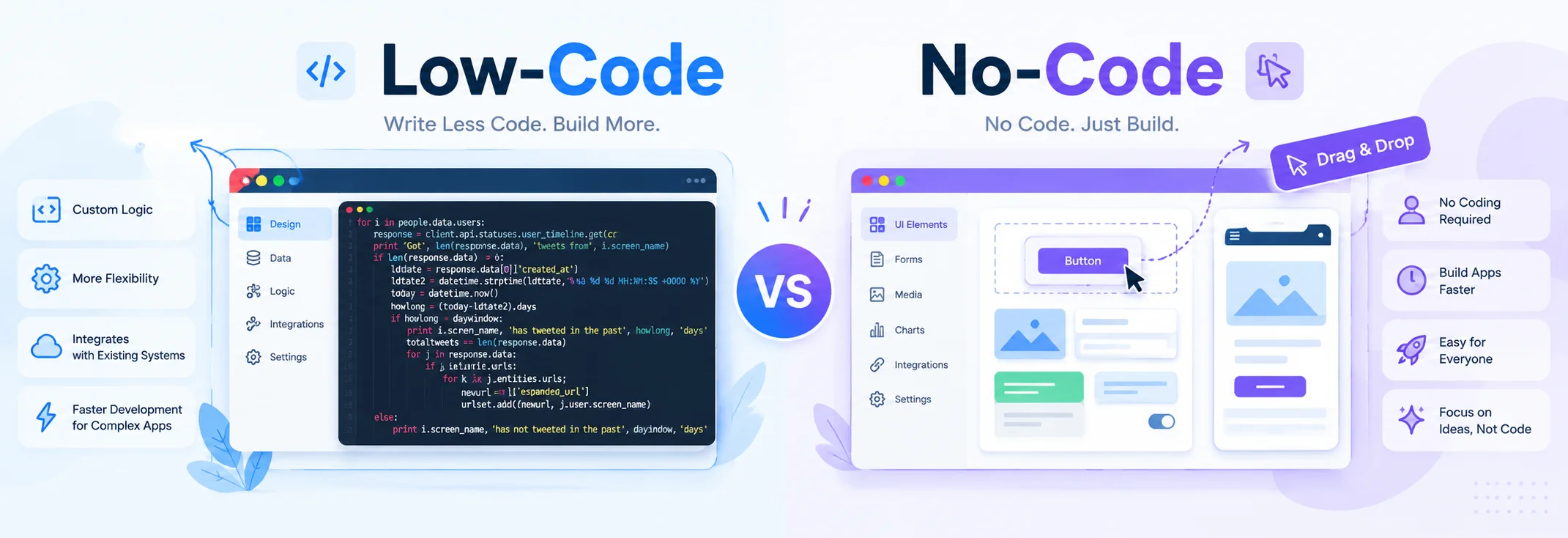
What Is Low Code/No Code and Why It Matters in 2025
Read More →
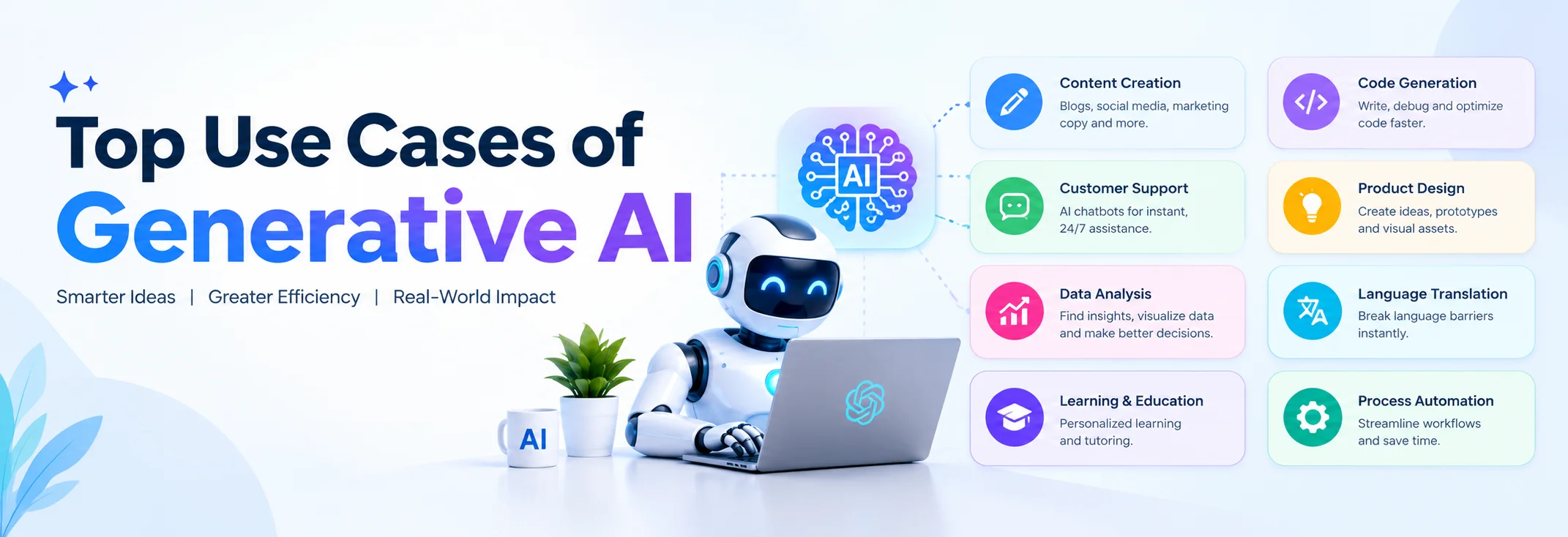
Top Use Cases of Generative AI in 2026
Read More →
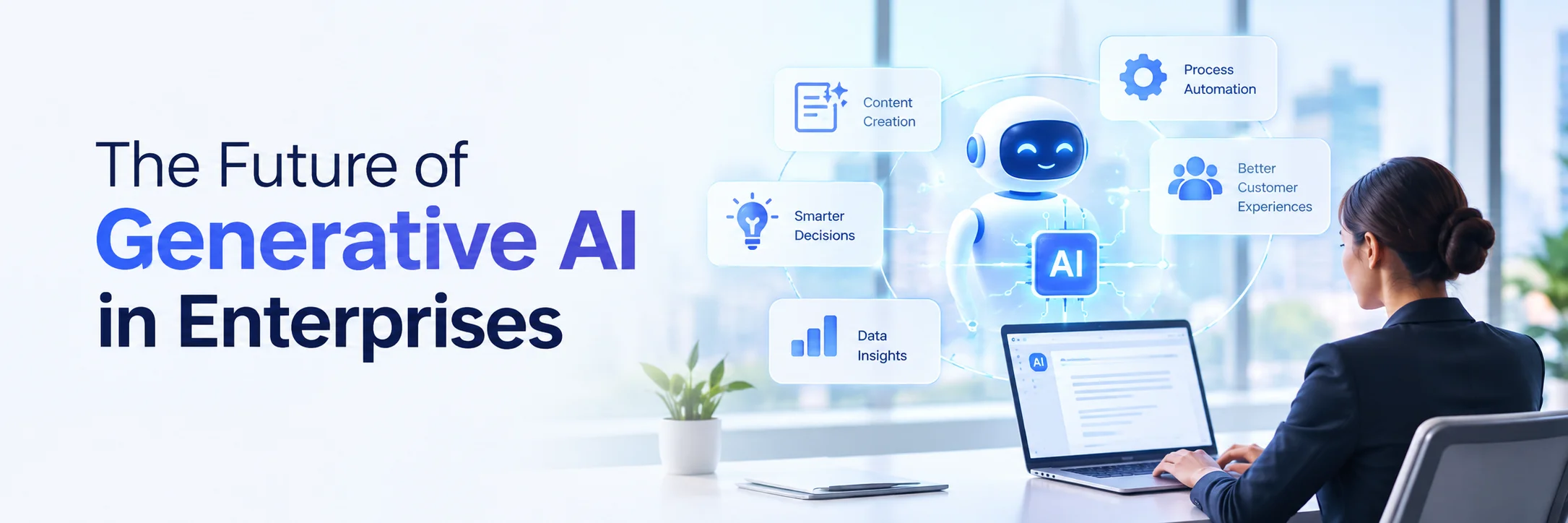
The Future of Generative AI in Enterprises
Read More →
How Generative AI Is Reshaping Enterprise Operations in 2025
Read More →
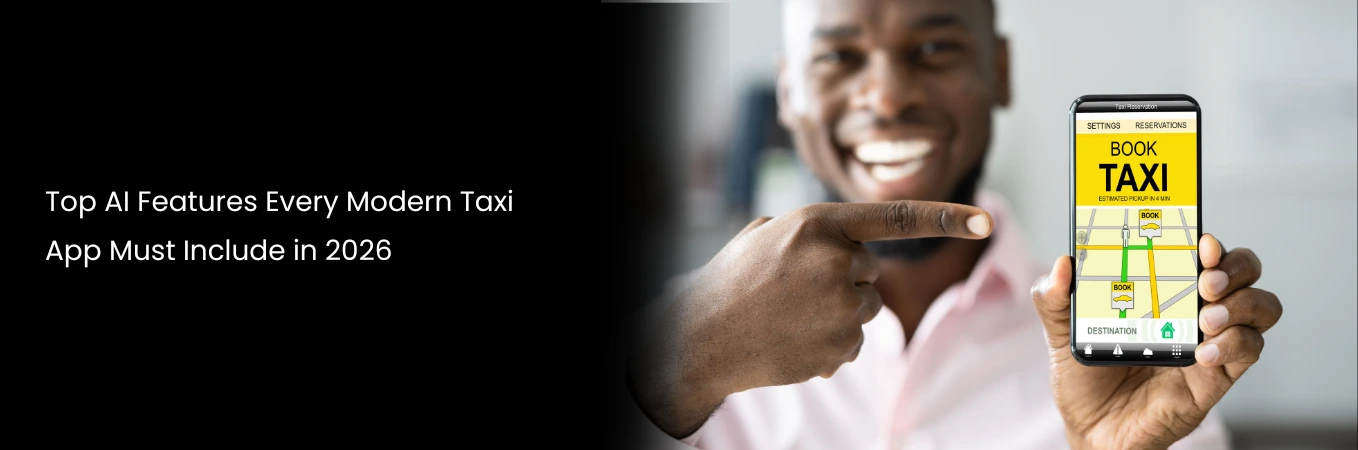
Top AI Features Every Modern Taxi App Must Include in 2026
Read More →The Future of Events: How Artificial Intelligence Is Changing the Industry
Read More →Why Are AI Agents the Next Big Shift in Banking and Finance
Read More →How AI-Driven Analytics Improve Learning Outcomes
Read More →How AI Is Optimizing Every Step of Food Delivery Apps
Read More →How AI-Powered CRM Is Transforming the Media & Entertainment Industry
Read More →
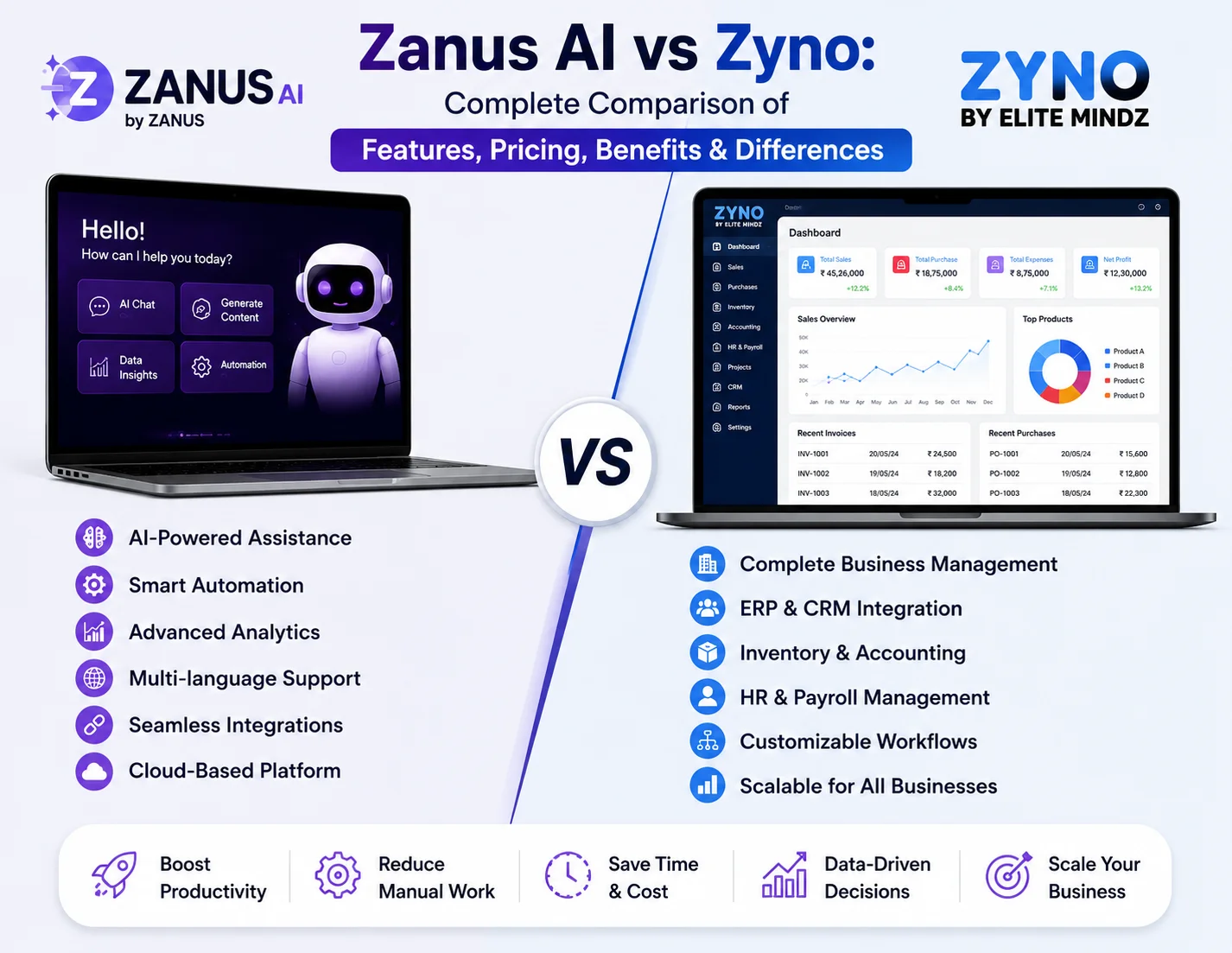
Zanus AI vs Zyno: Complete Comparison of Features, Pricing, Benefits & Differences
Read More →
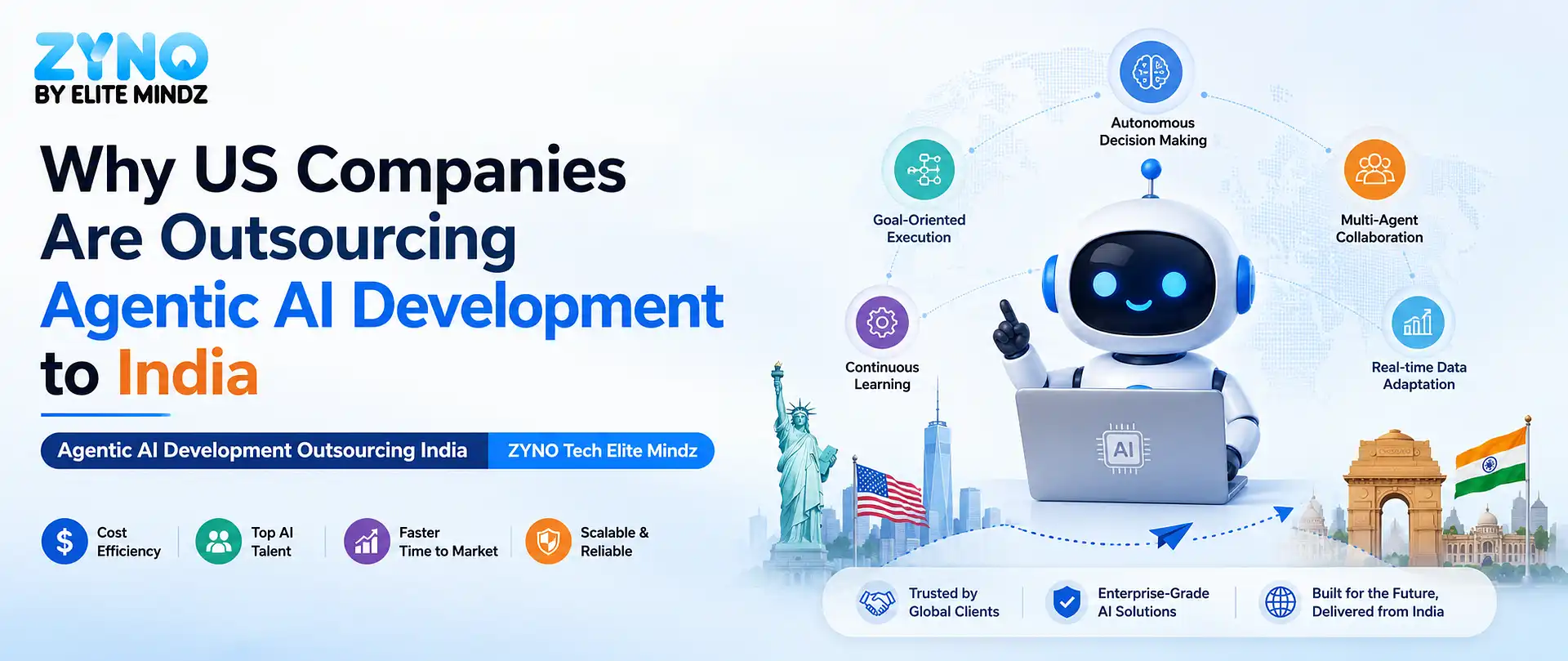
Why US Companies Are Outsourcing Agentic AI Development to India

Read More →
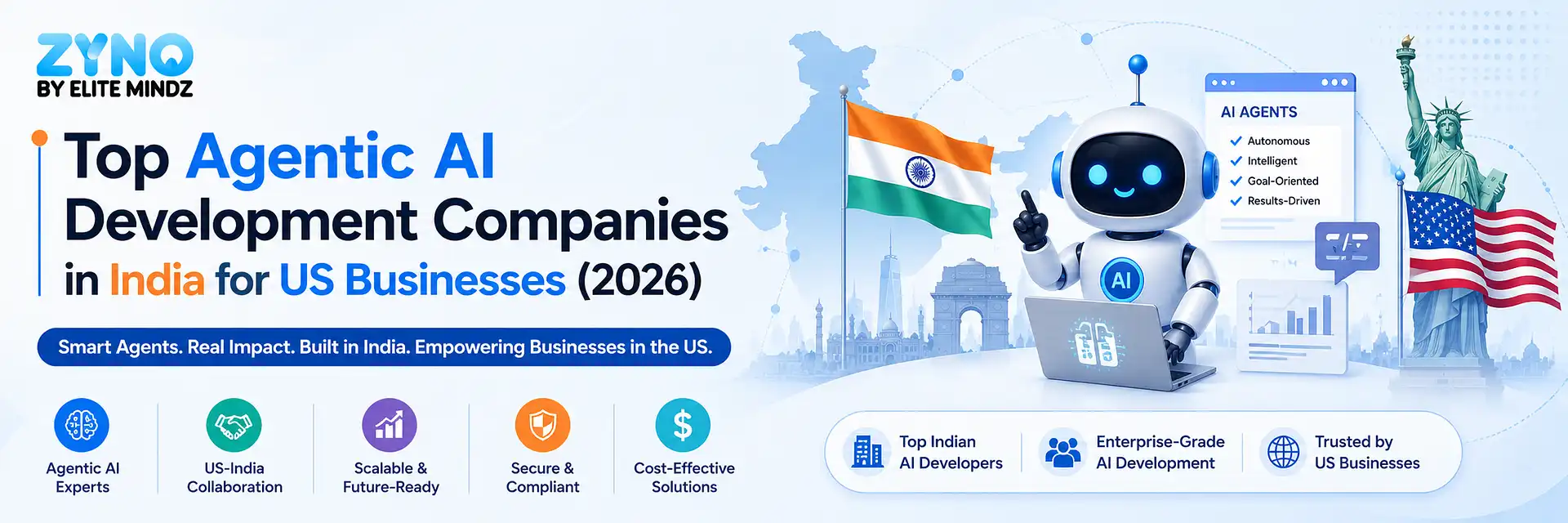
Top Agentic AI Development Companies in India for US Businesses (2026)
Read More →
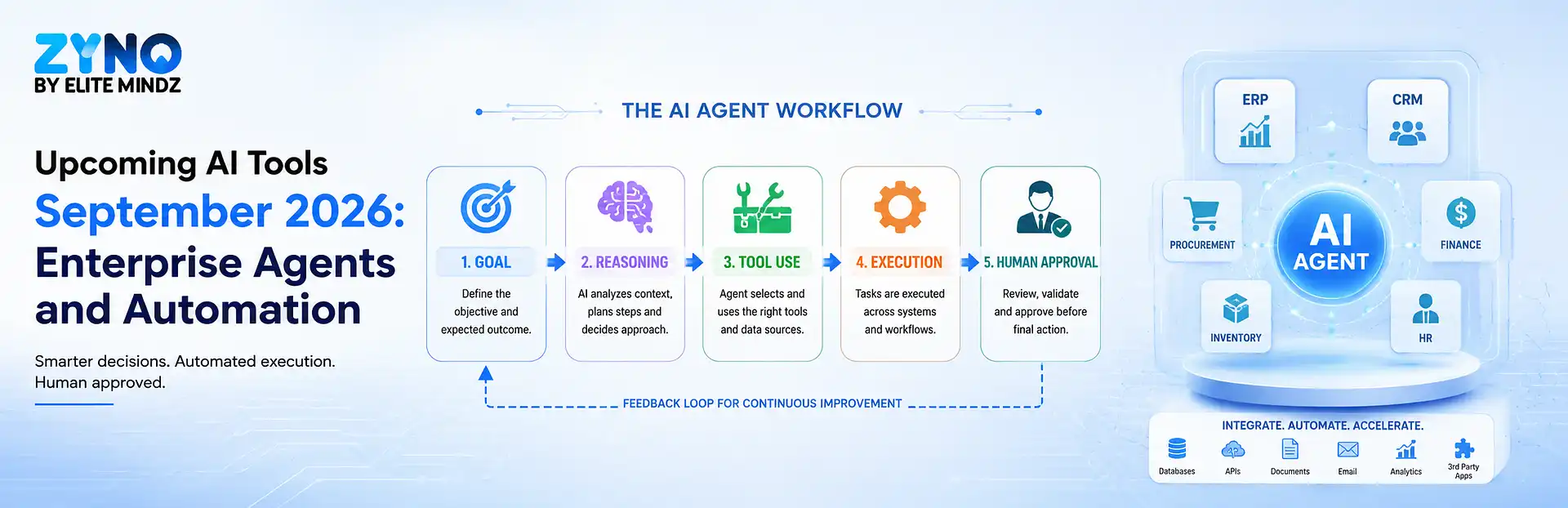
Top Upcoming AI Tools of September 2026 You Must Watch
Read More →
Google Opal vs Tilda Bio AI: What Each Tool Actually Does (and Why They Aren't True Rivals)
Read More →
AI Agent Development Services: A Practical Guide for Business Teams

Read More →Partner with ZYNO by Elite Mindz to revolutionize how your business works. Fill out the form, and we’ll reach out with AI-powered solutions made just for you.
We use browser cookies to ensure you get the best experience on our website. Learn more
The form was submitted successfully!