AI Enablement in the Age of Generative AI: ZYNO by Elite Mindz Leading the Charge
Read More →
×
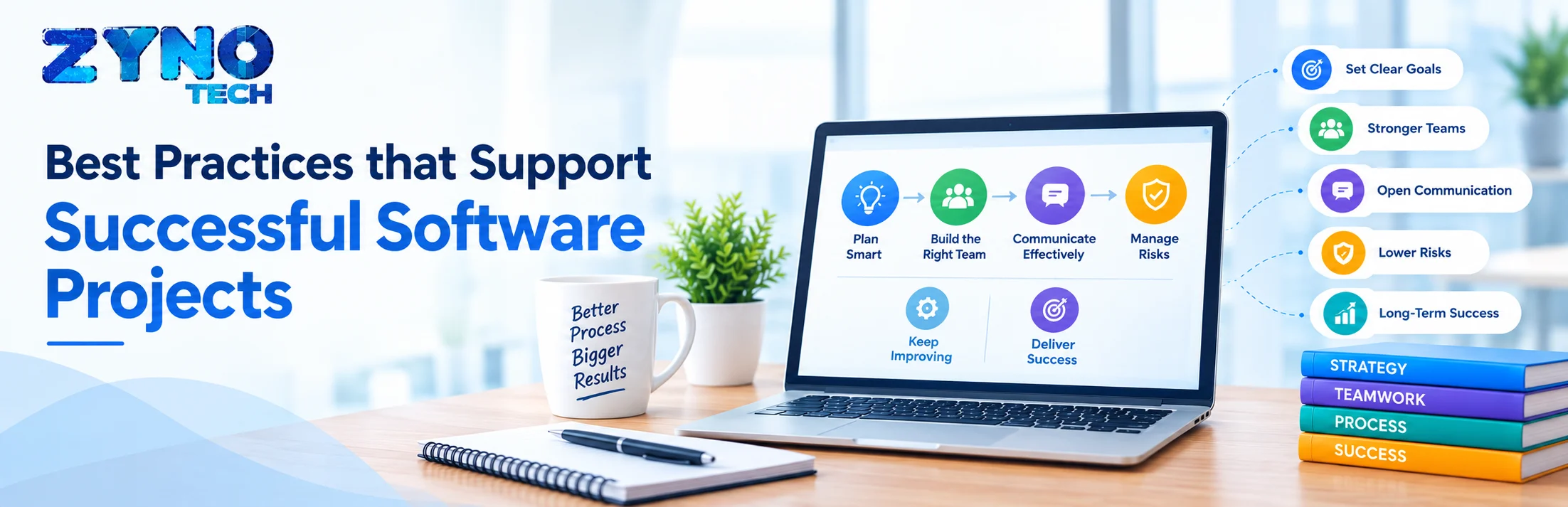
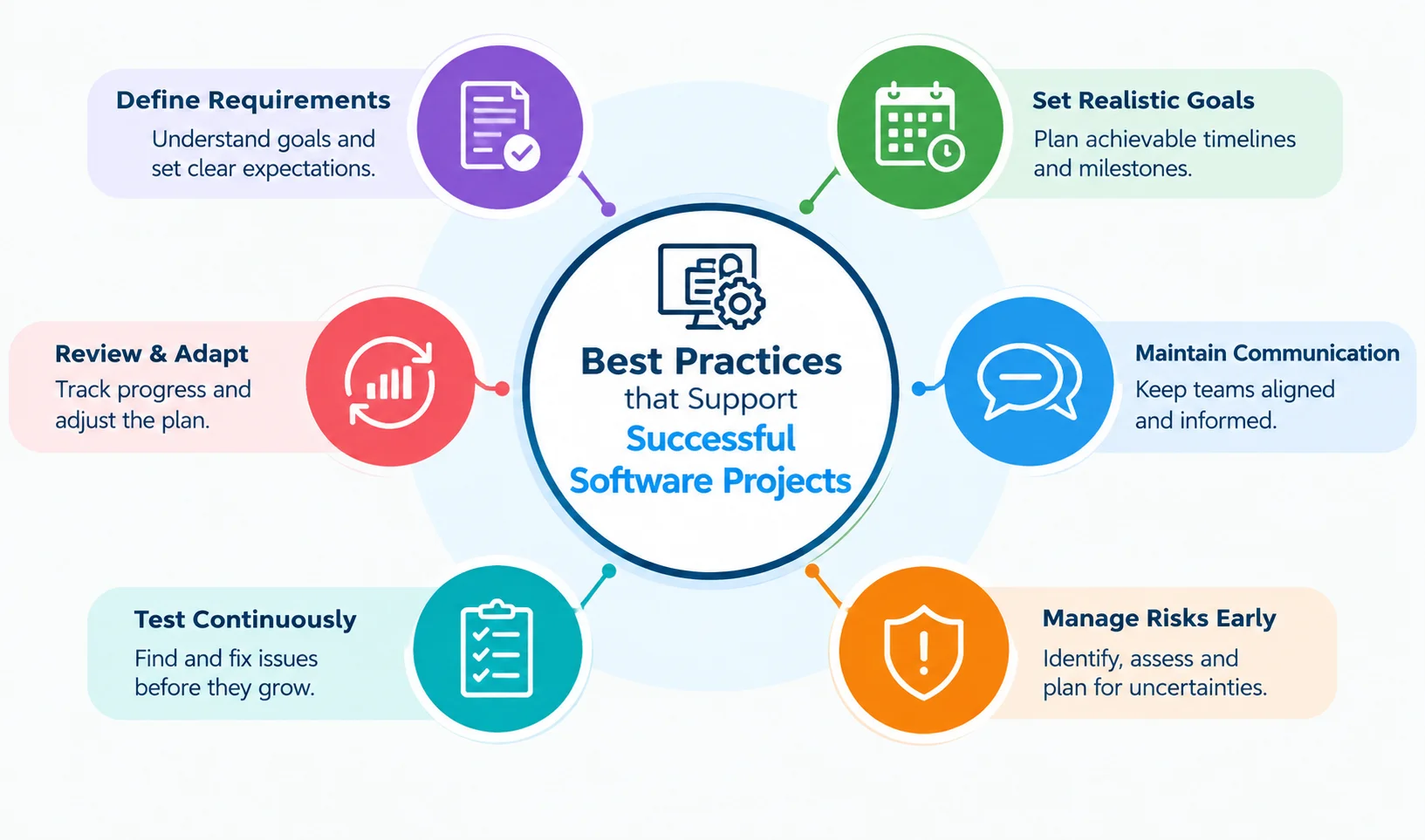
The best practices for successful software projects include defining clear requirements, setting realistic deadlines, maintaining clear communication, documenting project information, managing risks early, testing throughout development, and regularly reviewing progress to keep the project on track.
Businesses using ZYNO Books cut accounting time by 70% and stay 100% ZATCA-compliant — automatically.
A successful software project requires smooth coordination between all its key components. Developers write code. Designers create interfaces. Project managers track progress. Clients and users provide their feedback. Every part needs to work in coordination.
However, even if a team is skilled enough to handle the project, requirements might be unclear. Deadlines may be unrealistic. Communication may break down. These issues can lead to major delays.
The good news is that these problems can be avoided with a clear plan to manage changes and track progress. Let’s discuss the best practices to manage software projects.
The following are some effective ways to make software projects successful.
Every software project starts with clear direction. Each member should know what they are building and which steps to follow. Unclear direction can result in problems later.
So start every project by defining the main goals of the project and then move to the next part. Identify the features and functions required to meet those goals.
Requirements should be clear enough that every relevant member of the team understands them, whether developers, designers, testers, or other stakeholders. Clarity reduces misunderstandings and unnecessary rework.
Get expert support for software planning, development, testing, and digital transformation with ZYNO Tech.
Explore ZYNO Tech Get Started TodayYou have to be realistic about your own capacity and that of your team. Don't overestimate how much work you can complete within a set amount of time.
Before you set a deadline, get a clear estimate of the size of the project and the number of team members you have. Also consider the skill set of your team members and the complexity of the tasks. Considering these factors beforehand can help reduce revisions and unexpected problems.
A realistic timeline helps set reasonable expectations and provides clear deadlines. Also, it makes it easier to adjust the plan when needed.

Software projects generally move better when there is good communication between the team members. Every member needs a shared understanding of the project.
To maintain a shared understanding of the project, regular communication is essential. For this, teams can hold recurring meetings or schedule them as needed to share updates and track issues. In meetings, they can share updates, review issues, discuss documentation, and demonstrate progress to keep everyone informed.
To keep communication clear regarding the software project, you should ask these questions.
What has been completed?
What is being worked on?
What is blocking progress?
Has anything changed?
What needs a decision?
These questions also allow you to keep track of whether the project is moving in the right direction.
Another best practice that leads to successful software projects is good documentation. Software projects often generate a large amount of information. This can include technical decisions, ideas, or meeting notes.
If this important information remains scattered across chats and different doc files, it can cause issues later. To keep important details organized, you can utilize Online Notepad. It is a browser-based tool that allows you to create, save, organize, and access your notes anywhere, anytime. One essential feature is that it autosaves your notes. After signing in, you can also access your saved notes or documents across different devices. This way, you can save time locating or reviewing information.
All software projects have some level of risk. Some are technical. Others might deal with people, schedules, budgets, vendors, or changing requirements.
The team should identify key risks early. Assess the probability of each risk and the impact it could cause. Then decide what to do.
For example, a team may plan to use technology it has not worked with before. That’s a technical risk. A small prototype can help the team test the technology before building the main system around it.
This same technique can be used for other technologies with which you are unfamiliar. Test assumptions early on. Don’t wait until the last minute to discover that a critical part of the plan doesn’t work.
It is more helpful when risk management is integrated into the regular project discussions. It shouldn’t be a document nobody looks at once the project begins.
Testing should not be postponed until the completion of the project. Software, when it's in the development process, might contain errors, security issues, and usability problems.
Finding issues later can take a lot of time and effort. Also, some issues require extensive testing to be revealed. Therefore, you should keep testing frequently.
For instance, if you are working on a web application, you should keep testing it on different devices like mobile and desktop to make sure it works as expected across different devices. A team working on financial system development should keep testing the calculations.
Teams should understand the expected behavior of each feature and test whether it behaves according to the requirements. In short, testing should be taken as a part of development.
Projects might not always proceed exactly according to the plan. Oftentimes, you have to alter a step or add new information. Or sometimes tasks can take a little longer than expected.
Teams should review things at regular intervals. Carefully check the work completed and what's still pending. Check if the tasks are taking much longer than originally expected.
Adjust the plan as needed, even if that means changing the original approach. This doesn't mean changing plans every day. Keep the main goal in your mind and make sensible decisions to keep the project on track.
ZYNO Tech helps businesses turn software ideas into reliable digital solutions with structured planning, development, testing, and technical expertise.
To make your software projects successful, you need to focus on multiple elements beyond just writing good code. You need good communication, planning, and review.
You have to define the requirements before the development begins. Be honest and set realistic goals, and don't overclaim. Maintain good communication with your team and document important information carefully.
Any project can contain risks. However, you have to make sure to manage them on time. Also, keep on testing and reviewing your project from time to time, not just at the end.
These are some best practices you can follow to make your software projects successful. You can implement these and see how they help you reduce avoidable problems.
The key software project best practices include defining clear requirements, setting realistic deadlines, maintaining communication and documentation, managing risks early, testing throughout development, and regularly reviewing project progress.
Clear software project requirements help developers, designers, testers, and stakeholders understand the expected features and goals. This reduces misunderstandings, unnecessary revisions, and development delays.
Setting realistic software project deadlines helps teams plan workloads according to project complexity, available resources, team skills, and task requirements. It also makes it easier to manage changes without disrupting the entire project.
Effective software project communication keeps team members aligned on completed work, current tasks, blockers, changes, and decisions. Regular communication helps identify issues early and keeps development moving in the right direction.
Proper software project documentation keeps technical decisions, requirements, meeting notes, ideas, and project information organized. It also makes important information easier to find and review throughout the development process.
Software project risk management involves identifying potential technical, financial, scheduling, vendor, and requirement-related risks early. Teams can then assess their impact and take preventive measures before these risks affect project delivery.
Software testing throughout development helps identify bugs, security issues, usability problems, and incorrect functionality earlier. Continuous testing can reduce the time and effort required to fix problems later in the project.
Teams can manage changing software requirements by documenting changes, assessing their impact on timelines and resources, communicating updates clearly, and adjusting the project plan while keeping the main business objectives in focus.
Software project progress should be reviewed regularly based on the project's size, complexity, and development methodology. Regular reviews help teams identify delays, check pending tasks, address blockers, and adapt the plan when necessary.
Successful software project management depends on clear requirements, realistic planning, effective communication, proper documentation, early risk management, continuous testing, and regular progress reviews. These practices help teams reduce avoidable problems and keep projects aligned with their goals.
Read More: Bespoke vs. Off-the-Shelf Software: Which Approach Fits Your Project?
Read More: Google’s New AI for App Development
Read More: AI Identity Verification: How It Works and Its Benefits
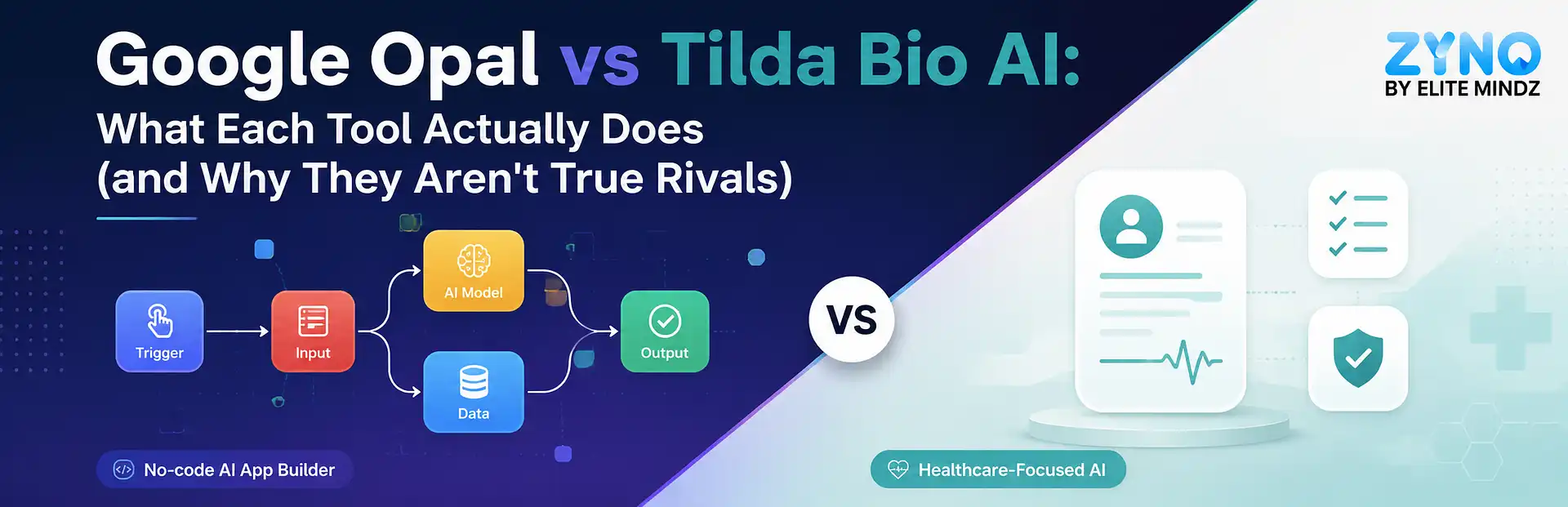
Read More: Google Opal vs Tilda Bio AI: What Each Tool Does
Read More: Agentic AI Development Company in India
AI Enablement in the Age of Generative AI: ZYNO by Elite Mindz Leading the Charge
Read More →

Top 10 Trends Shaping the Future of AI Agents in 2025
Read More →
Top 6 AI Chatbot Features Transforming Customer Engagement in 2026
Read More →
Top 10 AI Integration Strategies for Seamless ERP and CRM Upgrades in 2025
Read More →
Best GAI Consulting Approaches for Ethical Business Transformation in 2025
Read More →
From Vision to Value: The Ultimate Guide to Enterprise GenAI Platforms
Read More →
Top 10 GAI Development Trends Shaping Autonomous Agents in 2025
Read More →
The Future of Computer Vision: Trends to Watch in 2025
Read More →
Generative AI in 2025: How ZYNO BY Elite Mindz is Transforming Enterprise Workflows
Read More →
10 Real-World Applications of Computer Vision in 2025
Read More →
Integrating Computer Vision with IoT and AI: Driving the Next Wave of Intelligent Systems in 2025
Read More →
Agentic AI Explained: How AI Agents Are Transforming Business in 2025
Read More →
From Chatbots to Autonomous Agents: The Evolution of Agentic AI
Read More →
The Rise of Multi-Agent Systems: How Agentic AI Teams Will Run Enterprises of the Future
Read More →
Agentic AI vs Generative AI: What Business Leaders Need to Know
Read More →
The Power of Autonomous Agents: Understanding Agentic AI for Enterprises
Read More →
The Role of Agentic AI in Enhancing Enterprise Agility and Responsiveness
Read More →
Agentic AI as a Competitive Advantage: Why Businesses Can’t Ignore It
Read More →
The Shift from Automation to Autonomy: How Agentic AI is Redefining Enterprise Operations
Read More →
From Reactive to Proactive: How Agentic AI Changes Enterprise Decision-Making
Read More →
Why Every Business Will Hire an AI Agent Soon
Read More →
Agentic AI for Startups: Leveling the Playing Field
Read More →
Agentic AI: The New Digital Workforce
Read More →
The Future of Business: Autonomous Teams of AI Agents
Read More →
From Insights to Action: How AI Agents Close the Gap
Read More →
Agentic AI in 2026: From Hype to Enterprise-Ready Transformation
Read More →
The Competitive Edge: Why Early Adopters of Agentic AI Are Winning Markets
Read More →
Beyond Automation: Why Agentic AI is the Key to Enterprise Agility in 2025
Read More →
The Human-AI Partnership: Building Smarter Teams with Agentic AI
Read More →
The Rise of Autonomous Teams: Why Agentic AI is the New Digital Workforce
Read More →
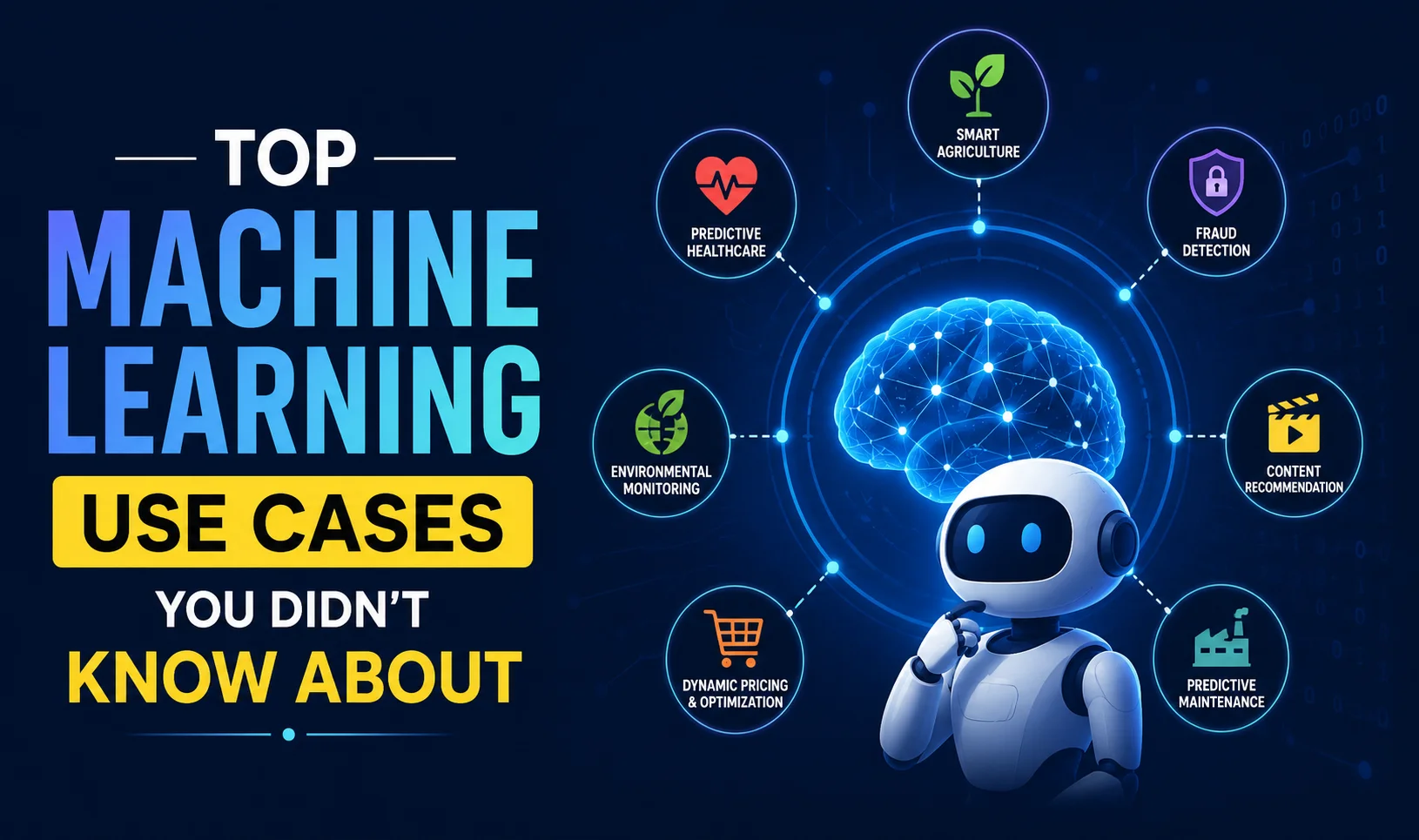
Top Machine Learning Use Cases You Didn’t Know About
Read More →
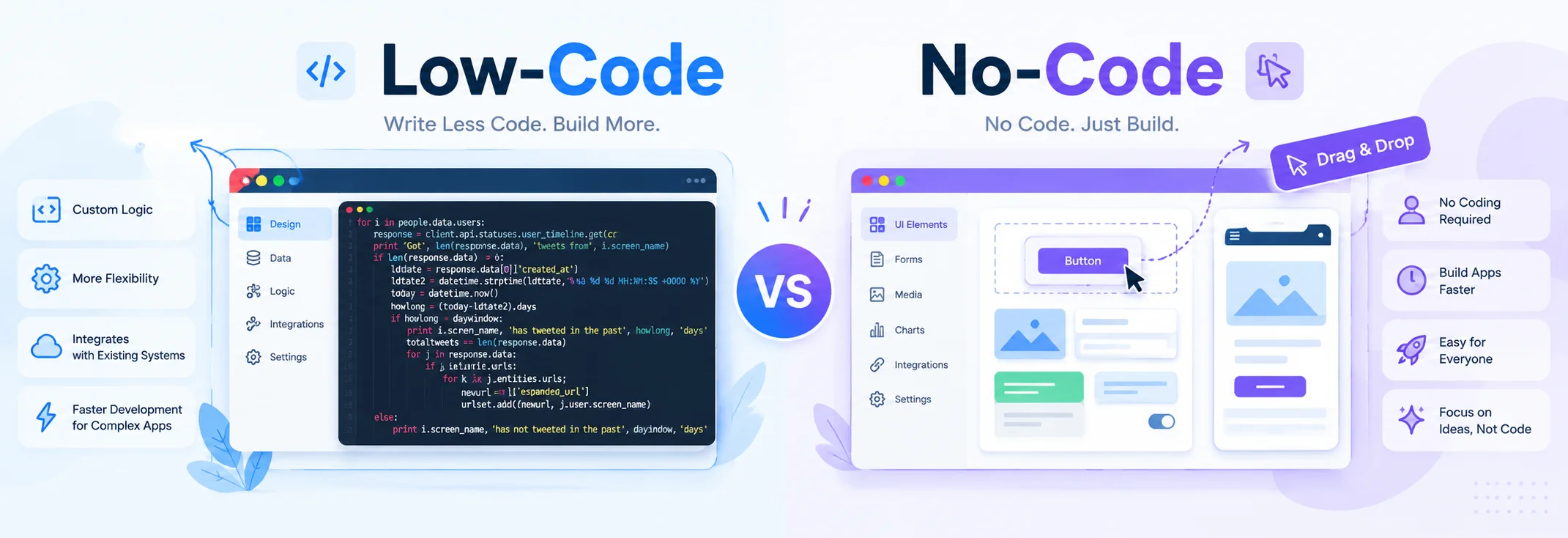
What Is Low Code/No Code and Why It Matters in 2025
Read More →
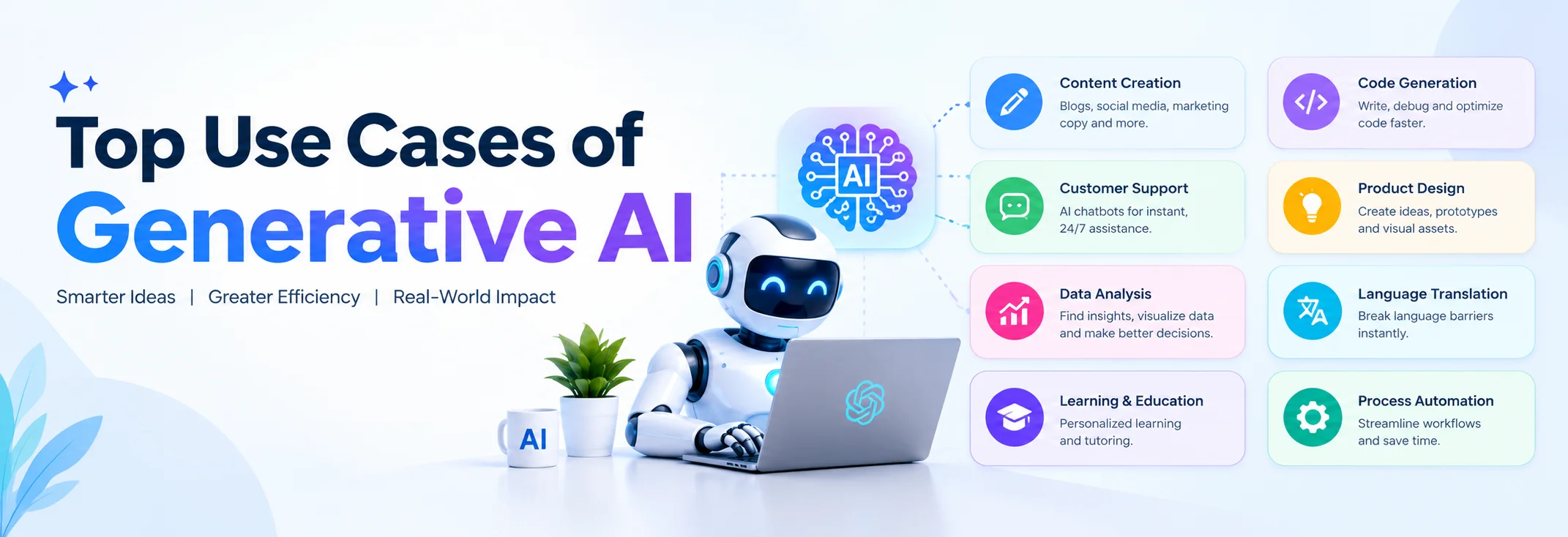
Top Use Cases of Generative AI in 2026
Read More →
The Future of Generative AI in Enterprises
Read More →
How Generative AI Is Reshaping Enterprise Operations in 2025
Read More →
Top AI Features Every Modern Taxi App Must Include in 2026
Read More →The Future of Events: How Artificial Intelligence Is Changing the Industry
Read More →Why Are AI Agents the Next Big Shift in Banking and Finance
Read More →How AI-Driven Analytics Improve Learning Outcomes
Read More →How AI Is Optimizing Every Step of Food Delivery Apps
Read More →How AI-Powered CRM Is Transforming the Media & Entertainment Industry
Read More →
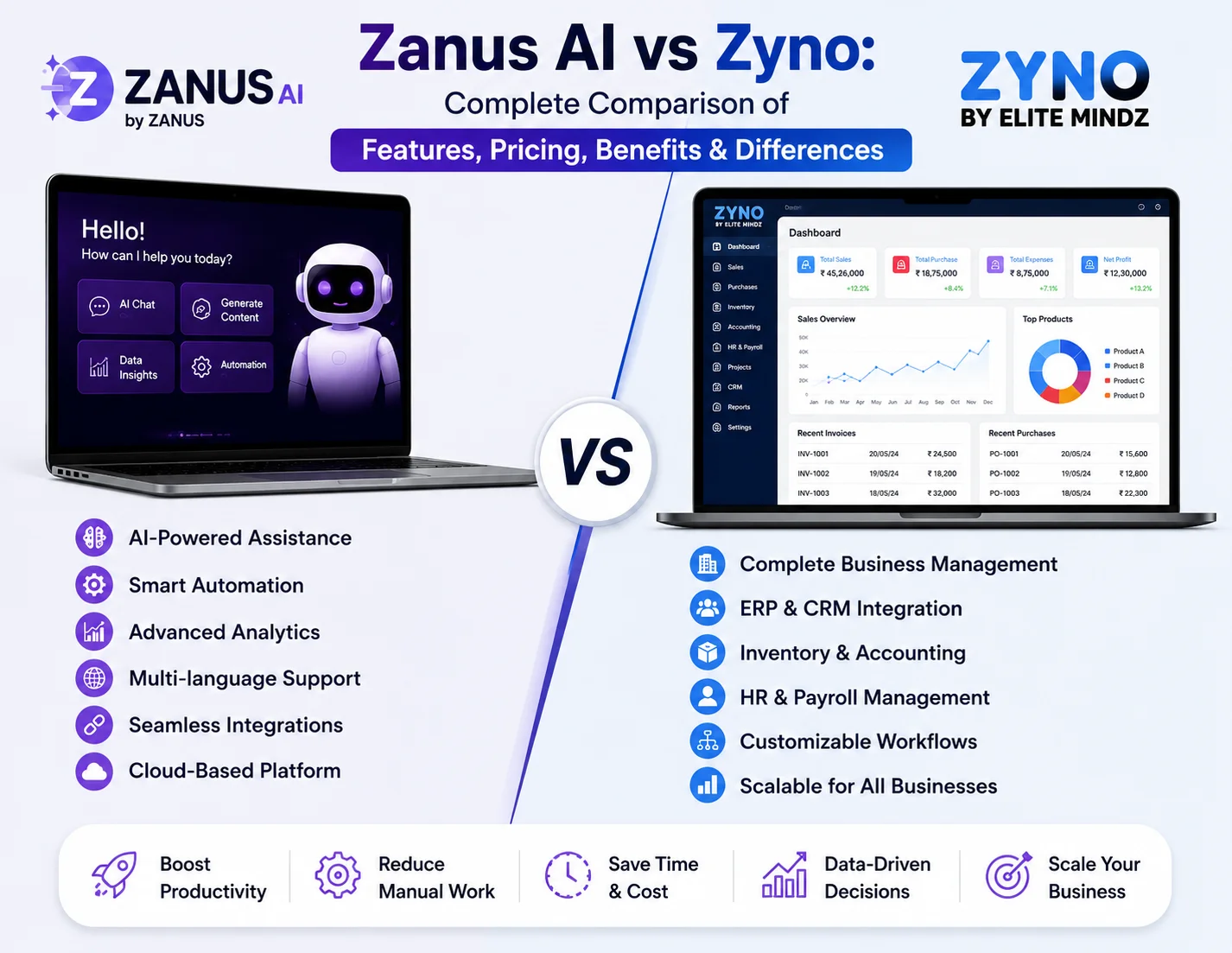
ZYNO vs Zanus AI: Which Is Better for Your Business?
Read More →
Why US Companies Are Outsourcing Agentic AI Development to India

Read More →
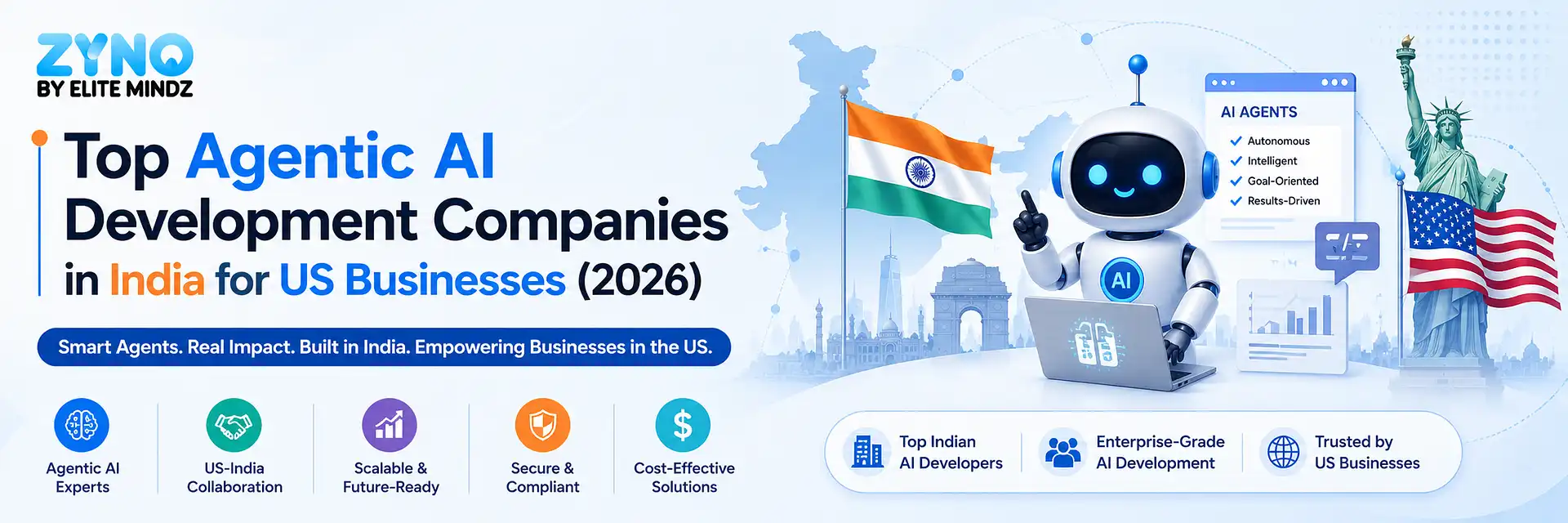
Top Agentic AI Development Companies in India for US Businesses (2026)

Read More →
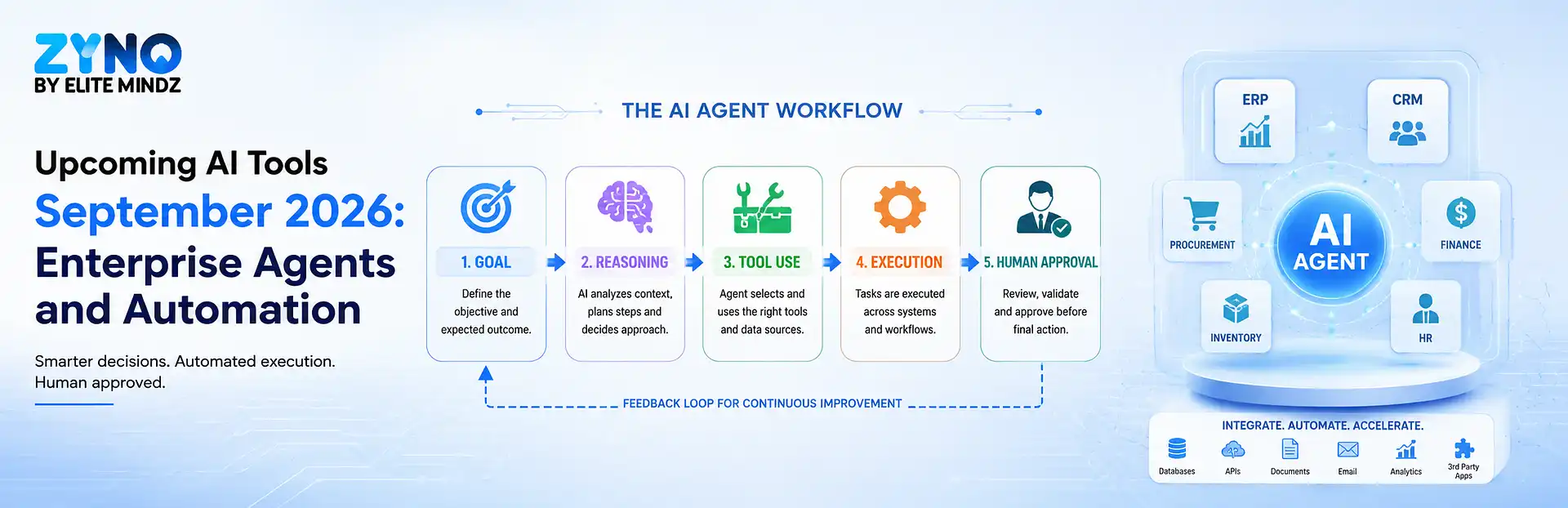
Top Upcoming AI Tools of September 2026 You Must Watch
Read More →
Google Opal vs Tilda Bio AI: What Each Tool Actually Does (and Why They Aren't True Rivals)
Read More →
AI Agent Development Services: A Practical Guide for Business Teams

Read More →
Enterprise AI Agent Development Services: The Complete Guide to Cost, Benefits, Use Cases & Implementation

Read More →
How Much Does Custom AI Agent Development Cost in 2026? Calculate Real Price Ranges
Read More →
Machine Learning Software: Features, Benefits, Pricing & How to Choose the Right Solution in 2026
Read More →
Computer Vision in AI: How It Works, Types, Applications & Benefits
Read More →
Computer Vision Software Development Services
Read More →
What Is AI Identity Verification? How It Works, Benefits & Use Cases
Read More →
AI Identity Verification Software: Features & How to Choose
Read More →
Google's New AI Tool for App Development
Read More →
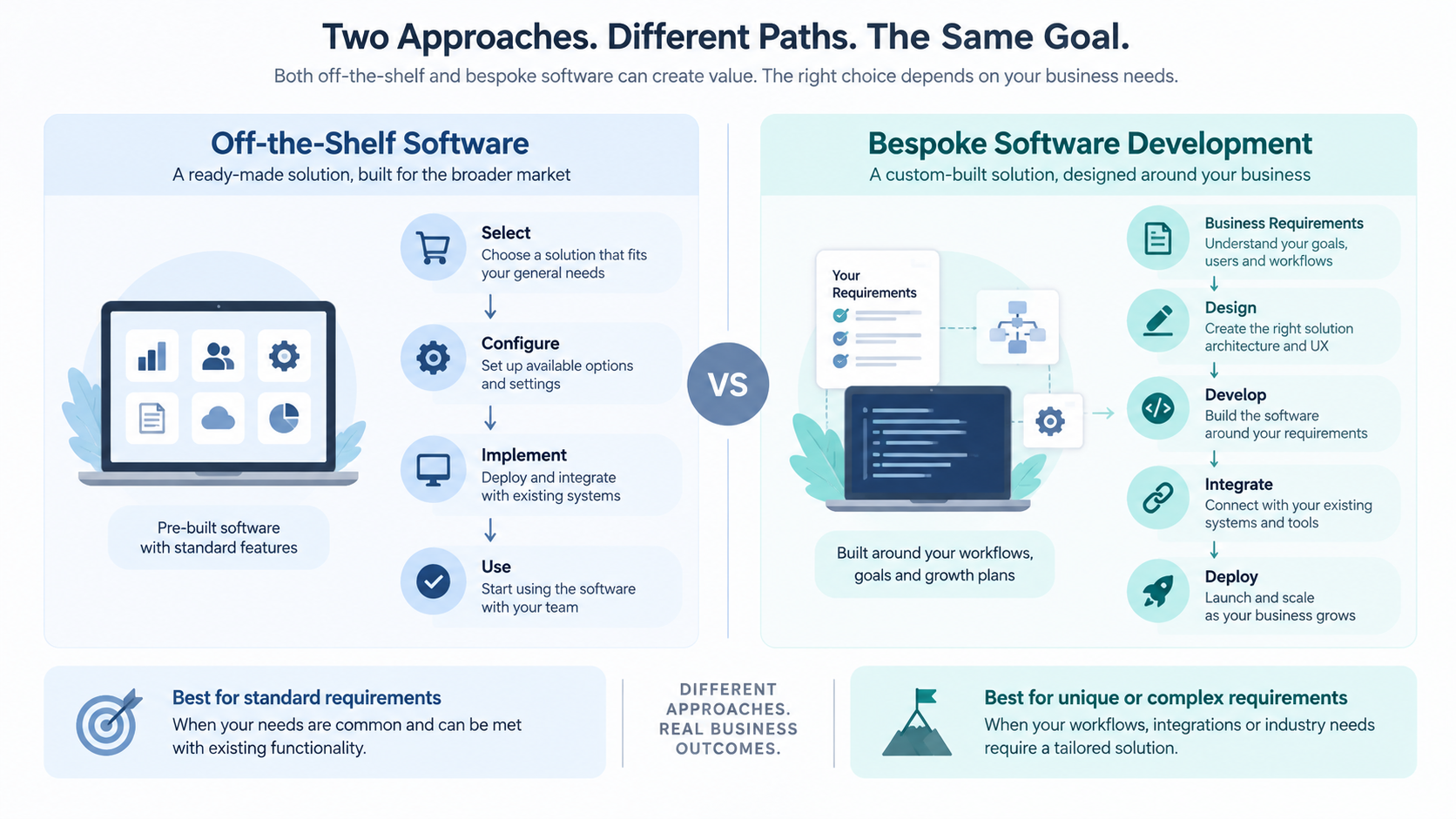
Bespoke Software Development vs Off-the-Shelf Software: Which Is Right for Your Business?

Read More →
AI Agent Development Company in Delhi: Services, Process, Cost & Benefits

Read More →
AI Agent Development Company in Mumbai: Services, Process, Cost & Benefits

Read More →
Best Practices that Support Successful Software Projects
Read More →Partner with ZYNO by Elite Mindz to revolutionize how your business works. Fill out the form, and we’ll reach out with AI-powered solutions made just for you.
We use browser cookies to ensure you get the best experience on our website. Learn more
The form was submitted successfully!