AI Enablement in the Age of Generative AI: ZYNO by Elite Mindz Leading the Charge
Read More →
×
Computer vision software development services help businesses build custom AI systems that automatically detect, classify, and inspect visual data, replacing slow manual review with real-time automation. ZYNO by Elite Mindz delivers this end to end, from data and model training through integration and deployment. Talk to ZYNO about your use case to scope a solution built around your workflow.
Businesses using ZYNO Books cut accounting time by 70% and stay 100% ZATCA-compliant — automatically.
Businesses that rely on manual visual checks, whether inspecting products, reviewing camera footage, or verifying documents, run into the same wall: humans cannot review images and video at the speed or scale modern operations require. Computer vision software development services solve this by building AI systems that automatically detect, classify, track, and act on visual data.
This article explains what these services include, how development works, what they cost, and how to evaluate a provider.
Computer vision software development services are the process of designing, building, training, and deploying AI systems that interpret visual data from cameras, images, or video to automate tasks like detection, classification, and inspection.
A provider offering computer vision development services does not just write code. They build a working system: a trained model, the software that runs it, and the integration that connects it to your existing tools.
In practice, this means:
If you want the broader technical background on how these systems work, our guide on how computer vision works covers the underlying models and architectures in more depth.
Ready to Build Smarter Vision Solutions?
Explore our computer vision solutions or talk to our experts about your project requirements.
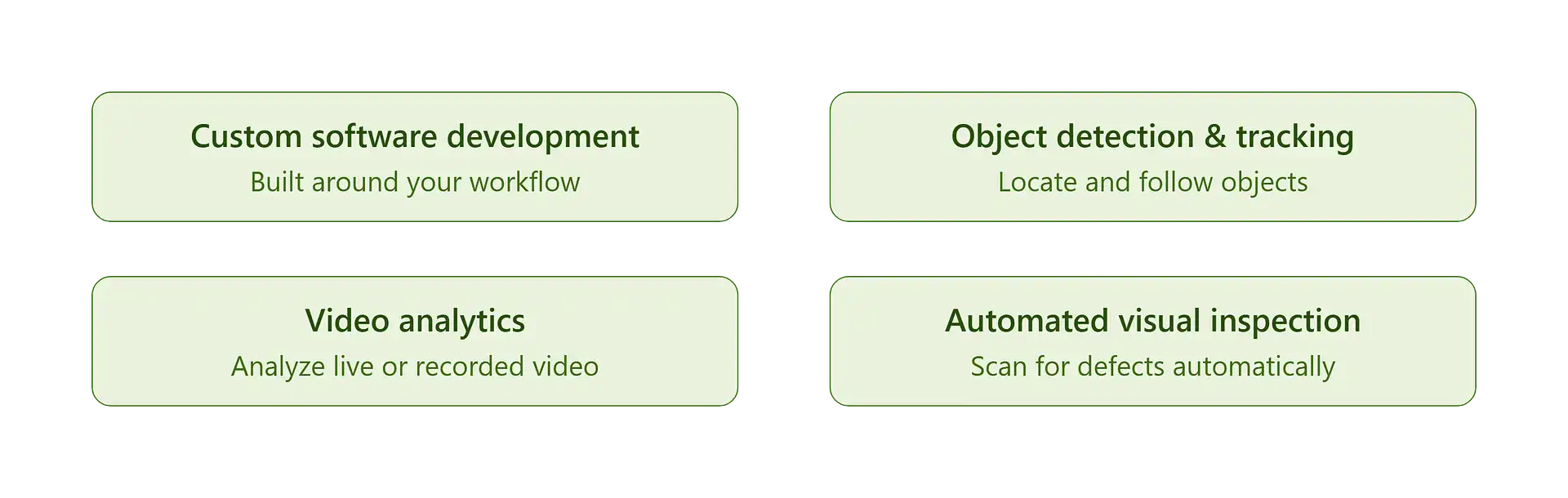
Explore Computer Vision Services Talk to Our ExpertsComputer vision services span a range of deliverables, from a single automated task to a full platform. Most engagements fall into one or more of these categories:
| Computer Vision Service | What It Does | Business Use |
|---|---|---|
| Custom software development | Purpose-built application around your visual workflow | Replaces manual review with automated logic |
| Image recognition and classification | Labels images based on trained categories | Sorting, tagging, quality grading |
| Object detection and tracking | Locates and follows objects across frames | Security monitoring, inventory counting |
| Video analytics | Analyzes live or recorded video for events | Surveillance, traffic flow, occupancy |
| Automated visual inspection | Scans products for defects | Quality control on production lines |
| OCR and document vision | Extracts text from scanned documents | Data entry automation, KYC, invoicing |
| Computer vision model development | Trains and fine-tunes models on your data | Higher accuracy for a specific task |
| Computer vision integration | Connects vision models to existing software | Results feed into operational systems |

Each of these can be delivered independently or combined into a single computer vision application development project. Some businesses need computer vision implementation services for one production line, while others need computer vision integration services across several systems at once.
Most businesses turn to a custom build because generic, off-the-shelf AI computer vision solutions rarely account for the specific conditions of their environment, whether that is factory lighting, product variation, or camera placement.
Common pain points that drive this decision:
Custom computer vision software is built to handle these exact conditions instead of forcing a generic model to work around them.
Turn Visual Data Into Business Intelligence
Build intelligent computer vision solutions that automate inspection, recognition, tracking, OCR, and real-time visual analysis.
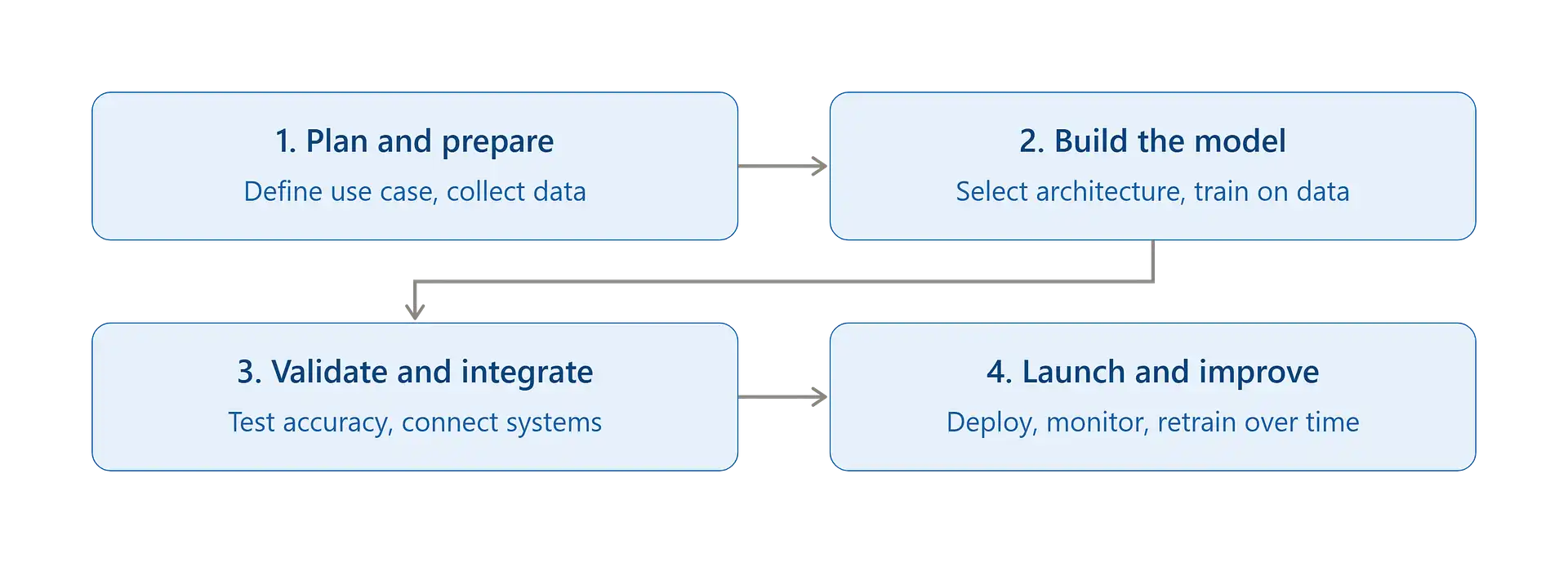
Computer vision software development follows a structured process, not a single build step. A typical project moves through these stages:

This is the core of computer vision AI development: a repeatable cycle of data, training, integration, and validation.
These systems are already deployed across a wide range of industries, each with its own detection and monitoring needs. In healthcare, adoption has grown fast enough that the U.S. FDA now lists more than 1,400 authorized AI and machine learning-enabled medical devices, most involving image-based diagnostic support.
| Industry | Computer Vision Use Case | Business Benefit |
|---|---|---|
| Manufacturing | Automated visual inspection for defects | Fewer defective units reaching customers |
| Healthcare | AI-assisted analysis of medical images | Faster preliminary review, reduced radiologist workload |
| Retail | Shelf monitoring and self-checkout vision | Reduced stockouts, faster checkout |
| Logistics | Package and label verification, object tracking | Fewer misrouted shipments, better warehouse accuracy |
| Automotive | Object detection for driver assistance and safety systems | Improved on-road safety monitoring |
| Security | Real-time video analytics and anomaly detection | Faster response to incidents across multiple cameras |
| Agriculture | Crop and produce visual inspection | Better yield estimation and quality sorting |
This distinction matters because confusing the two leads to wasted budget.
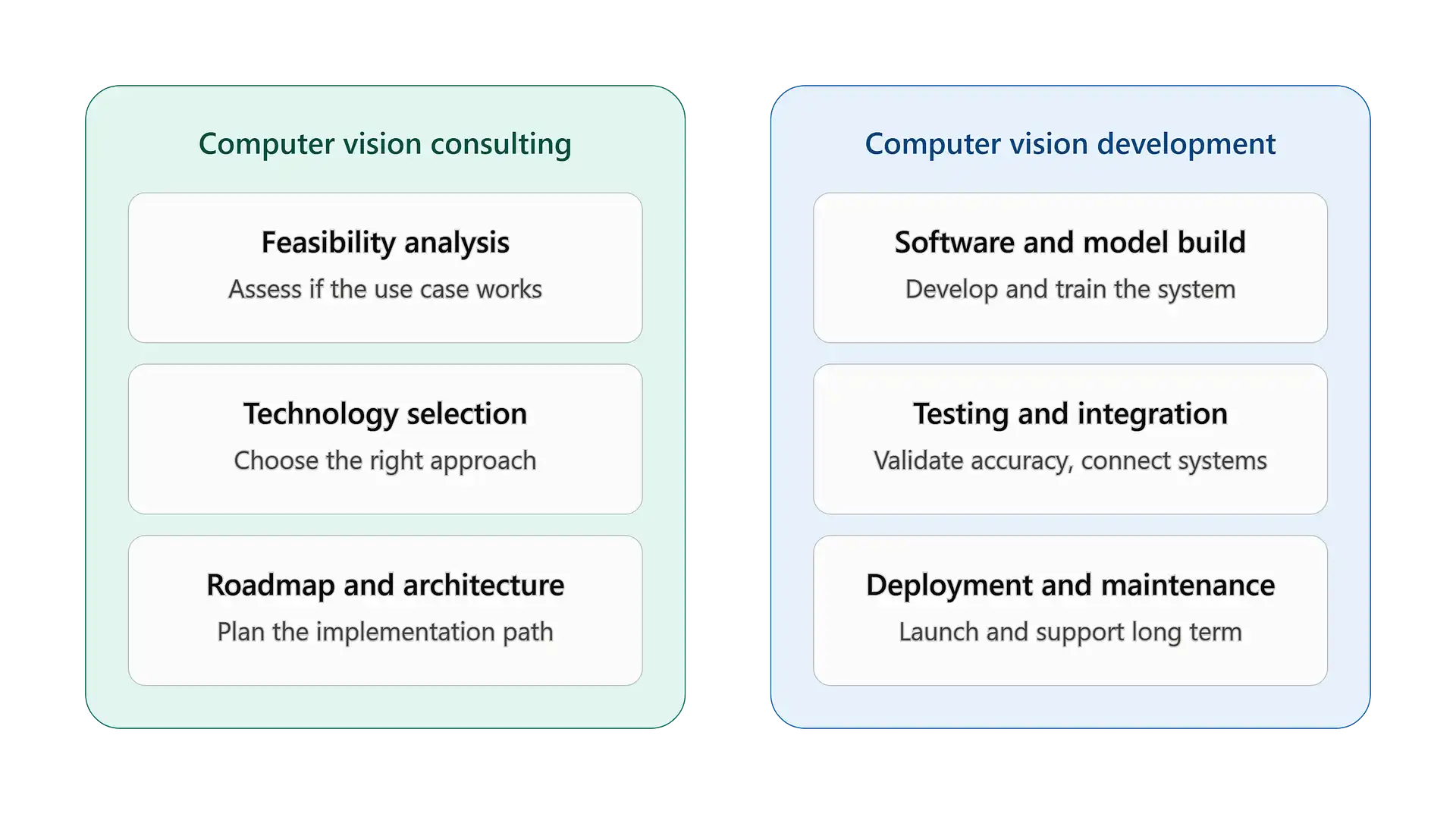
Computer vision consulting covers strategy: feasibility analysis, use-case identification, technology selection, architecture, and an implementation roadmap before any code is written.
Computer vision development covers execution: software development, model training, integration, testing, deployment, and maintenance.
| Stage | Focus | Typical Output |
|---|---|---|
| Computer vision consulting | Strategy and planning | Feasibility report, architecture plan, roadmap |
| Computer vision development | Build and deployment | Trained model, integrated software, deployed system |
Many businesses start with computer vision consulting to validate the use case, then move into computer vision development services for the build.

There is no fixed price for a computer vision software development cost because it depends entirely on project scope and complexity.
Computer vision development cost is shaped by:

A narrow, single-use-case project costs far less than a multi-camera, real-time system with custom dashboards and compliance requirements. An accurate estimate requires a scoped conversation about your specific use case.
Use this checklist when evaluating a computer vision development company:
A provider that can speak clearly to all of these, rather than just the AI model itself, is better positioned to deliver a working system.
ZYNO is the AI and computer vision development offering from Elite Mindz, applying computer vision technology to specific business workflows rather than offering a generic, one-size-fits-all tool.
ZYNO covers the full lifecycle of AI-powered computer vision: visual data analysis, image and video analysis, object detection, automated visual inspection, and computer vision automation. The approach starts with understanding what a business needs to detect, classify, or monitor, then builds the model, software, and integration around that requirement.
For businesses evaluating computer vision development services, this means working with a team that treats data quality, model training, and system integration as equally important as the AI model itself. If you are exploring computer vision software development for your business, talk to ZYNO about your use case to scope the work and outline a practical path to deployment.
Build Smarter Solutions With Computer Vision
Automate visual inspection, image recognition, OCR, object detection, and video analytics with intelligent computer vision solutions.
They involve designing, training, and deploying AI systems that interpret images or video to automate detection, classification, and inspection. Services include model development, software integration, and deployment support built around a specific business workflow.
It builds custom AI systems for visual tasks, covering data preparation, model training, software development, API integration, and deployment, along with ongoing monitoring and retraining to maintain accuracy over time.
Typical services include image classification, object detection and tracking, video analytics, automated visual inspection, OCR, model development, and system integration, with the exact mix depending on the use case.
Cost depends on project complexity, dataset size, number of cameras or images, model requirements, and integration needs. There is no fixed price; an accurate estimate requires scoping the specific use case.
Timelines vary with data availability, model complexity, and integration needs. A narrow, well-defined use case with existing data typically moves faster than a multi-camera system with custom dashboards and compliance work.
Manufacturing, healthcare, retail, logistics, automotive, security, and agriculture all use these systems, each applying computer vision to a different detection, monitoring, or inspection need.
AI Enablement in the Age of Generative AI: ZYNO by Elite Mindz Leading the Charge
Read More →

Top 10 Trends Shaping the Future of AI Agents in 2025
Read More →
Top 6 AI Chatbot Features Transforming Customer Engagement in 2026
Read More →
Top 10 AI Integration Strategies for Seamless ERP and CRM Upgrades in 2025
Read More →
Best GAI Consulting Approaches for Ethical Business Transformation in 2025
Read More →
From Vision to Value: The Ultimate Guide to Enterprise GenAI Platforms
Read More →
Top 10 GAI Development Trends Shaping Autonomous Agents in 2025
Read More →
The Future of Computer Vision: Trends to Watch in 2025
Read More →
Generative AI in 2025: How ZYNO BY Elite Mindz is Transforming Enterprise Workflows
Read More →
10 Real-World Applications of Computer Vision in 2025
Read More →
Integrating Computer Vision with IoT and AI: Driving the Next Wave of Intelligent Systems in 2025
Read More →
Agentic AI Explained: How AI Agents Are Transforming Business in 2025
Read More →
From Chatbots to Autonomous Agents: The Evolution of Agentic AI
Read More →
The Rise of Multi-Agent Systems: How Agentic AI Teams Will Run Enterprises of the Future
Read More →
Agentic AI vs Generative AI: What Business Leaders Need to Know
Read More →
The Power of Autonomous Agents: Understanding Agentic AI for Enterprises
Read More →
The Role of Agentic AI in Enhancing Enterprise Agility and Responsiveness
Read More →
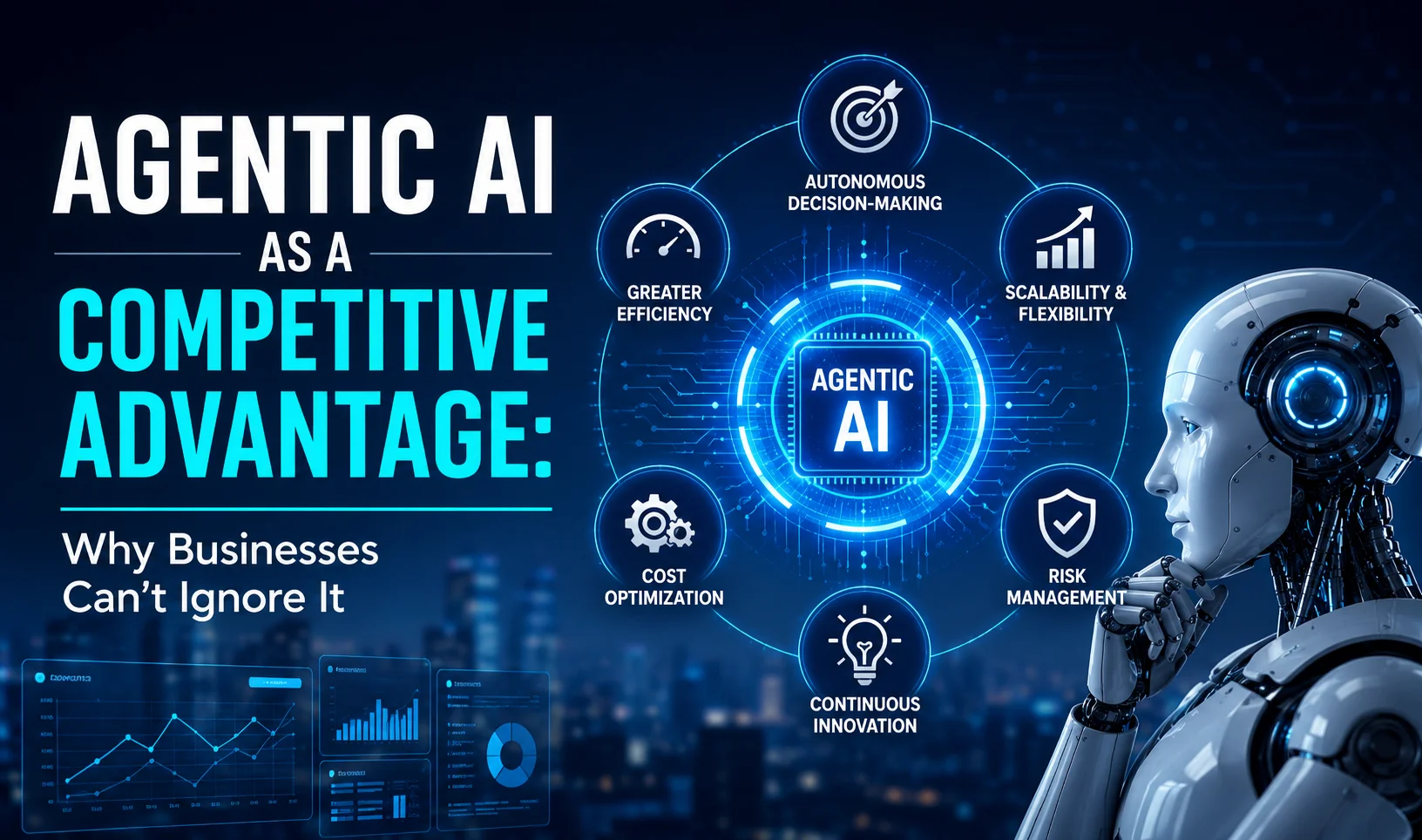
Agentic AI as a Competitive Advantage: Why Businesses Can’t Ignore It
Read More →
The Shift from Automation to Autonomy: How Agentic AI is Redefining Enterprise Operations
Read More →
From Reactive to Proactive: How Agentic AI Changes Enterprise Decision-Making
Read More →
Why Every Business Will Hire an AI Agent Soon
Read More →
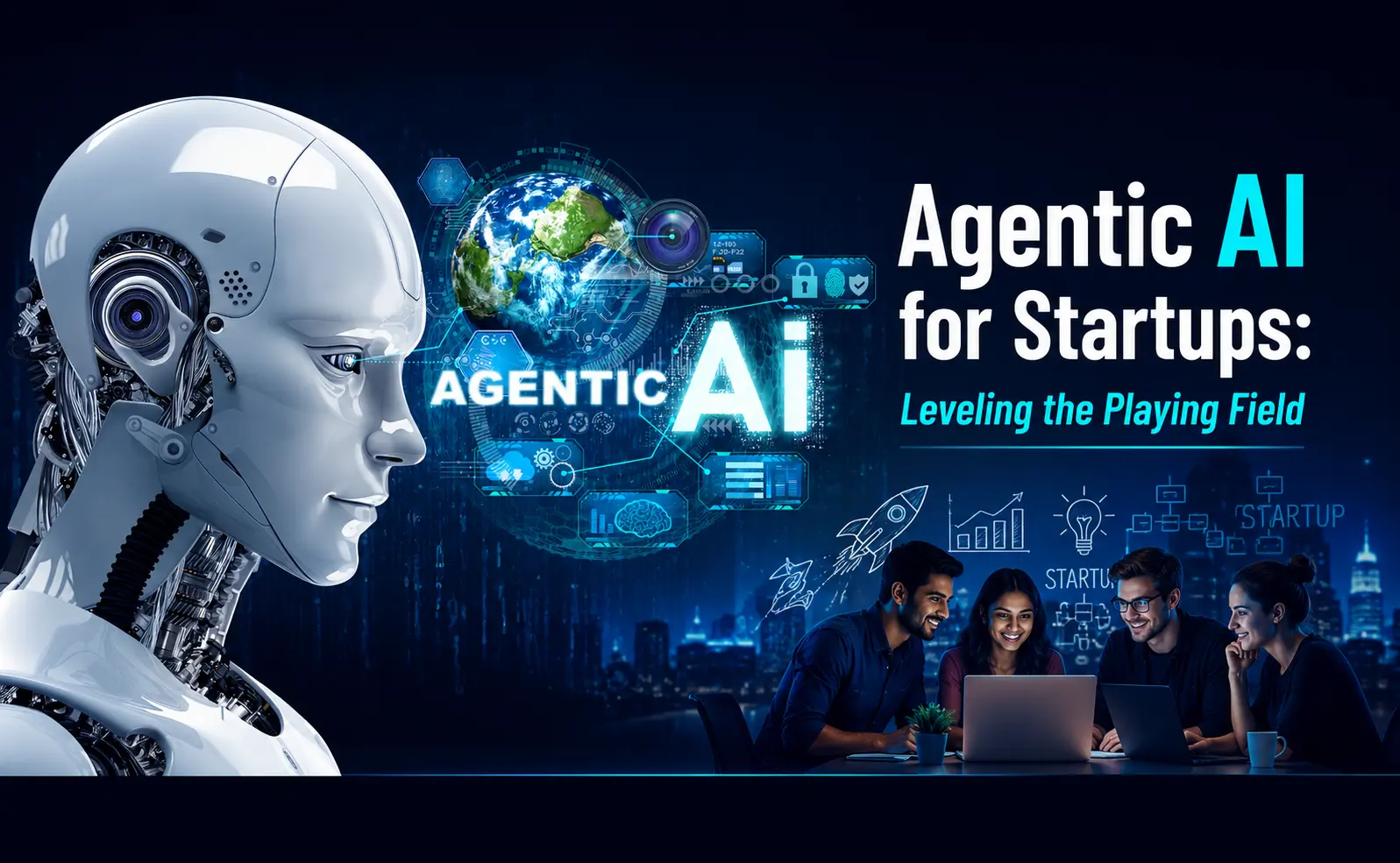
Agentic AI for Startups: Leveling the Playing Field
Read More →
Agentic AI: The New Digital Workforce
Read More →
The Future of Business: Autonomous Teams of AI Agents
Read More →
From Insights to Action: How AI Agents Close the Gap
Read More →
Agentic AI in 2026: From Hype to Enterprise-Ready Transformation
Read More →
The Competitive Edge: Why Early Adopters of Agentic AI Are Winning Markets
Read More →
Beyond Automation: Why Agentic AI is the Key to Enterprise Agility in 2025
Read More →
The Human-AI Partnership: Building Smarter Teams with Agentic AI
Read More →
The Rise of Autonomous Teams: Why Agentic AI is the New Digital Workforce
Read More →
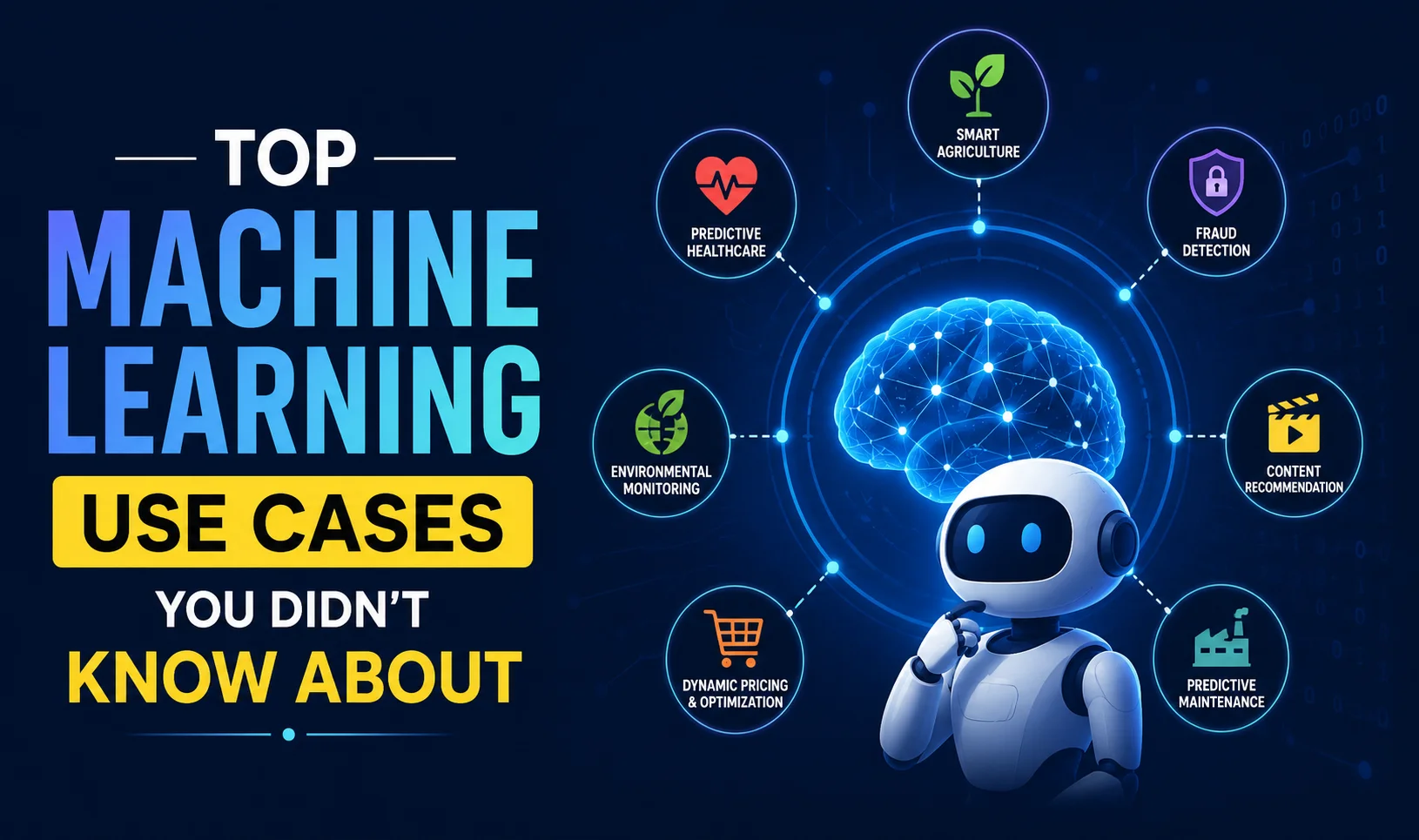
Top Machine Learning Use Cases You Didn’t Know About
Read More →
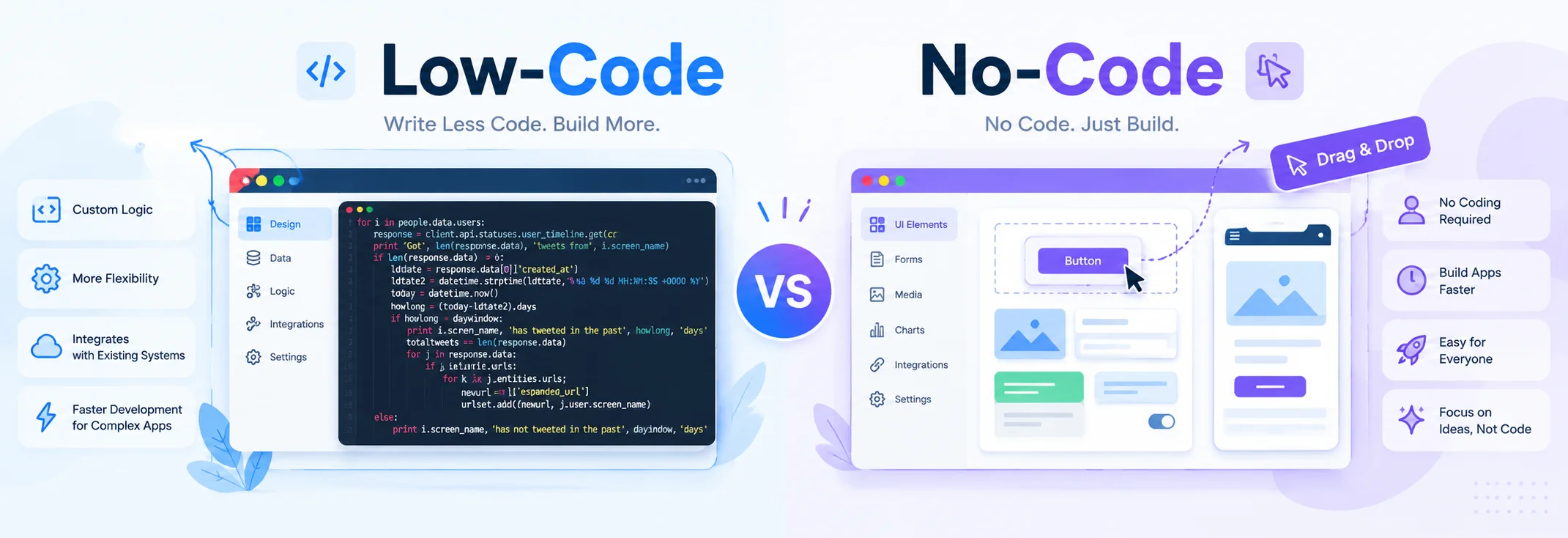
What Is Low Code/No Code and Why It Matters in 2025
Read More →
Top Use Cases of Generative AI in 2026
Read More →
The Future of Generative AI in Enterprises
Read More →
How Generative AI Is Reshaping Enterprise Operations in 2025
Read More →
Top AI Features Every Modern Taxi App Must Include in 2026
Read More →The Future of Events: How Artificial Intelligence Is Changing the Industry
Read More →Why Are AI Agents the Next Big Shift in Banking and Finance
Read More →How AI-Driven Analytics Improve Learning Outcomes
Read More →How AI Is Optimizing Every Step of Food Delivery Apps
Read More →How AI-Powered CRM Is Transforming the Media & Entertainment Industry
Read More →
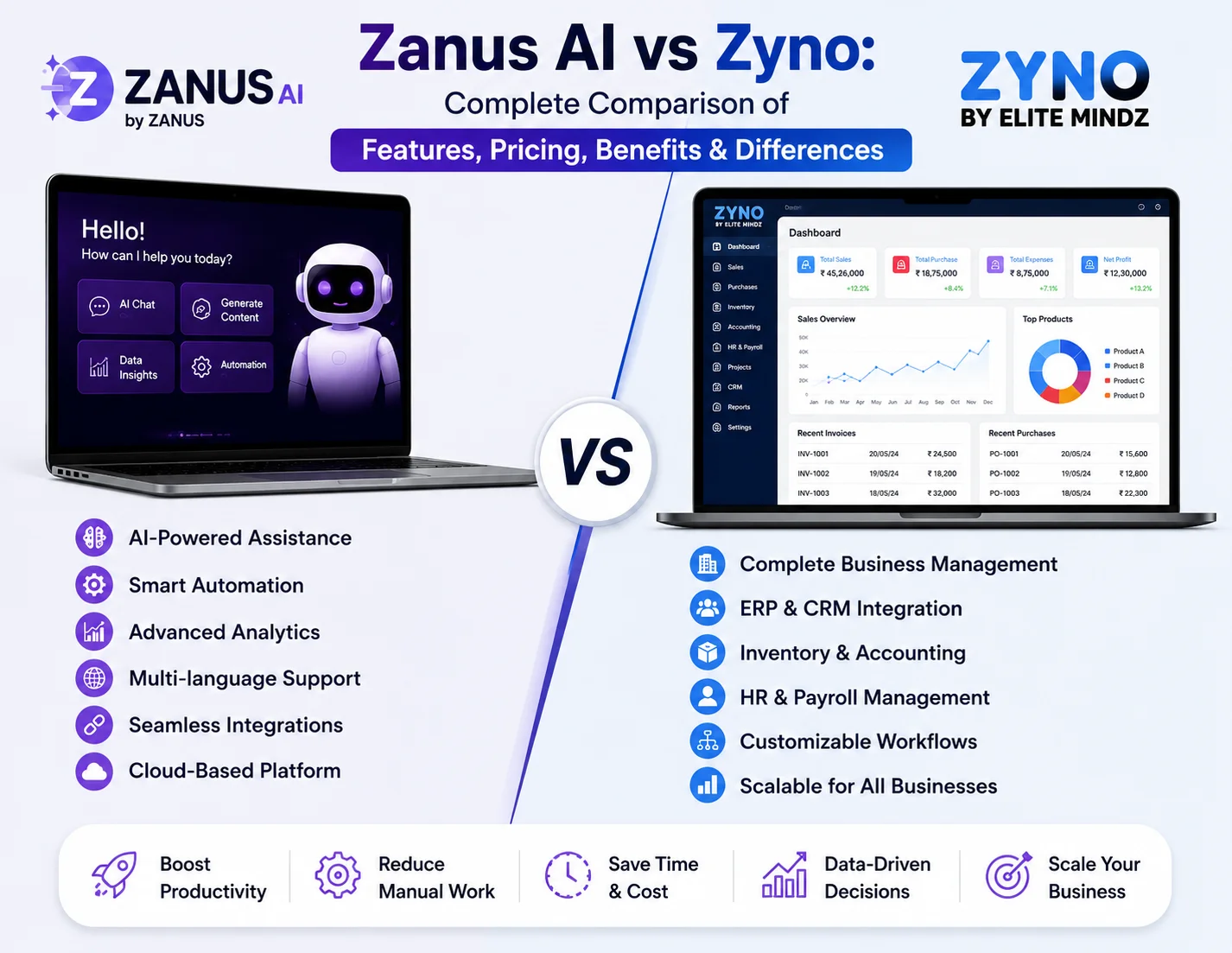
ZYNO vs Zanus AI: Which Is Better for Your Business?
Read More →
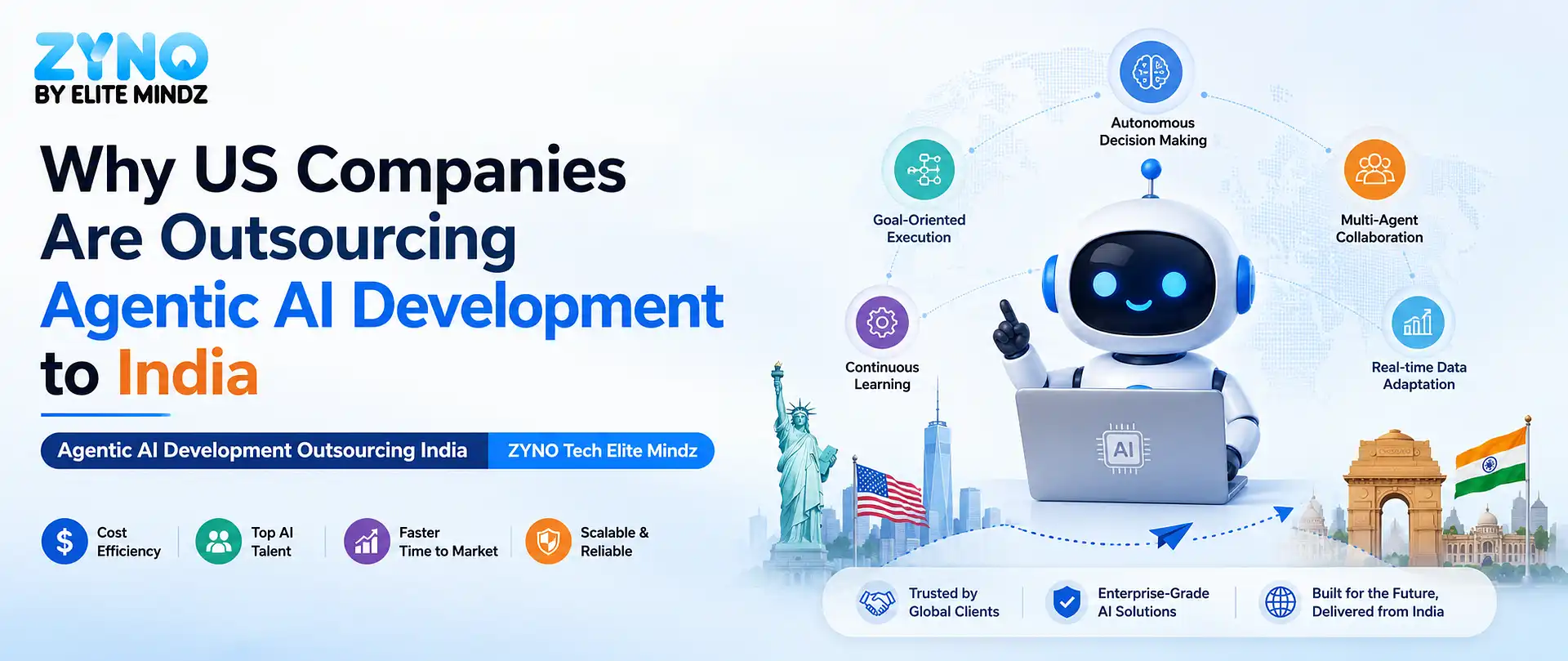
Why US Companies Are Outsourcing Agentic AI Development to India
Read More →
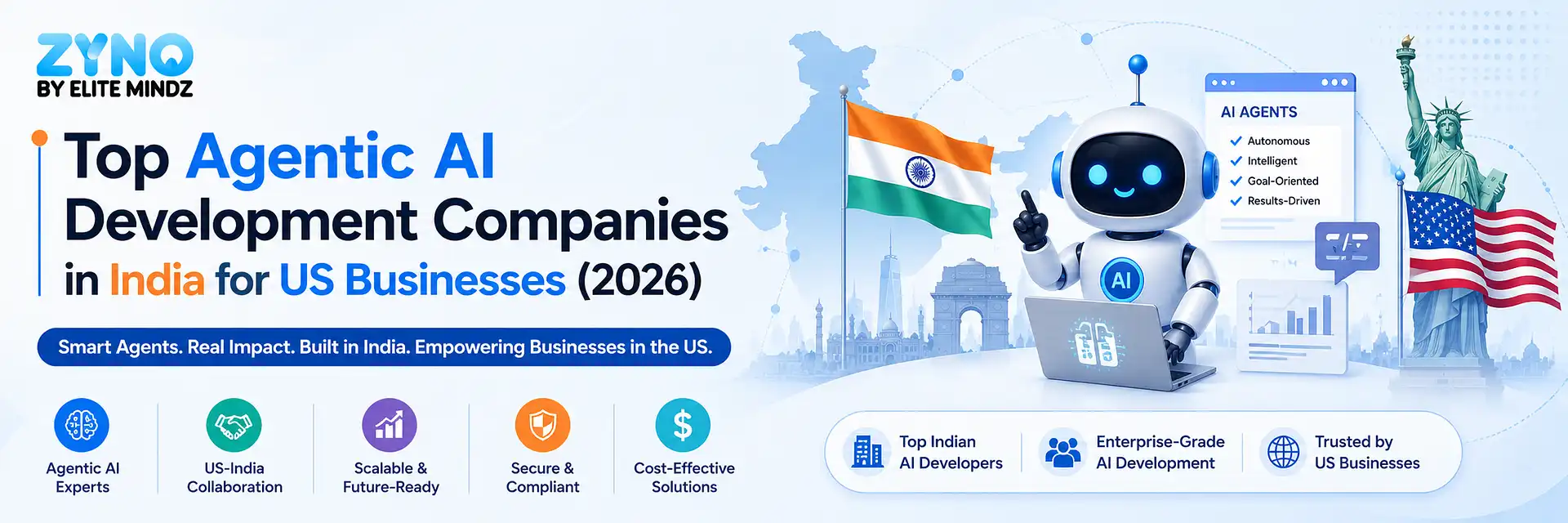
Top Agentic AI Development Companies in India for US Businesses (2026)

Read More →
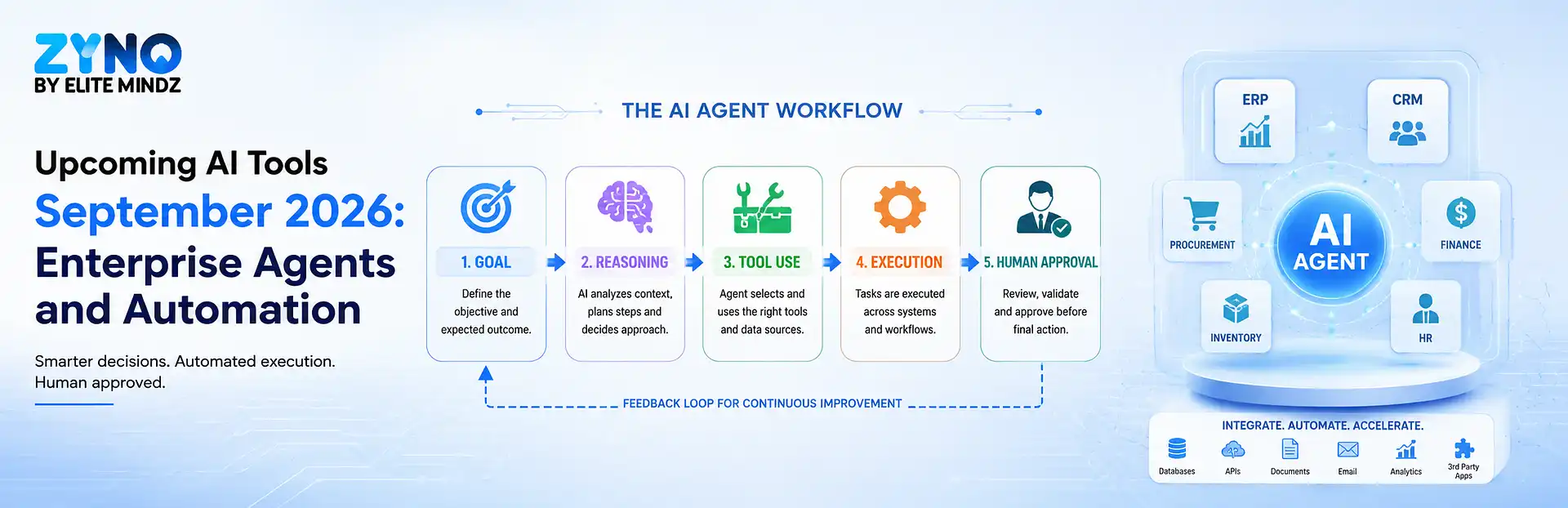
Top Upcoming AI Tools of September 2026 You Must Watch
Read More →
Google Opal vs Tilda Bio AI: What Each Tool Actually Does (and Why They Aren't True Rivals)
Read More →
AI Agent Development Services: A Practical Guide for Business Teams

Read More →
Enterprise AI Agent Development Services: The Complete Guide to Cost, Benefits, Use Cases & Implementation

Read More →
How Much Does Custom AI Agent Development Cost in 2026? Calculate Real Price Ranges
Read More →
Machine Learning Software: Features, Benefits, Pricing & How to Choose the Right Solution in 2026
Read More →
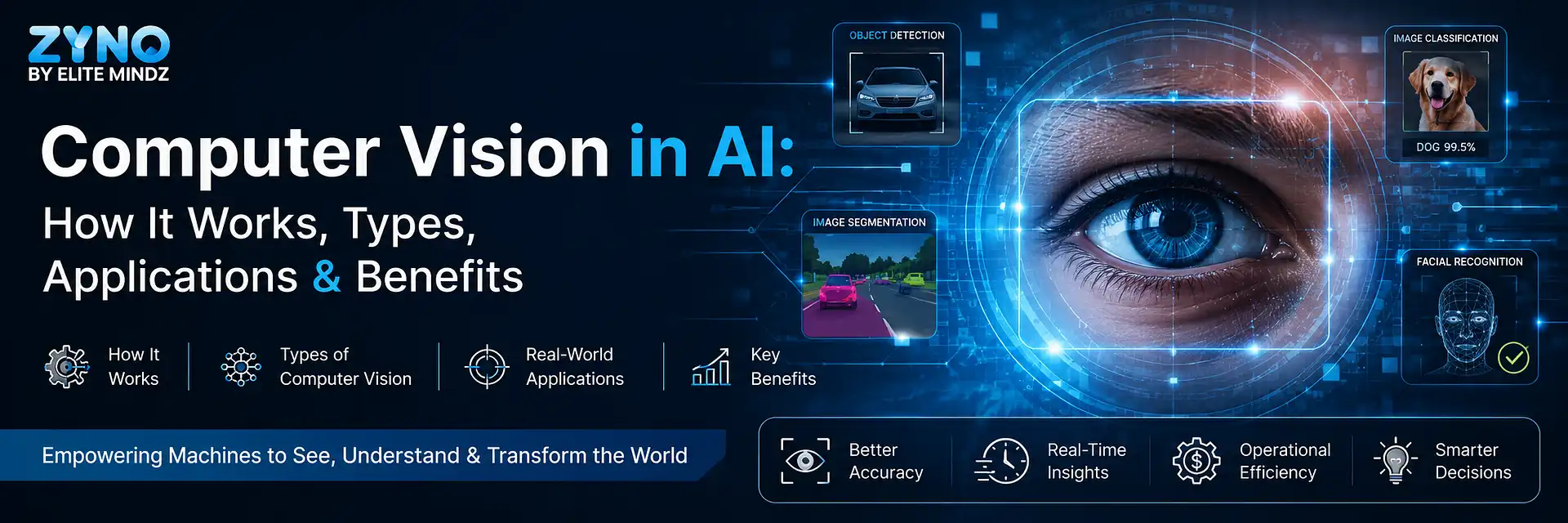
Computer Vision in AI: How It Works, Types, Applications & Benefits
Read More →
Computer Vision Software Development Services
Read More →Partner with ZYNO by Elite Mindz to revolutionize how your business works. Fill out the form, and we’ll reach out with AI-powered solutions made just for you.
We use browser cookies to ensure you get the best experience on our website. Learn more
The form was submitted successfully!