AI Enablement in the Age of Generative AI: ZYNO by Elite Mindz Leading the Charge
Read More →
×
Everyone's Googling "Google Opal vs Tilda Bio AI," but here's the twist: they're not actually competing for the same job. Opal is Google's free, experimental no-code AI app builder. Tilda is a specialized AI teammate for clinical trial teams. Neither one is built to run your business. So what do you do when your workflows have outgrown generic AI tools? You build something around how your business actually works, not around the limits of someone else's app builder. Talk to ZYNO Tech about custom AI agent development built for your systems, your data, and your rules. Get started →
Businesses using ZYNO Books cut accounting time by 70% and stay 100% ZATCA-compliant — automatically.
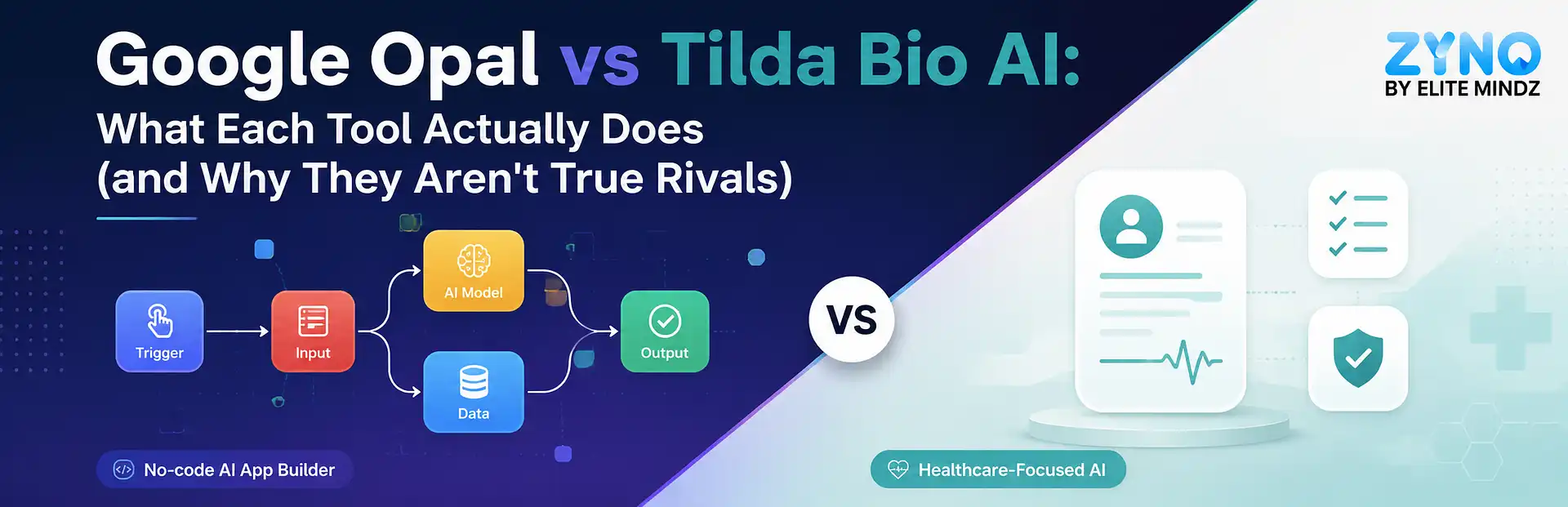
If you searched "Google Opal vs Tilda Bio AI," you probably found one of two things: a generic AI tool directory that scores both platforms on the same five criteria, or nothing useful at all. Here's the problem with the first option. When you actually dig into what these two products do, they aren't competing for the same job. One is a no-code builder for AI mini-apps. The other is a specialized AI teammate built for clinical trial operations in pharma and biotech. Comparing them head-to-head on "ease of use" or "flexibility" is a bit like comparing a spreadsheet app to hospital billing software: technically both involve software and both involve data, but nobody is actually choosing between them.
That mismatch is worth explaining before anything else, because it changes the real question you should be asking. It isn't "which one is better." It's "what is each one actually built for, and does either one fit what I'm trying to do." If the answer turns out to be neither, that's useful information too, and it's the point where custom AI agent development starts to make sense.
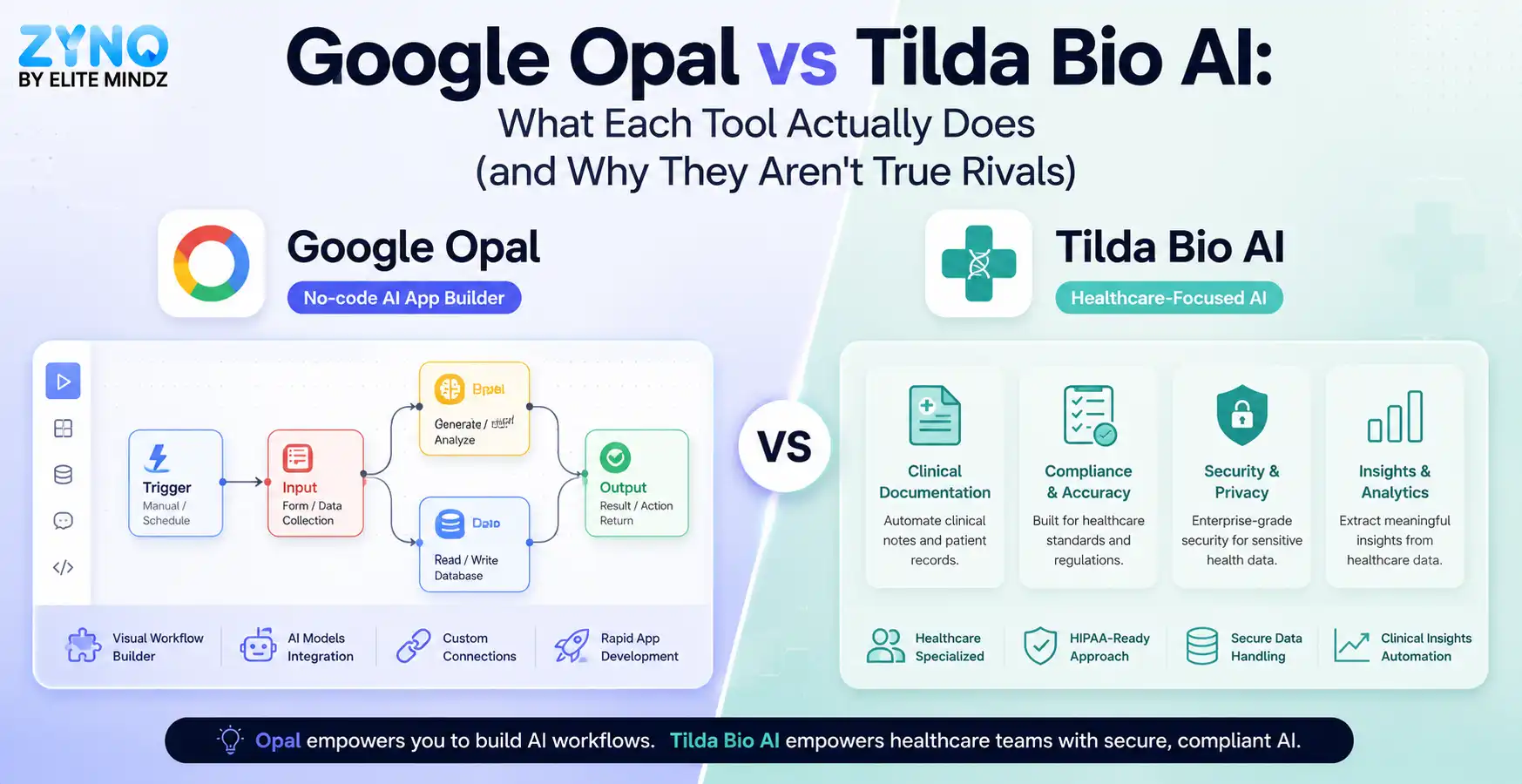
Google Opal is a free, experimental no-code AI app builder from Google Labs. You describe an idea in plain language, and Opal turns it into a visual, editable workflow ("Opal") that chains together prompts, Gemini models, and simple tools, then hosts it with a shareable link. It's built for prototyping, personal productivity apps, and small creative or research tools, not for running mission-critical business processes. Tilda (tilda.bio, sometimes indexed online as "Tilda Bio AI") is a different kind of product entirely: an AI teammate built specifically for clinical trial sponsors, research sites, and CROs, automating tasks like regulatory documentation and trial data workflows. Choose Opal if you want to prototype an AI idea quickly. Choose Tilda only if you actually work in clinical research operations. For most other business automation needs, especially ones involving proprietary systems, approval chains, or multiple departments, neither tool is really designed for the job, and that's when custom AI agent development becomes the more realistic path.
| Factor | Google Opal | Tilda (Tilda Bio AI) |
|---|---|---|
| Core purpose | No-code builder for AI mini-apps | AI teammate for clinical trial operations |
| Target user | Creators, students, small teams, prototypers | Clinical trial sponsors, research sites, CROs |
| AI workflow capabilities | Visual, multi-step workflows chaining prompts and Gemini models | Domain-specific automation of trial documentation and compliance tasks |
| No-code/low-code approach | Yes, natural-language to visual workflow | Not positioned as a general no-code builder |
| Customization | High within its workflow editor, limited outside it | Configured around clinical trial processes, not open-ended |
| Automation | Multi-step app logic, some parallel execution | Regulatory document updates, compliance tracking, trial data handling |
| Integrations | Google ecosystem (Gemini, Workspace context) | Existing clinical trial tools and processes, per the vendor |
| Business use cases | Prototypes, internal productivity tools, content and research assistants | Clinical trial management, site operations, regulatory compliance |
| Scalability | Experimental Google Labs product, no long-term roadmap guarantee | Purpose-built for a regulated, ongoing operational workflow |
| Technical expertise needed | None to use; some workflow logic to build well | Domain expertise in clinical research, not coding |
| Best suited for | Fast prototyping and small AI-powered apps | Pharma, biotech, and CRO teams running trials |
| Limitations | Not built for enterprise-grade reliability or long-term dependency | Not a general-purpose automation or app-building tool |
| Custom AI development requirement | Grows as needs move beyond prototyping | Grows for anything outside clinical trial operations |
Pricing for both products is not fixed public information at the time of writing. Opal is currently free during its Google Labs experimental phase, and Tilda's pricing isn't published in detail. Check each provider's official site for current terms before making a decision.
Build Smarter AI Solutions for Your Business
Turn your ideas into intelligent workflows with custom AI agents, automation, and business-focused AI solutions built around your needs.
Google Opal, sometimes called Opal AI, is an experimental product from Google Labs, first introduced in mid-2025 and expanded to more than 160 countries by late 2025. It's a no-code AI app builder: you describe what you want in plain English (for example, "research a topic, summarize it, draft a caption, and save it to a doc"), and Opal converts that description into a visual workflow made of connected steps. You can edit that workflow directly, reorder steps, tweak prompts, or add new blocks, all without writing code.
Every app built in Opal runs on Google's Gemini models, and Opal handles hosting automatically, giving you a shareable link once your mini-app is ready. That makes it genuinely useful for a specific job: turning an idea into a working prototype in minutes rather than days.
Strengths: fast idea validation, zero technical barrier to entry, tight integration with Gemini, free to use during its Labs phase.
Limitations: it's explicitly experimental. Google Labs has a track record of retiring tools that don't graduate into permanent products, and Google hasn't made public commitments about Opal's long-term availability. It's also not designed for deep customization once you move past its visual workflow blocks, and it isn't built to enforce enterprise governance, approval chains, or complex permission structures.
Business relevance: Opal is a strong fit for internal experimentation, marketing or content prototypes, small productivity tools, and demonstrating a proof of concept before deciding whether to invest further. It's a weaker fit for anything a business needs to run reliably for years, at scale, with audit trails or strict data governance.
This is the part most comparison content gets wrong, so it's worth being precise. Searches for "Tilda Bio AI" often surface listing sites that describe it as a personal bio or link-in-bio page builder, apparently because the domain is tilda.bio. That description doesn't match the product itself. Based on Tilda's own site, Tilda is an AI teammate built for clinical trial operations: it works alongside sponsor, site, and CRO research teams, learning existing tools and processes to help manage tasks like data entry, regulatory documentation (including forms like the FDA's Form 1572), compliance monitoring, and reducing administrative overhead in trial management.
In other words, Tilda is a vertical, domain-specific AI product for a regulated industry, not a general-purpose app builder, workflow tool, or personal branding product.
Strengths (within its actual domain): deep specialization in clinical trial workflows, positioned to reduce administrative burden for research sites and CROs, built around real regulatory requirements like FDA and EMA compliance.
Limitations: it's a narrow, single-purpose product. There's no indication it functions as a general AI workspace, a no-code app builder, or something a business outside clinical research could repurpose. It also isn't a tool most SMBs or general operations teams would ever encounter or need.
Business relevance: genuinely valuable if you're a pharma sponsor, clinical research site, or CRO looking to reduce manual trial administration. Not relevant, and not really "in competition" with anything, if your business is outside that vertical.
Opal's learning curve is low for using an existing Opal, and moderate for building your own, since you still need to think through workflow logic and prompt structure even without code. Tilda's usability is a different question entirely: it's built for people already embedded in clinical trial operations, so "ease of use" means how well it fits an existing regulated workflow, not how quickly a general user can pick it up.
Opal handles general-purpose, multi-step AI workflows: research, drafting, summarizing, generating creative or marketing assets, and chaining Gemini calls together. Tilda automates a specific category of work inside clinical trials, such as updating regulatory documents and tracking compliance status. Neither is built to automate arbitrary business processes outside its lane.
Within Opal's visual editor, you have real flexibility to add steps, adjust prompts, and reorder logic. But you're still working inside Opal's block-based model and Google's ecosystem. Tilda's customization, based on available information, centers on adapting to a research team's existing tools and processes rather than offering an open-ended builder.
Opal's integration story runs through the Google ecosystem: Gemini models, and context from Google apps where relevant. Tilda is described as integrating with a research team's existing systems and processes, though specific integration details should be confirmed directly with the vendor, since public documentation is limited.
This is where the "experiment versus job" distinction matters most. Opal is explicitly a Google Labs project. That's fine for prototyping, but it introduces real risk for anything a business wants to depend on for years, since experimental products can be changed or discontinued without much notice. Tilda, as a purpose-built product for an ongoing regulated workflow, is presumably built with more operational durability in mind, though any organization evaluating it should verify uptime, support, and roadmap commitments directly with the vendor rather than assuming.
Opal fits scenarios like: validating an AI product idea before funding a full build, creating an internal research or content assistant, or building a lightweight tool for a specific team need. Tilda fits scenarios like: reducing the administrative load on clinical trial sites, keeping regulatory documentation current, and giving CRO teams more time for patient-facing and clinical-decision work.
Neither tool requires traditional coding skills. Opal requires comfort describing workflows in natural language and some patience iterating on prompt logic. Tilda requires domain knowledge in clinical trial operations more than technical skill, since it's designed to sit inside an existing regulated process.
Neither product's certifications or compliance posture should be assumed. Tilda operates in a space (clinical trials) where standards like FDA 21 CFR Part 11, HIPAA, and GDPR are directly relevant, and any organization evaluating it for real trial work should request current compliance documentation from the vendor rather than relying on marketing copy. Opal, as an experimental Google Labs product, should be evaluated the same way: check Google's current terms and data-handling documentation before using it for anything involving sensitive business or customer data. Neither claim should be taken as settled fact in this article; verify directly with each provider.
Opal is currently free while in its Labs phase, with no separate subscription confirmed at the time of writing. Tilda's pricing isn't publicly detailed. But cost isn't only the subscription line. It's also implementation time, the cost of rebuilding a workflow if a Labs product changes or is discontinued, the cost of maintaining prompts and logic as your needs grow, and the opportunity cost of forcing a real business process into a tool that wasn't built for it. A free experimental tool can still be the more expensive option over eighteen months if it means redoing the work later.
None of this is a knock on Opal or Tilda. Both are useful for exactly what they're built for. But "useful for a specific job" and "ready to run your business" are different claims, and it's worth being honest about where the gap usually shows up as a company grows.
Fragmented workflows are the most common issue. A no-code tool might handle one step of a process beautifully and then hand off to a manual process for everything else, because it wasn't designed to talk to your other systems. Limited customization is another: visual workflow builders are approachable precisely because they constrain what you can do, and that same constraint becomes a ceiling once your logic gets complex. Integration requirements pile up fast too. Most real businesses aren't running one tool in isolation; they're trying to connect AI output to a CRM, an ERP, a document store, or an approval chain, and generic no-code platforms often weren't built with those specific systems in mind.
Then there's proprietary business data and domain-specific behavior. A generic AI app builder doesn't know your company's pricing logic, your escalation rules, or your compliance requirements unless you painstakingly encode all of it yourself, every time, inside a tool that wasn't designed to hold that much institutional knowledge. Add in the realities of enterprise permissions, multi-step approval processes, monitoring, and governance, and it becomes clear why organizations that start with experimentation tools often outgrow them.
None of this means no-code AI tools are a dead end. They're genuinely excellent for what this article has already described: fast prototyping, specific narrow workflows, and validating an idea before committing real budget. The honest limitation is what happens next, when a business needs something built around its own processes instead of the other way around.
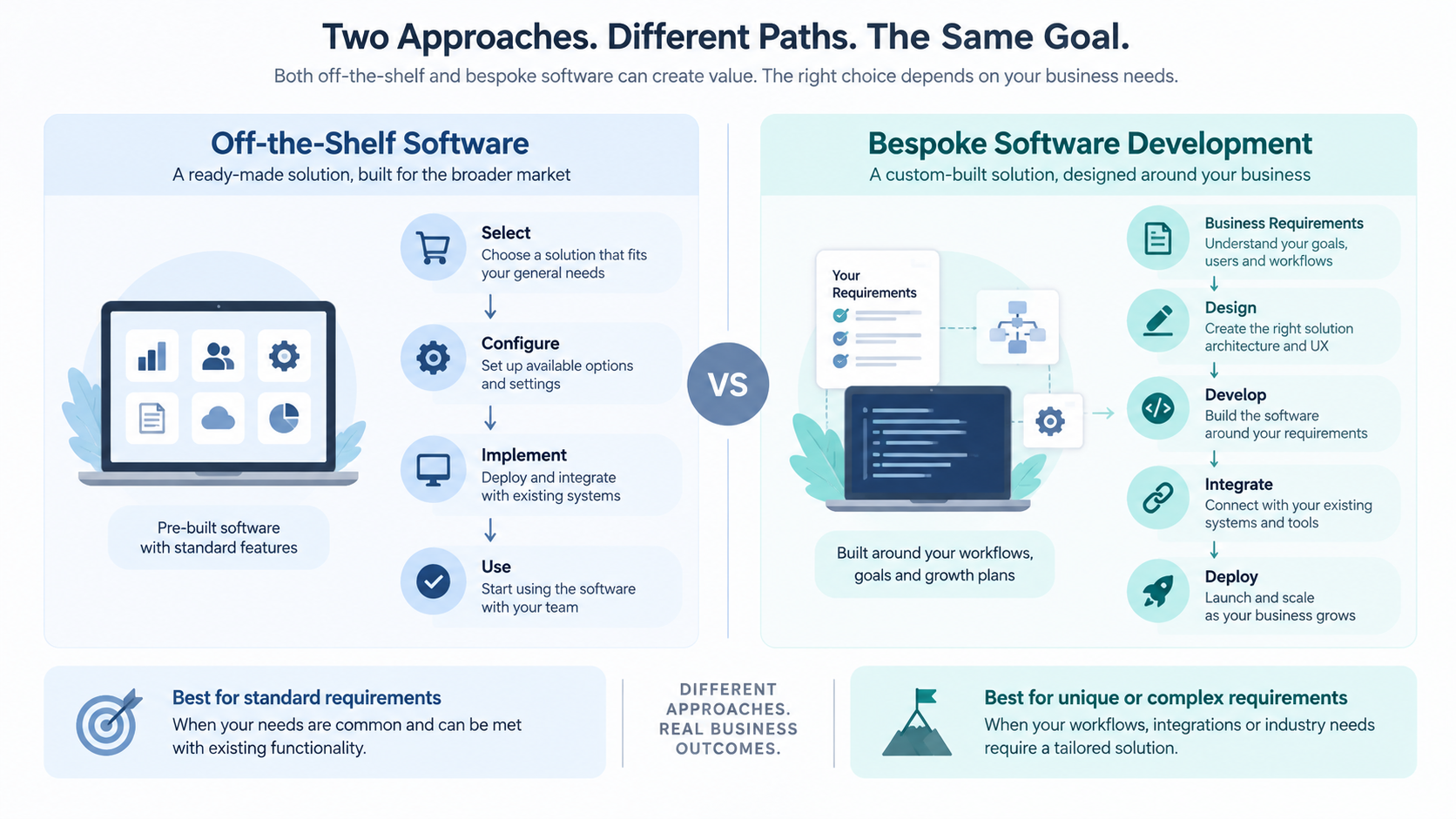
Ready-made AI platforms are a great fit when your business process already matches what the platform was built to do. The friction shows up when it doesn't. That's the point where custom AI agent development becomes worth a serious look, and it's where ZYNO Tech by Elite Mindz operates.
ZYNO Tech isn't positioned as "another AI app," and it isn't a drop-in replacement for Opal or Tilda. It's a custom AI agent development and enterprise AI development partner for organizations whose workflows, systems, and data don't fit neatly into a generic no-code tool. That distinction matters, because the two categories solve different problems. A no-code app builder gives you a fast way to test an idea inside its own sandbox. A custom AI agent gets built around your actual ERP, your CRM, your HRMS, and the specific rules your business already runs by.
Custom development tends to become the more relevant option when a business needs proprietary workflows encoded directly into the agent's logic, integration with existing procurement or finance systems, internal knowledge assistants trained on company-specific documents, document processing tied to real approval chains, multi-agent systems where several specialized agents coordinate, human-in-the-loop checkpoints for decisions that shouldn't be fully automated, and role-based access that matches how the organization is actually structured.
Ready to Put AI to Work?
From AI agents to intelligent business automation, build custom AI solutions that reduce manual work and improve productivity.
Instead of forcing a workflow to fit a generic builder's block-and-prompt model, agents are built around how the business actually operates, including its existing terminology, approval steps, and edge cases.
Agents are connected directly to the systems a business already runs on, from internal APIs to platforms like ERP, CRM, and HRMS software, rather than operating in an isolated sandbox.
Multi-step processes get automated end to end, with humans kept in the loop wherever a decision genuinely needs a person, instead of an all-or-nothing approach to automation.
AI agents can be shaped around the specifics of a given industry, whether that's healthcare, manufacturing, retail, banking and finance, logistics, real estate, construction, procurement, HR, travel, or professional services. The right agent design changes significantly depending on the regulatory and operational context of the industry it's built for.
Because the agent is built around the business's own systems and future plans rather than a fixed set of app-builder blocks, the underlying architecture can be designed with future users, workflows, and data volume in mind from the start.
Good enterprise automation doesn't mean removing people from the process. It means giving people better tools and freeing up time for the judgment calls that still need a human.
AI workflows aren't a one-time build. They need monitoring, iteration, and improvement as business processes, data, and requirements evolve.
To be clear about positioning: this isn't a claim that ZYNO Tech is "better than" Google Opal or Tilda. They're not solving the same problem. Opal and Tilda can be genuinely useful for their specific, narrower jobs. ZYNO Tech becomes relevant when an organization needs an AI agent designed around its own processes, systems, data, and business rules, which is a different kind of problem than either of those tools was built to solve.
Healthcare: AI agents can help manage administrative documentation, coordinate scheduling, and flag exceptions for clinical staff to review, without replacing clinical judgment.
Education: Agents can support administrative workflows like enrollment processing, communications, and reporting, freeing up staff time for direct student support.
Manufacturing: Agents can help monitor operational information, coordinate workflows across production stages, and surface exceptions for human review before they become costly problems.
Retail: Agents can support inventory visibility, order coordination, and customer communication across multiple channels.
Logistics: Agents can help track shipments, flag delays, and coordinate handoffs between systems and teams.
Finance: Agents can support document processing, reconciliation tasks, and compliance-related reporting, with human review built into the process.
Real estate: Agents can help manage listing data, coordinate communications, and support document workflows tied to transactions.
Construction: Agents can help coordinate project documentation, vendor communication, and budget tracking across active projects.
HR: Agents can support recruitment coordination, onboarding documentation, and internal HR help-desk style questions.
Procurement: Agents can help manage vendor communication, purchase request routing, and spend visibility across a procurement cycle.
There's no single winner here, because there was never really a contest. If you want to experiment with an AI idea and see it working in an afternoon, Google Opal is a genuinely useful, free way to do that, as long as you accept it's an experimental Google Labs product without long-term guarantees. If you work in clinical trial operations and want an AI teammate built specifically for that regulated workflow, Tilda is worth evaluating directly with the vendor for your specific compliance and integration needs.
For most other businesses, though, the real decision isn't "Opal or Tilda." It's whether a generic, ready-made tool can actually hold your business logic, or whether your workflows, systems, and data have outgrown what any off-the-shelf builder was designed to do. If you've already hit that wall, forcing your process into another generic tool just delays the same problem. Talk to ZYNO Tech about your AI agent development requirements and build something around how your business actually works, not around the limits of someone else's app builder.
Stop forcing your business process into a generic AI tool. Build an AI agent around the way your business actually works, connected to your real systems, your real approval chains, and your real data. Talk to ZYNO Tech about your AI agent development requirements and see what a purpose-built agent looks like for your team.
Google Opal is a free, experimental no-code AI app builder from Google Labs that turns plain-language descriptions into working AI mini-apps. Tilda (often indexed as "Tilda Bio AI") is a specialized AI teammate built for clinical trial operations in pharma, biotech, and CRO settings. They serve entirely different purposes and audiences.
Neither is objectively "better," because they aren't built for the same job. Opal is a general-purpose prototyping tool; Tilda is a narrow, domain-specific product for clinical research. The right choice depends entirely on whether your need is fast AI prototyping or clinical trial workflow support.
Opal has a low barrier to entry for using existing Opals, since it's built around natural language and visual editing. Tilda's usability depends on how well it fits into an existing clinical trial workflow, which is a different kind of "ease of use" question aimed at a specialized professional audience.
Opal can support lightweight, internal automation and prototyping, but it's an experimental Google Labs product without long-term availability guarantees. For automation a business genuinely depends on, especially anything involving core systems or compliance, it's worth evaluating more durable options.
No. Based on available information, Tilda is purpose-built for clinical trial sponsors, sites, and CROs. It isn't positioned as a general business automation or AI app-building tool for other industries.
It depends on the task. For quick prototyping, Google Opal is a low-cost starting point. For anything tied to core business processes, systems, or data, most small businesses eventually need either a purpose-built vertical tool or custom AI agent development rather than a general no-code builder.
When workflows are unique to the business, multiple systems need to work together, business logic is too complex for a generic builder, proprietary data is involved, or the organization needs governance and audit trails a no-code tool wasn't designed to provide.
A no-code AI agent is built inside a generic platform's constraints, using its pre-built blocks and integrations. A custom AI agent is engineered specifically around a business's own systems, data, and rules, with architecture designed for that organization's actual scale and requirements.
Cost varies significantly based on scope, integrations, and complexity, so it isn't something to estimate generically. A direct conversation with a development partner about specific requirements is the only reliable way to get an accurate figure.
Yes. Custom AI agents can be built to connect directly with ERP, CRM, HRMS, and procurement systems, which is one of the main advantages over generic no-code tools that are typically limited to their own ecosystem's integrations.
Healthcare, manufacturing, retail, finance, logistics, real estate, construction, HR, procurement, and professional services are among the industries where custom AI agents are commonly applied, since each has distinct workflows and compliance needs a generic tool struggles to match.
The typical path starts with mapping which workflows are worth automating, then designing the agent's architecture, integrating it with relevant data sources and systems, prototyping and testing, deploying it into existing tools, and monitoring performance with ongoing optimization over time.
AI Enablement in the Age of Generative AI: ZYNO by Elite Mindz Leading the Charge
Read More →
Top 10 Trends Shaping the Future of AI Agents in 2025
Read More →
Top 6 AI Chatbot Features Transforming Customer Engagement in 2026
Read More →
Top 10 AI Integration Strategies for Seamless ERP and CRM Upgrades in 2025
Read More →
Best GAI Consulting Approaches for Ethical Business Transformation in 2025
Read More →
From Vision to Value: The Ultimate Guide to Enterprise GenAI Platforms
Read More →
Top 10 GAI Development Trends Shaping Autonomous Agents in 2025
Read More →
The Future of Computer Vision: Trends to Watch in 2025
Read More →
Generative AI in 2025: How ZYNO BY Elite Mindz is Transforming Enterprise Workflows
Read More →
10 Real-World Applications of Computer Vision in 2025
Read More →
Integrating Computer Vision with IoT and AI: Driving the Next Wave of Intelligent Systems in 2025
Read More →
Agentic AI Explained: How AI Agents Are Transforming Business in 2025
Read More →
From Chatbots to Autonomous Agents: The Evolution of Agentic AI
Read More →
The Rise of Multi-Agent Systems: How Agentic AI Teams Will Run Enterprises of the Future
Read More →
Agentic AI vs Generative AI: What Business Leaders Need to Know
Read More →
The Power of Autonomous Agents: Understanding Agentic AI for Enterprises
Read More →
The Role of Agentic AI in Enhancing Enterprise Agility and Responsiveness
Read More →
Agentic AI as a Competitive Advantage: Why Businesses Can’t Ignore It
Read More →
The Shift from Automation to Autonomy: How Agentic AI is Redefining Enterprise Operations
Read More →
From Reactive to Proactive: How Agentic AI Changes Enterprise Decision-Making
Read More →
Why Every Business Will Hire an AI Agent Soon
Read More →
Agentic AI for Startups: Leveling the Playing Field
Read More →
Agentic AI: The New Digital Workforce
Read More →
The Future of Business: Autonomous Teams of AI Agents
Read More →
From Insights to Action: How AI Agents Close the Gap
Read More →
Agentic AI in 2026: From Hype to Enterprise-Ready Transformation
Read More →
The Competitive Edge: Why Early Adopters of Agentic AI Are Winning Markets
Read More →
Beyond Automation: Why Agentic AI is the Key to Enterprise Agility in 2025
Read More →
The Human-AI Partnership: Building Smarter Teams with Agentic AI
Read More →
The Rise of Autonomous Teams: Why Agentic AI is the New Digital Workforce
Read More →
Top Machine Learning Use Cases You Didn’t Know About
Read More →
What Is Low Code/No Code and Why It Matters in 2025
Read More →
Top Use Cases of Generative AI in 2026
Read More →
The Future of Generative AI in Enterprises
Read More →
How Generative AI Is Reshaping Enterprise Operations in 2025
Read More →
Top AI Features Every Modern Taxi App Must Include in 2026
Read More →The Future of Events: How Artificial Intelligence Is Changing the Industry
Read More →Why Are AI Agents the Next Big Shift in Banking and Finance
Read More →How AI-Driven Analytics Improve Learning Outcomes
Read More →How AI Is Optimizing Every Step of Food Delivery Apps
Read More →How AI-Powered CRM Is Transforming the Media & Entertainment Industry
Read More →
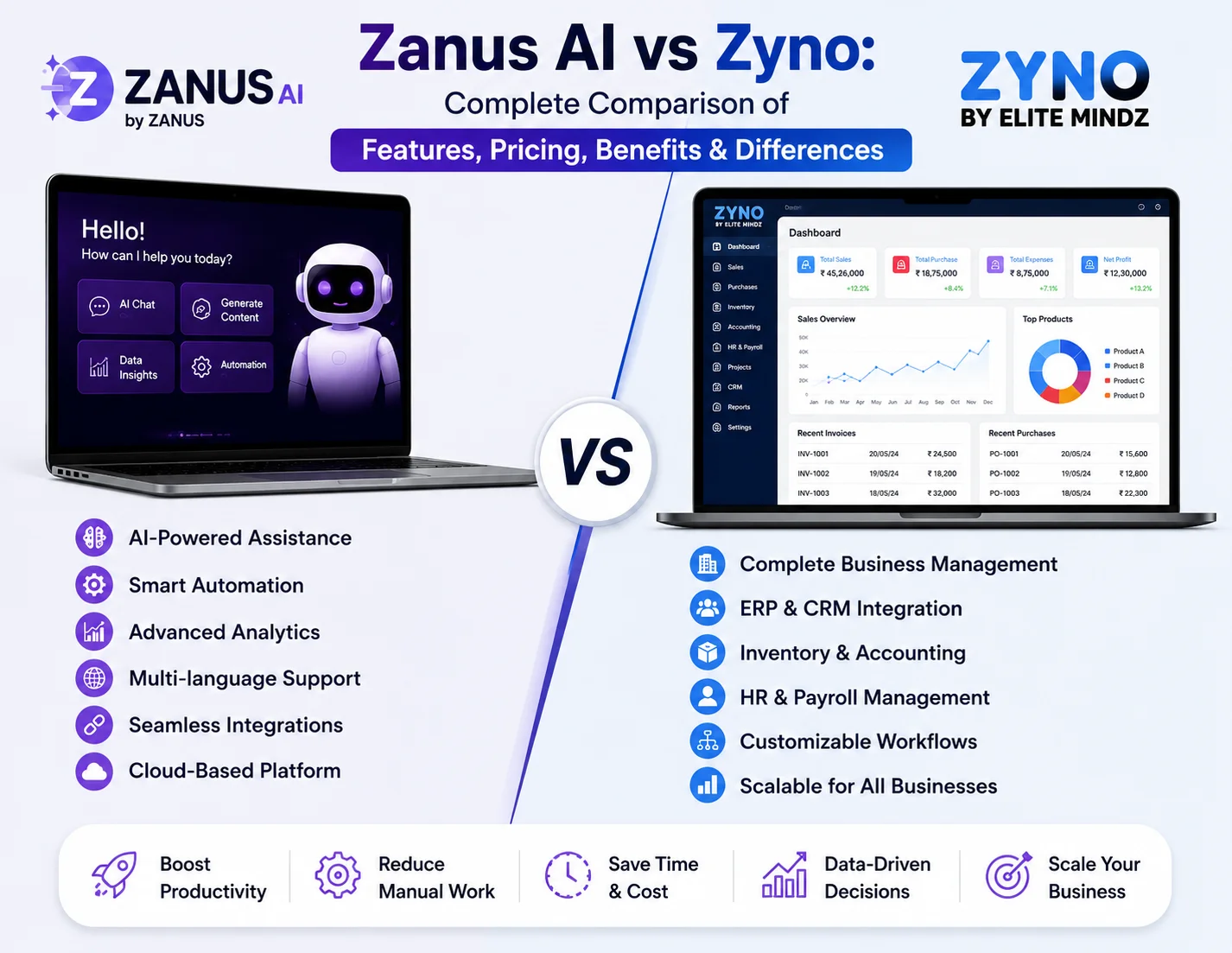
Zanus AI vs Zyno: Complete Comparison of Features, Pricing, Benefits & Differences
Read More →
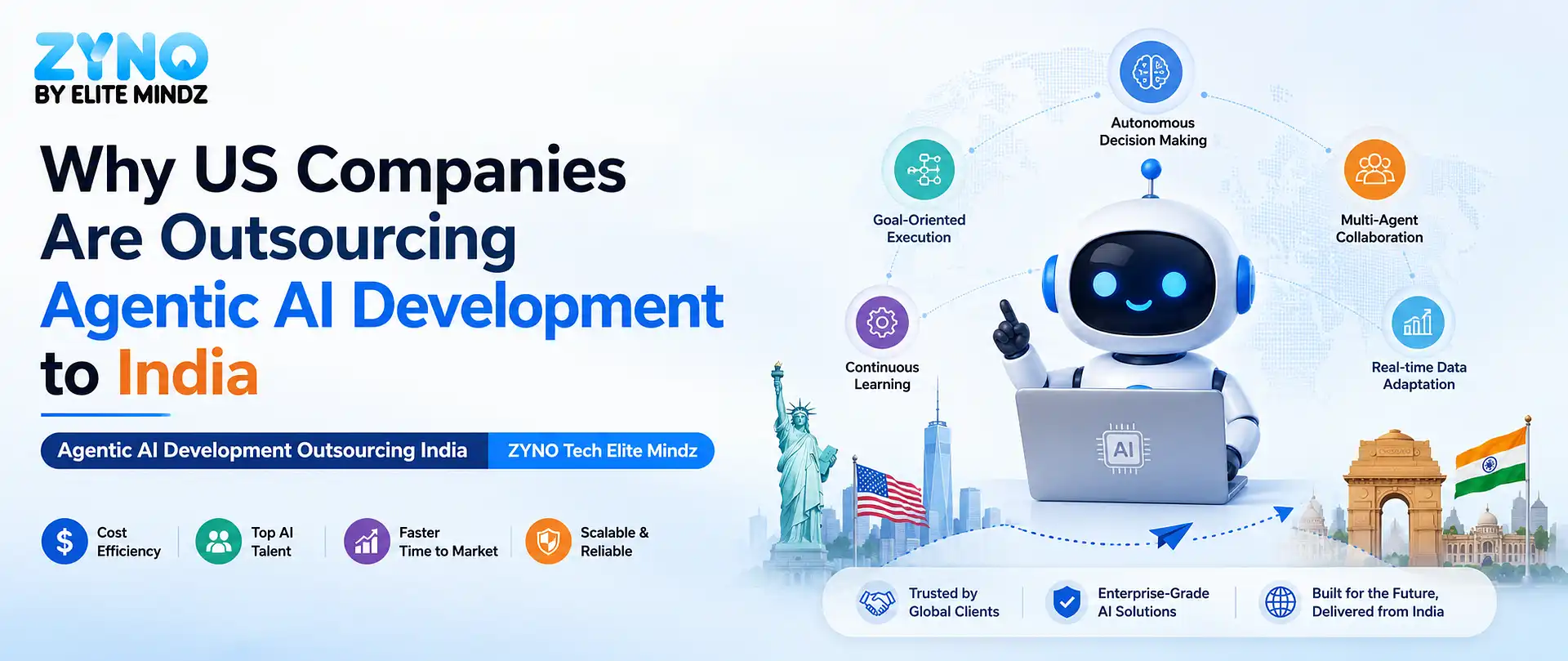
Why US Companies Are Outsourcing Agentic AI Development to India

Read More →
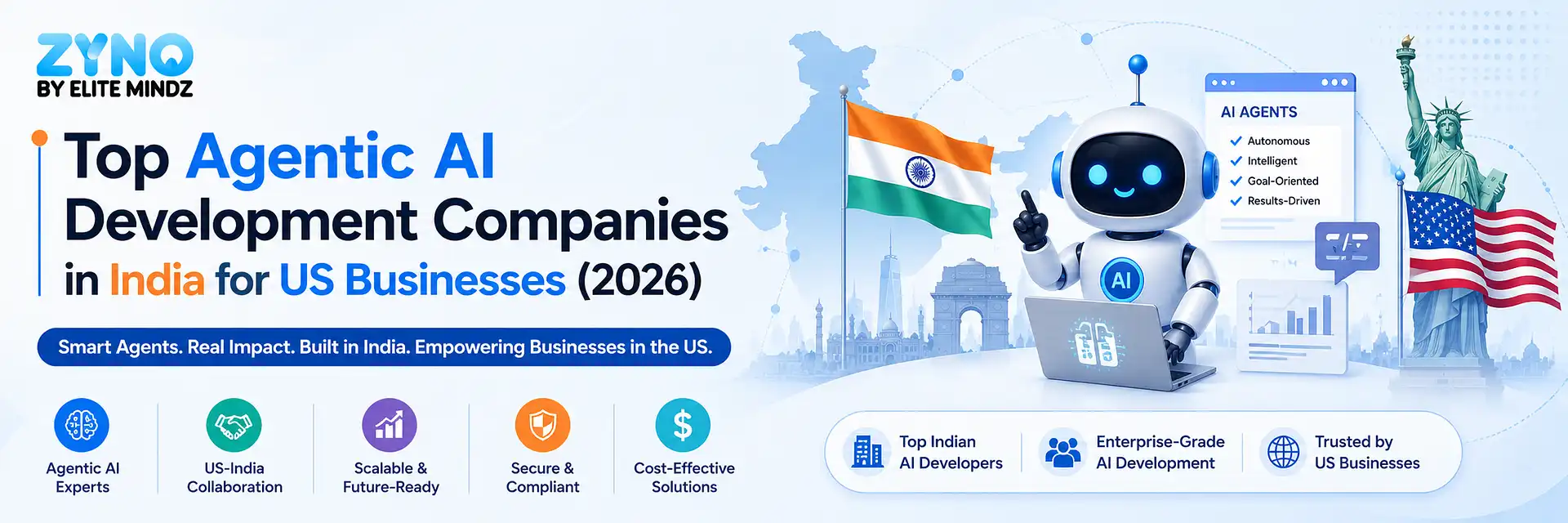
Top Agentic AI Development Companies in India for US Businesses (2026)
Read More →
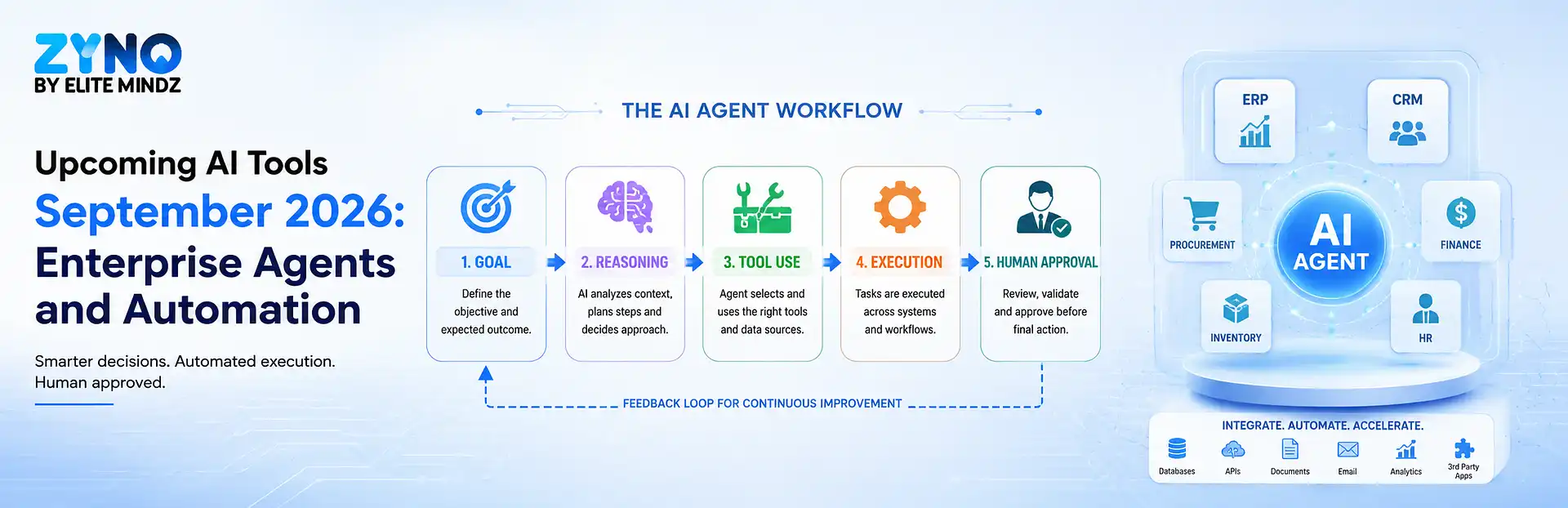
Top Upcoming AI Tools of September 2026 You Must Watch
Read More →
Google Opal vs Tilda Bio AI: What Each Tool Actually Does (and Why They Aren't True Rivals)
Read More →Partner with ZYNO by Elite Mindz to revolutionize how your business works. Fill out the form, and we’ll reach out with AI-powered solutions made just for you.
We use browser cookies to ensure you get the best experience on our website. Learn more
The form was submitted successfully!