×
Custom software fits your business perfectly but costs more upfront; off-the-shelf software launches fast and cheap but charges more as you grow. Choose custom if you're scaling or regulated, choose off-the-shelf if you need speed and a tight budget.
Businesses using ZYNO Books cut accounting time by 70% and stay 100% ZATCA-compliant — automatically.

Imagine pouring lakhs of money into a software solution, observing your team using it, designing your processes according to it... and then realizing that, after twelve months, your solution can't grow along with your business anymore.
Your team needs just one more feature. The company behind the solution tells you that it's "not in the roadmap." You need to integrate it with another piece of technology. The company tells you, "that will cost you extra, and it will take a whole quarter." At the same time, your competition is getting ahead of you since its software matches its needs.
This isn't an uncommon scenario. This is, in fact, one of the most frequently occurring discussions we have with our clients on a monthly basis. And it all boils down to just one decision that wasn't considered carefully enough: custom software development vs. off-the-shelf software.
It’s not an easy decision. It affects your budget, your team’s efficiency, the way your customers feel about your brand, and, quite frankly, your ability to keep up with competitors in the coming five to ten years. Still, the vast majority of organizations make that decision based only on the price, having no idea what exactly it is that they’re paying for.
In this guide, you will be able to find out the exact differences between developing custom software and using off-the-shelf solutions, where one shines, where another falters, and how to make a decision that won’t make you regret in eighteen months. We will discuss costs, security, scalability, integration, performance, and maintenance, industry by industry, so that you can relate to the examples rather than abstract theories.
Short Answer: For businesses that have unique processes, intend to scale up, or operate within regulated industries like healthcare and finance, developing your own software is most likely going to be the better choice for you. However, if you need to go live quickly, have tight budgets, or your operations can be classified as "standard," then off-the-shelf software might just be a better start. It all comes down to what stage of growth you are at, your budget, and the level of uniqueness of your operations - and we are here to help you figure it out.
Custom software development is the process of designing, building, and deploying a software application from the ground up, tailored specifically to one business's workflows, goals, and technical requirements - instead of using a generic product built for thousands of unrelated companies.
Think of it like the difference between a tailored suit and one bought off the rack. The off-the-rack suit fits "most" people reasonably well. The tailored suit fits you, and only you, perfectly.
With custom software development, a software development company studies how your business actually operates - your specific approval chains, your regional compliance needs, your customer journey - and builds an application around that reality, not the other way around.
A mid-sized logistics company we worked with was using three different tools to manage fleet tracking, driver payments, and customer delivery updates. None of the tools spoke to each other. Dispatchers were manually copying data between systems, and errors were costing them real money in fuel and driver overtime.
We built them a single custom software solution that unified fleet tracking, automated driver settlements, and customer SMS updates into one dashboard. Within four months, dispatch errors dropped by 41%, and the operations team reclaimed nearly 15 hours a week that used to go into manual data entry.
That is the real promise of custom software development - not "more features," but the right features, connected the right way, for your exact business.
Custom software development services make the most sense when your workflows are genuinely unique, when you are scaling fast, or when compliance and data ownership are non-negotiable - think healthcare, finance, logistics, and enterprise-scale manufacturing.
Selecting the right software can impact your business for years. Whether you need a scalable custom solution or a ready-made platform, ZYNO Digital by EliteMindz helps you evaluate cost, security, integrations, and long-term ROI to make the best decision.
✓ Custom Software Development | ✓ Enterprise Applications | ✓ API Integrations | ✓ Business Automation | ✓ Scalable Software Solutions
Off-the-shelf software, sometimes called commercial off-the-shelf software or ready-made software, is a pre-built application designed to serve a broad market of businesses with similar, standardized needs - think Tally, QuickBooks, Zoho CRM, or Shopify.
You do not build it. You subscribe to it, configure a few settings, and start using it, often within a day.
Popular off-the-shelf software examples include QuickBooks for accounting, Zoho or HubSpot for CRM, Shopify for e-commerce, and Microsoft 365 for productivity. These tools are excellent precisely because thousands of businesses share the same basic needs they are built to solve.
Off-the-shelf software is ideal for startups validating an idea, freelancers, small local businesses, and any company whose core needs (invoicing, basic HR, email marketing) are fairly universal and do not require deep customization.
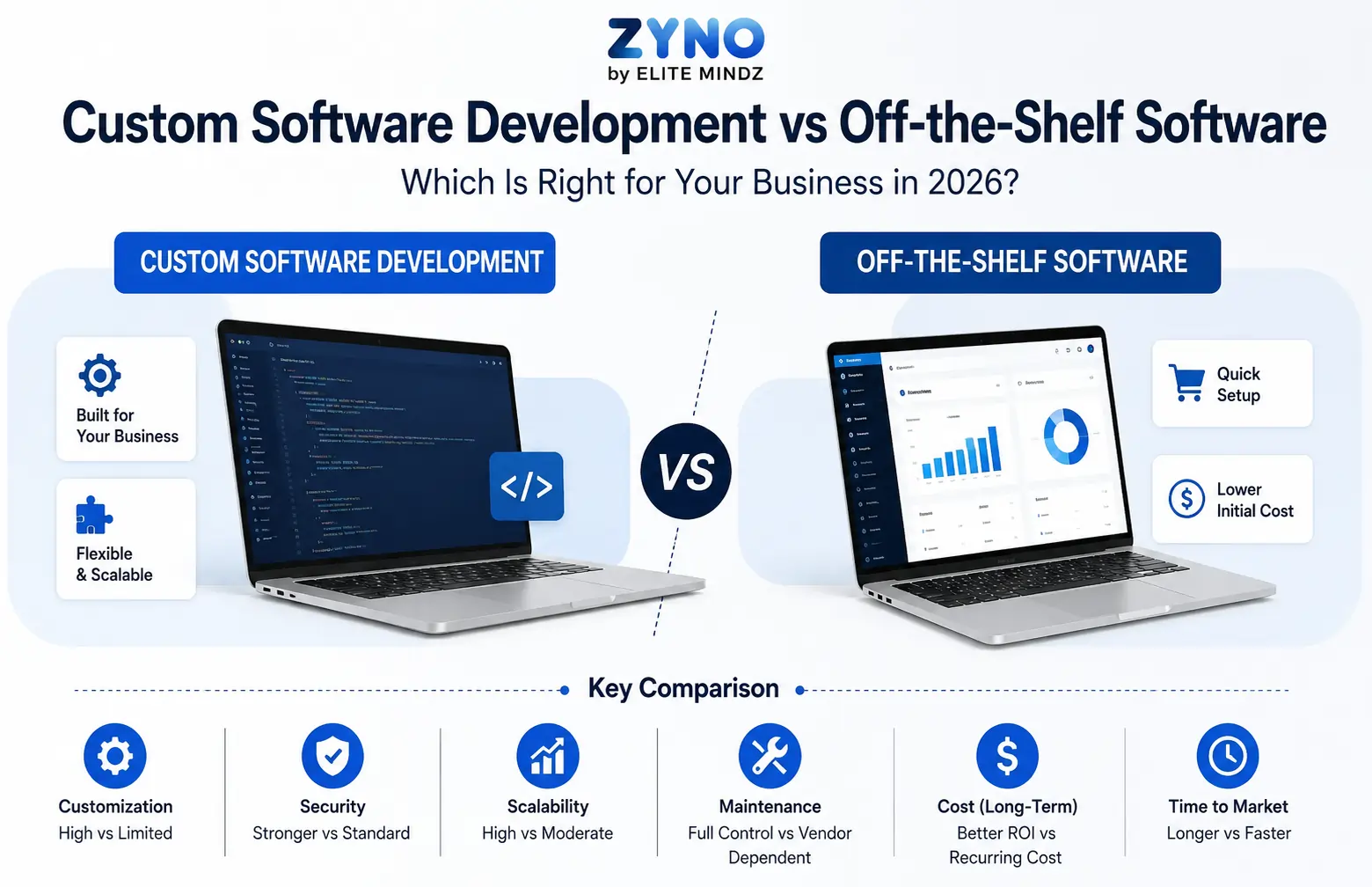
| Factor | Custom Software Development | Off-the-Shelf Software |
|---|---|---|
| Upfront Cost | Higher | Lower |
| Long-Term Cost | Often lower (no per-user fees) | Rises with users/features |
| Customization | Unlimited | Limited to vendor settings |
| Scalability | Built for your growth | Constrained by vendor limits |
| Security | Custom-hardened, full control | Shared, standardized |
| Ownership | You own the code | Vendor owns the platform |
| Time to Launch | 3–9 months typically | Same day to a few weeks |
| Maintenance | You control the roadmap | Vendor controls the roadmap |
| Integration Depth | Deep, purpose-built | Often limited to available APIs |
| Best For | Unique, scaling, regulated businesses | Standard, fast-launching businesses |
Key Takeaway: There is no universally "better" option in the custom software development vs off-the-shelf software debate - only the option that is better for your business, at your current stage.
Real business example: A regional real estate developer needed RERA-specific compliance workflows that no off-the-shelf property management tool offered out of the box. A custom software solution cut their compliance reporting time from three days a month to under two hours.
Pro Tip: Many businesses successfully start on off-the-shelf software and migrate to custom software development once they hit a genuine scaling ceiling - usually somewhere between 50 and 200 employees, or when a single missing feature starts costing real revenue.
|
Cost Factor |
Custom Software |
Off-the-Shelf Software |
|
Upfront Development |
₹5L – ₹50L+ |
₹0 – ₹2L (setup/config) |
|
Monthly/Annual Fee |
Usually none (hosting only) |
₹500 – ₹50,000+/month |
|
Per-User Cost |
None |
Often ₹300 – ₹3,000/user/month |
|
Customization Cost |
Included in build |
Extra, often expensive |
|
5-Year Total (50 users) |
Often lower |
Often significantly higher |
Did You Know? Many businesses underestimate the hidden costs of off-the-shelf software - third-party plugin fees, data export charges, and forced upgrades to higher pricing tiers as their team grows. These hidden costs are one of the biggest drivers behind a later switch to custom software development.
Long-term ROI almost always favors custom software development once a business crosses a certain user count or transaction volume, simply because the marginal cost of adding one more user or workflow to custom software is close to zero, while off-the-shelf software charges you for every increment of growth.
Security is one of the most misunderstood parts of the custom software development vs off-the-shelf software decision.
With off-the-shelf software, you inherit the vendor's security posture entirely - you cannot audit their code, and a breach on their platform affects every customer using it, including you.
With custom software development, security is built specifically around your data flows, your compliance obligations, and your risk profile. You control encryption standards, access permissions, and audit trails end to end.
For regulated industries - healthcare data under HIPAA, financial data under RBI or PCI-DSS guidelines, or personal data under India's DPDP Act - custom software gives you direct control over data residency and compliance documentation, which is often difficult or impossible to fully verify with a shared, multi-tenant off-the-shelf platform.
Key Takeaway: If your business handles sensitive customer, patient, or financial data, security-driven compliance alone often justifies choosing custom software development.
Growth is where the custom software development vs off-the-shelf software decision reveals itself most clearly.
Off-the-shelf software is typically built on shared infrastructure with usage tiers. As you grow, you either hit a hard feature ceiling or get pushed into progressively more expensive pricing plans, sometimes with poor cost predictability.
Custom software, built on modern cloud-native architecture, is designed to scale horizontally - meaning it can handle 10x or 100x your current user base without a fundamental rebuild, provided it was architected correctly from the start.
For businesses planning aggressive growth, entering new markets, or preparing for AI-driven automation, custom software development offers a foundation that will not need to be replaced every two years.
Modern businesses rarely run on a single tool. You likely need your CRM, ERP, payment gateway, accounting software, and possibly legacy internal systems to work together seamlessly.
| Cost Factor | Custom Software | Off-the-Shelf Software |
|---|---|---|
| Upfront Development | ₹5L – ₹50L+ | ₹0 – ₹2L (setup/config) |
| Monthly/Annual Fee | Usually none (hosting only) | ₹500 – ₹50,000+/month |
| Per-User Cost | None | Often ₹300 – ₹3,000/user/month |
| Customization Cost | Included in build | Extra, often expensive |
| 5-Year Total (50 users) | Often lower | Often significantly higher |
Because custom software is not carrying the weight of features built for thousands of unrelated businesses, it tends to run leaner and faster for your specific workflows - particularly under high transaction volume or heavy concurrent usage.
With off-the-shelf software, the vendor pushes updates, patches bugs, and manages uptime - you have little control over the timeline, but also little responsibility.
With custom software, maintenance is your responsibility (or your software development company's, under a support agreement), but this comes with a major advantage: you decide what gets built next, and when. There is no waiting on a vendor's public roadmap for a feature your business needs today.
Pro Tip: Before choosing custom software development, always ask your development partner about post-launch maintenance packages. A good software development company will offer structured monthly support, not just a one-time build-and-leave engagement.
Ask yourself these questions, in order:
Simple Decision Flow: Unique workflow + scaling fast + regulated data → Custom Software Development. Standard workflow + limited budget + fast launch → Off-the-Shelf Software. Somewhere in between → Start off-the-shelf, plan a custom migration once you hit real scaling friction.
Key Takeaway: Most bad software decisions are not about picking the "wrong" category - they are about skipping the analysis that would have made the right category obvious.
There is no single winner here - and any article that tells you otherwise is not being honest with you.
if you need to move fast, your budget is limited, and your workflows are genuinely standard. It is a smart, low-risk starting point for countless businesses.
if your business has outgrown generic tools, operates in a regulated or highly competitive industry, or if a unique workflow is actually part of your competitive advantage. The upfront investment is higher, but for the right business, the long-term ROI, ownership, and scalability more than justify it.
The businesses that regret this decision are almost always the ones who never revisited it - they picked one option early on and stuck with it for years, long after their needs had outgrown it.
If you are still weighing custom software development vs off-the-shelf software for your specific business, you do not have to figure it out alone.
At ZYNO Digital by EliteMindz, we have guided businesses across healthcare, finance, logistics, retail, and real estate through exactly this decision - sometimes recommending a custom build, and sometimes honestly telling a client that off-the-shelf software was the smarter choice for where they were at the time.
Our team offers custom software development services, enterprise software development, web application development, and end-to-end digital transformation support, built around your actual business goals rather than a one-size-fits-all sales pitch.
If you would like a straightforward, no-pressure software consultation to figure out what genuinely fits your business, you can reach out through elitemindz.co. We will look at your workflows honestly and tell you what we would do in your position.
Off-the-shelf software works for standard needs, but growing businesses often require greater flexibility. EliteMindz develops secure, scalable, and fully customized software tailored to your workflows, helping you improve productivity and achieve long-term business growth.
✓ Custom CRM & ERP | ✓ HRMS Solutions | ✓ SaaS Product Development | ✓ Cloud-Based Software | ✓ Enterprise Digital Transformation
Custom software development builds an application specifically around your business's unique workflows, while off-the-shelf software is a pre-built product designed for a broad market with standardized needs.
Off-the-shelf software is cheaper upfront, but custom software development is often cheaper over the long term, especially at scale, since it avoids recurring per-user licensing costs.
Most custom software development projects take three to nine months, depending on complexity, though smaller custom applications can launch faster with an experienced software development company.
Not inherently, but off-the-shelf software relies on shared, vendor-controlled infrastructure, while custom software allows full control over encryption, access permissions, and compliance-specific security measures.
Yes, many businesses start with off-the-shelf software and migrate to custom software development once they hit scaling limitations, integration walls, or compliance requirements the generic tool cannot meet.
Healthcare, finance, manufacturing, logistics, and real estate benefit most, largely due to strict compliance needs and highly specific operational workflows.
Usually not at the very early stage. Off-the-shelf software is typically the smarter choice for small businesses and startups until workflows become complex enough to justify custom software development costs.
A custom hospital management system built for one hospital chain's specific patient workflow is custom software; a general accounting tool like QuickBooks, used by millions of unrelated businesses, is off-the-shelf software.
Yes. Custom software development allows deep, purpose-built integration with CRM, ERP, legacy systems, and third-party APIs, whereas off-the-shelf software is limited to whatever integrations the vendor has already built.
If your workflows are difficult to replicate in a generic tool, you are scaling rapidly, or you operate under strict regulatory or data ownership requirements, custom software development is likely the right investment.
ROI varies by business, but it typically comes from eliminated licensing fees, reduced manual work through automation, fewer integration workarounds, and a workflow fit that increases team productivity over time.
Best Mobile App Development Company
Real Estate Software Development Services
Top 10 Supply Chain Management Systems (SCM) for 2026
Ethan Carter
Senior Website Development Consultant & Full-Stack Solutions Architect
Ethan Carter is a website development specialist with 10+ years of experience building scalable, high-performance websites and custom web applications.
Magento vs Shopify vs WooCommerce: Which Platform Wins in 2025?
Read More →

SEO vs Google Ads: Which One Drives Better Results in 2025?
Read More →
Top 10 E-commerce Development Agencies for D2C Brands in India
Read More →
Top Mobile App Development Companies in India (2025 Edition)
Read More →
Top Mobile App Development Companies in Nigeria (2025)
Read More →
Hire Mobile App Developers in India: What You Need to Know
Read More →
Top E-commerce Development Companies in Africa (2025 Edition)
Read More →
Best Mobile App Development Companies in UAE (2025 Edition)
Read More →
Best Digital Marketing Services for Small Businesses in India
Read More →
Best eCommerce Development Companies in Dubai (2025)
Read More →
Top Mobile App Development Companies in Kenya (2025)
Read More →
Top 10 Digital Marketing Companies in the UAE for 2025
Read More →
Best Digital Marketing Companies in Dubai (2025)
Read More →
Best Digital Marketing Companies in Qatar (2025)
Read More →
AI-Powered 5G Mobile Apps: Revolutionizing User Experiences in 2025
Read More →
Top Mobile App Development Firms in Africa (2026): Innovators Driving Digital Transformation
Read More →
Top Mobile App Development Firms in Nigeria (2025): Innovators Powering Digital Growth
Read More →
Top Mobile App Development Firms in Kenya (2025): Innovators Driving Digital Transformation
Read More →
IoT and Mobile Apps: Creating a Connected Ecosystem in 2025
Read More →
How AI Is Reshaping Mobile App Development in 2025
Read More →
Security Trends in Mobile Apps: What Developers Need to Know in 2026
Read More →
Mobile App Security in 2025: Protecting User Data in an AI World
Read More →
10 AI-Powered Features Your Mobile App Needs in 2025
Read More →
Mobile App Development Trends to Watch in 2025 with Elite Mindz
Read More →
The Future of Mobile UX: Motion Design & Touchless UI in 2025
Read More →
What Next in Mobile App Tech for 2026 and Beyond
Read More →
Building Apps for the Foldable Device Revolution in 2025
Read More →
Accessibility in Mobile Apps: A 2025 Imperative
Read More →
Hire a Developer with Elite Mindz: Global Demand in 2025
Read More →
Voice Search Optimization 2025: Prepare Apps for the Conversational Web
Read More →
Why Nairobi Is Africa's Hottest Mobile App Hub in 2025
Read More →
Why Singapore Trusts Elite Mindz for Developer Hiring in 2025
Read More →
EliteMindz Mobile App Services for Addis Ababa in 2026
Read More →
EliteMindz ECommerce Solutions Boosting Global Sales in 2026
Read More →
EliteMindz Developer Services Power London Tech in 2026
Read More →
How New York Firms Leverage Elite Mindz Talent in 2025
Read More →
How New Delhi Entrepreneurs Scale with Elite Mindz E-Commerce in 2025
Read More →
Low-Code vs. Custom: Choosing the Right Mobile Path in 2025
Read More →
What Latin American E-Commerce Buyers Expect in 2025
Read More →
AI Powered Digital Marketing: 2026 Lead Generation with EliteMindz
Read More →
Merging AI SEO and Paid Media: A GEO-Driven Strategy for the AI Search Era
Read More →
How Extended Reality (XR) Is Transforming Mobile Apps in 2025
Read More →
Why Nairobi Is the Powerhouse of Mobile App Development in Africa in 2025
Read More →
Ultimate Guide to Digital Marketing Strategies in 2025: Actionable Insights to Drive Growth
Read More →
Mobile App Development in Nairobi: Trends & Opportunities in 2025
Read More →
Mastering AI-Driven SEO: Your Survival Guide for 2025 and Beyond
Read More →
African Emerging Cities: Mobile App Trends to Watch in 2025
Read More →
Elite Mindz Developer Hiring Trends Across Continents 2025
Read More →
Google Ads Update 2025: Smarter Campaign Management with Checkbox Filters
Read More →
xAI’s Grok Code Fast 1: Transforming Agentic AI for Enterprise Software
Read More →
Mobile App Innovation Trends to Lead in 2025
Read More →
Why Generic Login Pages Confuse Google & Damage SEO
Read More →
The Rise of Social Commerce: Shoppable Apps in 2025
Read More →
Always-On Audits: The Future of Technical SEO Maintenance
Read More →
5G and App Development: Speed & Performance Unlocked in 2025
Read More →
Internal Linking for SEO: Why It Matters and How to Do It Right
Read More →
Mastering SEO in a Fractured Search Landscape: New AI-First Rules for 2025
Read More →
Layered SEO 2025: The 4-Step System to Win AI Search and User Trust
Read More →
Google Antitrust Case: AI Overviews Shift to FastSearch Over Links in 2025
Read More →
Mastering AI Search: Elevate Your Brand Through Superior Website Wellness
Read More →
Tokyo's Retail Market & Elite Mindz in 2026
Read More →
Elite Mindz Holistic Growth Playbook for 2025: Unlocking Sustainable Business Success
Read More →
Top Mobile App Development Firms in the U.K. (2025)
Read More →
GEO Meets Local SEO: Revolutionizing Business Discovery in the AI Era
Read More →E-Commerce App Strategies 2025 in Nairobi and Lagos
Read More →
Mobile App Strategies that Work in Cairo 2025
Read More →
Best Practices for Mobile App Development in Malaysia with Elite Mindz
Read More →
Top Features Malaysian Businesses Should Add in Their Mobile Apps
Read More →
Top Mobile App Development Firms in Germany (2025)
Read More →
Top Mobile App Development Firms in France (2025)
Read More →
No-Code vs Custom Development in 2026: What’s Right for Your Business?
Read More →
10 Industries Being Transformed by ML in 2025
Read More →
How Remote Hiring Changed the Global Developer Landscape
Read More →
Low Code Myths vs Reality
Read More →
Top 10 Developer Hiring Mistakes to Avoid in 2025
Read More →
Hire Dedicated Developers vs Freelancers: Pros & Cons
Read More →
Top Mobile App Development Firms in Saudi Arabia (2025)
Read More →
Top Mobile App Development Firms in Kuwait (2025)
Read More →
Top Mobile App Development Firms in UAE (2025)
Read More →
Top Mobile App Development Firms in Qatar (2025)
Read More →
Top 3 Mobile App Development companies in South Africa for iOS and Android
Read More →
Top Mobile App Development Companies in the USA 2025: Building Innovative Apps for Every Business
Read More →
Taxi Booking App Development Company in the Middle East
Read More →
Developer Hiring Platforms Compared: Finding the Right Fit for Startups and Enterprises
Read More →
Effective Mobile App Monetization Strategies That Work in 2025
Read More →
Why Riders Prefer Taxi Booking App Over Traditional Calls
Read More →How Mobile Apps Are Transforming Pet Care Management in the USA
Read More →
The Complete Step-by-Step Guide to Compliance Software Every Business Needs Now
Read More →How Global Capability Centers Are Shaping the Future of Work
Read More →A New Chapter Begins in 2026: ZYNO’s AI-Powered Software Redefining the IT Landscape
Read More →What is Offshore Outsourcing Services: A Complete Guide
Read More →The Role of AI and Cloud in Modern Custom Application Development
Read More →Top Mobile App Development company in India 2026- ZYNO Tech
Read More →A complete guide to build a mobile app for your travel business
Read More →Cybersecurity & Compliance: The New Pillars of Global Capability Centers
Read More →A Practical Guide to Choose the Right B2B Mobile App Development Partner
Read More →
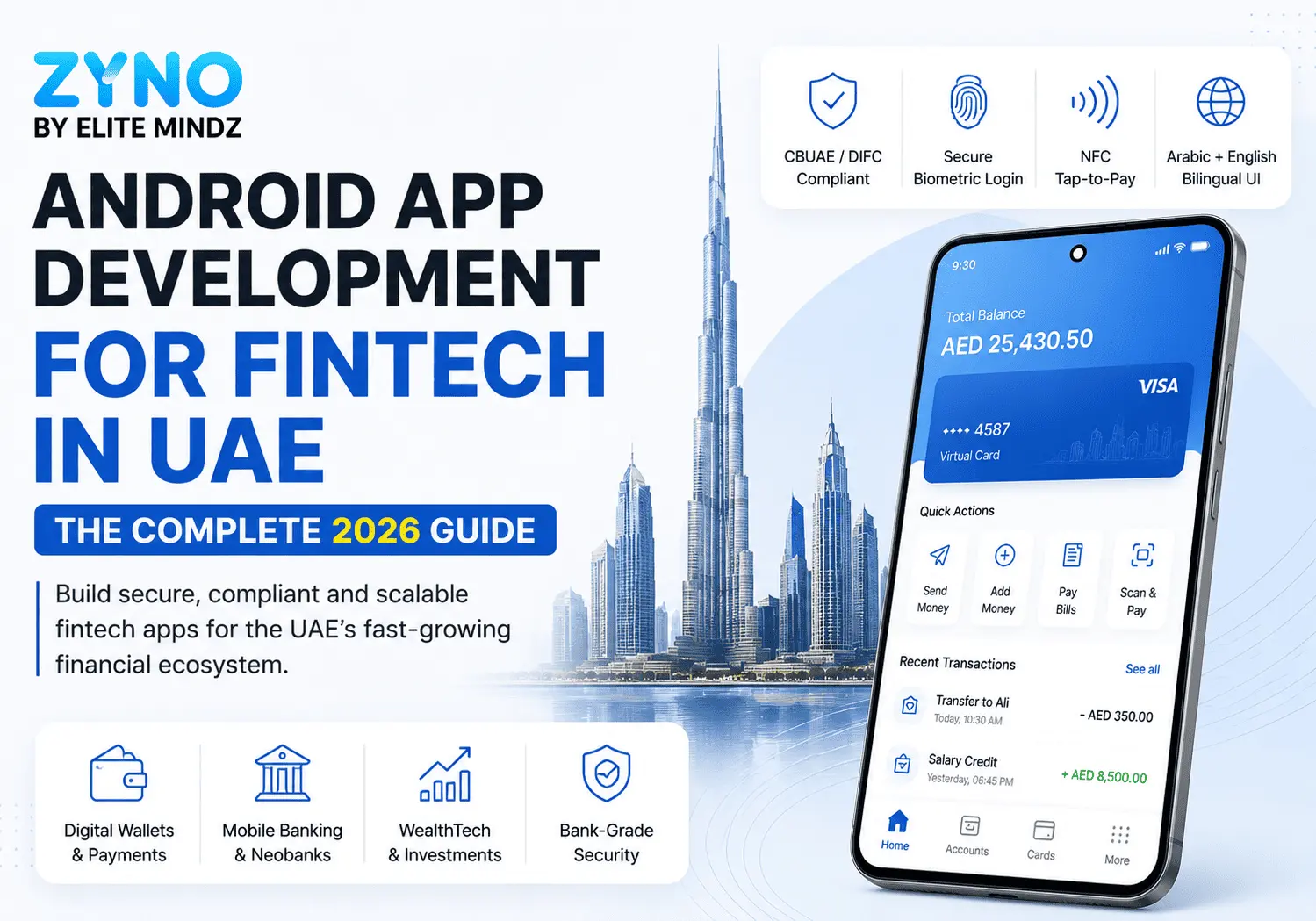
Android App Development for Fintech in UAE: The Complete 2026 Guide
Read More →
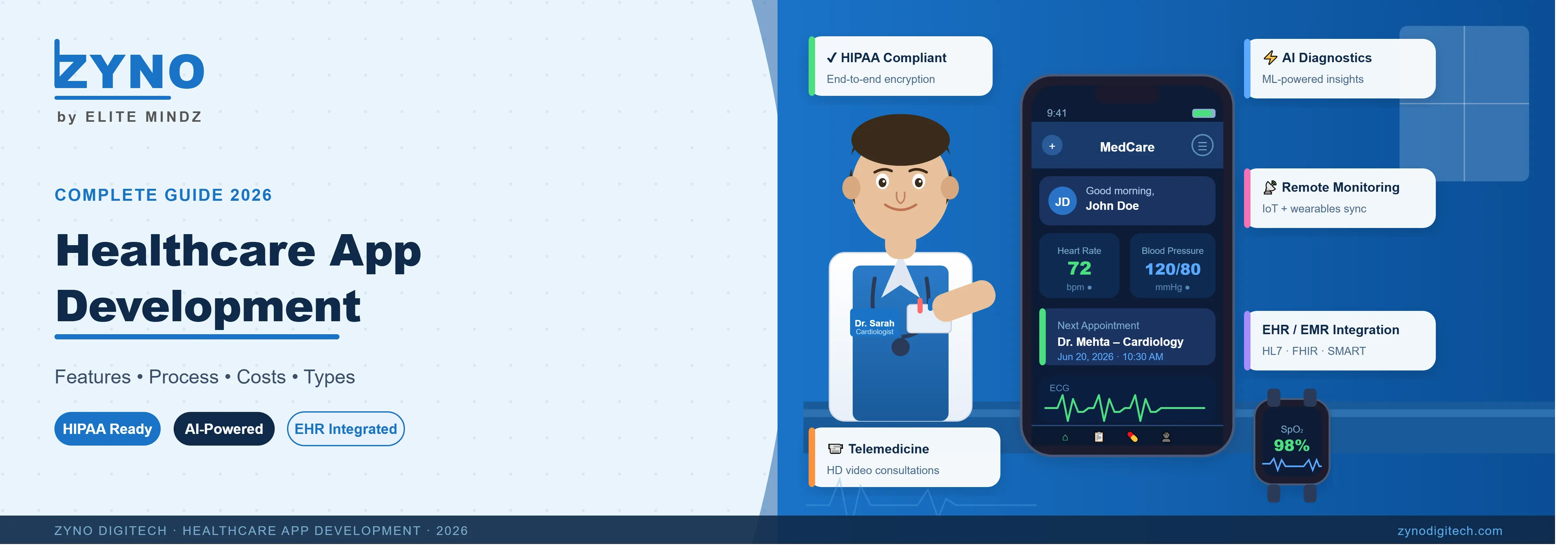
Complete Guide to Healthcare App Development in 2026: Features, Process, Costs, Types
Read More →
Top 10 Android App Development Companies in India That Are Dominating 2026
Read More →
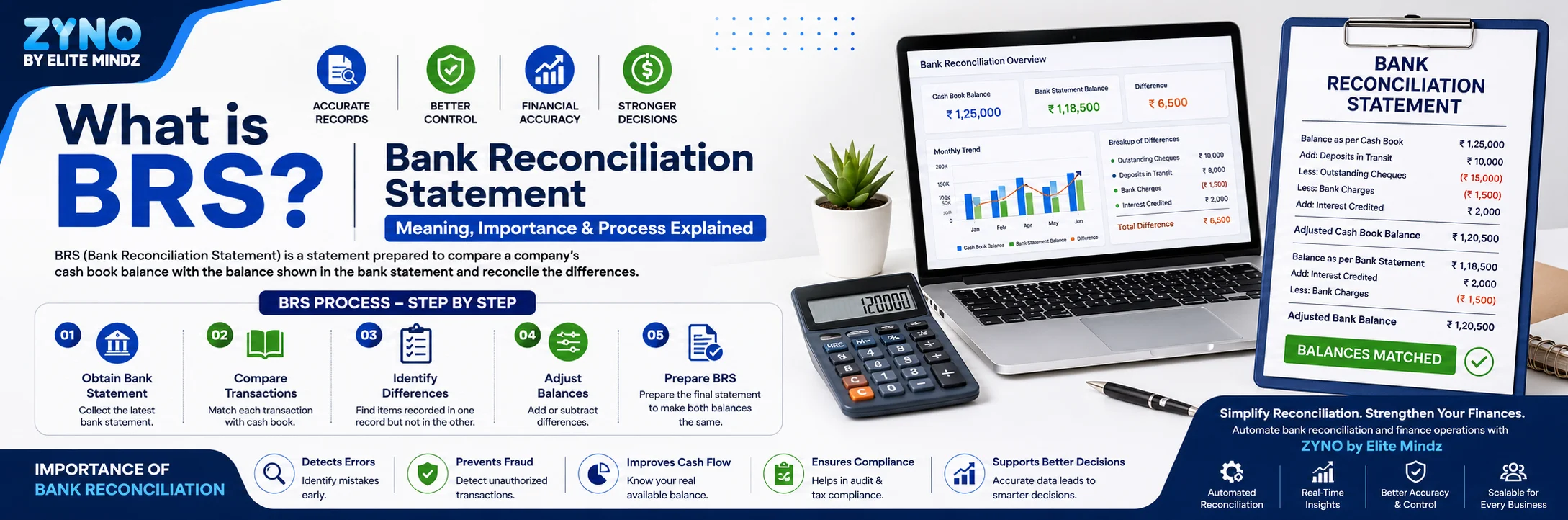
What is BRS? Bank Reconciliation Statement Meaning, Importance & Process Explained
Read More →
Best Mobile App Development Company in Delhi & Noida (2026 Guide)
Read More →
Voice Search SEO for Apps: The Complete Optimization Guide
Read More →
The Top 10 Supply Chain Management Systems (SCM) for 2026
Read More →
AI-Powered Custom Software Development: How Businesses Are Building Smarter Applications
Read More →
Why Enterprises Prefer Custom Software Development Over SaaS in 2026
Read More →
AI Chatbot Development Services: Everything Businesses Need to Know Before Investing in 2026
Read More →
Real Estate Software Development Services: A Complete Guide for Builders, Brokers & Developers (2026)
Read More →
Website Development Process: Full Guide by ZYNO Digital EliteMindz
Read More →
Website Development Cost in India (2026): Real Pricing, Hidden Costs & What You Actually Get
Read More →
WordPress vs Custom Website Development: Which Is Better in 2026?
Read More →
Custom Software Development vs Off-the-Shelf Software: Which Is Right for Your Business in 2026?
Read More →Partner with ZYNO by Elite Mindz to revolutionize how your business works. Fill out the form, and we’ll reach out with AI-powered solutions made just for you.
We use browser cookies to ensure you get the best experience on our website. Learn more
The form was submitted successfully!
ZYNO Digital
Fueling Smarter Digital Growth
ZYNO Digital fuels smarter digital growth through data-driven marketing, creative storytelling, and performance strategies that boost visibility, engagement, and measurable business outcomes across global platforms.
ZYNO Tech
Engineering the Future of IT
ZYNO Tech delivers cutting-edge IT solutions — including web, mobile, and digital transformation services — helping businesses scale efficiently, innovate faster, and stay ahead in a connected world.
ZYNO AI
AI Built for Business Growth
ZYNO AI harnesses the power of artificial intelligence to automate processes, enhance decision-making, and deliver predictive insights — driving innovation, agility, and measurable business growth.
ZYNO by Elite Mindz
Your Partner in the AI-Powered Future
ZYNO by Elite Mindz offers AI-powered products and services that unify operations, boost productivity, and drive digital transformation — helping businesses scale smarter and innovate faster.
* In just 2 mins you'll get a response
* Your idea is 100% protected by our Non-Disclosure Agreement