Magento vs Shopify vs WooCommerce: Which Platform Wins in 2025?
Read More →

×
MVP software development services cover the planning, design, engineering, and testing needed to turn an idea into a working minimum viable product. Basic MVPs typically cost $10,000 to $25,000 and take 6 to 10 weeks; complex MVPs with AI or enterprise requirements can exceed $60,000 and 16 weeks, depending on features and integrations.
Businesses using ZYNO Books cut accounting time by 70% and stay 100% ZATCA-compliant — automatically.
Building a new digital product is exciting, but it is also risky if you build the wrong thing first. That is why most founders and product teams start with an MVP instead of a full-scale application. MVP software development services help a business turn a raw idea into a working product that real users can try, without spending months or a large budget on features nobody has asked for yet.
This article explains what these services actually include, how much they typically cost, how long development usually takes, what an MVP should contain, and how to evaluate a development partner before signing a contract. By the end, you should have a clear framework for deciding what to build first and who should build it with you.
MVP software development services cover the planning, design, engineering, and testing work needed to turn a product idea into a usable first version. Instead of building every feature on a founder's wish list, these services focus on the smallest set of functionality that proves the product solves a real problem for real users.
Startups use these services to validate an idea before raising further funding. Established businesses use them to test a new product line without disrupting their core operations. Product managers use them to get a working prototype in front of stakeholders quickly. In every case, the goal is the same: reduce risk and learn faster.
An MVP is useful before investing in a complete product because it forces the team to prioritize. Instead of guessing what users want across dozens of features, the business gets direct feedback from people actually using the software, and that feedback shapes what gets built next.
Ready to Turn Your Idea Into an MVP?
Validate your business idea with a focused MVP or POC built around your goals, users, and technical requirements.
Explore MVP & POC Services Talk to Our ExpertsA minimum viable product, or MVP, is the simplest version of a product that includes only the core features needed to solve a specific problem and test a business assumption. It is not an unfinished product; it is a focused one. An MVP should work reliably for its intended purpose, even if it does not include every feature the founder eventually wants.
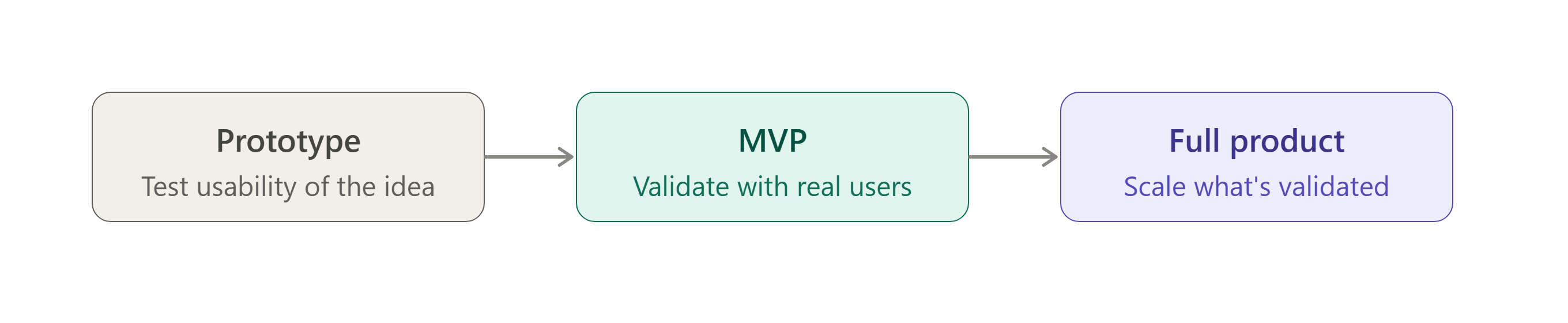
Founders often confuse these three stages, but each serves a different purpose in the product lifecycle.
| Stage | Purpose | Typical Output |
|---|---|---|
| Prototype | Visualize an idea and test usability before writing production code | Clickable design mockups or a non-functional demo |
| MVP | Validate the core business idea with real users in a live environment | A working product with essential features only |
| Full Product | Scale the validated idea into a complete, feature-rich solution | A mature application built for growth and broad use cases |
A prototype answers "does this design make sense?" An MVP answers "do people actually want this?" A full product answers "how do we scale what works?"

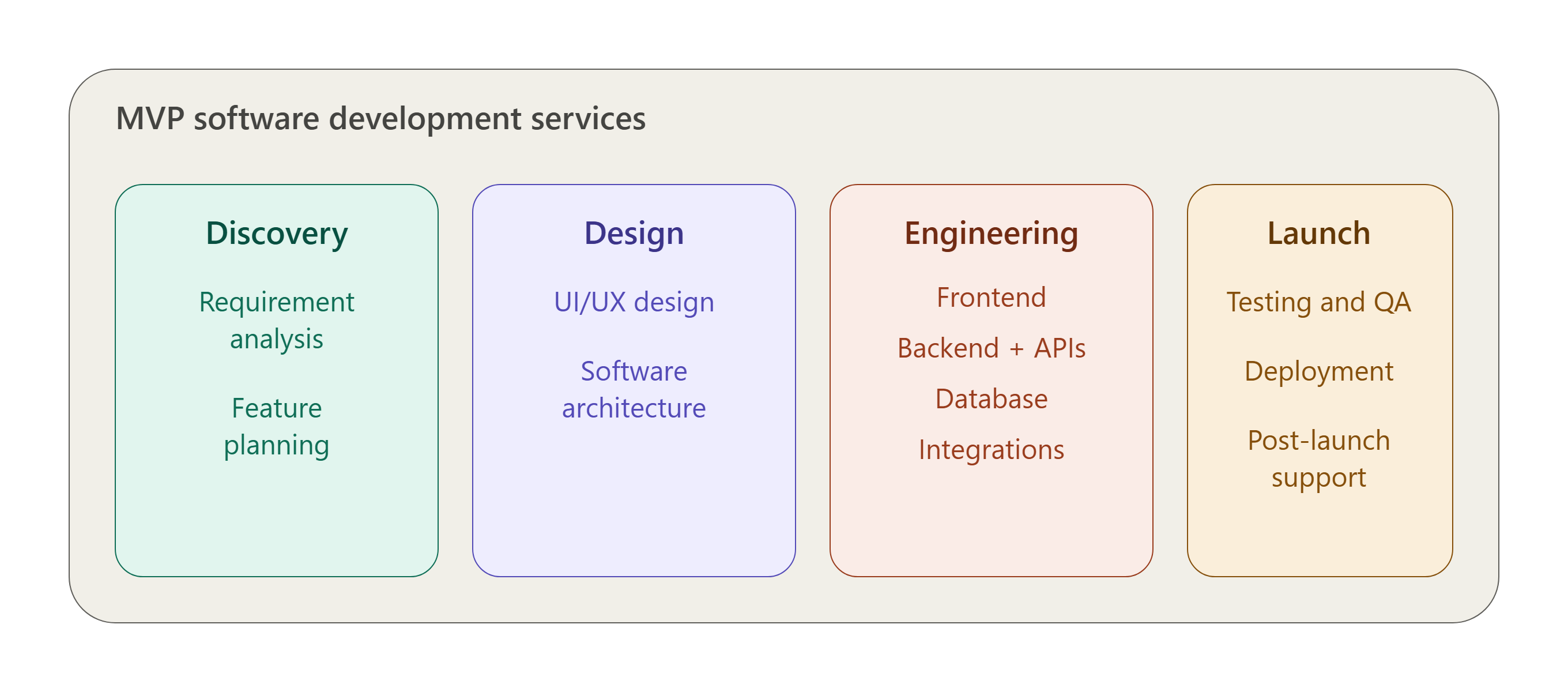
The scope of professional MVP software development services goes well beyond writing code. A capable MVP development company manages the entire journey from idea to launch, and often into the first rounds of improvement after that.
Clarifies the business problem, the target user, and the assumptions that need testing, before any design or code work begins.
Maps out which features are essential for version one and which can wait, preventing scope creep before it starts.
Wireframes and interface design translate the feature list into something users can navigate. For MVPs, design should stay clean and functional rather than elaborate.
Plans the technical foundation, including how the system will handle data, users, and future growth without needing a rebuild.
Builds the part of the product users see and interact with, matched to the approved design.
Handles business logic, data processing, and communication between the frontend and the database, while APIs connect the MVP to other tools and services.
A well-structured database keeps data organized and supports the product as usage grows.
Most MVPs need to connect with external tools such as payment gateways, messaging services, or analytics platforms.
Checks for bugs, performance issues, and security gaps before the product goes live.
Releases the MVP to a live environment where real users can access it.
Monitors performance, fixes issues, and prepares the product for its next iteration after launch.

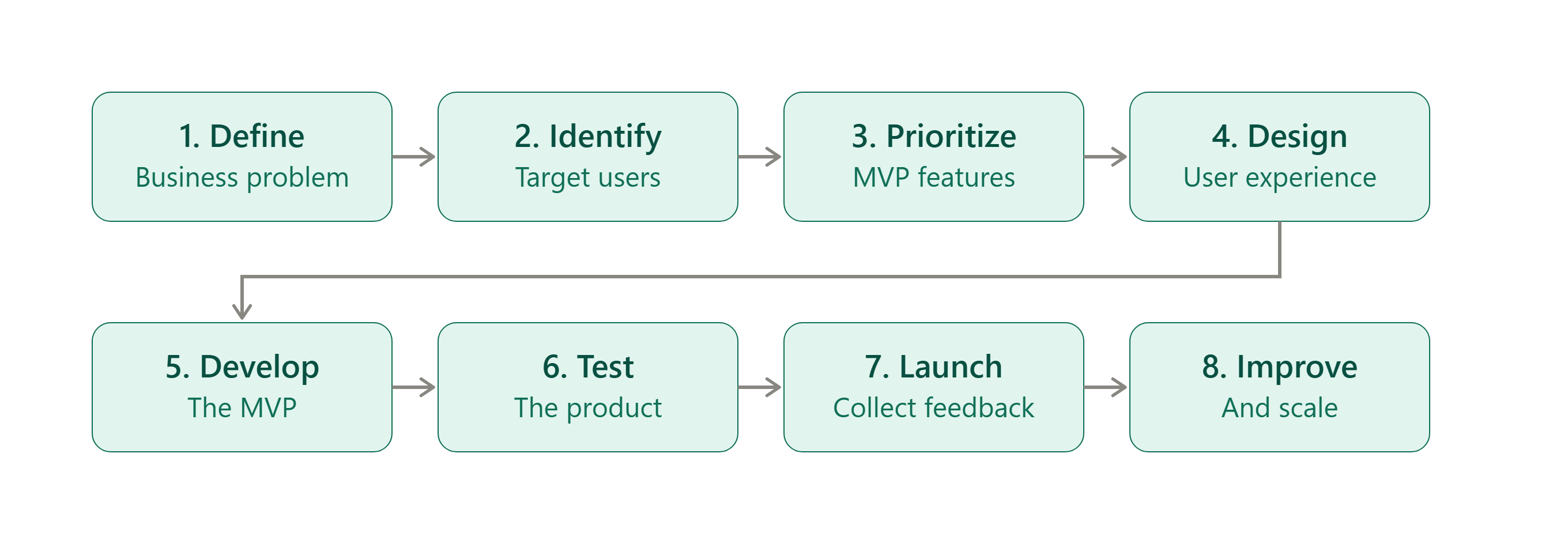
The typical process follows a clear sequence: idea, discovery, feature prioritization, UI/UX, development, testing, launch, user feedback, and iteration. Here is what each stage involves in practice. You can review ZYNO By EliteMindz's MVP and proof of concept services for a closer look at how this process is applied.

There is no single universal price for MVP software development services because cost depends entirely on scope. A simple booking tool and a multi-role SaaS platform with AI features will never cost the same amount, even though both are technically MVPs.
Several factors influence the final estimate:

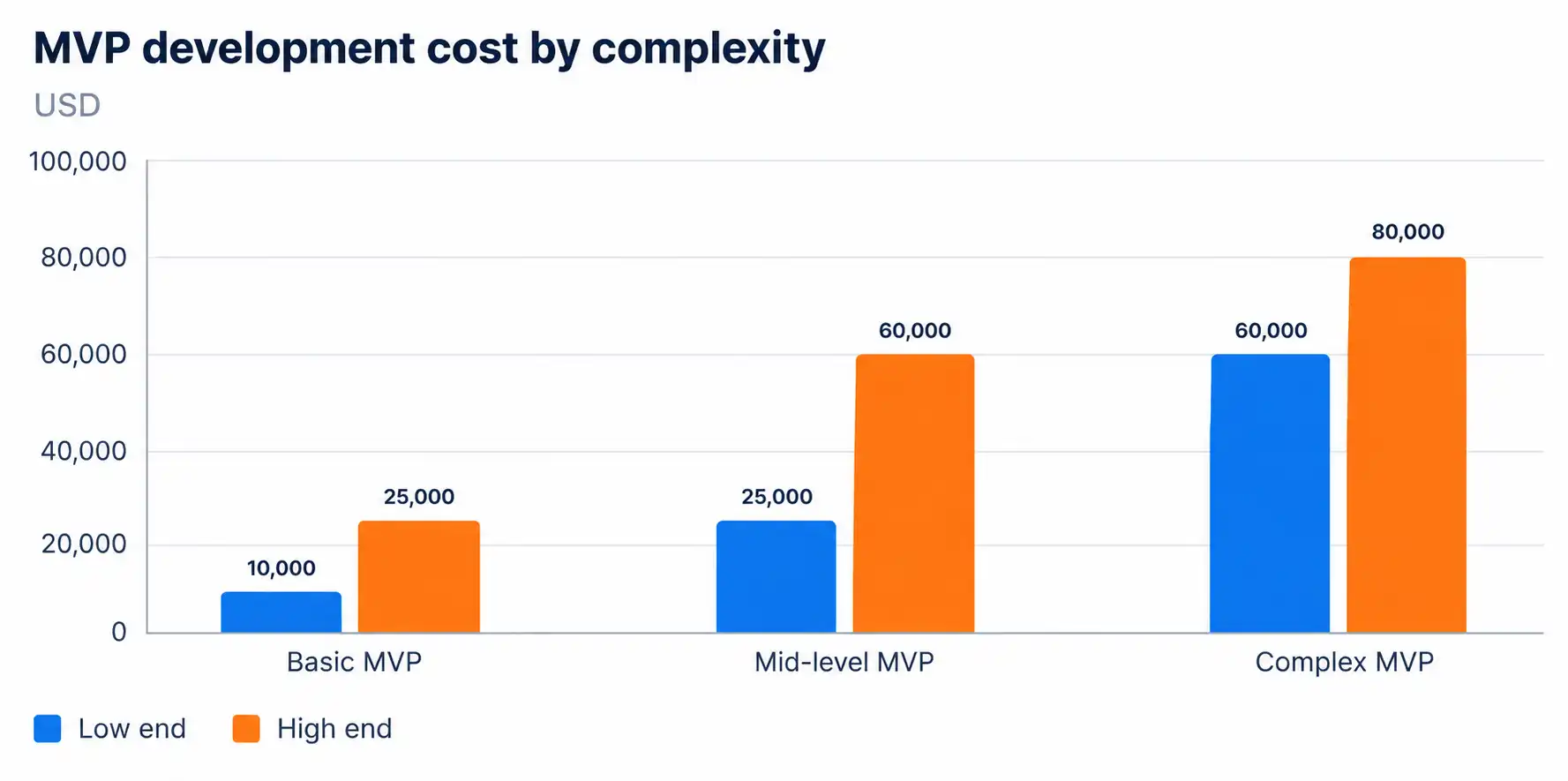
The table below gives an indicative sense of how MVP development cost tends to scale with complexity.
| MVP Type | Typical Complexity | Indicative Development Cost |
|---|---|---|
| Basic MVP | Limited features and simple workflows | $10,000 to $25,000 |
| Mid-Level MVP | Multiple workflows and integrations | $25,000 to $60,000 |
| Complex MVP | Advanced workflows, integrations, AI or enterprise requirements | $60,000+ |
These figures are indicative industry ranges, not fixed quotations from ZYNO By EliteMindz. Actual MVP software development cost varies based on the specific features, integrations, compliance needs, and platform choices involved in your project. Two products that sound similar on paper can land in very different price bands once the technical requirements are mapped out in detail.
If you already have a defined product idea, you can reach out to ZYNO By EliteMindz through the contact page for an MVP development assessment or a more accurate estimate based on your specific requirements.
Have an Idea? Let’s Build Your MVP
Turn your concept into a market-ready MVP or POC with the right features, technology, and development strategy.
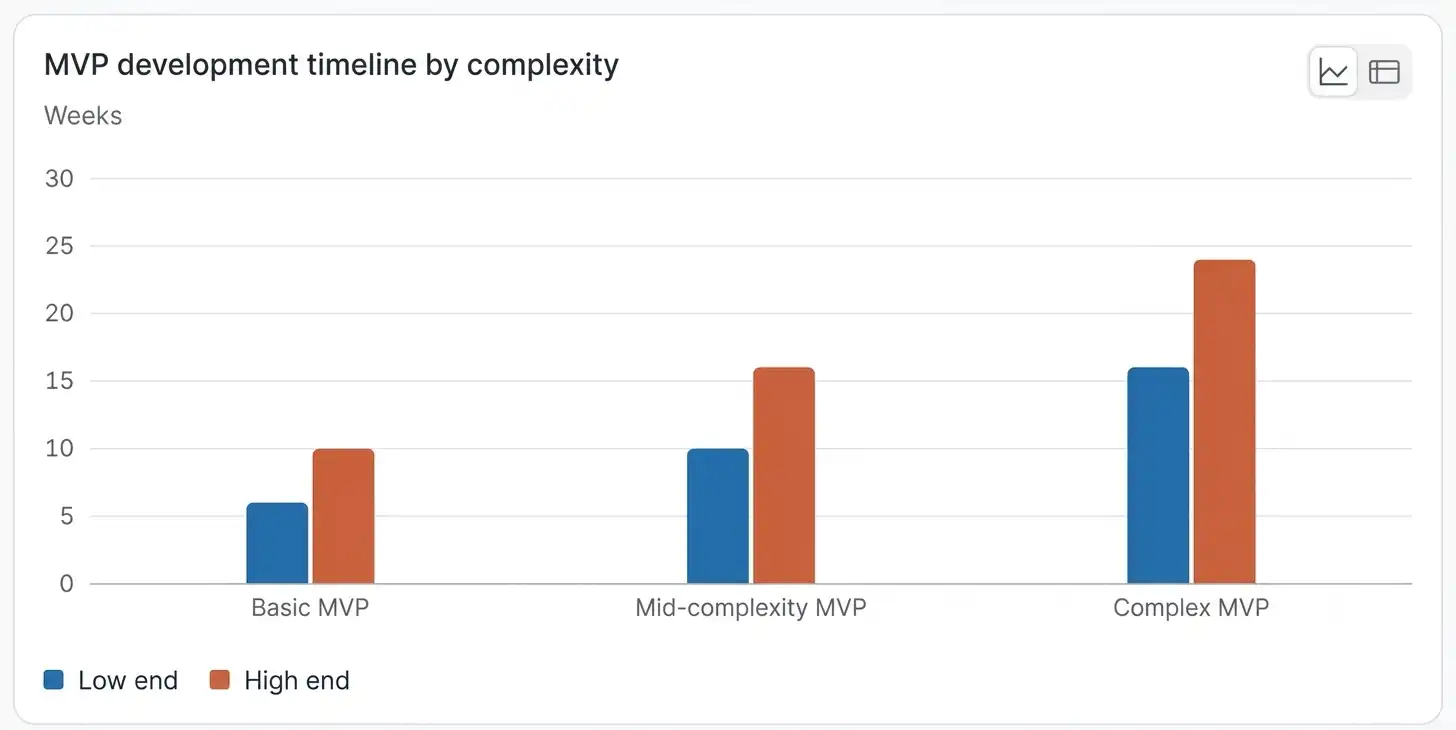
Start Your Project Explore MVP & POCTimelines follow a similar logic to cost: they depend on how much the product needs to do.
A basic MVP with limited features typically takes approximately 6 to 10 weeks from discovery to launch.
An MVP with multiple workflows and integrations generally takes approximately 10 to 16 weeks.
A complex MVP involving advanced workflows, AI, or enterprise-grade requirements can take 16 or more weeks depending on scope.
Actual MVP development timeline depends on several variables:

No responsible development partner should promise a fixed timeline before understanding your requirements in detail. Anyone who does is either underestimating the work or leaving out important steps. Treat any estimate for MVP software development services as a working figure that gets more accurate once requirements are documented.
An MVP should include the minimum set of features needed to solve the core customer problem and test the main business assumption. Everything beyond that is a candidate for a later release, not version one.
A secure way for users to create accounts and log back in.
The single most important part of the MVP: the actual task the product exists to perform.
A simple home base for users to view their data, activity, or progress.
Lets the business manage users, content, and settings without needing a developer for every change.
Basic email or in-app notifications keep users informed about relevant activity.
If the product involves transactions, a secure and tested payment flow is essential from the start.
Even basic usage tracking helps the team understand how people are actually using the product.
Authentication, data protection, and role-based access should never be treated as optional, even in an early build.
Not every planned feature belongs in version one. The temptation to add "just one more thing" is one of the most common reasons MVPs take longer and cost more than planned.
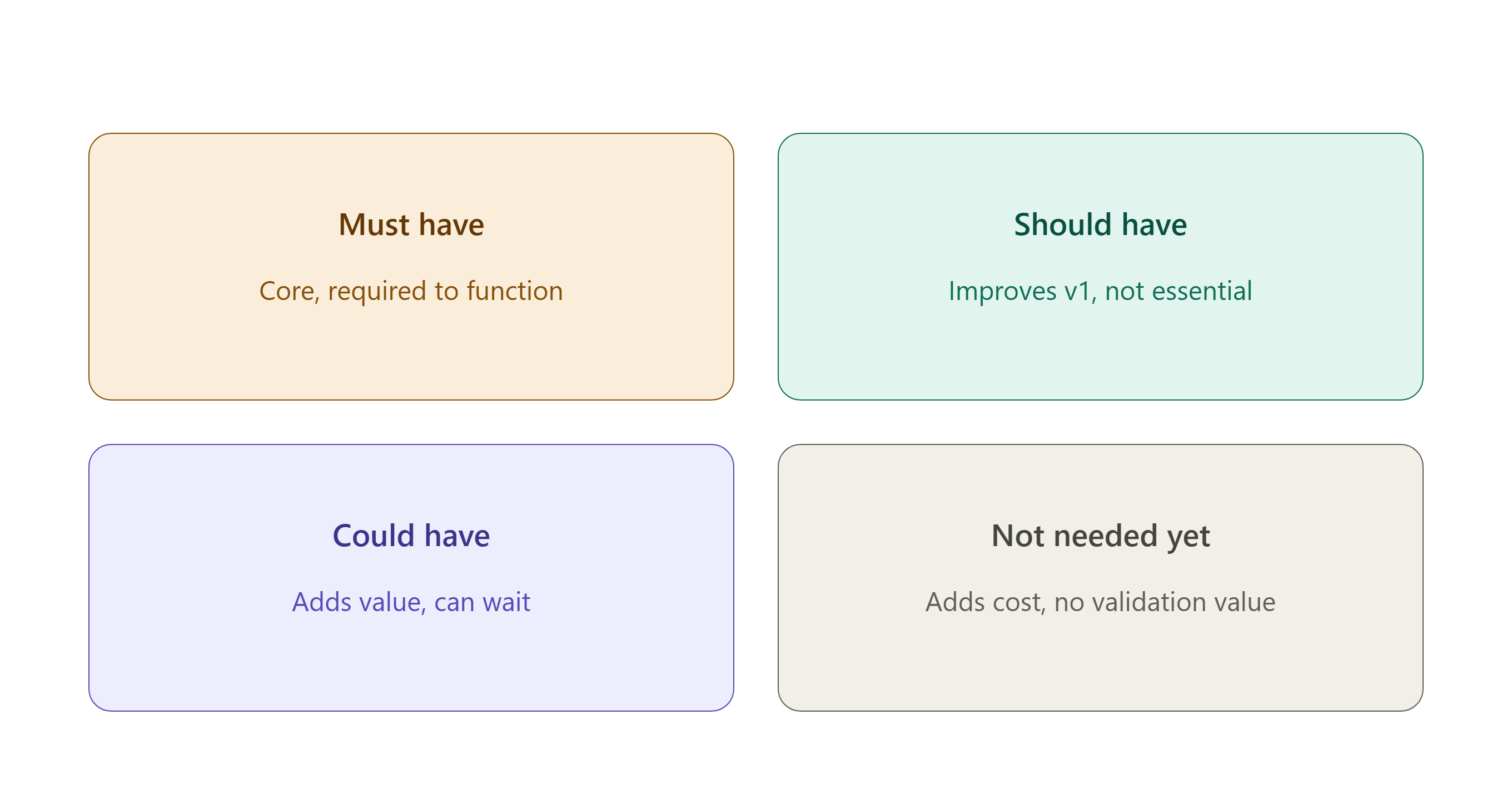
A simple prioritization framework helps separate what matters now from what can wait.
Features required for the core product to function at all. Without these, the MVP has no purpose.
Useful features that improve the first release but are not strictly essential for the core workflow to work.
Features that add value but can reasonably be added after the initial version has been validated with real users.
Features that increase development time and cost without helping validate the core product idea.

The core process stays similar across industries, but what changes is the feature set, the integrations, and the compliance requirements.
Centers on subscription logic, multi-user access, and a dashboard that demonstrates the core value proposition clearly.
Focuses on a smooth, native or cross-platform experience, often starting with one platform before expanding to the other.
Needs to support at least two user types, buyers and sellers, along with listings, search, and a basic transaction flow.
Needs extra attention to data privacy, secure records handling, and relevant regulatory considerations from day one.
Requires strong security, accurate transaction handling, and careful planning around compliance from the earliest build.
Often needs role-based permissions and admin controls early, since businesses expect more structured access than individual consumers do.
Adds a layer of complexity around data quality, model selection, and how AI outputs are presented to the user in a useful way.
There is no single best technology stack for MVP development. The right choice depends on the product itself, not on trends.
Common technologies used across MVPs include:
Technology selection should be driven by the product's actual requirements, including scalability needs, security expectations, performance targets, any existing systems the MVP needs to connect with, available development resources, and the roadmap beyond the first release. A stack that works well for a simple booking app will not necessarily suit a data-heavy analytics platform, and a development partner should be able to explain why a particular stack fits your specific case.
Choosing a partner is often harder than choosing a technology stack, because the wrong partner can cost you time, money, and momentum even if the code itself is fine.
Look for a team that has built products in a similar domain, not just a general software development company with a broad portfolio.
Ask to see examples of previous work that resemble your product in complexity or industry.
Find out whether the company documents requirements formally or relies on loose conversations that can lead to misunderstandings later.
A clear, structured MVP development process, with defined stages and checkpoints, is a strong signal of a mature MVP development agency.
Ask how often you will receive updates, who your main point of contact will be, and what tools are used to track progress.
Testing should not be an afterthought. Ask specifically what testing is included and how security is handled.
Clarify in writing that you will own the source code and intellectual property once the project is delivered and paid for.
Ask what happens after launch: is there a support window, and what does it cover?
A lower initial quote can hide costs for change requests or fixes later. Compare the full picture, not just the number on the first proposal.
Reviewing a partner's broader custom software development capabilities alongside their MVP work can also tell you whether they can support your product as it grows beyond the first version.
If your budget and vendor shortlist are still taking shape, this is a good point to speak with a potential provider of MVP software development services directly and ask these questions before committing to a contract.
Build, Validate, and Scale With Confidence
Get expert MVP and POC development support to validate your idea, reduce development risks, and prepare for future growth.
Get a Free Consultation View MVP & POC Services →A partner who answers these clearly, without vague reassurances, is generally easier to work with than one who avoids specifics.
Cramming every planned feature into version one delays the moment you actually learn something from users.
Vague requirements lead to rework and disagreements about what was actually promised.
The cheapest quote often reflects a narrower scope or corners cut on testing and security.
Treating security as something to "add later" is far more expensive to fix after launch than during development.
Launching without a plan to collect and act on feedback loses the MVP's main advantage over a full product build.
An MVP built with no thought for growth often needs to be rebuilt, not just extended, once it succeeds.
Choosing a stack because it is trendy, rather than because it fits the product, adds risk without adding value.
Understanding when an MVP makes sense, and when it does not, helps set the right expectations from the start.
| Factor | MVP | Full Product |
|---|---|---|
| Objective | Validate the concept | Scale the business |
| Features | Essential | Comprehensive |
| Development Time | Shorter | Longer |
| Initial Investment | Lower | Higher |
| User Feedback | Central | Ongoing |
| Scalability | Planned for future growth | Built for current scale |
An MVP makes sense when the core idea has not yet been tested with real users, or when budget and timeline need to stay controlled while the business validates demand. A company may need a more complete product from the beginning when the market, workflows, and requirements are already well understood, such as replacing an existing legacy system with proven, non-negotiable functionality.
ZYNO By EliteMindz is the technology brand of EliteMindz, offering custom software development, AI-enabled solutions, and business applications across multiple industries. For MVP-specific work, the MVP and PoC service line sits alongside broader product development and ideation support offerings.
The approach centers on understanding the business problem first, then translating it into a scoped, buildable MVP rather than starting with a long feature wish list.
Beyond MVPs, the team works on custom software development for businesses that need solutions built around their specific workflows rather than adapted from off-the-shelf tools.
For products that need intelligent features, the AI development and AI consulting teams can support AI MVP development where the product genuinely benefits from it, rather than adding AI features for their own sake.
Design, development, and testing are handled as connected stages of one process, with UI/UX design work feeding directly into development rather than being treated as a separate handoff.
ZYNO By EliteMindz has built products across domains including ERP, HR technology, healthcare, retail, and procurement, which is reflected in its wider product portfolio and case studies.
MVP delivery does not end at launch. Support after release helps businesses respond to real user feedback and plan the next stage of development.
Architecture decisions during MVP development are made with an eye toward what happens if the product succeeds, so a good first version does not require a costly rebuild later. Businesses evaluating infrastructure needs can also review cloud consulting and DevOps services for how scalability is planned from the backend up.
Turn Your Idea Into a Scalable Product
From concept validation to MVP development, get the right technology, features, and development strategy to bring your product idea to life.
Start Your MVP Project Explore MVP & POC ServicesIf you have an idea but are not yet sure what should be included in your first version, that is a normal starting point, not a gap you need to fill before reaching out. Share your product idea, your target users, the features you consider essential, your preferred platform, and any specific business requirements, and a team can help shape that into a realistic scope.
ZYNO By EliteMindz can work with you to define the MVP scope, estimate development effort, and outline a realistic path from idea to launch. Whether you need a quick assessment or full MVP software development services from discovery through post-launch support, the next step is simply a conversation. You can also browse the case studies and resources section to see the kind of products that have been built before reaching out.
Get an MVP Development Consultation
Request an MVP Development Estimate
MVP software development services cover the planning, design, engineering, and testing needed to build a minimum viable product. They help businesses turn an idea into a working product with only the core features needed to validate demand, before investing in a full build.
MVP development cost typically ranges from around $10,000 for a basic MVP to $60,000 or more for a complex build with AI or enterprise requirements. The exact figure depends on features, integrations, and platform choices, so treat these as indicative ranges rather than fixed quotes.
A basic MVP usually takes 6 to 10 weeks, a mid-complexity MVP takes 10 to 16 weeks, and a complex MVP can take 16 or more weeks. Timelines depend heavily on requirements clarity and scope.
MVP development typically includes discovery, feature planning, UI/UX design, frontend and backend development, database setup, third-party integrations, testing, deployment, and post-launch support.
A prototype is a non-functional or partially functional mockup used to test design and usability, while an MVP is a working product with real functionality that users can actually use and give feedback on.
The choice depends on where your target users spend their time and how they expect to access the product. A web MVP development approach often validates ideas faster and at lower cost, while a mobile app MVP development approach may suit products that depend on device features like location or camera access.
Yes, an MVP can include AI features when they are central to solving the core problem, such as recommendation logic or automated data processing. AI MVP development should still follow the same principle of including only what is needed to validate the idea.
Evaluate relevant experience, real project examples, how requirements are managed, the clarity of the development process, communication practices, testing and security standards, and terms around source code ownership and post-launch support.
In most professional engagements, the client owns the source code and intellectual property once the project is delivered and paid for in full, but this should always be confirmed in writing before development begins.
Yes, when the MVP is architected with scalability in mind from the start. This is why architecture and technology decisions made during MVP software development services matter even for a small first release.
Magento vs Shopify vs WooCommerce: Which Platform Wins in 2025?
Read More →
SEO vs Google Ads: Which One Drives Better Results in 2025?
Read More →
Top 10 E-commerce Development Agencies for D2C Brands in India
Read More →
Top Mobile App Development Companies in India (2025 Edition)
Read More →
Top Mobile App Development Companies in Nigeria (2025)
Read More →
Hire Mobile App Developers in India: What You Need to Know
Read More →
Top E-commerce Development Companies in Africa (2025 Edition)
Read More →
Best Mobile App Development Companies in UAE (2025 Edition)
Read More →
Best Digital Marketing Services for Small Businesses in India
Read More →
Best eCommerce Development Companies in Dubai (2025)
Read More →
Top Mobile App Development Companies in Kenya (2025)
Read More →
Top 10 Digital Marketing Companies in the UAE for 2025
Read More →
Best Digital Marketing Companies in Dubai (2026)
Read More →
Best Digital Marketing Companies in Qatar 2026 List
Read More →
AI-Powered 5G Mobile Apps: Revolutionizing User Experiences in 2025
Read More →
Top Mobile App Development Firms in Africa (2026): Innovators Driving Digital Transformation
Read More →
Top Mobile App Development Firms in Nigeria (2025): Innovators Powering Digital Growth
Read More →
Top Mobile App Development Firms in Kenya (2025): Innovators Driving Digital Transformation
Read More →
IoT and Mobile Apps: Creating a Connected Ecosystem in 2025
Read More →
How AI Is Reshaping Mobile App Development in 2025
Read More →
Security Trends in Mobile Apps: What Developers Need to Know in 2026
Read More →
Mobile App Security in 2025: Protecting User Data in an AI World
Read More →
10 AI-Powered Features Your Mobile App Needs in 2026
Read More →
Mobile App Development Trends to Watch in 2025 with Elite Mindz
Read More →
The Future of Mobile UX: Motion Design & Touchless UI in 2025
Read More →
What Next in Mobile App Tech for 2026 and Beyond
Read More →
Building Apps for the Foldable Device Revolution in 2025
Read More →
Accessibility in Mobile Apps: A 2025 Imperative
Read More →
Hire a Developer with Elite Mindz: Global Demand in 2025
Read More →
Voice Search Optimization 2025: Prepare Apps for the Conversational Web
Read More →
Why Nairobi Is Africa's Hottest Mobile App Hub in 2025
Read More →
Why Singapore Trusts Elite Mindz for Developer Hiring in 2025
Read More →
EliteMindz Mobile App Services for Addis Ababa in 2026
Read More →
EliteMindz ECommerce Solutions Boosting Global Sales in 2026
Read More →
EliteMindz Developer Services Power London Tech in 2026
Read More →
How New York Firms Leverage Elite Mindz Talent in 2025
Read More →
How New Delhi Entrepreneurs Scale with Elite Mindz E-Commerce in 2025
Read More →
Low-Code vs. Custom: Choosing the Right Mobile Path in 2025
Read More →
What Latin American E-Commerce Buyers Expect in 2025
Read More →
AI Powered Digital Marketing: 2026 Lead Generation with EliteMindz
Read More →
Merging AI SEO and Paid Media: A GEO-Driven Strategy for the AI Search Era
Read More →
How Extended Reality (XR) Is Transforming Mobile Apps in 2025
Read More →
Nairobi Tech Hub in 2026: Why It's Africa's Undisputed Mobile App Development Powerhouse
Read More →
Ultimate Guide to Digital Marketing Strategies in 2025: Actionable Insights to Drive Growth
Read More →
Mobile App Development in Nairobi: Trends & Opportunities in 2025
Read More →
Mastering AI-Driven SEO: Your Survival Guide for 2025 and Beyond
Read More →
African Emerging Cities: Mobile App Trends to Watch in 2025
Read More →
Elite Mindz Developer Hiring Trends Across Continents 2025
Read More →
Google Ads Update 2025: Smarter Campaign Management with Checkbox Filters
Read More →
xAI’s Grok Code Fast 1: Transforming Agentic AI for Enterprise Software
Read More →
Mobile App Innovation Trends to Lead in 2025
Read More →
Why Generic Login Pages Confuse Google & Damage SEO
Read More →
The Rise of Social Commerce: Shoppable Apps in 2025
Read More →
Always-On Audits: The Future of Technical SEO Maintenance
Read More →
5G and App Development: Speed & Performance Unlocked in 2025
Read More →
Internal Linking for SEO: Why It Matters and How to Do It Right
Read More →
Mastering SEO in a Fractured Search Landscape: New AI-First Rules for 2025
Read More →
Layered SEO 2025: The 4-Step System to Win AI Search and User Trust
Read More →
Google Antitrust Case: AI Overviews Shift to FastSearch Over Links in 2025
Read More →
Mastering AI Search: Elevate Your Brand Through Superior Website Wellness
Read More →
Tokyo's Retail Market & Elite Mindz in 2026
Read More →
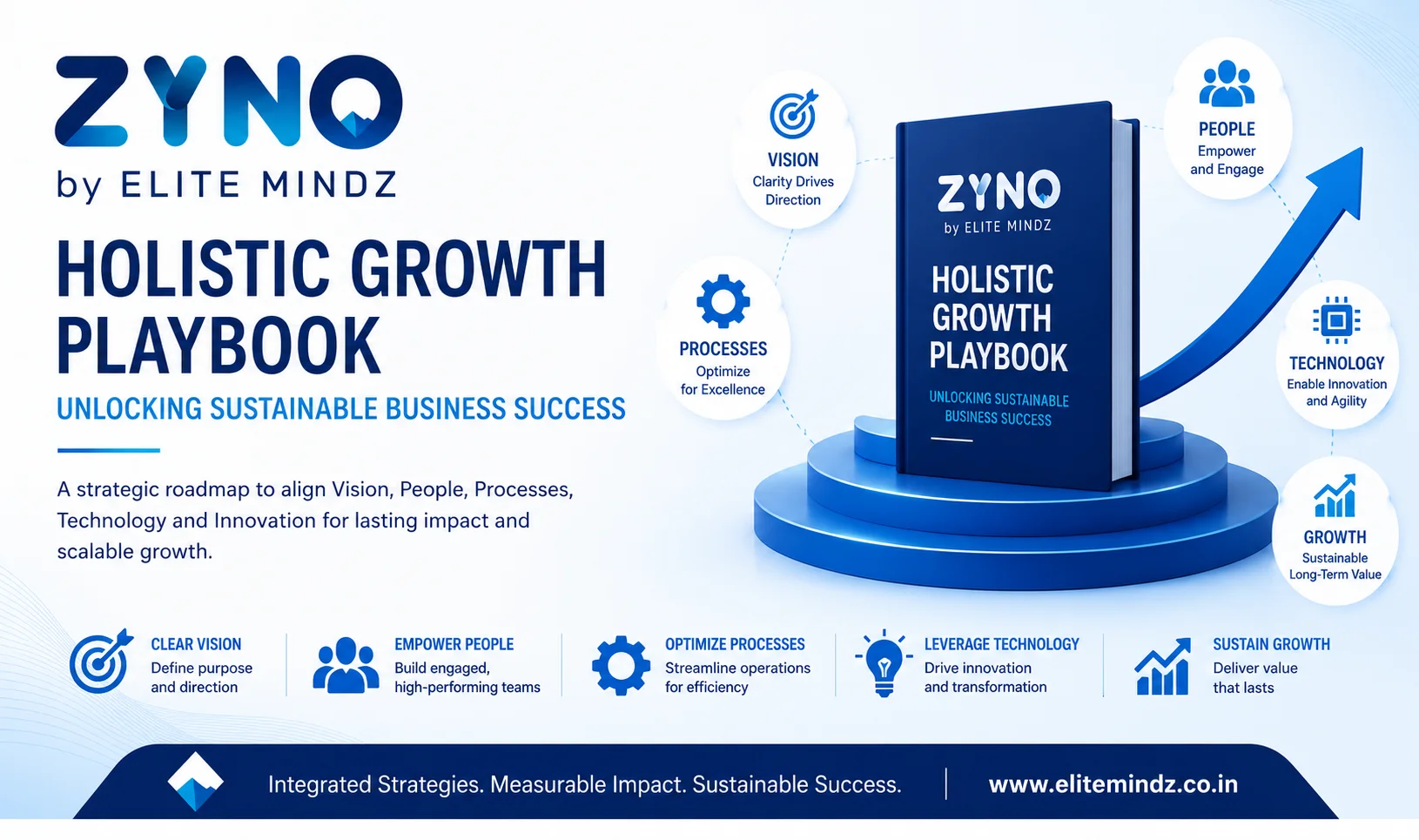
Elite Mindz Holistic Growth Playbook for 2025: Unlocking Sustainable Business Success
Read More →
Top Mobile App Development Firms in the U.K. (2025)
Read More →
GEO Meets Local SEO: Revolutionizing Business Discovery in the AI Era
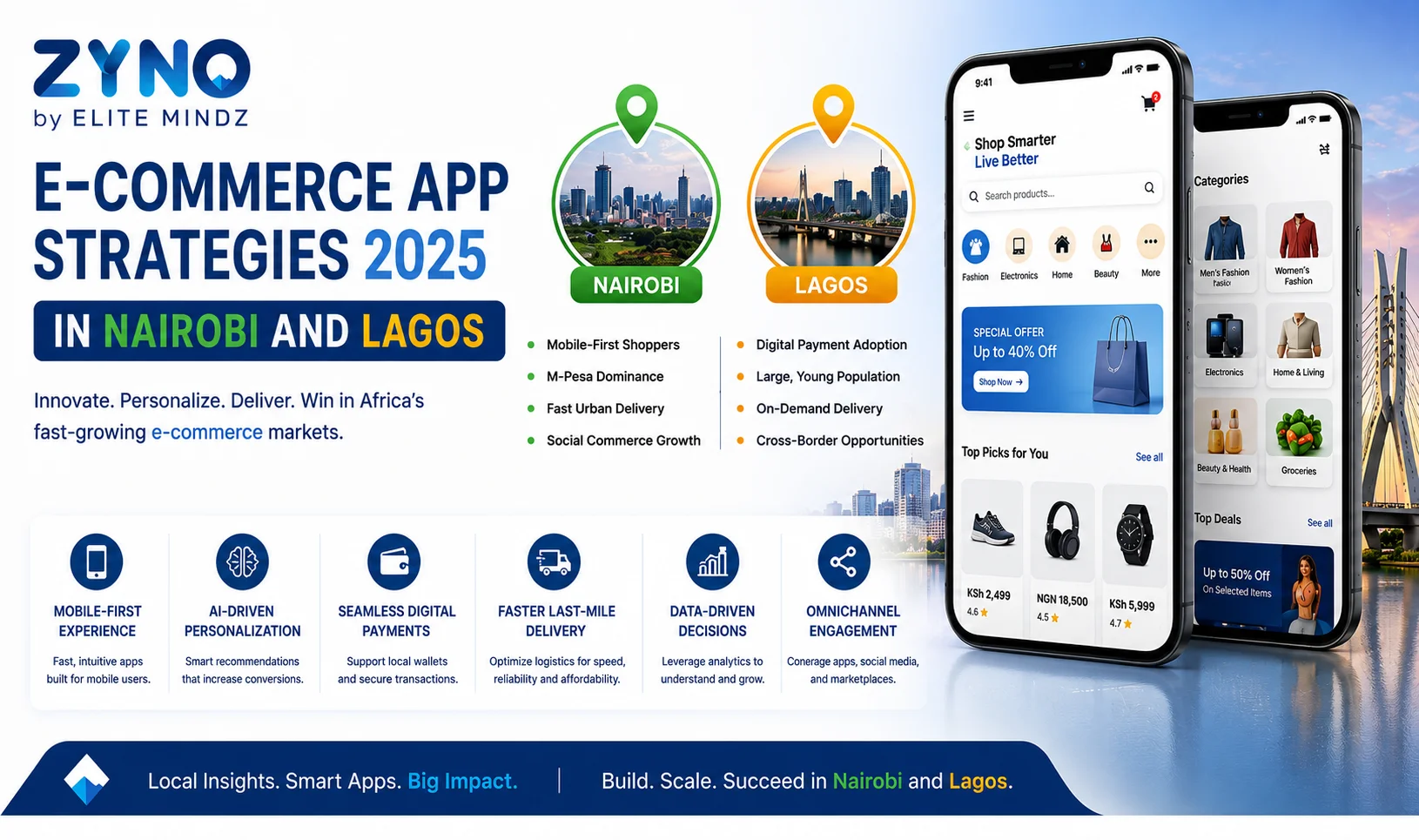
Read More →E-Commerce App Strategies 2025 in Nairobi and Lagos
Read More →
Mobile App Strategies that Work in Cairo 2025
Read More →
Best Practices for Mobile App Development in Malaysia with Elite Mindz
Read More →
Top Features Malaysian Businesses Should Add in Their Mobile Apps
Read More →
Top Mobile App Development Firms in Germany (2025)
Read More →
Top Mobile App Development Firms in France (2025)
Read More →
No-Code vs Custom Development in 2026: What’s Right for Your Business?
Read More →
10 Industries Being Transformed by ML in 2025
Read More →
How Remote Hiring Changed the Global Developer Landscape
Read More →
Low Code Myths vs Reality
Read More →
Top 10 Developer Hiring Mistakes to Avoid in 2025
Read More →
Hire Dedicated Developers vs Freelancers: Pros & Cons
Read More →
Top Mobile App Development Firms in Saudi Arabia (2026)
Read More →
Top Mobile App Development Firms in Kuwait (2025)
Read More →
Top Mobile App Development Firms in UAE (2025)
Read More →
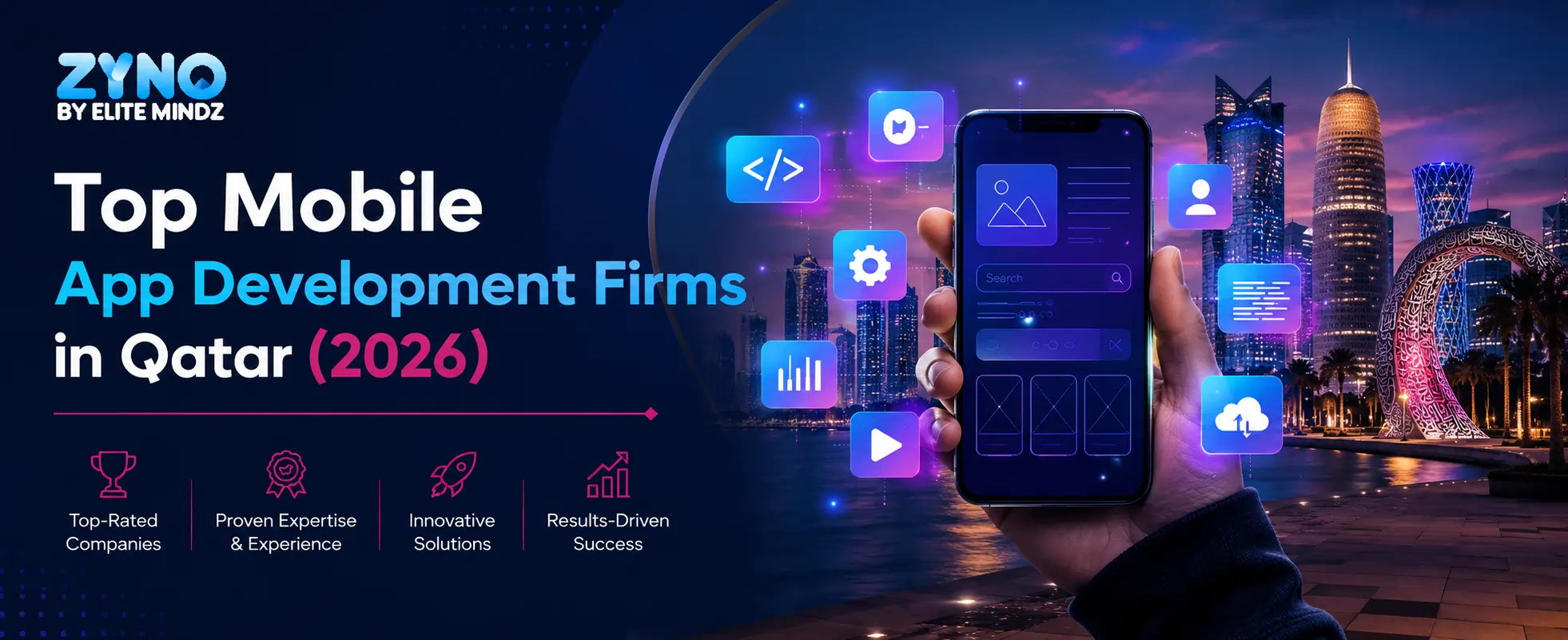
Top Mobile App Development Firms in Qatar (2026)
Read More →
Top 3 Mobile App Development companies in South Africa for iOS and Android
Read More →
Top Mobile App Development Companies in the USA 2025: Building Innovative Apps for Every Business
Read More →
Taxi Booking App Development Company in the Middle East
Read More →
Developer Hiring Platforms Compared: Finding the Right Fit for Startups and Enterprises
Read More →
Effective Mobile App Monetization Strategies That Work in 2025
Read More →
Why Riders Prefer Taxi Booking App Over Traditional Calls
Read More →How Mobile Apps Are Transforming Pet Care Management in the USA
Read More →
The Complete Step-by-Step Guide to Compliance Software Every Business Needs Now
Read More →How Global Capability Centers Are Shaping the Future of Work
Read More →A New Chapter Begins in 2026: ZYNO’s AI-Powered Software Redefining the IT Landscape
Read More →What is Offshore Outsourcing Services: A Complete Guide
Read More →The Role of AI and Cloud in Modern Custom Application Development
Read More →Top Mobile App Development company in India 2026- ZYNO Tech
Read More →A complete guide to build a mobile app for your travel business
Read More →Cybersecurity & Compliance: The New Pillars of Global Capability Centers
Read More →A Practical Guide to Choose the Right B2B Mobile App Development Partner
Read More →
Android App Development for Fintech in UAE: The Complete 2026 Guide
Read More →
Complete Guide to Healthcare App Development in 2026: Features, Process, Costs, Types
Read More →
Top 10 Android App Development Companies in India That Are Dominating 2026
Read More →
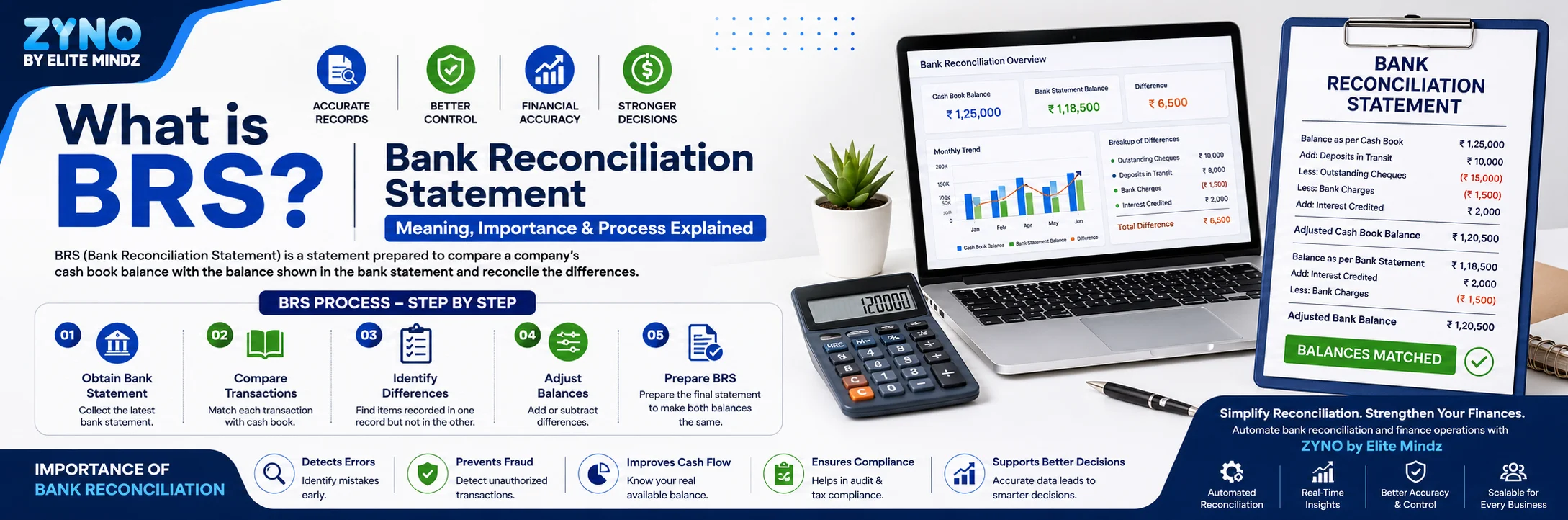
What is BRS? Bank Reconciliation Statement Meaning, Importance & Process Explained
Read More →
Best Mobile App Development Company in Delhi & Noida (2026 Guide)
Read More →
Voice Search SEO for Apps: The Complete Optimization Guide
Read More →
The Top 10 Supply Chain Management Systems (SCM) for 2026
Read More →
AI-Powered Custom Software Development: How Businesses Are Building Smarter Applications
Read More →
Why Enterprises Prefer Custom Software Development Over SaaS in 2026
Read More →
AI Chatbot Development Services: Everything Businesses Need to Know Before Investing in 2026
Read More →
Real Estate Software Development Services: A Complete Guide for Builders, Brokers & Developers (2026)
Read More →
Website Development Process: Full Guide by ZYNO Digital EliteMindz
Read More →
Website Development Cost in India (2026): Real Pricing, Hidden Costs & What You Actually Get
Read More →
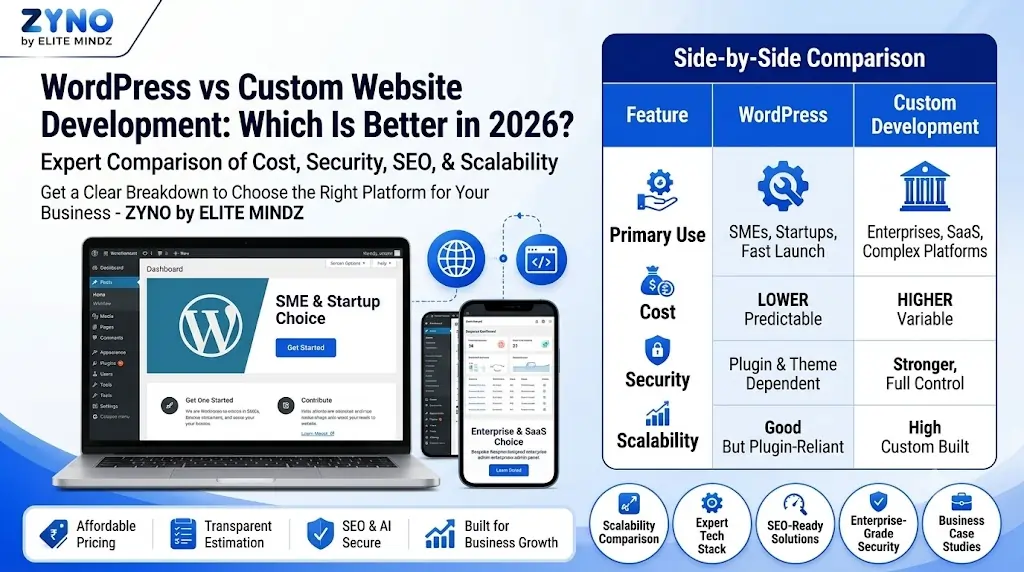
WordPress vs Custom Website Development: Which Is Better in 2026?
Read More →
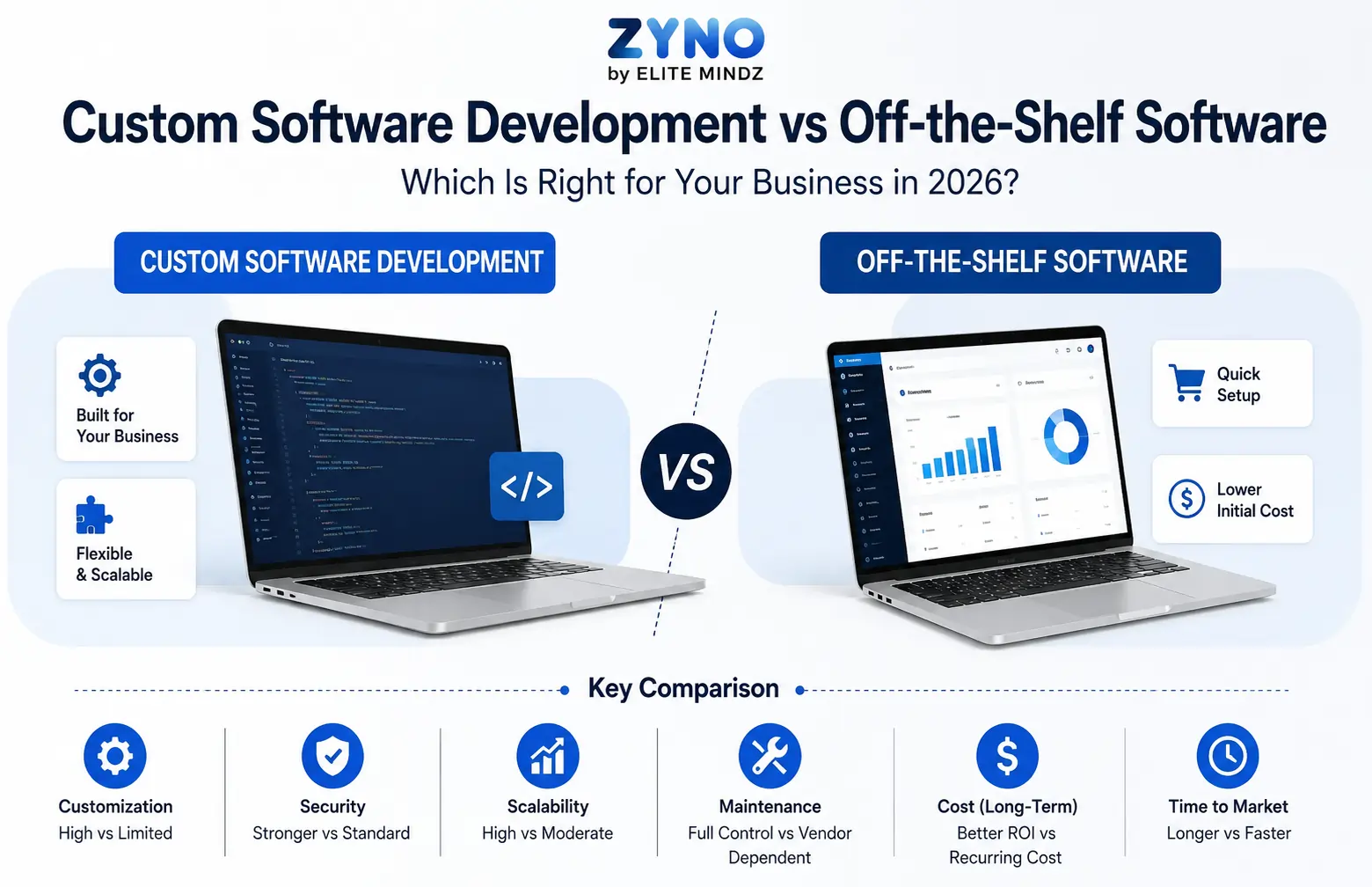
Custom Software Development vs Off-the-Shelf Software: Which Is Right for Your Business in 2026?
Read More →
Digital Transformation Strategies for Mid-Market Companies in India
Read More →
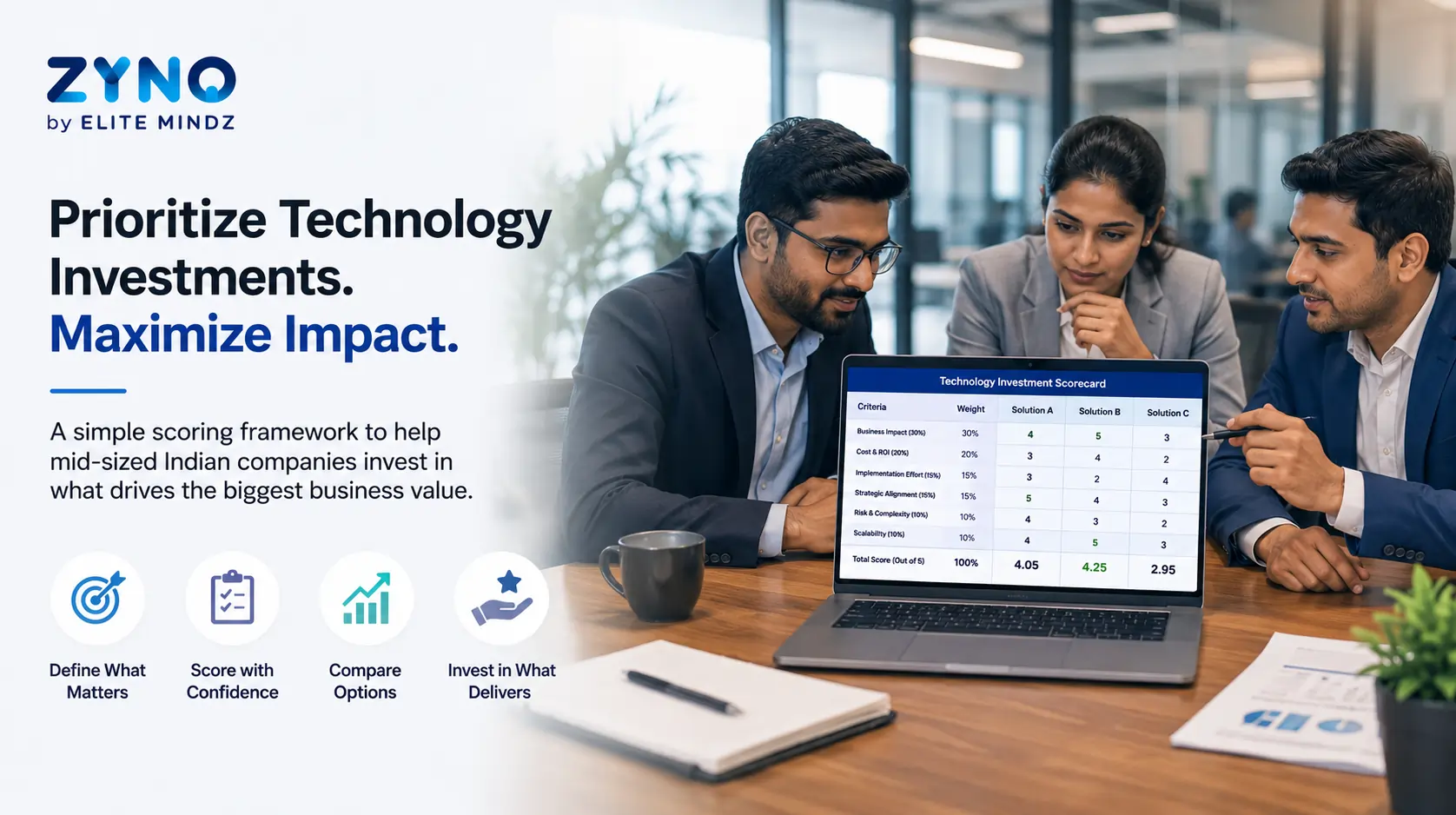
How Should a Mid-Sized Indian Company Prioritize Technology Investments During Digital Transformation
Read More →
Common Challenges Mid-Market Businesses in India Face When Implementing Digital Transformation
Read More →
How Do Mid-Market Companies in India Measure the Success of Their Digital Transformation Initiatives
Read More →
What Role Does Leadership and Change Management Play in Driving Digital Transformation in Mid-Sized Indian Companies
Read More →
Mobile App Development Trends for 2026: What Every Business Needs to Know
Read More →
Best AI Software Manufacturer & Software Development Company in Kenya
Read More →
Hire Mobile App Developers in Kenya: Complete 2026 Guide to Finding the Right Development Team
Read More →
How Much Does Custom Software Development Cost in 2026?
Read More →
Custom Software Development Process: From Discovery to Deployment
Read More →
How Long Does It Take to Build Custom Software?
Read More →
Top 10 Custom Software Development Companies in India (2026 Guide, And How to Choose the Best One)
Read More →
Custom ERP vs Custom CRM: Which Do You Need First?
Read More →
Custom Software Development for Startups: From MVP to Scale
Read More →
Custom Software Development for Healthcare: Build Compliant, Patient-Centered Systems
Read More →
Custom Software Development for Logistics: Streamline Your Supply Chain
Read More →
Custom Software Development for IoT: Build Connected, Intelligent Systems
Read More →
Swift vs SwiftUI: Which Technology Should You Choose for Your iOS App Development?
Read More →
Best 15 AI Software Development Companies in USA [2026]
Read More →
How to Prepare Retail Data from Screenshots for Better Analysis
Read More →
Top Custom Software Development Companies in USA 2026 and How to Choose the Right Partner
Read More →
MVP Software Development Services: Cost, Timeline, Process & How to Choose a Development Partner
Read More →Partner with ZYNO by Elite Mindz to revolutionize how your business works. Fill out the form, and we’ll reach out with AI-powered solutions made just for you.
We use browser cookies to ensure you get the best experience on our website. Learn more
The form was submitted successfully!