×
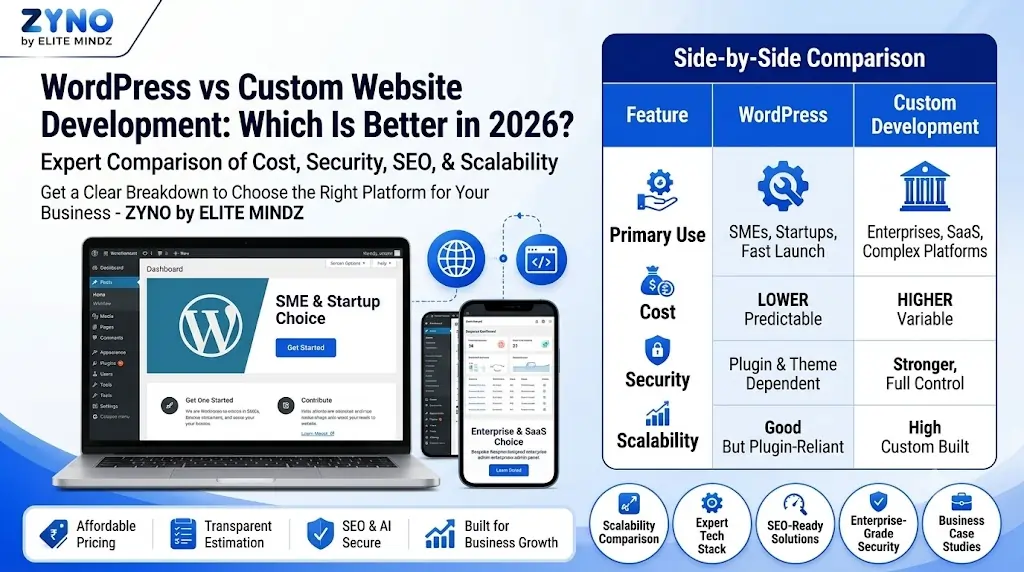
WordPress and custom website development both work - the right choice depends on your budget, timeline, and growth plans. WordPress suits fast, cost-effective launches for SMEs and startups, while custom development suits enterprises, SaaS, and complex platforms needing full control, stronger security, and long-term scalability.
Businesses using ZYNO Books cut accounting time by 70% and stay 100% ZATCA-compliant — automatically.

If you're reading this, you've probably already had the argument in your head a dozen times. WordPress feels safe and familiar. Custom development feels powerful but expensive. And every agency you talk to seems to push whichever one they happen to build.
Here's the honest answer: the "better" platform depends entirely on what your business actually needs - not on which one sounds more impressive in a sales pitch.
This guide walks through WordPress vs custom website development the way we'd explain it to a client sitting across the table from us: plainly, with real trade-offs, and without pretending one platform wins every category.
By the time you finish reading, you'll know where WordPress genuinely shines, where custom development earns its higher price tag, and how to match the decision to your own business - whether you're a startup, an SME, or an enterprise team planning the next five years.
WordPress is an open-source content management system. Instead of writing every line of code, you build a website using themes for design and plugins for functionality, then manage everything through a dashboard almost anyone can learn in an afternoon.
Its scale is hard to overstate. WordPress currently powers somewhere around 42–43% of all websites on the internet, and close to 60% of every site built on a known CMS, according to W3Techs' long-running usage survey (see WordPress.org for the platform's own documentation). That's not a fluke - it's two decades of an ecosystem compounding on itself, with tens of thousands of plugins and themes built to plug nearly any gap.
In practice, a WordPress build usually looks like this:
Custom development flips the approach. Instead of assembling a site from pre-built parts, a development team writes the backend logic, database structure, and frontend interface specifically for your business - often on modern frameworks like React, Next.js, Node.js, or Laravel, sometimes paired with a headless CMS for content teams who still want an editing dashboard.
Nothing gets included that you don't need. Nothing gets left out that you do.
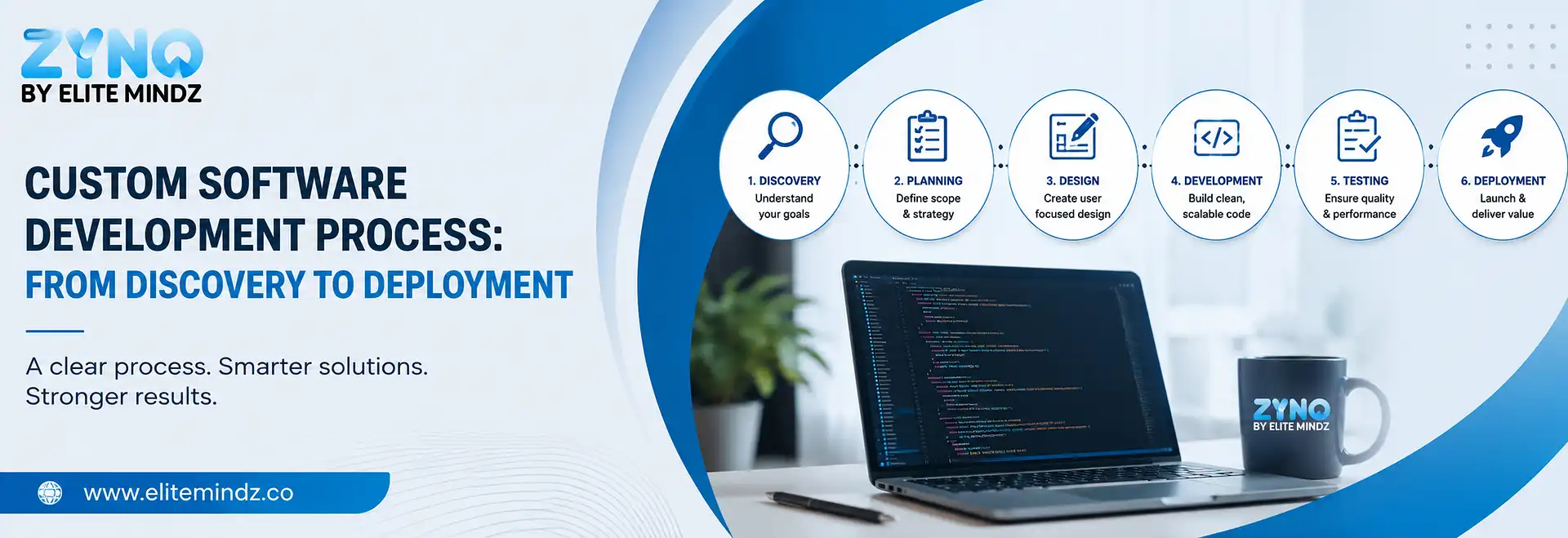
If you want a deeper breakdown of how this actually unfolds stage by stage, our guide to the website development process walks through discovery, design, build, and QA in more detail than we can fit here.
Every business has unique goals. Whether you're launching a marketing website, an eCommerce store, or a custom web application, ZYNO Digital by EliteMindz helps you choose the right platform based on your budget, scalability, performance, and long-term growth.
✓ WordPress Development | ✓ Custom Web Development | ✓ eCommerce Solutions | ✓ Enterprise Web Applications | ✓ SEO & AI-Ready Websites
| Factor | WordPress | Custom Development |
|---|---|---|
| Upfront Cost | Lower | Higher |
| Time to Launch | Weeks | Months |
| Code Ownership | Shared with the WordPress core and plugin ecosystem | Fully owned by your business |
| Flexibility | Limited by available themes and plugins | Built exactly to match business requirements |
| Security | Depends on plugin updates and maintenance | Controlled by the development team and security practices |
| Performance | Good initially but can slow down with excessive plugins | Optimized for speed from the ground up |
| Scalability | Suitable for small to medium growth | Designed to scale with business growth |
| Maintenance | Frequent updates for themes, plugins, and core | Less frequent but more strategic maintenance |
| Best Fit | SMEs, blogs, portfolios, and marketing websites | Enterprises, SaaS products, marketplaces, and complex platforms |
| SEO Control | Good with SEO plugins like Rank Math or Yoast | Excellent with full technical SEO implementation |
Everyone asks about price first, and fair enough. But looking only at the invoice for month one is how businesses end up surprised eighteen months in.
A WordPress build usually costs less to launch - hosting, a theme, a handful of plugins, and setup time. A custom build costs more upfront because there's discovery, design, backend architecture, and testing baked in before anything goes live.
The number that actually matters is total cost of ownership. We break this down in more detail, including realistic INR ranges for different project sizes, in our piece on website development cost.
In our experience, WordPress tends to win on cost for the first year or so. Past that, once plugin renewals, patch fixes, and workaround costs stack up, custom development often comes out ahead for businesses whose feature list keeps growing.
Both platforms can rank. The gap is in how much manual effort it takes to get there and keep it there.
On WordPress, plugins like Yoast or RankMath handle a lot of the on-page basics - meta tags, sitemaps, structured data - which is genuinely useful for teams without an in-house SEO. The catch is that page speed, which Google ties directly to ranking through its Core Web Vitals program (see Google's own PageSpeed documentation), tends to erode as plugin count climbs.
On a custom build, there's no plugin layer sitting between your code and your search performance. You control the architecture, the rendering strategy, and the structured data down to the schema markup itself - which matters increasingly for showing up in Google AI Overviews and being referenced by tools like ChatGPT, Gemini, and Perplexity. Clean, well-structured pages are easier for these systems to parse and cite.
| SEO Factor | WordPress | Custom Development |
|---|---|---|
| On-Page SEO Tools | Plugin-driven and beginner-friendly (Yoast, Rank Math, etc.) | Manually implemented with complete precision and flexibility |
| Speed Optimization | Moderate; depends on themes, plugins, caching, and hosting | High; optimized directly at the code and server level |
| Structured Data (Schema) | Usually added through SEO plugins | Fully custom implementation based on Schema.org standards |
| Core Web Vitals | Requires regular optimization and plugin management | Designed into the architecture from the beginning |
| AI & Answer Engine Readiness | Good with the right plugin stack and optimization | Excellent with semantic HTML, structured data, and technical SEO built in |
Google's own Search Central guidelines are platform-agnostic on this - technical health and page experience matter regardless of what's running under the hood. It's just easier to control with less code sitting in between.
This is the category where WordPress gets the most heat, and honestly, some of it's earned - but the nuance matters.
WordPress core software is patched regularly and taken seriously by its maintainers. The problem isn't core. It's the ecosystem around it - the vast majority of reported WordPress vulnerabilities trace back to plugins and themes, not the platform itself. That's the trade-off you make for flexibility: every plugin you install is code you didn't write and can't fully audit.
General web application risks - injection flaws, broken authentication, misconfigured servers - apply to any platform, and OWASP's guidance covers these regardless of what you're running. But WordPress simply has more moving parts, which means more places something can go wrong.
A custom-built site has a smaller attack surface by design - there's no third-party plugin code running logic you didn't review. But that shifts the responsibility entirely onto your development partner's code quality, which is exactly why choosing the right team matters more than the platform label.
| Security Factor | WordPress | Custom Development |
|---|---|---|
| Core Patching | Requires frequent updates to the WordPress core, themes, and plugins. | Security updates are managed directly by the development team. |
| Attack Surface | Larger due to the WordPress core, third-party plugins, and themes. | Smaller because only custom-built code and required components are used. |
| Main Vulnerability Source | Outdated or poorly maintained third-party plugins and themes. | Depends primarily on the quality of the custom code and development practices. |
| Enterprise-Grade Hardening | Typically requires additional security measures such as a Web Application Firewall (WAF), malware scanning, monitoring, and regular maintenance. | Can be built into the application architecture with custom authentication, role-based access control, secure coding practices, and infrastructure-level security. |
An unmaintained WordPress site is a genuine risk. A well-managed one, updated on schedule with a proper security layer, is a different story entirely - the platform isn't the problem so much as the neglect around it.
Speed shapes conversions, bounce rate, and rankings - Google has said as much repeatedly through its Core Web Vitals work.
A fresh WordPress install loads fine. The slowdown creeps in gradually - a form plugin here, a slider there, an analytics script, a chat widget - until nobody quite remembers when the homepage started taking three seconds to load.
Custom builds don't carry that risk because there's no plugin accumulation. Developers write only what the site needs, often on frameworks that support server-side rendering or static generation for genuinely fast delivery.
| Performance Factor | WordPress | Custom Development |
|---|---|---|
| Initial Speed | Generally fast for new websites but performance can decline as plugins and features are added. | Built for high performance from the start, with optimized code that maintains speed as the website grows. |
| Database Load | Uses a standard database structure that can become bloated with plugins and unnecessary data over time. | Database architecture is optimized specifically for your business requirements, improving efficiency and scalability. |
| Mobile Performance | Depends on the quality of the selected theme, plugins, and optimization efforts. | Fully customizable to deliver excellent mobile responsiveness and fast loading across all devices. |
| Caching | Typically relies on third-party caching plugins such as WP Rocket or LiteSpeed Cache. | Caching strategies can be built directly into the application architecture using server-side and application-level optimization. |
For a content site or a marketing page, this rarely matters much. For an eCommerce checkout or a SaaS dashboard where every second of load time affects conversion, it matters a great deal.
This is the one that catches people off guard. A site that ran fine at 10,000 visitors a month doesn't always survive the jump to 500,000.
WordPress handles content growth well - more posts, more pages, no issue. It starts to strain when the ask involves complex permissions, multi-region setups, or tight integration with internal systems. At that point, businesses usually try to patch the gap with more plugins, which just compounds the security and speed problems already discussed.
Custom builds are designed for this from the outset. Adding a feature or connecting to an internal ERP or CRM doesn't mean working around a CMS's assumptions - the system was shaped around your business logic in the first place. If your growth plans involve serious backend complexity, it's worth reading our take on web application development and how it connects to this decision.
| Scalability Factor | WordPress | Custom Development |
|---|---|---|
| Content Scaling | Excellent for managing blogs, landing pages, media libraries, and content-heavy websites. | Excellent, with complete flexibility to organize and manage content based on business requirements. |
| Traffic Scaling | Can handle moderate to high traffic with quality hosting, caching, and performance optimization. | Built to scale efficiently for high traffic volumes using custom architecture, load balancing, and cloud infrastructure. |
| Feature Scaling | Supports many features through plugins but may become limited as business requirements become more complex. | Virtually unlimited, allowing new features, workflows, and modules to be developed as your business grows. |
| Legacy & Internal Integrations | Works well with common third-party services but may have limitations when integrating with complex enterprise systems. | Designed to integrate seamlessly with ERP, CRM, HRMS, payment gateways, APIs, legacy software, and other enterprise platforms. |
WordPress maintenance shows up more often but in smaller doses. Custom maintenance shows up less often but needs a genuinely competent team behind it, since there's no plugin marketplace to lean on for a quick patch.
If the site's main job is to inform and convert through fairly standard functionality, WordPress is the pragmatic call, not a compromise.
Anywhere the website starts to function more like a business application than a brochure, custom development protects you from outgrowing your own platform. This is also usually the point where broader digital transformation planning - connecting the website to internal systems and data - becomes part of the conversation, not just the frontend build.
A boutique fashion retailer with under 500 SKUs needed a fast launch, easy seasonal content updates, and standard payment integration. WordPress with WooCommerce fit the brief exactly - quick to build, easy for their marketing team to run day to day.
A B2B SaaS company needed a marketing site wired into a live product dashboard, with custom onboarding flows and direct API integration with their own application. No plugin ecosystem could replicate that. Custom development was really the only workable route.
A multi-location healthcare network needed strict compliance handling, appointment logic tied to internal scheduling systems, and fast-loading pages across dozens of locations. A custom frontend on top of a headless CMS gave them editorial flexibility without sacrificing architectural control.
A manufacturing distributor needed a public-facing marketing site and a secure distributor portal. The answer wasn't either/or - WordPress ran the public content, and a custom-built application layer handled the portal. Sometimes the right answer is both.
Every project we take on starts with the same question you're probably asking right now - WordPress or custom, and why.
We don't default to one answer because it's easier to build. We start with your business model, growth plans, integration needs, and budget, and let the recommendation follow from that.
As a website development company, our team handles:
If custom software beyond the website itself is part of the picture - internal tools, portals, or business systems - our custom software development team works alongside the web team so both pieces are built to talk to each other from day one.
We've built first sites for founders and re-architected platforms for enterprise teams that had simply outgrown their original CMS. That range is exactly why we don't push one platform over the other - we build what actually fits.
If you're weighing this decision right now, talk to us before you brief a developer. It tends to save months of rework later.
There's no universal winner in WordPress vs custom website development, and any agency insisting otherwise is probably optimizing for what's easiest for them to sell, not what's right for you.
The smartest first move isn't picking a platform. It's getting a clear, honest read on what your business will actually need over the next few years.
If you'd rather make this call with someone who's built both, ZYNO Digital by EliteMindz is happy to talk it through before you spend a rupee on development.
WordPress usually suits small businesses better, offering a fast, affordable launch for blogs, contact forms, and basic eCommerce. Custom development fits small businesses with unusual workflows or integrations that standard plugins can't handle well.
WordPress costs less upfront thanks to pre-built themes and plugins. Custom development costs more initially since everything is built from scratch, but it often costs less over 3–5 years for businesses with growing or complex feature needs.
WordPress core is actively maintained, but most vulnerabilities trace back to third-party plugins and themes. Enterprises using WordPress need dedicated hardening, monitoring, and disciplined updates to reach genuinely enterprise-grade security.
WordPress launches faster, often within weeks, thanks to pre-built themes and plugins. Custom development takes longer, usually months, since every feature and interface element is designed and coded specifically for the business.
Yes, with the right infrastructure, caching, and a CDN in place. That said, custom development generally offers a higher performance ceiling for very high-traffic or high-concurrency enterprise use cases.
Neither platform guarantees better rankings by default. Custom sites offer more precise technical SEO control, while WordPress offers accessible SEO plugins. Rankings ultimately depend more on content quality and technical health than the platform itself.
Hidden WordPress costs include premium plugin renewals, security monitoring tools, performance add-ons, and developer hours spent fixing plugin conflicts after updates - costs that add up meaningfully over a few years.
It depends on complexity. Startups with standard marketing needs usually don't need custom development yet. Startups building a SaaS product or app-like platform generally benefit from custom development from the very start.
Yes, and it's a common path as businesses scale. It requires careful planning around content migration, SEO preservation, and redirects. Many businesses start on WordPress and move to custom development once their needs outgrow plugins.
Choose a company that assesses your business needs first instead of defaulting to one platform. Look for genuine experience in both WordPress and custom development, transparent pricing, and a clear long-term maintenance plan.
WordPress vs Custom Website Development: Which Is Better in 2026?Compare WordPress vs Custom Website Development on cost, security, SEO, and scalability. Get a clear expert breakdown to choose the right platform for your business in 2026 with ZYNO Digital by EliteMindz.
✓ WordPress Solutions | ✓ Custom Web Applications | ✓ SEO-Optimized Development | ✓ Scalable Architecture |
Best Mobile App Development Company
Real Estate Software Development Services
Top 10 Supply Chain Management Systems (SCM) for 2026
Ethan Carter
Senior Website Development Consultant & Full-Stack Solutions Architect
Ethan Carter is a website development specialist with 10+ years of experience building scalable, high-performance websites and custom web applications.
Magento vs Shopify vs WooCommerce: Which Platform Wins in 2025?
Read More →

SEO vs Google Ads: Which One Drives Better Results in 2025?
Read More →
Top 10 E-commerce Development Agencies for D2C Brands in India
Read More →
Top Mobile App Development Companies in India (2025 Edition)
Read More →
Top Mobile App Development Companies in Nigeria (2025)
Read More →
Hire Mobile App Developers in India: What You Need to Know
Read More →
Top E-commerce Development Companies in Africa (2025 Edition)
Read More →
Best Mobile App Development Companies in UAE (2025 Edition)
Read More →
Best Digital Marketing Services for Small Businesses in India
Read More →
Best eCommerce Development Companies in Dubai (2025)
Read More →
Top Mobile App Development Companies in Kenya (2025)
Read More →
Top 10 Digital Marketing Companies in the UAE for 2025
Read More →
Best Digital Marketing Companies in Dubai (2025)
Read More →
Best Digital Marketing Companies in Qatar (2025)
Read More →
AI-Powered 5G Mobile Apps: Revolutionizing User Experiences in 2025
Read More →
Top Mobile App Development Firms in Africa (2026): Innovators Driving Digital Transformation
Read More →
Top Mobile App Development Firms in Nigeria (2025): Innovators Powering Digital Growth
Read More →
Top Mobile App Development Firms in Kenya (2025): Innovators Driving Digital Transformation
Read More →
IoT and Mobile Apps: Creating a Connected Ecosystem in 2025
Read More →
How AI Is Reshaping Mobile App Development in 2025
Read More →
Security Trends in Mobile Apps: What Developers Need to Know in 2026
Read More →
Mobile App Security in 2025: Protecting User Data in an AI World
Read More →
10 AI-Powered Features Your Mobile App Needs in 2025
Read More →
Mobile App Development Trends to Watch in 2025 with Elite Mindz
Read More →
The Future of Mobile UX: Motion Design & Touchless UI in 2025
Read More →
What Next in Mobile App Tech for 2026 and Beyond
Read More →
Building Apps for the Foldable Device Revolution in 2025
Read More →
Accessibility in Mobile Apps: A 2025 Imperative
Read More →
Hire a Developer with Elite Mindz: Global Demand in 2025
Read More →
Voice Search Optimization 2025: Prepare Apps for the Conversational Web
Read More →
Why Nairobi Is Africa's Hottest Mobile App Hub in 2025
Read More →
Why Singapore Trusts Elite Mindz for Developer Hiring in 2025
Read More →
EliteMindz Mobile App Services for Addis Ababa in 2026
Read More →
EliteMindz ECommerce Solutions Boosting Global Sales in 2026
Read More →
EliteMindz Developer Services Power London Tech in 2026
Read More →
How New York Firms Leverage Elite Mindz Talent in 2025
Read More →
How New Delhi Entrepreneurs Scale with Elite Mindz E-Commerce in 2025
Read More →
Low-Code vs. Custom: Choosing the Right Mobile Path in 2025
Read More →
What Latin American E-Commerce Buyers Expect in 2025
Read More →
AI Powered Digital Marketing: 2026 Lead Generation with EliteMindz
Read More →
Merging AI SEO and Paid Media: A GEO-Driven Strategy for the AI Search Era
Read More →
How Extended Reality (XR) Is Transforming Mobile Apps in 2025
Read More →
Why Nairobi Is the Powerhouse of Mobile App Development in Africa in 2025
Read More →
Ultimate Guide to Digital Marketing Strategies in 2025: Actionable Insights to Drive Growth
Read More →
Mobile App Development in Nairobi: Trends & Opportunities in 2025
Read More →
Mastering AI-Driven SEO: Your Survival Guide for 2025 and Beyond
Read More →
African Emerging Cities: Mobile App Trends to Watch in 2025
Read More →
Elite Mindz Developer Hiring Trends Across Continents 2025
Read More →
Google Ads Update 2025: Smarter Campaign Management with Checkbox Filters
Read More →
xAI’s Grok Code Fast 1: Transforming Agentic AI for Enterprise Software
Read More →
Mobile App Innovation Trends to Lead in 2025
Read More →
Why Generic Login Pages Confuse Google & Damage SEO
Read More →
The Rise of Social Commerce: Shoppable Apps in 2025
Read More →
Always-On Audits: The Future of Technical SEO Maintenance
Read More →
5G and App Development: Speed & Performance Unlocked in 2025
Read More →
Internal Linking for SEO: Why It Matters and How to Do It Right
Read More →
Mastering SEO in a Fractured Search Landscape: New AI-First Rules for 2025
Read More →
Layered SEO 2025: The 4-Step System to Win AI Search and User Trust
Read More →
Google Antitrust Case: AI Overviews Shift to FastSearch Over Links in 2025
Read More →
Mastering AI Search: Elevate Your Brand Through Superior Website Wellness
Read More →
Tokyo's Retail Market & Elite Mindz in 2026
Read More →
Elite Mindz Holistic Growth Playbook for 2025: Unlocking Sustainable Business Success
Read More →
Top Mobile App Development Firms in the U.K. (2025)
Read More →
GEO Meets Local SEO: Revolutionizing Business Discovery in the AI Era
Read More →E-Commerce App Strategies 2025 in Nairobi and Lagos
Read More →
Mobile App Strategies that Work in Cairo 2025
Read More →
Best Practices for Mobile App Development in Malaysia with Elite Mindz
Read More →
Top Features Malaysian Businesses Should Add in Their Mobile Apps
Read More →
Top Mobile App Development Firms in Germany (2025)
Read More →
Top Mobile App Development Firms in France (2025)
Read More →
No-Code vs Custom Development in 2026: What’s Right for Your Business?
Read More →
10 Industries Being Transformed by ML in 2025
Read More →
How Remote Hiring Changed the Global Developer Landscape
Read More →
Low Code Myths vs Reality
Read More →
Top 10 Developer Hiring Mistakes to Avoid in 2025
Read More →
Hire Dedicated Developers vs Freelancers: Pros & Cons
Read More →
Top Mobile App Development Firms in Saudi Arabia (2025)
Read More →
Top Mobile App Development Firms in Kuwait (2025)
Read More →
Top Mobile App Development Firms in UAE (2025)
Read More →
Top Mobile App Development Firms in Qatar (2025)
Read More →
Top 3 Mobile App Development companies in South Africa for iOS and Android
Read More →
Top Mobile App Development Companies in the USA 2025: Building Innovative Apps for Every Business
Read More →
Taxi Booking App Development Company in the Middle East
Read More →
Developer Hiring Platforms Compared: Finding the Right Fit for Startups and Enterprises
Read More →
Effective Mobile App Monetization Strategies That Work in 2025
Read More →
Why Riders Prefer Taxi Booking App Over Traditional Calls
Read More →How Mobile Apps Are Transforming Pet Care Management in the USA
Read More →
The Complete Step-by-Step Guide to Compliance Software Every Business Needs Now
Read More →How Global Capability Centers Are Shaping the Future of Work
Read More →A New Chapter Begins in 2026: ZYNO’s AI-Powered Software Redefining the IT Landscape
Read More →What is Offshore Outsourcing Services: A Complete Guide
Read More →The Role of AI and Cloud in Modern Custom Application Development
Read More →Top Mobile App Development company in India 2026- ZYNO Tech
Read More →A complete guide to build a mobile app for your travel business
Read More →Cybersecurity & Compliance: The New Pillars of Global Capability Centers
Read More →A Practical Guide to Choose the Right B2B Mobile App Development Partner
Read More →
Android App Development for Fintech in UAE: The Complete 2026 Guide
Read More →
Complete Guide to Healthcare App Development in 2026: Features, Process, Costs, Types
Read More →
Top 10 Android App Development Companies in India That Are Dominating 2026
Read More →
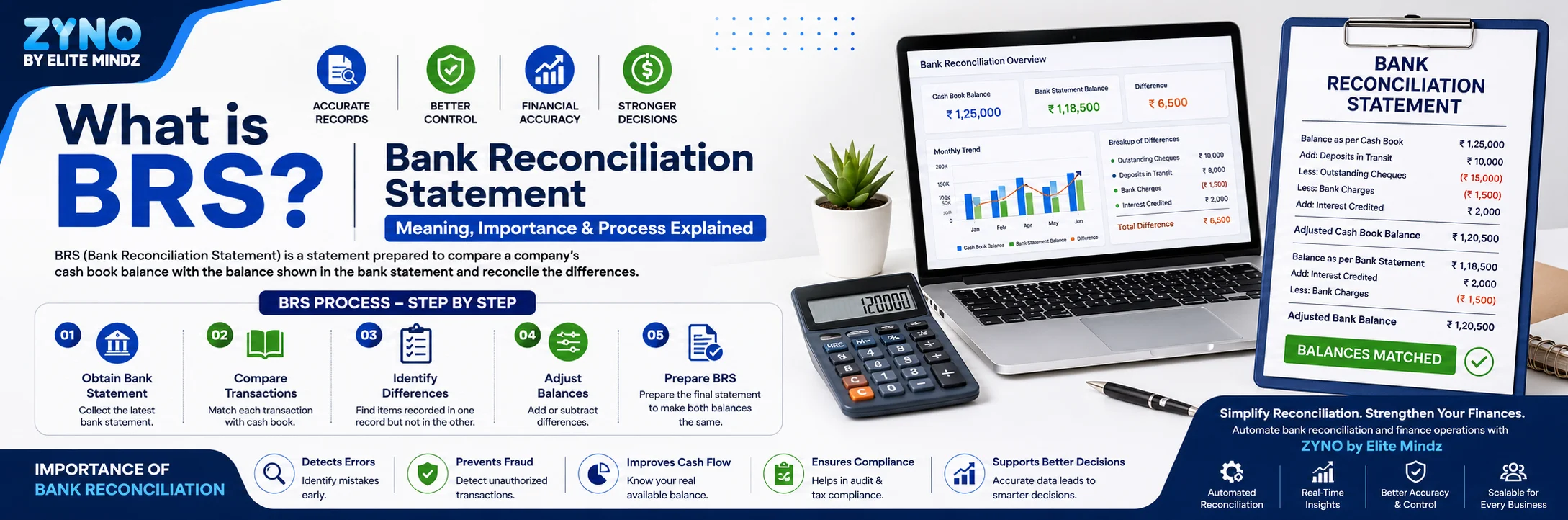
What is BRS? Bank Reconciliation Statement Meaning, Importance & Process Explained
Read More →
Best Mobile App Development Company in Delhi & Noida (2026 Guide)
Read More →
Voice Search SEO for Apps: The Complete Optimization Guide
Read More →
The Top 10 Supply Chain Management Systems (SCM) for 2026
Read More →
AI-Powered Custom Software Development: How Businesses Are Building Smarter Applications
Read More →
Why Enterprises Prefer Custom Software Development Over SaaS in 2026
Read More →
AI Chatbot Development Services: Everything Businesses Need to Know Before Investing in 2026
Read More →
Real Estate Software Development Services: A Complete Guide for Builders, Brokers & Developers (2026)
Read More →
Website Development Process: Full Guide by ZYNO Digital EliteMindz
Read More →
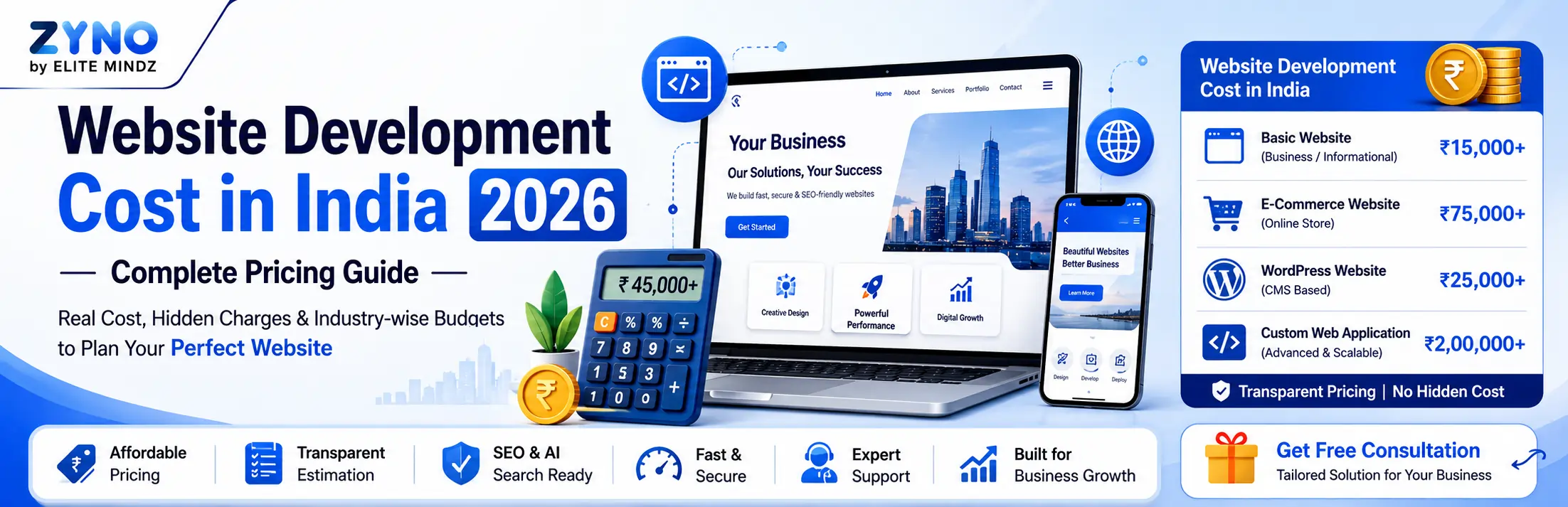
Website Development Cost in India (2026): Real Pricing, Hidden Costs & What You Actually Get
Read More →
WordPress vs Custom Website Development: Which Is Better in 2026?
Read More →Partner with ZYNO by Elite Mindz to revolutionize how your business works. Fill out the form, and we’ll reach out with AI-powered solutions made just for you.
We use browser cookies to ensure you get the best experience on our website. Learn more
The form was submitted successfully!
ZYNO Digital
Fueling Smarter Digital Growth
ZYNO Digital fuels smarter digital growth through data-driven marketing, creative storytelling, and performance strategies that boost visibility, engagement, and measurable business outcomes across global platforms.
ZYNO Tech
Engineering the Future of IT
ZYNO Tech delivers cutting-edge IT solutions — including web, mobile, and digital transformation services — helping businesses scale efficiently, innovate faster, and stay ahead in a connected world.
ZYNO AI
AI Built for Business Growth
ZYNO AI harnesses the power of artificial intelligence to automate processes, enhance decision-making, and deliver predictive insights — driving innovation, agility, and measurable business growth.
ZYNO by Elite Mindz
Your Partner in the AI-Powered Future
ZYNO by Elite Mindz offers AI-powered products and services that unify operations, boost productivity, and drive digital transformation — helping businesses scale smarter and innovate faster.
* In just 2 mins you'll get a response
* Your idea is 100% protected by our Non-Disclosure Agreement