Magento vs Shopify vs WooCommerce: Which Platform Wins in 2025?
Read More →

×
Every stage of custom software development, from discovery to deployment, works best when it's planned, not rushed. Talk to ZYNO about your project and get a clear, structured roadmap before development begins. Start Your Discovery Conversation →
Businesses using ZYNO Books cut accounting time by 70% and stay 100% ZATCA-compliant — automatically.
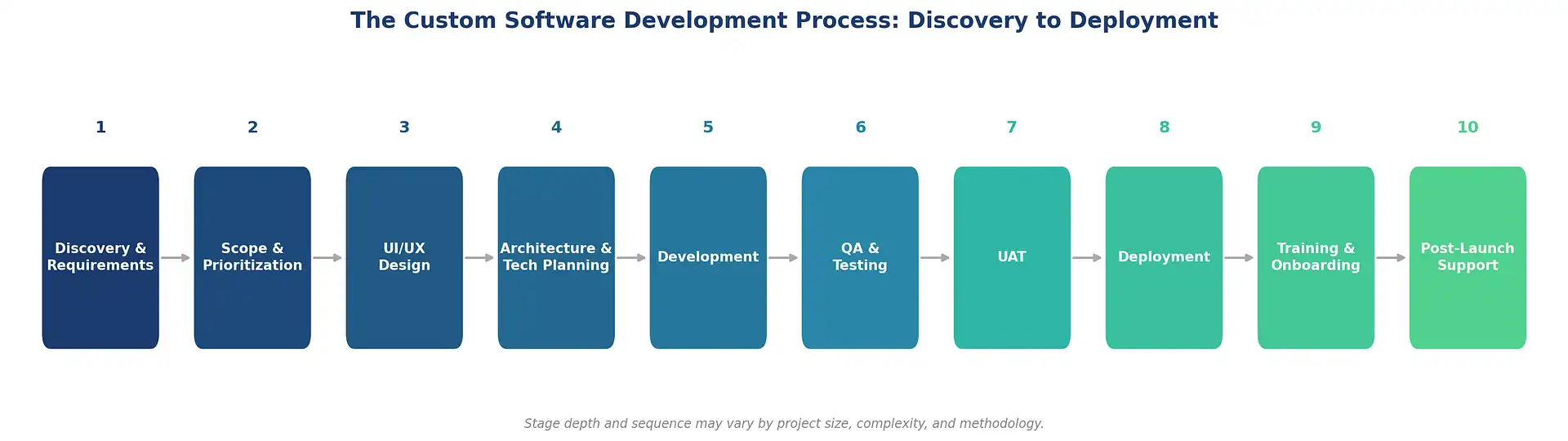
Short answer: the custom software development process moves through discovery and requirements analysis, planning and feature prioritization, UI/UX design, technical architecture, development, testing, deployment, and post-launch support. The exact sequence and depth of each stage shift depending on project size, complexity, business requirements, and the development methodology a team uses, but the underlying logic stays the same: understand the problem before you design, design before you build, and test throughout rather than only at the end.
Software development doesn't start with code. It starts with a business problem that needs a working solution, and a lot of decisions get made before a single line gets written. Skipping that groundwork is one of the most common reasons projects run over budget or ship something that technically works but doesn't fit how the business actually operates.
This article walks through the complete custom software development process, stage by stage, from the initial business conversation to the ongoing support that follows launch. It also covers realistic timelines, who's typically involved, what a client needs to prepare, common mistakes that derail projects, and how the process shifts for MVPs and legacy system modernization.
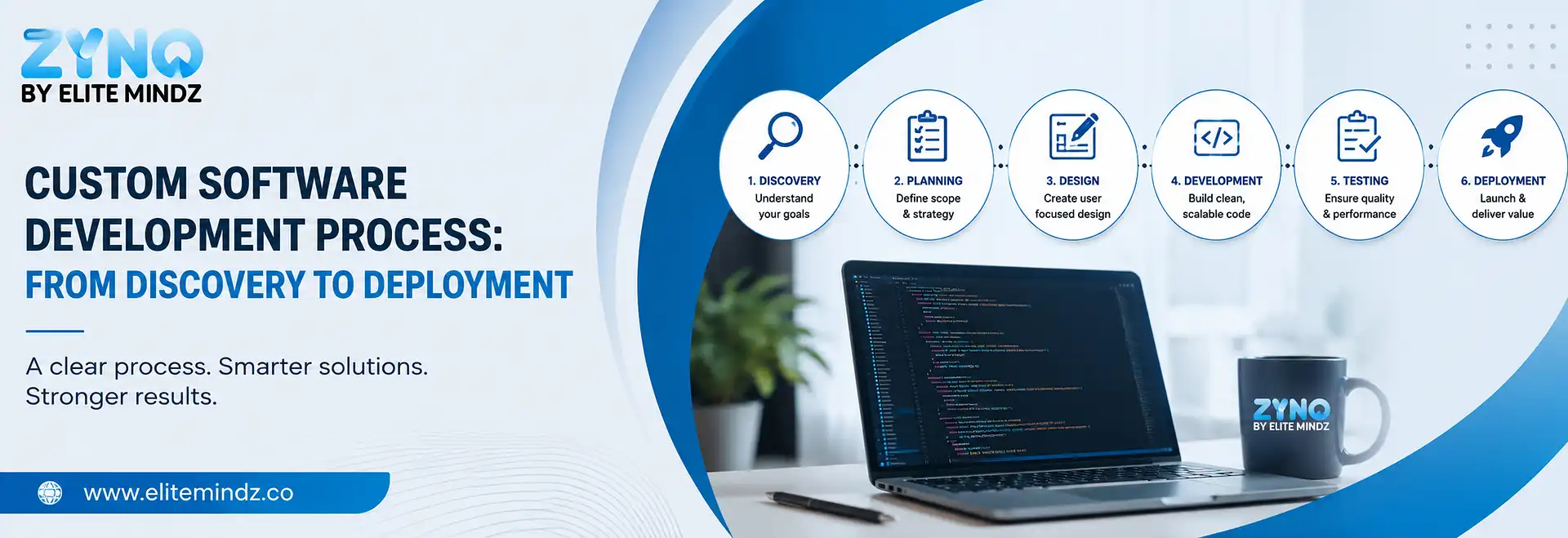
The custom software development process is the structured sequence a team follows to turn a business need into a working, deployed application. Generally, it includes discovery, requirements analysis, planning, UI/UX design, architecture and technology planning, development, testing, deployment, and ongoing support and optimization.
A typical process includes:
Ready to Build Software That Fits Your Business?
Turn your business idea into a scalable, secure, and high-performing custom software solution designed around your unique goals.
Explore Custom Software Development Talk to Our ExpertsThe table below gives a quick reference for what each stage is trying to accomplish and what it produces.
| Stage | Main Objective | Key Deliverables |
|---|---|---|
| 01 Discovery | Understand the business problem | Discovery findings, project goals |
| 02 Requirements | Define what the software must do | Requirements document, user stories |
| 03 Planning | Define scope and priorities | Roadmap, milestones |
| 04 UI/UX Design | Plan the user experience | Wireframes, prototypes, designs |
| 05 Architecture | Plan how the system will work | Technical architecture |
| 06 Development | Build the software | Working features |
| 07 Testing | Validate quality and performance | Test results, bug reports |
| 08 Deployment | Release the software | Production application |
| 09 Support | Improve and maintain the product | Updates, monitoring, optimization |
A sound custom software development process starts with the business problem, not with a list of technologies. Before anyone talks about frameworks or platforms, the real questions are more basic: what problem does the business want to solve, who experiences that problem day to day, what does the current workflow look like, what tools are already in use, where are the inefficiencies, and what outcome is the business actually expecting.
This stage exists to prevent a very specific failure mode: building software that works technically but doesn't solve the problem it was meant to solve. That happens more often than it should, usually because the team jumped to solution mode before fully understanding the situation.
Here's a practical example. A manufacturing business might approach a development partner asking for "a new application." But the real problem underneath that request is usually more specific: delayed production updates between shifts, manual reporting that eats up hours every week, poor visibility into inventory across warehouses, or systems that don't talk to each other. The software solution should be designed around that actual operational problem, not around a generic idea of what the business "should" have.
Discovery is where the business problem gets translated into something a development team can actually build against. It typically includes discovery workshops with stakeholders, interviews with the people who'll actually use the software, user research, workflow mapping, business process analysis, a technical feasibility check, and a review of any existing systems that need to connect to the new one.
During discovery, the team is trying to answer a specific set of questions:
Requirements coming out of discovery generally split into two categories.
Functional requirements describe what the system should do. For example: users can create orders, managers can approve requests, administrators can generate reports.
Non-functional requirements describe how the system should perform. This covers things like security, performance under load, scalability, availability, and any compliance obligations specific to the industry.
By the end of discovery, a well-run process should produce a concrete set of deliverables: business requirements, functional requirements, user personas, user journeys, workflow maps, an initial feature list, a preliminary technical assessment, documented assumptions, and a list of known risks and constraints. These documents become the reference point for every decision made in the stages that follow.
Have a Software Idea?
Let's transform your idea into a powerful digital product built for real-world business growth.
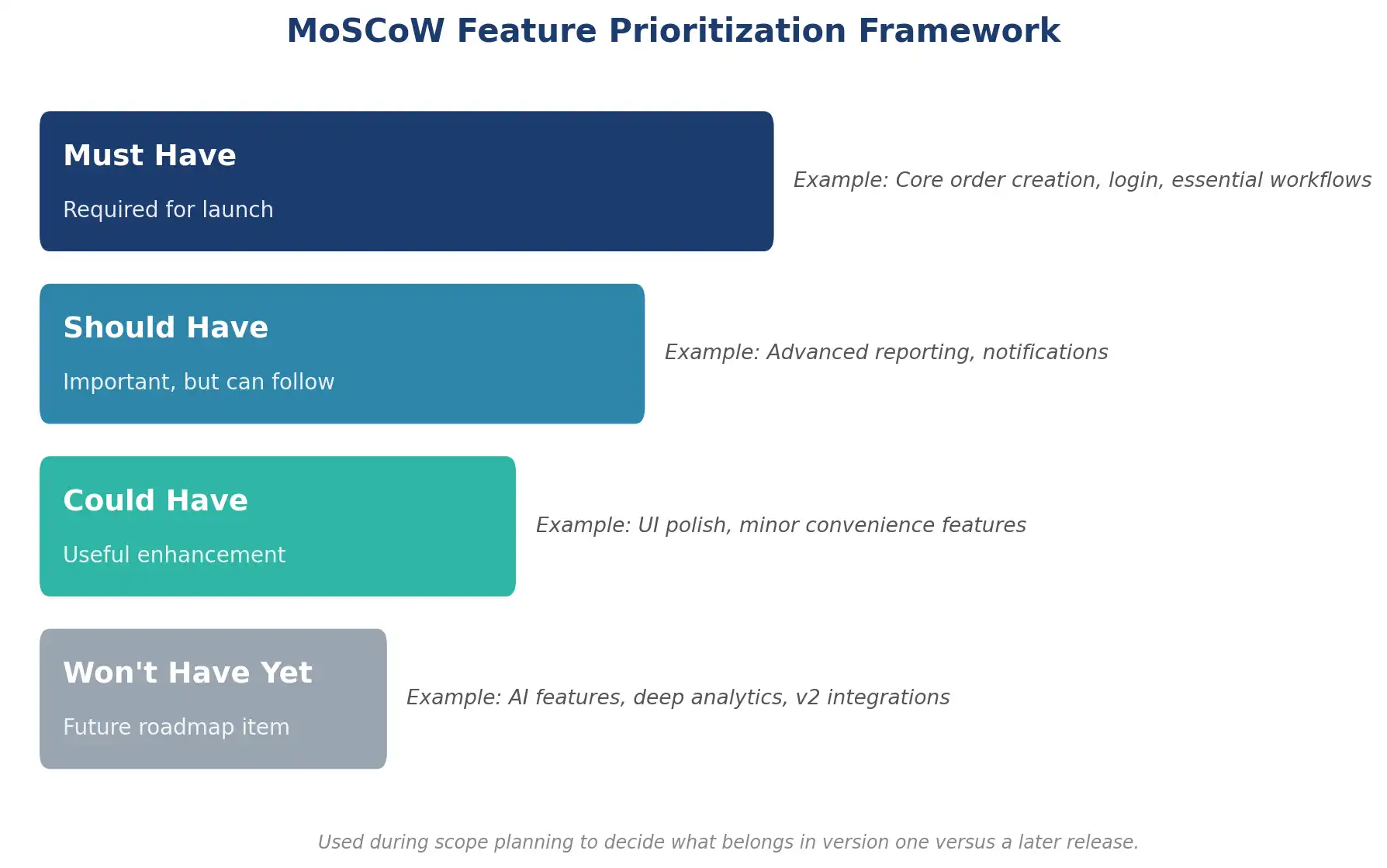
Not every feature that comes up during discovery belongs in version one. One of the more common ways projects go over budget or miss their timeline is trying to build every requested feature at once instead of sequencing them by actual importance.
A simple prioritization framework helps keep this manageable:
| Priority | Meaning |
|---|---|
| Must Have | Required for launch |
| Should Have | Important but can follow |
| Could Have | Useful enhancement |
| Won't Have Yet | Future roadmap item |
Sorting features this way, sometimes called MoSCoW prioritization, forces a conversation about what the software actually needs to do on day one versus what can wait for a later release. Good scope management reduces scope creep, keeps delays from compounding, protects the budget, and prevents the system from becoming more complex than the business actually needs at launch.
Before development starts, the team needs to figure out how the system is actually going to work, not just what it needs to do. This stage covers technical feasibility, system architecture, data architecture, API architecture, security architecture, infrastructure planning, and integration planning.
Several foundational decisions get made here: whether the product should be a web application, a mobile application, or both, whether it runs on cloud or on-premise infrastructure, whether the architecture should be monolithic or modular, how the database should be structured, what the API strategy looks like, and which third-party services the system will depend on.
Technology should be selected based on what the project actually requires, not based on what's trending. A stack chosen for its popularity rather than its fit tends to create friction later, either in hiring, performance, or long-term maintenance cost.
Design work translates requirements into something people can actually see and interact with before a single feature is coded. This stage covers user flows, wireframes, interactive prototypes, visual design, and often a broader design system if the product is going to grow over time.
It's worth being precise about the difference between the two disciplines involved. UX design is about how the product works: the logic of the workflows, the structure of the navigation, how users move from one task to the next. UI design is about how the product looks and feels: layout, typography, color, visual hierarchy.
Prototyping and usability testing at this stage matter because they surface confusing workflows or unclear navigation before development resources get committed to building them. Catching a usability problem in a wireframe costs a fraction of what it costs to catch the same problem after the feature has already been built and tested. Businesses that want a deeper look at how this stage is typically run can review our UI and UX design process for more detail.
This is the stage most people picture when they think of software development, but by the time it starts, a lot of the important decisions have already been made in discovery, planning, and architecture.
Development typically covers front-end development, back-end development, database development, API development, integration work, authentication, authorization, and the underlying business logic that makes the software actually function the way the requirements describe.
Many teams run this stage using Agile development, working in sprints: a prioritized backlog gets broken into short cycles of planning, building, review, and feedback, with the process repeating and adjusting as it goes. The advantage of this approach is that it builds regular feedback into the project instead of waiting until the very end to show the client something. Catching a misunderstanding in week three of a six-month project is a lot less costly than catching it in month five.
Have a Complex Business Challenge?
Get a custom software solution designed to improve efficiency, solve operational challenges, and support your business growth.
Testing shouldn't be something that only happens after development wraps up. It should run alongside development throughout the project, catching issues while they're still cheap to fix.
| Testing Type | What It Checks |
|---|---|
| 01 Functional Testing | Features work as expected |
| 02 Integration Testing | Systems work together |
| 03 Performance Testing | System handles expected load |
| 04 Security Testing | Vulnerabilities and access risks |
| 05 Usability Testing | Users can complete tasks |
| 06 Regression Testing | New changes do not break existing features |
| 07 UAT | Business stakeholders approve the solution |
QA's role throughout development is to catch problems close to where they were introduced. A bug found the same week it was written is a quick fix. The same bug found three months later, after other features have been built on top of it, can require significantly more rework to resolve.
User acceptance testing (UAT) is different from QA testing, and it's worth understanding why both matter. QA testing verifies that the software works correctly from a technical standpoint. UAT verifies that the software actually does what the business needs it to do, from the perspective of the people who'll use it every day.
During UAT, business users typically verify workflows match how the business actually operates, business rules are applied correctly, reports show the right data, permissions and access levels work as intended, and the data behaves correctly under real-world conditions.
UAT works best when it's based on realistic business scenarios rather than a generic checklist. A logistics company testing an inventory system should be testing it against an actual shipment scenario, not just clicking through screens to confirm buttons work.
Deployment is where the software moves from a controlled testing environment into the real world. There's an important distinction between three environments that matter throughout this stage: the development environment, where active coding happens; the staging environment, which mirrors production and is used for final testing; and the production environment, which is what actual users interact with.
Before and during deployment, a number of things need to be in place: the production environment itself, cloud infrastructure sized correctly for expected load, database setup, application configuration, security settings, domain and hosting configuration, any data migration from older systems, backup procedures, monitoring tools, and a rollback plan in case something goes wrong after release.
A basic deployment checklist should confirm: all critical bugs from QA and UAT are resolved, the production environment has been configured and tested, backups are in place, monitoring is active, a rollback plan exists, and the team has a communication plan ready in case users encounter issues immediately after launch.
This stage gets skipped or underweighted in a lot of process discussions, but it has a direct effect on whether a project is considered successful. A technically successful launch can still fail in practice if the people who are supposed to use the software don't actually adopt it.
This stage covers user training, administrator training, documentation, a knowledge base for ongoing reference, structured onboarding, change management, and internal communication about what's changing and why. Businesses that treat this as an afterthought often end up with users falling back on old spreadsheets or manual processes, even after paying for a working system.
Build. Scale. Innovate.
Turn Your Business Challenges Into Custom Software Solutions
From discovery and planning to development and deployment, our team helps you build software that supports your long-term business goals.
Build Your Custom SolutionLaunch is not the finish line. After deployment, the work shifts to monitoring, bug fixes, security updates, performance improvements, incorporating user feedback, building feature enhancements, adding new integrations as business needs change, and making scalability improvements as usage grows.
Software development is, in practice, an ongoing lifecycle rather than a one-time project. Systems that get treated as "done" after launch tend to accumulate technical debt and fall behind on security patches, which eventually becomes more expensive to fix than it would have been to maintain continuously.
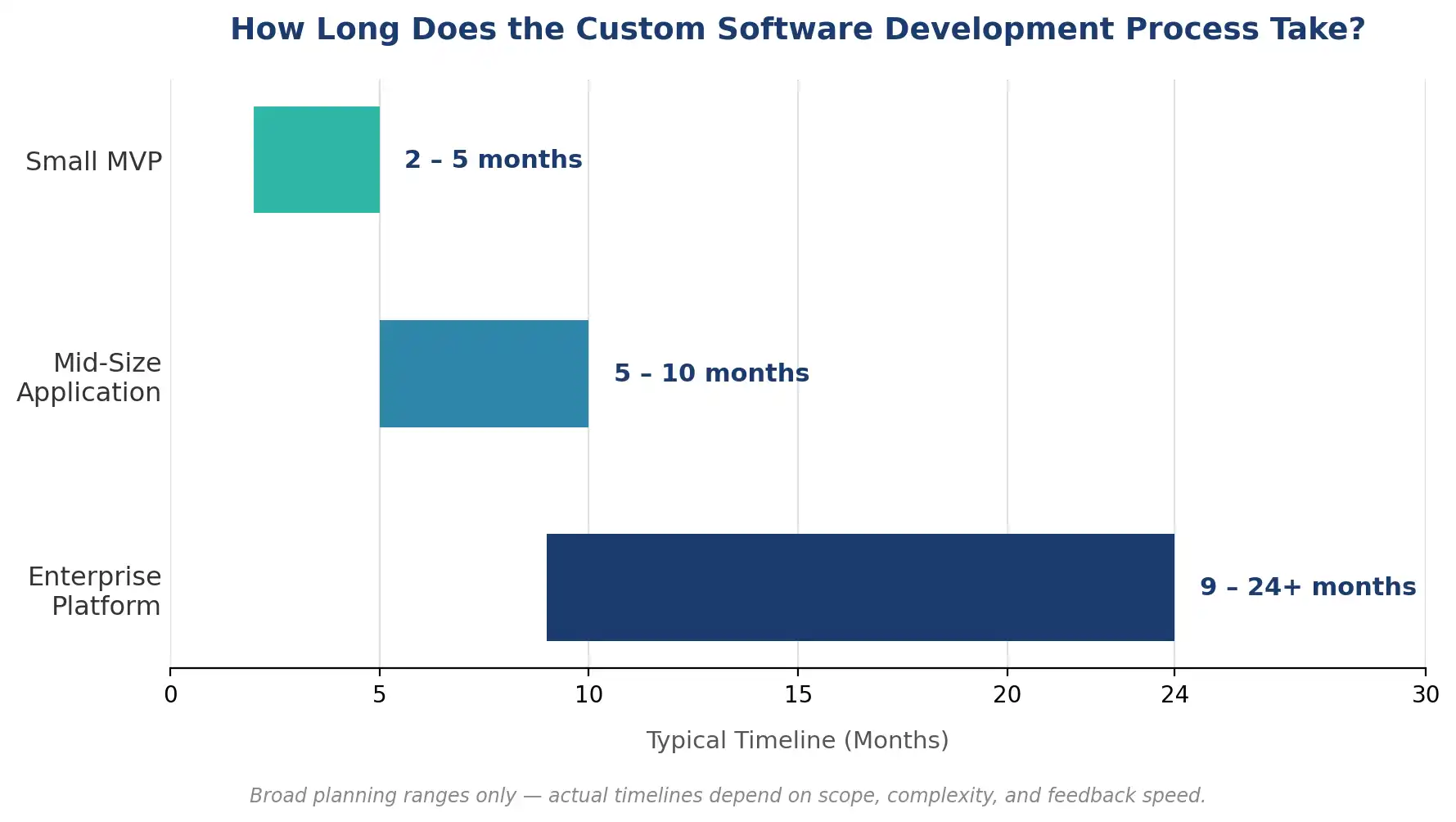
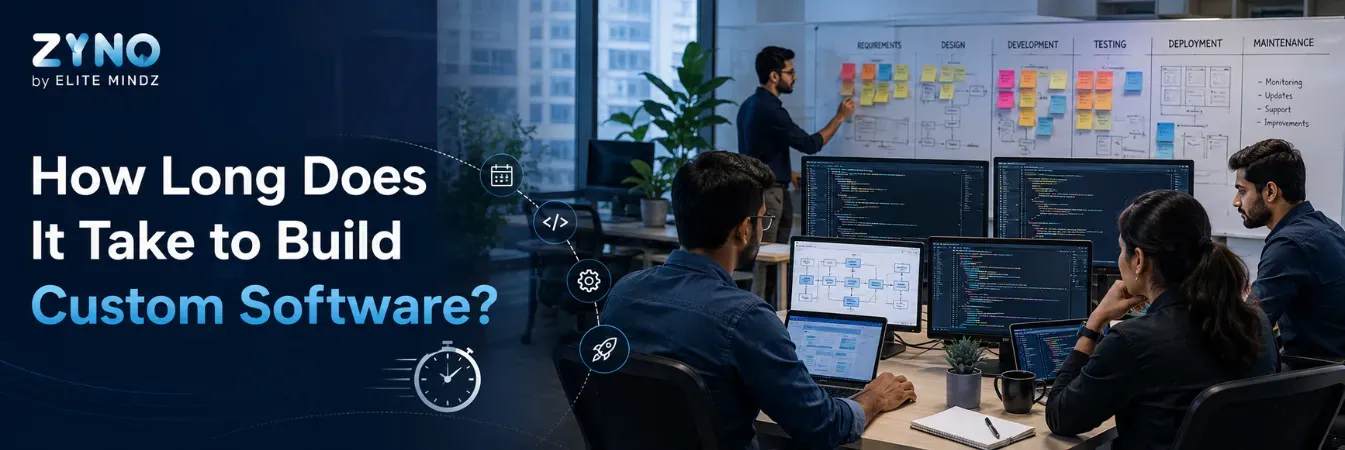
Timelines vary significantly by project type, but broad planning ranges look like this:
| Project Type | Typical Timeline |
|---|---|
| Small MVP | 2 to 5 months Approximately |
| Mid-size Application | 5 to 10 months Approximately |
| Enterprise Platform | 9 to 24+ months Approximately |
These are planning ranges, not guaranteed delivery dates. Actual timelines depend on scope, the number of features, integration complexity, team size, how quickly stakeholders provide feedback, technical complexity, security requirements, the depth of testing needed, and whether data migration is involved. No development partner should promise a fixed timeline before completing discovery.
A project typically draws on some combination of the following roles, though not every project needs every role staffed full-time: a business analyst who translates business needs into requirements, a product or project manager who keeps the project on track, a solution architect who designs the technical system, UI/UX designers, front-end and back-end developers, mobile developers where relevant, QA engineers, and DevOps engineers who handle infrastructure and deployment.
Team composition should be matched to actual project complexity. An MVP might run with a small, cross-functional team, while an enterprise platform typically needs dedicated specialists across each of these areas working in parallel.
Businesses that come into a project with clear inputs tend to move through discovery faster and with fewer surprises later. It helps to have a working sense of: business goals for the project, who the target users are, current workflows and pain points, existing systems that need to connect to the new software, a rough sense of feature priorities, known integration requirements, any security or compliance obligations, realistic budget expectations, timeline expectations, and confirmed availability from the stakeholders who'll need to weigh in during discovery and review.
None of this needs to be perfectly documented before the first conversation. But faster feedback and clearer initial input generally translate into a more efficient project, since ambiguity resolved early is far cheaper than ambiguity discovered mid-build.
A number of recurring mistakes show up across software projects, regardless of industry:
Each of these tends to compound. Skipping discovery makes scope creep more likely. Delaying security work makes it more expensive to retrofit. None of them are fatal on their own, but together they're a reliable way to blow a budget and a timeline.
An MVP approach tends to make the most sense in a few specific situations: testing a new product idea before committing to full development, validating real market demand, working with a limited initial budget, facing genuine uncertainty about what users actually want, or needing early feedback before scaling up investment.
It's worth being clear about what an MVP actually is. It's not simply a stripped-down, lower-quality version of the eventual product. A well-scoped MVP is a focused build that tests the most important business assumptions with real users, using the same discovery and prioritization process described above, just applied to a smaller feature set. For businesses weighing whether to start here, our MVP and POC development process follows the same discovery-first approach described in this article, scaled to a smaller initial scope. Whether a build starts as an MVP or a full-scope enterprise project, the same principle applies: the software should be built around the business's actual workflows, data structure, compliance requirements, and integration landscape, not the other way around.
Modernizing an existing system follows the same core lifecycle, but with additional groundwork upfront. Legacy modernization typically requires a system assessment, a review of the existing codebase, data analysis, dependency analysis to understand what the old system connects to, integration mapping, a migration plan, and often a phased approach rather than a single cutover.
Organizations generally choose from a handful of modernization strategies: rebuilding the system from scratch, replatforming it onto new infrastructure with minimal code changes, refactoring the existing code incrementally, replacing it entirely with a new solution, or modernizing gradually in stages to reduce disruption to daily operations. Which approach fits best depends on the age and condition of the existing system, how critical it is to daily operations, and how much risk the business can tolerate during the transition. Our legacy modernization approach starts with that same assessment step before recommending a path forward.
ZYNO by Elite Mindz works across the stages described in this article, supporting businesses from initial discovery through post-launch improvement.
Discovery and Business Analysis. Understanding business goals, current workflows, target users, and technical requirements before any design or development work begins.
Product and MVP Development. Helping businesses validate ideas and build focused first versions through our MVP and POC development process.
UI and UX Design. Designing workflows, interfaces, prototypes, and overall user experience through our UI and UX design services.
Custom Software Development. Building tailored applications around documented business requirements through our custom software development services.
Legacy Modernization. Helping businesses assess older systems and plan a modernization path through our legacy modernization services.
Testing and Deployment. Supporting quality assurance, release preparation, and production readiness as part of the same engagement rather than as a separate handoff.
Ongoing Support. Supporting updates, feature improvements, new integrations, and scalability work as the business and its requirements evolve.
Following this kind of end-to-end process, rather than treating each stage as a separate, disconnected engagement, tends to produce a few practical benefits: better alignment between business goals and the technology being built, clearer project scope from the start, more structured development, earlier identification of technical risk, a better overall user experience, improved scalability as the business grows, and continued improvement after launch instead of the project simply ending at deployment. None of this guarantees a specific outcome for every project, but it's the structural difference between treating software development as "writing code" and treating it as a disciplined, business-aligned process.
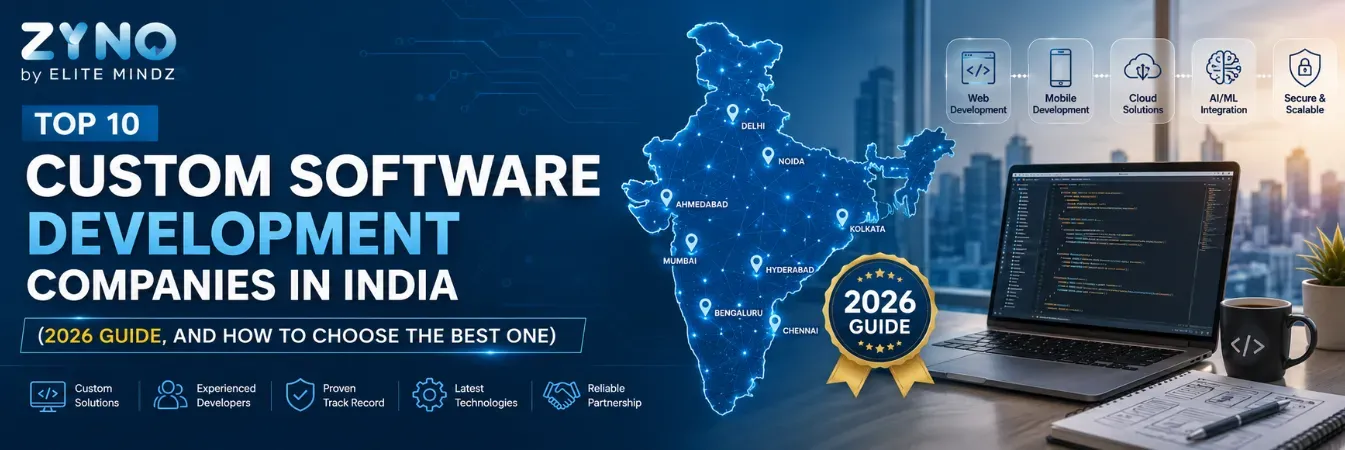
For businesses currently comparing this kind of custom build against off-the-shelf SaaS tools, it's worth reading through the tradeoffs in more detail: Why Enterprises Prefer Custom Software Development Over SaaS. And for businesses still evaluating potential partners, our breakdown of the top software development companies in India covers what to look for beyond price.
Need Software Built Around Your Business?
Get expert guidance to plan, design, develop, and scale a custom software solution that matches your business requirements.
Discuss Your Project Learn More →The first step is understanding the business problem, not selecting a technology. This happens through an initial consultation and discovery phase where the team identifies who experiences the problem, what the current workflow looks like, and what outcome the business actually needs.
Most professional processes include somewhere between 8 and 11 distinct stages, depending on how granularly they're broken out. At a minimum, this covers discovery, planning, design, architecture, development, testing, deployment, and support, with UAT, training, and onboarding often broken out as their own steps.
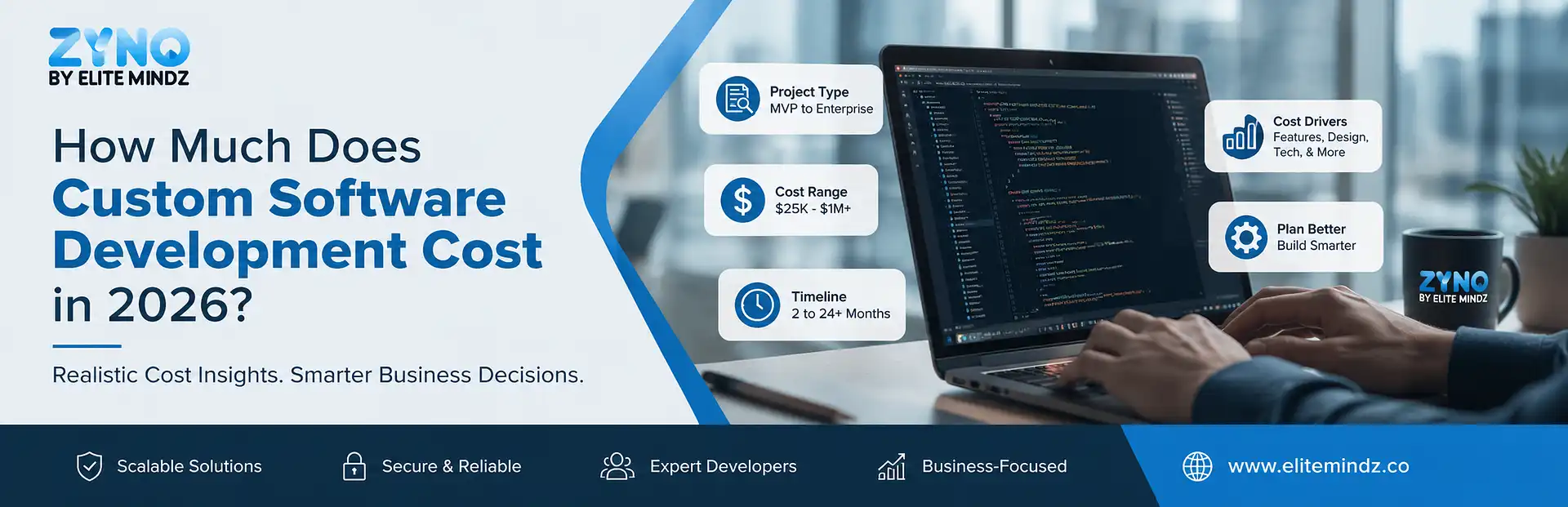
Timelines depend heavily on project scope. A small MVP typically takes 2 to 5 months, a mid-size application 5 to 10 months, and an enterprise platform 9 to 24 months or longer. These are planning ranges rather than fixed commitments, since actual timelines shift based on complexity and how quickly feedback comes back from stakeholders.
Discovery involves stakeholder interviews, user research, workflow mapping, and technical feasibility review to translate a business problem into documented requirements. It produces deliverables like a requirements document, user personas, workflow maps, and an initial feature list that guide every later stage of the project.
UI/UX design surfaces usability problems in wireframes and prototypes before development resources are committed to building them. Catching a confusing workflow at the design stage is significantly cheaper than discovering it after the feature has already been coded and tested.
Testing should happen throughout development, not only at the end. Running functional, integration, and security testing alongside development catches issues while they're still inexpensive to fix, rather than letting them accumulate until a single testing phase before launch.
After deployment, the team shifts into monitoring, bug fixes, security updates, and gathering user feedback to guide future improvements. Post-launch support also typically includes performance optimization, new feature development, and adjustments to integrations as business needs evolve.
Most startups benefit from starting with an MVP, since it validates the core business idea with real users before committing to a full-scale build. An MVP should still go through the same discovery and prioritization process as a larger project, just applied to a smaller, more focused feature set.
Development is the process of designing, building, and testing the software before it's released. Deployment is the specific act of releasing that finished software into a live production environment where actual users can access it.
Evaluate a potential partner on technical expertise relevant to your project, a portfolio of comparable work, a clear and structured delivery process, sound security practices, transparent pricing, and what post-launch support is actually included. A company that walks you through discovery before quoting a price is generally a stronger signal than one offering a number based on a one-line description.
Thinking through a software project? The clearest way to move from an idea to a realistic plan is a structured discovery conversation covering your business goals, target users, current workflows, and integration needs. If you're ready to talk through what that process would look like for your project, our custom software development services page is a good starting point.
Magento vs Shopify vs WooCommerce: Which Platform Wins in 2025?
Read More →
SEO vs Google Ads: Which One Drives Better Results in 2025?
Read More →
Top 10 E-commerce Development Agencies for D2C Brands in India
Read More →
Top Mobile App Development Companies in India (2025 Edition)
Read More →
Top Mobile App Development Companies in Nigeria (2025)
Read More →
Hire Mobile App Developers in India: What You Need to Know
Read More →
Top E-commerce Development Companies in Africa (2025 Edition)
Read More →
Best Mobile App Development Companies in UAE (2025 Edition)
Read More →
Best Digital Marketing Services for Small Businesses in India
Read More →
Best eCommerce Development Companies in Dubai (2025)
Read More →
Top Mobile App Development Companies in Kenya (2025)
Read More →
Top 10 Digital Marketing Companies in the UAE for 2025
Read More →
Best Digital Marketing Companies in Dubai (2026)
Read More →
Best Digital Marketing Companies in Qatar 2026 List
Read More →
AI-Powered 5G Mobile Apps: Revolutionizing User Experiences in 2025
Read More →
Top Mobile App Development Firms in Africa (2026): Innovators Driving Digital Transformation
Read More →
Top Mobile App Development Firms in Nigeria (2025): Innovators Powering Digital Growth
Read More →
Top Mobile App Development Firms in Kenya (2025): Innovators Driving Digital Transformation
Read More →
IoT and Mobile Apps: Creating a Connected Ecosystem in 2025
Read More →
How AI Is Reshaping Mobile App Development in 2025
Read More →
Security Trends in Mobile Apps: What Developers Need to Know in 2026
Read More →
Mobile App Security in 2025: Protecting User Data in an AI World
Read More →
10 AI-Powered Features Your Mobile App Needs in 2026
Read More →
Mobile App Development Trends to Watch in 2025 with Elite Mindz
Read More →
The Future of Mobile UX: Motion Design & Touchless UI in 2025
Read More →
What Next in Mobile App Tech for 2026 and Beyond
Read More →
Building Apps for the Foldable Device Revolution in 2025
Read More →
Accessibility in Mobile Apps: A 2025 Imperative
Read More →
Hire a Developer with Elite Mindz: Global Demand in 2025
Read More →
Voice Search Optimization 2025: Prepare Apps for the Conversational Web
Read More →
Why Nairobi Is Africa's Hottest Mobile App Hub in 2025
Read More →
Why Singapore Trusts Elite Mindz for Developer Hiring in 2025
Read More →
EliteMindz Mobile App Services for Addis Ababa in 2026
Read More →
EliteMindz ECommerce Solutions Boosting Global Sales in 2026
Read More →
EliteMindz Developer Services Power London Tech in 2026
Read More →
How New York Firms Leverage Elite Mindz Talent in 2025
Read More →
How New Delhi Entrepreneurs Scale with Elite Mindz E-Commerce in 2025
Read More →
Low-Code vs. Custom: Choosing the Right Mobile Path in 2025
Read More →
What Latin American E-Commerce Buyers Expect in 2025
Read More →
AI Powered Digital Marketing: 2026 Lead Generation with EliteMindz
Read More →
Merging AI SEO and Paid Media: A GEO-Driven Strategy for the AI Search Era
Read More →
How Extended Reality (XR) Is Transforming Mobile Apps in 2025
Read More →
Nairobi Tech Hub in 2026: Why It's Africa's Undisputed Mobile App Development Powerhouse
Read More →
Ultimate Guide to Digital Marketing Strategies in 2025: Actionable Insights to Drive Growth
Read More →
Mobile App Development in Nairobi: Trends & Opportunities in 2025
Read More →
Mastering AI-Driven SEO: Your Survival Guide for 2025 and Beyond
Read More →
African Emerging Cities: Mobile App Trends to Watch in 2025
Read More →
Elite Mindz Developer Hiring Trends Across Continents 2025
Read More →
Google Ads Update 2025: Smarter Campaign Management with Checkbox Filters
Read More →
xAI’s Grok Code Fast 1: Transforming Agentic AI for Enterprise Software
Read More →
Mobile App Innovation Trends to Lead in 2025
Read More →
Why Generic Login Pages Confuse Google & Damage SEO
Read More →
The Rise of Social Commerce: Shoppable Apps in 2025
Read More →
Always-On Audits: The Future of Technical SEO Maintenance
Read More →
5G and App Development: Speed & Performance Unlocked in 2025
Read More →
Internal Linking for SEO: Why It Matters and How to Do It Right
Read More →
Mastering SEO in a Fractured Search Landscape: New AI-First Rules for 2025
Read More →
Layered SEO 2025: The 4-Step System to Win AI Search and User Trust
Read More →
Google Antitrust Case: AI Overviews Shift to FastSearch Over Links in 2025
Read More →
Mastering AI Search: Elevate Your Brand Through Superior Website Wellness
Read More →
Tokyo's Retail Market & Elite Mindz in 2026
Read More →
Elite Mindz Holistic Growth Playbook for 2025: Unlocking Sustainable Business Success
Read More →
Top Mobile App Development Firms in the U.K. (2025)
Read More →
GEO Meets Local SEO: Revolutionizing Business Discovery in the AI Era
Read More →E-Commerce App Strategies 2025 in Nairobi and Lagos
Read More →
Mobile App Strategies that Work in Cairo 2025
Read More →
Best Practices for Mobile App Development in Malaysia with Elite Mindz
Read More →
Top Features Malaysian Businesses Should Add in Their Mobile Apps
Read More →
Top Mobile App Development Firms in Germany (2025)
Read More →
Top Mobile App Development Firms in France (2025)
Read More →
No-Code vs Custom Development in 2026: What’s Right for Your Business?
Read More →
10 Industries Being Transformed by ML in 2025
Read More →
How Remote Hiring Changed the Global Developer Landscape
Read More →
Low Code Myths vs Reality
Read More →
Top 10 Developer Hiring Mistakes to Avoid in 2025
Read More →
Hire Dedicated Developers vs Freelancers: Pros & Cons
Read More →
Top Mobile App Development Firms in Saudi Arabia (2026)
Read More →
Top Mobile App Development Firms in Kuwait (2025)
Read More →
Top Mobile App Development Firms in UAE (2025)
Read More →
Top Mobile App Development Firms in Qatar (2026)
Read More →
Top 3 Mobile App Development companies in South Africa for iOS and Android
Read More →
Top Mobile App Development Companies in the USA 2025: Building Innovative Apps for Every Business
Read More →
Taxi Booking App Development Company in the Middle East
Read More →
Developer Hiring Platforms Compared: Finding the Right Fit for Startups and Enterprises
Read More →
Effective Mobile App Monetization Strategies That Work in 2025
Read More →
Why Riders Prefer Taxi Booking App Over Traditional Calls
Read More →How Mobile Apps Are Transforming Pet Care Management in the USA
Read More →
The Complete Step-by-Step Guide to Compliance Software Every Business Needs Now
Read More →How Global Capability Centers Are Shaping the Future of Work
Read More →A New Chapter Begins in 2026: ZYNO’s AI-Powered Software Redefining the IT Landscape
Read More →What is Offshore Outsourcing Services: A Complete Guide
Read More →The Role of AI and Cloud in Modern Custom Application Development
Read More →Top Mobile App Development company in India 2026- ZYNO Tech
Read More →A complete guide to build a mobile app for your travel business
Read More →Cybersecurity & Compliance: The New Pillars of Global Capability Centers
Read More →A Practical Guide to Choose the Right B2B Mobile App Development Partner
Read More →
Android App Development for Fintech in UAE: The Complete 2026 Guide
Read More →
Complete Guide to Healthcare App Development in 2026: Features, Process, Costs, Types
Read More →
Top 10 Android App Development Companies in India That Are Dominating 2026
Read More →
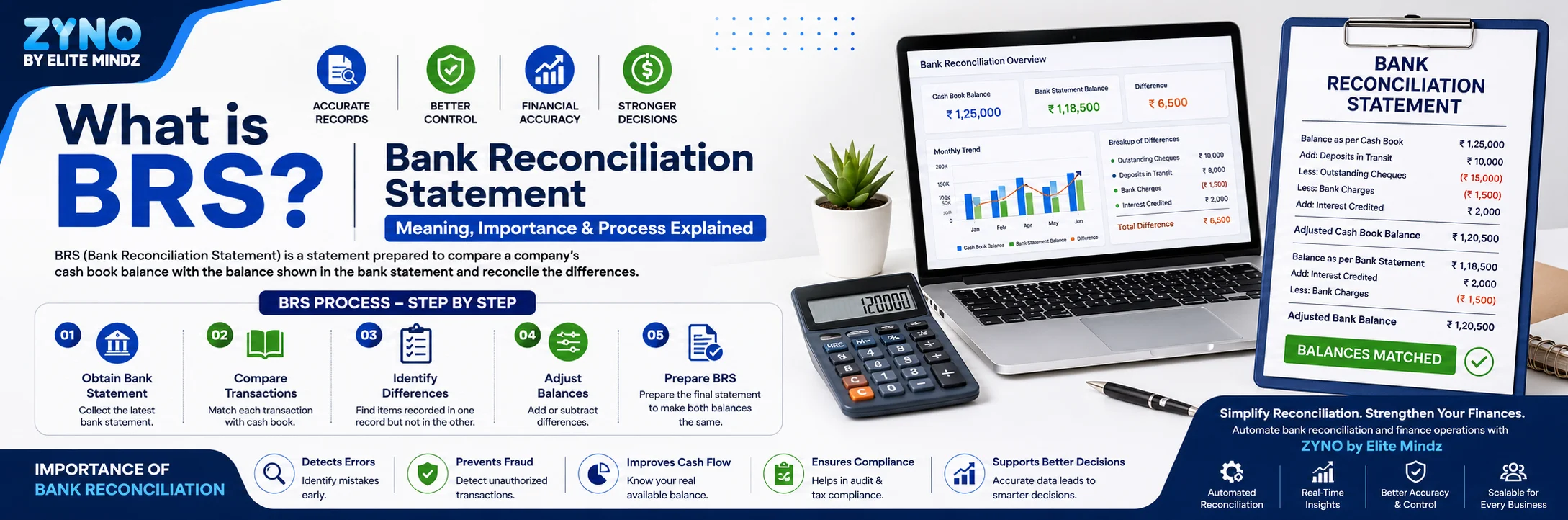
What is BRS? Bank Reconciliation Statement Meaning, Importance & Process Explained
Read More →
Best Mobile App Development Company in Delhi & Noida (2026 Guide)
Read More →
Voice Search SEO for Apps: The Complete Optimization Guide
Read More →
The Top 10 Supply Chain Management Systems (SCM) for 2026
Read More →
AI-Powered Custom Software Development: How Businesses Are Building Smarter Applications
Read More →
Why Enterprises Prefer Custom Software Development Over SaaS in 2026
Read More →
AI Chatbot Development Services: Everything Businesses Need to Know Before Investing in 2026
Read More →
Real Estate Software Development Services: A Complete Guide for Builders, Brokers & Developers (2026)
Read More →
Website Development Process: Full Guide by ZYNO Digital EliteMindz
Read More →
Website Development Cost in India (2026): Real Pricing, Hidden Costs & What You Actually Get
Read More →
WordPress vs Custom Website Development: Which Is Better in 2026?
Read More →
Custom Software Development vs Off-the-Shelf Software: Which Is Right for Your Business in 2026?
Read More →
Digital Transformation Strategies for Mid-Market Companies in India
Read More →
How Should a Mid-Sized Indian Company Prioritize Technology Investments During Digital Transformation
Read More →
Common Challenges Mid-Market Businesses in India Face When Implementing Digital Transformation
Read More →
How Do Mid-Market Companies in India Measure the Success of Their Digital Transformation Initiatives
Read More →
What Role Does Leadership and Change Management Play in Driving Digital Transformation in Mid-Sized Indian Companies
Read More →
Mobile App Development Trends for 2026: What Every Business Needs to Know
Read More →
Best AI Software Manufacturer & Software Development Company in Kenya
Read More →
Hire Mobile App Developers in Kenya: Complete 2026 Guide to Finding the Right Development Team
Read More →
How Much Does Custom Software Development Cost in 2026?
Read More →
Custom Software Development Process: From Discovery to Deployment
Read More →Partner with ZYNO by Elite Mindz to revolutionize how your business works. Fill out the form, and we’ll reach out with AI-powered solutions made just for you.
We use browser cookies to ensure you get the best experience on our website. Learn more
The form was submitted successfully!
ZYNO Digital
Fueling Smarter Digital Growth
ZYNO Digital fuels smarter digital growth through data-driven marketing, creative storytelling, and performance strategies that boost visibility, engagement, and measurable business outcomes across global platforms.
ZYNO Tech
Engineering the Future of IT
ZYNO Tech delivers cutting-edge IT solutions — including web, mobile, and digital transformation services — helping businesses scale efficiently, innovate faster, and stay ahead in a connected world.
ZYNO AI
AI Built for Business Growth
ZYNO AI harnesses the power of artificial intelligence to automate processes, enhance decision-making, and deliver predictive insights — driving innovation, agility, and measurable business growth.
ZYNO by Elite Mindz
Your Partner in the AI-Powered Future
ZYNO by Elite Mindz offers AI-powered products and services that unify operations, boost productivity, and drive digital transformation — helping businesses scale smarter and innovate faster.
* In just 2 mins you'll get a response
* Your idea is 100% protected by our Non-Disclosure Agreement