×
Why enterprises are ditching SaaS for custom software - better control, deeper integrations, stronger compliance, and lower long-term costs. Built for your workflows, not everyone else's.
Businesses using ZYNO Books cut accounting time by 70% and stay 100% ZATCA-compliant — automatically.

SaaS changed how businesses buy software - faster deployment, lower upfront cost, no maintenance headaches. For early-stage companies, it was a revolution.
But for enterprises operating at scale? The cracks start to show quickly.
When your processes are complex, your data is sensitive, and your teams span multiple departments, generic SaaS platforms create more friction than they solve. That’s why enterprise leaders across industries are turning to custom software development - not as a luxury, but as a strategic necessity.
This article explains the business case, the real cost comparison, and the industries where enterprise custom software delivers the clearest competitive advantage. We will also walk through a real-world style case study, a practical migration roadmap, and where AI fits into the next phase of enterprise software development, so you leave with a complete picture rather than just a sales pitch.
Enterprise custom software development means building applications specifically designed around your business - your workflows, your data structure, your compliance requirements, and your integration landscape.
Unlike off-the-shelf SaaS products built for a broad audience, custom enterprise software is engineered to do exactly what your organization needs, nothing more, nothing less.
It can include custom CRM systems, HR and workforce management platforms, procurement and finance tools, ERP systems, healthcare information systems, and AI-powered automation - all built to connect seamlessly across your organization.
It is worth noting that custom software development is not a single product category. It spans a spectrum, from fully bespoke platforms built from the ground up, to modular enterprise software built on proven components and then tailored to your workflows. Most enterprises land somewhere in the middle, which is exactly why choosing the right software development company matters as much as choosing custom over SaaS in the first place.
SaaS is not inherently bad. For many small businesses and early-stage startups, it remains the right choice. But enterprises face a different reality.
SaaS products are designed for the widest possible user base. That means your team adapts to the tool - not the other way around. At enterprise scale, forcing unique workflows into standardized templates causes inefficiency, workarounds, and shadow IT.
Most enterprises use 5 to 15 different SaaS tools across departments. Each tool holds its own data, and connecting them is expensive, fragile, and incomplete. Reporting becomes unreliable. Decision-making slows down.
A SaaS platform that costs $50 per user per month becomes $600,000 per year for a 1,000-person organization - before add-ons, premium support tiers, or module upgrades. Custom software, by contrast, is a capital investment that depreciates rather than a recurring operational drain.
SaaS vendors offer configuration, not true customization. When your process requires logic that falls outside the vendor’s roadmap, you’re stuck waiting - or paying for expensive workarounds.
Enterprises in healthcare, finance, legal, and government often need complete control over where data lives, who can access it, and how it is audited. SaaS vendors serve many clients simultaneously, which limits how far they can accommodate your specific compliance posture.
Once your operations depend entirely on a SaaS vendor's roadmap, pricing model, and release schedule, you lose leverage. Price increases, feature deprecations, and forced migrations become things that happen to you rather than decisions you make. Enterprise custom software development removes that dependency by putting the roadmap back in your hands.
Also read - Top 10 Supply Chain Management Systems (SCM) for 2026
Not sure whether your organization has hit that tipping point? These are the patterns we see most often in enterprises that are ready to move from SaaS to custom software development.
If two or more of these sound familiar, it is a strong signal that a conversation about custom enterprise software solutions is overdue.
One of the most common objections to custom software development is upfront cost. Here is what the full picture actually looks like.
| Factor | SaaS | Custom Software |
|---|---|---|
| Initial Cost | Low | Higher |
| Per-user Fees | Ongoing and scaling | None after build |
| Customization | Limited | Complete |
| Integration Depth | Partial | Full |
| Data Ownership | Vendor-controlled | Yours |
| Scalability Cost | Rises with users | Flat or controlled |
| Compliance Flexibility | Limited | Full |
| Long-term TCO | Higher | Lower |
For most enterprises, the break-even point for custom software falls between 18 and 36 months - after which the savings from eliminated license fees and reduced workaround costs begin compounding.
There is also a hidden cost most SaaS comparisons leave out entirely, the cost of your team's time. Every hour spent building manual workarounds, reconciling data between disconnected tools, or waiting on a vendor's support queue is an hour not spent on work that actually grows the business. When you factor in labor cost alongside subscription fees, the real gap between SaaS and enterprise software development often widens even faster than the numbers above suggest.
Your software reflects how your business actually works - not how a product team imagined a generic business might work. Approval flows, role hierarchies, reporting structures, and edge cases are all accounted for.
You control where your data is stored, how it is accessed, and how long it is retained. This is critical for enterprises subject to GDPR, HIPAA, SOC 2, or industry-specific compliance frameworks.
Custom software can connect to your ERP, HRMS, CRM, finance platforms, procurement systems, and third-party APIs without relying on fragile middleware or expensive connector tools.
Instead of adapting your process to fit a SaaS automation engine, you define exactly what triggers what - from multi-level approval chains to AI-powered exception handling.
As your organization grows, your software grows with it. You are not subject to per-seat pricing increases, feature paywalls, or product pivots by a SaaS vendor.
Talk to our enterprise software development team before you renew your next SaaS contract. We will map your current stack, show you where the hidden costs are hiding, and give you an honest recommendation, even if that means staying on SaaS a while longer.
Custom software development pays off fastest in industries where workflows are complex, regulated, or simply too specific for a one-size-fits-all SaaS tool to handle well.
Patient record management, clinical workflows, billing, insurance reconciliation, and regulatory compliance all require highly specific logic. Off-the-shelf systems either overpromise or require expensive configuration. Custom HIMS platforms give hospitals and clinics full control.
Production planning, shop-floor tracking, inventory management, and quality control involve process logic that varies significantly between manufacturers. Custom ERP and MES solutions reflect the real flow of materials and work orders.
Multi-step approval workflows, vendor management, spend controls, and audit trails in finance require precision. Generic platforms rarely support the complexity of enterprise procurement governance.
Hiring pipelines, onboarding flows, attendance systems, leave policies, payroll integrations, and performance cycles differ dramatically across organizations. Custom HRMS platforms eliminate the compromises that generic HR tools force.
Contract lifecycle management, regulatory tracking, legal matter management, and risk frameworks require custom logic that standard SaaS tools cannot provide without heavy configuration or expensive third-party plugins.
Inventory, fulfilment, loyalty programs, and customer data management all become bottlenecks when you outgrow standard platforms. Custom software integrates everything into a unified operating layer.
To make this less abstract, here is a composite example based on the kind of engagement patterns we see repeatedly across enterprise clients moving off fragmented SaaS stacks.
A mid-market manufacturing enterprise came to our team running seven separate SaaS tools across procurement, inventory, quality control, and finance. None of the tools spoke to each other natively. Their operations team was manually re-entering data across systems every week, and month-end reporting regularly slipped by several days because numbers had to be reconciled by hand.
Our team started with a discovery phase mapping their actual procurement-to-payment workflow, not the workflow their SaaS tools assumed they had. From there, we built a unified custom enterprise software solution on the ZYNO Manufacturing ERP foundation, connecting procurement, inventory, quality control, and finance into a single system with role-based access and full audit trails.
The result was a single source of truth instead of seven disconnected ones, automated data flow that eliminated most manual re-entry, and a reporting cycle that shrank from days to hours. Just as importantly, the enterprise stopped paying for six separate subscription renewals and instead owns a platform that scales with them as they grow.
This is the kind of outcome enterprise custom software development is built to deliver, not a flashier interface, but fewer silos, less manual work, and a system that actually matches how the business runs.
It would be incomplete to talk about enterprise software development in 2026 without talking about AI. The businesses getting the most value from AI right now are not the ones bolting a chatbot onto an existing SaaS tool. They are the ones building AI directly into custom workflows, where it can actually see the full context of the business.
In a custom-built enterprise platform, AI can flag anomalies in procurement spend before they become a problem, predict demand based on your actual historical data rather than industry averages, route approvals intelligently based on risk, and summarize reports for leadership automatically. None of that is easy to bolt onto a rigid SaaS tool that was not designed with your data structure in mind.
This is one of the clearest arguments for custom software development over SaaS going forward. AI works best when it has deep, structured access to your actual business data and workflows, and that level of access is exactly what custom enterprise software provides and generic SaaS platforms generally cannot.
Moving off SaaS does not have to mean a risky, all-at-once rip and replace. Most successful enterprise software development projects follow a phased approach.
This phased approach is exactly why working with an experienced custom software development company matters. The technical build is only part of the job, managing the transition without disrupting day-to-day operations is where real expertise shows.
Not all development partners are equal. Enterprise buyers should prioritize:
One of the most overlooked advantages of working with a partner like ZYNO Digital Tech is the ability to build on a foundation of proven enterprise modules rather than starting from zero.
ZYNO Tech’s product ecosystem includes ZYNO CRM, ZYNO HRMS, ZYNO Procurement, ZYNO Books, ZYNO Manufacturing ERP, ZYNO HIMS, ZYNO Expenz, ZYNO Rewards, ZYNO Legal, and ZYNO Audit.
Each of these can be deployed as a standalone solution or customized and connected into a unified enterprise architecture. That means faster delivery, lower risk, and a more coherent digital backbone for your organization.
And once your custom enterprise software is live, the work does not stop at the login screen. If your platform has a customer-facing side, whether that is a client portal, an e-commerce layer, or a booking system, our website and ad copywriting team and broader digital marketing services can help you drive adoption and visibility, the same way we help clients strengthen their local SEO strategy once their digital presence is in place.
Enterprises prefer custom software because it aligns with their specific workflows, gives them full control over data and security, integrates cleanly with existing systems, and delivers better long-term ROI than subscription-based SaaS platforms that charge per user and limit customization.
Custom software requires a larger upfront investment, but most enterprises reach a break-even point within 18 to 36 months. After that, the absence of recurring license fees, add-on costs, and integration workarounds typically makes custom software significantly less expensive over a 3 to 5 year horizon.
Healthcare, manufacturing, finance, legal, HR-intensive organizations, retail, construction, and any enterprise with complex compliance requirements or highly specific workflows benefit most from custom software development.
In many cases, yes. Enterprises with complex, unique, or compliance-sensitive processes often find that custom software outperforms SaaS across every dimension — functionality, integration, security, and total cost of ownership.
Timeline depends on scope. A focused module such as a custom CRM or procurement system may take 3 to 6 months. A full enterprise platform with multiple integrated systems may take 9 to 18 months. Working with a partner that has pre-built modules can significantly reduce delivery time.
Yes. Most enterprises use a phased migration, building and testing the custom system alongside the existing SaaS tool, migrating data carefully, and training teams before fully decommissioning the old platform. This avoids the risk of a disruptive all-at-once switch.
Custom software is generally better suited to AI integration than SaaS because AI models perform best with deep, structured access to your actual business data and workflows, something a generic SaaS platform is rarely built to expose.
Low-code platforms sit between SaaS and fully custom development. They speed up building simple internal tools but still hit limits with complex logic, deep integrations, or highly specific compliance needs, which is where full custom software development becomes the better long-term investment.
SaaS is a strong starting point for many organizations. But enterprises that have outgrown generic tools - or that have always needed something more precise - increasingly find that custom software development is not just the better option. It is the only one that actually fits.
The question is not whether to invest in custom software. It is whether to invest now, before the cost of workarounds, data silos, and SaaS sprawl compounds further. The enterprises that move first usually spend the next few years building on a foundation that works for them, while their competitors are still patching together disconnected tools.
Explore ZYNO Tech’s Custom Software Development Services and discover how a connected, purpose-built platform can replace fragmented SaaS tools with a unified digital architecture designed for scale, security, and growth.
Ethan Carter
Senior Website Development Consultant & Full-Stack Solutions Architect
Ethan Carter is a website development specialist with 10+ years of experience building scalable, high-performance websites and custom web applications.
Magento vs Shopify vs WooCommerce: Which Platform Wins in 2025?
Read More →

SEO vs Google Ads: Which One Drives Better Results in 2025?
Read More →
Top 10 E-commerce Development Agencies for D2C Brands in India
Read More →
Top Mobile App Development Companies in India (2025 Edition)
Read More →
Top Mobile App Development Companies in Nigeria (2025)
Read More →
Hire Mobile App Developers in India: What You Need to Know
Read More →
Top E-commerce Development Companies in Africa (2025 Edition)
Read More →
Best Mobile App Development Companies in UAE (2025 Edition)
Read More →
Best Digital Marketing Services for Small Businesses in India
Read More →
Best eCommerce Development Companies in Dubai (2025)
Read More →
Top Mobile App Development Companies in Kenya (2025)
Read More →
Top 10 Digital Marketing Companies in the UAE for 2025
Read More →
Best Digital Marketing Companies in Dubai (2025)
Read More →
Best Digital Marketing Companies in Qatar 2026 List
Read More →
AI-Powered 5G Mobile Apps: Revolutionizing User Experiences in 2025
Read More →
Top Mobile App Development Firms in Africa (2026): Innovators Driving Digital Transformation
Read More →
Top Mobile App Development Firms in Nigeria (2025): Innovators Powering Digital Growth
Read More →
Top Mobile App Development Firms in Kenya (2025): Innovators Driving Digital Transformation
Read More →
IoT and Mobile Apps: Creating a Connected Ecosystem in 2025
Read More →
How AI Is Reshaping Mobile App Development in 2025
Read More →
Security Trends in Mobile Apps: What Developers Need to Know in 2026
Read More →
Mobile App Security in 2025: Protecting User Data in an AI World
Read More →
10 AI-Powered Features Your Mobile App Needs in 2026
Read More →
Mobile App Development Trends to Watch in 2025 with Elite Mindz
Read More →
The Future of Mobile UX: Motion Design & Touchless UI in 2025
Read More →
What Next in Mobile App Tech for 2026 and Beyond
Read More →
Building Apps for the Foldable Device Revolution in 2025
Read More →
Accessibility in Mobile Apps: A 2025 Imperative
Read More →
Hire a Developer with Elite Mindz: Global Demand in 2025
Read More →
Voice Search Optimization 2025: Prepare Apps for the Conversational Web
Read More →
Why Nairobi Is Africa's Hottest Mobile App Hub in 2025
Read More →
Why Singapore Trusts Elite Mindz for Developer Hiring in 2025
Read More →
EliteMindz Mobile App Services for Addis Ababa in 2026
Read More →
EliteMindz ECommerce Solutions Boosting Global Sales in 2026
Read More →
EliteMindz Developer Services Power London Tech in 2026
Read More →
How New York Firms Leverage Elite Mindz Talent in 2025
Read More →
How New Delhi Entrepreneurs Scale with Elite Mindz E-Commerce in 2025
Read More →
Low-Code vs. Custom: Choosing the Right Mobile Path in 2025
Read More →
What Latin American E-Commerce Buyers Expect in 2025
Read More →
AI Powered Digital Marketing: 2026 Lead Generation with EliteMindz
Read More →
Merging AI SEO and Paid Media: A GEO-Driven Strategy for the AI Search Era
Read More →
How Extended Reality (XR) Is Transforming Mobile Apps in 2025
Read More →
Nairobi Tech Hub in 2026: Why It's Africa's Undisputed Mobile App Development Powerhouse
Read More →
Ultimate Guide to Digital Marketing Strategies in 2025: Actionable Insights to Drive Growth
Read More →
Mobile App Development in Nairobi: Trends & Opportunities in 2025
Read More →
Mastering AI-Driven SEO: Your Survival Guide for 2025 and Beyond
Read More →
African Emerging Cities: Mobile App Trends to Watch in 2025
Read More →
Elite Mindz Developer Hiring Trends Across Continents 2025
Read More →
Google Ads Update 2025: Smarter Campaign Management with Checkbox Filters
Read More →
xAI’s Grok Code Fast 1: Transforming Agentic AI for Enterprise Software
Read More →
Mobile App Innovation Trends to Lead in 2025
Read More →
Why Generic Login Pages Confuse Google & Damage SEO
Read More →
The Rise of Social Commerce: Shoppable Apps in 2025
Read More →
Always-On Audits: The Future of Technical SEO Maintenance
Read More →
5G and App Development: Speed & Performance Unlocked in 2025
Read More →
Internal Linking for SEO: Why It Matters and How to Do It Right
Read More →
Mastering SEO in a Fractured Search Landscape: New AI-First Rules for 2025
Read More →
Layered SEO 2025: The 4-Step System to Win AI Search and User Trust
Read More →
Google Antitrust Case: AI Overviews Shift to FastSearch Over Links in 2025
Read More →
Mastering AI Search: Elevate Your Brand Through Superior Website Wellness
Read More →
Tokyo's Retail Market & Elite Mindz in 2026
Read More →
Elite Mindz Holistic Growth Playbook for 2025: Unlocking Sustainable Business Success
Read More →
Top Mobile App Development Firms in the U.K. (2025)
Read More →
GEO Meets Local SEO: Revolutionizing Business Discovery in the AI Era
Read More →E-Commerce App Strategies 2025 in Nairobi and Lagos
Read More →
Mobile App Strategies that Work in Cairo 2025
Read More →
Best Practices for Mobile App Development in Malaysia with Elite Mindz
Read More →
Top Features Malaysian Businesses Should Add in Their Mobile Apps
Read More →
Top Mobile App Development Firms in Germany (2025)
Read More →
Top Mobile App Development Firms in France (2025)
Read More →
No-Code vs Custom Development in 2026: What’s Right for Your Business?
Read More →
10 Industries Being Transformed by ML in 2025
Read More →
How Remote Hiring Changed the Global Developer Landscape
Read More →
Low Code Myths vs Reality
Read More →
Top 10 Developer Hiring Mistakes to Avoid in 2025
Read More →
Hire Dedicated Developers vs Freelancers: Pros & Cons
Read More →
Top Mobile App Development Firms in Saudi Arabia (2026)
Read More →
Top Mobile App Development Firms in Kuwait (2025)
Read More →
Top Mobile App Development Firms in UAE (2025)
Read More →
Top Mobile App Development Firms in Qatar (2026)
Read More →
Top 3 Mobile App Development companies in South Africa for iOS and Android
Read More →
Top Mobile App Development Companies in the USA 2025: Building Innovative Apps for Every Business
Read More →
Taxi Booking App Development Company in the Middle East
Read More →
Developer Hiring Platforms Compared: Finding the Right Fit for Startups and Enterprises
Read More →
Effective Mobile App Monetization Strategies That Work in 2025
Read More →
Why Riders Prefer Taxi Booking App Over Traditional Calls
Read More →How Mobile Apps Are Transforming Pet Care Management in the USA
Read More →
The Complete Step-by-Step Guide to Compliance Software Every Business Needs Now
Read More →How Global Capability Centers Are Shaping the Future of Work
Read More →A New Chapter Begins in 2026: ZYNO’s AI-Powered Software Redefining the IT Landscape
Read More →What is Offshore Outsourcing Services: A Complete Guide
Read More →The Role of AI and Cloud in Modern Custom Application Development
Read More →Top Mobile App Development company in India 2026- ZYNO Tech
Read More →A complete guide to build a mobile app for your travel business
Read More →Cybersecurity & Compliance: The New Pillars of Global Capability Centers
Read More →A Practical Guide to Choose the Right B2B Mobile App Development Partner
Read More →
Android App Development for Fintech in UAE: The Complete 2026 Guide
Read More →
Complete Guide to Healthcare App Development in 2026: Features, Process, Costs, Types
Read More →
Top 10 Android App Development Companies in India That Are Dominating 2026
Read More →
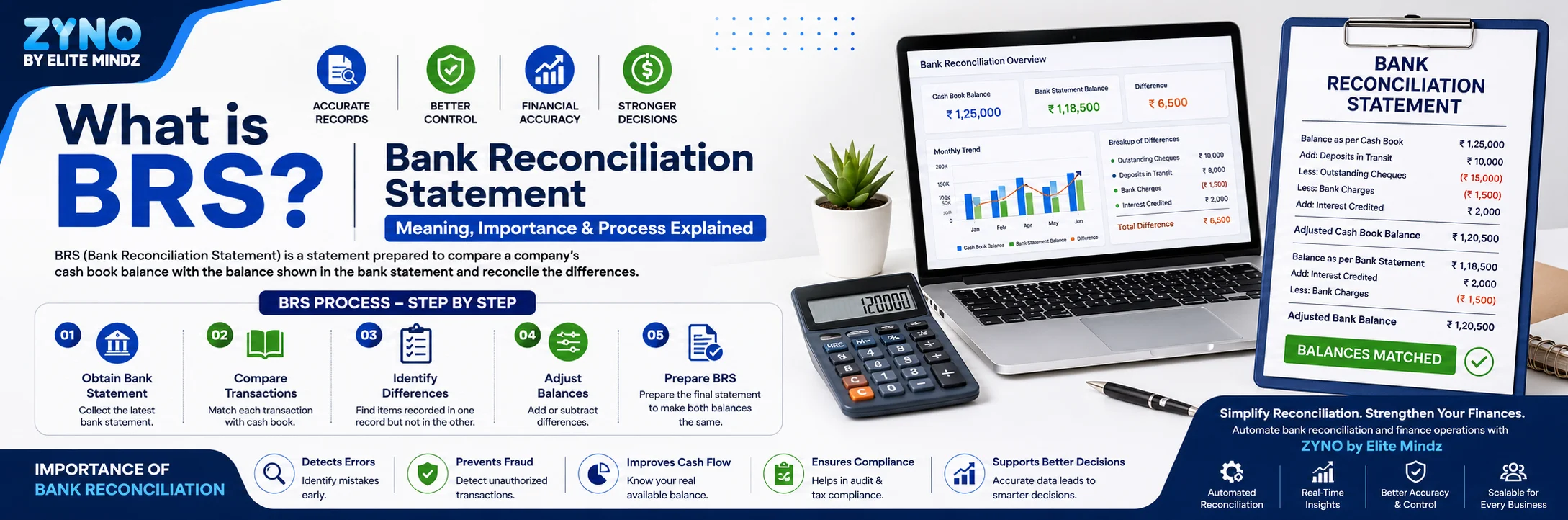
What is BRS? Bank Reconciliation Statement Meaning, Importance & Process Explained
Read More →
Best Mobile App Development Company in Delhi & Noida (2026 Guide)
Read More →
Voice Search SEO for Apps: The Complete Optimization Guide
Read More →
The Top 10 Supply Chain Management Systems (SCM) for 2026
Read More →
AI-Powered Custom Software Development: How Businesses Are Building Smarter Applications
Read More →
Why Enterprises Prefer Custom Software Development Over SaaS in 2026
Read More →
AI Chatbot Development Services: Everything Businesses Need to Know Before Investing in 2026
Read More →
Real Estate Software Development Services: A Complete Guide for Builders, Brokers & Developers (2026)
Read More →
Website Development Process: Full Guide by ZYNO Digital EliteMindz
Read More →
Website Development Cost in India (2026): Real Pricing, Hidden Costs & What You Actually Get
Read More →
WordPress vs Custom Website Development: Which Is Better in 2026?
Read More →
Custom Software Development vs Off-the-Shelf Software: Which Is Right for Your Business in 2026?
Read More →
Digital Transformation Strategies for Mid-Market Companies in India
Read More →
How Should a Mid-Sized Indian Company Prioritize Technology Investments During Digital Transformation
Read More →
Common Challenges Mid-Market Businesses in India Face When Implementing Digital Transformation
Read More →
How Do Mid-Market Companies in India Measure the Success of Their Digital Transformation Initiatives
Read More →
What Role Does Leadership and Change Management Play in Driving Digital Transformation in Mid-Sized Indian Companies
Read More →
Mobile App Development Trends for 2026: What Every Business Needs to Know
Read More →Partner with ZYNO by Elite Mindz to revolutionize how your business works. Fill out the form, and we’ll reach out with AI-powered solutions made just for you.
We use browser cookies to ensure you get the best experience on our website. Learn more
The form was submitted successfully!
ZYNO Digital
Fueling Smarter Digital Growth
ZYNO Digital fuels smarter digital growth through data-driven marketing, creative storytelling, and performance strategies that boost visibility, engagement, and measurable business outcomes across global platforms.
ZYNO Tech
Engineering the Future of IT
ZYNO Tech delivers cutting-edge IT solutions — including web, mobile, and digital transformation services — helping businesses scale efficiently, innovate faster, and stay ahead in a connected world.
ZYNO AI
AI Built for Business Growth
ZYNO AI harnesses the power of artificial intelligence to automate processes, enhance decision-making, and deliver predictive insights — driving innovation, agility, and measurable business growth.
ZYNO by Elite Mindz
Your Partner in the AI-Powered Future
ZYNO by Elite Mindz offers AI-powered products and services that unify operations, boost productivity, and drive digital transformation — helping businesses scale smarter and innovate faster.
* In just 2 mins you'll get a response
* Your idea is 100% protected by our Non-Disclosure Agreement