×
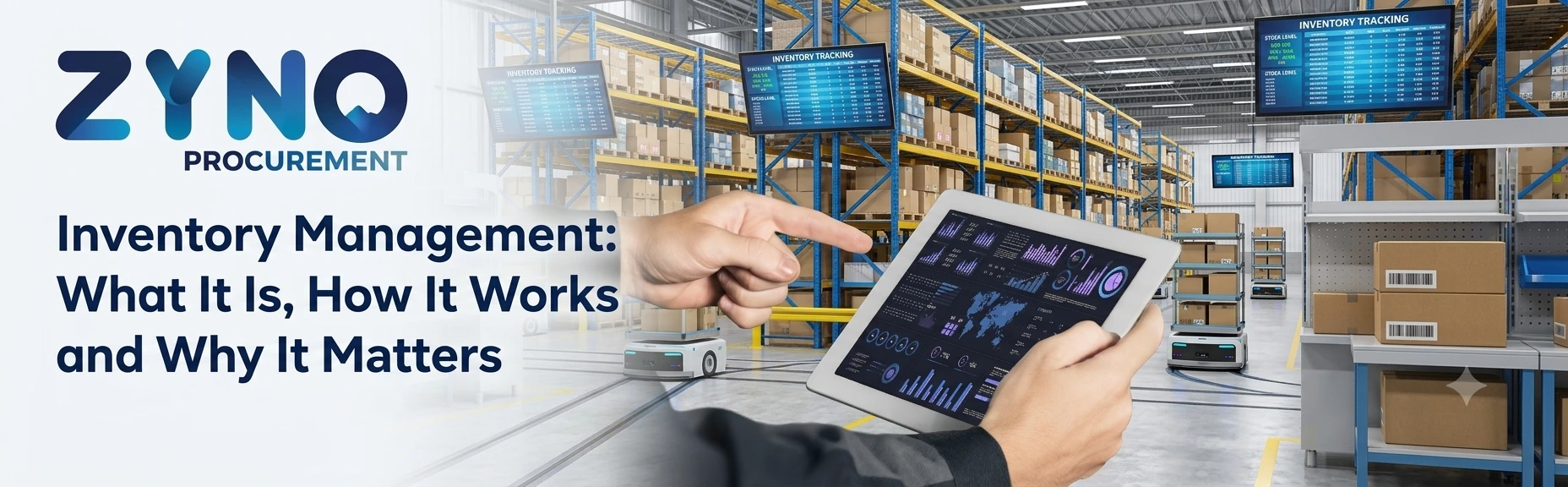
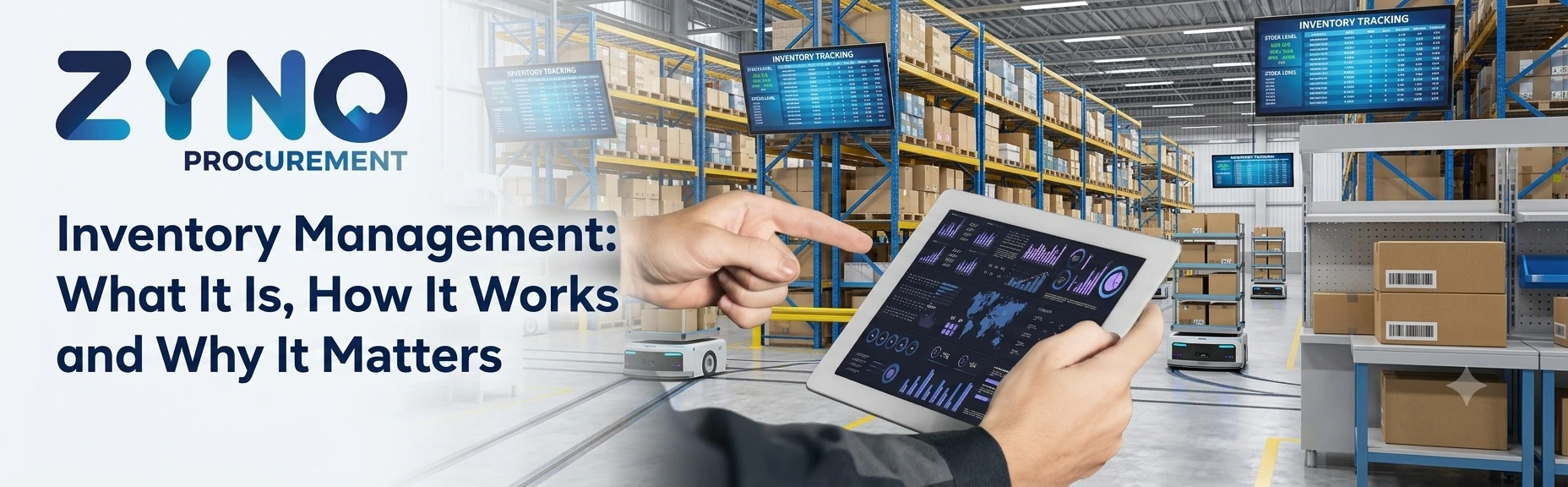
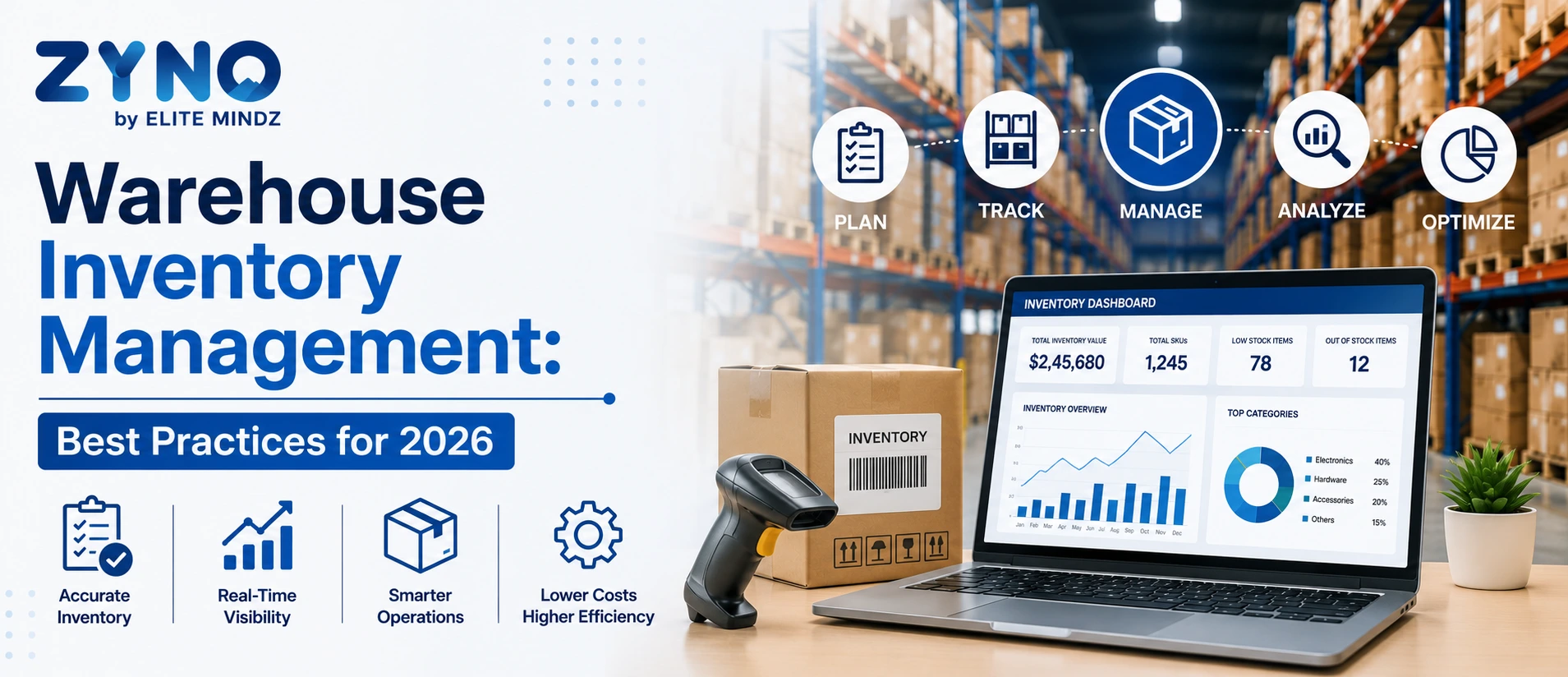
Inventory management is the process of tracking, organizing, and controlling stock across a business to ensure products are available when needed. It works by monitoring inventory levels from purchase to storage and sales using manual methods or automated software.
Businesses using ZYNO Books cut accounting time by 70% and stay 100% ZATCA-compliant — automatically.

Inventory management is the systemic process of tracking, storing, and controlling a business's goods—raw materials, work-in-progress, and finished products—so the right items are available in the right quantities at the right time. It's the difference between cash flowing freely and capital sitting idle on warehouse shelves.
This guide covers how inventory management works, the methods and techniques that drive efficiency, the KPIs worth tracking, and how modern systems connect inventory to procurement for end-to-end visibility.
Inventory management is the systemic process of tracking, storing, and controlling a business's goods so the right products are available in the right quantities at the right time. Done well, it minimizes holding costs while preventing stockouts and overselling. Done poorly, it ties up cash in unsold products or leaves customers empty-handed.
The term "inventory" covers everything a business holds for production or sale:
Raw materials: Components purchased for manufacturing
Work-in-progress (WIP): Partially completed goods still on the production floor
Finished goods: Completed products ready for customers
MRO supplies: Maintenance, repair, and operations items that keep daily activities running
The process follows a continuous cycle. First, you forecast demand based on historical sales and market signals. Then you order from suppliers, receive and inspect the goods, store them properly, track movement, fulfill customer orders, and reorder when stock runs low.
Each stage connects to the next. When a customer places an order, the system updates stock levels. When stock drops below a set threshold—called the reorder point—a new purchase order triggers automatically. Modern systems handle this in real time across multiple warehouses, so you always know what's available and where.
The goal is balance. Too much inventory locks up cash and fills warehouse space. Too little means missed sales — 69% of shoppers defect to competitors when items are unavailable.
Automate purchase workflows, improve vendor management, and gain full visibility into your procurement process with an advanced Procurement Management System.
Cash flow improves when you're not sitting on excess stock — IHL Group research shows inventory distortion costs retailers $1.73 trillion annually. Customer satisfaction rises when orders ship complete and on time. Waste drops when you're not paying to store items that eventually become obsolete.
For organizations operating across multiple branches or warehouses, centralized visibility becomes critical. Without it, teams often discover stock problems only after a customer complaint or a failed order. Real-time tracking across locations eliminates that guesswork.
Start by analyzing past sales data to predict future demand. The reorder point is the inventory level that triggers a new purchase order—calculated using lead time (how long suppliers take to deliver) and average daily demand.
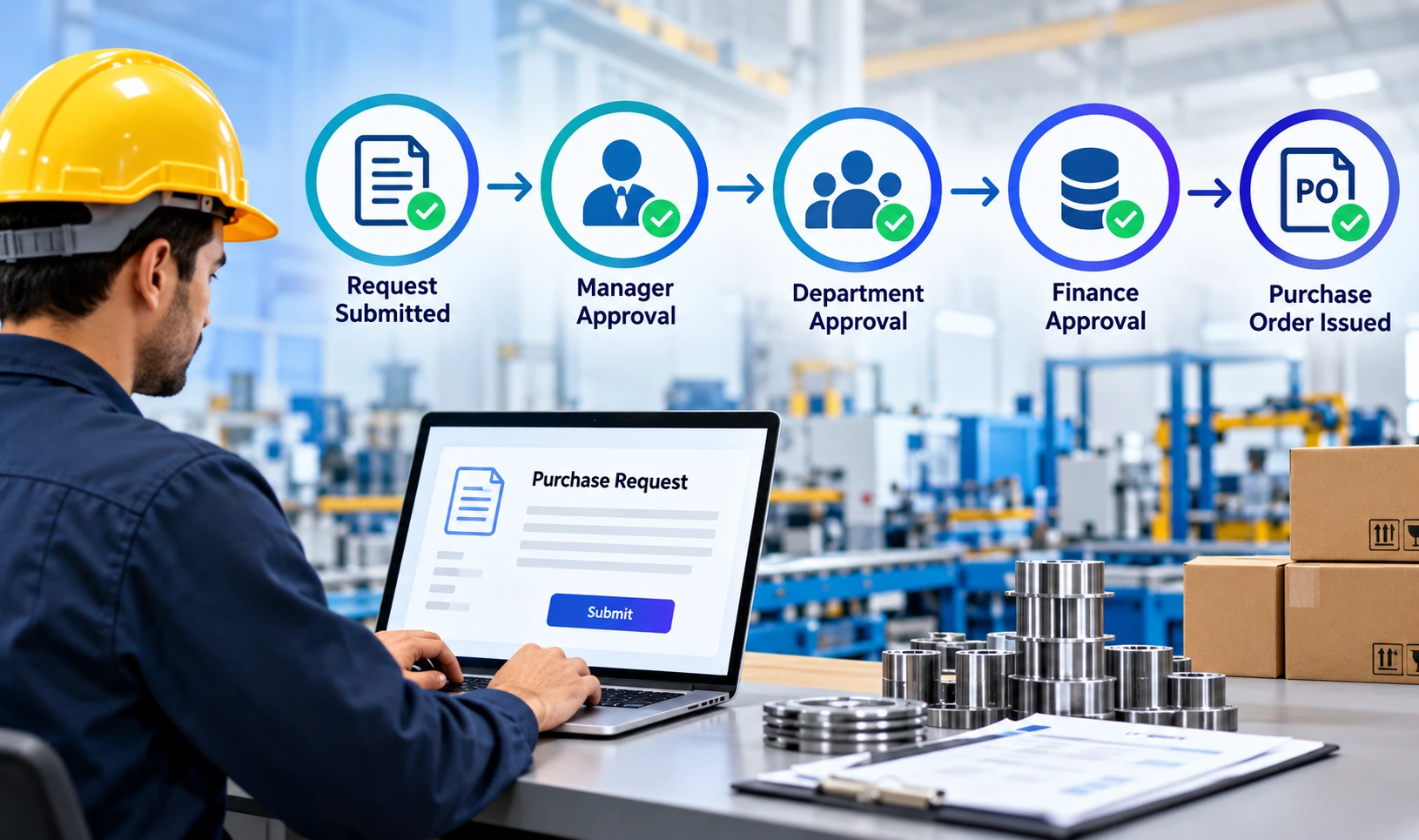
Once you know what's needed, create purchase requisitions, select suppliers, and issue purchase orders. Procurement software can automate supplier selection and route approvals based on predefined rules.
When goods arrive, verify quantities and quality against the purchase order. The goods receipt note (GRN) confirms delivery and updates inventory records.
Proper warehouse slotting—assigning items to specific bin locations—reduces picking time and errors. High-velocity items go in easily accessible areas; slower-moving stock occupies less prime space.
As inventory moves through the warehouse, systems update quantities automatically. Real-time tracking across multiple locations eliminates manual counts and spreadsheet reconciliation.
Pick, pack, and ship customer orders. When stock falls below the reorder point, systems automatically generate replenishment orders.
This approach counts inventory at set intervals—weekly, monthly, or quarterly. It's simpler to implement but provides less real-time accuracy. Smaller operations with limited SKUs often start here.
Perpetual systems track inventory continuously as transactions occur. Every sale, receipt, or transfer updates stock levels immediately. This approach requires system investment but delivers always-current data.
Barcode scanning automates data capture during receiving, movement, and shipping. It reduces manual entry errors and speeds processing compared to paper-based methods.
Radio-frequency identification (RFID) tags transmit data wirelessly without requiring line-of-sight scanning. RFID enables faster bulk scanning and works well for high-volume operations—though implementation costs run higher than barcode systems.
| Type | Real-Time Visibility | Complexity | Best For |
|---|---|---|---|
| Periodic | No | Low | Small operations, limited SKUs |
| Perpetual | Yes | Medium | Growing businesses, multi-location |
| Barcode | Yes | Medium | Warehouses, retail, distribution |
| RFID | Yes | High | High-volume, fast-moving inventory |
JIT means receiving goods only as needed for production or sale. This minimizes holding costs and warehouse space but demands reliable suppliers and accurate demand forecasting.
EOQ is a formula that calculates the optimal order size to minimize total inventory costs. It balances ordering costs against holding costs.
MRP calculates materials needed based on production schedules and bills of materials. Manufacturing operations commonly use MRP to ensure components arrive when production needs them.
This technique categorizes inventory by value and importance. "A" items are high-value but low-quantity, requiring strict tracking. "C" items are low-value and high-quantity, with simpler controls. ABC analysis helps prioritize management effort where it matters most.
First In, First Out (FIFO) assumes the oldest inventory sells first—common for perishables. Last In, First Out (LIFO) assumes the newest inventory sells first and has specific tax implications.
Safety stock is buffer inventory that prevents stockouts during demand spikes or supply delays. The reorder point triggers new orders before stock runs out.
This ratio equals cost of goods sold divided by average inventory. Higher turnover indicates efficient inventory management; low turnover suggests overstocking.
Also called days sales of inventory (DSI), this metric shows the average days to sell inventory. It's useful for comparing performance against industry benchmarks.
Carrying cost includes storage, insurance, depreciation, and opportunity cost of capital tied up in inventory.
Stockout rate measures how often items are unavailable when customers want them. Fill rate shows the percentage of orders fulfilled completely from available inventory.
When inventory management works well, the benefits compound:
Reduced holding costs: Lower warehousing, insurance, and obsolescence expenses
Improved cash flow: Less capital locked in excess inventory
Fewer stockouts: Better demand matching prevents lost sales
Faster order fulfillment: Real-time visibility speeds picking and shipping
Audit readiness: Centralized records simplify compliance and reporting
Several pain points drive organizations to search for better solutions:
Inaccurate stock counts: Discrepancies between system records and physical inventory
Demand variability: Difficulty predicting sales spikes and seasonality
Multi-location complexity: Tracking inventory across warehouses, branches, and channels
Dead stock accumulation: Capital tied in slow-moving or obsolete items
Manual processes: Spreadsheet-based tracking prone to errors and delays
These challenges intensify as organizations scale. What works for a single warehouse often breaks down when managing inventory across multiple cities.
Inventory control is a subset focused on physical handling and counting within the warehouse. Inventory management encompasses the broader strategic process—including forecasting, optimization, and integration with procurement.
Warehouse management focuses on physical storage, layout, and movement within facilities. Inventory management covers the broader stock lifecycle across all locations.
Supply chain management encompasses the entire flow from suppliers through customers. Inventory management is one component focused specifically on stock levels and movement.
AI improves demand forecasting by analyzing historical data, market signals, and external factors. A peer-reviewed IJSAT study found AI-driven forecasting improved accuracy by 23.7% over traditional methods. Machine learning algorithms identify patterns and automate reorder decisions.
Cloud-based systems enable real-time visibility across locations without on-premise infrastructure. IoT sensors automate tracking of temperature, location, and movement.
The most significant efficiency gains come from connecting inventory management to procurement, finance, and sales systems. One centralized platform that unifies inventory with purchasing and accounts payable eliminates data silos.
An inventory management system is software that automates tracking, ordering, and reporting across the stock lifecycle. Core capabilities include real-time stock tracking, automated reorder alerts, multi-location visibility, reporting and analytics, integration with procurement, and mobile access for warehouse teams.
Enterprise systems connect inventory directly to procurement workflows, so a stock drop can automatically trigger a purchase request routed through the appropriate approval chain.
When evaluating software, consider scalability across locations and SKUs, integration with existing ERP and accounting systems, real-time visibility, automation features, ease of use for warehouse teams, and mobile support.
For enterprises seeking inventory visibility integrated with procurement, vendor management, and spend analytics on one centralized platform, Book a Demo with ZYNO Procurement.
Inventory management is evolving as AI capabilities mature. Predictive demand forecasting analyzes historical data and external factors. Autonomous replenishment systems generate and route purchase orders automatically — capabilities driving what Gartner projects as $53 billion in SCM AI software spend by 2030. Real-time exception alerts flag discrepancies and anomalies instantly.
Organizations that connect inventory management to a broader procurement and finance workflow gain the most from these advances.
ZYNO Procurement brings inventory management together with purchasing, vendor management, and spend analytics on one centralized platform. Teams gain real-time visibility across locations, automated approval workflows, and policy compliance built into every transaction.
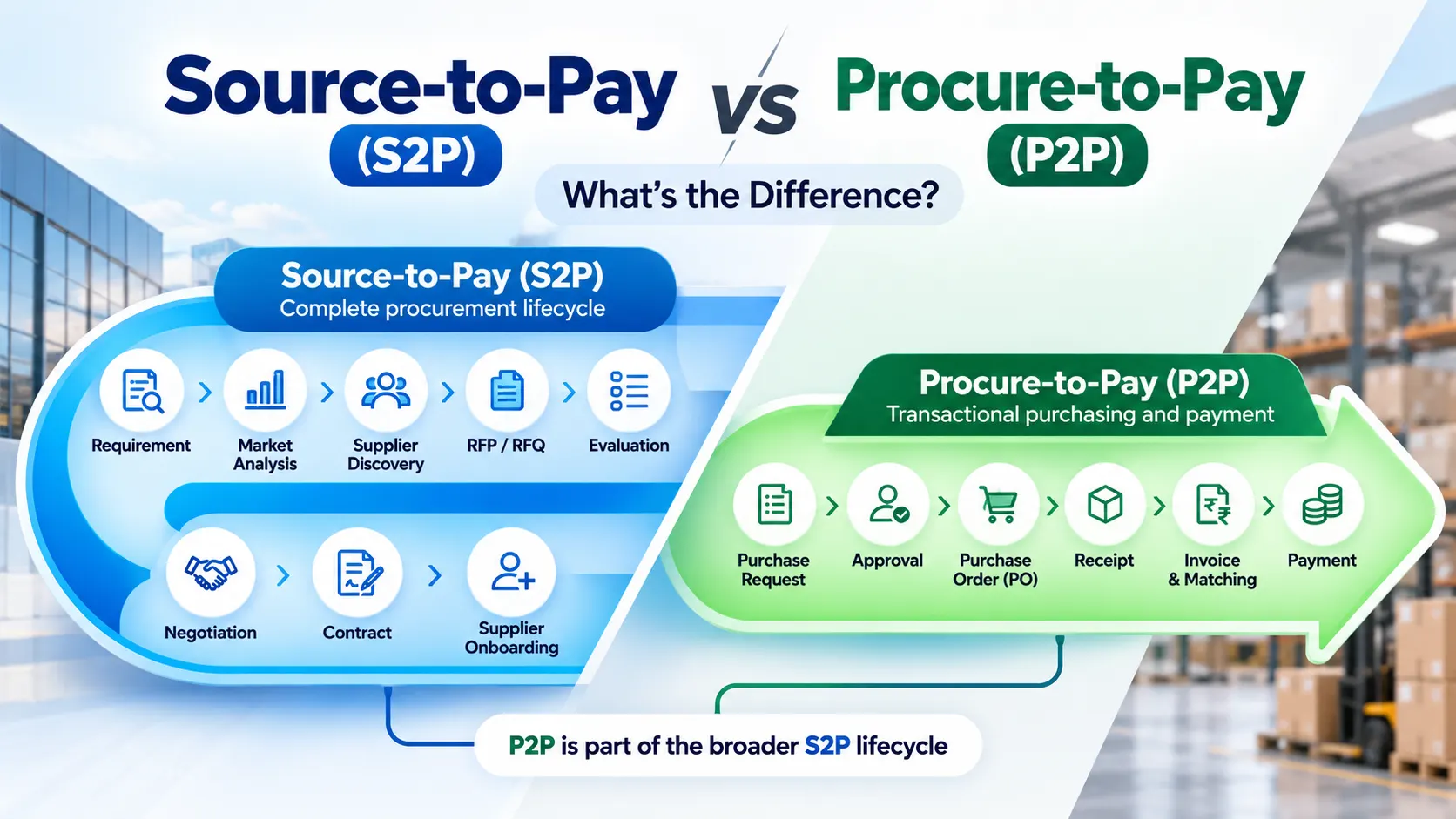
The platform connects inventory directly to PO creation, goods receipt verification, and invoice matching—so stock movements flow seamlessly through the procure-to-pay cycle.
Improve stock accuracy, reduce losses, and streamline operations with an advanced Inventory Management System designed for modern businesses.
Effective inventory management reduces capital tied up in excess or slow-moving stock, freeing working capital for other business needs while minimizing warehousing and carrying expenses.
The terms are often used interchangeably. "Inventory" typically refers to all goods a business holds—including raw materials and WIP. "Stock" commonly refers to finished goods available for sale.
Costs vary based on business size, number of locations, feature requirements, and deployment model. Cloud-based solutions typically charge per user or location monthly.
Small businesses often see proportionally larger benefits because they have less margin for error. Reduced stockouts, lower carrying costs, and time savings from automation can significantly impact profitability.
Implementation timelines depend on system complexity, data migration requirements, and integration needs. Simple cloud tools can be operational within days; enterprise deployments with multiple locations typically take several weeks.
Sneha Singh
Content Writer
Sneha Singh is a B2B tech content strategist with 4+ years of experience. She specializes in SEO-driven SaaS content, whitepapers, and platform-native social media campaigns that simplify complex technology and drive business growth. Sneha's core exp
Procurement Software Trends in 2026: What to Expect
Read More →

Why E-Procurement Outperforms Traditional ERP in Modern Procurement
Read More →Top 10 Procurement Software Companies in India 2026
Read More →
Best Procurement Software Companies in Kuwait (2025)
Read More →
5 Best Procurement Software in Africa for Enterprises & SMEs (2026 Guide)
Read More →
Best Procurement Software in Nigeria 2026 | Top 5 Picks
Read More →
Best Procurement Software Providers in USA (2025): How AI is Transforming the Future
Read More →
10 Best Procurement Software Providers in Thailand for Streamlined Supply Chain Management
Read More →
Top 10 Cloud-Based Procurement Solutions in Portugal for Businesses in 2025
Read More →
Top 10 Procurement Software Providers in Switzerland 2026: Streamlining Sourcing and Supplier Management
Read More →
What Makes ZYNO Procurement Different from Other Oil & Gas Procurement Software
Read More →
The Digital Transformation of Logistics Procurement in the Middle East
Read More →
A Step by Step Guide to Procurement Management Software for Modern Enterprises
Read More →
Sourcing and Procurement: What is the Difference and Why It Matters
Read More →Difference Between Procurement and Supply Chain Management
Read More →
What Is Procurement Software and Why Modern Businesses Need It
Read More →
Best Procurement Management Software to Automate ERP Process
Read More →
Direct vs Indirect Procurement: Key Differences, Examples & Uses (2026)
Read More →
Smart procurement strategies for cost optimization & risk management
Read More →
What Is Procurement? Everything You Need to Know (Types, Process & SAP)
Read More →Beyond Cost-Cutting: How Procurement Drives Margin Expansion in 2026
Read More →
Direct Procurement Explained: Process, Examples, and When It Is Used
Read More →
What Are the 5 Types of E-Procurement? A Complete Guide for Businesses
Read More →
Which Procurement Management Software Is Best? Top Tools Compared for 2026
Read More →
Top 8 Coupa Alternatives to Explore in 2026
Read More →
Looking to Replace Coupa? Discover the Best Alternatives Like ZYNO Procurement
Read More →
How Does Procurement Software Work? A Complete Guide
Read More →
ZYNO Procurement vs Coupa: Best Procurement Software Comparison for Mid-Market Teams
Read More →
Best SAP ARIBA Procurement Alternatives in 2026
Read More →
ZYNO Procurement vs SAP Ariba: Which Solution Is More User-Friendly?
Read More →
AI-Powered Procurement Management Software for Fast, Connected, and Visible Workflows in Dubai
Read More →
What is Vendor Management? Complete Guide to Vendor Management Software, Systems, and Processes
Read More →
Best Procurement Management Software In Kenya
Read More →
6 SAP Ariba Alternatives for Mid-Market Businesses in 2026
Read More →
Top E-Procurement Solutions for B2B Organizations (2026)
Read More →
Quotation Format: Free Templates + Complete Guide (2026)
Read More →
Cost Control Software Compared: Features, Pricing, and Performance
Read More →
Procurement Workflow: Steps, Stages, and Real Examples
Read More →
Top 10 Zycus Alternatives for Procurement Teams in 2026
Read More →
Best Precoro Alternative for Purchase Requisition and Procurement
Read More →
Top AI Procurement Tools in 2026
Read More →
Best Tools for Supplier Risk Management
Read More →
FEFO vs FIFO vs LIFO: Differences, Benefits & Which Inventory Method Is Best?
Read More →
AI-Powered Procurement Software: A Complete Guide for Businesses
Read More →
Best AI Tools for Supply Chain Procurement
Read More →
Procurement Risk Management
Read More →
Still Using Excel for Procurement? Read This Before It's Too Late
Read More →
Best RFP Software in 2026: Top Tools Compared for Faster Proposal Responses
Read More →
What Is Procure-to-Pay (P2P)? A Complete Guide
Read More →
Complete Procurement Workflow Guide for Modern Businesses
Read More →
Complete Guide to E-Procurement Solutions for B2B Organizations
Read More →
Cost Control Software Comparison Guide: Features, Pricing & Benefits
Read More →
Purchase Order Tracking: How to Manage Every PO Without the Chaos
Read More →
Inventory Management: What It Is, How It Works and Why It Matters
Read More →
Top 10 Procurement Software Tools for Purchasing Automation in 2026
Read More →
Agentic AI Procurement Platforms and the Future of Strategic Sourcing
Read More →Partner with ZYNO by Elite Mindz to revolutionize how your business works. Fill out the form, and we’ll reach out with AI-powered solutions made just for you.
We use browser cookies to ensure you get the best experience on our website. Learn more
The form was submitted successfully!
ZYNO Digital
Fueling Smarter Digital Growth
ZYNO Digital fuels smarter digital growth through data-driven marketing, creative storytelling, and performance strategies that boost visibility, engagement, and measurable business outcomes across global platforms.
ZYNO Tech
Engineering the Future of IT
ZYNO Tech delivers cutting-edge IT solutions — including web, mobile, and digital transformation services — helping businesses scale efficiently, innovate faster, and stay ahead in a connected world.
ZYNO AI
AI Built for Business Growth
ZYNO AI harnesses the power of artificial intelligence to automate processes, enhance decision-making, and deliver predictive insights — driving innovation, agility, and measurable business growth.
ZYNO by Elite Mindz
Your Partner in the AI-Powered Future
ZYNO by Elite Mindz offers AI-powered products and services that unify operations, boost productivity, and drive digital transformation — helping businesses scale smarter and innovate faster.
* In just 2 mins you'll get a response
* Your idea is 100% protected by our Non-Disclosure Agreement