×
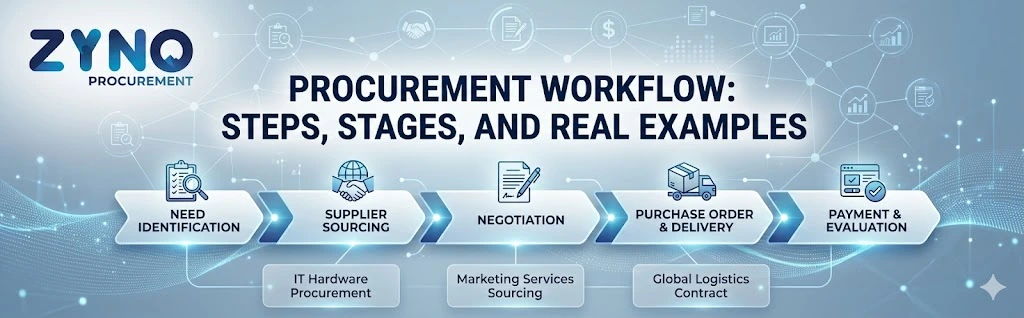
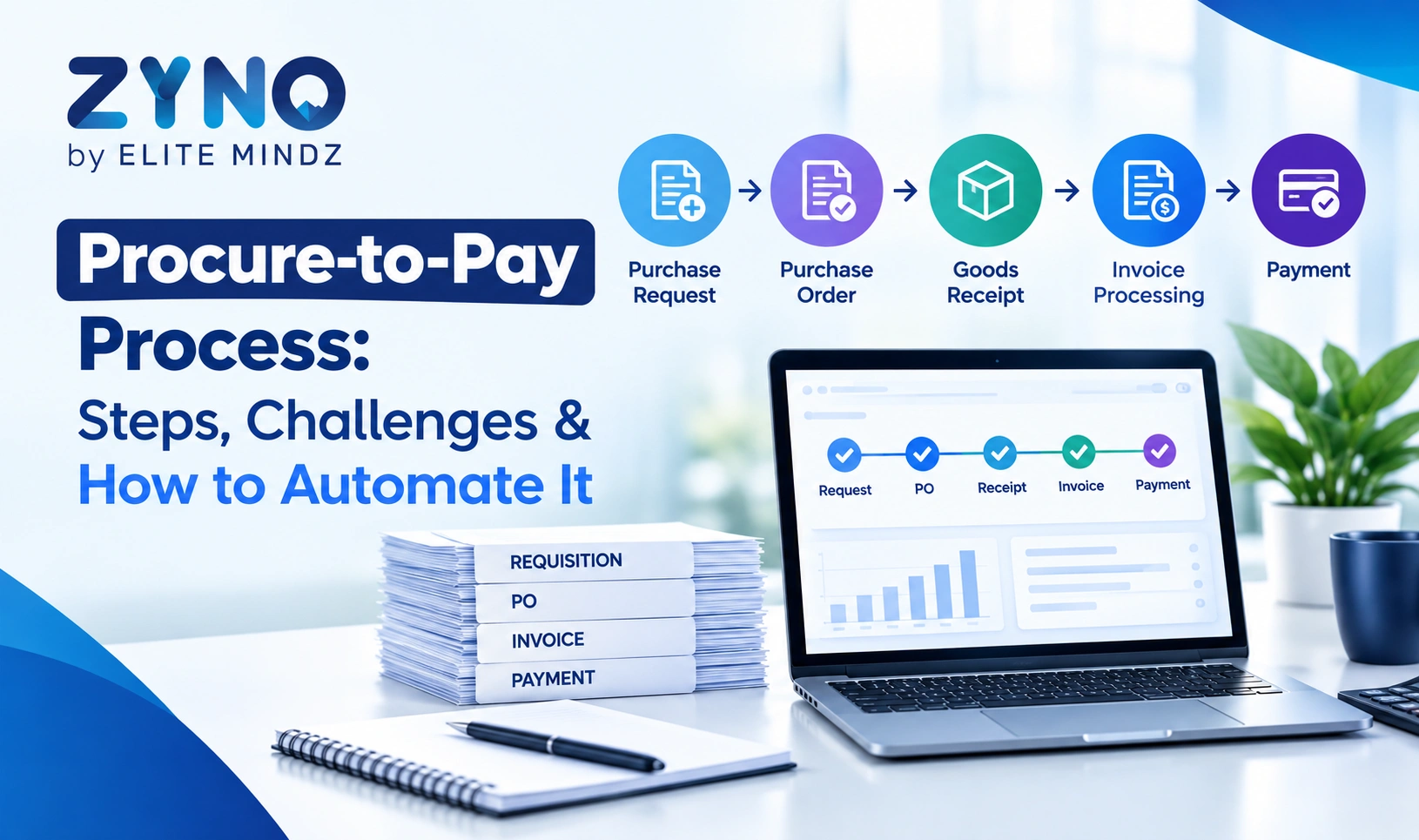
A procurement workflow is a standardized sequence of steps that governs how your organization buys goods and services—from the moment someone raises a purchase request through vendor selection, delivery verification, and final payment. When this workflow breaks down, purchases slip through without proper approval, invoices pile up unmatched, and finance loses visibility into what's actually being spent.
This guide walks through each step and stage of the procurement workflow, compares manual versus automated approaches, and includes real examples showing how different purchase types require different workflow designs.
A procurement workflow is a standardized sequence of steps an organization uses to acquire goods and services. It dictates how a purchase moves from an initial employee request through vendor selection, delivery verification, and final payment—helping businesses reduce delays, control spending, and prevent fraud.
Think of it as the rulebook for buying anything in your company. Without a defined workflow, purchases happen through scattered emails, verbal approvals, and disconnected spreadsheets. With one in place, every transaction follows the same path, which creates consistency and accountability across departments.
The workflow also creates a paper trail that finance teams can audit, managers can monitor, and leadership can analyze for spending patterns.
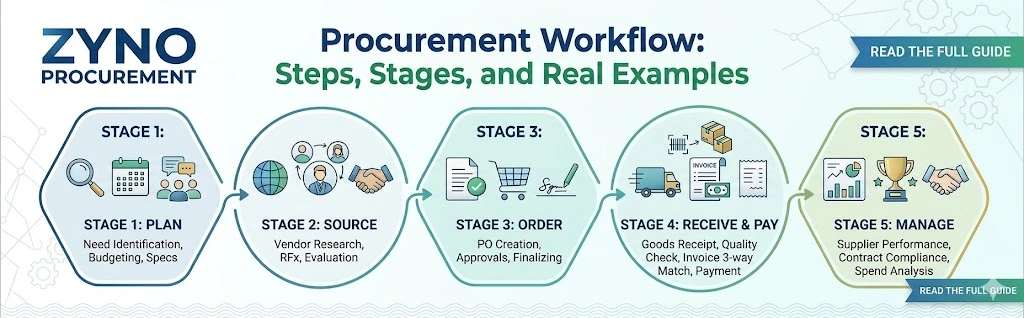
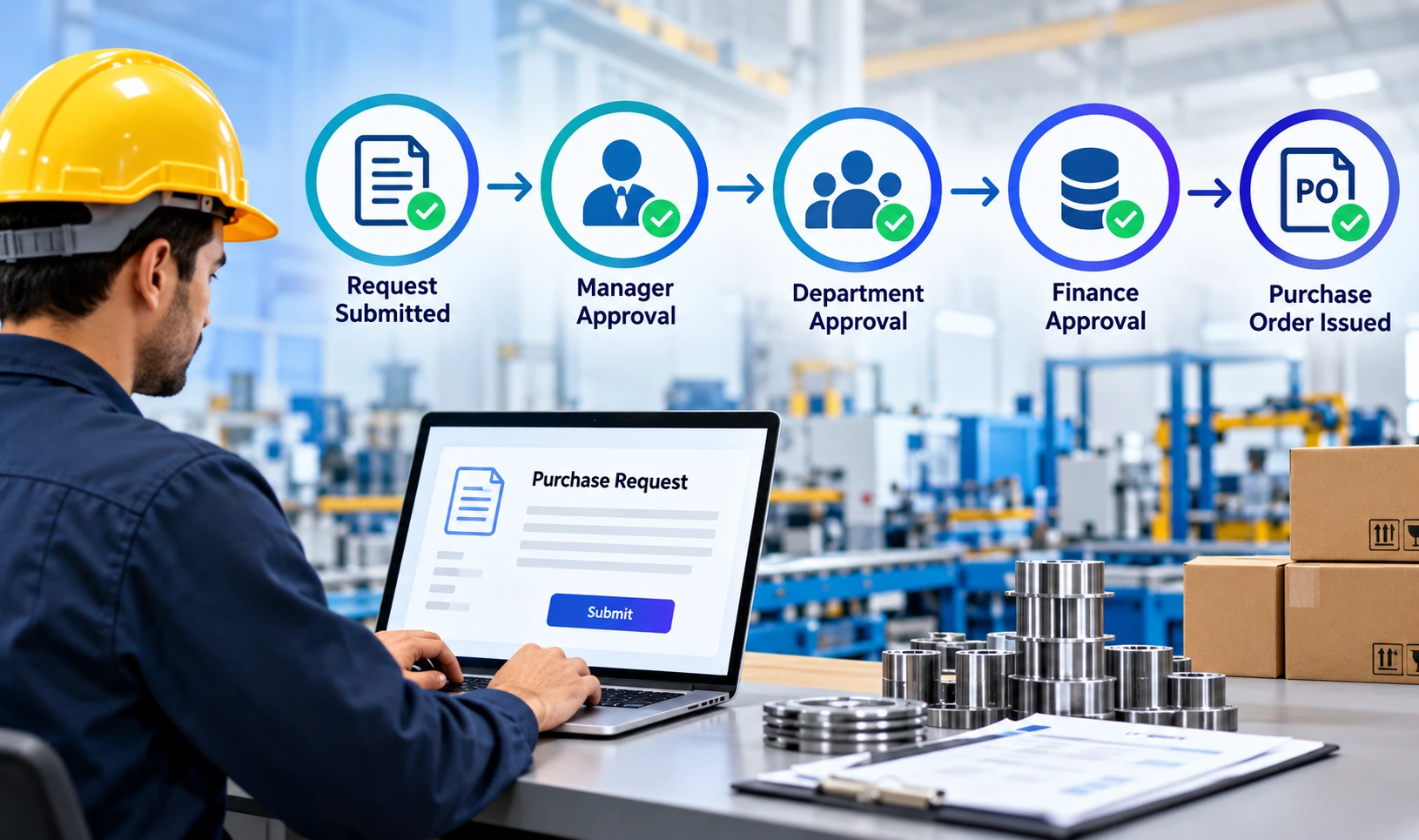
Every procurement workflow follows a logical sequence where each step builds on the previous one. While organizations customize the details, the core steps remain consistent across industries.
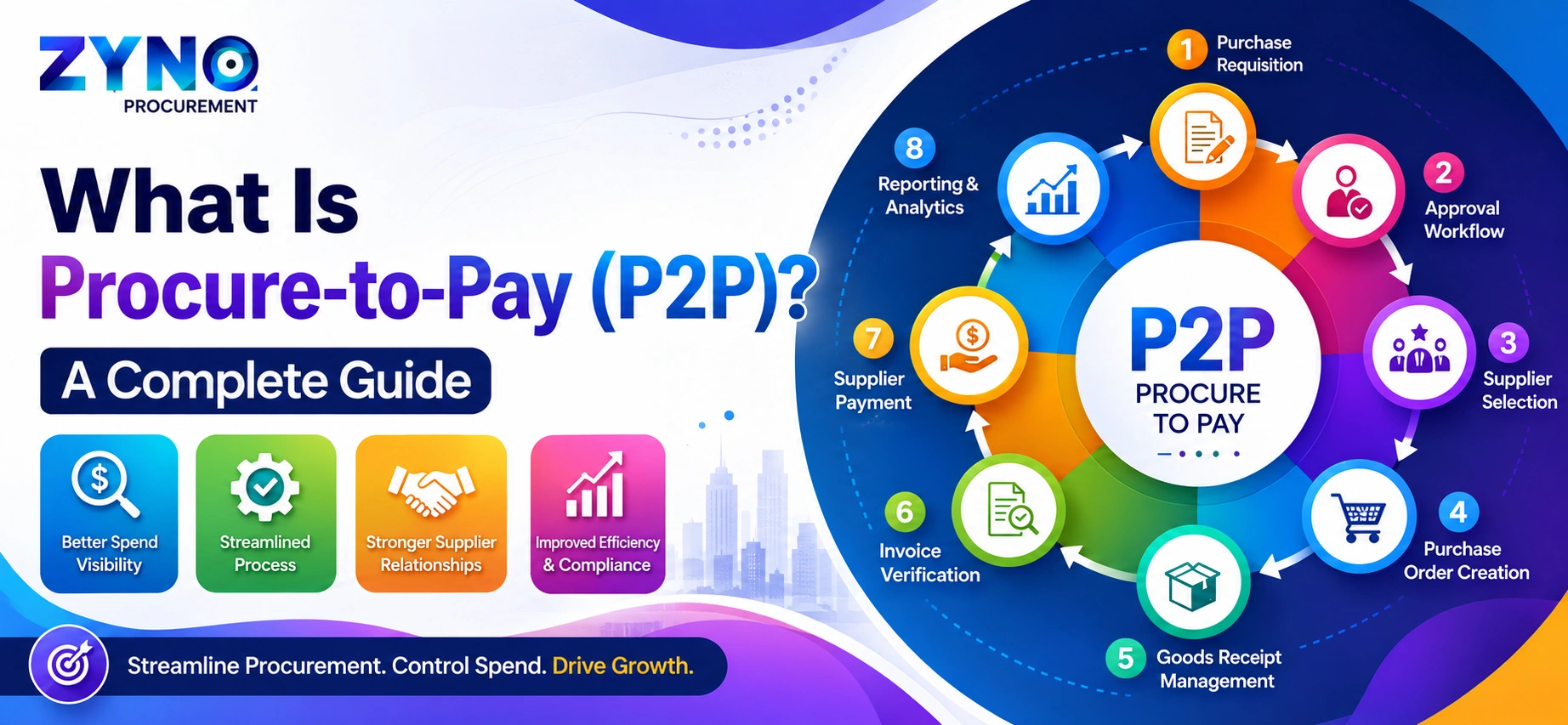
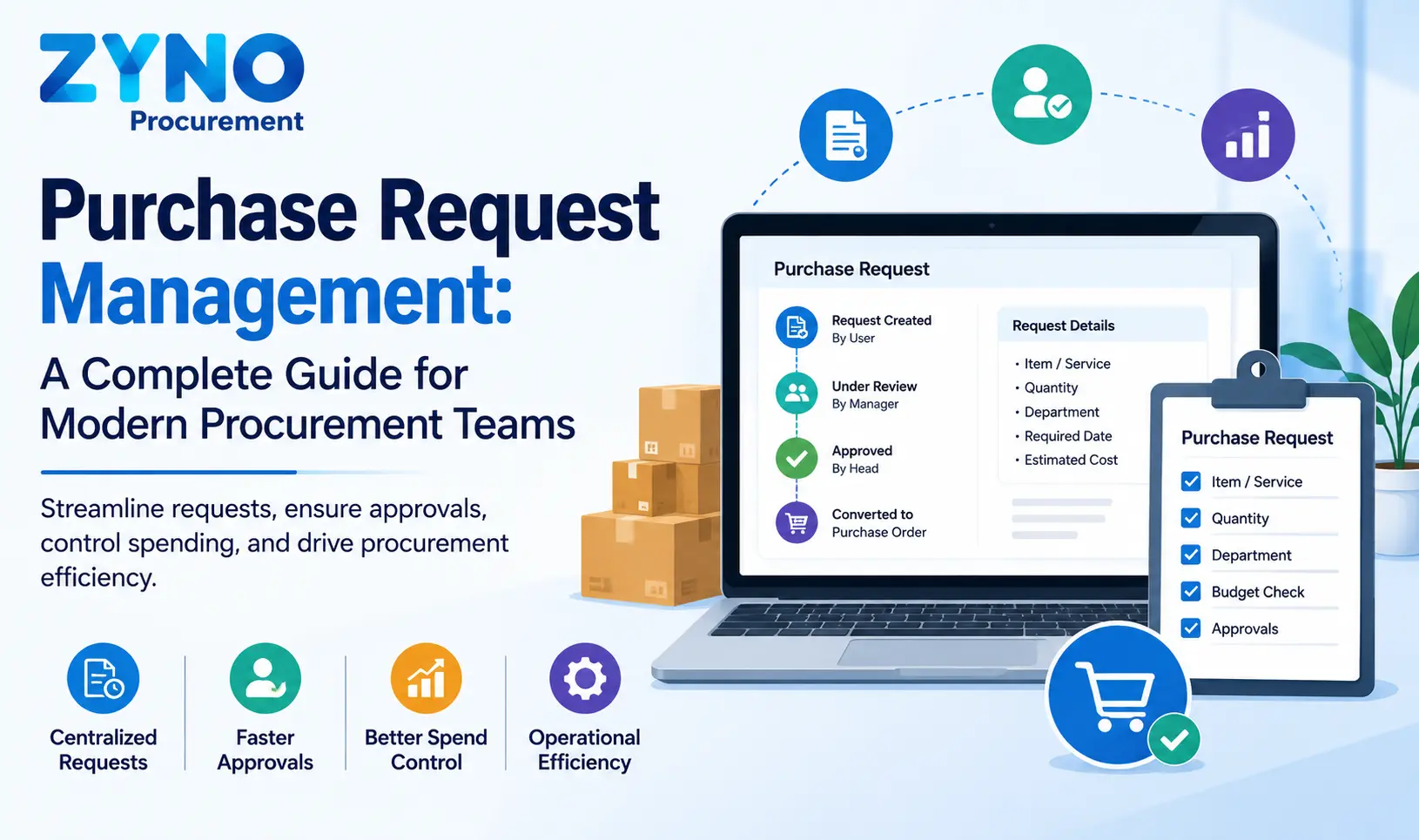
The workflow begins when someone in your organization identifies a business need. Maybe the marketing team needs new software, or the warehouse is running low on packaging materials.
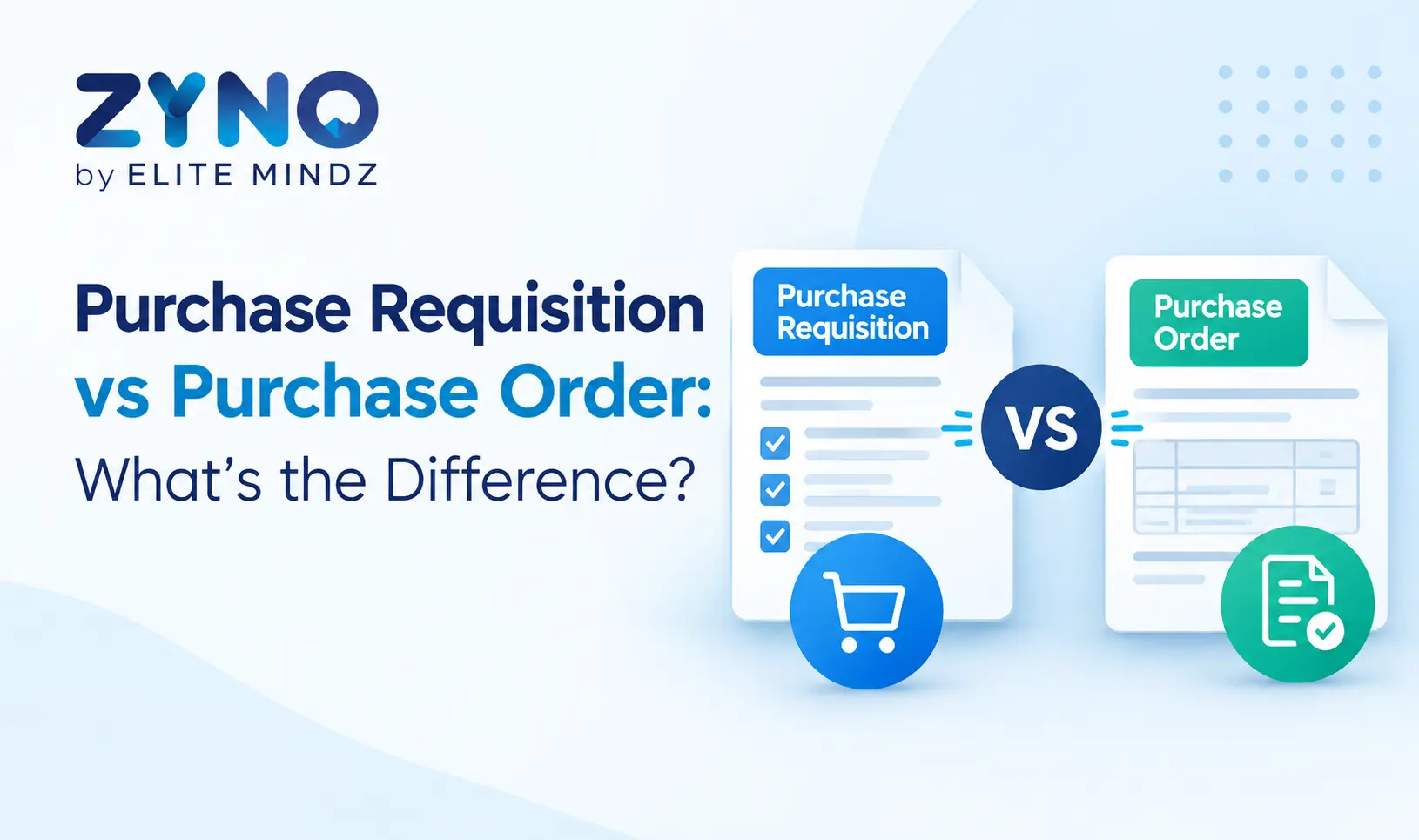
That person submits a purchase requisition—an internal document requesting permission to buy. The requisition captures what's needed, how much, the estimated cost, and the business justification. This document stays internal and is not sent to vendors.
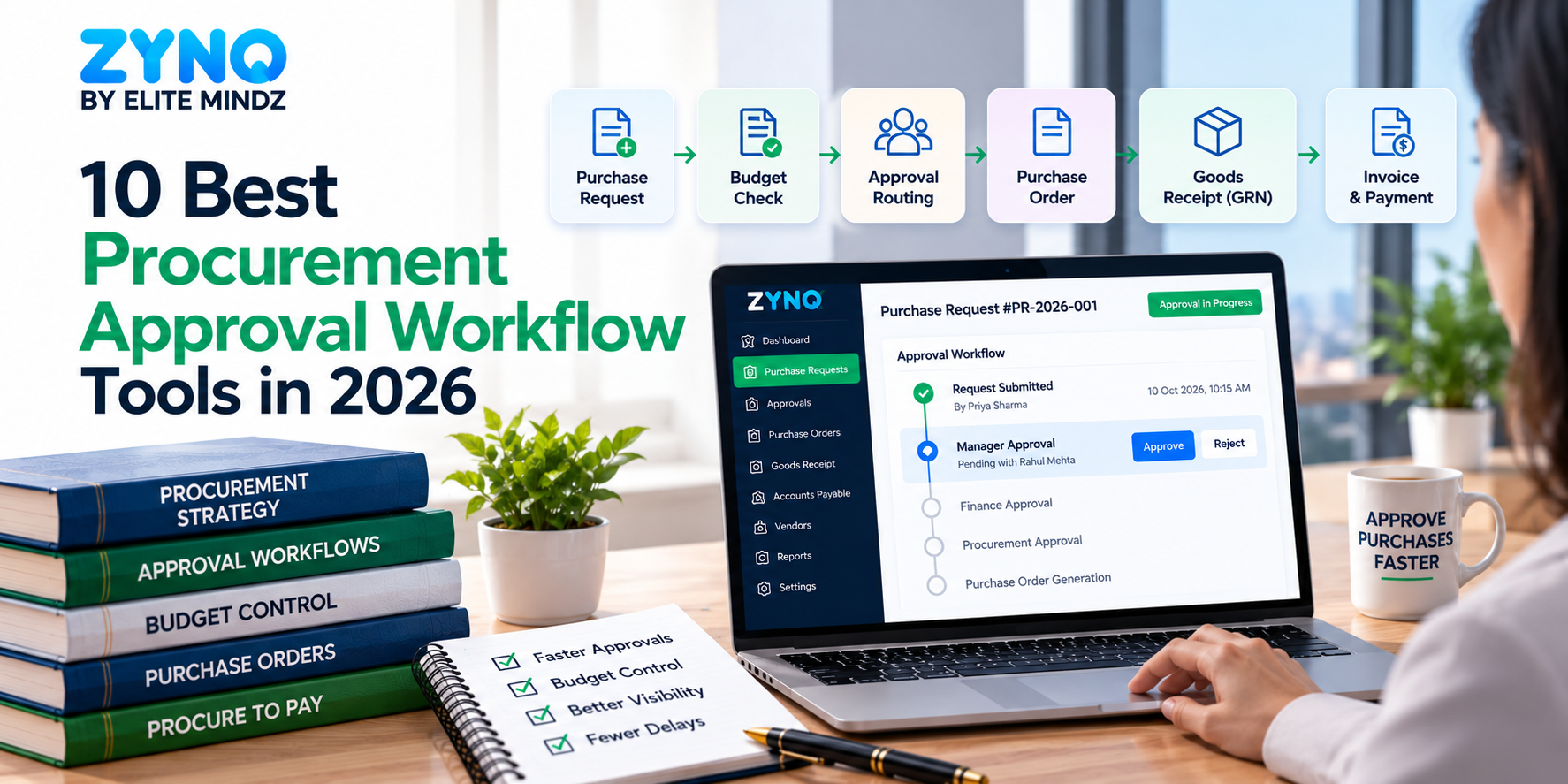
Once submitted, the requisition routes to the appropriate approver based on your organization's rules. A $500 office supply order might only require a department manager's sign-off, while a $50,000 equipment purchase could require executive approval.
During this step, approvers check whether the purchase fits the budget, aligns with company policy, and serves a legitimate business purpose.
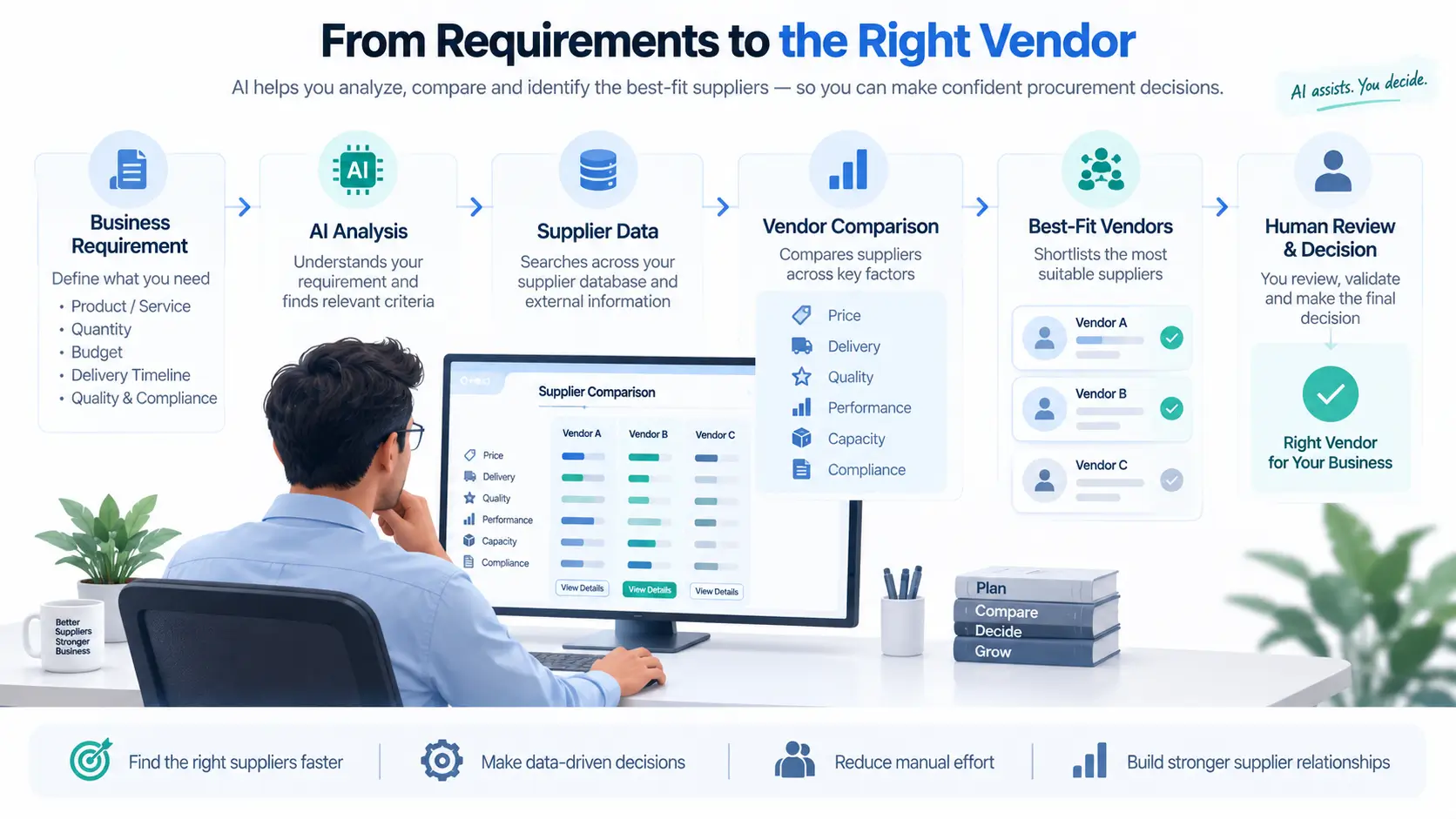
After approval, procurement identifies potential vendors. For routine purchases, this might mean selecting from a pre-approved supplier list. For larger or specialized purchases, the team sends out Requests for Quotation (RFQs) to multiple vendors.
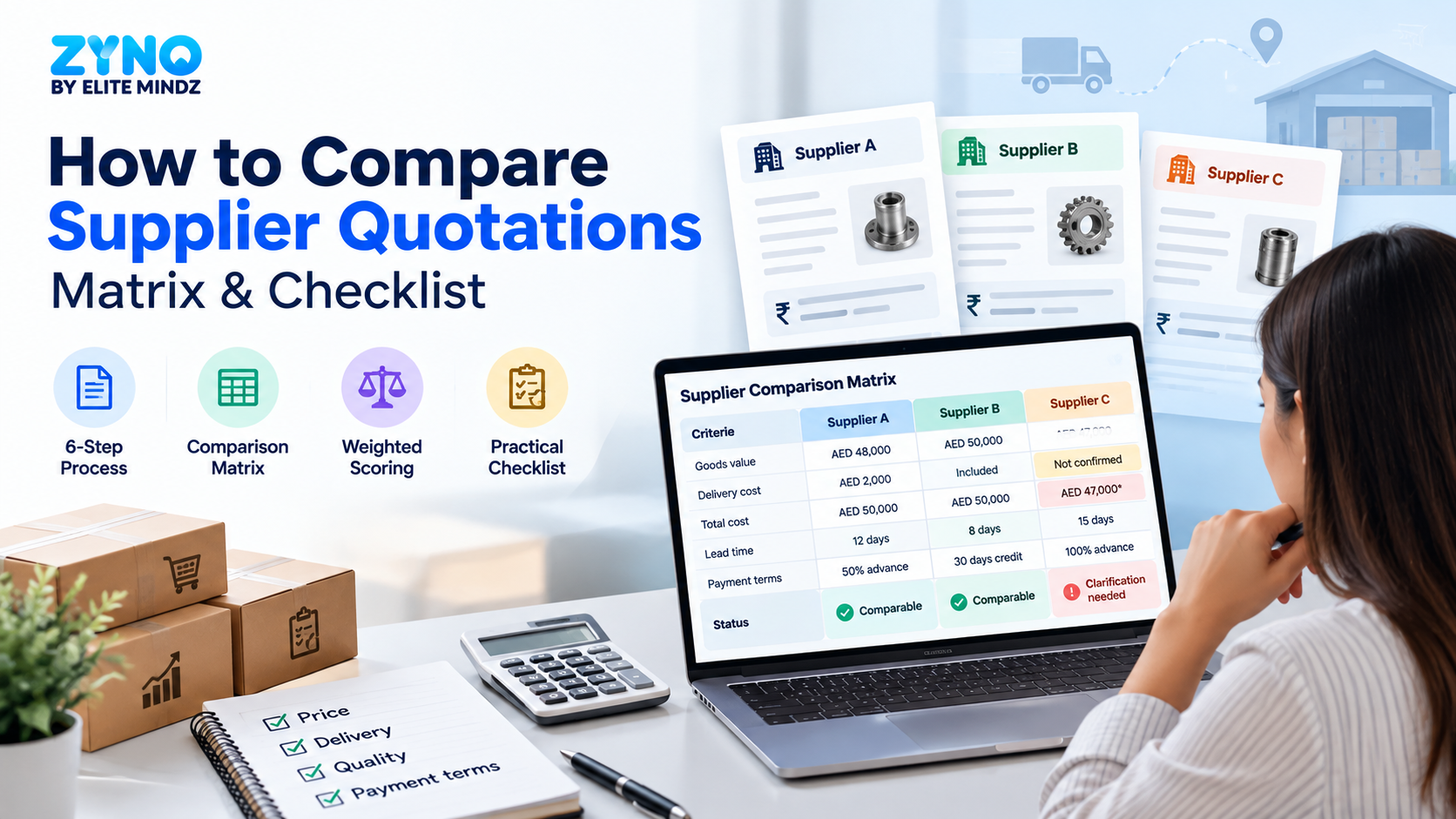
Comparing quotes involves more than just price. Delivery timelines, payment terms, quality guarantees, and vendor reliability all factor into the decision.
With a vendor selected, the approved requisition converts into a purchase order (PO). This is the official, legally binding document sent to the supplier authorizing the purchase.
The PO specifies exactly what you're buying, the agreed price, delivery date, and payment terms. Once the vendor accepts, both parties are committed to the transaction.
When the order arrives, the receiving team inspects the delivery against the PO. They check quantities, verify item specifications, and note any damage or discrepancies.
This inspection generates a Goods Receipt Note (GRN)—documentation confirming what was actually received. The GRN becomes critical in the next step when it's time to pay.
Before paying the vendor's invoice, finance performs three-way matching: comparing the PO (what you ordered), the GRN (what you received), and the invoice (what the vendor is charging).
If all three documents align, payment proceeds according to the agreed terms. If there's a mismatch—say, the invoice shows 100 units but the GRN shows 95—the discrepancy gets flagged for resolution before any money changes hands.
| Step | Key Document | Purpose |
|---|---|---|
| Request | Purchase Requisition | Internal approval to buy |
| Order | Purchase Order | Commitment to supplier |
| Receipt | GRN | Proof of delivery |
| Payment | Invoice | Supplier's payment request |
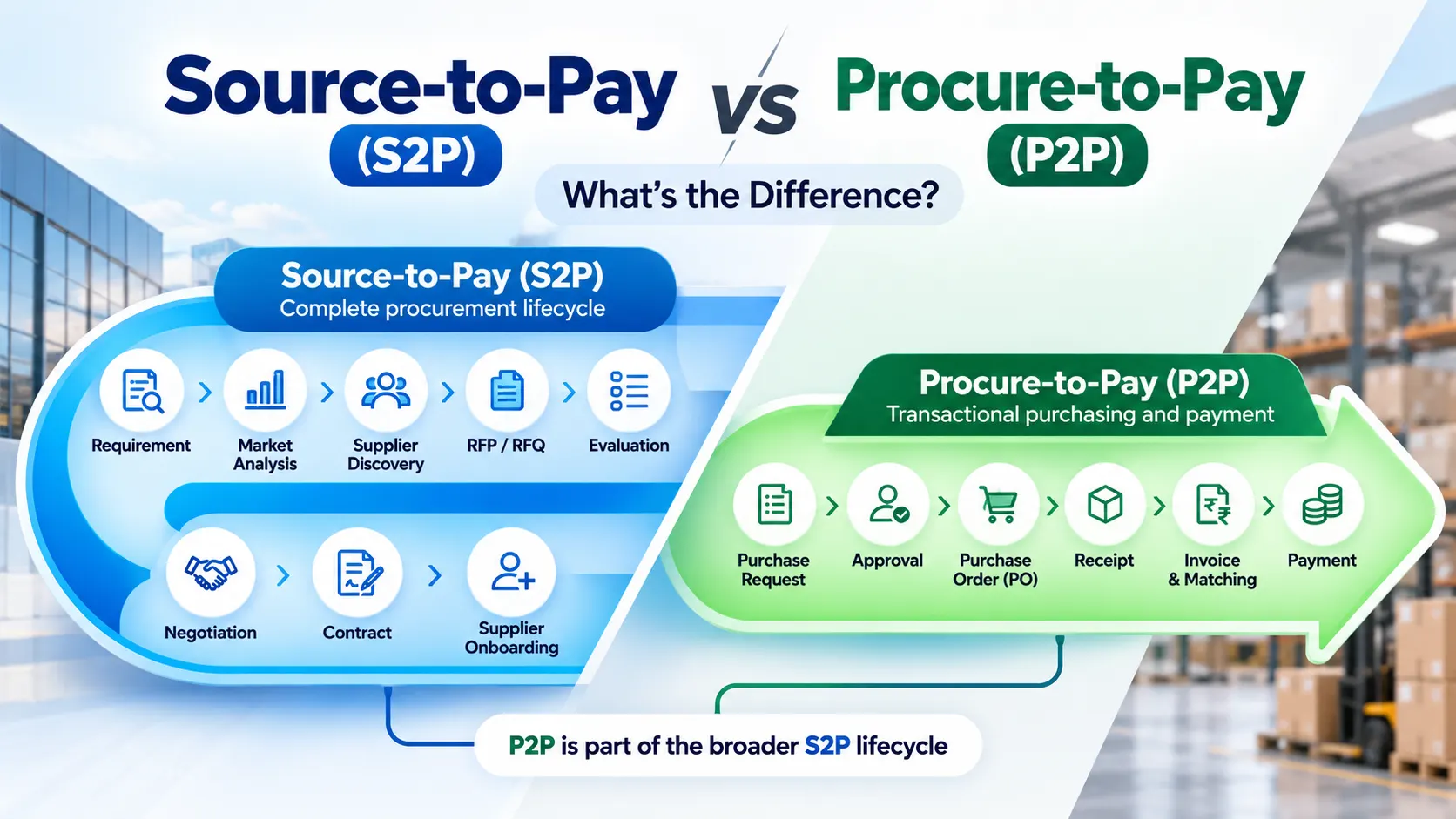
While steps describe individual actions, stages group those actions into broader phases. Understanding the difference helps clarify where strategic decisions happen versus where transactions get processed.
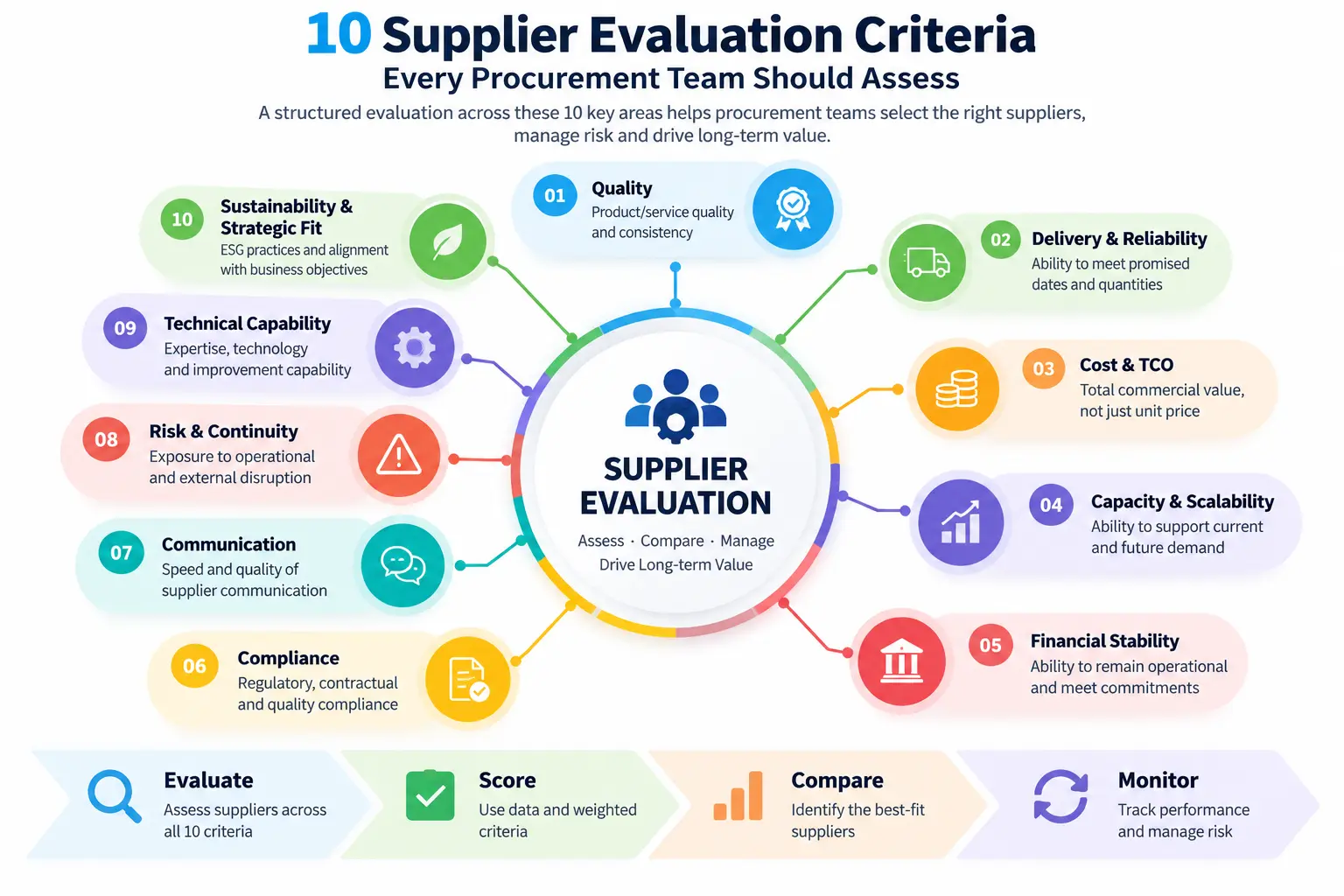
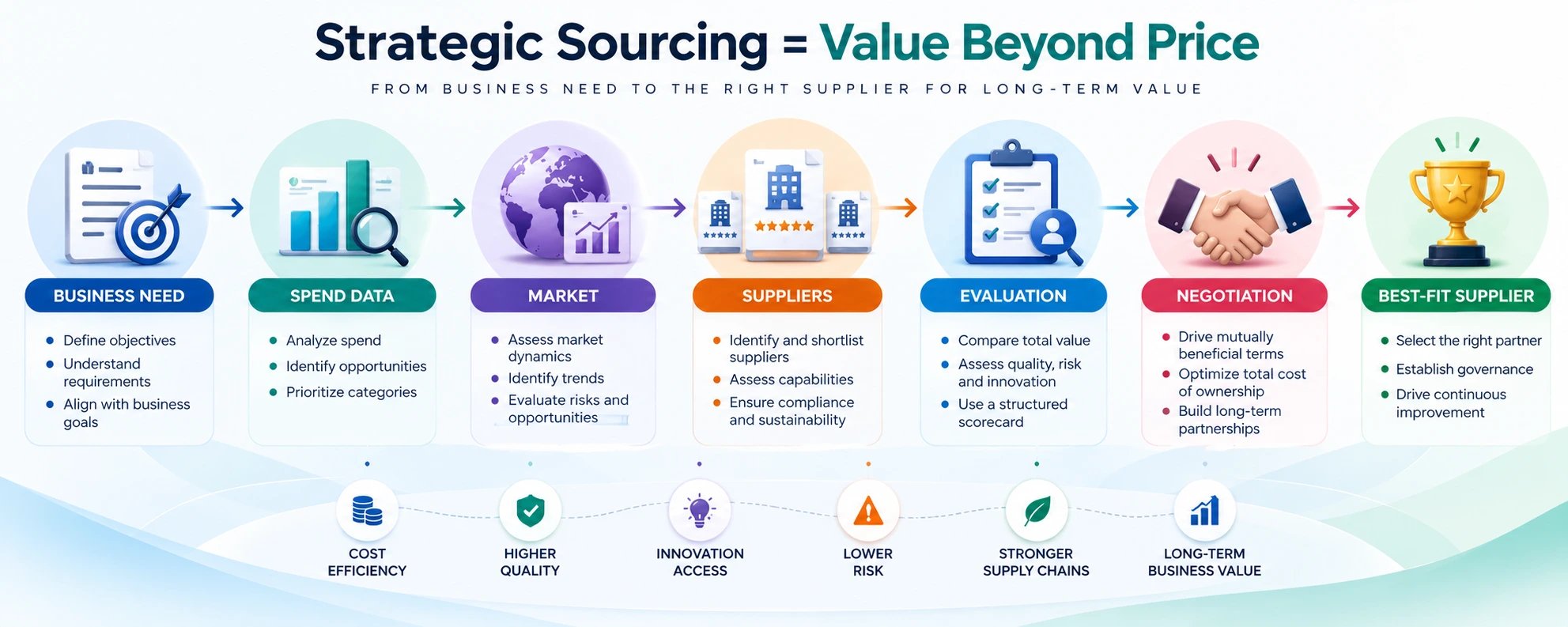
Before any purchase request exists, procurement teams work on building a strong supplier base. This stage involves identifying potential vendors, evaluating their capabilities, negotiating contracts, and establishing preferred supplier relationships.
Strategic sourcing happens periodically—when contracts come up for renewal, when you're entering new markets, or when current suppliers aren't meeting expectations.
This is the day-to-day operational stage covering everything from requisition through payment. Most of the steps outlined earlier fall into this stage.
Organizations using one centralized platform for procure-to-pay typically see faster purchase cycles and reduced invoice processing time compared to manual methods.
After purchases are complete, the work continues. Procurement tracks vendor performance—delivery accuracy, quality issues, responsiveness—and uses that data to inform future sourcing decisions.
Contract management ensures you're capturing negotiated discounts, meeting volume commitments, and renewing agreements before they lapse.
Procurement workflows look different depending on what you're buying and how urgent the need is. Here are four common patterns.
For low-value, routine purchases—office supplies, standard maintenance items—the workflow stays lean. An employee submits a request, their direct manager approves it, and procurement places the order with a pre-approved vendor. The entire cycle might take a day or two.
High-value purchases follow a more rigorous path. Think enterprise software, manufacturing equipment, or professional services contracts.
These workflows involve multiple approval layers, formal RFQ and RFP processes with several vendors, detailed evaluation criteria, contract negotiation, and often legal review. The cycle might span weeks or months.
Sometimes you can't wait. A critical machine breaks down, or a key supplier suddenly can't deliver.
Emergency workflows allow expedited purchasing with abbreviated approvals—often a single senior executive can authorize the spend. The trade-off is that documentation happens after the fact.
Organizations operating across multiple locations face unique challenges. A retail chain with 50 stores, or a healthcare network with facilities in 12 cities, requires workflows that balance local flexibility with centralized control.
Multi-branch workflows typically allow local teams to raise requests and receive goods while routing approvals and vendor management through a central procurement function. Real-time visibility across all locations prevents duplicate purchases and ensures consistent pricing.
Every effective workflow relies on several interconnected components working together.
The requisition captures everything needed to evaluate a purchase request: item details, quantities, budget codes, cost estimates, and business justification. Well-designed requisition forms reduce back-and-forth by collecting complete information upfront.
Maintaining an approved supplier list, tracking compliance documentation, and monitoring performance scores keeps your vendor base healthy. Centralized vendor data in one platform eliminates the chaos of scattered spreadsheets and outdated contact information.
Approval routing based on amount thresholds, spending categories, or department policies ensures the right people review the right purchases. Automated routing eliminates the "who do I send this to?" confusion that slows manual processes.
Matching PO, GRN, and invoice before payment catches errors, Matching PO, GRN, and invoice before payment catches errors—which cost an average of $53 each to rectify—prevents overpayment, and deters fraud. This control is fundamental to accounts payable integrity.
Tracking contract terms, renewal dates, and spending patterns reveals opportunities for consolidation and negotiation.
The difference between manual and automated workflows shows up in every metric that matters.
| Aspect | Manual Workflow | Automated Workflow |
|---|---|---|
| Approvals | Email chains, delays | Auto-routing, real-time alerts |
| Visibility | Scattered spreadsheets | Centralized dashboard |
| Matching | Manual checks | Automatic PO-GRN-invoice matching |
| Compliance | Paper audit trails | Audit-ready digital records |
| Errors | High risk of duplicates | Flagged discrepancies |
Manual workflows rely on email threads, phone calls, and tribal knowledge about who approves what. Requests get lost, approvers go on vacation without delegates, and finance spends hours reconciling mismatched documents.
Automated workflows route requests instantly, send reminders to approvers, and flag exceptions in real time.
Organizations that move from manual to automated procurement see measurable improvements across several dimensions.
Automated routing eliminates the delays caused by requests sitting in email inboxes. When an approver is unavailable, the system escalates automatically.
Maverick spending refers to purchases made outside approved processesMaverick spending refers to purchases made outside approved processes—organizations can lose 10–20% of targeted savings as a result. Automated workflows enforce policy at the point of request, making it harder for employees to bypass procurement.
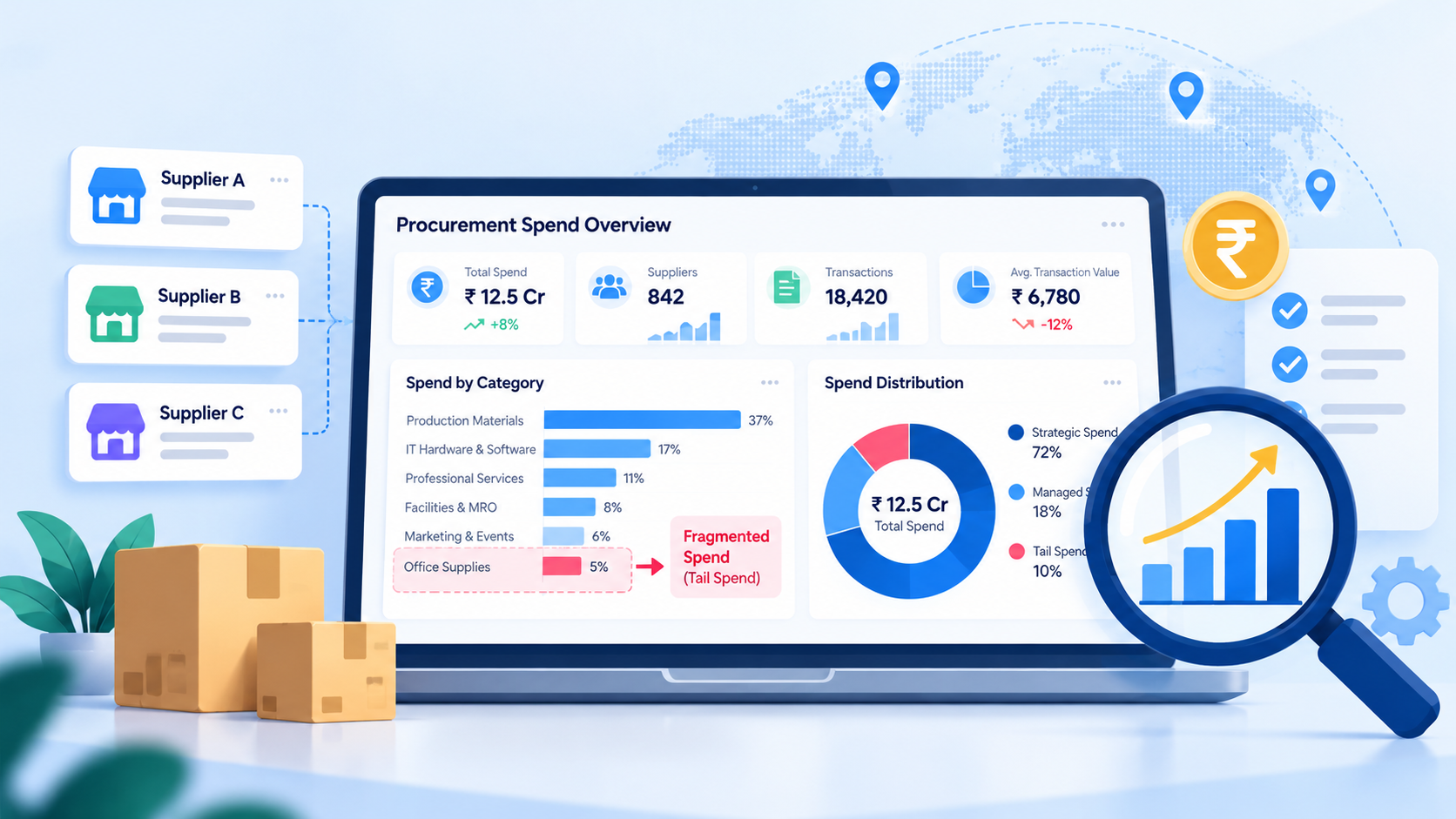
Dashboards showing what's being bought, who approved it, and how it impacts budgets give finance and procurement leaders the information they need to make decisions. No more waiting for month-end reports to discover budget overruns.
Every action in an automated workflow gets logged with timestamps and user IDs. When auditors ask for documentation, you can produce complete records in minutes rather than days.
Eliminate manual approvals, streamline purchase orders, improve supplier collaboration, and gain complete visibility across your procurement process with ZYNO Procurement.
Even with automation, workflow design matters.
Before changing anything, visualize how purchases actually flow through your organization today. You'll likely discover bottlenecks, redundant approvals, and workarounds that have become unofficial policy.
Clear spending limits prevent unnecessary delays on routine purchases while ensuring appropriate oversight for significant expenditures.
Maintaining supplier information, contracts, and purchase history in one centralized platform eliminates the fragmentation that causes duplicate vendors, missed discounts, and compliance gaps.
Reserve human judgment for decisions that warrant it. Routine, low-risk purchases can flow through with minimal intervention, freeing approvers to focus on strategic spending.
Key metrics to monitor include:
Even well-designed workflows encounter obstacles.
When requests pile up waiting for a single approver, the entire workflow stalls. Automated escalation rules that route requests to delegates after a defined waiting period can address this, along with mobile approval capabilities so approvers can act from anywhere.
Without consolidated data, procurement and finance operate blind. Real-time dashboards that aggregate spending across departments, locations, and categories in one view solve this problem.
Employees bypass procurement when the official process feels too slow or complicated. Streamlined workflows for routine purchases combined with policy enforcement built into the requisition system reduce this behavior.
Late deliveries and quality issues disrupt operations. Supplier scorecards that track performance metrics inform sourcing decisions and create accountability.
Missing documentation creates compliance risk. Automated capture and linking of all workflow documents—requisitions, approvals, POs, GRNs, and invoices—in a searchable digital archive addresses this gap.
As organizations grow, procurement workflows face new demands—The Hackett Group found procurement workloads rising 10% while budgets grow 1%. Designing for scale from the start prevents painful rework later.
Moving from disconnected tools and email-based approvals to a unified procurement platform transforms how teams work. ZYNO Procurement brings purchasing, vendor management, sourcing, and procure-to-pay workflows into one centralized platform with AI-powered automation throughout.
The platform covers the full purchase lifecycle—from business needs identification and auto request routing through supplier performance evaluation, RFQs and quote comparison, instant PO creation, goods receipt verification, invoice-to-PO/GRN matching, and fast payment closure.
Digitize procurement operations, reduce approval bottlenecks, improve supplier performance, and gain complete control over organizational spending with ZYNO Procurement.
The seven stages typically include need identification, supplier research, solicitation, evaluation and selection, contract negotiation, purchase order management, and supplier relationship management. These stages cover the complete procurement lifecycle from recognizing a business need through ongoing vendor management.
The five core steps are requisition, supplier selection, purchase order creation, goods receipt, and invoice payment. This simplified view captures the essential procure-to-pay flow most organizations follow.
The seven principles are value for money, competition, transparency, integrity, fairness, accountability, and efficiency. These principles guide ethical and effective procurement practices across public and private organizations.
A procurement workflow covers the broader process including strategic sourcing and supplier management, while procure-to-pay focuses specifically on the transactional flow from purchase requisition through invoice payment. Procure-to-pay is one stage within the larger procurement workflow.
AI automates repetitive tasks like approval routing, quote comparison, and invoice matching while flagging exceptions for human review. AI-powered procurement platforms also provide predictive insights for demand planning and supplier performance analysis.
Shweta Bansal
Content Writer
Shweta Bansal (Content Writer and Social Media Manager) She specialises in SEO-driven content and AI-focused digital strategies. She creates engaging blogs, website copy, and social media content that enhance brand visibility and audience engagement.
Procurement Software Trends in 2026: What to Expect
Read More →

Why E-Procurement Outperforms Traditional ERP in Modern Procurement
Read More →Top 10 Procurement Software Companies in India 2026
Read More →
Best Procurement Software Companies in Kuwait (2025)
Read More →
5 Best Procurement Software in Africa for Enterprises & SMEs (2026 Guide)
Read More →
Best Procurement Software in Nigeria 2026 | Top 5 Picks
Read More →
Best Procurement Software Providers in USA (2025): How AI is Transforming the Future
Read More →
10 Best Procurement Software Providers in Thailand for Streamlined Supply Chain Management
Read More →
Top 10 Cloud-Based Procurement Solutions in Portugal for Businesses in 2025
Read More →
Top 10 Procurement Software Providers in Switzerland 2026: Streamlining Sourcing and Supplier Management
Read More →
What Makes ZYNO Procurement Different from Other Oil & Gas Procurement Software
Read More →
The Digital Transformation of Logistics Procurement in the Middle East
Read More →
A Step by Step Guide to Procurement Management Software for Modern Enterprises
Read More →
Sourcing and Procurement: What is the Difference and Why It Matters
Read More →Difference Between Procurement and Supply Chain Management
Read More →
What Is Procurement Software and Why Modern Businesses Need It
Read More →
Best Procurement Management Software to Automate ERP Process
Read More →
Direct vs Indirect Procurement: Key Differences, Examples & Uses (2026)
Read More →
Smart procurement strategies for cost optimization & risk management
Read More →
What Is Procurement? Everything You Need to Know (Types, Process & SAP)
Read More →Beyond Cost-Cutting: How Procurement Drives Margin Expansion in 2026
Read More →
Direct Procurement Explained: Process, Examples, and When It Is Used
Read More →
What Are the 5 Types of E-Procurement? A Complete Guide for Businesses
Read More →
Which Procurement Management Software Is Best? Top Tools Compared for 2026
Read More →
Top 8 Coupa Alternatives to Explore in 2026
Read More →
Looking to Replace Coupa? Discover the Best Alternatives Like ZYNO Procurement
Read More →
How Does Procurement Software Work? A Complete Guide
Read More →
ZYNO Procurement vs Coupa: Best Procurement Software Comparison for Mid-Market Teams
Read More →
Best SAP ARIBA Procurement Alternatives in 2026
Read More →
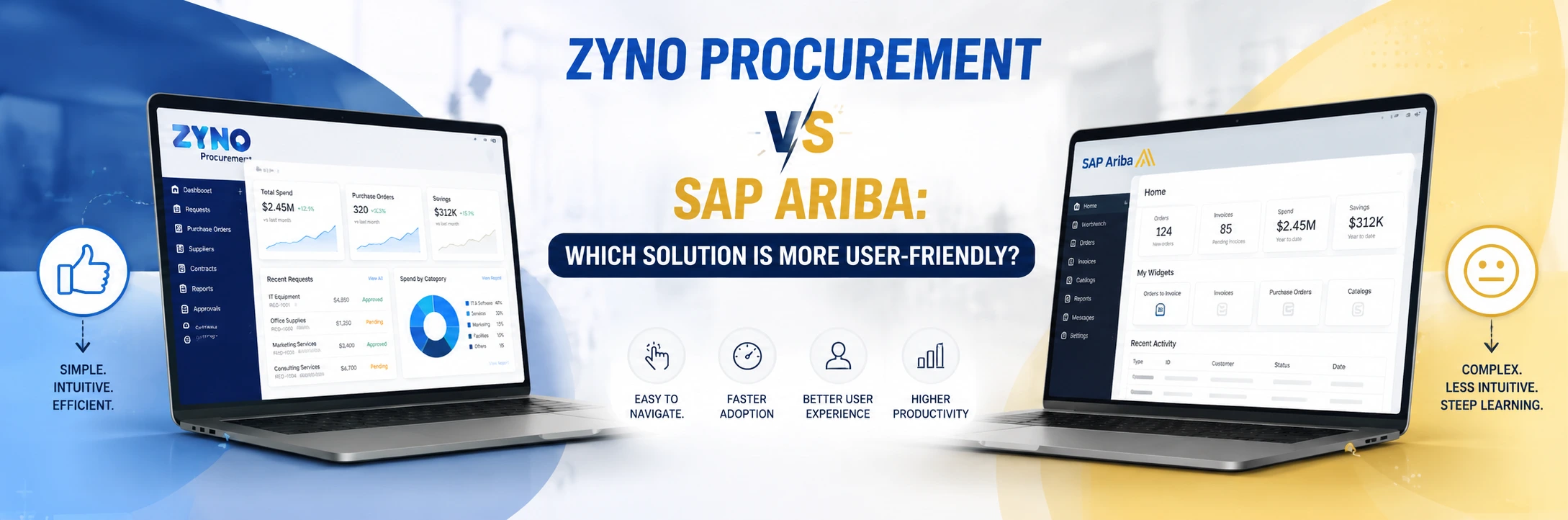
ZYNO Procurement vs SAP Ariba: Which Solution Is More User-Friendly?
Read More →
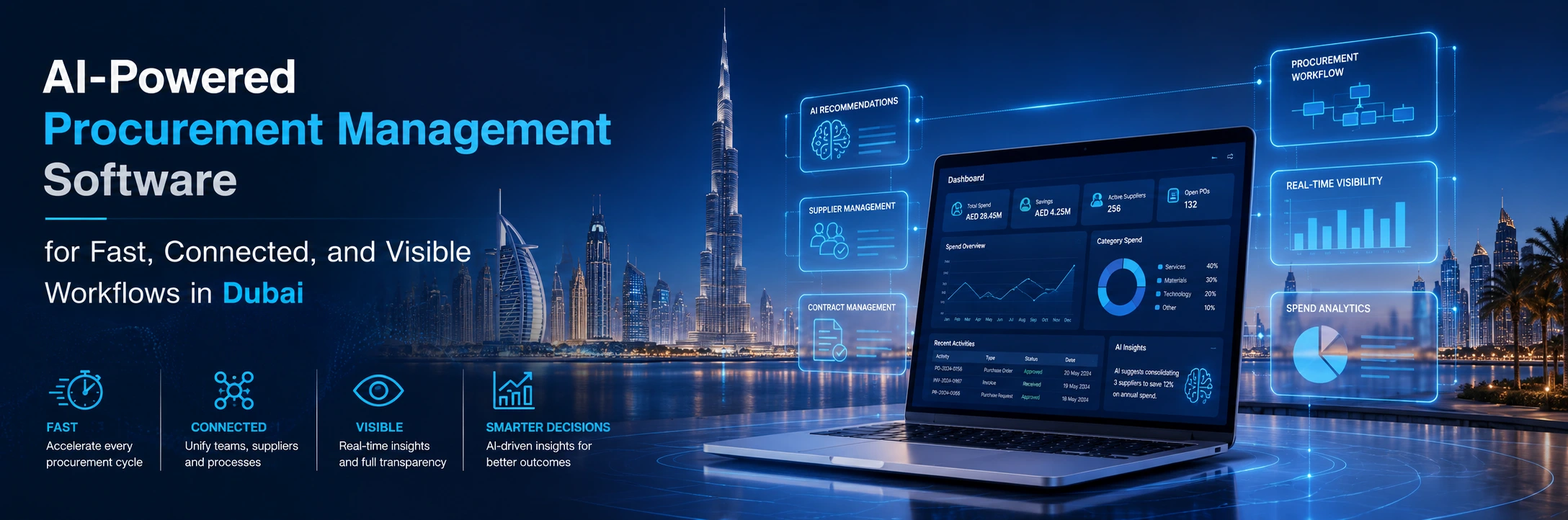
AI-Powered Procurement Management Software for Fast, Connected, and Visible Workflows in Dubai
Read More →
What is Vendor Management? Complete Guide to Vendor Management Software, Systems, and Processes
Read More →
Best Procurement Management Software In Kenya
Read More →
6 SAP Ariba Alternatives for Mid-Market Businesses in 2026
Read More →
Top E-Procurement Solutions for B2B Organizations (2026)
Read More →
Quotation Format: Free Templates + Complete Guide (2026)
Read More →
Cost Control Software Compared: Features, Pricing, and Performance
Read More →
Procurement Workflow: Steps, Stages, and Real Examples
Read More →
Top 10 Zycus Alternatives for Procurement Teams in 2026
Read More →Partner with ZYNO by Elite Mindz to revolutionize how your business works. Fill out the form, and we’ll reach out with AI-powered solutions made just for you.
We use browser cookies to ensure you get the best experience on our website. Learn more
The form was submitted successfully!
ZYNO Digital
Fueling Smarter Digital Growth
ZYNO Digital fuels smarter digital growth through data-driven marketing, creative storytelling, and performance strategies that boost visibility, engagement, and measurable business outcomes across global platforms.
ZYNO Tech
Engineering the Future of IT
ZYNO Tech delivers cutting-edge IT solutions — including web, mobile, and digital transformation services — helping businesses scale efficiently, innovate faster, and stay ahead in a connected world.
ZYNO AI
AI Built for Business Growth
ZYNO AI harnesses the power of artificial intelligence to automate processes, enhance decision-making, and deliver predictive insights — driving innovation, agility, and measurable business growth.
ZYNO by Elite Mindz
Your Partner in the AI-Powered Future
ZYNO by Elite Mindz offers AI-powered products and services that unify operations, boost productivity, and drive digital transformation — helping businesses scale smarter and innovate faster.
* In just 2 mins you'll get a response
* Your idea is 100% protected by our Non-Disclosure Agreement