
 Contact Us




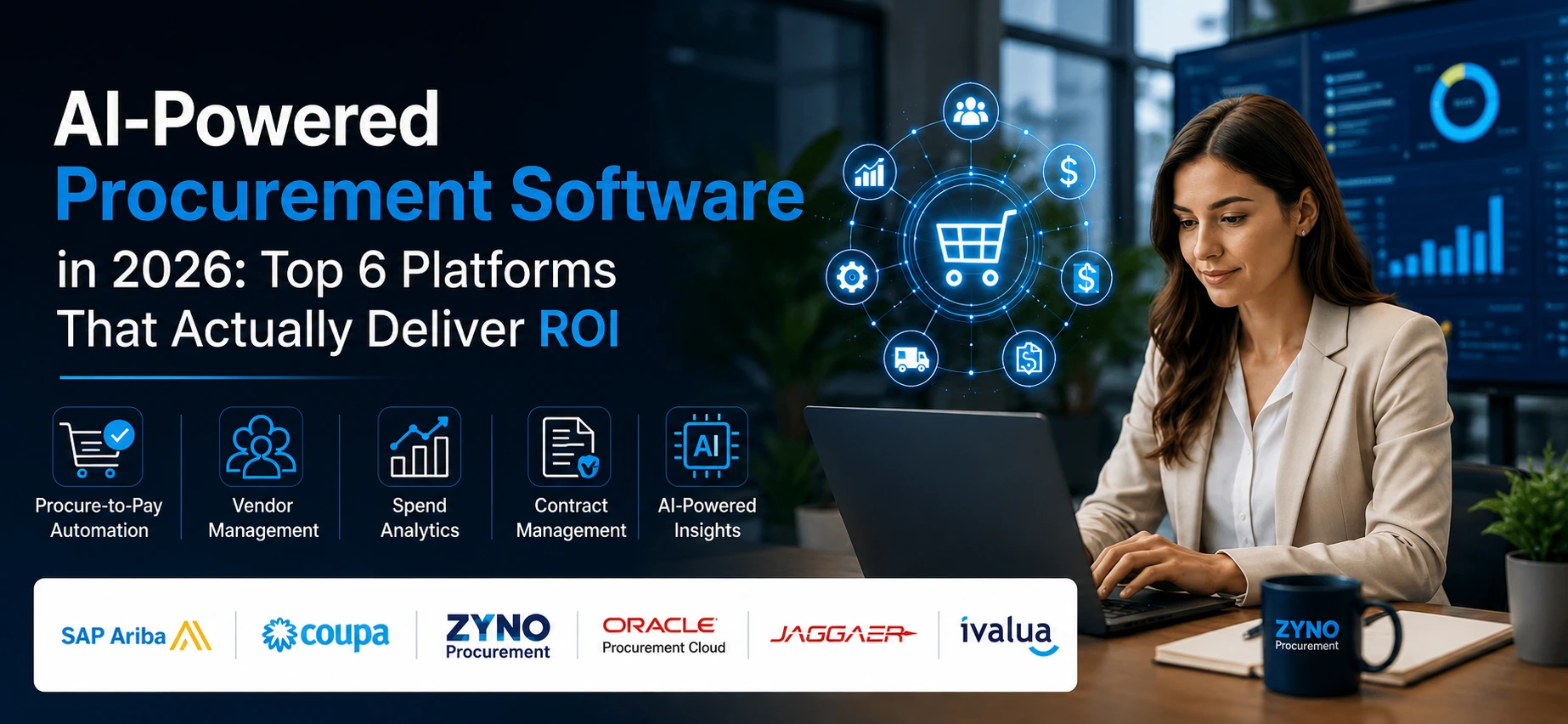




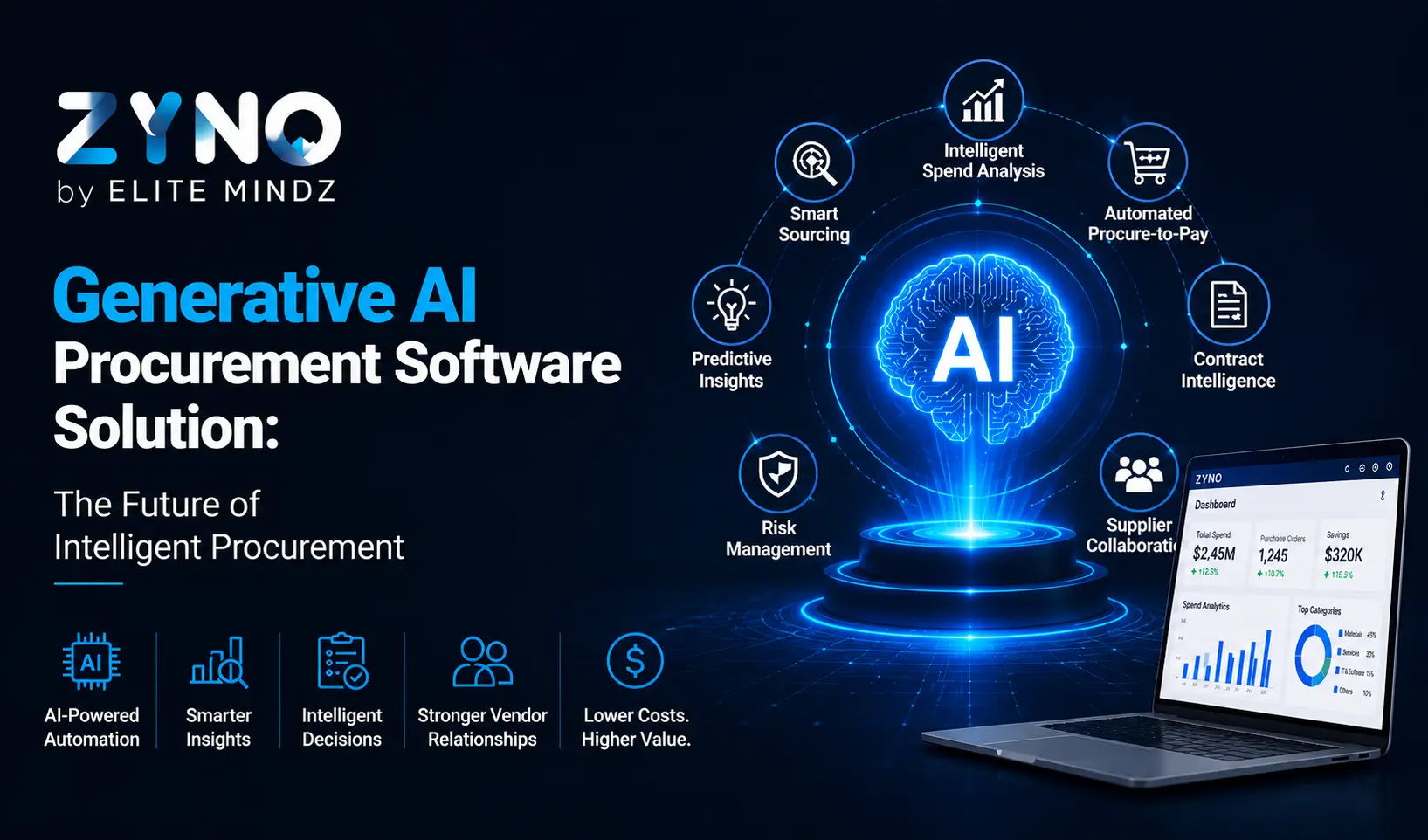
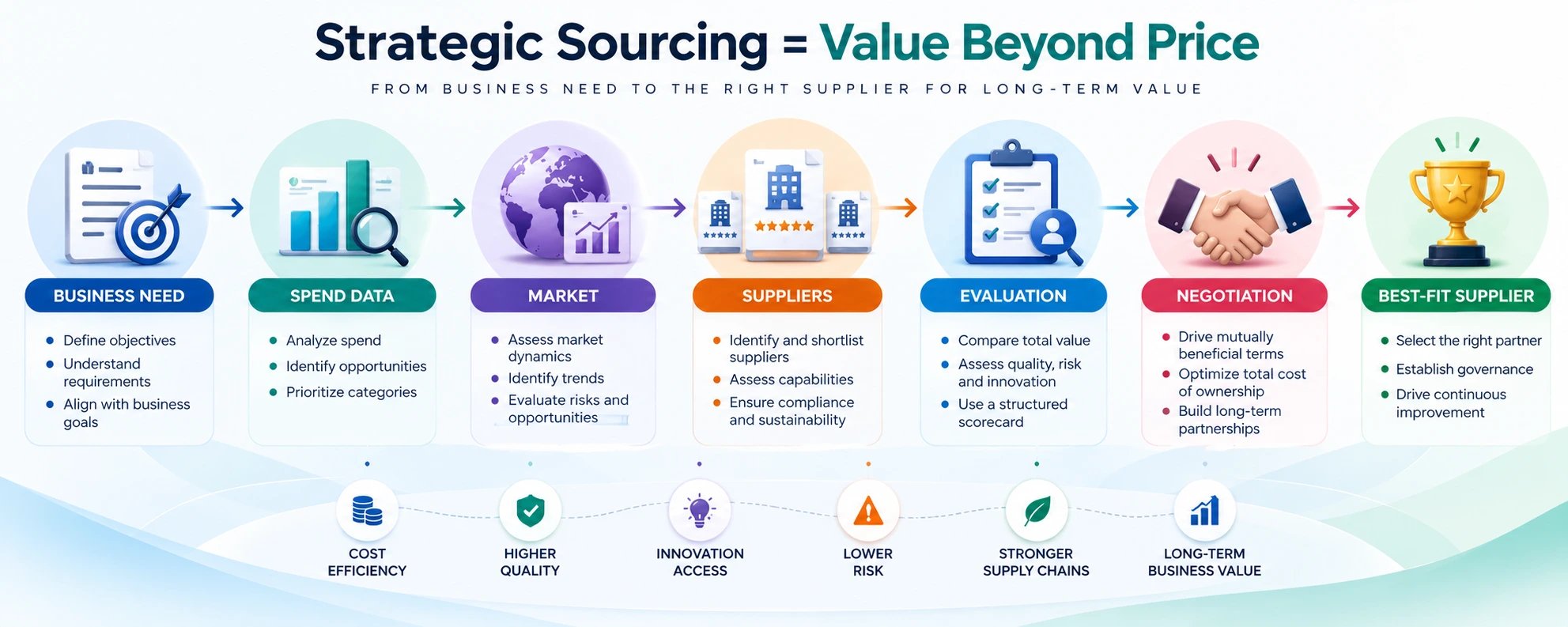
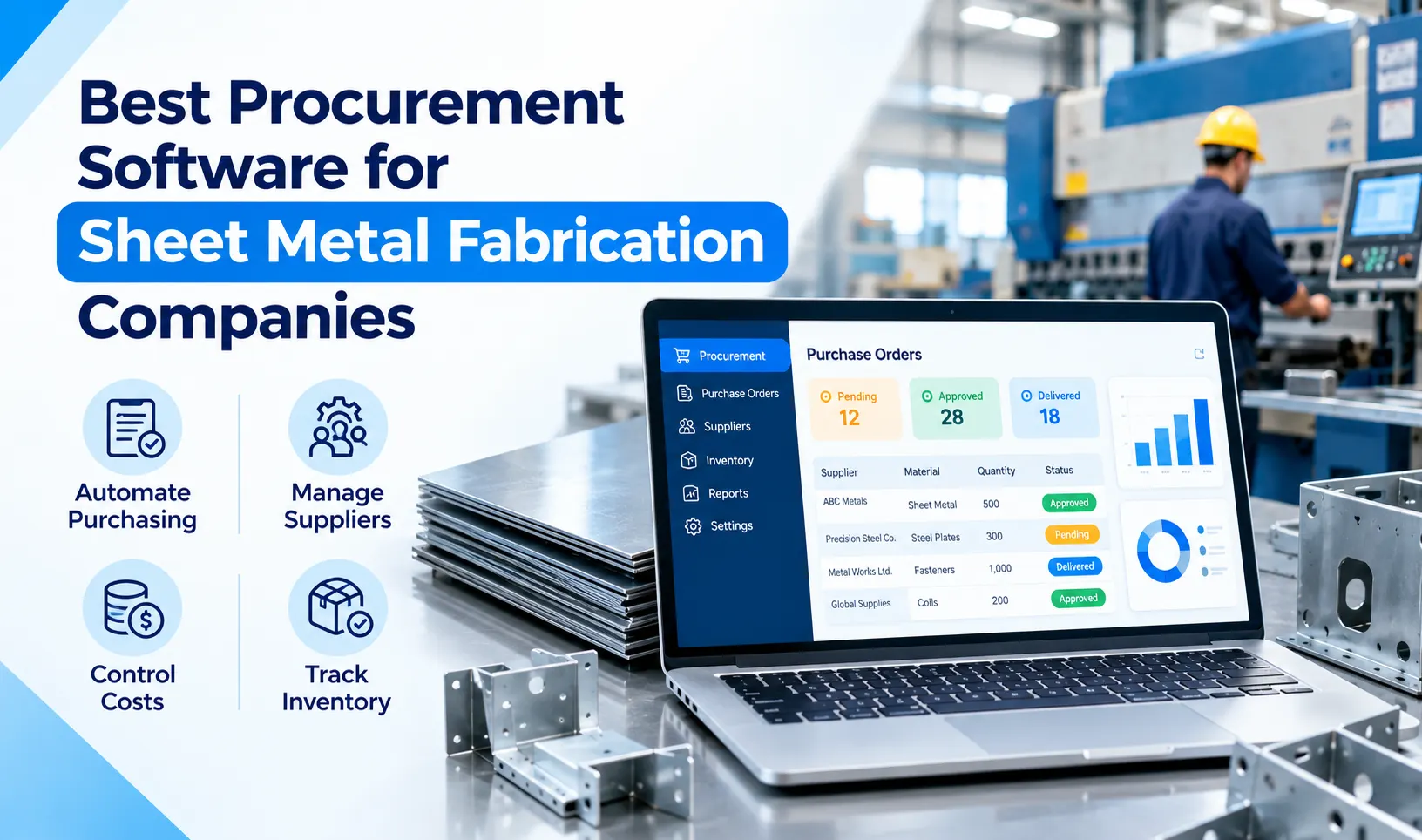
Procurement software is no longer just about replacing purchase orders and spreadsheets. Modern procurement teams need technology that can help them control spend, manage suppliers, automate approvals, accelerate sourcing and turn procurement data into better decisions.
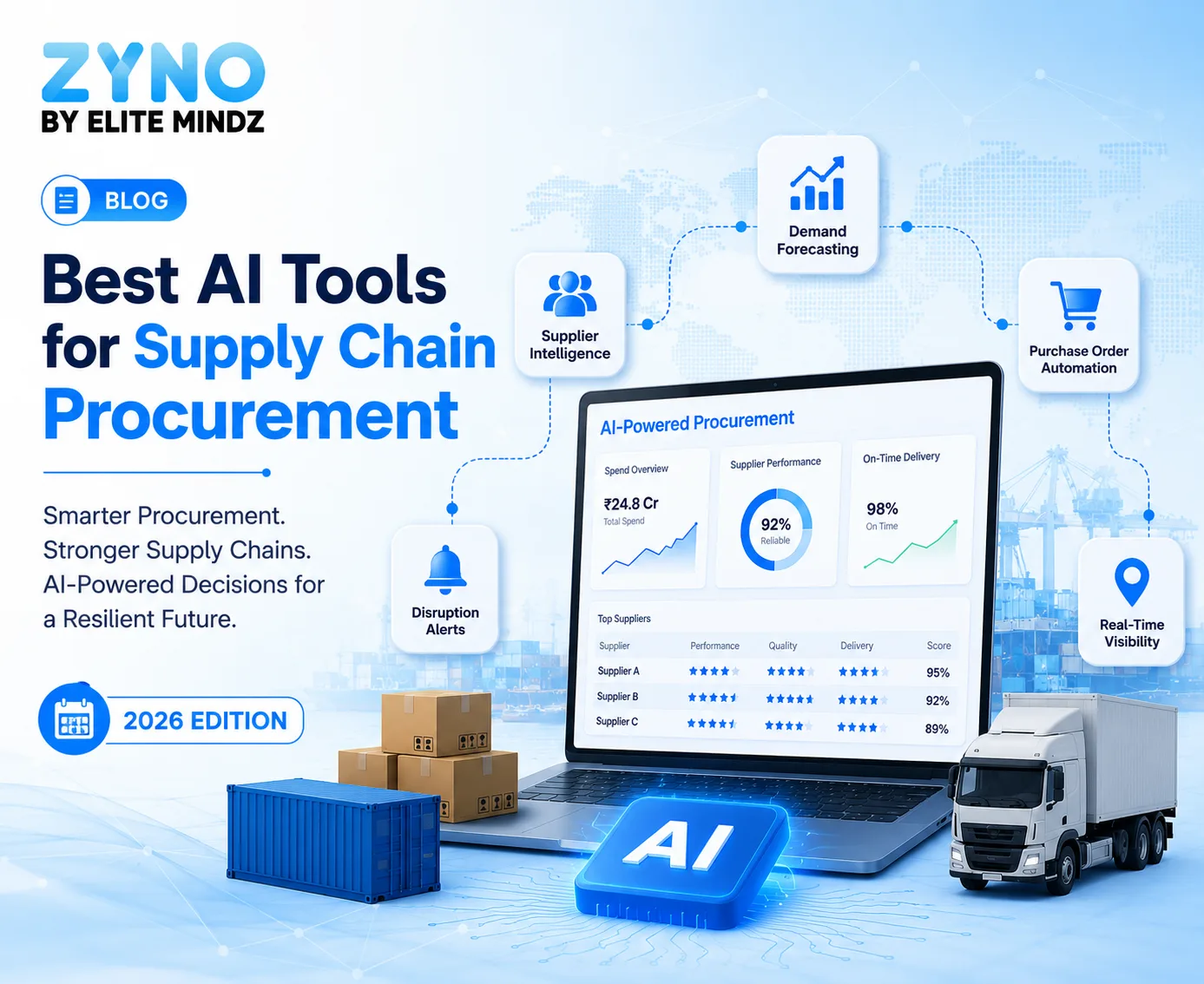
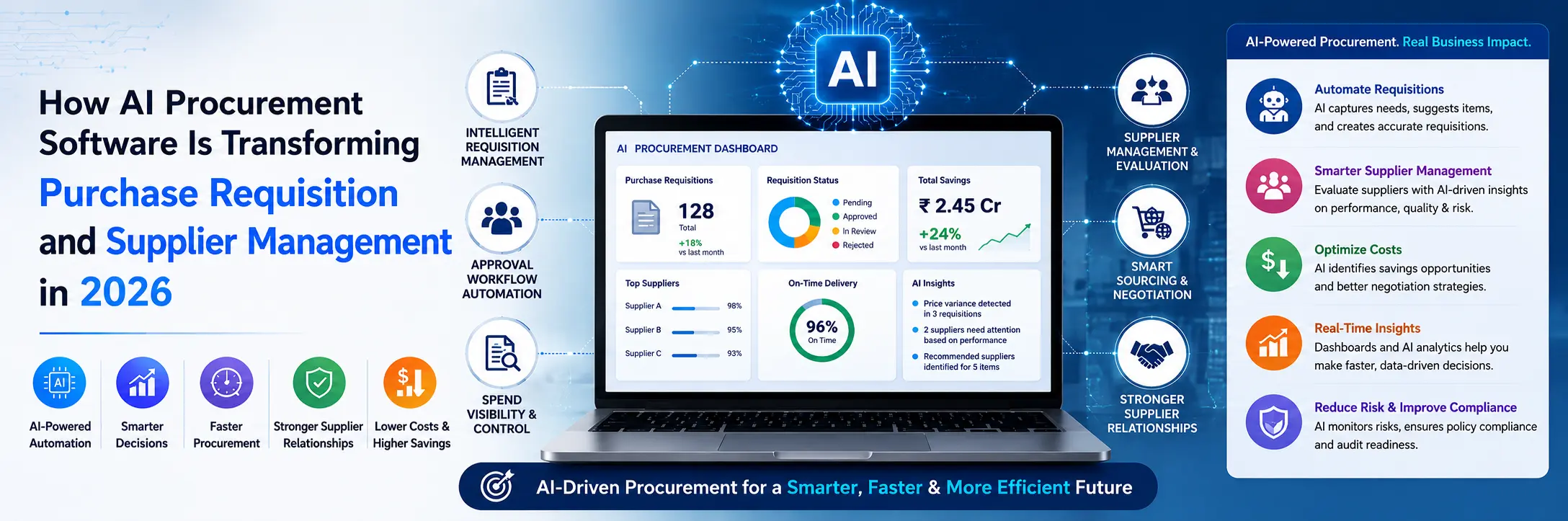
AI adds another layer to that equation. Instead of simply following predefined workflows, AI-enabled procurement platforms can help analyze purchasing data, identify patterns, process documents, support supplier decisions and surface opportunities for action.
But there is a problem with comparing these platforms. Almost every major procurement vendor now talks about AI.
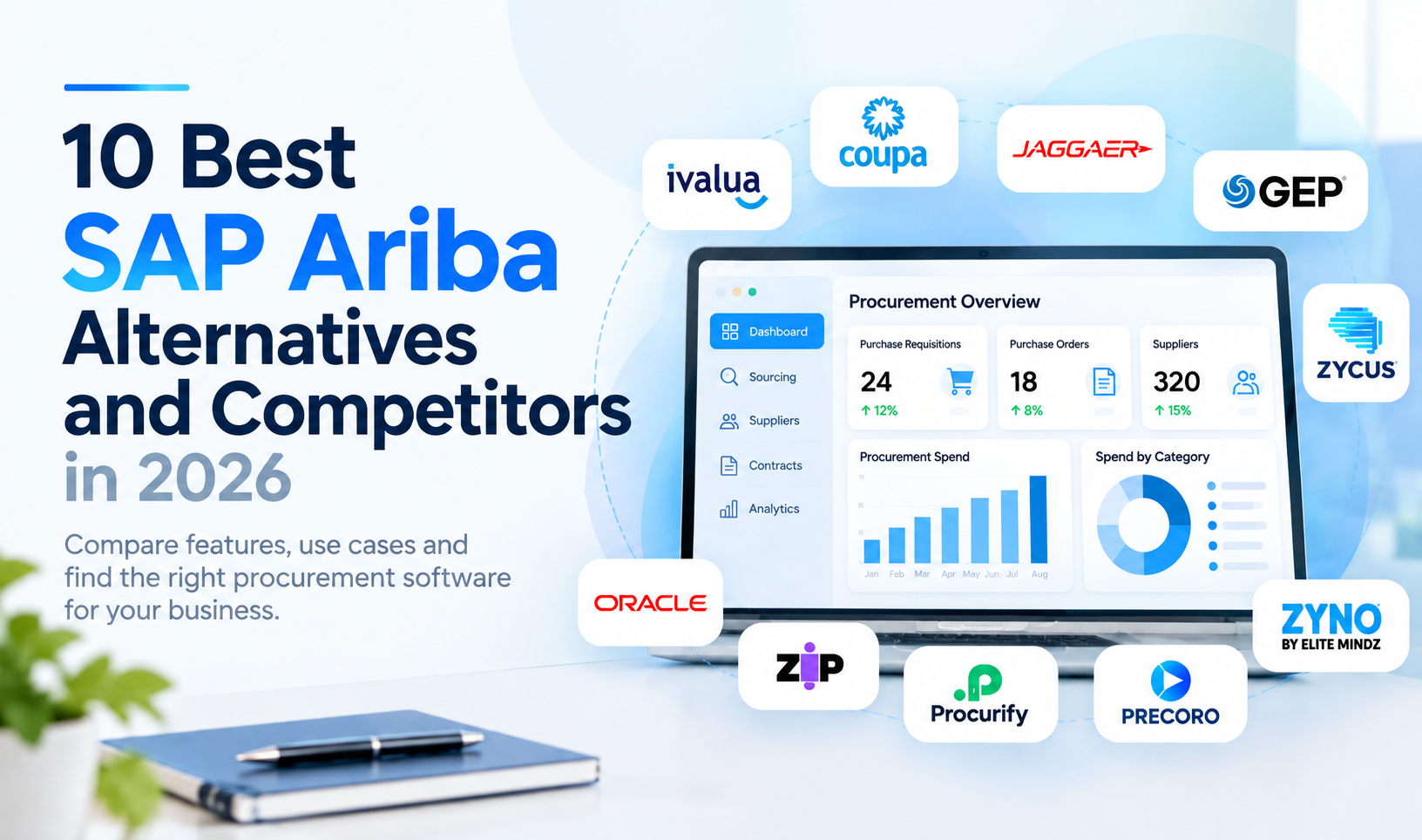
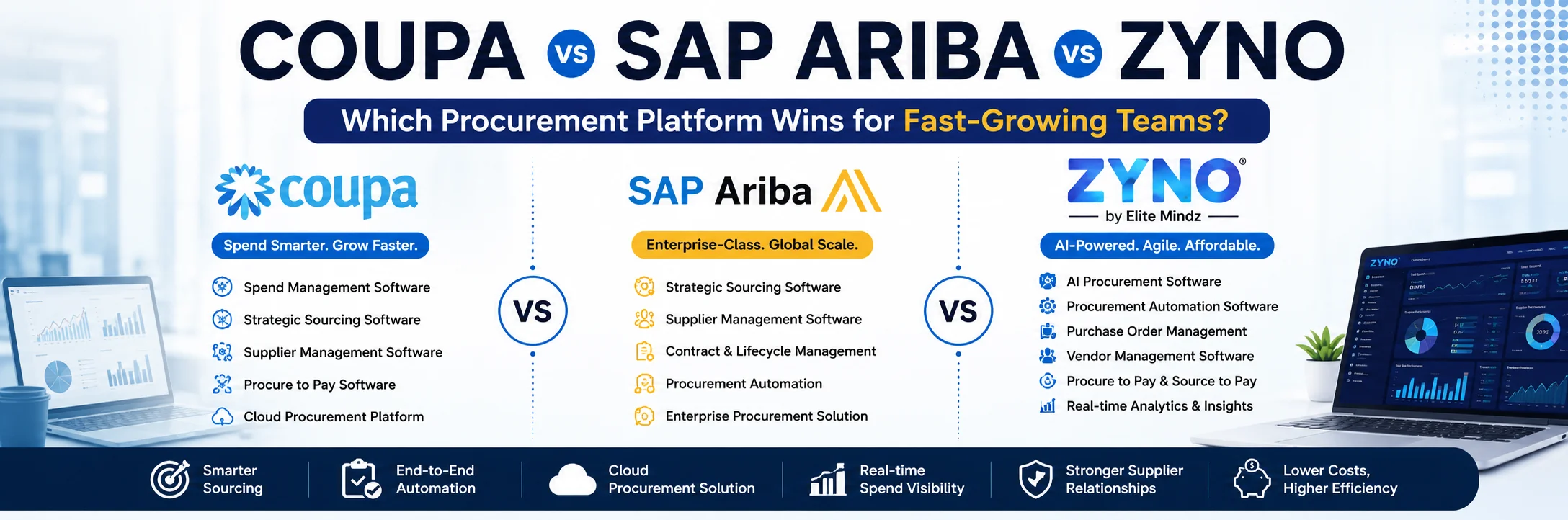
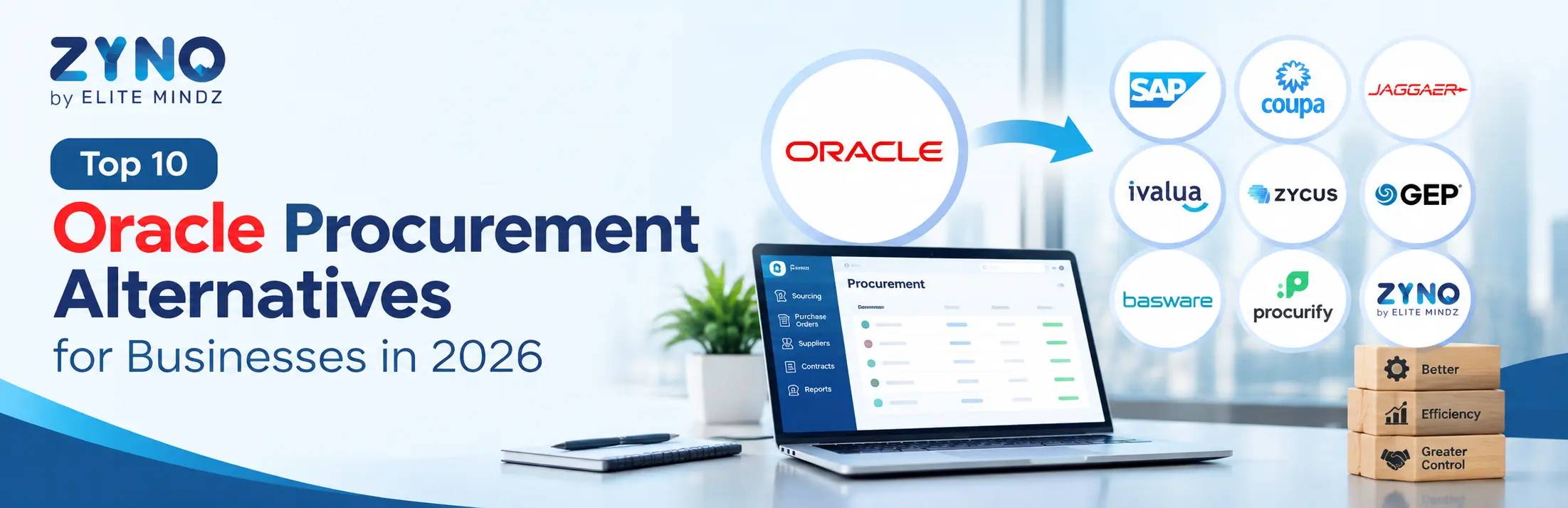
The best AI procurement software depends on your procurement complexity, existing ERP, supplier network, automation requirements and expected ROI. Six platforms worth evaluating in 2026 are ZYNO Procurement, SAP Ariba, Coupa, Oracle Procurement, JAGGAER and Ivalua. They differ in AI capabilities, source-to-pay coverage, sourcing, supplier management, integrations, configurability and ideal customer profile.
The more useful question is:
What can the platform actually help your procurement team do better?
That is the basis of this comparison.
We looked at six platforms that businesses may consider when evaluating AI-enabled procurement:
- ZYNO Procurement
- SAP Ariba
- Coupa
- Oracle Procurement
- JAGGAER
- Ivalua
The goal is not to declare one universal winner. Each platform has a different sweet spot.
Quick Comparison: 6 AI Procurement Platforms
| Platform | Best for | Key strength | AI / intelligence focus | Procurement scope |
|---|---|---|---|---|
| ZYNO Procurement | Growing and mid-market businesses | Connected procurement automation | AI-assisted intake, supplier, spend and invoice intelligence | End-to-end |
| SAP Ariba | Large SAP-centric enterprises | Enterprise procurement and supplier network | AI-assisted procurement workflows | End-to-end |
| Coupa | Enterprise spend management | Spend visibility and control | Spend intelligence and guided purchasing | Broad |
| Oracle Procurement | Oracle ecosystem users | Enterprise integration | AI-enabled procurement workflows and analytics | End-to-end |
| JAGGAER | Complex sourcing environments | Strategic sourcing | Sourcing and supplier intelligence | Broad |
| Ivalua | Complex procurement operations | Configurability | AI-assisted procurement intelligence | End-to-end |
There is no single best platform for every company. Your shortlist should depend on procurement complexity, ERP environment, sourcing requirements, supplier landscape, implementation capacity and expected business value.
ZYNO Procurement
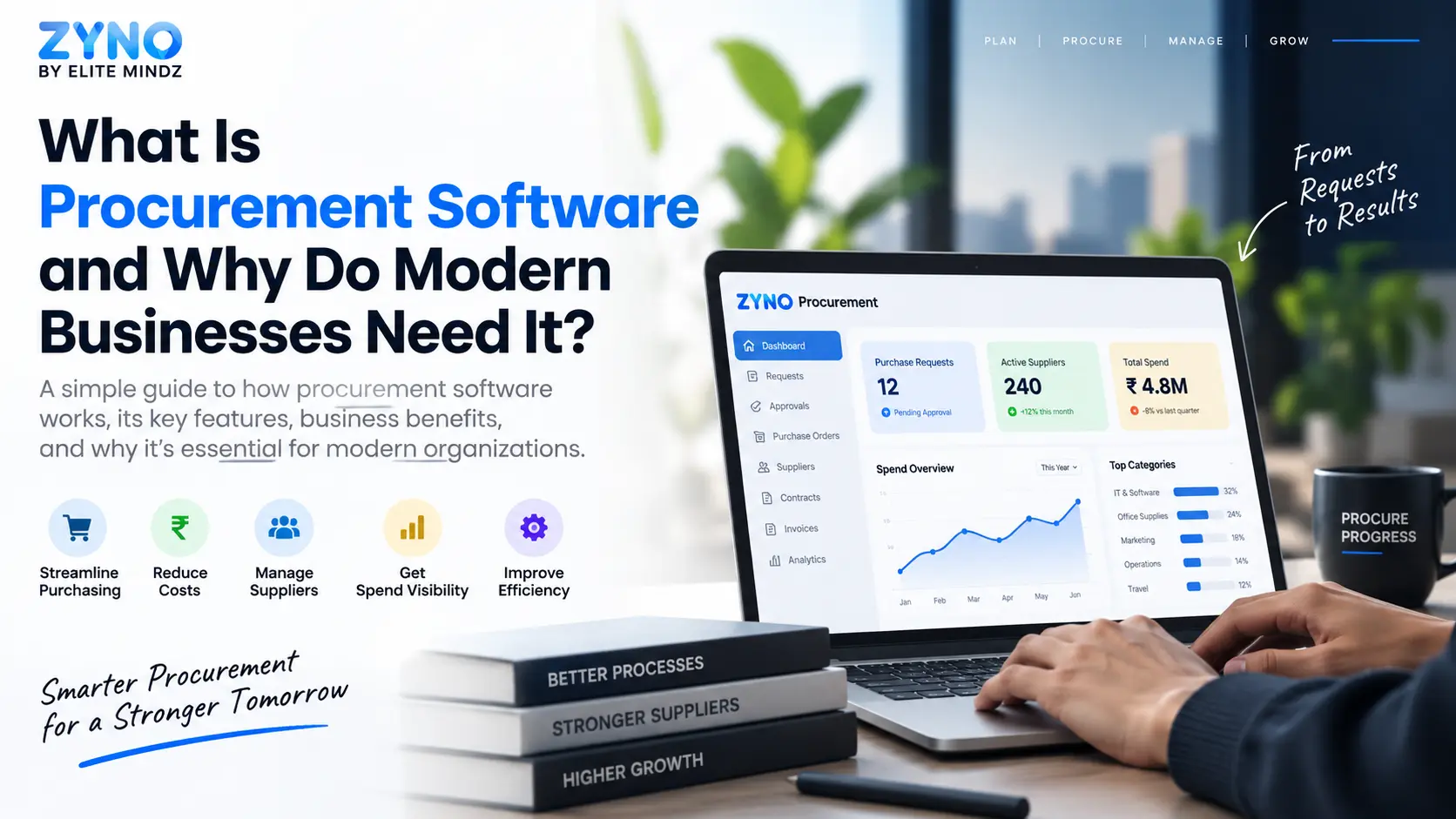
ZYNO Procurement approaches procurement as a connected workflow rather than a collection of disconnected purchasing activities.
The platform brings together areas such as purchase requests, approvals, supplier management, quotation management, RFPs, purchase orders, goods receipt, invoice processing, contracts and spend analytics.
That makes ZYNO particularly relevant for businesses that want to introduce AI into everyday procurement operations rather than use AI only as a reporting layer.
Key strengths
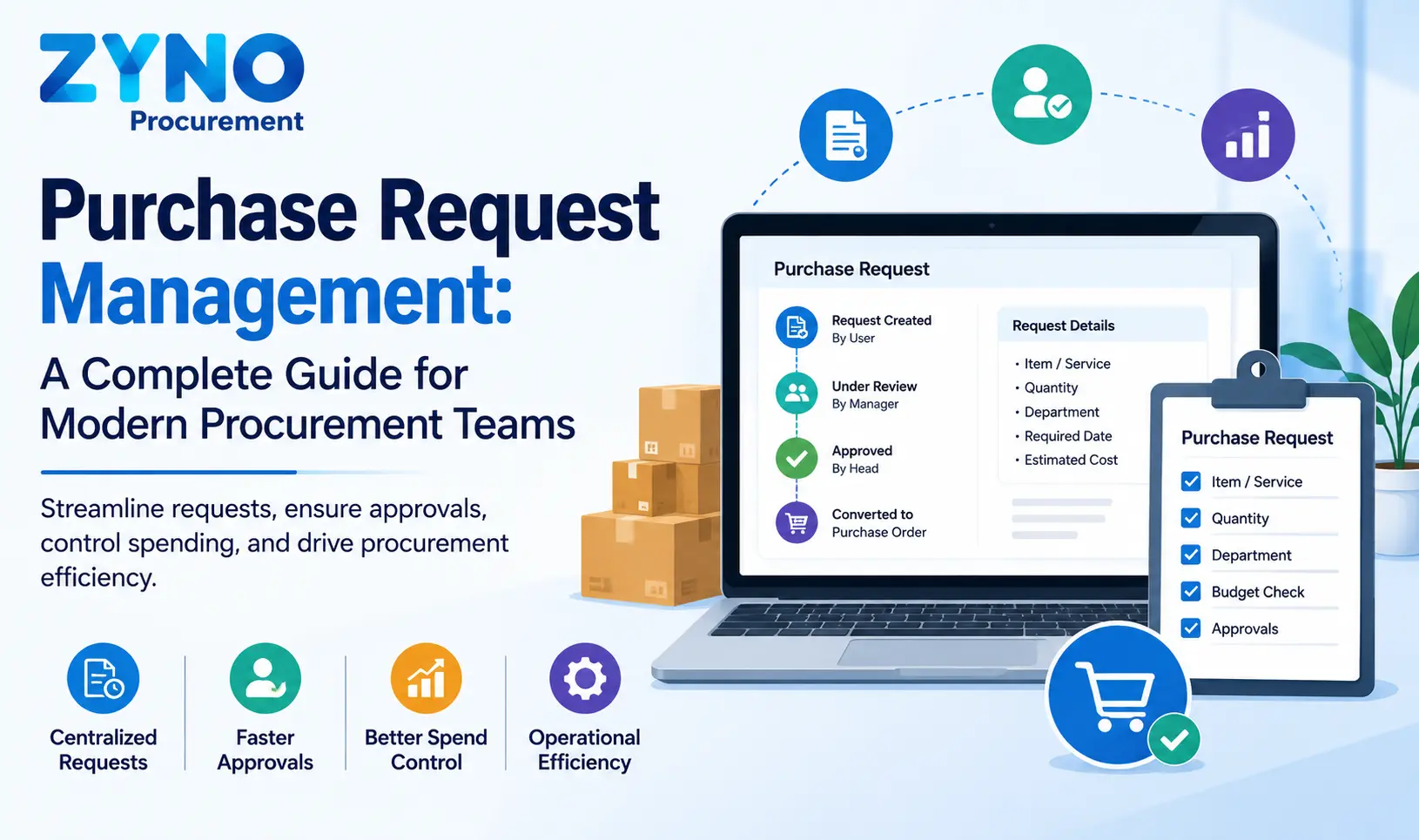
- Purchase request management
- AI-powered procurement intake
- Automated approval workflows
- Vendor and supplier management
- Quotation management
- RFP management
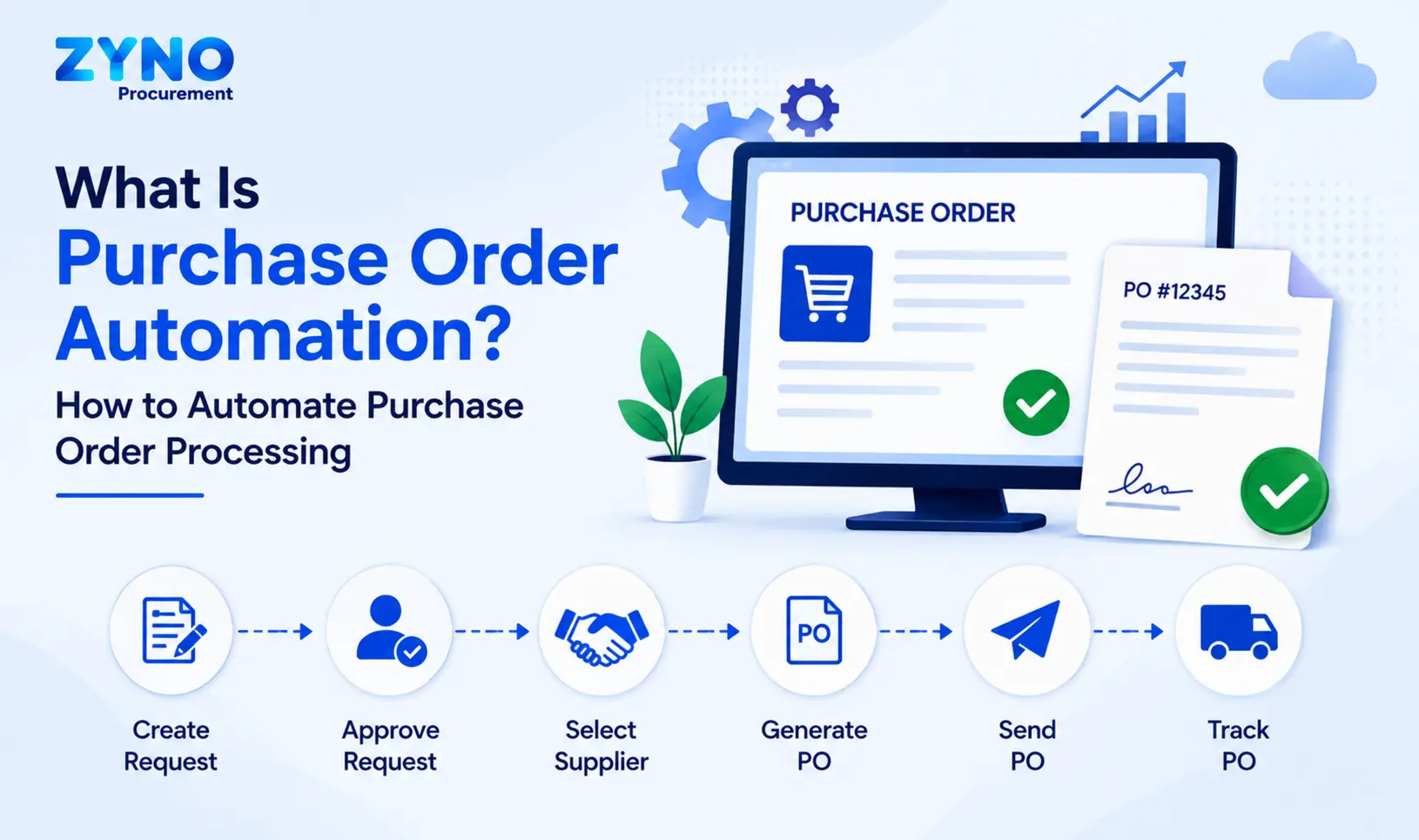
- Purchase order automation
- Goods receipt management
- Procure-to-pay workflows
- Invoice verification
- Contract management
- Spend analytics
- Vendor portal
- Procurement reporting
AI capabilities
ZYNO's AI capabilities extend into several stages of the procurement workflow.
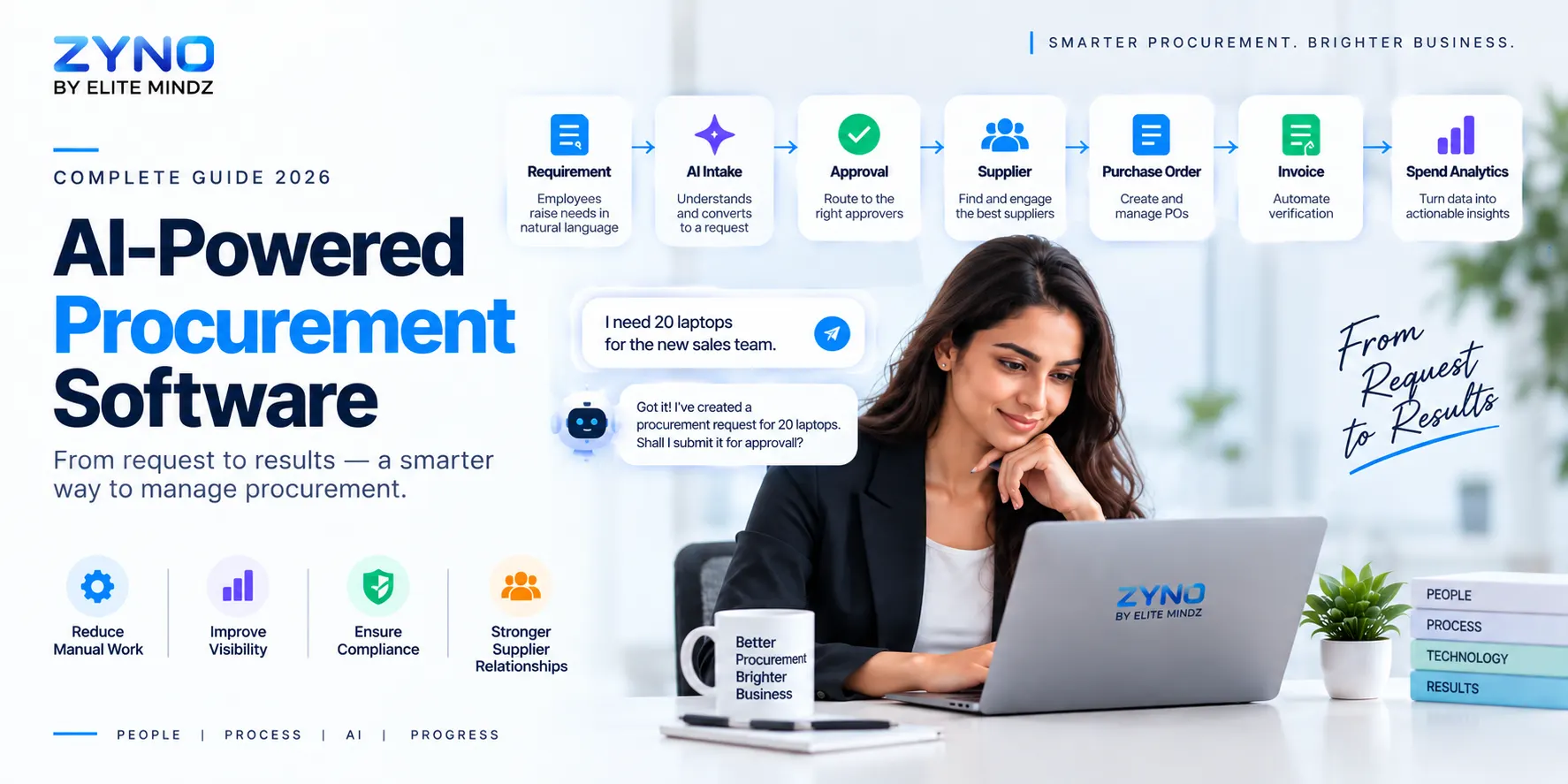
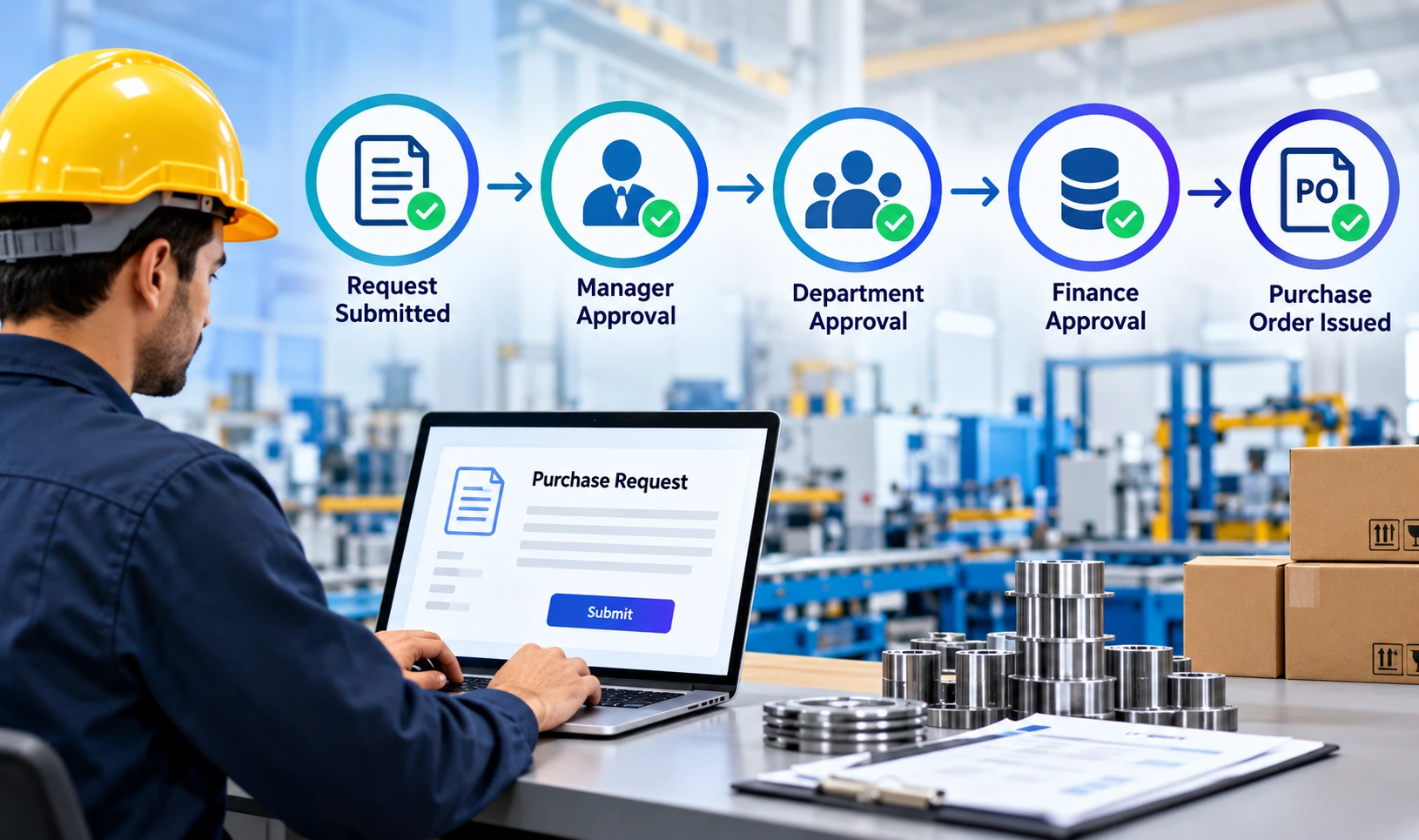
For example, AI-powered procurement intake can interpret a natural-language purchase requirement, help populate requisition information, support supplier recommendations and route the request through an approval workflow.
AI-based invoice verification can help extract invoice information and check invoices against purchase orders and goods receipts.
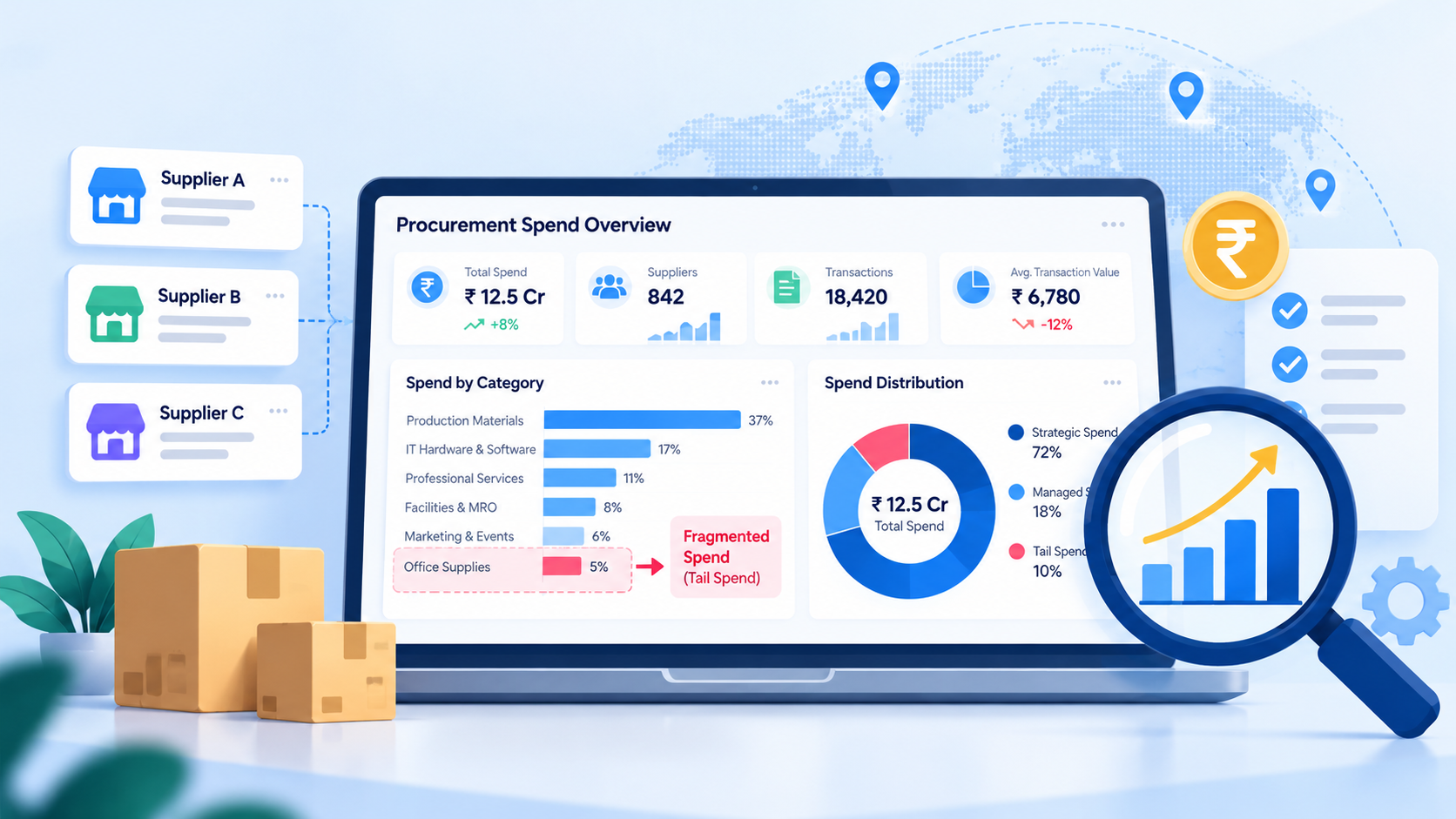
Spend analytics can also help procurement teams identify spending patterns, maverick spend and potential savings opportunities.
Procurement capabilities
ZYNO covers a broad procurement workflow:
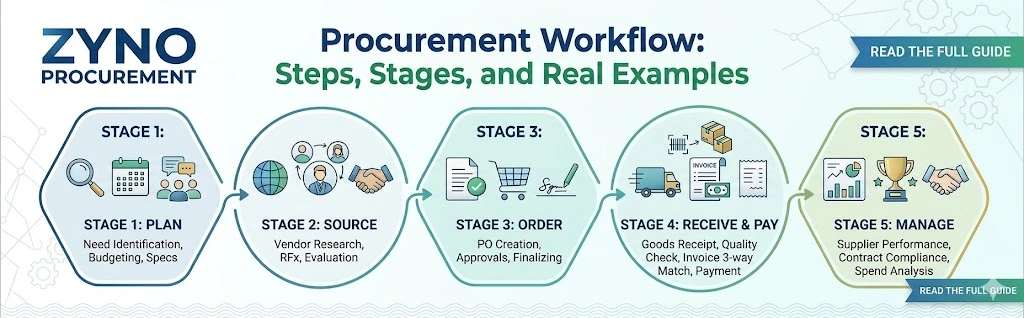
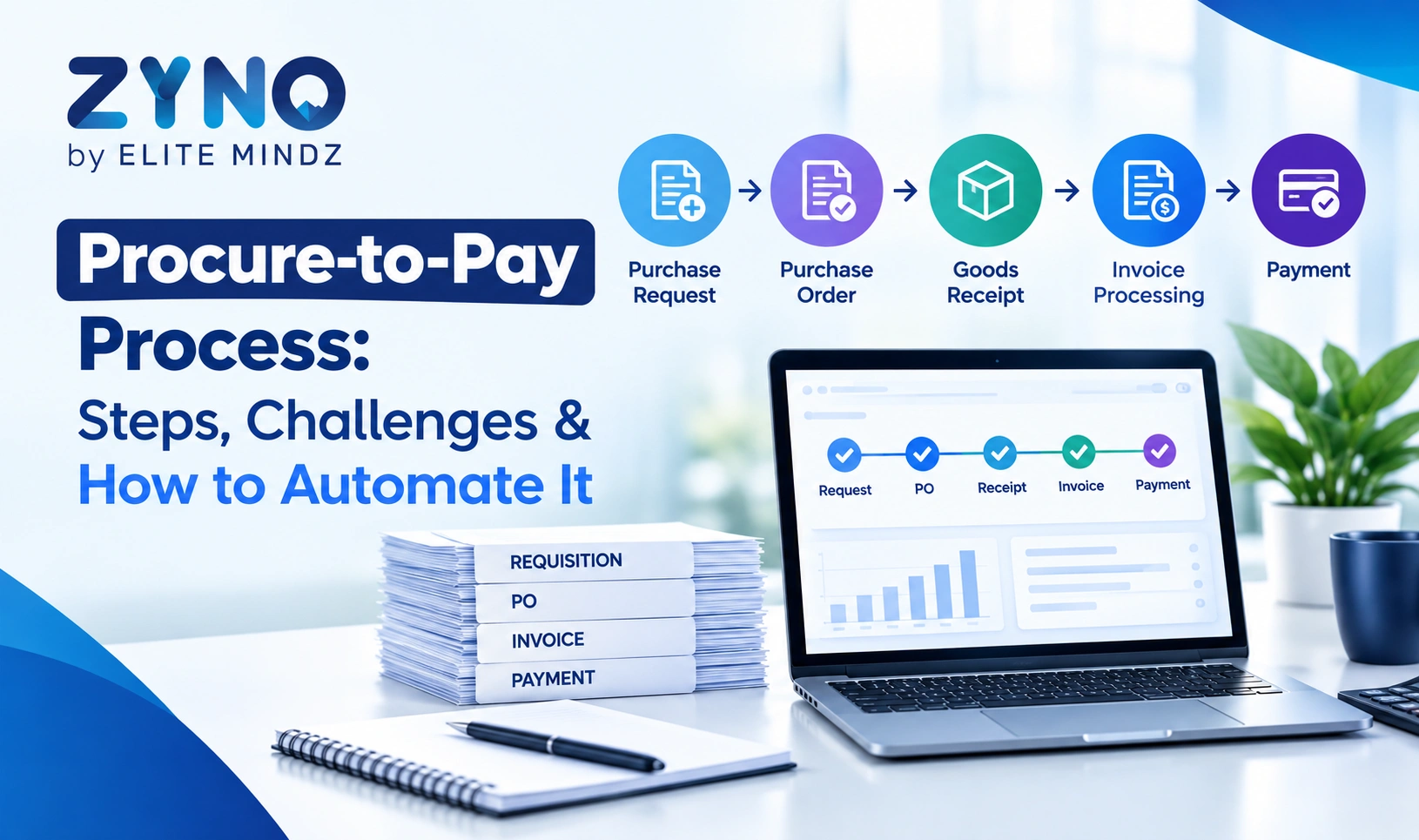
Request → Approval → Sourcing → Supplier → Purchase Order → Receipt → Invoice → Payment
That connected flow is important for organizations trying to reduce manual handoffs.
ERP and integration fit
Before choosing ZYNO, organizations should validate the integrations required for their ERP, accounting and financial environment.
The important question is not simply whether an API exists.
Can procurement data move cleanly between our purchasing, finance, inventory and accounting systems without creating another manual reconciliation process?
Potential trade-offs
- Required ERP integrations
- Security requirements
- Industry-specific workflows
- Implementation scope
- User adoption
- Reporting requirements
- AI governance
- Support requirements
- Scalability
Best fit
ZYNO is worth considering when a business wants to connect procurement workflows, automate repetitive purchasing work and introduce AI-assisted procurement intelligence without selecting a platform purely because it is built for the largest enterprise environments.
What to evaluate before choosing ZYNO
Ask the vendor to demonstrate your actual workflow:
Purchase request → approval → supplier selection → PO → receipt → invoice → payment.
That will tell you more than a feature checklist.
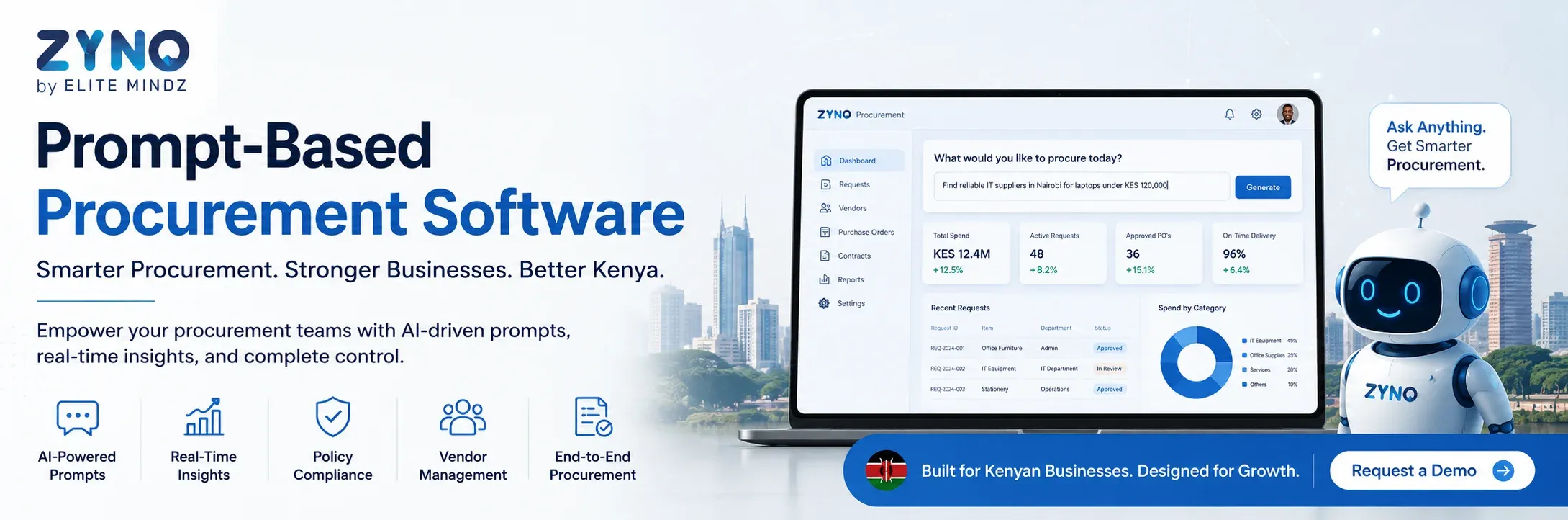
See How ZYNO Can Fit Your Procurement Workflow
Explore how ZYNO Procurement connects purchase requests, approvals, supplier management, sourcing, procure-to-pay and invoice workflows in one procurement platform.
Explore ZYNO Procurement Request a Free DemoSAP Ariba
SAP Ariba is one of the established enterprise procurement platforms and is designed for organizations with complex purchasing, supplier and sourcing requirements.
Its broader value comes from combining procurement processes with the SAP ecosystem and supplier network.
Key strengths
- Source-to-pay
- Strategic sourcing
- Supplier management
- Procurement
- Contract-related workflows
- Supplier collaboration
- Spend management
- Purchasing
- Enterprise procurement
- SAP ecosystem connectivity
AI capabilities
SAP is incorporating AI across its enterprise applications, making AI increasingly relevant to procurement workflows.
For buyers, however, the important question is not simply: "Does SAP have AI?"
Which AI capabilities are available in the specific SAP products and configuration we are buying, and how do they affect our procurement workflows?
Procurement capabilities
- Sourcing
- Supplier management
- Purchasing
- Contracts
- Spend management
- Supplier collaboration
ERP and integration fit
If SAP is already central to your financial and operational environment, ecosystem alignment can simplify the strategic case for the platform.
If SAP is not already part of your environment, integration architecture and implementation requirements deserve closer examination.
Potential trade-offs
- Implementation complexity
- Existing SAP environment
- Integration requirements
- Internal SAP expertise
- Total cost of ownership
- User adoption
- Required procurement modules
Best fit
Large organizations with complex procurement operations and significant SAP investment.
What to evaluate before choosing SAP Ariba
Do not evaluate it only as a procurement product. Evaluate:
SAP environment + procurement requirements + integration + implementation + operating cost.
Coupa
Coupa takes a broad approach to business spend management, making it relevant for organizations that want greater visibility into purchasing activity across the business.
Key strengths
- Spend management
- Procurement
- Supplier management
- Purchasing workflows
- Spend analytics
- Budget controls
- Guided buying
- Supplier collaboration
- Business spend visibility
AI capabilities
AI and data-driven intelligence can support procurement activities such as spend analysis, purchasing guidance, supplier-related insights and decision support.
The important consideration is how those capabilities apply to the company's actual spend environment.
Procurement capabilities
- Purchasing
- Spend management
- Supplier management
- Guided buying
- Procurement workflows
- Spend analysis
- Business controls
ERP and integration fit
Integration should be evaluated around the organization's existing ERP, finance and accounting environment.
A procurement platform should reduce data fragmentation rather than create another reporting silo.
Potential trade-offs
- Existing enterprise systems
- Implementation requirements
- Configuration needs
- Procurement maturity
- Total cost of ownership
- Required modules
- User adoption
Best fit
Organizations where spend visibility and control are central procurement priorities.
What to evaluate before choosing Coupa
Ask for a demonstration using your own procurement scenarios. Especially test:
Guided buying + supplier selection + spend analytics + approval controls.
Oracle Procurement
Oracle Procurement sits within Oracle's wider cloud business application environment. That makes ecosystem integration a significant part of its value proposition.
Key strengths
- Purchasing
- Supplier management
- Strategic sourcing
- Procurement automation
- Contract management
- Spend analysis
- Financial integration
- Oracle ecosystem connectivity
AI capabilities
Oracle is incorporating AI capabilities into its cloud business applications.
For procurement buyers, the relevant question is how those capabilities translate into actual procurement outcomes.
- Faster purchasing
- Better supplier information
- Improved analysis
- More efficient workflows
- Better decision support
Procurement capabilities
- Purchasing
- Supplier relationships
- Sourcing
- Contracts
- Spend management
- Procurement workflows
ERP and integration fit
This can be one of Oracle Procurement's strongest considerations for existing Oracle customers.
Organizations should assess how procurement data will move between:
Procurement → Finance → Inventory → Projects → Accounting
Potential trade-offs
- Existing Oracle infrastructure
- Implementation scope
- Integration requirements
- Configuration
- User adoption
- Licensing and operating costs
- Internal technical resources
Best fit
Organizations that want procurement closely integrated with an Oracle-centered enterprise technology environment.
What to evaluate before choosing Oracle Procurement
Start with the existing Oracle architecture. Then determine whether the procurement requirements can be handled naturally within that environment.
JAGGAER
JAGGAER is particularly relevant when strategic sourcing is a major component of procurement.
That matters because a business running sophisticated sourcing events may need deeper sourcing functionality than a company primarily looking to automate purchase requests.
Key strengths
- Strategic sourcing
- Supplier management
- Supplier performance
- Contract management
- Spend analytics
- Category management
- Sourcing workflows
- Supplier collaboration
AI capabilities
JAGGAER positions AI around areas such as sourcing, supplier intelligence and procurement decision support.
The buyer should still test these capabilities against real sourcing scenarios.
- Identifying suitable suppliers
- Analyzing supplier responses
- Supporting complex sourcing events
- Surfacing supplier insights
Procurement capabilities
- Strategic sourcing
- Supplier management
- Sourcing events
- Category management
- Contracts
- Spend analysis
- Supplier performance
ERP and integration fit
Integration should be evaluated around the systems already used for finance, purchasing, inventory and supplier data.
The objective is to avoid duplicate supplier and spend records.
Potential trade-offs
- Sourcing complexity
- Implementation effort
- Integration requirements
- User experience
- Required configuration
- Total cost of ownership
Best fit
Organizations where strategic sourcing and supplier complexity are major procurement priorities.
What to evaluate before choosing JAGGAER
Run a realistic sourcing event during the evaluation. Do not rely solely on a generic product demo.
Ivalua
Ivalua takes a broad source-to-pay approach and is particularly relevant when organizations need procurement workflows configured around their operating model.
That flexibility can be useful when standard workflows do not fit.
Key strengths
- Source-to-pay
- Strategic sourcing
- Supplier management
- Contract management
- Spend management
- Procurement analytics
- Workflow configuration
- Supplier collaboration
AI capabilities
Ivalua positions AI across procurement intelligence, including areas such as spend, suppliers, sourcing and workflow-related decision support.
The important question is how these capabilities work within your organization's specific procurement process.
Procurement capabilities
- Sourcing
- Supplier management
- Contracts
- Purchasing
- Spend management
- Procurement workflows
- Analytics
ERP and integration fit
For complex organizations, integration can become one of the most important parts of implementation.
- ERP connectivity
- Financial data
- Supplier master data
- Purchase orders
- Invoices
- Contract data
- Reporting
Potential trade-offs
The same configurability that makes Ivalua attractive can also require more careful implementation and governance.
- Configuration requirements
- Implementation resources
- Integration complexity
- Internal expertise
- User adoption
- Ongoing administration
Best fit
Organizations with complex procurement environments where workflow flexibility is more important than having the simplest possible implementation.
What to evaluate before choosing Ivalua
Map your most complicated procurement process and ask the vendor to configure it.
If the platform can support the process without creating unnecessary workarounds, that is much more meaningful than a generic feature demonstration.
AI Procurement Software: Side-by-Side Comparison
| Capability | ZYNO | SAP Ariba | Coupa | Oracle Procurement | JAGGAER | Ivalua |
|---|---|---|---|---|---|---|
| Purchase requests | ✓ | ✓ | ✓ | ✓ | ✓ | ✓ |
| Approval workflows | ✓ | ✓ | ✓ | ✓ | ✓ | ✓ |
| Supplier management | ✓ | ✓ | ✓ | ✓ | ✓ | ✓ |
| Strategic sourcing | ✓ | ✓ | ✓ | ✓ | Strong focus | ✓ |
| Spend analytics | ✓ | ✓ | ✓ | ✓ | ✓ | ✓ |
| Contract management | ✓ | ✓ | ✓ | ✓ | ✓ | ✓ |
| Procure-to-pay | ✓ | ✓ | ✓ | ✓ | ✓ | ✓ |
| AI-enabled capabilities | ✓ | ✓ | ✓ | ✓ | ✓ | ✓ |
| ERP ecosystem consideration | Important | SAP | Important | Oracle | Important | Important |
| Configurability | Evaluate | Evaluate | Evaluate | Evaluate | Evaluate | Key consideration |
A check mark means the capability is relevant to the platform's procurement scope, not that every feature is identical across editions, modules or customer configurations. Buyers should verify the exact functionality included in their proposed deployment.
AI vs Automation in Procurement: What's Actually Different?
This distinction is easy to lose in vendor comparisons.
Automation follows rules.
For example:
Purchase request → Manager approval → Purchase order
The workflow follows predefined logic.
AI can interpret information.
For example:
Purchase request → understand requirement → recommend category/supplier → identify potential issue → route for review
That introduces an intelligence layer.
But AI should not be treated as a replacement for procurement governance.
Automation + data + AI + human oversight.
Automation handles repeatable processes. AI helps interpret information and surface recommendations. People remain responsible for decisions where business judgment and accountability matter.
ERP Integration: The Question Buyers Often Miss
A procurement platform can have excellent AI capabilities and still fail to deliver value if it becomes another disconnected system.
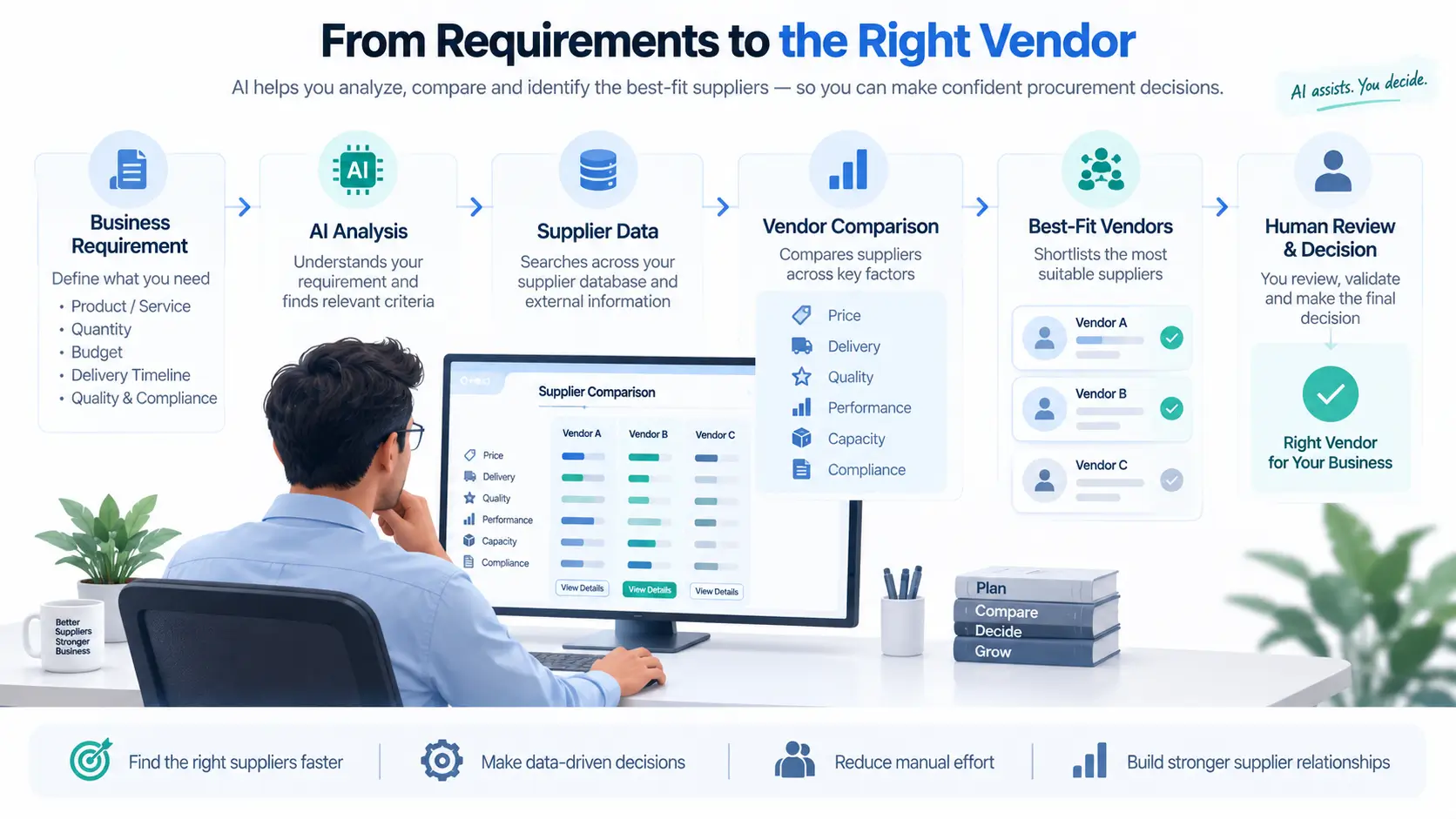
Before buying, map the complete process:
Request → Approval → Sourcing → Purchase Order → Receipt → Invoice → Payment
Then identify where each piece of information lives.
- Supplier master data
- Purchase orders
- Budgets
- Inventory
- Goods receipts
- Invoices
- Payments
- Contracts
The question is not:
"Does this software integrate with our ERP?"
The better question is:
"How much manual reconciliation will remain after the integration is live?"
That distinction can materially affect implementation effort and ROI.
How AI Procurement Software Can Actually Improve ROI
AI should not be purchased simply because it sounds innovative. The business case should connect the technology to measurable procurement outcomes.
1. Reduce manual procurement work
Measure the time spent on:
- Purchase requests
- Approval follow-ups
- Purchase orders
- Supplier communication
- Invoice processing
- Procurement reporting
2. Improve spend visibility
Look for better visibility into:
- Supplier spending
- Category spending
- Maverick purchases
- Duplicate purchases
- Budget deviations
- Contract compliance
3. Improve supplier decisions
Better supplier information can help teams evaluate:
- Price
- Quality
- Delivery
- Performance
- Compliance
- Contract terms
4. Reduce approval delays
Automated routing can reduce the time requests spend waiting for the correct approver.
5. Reduce invoice exceptions
Connecting purchase orders, receipts and invoices can reduce manual reconciliation and identify discrepancies earlier.
How to Measure Procurement Software ROI
Before implementation, establish a baseline.
| Metric | Before | After |
|---|---|---|
| Purchase cycle time | Baseline | Measure change |
| Approval time | Baseline | Measure change |
| Invoice processing time | Baseline | Measure change |
| Manual procurement hours | Baseline | Measure change |
| Maverick spend | Baseline | Measure change |
| Supplier onboarding time | Baseline | Measure change |
| Invoice exceptions | Baseline | Measure change |
| Procurement savings | Baseline | Measure change |
A practical model is:
ROI = Financial benefits − Total cost of ownership
Financial benefits may include procurement savings, reduced processing costs, lower manual workload, fewer errors, better contract compliance and reduced unnecessary spending.
Total cost should include:
Software + implementation + integration + training + customization + support + administration
AI Procurement Software Pricing: What Buyers Should Actually Compare
Procurement software rarely has a meaningful universal price.
Costs can depend on:
- Users
- Procurement volume
- Modules
- AI capabilities
- Suppliers
- Transactions
- Integrations
- Implementation
- Customization
- Support
For this reason, buyers should compare total cost of ownership, not just subscription price.
Ask every vendor:
- What is included?
- What requires an additional module?
- What is included in AI capabilities?
- What implementation services are required?
- What integrations cost extra?
- What support is included?
- What ongoing administration will we need?
AI Governance: Where Human Oversight Still Matters
AI can make procurement faster, but procurement decisions still require accountability.
AI recommends
- Supplier options
- Spend anomalies
- Potential savings
- Risk signals
- Procurement insights
Automation executes
- Workflow routing
- Notifications
- Document extraction
- Standard matching
- Routine approvals
People decide
- Strategic supplier selection
- High-value purchases
- Contract commitments
- Exceptions
- Sensitive procurement decisions
The objective is not to remove people from procurement. It is to remove unnecessary manual work so procurement professionals can spend more time on decisions that require judgment.
What Should You Ask During an AI Procurement Software Demo?
Don't ask vendors only:
"Show us your AI."
Give them a real procurement scenario.
Scenario 1: Purchase request
Show us how an employee raises a purchase request and gets it approved.
Scenario 2: Supplier selection
Show us how the system helps compare suppliers.
Scenario 3: Sourcing
Show us how an RFQ or RFP is created, distributed and evaluated.
Scenario 4: Invoice verification
Show us what happens when the invoice does not match the PO or receipt.
Scenario 5: Spend analysis
Show us how the platform identifies unusual or unnecessary spending.
Scenario 6: AI recommendation
Show us an actual AI recommendation and explain what data produced it.
Scenario 7: ERP integration
Show us how the procurement transaction moves into our existing financial system.
AI Procurement Software Buying Checklist
Before selecting a platform, score every vendor against the same criteria.
Procurement workflows
- Purchase requisitions
- Approval workflows
- Purchase orders
- Goods receipts
- Invoice processing
- Procure-to-pay
Supplier management
- Supplier onboarding
- Supplier evaluation
- Supplier performance
- Supplier risk
- Supplier collaboration
Strategic sourcing
- RFP
- RFQ
- Bid comparison
- Supplier discovery
- Category management
AI and intelligence
- Spend analysis
- Supplier intelligence
- AI recommendations
- Anomaly detection
- Document intelligence
- Predictive capabilities
- Human oversight
Technology
- ERP integration
- Accounting integration
- APIs
- Security
- Role-based access
- Audit trails
- Reporting
- Scalability
Commercial fit
- Licensing
- Implementation
- Integration costs
- Training
- Support
- Customization
- Total cost of ownership
- Expected ROI
Which AI Procurement Software Should You Choose?
The right answer depends on what your organization needs most.
Choose ZYNO Procurement if:
You want AI-enabled procurement automation, connected purchasing workflows, supplier management and spend visibility, particularly as a growing or mid-market organization.
Choose SAP Ariba if:
Your organization operates at enterprise scale and SAP integration is a major requirement.
Choose Coupa if:
Business spend management, purchasing visibility and spend control are central priorities.
Choose Oracle Procurement if:
Your organization already relies heavily on Oracle enterprise applications and wants procurement closely connected to that environment.
Choose JAGGAER if:
Strategic sourcing, supplier complexity and sophisticated procurement events are major priorities.
Choose Ivalua if:
Your procurement processes are complex and you need substantial workflow configurability.
Final Verdict
The best AI procurement software is not necessarily the platform with the longest feature list.
It is the platform that fits the way your organization actually buys.
For some enterprises, ecosystem alignment will matter most. For others, strategic sourcing will drive the decision. Some organizations will prioritize spend visibility. Others will need highly configurable workflows.
And growing businesses may place greater value on connected procurement automation without taking on unnecessary enterprise complexity.
That is why ZYNO Procurement, SAP Ariba, Coupa, Oracle Procurement, JAGGAER and Ivalua should not be viewed as interchangeable products.
They solve different procurement priorities.
The smartest way to choose is to evaluate each one against the same questions:
Can it solve our biggest procurement problems?
Can it integrate with our existing systems?
Can our teams actually use it?
Can we measure the improvement?
And will the business value justify the total cost?
If the answer is yes, you have a platform worth shortlisting.
If not, more features or more AI will not fix the underlying mismatch.
Looking to Modernize Procurement With AI?
Explore how ZYNO Procurement can support purchasing, approvals, supplier management, sourcing, procure-to-pay workflows, invoice verification and spend visibility through one connected procurement platform.
Explore ZYNO Procurement Request a Free DemoFrequently Asked Questions
What is AI procurement software?
AI procurement software combines procurement workflows with artificial intelligence, automation and analytics. Depending on the platform, it can support activities such as spend analysis, supplier evaluation, sourcing, purchasing, document processing and procurement decision-making.
What are the best AI procurement software platforms in 2026?
Six platforms worth evaluating are ZYNO Procurement, SAP Ariba, Coupa, Oracle Procurement, JAGGAER and Ivalua. Each has a different focus, so the best option depends on procurement complexity, company size, existing ERP, sourcing requirements and business priorities.
What is the difference between AI procurement and procurement automation?
Procurement automation generally follows predefined rules to execute repetitive workflows. AI can analyze information, identify patterns, surface insights and provide recommendations. Modern procurement platforms can combine both approaches.
How can AI procurement software improve ROI?
AI procurement software can potentially improve ROI by reducing manual processing, increasing spend visibility, supporting supplier decisions, accelerating workflows, reducing errors and identifying savings opportunities. Businesses should measure results against their own baseline.
Is AI procurement software suitable for small and mid-sized businesses?
Yes. It can be useful when purchasing volume, supplier complexity or manual procurement work justifies the investment. Smaller organizations should prioritize platforms that match their actual requirements without unnecessary implementation complexity.
Does AI procurement software replace procurement teams?
AI procurement software is better viewed as an augmentation tool. Automation can handle repetitive activities while AI can provide insights and recommendations. Important purchasing, supplier and contractual decisions should retain appropriate human oversight.
How much does AI procurement software cost?
Pricing varies by vendor and depends on users, modules, transaction volume, AI capabilities, integrations, customization, implementation and support. Buyers should compare total cost of ownership rather than subscription price alone.
How do I choose the right AI procurement software?
Identify your highest-impact procurement problems first. Then compare platforms using the same criteria: procurement workflows, supplier management, sourcing, AI capabilities, integrations, security, scalability, implementation requirements and expected ROI.


.webp)







.webp)


.webp)
.webp)
.webp)



.webp)
.webp)
.webp)
.webp)
.webp)

.webp)
.webp)
.webp)
.webp)
.webp)

.webp)
_converted.webp)

_converted.webp)
.webp)
.webp)
.webp)
.webp)
(1).webp)
.webp)
.webp)
(2).webp)
.webp)
.webp)
.webp)
.webp)