×
A Complete Guide for Procurement Managers, Finance Leaders & Operations Directors! Excel may seem like a cost-effective way to manage procurement, but hidden inefficiencies, supplier risks, approval bottlenecks, and data errors can cost businesses far more than they realize. Learn why procurement leaders are replacing spreadsheets with automated ZYNO procurement software to improve visibility, compliance, supplier management, and operational efficiency.
What if the spreadsheet your procurement team relies on every day is silently costing your business thousands of dollars in purchasing mistakes, supplier inefficiencies, delayed approvals, and compliance risks - and nobody is even aware of it?
This is not a hypothetical. It is happening right now in procurement departments across manufacturing plants in Ohio, construction firms in Dubai, healthcare networks in London, and distribution businesses in Sydney. Excel was never designed to be a procurement system - yet millions of businesses around the world continue to use it as one.
When spreadsheets first became popular in the 1980s, they were revolutionary for organizing data. For a small purchasing team managing a handful of suppliers, Excel made perfect sense. It was free, familiar, and flexible. No special training. No software budget. No IT involvement.
But procurement has fundamentally changed. Modern businesses manage dozens to hundreds of suppliers. Purchase orders flow across departments. Compliance requirements are stricter. Finance teams demand real-time spend visibility. And the cost of a single procurement error - a duplicate payment, a missed contract renewal, an accidental over-order - can run into tens of thousands of dollars.
Yet the spreadsheet remains. The reasons are understandable: switching feels risky, budgets are tight, and "we've always done it this way" is a powerful force. But the hidden costs of staying on Excel almost always outweigh the investment in dedicated procurement automation software.
This guide breaks down every major area where Excel is failing your procurement operation - and shows you exactly what a modern procurement management system like ZYNO does differently.
The most dangerous costs in any business are the ones that never appear on a single invoice. Excel-based procurement is full of them.
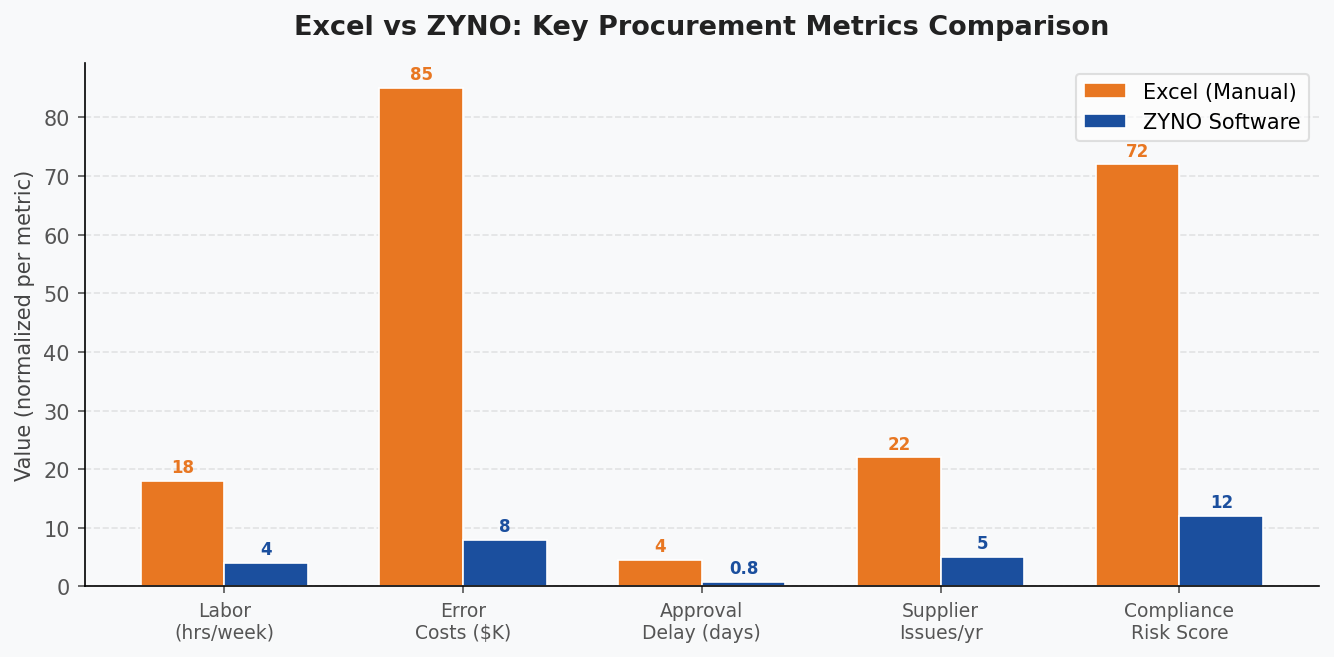
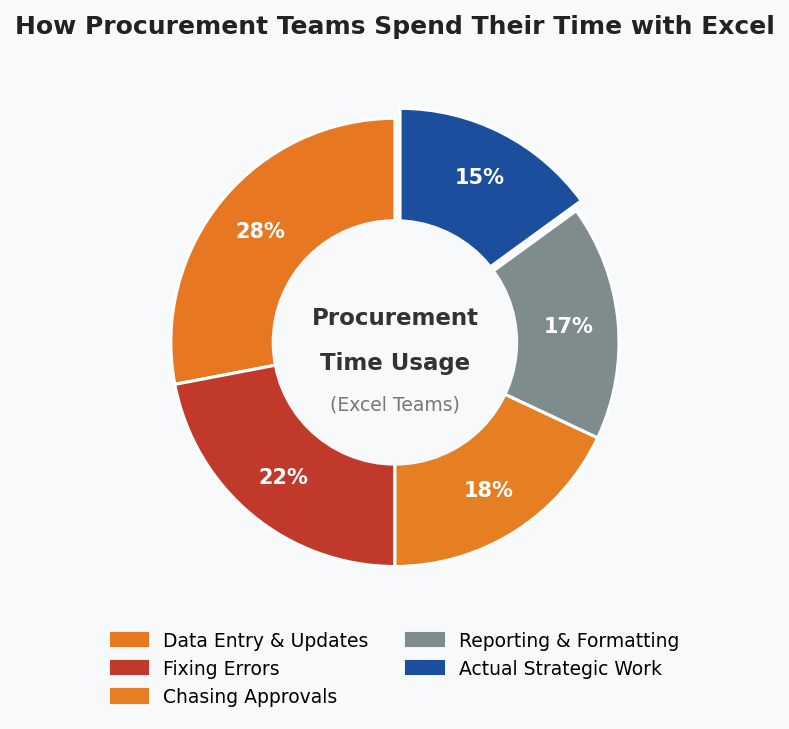
Consider a typical mid-sized manufacturer. Their procurement team of three people spends an estimated 15–20 hours every week on tasks that a software system would handle automatically: updating supplier lists, reformatting purchase order templates, chasing approval emails, correcting data entry errors, and building monthly spending reports from scratch.
At an average procurement specialist salary of $65,000 per year, that's roughly $940 per week in labor dedicated entirely to spreadsheet maintenance - over $48,000 annually in productive capacity wasted on busywork instead of strategic sourcing.
A 2023 study by the University of Hawaii found that 88% of spreadsheets contain significant errors. In procurement, even a single digit transposition - $15,000 instead of $1,500 on a purchase order - can trigger an over-payment, an inventory overstock, or a budget breach that takes weeks to unwind.
Real examples from procurement teams that transitioned to procurement software include:

Figure 1: Excel vs ZYNO - Key Procurement Metrics Comparison
As procurement regulations tighten globally - from Sarbanes-Oxley requirements in the US to GDPR vendor data rules in Europe - an Excel-based system offers virtually no compliance infrastructure. There are no approval audit trails. No timestamp records. No policy enforcement mechanisms. One audit finding tied to a spreadsheet-managed procurement process can cost far more than a year's subscription to dedicated software.

Figure 2: How Procurement Teams Spend Their Time When Using Excel
Ask any procurement manager what their biggest daily frustration is, and "supplier management" will appear in almost every answer. Vendor onboarding is slow. Performance data is scattered. Communication happens over email chains that disappear into inboxes. Supplier risk is invisible until something goes wrong.
Excel cannot solve any of these problems systematically. A spreadsheet can store supplier names and contact details. It cannot track supplier delivery performance over time, flag vendors that consistently miss quality thresholds, send automated reminders for vendor document renewals, or provide a self-service portal where suppliers can submit invoices and update their information.
When a new supplier needs to be onboarded in an Excel environment, the process typically involves multiple emails, manually collecting and filing compliance certificates, copying data across multiple spreadsheets, and then hoping the right version is always being used. A procurement team that onboards 10 new vendors per year can spend 30+ hours just on that process alone.
ZYNO Vendor Management Software centralizes every supplier interaction in one place - onboarding workflows, performance scorecards, document tracking, risk ratings, and communication history.
With ZYNO's vendor management module, procurement teams gain a 360-degree view of every supplier relationship. New vendor onboarding is guided by configurable checklists. Performance is tracked automatically against delivery, quality, and compliance KPIs. Risk alerts fire the moment a supplier's certificate expires or their score drops below threshold.
The RFQ (Request for Quotation) process is where procurement teams either capture significant value or quietly leave money on the table. When quotation management runs through spreadsheets and email threads, the latter happens more often than most organizations realize.
Picture the typical manual RFQ process: a purchasing manager emails five suppliers requesting quotes, receives responses over several days at different times in different formats, copies figures into a comparison spreadsheet (introducing copy-paste errors), and then tries to make a sourcing decision from an inconsistently formatted table that doesn't account for payment terms, delivery schedules, or supplier reliability history.
This process is slow, error-prone, and strategically weak. Suppliers know when your quotation process is disorganized - and it affects the pricing they offer.
ZYNO Quotation Management Software digitalizes the entire RFQ workflow. Send structured quote requests to multiple suppliers simultaneously, receive responses in a standardized format, and compare bids side-by-side on a single screen - including total cost of ownership, not just unit price.
Organizations using digital quotation management consistently report 8–15% reductions in sourcing costs - not because they negotiate harder, but because the process itself becomes more rigorous and transparent.
In most Excel-dependent organizations, procurement and finance operate in separate worlds. The purchasing team maintains their spreadsheets. Finance maintains their own accounting records. Reconciliation happens at month-end - or worse, at quarter-end - when discrepancies have already cascaded into budget overruns.
This siloed operation creates several expensive problems. Purchase orders get raised without budget verification. Department heads approve purchases without knowing how much of their budget remains. Finance discovers overspending after the fact, when the only remedy is difficult conversations and renegotiated supplier terms.
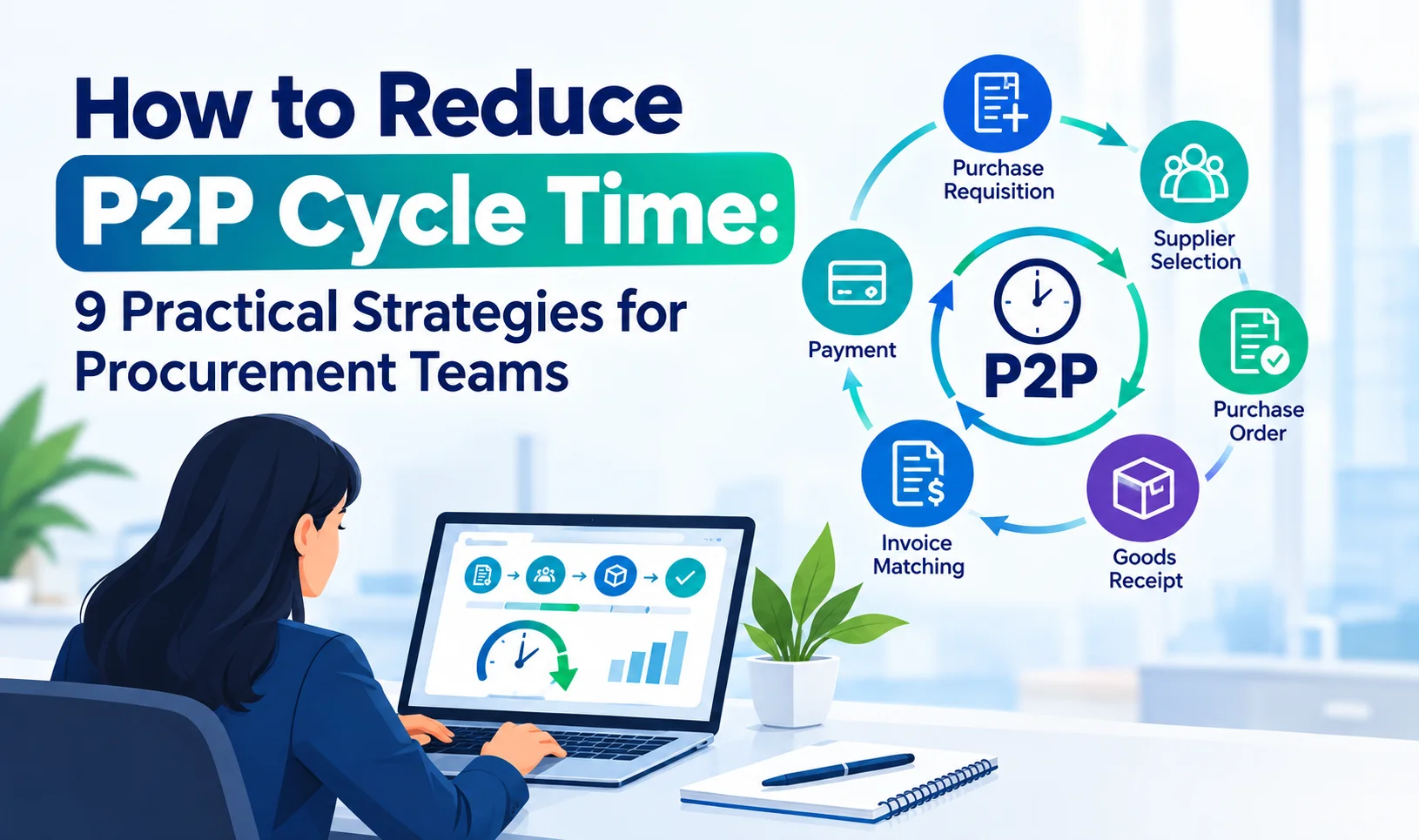
The solution is not just better communication - it's a connected system where a purchase requisition automatically checks available budget, triggers the right approval workflow based on spend value, and converts to a purchase order and then a GRN (Goods Receipt Note) and then an invoice match without any manual handoffs.
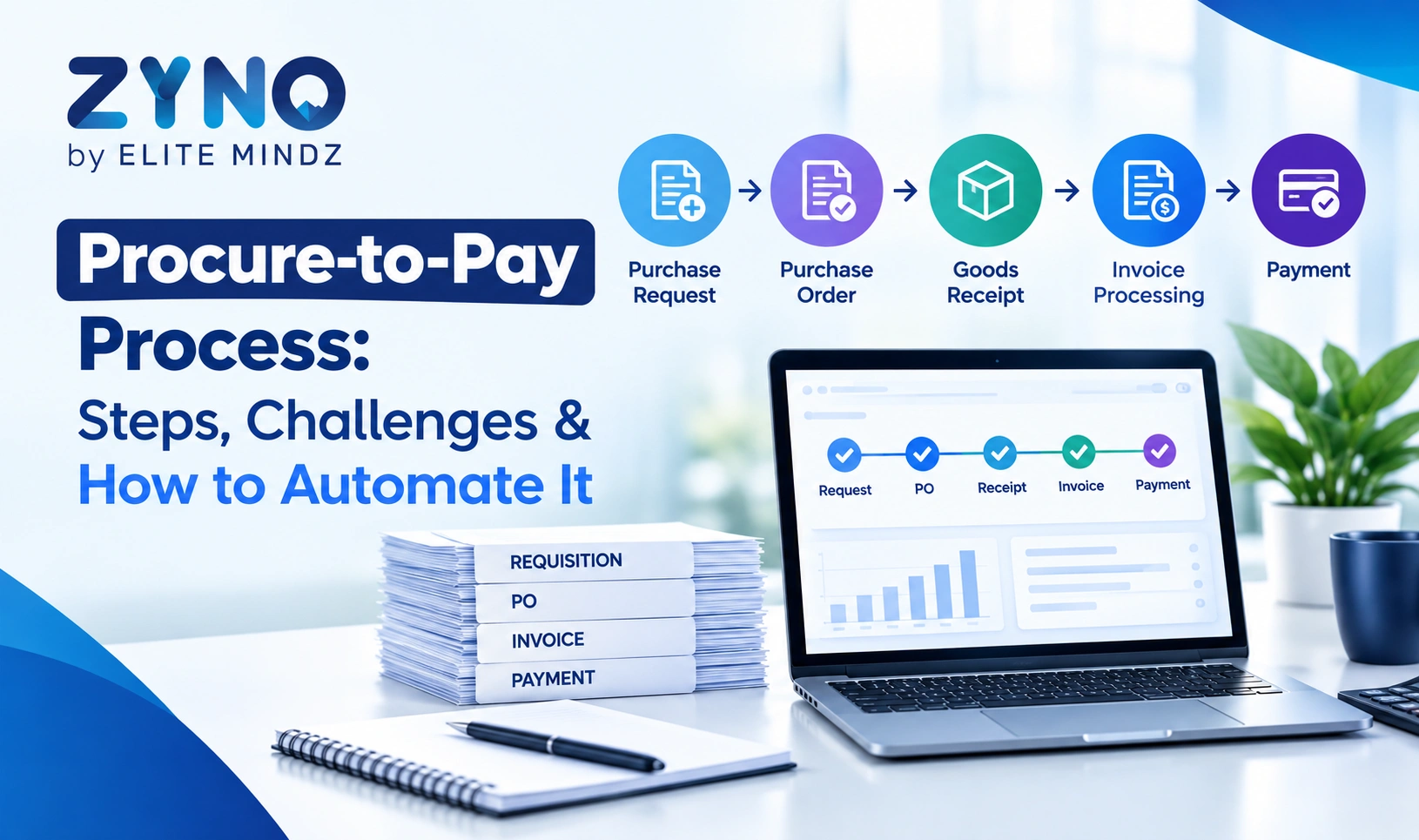
ZYNO Procure-to-Pay Software creates a seamless, automated flow from purchase request to supplier payment - with real-time budget checks, multi-level approval routing, and automatic three-way matching at every stage.
Duplicate payments. Late payment penalties. Lost early-payment discounts. These are the predictable consequences of managing accounts payable through spreadsheets and email inboxes.
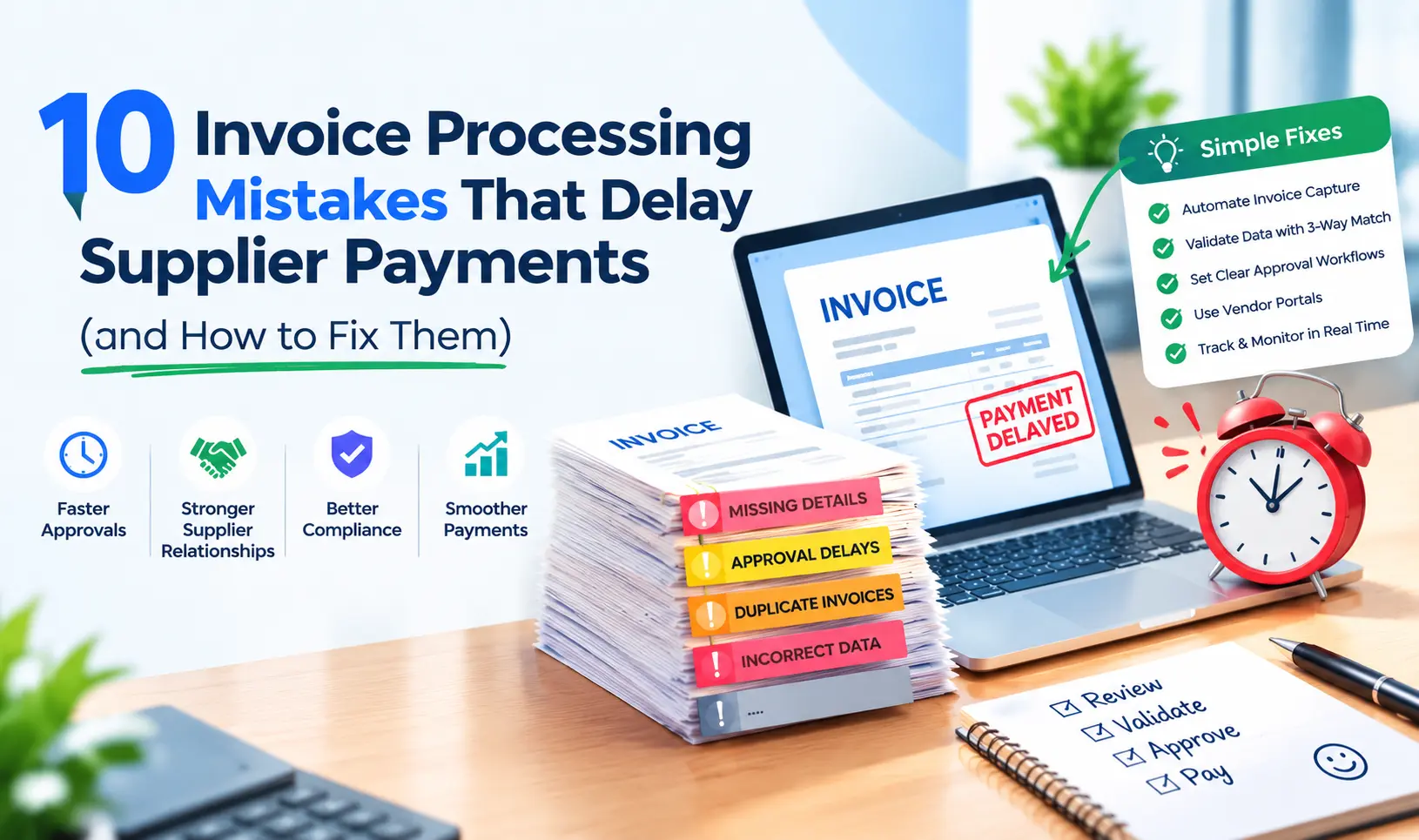
In a manual AP environment, invoices arrive through email, are manually matched against purchase orders (often in a separate spreadsheet), routed for approval via email chains, and then entered into an accounting system by hand. Each of these steps introduces delay and error risk.
The statistics are sobering: manual invoice processing costs between $12 and $30 per invoice when all labor, error correction, and rework costs are included. For a company processing 500 invoices per month, that's up to $180,000 per year in pure processing overhead - before accounting for any actual payment errors.
ZYNO Accounts Payable Automation Software handles the full AP lifecycle automatically: invoice capture, 3-way matching, exception handling, approval routing, and payment scheduling.
Project procurement is where spreadsheet limitations become most acute. When a construction project, IT rollout, or capital equipment installation requires procurement activities, the purchasing team needs to track costs against a project budget, coordinate supplier deliveries to match project timelines, and prevent procurement delays from causing project overruns.
Excel offers no native way to link procurement activities to project milestones, flag when project spend is approaching budget limits, or generate project-level spend reports without significant manual effort. The result is procurement that operates independently of project management - creating coordination gaps that lead to late deliveries, budget blowouts, and tense conversations with project stakeholders.
ZYNO Project Procurement Management Software connects purchasing directly to project budgets and timelines. Procurement managers can track spend by project, flag risks before they become overruns, and coordinate supplier delivery schedules with project milestones.
Think about the last time a supplier needed to submit an invoice, update their banking details, provide a renewed certificate of insurance, or check on a purchase order status. How did that happen? Almost certainly through email - which means it was unstructured, potentially unsecured, and definitely un-auditable.
Manual supplier communication is a two-sided pain point. Your procurement team spends hours answering supplier queries, chasing document submissions, and manually routing information into the right places. Your suppliers are frustrated by slow responses and unclear processes. And every email exchange represents an opportunity for misunderstanding, delay, or compliance risk.
ZYNO Vendor Portal Software gives every supplier a dedicated self-service hub where they can submit invoices, track PO status, upload compliance documents, respond to RFQs, and communicate with your team - all in a structured, auditable environment.
Organizations that deploy vendor portals report a 40–60% reduction in supplier-related email volume within the first 90 days - freeing procurement staff for higher-value activities while simultaneously improving supplier relationships.
For businesses that purchase capital equipment, vehicles, machinery, or technology assets, procurement does not end at the point of purchase. The asset needs to be tracked, maintained, depreciated, and eventually disposed of - and procurement decisions often depend on knowing what assets already exist and where they are deployed.
Excel asset registers are notoriously unreliable. They are updated inconsistently, rarely reflect real-time asset locations, and cannot trigger maintenance schedules or flag assets approaching end-of-life for proactive replacement procurement. The result is either over-purchasing (buying equipment that already exists somewhere in the organization) or under-investment (running assets past their useful life because no one had visibility of their status).
ZYNO Asset Management Software tracks every asset from purchase to disposal - including location, utilization, maintenance history, and depreciation status. Procurement teams can make informed replacement decisions based on actual asset lifecycle data.
Inventory management and procurement are inseparable. Procurement decisions should be driven by real-time inventory data - current stock levels, consumption rates, lead times, and reorder points. In a spreadsheet environment, this data is almost always stale by the time procurement decisions are made.
The consequences are predictable and expensive. Stockouts halt production lines, delay customer deliveries, and damage supplier relationships when emergency orders require premium pricing. Overstocking ties up working capital, increases warehousing costs, and creates obsolescence risk for items with limited shelf lives.
A manufacturing client that transitioned from spreadsheet inventory tracking to ZYNO reported that their stockout incidents dropped from an average of 8 per quarter to 1 in the first year - and their average inventory carrying cost dropped by 22% due to better demand-driven purchasing.
ZYNO Inventory Management Software provides real-time stock visibility across all locations, automates reorder triggers based on configurable min/max rules, and links directly to the procurement module so replenishment purchase orders are created before stockouts occur.
Supplier contracts are among the most valuable documents your procurement team manages - and they are almost universally mismanaged in spreadsheet-based organizations. Renewal dates sit in someone's calendar reminder. Contract terms exist in PDF files buried in email attachments. Pricing provisions are known only to the person who negotiated the deal.
This is not hypothetical risk. It is how contracts expire unrenewed (and your pricing reverts to catalogue rates), how negotiated discounts get forgotten (and invoices are paid at full price), and how supplier obligations go unenforced (because nobody knew what the contract actually said).
One regional healthcare group discovered after implementing contract management software that they had been consistently overpaying three suppliers for 14 months because their negotiated volume discounts had not been enforced - nobody had been tracking the contractual trigger thresholds in their spreadsheet.
ZYNO Contract Management Software centralizes every supplier contract with automated renewal alerts, obligation tracking, version control, and spend-against-contract reporting. Ensure every negotiated term is actually delivered.
The shift from spreadsheet-based procurement to digital procurement platforms is accelerating across every industry. The following comparison illustrates why procurement leaders - from CFOs to operations directors - are making this transition a strategic priority:
|
Feature |
Excel |
ZYNO Procurement |
|
Supplier Management |
❌ Manual spreadsheets |
✅ Centralized vendor database |
|
Approval Workflows |
❌ Email chains, no tracking |
✅ Automated, role-based approvals |
|
Quotation Comparison |
❌ Copy-paste, error-prone |
✅ Side-by-side RFQ comparison |
|
Inventory Tracking |
❌ Static, often outdated |
✅ Real-time stock visibility |
|
Contract Management |
❌ Emails & local folders |
✅ Lifecycle tracking + alerts |
|
Accounts Payable |
❌ Manual matching, duplicates |
✅ Automated 3-way matching |
|
Audit Trail |
❌ None or manually logged |
✅ Full audit log, auto-timestamped |
|
Reporting & Analytics |
❌ Manual pivot tables |
✅ Live dashboards & KPI reports |
|
Compliance |
❌ Difficult to enforce |
✅ Built-in policy enforcement |
|
Scalability |
❌ Breaks under volume |
✅ Enterprise-grade, scales freely |
|
Collaboration |
❌ Version conflicts |
✅ Multi-user, role-based access |

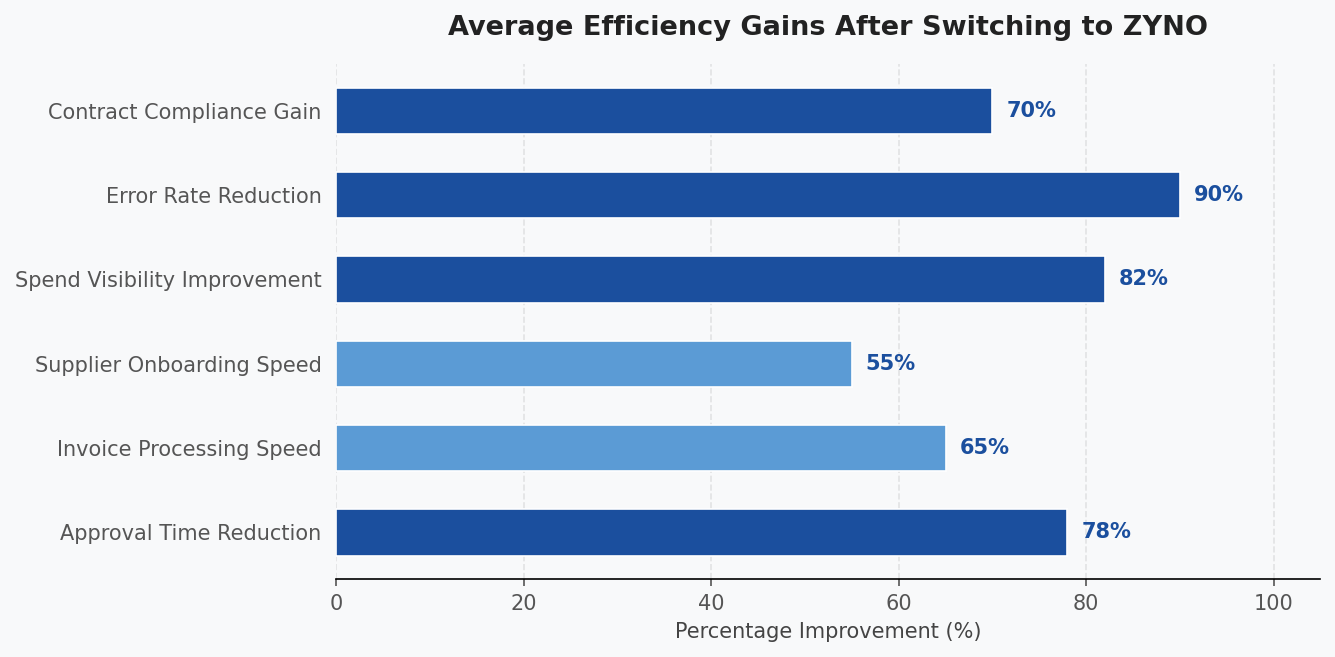
Figure 3: Average Efficiency Improvements After Migrating to Procurement Software
The data is unambiguous. Across every dimension that matters to a procurement operation - visibility, speed, accuracy, compliance, scalability - purpose-built procurement software outperforms Excel by a wide margin. The question is no longer whether to make this transition, but how quickly.

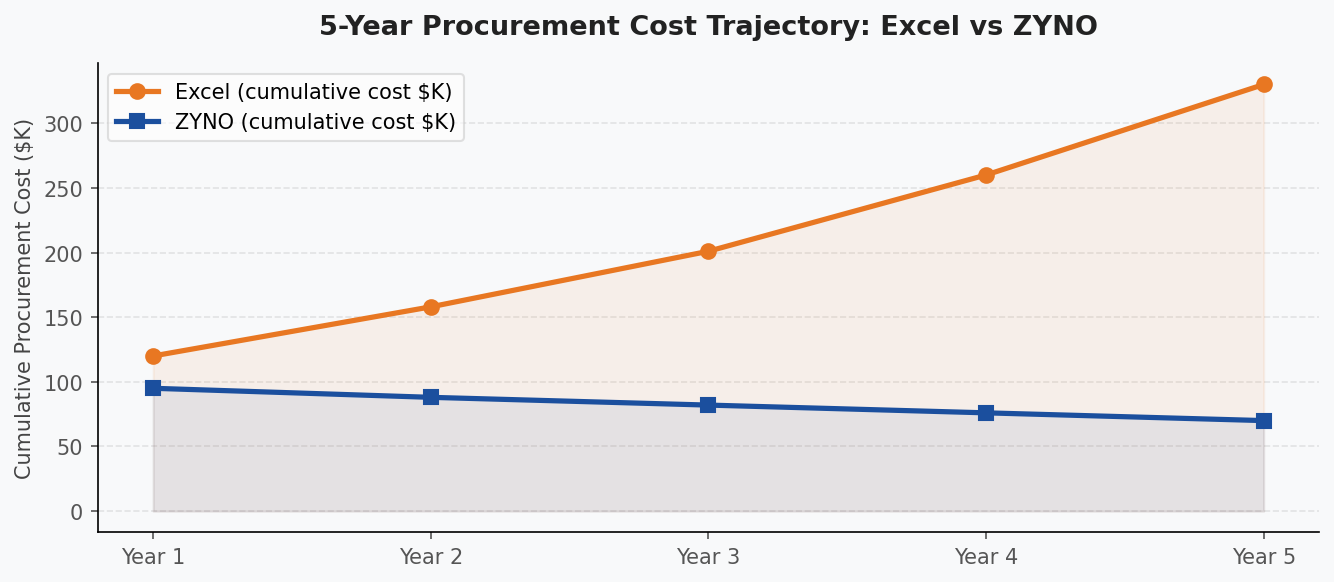
Figure 4: 5-Year Procurement Cost Trajectory - Excel vs ZYNO
ZYNO is not just another procurement tool - it is a complete, integrated procurement ecosystem built specifically for the challenges modern procurement teams face. Instead of patching together separate systems for purchasing, vendor management, inventory, and payments, ZYNO delivers every essential procurement capability within a single, connected platform.
◆ The Complete ZYNO Module Suite
Vendor Management (View Module →)
Centralize supplier data, automate onboarding, track performance scores, manage compliance documents, and monitor vendor risk in real time.
Quotation Management (View Module →)
Issue RFQs to multiple suppliers simultaneously, receive standardized responses, and compare bids side-by-side to secure the best deal every time.
Procure-to-Pay (View Module →)
Automate the complete purchase cycle from requisition to payment with budget checks, approval workflows, and 3-way invoice matching.
Accounts Payable Automation (View Module →)
Eliminate manual invoice processing, prevent duplicate payments, accelerate approval cycles, and capture early-payment discounts automatically.
Project Procurement (View Module →)
Link purchasing activities to project budgets and timelines, track project spend in real time, and prevent procurement delays from causing project overruns.
Vendor Portal (View Module →)
Give suppliers a self-service hub to submit invoices, track orders, upload compliance documents, and respond to RFQs - reducing email volume by up to 60%.
Asset Management (View Module →)
Track every asset from purchase to disposal with location, utilization, maintenance history, and depreciation visibility to inform replacement purchasing decisions.
Inventory Management (View Module →)
Maintain real-time stock visibility, automate reorder triggers, and connect inventory levels directly to procurement workflows to eliminate stockouts and overstocking.
Contract Management (View Module →)
Centralize contracts, automate renewal alerts, track supplier obligations, and ensure negotiated pricing is always honored with built-in compliance monitoring.
The following answers are designed to address the most common questions procurement leaders have before making the transition from Excel to dedicated procurement software.
For very small businesses with fewer than 5 vendors and minimal purchase volume, Excel may suffice initially. However, once transaction volume grows, supplier relationships multiply, or compliance becomes a priority, Excel quickly becomes a liability. It lacks real-time visibility, approval workflows, automated alerts, and audit trails - all of which are non-negotiable in modern procurement operations.
The biggest drawbacks include: no automated approval workflows, high risk of human error, no real-time inventory visibility, inability to track contract expiry dates, absence of spend analytics, no supplier collaboration portal, version control issues, and zero audit trail for compliance purposes.
The right time is when your team spends more than 5 hours per week on manual data entry, when you have experienced at least one costly purchasing error, when you manage more than 15 active suppliers, or when finance and procurement are operating in silos causing budget overruns.
Procurement software reduces costs through automated 3-way invoice matching (eliminating duplicate payments), competitive RFQ processes that secure better supplier pricing, real-time spend visibility that prevents maverick spending, and contract compliance that ensures negotiated rates are always honored.
Absolutely. Dedicated vendor management tools centralize supplier data, track performance metrics (delivery time, quality scores, compliance), automate onboarding workflows, and create a shared communication portal - reducing supplier-related delays by up to 60%.
Procurement platforms enforce purchasing policies through role-based approval limits, maintain immutable audit logs of every transaction, alert teams to contract renewals, and generate compliance reports for internal and external audits - all automatically.
A complete procurement platform should include: vendor management, RFQ/quotation management, purchase order creation and approvals, accounts payable automation, inventory management, contract lifecycle management, asset tracking, a vendor portal, and an analytics dashboard.
Manufacturing, construction, healthcare, retail, logistics, distribution, engineering, and government sectors benefit most - any industry with high transaction volumes, multiple supplier relationships, capital expenditure requirements, or strict regulatory compliance needs.
Yes. Leading procurement platforms like ZYNO integrate with popular ERP and accounting systems, enabling seamless data flow between purchasing and finance - eliminating duplicate data entry and ensuring budget accuracy in real time.
ZYNO offers a complete, integrated procurement ecosystem covering vendor management, quotation management, procure-to-pay, accounts payable automation, inventory, contracts, assets, and a vendor portal - all in one platform. Its intuitive design, configurable approval workflows, and real-time analytics make it the preferred choice for procurement teams ready to leave spreadsheets behind.
Excel was a masterpiece of its time. For organizations with simple procurement needs, it still serves a purpose. But for any business with real supplier relationships to manage, spending to control, compliance obligations to meet, and growth ambitions to pursue, the spreadsheet is no longer a viable procurement infrastructure.
The hidden costs accumulate silently: labor wasted on manual processes, errors that slip through without detection, compliance gaps that create audit exposure, and strategic opportunities missed because the data required to act confidently simply wasn't available in time.
Your competitors who have already transitioned to procurement automation systems are moving faster, negotiating better, spending less on administrative overhead, and making smarter sourcing decisions. Every quarter that passes with Excel as your procurement backbone is a quarter of competitive disadvantage compounding.
ZYNO Procurement Software was built to solve exactly these problems - not as a theoretical platform, but as a practical tool that procurement teams in manufacturing, construction, healthcare, retail, logistics, and distribution are using right now to reclaim control of their spending, their suppliers, and their operations.
The question is not whether your business needs procurement software. The question is how much longer you can afford not to have it.
Sneha Singh
Content writer
Sneha Singh is a B2B tech content strategist with 4+ years of experience. She specializes in SEO-driven SaaS content, whitepapers, and platform-native social media campaigns that simplify complex technology and drive business growth. Sneha's core exp
Procurement Software Trends in 2026: What to Expect
Read More →

Why E-Procurement Outperforms Traditional ERP in Modern Procurement
Read More →Top 10 Procurement Software Companies in India 2026
Read More →
Best Procurement Software Companies in Kuwait (2025)
Read More →
5 Best Procurement Software in Africa for Enterprises & SMEs (2026 Guide)
Read More →
Best Procurement Software in Nigeria 2026 | Top 5 Picks
Read More →
Best Procurement Software Providers in USA (2025): How AI is Transforming the Future
Read More →
10 Best Procurement Software Providers in Thailand for Streamlined Supply Chain Management
Read More →
Top 10 Cloud-Based Procurement Solutions in Portugal for Businesses in 2025
Read More →
Top 10 Procurement Software Providers in Switzerland 2026: Streamlining Sourcing and Supplier Management
Read More →
What Makes ZYNO Procurement Different from Other Oil & Gas Procurement Software
Read More →
The Digital Transformation of Logistics Procurement in the Middle East
Read More →
A Step by Step Guide to Procurement Management Software for Modern Enterprises
Read More →
Sourcing and Procurement: What is the Difference and Why It Matters
Read More →Difference Between Procurement and Supply Chain Management
Read More →
What Is Procurement Software and Why Modern Businesses Need It
Read More →
Best Procurement Management Software to Automate ERP Process
Read More →
Direct vs Indirect Procurement: Key Differences, Examples & Uses (2026)
Read More →
Smart procurement strategies for cost optimization & risk management
Read More →
What Is Procurement? Everything You Need to Know (Types, Process & SAP)
Read More →Beyond Cost-Cutting: How Procurement Drives Margin Expansion in 2026
Read More →
Direct Procurement Explained: Process, Examples, and When It Is Used
Read More →
What Are the 5 Types of E-Procurement? A Complete Guide for Businesses
Read More →
Which Procurement Management Software Is Best? Top Tools Compared for 2026
Read More →
Top 8 Coupa Alternatives to Explore in 2026
Read More →
Looking to Replace Coupa? Discover the Best Alternatives Like ZYNO Procurement
Read More →
How Does Procurement Software Work? A Complete Guide
Read More →
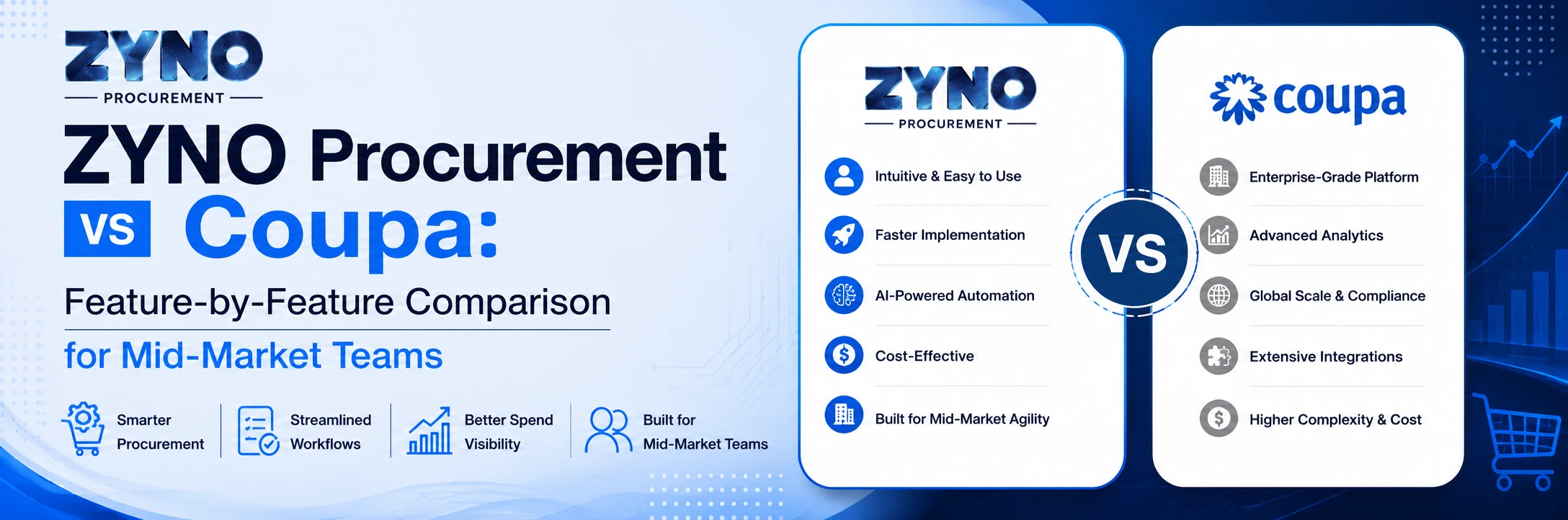
ZYNO Procurement vs Coupa: Best Procurement Software Comparison for Mid-Market Teams
Read More →
Best SAP ARIBA Procurement Alternatives in 2026
Read More →
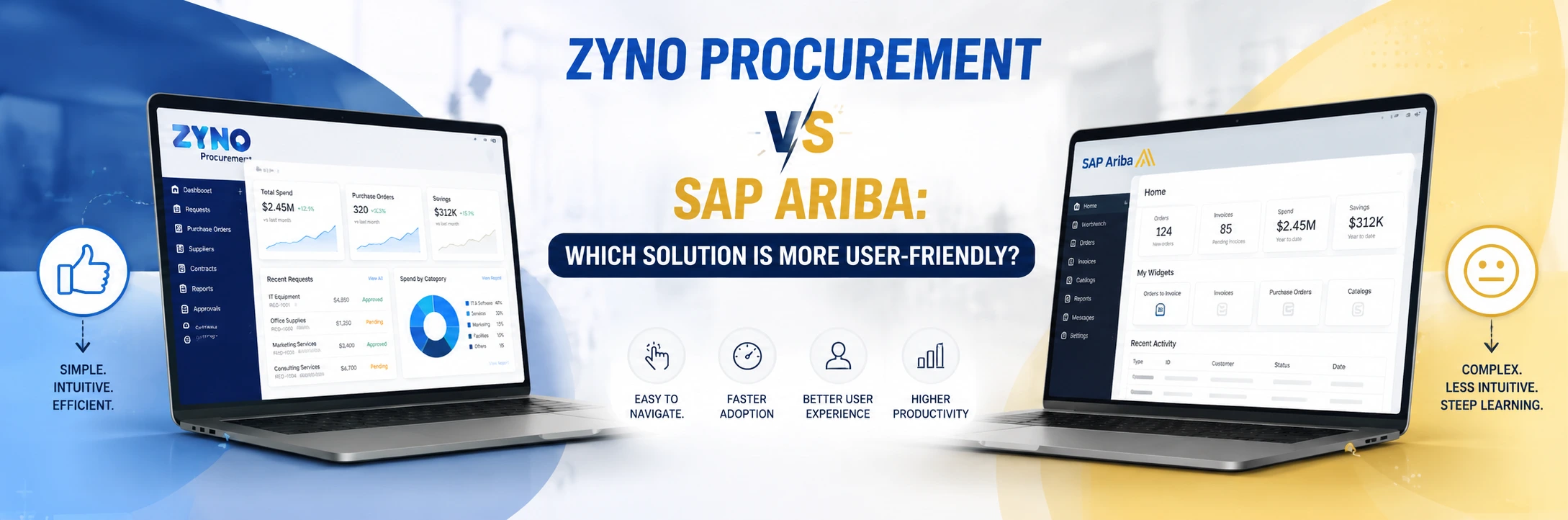
ZYNO Procurement vs SAP Ariba: Which Solution Is More User-Friendly?
Read More →
AI-Powered Procurement Management Software for Fast, Connected, and Visible Workflows in Dubai
Read More →
What is Vendor Management? Complete Guide to Vendor Management Software, Systems, and Processes
Read More →
Best Procurement Management Software In Kenya
Read More →
6 SAP Ariba Alternatives for Mid-Market Businesses in 2026
Read More →
Top E-Procurement Solutions for B2B Organizations (2026)
Read More →
Quotation Format: Free Templates + Complete Guide (2026)
Read More →
Cost Control Software Compared: Features, Pricing, and Performance
Read More →
Procurement Workflow: Steps, Stages, and Real Examples
Read More →
Top 10 Zycus Alternatives for Procurement Teams in 2026
Read More →
Best Precoro Alternative for Purchase Requisition and Procurement
Read More →
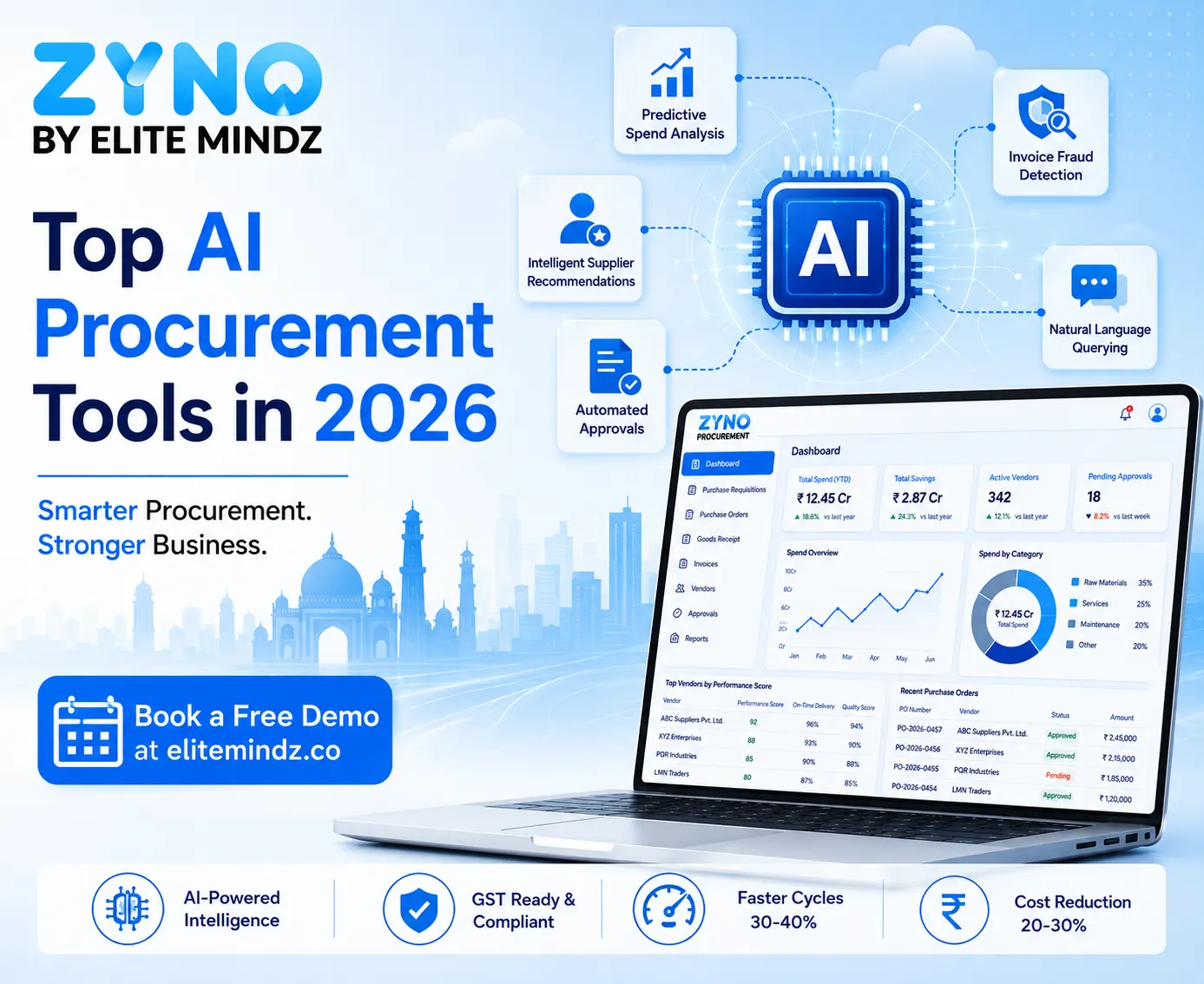
Top AI Procurement Tools in 2026
Read More →
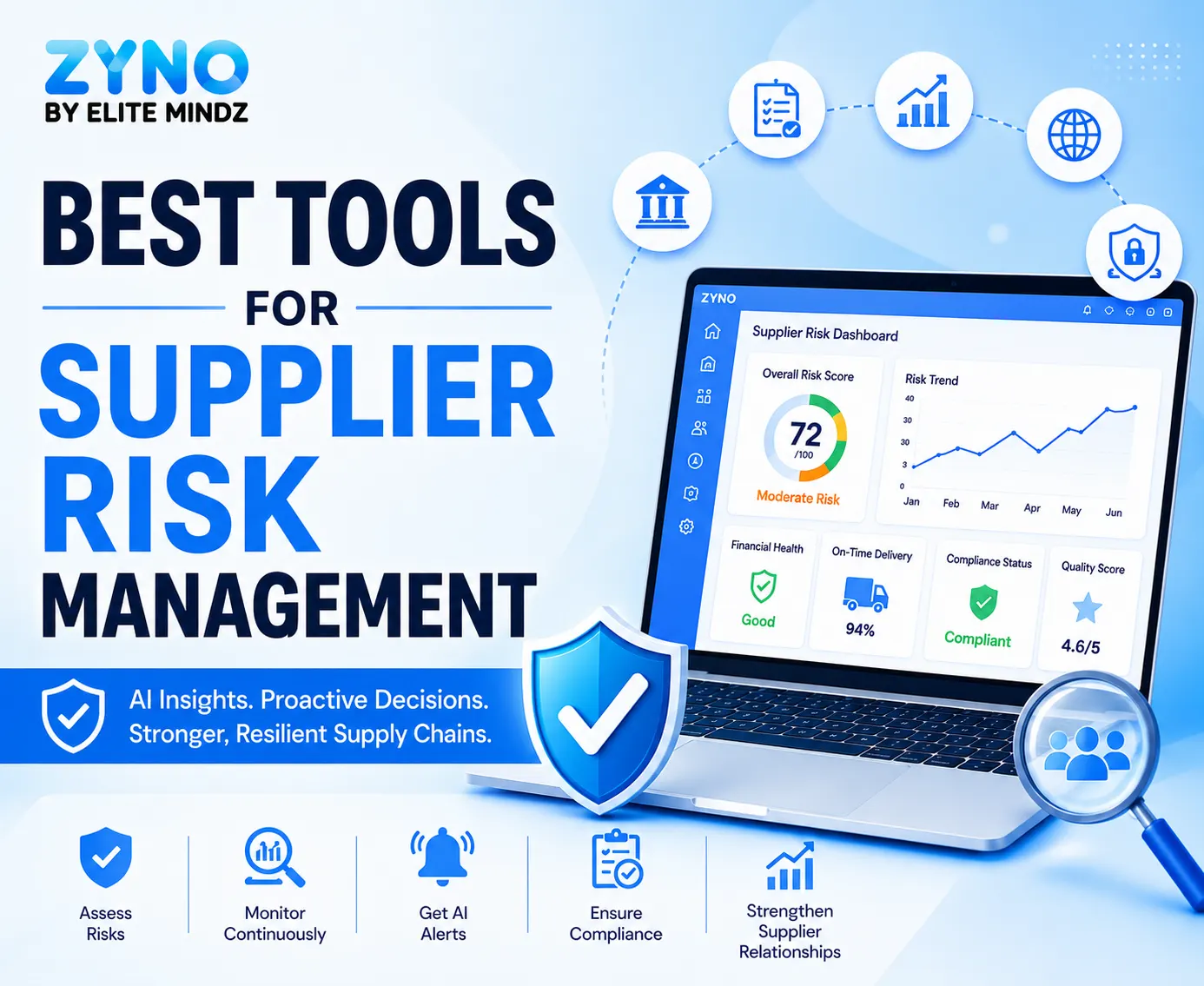
Best Tools for Supplier Risk Management
Read More →
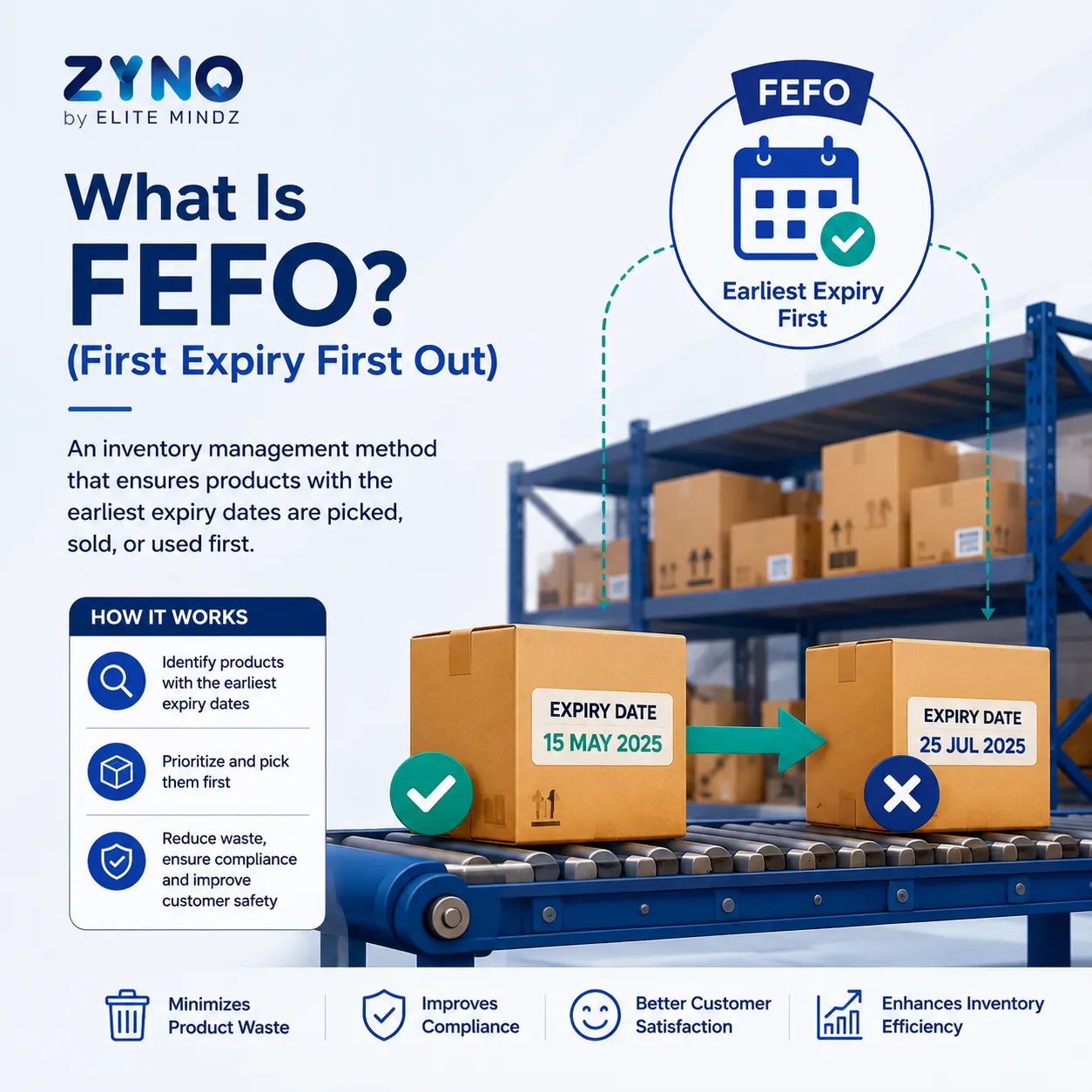
FEFO vs FIFO vs LIFO: Differences, Benefits & Which Inventory Method Is Best?
Read More →
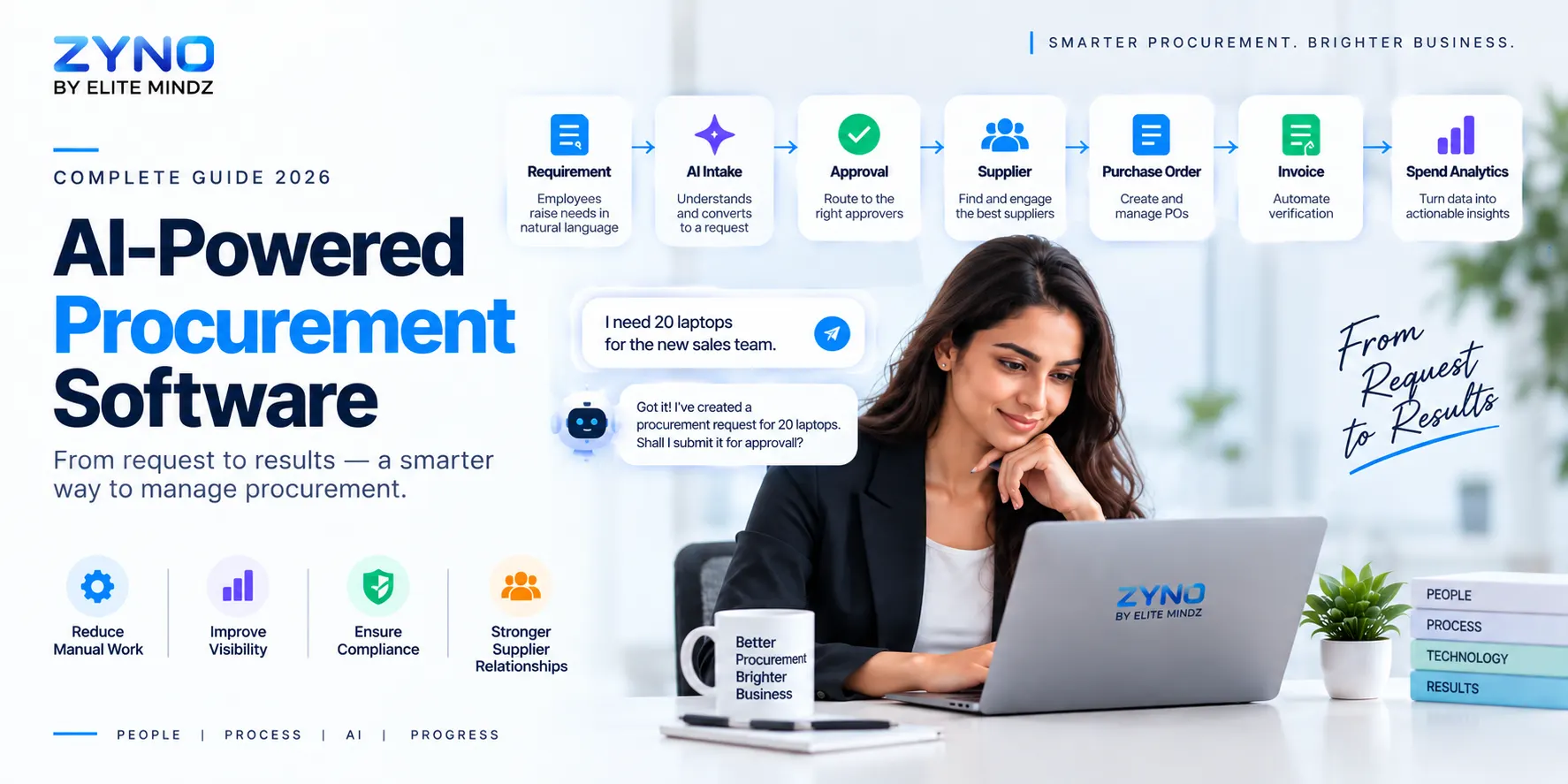
AI-Powered Procurement Software: A Complete Guide for Businesses
Read More →
Best AI Tools for Supply Chain Procurement
Read More →
Procurement Risk Management
Read More →
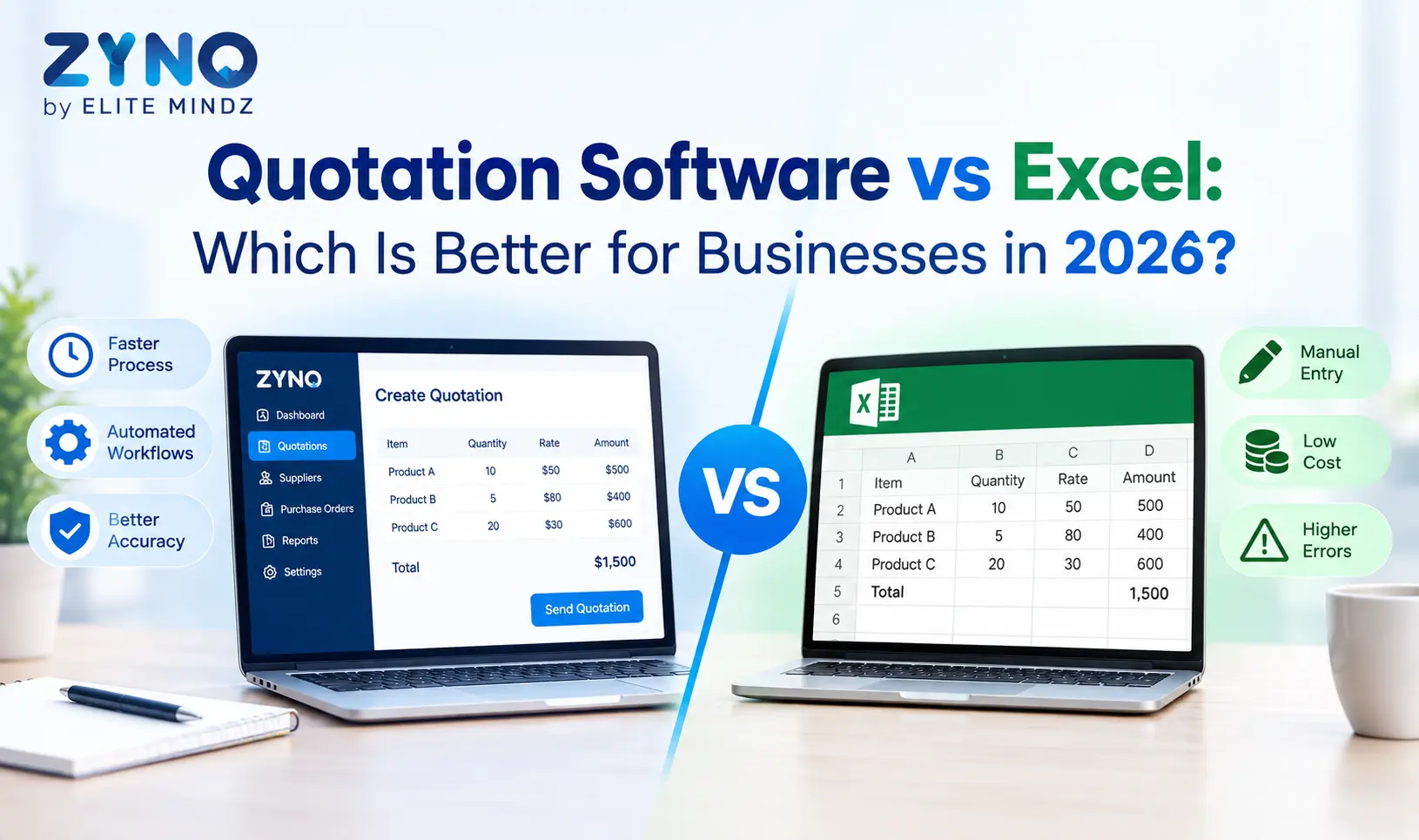
Still Using Excel for Procurement? Read This Before It's Too Late
Read More →
Best RFP Software in 2026: Top Tools Compared for Faster Proposal Responses
Read More →Partner with ZYNO by Elite Mindz to revolutionize how your business works. Fill out the form, and we’ll reach out with AI-powered solutions made just for you.
We use browser cookies to ensure you get the best experience on our website. Learn more
The form was submitted successfully!
ZYNO Digital
Fueling Smarter Digital Growth
ZYNO Digital fuels smarter digital growth through data-driven marketing, creative storytelling, and performance strategies that boost visibility, engagement, and measurable business outcomes across global platforms.
ZYNO Tech
Engineering the Future of IT
ZYNO Tech delivers cutting-edge IT solutions — including web, mobile, and digital transformation services — helping businesses scale efficiently, innovate faster, and stay ahead in a connected world.
ZYNO AI
AI Built for Business Growth
ZYNO AI harnesses the power of artificial intelligence to automate processes, enhance decision-making, and deliver predictive insights — driving innovation, agility, and measurable business growth.
ZYNO by Elite Mindz
Your Partner in the AI-Powered Future
ZYNO by Elite Mindz offers AI-powered products and services that unify operations, boost productivity, and drive digital transformation — helping businesses scale smarter and innovate faster.
* In just 2 mins you'll get a response
* Your idea is 100% protected by our Non-Disclosure Agreement