×
HR records stored in an ERP system become far more valuable when they are properly indexed for an AI chatbot. By organizing employee data, applying metadata, securing sensitive information, and integrating the ERP with a searchable knowledge base, businesses can enable chatbots to deliver fast, accurate, and context-aware responses. This guide explains the complete process, best practices, benefits, and common challenges of indexing HR records to build a smarter, more efficient employee support experience.
Businesses using ZYNO Books cut accounting time by 70% and stay 100% ZATCA-compliant — automatically.

In the era of digital transformation, organizations are increasingly adopting intelligent systems to automate human resource operations. Traditional HR processes often rely on manual effort, multiple software tools, and constant dependency on HR executives for even simple queries. This slows down productivity and creates inefficiencies in employee support.
To overcome these challenges, companies are now implementing AI-powered HR chatbots integrated with ERP systems and HRMS software. These chatbots act as a conversational layer over enterprise HR data, allowing employees to access information instantly.
However, for a chatbot to function effectively, it must first be able to understand, organize, and retrieve HR data from ERP systems. This process is known as HR records indexing in ERP systems.
Indexing is the foundation that enables a chatbot to search HR data intelligently, understand user queries, and generate accurate responses. Without proper indexing, even the most advanced chatbot will fail to deliver reliable results.
This blog explains in detail how to index HR records from an ERP system for a chatbot, including architecture, steps, tools, and best practices.
Read More: ZYNO ERP Software
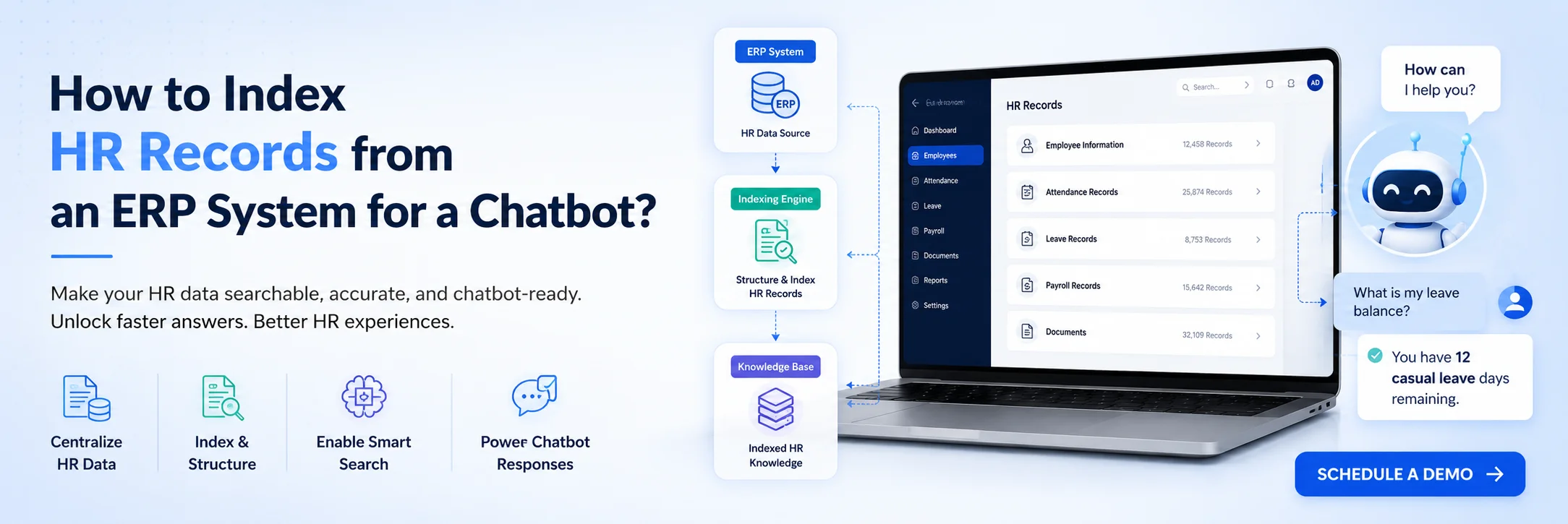
HR records indexing in ERP systems refers to the process of converting raw HR data into a structured, searchable format that can be used by AI systems such as chatbots.
ERP systems store large volumes of HR data such as:
However, this data is typically stored in structured databases or modules that are not directly optimized for natural language search.
Indexing transforms this data into formats that AI systems can easily retrieve, such as:
This allows chatbots to quickly find relevant information when a user asks a question.
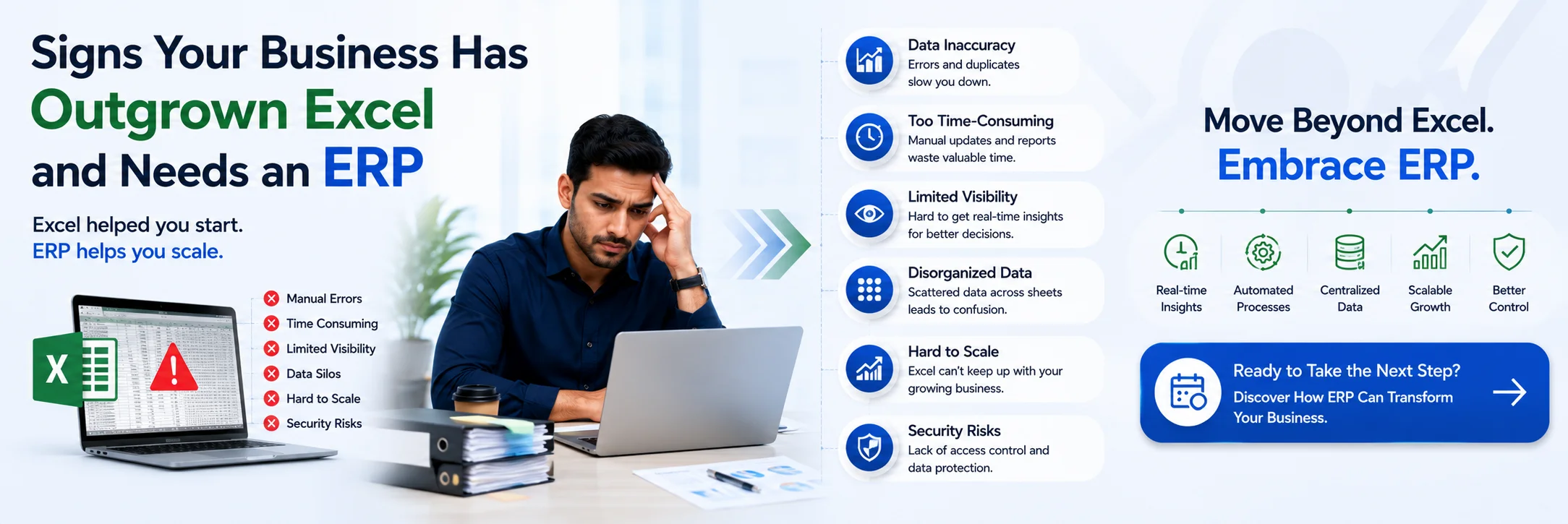
Read More: Signs Your Business Needs an ERP System
Indexing plays a crucial role in enabling HR chatbot using ERP data because it bridges the gap between raw data and intelligent search.
Getting your web pages indexed by search engines is the first step toward appearing in search results and attracting organic traffic. Proper indexing ensures that your content is discoverable, accessible to users, and eligible to rank for relevant keywords. Here are some of the biggest benefits of effective indexing:
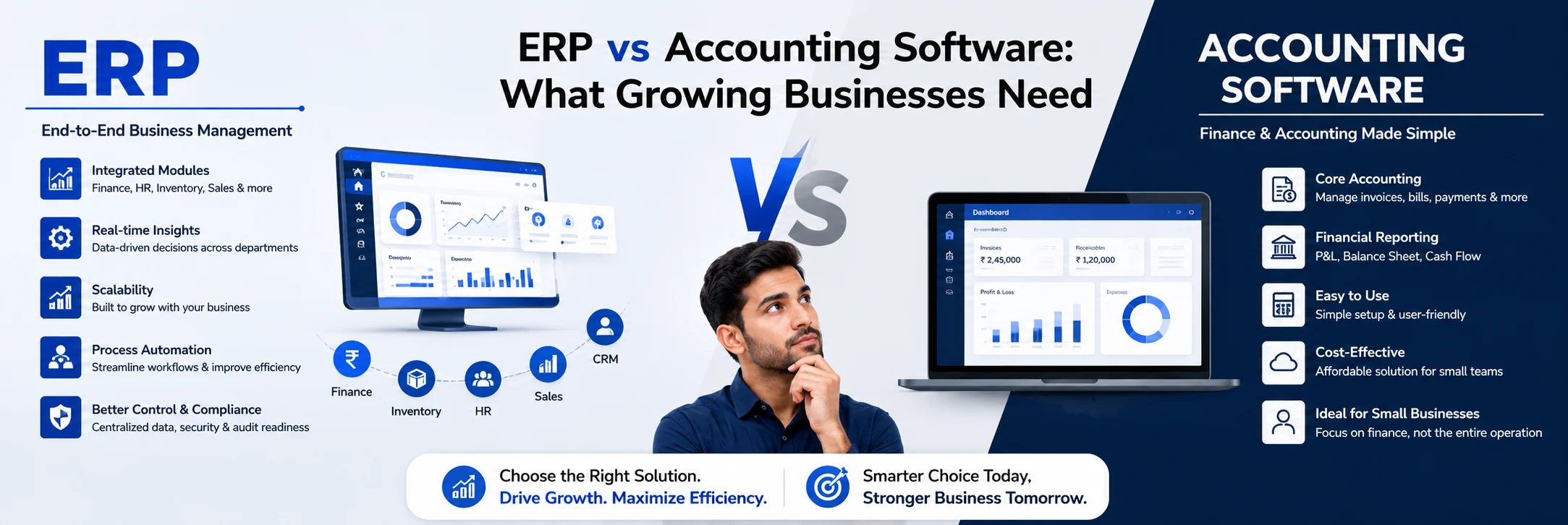
Read More: ERP vs Accounting Software: What's the Difference?
Indexed data allows chatbots to quickly find relevant HR information without scanning entire databases.
Structured indexing reduces errors and ensures that chatbot responses are based on correct data.
Indexing enables chatbots to understand human-like queries such as “How many leaves do I have left?”
Large HR datasets can be efficiently managed and searched using indexing techniques.
Employees receive instant answers from the chatbot without waiting for HR support.
Before indexing, it is important to understand how ERP systems manage HR data.
Most HRMS software and ERP platforms store data in structured formats such as:
Common HR data sources include:
Read More: AI-Powered Smart ERP Software: The Future of Enterprise Management
While this structure is efficient for operations, it is not optimized for AI-based conversational retrieval. That is why indexing is required.
A complete ERP HR data chatbot integration system includes multiple layers:
This includes:
APIs or connectors are used to extract HR data securely from ERP systems.
Raw data is cleaned, normalized, and structured into consistent formats.
This is the core layer where HR data is converted into searchable formats such as:
The chatbot uses NLP (Natural Language Processing) and Generative AI to interpret user queries.
The chatbot retrieves indexed data and generates human-like responses.
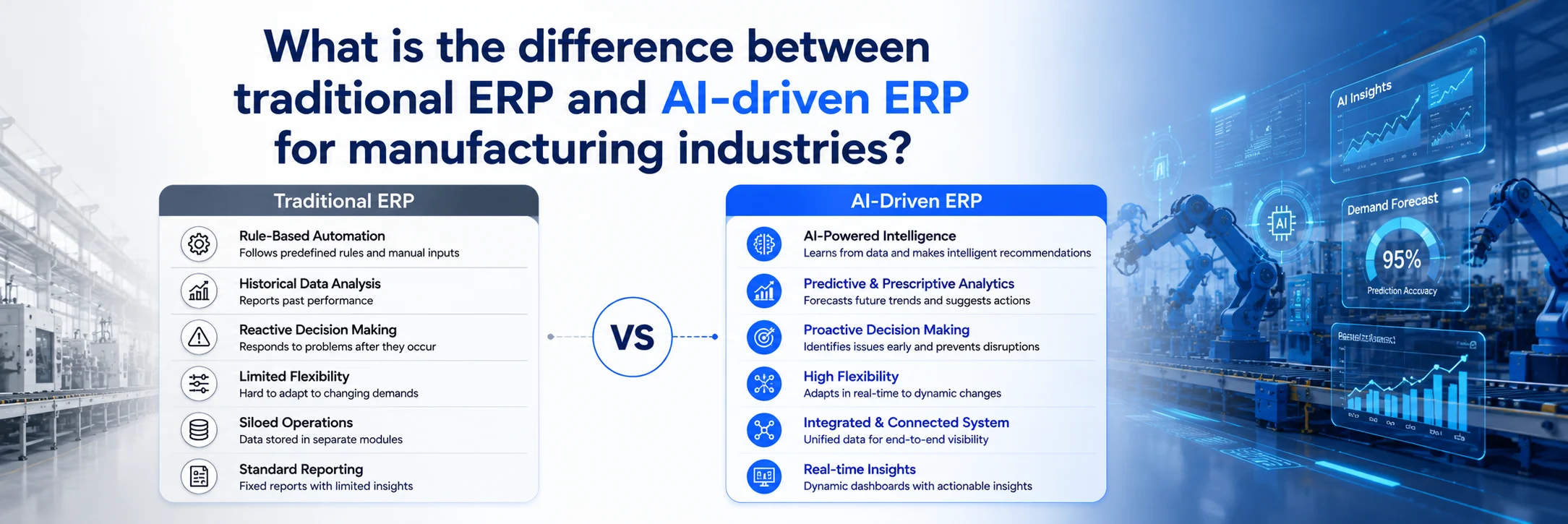
Read More: AI ERP vs Traditional ERP for Manufacturing
To make an HR chatbot accurate and reliable, employee records must be properly indexed and organized. This involves collecting HR data, cleaning duplicate information, categorizing documents, applying metadata, securing sensitive records, and continuously updating the knowledge base so the chatbot can retrieve the right information in real time.
The first step is identifying all HR data systems such as:
Understanding data sources ensures complete coverage of HR information.
Data is extracted using:
This step ensures real-time or scheduled data synchronization between ERP and chatbot systems.
Raw HR data often contains inconsistencies such as missing fields, duplicates, or formatting issues.
Data cleaning includes:
Clean data improves indexing accuracy.
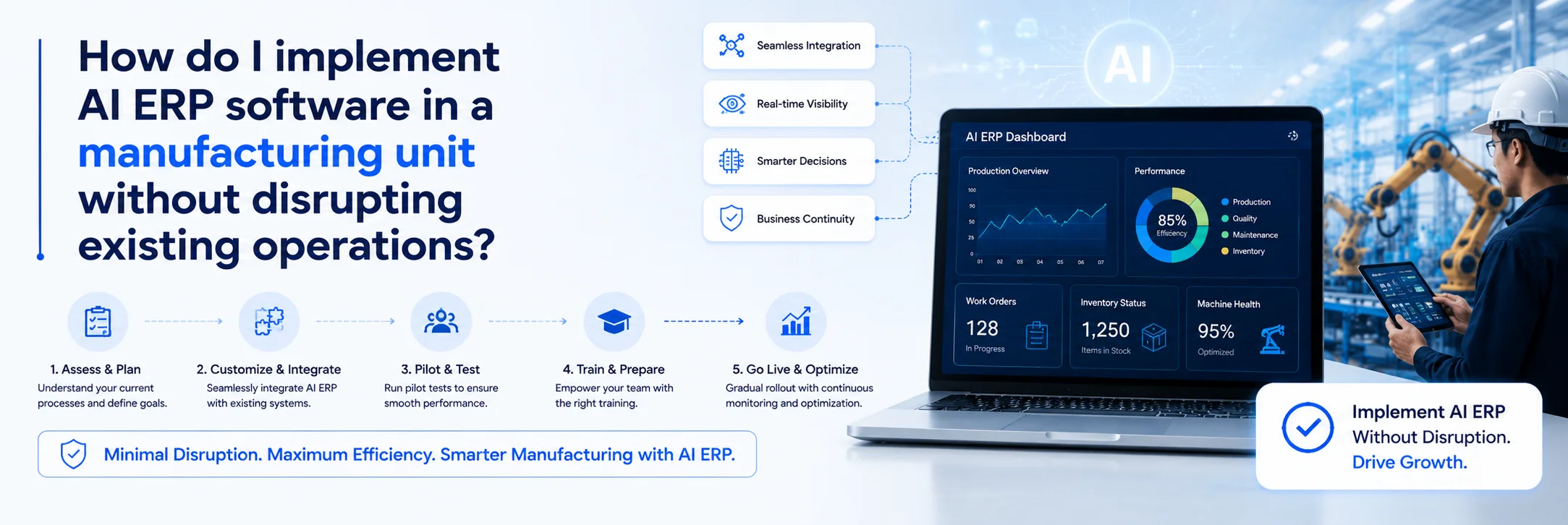
Read More: How to Implement AI ERP Software Successfully
HR data is converted into structured formats such as:
For example:
This structured format is necessary for indexing.
To enable intelligent search, HR data is converted into vector embeddings using NLP models.
Embeddings help the chatbot understand:
For example, “salary slip” and “pay statement” are understood as similar concepts.
This is a critical step in building a HR knowledge base chatbot.
Indexed embeddings are stored in vector databases such as:
These databases allow fast semantic search across large datasets.
When an employee asks a question, the chatbot:
This enables NLP chatbot for HR data functionality.
The chatbot uses Generative AI to convert retrieved data into human-readable responses.
For example:
User: “What is my leave balance?”
Chatbot: “You currently have 12 paid leaves remaining.”
Read More: Best AI ERP Platforms for Small and Mid-Sized Manufacturing Companies in India
A Generative AI HR chatbot does not only retrieve data but also generates contextual answers.
This makes the chatbot more human-like and efficient.
Integrating an HR chatbot with your ERP or HRMS creates a centralized employee experience. Employees can instantly access leave balances, attendance records, payroll information, company policies, and HR documents without contacting the HR team, improving productivity while reducing administrative workload.
Employees receive instant answers without HR intervention.
Automates repetitive queries like payroll and leave status.
Provides self-service access to HR information.
Transforms ERP data into actionable insights.
Reduces dependency on HR support teams.
Read More: AI ERP for Production Planning & Inventory Management
Organizations often face challenges such as inconsistent data formats, duplicate employee records, outdated documents, fragmented systems, and data privacy concerns. Without proper indexing and governance, HR chatbots may return inaccurate or outdated information, making regular data maintenance and security essential.
HR data is sensitive and requires strict access control and encryption.
ERP systems vary, making integration technically challenging.
Inconsistent or incomplete data can affect chatbot accuracy.
Large enterprises require scalable indexing systems.
Effective HR data indexing starts with maintaining clean, structured, and up-to-date records. Standardize file formats, use consistent naming conventions, apply role-based access controls, encrypt sensitive employee information, and regularly audit your HR database to ensure the chatbot always delivers accurate and compliant responses.
The future of AI powered HR assistant chatbot systems includes:
These advancements will make HR operations faster, smarter, and more efficient.
Read More: AI ERP Software Features Every Manufacturing Business Should Look For
Indexing HR records from an ERP system is the backbone of building an intelligent HR chatbot. Without proper indexing, even advanced AI models cannot retrieve accurate HR data.
By combining ERP HR data chatbot integration, HRMS software, Payroll management software, and modern AI technologies, organizations can build powerful Enterprise HR chatbot systems.
Through structured HR records indexing in ERP systems, businesses can transform raw HR data into intelligent, searchable knowledge, enabling fast, accurate, and automated employee support.
As AI continues to evolve, HR chatbots using ERP data will become an essential part of every modern enterprise, improving efficiency, reducing HR workload, and enhancing employee experience.
HR records indexing in an ERP system is the process of organizing and converting HR data into a structured and searchable format so that AI systems like chatbots can quickly retrieve relevant employee information.
Indexing is important because it allows chatbots to search large HR datasets efficiently, understand user queries, and deliver accurate real-time responses without scanning the entire database.
ERP systems provide HR data through APIs, database connections, or middleware tools. This data is then extracted, cleaned, and indexed for chatbot use.
Common HR data includes employee profiles, attendance records, payroll details, leave balances, performance reviews, and HR policy documents.
A vector database stores HR data in embedding format, enabling semantic search so the chatbot can understand meaning and context rather than just keywords.
The chatbot converts user queries into embeddings, searches the indexed database, retrieves relevant HR information, and generates a human-like response using AI.
Technologies include NLP (Natural Language Processing), vector databases (like Pinecone or FAISS), APIs, and Generative AI models.
Yes, ERP integration is essential because it provides real-time and accurate HR data required for chatbot responses and automation.
It improves response speed, reduces HR workload, enhances employee experience, ensures data accuracy, and enables 24/7 automated HR support.
Challenges include data security concerns, system integration complexity, inconsistent data formats, and maintaining real-time synchronization with ERP systems
Sneha Singh
Content writer
Sneha Singh is a B2B tech content strategist with 4+ years of experience. She specializes in SEO-driven SaaS content, whitepapers, and platform-native social media campaigns that simplify complex technology and drive business growth.
What is ERP? A Beginner's Guide to Enterprise Resource Planning
Read More →

Cloud ERP vs. On-Premise vs. Hybrid: Best ERP Model for 2025
Read More →How To Customize ERP Software Without Breaking The Bank?
Read More →
The Future of Manufacturing ERP in 2026 & Beyond
Read More →Best ERP Software in India: 2026 Edition
Read More →
AI in Manufacturing ERP: The Future of Smart Factories
Read More →
How ERP Transforms Inventory Management and Reduces Costs
Read More →
Top Features to Look for in Inventory Management Software in 2025
Read More →
Top 5 Ways Asset Management Software Can Save Your Business Money
Read More →
Why Smart Businesses Are Switching to Vendor Management Systems in 2025?
Read More →
Why Manufacturing Companies Need ERP Software
Read More →
Cloud ERP vs. Traditional ERP: Which is Right for You?
Read More →
ERP for Small Business: Is It Worth the Investment?
Read More →
How to Calculate ERP ROI and Why It's Worth the Investment
Read More →
Top 10 ERP Software Companies in India 2026 Updated List (Complete Guide)
Read More →
ERP Implementation Mistakes to Avoid in 2025
Read More →
Cloud ERP vs Edge Computing: What's Right for Modern Manufacturing?
Read More →
The Future of ERP Software and the Role of Generative AI
Read More →
Digital Twin Technology & ERP: Real-Time Insights for Smarter Manufacturing
Read More →
Scalable ERP Solutions Designed for Modern Enterprises
Read More →
ERP and IoT Integration: Smart Factory Vision
Read More →Best ERP Software for Manufacturing Businesses in India
Read More →Top 10 Best Manufacturing ERP Software in India (2026)
Read More →
Best ERP Software for Manufacturing Industries in Ethiopia (2026)
Read More →
Best School ERP Software Providers in UAE (2025 Edition)
Read More →
Best School ERP Software for 2025: Guide for Educational Institutions
Read More →
Top 10 ERP Software Solutions for Nigerian Manufacturers (2025 Edition)
Read More →
Best ERP Systems for Scalable Retail and POS Integration
Read More →
Top 10 Cloud-Based Manufacturing ERP Solutions in Africa (2025 Edition)
Read More →
Top 10 Cloud-Based Manufacturing ERP in UAE
Read More →
Top 10 Cloud-Based Manufacturing ERP Software in Nigeria (2026 Edition)
Read More →
Top 10 School ERP Software Companies in Kenya (2025)
Read More →
Best School ERP Software Providers in Nigeria (2025)
Read More →
Top Cloud-Based Manufacturing ERP in Zimbabwe (2025)
Read More →
Best ERP Software in U.K
Read More →
Top 10 ERP Software Developers in the U.K. (2025)
Read More →
Best ERP Software Providers in France (2025)
Read More →
Best ERP Software Companies in Germany : A Comprehensive Guide
Read More →
Top 10 ERP Software Development Companies in Qatar
Read More →
10 Best ERP Providers in Germany - 2026 Updated List
Read More →
Best ERP Software Firms in Saudi Arabia (2025)
Read More →
Best ERP Service Providers in Indonesia for SMEs and Large Enterprises
Read More →
Top 10 Cloud-Based Manufacturing ERP Systems in Egypt for Modern Factories
Read More →
Top ERP Solutions in the USA 2025: Streamline Your Business with ZYNO ERP
Read More →
Top ERP Solutions in Qatar for Businesses of All Sizes
Read More →Top Manufacturing ERP Software in India 2026 ZYNO Manufacturing ERP
Read More →How Manufacturing Companies Reduce Production Delays Using ERP Automation
Read More →Why Legal Firms Need ERP to Manage Cases, Billing & Compliance
Read More →What Is ERP And How Does It Work
Read More →
How ERP Systems Are Evolving in 2026: What Businesses Need to Know
Read More →
Best ERP Software in India: 2025 Edition
Read More →
Top 10 ERP Software Companies in Delhi NCR
Read More →
How Manufacturing ERP Software Improves Demand Forecasting
Read More →
Top 10 Best School Management Software in India
Read More →Manufacturing & Wholesale ERP in Qatar: Complete Industry Guide 2026
Read More →Cloud ERP Software in Qatar: Why Businesses Are Moving in 2026
Read More →Is ERP a Procurement Software? Key Differences, Benefits & What to Choose
Read More →What Is Production Planning and Control? Definition, Objectives & Functions
Read More →
Garment Inventory Management Software: Complete Guide 2026
Read More →
How ERP Reduces Fabric Wastage in Garment Factories
Read More →
Why the Garment Industry Needs a Specialized ERP
Read More →
Features to Look for in Garment Manufacturing ERP Software
Read More →
Best ERP Software for Small Garment Manufacturing Business in India
Read More →
The Real Problems Holding Back Small Garment Manufacturers in India
Read More →Garment Manufacturing ERP Software in India: Best Options, Features & Complete Guide 2026
Read More →
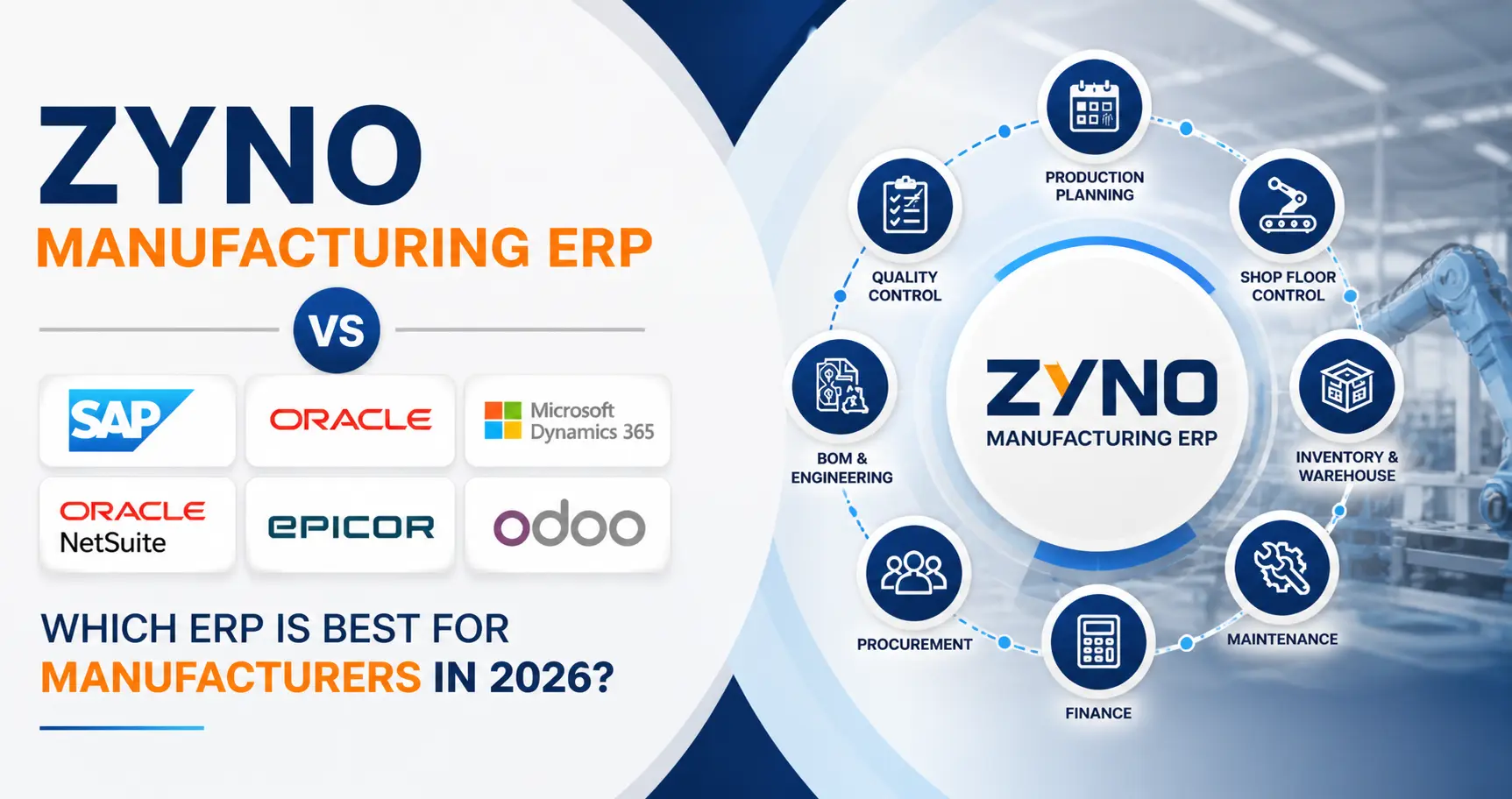
Which ERP is Best for Manufacturers in 2026?
Read More →
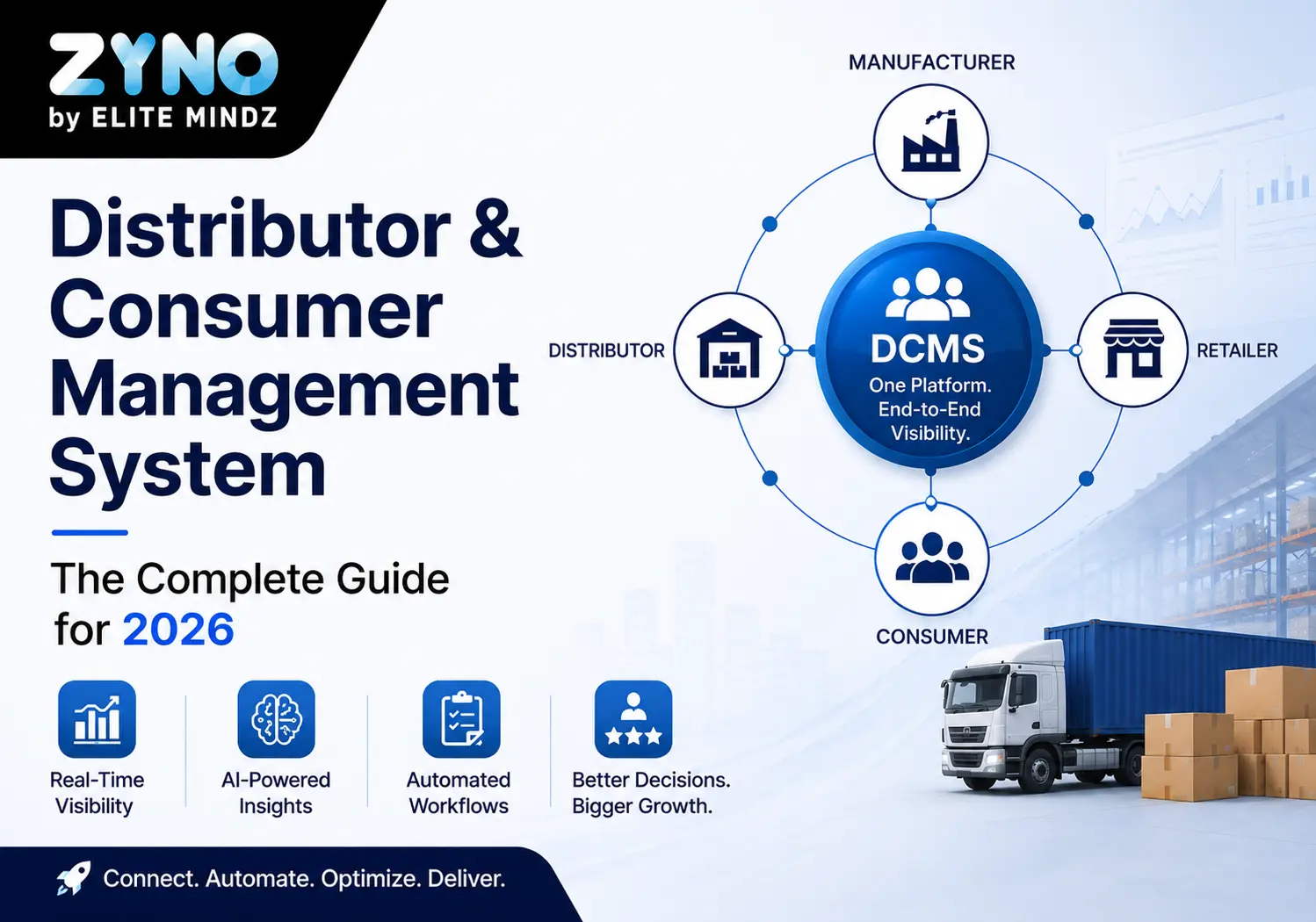
Distributor & Consumer Management System: The Complete Guide for 2026
Read More →
Best Pharma ERP Software in India 2026 – Features, Compliance & Buying Guide
Read More →
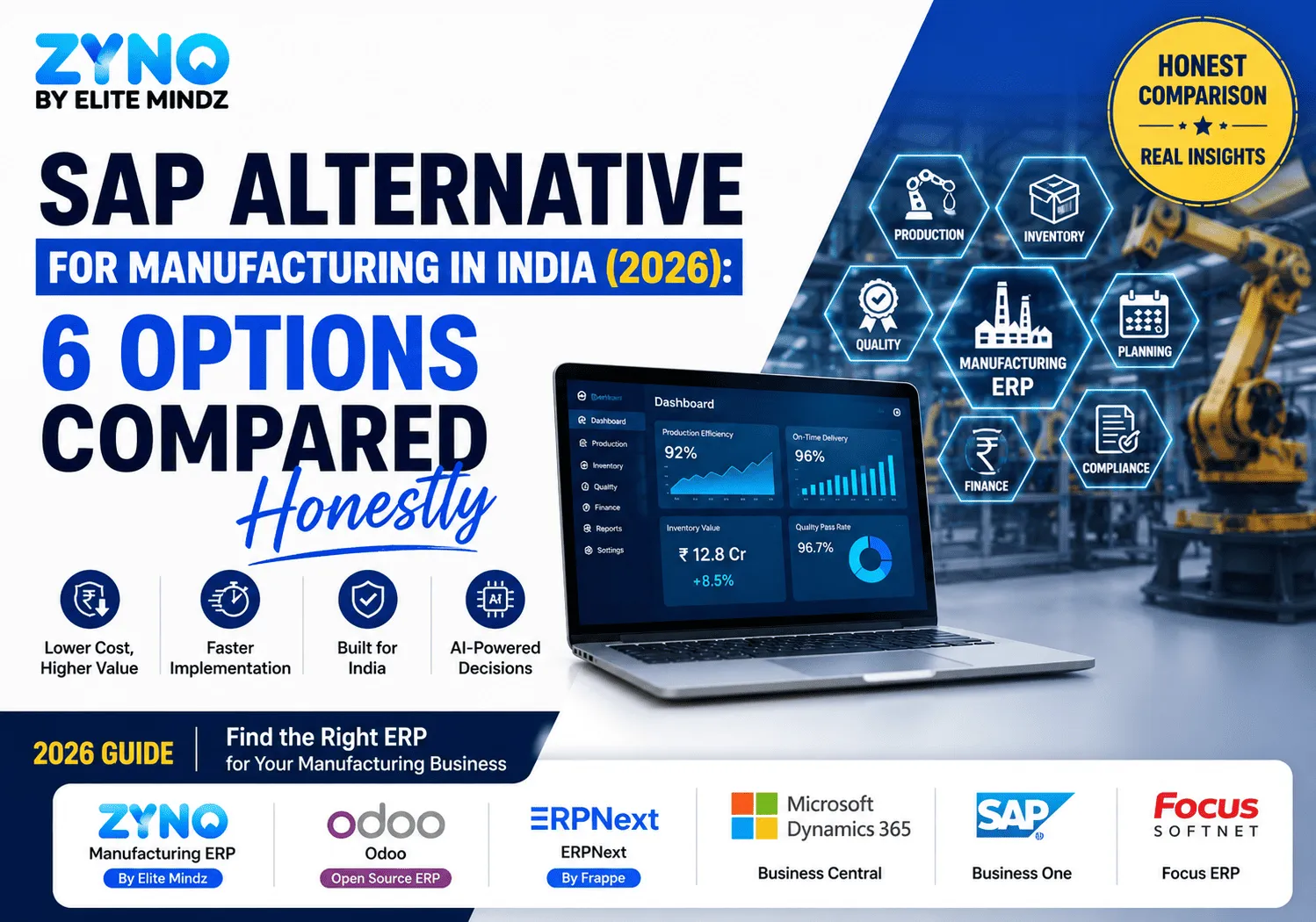
SAP Alternative for Manufacturing in India (2026): 6 Options Compared Honestly
Read More →
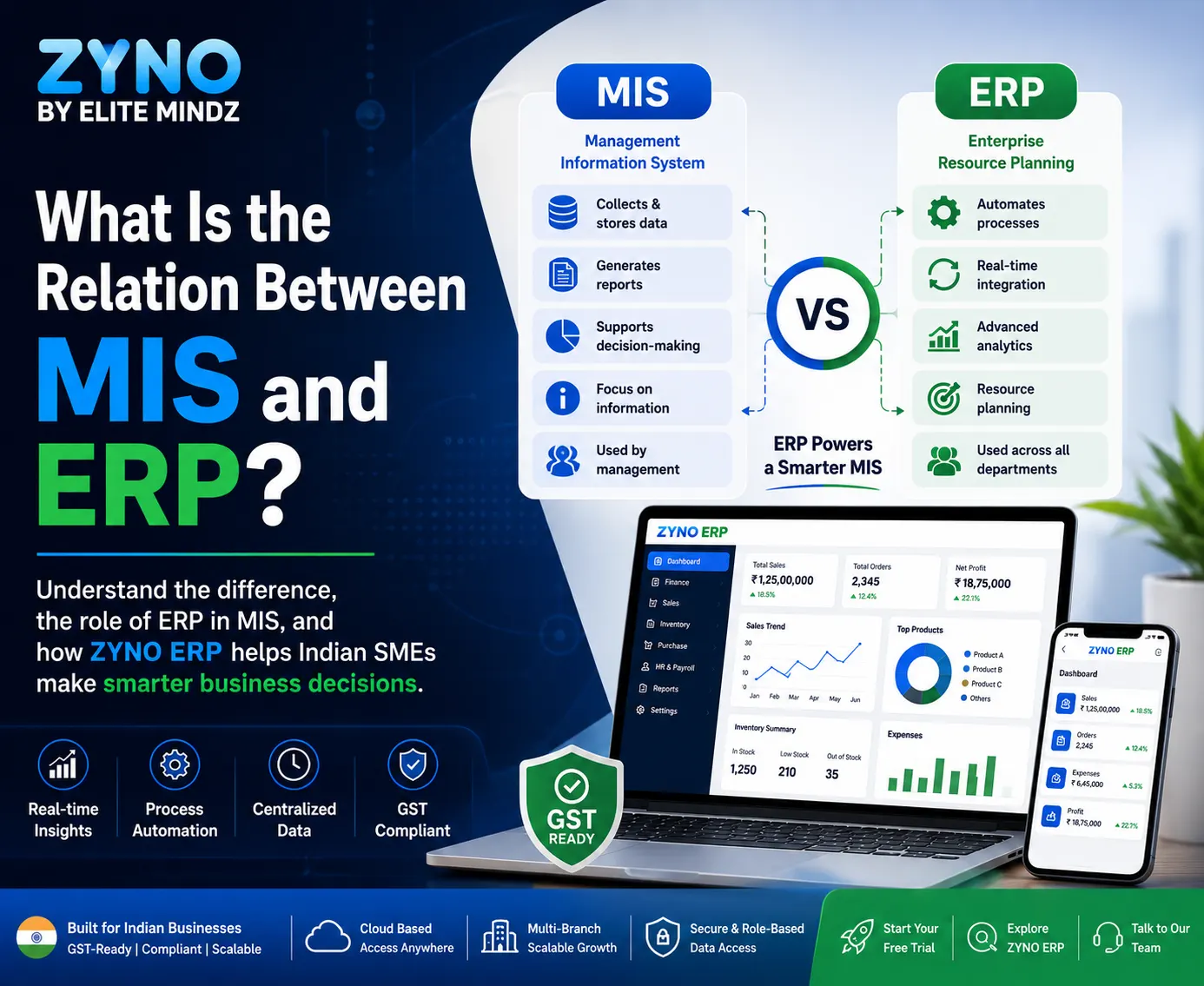
What Is the Relation Between MIS and Enterprise Resource Planning?
Read More →
Best ERP for Sweater Manufacturers in India
Read More →
What Manufacturing ERP Systems Provide the Best Demand Forecasting Features?
Read More →
Which ERP Software Provides the Best Demand Forecasting for Manufacturers?
Read More →
What are the key features to look for in AI ERP software for manufacturing companies in India?
Read More →
How does AI-powered ERP software improve production planning and inventory management in manufacturing?
Read More →
Which AI ERP platforms are best suited for small and mid-sized manufacturing businesses in India?
Read More →
How do I implement AI ERP software in a manufacturing unit without disrupting existing operations?
Read More →
What is the difference between traditional ERP and AI-driven ERP for manufacturing industries?
Read More →
AI-Powered Smart ERP Software: The Complete Guide for Modern Enterprises
Read More →
ERP vs Accounting Software: What Growing Businesses Need
Read More →
Signs Your Business Has Outgrown Excel and Needs an ERP
Read More →
How to Index HR Records from an ERP System for a Chatbot?
Read More →Partner with ZYNO by Elite Mindz to revolutionize how your business works. Fill out the form, and we’ll reach out with AI-powered solutions made just for you.
We use browser cookies to ensure you get the best experience on our website. Learn more
The form was submitted successfully!
ZYNO Digital
Fueling Smarter Digital Growth
ZYNO Digital fuels smarter digital growth through data-driven marketing, creative storytelling, and performance strategies that boost visibility, engagement, and measurable business outcomes across global platforms.
ZYNO Tech
Engineering the Future of IT
ZYNO Tech delivers cutting-edge IT solutions — including web, mobile, and digital transformation services — helping businesses scale efficiently, innovate faster, and stay ahead in a connected world.
ZYNO AI
AI Built for Business Growth
ZYNO AI harnesses the power of artificial intelligence to automate processes, enhance decision-making, and deliver predictive insights — driving innovation, agility, and measurable business growth.
ZYNO by Elite Mindz
Your Partner in the AI-Powered Future
ZYNO by Elite Mindz offers AI-powered products and services that unify operations, boost productivity, and drive digital transformation — helping businesses scale smarter and innovate faster.
* In just 2 mins you'll get a response
* Your idea is 100% protected by our Non-Disclosure Agreement