×
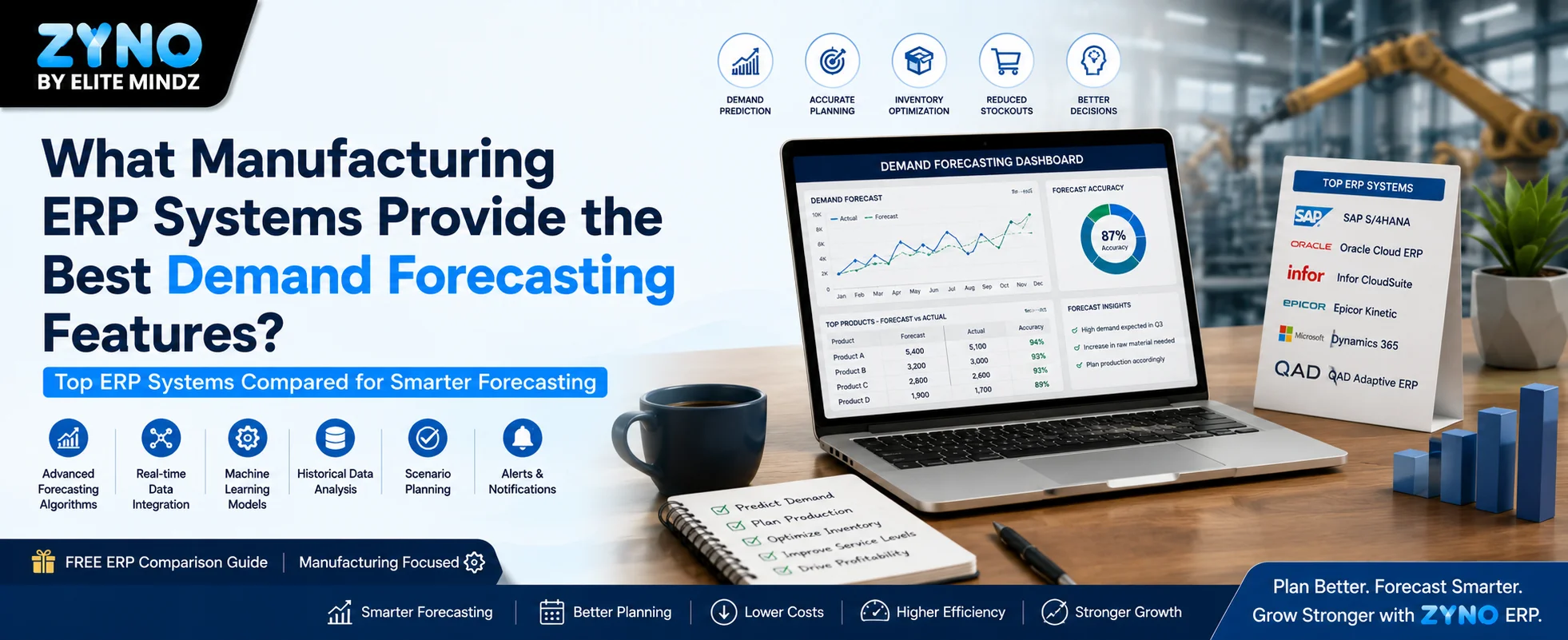
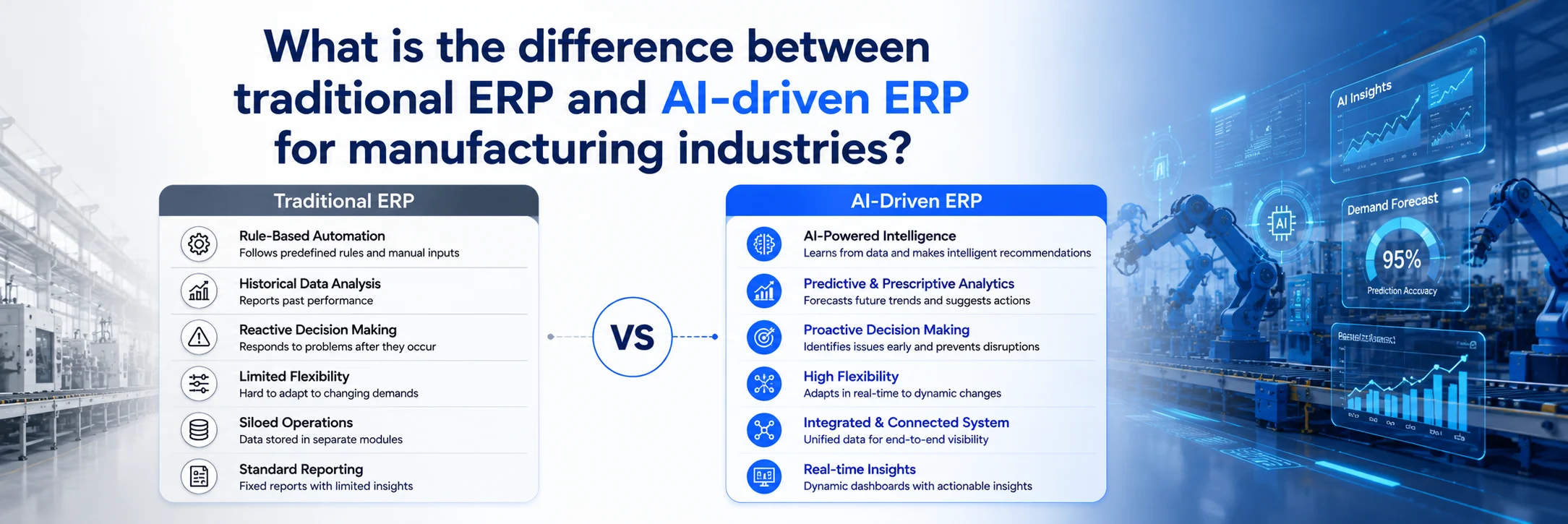
Modern manufacturing ERP systems use AI-driven demand forecasting to help businesses predict customer demand, optimize inventory levels, and improve production planning. The best ERP solutions provide real-time insights, historical data analysis, and automated forecasting to reduce costs and enhance supply chain efficiency.
Businesses using ZYNO Books cut accounting time by 70% and stay 100% ZATCA-compliant — automatically.

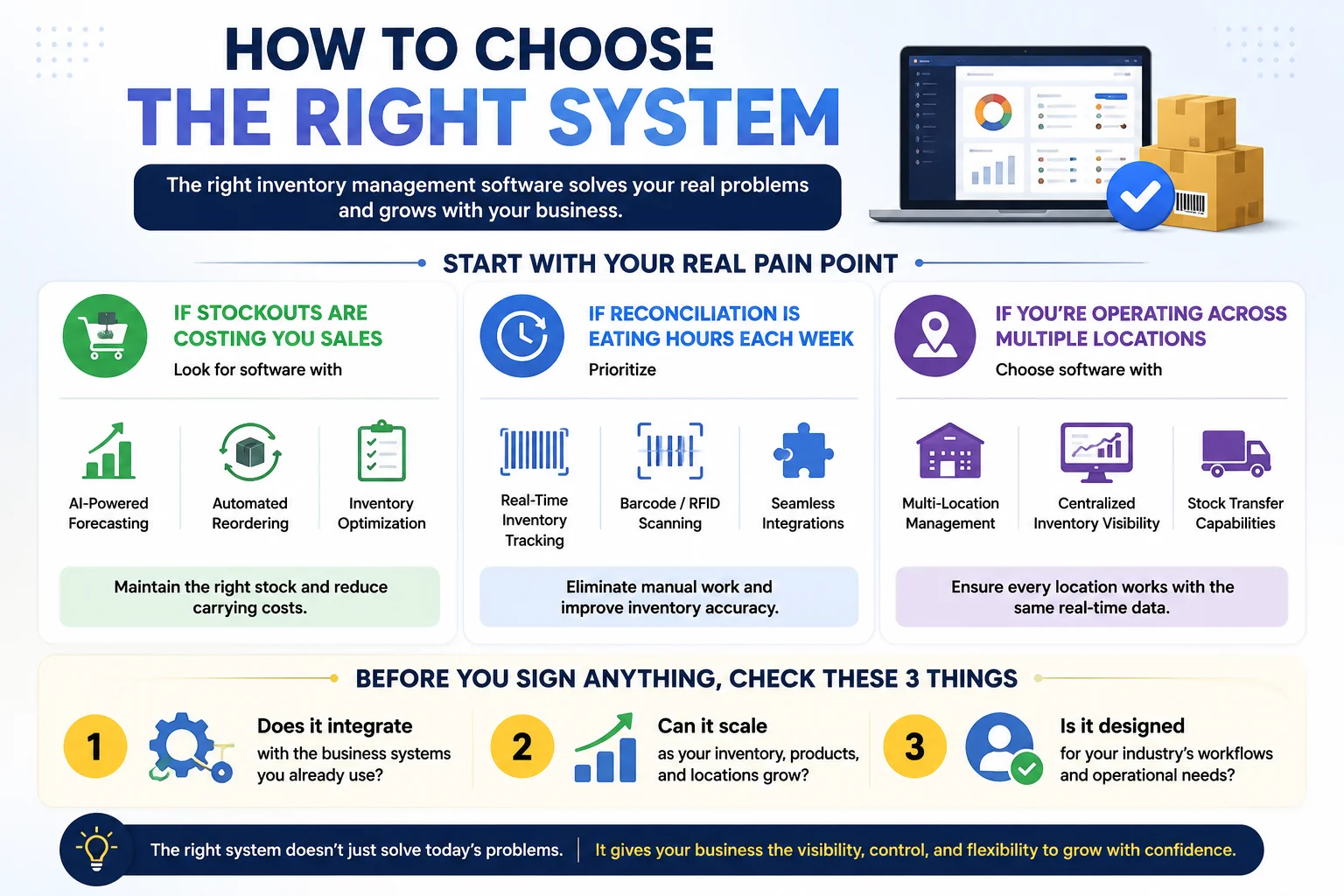
Let's be honest. Stockouts kill sales. Overstock drains cash. And when your production team is guessing what to make next week based on last month's gut feelings, things go wrong fast.
That's the real pain of poor demand forecasting in manufacturing. You're not just losing inventory accuracy, you're losing customer trust, production efficiency, and actual money every single quarter.
Here's the good news: the right manufacturing ERP system can fix this. Not just partially, but fundamentally. Modern ERP platforms now use AI, machine learning, and real-time data to tell you what your customers will need, before they even place the order.
But not all ERP systems are built the same. So let's cut through the noise and look at which ones actually deliver when it comes to demand forecasting, and which one might be the smartest choice for your business.
You have to know why this feature is so vital before comparing platforms.
Using such technologies as analytics tools and enterprise resource planning with artificial intelligence and machine learning allows manufacturers to make faster and more accurate forecasts. And it is not an additional feature anymore; it is survival.
Consider it from this angle: there are two main reasons why companies must forecast sales – firstly, to confirm the mid and long term business strategies, and, secondly, because sales growth will affect a company's resources. If a manufacturing company sees the increased number of sales, it may need to build a new plant before it happens since it takes time to set up the machines and train personnel.
Moreover, the difference between manufacturers who understand it and who do not is increasing rapidly. The best organizations are integrating CRM, ERP, and operation data into integrated forecasting models, which give all teams the same visibility.
Conclusion: if your ERP does not forecast demand intelligently, your competitors already are planning according to this weakness.
Businesses looking for advanced forecasting capabilities should explore the Best ERP Software for Indian Manufacturing to compare solutions designed for modern production environments.
Every manufacturing business has unique forecasting needs, and not all ERP systems deliver the same level of accuracy. This comparison explores the top manufacturing ERP solutions for 2026, helping you understand which platforms offer the best demand forecasting features for smarter planning and sustainable growth.

SAP has been the dominant provider of ERP solutions for enterprise systems and thus, the features of its demand forecasting solution speak volumes about it.
One of the most commonly used ERP solutions by manufacturing companies is SAP S/4HANA. This solution uses the in-memory database of SAP, HANA, which makes the whole system capable of performing real-time processing of data for procurement, production planning, and logistics.
The complementary solution called SAP IBP (Integrated Business Planning) was designed to perform supply-demand alignment operations. But even though it is good at performing such functions as well as financial planning, its own forecasting tool may not have all that many features in regard to external data.
Best for: Large enterprises with complex, multi-site global operations.
Watch out for: High cost and steep learning curve.
Another example of a company providing AI-powered manufacturing forecasts is Oracle.
Oracle Fusion Cloud ERP merges financial management, supply chain planning, and manufacturing execution systems. Demand management by Oracle includes a machine learning tool that recognizes patterns in sales history, seasons, and market indicators all at once.
What is special about Oracle is its ability to model various demand scenarios.
Best for: Mid-to-large manufacturers who need cloud-native flexibility with deep analytics.
Watch out for: Customization can get expensive.
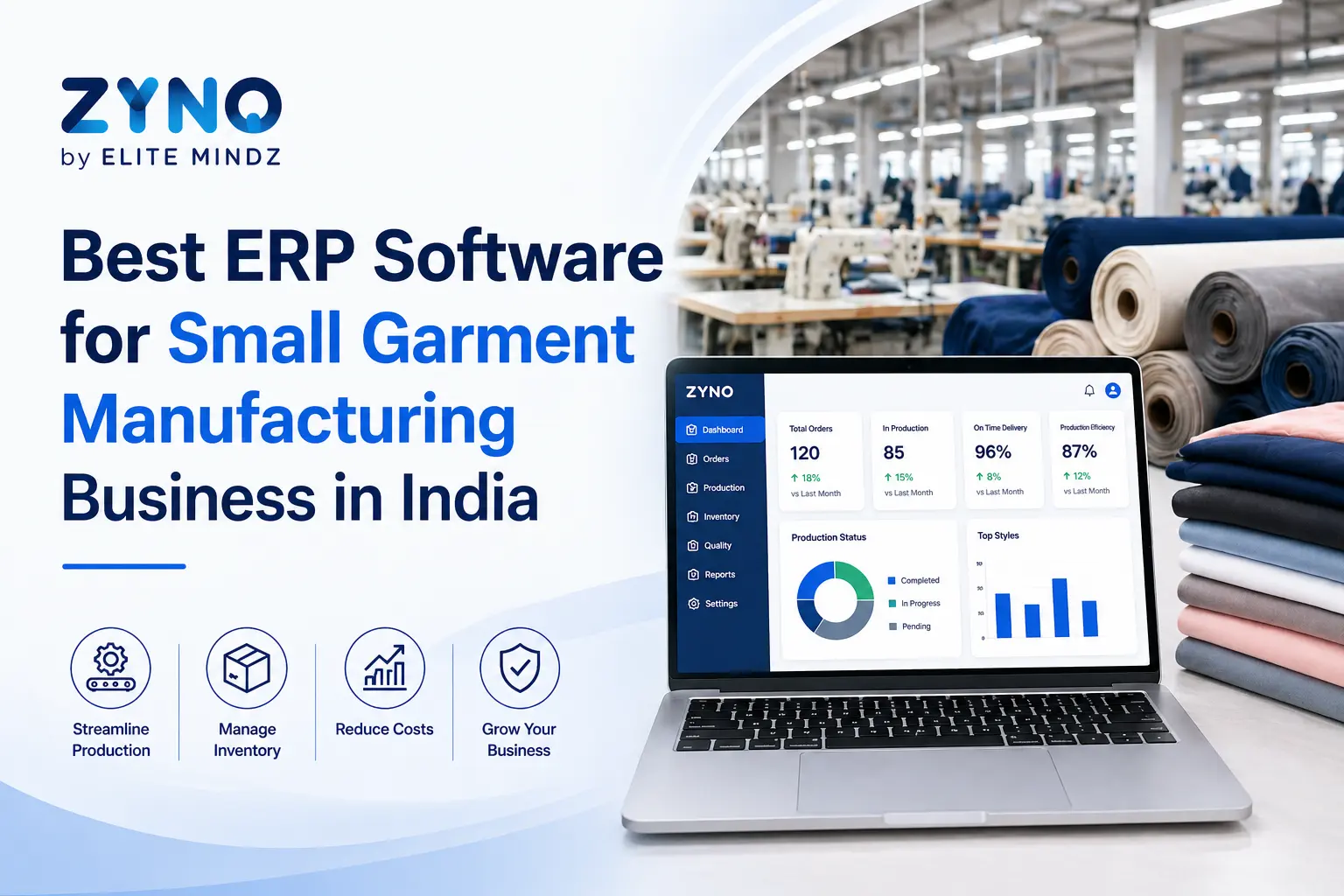
If you're in the apparel sector, our guide on Best ERP Software for Small Garment Manufacturing Business in India explains how ERP improves demand forecasting and production planning.
Manufacturers that reside in the Microsoft world will definitely benefit from Dynamics 365.
AI-based ERP systems predict future demand, manage inventory and plan production, thus helping manufacturing companies gain an advantage. This is done by means of the pre-built AI builder and Azure Machine learning integration which allows running predictive analytics right in the factory without changing the platform.
It is made possible by drag-and-drop Power BI visualizations that are pretty easy even for non-data scientists to use.
Best for: SMEs and enterprises already using Microsoft 365 or Azure.
Watch out for: Forecasting depth improves significantly with add-on modules.
The company has developed a good name for itself in discrete manufacturing and process manufacturing. Today, advanced systems have AI-based predictive maintenance, which predicts machine problems before failure; demand forecasting based on several factors; automated quality control; and smart scheduling according to current situations. All of these are incorporated into Infor CloudSuite.
The best part about Infor CloudSuite is that it has industry-specific pre-configurations. There is no need to spend many months customizing an off-the-shelf ERP; rather, there are industry-specific modules available.
Best for: Process manufacturers who need industry-specific ERP out of the box.
Watch out for: Less flexible for unique non-standard processes.
Epicor Kinetic would definitely be an ideal option for mid-tier manufacturers especially those who operate with mixed-mode manufacturing.
The inventory optimization capabilities offered by this software include: dynamic reordering, min/max levels control, batch control, material requirements planning, and demand-driven optimization. All these are presented in an easy-to-use interface by Epicor without needing a 6-months training period.
Best for: Mid-size discrete manufacturers who want powerful MRP without enterprise-level complexity.
Watch out for: Reporting customization can require developer support.
Global manufacturers can also compare leading enterprise solutions in our guide to the Best ERP Providers in Germany.
Before you sign any contract, check for these non-negotiable features:
Static historical models are not enough anymore. Your ERP should be learning from real-time patterns, not just last year's data.
Manufacturing companies may need to forecast demand at the sellable item level (product or SKU) but may also benefit from forecasting at raw materials and intermediate sub-assembly levels. A good ERP handles all of these layers together.
By syncing inventory directly with demand forecasts, manufacturers significantly reduce the working capital tied up in slow-moving parts.
The ability to model disruptions and test responses before they happen is what separates proactive from reactive manufacturers.
ERP systems can play a huge role in this process, particularly those that integrate real-time financial, sales, supply chain and production data in a single database.
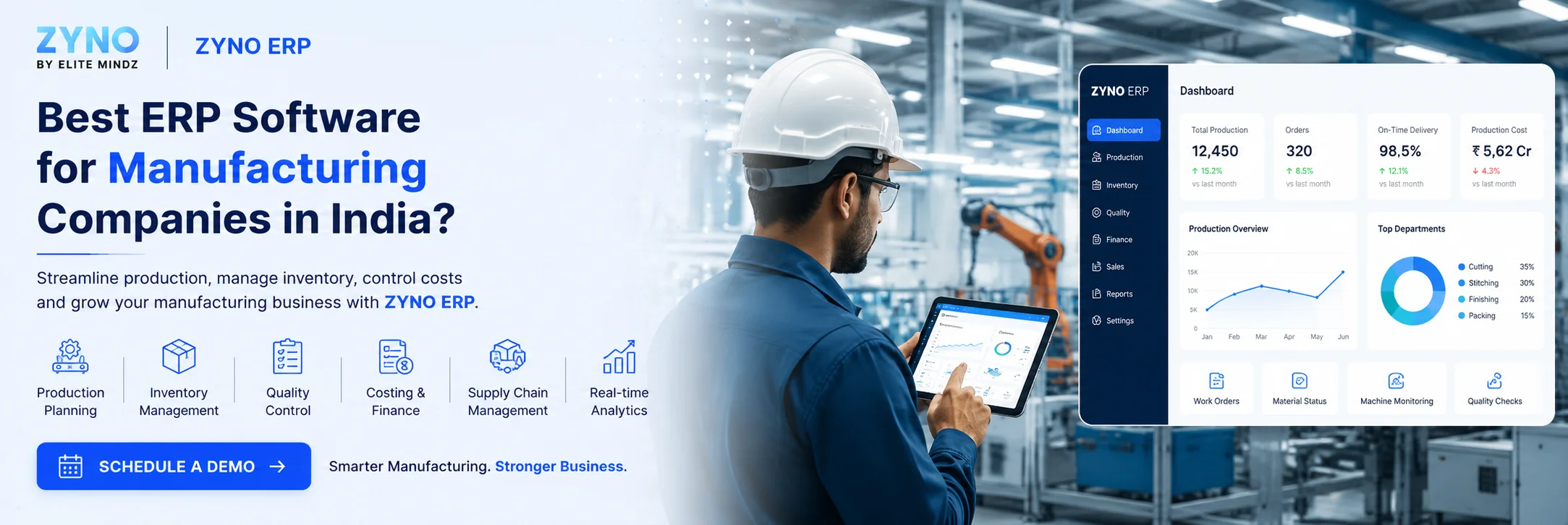
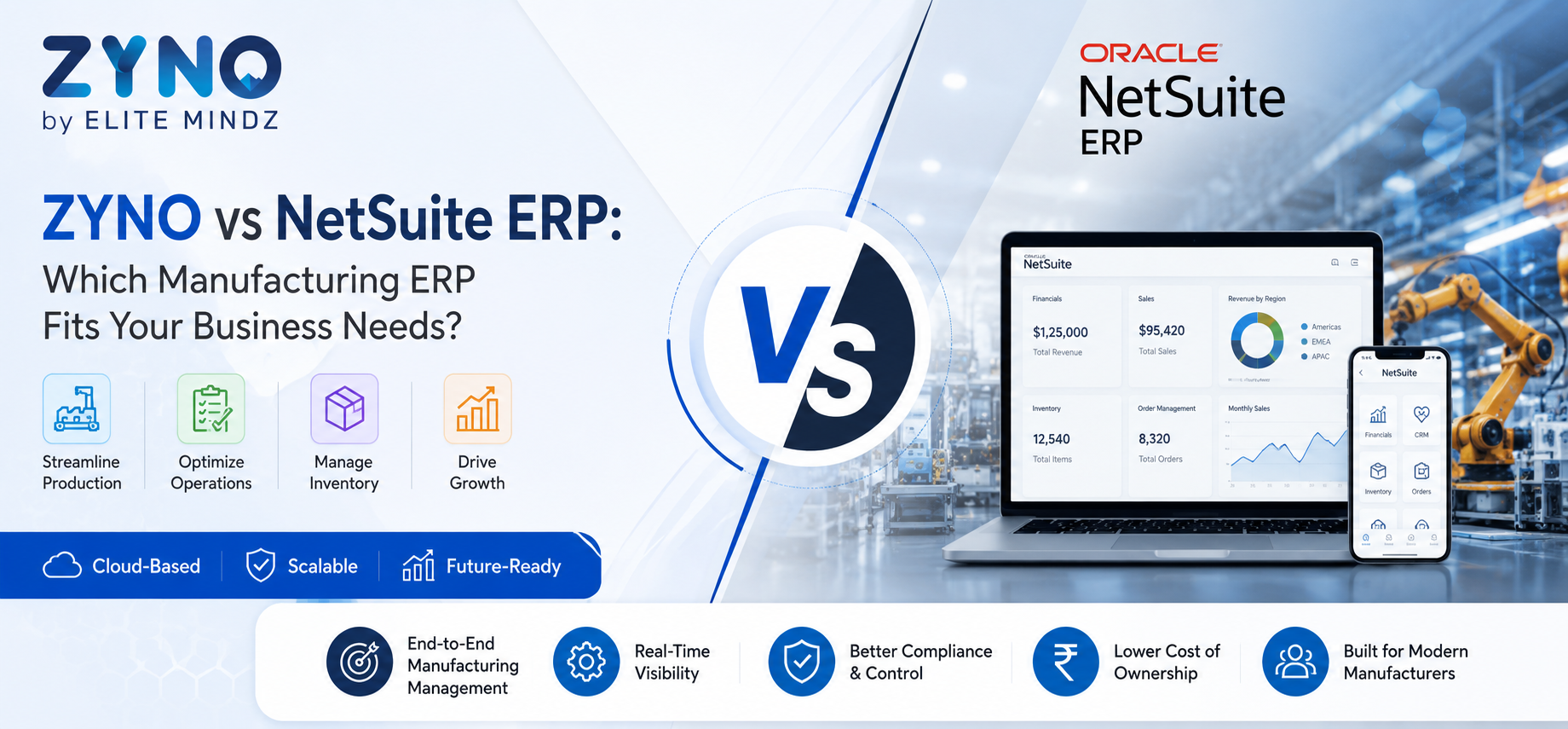
If you're a growing manufacturer, especially in India or Southeast Asia, you've probably looked at SAP and Oracle and felt like you were buying a jet when you need a very smart car. That's where ZYNO ERP by Elitemindz comes in, and it's catching attention for good reason.
ZYNO is an AI-powered, cloud-based manufacturing ERP software that brings enterprise-grade demand planning to factories without the enterprise price tag or the 18-month implementation nightmare.
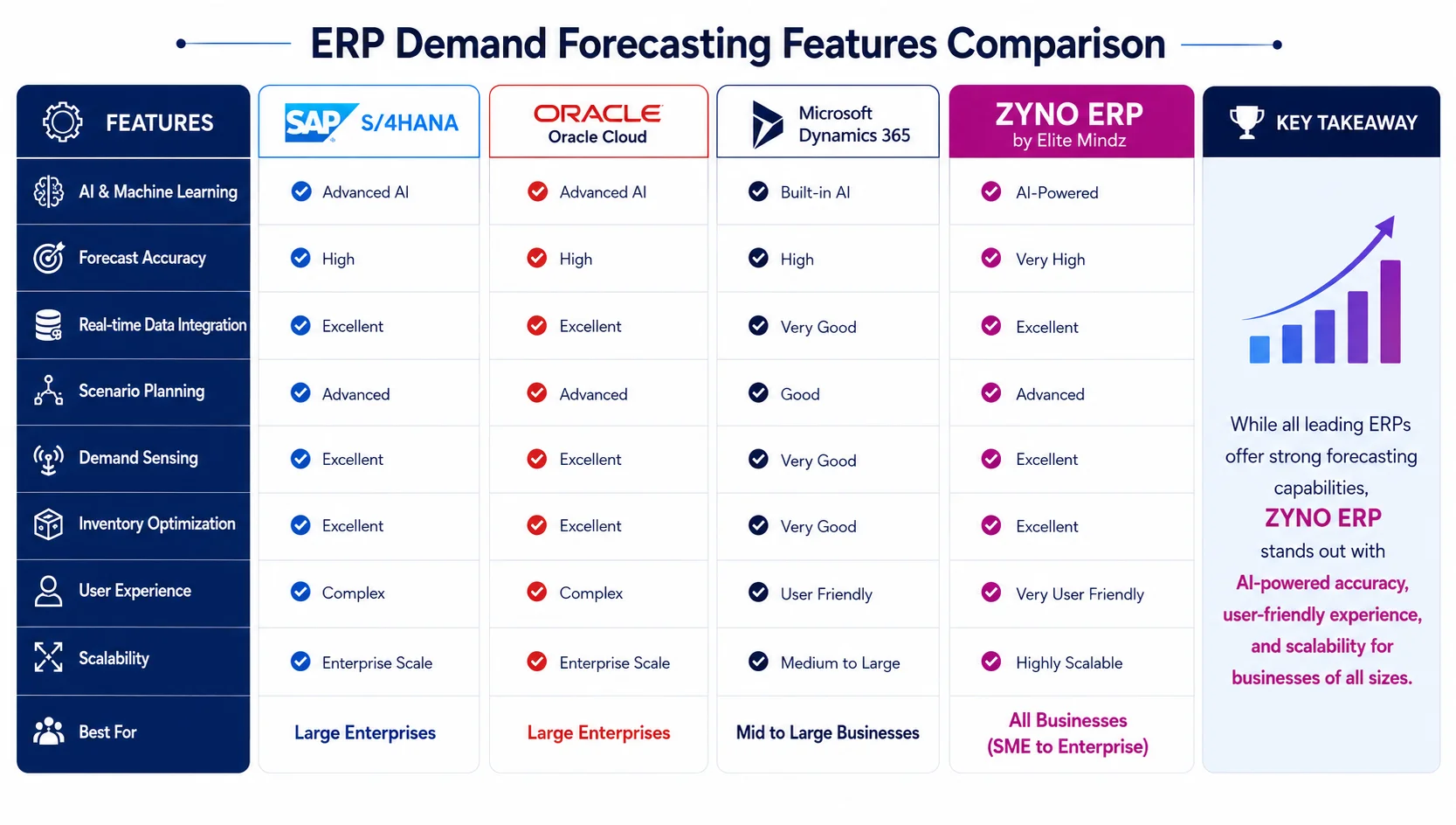
Here's how ZYNO compares where it matters most:
| Feature | SAP S/4HANA | Oracle Fusion | Microsoft D365 | ZYNO ERP |
|---|---|---|---|---|
| AI Demand Forecasting | Yes | Yes | Yes | Yes |
| Real-Time Inventory Sync | Yes | Yes | Yes | Yes |
| Cloud-Native Deployment | Partial | Yes | Yes | Yes |
| India GST Compliance | Limited | Limited | Limited | Built-in |
| Implementation Time | 6–18 months | 6–12 months | 4–9 months | 8–12 weeks |
| SME Affordability | Low | Low | Medium | High |
| Shop Floor Integration | Yes | Yes | Yes | Yes |
The manufacturing module of ZYNO deals with the entire process of production, from work order management, bill of materials, shop floor visibility to automated reorder based on demand triggers. The solution brings procurement, sales, finance, and manufacturing on the same platform so that your forecast is not just a dashboard report but an action trigger for all the departments.
In case of different industrial sectors such as automotive, pharmaceuticals, textile, food and beverage, and engineering, ZYNO adjusts to the workflow processes.
You can explore ZYNO's full manufacturing ERP features here and request a personalized demo to see the forecasting engine in action for your specific product mix.
This isn't just a technology debate. It has real financial stakes.
Manufacturers using ERP systems save an average of 22% in operational costs by automating administrative functions, and ERP software can reduce excess stock by up to 60 percent while improving order accuracy.
On the flip side, nearly three in four manufacturers (73%) say their ERP can provide visibility into required materials but cannot prevent execution failures, and nearly all (93%) report difficulty getting ERP visibility into actual manufacturing execution outcomes.
That last statistic is sobering. It means most manufacturers are running on ERPs that were designed to log intent, not manage reality. If your system tells you what to order but cannot tell you whether that order actually saved your production run, you have a blind spot that costs you every day.
The right ERP with strong demand planning capabilities closes that gap.
Here's a practical three-step filter before you commit:
Are you a make-to-stock, make-to-order, or mixed-mode manufacturer? Each has different forecasting requirements. According to Gartner's supply chain research, demand-driven planning reduces inventory carrying costs significantly when matched to the right production model.
SAP and Oracle are phenomenal if you have 500+ users and a dedicated IT team. For 50 to 250 users, platforms like ZYNO or Microsoft Dynamics give you 80% of the capability at a fraction of the cost and implementation time.
Your ERP must talk to your machines, your warehouse, your CRM, and your finance system without duct tape. If data is housed in multiple disconnected systems, it is likely that redundant, outdated information exists in different, incompatible formats, making it challenging to get an accurate picture for forecasting. Ask every vendor how their system handles data from your existing tools before you go live.
For a deeper look at how AI is shaping the future of manufacturing planning, NetSuite's forecasting guide is an excellent reference.
Manufacturing ERP systems are integrated software solutions designed to manage and automate core business processes such as production planning, inventory management, procurement, quality control, finance, and supply chain operations. They provide real-time visibility into manufacturing activities, helping businesses improve efficiency, reduce costs, and make data-driven decisions. Modern manufacturing ERP systems also include AI-powered demand forecasting to optimize production schedules and inventory levels.
The four main types of ERP systems are Cloud ERP, On-Premise ERP, Hybrid ERP, and Industry-Specific ERP. Cloud ERP offers remote access and automatic updates, while On-Premise ERP is installed on a company's own servers. Hybrid ERP combines both cloud and on-premise capabilities, and Industry-Specific ERP is tailored for sectors such as manufacturing, healthcare, retail, or construction to address unique operational requirements.
The best ERP for manufacturing depends on your business size, industry, and operational needs. Leading solutions like SAP S/4HANA, Oracle Fusion Cloud ERP, Microsoft Dynamics 365, and ZYNO ERP offer features such as AI-powered demand forecasting, production planning, inventory management, supply chain optimization, and real-time analytics. Small and medium-sized manufacturers should choose an ERP that is scalable, cost-effective, and designed to support future business growth.
Demand forecasting enables manufacturers to anticipate future customer demand by analyzing historical sales data, market trends, and purchasing patterns. Accurate forecasting helps optimize production schedules, reduce excess inventory, prevent stock shortages, and improve customer satisfaction. AI-powered ERP systems further enhance forecasting accuracy with real-time insights.
Several leading ERP platforms, including SAP S/4HANA, Oracle Fusion Cloud ERP, Microsoft Dynamics 365, and ZYNO ERP, offer advanced AI-powered demand forecasting capabilities. These systems use machine learning and predictive analytics to improve forecast accuracy, optimize inventory, and support better production planning.
AI improves demand forecasting by analyzing large datasets, identifying hidden demand patterns, and predicting future sales more accurately than traditional methods. It continuously learns from historical data, seasonal trends, and market changes, enabling manufacturers to make faster and more informed business decisions.
A manufacturing ERP should include AI-based demand forecasting, production planning, inventory management, procurement, supply chain visibility, real-time dashboards, analytics, and automated reporting. These features help businesses streamline operations, improve forecast accuracy, and reduce operational costs.
Yes. Manufacturing ERP systems help businesses maintain optimal inventory levels through accurate demand forecasting and real-time stock tracking. This reduces overstocking, minimizes stockouts, lowers carrying costs, and improves overall inventory efficiency while ensuring products are available when customers need them.
Cloud-based ERP provides remote access, automatic updates, scalability, and lower infrastructure costs, making it ideal for modern manufacturers. On-premise ERP offers greater control over data and customization but requires higher upfront investment and ongoing maintenance. The right choice depends on your business needs and IT strategy.
Choose a manufacturing ERP based on your company's size, industry requirements, budget, scalability, and required features. Look for AI-powered demand forecasting, production planning, inventory management, integration capabilities, ease of implementation, and reliable customer support to ensure long-term business success.
The manufacturing industry has moved past the era where an ERP was just a fancy ledger. Today, the best manufacturing ERP systems are forward-looking engines. They analyze patterns, predict demand, alert you to supply risks, and help you make decisions weeks before a crisis hits your shop floor.
No matter whether it’s SAP for global reach, Microsoft Dynamics for ecosystem fit, or ZYNO for intelligent yet cost-effective manufacturing-specific capabilities, the point is that you should select a solution that will make demand planning your competitive advantage.
And if at present your company uses spreadsheets or out-of-date ERP system unable to predict future needs, time works against you. Your competitors know this.
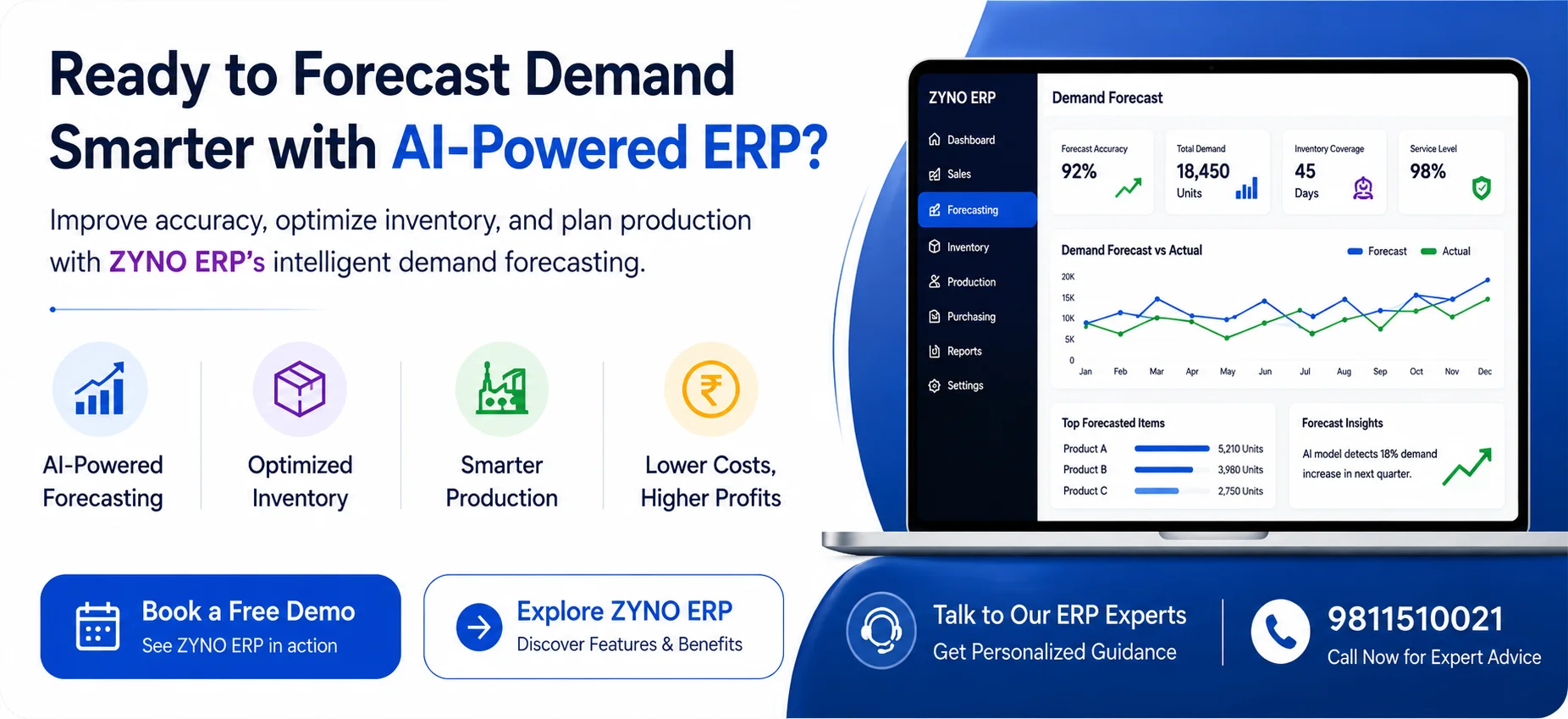
Ready to see what intelligent demand forecasting looks like inside a modern cloud ERP? Book a free ZYNO demo today and let the data do the talking.
Sneha Singh
Content writer
Sneha Singh is a B2B tech content strategist with 4+ years of experience. She specializes in SEO-driven SaaS content, whitepapers, and platform-native social media campaigns that simplify complex technology and drive business growth.
What is ERP? A Beginner's Guide to Enterprise Resource Planning
Read More →

Cloud ERP vs. On-Premise vs. Hybrid: Best ERP Model for 2025
Read More →How To Customize ERP Software Without Breaking The Bank?
Read More →
The Future of Manufacturing ERP in 2026 & Beyond
Read More →Best ERP Software in India: 2026 Edition
Read More →
AI in Manufacturing ERP: The Future of Smart Factories
Read More →
How ERP Transforms Inventory Management and Reduces Costs
Read More →
Top Features to Look for in Inventory Management Software in 2025
Read More →
Top 5 Ways Asset Management Software Can Save Your Business Money
Read More →
Why Smart Businesses Are Switching to Vendor Management Systems in 2025?
Read More →
Why Manufacturing Companies Need ERP Software
Read More →
Cloud ERP vs. Traditional ERP: Which is Right for You?
Read More →
ERP for Small Business: Is It Worth the Investment?
Read More →
How to Calculate ERP ROI and Why It's Worth the Investment
Read More →
Top 10 ERP Software Companies in India 2026 Updated List (Complete Guide)
Read More →
ERP Implementation Mistakes to Avoid in 2025
Read More →
Cloud ERP vs Edge Computing: What's Right for Modern Manufacturing?
Read More →
The Future of ERP Software and the Role of Generative AI
Read More →
Digital Twin Technology & ERP: Real-Time Insights for Smarter Manufacturing
Read More →
Scalable ERP Solutions Designed for Modern Enterprises
Read More →
ERP and IoT Integration: Smart Factory Vision
Read More →Best ERP Software for Manufacturing Businesses in India
Read More →Top 10 Best Manufacturing ERP Software in India (2026)
Read More →
Best ERP Software for Manufacturing Industries in Ethiopia (2026)
Read More →
Best School ERP Software Providers in UAE (2025 Edition)
Read More →
Best School ERP Software for 2025: Guide for Educational Institutions
Read More →
Top 10 ERP Software Solutions for Nigerian Manufacturers (2025 Edition)
Read More →
Best ERP Systems for Scalable Retail and POS Integration
Read More →
Top 10 Cloud-Based Manufacturing ERP Solutions in Africa (2025 Edition)
Read More →
Top 10 Cloud-Based Manufacturing ERP in UAE
Read More →
Top 10 Cloud-Based Manufacturing ERP Software in Nigeria (2026 Edition)
Read More →
Top 10 School ERP Software Companies in Kenya (2025)
Read More →
Best School ERP Software Providers in Nigeria (2025)
Read More →
Top Cloud-Based Manufacturing ERP in Zimbabwe (2025)
Read More →
Best ERP Software in U.K
Read More →
Top 10 ERP Software Developers in the U.K. (2025)
Read More →
Best ERP Software Providers in France (2025)
Read More →
Best ERP Software Companies in Germany : A Comprehensive Guide
Read More →
Top 10 ERP Software Development Companies in Qatar
Read More →
10 Best ERP Providers in Germany - 2026 Updated List
Read More →
Best ERP Software Firms in Saudi Arabia (2025)
Read More →
Best ERP Service Providers in Indonesia for SMEs and Large Enterprises
Read More →
Top 10 Cloud-Based Manufacturing ERP Systems in Egypt for Modern Factories
Read More →
Top ERP Solutions in the USA 2025: Streamline Your Business with ZYNO ERP
Read More →
Top ERP Solutions in Qatar for Businesses of All Sizes
Read More →Top Manufacturing ERP Software in India 2026 ZYNO Manufacturing ERP
Read More →How Manufacturing Companies Reduce Production Delays Using ERP Automation
Read More →Why Legal Firms Need ERP to Manage Cases, Billing & Compliance
Read More →What Is ERP And How Does It Work
Read More →
How ERP Systems Are Evolving in 2026: What Businesses Need to Know
Read More →
Best ERP Software in India: 2025 Edition
Read More →
Top 10 ERP Software Companies in Delhi NCR
Read More →
How Manufacturing ERP Software Improves Demand Forecasting
Read More →
Top 10 Best School Management Software in India
Read More →Manufacturing & Wholesale ERP in Qatar: Complete Industry Guide 2026
Read More →Cloud ERP Software in Qatar: Why Businesses Are Moving in 2026
Read More →Is ERP a Procurement Software? Key Differences, Benefits & What to Choose
Read More →What Is Production Planning and Control? Definition, Objectives & Functions
Read More →
Garment Inventory Management Software: Complete Guide 2026
Read More →
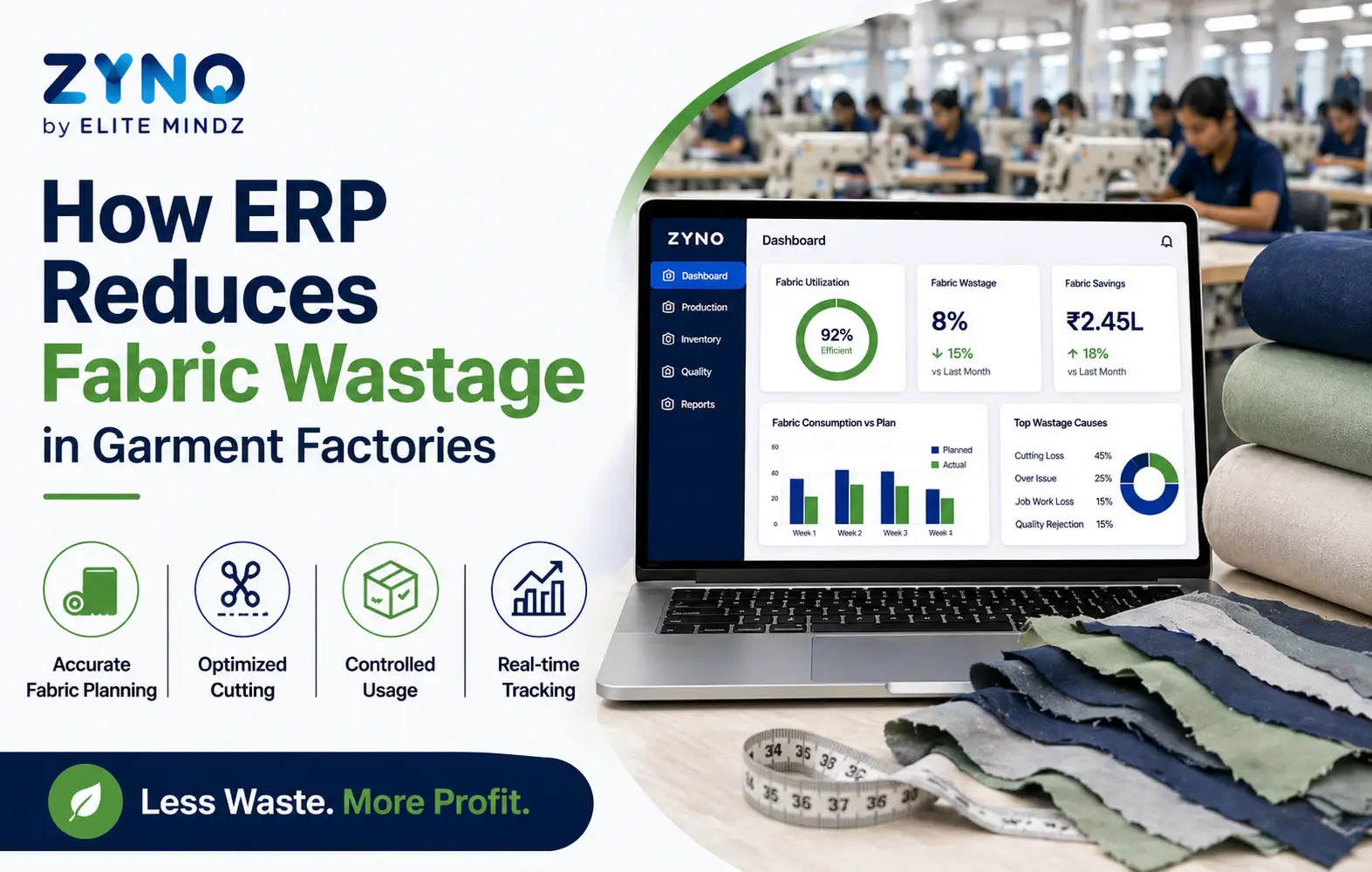
How ERP Reduces Fabric Wastage in Garment Factories
Read More →
Why the Garment Industry Needs a Specialized ERP
Read More →
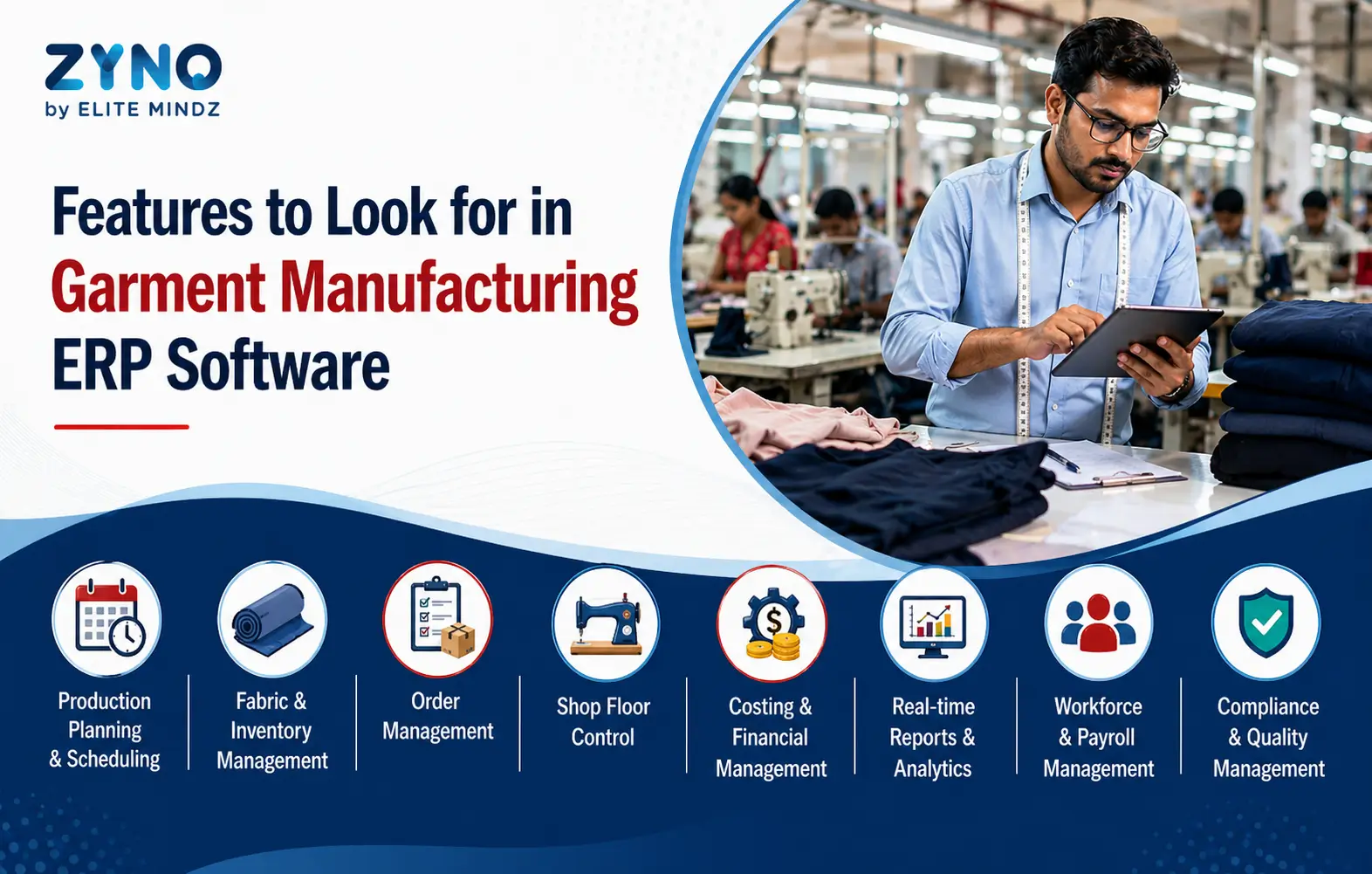
Features to Look for in Garment Manufacturing ERP Software
Read More →
Best ERP Software for Small Garment Manufacturing Business in India
Read More →
The Real Problems Holding Back Small Garment Manufacturers in India
Read More →Garment Manufacturing ERP Software in India: Best Options, Features & Complete Guide 2026
Read More →
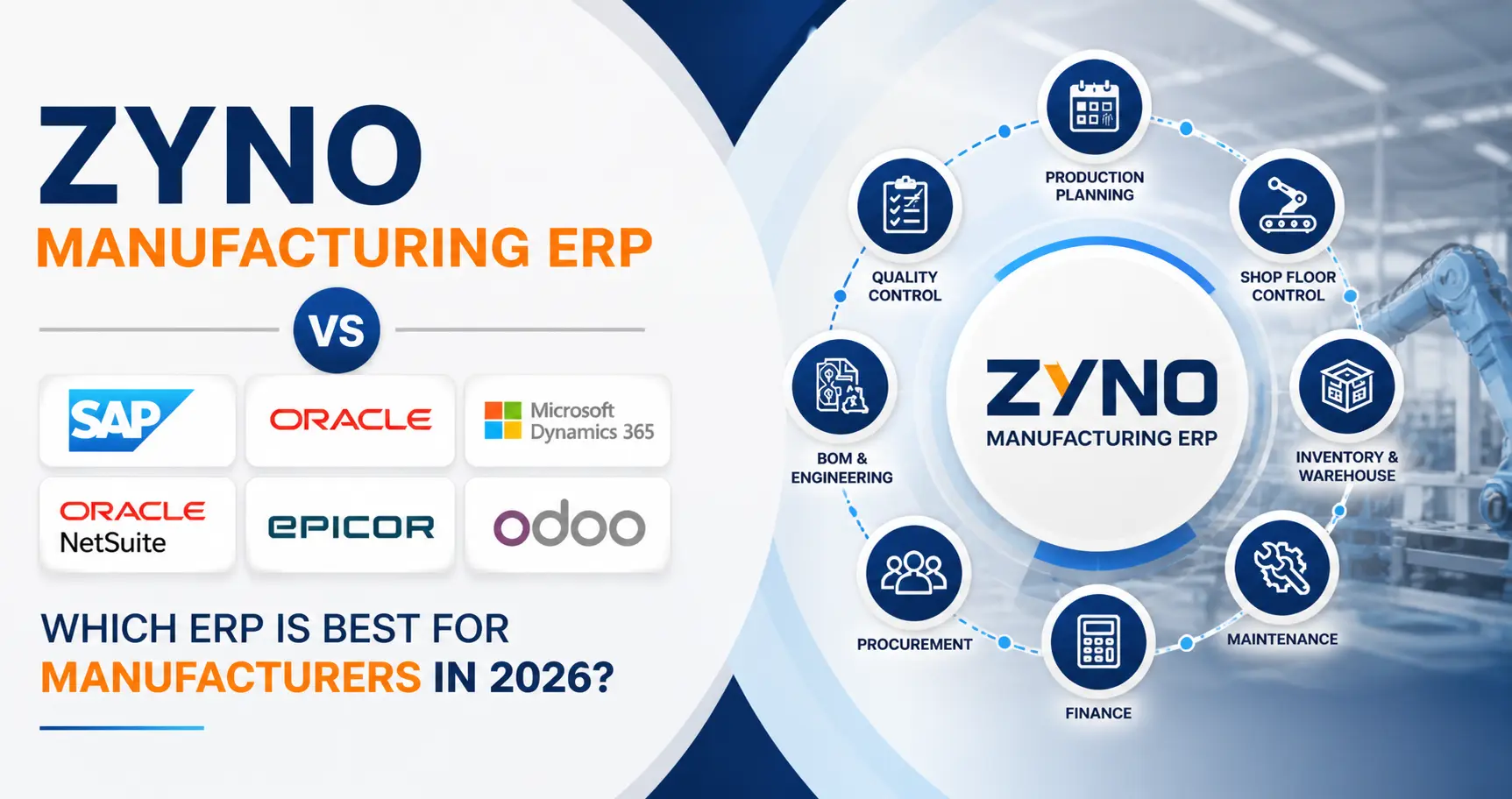
Which ERP is Best for Manufacturers in 2026?
Read More →
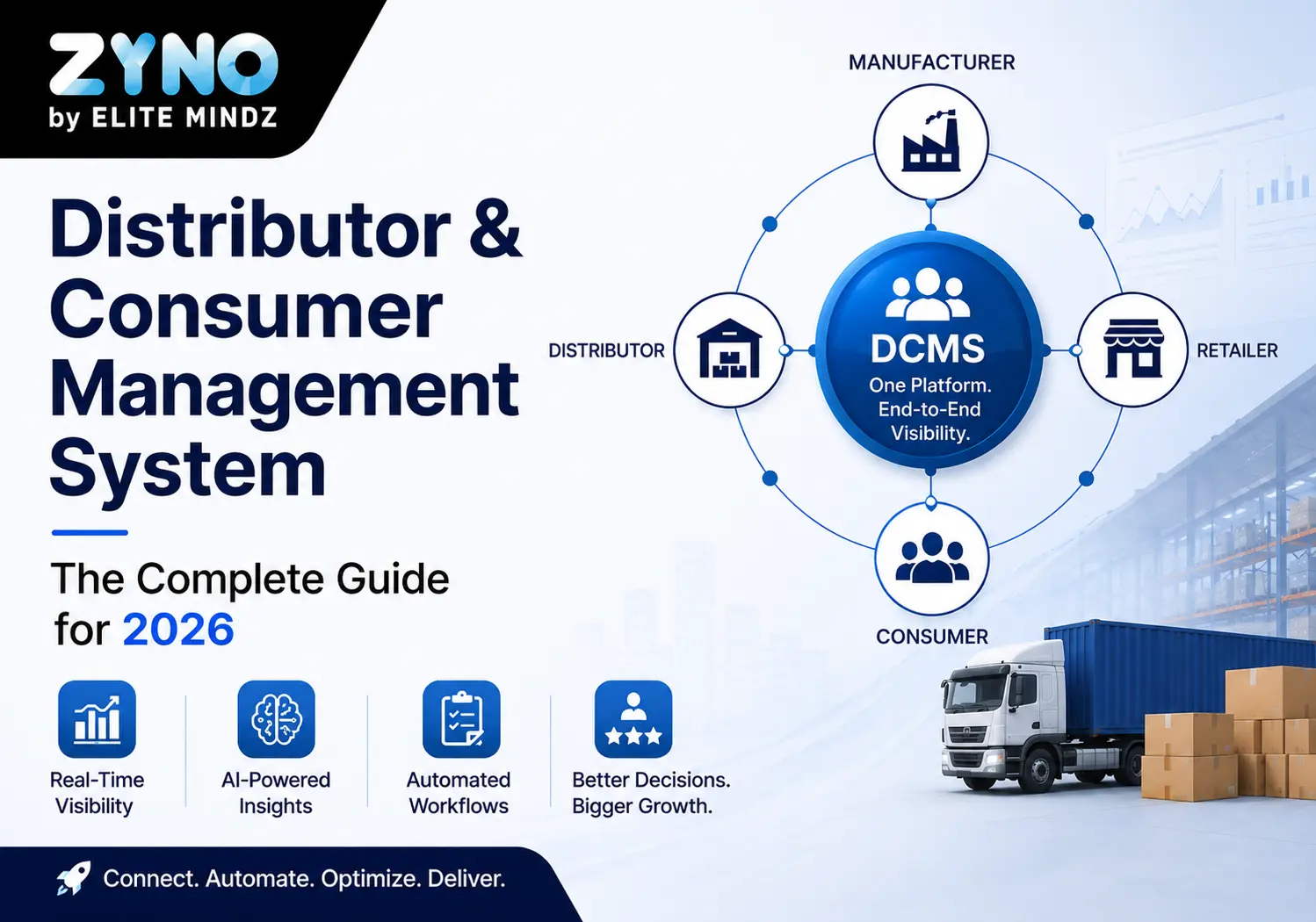
Distributor & Consumer Management System: The Complete Guide for 2026
Read More →
Best Pharma ERP Software in India 2026 – Features, Compliance & Buying Guide
Read More →
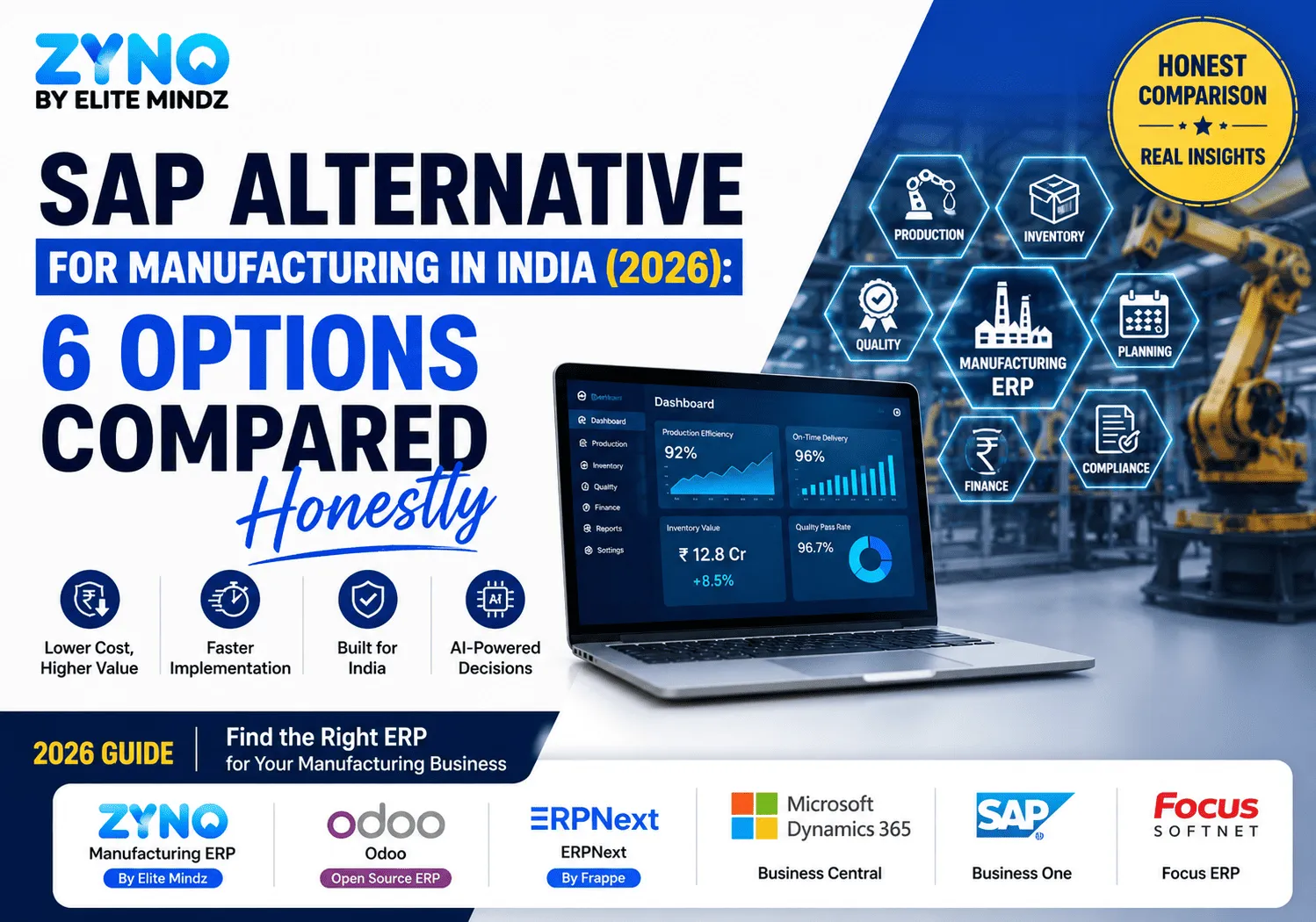
SAP Alternative for Manufacturing in India (2026): 6 Options Compared Honestly
Read More →
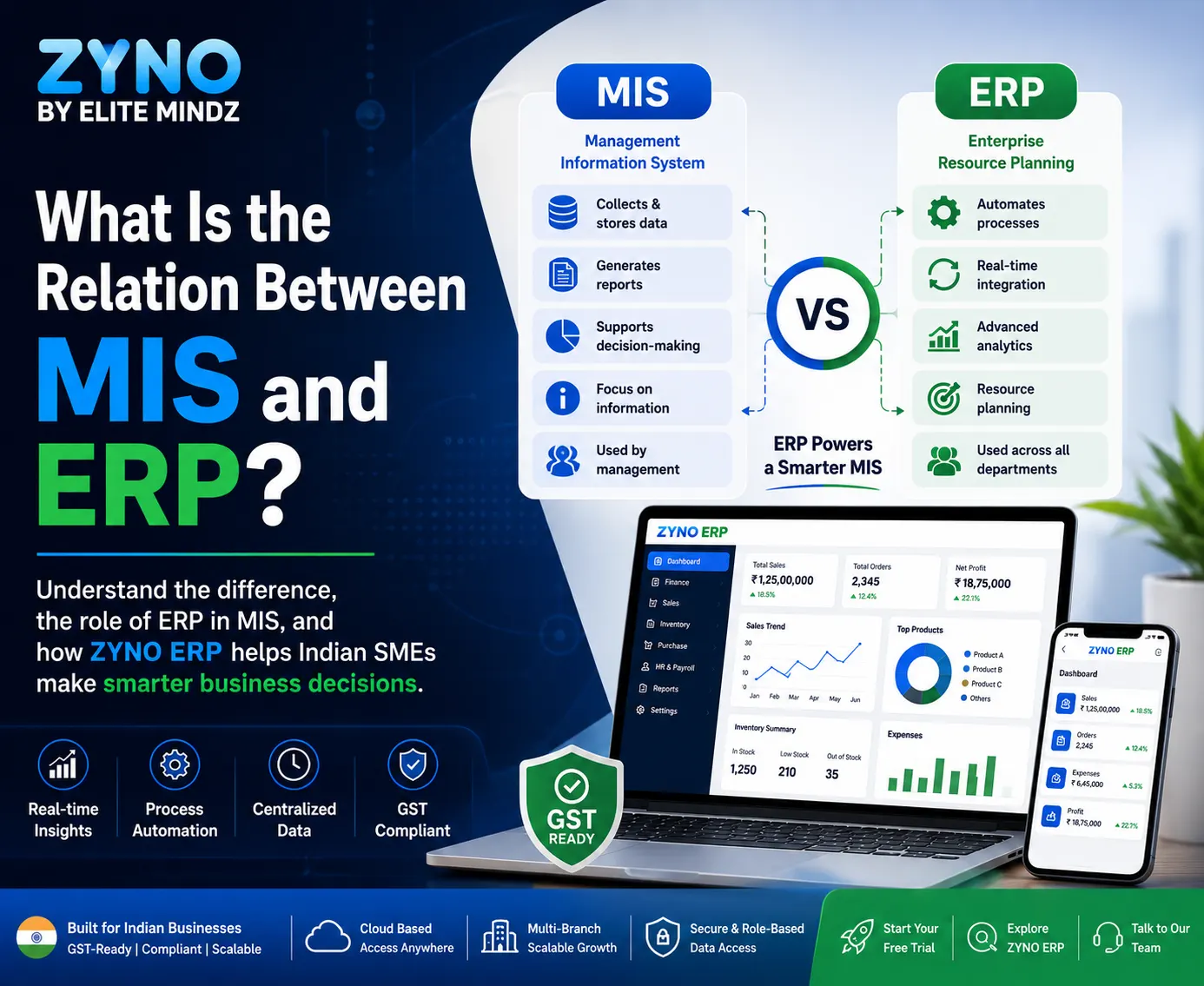
What Is the Relation Between MIS and Enterprise Resource Planning?
Read More →
Best ERP for Sweater Manufacturers in India
Read More →
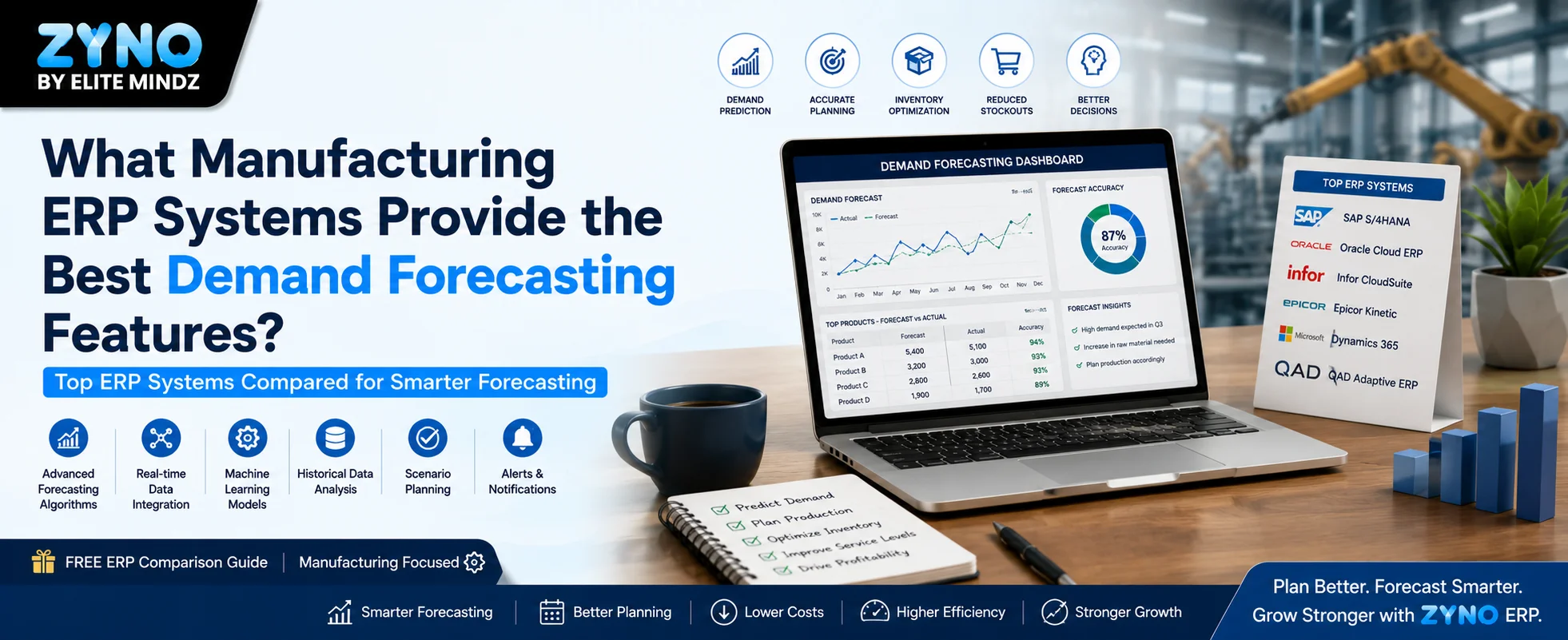
What Manufacturing ERP Systems Provide the Best Demand Forecasting Features?
Read More →Partner with ZYNO by Elite Mindz to revolutionize how your business works. Fill out the form, and we’ll reach out with AI-powered solutions made just for you.
We use browser cookies to ensure you get the best experience on our website. Learn more
The form was submitted successfully!
ZYNO Digital
Fueling Smarter Digital Growth
ZYNO Digital fuels smarter digital growth through data-driven marketing, creative storytelling, and performance strategies that boost visibility, engagement, and measurable business outcomes across global platforms.
ZYNO Tech
Engineering the Future of IT
ZYNO Tech delivers cutting-edge IT solutions — including web, mobile, and digital transformation services — helping businesses scale efficiently, innovate faster, and stay ahead in a connected world.
ZYNO AI
AI Built for Business Growth
ZYNO AI harnesses the power of artificial intelligence to automate processes, enhance decision-making, and deliver predictive insights — driving innovation, agility, and measurable business growth.
ZYNO by Elite Mindz
Your Partner in the AI-Powered Future
ZYNO by Elite Mindz offers AI-powered products and services that unify operations, boost productivity, and drive digital transformation — helping businesses scale smarter and innovate faster.
* In just 2 mins you'll get a response
* Your idea is 100% protected by our Non-Disclosure Agreement