What is ERP? A Beginner's Guide to Enterprise Resource Planning
Read More →
×
These ERP solutions can support key business functions including finance, accounting, inventory, procurement, sales, projects, customer management, and supply chain operations. As businesses grow, an integrated ERP system can improve data visibility, automate workflows, and support faster decision-making.
Businesses using ZYNO Books cut accounting time by 70% and stay 100% ZATCA-compliant — automatically.
Small businesses are growing faster, managing more customers, handling larger transaction volumes, and operating across multiple channels. But as operations expand, spreadsheets and disconnected applications can quickly become difficult to manage. Finance, inventory, purchasing, sales, HR, customer information, and reporting often end up scattered across different systems.
This is where ERP software for small businesses can make a significant difference.
A modern ERP brings core business processes together on a centralized platform, helping businesses automate routine work, improve data visibility, control costs, and make faster decisions. For companies looking to scale in 2026, choosing the right small business ERP software is no longer just a technology decision—it is an operational and growth decision.
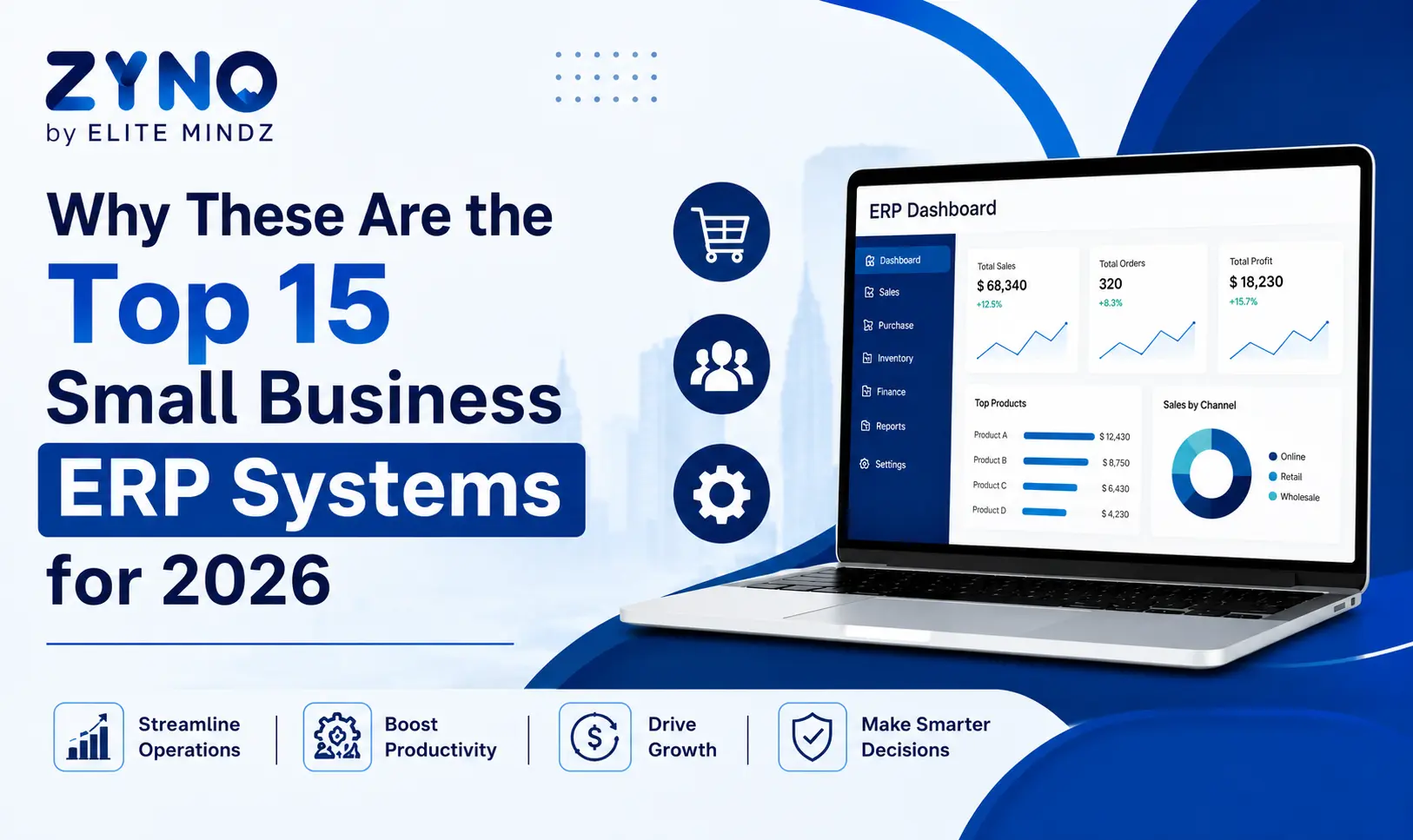
In this guide, we explore 15 small business ERP systems for 2026, their key strengths, important features, and the type of business they may suit best. The list includes established global platforms, flexible cloud solutions, and customizable systems designed for businesses with different operational requirements.
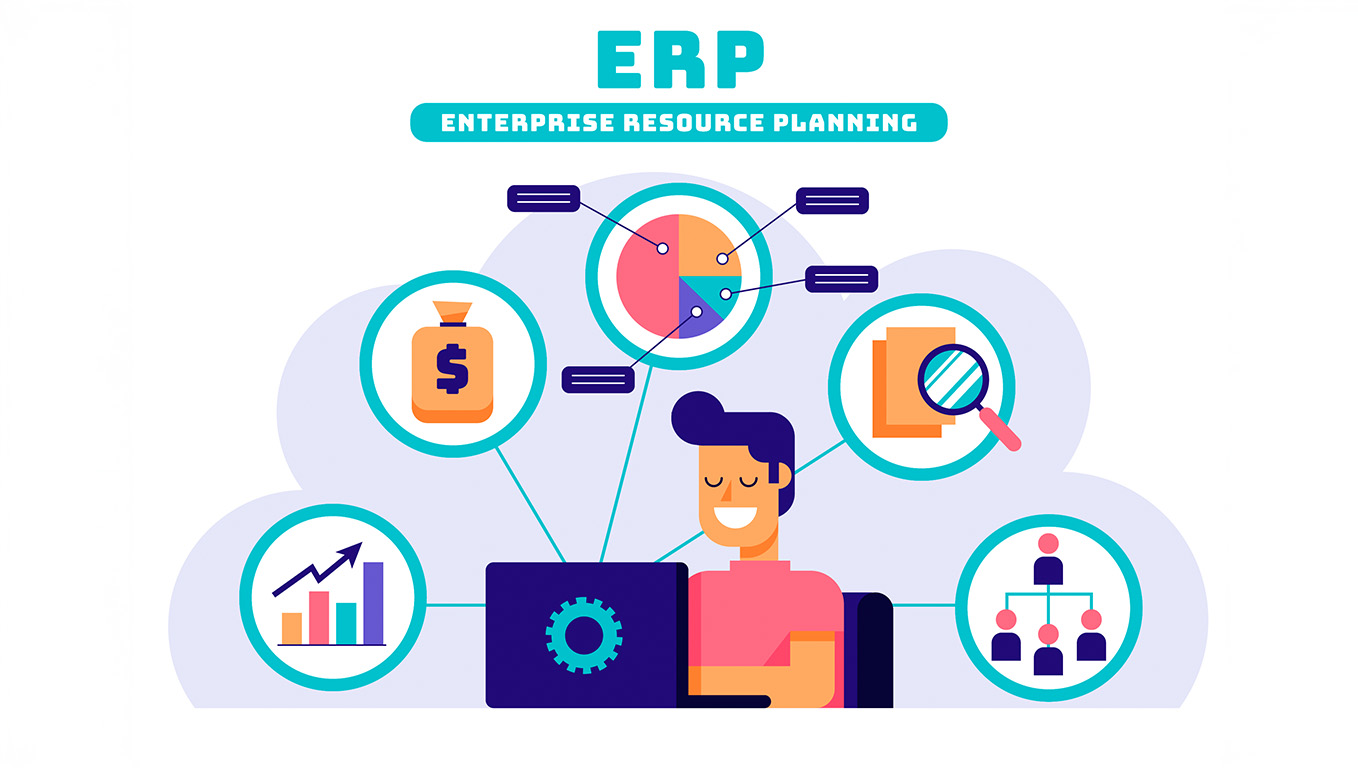
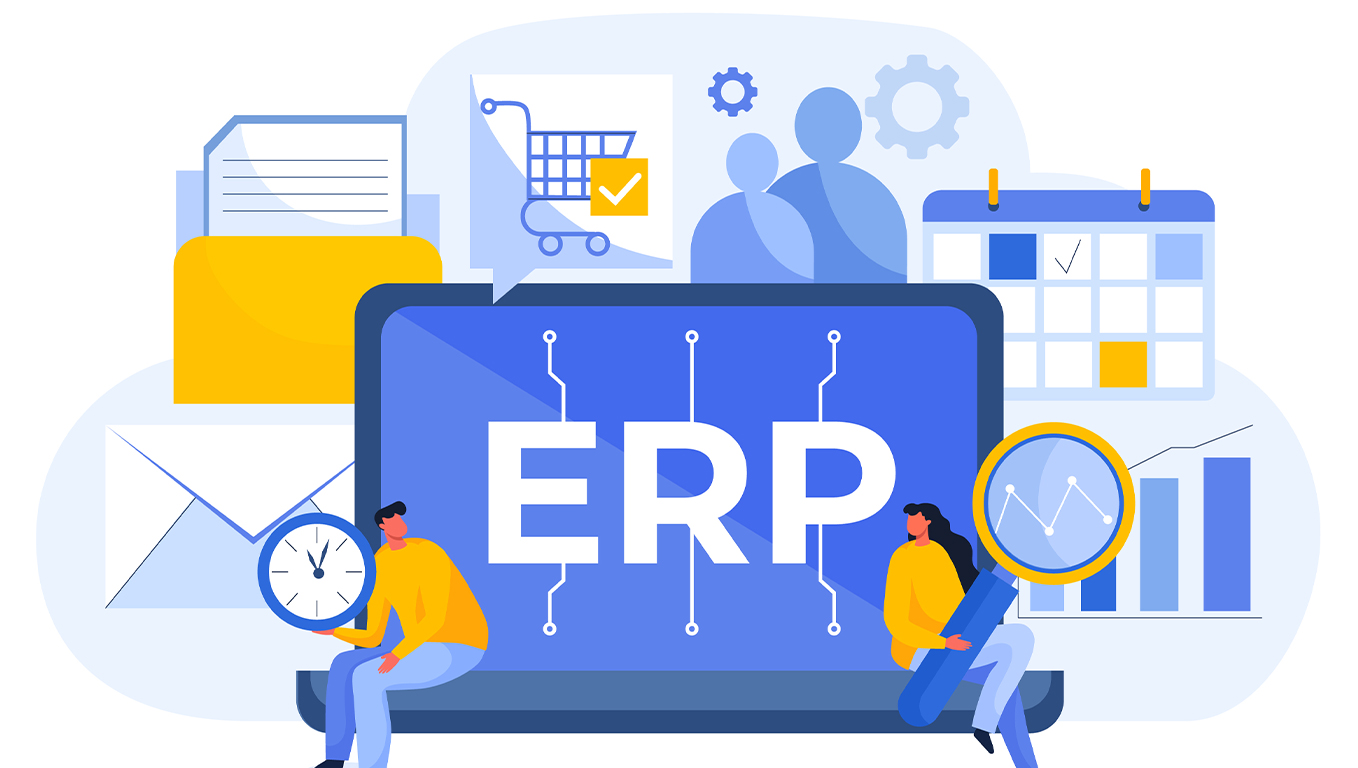
ERP software is a centralized business management system that connects multiple departments and processes within one platform. Instead of maintaining separate applications for accounting, inventory, purchasing, sales, HR, and reporting, an ERP allows businesses to manage these activities through connected modules.
For a growing company, ERP solutions for small businesses can provide a single source of business information. Employees can work with the same data, while business owners and managers can gain a clearer view of operations.
A small business ERP may include:
The objective is simple: reduce fragmented processes and create a more connected way of running the business.
Discover how ZYNO ERP helps growing businesses manage finance, procurement, inventory, projects, vendors, and operations from one centralized platform.
The right ERP can help a small business move from disconnected spreadsheets and standalone applications to a more organized, automated, and data-driven operating model. However, not every ERP platform is designed for the same type of business. Some focus strongly on accounting and finance, while others provide manufacturing, inventory, CRM, procurement, HR, project management, and advanced analytics.
For 2026, small businesses have access to a wide range of ERP software for small businesses, including cloud-based platforms, modular ERP systems, open-source solutions, industry-focused applications, and customizable platforms. The best choice depends on the company's size, industry, budget, operational complexity, and future growth plans.

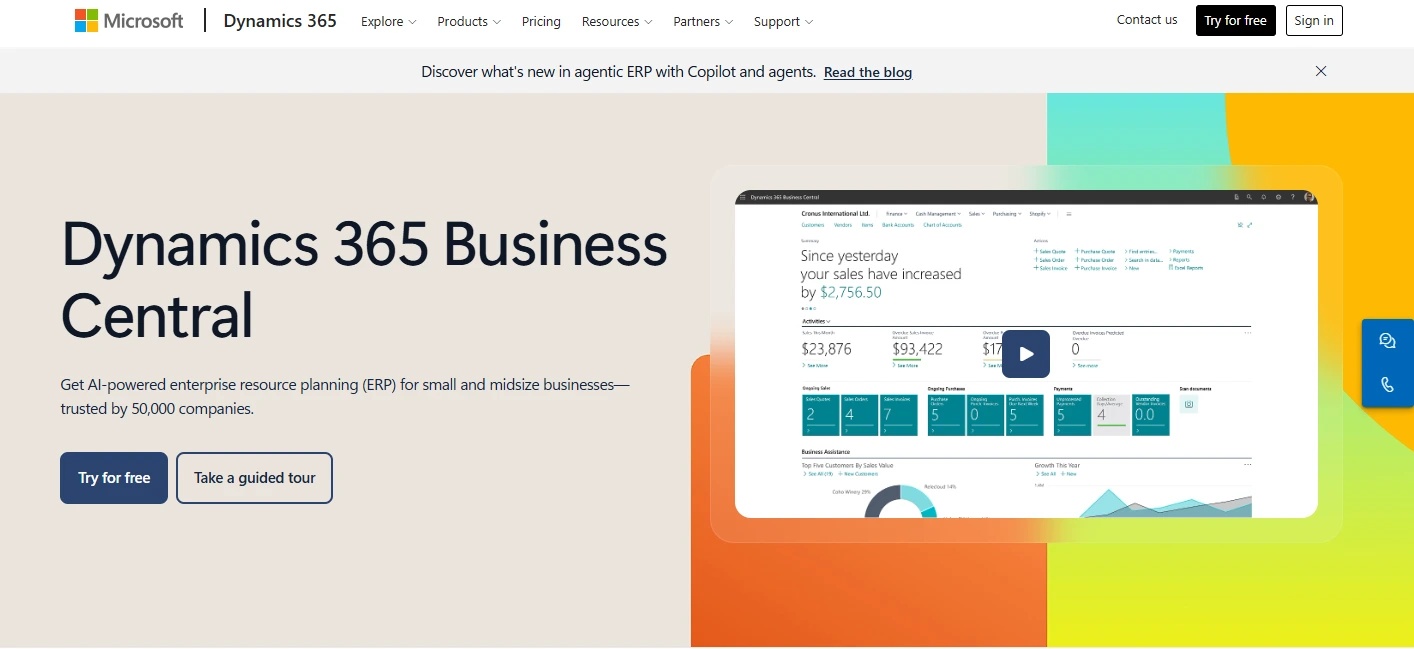
Microsoft Dynamics 365 Business Central is a comprehensive ERP platform designed for small and midsize businesses that need to connect financial, operational, sales, purchasing, inventory, and service activities. It is particularly attractive for organizations already using Microsoft products because it can work closely with the broader Microsoft ecosystem.
The platform provides a centralized environment where businesses can manage financial transactions, purchasing, sales orders, inventory, customer information, and operational reporting. Its cloud-based deployment also allows teams to access business information from different locations.
Business Central can be a strong option for companies that expect their operations to become more complex as they grow. Businesses can start with essential ERP capabilities and expand their use of additional functionality as their requirements increase.
It is especially relevant for organizations looking for established ERP software with strong business process integration and a familiar technology ecosystem.

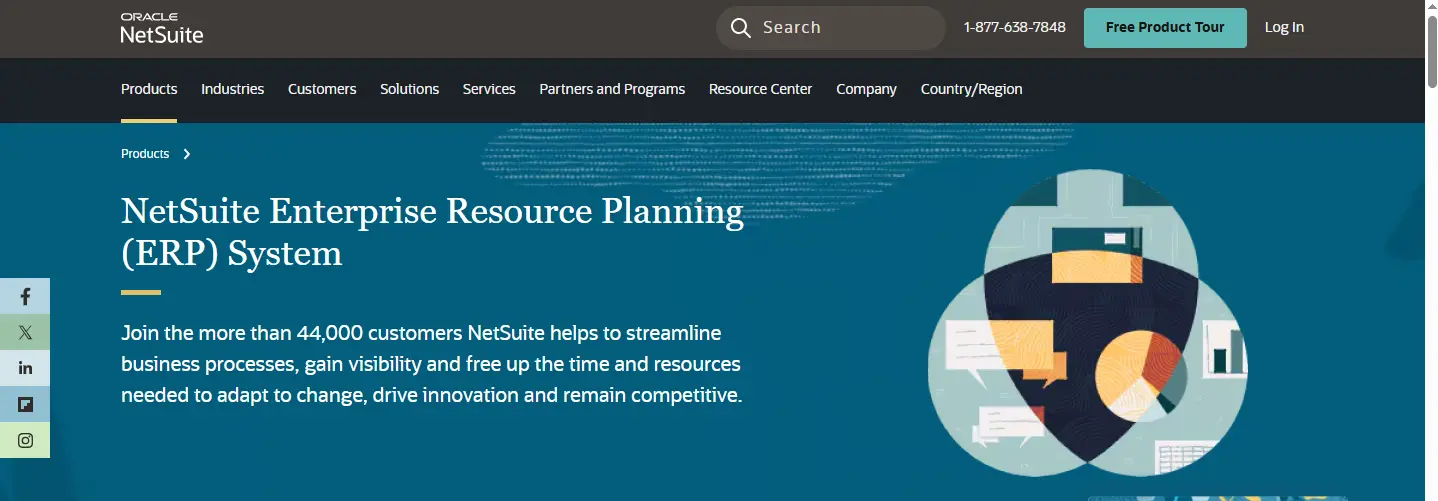
NetSuite is a cloud-based ERP platform that brings financial management, inventory, order management, CRM, reporting, and other business processes into one centralized system.
It is commonly considered by growing businesses that want a platform capable of supporting expansion across additional users, locations, subsidiaries, products, and markets.
NetSuite can be useful for businesses that are moving beyond basic accounting software and need stronger integration between finance and operational functions.
For companies planning significant expansion, its scalability can be an important consideration. However, businesses should evaluate implementation requirements, pricing, and functionality carefully to ensure the platform matches their size and budget.

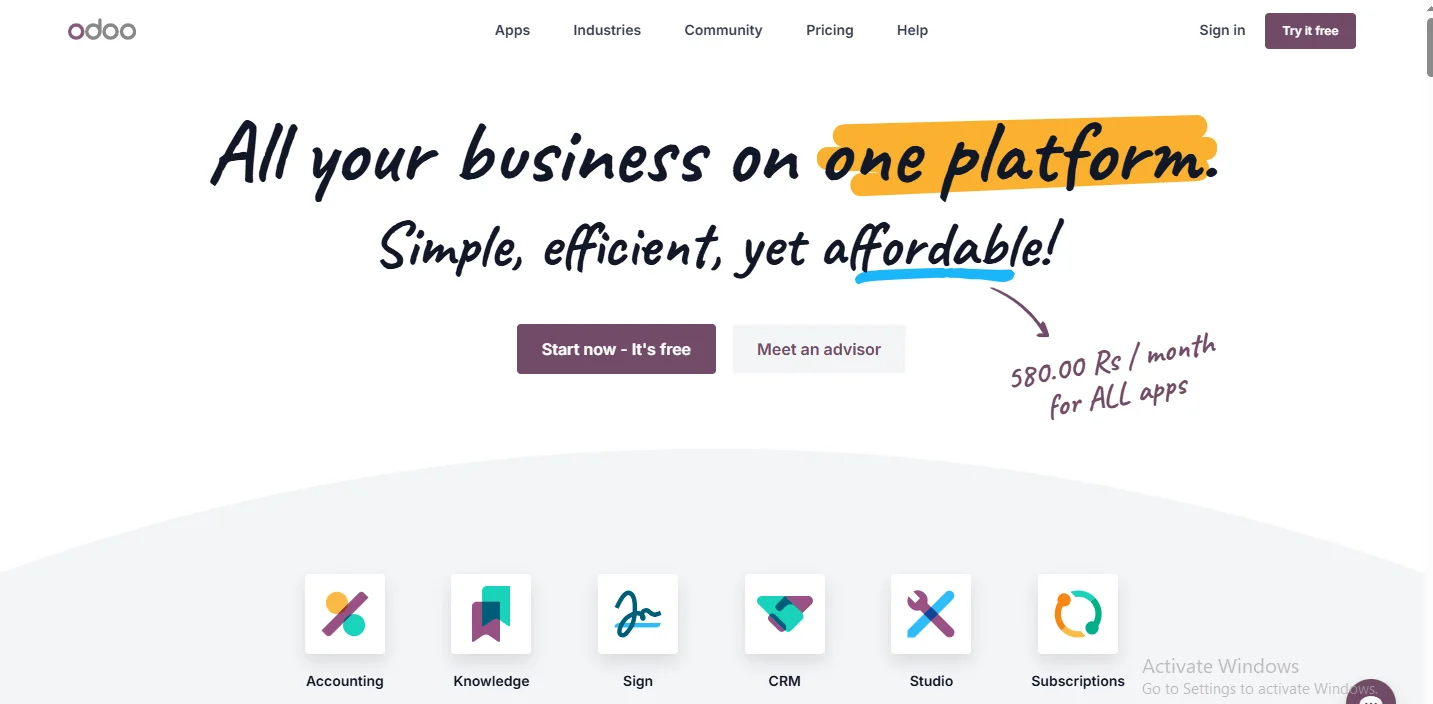
Odoo is a modular ERP platform that allows businesses to select and connect applications according to their operational requirements. Its ecosystem covers accounting, CRM, sales, purchasing, inventory, manufacturing, HR, projects, eCommerce, point of sale, and other business functions.
This modular approach makes Odoo relevant for businesses that do not want to implement every ERP module from the beginning.
A business can begin with applications such as accounting, CRM, or inventory and introduce additional modules as its operations expand.
Odoo can also be configured and customized to support specific workflows. This makes it a consideration for organizations searching for custom ERP software capabilities without necessarily building an ERP platform completely from scratch.

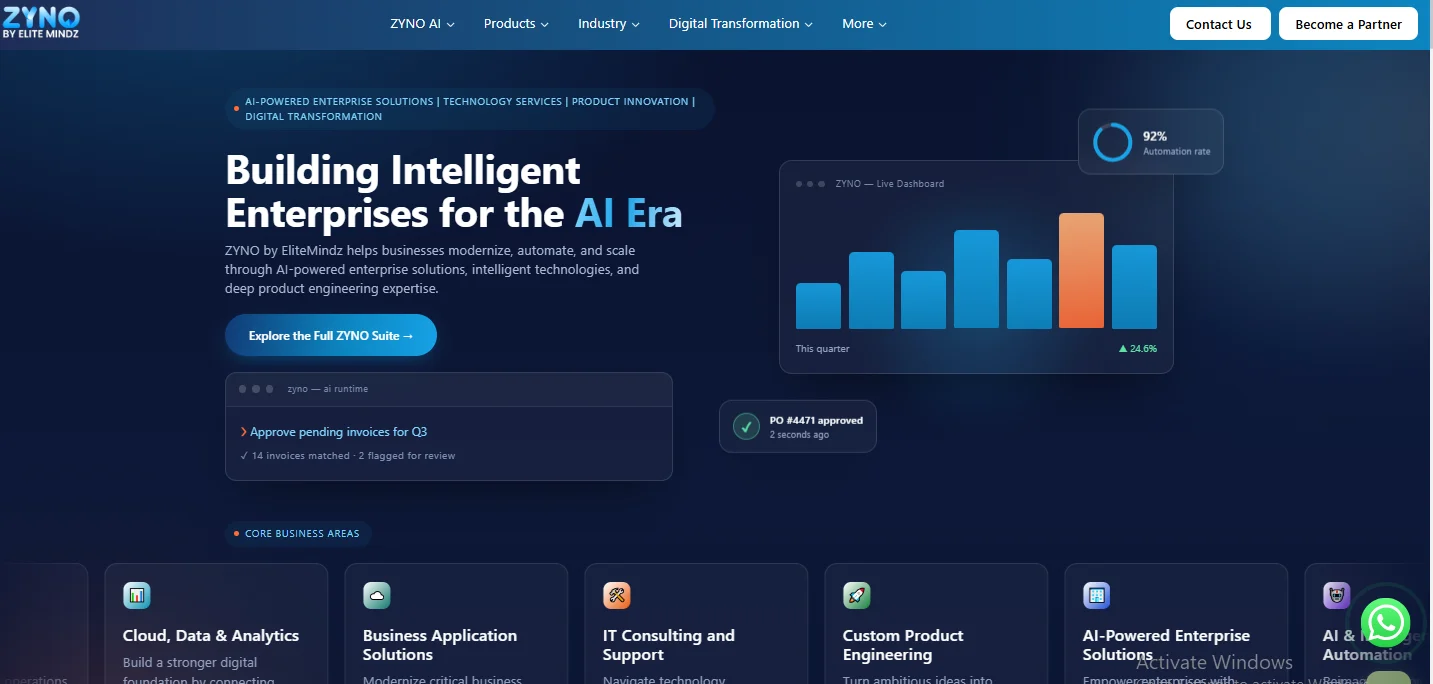
ZYNO by Elite Mindz is an integrated business management ecosystem designed to connect different business functions through centralized digital workflows.
For growing businesses, the platform can help bring finance, procurement, inventory, sales, HR, CRM, projects, reporting, and other processes into a more connected operating environment.
Instead of relying on separate applications for individual departments, businesses can use connected modules to improve data visibility and streamline workflows.
One of the major challenges for growing businesses is the increasing number of disconnected tools used to manage different departments.
A centralized ERP approach can help reduce this fragmentation by connecting business information and workflows.
For example, procurement information can be connected with inventory and financial processes, while sales information can be connected with customer records and reporting. This can give management a broader view of business performance.
ZYNO can also be considered by businesses that need flexibility and want their software environment to evolve alongside their operations.
For organizations with highly specific workflows that cannot be adequately supported by standard ERP configurations, customized ERP software can be explored as an additional approach.
Bring finance, procurement, inventory, projects, vendors, and business operations together with ZYNO ERP.
As businesses expand, their requirements can change rapidly. They may add employees, locations, products, suppliers, customers, or new business processes.
An ERP platform should therefore provide enough scalability to support these changes without forcing the business to replace its entire technology stack every few years.
ZYNO can be evaluated as a centralized business management platform for organizations looking to streamline operations, improve visibility, automate repetitive processes, and support long-term growth.

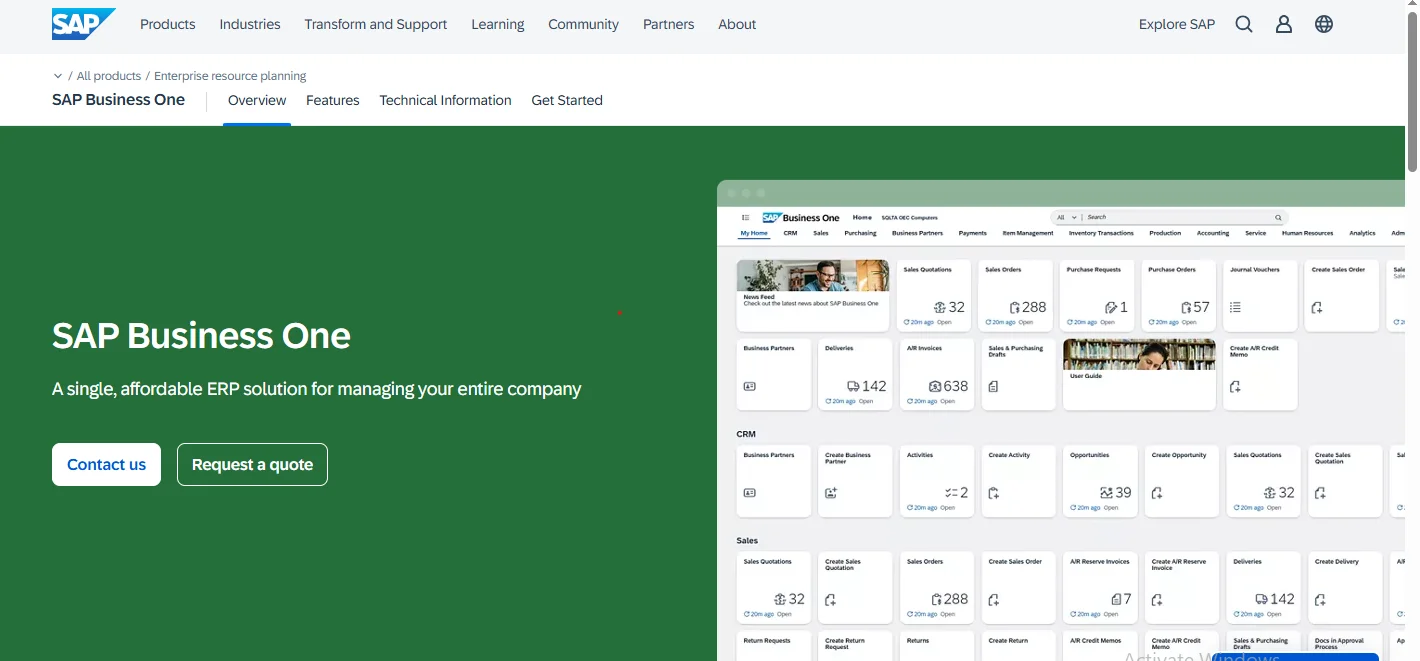
SAP Business One is an ERP solution developed for small and midsize businesses that require integrated management of their core business operations.
The platform can connect financial management with sales, purchasing, inventory, production, customer management, and reporting. It is backed by the broader SAP technology ecosystem and is available through implementation partners in different markets.
SAP Business One can be suitable for companies that want a structured ERP environment and anticipate more complex operational requirements.
It may particularly appeal to growing businesses that want to establish standardized processes across finance, purchasing, inventory, sales, and production rather than continuing with disconnected applications.

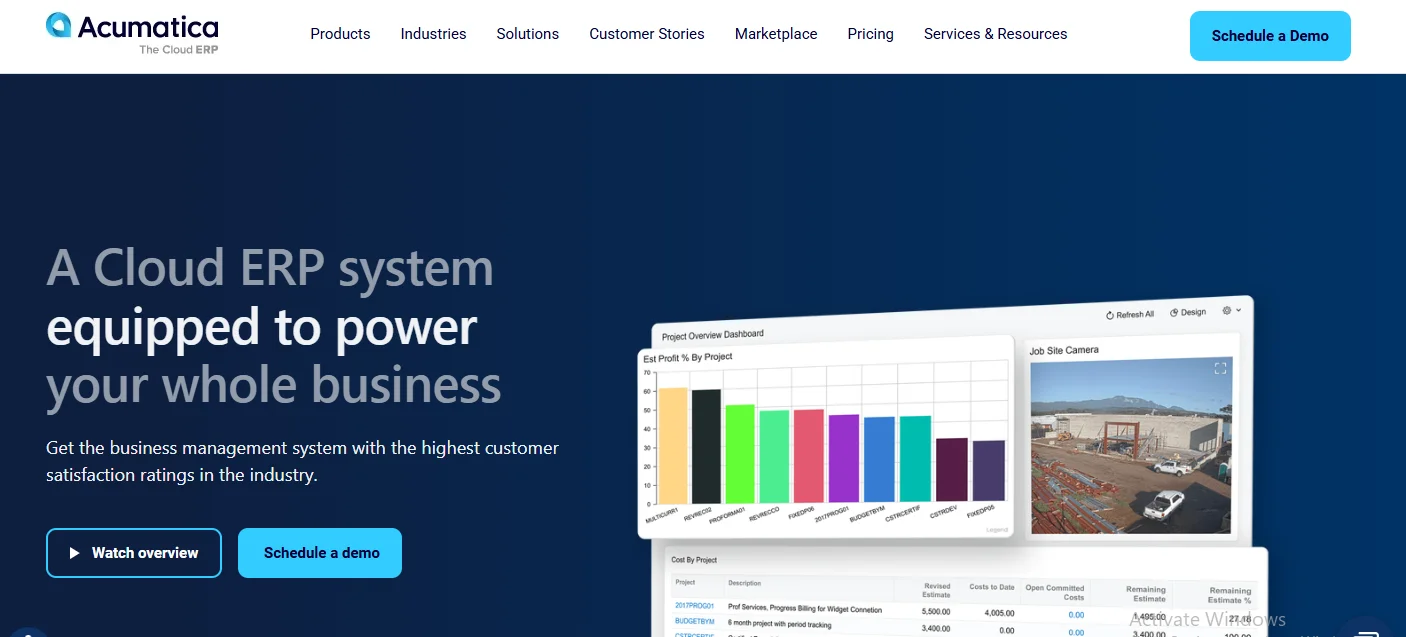
Acumatica is a cloud ERP platform that connects financial and operational processes through a centralized business management environment.
Its capabilities span financial management, distribution, manufacturing, project accounting, CRM, inventory, and other business functions. Its cloud-first approach makes it relevant to businesses that want flexible access to their systems without maintaining extensive on-premise infrastructure.
Growing businesses can benefit from a connected platform that brings financial and operational information together.
Acumatica may be particularly relevant for companies that need more functionality than basic accounting software but still want the flexibility and accessibility associated with cloud ERP.
Sage Intacct is well known for its financial management and accounting capabilities and is often considered by growing organizations that need stronger financial visibility.
Its functionality can support accounting, accounts payable, accounts receivable, cash management, budgeting, financial reporting, and multi-entity financial operations.
Sage Intacct can be particularly useful for businesses where financial management is a major priority.
Companies that have outgrown basic accounting tools can evaluate it when they need better reporting, financial controls, and visibility across multiple business entities or operations.

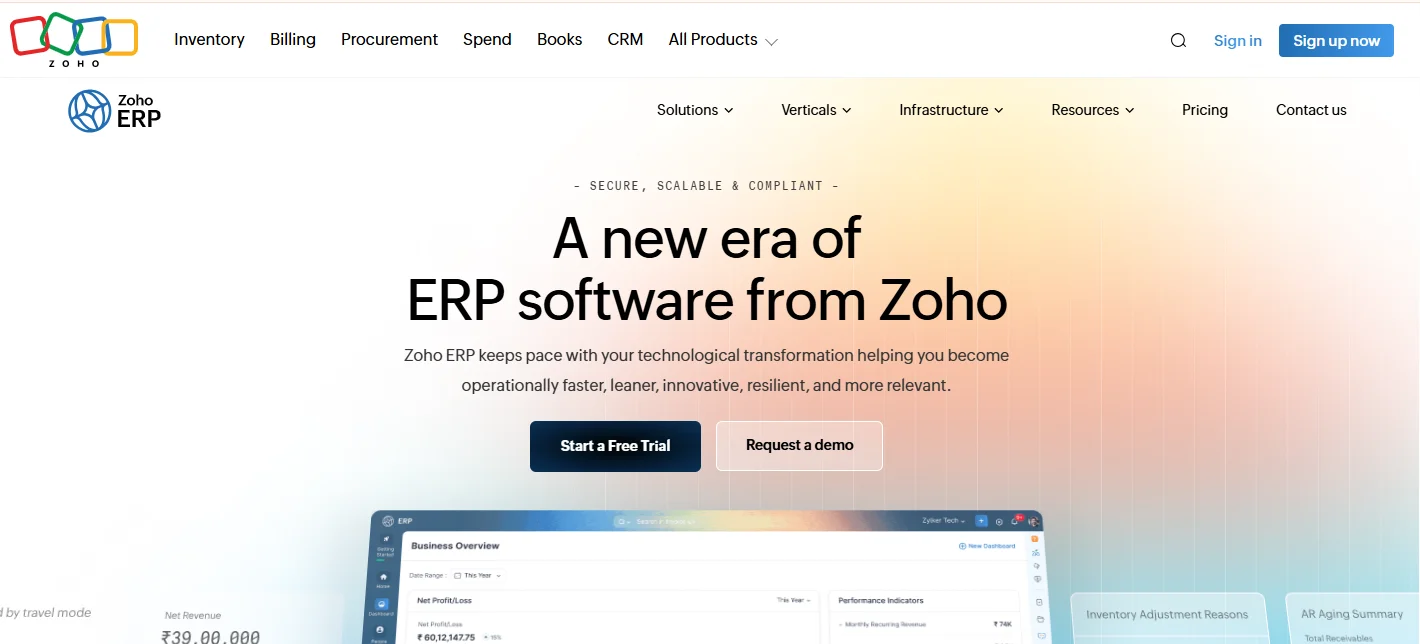
Zoho ERP provides an integrated approach to managing financial and operational activities. Its ERP offering is aimed at businesses ranging from startups and small businesses to larger organizations and combines areas such as financial management, supply chain, billing, HR, payroll, spend management, and analytics.
The platform also focuses on automation, configurable workflows, and connected business applications.
Businesses already using applications within the Zoho ecosystem may find an integrated ERP approach easier to evaluate.
Its combination of financial, operational, HR, and analytical capabilities can help growing businesses reduce the need to manage multiple disconnected applications.

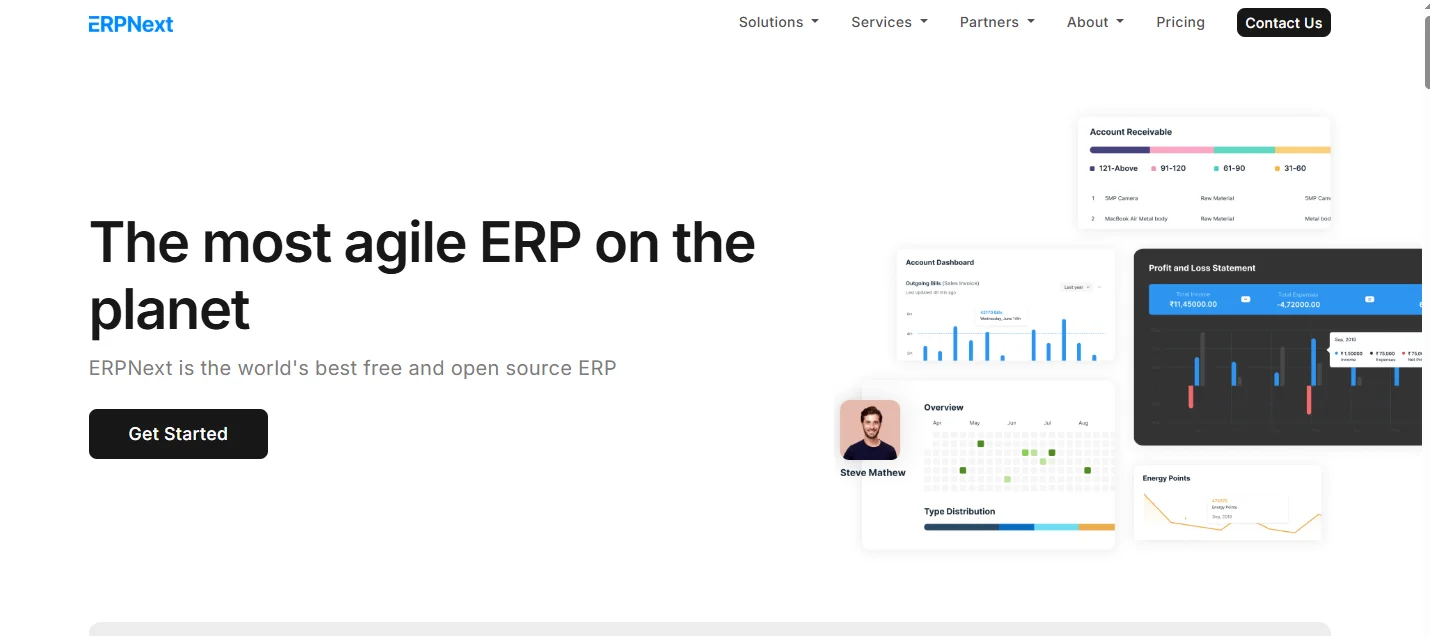
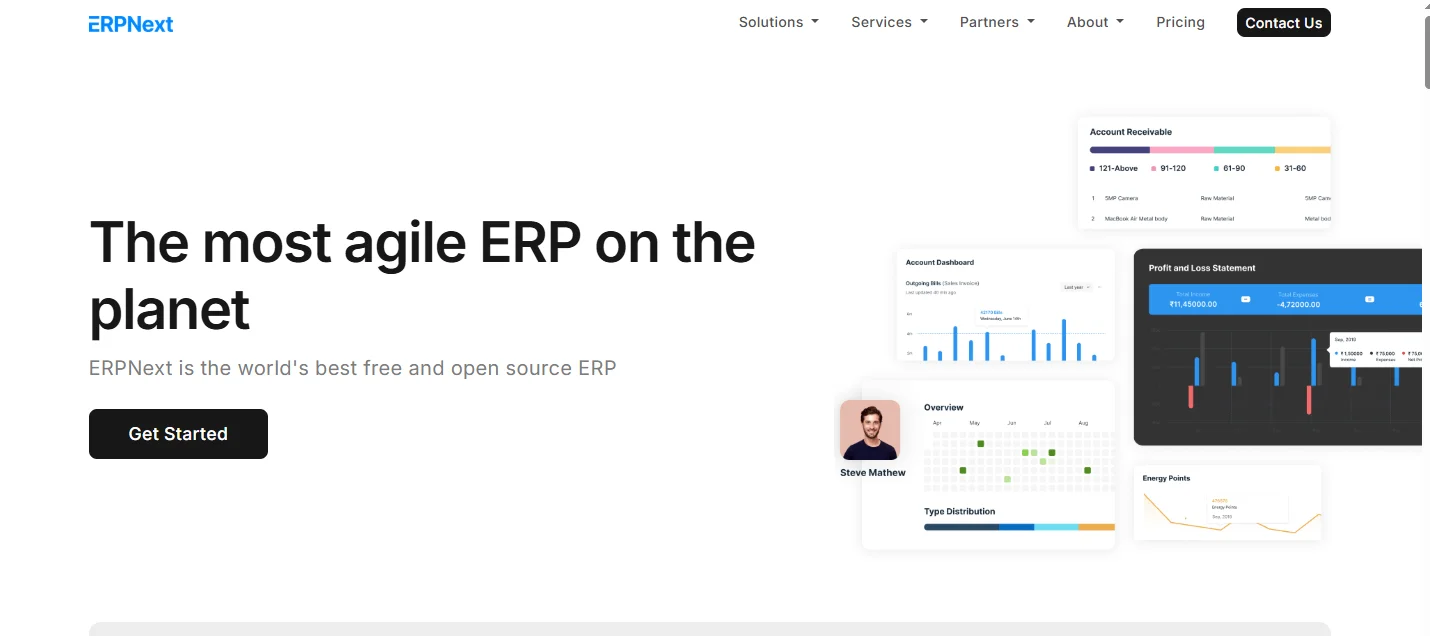
ERPNext is an open-source ERP platform designed to provide a broad range of business management applications from a single environment.
Its functionality covers accounting, CRM, sales, purchasing, inventory, manufacturing, projects, HR, payroll, and other operational processes.
ERPNext can be attractive to businesses that want more control over their ERP environment and have access to technical expertise for implementation and customization.
Its open-source nature can also provide flexibility for organizations with specific configuration requirements. However, businesses should consider hosting, implementation, support, maintenance, and technical resources when calculating the total cost.

SYSPRO is an ERP platform with a strong focus on manufacturing, distribution, inventory, and supply chain operations.
It can connect financial processes with manufacturing, procurement, inventory, warehousing, sales, and analytics, making it relevant to businesses where physical products and supply chain operations play an important role.
Manufacturing and distribution companies often have ERP requirements that go beyond accounting and invoicing.
SYSPRO can be considered by businesses that need stronger control over inventory, production, procurement, warehousing, and supply chain processes while maintaining financial visibility.

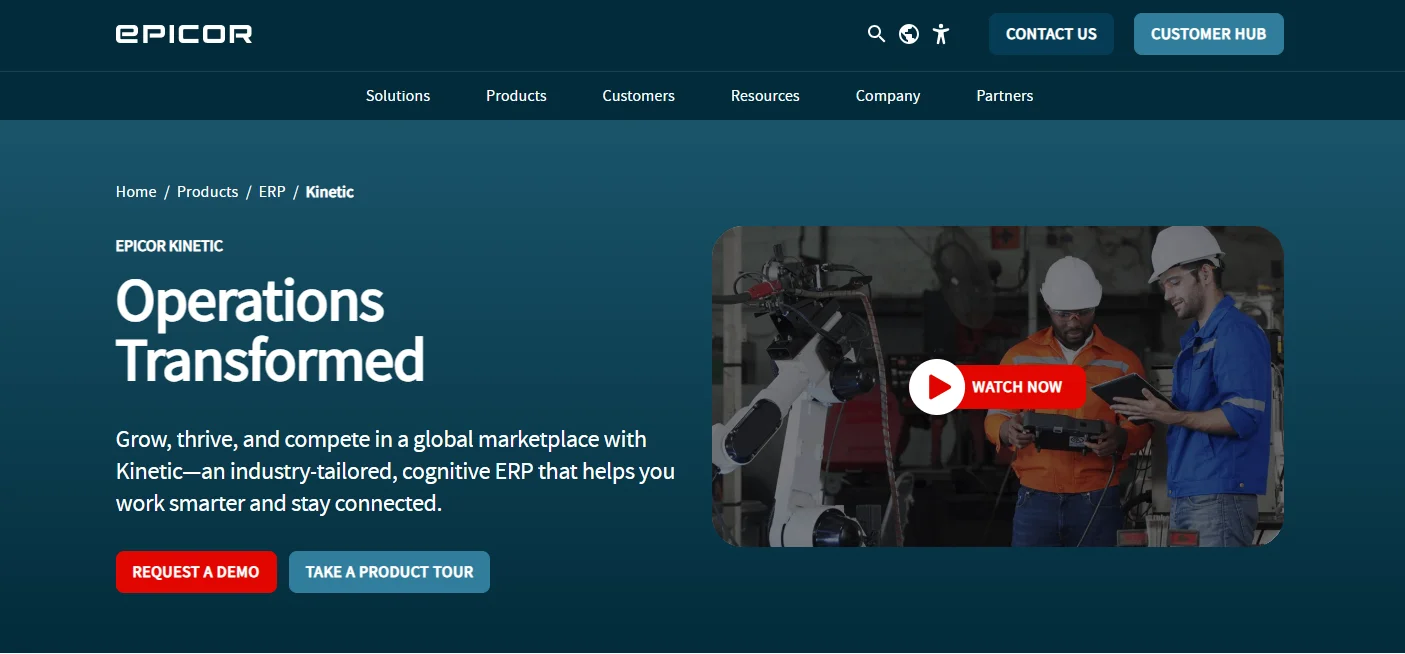
Epicor Kinetic is an ERP platform strongly associated with manufacturing and distribution businesses. It is designed to connect operational processes such as production, inventory, purchasing, supply chain, finance, sales, and reporting.
For manufacturers, ERP functionality can help connect production planning with material requirements, inventory availability, purchasing, and financial information.
Epicor Kinetic can be worth evaluating for growing manufacturers whose operations require more specialized functionality than a basic accounting or general business management system.
It can help businesses create a more connected view of production, inventory, purchasing, and financial operations.

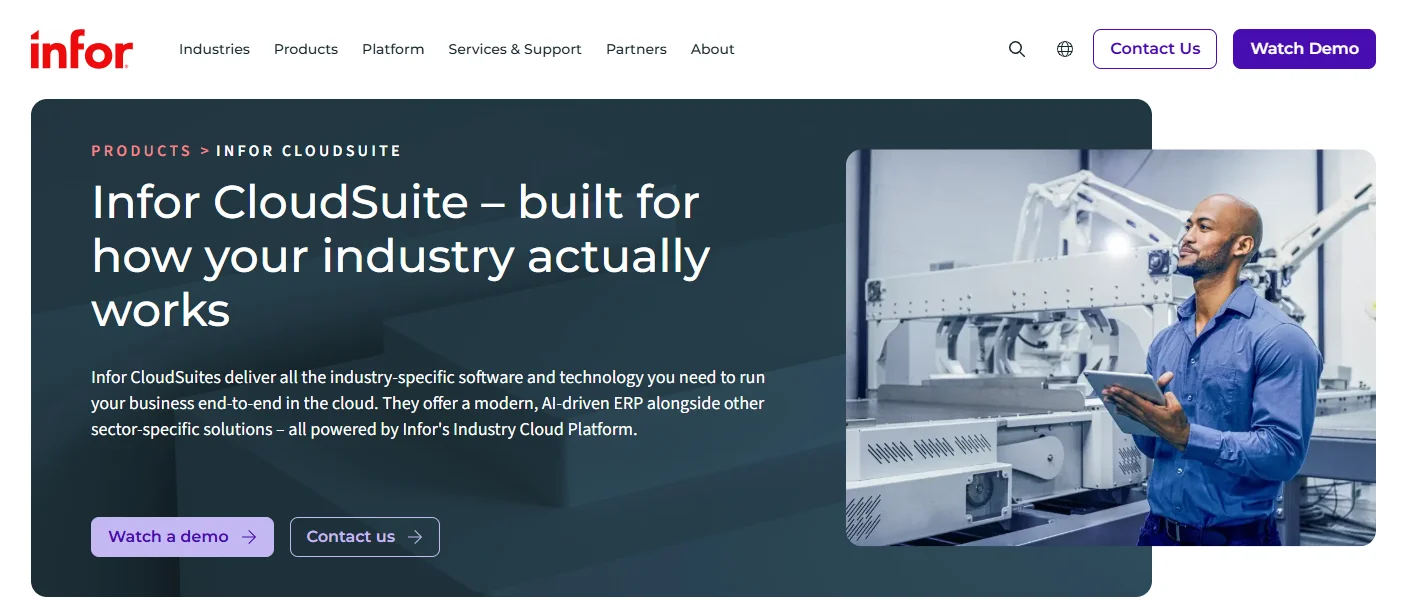
Infor CloudSuite provides cloud-based ERP solutions with a strong emphasis on industry-specific functionality.
Instead of relying entirely on a generic ERP model, Infor provides solutions designed around the requirements of different industries and operational environments.
Businesses with specialized industry workflows may find an industry-focused ERP more suitable than a general-purpose platform.
The key consideration is whether the solution's industry functionality matches the organization's current requirements without creating unnecessary complexity or cost.

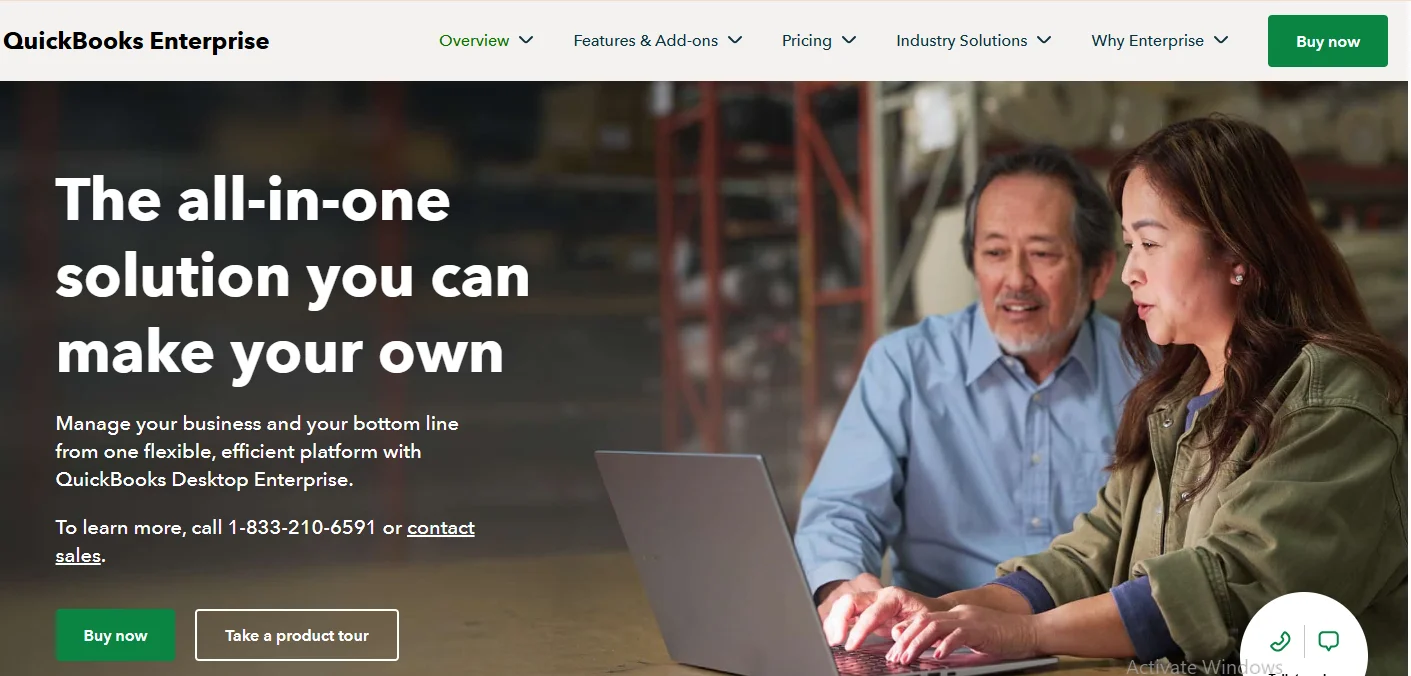
QuickBooks Enterprise is primarily known for accounting and financial management, but it also provides features for inventory, sales, purchasing, reporting, and business management.
For small businesses that have already built their accounting operations around QuickBooks and need additional capabilities, it can be an option to evaluate.
QuickBooks Enterprise can make sense for organizations that prioritize accounting and financial management while requiring additional operational functionality.
However, companies with complex manufacturing, procurement, HR, multi-location, or enterprise-wide workflow requirements should compare it against broader ERP solutions for small businesses.

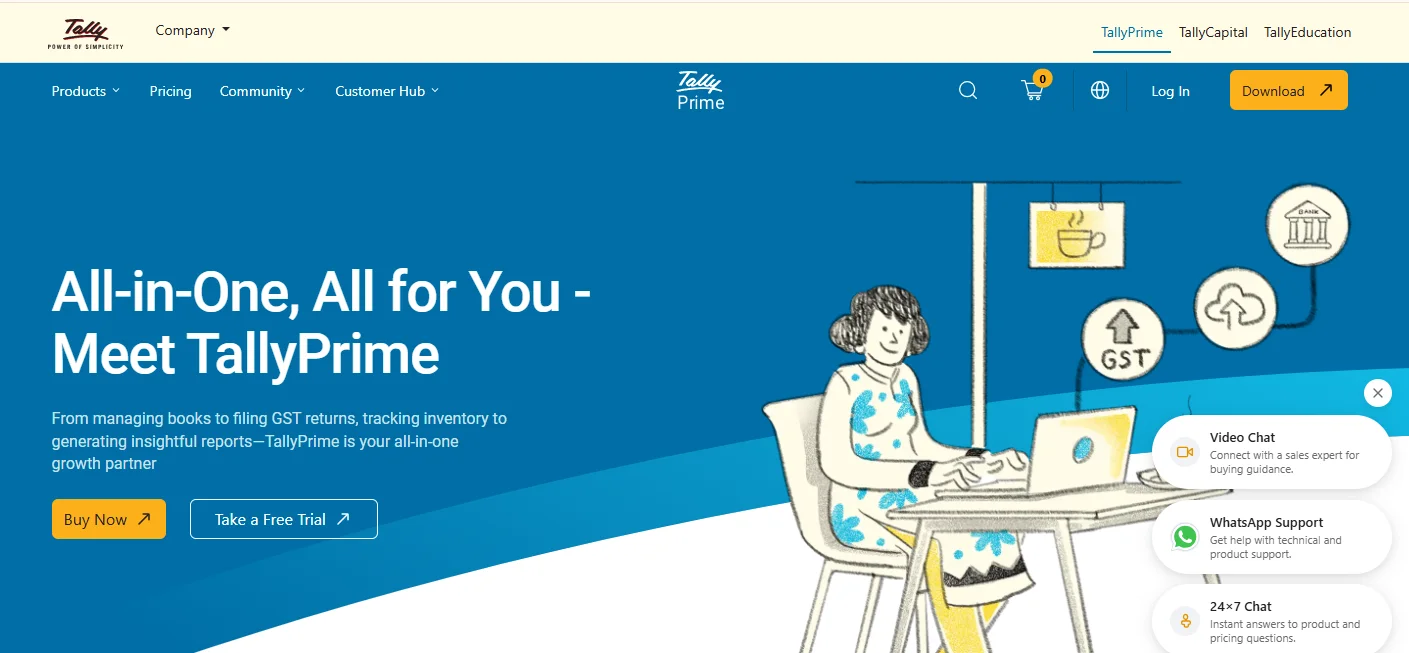
TallyPrime is a widely used business management and accounting solution in India. It is particularly recognized for accounting, taxation, invoicing, inventory, payroll, and financial reporting.
For Indian small businesses, local accounting and tax requirements can be an important part of ERP selection.
TallyPrime can be a practical option for businesses whose primary requirements revolve around accounting, taxation, invoicing, inventory, and financial management.
However, businesses searching for an all-department ERP should determine whether they require broader CRM, procurement, advanced workflow automation, project management, or other operational capabilities.

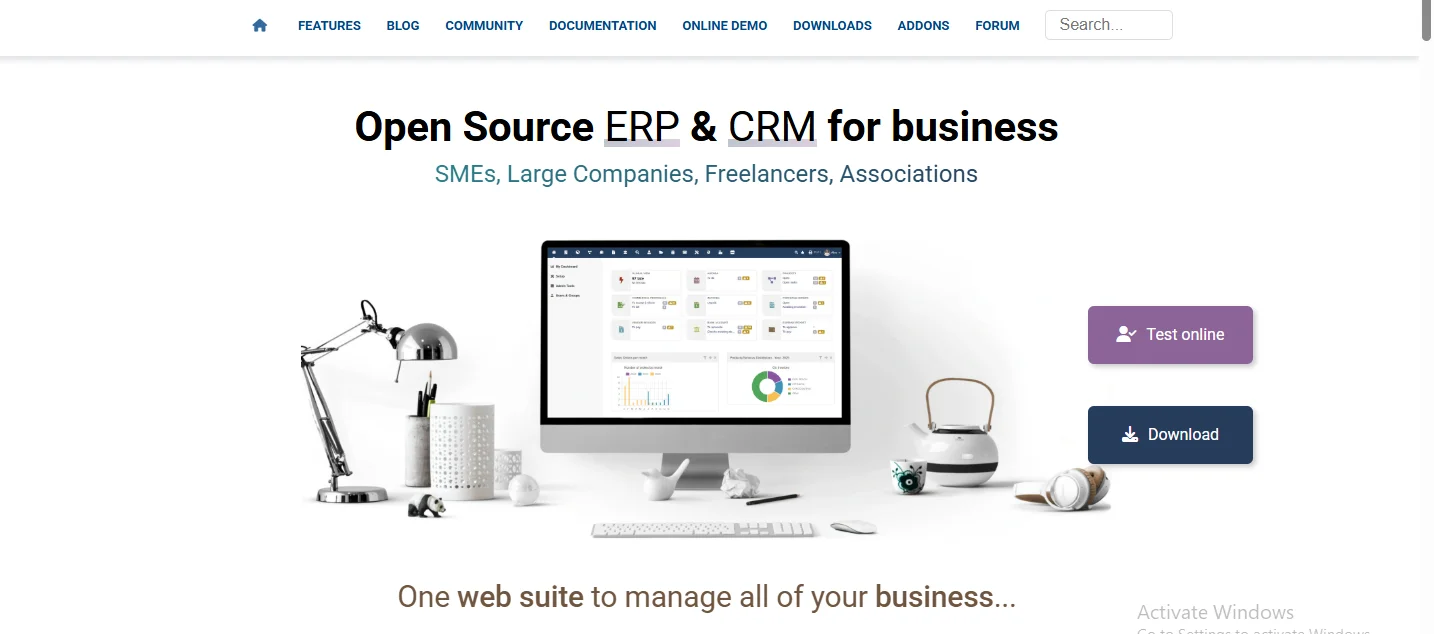
Dolibarr is an open-source ERP and CRM platform that provides modular business management functionality for organizations of different sizes.
Its applications cover customer management, sales, invoicing, accounting, products, inventory, projects, HR, procurement, and other business processes.
Dolibarr can be relevant for small businesses that want a flexible starting point and prefer a modular approach to business software.
Rather than implementing every capability immediately, businesses can focus on the applications they actually need and expand the system as their requirements evolve.
Its open-source foundation can also provide customization opportunities, although businesses should consider the technical expertise required for implementation, hosting, updates, and maintenance.
Every business has different requirements, so the right ERP depends on what the organization needs most.
| ERP System | Best Suited For | Major Strength |
|---|---|---|
| Microsoft Dynamics 365 Business Central | Growing SMBs | Finance & Microsoft ecosystem |
| NetSuite | Scaling businesses | Cloud ERP & scalability |
| Odoo | Flexible businesses | Modular applications |
| SAP Business One | Small & midsize companies | Integrated business management |
| Acumatica | Growing businesses | Cloud operations |
| Sage Intacct | Finance-focused businesses | Accounting & financial management |
| Zoho ERP | Startups & growing businesses | Connected business applications |
| ERPNext | Flexible/open-source users | Customization & control |
| SYSPRO | Manufacturing & distribution | Supply chain & manufacturing |
| Epicor Kinetic | Manufacturers | Production & operations |
| Infor CloudSuite | Industry-focused businesses | Vertical functionality |
| QuickBooks Enterprise | Accounting-focused SMBs | Finance & business management |
| TallyPrime | Indian SMBs | Accounting & taxation |
| ZYNO by Elite Mindz | Growing businesses | Connected business management |
| Dolibarr | Small organizations | Open-source modular ERP |
Before selecting the best ERP software for small business, evaluate the system against your actual business requirements.
Identify whether you need accounting, CRM, inventory, procurement, HR, payroll, sales, manufacturing, projects, or other modules.
An ERP should not create unnecessary disruption. Check implementation timelines, migration requirements, training, and support.Cloud Accessibility
Cloud based ERP software can provide flexibility for businesses with remote employees, multiple locations, and distributed teams.
If your business follows specialized workflows, check whether the platform provides configuration, APIs, extensions, or customization options.
Look for automated approvals, notifications, recurring transactions, reporting, invoicing, purchasing, and other repetitive workflows.
The system should support additional users, locations, products, transactions, and business processes as the organization grows.
Managers should be able to monitor revenue, expenses, inventory, sales, procurement, cash flow, and other important KPIs.
Consider licensing, implementation, training, customization, integrations, support, maintenance, and upgrades—not just the initial software price.
Empower your growing business with ZYNO ERP and simplify everyday operations with smarter automation and centralized business management.
Standard ERP software is usually the starting point for most small businesses because it provides pre-built functionality and established workflows.
However, some businesses have highly specialized processes that cannot be efficiently managed through standard configurations.
In such cases, custom ERP software development can provide a solution designed around specific business requirements.
Businesses considering Custom ERP Software Development Services should first conduct a detailed requirements analysis. Not every feature needs to be custom-built. A hybrid approach—using standard ERP functionality for common processes and customization for unique requirements—can often provide a better balance between flexibility, cost, and implementation time.
Selecting the best ERP software for small business requires more than comparing the number of features.
A system may offer hundreds of functions, but if employees find it difficult to use, implementation can become expensive and adoption can suffer.
The most important factors include:
The interface should be easy enough for employees to learn without extensive technical training.
Your ERP should support increasing users, transactions, products, locations, and business processes.
The system should integrate with existing accounting, payment, CRM, eCommerce, HR, and other business applications where required.
Look for workflow automation that can reduce repetitive data entry, approvals, notifications, invoicing, and reporting tasks.
Managers need real-time dashboards and reports to understand sales, expenses, inventory, cash flow, profitability, and operational performance.
Access controls, authentication, backups, permissions, and data protection should be considered before implementation.
Do not evaluate ERP only by subscription price. Consider implementation, customization, training, integrations, support, maintenance, and future upgrades.
Cloud based ERP software has become increasingly attractive to small and growing businesses because it can reduce the need for extensive internal IT infrastructure.
With cloud ERP, users can generally access business information through internet-connected devices, while the provider manages much of the underlying infrastructure and updates.
This is why cloud ERP for small businesses can be particularly useful for companies with remote employees, multiple branches, or teams that need access to real-time information from different locations.
However, businesses should still evaluate security, data residency, integrations, backup policies, vendor support, and internet dependency before selecting a cloud solution.
Not every company needs custom ERP software development.
Standard ERP products can work very well when business processes closely match the capabilities offered by the platform.
However, customization becomes more valuable when a business has unique workflows, industry-specific processes, complex approval structures, or specialized reporting requirements.
Custom ERP software can be developed around specific business requirements instead of forcing employees to adapt completely to predefined workflows.
However, custom development usually requires more planning, implementation time, testing, and ongoing maintenance.
For organizations considering Custom ERP Software Development Services, the best approach is to first identify which requirements genuinely need customization and which can be handled through standard ERP functionality.
The Indian ERP market includes global vendors, local providers, open-source platforms, and companies offering custom ERP software development.
When evaluating ERP software companies in India, businesses should compare more than product features.
Consider:
Indian businesses may also need to consider GST, invoicing, taxation, payroll, regional compliance, and local accounting requirements depending on their industry and operating model.
If you're searching for the best ERP software in India, begin with your business requirements rather than starting with vendor names.
Create a checklist covering:
How many employees and users will use the system?
Do you need finance, HR, procurement, inventory, CRM, manufacturing, projects, or all of them?
Does your business require specialized workflows?
What is your total first-year ERP budget, including implementation and training?
Can the standard product support your workflows, or will you need custom development?
Would cloud deployment work for your organization, or do you have reasons to consider on-premise deployment?
Will the system continue to work when your company doubles its users, locations, products, or transactions?
These questions can help you narrow down the Top ERP software options according to your actual requirements.
Affordable ERP Software for Small Businesses: What Does “Affordable” Really Mean?
The cheapest ERP is not necessarily the most affordable ERP.
An affordable ERP software for small businesses should provide a reasonable balance between functionality, implementation cost, usability, scalability, and support.
A low-cost system can become expensive if it requires:
Similarly, a more expensive ERP can provide better long-term value if it eliminates several disconnected applications and significantly reduces manual work.
Therefore, businesses should compare total cost of ownership rather than only monthly subscription fees.

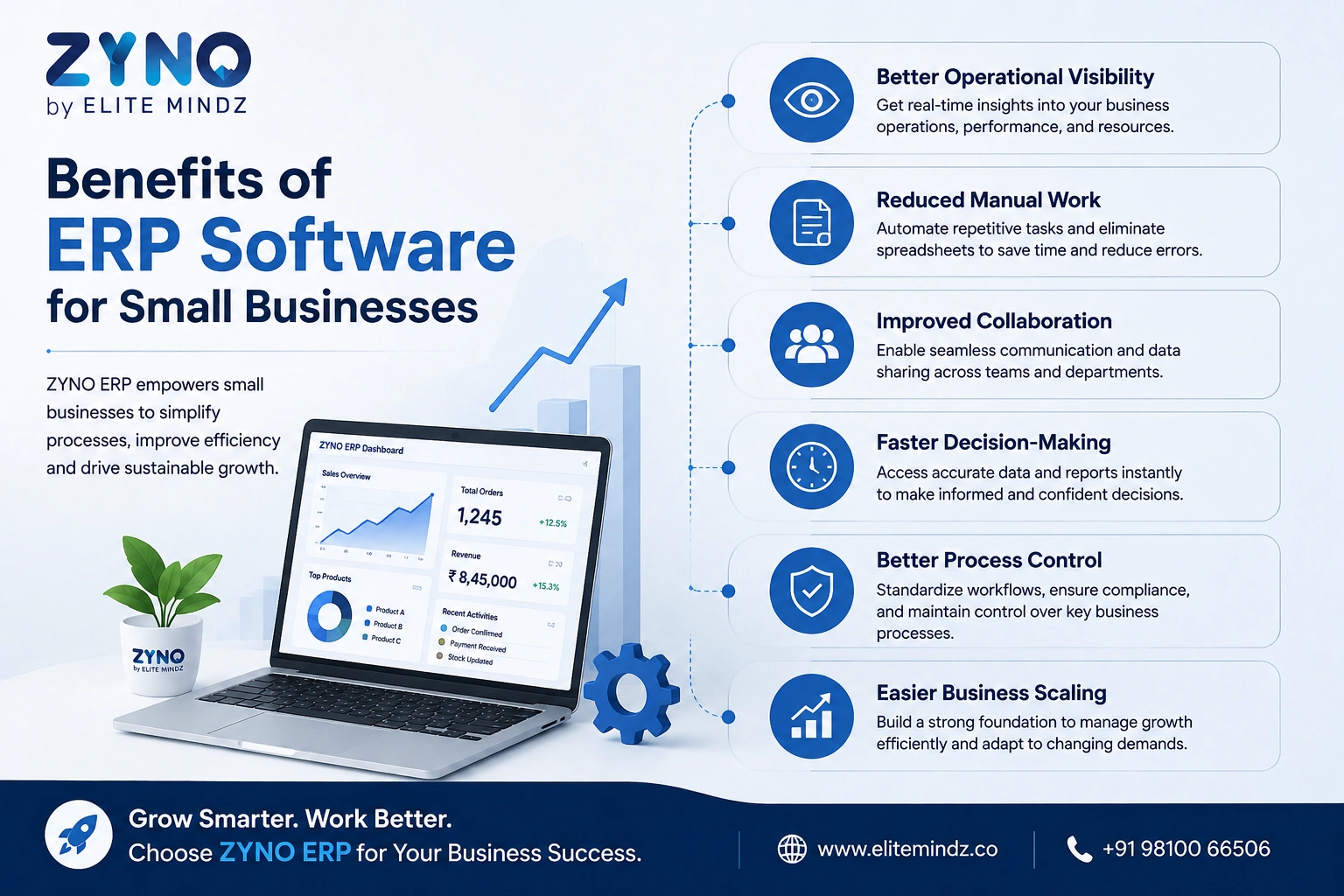
The right ERP software for small businesses can provide several operational benefits.
A centralized platform gives managers access to connected business information instead of requiring them to collect data from multiple systems.
Automated workflows can reduce repetitive tasks such as data entry, approvals, invoicing, and routine reporting.
Departments can work with shared information, reducing communication gaps and duplicate records.
Real-time dashboards and reports help managers identify trends and make decisions using current information.
Standardized workflows and permissions can improve consistency across departments.
As the company grows, a scalable ERP can support additional users, products, locations, transactions, and business processes.
Before selecting a system, prioritize the features that directly affect your daily operations.
A strong small business ERP software solution may include:
| ERP Capability | Business Value |
|---|---|
| Financial Management | Better control over accounting and cash flow |
| Inventory Management | Improved stock visibility |
| Procurement | Better purchasing and vendor control |
| CRM | Centralized customer information |
| Sales Management | Improved order and sales tracking |
| HR & Payroll | Simplified employee administration |
| Workflow Automation | Reduced repetitive work |
| Reporting & Analytics | Faster business decisions |
| Cloud Access | Work from multiple locations |
| Integration | Connected business applications |
The ERP market in 2026 offers more choices than ever for growing companies. From Microsoft Dynamics 365 Business Central and NetSuite to Odoo, SAP Business One, Zoho ERP, open-source platforms, and flexible solutions such as ZYNO by Elite Mindz, businesses can choose from a wide range of approaches.
The best ERP software is not necessarily the platform with the largest feature list. It is the system that fits your business processes, budget, technical capabilities, industry requirements, and future growth plans.
For some companies, an affordable cloud platform may be enough. Others may require industry-specific functionality. Businesses with highly specialized workflows may benefit from custom ERP software development.
The key is to evaluate ERP as a long-term business investment rather than simply another software subscription.
Before making a final decision, compare implementation requirements, integrations, customization, security, support, scalability, and total cost of ownership.
With the right ERP strategy, small businesses can replace disconnected systems with a more centralized, automated, and scalable approach to managing growth in 2026.
Simplify complex processes, improve visibility, and make smarter business decisions with an integrated ERP solution built for growing businesses.
There is no single best ERP for every business. Microsoft Dynamics 365 Business Central, NetSuite, Odoo, SAP Business One, Zoho ERP, Sage Intacct, ERPNext, and other platforms can suit different requirements. The best choice depends on business size, industry, budget, features, customization, and scalability.
Yes. Modern ERP solutions for small businesses are available with modular, cloud-based, and scalable approaches. Small businesses can start with essential functions and add capabilities as operations grow.
Cloud ERP allows businesses to access their ERP system through internet-connected devices without managing all of the underlying infrastructure themselves. Cloud ERP for small businesses can be useful for remote teams, growing companies, and businesses operating across multiple locations.
Not always. Standard ERP is generally preferable when it already supports your business requirements. Custom ERP software becomes more appropriate when a company has unique workflows or specialized requirements that standard systems cannot adequately support.
ERP pricing varies significantly depending on users, modules, deployment, customization, implementation, integrations, and support. Businesses should compare total cost of ownership rather than looking only at the software subscription price.
Businesses operating in India may benefit from ERP providers that understand local accounting, GST, taxation, payroll, invoicing, implementation, and support requirements. However, vendor selection should ultimately be based on product capabilities, implementation expertise, security, scalability, and overall business fit.
Yes. Many ERP platforms provide configuration, extensions, APIs, workflows, or customization options. For more specialized requirements, businesses can consider custom ERP software development or Custom ERP Software Development Services.
Look beyond the initial price. Evaluate implementation cost, user licensing, customization, integrations, training, support, scalability, security, and ongoing maintenance. The most affordable ERP software for small businesses is the one that provides the required capabilities with a sustainable total cost of ownership.
What is ERP? A Beginner's Guide to Enterprise Resource Planning
Read More →

Cloud ERP vs. On-Premise vs. Hybrid: Best ERP Model for 2025
Read More →How To Customize ERP Software Without Breaking The Bank?
Read More →
The Future of Manufacturing ERP in 2026 & Beyond
Read More →Best ERP Software in India: 2026 Edition
Read More →
AI in Manufacturing ERP: The Future of Smart Factories
Read More →
How ERP Transforms Inventory Management and Reduces Costs
Read More →
Inventory Management Software Features: The Complete 2026 Buying Guide
Read More →
Top 5 Ways Asset Management Software Can Save Your Business Money
Read More →
Why Smart Businesses Are Switching to Vendor Management Systems in 2025?
Read More →
Why Manufacturing Companies Need ERP Software
Read More →
Cloud ERP vs. Traditional ERP: Which is Right for You?
Read More →
ERP for Small Business: Is It Worth the Investment?
Read More →
How to Calculate ERP ROI and Why It's Worth the Investment
Read More →
Top 10 ERP Software Companies in India 2026 Updated List (Complete Guide)
Read More →
ERP Implementation Mistakes to Avoid in 2025
Read More →
Cloud ERP vs Edge Computing: What's Right for Modern Manufacturing?
Read More →
The Future of ERP Software and the Role of Generative AI
Read More →
Digital Twin Technology & ERP: Real-Time Insights for Smarter Manufacturing
Read More →
Scalable ERP Solutions Designed for Modern Enterprises
Read More →
ERP and IoT Integration: Smart Factory Vision
Read More →Best ERP Software for Manufacturing Businesses in India
Read More →Top 10 Best Manufacturing ERP Software in India (2026)
Read More →
Best ERP Software for Manufacturing Industries in Ethiopia (2026)
Read More →
Best School ERP Software Providers in UAE (2025 Edition)
Read More →
Best School ERP Software for 2025: Guide for Educational Institutions
Read More →
Top 10 ERP Software Solutions for Nigerian Manufacturers (2025 Edition)
Read More →
Best ERP Systems for Scalable Retail and POS Integration
Read More →
Top 10 Cloud-Based Manufacturing ERP Solutions in Africa (2025 Edition)
Read More →
Top 10 Cloud-Based Manufacturing ERP in UAE
Read More →
Top 10 Cloud-Based Manufacturing ERP Software in Nigeria (2026 Edition)
Read More →
Top 10 School ERP Software Companies in Kenya (2025)
Read More →
Best School ERP Software Providers in Nigeria (2025)
Read More →
Top Cloud-Based Manufacturing ERP in Zimbabwe (2025)
Read More →
Best ERP Software in U.K
Read More →
Top 10 ERP Software Developers in the U.K. (2025)
Read More →
Best ERP Software Providers in France (2025)
Read More →
Best ERP Software Companies in Germany : A Comprehensive Guide
Read More →
Top 10 ERP Software Development Companies in Qatar
Read More →
10 Best ERP Providers in Germany - 2026 Updated List
Read More →
Best ERP Software Firms in Saudi Arabia (2025)
Read More →
Best ERP Service Providers in Indonesia for SMEs and Large Enterprises
Read More →
Top 10 Cloud-Based Manufacturing ERP Systems in Egypt for Modern Factories
Read More →
Top ERP Solutions in the USA 2025: Streamline Your Business with ZYNO ERP
Read More →
Top ERP Solutions in Qatar for Businesses of All Sizes
Read More →Top Manufacturing ERP Software in India 2026 ZYNO Manufacturing ERP
Read More →How Manufacturing Companies Reduce Production Delays Using ERP Automation
Read More →Why Legal Firms Need ERP to Manage Cases, Billing & Compliance
Read More →What Is ERP And How Does It Work
Read More →
How ERP Systems Are Evolving in 2026: What Businesses Need to Know
Read More →
Best ERP Software in India: 2025 Edition
Read More →
Top 10 ERP Software Companies in Delhi NCR
Read More →
How Manufacturing ERP Software Improves Demand Forecasting
Read More →
Top 10 Best School Management Software in India
Read More →Manufacturing & Wholesale ERP in Qatar: Complete Industry Guide 2026
Read More →Cloud ERP Software in Qatar: Why Businesses Are Moving in 2026
Read More →Is ERP a Procurement Software? Key Differences, Benefits & What to Choose
Read More →What Is Production Planning and Control? Definition, Objectives & Functions
Read More →
Garment Inventory Software: Features, Providers & Buying Guide (2026)
Read More →
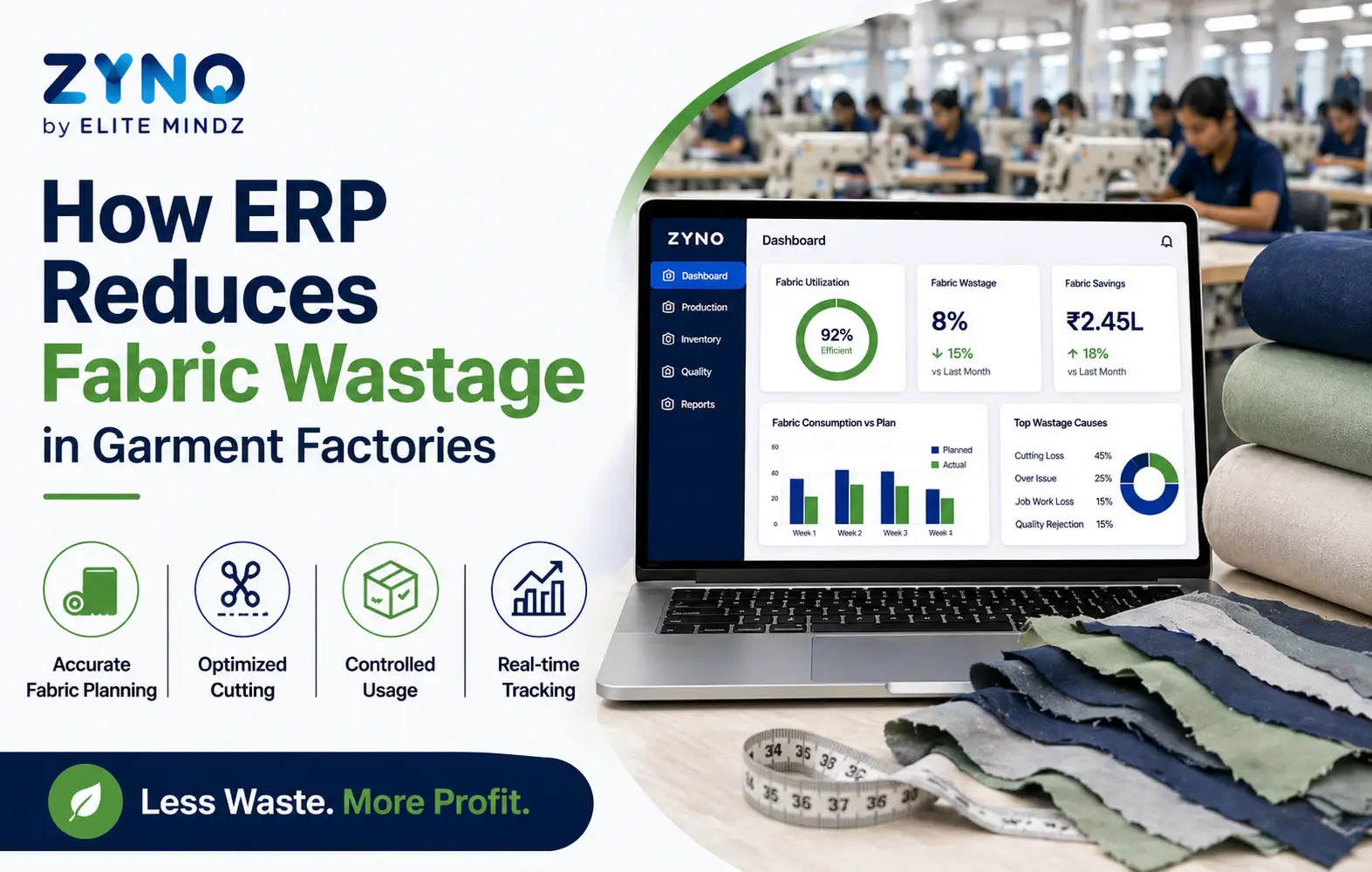
How ERP Reduces Fabric Wastage in Garment Factories
Read More →
Why the Garment Industry Needs a Specialized ERP
Read More →
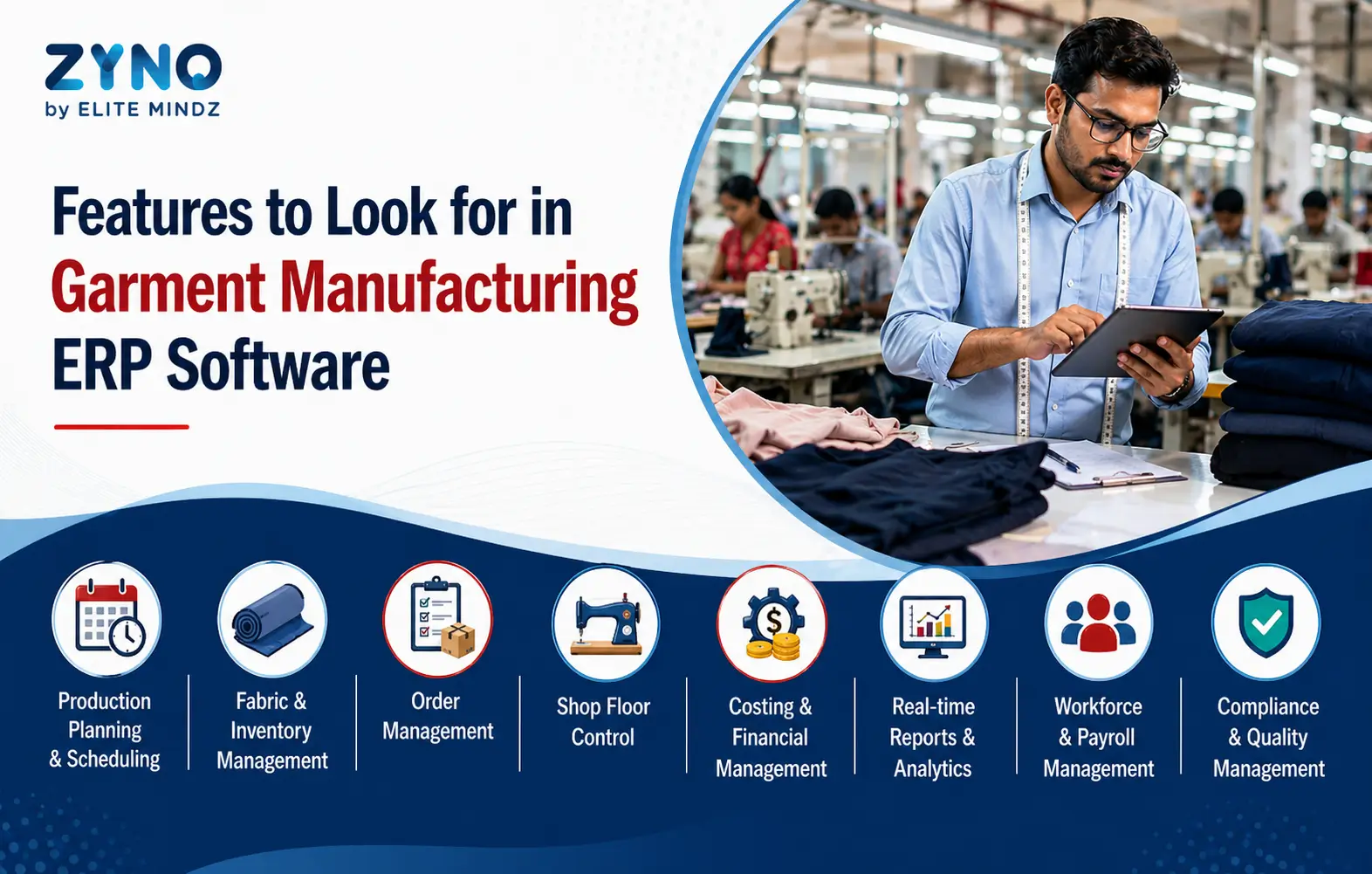
Features to Look for in Garment Manufacturing ERP Software
Read More →
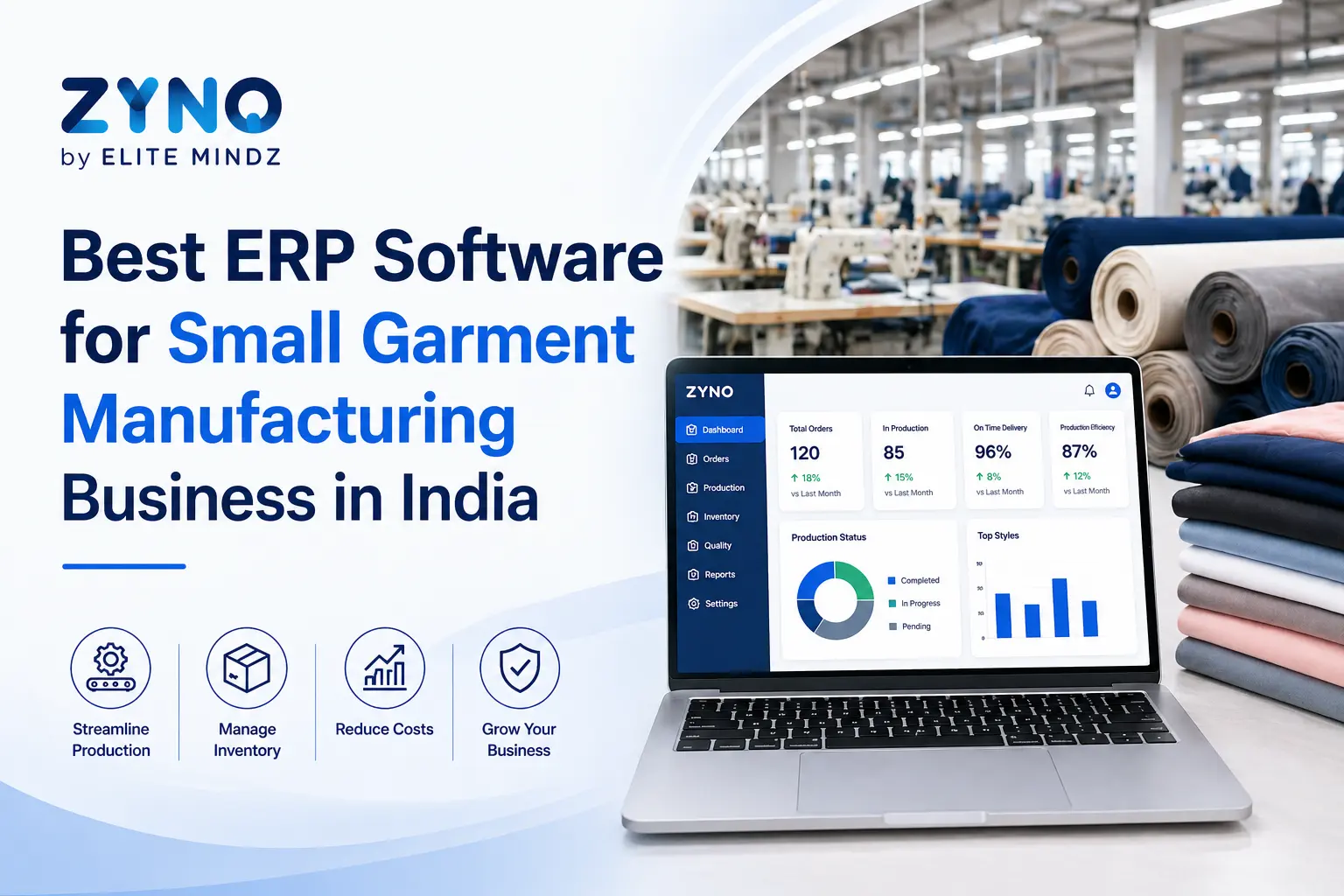
Best ERP Software for Small Garment Manufacturing Business in India
Read More →
The Real Problems Holding Back Small Garment Manufacturers in India
Read More →Garment Manufacturing ERP Software in India: Best Options, Features & Complete Guide 2026
Read More →
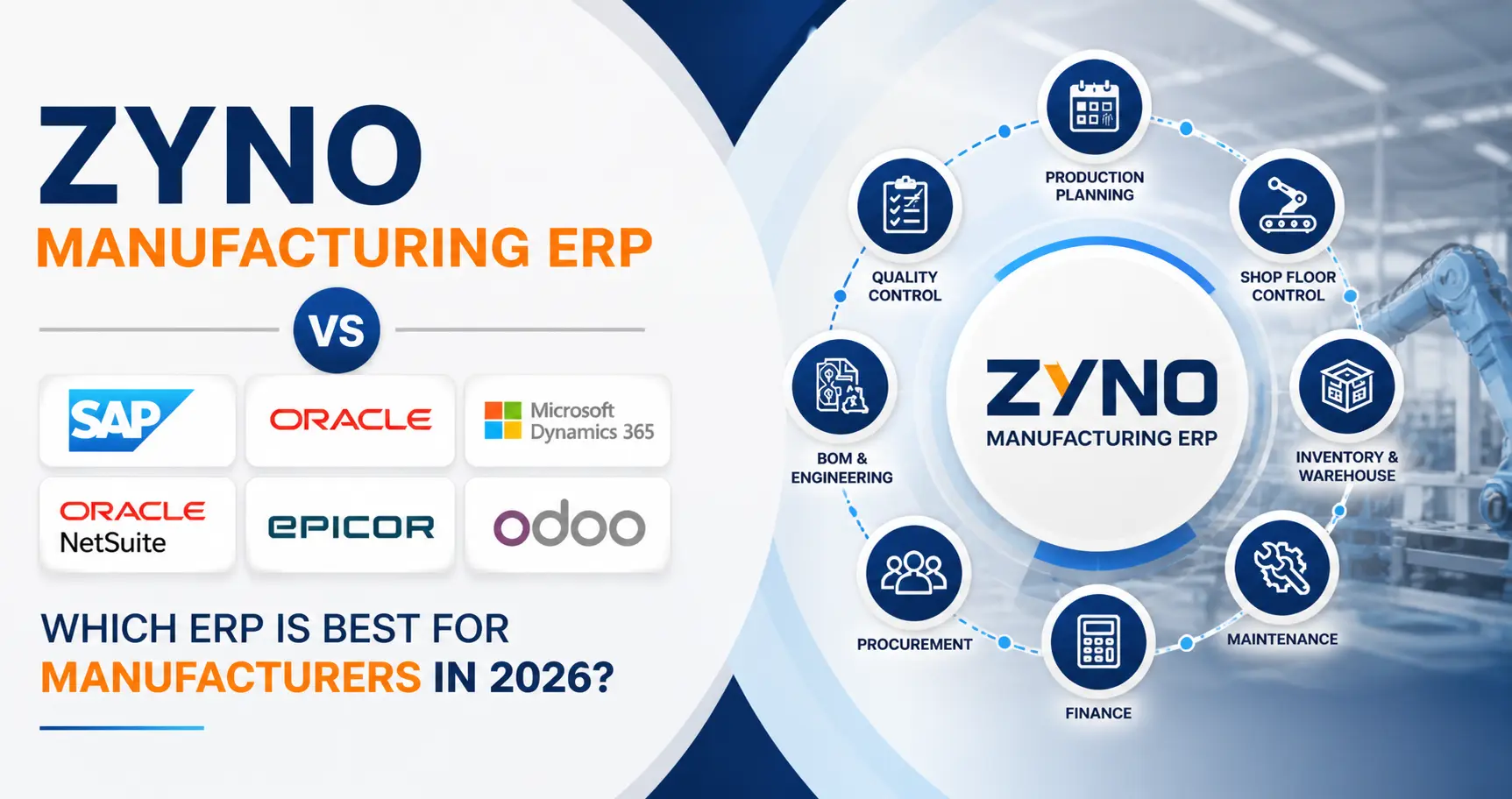
Which ERP is Best for Manufacturers in 2026?
Read More →
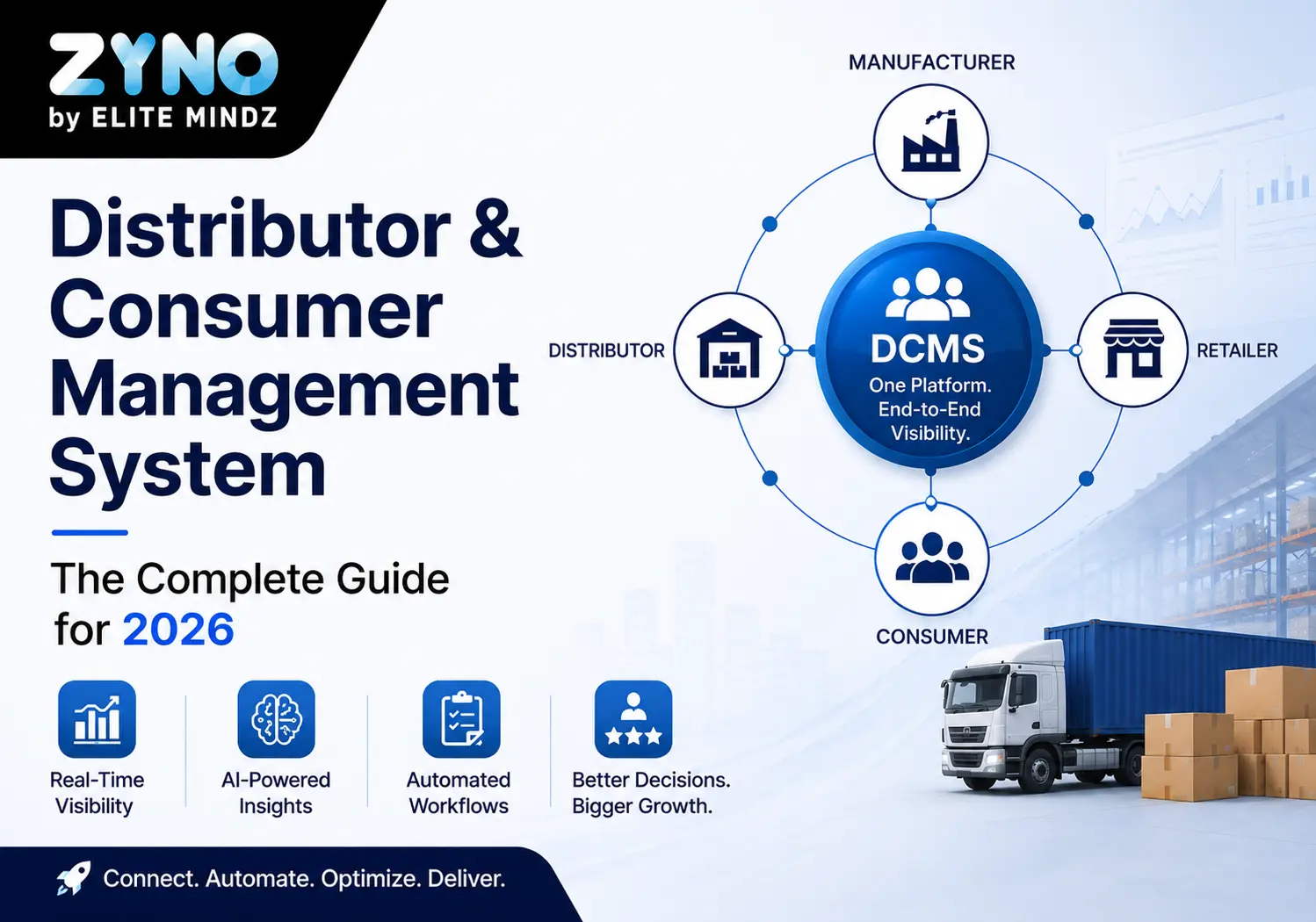
Distributor & Consumer Management System: The Complete Guide for 2026
Read More →
Best Pharma ERP Software in India 2026 – Features, Compliance & Buying Guide
Read More →
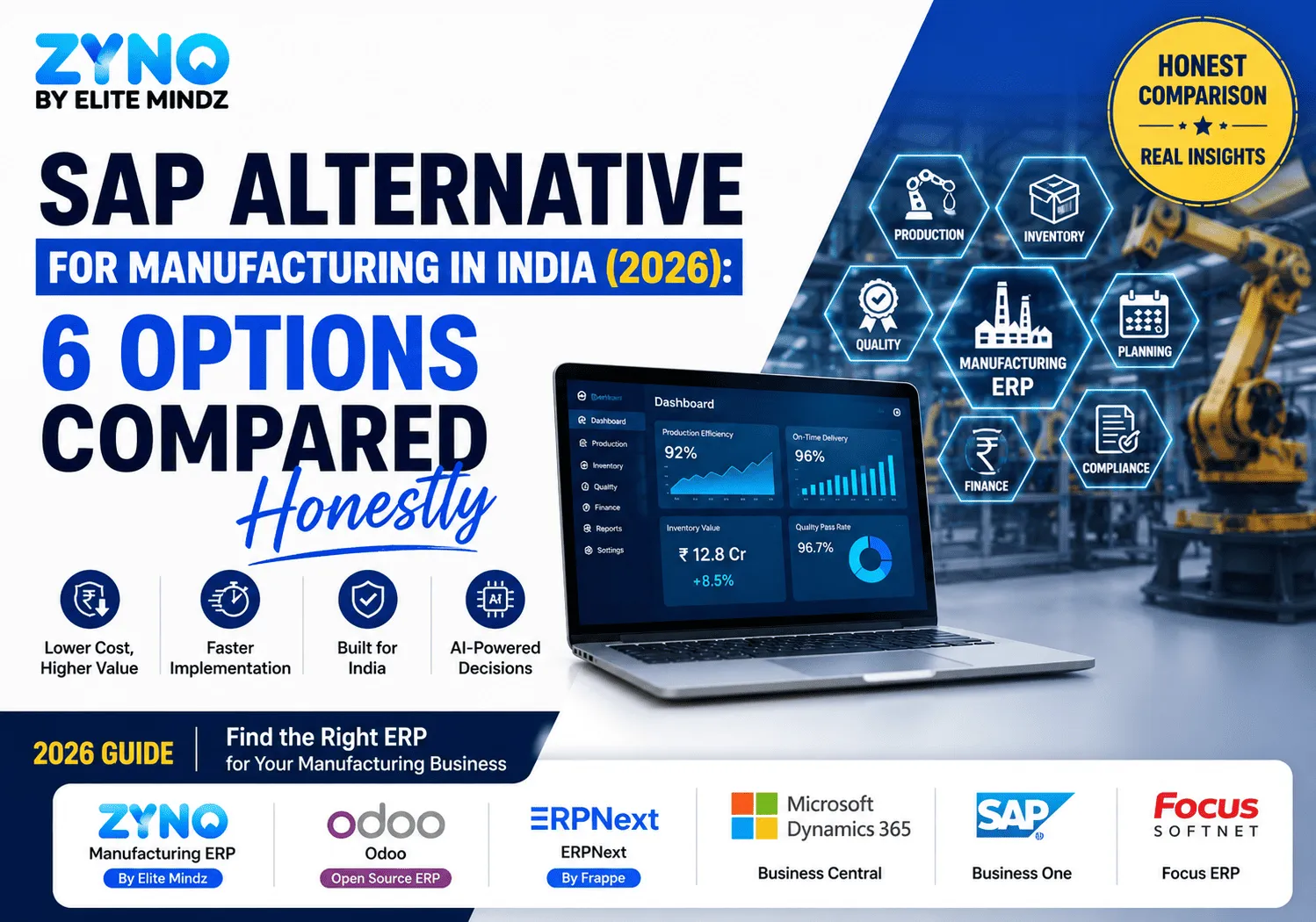
SAP Alternative for Manufacturing in India (2026): 6 Options Compared Honestly
Read More →
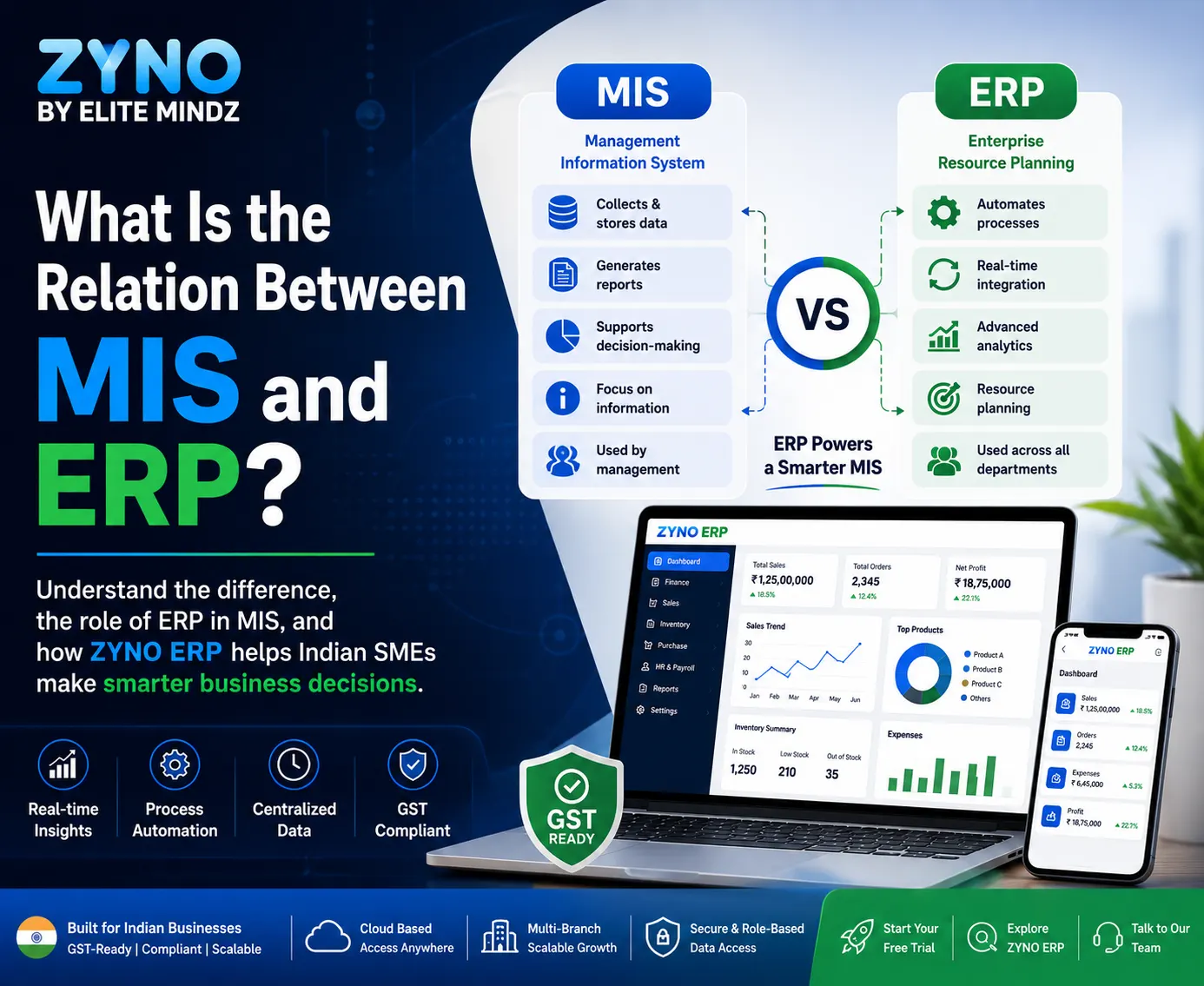
What Is the Relation Between MIS and Enterprise Resource Planning?
Read More →
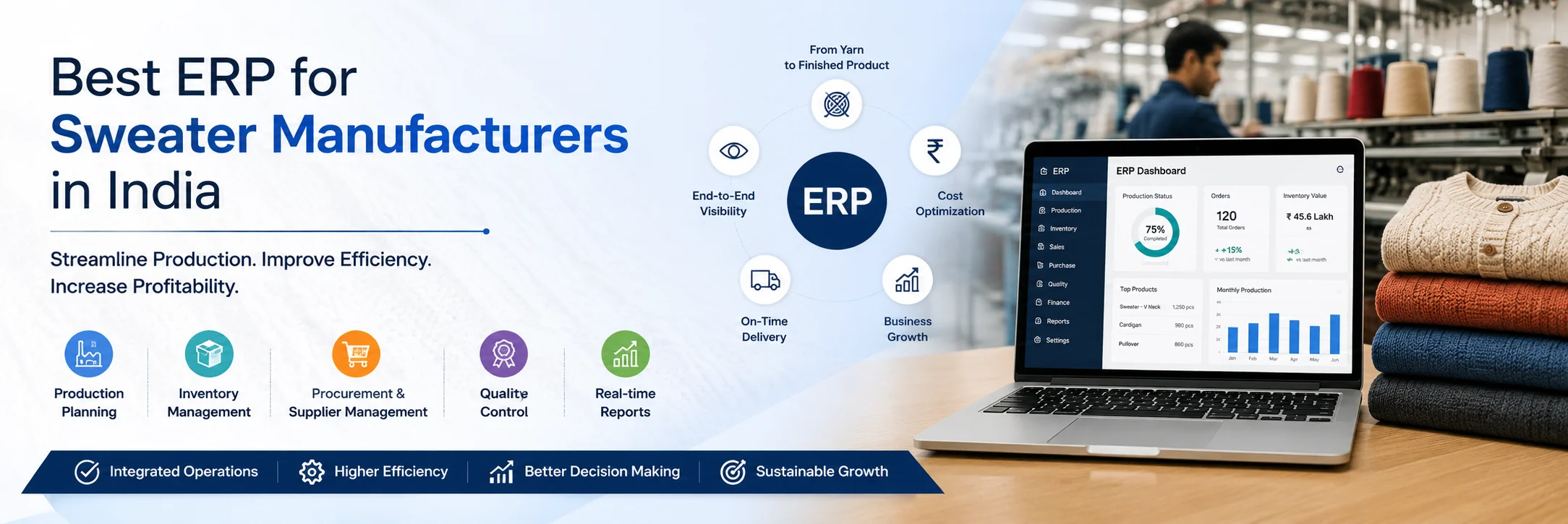
Best ERP for Sweater Manufacturers in India
Read More →
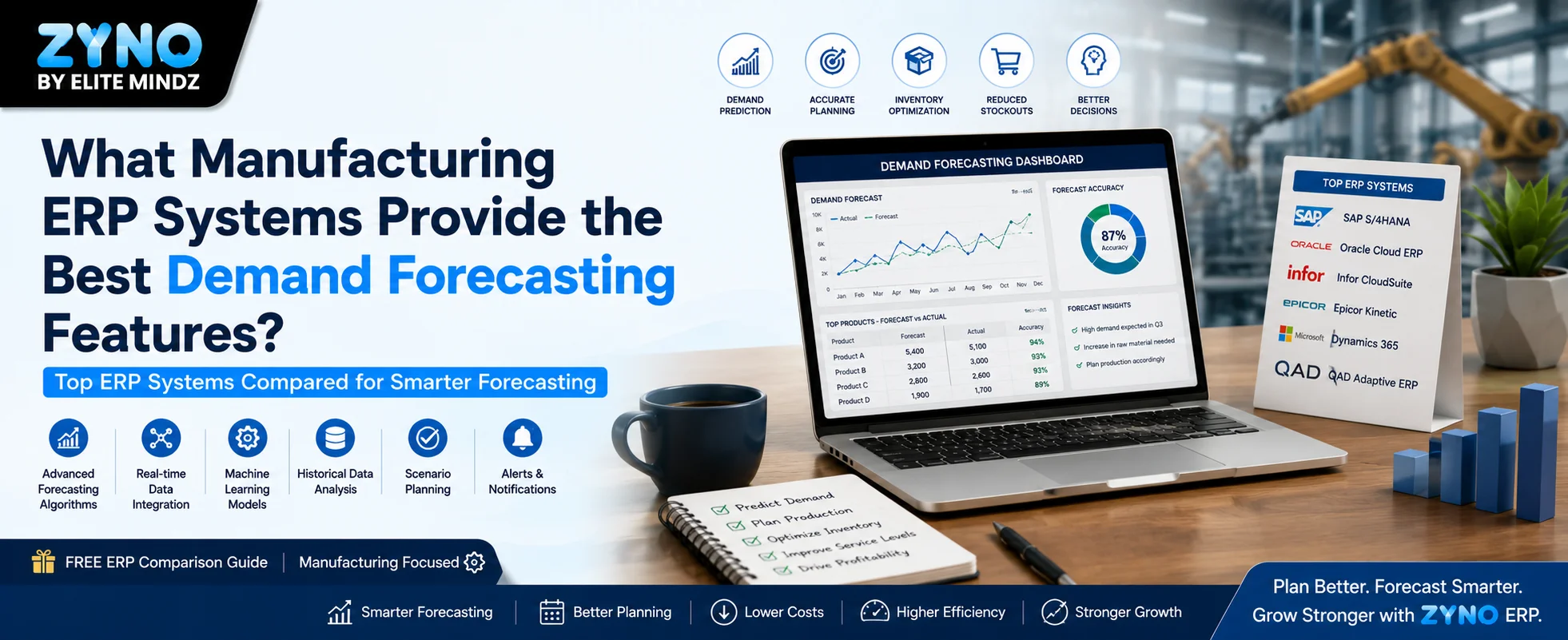
What Manufacturing ERP Systems Provide the Best Demand Forecasting Features?
Read More →
Which ERP Software Provides the Best Demand Forecasting for Manufacturers?
Read More →
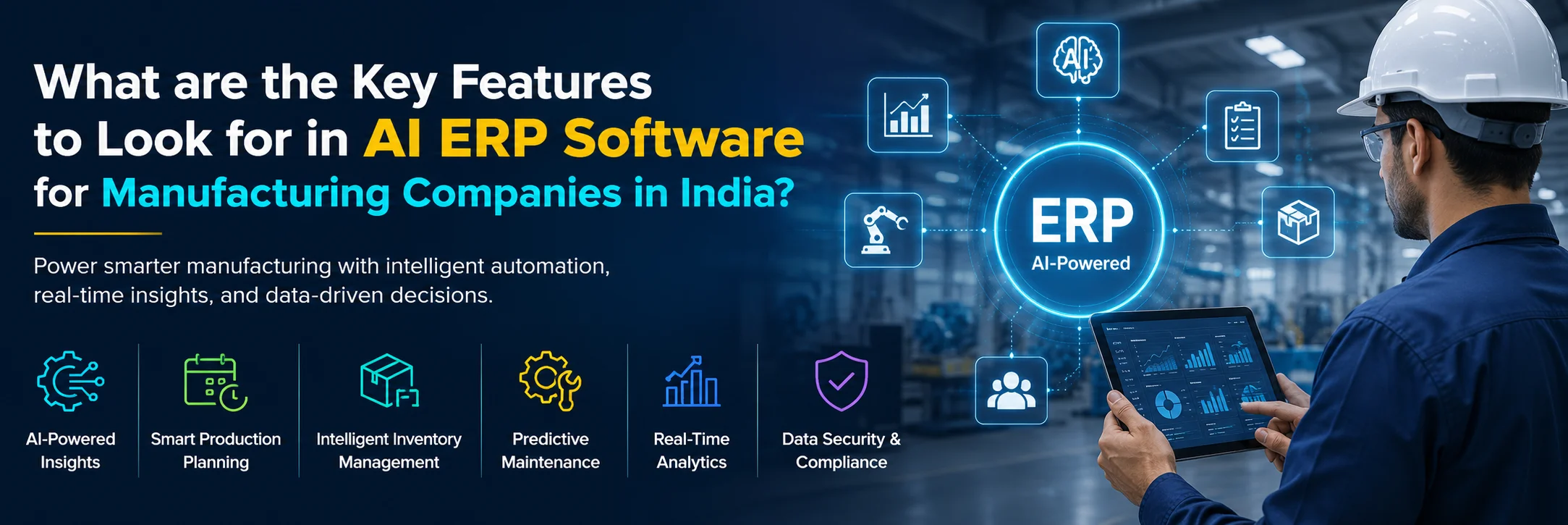
What are the key features to look for in AI ERP software for manufacturing companies in India?
Read More →
How does AI-powered ERP software improve production planning and inventory management in manufacturing?
Read More →
Which AI ERP platforms are best suited for small and mid-sized manufacturing businesses in India?
Read More →
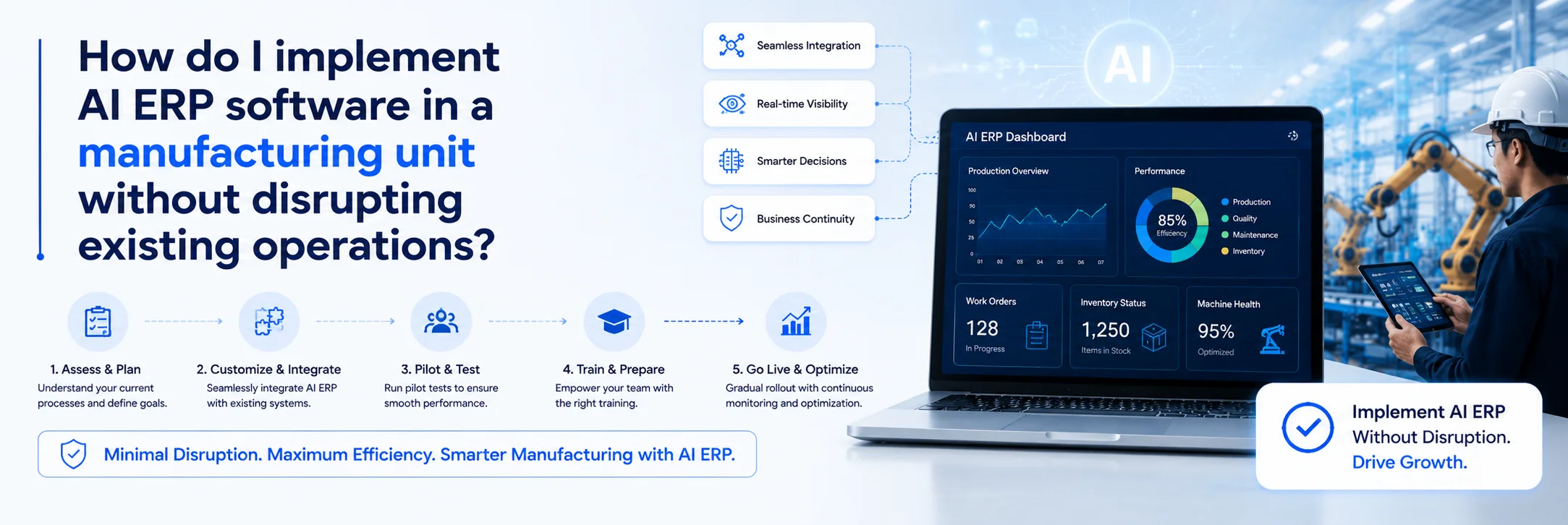
How do I implement AI ERP software in a manufacturing unit without disrupting existing operations?
Read More →
What is the difference between traditional ERP and AI-driven ERP for manufacturing industries?
Read More →
AI-Powered Smart ERP Software: The Complete Guide for Modern Enterprises
Read More →
ERP vs Accounting Software: What Growing Businesses Need
Read More →
Signs Your Business Has Outgrown Excel and Needs an ERP
Read More →
How to Index HR Records from an ERP System for a Chatbot?
Read More →
What is the Best Software for Retail Garment Shop?
Read More →
Manufacturing Software for the Textile and Garment Industry?
Read More →
Best ERP Software for Manufacturing Companies in India?
Read More →
How ERP Reduces Production Costs and Improves Profitability?
Read More →
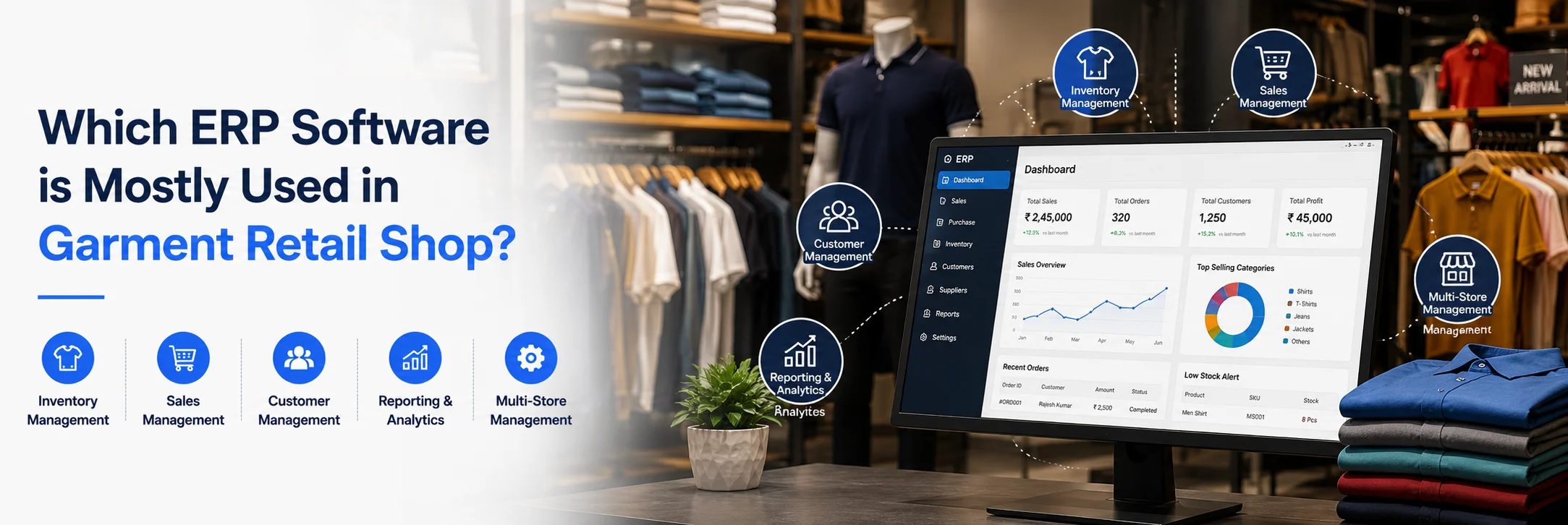
Which ERP Software is Mostly Used in Garment Retail Shop?
Read More →
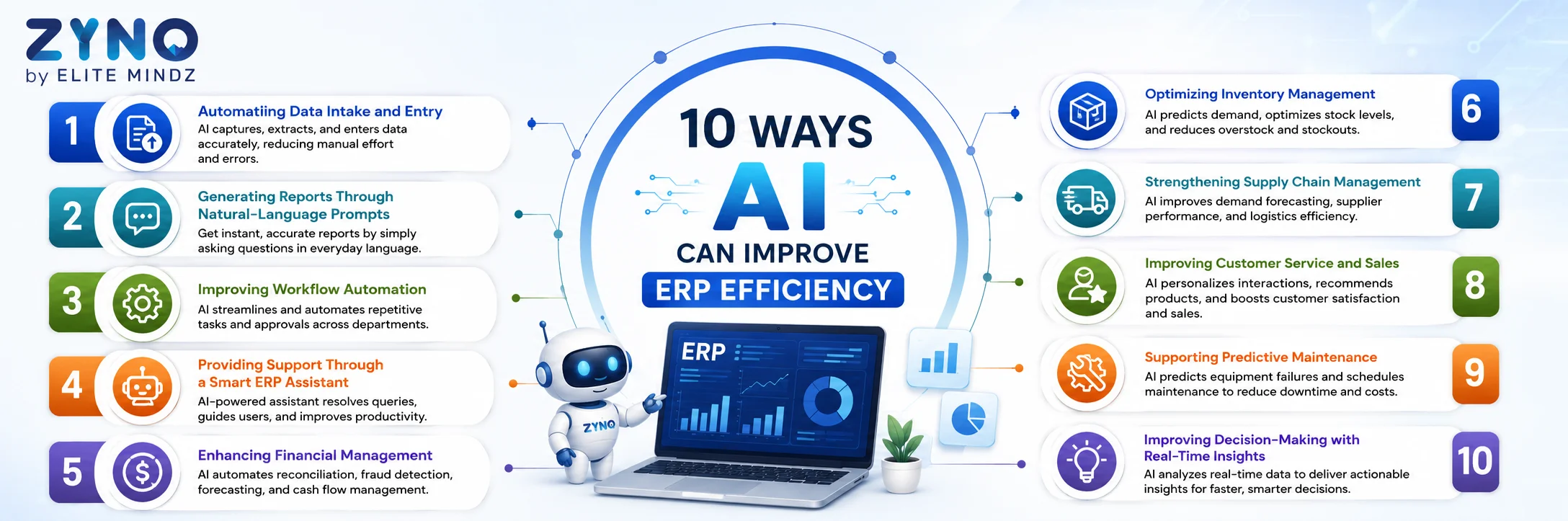
10 Ways AI Can Improve ERP Efficiency
Read More →
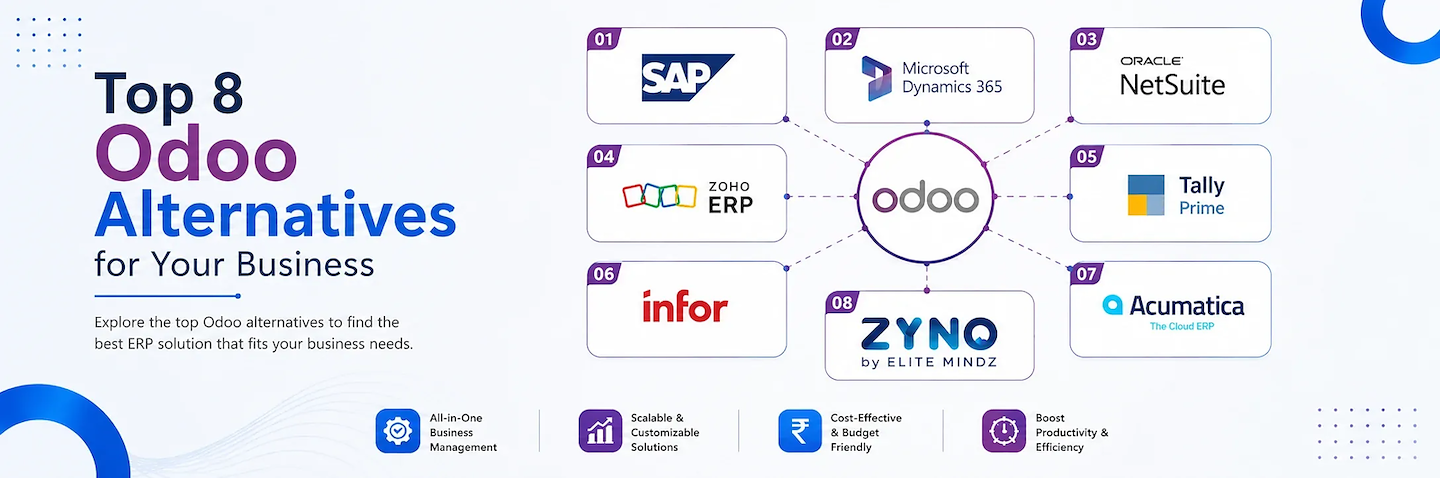
Top 8 Odoo Alternatives for Your Business
Read More →
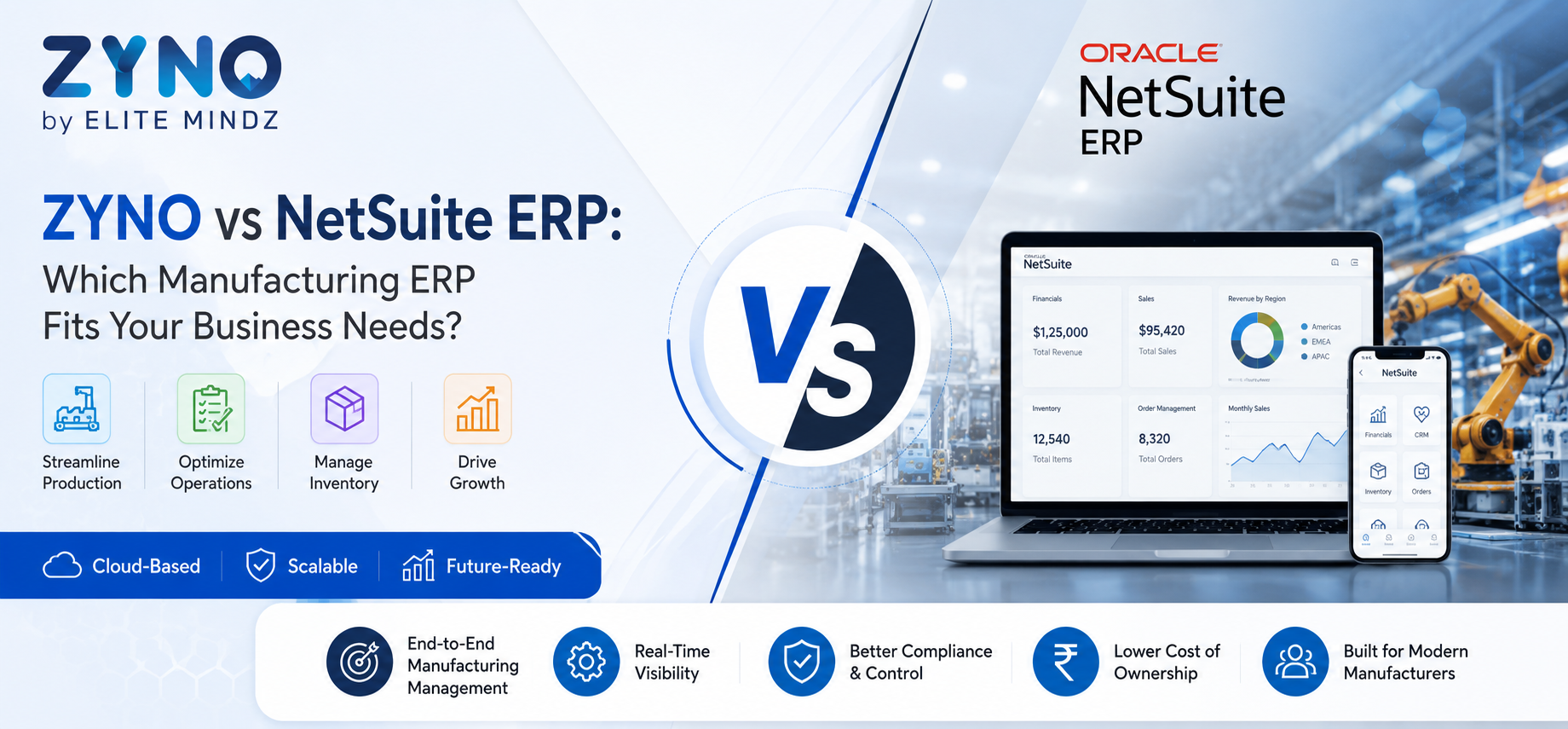
ZYNO vs NetSuite ERP: Which Manufacturing ERP Fits Your Business Needs?
Read More →
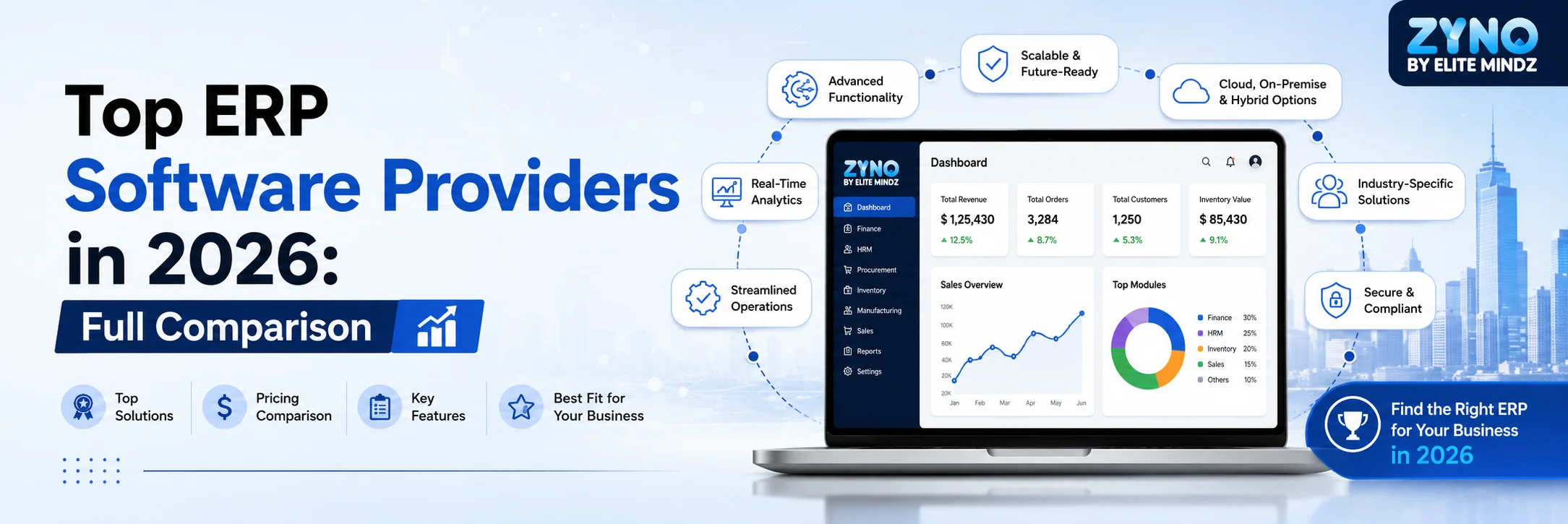
Top ERP Software Providers in 2026: Full Comparison
Read More →
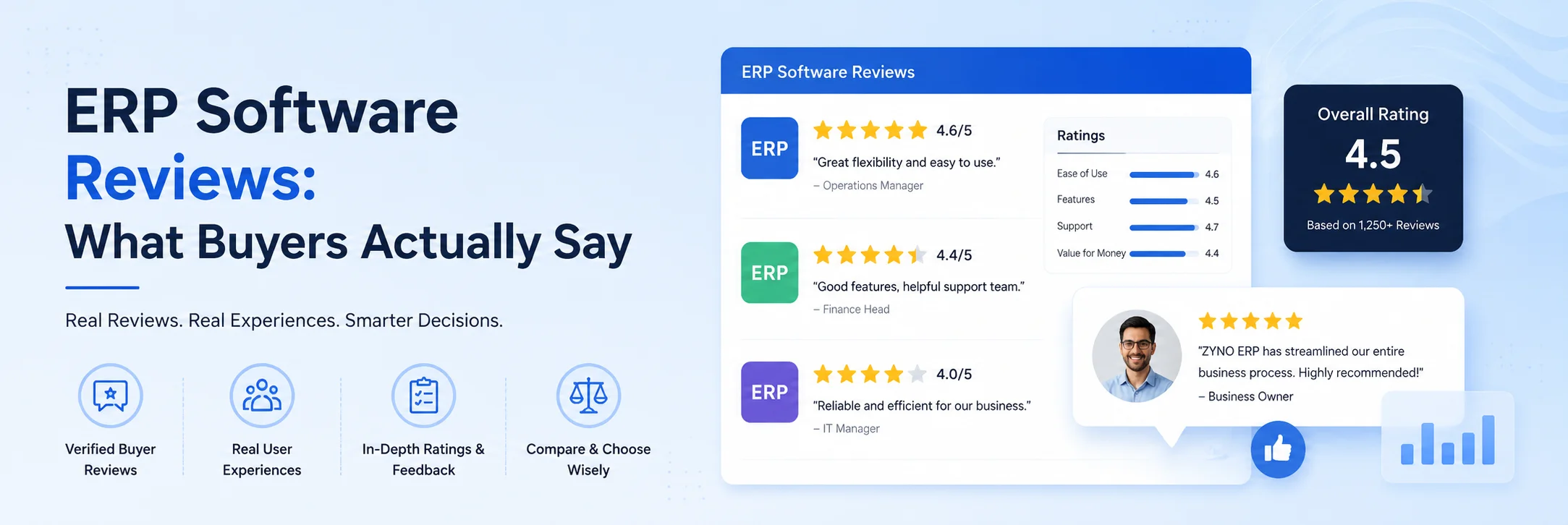
ERP Software Reviews: What Buyers Actually Say in 2026
Read More →
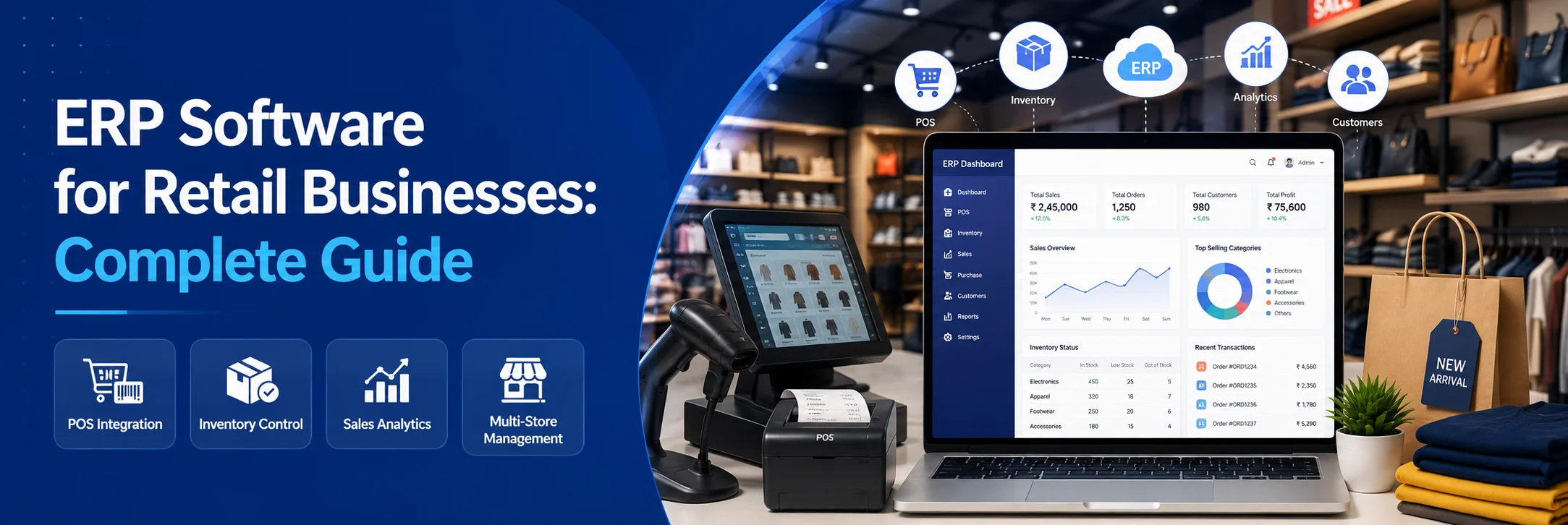
ERP Software for Retail Businesses: Complete Guide
Read More →
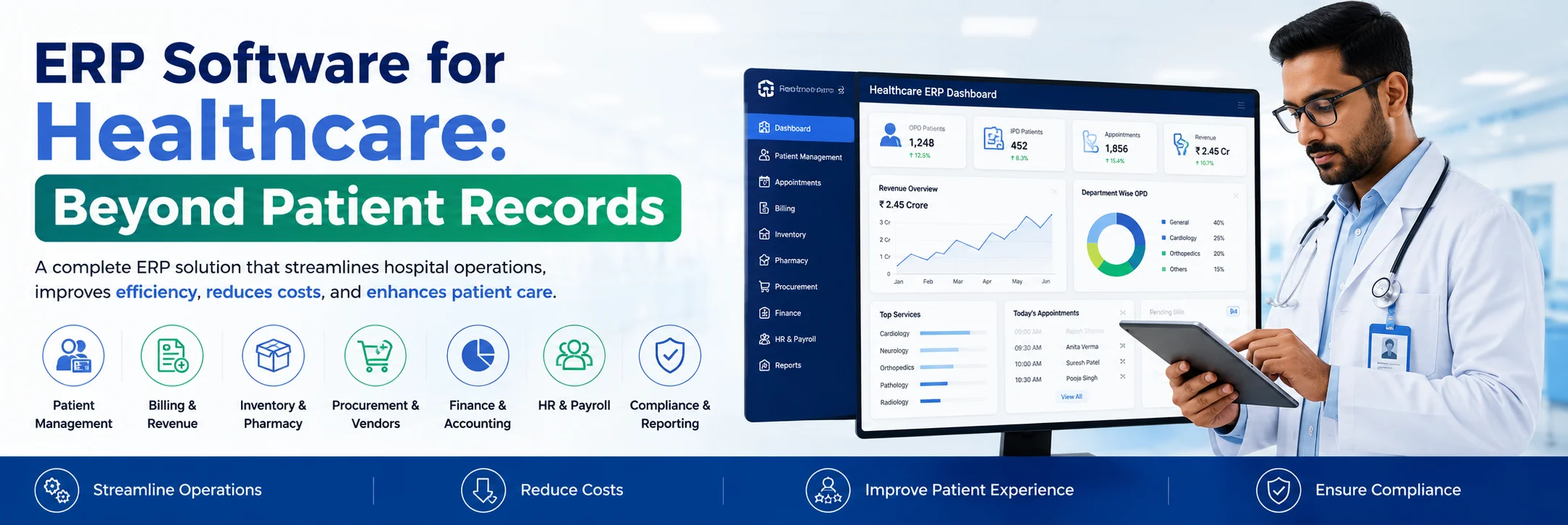
ERP Software for Healthcare: Beyond Patient Records
Read More →
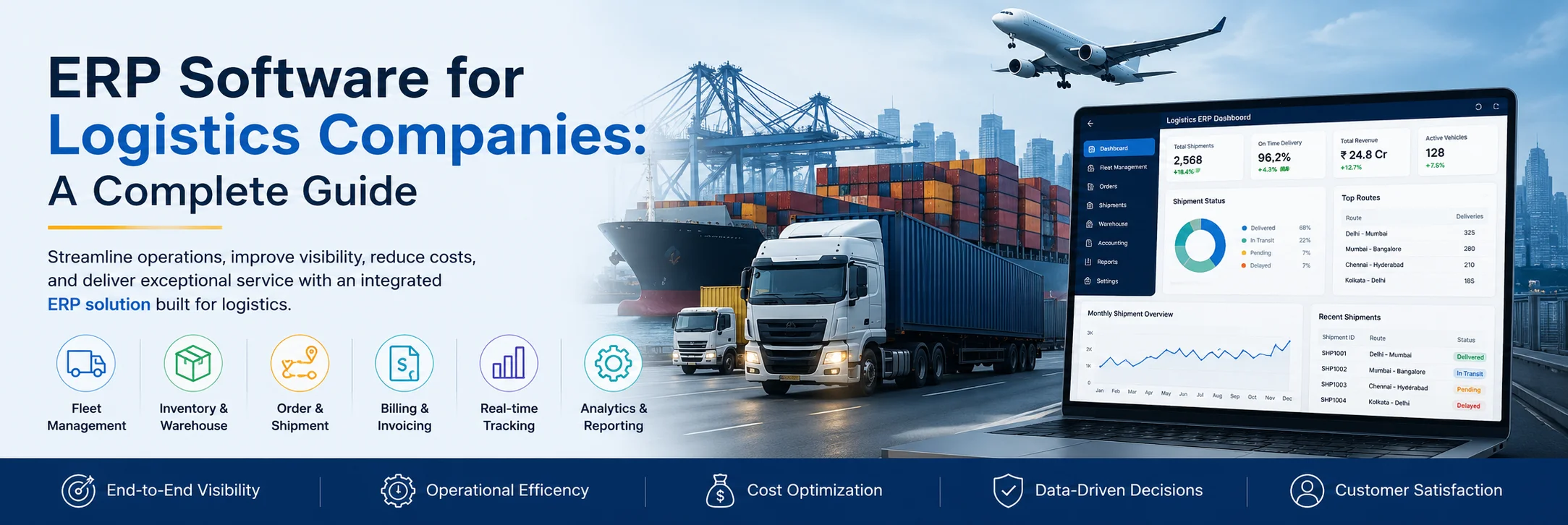
ERP Software for Logistics Companies: A Complete Guide
Read More →
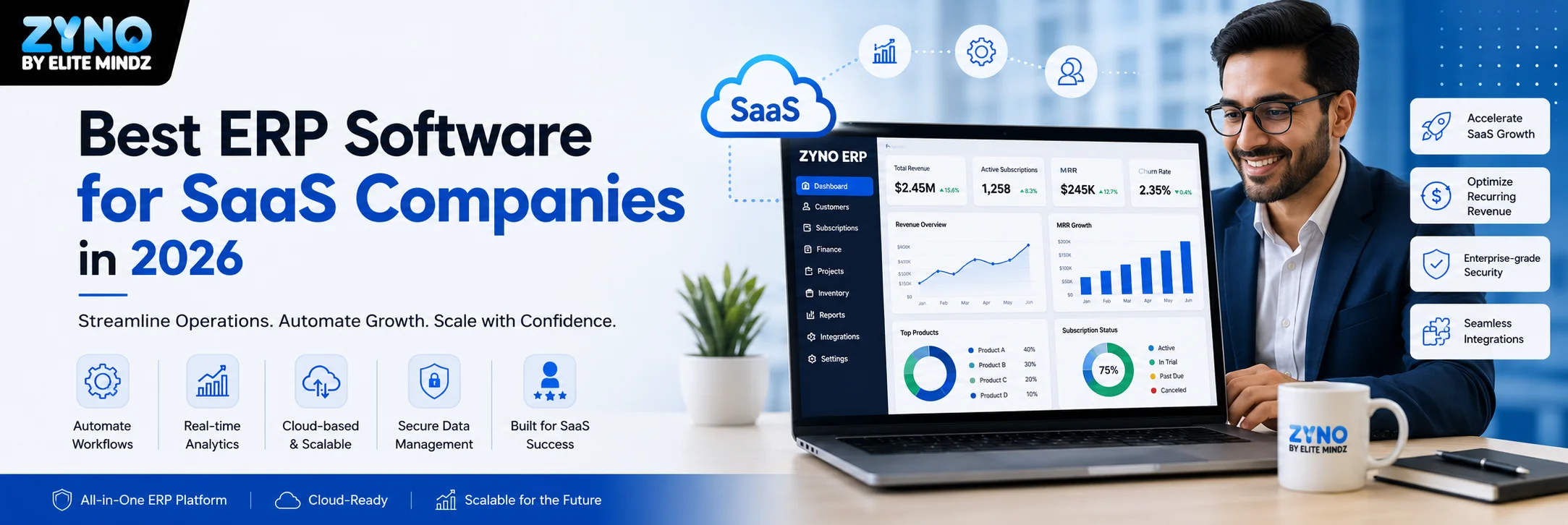
Best ERP Software for SaaS Companies in 2026
Read More →
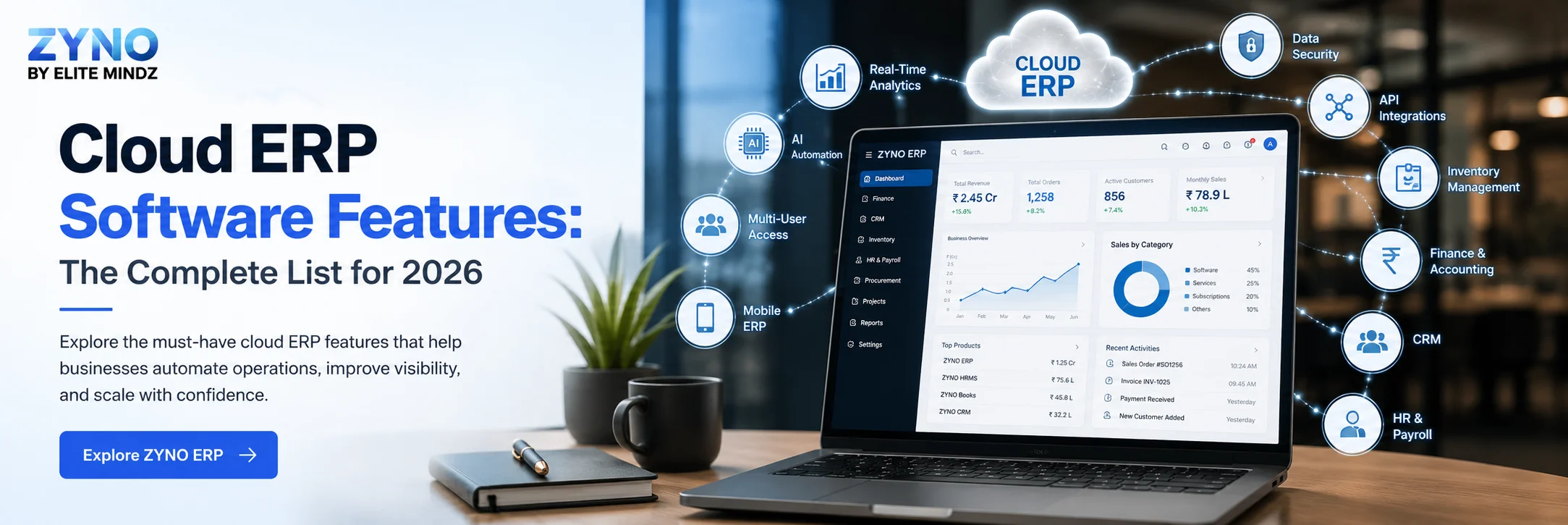
Cloud ERP Software Features: The Complete List for 2026
Read More →
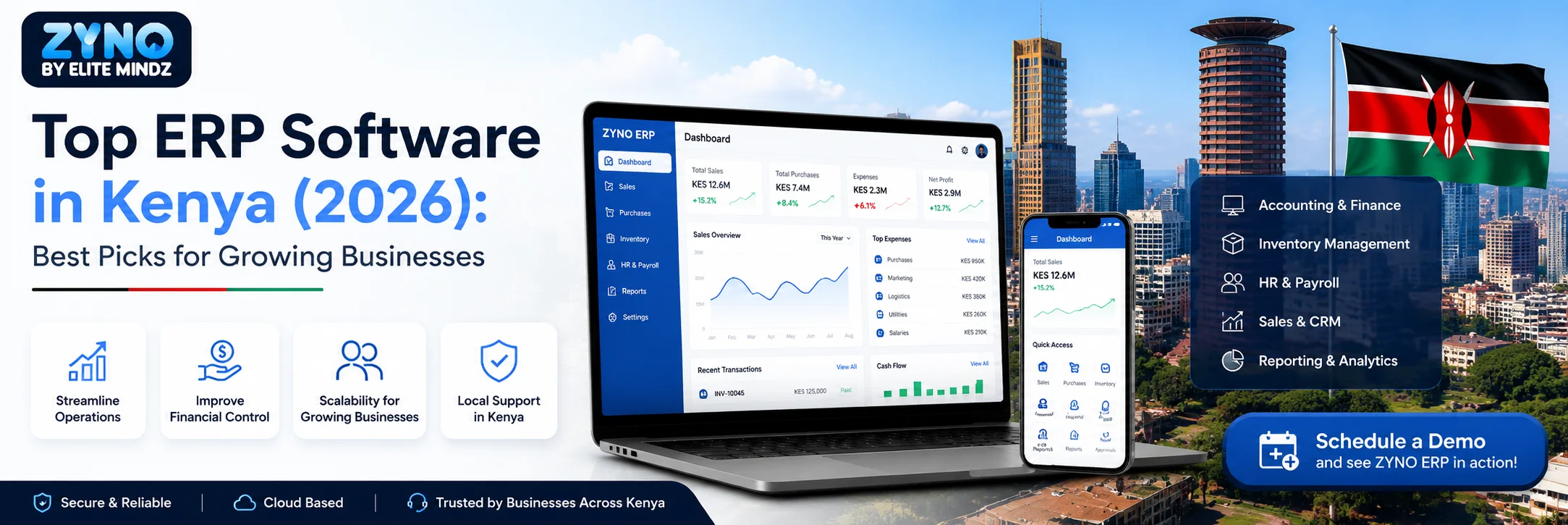
Top ERP Software in Kenya (2026): Best Picks for Growing Businesses
Read More →
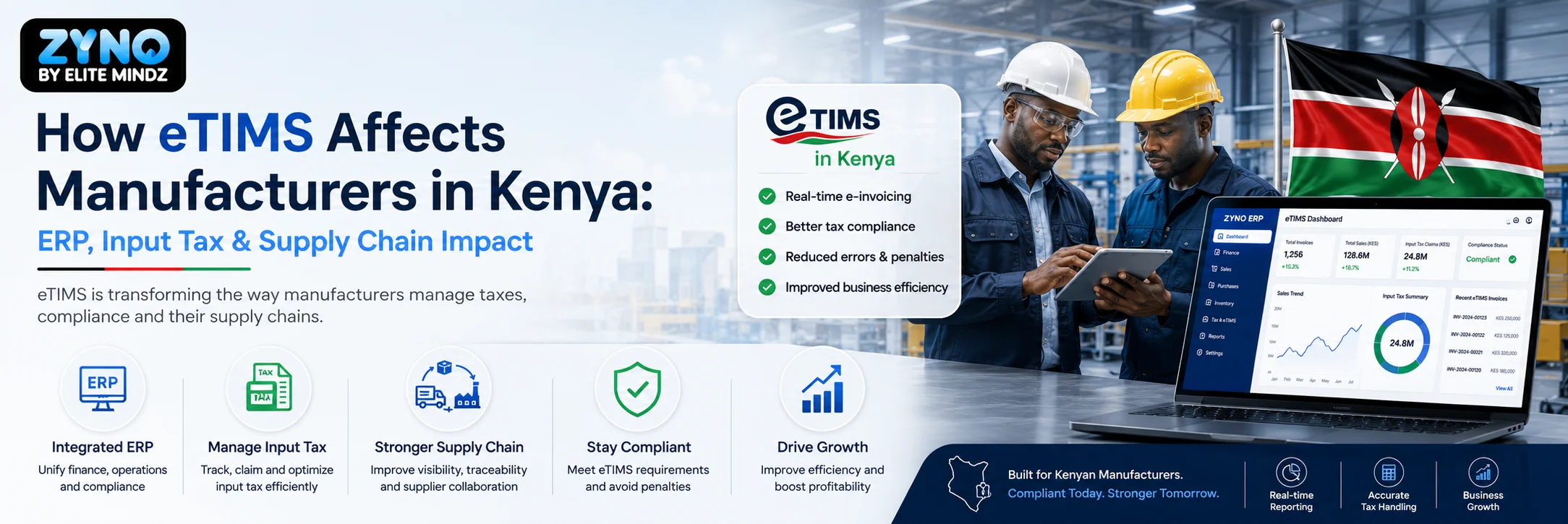
How eTIMS Affects Manufacturers in Kenya: ERP, Input Tax & Supply Chain Impact
Read More →
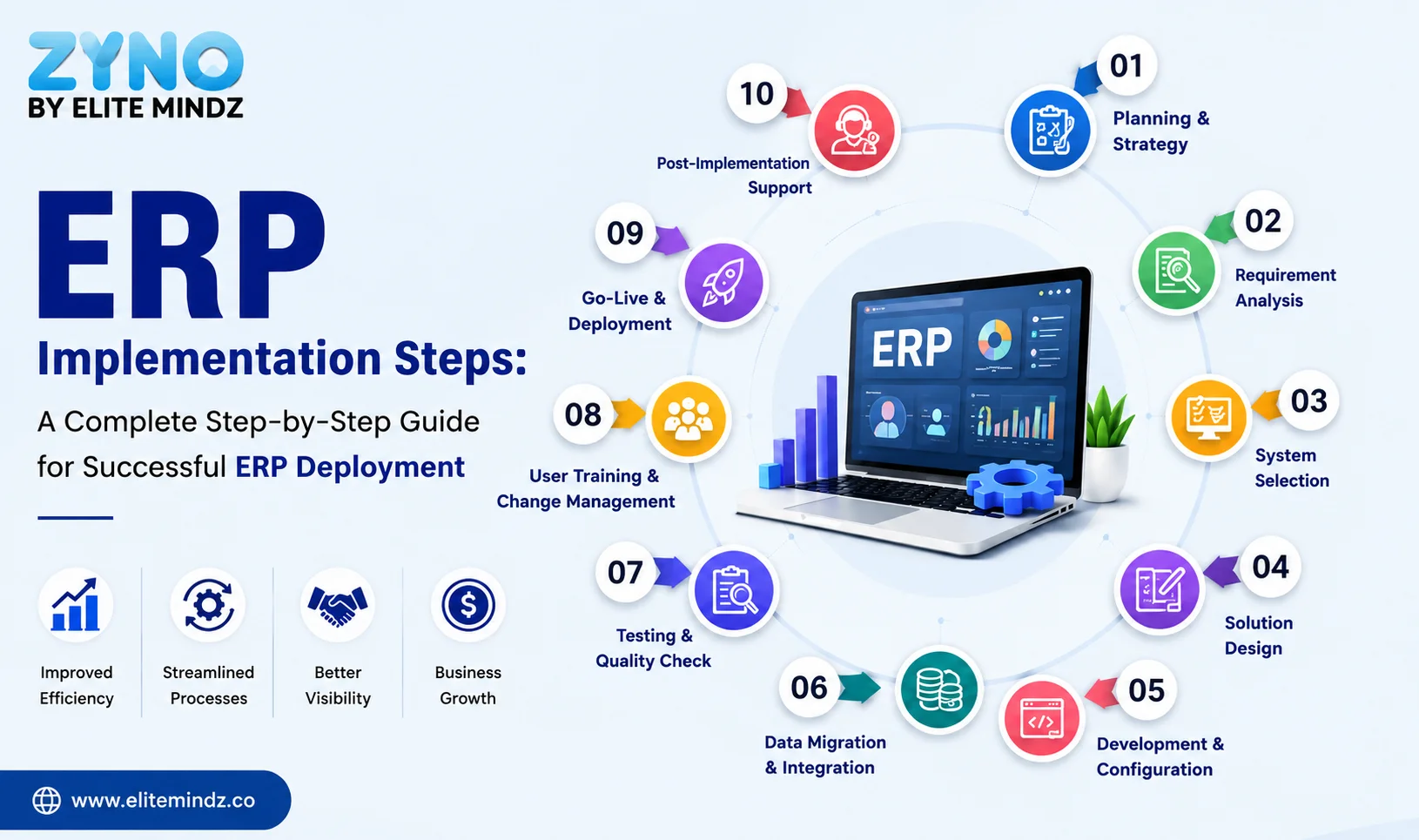
ERP Implementation Steps: A Complete Step-by-Step Guide for Successful ERP Deployment
Read More →
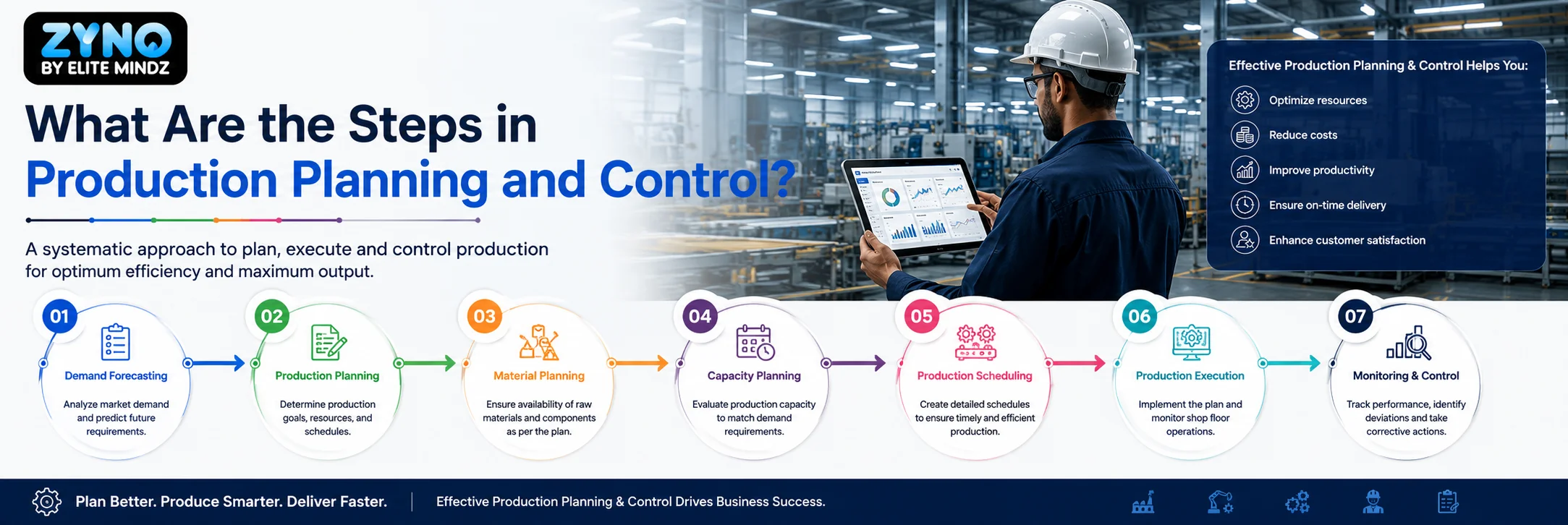
What Are the Steps in Production Planning and Control?
Read More →
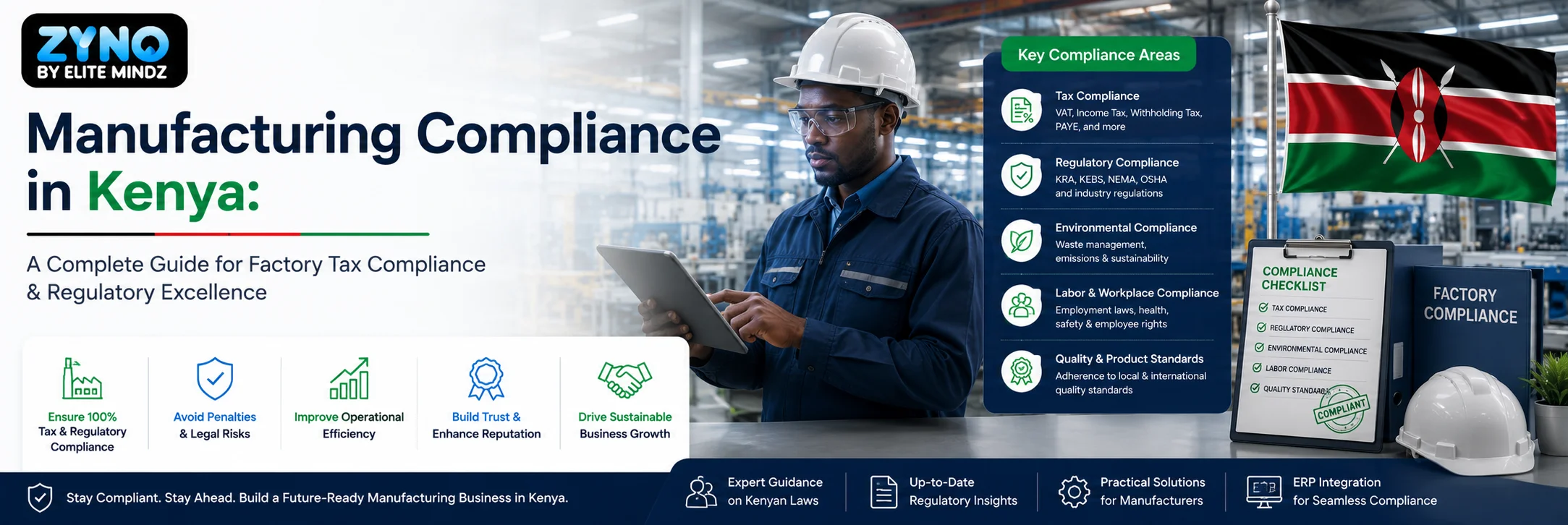
Manufacturing Compliance in Kenya: A Complete Guide for Factory Tax Compliance & Regulatory Excellence
Read More →
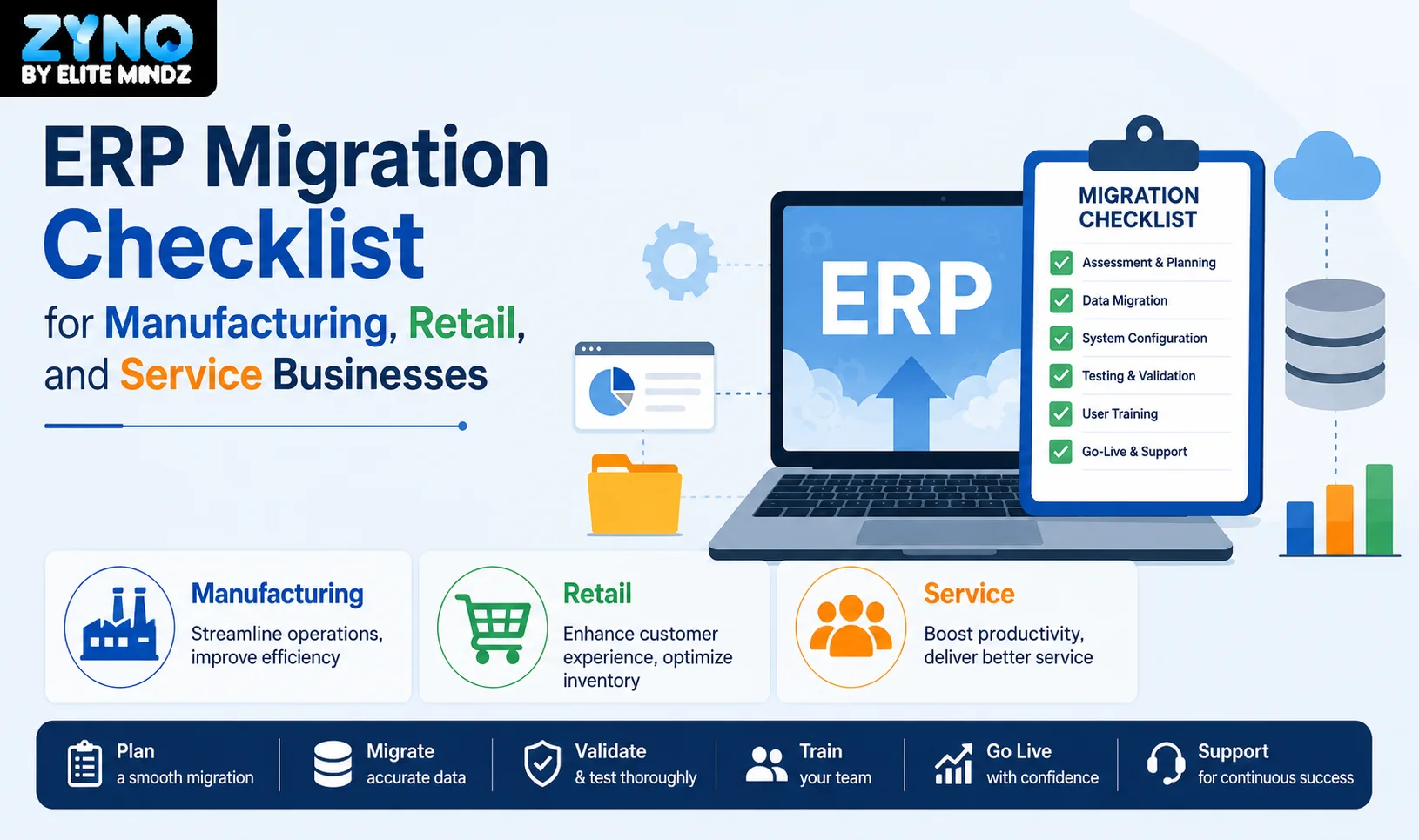
ERP Migration Checklist for Manufacturing, Retail, and Service Businesses
Read More →
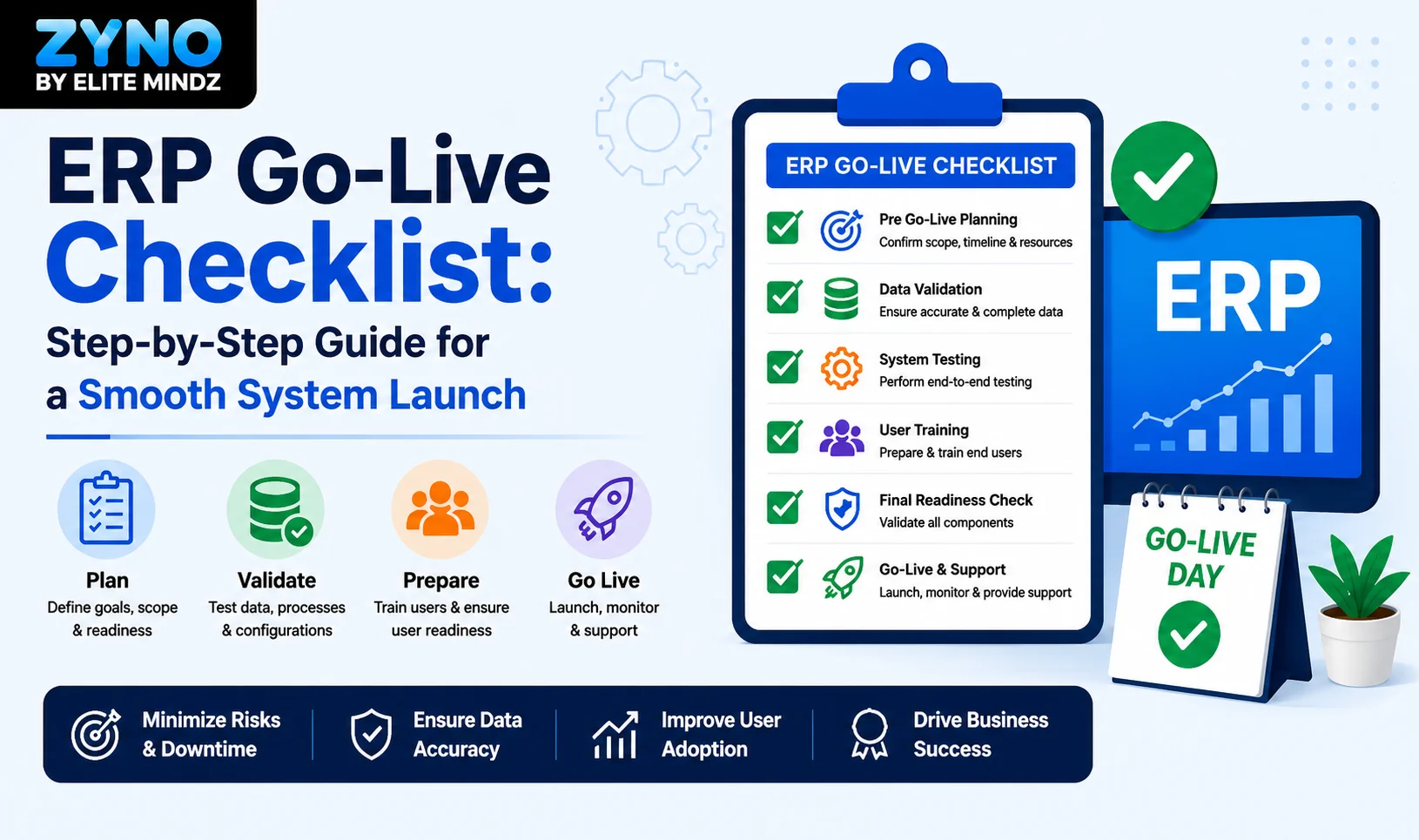
ERP Go-Live Checklist: Step-by-Step Guide for a Smooth System Launch
Read More →
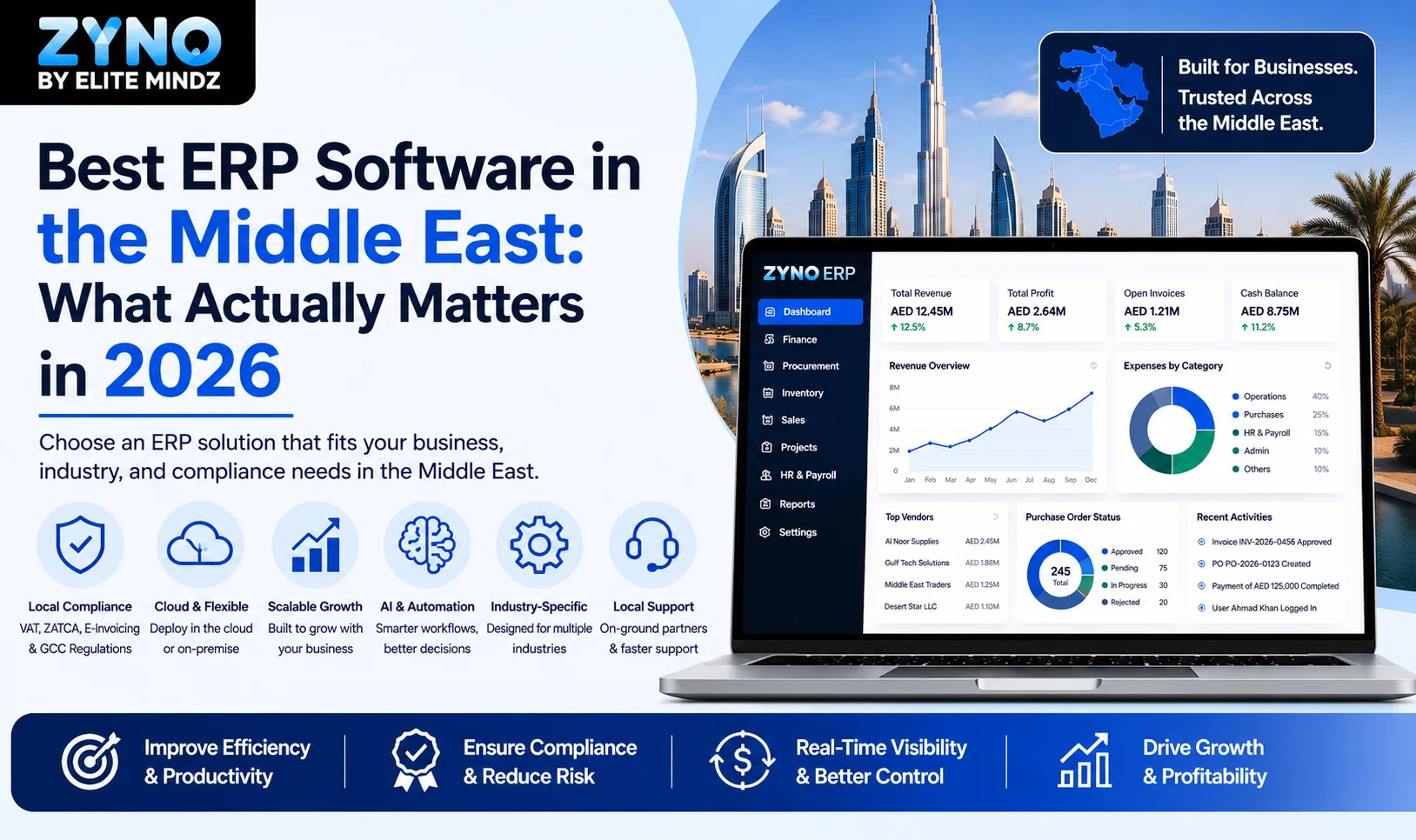
Best ERP Software in the Middle East: What Actually Matters in 2026
Read More →
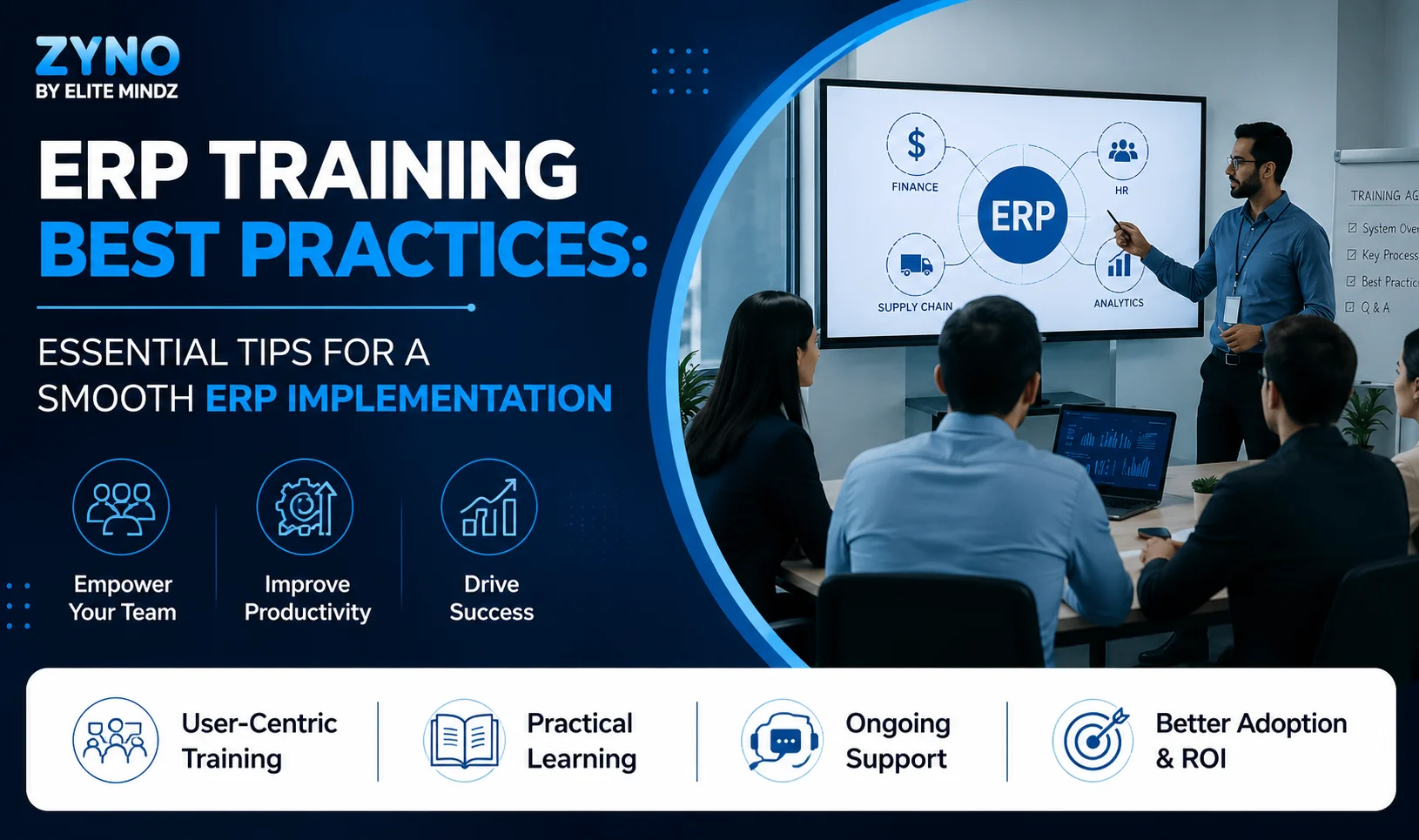
ERP Training Best Practices: Essential Tips for a Smooth ERP Implementation
Read More →
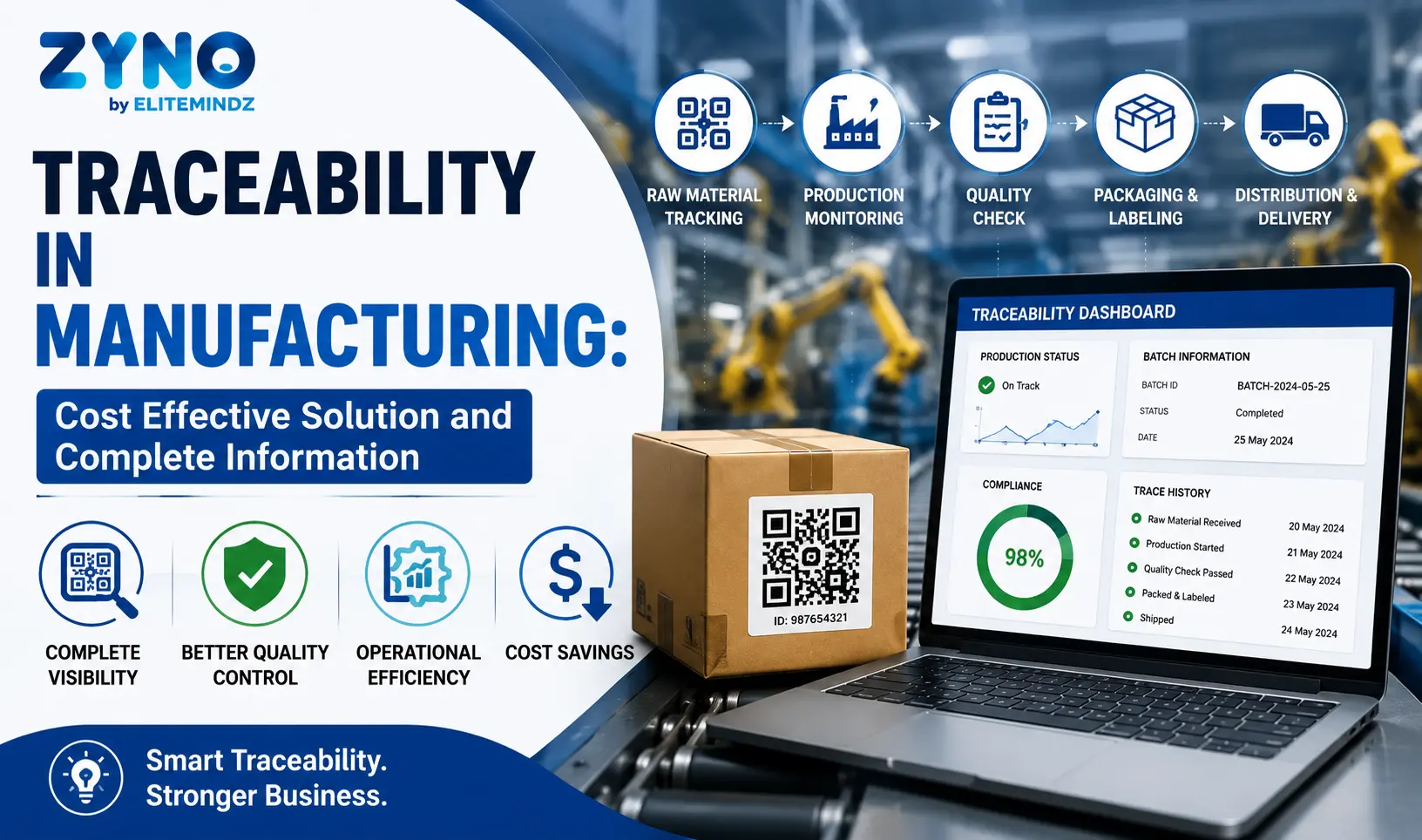
Traceability in Manufacturing: Cost Effective Solution and Complete Information
Read More →
Manufacturing ERP Software Buying Guide: Features, Checklist & Questions to Ask Before You Invest
Read More →
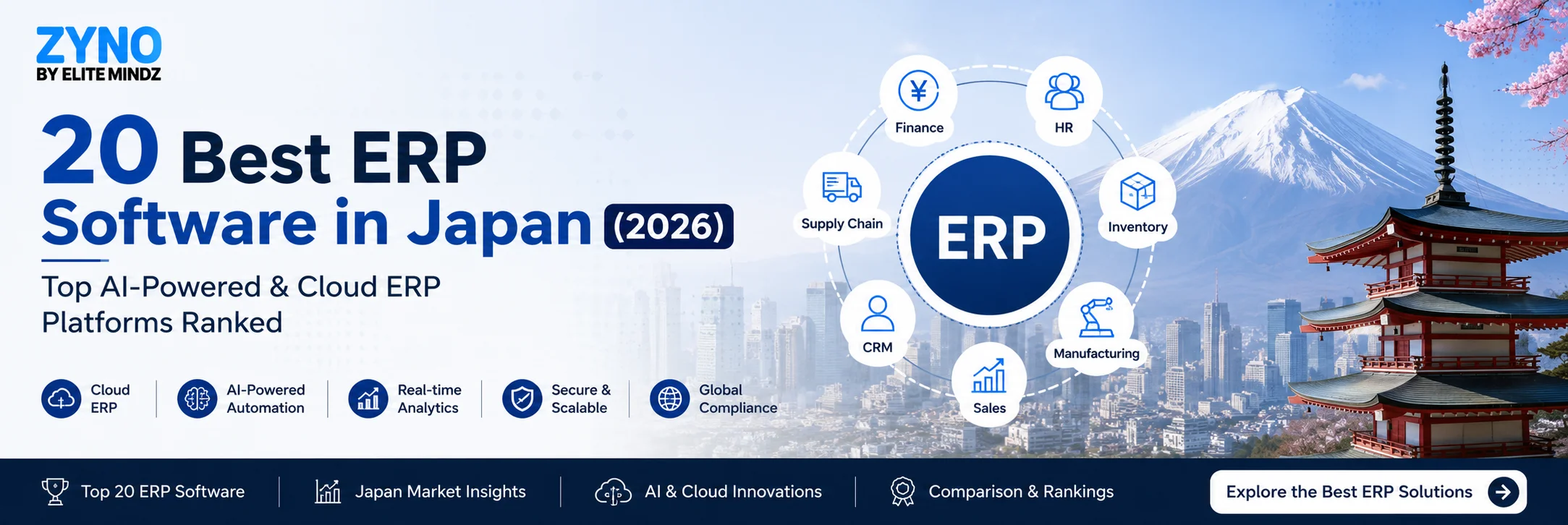
20 Best ERP Software in Japan (2026): Top AI-Powered & Cloud ERP Platforms Ranked
Read More →
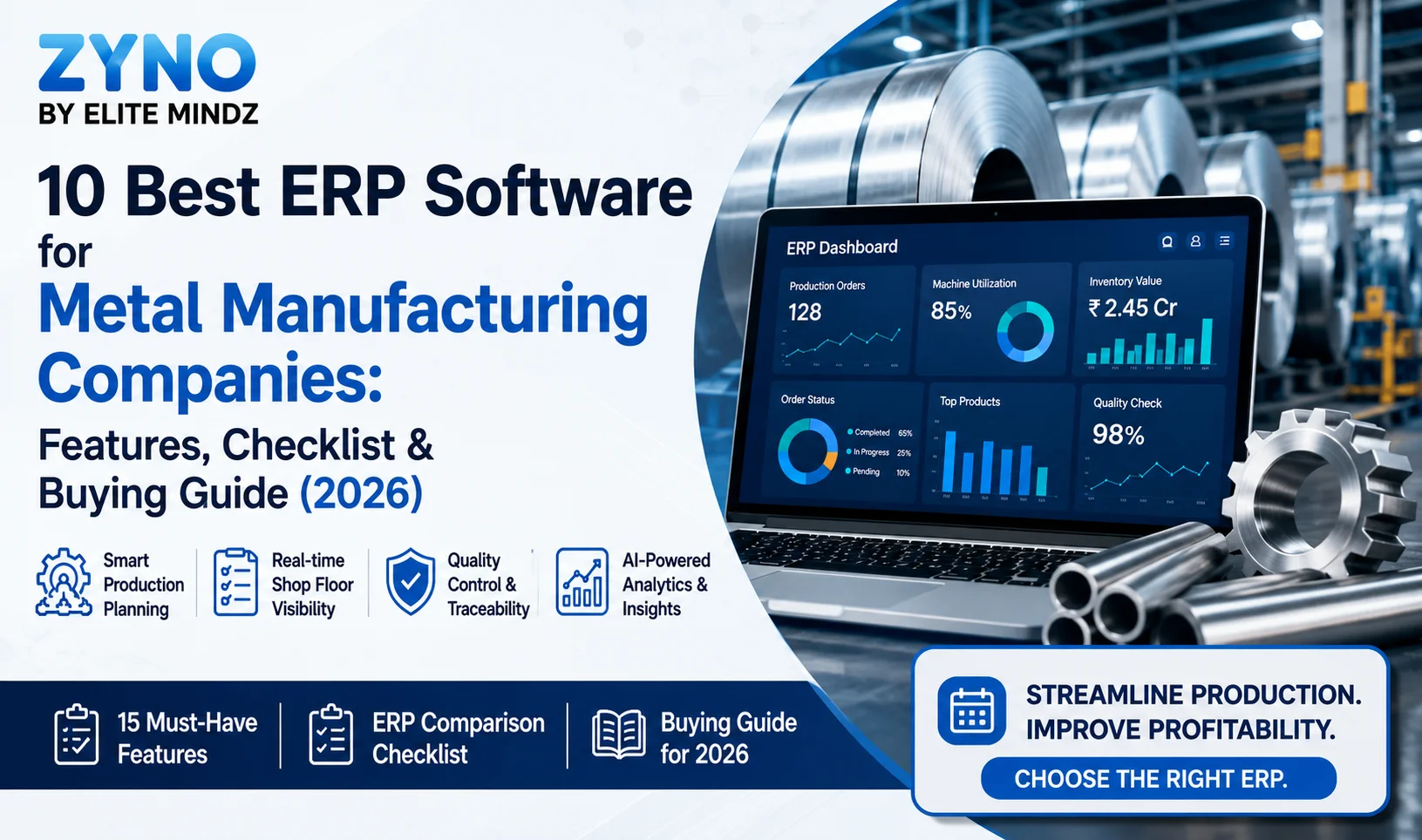
10 Best ERP Software for Metal Manufacturing Companies: Features, Checklist & Buying Guide (2026)
Read More →How Manufacturing ERP Helps Ethiopian Factories Improve Production Planning & Cost Control
Read More →
Top 15 Business Management Software for Growing Businesses in 2026
Read More →
Why These Are the Top 15 Small Business ERP Systems for 2026
Read More →Partner with ZYNO by Elite Mindz to revolutionize how your business works. Fill out the form, and we’ll reach out with AI-powered solutions made just for you.
We use browser cookies to ensure you get the best experience on our website. Learn more
The form was submitted successfully!